Categories
Saved Web Pages

Nearly half of the country now has serious doubts about the FBI. Here’s why

fbi_building_081322ap-jose-luis-magana_t

Like it or not, the FBI finds itself standing on a thin precipice that seems to add a new crack each week. If polls are to be believed, almost half the country now lacks trust in the FBI over concerns it is doing the bidding of one political party over another. That is a disaster for the bureau — unprecedented in magnitude — and could translate into an existential threat to one of the nation’s most important agencies as political fault lines shift.  

Millions of Americans have concluded that the FBI has been hyper-aggressive against Republicans, conservatives, and Donald Trump supporters while turning a blind eye or downplaying damning allegations against Democrats and leftists, from the Biden and Clinton families’ alleged pay-to-play schemes to Jane’s Revenge to antifa.

But it gets worse — as if political bias weren’t bad enough. The FBI has been regularly adding to a growing list of forceful arrests and searches of targets on the right that seem dramatically out of proportion to the alleged crimes being investigated. Early morning residential door-banging by a phalanx of heavily armed FBI agents traditionally was reserved — and used sparingly — for subjects of serious violent crimes known to be armed and dangerous. 

There was a reason for this. Residential arrests are particularly dangerous for everyone involved.  The subject has clear advantages at home, none of them good for law enforcement. A decision to confront menacing criminals where they live was normally made because the risk of attempting an arrest in a more public venue where innocents might be harmed was considered too great.  Therefore, the FBI took on all the peril of arresting a dangerous subject in his home in order to protect others. Residential arrests and searches typically were nobody’s favorite option inside the FBI.  

And so, it makes little operational sense to deploy these kinds of tactics in cases involving a dispute over documents, or sham Electoral College voters, or a diary belonging to the daughter of the president, or a failure to observe a congressional subpoena, or shoving someone outside an abortion clinic.  

Normally, cases involving individuals who are clearly not violent career criminals or flight risks would be handled with a summons to appear or, if necessary, a safe, low-key arrest in a controlled setting. Invasive searches were rarely a first option when a subpoena would more than suffice. Handcuffs were deemed to be ample restraint. During my FBI career, I never used nor saw used, with even the most dangerous criminals, ankle restraints like those allegedly slapped on one Trump adviser. Why arrest a Catholic pro-life protester at home when it’s established that he kneels to pray the rosary every week in front of an abortion clinic? Maybe the home arrest sends a better chilling message.  

Two other factors are feeding suspicions of unnecessarily aggressive FBI tactics. First, many of these investigations involve arcane criminal charges that were rarely, if ever, pursued for prosecution — but now, suddenly, they are. Second, in at least the search of Trump’s Mar-a-Lago resort, the Ashley Biden diary search, and the Catholic pro-life father arrest, there are substantial indicators of early attempts by defendants to cooperate with the Department of Justice (DOJ).  And yet, the front doors of homes were still banged on early in the morning.  

Add all this up on your favorite abacus and you get a whopper of a perception taking deeper and deeper root every week that the FBI is not just biased, but is also cooperating in a DOJ political effort to “send an intimidating message” through highly kinetic, show-of-force actions against individuals the Biden administration doesn’t like and wants to shut up.

The DOJ, and the attorney general in particular, have set their jaws and justified their actions by claiming they are simply following the rule of law and ensuring that no one is above that law.  Essentially they’re saying that perceptions of uneven application of the rule of law against conservatives that may arise from their actions simply don’t matter; they’re just doing their jobs.     

Well, here’s the rich irony of that argument. For nearly 30 years, the DOJ has investigated more than 70 police departments across the country for perceived “patterns and practices” of excessive and unconstitutional enforcement actions against certain constituencies such as minority communities or the mentally ill. The Justice Department often will assert that these perceived patterns indicate a form of “extrajudicial punishment” outside of conviction and sentencing. To the DOJ, mere perceptions of police excesses are considered reality. Guess what police departments will usually offer as a first line of defense: We were just doing our job. 

These DOJ investigations of police departments usually result in what is called a “consent decree,” in which the parties agree to certain reforms. Consent decrees can be a positive force for correcting patterns (aka, perceptions) of overly aggressive law enforcement actions against specific constituencies.  

The question, then, that now jumps out of the irony file is who has the authority to impose a consent decree on DOJ for its own current pattern of hyper-forceful and possibly extrajudicial punishment of a particular constituency consisting of political foes of the Biden administration?  Answer: No one. The DOJ is currently free to engage in patterns of aggressive, targeted enforcement actions that they will not allow police agencies to do.

This may help explain why congressional Republicans claim there is a growing list of FBI agents coming forward whom they characterize as “whistleblowers.” The FBI does not have a long tradition of whistleblowers showing up in force so, if true, it’s not something to be taken lightly. 

Ugly immigration rhetoric has deadly consequences Intimidation is the name of the game for red state legislatures

It’s important to remember that 99 percent of agents daily investigate what every law-abiding citizen wants them to. This summer saw 6,000 violent criminals arrested, thousands of illegal guns seized, and massive amounts of killer fentanyl taken off the street in a cooperative initiative with local police departments. Gangs have been dismantled; young children sexually trafficked by cartels have been rescued. Espionage arrests have been made and cryptocurrency extortions have been recovered.    

FBI agents working these matters understand that when a small slice of the FBI fosters a perception of one-sided, politically driven enforcement actions, it erodes the trust that Americans have traditionally placed in the FBI. When trust diminishes, the FBI loses access to cooperation it used to have. When cooperation is lost, fewer crimes are solved. Many agents are understandably upset with current trends. To be clear, the FBI does not have to cooperate with politically fraught DOJ agendas, no matter which party is in power — and it shouldn’t.  

Kevin R. Brock is a former assistant director of intelligence for the FBI and principal deputy director of the National Counterterrorism Center (NCTC). He independently consults with private companies and public-safety agencies on strategic mission technologies.

Categories
Saved Web Pages

Why are US Lawmakers Navigating Counterintelligence Threats?

Why-are-US-Lawmakers-Navigating-Counteri

Experts have concluded that our rising dependence on disruptive technologies has given a rise to counterintelligence threats. Basically, counterintelligence is the information gathered and the actions taken to identify and protect against an adversary’s knowledge collection activities or attempts to cause harm through sabotage or other actions. The primary goal of counterintelligence is to make certain that no information can be modified, destroyed, or leaked by malicious actors and is only authorized by people who have access to it. But the growing expansion of technology in our daily lives has made sure that threats to counterintelligence also rise, hence the governments are issuing notices to lawmakers navigating counterintelligence threats that they are shrewd and certain that under no circumstances the perpetrators can manipulate high-priority intelligence information and jeopardize the security of the citizens.

Quite recently, the US Senate Intelligence Committee released a report that focused on examining counterintelligence threats, not just for government entities, but also for the private companies and universities that are increasingly targeted by the foreign spy agencies that are apparently trying to steal the country’s avant-garde technological advances. Officials have denoted that the number of foreign intelligence threats is on the rise, and hence, the government and large-scale public companies are placed in the bull’s eye.

How are US Senators and Lawmakers Navigating Counterintelligence Threats?

Currently, US Senators have been protesting Apple’s decision to purchase memory chips from Yangtze Memory Technologies, which is a world-renowned Chinese chipmaker. They have ordered an investigation into the threat that this deal might pose to national security. These allegations come after Apple decided to purchase memory from the Chinese memory chip giant for its new iPhone 14 model. According to reports, the committee’s investigation, which encompassed classified briefings with intelligence officials and public discussions with private companies and US universities, revealed that approximately US$600 billion worth of US intelligence properties like designs, patents, and technological breakthroughs have been stolen.

After this revelation, the Senate Intelligence Committee has created a framework which would involve holding more hearings on the threat, along with modifying the existing counterintelligence threats law. Besides, foreign powers have been trying to exploit advanced technical abilities, sensitive technology, and the country’s intellectual property to launch malicious cybersecurity threats. Hence, US lawmakers have been fighting tooth and nail to ensure that these threats in hi-tech areas are minimized and eventually completely eradicated.

Integrating Advanced Threat Intelligence to Monitor Cybersecurity Issues

Executives from the intelligence committee in the US have suggested deploying the MI5 model, which is the UK’s domestic security system. The counterintelligence agencies basically encompass agencies like the FBI, the CIA and the State Department, and military services. Building an agency based on the MI5 model would dilute the strength of these agencies and focus the efforts of these agencies and high-profile targets. Universities in the US are already working on striking a balance between remaining open and welcoming foreign candidates, but as preserving intellectual property is becoming more difficult, they are requesting government officials to ensure safety and security for everyone residing in the country.

Categories
Saved Web Pages

Israel ducks blame for firm with ex-intel officers that bid to ‘shape’ US vote

psy-group-1024x640.jpg

A week after the US Senate issued a report accusing an Israeli company, Psy-Group, of attempting to meddle in US elections and, separately, of working on behalf of a Russian agent, Israel’s Defense Ministry said it is not aware of the company’s activities and has never considered itself responsible for regulating them.

Several of Psy-Group’s employees were graduates of Israeli intelligence units, including a former senior IDF intelligence officer, however, and Israel’s own export control legislation bars private firms from exporting intelligence knowledge and services without a license.

On August 18, the US Senate Select Committee on Intelligence released the fifth volume of its Russia investigation, which examines Russia’s attempts to meddle in US politics during the 2016 elections. An entire section of the report is devoted to the Israeli cyber-intelligence company, Psy-Group, which the report concludes pitched, but may not have carried out, covert influence services on behalf of the Trump presidential election campaign. “Psy Group representatives engaged with Trump Campaign senior officials in 2016 for a contract to perform work on behalf of the Campaign,” it states. “These engagements… purportedly never materialized into any Campaign work.”

The report also says that Psy-Group on separate occasions worked for at least two Russian oligarchs, including Oleg Deripaska, whom the report describes as “a proxy for the Russian state and intelligence services.”

Israel’s Defense Export Control Law strictly prohibits Israeli companies from exporting defense equipment, knowledge, technology, or services, including intelligence knowledge and services, without a license from the Ministry of Defense.

(Above and main image) Psy-Group marketing material

But when The Times of Israel contacted the Defense Ministry to ask whether Psy-Group had obtained a license to carry out covert influence campaigns in the United States or to work on behalf of Russian state actors, a spokeswoman replied, “Psy-Group does not appear on any of our lists. What this means is that they do not have a defense product that requires regulation. They are not on our list and it is not our responsibility to oversee them.”

‘The people in the Defense Export Control Agency… should have checked if Psy-Group was using knowledge or technology it acquired in the military. Who is making sure that these intelligence secrets don’t leak out of Israel?’ — Avner Barnea, former senior Shin Bet official

An Israeli expert consulted by The Times of Israel strongly contested this Defense Ministry assertion.

Dr. Avner Barnea, research fellow at the National Security Studies Center of the University of Haifa and a former senior official with the Israel Security Agency (Shin Bet), said, after reading the Senate Intelligence report, that the Ministry of Defense should have been regulating Psy-Group and preventing it from doing business with anyone connected to Russia or other foreign intelligence agencies.

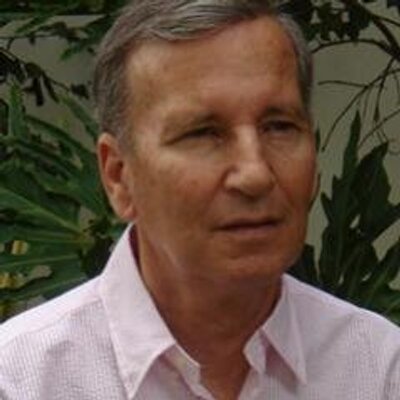
Dr. Avner Barnea. (LinkedIn)

“The people in the Defense Export Control Agency are not serious, unfortunately,” he told The Times of Israel. “They’re bureaucrats who lack technological understanding. They should have checked if Psy-Group was using knowledge or technology it acquired in the military. Who is making sure that these intelligence secrets don’t leak out of Israel?”

According to the Senate committee report, Psy-Group was one of three influence companies with foreign ties that the committee investigated because it initially suspected that the company may have “played a role in shaping the outcome of the 2016 US presidential election.” The other two companies were Cambridge Analytica and Colt Ventures. Psy-Group was the brand name used by Invop Ltd., an Israeli company that went into liquidation in April 2018.

Psy-Group director Royi Burstien (Facebook)

Royi Burstien, the CEO of Psy-Group at the time of the activities described in the Senate report, is a lieutenant colonel (res.) in Israeli military intelligence.

The Senate Committee’s description of Psy-Group reveals its concerns that the company may have used or offered to use methods that the firm’s employees honed in Israeli intelligence.

“The Committee examined these specific companies and their activities related to the 2016 US election to better understand how foreign influence, including the use of techniques and methodologies honed by foreign governments and intelligence services, may have been exerted in 2016,” the report stated.

According to the Senate report, “[Psy-Group founder Joel] Zamel described Burstien’s background as including work in the intelligence field, conducting influence operations. The precise nature of Burstien’s work in the intelligence field is not known to the Committee.”

The committee also cited Psy-Group’s own literature and its emphasis on intelligence capabilities.

“The Committee reviewed several documents that described the suite of services offered by Psy Group. One corporate overview, entitled ‘Shaping Reality through Intelligence and Influence,’ sent from Psy Group to American international political consultant George Birnbaum in May 2016, highlighted Psy Group’s capabilities in ‘influence’ and ‘intelligence.’”

‘These guys came out of the [Israeli] military intelligence army unit,’ Birnbaum told the committee, ‘and it’s like coming out with a triple Ph.D. from MIT.’

The committee quoted another section of Psy-Group’s marketing material that said “Psy Group’s ‘intelligence offering’ included a ‘multi-level approach to intelligence collection’ that combined open source research, cyber operations including social engineering and ‘honeypots…to extract required information from the right sources,’ and ‘covert techniques and capabilities in the physical world.’”

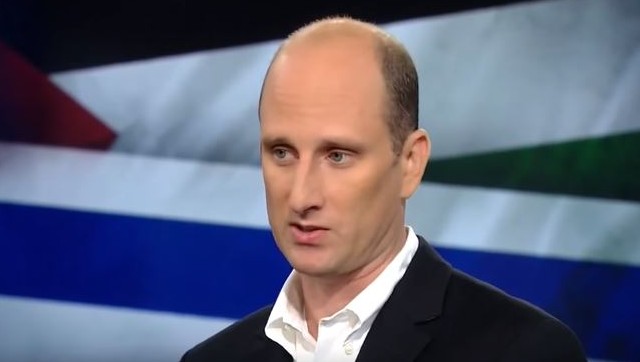
Political adviser George Birnbaum during an interview with CNN in 2014. (YouTube/ GuariscoGroup)

The committee also interviewed Birnbaum, an international political consultant who helped put Psy-Group in touch with the Trump campaign. He told the committee that Psy-Group’s capabilities were unique, as a result of their military pedigree.

“These guys came out of the [Israeli] military intelligence army unit,” Birnbaum told the committee, “and it’s like coming out with a triple Ph.D. from MIT. The amount of knowledge these guys have in terms of cybersecurity, cyber-intelligence . . . they come out of a unit in which their minds in terms of understanding cybersecurity — the algorithms that they can create — it’s just so beyond what you could get [with] a normal education that it’s just unique…there are hundreds and hundreds of Israeli start-up companies that the founders are guys who came out of this unit.”

Familiar names

The intelligence committee report cites many names that may be familiar to consumers of Israel-related news.

According to the report, Psy-Group initially got in touch with the Trump campaign in March 2016, when Kory Bardash, the head of Republicans in Israel, emailed Birnbaum, as well as Eitan Charnoff, a project manager at Psy-Group.

iVote Israel website (Screenshot)

Eitan Charnoff served as the director of the widely publicized organization iVote Israel, a purportedly non-partisan group that encourages Americans in Israel to vote in US elections, but that was accused by some voters of flubbing their absentee ballot requests. He ran iVote Israel in 2016, while he was employed at Psy-Group.

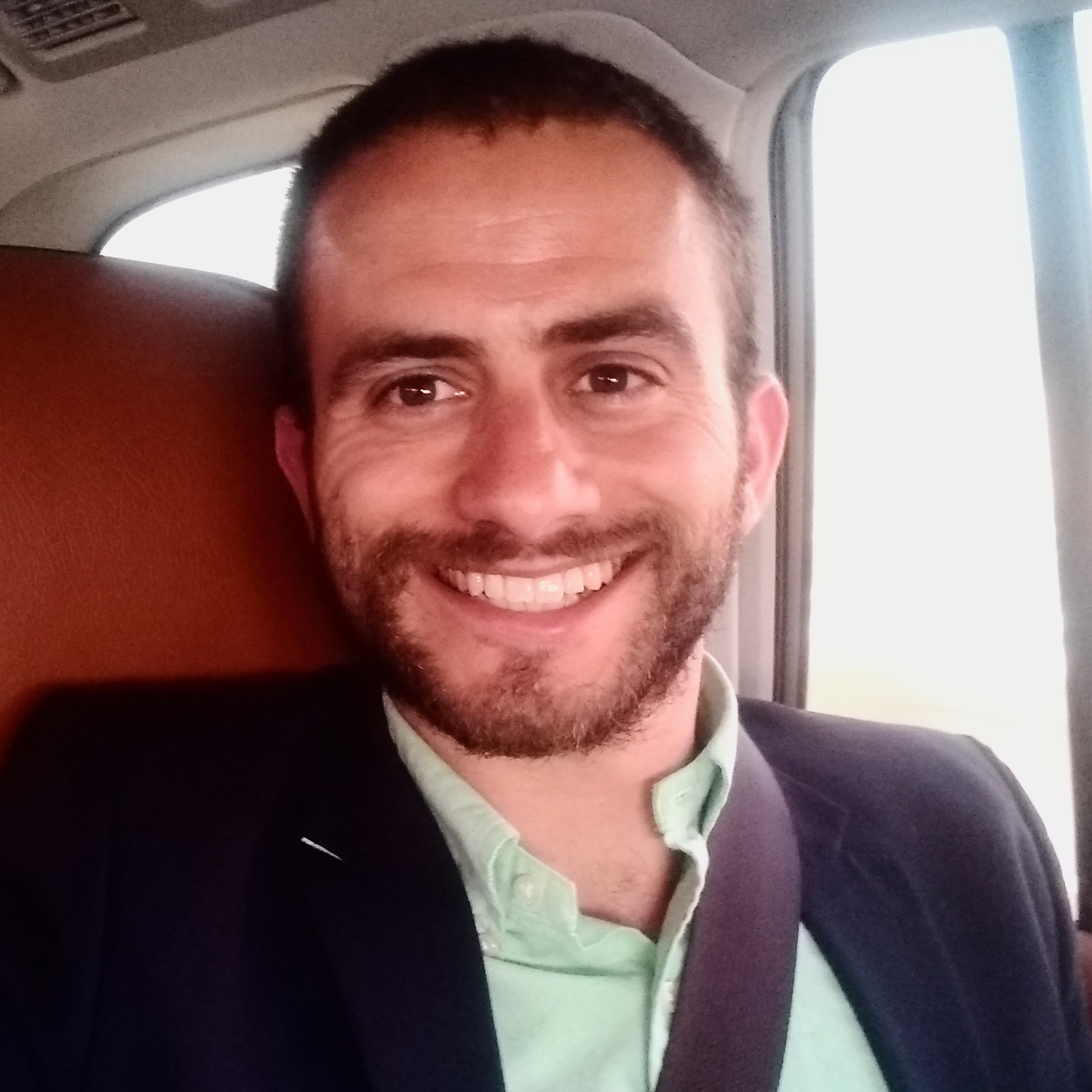
Eitan Charnoff (Courtesy)

According to the Senate report, Bardash sent an email to Birnbaum and Charnoff saying “I have spoken to both of you about the other. Hopefully, you can have a mutually beneficial chat.”

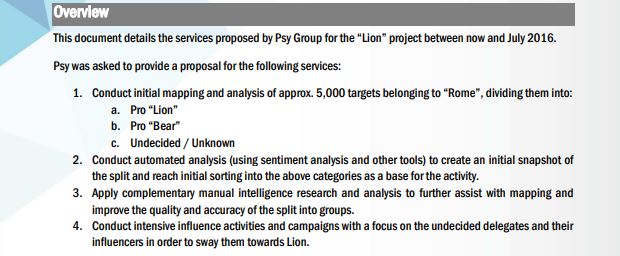
Later that spring and summer, according to the intelligence committee, Psy-Group pitched two influence and intelligence projects to the Trump campaign. These included offers to do opposition research on Hillary Clinton, offers to use fake social media profiles to covertly influence Republican National Convention delegates, and offers to target minority communities, suburban female voters, and undecided voters with covert messaging.

In internal company emails, employees also discussed the use of “hundreds of avatars driving negative messaging,” and “physical world ops like counter protests, hecklers, etc.”

According to Zamel, none of these campaigns were ever carried out: “Not a tweet, not a character, nothing,” Zamel told the committee. However, the committee noted that Zamel was paid over $1 million by George Nader, an adviser to the United Arab Emirates, with high-level Russian ties.

A screen capture from a Psy-Group proposal, reportedly for the Trump campaign, obtained by the New York Times.

The Senate report mentions the names of other Psy-Group employees who were included in emails discussing possible influence campaigns on behalf of Trump. One of these is Paul Vesely, an Australian-Israeli, who, in November 2017, posted an interview he gave on his LinkedIn profile concerning disinformation campaigns during the 2016 presidential election.

In the interview, Vesely discusses such campaigns in a knowledgeable way, although it is not clear whether he is referring to work that may have specifically been carried out by Psy-Group.

“The reason the techniques used on social media were so effective during the 2016 US presidential elections,” he is quoted as saying, “was because the messaging was segmented perfectly per target audience. This created both engaging and sometimes infuriating content tailored to appeal to specific segments of the US population. This simple yet effective marketing technique allowed millions of Americans to not just digest but crave the narrative these fake news accounts were spurting out. The second reason why the disinformation campaign was so successful was because it seemed to come from grassroots supporters even though it was being led by avatars. There is no greater power of influence than over people in a segmented group with similar interests one another’s outlook in an effective echo chamber. This echo chamber allowed real people to be involved with avatars and social group administrators who directed conversation and released information that varied in spectrum from being loosely based on truth all the way to being completely fictitious. No matter how distant the content was from the truth, when agreed upon and repeated in a group, it was extremely effective.”

The Senate Intelligence Committee said it could find no convincing evidence that Psy-Group carried out influence operations against the US on behalf of Russia. Nor did it draw a conclusion as to whether Psy-Group had carried out any influence campaigns against Americans at all.

“The Committee found no convincing evidence that Russia’s government or intelligence services worked with or through any of these companies in furtherance of Moscow’s 2016 US election interference. There are, however, limitations to the Committee’s understanding of this subject,” the report said.

The committee did, however, find that Psy-Group had worked for Russian oligarch Oleg Deripaska on another project involving a business dispute in Austria. Deripaska was introduced to Psy-Group by a man named Walter Soriano, according to the report.

“According to Burstien, Psy-Group undertook an “intelligence project” (codenamed “Project Starbucks”) in probably 2015 for Oleg·Deripaska involving a business dispute with a large Austrian company, possibly connected to real estate,” the report said.

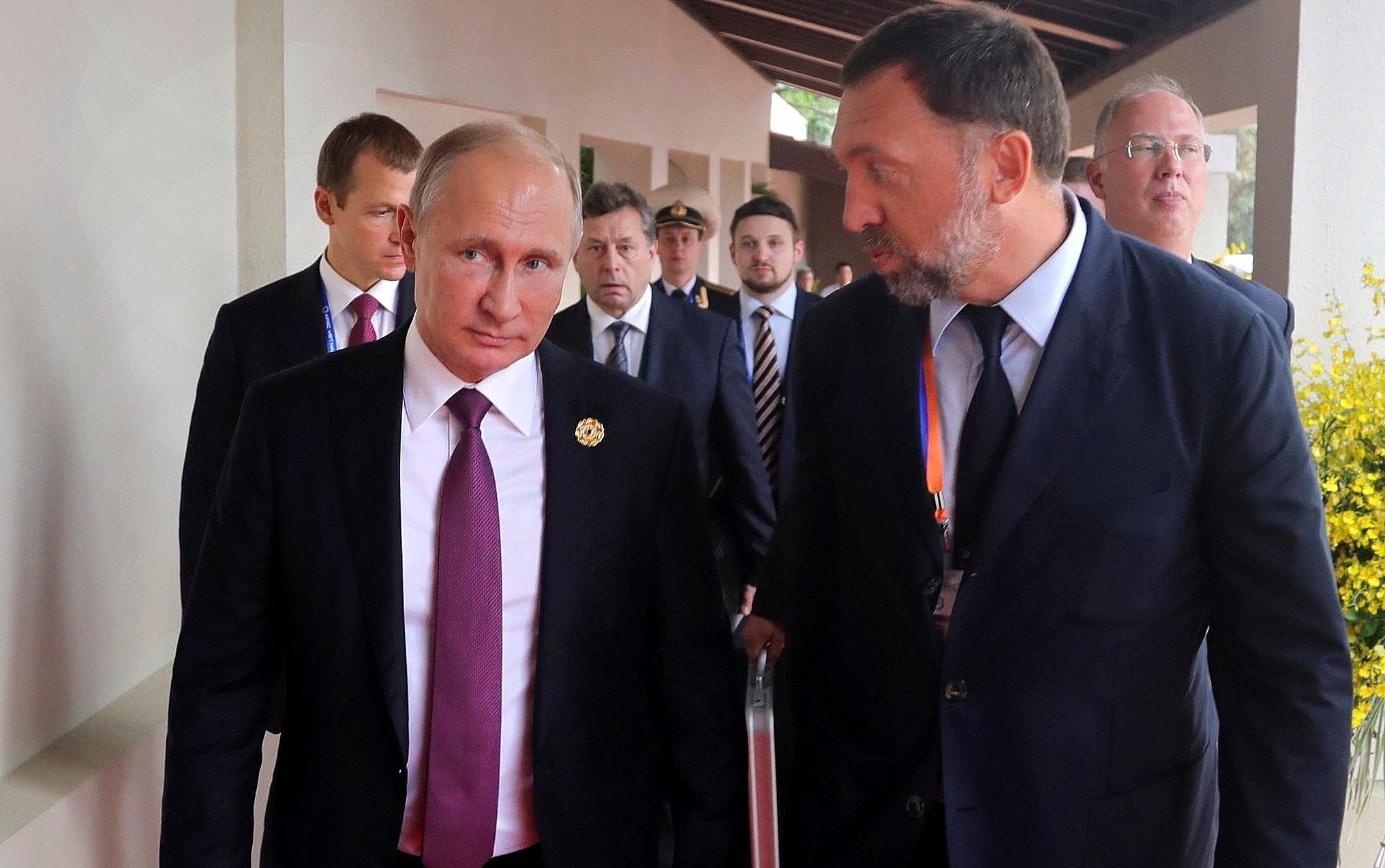
Russia’s President Vladimir Putin, left, and Russian metals magnate Oleg Deripaska, right, walking to attend the APEC Business Advisory Council dialogue in Danang, Vietnam, on November 10, 2017. (Mikhail Klimentyev, Sputnik, Kremlin Pool Photo via AP/File)

The report discusses Deripaska at great length, describing him as a key Russian operative.

“Deripaska has managed and financed Kremlin-approved and -directed active measures campaigns, including information operations and election interference efforts. Deripaska has conducted these activities in an effort to install pro-Kremlin regimes, control local economies and politicians, and strengthen Kremlin-aligned power brokers across the globe,” the report says.

The Times of Israel reported in May that Psy-Group allegedly carried out an online harassment campaign against pro-democracy activists in Ukraine, a campaign that would have strongly aligned with Russian government interests.

Categories
Saved Web Pages

The Walter Soriano files: Once claimed “close relationship” with Steve Wynn

walter-and-steve.png

August 1, 2019 7:17 pm Scott Stedman

The shadowy private intelligence/security consultant wanted for questioning by the Senate Intelligence Committee in their Russia probe, Walter Soriano, once claimed to have worked for Donald Trump’s friend and former RNC finance chairman Steve Wynn.

American billionaire Ruth Parasol, who hired the consultant Walter Soriano in the late 2000s to navigate a DoJ investigation into her company, swore under oath in 2012 that Soriano told her that he had a “close relationship” with Wynn.

Walter Soriano once said he had a "close relationship" with Steve Wynn

As previously reported by Forensic News, Parasol paid Soriano over $30,000,000 from 2009 until 2011 for multiple tasks. Soriano was hired to “resolving the DoJ issue”, “assisting Ms. Parasol… in relation to the PartyGaming business” and “investigating PartyGaming’s competitors.” PartyGaming was Parasol’s online gambling company.

Read the full declaration by Ruth Parasol in Israeli court in 2012:

Forensic News could not independently verify that Wynn had a close relationship with Walter Soriano. Lawyers for Soriano and representatives for Wynn Resorts did not respond to requests for comment. Parasol directed Forensic News to her lawyer (allegedly hand-picked by Soriano as claimed in the above lawsuit) who declined to comment.

An archived version of Soriano’s USG Security’s website shows that the company offered hotel security protection.

“Hotel Security Designed for the prevention, and implementation of:

– Violent Attacks – including Terrorism
– Public Order Disturbances
– Theft or Loss of Hotel Property
– Theft or Loss of Guests’ Possessions
– Minimal disruption to day-to-day running of the hotel
– Improvement & transparency to customer service
– Comprehensive risk assessment and security survey
– On-site Training for Security Officiers & Staff
– Security engineering during hotel construction or renovation to integrate security means into the structure
– Internal investigations into theft, fraud etc.

– Ongoing support, including consulting according to need, drills and surprise inspection of hotel security staff”

Before becoming close friends in the late 2000s, Trump and Wynn were fierce corporate competitors. In fact, in lawsuits in the late 1990s and early 2000s, Trump accused Wynn of using a private investigator to dig up dirt on Trump and the Trump Organization. The investigator, Louis Rodriguez, was working for Trump, and allegedly turned double agent.

[R]epresentatives of Wynn and Trump engaged in a nasty behind-the-scenes battle that generated allegations of fraud, money-laundering, perjury, conspiracy, and the theft of trade secrets.

The two real estate and casino magnates traded accusations of using spies, blackmail, and surreptitious recordings in order to gain dirt on each other. The two settled outside of court in 2000, and by 2011, Trump attended Wynn’s wedding.

Wynn, who had previously donated to Democrats and Republicans, rose to political prominence in 2016 when he heaped praise upon Trump. After the election, Wynn was handpicked to be a Vice Chair of the Trump inauguration and later tapped by Trump personally to become the Republican National Committee finance chairman. A year later, Wynn resigned from the post after numerous women came forward sharing experiences of Wynn’s sexual assault.

The connection between Steve Wynn and Walter Soriano is sure to pique the interest of investigators in the Senate Intelligence Committee and federal investigators.

The Senate suspects that Soriano may have knowledge of Russian election interference in 2016, due in part to his longstanding business and personal relationship with Russian oligarch Oleg Deripaska and Israeli Prime Minister Benjamin Netanyahu.

This article will be updated as more information is learned.

Forensic News is funded entirely by our readers. We don’t hide content behind paywalls or take money from corporate entities. Consider pledging your support so we can continue producing impactful investigative journalism.

Tags

ruth parasol Senate steve wynn Walter Soriano

Related Posts

Categories
Saved Web Pages

‘We’re with you,’ Biden tells Puerto Rico ahead of visit

LA5O4ONBXNFSDC7MOIFAPD2AAA.jpg

WASHINGTON (AP) — President Joe Biden on Monday will survey damage from Hurricane Fiona in Puerto Rico, where tens of thousands of people are still without power two weeks after the storm hit.

The Category 1 hurricane knocked out electrical power to the U.S. territory of 3.2 million people, 44% of whom live below the poverty line.

Power has been restored to about 90% of the island’s 1.47 million customers, but more than 137,000 others, mostly in the hardest hit areas of Puerto Rico’s southern and western regions, continue to struggle in the dark. Another 66,000 customers are without water.

President Joe Biden said, ‘Our hearts are heavy’ about the storm impacts in Florida, South Carolina and Puerto Rico, during Saturday remarks. (Source: CNN/Pool)

Biden has pledged that the U.S. government will not abandon Puerto Rico as it starts to rebuild again, five years after the more powerful Hurricane Maria devastated the island in 2017.

“We see what you’re going through, and we’re with you,” Biden told Puerto Ricans and Floridians in a message Sunday on his official Twitter account.

Florida is cleaning up after Hurricane Ian churned across that state last week, killing more than 60 people, decimating some coastal communities and flooding others. Biden plans to visit Florida on Wednesday to survey damage.

The president, accompanied by first lady Jill Biden and Deanne Criswell, the Federal Emergency Management Agency administrator, was to touch down Monday in Ponce, Puerto Rico, a city on the southern coast. Most of the storm damage is in southern Puerto Rico.

Aerial footage shows homes underwater in Puerto Rico after Hurricane Fiona struck.

Aerial footage shows homes underwater in Puerto Rico after Hurricane Fiona struck.

Puerto Rico Gov. Pedro Pierluisi said he would update Biden on recovery efforts.

“We will make sure to keep working together to ensure the continuity of a reconstruction already underway,” the governor tweeted on Sunday.

Fiona caused catastrophic flooding, tore apart roads and bridges, and unleashed more than 100 landslides when it hit Puerto Rico on Sept. 18. At least two people died after being swept away by floods, and several others were killed in accidents related to the use of candles or generator during the island-wide power outage.

Government officials have estimated some $3 billion in damages, but warn that costs could rise significantly as evaluations continue.

Some people in Puerto Rico wondered whether Biden’s visit would change anything as they recalled how President Donald Trump visited after Hurricane Maria hit as a more powerful Category 4 storm in 2017, and tossed rolls of paper towels into a crowd in a display that riled many.

Manuel Veguilla, a 63-year-old retired mechanic who lives in a remote community in the hard-hit northern mountain town of Caguas, said he didn’t expect his life to improve in the aftermath of Fiona, which cut off his neighborhood from any help for a week.

“They always offer the lollipop to the kids,” he said, referring to Biden’s visit. “But in the end, the outcome is always the same. The aid goes to those who have the most.”

Criswell, who discussed the aftermath of Fiona and Ian on four Sunday TV news programs, echoed Biden’s promise to Fiona’s victims.

“We have not left Puerto Rico,” she said on CBS’ “Face the Nation.”

Criswell said on ABC’s “This Week” that FEMA personnel were sent to the island before the storm hit and that “they’re going to stay with the people of Puerto Rico” through the recovery efforts.

Biden recently told Pierluisi that he authorized 100% federal funding for a month for debris removal, search and rescue efforts, power and water restoration, shelter and food.

The lack of electrical power on the island led to the temporary closure of businesses, including gas stations and grocery stores, as fuel supplies dwindled amid heavy generator use. As a result, many cheered the Biden administration’s decision to temporarily waive a federal law so that a British Petroleum ship could deliver 300,000 barrels of diesel.

Many also have begun demanding that Puerto Rico be fully exempted from the law, known as the Jones Act, that requires that all goods transported to Puerto Rico be aboard a ship built in the U.S., owned and crewed by U.S. citizens and flying the U.S. flag. This drives up costs for an island that already imports 85% of its food.

Sen. Marco Rubio, R-Fla., also said Puerto Ricans would not be forgotten.

Rubio said the island appeared to be “in better position to respond this time around” due to the prepositioning of personnel and supplies before the storm hit and because part of Puerto Rico’s electrical grid had been rebuilt after Hurricane Maria.

“We will do everything we can, we always have, to support Puerto Rico now in the recovery after this, yet another devastating storm,” Rubio said on CNN’s “State of the Union.”

___

Coto reported from San Juan, Puerto Rico.

Copyright 2022 The Associated Press. All rights reserved.

Categories
Saved Web Pages

Exclusive: FBI probes use of Israeli firm’s spyware in personal and government hacks – sources

?m=02&d=20200131&t=2&i=1483719354&r=LYNX

(Reuters) – The FBI is investigating the role of Israeli spyware vendor NSO Group Technologies in possible hacks on American residents and companies as well as suspected intelligence gathering on governments, according to four people familiar with the inquiry.

FILE PHOTO: Activists and journalists protest outside the Attorney General’s Office (PGR) after a criminal complaint following a report that their smartphones had been infected with spying software sold to the government to fight criminals and terrorists in Mexico City, Mexico June 23, 2017. REUTERS/Carlos Jasso/File Photo

The probe was underway by 2017, when Federal Bureau of Investigation officials were trying to learn whether NSO obtained from American hackers any of the code it needed to infect smartphones, said one person interviewed by the FBI then and again last year.

NSO said it sells its spy software and technical support exclusively to governments and that those tools are to be used in pursuing suspected terrorists and other criminals. NSO has long maintained that its products cannot target U.S. phone numbers, though some cybersecurity experts have disputed that.

The FBI conducted more interviews with technology industry experts after Facebook filed a lawsuit in October accusing NSO itself of exploiting a flaw in Facebook’s WhatsApp messaging service to hack 1,400 users, according to two people who spoke with agents or Justice Department officials.

NSO said it was not aware of any inquiry.

“We have not been contacted by any U.S. law enforcement at all about any such matters,” NSO said in a statement provided by Mercury Public Affairs strategy firm. NSO did not answer additional questions about its employees conduct but previously said government customers are the ones who do the hacking.

A spokeswoman for the FBI said the agency “adheres to DOJ’s policy of neither confirming nor denying the existence of any investigation, so we wouldn’t be able to provide any further comment.”

Reuters could not determine which suspected hacking targets are the top concerns for investigators or what phase the probe is in. But the company is a focus, and a key issue is how involved it has been in specific hacks, the sources said.

Part of the FBI probe has been aimed at understanding NSO’s business operations and the technical assistance it offers customers, according to two sources familiar with the inquiry.

Suppliers of hacking tools could be prosecuted under the Computer Fraud and Abuse Act (CFAA) or the Wiretap Act, if they had enough knowledge of or involvement in improper use, said James Baker, general counsel at the FBI until January 2018.

The CFAA criminalizes unauthorized access to a computer or computer network, and the Wiretap Act prohibits use of a tool to intercept calls, texts or emails.

NSO is known in the cybersecurity world for its “Pegasus” software other tools that can be delivered in several ways. The software can capture everything on a phone, including the plain text of encrypted messages, and commandeer it to record audio.

A business strategy firm retained on behalf of Amazon.com Inc Chief Executive Jeff Bezos, FTI Consulting, said this month that NSO could have supplied the software it said Saudi Arabia used to hack Bezos’ iPhone.

The phone began sending out more data hours after it received a video from a WhatsApp account associated with Crown Prince Mohammed bin Salman, FTI said. Saudi Arabia called the FTI allegation “absurd,” and NSO said it was not involved. Other security experts said the data was inconclusive.

The FBI is investigating and has met with Bezos, a member of his team told Reuters. A Bezos spokesman did not respond to a request for comment.

FBI leaders have indicated that they are taking a hard line on spyware vendors.

At a briefing at FBI Washington headquarters in November, a senior cybersecurity official said that if Americans were being hacked, investigators would not distinguish between criminals and security companies working on behalf of government clients.

“Whether you do that as a company or you do that as an individual, it’s an illegal activity,” the official said.

In the counterintelligence aspect of the probe, the FBI is trying to learn if any U.S. or allied government officials have been hacked with NSO tools and which nations were behind those attacks, according to a Western official briefed on the investigation.

Outside of government, journalists, human rights activists and dissidents in several countries have been victims of attacks using NSO spyware, according to the University of Toronto’s Citizen Lab researchers.

In the past, NSO has denied involvement in some of those instances and declined to discuss others, citing client confidentiality requirements.

Reporting by Joseph Menn in San Francisco and Jack Stubbs in London; additional reporting by Raphael Satter and Chris Bing in Washington; editing by Greg Mitchell and Grant McCool

Categories
Saved Web Pages

Israeli Spy Companies Show Critical Link Between Flynn, Deripaska, and Senate Intelligence Committee Target Walter Soriano

ws-fn-3.png

Walter Soriano, a target of the U.S. Senate Intelligence Committee’s investigation into foreign election interference in 2016, appears to be a key middle-man connecting a network of Israeli hacking and surveillance firms to Russian oligarch Oleg Deripaska and former Trump National Security Adviser, Lt. Gen. Michael Flynn.

Under the umbrella of technology conglomerate NSO Group, two business entities appear critical to understanding the relationship between Soriano, Russian oligarchs, and Flynn. OSY Technologies and Circles.

Soriano’s connections to those firms deepen a mystery around the former Israeli intelligence officer and raise questions about American government officials who may have been involved with his activities.

Documents reviewed by Forensic News show that OSY Technologies is currently engaged in a contract with a law firm known for its work for the sanctioned oligarch, Deripaska. Sources familiar with the matter say the law firm is standing in for Deripaska in the contract, and report that the work related to the engagement involves Circles, the OSY subsidiary hacking firm. These details generate concern about American individuals who have contracted with OSY Technologies, NSO Group, and the related firms.

One of the American officials involved in this web is Lt. Gen. Flynn, the former National Security Advisor to President Donald Trump who was convicted of lying to the FBI at the onset of the Trump Administration. Public financial disclosures show that Flynn advised OSY Technologies from mid-2016 to January 2017. OSY Technologies (sometimes a stand-in name for the NSO Group conglomerate) is primarily a consortium of cyber-spy companies run by former Israeli intelligence officers. It is funded in significant part by enormous loans, at least one of which was issued by the bank Credit Suisse.

Several of Flynn’s aides and associates also work with other firms connected to Soriano. The Trump Department of Justice is controversially moving to drop Flynn’s guilty plea, an effort that has been met with skepticism by career prosecutors and the federal judge overseeing the case. Some uncharged conduct relating to Flynn’s work for Turkey appeared in his guilty plea as a representation of the Government’s leniency toward Flynn, but none of that information related to his work for Israeli-based intelligence companies.

The other company, a Bulgarian and Cyprus-based hacking and surveillance firm called Circles, is also an offshoot in the NSO Group corporate family. Its ties to Soriano run through his personal lawyer and his longtime business partner, demonstrated by filings related to the firm.

Circles has quietly been selling its services to governments around the world. It offers robust hacking and surveillance capabilities. Their software can be used to penetrate phones, read text messages, listen in on live phone calls, and track any user, all at a client’s request. As an NSO Group affiliate, Circles has tethered itself to malign actors, like the Saudi government, who have used its services to spy on private citizens, including journalists and political opponents. NSO Group is currently under criminal investigation by the FBI.

Now, Forensic News can reveal that Circles’ direct parent company, OSY Technologies–the firm for which Flynn worked–is actively contracted to work for Russian oligarch Oleg Deripaska. Deripaska is notably an associate of Paul Manafort who was personally sanctioned by the US in 2018 for his proximity to the Kremlin after its invasion of Ukraine in 2014. Sanctions on his major companies, however, were removed by the Trump Administration in 2019.

Circles, OSY Technologies, and NSO Group aren’t the only Israeli intelligence companies with unexplained ties to Trump campaign officials and Russian oligarchs. Other Israeli firms, including data analytics and social media manipulation firms such as Psy Group, reportedly offered the Trump Presidential campaign election assistance in 2016. That company is under criminal investigation in California regarding an election influence operation that was conducted on behalf of a local businessman.

Sources tell Forensic News that Psy Group was also contracted to work for Deripaska and another Russian oligarch, Dmitry Rybolovlev. Soriano has also reportedly worked for both men. These connections emerge as U.S. investigators have focused on whether these Israeli intelligence companies operated as intermediaries for alleged coordination between the Trump Campaign and Russia.

The Senate Intelligence Committee has for over a year attempted to interview Soriano regarding potential foreign election assistance offered to the 2016 Trump presidential campaign. His connections to the Israeli intelligence firms, discovered through a maze of public and private documents compiled by Forensic News, suggest Soriano is more deeply involved in entities connected to Deripaska than previously understood.

The Committee sought information from Soriano to explain those connections and other activities related to the 2016 U.S. Presidential election. In recent weeks, Forensic News has spoken to multiple sources who indicate Soriano and Deripaska have a closer relationship than what has been publicly reported, and that the Committee’s interest in Soriano was not a mere coincidence.

The sources–who provided details to supplement public documents and existing reporting–paint a picture positioning Walter Soriano at the center of a large, international web connecting hackers and private spies to Russian oligarchs, high-profile Israelis, and Trump administration officials.

Walter Soriano

Walter Soriano picture

Exclusive image of Walter Soriano

Soriano is a businessman and former Israeli military intelligence officer. The Senate Intelligence Committee, which recently submitted its report on foreign interference in the 2016 election for a declassification review by the intelligence community, sent a letter to Soriano’s London address in 2019 asking for any and all communications he had with Deripaska and other figures.

The letter requested information about correspondences between Soriano and Deripaska’s associates, Israeli private intelligence companies like Psy Group and Black Cube, Michael Flynn, and other Trump-world figures.

Forensic News acquired the letter sent to Soriano, seen below:


In February, Soriano told the Telegraph that he never received the letter. But, according to sources, Soriano did receive it, and thought it was a fake. Forensic News understands that Soriano instructed his Washington-based attorney to contact the Senate Intelligence Committee in order to find out whether the document was authentic. The Committee affirmed that it was and that they were serious about pursuing their investigation and his testimony.

The Telegraph article reports Soriano’s lawyers called the Senate to discuss the letter’s contents just days after it was sent. “The bi-partisan committee of US senators remains keen to interview Mr. Soriano,” the publication noted.

Soriano operates behind the scenes and actively avoids appearing in photographs, sources say, but his client list is eye-popping. Through another company he personally owns and manages called USG Security, he has worked for a number of Russian government-connected entities and oligarchs including Deripaska, Dmitry Rybolovlev, and Roman Abramovich.

Soriano’s circle in Israel is perhaps even more elite than in Russia. He is reportedly close to Prime Minister Benjamin Netanyahu and allegedly surveilled members of the police force who were investigating the Prime Minister for corruption, a charge that ended in an indictment for the embattled Israeli leader. Soriano unequivocally denies those allegations.

Other Israeli associates of Soriano include Netanyahu’s close confidants, Isaac Molho and Ari Harow. Harow served as Netanyahu’s Chief of Staff before he was convicted of fraud and breach of trust.

Soriano never responded to the Senate letter.

The 2020 Firms: FloLive & Circles

Forensic News reported in April on deep ties between FloLive, a London-based IT “connectivity and security” company, and Circles, a spyware affiliate of NSO Group. NSO Group is an Israeli spyware firm that has sold surveillance software to Arab and Western countries which have then spied on dissidents allegedly including Jamal Khashoggi. FloLive and Circles shared principal shareholders and employees. At one point, both companies were owned by the same offshore corporate entity.

The two founders of Circles, Boaz Goldman and Nadia Ropleva, are now leaders at FloLive. That move is striking, as the missions for the two companies couldn’t be more divergent. Circles develops tools to hack and surveil; FloLive is involved in cybersecurity and connectivity. FloLive explicitly claims it offers protection against the exact type of hacking that Circles exploits, an intrusion referred to as “SS7” hacking.

Numerous employees from Circles have made the jump to FloLive, and vice-versa. FloLive even posted a picture on their Facebook page showing employees playing a game of soccer with staff from Circles.

But publicly, the two firms have not acknowledged any official ties.

What worries security experts is the nature of the divergent work. As FloLive works with clients in the U.K. and elsewhere to set up “connectivity protections,” it could be acting as a front group for hackers at Circles to have better access to those same networks. The more clients FloLive is responsible for protecting against cyberattacks, the more information could be passed to Circles in furtherance of its hacking efforts in Europe and around the world.

Now, Forensic News can reveal that two associates of Walter Soriano have ownership stakes in the London company, FloLive. Soriano, a close ally of Israeli Prime Minister Benjamin Netanyahu and his family and a security operative who has worked for multiple Russian oligarchs, has reportedly kept distance between himself and operations to which he oversees.

Documents from the United Kingdom show that Walter Soriano’s personal lawyer, Shlomo Rechtschaffen, as well as Soriano’s business partner, Doron Cohen, are both shareholders of FloLive. Rechtschaffen and Cohen also work for Soriano’s real estate business in London. Cohen separately partnered with Soriano in another real estate venture in Florida.

In a statement to Forensic News, Rechtschaffen denied that Soriano himself was affiliated in any way with FloLive, saying, “clients of my firm are not related to one another. As a matter of fact, Mr. Soriano had never heard the name Flo or any of the other names mentioned below, prior to your email. As to Mr. Doron Cohen, as a matter of fact, he did acquire the shares mentioned below, long before any engagement with Mr. Soriano, which was prior to his meeting Soriano.

But Mr. Rechtschaffen’s statement regarding Soriano and Cohen appears demonstrably false. According to incorporation documents filed with the state of Florida, Soriano partnered with Cohen in their Florida business venture in July 2016. That was months before Cohen obtained his shares in FloLive in December 2016, making the assertion that Cohen acquired his stake in FloLive before meeting Soriano impossible.

  • Note: Walter Soriano via Rechtschaffen has previously threatened to sue Forensic News, stating, “We see no alternative left but to issue proceedings. We put you on notice that we will rely on any further publications or articles as seriously aggravating the damage caused by the original Article and will invite the Court to increase the award for libel to reflect the malicious and calculated nature of your campaign against our client.” To date, no lawsuit has been initiated.
  • Forensic News is funded entirely by our readers. We don’t hide content behind paywalls or take money from corporate entities. Consider pledging your support so we can continue producing impactful investigative journalism.

Become a Patron!

The UK documents below indicate that Soriano’s connections to the hacking and surveillance firm Circles run deeper than publicly known.

Walter Soriano and Flo Live

FloLive shareholders include Flo Holdings

Walter Soriano's business partner Doron Cohen and Shlomo Rechtschaffen

Flo Holdings shareholders include Doron Cohen and Shlomo Rechtschaffen, two Soriano confidants.

Perhaps unintentionally, Rechtschaffen confirmed that FloLive has “involvement” with Circles. “I am Mr. Soriano’s lawyer and not his business partner, as wrongly stated by you… I have also provided legal advice for another client of mine, a company of the Flo Group (not the one mentioned in your email), long before their involvement with Circles,” he said.

He denied that Soriano had anything do with FloLive or Circles and didn’t explain why legal advice to a company would result in the lawyer receiving a large shareholder status in the firm.

Flochart showing Walter Soriano and his connections to FloLive

Michael Flynn and Walter Soriano

Soriano’s connections to Circles via his lawyer and business partner are of critical importance. Gen. Michael Flynn worked for the parent company of Circles, OSY Technologies, in 2016 and 2017.  As previously mentioned, the Senate Intelligence Committee sought communications between Soriano and Flynn. Flynn was forced to resign as National Security Adviser and pleaded guilty to lying to the FBI about his conversations with the Russian Ambassador.

OSY Technologies is managed by the directors of NSO Group, some of who are former members of the elite Israeli military signals intelligence, identified as Unit 8200. Circles is directly owned by OSY Technologies, according to documents acquired from Cyprus.

Another intriguing connection between Flynn and Soriano is Richard Frankel, a former U.S. intelligence official who left his position in the federal government to join Soriano’s private security firm USG Security in early 2016.

Frankel was a senior aide to Michael Flynn. One news report by ABC News–where Frankel is now a contributor–described Frankel as a “friend” of Flynn’s. It’s unclear if Frankel still works for USG Security, though a January 2017 book on cybersecurity listed Frankel as a “Managing Director” for that Soriano company (p. 15).

Frankel did not respond to a list of detailed questions. It is unclear whether Frankel’s departure from the U.S. intel community to join Soriano’s operation–around the same time Flynn began advising the Trump 2016 campaign and OSY Technologies and the same time Soriano’s USG began work for Rybolovlev–is related to the Senate Intelligence Committee’s request for communications between Soriano and Flynn.

Other connections between former Flynn aides and work they may have completed for Circles are also being explored. A spokesperson for the Senate Intelligence Committee did not respond when asked about the status of their investigation into Walter Soriano. Sidney Powell, an attorney for Michael Flynn, did not respond to questions about Flynn’s work for OSY Technologies.

Rechtschaffen denied that Soriano has ever had a relationship with Flynn stating, “Walter Soriano has never met, had not and does not have, any relationship whatsoever (directly or indirectly) with Mr. Flynn, hence no messages directly or indirectly have been required or ever passed.

Walter Soriano & Oleg Deripaska

Walter Soriano has associated with Deripaska for a number of years. Forensic News reported in 2019 that Soriano was hired by Deripaska’s company, Basic Element, to provide security for the 2014 Olympics at the airport in Sochi, Russia. The contract stipulated that Soriano’s USG Security had “direct control” of operations at the Sochi airport, which is majority-owned by Basic Element.

Parts of a subcontract for the Sochi deal reveal strict stipulations regarding Soriano and Deripaska, as seen below.

Walter Soriano subcontract

The subcontractors were to represent themselves as USG Security workers and mention Walter Soriano’s name to any Russian authorities

Walter Soriano confidentiality clause

The subcontract demands that the subcontractor not divert business from Deripaska and another major USG Security (Walter Soriano’s firm) client

Deripaska continues to contract with Israeli security firms for secretive work.

Forensic News has exclusively reviewed an invoice paid to OSY Technologies from a Moscow-based law firm known for its work for Deripaska and the Russian government. The invoice cited work the intelligence company, OSY Technologies, completed as recently as 2019, but began in early 2018. Sources involved with the matter told Forensic News that the law firm is a stand-in for Deripaska and there are indications in the invoice that the work began earlier than 2018.

The invoice shows that a project was paid for by the law firm, Egorov Puginsky Afanasiev & Partners (EPAP or EPAM in Russian). The document—on OSY Technologies letterhead—stated that funds were to be paid to a bank account at UniCredit Bulbank in Bulgaria controlled by OSY Technologies – the NSO Group offshoot. Included in the documents were bank account numbers for OSY Technologies.

Forensic News understands that the payment was for services completed by OSY Technologies’ subsidiary hacking company, the Bulgaria-based Circles, though the name Circles does not appear on the documents.

The invoices were sent to the head of the law firm’s Moscow branch, Elena Kuznetsova. A LinkedIn profile for Kuznetsova shows that she previously worked for Deripaska’s aluminum company, Rusal. The founder of the law firm, Dmitry Afanasiev, has worked for Deripaska’s companies for at least 14 years and even held a coveted position on the board of Rusal before stepping down when U.S. officials demanded Deripaska’s allies cede control of the company in exchange for lifting sanctions.

Forensic News is currently unable to publish the document, as the sources who provided the invoice feared that they could be in danger if it were released to the public. In a series of emails, Tom Clare, an American attorney representing Deripaska, flatly denied that his client has ever hired OSY Technologies or Circles, and rejected the claim that Deripaska has any relationship with the principals of Circles or that the Russian oligarch worked with Walter Soriano in any capacity after the 2014 Sochi Airport deal.

EPAP, the Moscow-based law firm, is also a close partner of the Russian state and has even worked for Russian President Vladimir Putin in an individual capacity. Nikolai Egorov, one of the name-sake founders of the firm, was classmates with Putin at Leningrad State University in the 1970s. He later went on to teach and was a professor to Russian Prime Minister Dmitry Mendvedev.

The other name-sake founder, Stanislav Puginsky, was handpicked by convicted Russian agent Maria Butina and her handler Alexander Torshin to attend the 2017 National Prayer Breakfast, chaired by newly-minted President Trump. Butina was recently deported to Russia after serving prison time on espionage-lite charges.

EPAP has been a successful endeavor for Egorov, and a deep-dive into the law firm by Law.com in 2007 stated that it acts as “a regular adviser to Putin’s government.”

But the firm’s U.S. ties raise more questions about connections between Trump associates and Deripaska. Records show EPAP’s U.S. branch represented Deripaska in a joint effort with Trump attorney Marc Kasowitz in a U.S. lawsuit filed by one of Deripaska’s companies. Kasowitz represented Trump in his personal capacity during the Mueller Investigation and has reportedly represented Trump and his businesses for decades. The shared representation of Deripaska and Trump made headlines in mid-2017.

Most remarkable about the contract between EPAP and OSY Technologies is that it puts Gen. Michael Flynn squarely in the middle of multiple figures that are still of interest to investigators. As mentioned, Flynn worked for OSY Technologies through January 2017. The agreement seen by Forensic News between EPAP and OSY Technologies began in 2018, though the full nature of the relationship is unknown.

Flochart showing connections to Deripaska, Flynn, and OSY Technologies

Neither the Mueller Report nor any other public investigative report has detailed Flynn’s payment from foreign firms that also receive money from Deripaska. While Flynn’s plea agreement involved admissions that he conducted foreign work for Turkey in violation of laws about lobbying disclosure, the document made no reference to Flynn’s work with Israeli technology firms—a curious omission, especially in light of further revelations that Mueller examined whether George Papadopoulos (a Trump campaign foreign policy advisor) was an unregistered agent of Israel.

Flynn is not the only name with tenuous connections to Deripaska and Trump advisers. Georgiy Oganov, one of the aides who sources told us briefs Deripaska on information obtained by Circles and OSY Technologies, was mentioned in the Mueller Report. The Special Counsel documented a January 2017 meeting in Spain between Oganov and former Trump campaign manager Paul Manafort.

Another thread tying the three together: Manafort, Deripaska, and Oganov were all caught up in a controversy about recordings made by a Russian escort, Nastya Rybka, in 2016. Forensic News has learned that Walter Soriano may have been involved in that controversy as well.

Soriano, Oganov & Deripaska’s Mistress

Deripaska and his mistress Nastya Rybka.

Nastya Rybka and Oleg Deripaska
Courtesy: New Europe

Rybka, a Belarusian escort and self-described “sex coach” who had a relationship with Deripaska, claimed in 2018 to have audiotapes showing coordination between the Trump campaign and Russia after her monthslong affair with Deripaska in mid-2016 and early 2017.

She was arrested in Thailand in 2018 after she famously published a video taken in August 2016 of Deripaska discussing U.S. relations on a yacht with the Russian Deputy Prime Minister, Sergei Prikhodko. The woman claimed to have other video and audio recordings connecting Deripaska to Paul Manafort, and allegedly recorded Deripaska discussing election interference activities.

During the Mueller probe, the FBI unsuccessfully sought to speak with Rybka. She was later extradited back to Russia, where she was forced to publicly apologize to Deripaska at the Moscow airport.

An Intelligence Online report in late 2019 stated that Walter Soriano was involved in the Rybka affair at the behest of Deripaska, aiding in Deripaska’s effort to obtain the sensitive materials possessed by Rybka. Two sources familiar with this episode confirmed that Soriano was indeed involved, directly or indirectly, in attempting to silence Rybka. Rechtschaffen denied these claims.

Russian agents told Rybka to keep quiet about Deripaska, and the other audiotapes she claimed to have in her possession have never been published. Social media posts indicate that Rybka now resides in Moscow and runs an “online school for seduction.” Reached by Forensic News via the messaging app WhatsApp, Rybka declined to comment on anything political, stating that she would only speak about her commercial activities.

Russian opposition leader Alex Navalny revealed more of Rybka’s audio in 2019. Recordings make clear that Deripaska’s associates–including Georgiy Oganov–plotted the arrest of Rybka. “What we are interested in is that these people be kept in jail,” Oganov can be heard saying to an unknown lawyer named William.

Given Oganov’s reported service as Deripaska’s intermediary to Soriano and the inclusion of his name in both the Mueller Report and the Senate’s letter to Soriano, his discussion of silencing Rybka adds credence to allegations Soriano was involved in Rybka’s plight.

The US government has since determined that Oganov is a critical intermediary for Deripaska. As noted above, Special Counsel Robert Mueller’s report on Russian interference in the 2016 election detailed a meeting between Paul Manafort and Oganov. The meeting took place in January 2017, after Russian efforts to interfere on Trump’s behalf had been revealed. The European connection was initially denied by Manafort, but U.S. investigators were not convinced.

Mueller reported that the men were slated to discuss “recreating the old friendship” between Deripaska and Manafort at the January meeting, which allegedly took place in Madrid. That Manafort was willing to meet with Oganov after his own expulsion from the Trump campaign as well as recently-published allegations of improper ties between Trump and Russia suggests Oganov was a person of critical importance to Manafort. The meeting was also arranged by Konstantin Kilimnik, an alleged Russian agent who acted as a go-between for Manafort and Deripaska during the campaign season:

Mueller report passage regarding Georgiy Oganov

Allegations that Oganov is both a critical intermediary between Deripaska and Manafort and Deripaska and Israeli intelligence firms have significant consequences. Manafort’s transmission of voter and polling data to alleged GRU-agent Kilimnik in 2016 looks more compelling in light of this new information. Mueller’s team was unable to determine (V. 1, p. 131) what happened to the polling data after Manafort gave it to Kilimnik.

It is notable that the Senate Intelligence Committee, led by Republican Chairman Richard Burr and Democratic Ranking Member Mark Warner, requested information from Soriano on his communications with many of these individuals. The Committee finalized the last section of its investigation into foreign interference in the 2016 Presidential Election just weeks ago, as Burr was forced to step down amidst allegations of insider trading.

The final section was submitted for declassification review on Burr’s last day in his role as Committee Chair. The Republican-led Committee has been known for its quiet, bipartisan work throughout the Trump Administration: its Republican majority notably issued a subpoena to Donald Trump, Jr. in June 2018, despite fierce opposition from President Trump.

The final section of the report, reportedly approximately 1000 pages, is said to detail a counterintelligence investigation conducted into the Trump Campaign’s connections with foreign actors. Such an investigation may be more extensive than the criminal investigation conducted by Robert Mueller, as counterintelligence investigations typically have a wider scope than criminal ones.

The Senate Intelligence Committee Report is slated to be released publicly–with redactions–in the coming weeks.

When asked whether Walter Soriano features in the upcoming report, both Senators Burr and Warner declined to comment.

Forensic News is funded entirely by our readers. We don’t hide content behind paywalls or take money from corporate entities. Consider pledging your support so we can continue producing impactful investigative journalism.

Become a Patron!

Categories
Saved Web Pages

Aretha Franklin Was Tracked By the FBI for 40 Years. Here’s What’s In Her File

b7b32fd7217502a039199494faae5f54

The agency tried — and failed — for decades to tie the Queen of Soul to “extremists”

Categories
Saved Web Pages

CIA betrayed informants with shoddy covert comms websites

shutterstock_cia_logo.jpg

For almost a decade, the US Central Intelligence Agency communicated with informants abroad using a network of websites with hidden communications capabilities.

The idea being: informants could use secret features within innocent-looking sites to quietly pass back information to American agents. So poorly were these 885 front websites designed, though, according to security research group Citizen Lab and Reuters, that they betrayed those using them to spy for the CIA.

Citing a year-long investigation into the CIA’s handling of its informants, Reuters on Thursday reported that Iranian engineer Gholamreza Hosseini had been identified as a spy by Iranian intelligence, thanks to CIA negligence.

“A faulty CIA covert communications system made it easy for Iranian intelligence to identify and capture him,” the Reuters report stated.

Word of a catastrophic failure in CIA operational security initially surfaced in 2018, when Yahoo! News reporters Zach Dorfman and Jenna McLaughlin revealed “a compromise of the agency’s internet-based covert communications system used to interact with its informants.”

The duo’s report indicated that the system involved a website and claimed “more than two dozen sources died in China in 2011 and 2012” as a result of the compromise. Also, 30 operatives in Iran were said to have been identified by Iranian intelligence, fewer of whom were killed as a consequence of discovery than in China.

Blocks of sequential IP addresses registered to apparently fictitious US companies were used to host some of the websites

Reuters found one of the CIA websites, iraniangoals[.]com, in the Internet Archive and told Citizen Lab about the site earlier this year. Bill Marczak, from Citizen Lab, and Zach Edwards, from analytics consultancy Victory Medium, subsequently examined the website and deduced that it had been part of a CIA-run network of nearly 900 websites, localized in at least 29 languages, and intended for viewing in at least 36 countries.

These websites, said to have operated between 2004 and 2013, presented themselves as harmless sources of news, weather, sports, healthcare, or other information. But they are alleged to have facilitated covert communications, and to have done serious harm to the US intelligence community and to those risking their lives to help the United States.

“The websites included similar Java, JavaScript, Adobe Flash, and CGI artifacts that implemented or apparently loaded covert communications apps,” Citizen Lab explains in its report. “In addition, blocks of sequential IP addresses registered to apparently fictitious US companies were used to host some of the websites. All of these flaws would have facilitated discovery by hostile parties.”

The websites were designed to look like common commercial publications but included secret triggering mechanisms to open a covert communication channel. For example, the supposed search box on iraniangoals[.]com is actually a password input field to access such its hidden comms functionality – which you’d never guess unless you inspected the website code to see the input field identified as type="password" or unless the conversion of text input into hidden • characters gave it away.

Entering the appropriate password opened a messaging interface that spies could use to communicate.

The encrypted messaging widgets from CIA can be found on websites in numerous languages, & technical fingerprints made it possible to find more websites within the network, even nearly a decade after they had been taken down, thanks to the @waybackmachine. Did the CCP know too? https://t.co/5CFa11mFbT

— Zach Edwards (@thezedwards) September 29, 2022

Citizen Lab says it has limited the details contained in its report because some of the websites point to former and possibly still active intelligence agents. It says it intends to disclose some details to US government oversight bodies. The security group blames the CIA’s “reckless infrastructure” for the alleged agent deaths. Zach Edwards put it more bluntly on Twitter.

“Sloppy ass website widget architecture plus ridiculous hosting/DNS decisions by CIA/CIA contractors likely resulted in dozens of CIA spies being killed,” he said.

What makes the infrastructure ridiculous or reckless is that many of the websites had similarities with others in the network and that their hosting infrastructure appears to have been purchased in bulk from the same internet providers and to have often shared the same server space.

“The result was that numerical identifiers, or IP addresses, for many of these websites were sequential, much like houses on the same street,” Reuters explained.

Such basic errors continue to trip up spy agencies. Investigative research group Bellingcat, for example, has used the sequential numbering of passports to help identify the fake personas of Russian GRU agents. It described this blunder as “terrible spycraft.”

And while numerically proximate or sequential identifiers may go unnoticed some of the time – security through obscurity – it only takes one double agent aware of the scheme to allow adversaries to connect the dots.

In the case of Iran, that’s what happened, according to Yahoo! News: “Though the Iranians didn’t say precisely how they infiltrated the network, two former US intelligence officials said that the Iranians cultivated a double agent who led them to the secret CIA communications system.”

The CIA did not respond to a request for comment. ®

A former NSA man has been charged with three counts of espionage. Jareh Sebastian Dalke, 30, of Colorado Springs, is accused of emailing three classified files to someone he thought was a foreign government agent but was in fact an undercover FBI agent.

Dalke left the NSA in July this year, and soon after attempted to leak documents he had stolen from the agency, prosecutors claim. According to the Justice Dept, Dalke claimed he “had taken highly sensitive information relating to foreign targeting of US systems, and information on US cyber operations, among other topics,” and wanted cryptocurrency in exchange for the files.

He was arrested on September 28 and was due to appear in court today. If convicted, he potentially faces the death penalty or any length of time behind bars.

Categories
Saved Web Pages

Convictions in FBI Sting of Politician Should Be Thrown Out, Legal Scholar Says

GettyImages-84611044-1.jpg

An Ohio politician who was ensnared in an FBI “sting” wants his two corruption-related convictions thrown out—a challenge that ought to prevail, says a legal scholar who has followed the case closely.

Lawyers for Alexander “P.G.” Sittenfeld, a former Cincinnati city councilman who was convicted of bribery and attempted extortion this summer, filed motions for acquittal and a new trial on Sept. 30 in the U.S. District Court in Cincinnati.

Epoch Times Photo Ken Katkin, professor of law at Northern Kentucky University. (Courtesy of Northern Kentucky University Chase School of Law)

While such post-trial motions are common, they rarely succeed. But Ken Katkin, a professor of law at Northern Kentucky University near Cincinnati, opined that Sittenfeld’s main argument is valid.

“I don’t think there was any crime here at all,” Katkin told The Epoch Times, predicting that Sittenfeld will eventually win a reversal. He thinks the prosecution of Sittenfeld was an “overreach,” resulting from the FBI’s making corruption cases a top priority.

Federal prosecutors didn’t immediately respond to a reporter’s emails requesting comment.

Controversies Followed Verdict

The latest actions in the case came days after a federal appeals court refused to allow Sittenfeld’s lawyers to dig into the cellphone of “Juror X,” who had repeatedly posted on Facebook about her jury experience during Sittenfeld’s trial.

After questioning Juror X and three other jurors, judges ruled they found no evidence that her actions tainted the verdict, so no further invasion of her privacy was warranted.

Although jurors convicted Sittenfeld on two federal charges in July, they acquitted him of four similar counts—a sign of the jury’s “obvious confusion” because the allegations related to the same patterns of conduct, his attorneys wrote.

Bogus Developers

Events leading to Sittenfeld’s prosecution began in 2018. Undercover FBI agents, posing as would-be real-estate developers, approached Sittenfeld and began discussing a project to redevelop a blighted area. They secretly recorded their conversations and also worked with an actual developer, who served as an informant.

The agents tried to “bait” Sittenfeld into violating campaign-finance laws, his lawyers wrote. But Sittenfeld “repeatedly declined non-compliant campaign contributions,” including cash, money orders, and trips to Miami, Las Vegas, and Nashville.

However, Sittenfeld did pledge to support the project that the fake developers, known as “Rob,” “Vinny,” and “Brian,” described. And the men eventually gave Sittenfeld a total of $40,000, authorities said. The funds went to Sittenfeld’s political action committee.

If that pattern of conduct constitutes bribery, “it means that substantially all campaign fundraising in this country” would fit that definition, Katkin said.

But that cannot be so, according to three U.S. Supreme Court cases, Katkin said. To violate federal corruption laws, an official must make an “explicit” promise to take a specific action, contingent upon payment or contributions, the court has ruled, Katkin said.

Katkin, who attended Sittenfeld’s trial every day, said those conditions weren’t met in Sittenfeld’s case. And because the project proposal was phony, there was never any vote or official action taken.

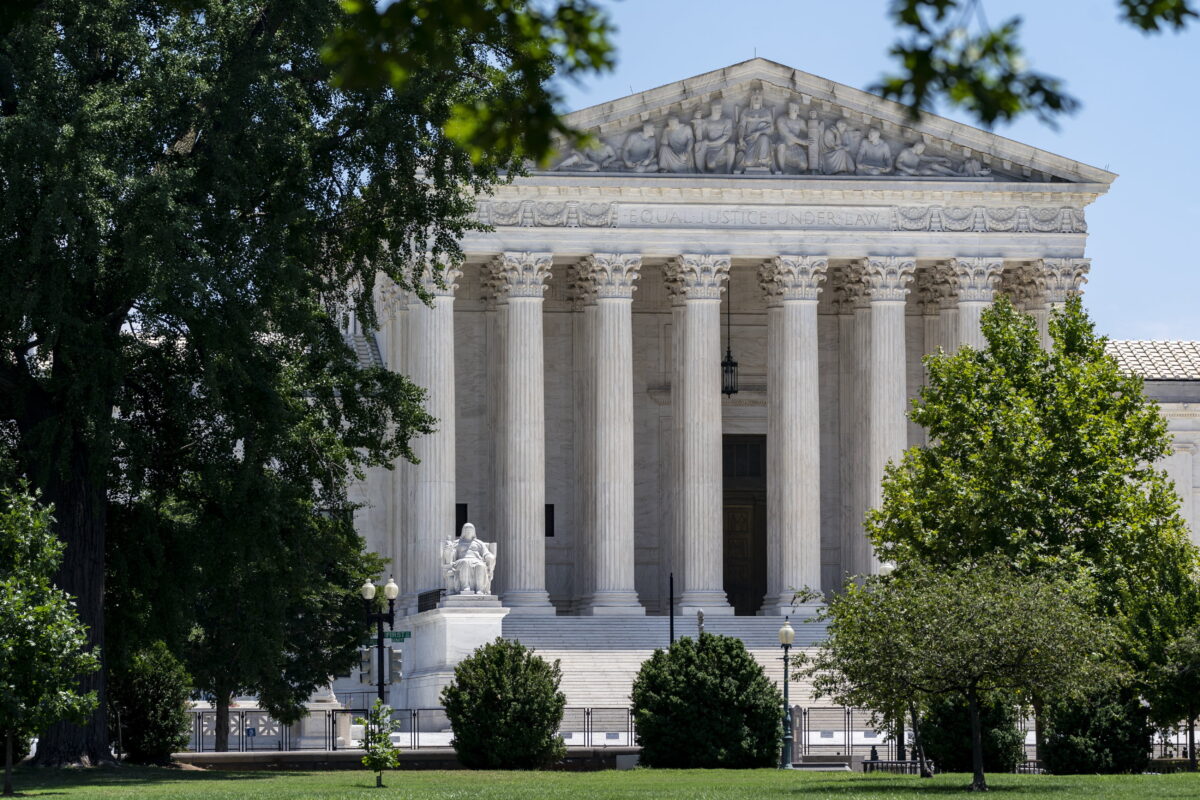
Supreme Court The Supreme Court is seen on Capitol Hill in Washington on July 14, 2022. (J. Scott Applewhite/AP Photo)

Incorrect Jury Instructions?

Katkin thinks U.S. District Judge Douglas Cole erred when he, in essence, instructed jurors that Sittenfeld violated the law if he accepted funds from “developers” who could benefit from that “some way, somehow.”

However, Katkin thinks it’s unlikely that Cole will rule that he was mistaken. Therefore, Katkin said, Sittenfeld will probably need to appeal to a higher court to rule on whether the jury instructions conflicted with the U.S. Supreme Court’s rulings in corruption cases.

At age 27, Sittenfeld had become the city’s youngest-ever councilman; he took office in 2011 and served until 2020, when he was suspended in the wake of his indictment.

Sittenfeld’s supporters, decrying “false and unjust allegations” against him, established a webpage called “Friends of PG Legal Support Effort.” They wrote: “We have absolute faith in PG’s character, his honesty, his ethics, his commitment to public service, and his love of Cincinnati, which he has served with excellence for a decade.”

Sittenfeld was one of three Cincinnati council members to face corruption charges in separate scandals in 2020.

Former councilwoman Tamaya Dennard, who pleaded guilty to taking $15,000 in bribes, was recently released from prison and has been working for a nonprofit that helps find employment for ex-convicts, according to The Cincinnati Enquirer.

No trial date has been set for another former Cincinnati councilman, Jeff Pastor.

WP Radio
WP Radio
OFFLINE LIVE