Russian officials named a 25-year old Krasnodar man, Samir Yusubov, as the owner of the truck, and said an older relative, Makhir Yusubov, was the driver.
Categories
 The Brooklyn Times - bklyntimes.com
The Russian naval flagship sinking by a Ukrainian anti-ship missile in April has prompted the US Navy to increase their efforts toward directed energy defenses on warships, USNI News reported, citing service officials.
The Slava-class cruiser’s missile and gun-based point defense systems couldn’t intercept the two R-360 Neptune missiles fired at it, as they struck and sank the ship.
The outlet quoted Chief of Naval Operations Adm. Mike Gilday, who said that the April 15 incident “underscored the need for us to put more resources against the defense of the fleet.”
“…next generation is definitely going to be defined by directed energy and high-powered microwaves.”
US naval ships currently use “Standard” family missiles or the Evolved Sea Sparrow short-range missile, including “a wall of 20mm bullets from a Mk 15 Close-in Weapon System to try and stop an incoming missile,” the outlet wrote.
The navy is developing laser, microwave, and electronic warfare as warship air and point defense systems, restricting the more expensive ship-launched missiles for offensive usage only.
The navy tested the 150-kilowatt Solid State Laser Technology Maturation Laser Weapons System Demonstrator from the amphibious transport ship USS Portland last year. Moreover, the 60-kilowatt HELIOS system is being deployed on the Arleigh Burke Flight IIA destroyer.
 Artist’s rendering of Lockheed Martin’s HELIOS system. Image courtesy Lockheed Martin
Zumwalt-class guided-missile destroyers are also being designed with an integrated power system to power directed energy weapons.
“Our investment in next-generation technology with respect to whether it’s directed energy, or in other words laser weapons, or high-powered microwave, what happened in the Black Sea has informed my thinking on that particular line of effort and the resources we’re putting against it,” Gilday added.

Any impediment to traffic on the bridge could affect Russia’s ability to wage war in southern Ukraine, where Ukraine’s forces have been fighting an increasingly effective counteroffensive.
Send any friend a story
As a subscriber, you have 10 gift articles to give each month. Anyone can read what you share.

A large explosion hit the Kerch Strait Bridge on Saturday. The bridge links the Russian-occupied Crimean Peninsula to Russia, and is a primary supply route for Russian troops fighting in the south of Ukraine.CreditCredit…Agence France-Presse — Getty Images


By Michael Schwirtz and Andrew E. Kramer
KYIV, Ukraine — A fireball consumed two sections of the only bridge linking the occupied Crimean Peninsula to Russia on Saturday, disrupting the most important supply line for Russian troops fighting in southern Ukraine and dealing an embarrassing blow to the Kremlin, which is facing continued losses on the battlefield and mounting criticism at home.
The blast and fire sent part of the 12-mile Kerch Strait Bridge tumbling into the sea and killed at least three people, according to the Russian authorities. A senior Ukrainian official corroborated Russian reports that Ukraine was behind the attack. The official, speaking on the condition of anonymity because of a government ban on discussing the blast, added that Ukraine’s intelligence services had orchestrated the explosion, using a bomb loaded onto a truck being driven across the bridge.


Outer two lanes
collapsed here.
Several tanker cars
of a train could be
seen burning here.


Outer two lanes
collapsed here.
Several tanker cars
of a train could be
seen burning here.
Source: Damage locations are based on photographs, video and satellite imagery.
By Marco Hernandez; satellite images by Google from March 2020.
For President Vladimir V. Putin of Russia, who presided over the bridge’s opening in 2018, the explosion was a highly personal affront, underscoring his failure to get a handle on a relentless series of Ukrainian attacks.
The explosion is emblematic of a Russian military in disarray. Russian forces were unable to protect the bridge, despite its centrality to the war effort, its personal importance to Mr. Putin and its potent symbolism as the literal connection between Russia and Crimea.
Hours after the explosion, the Kremlin appointed Gen. Sergei Surovikin, yet another new commander, to oversee its forces in Ukraine. Previous leadership shake-ups have done little to right the military’s floundering performance.

A Russian military vehicle captured by Ukrainian forces was driven away from the front line in the Kherson region of Ukraine on Saturday. Ukraine’s forces have been fighting an increasingly effective counteroffensive in the southern part of the country.Credit…Nicole Tung for The New York Times
The full extent of the damage was not immediately clear. The bridge has sections for train and automobile traffic. By Saturday evening, the railroad section of the bridge had undergone repairs and a train with 15 cars had successfully crossed the span, according to a Russian state news agency, Tass. Car traffic had also resumed on the undamaged side of the bridge, the head of Crimea, Sergei Aksyonov, said in a post on Telegram.
Even so, Russian officials, military bloggers and politicians were already calling for revenge, with one saying that anything short of an “extremely harsh” response would show weakness.
Any serious impediment to traffic on the bridge could have a profound effect on Russia’s ability to wage war in southern Ukraine, where Ukrainian forces have been fighting an increasingly effective counteroffensive. The bridge is the primary military supply route linking Russia with the Crimean Peninsula. Without it, analysts said, the Russian military will be severely limited in its ability to bring fuel, equipment and ammunition to Russian units fighting in the Kherson and Zaporizhzhia regions, two of the four Ukrainian provinces that Mr. Putin announced Russia had annexed on Sept. 30.
Russia’s National Anti-Terrorism Committee said in a statement that a truck had exploded on the automobile side of the bridge, igniting seven fuel cisterns being pulled by a train on a parallel rail line headed in the direction of Crimea.
It was unclear if the driver of the truck, who died in the blast, was aware there were explosives inside. In video captured by a surveillance camera on the bridge, a huge fireball is seen, seeming to consume several vehicles. A small sedan and a tractor-trailer truck driving side by side appear at the epicenter of the blast. The explosion caused two sections of the bridge to partly collapse.
For the Ukrainians, the explosion “is not necessarily a decisive victory, but the balance of war often turns on an accumulation of lesser victories,” said Ben Barry, a senior fellow at the International Institute for Strategic Studies, a research group based in London. “It is another ratchet of the pressure on President Putin.”
While there were no official claims of responsibility, Ukrainian officials, who in the past have said the bridge would be a legitimate target for a strike, indicated that the explosion was no accident and made no secret of their satisfaction.
“Crimea, the bridge, the beginning,” Mykhailo Podolyak, an adviser to Ukraine’s president, wrote in a Twitter post on Saturday. “Everything illegal, must be destroyed. Everything stolen returned to Ukraine. All Russian occupiers expelled.”
Ukraine’s domestic intelligence agency, the Security Service of Ukraine, known by its Ukrainian acronym S.B.U., issued a statement rephrasing a stanza of a poem by Ukraine’s national poet, Taras Shevchenko. “Dawn, the bridge is burning beautifully,” the agency posted on Twitter. “A nightingale in Crimea meets the S.B.U.”
President Volodymyr Zelensky of Ukraine seemed to allude to the attack when he noted in his nightly address that Saturday “was a good and mostly sunny day” in Ukrainian territory. “Unfortunately, it was cloudy in Crimea,” he said.
The Kremlin’s spokesman, Dmitri S. Peskov, referred to the episode as an “emergency” in a statement on Saturday. He said that Mr. Putin, who had celebrated his 70th birthday on Friday, had been briefed.
“The president directed the prime minister to form a government commission to find out the causes of the incident and eliminate the consequences as soon as possible,” Mr. Peskov said, according to Russian state media.
Occupation officials in Crimea left little doubt about who they thought was responsible.
“Ukrainian vandals were able to reach the Crimean bridge with their bloody hands,” said Vladimir Konstantinov, the head of Crimea’s Kremlin-installed Parliament.
In recent weeks, military traffic heading across the bridge into Crimea has increased, as Russia has raced tanks and artillery equipment to the front lines in the Kherson region, a fertile slice of southern Ukraine that the Kremlin’s forces occupied in the first weeks of the war.
Ukrainian forces have stepped up their counteroffensive in the region, recapturing significant amounts of land in an effort to drive Russian forces east across the Dnipro River and liberate the city of Kherson, the only regional Ukrainian capital that Russian forces control.
Without the Kerch Strait Bridge, particularly the railroad section, the Kremlin would have few good options for supplying these troops with fuel and military equipment from their stocks in Russia, analysts said. Ferrying supplies by ship or plane to Crimea would be much more cumbersome, experts said. And a possible alternative overland supply route using southern Ukrainian territory seized by Russian forces would be vulnerable to Ukrainian attack and require the use of trucks, as there are no functioning rail lines.
“Essentially all heavy military traffic passed through the bridge, tanks, artillery and so on,” said Konrad Muzyka, a military analyst with Roshan Consulting.
In a statement, Russia’s defense ministry said troops in southern Ukraine would be supplied “fully and without interruption” by ground and sea, though it did not explain how this might be accomplished.
Ukraine’s monthlong blitz to retake territory from retreating Russian forces in the northeast of the country continued on Saturday, and Russia stepped up its bombardments of civilian infrastructure from the air.
Early on Saturday Kharkiv in eastern Ukraine was rocked by explosions. Photos of an explosion showed a red fireball lighting up the night sky, enveloped by a billowing cloud of dark smoke. Buildings, including a medical institution, were on fire, Kharkiv’s mayor, Igor Terekhov, wrote on Telegram. It was not immediately known whether there were deaths or injuries.
Almost at the same time, Russian shelling also damaged the last line connecting the Zaporizhzhia nuclear power plant to Ukrainian energy systems, cutting it off from the power grid that is used to cool its reactors. The plant, Europe’s largest, has been disconnected from external power at least twice before, forcing it to rely on diesel generators to power safety equipment.
Herman Galushchenko, Ukraine’s energy minister, said in a Facebook post on Saturday that there was only enough diesel fuel to operate the plant for about 10 days, adding that the professionalism of Ukrainian nuclear workers was now the only “safeguard against a possible nuclear accident.”
Whether or not Ukraine takes responsibility for the bridge blast, the episode is redolent of other attacks carried out by Ukrainian forces against targets that were highly symbolic and showcased Ukraine’s military ingenuity in the face of a much stronger, more heavily armed Russian military.
In April, two Ukrainian-made Neptune cruise missiles, a weapon system that had never before been used in battle, slammed into the hull of the Moskva, the flagship of Russia’s Black Sea fleet. The strike set off a series of explosions that eventually caused the cruiser to sink, killing an unknown number of sailors, including possibly the ship’s captain.
While the attack on the Moskva stunned Russia’s military establishment, it was a series of explosions over the summer at military targets in Crimea that truly underscored Ukraine’s ability to strike at Russia’s pride as well as its army. The attacks, including on the critical Saki Air Base, shattered the illusion that Crimea, the crown jewel of Mr. Putin’s years of conquest in Ukraine, would be spared violence during the war.
Seized by Mr. Putin’s forces in 2014 and illegally incorporated into Russia shortly after, Crimea has steadily transformed from a quiet summer resort destination in southern Ukraine into a beachhead of military operations which, before the war, had become a symbol of Russia’s imperial resurgence.
The bridge itself is an engineering marvel that cost an estimated $7.5 billion and for the first time created a physical link between the Russian Federation and Crimea, which for centuries was part of the Russian Empire before being given by the Soviet government to Ukraine in the 1950s, in what was then a largely ceremonial gesture.
The bridge allowed easier access to Crimea not only for Russian tourists, but also for Russia’s military, which transported weapons and equipment into the peninsula in the years before February’s invasion.
It was from Crimea that Russian forces attacked southern Ukraine, quickly gobbling up large swaths of the Kherson and Zaporizhzhia regions in the Kremlin’s most successful operation in the war to date.
But, as the attack on the bridge underscored, that success seems increasingly imperiled.
After the explosion, Russian officials, along with the country’s increasingly bellicose military bloggers, did not wait for confirmation that Ukraine was responsible, calling for a swift and devastating response.
“If this time, we do not respond or do not respond just so, it will show definitively that we are weak,” said Sergei Mironov, the leader of a pro-Kremlin political party. “This extreme audacity requires an extremely harsh response.”
Reporting was contributed by Maria Varenikova from Kryvyi Rih, Ukraine, Megan Specia from Kyiv, Ukraine, Cassandra Vinograd from London and Katrin Bennhold from Berlin.
In July this year, U.S. lawmakers asked the armed services to expedite efforts toward developing Directed Energy Weapons (DEWs). The U.S. defense industrial complex has been testing High beam laser weapons in conjunction with the military at an unprecedented speed.
U.S. Defense giant Lockheed Martin recently revealed that it had delivered a 300-kilowatt laser to the Defense Department for use in future Army high-energy laser demonstrations. It is the highest-powered laser to date for the U.S. Department Of Defense.
Lockheed Martin developed the laser as part of the Pentagon’s High Energy Laser Scaling Initiative (HELSI), which aims to expand the directed energy industrial base and enhance the caliber of laser beams.
According to the press release, Lockheed was chosen by the Pentagon in 2019 to scale its spectrum beam combined high energy laser architecture to the 300 kW-class level as part of the HELSI project. The task was done ahead of schedule, according to the announcement.
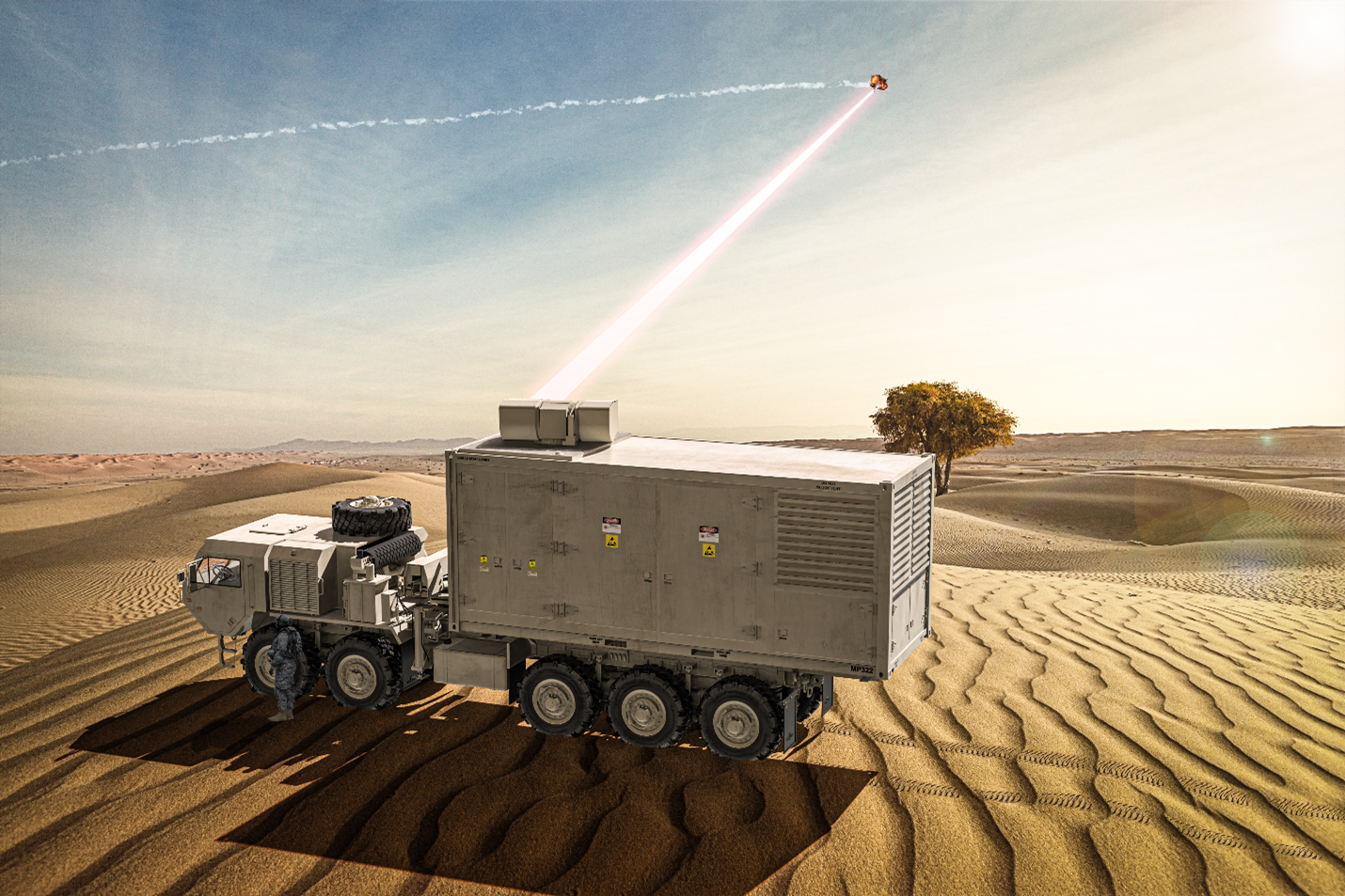 U.S. Army’s Indirect Fires Protection Capability-High Energy Laser (IFPC-HEL) Demonstrator laser weapon system- Lockheed Martin
Given its accuracy, quick response, and high “hit probability” against fast-moving missiles, DEWs are becoming more popular as non-kinetic hard and soft kill defenses against ballistic missile threats.
Lockheed Martin vice president of advanced product solutions Rick Cordaro stated that the laser uses “spectral beam combination architecture.”
Spectral beam combining (SBC), also referred to as wavelength beam combining, is the process of superimposing several laser emitter outputs at distinct wavelengths to create a single beam.
The laser will partake in and assist U.S. Army’s Indirect Fires Protection Capability-High Energy Laser (IFPC-HEL) scheduled for lab and field testing this year.
IFPC-HEL program is one of the 35 key modernization goals for the Army. While it is run by the Rapid Capabilities and Critical Technologies (RCCTC) Office, the program is part of the service’s priority area for air and missile defense.
Previously, RCCTC coordinated the development of the Directed Energy Maneuver-Short Range Air Defense (DEM-SHORAD) prototype, which was tested against drones and mortars last year with limited success.
By 2022, the U.S. Army intends to have two different types of laser weapons systems for air defense, including weapons of the 50 kilowatts and 300-kilowatt types installed on General Dynamics’ Stryker armored vehicles.
Laser-based air defense has become a focus among advanced militaries, including the United States. It is pertinent to mention here that the iron brother of the United States, Israel, recently became the first-ever country to successfully shoot down drones with a laser-based interceptor known as the ‘Iron Beam.’
Earlier this year, the U.S. House Armed Services Committee (HASC) sought more information from the Pentagon about integrating directed energy weapons (DEW) into its air defenses.
It also recommended that the U.S. collaborate with allies like Israel in the field. The alacrity to develop laser-based defense systems, thus, is not a secret.
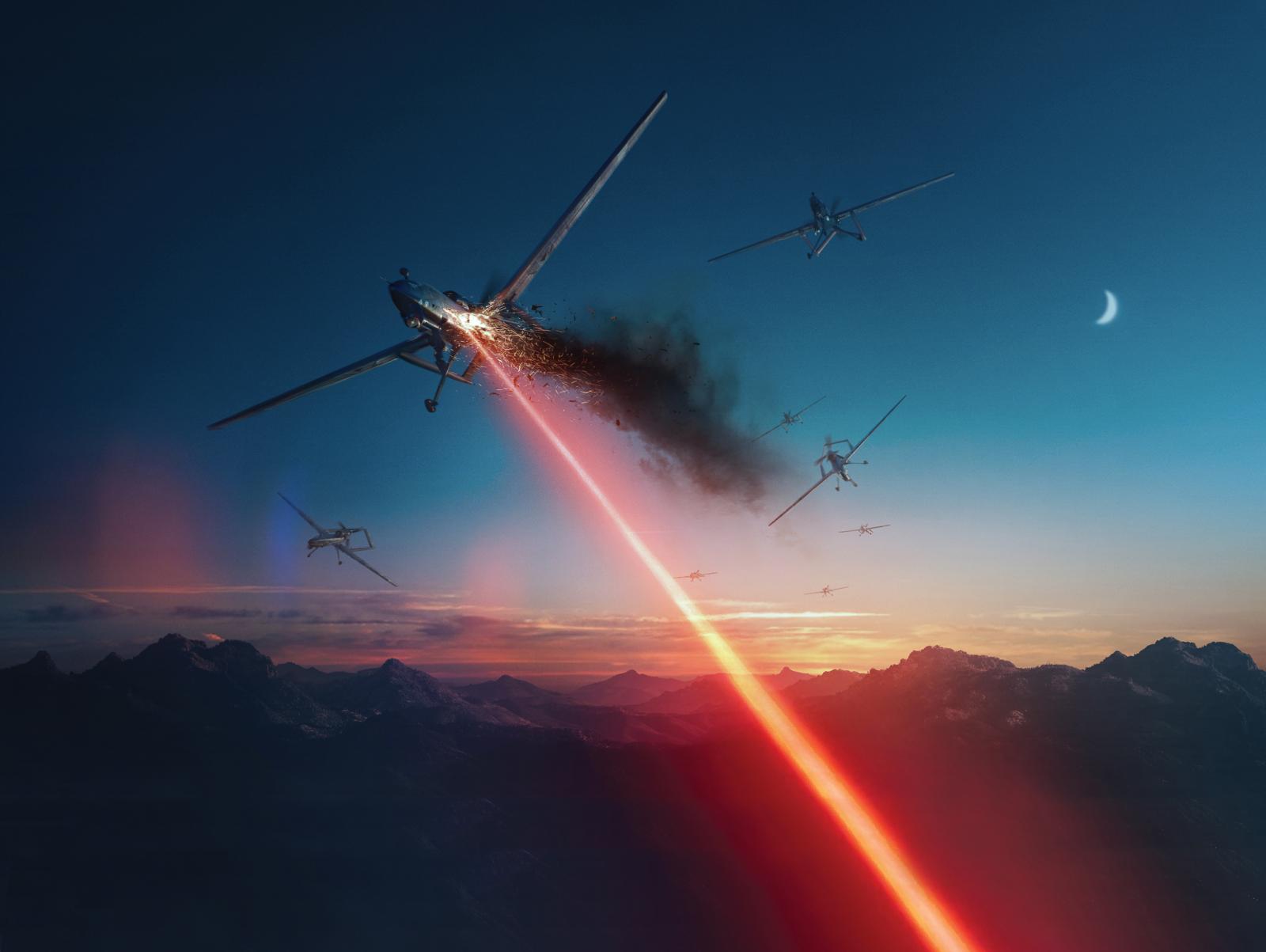 File Image: DEW
The U.S. Defense Department is keen on directed energy systems, such as high-energy lasers and high-power microwaves, to defend troops and military installations against aerial threats, such as short-range air defense and drones, rockets, mortars, and artillery.
Since there is no ‘deployment time’ with lasers, they are an excellent instrument for aerial interception, which makes them ideal for missile defense systems.
To that end, the 2023 National Defense Authorization Act calls for bolstering the U.S. and allied air defenses against unmanned aerial systems (UAS/UAV), rockets, and artillery, as conflicts in Europe, the Middle East, and a possible war in the Western Pacific.
The delivery of a 300kW laser weapon by Lockheed Martin comes almost a month after it delivered the High Energy Laser with Integrated Optical-Dazzler and Surveillance (HELIOS), a 60+ kW-class laser, to the U.S. Navy. HELIOS was mounted on the Arleigh Burke-class destroyer USS Preble (DDG-88).
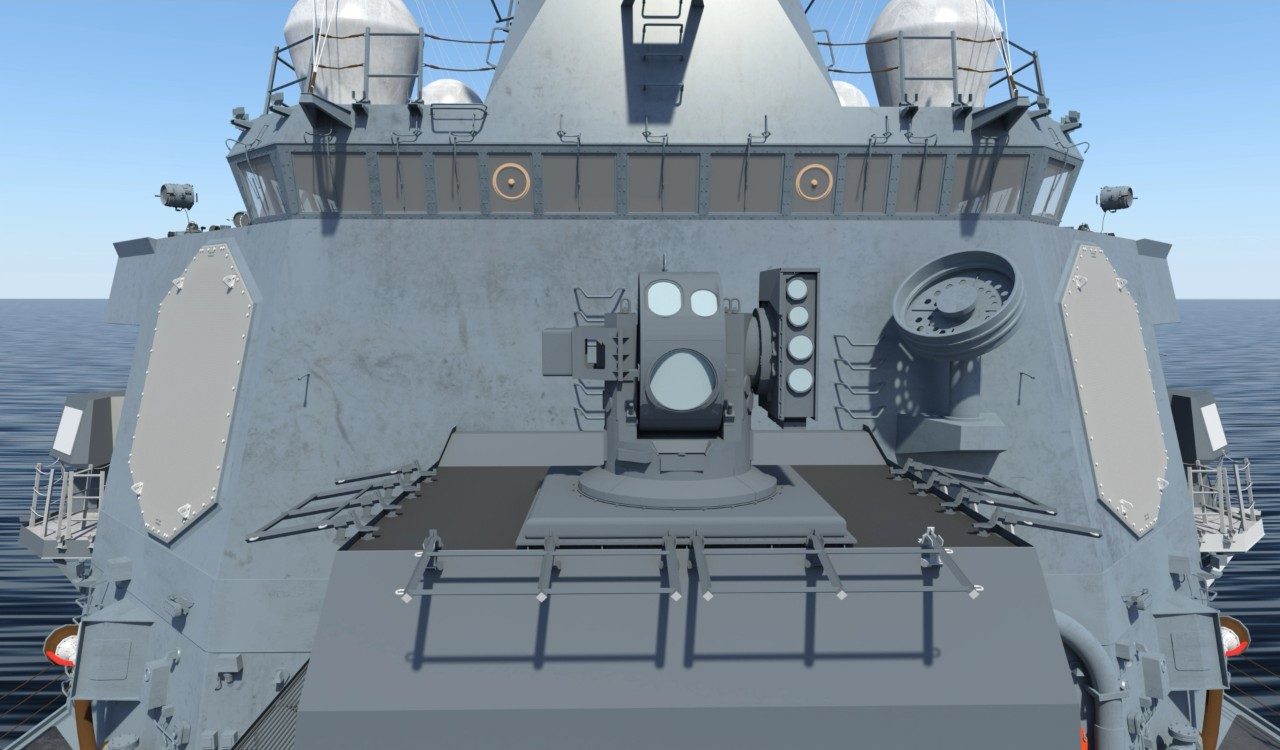 HELIOS- Lockheed Martin.
The development of laser weapons is fast catching pace even as the U.S. trails behind its adversaries in the hypersonic weapon segment. On July 12, LANCE (or Laser Advancements for Next-generation Compact Environments), a high-energy laser weapon, was delivered to the U.S. Air Force by Lockheed Martin.
LANCE is a pod weapon that may be installed on an aircraft, along with the primary laser weapon provided by Lockheed Martin and the pod-carrying LANCE built by Boeing. Northrop Grumman also supplies the beam control system that directs the laser toward its target.
The rapid testing and deployment of laser weapons and laser-based defense systems are significant for the United States with the threat posed by the missile development by its adversaries – China, Russia, and North Korea. All the countries have demonstrated their long-range ballistic and cruise missile capabilities to the detriment of the U.S.
Not just the United States, its adversaries are also relentlessly working on inducting DEWs, including lasers, into their military. Reports had earlier suggested that Russia has become the ‘first country’ to field laser weapons in combat.
In 2018, Putin unveiled the laser weapon ‘Peresvet’ for the first time, whereas another advanced laser system called Kalina is under construction at a Russian space facility. It is reportedly being designed to blind enemy satellites.
On its part, China is also set to field high-energy laser weapons. In January this year, the Chinese military experts claimed that the J-20 fifth-generation stealth fighter could be equipped with Directed Energy Weapons (DEWs).
Chinese state television CCTV announced in early 2020 that the country was working on an airborne laser attack pod. Chinese defense companies have also displayed laser defense weapon systems at demonstrations, such as the LW-30, which might be used to intercept aerial targets.
8 октября 2022
Подпишитесь на нашу рассылку ”Контекст”: она поможет вам разобраться в событиях.
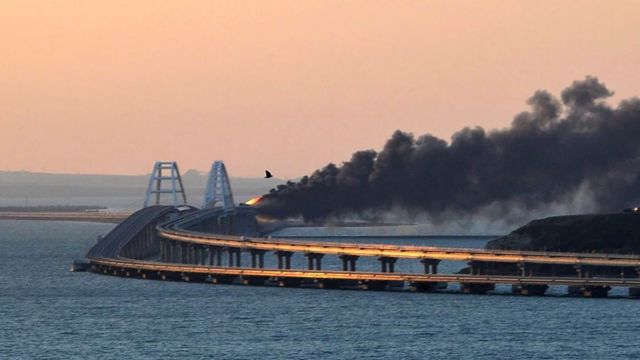
Автор фото, Yelena Yakimova/TASS
В результате взрыва на Керченском мосту, который ведет из Краснодарского края России в аннексированный Крым, обрушилась часть дорожного полотна, на мосту начался пожар, были также повреждены железнодорожные пути. Русская служба Би-би-си собрала версии экспертов о том, как такой взрыв вообще мог быть возможен и к каким последствиям он приведет.
Российские власти заявили, что причиной происшествия стал взрыв автомобиля. Следственный комитет сообщил, что его сотрудники установили данные о собственнике машины. Погибли три человека – по данным российских следователей, это “предположительно, пассажиры легкового автомобиля, находившегося рядом с подорвавшимся грузовиком”.
Украина официально не заявляла о своей причастности к этому взрыву. Советник главы офиса президента Михаил Подоляк, утром после взрыва философски писавший в “Твиттере” о “возвращении всего украденного” и “разрушении всего незаконного”, позже возложил ответственность на российских силовиков, которые в своих усобицах “вышли из-под контроля”.
Отметив то, что взорвавшийся фургон заехал на мост со стороны России, Подоляк в комментарии для СМИ написал, что в России идет противостояние между ЧВК и ФСБ с одной стороны, и генштабом и министерством обороны – с другой.
“Логистика подрыва, синхронизация с топливным эшелоном, объем уничтоженного дорожного полотна – все это четко указывает на русский след. Поэтому еще раз, пока в этом ярком инциденте мы видим обострение конфликта между военными и силовыми структурами России и его выход из-под контроля Кремля”, – уверен Подоляк.
“Российская верхушка ищет виновных за поражение на фронте. ФСБ и владельцы ЧВК ведут кампанию за увольнение военного руководства – министра Шойгу и главы генштаба Герасимова”, – добавил Подоляк.
Старший эксперт по взрывчатым веществам британской армии в отставке называет подрыв Керченского моста “шедевром тайной диверсии”. “Отсутствие явных взрывных/осколочных повреждений на дорожном полотне говорит о том, что авиационное оружие не применялось”, – отметил он в разговоре с корреспондентом Би-би-си Полом Адамсом.
Сотрудники российских силовых органов на месте взрыва
По мнению эксперта, причиной взрыва могла стать “атака снизу” моста. Он предполагает, что взрывы на автомобильном мосту и железнодорожных путях “были инициированы почти одновременно с помощью кодированной радиокоманды”.
Мы быстро, просто и понятно объясняем, что случилось, почему это важно и что будет дальше.
эпизоды
Конец истории Подкаст
Генерал австралийской армии в отставке Мик Райан написал в своем “Твиттере”, что для подобного обрушения моста необходимо много взрывчатки – несколько человек не смогли бы принести столько на себе. Для этого также потребовался хорошо продуманный план взрыва, отмечает эксперт, поскольку железобетонные мосты – самые устойчивые из всех. “Несколько грузовиков или ракет/бомб смогли бы достичь этой цели, если их точно направить в нужные участки моста”, – считает Райан.
Официальная российская версия произошедшего заявляет, что на мосту взорвался грузовик. Это привело к возгоранию семи топливных цистерн поезда и к частичному обрушению двух автомобильных пролетов, говорится в заявлении Национального антитеррористического комитета России.
Однако на мосту, по крайней мере официально, действует строгая система безопасности. Любой грузовик, въезжающий на Крымский мост, проверяется на наличие взрывчатки. На въездах размещены стационарные инспекционно-досмотровые радиотехнические комплексы СТ-6035, проверяющие машины на наличие взрывчатых веществ. Проверкой занимается ФГУП “Управление ведомственной охраны минтранса России”, в марте 2021 года он рапортовал, что “досмотр автотранспорта и безопасность Крымского моста обеспечена в полном объеме.
Этот же ФГУП охранял аэродром в Таганроге, где стоял на ремонте Ил-80 – один из из самых секретных военных самолетов России, предназначенный для управления войсками в случае ядерного конфликта (эксперты прозвали его “самолетом Судного дня”). В декабре 2020 года выяснилось, что кто-то проник в самолет и похитил секретное оборудование на сумму более 2,5 млн рублей. Виновными в краже были признаны и осуждены безработный житель Таганрога и его сообщник.
“Версия грузовика логична тем, что решает проблему доставки большого количества взрывчатого вещества”, – говорит в комментарии Русской службе Би-би-си израильский военный эксперт Давид Гендельман.
Как подсчитала Би-би-си, в 2022 году федеральные структуры заключили госконтракты на обеспечение безопасности моста на сумму более 2 млрд рублей.
ФГУП “Управление ведомственной охраны минтранса России” до конца июля 2022 года получал по госконтрактам на охрану моста около 53 млн рублей в месяц, в августе контракт подорожал до 66,85 млн рублей. В целом охрана автомобильной части моста в 2022 году должна стоить бюджету около 700 млн рублей.
Тот же ФГУП в апреле 2022 года получил госконтракт на 617,9 млн рублей на дооснащение моста “техническими средствами обеспечения транспортной безопасности”. Почти треть этой суммы (197 млн рублей) подрядчик уже получил, но пока разработал лишь рабочую документацию для этого проекта всего на 17 млн рублей.
За охрану железнодорожной составляющей моста отвечает Южный филиал ФГУП “Ведомственная охрана железнодорожного транспорта РФ” – госконтракт на эти услуги в 2022 году стоит 937 млн рублей. А 27 февраля – после вторжения в Украину – ФГУП получил дополнительно 70 млн рублей на содержание систем безопасности железнодорожной составляющей моста.
Илья Абишев, Русская служба Би-би-си
Военные перемещения по Крымскому мосту стали обыденностью после 2018 года, когда была открыта автомобильная часть моста, и после 2019-го, когда заработала его железнодорожная часть. 22 февраля, накануне российского военного вторжения в Украину, очевидцы фиксировали массовые переброски по мосту военной техники в Крым.
Автор фото, Global Images Ukraine
Разбитая машина в одном из освобожденных ВСУ сел Херсонской области
Крымский мост для России – важная логистическая цепочка, хотя далеко не единственная. Помимо моста, снабжение военных группировок в Крыму и на захваченных территориях Запорожья и Херсонщины осуществляется еще как минимум тремя путями.
Безусловно, у Крымского моста есть ряд важных преимуществ перед другими маршрутами военных поставок. В первую очередь это связано с особенностями военной логистики, доставшейся российской армии в наследство от советской, а именно – огромной роли, отводимой в организации снабжения войск железнодорожным маршрутам. В отличие от других армий мира, в России существует даже особый род войск – железнодорожные войска.
По сравнению с автомобильным, рельсовый транспорт позволяет в сжатые сроки перебрасывать на фронт огромные объемы грузов. В случае железнодорожных поставок через Крым они идут по большей части на Джанкой – транспортный узел на севере полуострова, вблизи перешейка, а оттуда грузы развозятся для снабжения российских группировок, действующих на Херсонском, Криворожском и Запорожском направлениях.
Объемы перевозимых по железной дороге грузов настолько высоки, что не требуют постоянного потока. Переброска в Крым военных эшелонов со стороны Краснодарского края фиксируется регулярно, но не ежедневно.
С конца августа, когда наметились перспективы наступления украинской армии на херсонском направлении, поставки российской военной техники через Крымский мост активизировались. 26 и 27 августа через него прошли крупные воинские эшелоны, еще один проследовал в Крым 1 сентября.
Но не стоит переоценивать военное значение Крымского моста в нынешней ситуации, складывающейся на южном фронте Украины. Дело даже не в ущербе, нанесенном мосту (его масштабы еще предстоит выяснить) и не в возможности и сроках его восстановления.
Основные логистические проблемы российских войск на юге Украины связаны с эффектом бутылочного горла. Их резервы, запасы военной техники, ГСМ и боеприпасов на территории левого берега Днепра, примыкающего к Крыму, велики, а снабжать правобережную группировку в Херсоне и в районе Берислава приходится малыми партиями – с помощью паромных переправ и забросок вертолетами. Мосты через Днепр и Ингулец разрушены украинской артиллерией, и восстановить их не удается. А ВСУ атакуют по разным направлениям.
Тем не менее, Россия очень трепетно относилась к безопасности Крымского моста – его охраняли и с суши, и с моря, и с воздуха. Мост напичкан специальными инженерными заграждениями, видеокамерами круглосуточного наблюдения, радиотехническими средствами, гидроакустическими системами и средствами ПВО. Сообщалось о круглосуточном дежурстве российских военных и сотрудников спецслужб, спецчастей Черноморского флота, в том числе боевых пловцов и подводников.
Но как выяснилось, и эта многоуровневая система защиты оказалась уязвимой. Как это часто бывает, беда пришла оттуда, откуда не ждали – как следует из предварительных выводов Национального антитеррористического комитета России, взлетевшая на воздух фура пришла с российской территории.
Как отмечает Гендельман, долгое время обсуждалось, что у Украины нет ракет или других средств воздушного нападения, “чтобы удар имел реальный эффект, кроме пропагандистского”. Также над мостом работает ПВО, замечает Гендельман. “Видимо, решили, что раз такое количество взрывчатых веществ не может долететь, оно может доехать”, – говорит он.
“Остается вопрос координации со взорванным поездом: подловили ли его грузовиком, либо он был взорван отдельно? Это все еще будет установлено, пока еще говорить рано. Но в целом четкая скоординированная операция: подготовка, доставка, организация, проход проверок, срабатывание в нужный момент”, – отмечает Гендельман.
Военный эксперт Мик Райан предполагает, что атака на мост может быть частью плана по возвращению Крыма либо же попыткой отвлечь внимание российских военных от других оккупированных областей Украины. Главное последствие взрыва моста – нарушение логистических цепочек поставок, как военных, так и гражданских. Разрушение моста уже спровоцировало проблемы со снабжением, в том числе топливом, отмечает Давид Гендельман.
Пожар на мосту тушили при помощи вертолетов
Российские власти, впрочем, обещают восстановить Крымский мост в сжатые сроки – по некоторым данным, поезда по нему планируют запустить уже в субботу вечером.
Но удержание Мелитополя становится для Москвы еще более важным, считает Райан. “Из-за этого мы можем увидеть российскую передислокацию на юге [Украины], что обнажит другие слабости [России] и возможности для Украины”, – отмечает австралийский генерал.
Путь в Крым через юг Украины (если Россия и дальше будет его удерживать) может стать важной частью не только военного, но и мирного обеспечения Крыма топливом и товарами. Назначенный Москвой губернатор аннексированного Севастополя Михаил Развожаев заявил, что продовольствие на полуостров будет поставляться именно через “освобожденные территории” – то есть захваченные Россией.
Подрыв моста таже демонстрирует всему миру, что армия России не способна контролировать ни один из недавно аннексированных регионов. Сейчас россияне будут активно покидать Крым, а недоверие к Путину и вооруженным силам внутри страны будет расти, прогнозирует Райан.
У российских военных теперь возникнут “большие неприятности”, поскольку Крымский мост – важная составляющая военной логистики России, прогнозирует Лоуренс Фридман, бывший профессор военных исследований в Королевском колледже Лондона. “Даже когда у россиян есть внушительная группа солдат, которые все еще находятся в Украине, хорошо вооружены и готовы дать отпор, они не смогут поддерживать их без снабжения”, – сказал Фридман в интервью BBC Radio 4.
Об этом же заявил и Антон Геращенко, советник министра внутренних дел Украины: “[Подрыв моста] означает, что снабжение российских войск на юге Украины будет сильно затруднено. Военная техника, боеприпасы, горючее через Керченский мост еще долго не будет проходить”, – написал он в “Твиттере”.
В целом цель взрыва моста ясна – подорвать способность России использовать Крым в качестве стартовой площадки для войны на юге Украины, отмечает корреспондент Би-би-си Пол Адамс.
“Кроме проблем снабжения через такую важную транспортную артерию, это очень громкий пропагандистский эффект. Кроме нарушения российской логистики можно ожидать как минимум усиления ударов по украинской инфраструктуре. Крымский мост важен не только практически, но и как символ, российская сторона к таким посягательствам относится болезненно”, – резюмирует Давид Гендельман.
Чтобы продолжать получать новости Би-би-си, подпишитесь на наши каналы:
Advertisements – Advertising at The News And Times – advertising-newsandtimes.com | WE CONNECT!
Audio | Video | Top News | On Twitter | Security | FBI | Capitol Riot | JOSSICA | Trump | Russia | Putin | Russia – Ukraine War | Covid-19 | Brooklyn NY | Puerto Rico | World
September 19, 2026 2:20 pm
The News And Times | Featured Posts | All Articles | Current News | Selected Articles | Shared Links | Opinions | In My Opinion | Sites | Blogs | Links | Twitter | Facebook

Contact Form | Blogs | Sites | News Reviews | Links | Advertising
All The News That’s Fit To Web
