
They are precise, small in size, able to engage a target in relatively large numbers like a swarm of wasps and above all, they’re cheap.
In Russia’s invasion of Ukraine, drones have cemented their reputation as a potent, hard-to-stop and cost-effective weapon to seek out and destroy targets while simultaneously spreading the kind of terror that can fray the resolve of soldiers and civilians alike.
They’re also quickly surpassing missiles as the remote weapon of choice because they can be put into any combat theater in greater numbers much more cheaply.
Russia’s unleashing of successive waves of the Iranian-made Shahed drones over Ukraine has multiple goals — taking out key targets, crushing morale, and ultimately draining the enemy’s war chest and weapons as they try to defend against them.
HOW DO WARTIME DRONES WORK?
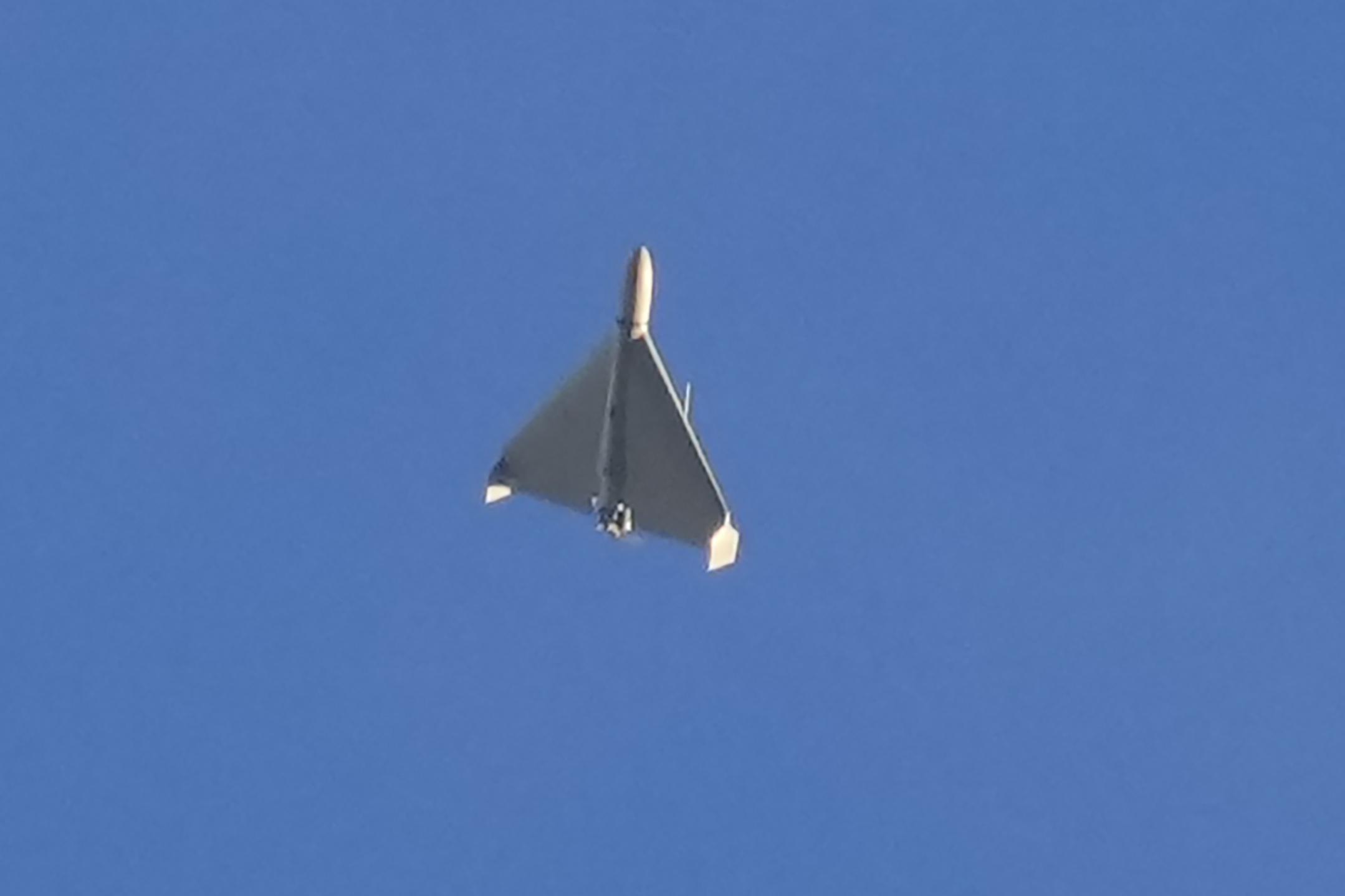
The Shahed drones that Russia has rebranded as Geran-2 are packed with explosives and are preprogrammed to loiter overhead until they nosedive into a target. That’s reminiscent of Japan’s World War II-era kamikaze pilots who would fly their explosive-laden aircraft into U.S. warships and aircraft carriers during the war in the Pacific.
According to the Ukrainian online publication Defense Express, which cites Iranian data, the delta-wing Shahed is 3.5 meters (11½ feet) long, 2.5 meters (8 feet, 3 inches) wide and weighs approximately 200 kilograms (440 pounds). It’s powered by a 50-horsepower engine with a top speed of 185 kph (114 mph).
Behnam Ben Taleblu, senior fellow at the Washington-based think tank Foundation for Defense of Democracies, said the drone has already been deployed in Yemen and in a deadly oil tanker attack last year. He said its range is about 1,000 kilometers (621 miles).
The new drone technology does not need trained personnel to be sacrificed nor a huge amount of money spent on building sophisticated aircraft to reach a target.
In Monday’s attack on the Ukrainian capital of Kyiv, the city’s mayor, Vitali Klitschko, said 28 drones made up waves of successive attacks. Fired from a truck launcher in rapid succession, the drones can fly low and slow, better able to avoid radar detection. They can also swarm a target, overwhelming defenses particularly in civilian areas.
But according to Mykola Bielieskov, a research fellow at Ukraine’s National Institute for Strategic Studies, the Shahed only carries a 40-kilogram (88-pound) explosive charge, which pales in comparison to the explosive force that a conventional missile’s 480-kilogram (1,050-pound) warhead can deliver at a much longer range.
“It is difficult to hit serious targets with such drones,” Bielieskov said.
SMALL PUNCH BUT LOW COST
At a mere $20,000 apiece, the Shahed is only a tiny fraction of the cost of a more conventional, full-size missile. For example, Russia’s Kalibr cruise missiles, which have seen widespread use in eight months of war, cost the Russian military about $1 million each.
At such a low cost, the Shahed can be deployed in massive numbers to saturate a target, whether it’s a fuel depot or infrastructure and utilities like power or water stations.
Despite its small size, the Shahed’s explosive charge appears powerful enough to do damage. In Monday’s attacks, one drone struck an operations center while another slammed into a five-story residential building, ripping a large hole in it and collapsing at least three apartments, resulting in the deaths of three people.
Bielieskov from Ukraine’s National Institute for Strategic Studies said the Russian military is opting to use Shaheds on civilian targets instead of the battlefield because Ukrainian forces have “learned how to fight them effectively,” managing to intercept a little more than half of them.
With no immediate end in sight, the financial burden of the conflict will weigh heavier on Moscow, which isn’t receiving billions in weapons transfers from Western nations like Ukraine is. As the conflict essentially becomes one of attrition — who can withstand that human, material and financial burden the longest — finding cheaper but still potent weapons will be key.
For Moscow, the Shahed appears to be such an alternative.
“Shahed-136 is a cheap version of a cruise missile, which Russia can’t produce fast,” said Bielieskov.
Taleblu said Russia will likely continue to boost its long-range strike capabilities with Iranian drones and reportedly even missiles.
“This should raise alarm bells for Europe and the world,” he said.
Russian officials haven’t issued any data about the number of missiles fired during the conflict, but Ukraine’s defense minister recently alleged that Russia has used most of its high-precision missile arsenal — from 1,844 on the eve of Russia’s invasion to 609 by mid-October.
A WAR OF NERVES
The incessant buzzing of the propeller-driven Shahed drones — dubbed “mopeds” by Ukrainians — is equally potent for the terror it can induce in anyone under its flight path. That sound exacerbates anxiety and chips away at morale, for no one on the ground knows exactly when or where the weapon will strike.
Ukrainian President Volodymyr Zelenskyy seized on the drones’ terror element, posting on social media: “The whole night, and the whole morning, the enemy terrorizes the civilian population.”
“Kamikaze drones and missiles are attacking all of Ukraine,” he added.
Bielieskov conceded that Shahed drone strikes stir up fears that Ukraine’s air defenses are inadequate to meet the threat. But he said their use — even in large numbers — isn’t enough to reverse Ukraine’s battlefield gains.
Sky-borne terror weapons are nothing new — Nazi Germany employed them during World War II in the form of the V-1 flying bomb or “buzzbomb,” the earliest type of cruise missile in the shape of a small aircraft that targeted British cities.
Eight decades later, the much smaller Shahed can be guided to its target at a much cheaper cost, potentially enabling Russian forces to launch many more drones than the 9,500 “buzzbombs” that Nazi Germany unleashed on Britain.
___
Follow AP’s coverage of the war in Ukraine at https://apnews.com/hub/russia-ukraine