Categories
Saved Web Pages

The Truth About Communism: What Every Person Needs to Know

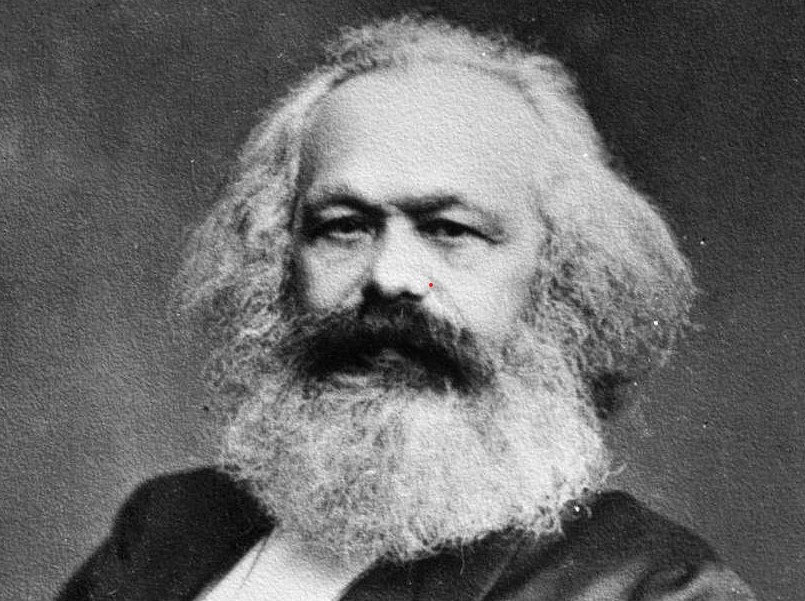
Karl_Marx_crp.jpg

Commentary

In the special series “The Dark Origins of Communism,” Joshua Philipp, an investigative journalist for The Epoch Times, offers a chilling and eye-opening history of the origins of communism and the horrifying results that followed. The informative program on EpochTV walks viewers through the ideological principles on which communism, Marxism, and socialism are founded and examines how it is necessary for communist messaging to create division and strife in society to achieve its desired goal.

Communism Promises a Utopia, but Delivers a Nightmare

Communism pursues an imagined future utopia by creating a dystopia. Karl Marx, the father of Marxism, believed that struggle led to social evolution. His communist system thus tried to incite struggle to hasten progress—a process that required fomenting economic, social, and moral collapse.

This is seen in the sheer horror that communism has brought to every area of the world it has touched. In the last 100 years, communist regimes have claimed over 100 million to 150 million lives in their pursuit of “progress.” Communism has created societies where power is held by a small group that enslaves entire nations and where killing, reeducation-through-labor camps, censorship, and slavery become part of everyday life.

Communism’s appetite for never-ending destruction and bloodlust is evident in all of its subsequent systems. Although the names of communist organizations change with modern times, history consistently shows us the truth about communism: that although it promises heaven on earth, it instead delivers a living hell. And chaos and horror follow whenever religion, morals, and respect for society are destroyed. Lastly, it shows us that “enlightened” ideas that seek to strip humans of rights endowed by God and replace them with government authority lead solely to oppression and death.

Abolish Religion and Morals

A key goal of communism is to erase pre-existing morals in a society. For this to be done, the government must replace them with their own code of ethics, which is to obey the communist party at the expense of humanity. Under the communist system of dialectical materialism, everything in the universe amounts to “matter in motion,” meaning that individuals are nothing more than a clump of physical cells. The souls, emotions, mental health, and well-being of human beings are not part of the communist equation.

The thought process that communist systems instill in people is inverted. On the surface, communism claims to empower the people so they can be happy. Instead, it disempowers them so they can be subjugated. This is why communism aggressively seeks to destroy spirituality. They must do this because spirituality itself poses a threat to communism. Even the notion of a soul threatens communism because a soul carries an inner moral compass that is uniquely yours. If a person’s moral compass contradicts what communism dictates, that is a threat. Communism does not want people to have convictions. Instead, it wants them to follow orders. Communists lead society to believe that morality, faith, and ethics are wrong, but famine, oppression, and struggle are right—when they serve the party.

Therefore, communism arises after all morals, traditions, beliefs, institutions, hierarchy, and values have been destroyed. Communism convinces people that it intends to bring them happiness, but this happiness can only be achieved after a segment of society is either suppressed or eradicated. Therefore, it provides conditional happiness at the expense of one’s morals.

Russian author Alexander Solzhenitsyn said, “The failings of human consciousness, deprived of its divine dimension, have been a determining factor in all the major crimes of this century.” When faith is destroyed and the foundations of morality are overturned, the government becomes the highest power and the basis of morality.

Destabilize Society Through Division and Strife

The EpochTV series explains that since communists believe progress can only be attained through struggle, they try to fast-track “progress” by engineering struggle. Their formula for doing so is quite simple. Marxist theoretician Georgi Valentinovich Plekhanov wrote in “Dialectic and Logic” in 1928 that the communist dialectic follows three laws: to identify, to contradict, and to “exclude the middle.”

First, they “identify” an issue in society. Then, they “contradict” it by sharpening that issue into two antagonistic extremes. The chosen issue is then polarized and distributed to the media—via state mouthpieces—in a campaign designed to create division and cause struggle. In this campaign, the goal is to “exclude the middle,” meaning there is no tolerance for moderates. In the Soviet Union, Vladimir Lenin categorized all people into two groups: those who supported the communist revolution and those who did not. And those who did not were marked for destruction.

Communists favor extremes, intentionally discounting the often wide variety of moderate viewpoints because they do not serve the communist narrative. Traditional dialectics aim to help people understand truths by exchanging varying ideas and looking at both sides of an issue. Karl Marx’s concept of dialectical materialism, which is at the heart of modern communism, does the opposite. It looks at various topics in society and identifies their polar opposites. It then makes those opposites the communist viewpoint and pushes these viewpoints as being absolute and unquestionable.

Total Control Over Society

In an ideal communist state, the government controls everything—public and private. While modern-day socialists want to divorce themselves from the failed institutions of Nazism and fascism, the truth is that they adopt many of the same interventionist policies and underlying ideas. For socialism to be effective, it must destabilize the existing social order via chaos and violence. It does this by intentionally propping up “crises” and class enemies to blame so that people will be fed up enough to settle for a “new” system—which socialists will ensure is their system.

Religion establishes morals and values that are higher than government. The Constitution of the United States establishes rights that come from God, not the government. Because of these beliefs, both have become the enemies of any tyrant looking to expand power over a society. This EpochTV series shows how every real-world example of communism proves that although communism claims to be “for the people,” that lie only serves to justify its plan of building an all-powerful authoritarian state.

Watch “The Dark Origins of Communism” on Epoch Cinema here.

Views expressed in this article are the opinions of the author and do not necessarily reflect the views of The Epoch Times.
Categories
Saved Web Pages

Trump asks Supreme Court to intervene in Mar-a-Lago fight

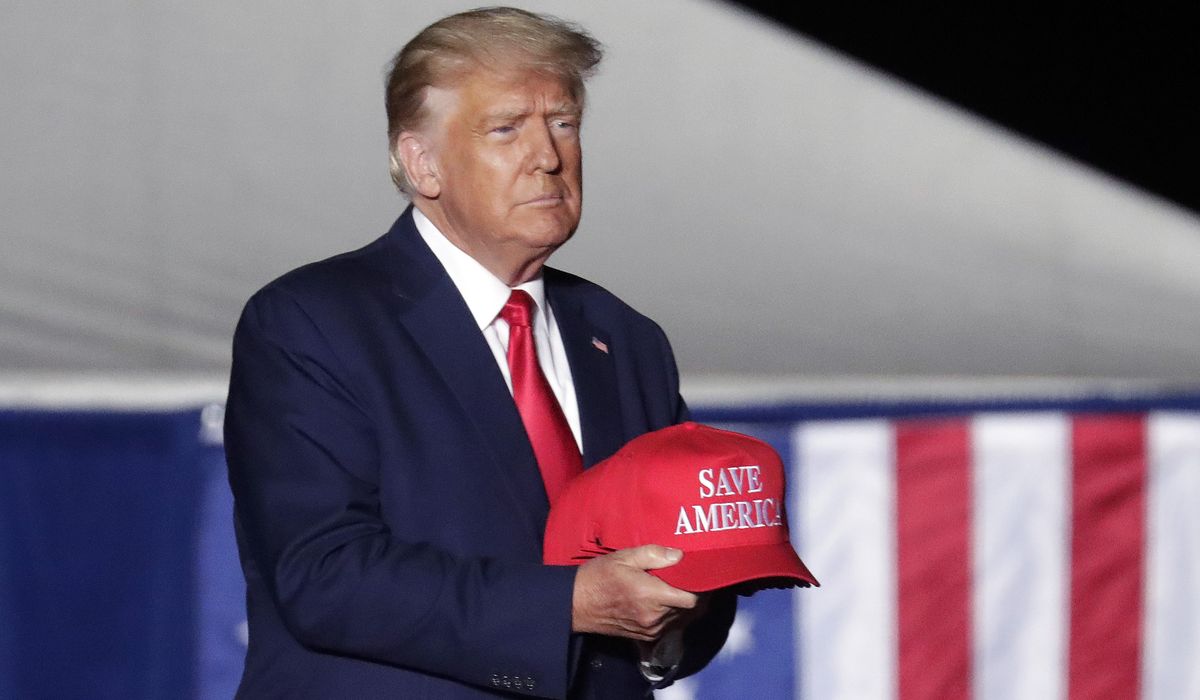
Trump_Legal_Troubles_60663.jpg-c2dcc_c0-

Former President Donald Trump on Tuesday asked the Supreme Court to intervene in the legal fight over classified documents seized from his Mar-a-Lago residence.

In a 296-page filing, Mr. Trump‘s legal team asked Justice Clarence Thomas to issue an emergency order that would restore a so-called special master’s authority to review roughly 100 documents found at Mar-a-Lago with classified markings.

Justice Thomas is the judge who receives Supreme Court emergency requests out of Florida. Although it is unclear if he will act alone or refer the petition to the full court.

If granted, it would bolster Mr. Trump‘s effort to keep those documents out of the hands of investigators examining whether he criminally mishandled government materials.

A three-judge panel on the 11th Circuit Court of Appeals last month ruled that the special master, a retired judge who is tasked with determining which documents are protected by attorney-client and executive privilege, could only review a limited set of seized materials.

In filings with the high court, Mr. Trump‘s lawyers argued that the 11th Circuit’s ruling violated legal precedents.

“This unwarranted stay should be vacated as it impairs substantially the ongoing time-sensitive work of the special master,” they wrote. “Moreover, any limit on the comprehensive and transparent review of materials seized in the extraordinary raid of a president’s home erodes public confidence in our system of justice.”

Mr. Trump’s team also said that the 11th Circuit didn’t have the authority to restrict U.S. District Judge Raymond Dearie, who was appointed as a special master, from reviewing the documents.

“The Eleventh Circuit granted a stay of the Special Master Order, effectively compromising the integrity of the well-established policy against piecemeal review without justification,” they wrote.

In last month’s ruling, the three-judge panel, which included two judges nominated by Mr. Trump and one by President Obama, rejected Mr. Trump’s claims that classified documents seized from Mar-a-Lago may belong to him rather than the government.

The appellate court also allowed the Justice Department to access the seized documents for its criminal probe of Mr. Trump.

Mr. Trump asked the Supreme Court to ensure the special master will review those documents, but did not request the court restore the hold that blocked the Justice Department from accessing the documents during its investigation.

His legal team disputed the Justice Department’s claims that including the documents in the special master review could put the U.S.’ sensitive security secrets at risk.

“The government argued on appeal without explanation that showing the purportedly classified documents to Judge Dearie would harm national security,” they wrote, adding that the position “cannot be reconciled” with the Justice Department saying it could show those documents to a grand jury or potential witnesses during interviews.

Mr. Trump would need five justices to agree with him to get an emergency order. Although the court has a 6-3 conservative majority, including three justices Mr. Trump appointed, he has had a spotty record before the nation’s highest court.

In 2021 the Supreme Court turned away Mr. Trump’s legal challenge to overturn the results of the previous year’s presidential election. The high court also rejected Mr. Trump’s efforts to shield his financial records from Congress. In January, the court denied Mr. Trump’s attempt to stop White House documents from being turned over to the committee investigating the Jan. 6, 2021, attack on the U.S. Capitol.

• Jeff Mordock can be reached at jmordock@washingtontimes.com.

Click to Read More and View Comments

Categories
Saved Web Pages

Talk of ‘Civil War,’ Ignited by Mar-a-Lago Search, Is Flaring Online

00pol-civilwar-Mar-a-Lago03-facebookJumb

  • Send any friend a story

    As a subscriber, you have 10 gift articles to give each month. Anyone can read what you share.

    Give this articleGive this articleGive this article
Trump supporters outside Mar-a-Lago after the F.B.I.’s search in August. More Americans are anticipating, or even welcoming, the possibility of sustained political violence, researchers studying extremism say.

Trump supporters outside Mar-a-Lago after the F.B.I.’s search in August. More Americans are anticipating, or even welcoming, the possibility of sustained political violence, researchers studying extremism say.Credit…Marco Bello/Reuters

By Ken Bensinger and Sheera Frenkel

  • Oct. 5, 2022, 5:00 a.m. ET

Soon after the F.B.I. searched Donald J. Trump’s home in Florida for classified documents, online researchers zeroed in on a worrying trend.

Posts on Twitter that mentioned “civil war” had soared nearly 3,000 percent in just a few hours as Mr. Trump’s supporters blasted the action as a provocation. Similar spikes followed, including on Facebook, Reddit, Telegram, Parler, Gab and Truth Social, Mr. Trump’s social media platform. Mentions of the phrase more than doubled on radio programs and podcasts, as measured by Critical Mention, a media-tracking firm.

Posts mentioning “civil war” jumped again a few weeks later, after President Biden branded Mr. Trump and “MAGA Republicans” a threat to “the very foundations of our republic” in a speech on democracy in Philadelphia.

Now experts are bracing for renewed discussions of civil war, as the Nov. 8 midterm elections approach and political talk grows more urgent and heated.

More than a century and a half after the actual Civil War, the deadliest war in U.S. history, “civil war” references have become increasingly commonplace on the right. While in many cases the term is used only loosely — shorthand for the nation’s intensifying partisan divisions — observers note that the phrase, for some, is far more than a metaphor.

Polling, social media studies and a rise in threats suggest that a growing number of Americans are anticipating, or even welcoming, the possibility of sustained political violence, researchers studying extremism say. What was once the subject of serious discussion only on the political periphery has migrated closer to the mainstream.

But while that trend is clear, there is far less agreement among experts about what it means.

Some elements of the far right view it literally: a call for an organized battle for control of the government. Others envision something akin to a drawn-out insurgency, punctuated with eruptions of political violence, such as the attack on the F.B.I.’s Cincinnati field office in August. A third group describes the country as entering a “cold” civil war, manifested by intractable polarization and mistrust, rather than a “hot” war with conflict.

After Donald Trump lost the 2020 election, his supporters demonstrated at the Michigan Capitol in Lansing.Credit…John Moore/Getty Images

“The question is what does ‘civil war’ look like and what does it mean,” said Elizabeth Neumann, assistant secretary for counterterrorism at the Homeland Security Department under Mr. Trump. “I did not anticipate, nor did anyone else as far as I know, how rapidly the violence would escalate.”

Ms. Neumann now works for Moonshot, a private security company that tracks extremism online. Moonshot found a 51 percent increase in “civil war” references on the most active pages on 4Chan, the fringe online message board, in the week after Mr. Biden’s Sept. 1 speech.

But talk of political violence is not relegated to anonymous online forums.

At a Trump rally in Michigan on Saturday night, Representative Marjorie Taylor Greene, a Republican from Georgia, said that “Democrats want Republicans dead,” adding that “Joe Biden has declared every freedom-loving American an enemy of the state.” At a recent fund-raiser, Michael T. Flynn, who briefly served as Mr. Trump’s national security adviser, said that governors had the power to declare war and that “we’re probably going to see that.”

On Monday, federal prosecutors showed a jury in Washington an encrypted message that Stewart Rhodes, founder of the Oath Keepers armed extremist group, had sent his lieutenants two days after the 2020 presidential election: “We aren’t getting through this without a civil war.”

Experts say the steady patter of bellicose talk has helped normalize the expectation of political violence.

In late August, a poll of 1,500 adults by YouGov and The Economist found that 54 percent of respondents who identified as “strong Republicans” believed a civil war was at least somewhat likely in the next decade. Only about a third of all respondents felt such an event was unlikely. A similar survey conducted by the same groups two years ago found nearly three in five people feeling that a “civil war-like fracture in the U.S.” was either somewhat or very unlikely.

“What you’re seeing is a narrative that was limited to the fringe going into the mainstream,” said Robert Pape, a political science professor at the University of Chicago and founder of the Chicago Project on Security and Threats.

The institute’s researchers tracked tweets mentioning civil war before and after Mr. Trump announced the search on Mar-a-Lago. In the five preceding days, they logged an average of roughly 500 tweets an hour. That jumped to 6,000 in the first hour after Mr. Trump published a post on Truth Social on the afternoon of Aug. 8, saying “these are dark times for our Nation.” The pace peaked at 15,000 tweets an hour later that evening. A week later, it was still six times higher than the baseline, and the phrase was once again trending on Twitter at month’s end.

Extremist groups have been agitating for some sort of government overthrow for years and, Mr. Pape said, the most radical views — often driven by white supremacy or religious fundamentalism — remain marginal, advanced by no more than 50,000 people nationwide.

But a far larger group, he said, are the people who have been influenced by Mr. Trump’s complaints about the “Washington swamp” and “deep state” forces working against him and his allies.

Trump supporters in Phoenix, too, protested after his election loss.Credit…Adriana Zehbrauskas for The New York Times

Those notions, stirred in a smoldering crucible with QAnon conspiracy theories, anti-vaccine views and election denialism, have fueled a growing hostility toward the federal government and rising talk about states’ rights.

“Did you know that a governor can declare war?” Mr. Flynn said at the fund-raiser on Sept. 18, for Mark Finchem, a Republican running for secretary of state in Arizona. “And we’re going to probably, we are probably going to see that.”

Neither Mr. Flynn nor Mr. Finchem responded to a request for comment about the inaccurate remarks. The U.S. Constitution grants Congress the sole power to declare war and, in fact, specifically bars states from engaging in war “unless actually invaded.”

However far-fetched, such ideas are often amplified by a proliferating set of social media channels such as the right-wing platform Gab and Mr. Trump’s Truth Social.

Social media platforms are rife with groups and boards dedicated to discussions of civil war. One, on Gab, describes itself as a place for “action reports,” “combat vids” and reports of killed in action in “the civil war that is also looking to be a 2nd American Revolution.”

In August, a single tweet stating “I think civil war has just been declared” managed to reach over 17 million profiles despite coming from an account with under 14,000 followers, according to Cybara, an Israeli firm that monitors misinformation.

“Ideas go into echo chambers and it’s the only voice that’s heard; there are no voices of dissent,” said Kurt Braddock, an American University professor who studies how terrorist groups radicalize and recruit.

Mr. Braddock said he did not believe these posts indicated any planning for a war. But he worries about what academics call “stochastic terrorism” — seemingly random acts of violence that are, in fact, provoked by “coded language, dog whistles and other subtext” in statements by public figures.

A rally in Holland, Mich., in 2021 at a restaurant that had defied state pandemic measures.Credit…Emily Rose Bennett for The New York Times

Mr. Trump is adept at making such statements, said Mr. Braddock, citing Mr. Trump’s April 2020 tweet reading “Liberate Michigan!” Less than two weeks later, mobs of heavily armed protesters occupied the state capitol in East Lansing. He also pointed to Mr. Trump’s speech before the Capitol riot on Jan. 6, 2021, when he encouraged thousands of supporters to march to the U.S. Capitol and, later in the same remarks told them, “if you don’t fight like hell, you’re not going to have a country anymore.”

“The statements Trump makes are not overt calls to action, but when you have a huge and devoted following, the chances that one or more people are activated by that are high,” Mr. Braddock said.

A spokesman for Mr. Trump did not respond to requests for comment.

Mr. Trump used the term “civil war” in 2019, when he declared in a tweet that “it will cause a Civil War-like fracture in this Nation from which our Country will never heal” if he was removed from office. Last month, Mr. Trump said there would be “problems in this country the likes of which perhaps we’ve never seen before” if he was indicted over his handling of the classified documents that were the target of the F.B.I. search.

Other Republicans have used language suggesting the country is on the brink. Ms. Greene wrote in August that the Mar-a-Lago search reflected the “type of things that happen in countries during civil war,” in posts to her nearly 900,000 combined followers on Facebook and Telegram. Senator Rick Scott of Florida likened the F.B.I. to the Gestapo, the secret police in Nazi Germany, saying “this cannot be our country.”

Late last month, Senator Ted Cruz, a Republican, told The Texas Tribune he believed immigration legislation was unlikely in part because of a “political civil war.” He has made similar comments before, including a November 2021 call for Texas to secede if Democrats “destroy the country.”

Nick Dyer, a spokesman for Ms. Greene, said that she was “vehemently opposed to political violence” and that her civil war comments were about Democrats, who “are acting like a regime launching a war on their opposition.”

McKinley Lewis, communications director for Mr. Scott, said he had “ZERO tolerance for violence of any kind” but added that he “continues to demand answers” related to the F.B.I.’s Mar-a-Lago search.

Republicans have often argued that their language is political rhetoric and blamed Democrats for twisting it to stoke divisions. It’s Democrats and the left, they said, who are courting violence by labeling Mr. Trump’s supporters adherents of what Mr. Biden has called “semi-fascism.”

In response to a query about Mr. Cruz’s comments, Maria Jeffrey Reynolds, a spokeswoman for the senator, said Mr. Cruz placed blame on President Biden, claiming that he has “driven a wedge down the middle of our country.”

After President Biden delivered his speech on democracy, Brian Gibby, a freelance data entry specialist in Charlotte, N.C., wrote in a Substack post that he believed “the Second Civil War began” with the president’s remarks.

“I have never seen a more divisive, hate-filled speech from an American president,” Mr. Gibby wrote.

President Biden described Mr. Trump and his loyalists as a threat to “the very foundations of our republic” in a speech on democracy in Philadelphia.Credit…Doug Mills/The New York Times

Asked by The New York Times to explain his views, Mr. Gibby said he believed Mr. Biden was “escalating a hot conflict in America.” He worries something will happen around the November elections that will be “akin to Jan. 6, but much more violent,” where armed protest groups from both sides of the political spectrum come to blows.

“Plan ahead, stock up, stay safe, get out of cities if you can,” he wrote.

WP Radio
WP Radio
OFFLINE LIVE