Categories
Saved Web Pages

Liz Truss quizzed over FBI questioning of chief of staff Mark Fullbrook

AIN-TRUSS%2051

Britain Labour Party has demanded answers on how much Liz Truss knew about her No 10 chief of staff Mark Fullbrook being questioned as a witness as part of an FBI inquiry into alleged bribery.

abour deputy leader Angela Rayner has written to the UK government’s cabinet secretary Simon Case, urging him to clarify when he first became aware of the allegations.

She also pressed Mr Case on when the information was shared with the new prime minister, and whether Mr Fullbrook made any declaration of his involvement in the probe as a witness when she appointed him her chief of staff.

The FBI investigation relates to allegations that Conservative party donor Julio Herrera Velutini promised to help the former governor of Puerto Rico get re-elected if she dismissed an official investigating a bank he owned there.

Mr Velutini – who has denied the charges – is alleged to have paid CT Group, a political consultancy firm in which Mr Fullbrook was a senior figure, around £260,000 for work intended to help the governor’s ultimately unsuccessful re-election campaign.

Mr Fullbrook was treated by the FBI as a witness and his spokesperson said he “complies with all laws and regulations in any jurisdiction … and is confident that he has done so in this matter”.

Ms Rayner said she was asking Mr Case for answers “in the absence of an independent adviser on ministers’ interests following the resignation of Lord (Christopher) Geidt” in June.

Boris Johnson did not replace him and Ms Truss has indicated that she was not interested in appointing an ethics adviser – saying she knew “the difference between right and wrong”.

In her letter, Ms Rayner said the reports about Mr Fullbrook were “incredibly alarming revelations which the public will rightly want clarity on”.

“The allegations about the new prime minister’s most senior adviser once again prompt questions about this government’s ethics, values and basic standards of decency,” she wrote. “Public trust is already hanging by a thread.”

The Labour deputy said: “In the interest of transparency and out of respect for our democratic institutions, I urge you to clarify when you were first made aware of these allegations.

“Importantly, at what stage was this knowledge shared with the prime minister? Were any declarations made by Mr Fullbrook about his involvement in this investigation when he took on the position of chief of staff?”

Ms Truss has given her “full support” to Mr Fullbrook.

A Downing Street spokeswoman said she stands 100pc behind him and “he has her full support”.

Asked whether Mr Fullbrook informed her about the case before she appointed him chief of staff, Ms Truss told reporters on the plane on her way to New York: “All staff being appointed by the government go through a proper process.”

A spokesman for Mr Fullbrook said he had “fully, completely and voluntarily engaged with the US authorities in this matter”.  

Categories
Saved Web Pages

Top Liz Truss aide Mark Fullbrook paid through his private company

%2Fmethode%2Fsundaytimes%2Fprod%2Fweb%2F

The prime minister’s chief of staff is being paid through his lobbying company in a highly unusual arrangement that could allow him to pay less tax.

Mark Fullbrook insists he is not being paid through his company for tax reasons and has obtained no tax benefit from the arrangement. However, he is refusing to explain the agreement that lets him direct government strategy without being directly employed by the government.

Previous holders of the role have been treated like any other special adviser (Spad), appointed on a temporary civil service contract and paid a salary that is made public. Fullbrook is instead a contractor and will receive any payment through Fullbrook Strategies, a private lobbying company he created in April but which he says has

Categories
Saved Web Pages

American counterintelligence is broken

?url=http%3A%2F%2Fmediadc-brightspot.s3.

Every few days, a new counterintelligence story breaks in the media. It’s invariably a bad one. Another penetration of U.S. intelligence by a hostile spy service, another cache of industrial secrets lost, more theft of valuable intellectual property. Our national inability to safeguard our governmental and trade secrets is, alas, no secret.

The latest outrage is a private intelligence report that reveals that Chinese intelligence has penetrated Los Alamos National Laboratory, with at least 154 Chinese scientists who gained employment at the laboratory subsequently being hired back in China to develop cutting-edge military technology such as deep-earth-penetrating warheads, hypersonic missiles, quiet submarines, and drones. The lab, famous for being where the atomic bomb was developed, is a very secret facility that does highly sensitive work for the U.S. government. If Beijing has penetrated the lab with a small battalion of spies, what in America hasn’t Chinese intelligence burrowed itself into?

It’s now impossible to miss that we are failing at basic counterintelligence, that is, the business of defending our country from hostile intelligence services and their efforts to purloin our defense, diplomatic, and commercial secrets. Reading the headlines, you might wonder if American counterintelligence is simply broken.

Wonder no more. It is.

This week, the Senate Select Committee on Intelligence issued a big, bipartisan, detailed report that comes to exactly that painful conclusion. Its 153 pages
, even with some redactions, establish that the U.S. government is failing to protect our secrets. Moreover, that failure is systemic. The regular drumbeat of media stories showcasing major security failures reflect not errors or mistakes so much as a basic unwillingness to take counterintelligence seriously at all.

The committee’s understatedly scathing report focuses on the little-known National Counterintelligence and Security Center, which has gone by several names since it was founded in 2001 to give our sprawling intelligence community a central clearinghouse for counterintelligence concerns. This report makes clear that the center, which is supposed to provide a strategic counterintelligence vision for the intelligence community, is failing to do that.

In fairness to the center, the report notes that the counterintelligence threat we face has changed dramatically since the Cold War, or even since the late pre-9/11 era when the center was founded. “The United States faces a dramatically different threat landscape today than it did just a couple of decades ago,” explained committee Chairman Sen. Mark Warner (D-VA) at Wednesday’s open hearing to accompany the report’s release: “New threats and new technology mean that we have to make substantial adjustments to our counterintelligence posture if we are going to protect our country’s national and economic security.”

That said, the report elaborates the center’s shortcomings in detail. Its mission remains poorly defined. While the center reports to the Office of the Director of National Intelligence, it’s really a glorified staff shop no intelligence community big-letter agencies report to, certainly not in any operational sense. Furthermore, it’s understaffed and underfunded. The workforce consists largely of personnel on loan from other intelligence community agencies, plus contractors. Many billets remain unfilled. An assignment there isn’t seen as especially career-enhancing at those agencies, while the big spy agencies don’t seem to understand what the center’s job actually is (to be fair, neither does the center at times because its authorities remain vague). Counterintelligence as a mission remains divided among many agencies, none of which report to the center in any official sense. Showing how seriously the Biden administration takes counterintelligence, the center hasn’t had a formal director since January 2021, only an acting one.

The report makes several recommendations, including reforming and beefing up the center while clarifying its precise counterintelligence mission as it relates to other intelligence community agencies. That, while easier said than done, would help. Building a better-funded, more focused center with bureaucratic teeth, able to create and implement a strategic counterintelligence vision for the U.S. government and beyond, would help protect American secrets, private and governmental. But that will not be sufficient. It would also help to refashion the FBI as a full-time domestic intelligence service, as this column has recommended
, to create a true lead counterintelligence agency for the country.

When no single agency has that mission, nobody is held accountable for endless security failures. Above all, the government must start to take counterintelligence seriously again. For decades, it’s been an afterthought when not merely a nuisance. Until those views change, no amount of bureaucratic box-shifting will prevent foreign spies from robbing America blind.

John R. Schindler served with the National Security Agency as a senior intelligence analyst and counterintelligence officer.

Categories
Saved Web Pages

FBI completes review of docs, cutting Trump legal strategy off at the pass

Tramp_behind_bars.jpg?1545494808

Share this article


Categories
Saved Web Pages

The Tonton Macoutes: The Central Nervous System of Haiti’s Reign of Terror

Print Friendly, PDF & Email

A Malediction on Haitian Society

Few countries in the hemisphere have suffered through such an extensive run of unqualified repressive regimes and military dictatorships as Haiti. The nearly thirty years of harsh rule under François “Papa Doc” Duvalier, and his son, Jean-Claude “Baby Doc” Duvalier that ended in 1986, are likely the most infamous epoch in the painful history of this small French-Creole nation that occupies the western third of the Caribbean island of La Hispaniola. Certainly, the main tool for the maintenance of the regime’s grasp on the population through much of this period was the “Tonton Macoutes,” renamed in 1971 as the Milice de Voluntaires de la Sécurité Nationale —MVSN (Volunteers for National Security). Although this organization no longer formally exists, its legacy of paramilitary violence and sheer brutality still contorts Haitian modern political and economic cultures.

The Birth of Terror

In 1959, only two years after becoming president, “Papa Doc” created a paramilitary force that would report only to him and would be fully empowered to use unremitting violence to maintain the new administration’s authority to summarily dispose of its enemies. This marked the birth of one of the most brutal paramilitary organizations in the hemisphere and was justified by the leader’s profound paranoia towards the threat posed by the regular armed forces. Haiti’s military began to steadily lose a great deal of authority with the consolidation of the François Duvalier regime, which it would not recover until 1986, when the pressure coming from senior military officers played a major role in the fall of Jean-Claude. A spate of coups followed, with military figures occupying the vacancy left by “Baby Doc.”

The Haitians nicknamed this warlord-led goon squad the “Tonton Macoutes,” after the Creole translation of a common myth, about an “uncle” (Tonton) who kidnaps and punishes obstreperous kids by snaring them in a gunnysack (Macoute) and carrying them off to be consumed at breakfast. Consequently, these torturers, kidnapers and extortionists were feared not only by children, but also by the country’s general population, as well as by opposition members and business men not willing to make enforced pay-offs to the authorities. The militia consisted mostly of illiterate fanatics that were converted into ruthless zombie-like gunmen. Their straw hats, blue denim shirts, dark glasses and machetes remain indelibly etched in the minds of millions of Haitians.

Ever since its establishment, this brutal organization had free rein to act unreservedly, disregarding any ethical or civil rights of the citizenry that might interfere with its indiscriminate violence. They were not accountable to any state branch, court or elected body, but rather only to their leader, “Papa Doc.”

The Second Most Feared Man in Haiti

The dictator’s hold on power was guaranteed by the secret police’s terror campaign, and usually, the head of the “Macoutes,” was considered to be extremely close to the dictator. This was especially true under President François Duvalier. Luckner Cambronne was a particularly fierce head of the “Tonton Macoutes” throughout the 1960’s and the beginning of the 1970’s, for two reasons: first, because he was considered perhaps the most powerful and influential man in Haiti during the transition from “Papa” to “Baby Doc,” and second, because of his unique brand of cruelty that enabled him to become very rich and earned him the nickname “Vampire of the Caribbean.”

As a result of his close relationship with “Papa Doc,” Luckner climbed rapidly up Haiti’s power structure and he became the chief plotter of the extortions carried out by his henchmen. Later, he profited by supplying corpses and blood to universities and hospitals in the United States. His brutality was manifest whenever there was a shortage of what he considered raw material (corpses). In that case, he did not hesitate to kill innocent people to facilitate the growth of his “industry.”

In 1971, following an altercation with the Duvalier family regarding his role in post-“Papa Doc” Haiti, Luckner fled to Miami. Nevertheless, he remained an ardent supporter of the Haitian regime until his death in October of 2006. He stated once in the British newspaper The Independent that a “good Duvalierist is prepared to kill his children (for Duvalier) and expects his children to kill their parents for him.” This sentiment displays the rationale of the “Tonton Macoutes,” a goon squad, which was fiercely loyal to but one family and not in any way in the service of the nation or its people. Even though there are some MSVN leaders that were never formally identified in the recent history of Haiti, such as Roger Lafontant, they all are clear examples of the power that the organization and its leaders had and continue to possess to one degree or another, in contemporary Haiti.

Mysticism and Reality

A key characteristic of the structure of the MSVN was that some of the most important members of the “Tonton Macoutes” were vodou leaders, with this belief system currently practiced by roughly half of the country’s population. This religious affiliation gave the “Macoutes” a sense of unearthly authority in the eyes of the public, which allowed them to perform horrific acts without any form of retribution from the Haitian population at large. What this means is that “the ‘Tontons Macoutes’ were part of a conscious strategy to identify spiritual forces and nationalism with loyalty to Duvalier, and to instill fear in [his] opponents.” From their methods to their choice of clothes, vodou always played an important role in their actions.

However, despite the religious nature of vodou, the facts as well as the numbers speak for themselves. These merciless killers murdered over 60,000 Haitians and many more were forced to flee their homes. Consequently, Haiti suffered an unparalleled and crippling brain drain that robbed the small country of many of its most educated citizens.

The militia created a sense of fear through continuous threats against the public as well as frequent random executions. The “Tonton Macoutes” often stoned and burned people alive, regularly following such rites by hanging bodies of their victims in the street as a warning to the population at large. The diversity of the victims was also a measure of the “Macoutes’” cruelty. They could range from a woman in the poorest of neighborhoods who had the temerity to support an opposing politician, all the way to an accommodating foreign diplomat or even a business man who refused to “donate” money for public works (the public works being the pockets of corrupt officials and even the dictator himself).

The Role of the U.S.

For decades, the situation in Haiti kept deteriorating without any calls for international intervention. Although the United States was a preeminently active and interested participant in the development of Haiti’s political culture, it failed to speak out against such atrocities—not even during human rights-focused administrations such as Jimmy Carter’s—as a result of Cold War logic. Washington was certainly far more interested in supporting a pro-American tyrant whose purported task was to stop the spread of communism in the region, rather than protecting the Haitian people by supporting a healthy democracy and a responsible authority in Port-au-Prince. Butch Ashton, a business man who made his fortune during the Duvalier dictatorship by establishing corporations such as Citrus (a fruit exporter) and the Toyota dealership in the country’s capital, vehemently claims that the Tonton Macoute militia was trained by the U.S. Marine Corps and that the highest levels of the American government were complicit in this arrangement.

The U.S. has been an active supporter, albeit from the shadows, even years after the “Tonton Macoute” reign of violence officially was over. The Human Rights Watch reported on Haiti in 2004 and stated, “The United States, notably, showed little enthusiasm for the prosecution of past abuses. Indeed, it even impeded accountability by removing to the U.S. thousands of documents from military and paramilitary headquarters, allowing notorious abusers to flee Haiti, and repeatedly giving safe haven to paramilitary leaders.”

The “Tonton Macoutes”: Legacy and Transformation

The darkness of the “Tonton Macoutes” era may have seemed to subside upon the official dismemberment of the organization, which occurred after “Baby Doc” fled Haiti for France in 1986. However, massacres led by paramilitary groups spawned by the Macoutes continued during the following decade. After 1991, when Aristide was illegally forced to leave the presidency, the vestiges of the MVSN became known as “attachés,” or savage groups of vigilantes attached to government security forces, or crooked political organizations which had the ability to use force against its foes. Consequently, a number of small paramilitary bodies were organized to work with these mafias as “stability” keepers. A good number of these new bodies were being formed by former “Macoutes.” Many of these militias remained nostalgic for the good old days of Duvalierism, with some even attempting to ignite their own reign of terror.

The most feared paramilitary group during the 1990’s emerged as a political presence just as sadistic as the MVSN: the “Revolutionary Front for the Advancement and Progress of Haiti—FRAPH,” which Toronto Star’s crack journalist Linda Diebel described as modern-Macoutes and not as the political party they claimed to be. The reporter declared that the FRAPH, under goon figure Emmanuel Constant, was even worse than the Duvalierist militia because it was no longer subordinate to one absolute authority. The FRAPH also cooperated with the regular army to persecute Aristide’s followers; this made them even more dangerous than the “Tonton Macoutes”, because in the old days the militia and the legal armed forces were more rivals than allies. This paramilitary group also extended its influence far outside La Hispaniola to diasporas throughout the world, “Fraph also had a presence abroad, with offices in New York, Miami, Montreal and other cities with large Haitian exile communities.”

These ghosts from the past still torment Haitian and U.S. policy: last year a group of civic activists accused the Obama administration of turning a blind-eye to the criminal activity being practiced against Aristide backers and supporters of his Fanmi Lavalas party. The group that was trying to prevent the participation of Haiti’s most popular party in the 2010 elections through the use of indiscriminate violence and political pressure was led by a former paramilitary leader convicted in the U.S. for drug trafficking and money laundering, Guy Philippe.

There a long history of paramilitary violence in Haiti that seems all but unstoppable, regardless of whatever government may be in charge. As Professor Robert Maguire observed in 2002, “the unabated power struggle among the country’s politicians has been joined by a renewal of the kind of paramilitary violence that the vast majority of Haitians hoped had ended with the disbandment of the Haitian Armed Forces in 1995.” But there are some other issues that feed the existence of the paramilitary phenomenon: these factors include drug trafficking, rampant poverty, demoralized police forces, and the primacy of the interests of the elite. All of these factors explain why the remnants of the “Tonton Macoutes” are still a very important part of Haiti’s political and social heritage, even as they and their descendents continue to fragment into small groups with different interests, maintaining their penchant for violence and chaos.

Categories
Saved Web Pages

The FBI paid for Russian disinformation while punishing a patriot | Opinion

To understand the state of disrepair of our national security and law enforcement apparatus, look to the Federal Bureau of Investigation’s contrasting treatment of Russian disinformation-spinner Igor Danchenko, and whistleblowing Special Agent Steven Friend.

We recently learned the Bureau rewarded the former for his lies, while punishing the latter for his truths.

Danchenko, a Russian national, was the key researcher behind the key document—the Steele dossier—behind the key effort to undermine candidate, and then topple, President Donald J. Trump: Russiagate.

Today, we know Danchenko fabricated communications with the purported central source behind some of the document’s most salacious claims. By lying to the FBI about that, and much else that would have called into question his credibility, as well as the dossier’s veracity, Danchenko played a seminal role in corrupting our political and legal systems. He helped subvert a presidency and the will of the public, foist a fraud on the FISA court, and eviscerate the civil liberties, ravage the reputations, and drain the banks accounts of those wrongfully ensnared in the Russiagate hoax—along with our rotten Deep State.

Compounding the outrage, after the FBI learned Danchenko had misled it, it claimed in multiple FISA warrant applications used to spy on Trump campaign advisor Carter Page and Trump world that Danchenko, Steele’s “primary sub-source,” was “truthful and cooperative.”

Worse, according to a recent filing in special counsel John Durham’s five-count perjury case against Danchenko, set for trial in October, we now learn that long before helping develop the dossier, the FBI opened a counterintelligence probe into the analyst.

While at the Brookings Institution, in late 2008, according to prosecutors, Danchenko “engaged two fellow employees about whether one…might be willing or able in the future to provide classified information in exchange for money.” One employee believed Danchenko thought the employee “might be in a position to enter the incoming Obama administration and have access to classified information.” Danchenko allegedly told his colleague that “he had access to people who would be willing to pay money…for classified information.”

Counterintelligence officials opened an investigation into Danchenko from 2009 through 2011, identifying him “as an associate of two FBI counterintelligence subjects” and finding that he “had previous contact with the Russian embassy and known Russian intelligence officers.” Danchenko, according to the filing, “had also informed one Russian intelligence officer that he had interest in entering the Russian diplomatic service.”

The FBI closed its investigation after incorrectly concluding Danchenko had left the country.

So on top of the FBI’s reckless abandon in pegging Russiagate to the work of a lying Russian disinformation artist whose work it knew early on was funded and fueled by the Clinton campaign, the FBI did that pegging despite previously probing him, by implication, as a potential Russian agent, and after having incompetently lost track of him.

But the greatest bombshell from Durham’s recent filing is this: Danchenko was rewarded for his efforts. From March 2017 through October 2020, the FBI put him on the payroll as an informant.

Why? Consider the timing. That March, then-FBI Director Jim Comey told Congress the Trump campaign was under investigation for Russia ties, and then-Rep. Devin Nunes discovered that the Trump transition team had been spied on.

As Russiagate analyst Hans Mahncke writes:

…the FBI was able to use his status to conceal Danchenko and his disclosures from congressional inquiries, such as the investigation by then-Rep. Devin Nunes led by Kash Patel. Other inquiries…could similarly be stonewalled by reference to the “sources and methods” justification for concealing the identity, and even the existence, of a CHS [confidential human source].

So by making Danchenko a CHS, the FBI shielded the disreputable researcher behind the dirty dossier behind debunked Russiagate from scrutiny, and therefore shielded itself and its Russiagate partners who continued for years to peddle “treasonous Trump-Russian collusion” from scrutiny.

The FBI bought Danchenko’s silence, and paid to protect itself—with our money.

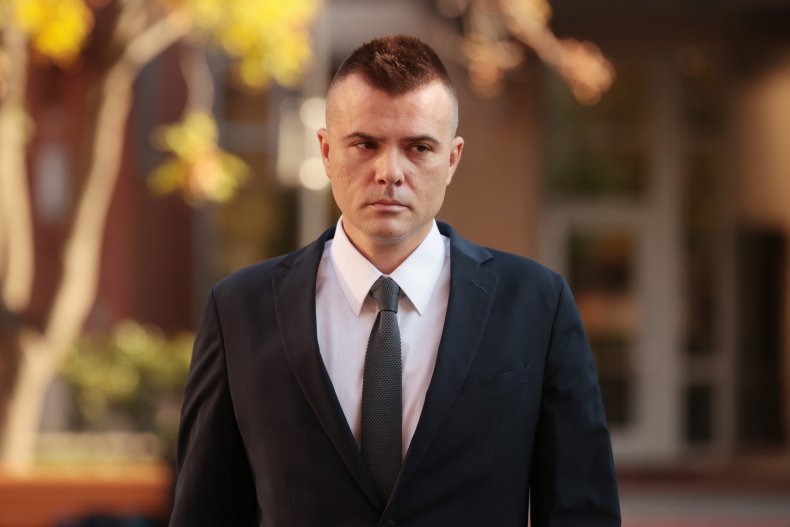
Russian analyst Igor Danchenko arrives at the

Russian analyst Igor Danchenko arrives at the Albert V. Bryan U.S. Courthouse before being arraigned on November 10, 2021 in Alexandria, Virginia.
Chip Somodevilla/Getty Images

Now consider the case of FBI Special Agent Steve Friend. Recently, Senators Chuck Grassley (R-IA) and Ron Johnson (R-WI), and House colleague Jim Jordan (R-OH) have been revealing whistleblower complaints suggesting the weaponization and hyper-politicization of our national security and law enforcement apparatus against Wrongthinkers that has been a theme of this column.

Friend, a 12-year FBI veteran, is among the ranks of the whistleblowers. For his candor, Miranda Devine reports:

He was declared absent without leave last month for refusing to participate in SWAT raids that he believed violated FBI policy and were a use of excessive force against Jan. 6 subjects accused of misdemeanor offenses.

…Friend, who did not vote for Donald Trump in the 2020 election, said he told his immediate boss twice that he believed the raid, and the investigative process leading up to it, violated…policy and the subject’s rights under the Sixth Amendment right to a fair trial and Eighth Amendment right against cruel and unusual punishment.

Friend faced reprisals for speaking up internally, his immediate boss menacingly “asking how long I saw myself continuing to work for the FBI.”

Then he was suspended, stripped of his gun and badge, and escorted from his office. He responded with a whistleblower complaint to DOJ Inspector General Michael Horowitz—who, incidentally, had disclosed corruption in the Page FISA applications, as well as other aspects of Russiagate—detailing myriad allegations of FBI malfeasance, which Devine obtained.

Friend claims that, among other things, the Washington FBI field office is manipulating January 6 cases to juice figures substantiating the idea of a right-wing domestic violent extremist threat, amid an intensifying effort to overzealously pursue cases that are at all related to the Capitol breach; Friend was removed from active investigations into child sex abuse and trafficking in favor of January 6 cases; and that innocent Americans are being pursued on domestic terrorism grounds via FBI tip line leads and surveilled Facebook messages.

Friend’s purging follows Attorney General Merrick Garland‘s issuance of a memo barring DOJ officials from communicating with members of Congress.

Danchenko will face his day in court six years after Russiagate began because the Trump administration created the Durham special counsel. But as with the case of Clinton campaign lawyer Michael Sussmann, he is a bit non-government Russiagate player, facing a D.C.-area jury, and poised to achieve an acquittal on similar grounds. Since Team Durham apparently again is presenting the Deep Staters as dupes, rather than sophisticates, Danchenko may argue the opposite—and that, therefore, his lies were not material because the shrewd FBI pursued Russiagate irrespective of his lies.

It is not clear if Friend will receive recompense following recriminations for bravely exposing what has seemed apparent from the outside—namely, that our regime is engaged in a War on Wrongthink, using the security state to persecute foes, himself apparently included.

The Regime protects its own and punishes dissenters.

Danchenko and Friend’s cases are related.

That Durham is reportedly winding down his investigation indicates the worst of the Russiagate actors—those who most abused their positions of authority—will never be punished.

That lack of accountability paved the way for other brazen gambits: Trump Impeachments I and II, the Jan. 6 Committee and DOJ’s sprawling related pursuits, punishment of nonviolent defendants in pre-trial detention for months, the Mar-a-Lago raid, subpoena carpet-bombs, and more.

Lady Justice weeps.

Ben Weingarten is a senior fellow at the London Center for Policy Research, fellow at the Claremont Institute and senior contributor to The Federalist. He is the author of American Ingrate: Ilhan Omar and the Progressive-Islamist Takeover of the Democratic Party (Bombardier, 2020). Ben is the founder and CEO of ChangeUp Media LLC, a media consulting and production company. Subscribe to his newsletter at bit.ly/bhwnews, and follow him on Twitter: @bhweingarten.

The views expressed in this article are the writer’s own.

Categories
Saved Web Pages

Ransomware as a Service: A new wrinkle on an old threat

GettyImages_873923004.6329f34129644.png?

Ransomware attacks have been damaging to their victims and profitable for the perpetrators. Unlike crimes driven by passion or dire need, they tend to be calculated, cynical and carried out by criminals and scammers who would likely be successful if they chose to start up legitimate businesses and work as hard as they do on their ransomware campaigns. Unfortunately, their methods are still evolving; perpetrators are more sophisticated, organized, and professional. These ad hoc acts committed by hackers used simple phishing attacks to gain entry, but now, attacks increased in targets and complexity, often using shady cloud services that provided what has become known as “ransomware as a service,” or RaaS.     

RaaS providers operate in the gray zone, between legal and illegal, with polished strategies, business models and formal operating methods to put them into practice. Marketing themselves on the dark web, RaaS providers line up clients interested in a single attack, several attacks, or even in maintaining the rough equivalent of a retainer relationship. Clients of RaaS providers pay a monthly fee, typically in cryptocurrency, for advice and assistance, sometimes including around-the-clock support that covers technical aspects of an attack and matters such as negotiations with a victim. The client also may share a portion of any payment extracted from a victim with the RaaS provider.           

The Growing RaaS Model

While anecdotally it appears that a greater proportion of ransomware attacks are being carried out using the RaaS model, it is impossible to determine the amount of these attacks, or how costly they are. Attribution is possible – in some cases, there are elements, such as snippets of malicious code, that can help authorities trace an attack back to a perpetrator known to be running a RaaS operation. When caught, attackers may give up relevant details. From the victims’ perspective, ransomware crimes appear the same, whatever the underlying organizational structure behind them might be. However, the RaaS model enables minimally skilled attackers to launch more sophisticated attacks.           

RaaS providers sell expertise and prefer to keep the client at arm’s length to try to avoid detection and prosecution. As such, it can be harder to prosecute RaaS than conventional ransomware attacks because there are more moving parts, and they may move in several jurisdictions governed by competing laws and authorities. The advent of RaaS, and ransomware generally, has increased the momentum to harmonize laws and foster law enforcement cooperation in this area.

RaaS providers are increasingly conducting business by taking advantage of the economics of cloud-based computing and storage the same way their victims do, much like infrastructure as a service (IaaS) providers. The participation of most IaaS companies is usually unintentional, and the desire to maintain clients’ data security – and their own reputations for safety – makes legitimate IaaS providers a formidable ally in the war against ransomware and RaaS providers. 

Don’t Be a Victim

Just as in legal commercial undertakings, ransomware skills are continually honed and standards elevated through competition. As RaaS providers raise their game, the stakes for potential targets are also raised. The threats they face will be more acute, at least until cybersecurity professionals and law enforcement raise their game, too, and improve their methods for combating threats – but organizations that find themselves on the wrong end of an attack are not helpless. There are precautions organizations can take, many of which require only modest human or financial resources and are fairly simple to implement. The Center for Internet Security identified 18 basic, commonsensical “Critical Security Controls” that should go a long way to fending off RaaS, and other types of ransomware attacks, and mitigating damage. There is much overlap among the 18 controls, allowing them to be grouped into four broad measures:

  • Take inventory of your electronic assets. You can’t protect what you don’t know you have. Take stock of all devices, fixed, portable or mobile, that can connect to your technology platforms physically or remotely. This will allow you to spot any unauthorized or unmonitored devices and remove them or make them secure. Do the same with software assets, including operating systems, programs and apps. Review credentials and permissions for each employee, and limit access, via your organization’s and your employee’s personal devices, on-premises and remote, to files, folders, apps, programs and external websites to those that are appropriate for their duties, and no others. 
  • Monitor access points. Your infrastructure is most at risk of a breach at the points where it meets the outside world. Enhance malware detection and defense techniques, focusing particularly on these points, and on the means through which a breach is most likely to occur, such as web links and emails. This, plus a rigorous permissions regime, could prevent a considerable expenditure of time and money. 
  • Anticipate vulnerabilities and respond to threats. Vulnerabilities can be limited but never eliminated, so you should prepare for the worst to make sure the impact is not as bad as it otherwise might be. Use industry resources to stay aware of the latest threats and ensure that your operating system and other software are updated and patches applied when available.  The biggest vulnerability is reusable passwords. Most financial services now require Multi-factor Authentication (such as text messages sent to the user’s registered mobile phone number) for login. 
  • Make the most of your human assets. Some vulnerabilities within an organization may walk on two legs and draw a paycheck. If properly trained and prepared, however, your employees can be an additional factor to aid in thwarting attackers. Their understanding of, and reaction to, ransomware attacks and other threats should be evaluated and sharpened through the development of security awareness programs that establish that work to change user behavior when they are presented with a bogus email or web page.  There should be simulations of threat scenarios to put these procedures, and your employees’ preparations – and those of senior management and security officials – to the test 
  • Invest in your security team’s skills and tools. The cybersecurity workforce gap is a hot topic throughout the industry, but some security organizations have found that there is more of a skills gap than a headcount shortfall. By upskilling security analysts in critical areas such as cloud security, purple teaming and machine learning, the need for additional staff is reduced. 

Given that the RaaS model can facilitate ransomware attacks and make them a feasible option for a broader population of bad actors, it is essential to take steps like these. Then, ensure to continually evaluate the threat backdrop, and monitor your systems and people, to assess, maintain and improve readiness. RaaS providers are turning ransomware into a more efficient, more lucrative line of business. You need to remain vigilant to ensure that your systems and data will never be a source of profit for them.

About the author: John Pescatore joined SANS as Director of Emerging Security Trends in January 2013 with 35 years of experience in computer, network and information security. He was Gartner’s Lead Security Analyst for 13 years, working with global 5000 corporations and major technology and service providers. Prior to joining Gartner Inc. in 1999, Pescatore was a Senior Consultant for Entrust Technologies and Trusted Information Systems. Prior to that, Pescatore spent 11 years with GTE developing secure computing systems. Pescatore began his career at the National Security Agency, where he designed secure voice systems and at the United States Secret Service, where he developed secure communications and surveillance systems. He holds a BSEE from the University of Connecticut and is an NSA Certified Cryptologic Engineer.

Categories
Saved Web Pages

Labour demands answers from PM about aide Mark Fullbrook

“Indeed, relevant existing CT employees and former employee Mark Fullbrook, are witnesses in this matter and they and CT Group have fully, completely and voluntarily engaged with the US authorities in this matter, as they always do in any circumstance in which CT Group’s assistance is sought by authorities.”

Categories
Saved Web Pages

Sen. Wyden Raises Concerns Over Government Data Collection

data-center-to-cloud.jpg

Sen. Ron Wyden, D-Ore., sent a letter on Sept. 21 to the inspector generals of the Department of Homeland Security (DHS), Department of Defense (DoD), and Department of Justice (DOJ), requesting that they investigate the alleged warrantless data gathering of American citizens’ online search histories.

Senator Wyden raises concerns over this after proclaiming that he has been individually investigating concerns that government agencies have been purchasing data without any “judicial authorization.”

“While I have been able to make public important details about government agencies’ purchase of location data, my efforts to probe and shed light on the government’s purchase of internet browsing records have been frustrated by the Pentagon,” stated Wyden in his letter.

According to the letter, the Defense Counterintelligence and Security Agency (DCSA) has spent over $2 million to obtain such data.

“After DoD refused to release this information without restrictions, my staff learned that public contract information had been posted online, showing that multiple DoD agencies purchased data from data brokers that reveal internet browsing history: The Defense Counterintelligence and Security Agency spent more than $2 million purchasing access to netflow data, and the Defense Intelligence Agency purchased Domain Name System data,” the senator wrote.

The letter also alleges that the Naval Criminal Investigative Service (NCIS) has purchased access to data from a data broker and pays for a subscription service, known as Augury, to gain access to netflow data.

“Public contracting records confirm that the Augury tool provides access to ‘petabytes’ of network data ‘from over 550 collection points worldwide’ and ‘is updated with at least 100 billion new records each day,’” stated the letter.

The letter ends with insisting that independent oversight of these agencies is crucial for a thorough investigation of the alleged data collecting.

Categories
Saved Web Pages

The Takedown of Tom Barrack

Barrck-Traitor.jpg

On a foggy January night in 2017, several hundred of the world’s wealthiest and most powerful people gathered at a black-tie, $8000-per head dinner at the Andrew W. Mellon Auditorium in Washington, D.C. They were there to celebrate the coming of a new world order and their host for the evening was an almost 70-year-old Republican real estate billionaire known for buying and selling extravagant hotels.

No, not Donald Trump. In fact, Trump, whose inauguration was just three days away, wasn’t originally scheduled to attend this gathering; he only decided at the last minute to fly in for an appearance, thereby necessitating a rearrangement of the seating so that he could take his place beside the man who was the evening’s host, his affable, and ever-loyal friend of 30 years, the Lebanese-American, thrice-divorced, polo-playing Thomas Joseph Barrack.

Barrack, now 75, who had once been chairman of Miramax, and who was founder and CEO of the Los Angeles-based private equity real estate firm Colony Capital, had been the Trump campaign’s biggest early backer, a bold move given that Trump was initially shunned by both the Republican Party and the business establishment. As a reward, Trump had gifted his longtime chum with what seemed a plum post: chairman of his inaugural. Barrack promptly raised an unprecedented $107 million, more than double what had been procured for Obama. This glittering gala at the Mellon Auditorium — Barrack’s Chairman’s Global Dinner—was the opening act of his four-day inaugural extravaganza.

“I think what you’re going to find is a president-elect who has a keen sensitivity to listening, to understanding, to drawing firm and hard lines when he needs to, and this cultural sixth sense,” Barrack proclaimed to the crowd, which included such luminaries as Las Vegas moguls Steve Wynn and Sheldon Adelson, NFL owners Robert Kraft, Woody Johnson, and Dan Snyder, as well as Los Angeles Times owner Patrick Soon-Shiong, Warner Music Group majority owner Len Blavatnik, and supermarket investor Ron Burkle. Soon-to-be Trump cabinet officials like Steve Mnuchin, Rex Tillerson, Jeff Sessions, Wilbur Ross, and Rick Perry were also there. As was Paul Manafort and Rudy Giuliani.

But, alas, no party lasts forever. Just four and a half years later—on July 20, 2021—FBI agents burst into an investor meeting Barrack was attending in the San Fernando Valley, pushed him up against a wall, and slapped him in handcuffs. Barrack was then taken to the West Valley Detention Center in Rancho Cucamonga, where he found himself sharing a cell with a man with a stab wound. For a guy who was not just used to staying in five-star hotels, but used to owning them, it must have seemed a Job-like comeuppance.

It’s not difficult to find former Trump officials and allies who’ve run afoul of the law — many of the attendees at Barrack’s Chairman’s Dinner have to varying degrees found themselves tangled up in legal snafus since the end of the Trump administration. Like indicted-convicted-and-pardoned Manafort and could-be-indicted-at-any-minute Giuliani. But Barrack’s case is a little different. Because his charges have nothing to do with the usual Trumpy malfeasance, like insurrection or election interference or even inaugural excesses involving money laundering and fraud (which the Southern District of New York had been investigating for a time). Instead, along with garden variety charges of obstruction of justice and making false statements to the FBI, Barrack is being accused of acting as an unregistered foreign agent.

It’s not the same as treason or even spying for another government, but it’s in the national security ballpark. “Espionage lite,” it’s sometimes called.

Barrack, the Justice Department is arguing, is guilty of using his influence within the top echelons of the Trump administration to surreptitiously work to alter U.S. policy for the benefit of the United Arab Emirates. If he’s convicted, he faces up to ten years in prison, possibly more for additional charges.

“The evidence will be absolutely and concretely disproven,” a stubbly, worn-looking Barrack, wearing an electronic ankle bracelet underneath his blue suit, told reporters five days later, outside the Brooklyn federal courthouse. Then he stepped into a waiting SUV and sped away, temporarily free on a $250 million bail, one of the largest in U.S. history. Now his trial has just begun in Brooklyn under U.S. District Judge Brian Cogan, the man who presided over the conviction of Mexican drug lord El Chapo.

Amid all the lavish praise he heaped on Donald Trump during his prime-time endorsement of him at the Republican National Convention back in 2016, Barrack—who self-deprecatingly referred to himself as the “anchovy on Ivanka’s Caesar salad,” because he was speaking just before her—also managed to work in a little endorsement of himself.

“I’m the son of the very humble Lebanese grocer from Culver City, California,” he declared, “and I’m here because of the amazing magic elixir that happened between the DNA of a thousand civilizations from the Levant, and the beauty, and the wonder, and the opportunity of America that puts all of us here in this rapture of the American dream.” But like so many of Barrack’s over-the-top statements, this one, while true, was not complete.”

“I’m here because of the amazing magic elixir that happened between the DNA of a thousand civilizations from the Levant, and the beauty, and the wonder, and the opportunity of America that puts all of us here in this rapture of the American dream.”

The grandson of Christian Arab immigrants who came to the U.S. at the end of the 19th century from Zahleh, a city in the foothills east of Beirut, Barrack has often portrayed himself as a kind of Middle Eastern-American Horatio Alger. And while Barrack was indeed the son of a secretary and a grocer and worked relentlessly hard to catapult himself up out of his modest background, it was not hard work alone that enabled his ascendance. Barrack also had great people skills, a passion for embellished storytelling, a courtier-like predilection for subservience that served him well during the Trump era but also a magnetic — and what may ultimately turn out to be tragic — attraction to celebrity, politics, and risk.

His love of celebrities was first nurtured in Culver City, where he was raised in a small stucco house in the shadow of MGM Studios. His home was tantalizingly close to the stables that served as MGM’s barn, and by the time he was in fourth grade, he had already struck his first deal. In exchange for cleaning out the stalls, he could ride horses for free. “I became very good at mucking stalls of the horses of the stars,” he once told New York magazine. This early lesson that doing favors for the rich and powerful could yield big rewards — even if you had to shovel horse manure — turned out to be seminal.

In 1972, after graduating USC, and then USD Law School, Barrack landed a job working for Herbert Kalmbach, President Nixon’s personal lawyer. Kalmbach would eventually serve six months in prison for improper fundraising during the 1970 midterm elections and offering to sell a European ambassadorship in exchange for a $100,000 donation, but at the time, the attorney was at the height of his power and influence. Perhaps as impressive to young Barrack, Kalmbach was friends with rightwing icon John Wayne.

Kalmbach soon dispatched the Arabic-speaking Barrack to Saudi Arabia to work on a gas deal where he became squash partner to a “local Saudi” who just happened to be a son of the king. “I had no idea who he was,” Barrack once claimed, “but my boss said, ‘However much he wants to play, you play. We ended up playing three hours a day.” Barrack soon parlayed that friendship into another job as an American representative of this Saudi prince and his brothers, or “the boys,” as he once described them to The New York Times.

It was during this period, while on a foray in Beirut, that Barrack met and grew close to Paul Manafort, whom decades later he would recommend Trump hire to run his campaign. When in April 2017, CNN asked Barrack whether Manafort might have colluded with Russia to benefit Trump, Barrack replied, “it’s heresy, it’s impossible. . . I found his character to be bulletproof.” Of course, little more than a year later, Manafort would be convicted of tax and bank fraud, and plead guilty to conspiracy to defraud the U.S. and also witness tampering as part of a plea deal — a plea deal that would later be voided on account of Manafort’s lying to investigators. He would eventually be pardoned by Trump.

But back in Saudi Arabia in the late 1970s, Barrack’s gig with “the boys” was so lucrative that he was soon able to purchase a ranch in Santa Ynez, which was just six miles down the road from Ronald Reagan, who was then gearing up to run for president, and in whose administration the young Barrack would end up serving. But Barrack’s tenure in Reagan’s Washington was short-lived. While he was supposed to work in the Commerce Department, which seemed a natural fit, he wound up instead as a deputy undersecretary to the Interior Secretary. After six months, he decamped back to LA.

By the late 1980s, Barrack was working for Texas oil heir Robert Bass, who happened to be the owner of New York’s Plaza Hotel. On behalf of Bass, Barrack sold the hotel to Donald Trump, who, having recently built Trump Tower, was still nonetheless desperate to prove himself as a player in the Manhattan real estate market. Barrack managed to sell Trump the Plaza for $408 million, then a record price for a hotel, possibly thanks to an assist from the press, to whom he may have leaked negotiation details in order to make it look like the bidding was more frenzied than it was. Regardless of exactly how he accomplished it, the deal cemented Barrack’s star not just in Bass’s firmament, but in that of the real estate world more generally.

For Trump, the picture was far less rosy; by 1992 his Plaza Hotel would be bankrupt. And yet, Barrack still managed to forge both an ongoing business relationship and friendship with Trump. Barrack eventually even got an apartment in Trump Parc East on Central Park South, reportedly just across the hall from Eric Trump. Over the years, Barrack would occasionally offer Trump financing for his various deals.

In 1990, with his newfound real estate fame, Barrack was able to launch Colony Capital, which invested in the heavily discounted real estate and mortgage portfolios then being auctioned by the newly established Resolution Trust Corporation. According to various news reports at the time, Barrack’s real estate investments were generating returns of 50, 60, or even 80 percent. But as recession spread around the globe, Barrack pivoted to international acquisitions, picking up properties like the historic Raffles Hotel chain in Asia, the Aga Khan’s Costa Smeralda resorts in Sardinia (which would be redecorated by the second Mrs. Barrack, designer Laurel Beebe Barrack), and the Savoy Group of five-star London Hotels, all of which he purchased at what he deemed distressed pricing. Colony’s backers, meanwhile, included a wide range of high-profile investors, including the Qatari ruling family, his former boss Bob Bass, and many of L.A.’s wealthiest figures like the late Eli Broad, Ron Tutor (who also happens to be Lebanese), and Gary Winnick.

By 2005, a Fortune magazine cover story crowned Barrack “arguably the best real estate investor on the planet today.”

Soon Barrack was even investing, quite literally, in distressed celebrities as well, structuring deals with Michael Jackson and star photographer Annie Liebovitz. “It’s so not Tom’s thing,” the actor and Barrack’s good friend (and investor) Rob Lowe told New York magazine of the request made by Lebanese-American manager Tohmé Tohmé, that Barrack meet with Jackson to help figure out how he could avoid foreclosure of his beloved Neverland ranch. “Getting roped into spending half an hour with Michael Jackson,” said Lowe, “is just not on his agenda.” But, of course, the very fact that it was Lowe who was claiming that Barrack wasn’t starstruck only seemed further proof that he was.

Rob Lowe (L) and Tom Barrack attend Boris Becker’s birthday party at Mortons on June 29, 2010 in London, England. (Photo by Dave M. Benett/Getty Images)

Meanwhile, Barrack continued traveling the world on his Colony Capital jet, cultivating his intricate web of connections with government officials, clients, and businessmen in order to source, and fundraise for, his various deals. After all, as he would later tell his Mueller interviewers, he was “in the business of building relationships.” But it was in the Middle East, Qatar in particular, where he had his strongest ties and greatest source of backing: Qatar’s Al-Thani ruling family. To the Al-Thanis, Barrack functioned as a kind of modern-day courtier—part American fixer, part high-end concierge.

When the ruling family’s youngest son, who was living at the Beverly Wilshire with a bevy of servants, wanted to transfer from community college to USC, it was Barrack, a university trustee, who arranged a meeting between the sheikh’s mother and the USC president, after which he was accepted. In 2014, when the Al-Thanis, after purchasing eight acres above the Bel-Air country club on Chalon Road for $35 million, were ready to embark on the construction of a Peter Marino-designed 77,000 square-foot main house, plus a 10-bedroom guest house, at a cost reputed to be in the hundreds of millions, it was Barrack who filed the plans.

Then, in 2016, when Donald Trump decided it was time to give his presidential ambitions another go, Barrack’s attraction to celebrity, politics, and risk all seemed to perfectly converge. Though at first, like everyone else, Barrack had a hard time taking Trump’s bid for the presidency all that seriously. “I did this thinking that [Trump] was just renegotiating his ‘Apprentice’ contract,” Barrack would later tell Bloomberg. “At the very beginning, nobody really knew: Was he serious or not serious?”

Of course, it turned out Trump was dead serious.

BY APRIL OF 2016, it had become clear that Trump was likely going to win the Republican nomination. But all his talk of a “Muslim ban,” was sowing panic through the royal majlises of the Persian Gulf. Into this breach stepped Barrack. “My competitive advantage,” he once told C-Suite Quarterly, “is that I am still my dad’s son. I am constantly scouring the globe to find oranges that are ripe to be picked in one part of the world and sold in another part of the world that is hungry for oranges.” Now the orange in question was Donald Trump himself.

“I am happy to bring him to you for a cup of coffee if you are interested,” Barrack emailed UAE Ambassador al-Otaiba, who is one of the most powerful and well-connected figures in Washington, and also happens to be the son of the first Emirati oil minister, hoping to quell Arab fears about the Donald.

Nicknamed “Brotaiba,” due to his alleged erstwhile penchant for prostitutes and partying, Otaiba had known Barrack since 2009, when he connected him with the infamous Malaysian investor, Jho Low, who is now an international fugitive but who back then did Barrack a solid by purchasing Colony’s L’Ermitage Beverly Hills Hotel. Nonetheless, for all his swagger, the ever-shrewd Otaiba was a skeptic when it came to candidate Trump. “[C]onfusion about your friend Donald Trump is VERY high,” he wrote to Barrack, and Trump “has many people extremely worried.” To which Barrack calmly replied, “We can turn him to prudence, he needs a few really smart Arab minds to whom he can confer — u r at the top of that list!”

Also at the top of that list, apparently, was another Emirati with whom Barrack was then conferring: Rashid Al-Malik, a real estate developer with whom Barrack had once tried, and failed, to do a big project in Oakland. While Barrack’s indictment does not contain any kind of contract between him and the UAE, an April 2016 email exchange between the two men does seem to hint at an arrangement of sorts.

Al-Malik first reaches out to Barrack in order to confirm that he would, in fact, be traveling to the UAE to meet on May 1, 2016, with the man referenced in the indictment as “Emirati Official 2,” widely believed to be UAE national security advisor Sheikh Tahnoun bin Zayed, who is the brother of Emirati ruler Sheikh Mohammed bin Zayed, who is known as MBZ, and who, at the time, was the crown prince of Abu Dhabi. That confirmed, Al-Malik emails Barrack a follow-up to let him know that the Emirati official is “[v]ery much focusing on building the right relationships to help the country and he knows ambassadors can’t do much and they are limited even if they are active.”

Barrack responds to Al-Malik almost as if laying out his credentials — that he had been “a thirty-year partner with the Candidate” and that he had “staffed the Campaign.” In response, Al-Malik writes that the official wants “a long-term relationship with [Barrack] and it will be great to speak freely and suggest strategies and to help them with contacts and relationships.”

On May 1, after meeting in the UAE with Emirati official 2, Barrack emailed Al-Malik to ask what he had made of their meeting. “Beyond expectations and excited to move forward!” Al-Malik replied. With Al-Malik as an intermediary — or, some would say, handler —there would now, it seems, be an unofficial, back-channel line of communication between Barrack and the UAE’s most senior officials, the goal of which, according to Barrack’s indictment, was to influence public opinion, as well as the foreign policy positions of the Trump campaign, and eventually, the Trump administration, for the benefit of the UAE. On May 12, for example, less than two weeks after his UAE visit, Barrack shared a draft of a speech on U.S. energy policy that candidate Trump would soon be giving at a petroleum conference in North Dakota. “What do you think of his energy message,” he texted Al-Malik. “[R]eview for me quickly. I need a few pro-Middle East aspects.”

Just one hour later, Al-Malik texted back, providing several “pro-Middle East aspects” his people wanted added to the speech, including the mentioning of the rulers of both the UAE and Saudi Arabia by name. The very next day, Barrack emailed his old friend Paul Manafort, now Trump’s campaign manager, a revised draft of the speech into which much of the essence of Al-Malik’s language had been incorporated, writing, “This is probably as close as I can get without crossing a lot of lines. Give me a call.”

In the end, the speech that Trump gave in North Dakota did not mention either Middle East ruler by name, but it did include a vow to “work with our Gulf allies to develop a positive energy relationship as part of our anti-terrorism strategy.”

“[A]mazing,” Al-Malik e-mailed Barrack after the speech, telling him that MBZ had watched and that “everybody here are happy with the results.”

Another example of Barrack/UAE collaboration was Barrack’s Fortune oped published in October 2016, just before the election, titled, “What the Middle East Needs Now from America.” In his editorial, Barrack praised the “brilliant young leaders” of the United Arab Emirates, Saudi Arabia, and Qatar, and argued that “American foreign policy must persuade these bold visionaries to lean West rather than East.” That argument, in and of itself, wasn’t particularly surprising — after Obama’s Iran deal, which had alienated Persian Gulf monarchies, nobody could be shocked by a hawkish Republican attempting to shift the balance of power back to its traditional center. But what almost no one knew was that Barrack had gotten significant input into his editorial, including some of its wording, from very senior Emirati officials.

“Big boss loved it,” Al-Malik texted in response to a draft of Barrack’s editorial that had been sent to him by Barrack’s right-hand man, a young Colony Capital employee from Santa Barbara named Matthew Grimes (who would also be indicted alongside Barrack). But Al-Malik had just one lingering issue with the essay: the draft referred to Middle Eastern governments as “dictatorships.” “They didn’t like Dictatorships word,” Al-Malik wrote, requesting that the word be changed to “governments or regimes.”

The wording was altered to Al-Malik’s specifications.

Congratulating Trump at the West Front of the U.S. Capitol on January 20, 2017 in Washington, D.C. (Getty images)

Once Trump was sworn into office in 2017 and Barrack’s job as chairman of the inaugural was over, he no longer had an official political title. Nonetheless, he was still deeply enmeshed in the political sphere as a presidential BFF. Or, to paraphrase Roger Stone’s Nixonian description of Barrack, he was Trump’s Bebe Rebozzo. As such, Barrack was in frequent touch with the president and was continuing to do what he had always done, favors for the well-connected.

And there were plenty of favors to do. The UAE, for instance, enlisted Barrack’s help in trying to get U.S. Representative Steve Stockman appointed ambassador to the UAE (for reasons that remain unclear). “They r very keen on the ambassador they suggested to help the relationship,” Al-Malik texted Barrack on March 15th, 2017. “Your help will go long way,” to which Barrack replied, “Yes—give me name again.”

Barrack might have succeeded with this mission, except that less than two weeks later, Stockman, a conservative, bornagain politician from Texas, got arrested for mishandling charitable donations, money laundering, federal election law violations, and a slew of other counts of criminal conduct (ultimately, Stockman would be convicted on all but one count, sentenced to ten years, then pardoned by Trump).

To be clear, there is no record in Barrack’s indictment of him ever having received direct payment for any of these alleged efforts on behalf of the UAE, but the U.S. government is arguing that he was paid in other ways. For instance, in September 2017, when Colony Capital was looking for co-investment in its newly purchased One California Plaza office building in downtown L.A., it was the UAE’s sovereign wealth fund that committed $74 million to the project (the Fund’s first investment with Colony since 2008). Just five months later, the UAE made another, far bigger commitment: $300 million to invest in Colony’s digital infrastructure fund. In Colony’s investment tracker, this sum was attributed to “Barrack magic.”

As a source who knows Barrack, and who himself works in the Middle East, explains it, Barrack “doesn’t need a bribe. He’s got all these real estate funds. It’s all about capital infusions.”

Beyond such infusions, Barrack had other favors of his own to ask. For instance, he wanted Al-Malik to get “Emirati Official 1”(the man widely presumed to be MBZ) to pressure a senior U.S. official (who is unnamed) to appoint Barrack a “special envoy” to the Middle East. Al-Malik agreed to do so, and for a moment it seemed as if Barrack’s wishes might come true. On April 12, 2017, Barrack texted Al-Malik to share that President Trump had discussed with him an appointment as ambassador to the UAE or special envoy to the Middle East, noting that either appointment “would give Abu Dhabi more power!”

“This will be great for us,” Al-Malik replied. “And make you deliver more. Very effective operation.”

Barrack “doesn’t need a bribe. He’s got all these real estate funds. It’s all about capital infusions.”

In the end, though, Barrack got neither appointment. “Jared [Kushner] killed that because he wanted [it for himself],” says a source close to the Trump White House, explaining why it fell apart. “He wanted the whole Middle East to be his sandbox.”

In December 2017, Barrack met in Washington, D.C. with FBI agents and Special Counsel attorneys as part of Robert Mueller’s investigation into collusion between the Trump campaign and Russia. According to the FBI’s notes of the interview, subjects discussed included such matters as the $107 million raised for the inaugural (Barrack made sure to note that Trump was “frugal”). But Barrack was also shown a particularly interesting email. It was dated July 13, 2016, just days before the Republican National Convention would nominate Trump as its candidate for president. Its sender was Barrack’s friend, Trump campaign manager Paul Manafort. And its subject was “Removed from Platform.”

As we know from email excerpts included in Barrack’s indictment, certain language in the Republican Party Platform — specifically, the portion that “called for the release of 28 pages of sensitive documents” gathered during the investigation into 9/11 which “allegedly contain information that asserts involvement by the Saudi Government/Royals” in the attacks — had been removed from the platform before the convention. We also know that Manafort requested that Barrack inform his “friends” that those offending passages had been scrubbed.

Barrack told the Mueller investigators that he “did not remember the specific context of the email” and that it was “not clear” to him to whom exactly Manafort had been referring when he told Barrack to pass information about the change to his “friends.” But further investigation showed that Barrack did indeed pass along Manafort’s information to at least one friend, Al-Malik. “[V]ery confidential,” he wrote, “but you can share with HH,” referring, presumably, to UAE prince MBZ, a close ally of Saudi Crown Prince Mohammed bin Salman, also known as MBS.

Barrack’s close relationship with Saudi Arabia, where he had spent so much time earlier in his career, doesn’t appear, at least on the surface, to be nearly as intimate as it was with the UAE, but in some ways, it was just as problematic. In February 2019, for instance — just four months after Washington Post columnist Jamal Khashoggi had been killed and dismembered inside the Saudi consulate in Turkey in a slaying widely presumed to have been orchestrated by MBS — Barrack attended a Milken Institute summit at the St. Regis Hotel in Abu Dhabi, and in front of a full ballroom appeared to defend the murder.

“Whatever happened [with] Saudi Arabia,” declared the man who wanted to be the U.S. special envoy to the Middle East, “the atrocities in America are equal, or worse. The atrocities in any autocratic country are dictated by the rule of law. So, for us to dictate what we think is the moral code there when we have a young man in a regime that’s trying to push themselves into 2030, I think is a mistake.” Then he added the coup de grace: “The corrupt hand of the West has been the primary instigator in the kingdom, and in the resource curse across the region, forever.”

U.S. President Donald Trump (L) welcomes Sheikh Mohamed bin Zayed Al-Nahyan, Abu Dhabi Crown Prince of the United Arab Emirates (UAE), at the White House on May 15, 2017. (Xinhua/Yin Bogu via Getty Images)

“There was no audible gasp,” recalls an attendee of the summit, describing the relative calm in which the remarks were received in Abu Dhabi. “[Barrack] spoke his true mind. I think the way to think of it is, you are sitting there as a guest in the house of very close long-term friends where you feel very comfortable to be authentic, and your boss is the most powerful person in the world at the time, and you forget that the cameras are rolling… Why wouldn’t he have said that when he thought he didn’t have to be accountable?”

But the very next day, as news of Barrack’s comments spread online, there were gasps in the United States. In fact, the blowback was so bad Barrack not only felt compelled to release a statement apologizing for “not making it clear at the time that I consider the killing reprehensible,” but also declaring his loyalty to the US. “I love America and am myself a product of American freedom, American leadership, and the American dream,” he said. “I have always believed, and continue to believe, that the United States is the greatest country in the world.”

It was just two weeks later, on February 27, 2019, that subpoenas and government document requests issued by the “greatest country in the world,” began raining down on Colony Capital. The topics about which the government was seeking records included, among other things, the 2016 presidential campaign, Trump’s inaugural committee, and any communications related to any businesses, sovereign wealth funds, or individuals associated with the UAE, Saudi Arabia, and Qatar.

On June 20, 2019, Tom Barrack met with the FBI in the Washington, D.C. conference room of law firm Paul Hastings only about a mile from the White House, and yet a world away. Multiple agents were in attendance, and they took notes but did not record the session. The discussion likely touched on questions like this:

Had Rashid Al-Malik ever asked Barrack to do anything for the United Arab Emirates?

Had he ever suggested any policies for Barrack to pursue?

Had anyone associated with the Middle East ever asked Barrack to download a messaging app?

Did Barrack perhaps have a dedicated telephone to communicate with someone in the Middle East?

Had anyone in the Middle East ever asked him to get one?

The government took no immediate action after Barrack’s interview—in which Barrack denied that Al-Malik asked him to do anything for the U.A.E.—but the next two years turned out to be tumultuous for him nonetheless. For starters, thanks to a steeply declining stock price, and a recalcitrant activist investor, Barrack was all but forced to step down from Colony Capital, the company he had founded. For another, his engagement to a would-be fourth Mrs. Barrack, Cio Soler, a Peruvian fashion entrepreneur about thirty years his junior, fell apart. Then, on July 20th, 2021, the hammer finally came down, when FBI agents slapped Barrack in handcuffs at his meeting in the San Fernando Valley. Arranging his $250 million bail wasn’t a walk in the park, either, particularly since Barrack is a dual citizen of Lebanon, which has no extradition treaty with the U.S. To make it work, his package had to be secured not just by 21 million shares of Colony Capital stock, $5 million in cash, and his $18 million Aspen estate near Buttermilk Mountain, but also by the Los Angeles-area home of his third ex-wife, Rachelle Barrack, and that of his adult son, T.J. Barrack.

With his Brooklyn trial having just begun, Barrack’s future will soon be decided by 12 jurors. And yet there have already been ominous signs for the man who used to clean the stables for MGM movie stars’ horses. In a pretrial motion, Barrack’s lawyers attempted to disqualify any juror who admitted during questioning that they didn’t like Donald Trump. But Judge Cogan ruled against Barrack’s lawyers, declaring that jurors could dislike Trump, provided they could keep an open mind about Barrack.

Still, no matter how the jurors ultimately decide his case, the storybook aspect of Barrack’s glamorous American dream life may have come to its conclusion. “Tom’s life is already over,” says someone who worked with Barrack at Colony Capital, “even if he’s acquitted.”

Johanna Berkman is an investigative journalist who writes about business and wealth culture. A writer at large for Air Mail, this is her first story for LAMag.

Stay on top of the latest in L.A. food and culture. Sign for our newsletters today

WP Radio
WP Radio
OFFLINE LIVE