Categories
Saved Web Pages

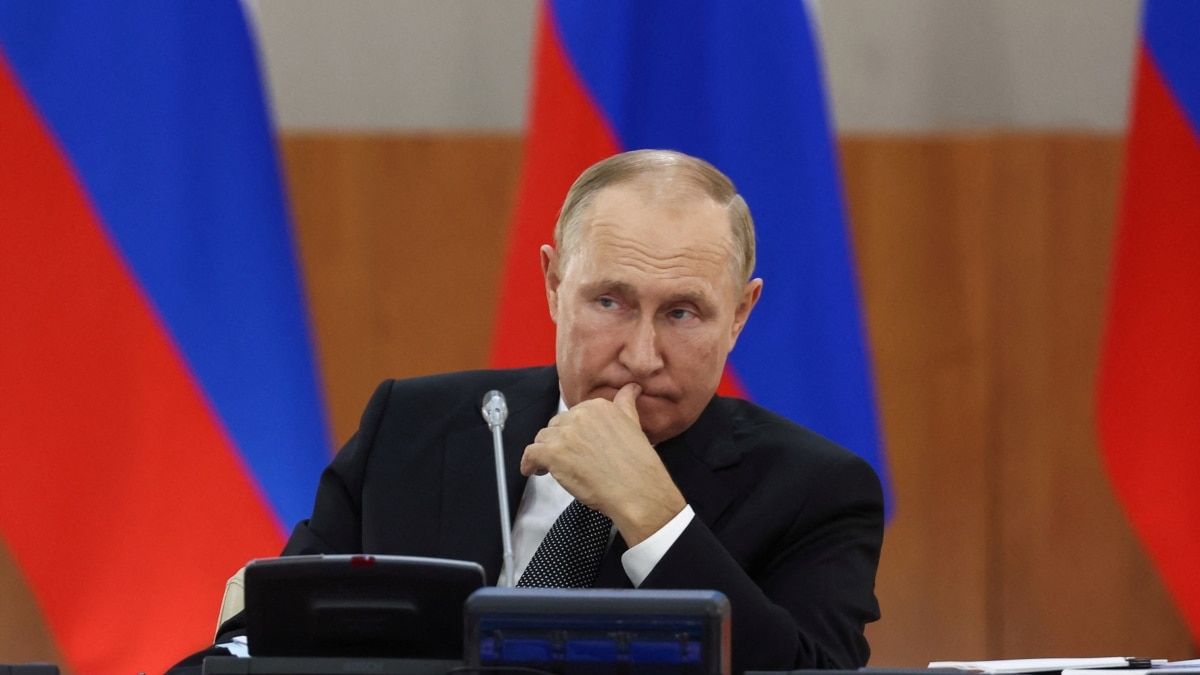
Top US Intelligence Official Sees Ukraine as Putin’s ‘Failure’

00eb0000-0aff-0242-aa87-08da91d12a5b_cx0

Washington — 

A top U.S. intelligence official says it looks like the invasion of Ukraine could become one of Russian President Vladimir Putin’s most significant and enduring blunders.

“It’s hard to see the record of the war — Putin’s record — as anything other than a failure, so far,” Central Intelligence Agency Director William Burns told a cybersecurity conference in Washington on Thursday.

“Russia is going to pay a very heavy price,” Burns said. “Not only has the weakness of the Russian military been exposed, but there is going to be long-term damage done to the Russian economy and to generations of Russians as a result of this.”

The blunt assessment is not the first from a top U.S. intelligence official warning that Russia’s war with Ukraine is backfiring on Moscow.

In June, U.S. Director of National Intelligence Avril Haines said that Russia’s ground forces “have been degraded to the point where it will take them years to get back to where they were, in many respects.”

At the time, Haines said Russia’s losses could possibly persuade Putin to negotiate at least a temporary end to the fighting.

But instead, Putin appears to have hardened his stance on Ukraine.

“It wasn’t us who started the military action, we are trying to put an end to it,” Putin told an economic forum in the port city of Vladivostok on Wednesday, reiterating his long-held position that he was compelled to send forces into Ukraine to protect Moscow-backed separatist regions that have battled Ukrainian forces since Russia’s 2014 annexation of Crimea.

“In the longer run, it will help strengthen our country both domestically and internationally,” he added.

Burns, the CIA director, said Thursday that he expects the war in Ukraine will prove Putin wrong.

“Putin’s bet, I think, is that he’s going to be tougher than the Ukrainians and the Europeans and the Americans,” Burns said. “Putin’s view is always that we have attention deficit disorder, and we’ll get distracted.”

“Putin is as wrong about that bet as he was profoundly wrong in his assumptions going back to last February about the Ukrainian will to resist and the will of the West, of the United States and all of our partners to support the Ukrainians,” he said.

Some information in this report came from The Associated Press.

Categories
Saved Web Pages

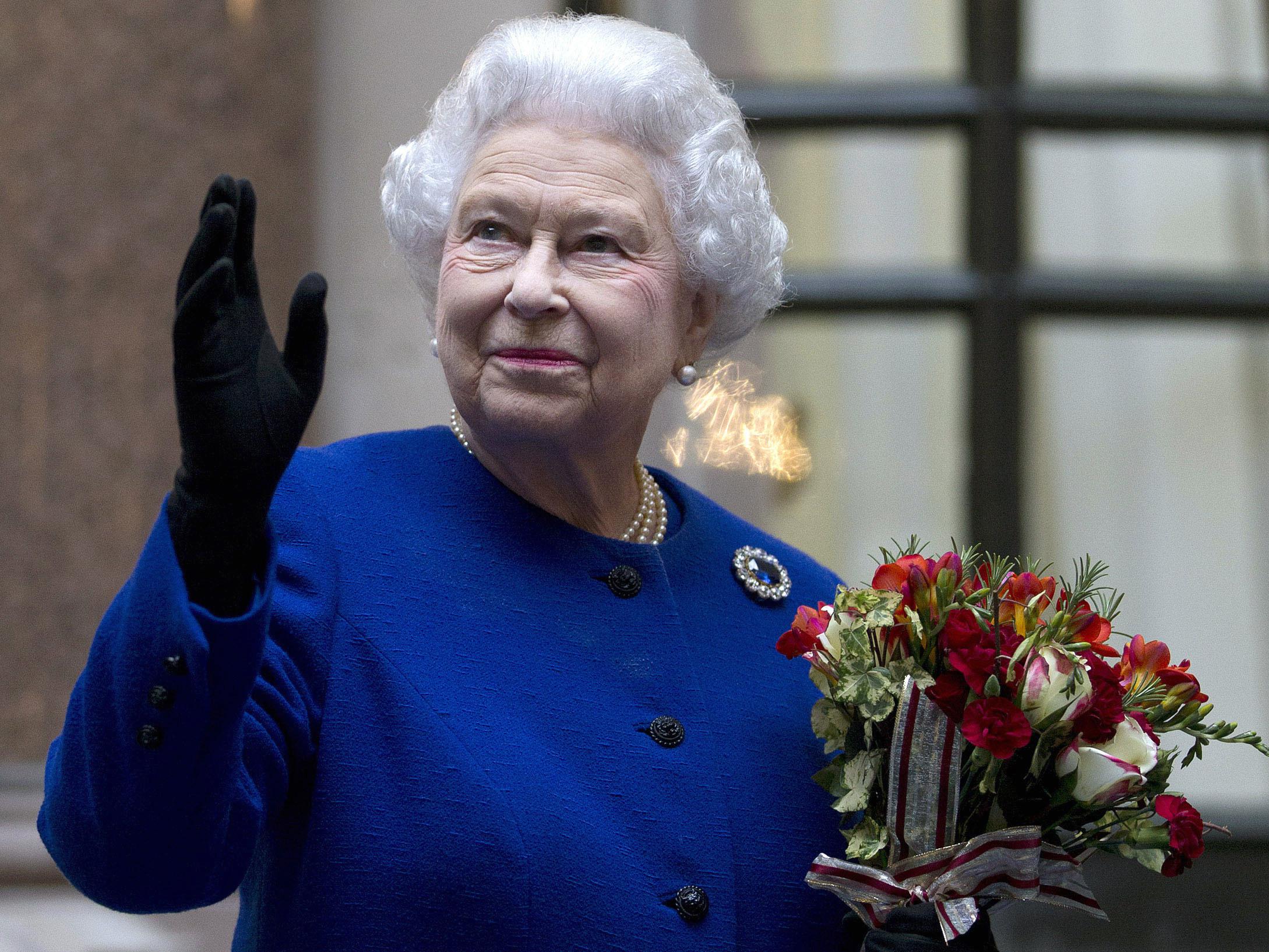
Queen Elizabeth II dead at 96 after 70 years on the throne

2178.jpeg

LONDON (AP) — Queen Elizabeth II, Britain’s longest-reigning monarch and a rock of stability across much of a turbulent century, died Thursday after 70 years on the throne. She was 96.

The palace announced she died at Balmoral Castle, her summer residence in Scotland, where members of the royal family had rushed to her side after her health took a turn for the worse.

A link to the almost-vanished generation that fought World War II, she was the only monarch most Britons have ever known.

Her 73-year-old son Prince Charles automatically became king upon her death and will be known as King Charles III, his office announced. (British monarchs in the past have selected new names upon taking the throne.) Charles’ second wife, Camilla, will be known as the Queen Consort.

The BBC played the national anthem, “God Save the Queen,” over a portrait of her in full regalia as her death was announced, and the flag over Buckingham Palace was lowered to half-staff as the second Elizabethan age came to a close.

The impact of her loss will be huge and unpredictable, both for the nation and for the monarchy, an institution she helped stabilize and modernize across decades of enormous social change and family scandals.

In a statement, Charles called the death of his mother “a moment of the greatest sadness for me and all members of my family,” adding: “I know her loss will be deeply felt throughout the country, the Realms and the Commonwealth, and by countless people around the world.”

British Prime Minister Liz Truss, appointed by the queen just 48 hours earlier, pronounced the country “devastated” and called Elizabeth “the rock on which modern Britain was built.”

World leaders extended condolences and paid tribute to the queen.

In Canada, where the British monarch is the country’s head of state, Prime Minister Justin Trudeau saluted her “wisdom, compassion and warmth.” In India, once the “jewel in the crown” of the British empire, Prime Minister Narendra Modi tweeted: “She personified dignity and decency in public life. Pained by her demise.”

President Joe Biden called her a “stateswoman of unmatched dignity and constancy who deepened the bedrock alliance between the United Kingdom and the United States.”

Since Feb. 6, 1952, Elizabeth reigned over a Britain that rebuilt from a debilitating war and lost its empire; joined the European Union and then left it; and made the painful transition into the 21st century.

She endured through 15 prime ministers, from Winston Churchill to Truss, becoming an institution and an icon — a fixed point and a reassuring presence even for those who ignored or loathed the monarchy.

She became less visible in her final years as age and frailty curtailed many public appearances. But she remained firmly in control of the monarchy and at the center of national life as Britain celebrated her Platinum Jubilee with days of parties and pageants in June.

The same month she became the second longest-reigning monarch in history, behind 17th-century French King Louis XIV, who took the throne at age 4. On Tuesday, she presided at a ceremony at Balmoral Castle to accept the resignation of Boris Johnson as prime minister and appoint Truss as his successor.

When Elizabeth was 21, almost five years before she became queen, she promised the people of Britain and the Commonwealth that “my whole life, whether it be long or short, shall be devoted to your service.”

It was a promise she kept across more than seven decades.

Despite Britain’s complex and often fraught ties with its former colonies, Elizabeth was widely respected and remained head of state of more than a dozen countries, from Canada to Tuvalu. She headed the 54-nation Commonwealth, built around Britain and its former colonies.

Married for more than 73 years to Prince Philip, who died in 2021 at age 99, Elizabeth was matriarch to a royal family whose troubles were a subject of global fascination — amplified by fictionalized accounts such as TV series “The Crown.” She is survived by four children, eight grandchildren and 12 great-grandchildren.

Through countless public events, she probably met more people than anyone in history. Her image, which adorned stamps, coins and banknotes, was among the most reproduced in the world.

But her inner life and opinions remained mostly an enigma. Of her personality, the public saw relatively little. A horse owner, she rarely seemed happier than during the Royal Ascot racing week. She never tired of the companionship of her beloved Welsh corgi dogs.

Elizabeth Alexandra Mary Windsor was born in London on April 21, 1926, the first child of the Duke and Duchess of York. She was not born to be queen — her father’s elder brother, Prince Edward, was destined for the crown, to be followed by any children he had.

But in 1936, when she was 10, Edward VIII abdicated to marry twice-divorced American Wallis Simpson, and Elizabeth’s father became King George VI.

Princess Margaret recalled asking her sister whether this meant that Elizabeth would one day be queen. ”’Yes, I suppose it does,’” Margaret quoted Elizabeth as saying. “She didn’t mention it again.”

Elizabeth was barely in her teens when Britain went to war with Germany in 1939. While the king and queen stayed at Buckingham Palace during the Blitz and toured the bombed-out neighborhoods of London, Elizabeth and Margaret spent most of the war at Windsor Castle, west of the capital. Even there, 300 bombs fell in an adjacent park, and the princesses spent many nights in an underground shelter.

She made her first public broadcast in 1940 when she was 14, sending a wartime message to children evacuated to the countryside or overseas.

“We children at home are full of cheerfulness and courage,” she said with a blend of stoicism and hope that would echo throughout her reign. “We are trying to do all we can to help out gallant soldiers, sailors and airmen. And we are trying, too, to bear our own share of the danger and sadness of war. We know, every one of us, that in the end all will be well.”

In 1945, after months of campaigning for her parents’ permission to do something for the war effort, the heir to the throne became Second Subaltern Elizabeth Alexandra Mary Windsor in the Auxiliary Territorial Service. She enthusiastically learned to drive and service heavy vehicles.

On the night the war ended in Europe, May 8, 1945, she and Margaret managed to mingle, unrecognized, with celebrating crowds in London — “swept along on a tide of happiness and relief,” as she told the BBC decades later, describing it as “one of the most memorable nights of my life.”

At Westminster Abbey in November 1947 she married Royal Navy officer Philip Mountbatten, a prince of Greece and Denmark whom she had first met in 1939 when she was 13 and he 18. Postwar Britain was experiencing austerity and rationing, and so street decorations were limited and no public holiday was declared. But the bride was allowed 100 extra ration coupons for her trousseau.

The couple lived for a time in Malta, where Philip was stationed, and Elizabeth enjoyed an almost-normal life as a navy wife. The first of their four children, Prince Charles, was born on Nov. 14, 1948. He was followed by Princess Anne on Aug. 15, 1950, Prince Andrew on Feb. 19, 1960, and Prince Edward on March 10, 1964.

In February 1952, George VI died in his sleep at age 56 after years of ill health. Elizabeth, on a visit to Kenya, was told that she was now queen.

Her private secretary, Martin Charteris, later recalled finding the new monarch at her desk, “sitting erect, no tears, color up a little, fully accepting her destiny.”

“In a way, I didn’t have an apprenticeship,” Elizabeth reflected in a BBC documentary in 1992 that opened a rare view into her emotions. “My father died much too young, and so it was all a very sudden kind of taking on, and making the best job you can.”

Her coronation took place more than a year later, a grand spectacle at Westminster Abbey viewed by millions through the still-new medium of television.

Prime Minister Winston Churchill’s first reaction to the king’s death was to complain that the new queen was “only a child,” but he was won over within days and eventually became an ardent admirer.

In Britain’s constitutional monarchy, the queen is head of state but has little direct power; in her official actions she does what the government orders. However, she was not without influence. She once reportedly commented that there was nothing she could do legally to block the appointment of a bishop, “but I can always say that I should like more information. That is an indication that the prime minister will not miss.”

The extent of the monarch’s political influence occasionally sparked speculation — but not much criticism while Elizabeth was alive. The views of Charles, who has expressed strong opinions on everything from architecture to the environment, might prove more contentious.

She was obliged to meet weekly with the prime minister, and they generally found her well-informed, inquisitive and up to date. The one possible exception was Margaret Thatcher, with whom her relations were said to be cool, if not frosty, though neither woman ever commented.

The queen’s views in those private meetings became a subject of intense speculation and fertile ground for dramatists like Peter Morgan, author of the play “The Audience” and the hit TV series “The Crown.” Those semi-fictionalized accounts were the product of an era of declining deference and rising celebrity, when the royal family’s troubles became public property.

And there were plenty of troubles within the family, an institution known as “The Firm.” In Elizabeth’s first years on the throne, Princess Margaret provoked a national controversy through her romance with a divorced man.

In what the queen called the “annus horribilis” of 1992, her daughter, Princess Anne, was divorced, Prince Charles and Princess Diana separated, and so did her son Prince Andrew and his wife, Sarah. That was also the year Windsor Castle, a residence she far preferred to Buckingham Palace, was seriously damaged by fire.

The public split of Charles and Diana — “There were three of us in that marriage,” Diana said of her husband’s relationship with Camilla Parker Bowles — was followed by the shock of Diana’s death in a Paris car crash in 1997. For once, the queen appeared out of step with her people.

Amid unprecedented public mourning, Elizabeth’s failure to make a public show of grief appeared to many to be unfeeling. After several days, she finally made a televised address to the nation.

The dent in her popularity was brief. She was by now a sort of national grandmother, with a stern gaze and a twinkling smile.

Despite being one of the world’s wealthiest people, Elizabeth had a reputation for frugality and common sense. She was known as a monarch who turned off lights in empty rooms, a country woman who didn’t flinch from strangling pheasants.

A newspaper reporter who went undercover to work as a palace footman reinforced that down-to-earth image, capturing pictures of the royal Tupperware on the breakfast table and a rubber duck in the bath.

Her sangfroid was not dented when a young man aimed a pistol at her and fired six blanks as she rode by on a horse in 1981, nor when she discovered a disturbed intruder sitting on her bed in Buckingham Palace in 1982.

The image of the queen as an exemplar of ordinary British decency was satirized by the magazine Private Eye, which called her Brenda. Anti-monarchists dubbed her “Mrs. Windsor.” But the republican cause gained limited traction while the queen was alive.

On her Golden Jubilee in 2002, she said the country could “look back with measured pride on the history of the last 50 years.”

“It has been a pretty remarkable 50 years by any standards,” she said in a speech. “There have been ups and downs, but anyone who can remember what things were like after those six long years of war appreciates what immense changes have been achieved since then.”

A reassuring presence at home, she was also an emblem of Britain abroad — a form of soft power, consistently respected whatever the vagaries of the country’s political leaders on the world stage. It felt only fitting that she attended the opening of the 2012 London Olympics alongside another icon, James Bond. Through some movie magic, she appeared to parachute into the Olympic Stadium.

In 2015, she overtook her great-great-grandmother Queen Victoria’s reign of 63 years, seven months and two days to become the longest-serving monarch in British history. She kept working into her 10th decade, though Prince Charles and his elder son, Prince William, increasingly took over the visits, ribbon-cuttings and investitures that form the bulk of royal duties.

The loss of Philip in 2021 was a heavy blow, as she poignantly sat alone at his funeral in the chapel at Windsor Castle because of coronavirus restrictions.

And the family troubles continued. Her son Prince Andrew was entangled in the sordid tale of sex offender businessman Jeffrey Epstein, an American businessman who had been a friend. Andrew denied accusations that he had sex with one of the women who said she was trafficked by Epstein.

The queen’s grandson Prince Harry walked away from Britain and his royal duties after marrying American actress Meghan Markle in 2018. He alleged in an interview that some in the family -– but pointedly not the queen -– had been less than welcoming to his wife.

She enjoyed robust health well into her 90s, although she used a cane in an appearance after Philip’s death. Months ago, she told guests at a reception “as you can see, I can’t move.” The palace, tight-lipped about details, said the queen was experiencing “episodic mobility issues.”

She held virtual meetings with diplomats and politicians from Windsor Castle, but public appearances grew rarer.

Meanwhile, she took steps to prepare for the transition to come. In February, the queen announced that she wanted Camilla to be known as “Queen Consort” when “in the fullness of time” her son became king. It removed a question mark over the role of the woman some blamed for the breakup of Charles’ marriage to Princess Diana in the 1990s.

May brought another symbolic moment, when she asked Charles to stand in for her and read the Queen’s Speech at the State Opening of Parliament, one of the monarch’s most central constitutional duties.

Seven decades after World War II, Elizabeth was again at the center of the national mood amid the uncertainty and loss of COVID 19 — a disease she came through herself in February.

In April 2020 — with the country in lockdown and Prime Minister Boris Johnson hospitalized with the virus — she made a rare video address, urging people to stick together.

She summoned the spirit of World War II, that vital time in her life, and the nation’s, by echoing Vera Lynn’s wartime anthem “We’ll Meet Again.”

“We should take comfort that while we may have more still to endure, better days will return. We will be with our friends again. We will be with our families again. We will meet again,” she said.

___

Associated Press writers Gregory Katz and Robert Barr contributed material before their deaths.

.___

Follow AP coverage of Queen Elizabeth II at https://apnews.com/hub/queen-elizabeth-ii

Categories
Saved Web Pages

The Anthrax Attacks: Who was the culprit behind the 2001 anthrax attacks?

https%3A%2F%2Fnetflixlife.com%2Ffiles%2F

The Anthrax Attacks. Cr. Courtesy of Netflix © 2022

The Anthrax Attacks. Cr. Courtesy of Netflix © 2022

A few days before the 21st anniversary of the September 11 terrorist attacks, Netflix released a new documentary feature about the aftermath, namely the terrifying 2001 anthrax attacks that occurred just one week after 9/11. The Anthrax Attacks is part of a Netflix collaboration with the BBC and is now streaming on the service.

The 2001 anthrax attacks, sometimes dubbed “Amerithrax,” was an incident where several news media outlets and Democratic senators received letters containing deadly anthrax spores. Five people died in total, and at least 17 were infected, potentially more.

Perhaps one of the most interesting aspects of the case is that no one was ever brought to justice, although the FBI did name one man as the sole culprit. He died before he could go to trial, and the case has since been closed.

There were three primary culprits for the 2001 anthrax attacks: Al-Qaeda, Steven Hatfill, and Bruce Edwards Ivins. Because the attacks happened so soon after 9/11 and the letters said things like “death to America” and “death to Islam,” the American government believed the usage of anthrax spores in the post was another terrorist attack, this time biological, potentially linked to the 9/11 plane hijackings.

However, the FBI quickly deduced that the spores used were from the Ames strain, an anthrax strain created on American soil and present in at least 15 different labs. Bruce Ivins was the leading anthrax investigator at the United States Army Medical Research Institute of Infectious Diseases (USAMRIID) and became an early suspect.

The FBI initially cleared Ivins of suspicion and even considered him an asset in their investigation as he assisted them by providing information on other researchers who had access to the strain. The FBI set their sights on former army researcher Steven Hatfill, who had previously been fired for violating regulations and later lost a second job in addition to his security clearance.

Despite not having concrete evidence, the FBI agents on the case focused all their efforts on Hatfill, to the point Hatfill filed a lawsuit accusing the Justice Department of leaking information to the press in violation of the Privacy Act. He received $5.8 million as part of a settlement.

Ultimately, the search circled back to Ivins. In late 2006, science progressed enough that the FBI could use a combination of genome and DNA sequencing to create a DNA fingerprint that matched one found on a specific flask of anthrax spores labeled RMR-1029, a flask Ivins made as part of his experiments.

Further digging also showed that Ivins had been increasing his time in the “hot suites” (labs designed to be cut off from the outside world so germs cannot escape) in the days before the letters arrived. These findings, on top of allegations that Ivins had various mental illnesses, led to him becoming the primary suspect.

Since Ivins was a co-inventor on two patents for anthrax vaccine technology, his motivations were believed to be linked to wanting to get his vaccine approved. The resulting attacks did indeed help his achievements garner recognition since the media frenzy and public paranoia led to an increase in vaccine interest. He and two colleagues were awarded the Decoration for Exceptional Civilian Service by the USAMRIID thanks to their assistance in solving technical problems related to the manufacturing of the anthrax vaccine.

The Anthrax Attacks: Where is Bruce Ivins now?

Bruce Ivins died on July 29, 2008. He appeared to commit suicide by overdosing on acetaminophen (Tylenol) after learning that the FBI was going to file criminal charges against him for his alleged connection to the anthrax attacks.

But the FBI believed he was their man. In The Anthrax Attacks documentary, you’ll hear conflicting opinions on whether Ivins was the guilty party or not. The FBI closed the case and destroyed all the evidence, so it cannot be reopened and re-investigated. In short, Bruce Ivins is believed to be the main culprit behind the attacks, but it was never proven in a court of law.

The Anthrax Attacks is now streaming on Netflix.

Categories
Saved Web Pages

Wanda Vázquez pide ser excluida de la orden de mordaza

ND6HMF5VMZCQVCHTOLMFHKNQHQ.jpg

La exgobernadora de Puerto Rico, Wanda Vázquez Garced solicitó ayer al tribunal federal ser excluida de la orden de mordaza impuesta en el caso criminal que enfrenta en ese foro.

En la moción presentada, sus abogados Ignacio Fernández y Luis Plaza, sugirieron que la mordaza afecta a la exmandataria ya que no puede defenderse públicamente de informaciones que salen en los medios de comunicación.

Cn esta acción, la exgobernadora quiere poder hacer expresiones públicas y así dar su versión sobre alegaciones que han surgido sobre el caso.

A modo de ejemplo, los abogados señalaron que informaciones periodísticas sobre una moción presentada por la fiscalía que informaba sobre 24 grabaciones que generó el FBI durante la investigación del caso contra la exmandataria.

“Una foto de la gobernadora (Vázquez Garced) siempre aparece justo debajo de los titulares. Una interpretación de sentido común de este titular lleva al lector no-informado a creer que la gobernadora estuvo presente en todas, o en algunas, de las 24 grabaciones y que debe ser culpable de los cargos”, reza la moción.

La orden de mordaza emitida por el juez Raúl Arias Marxuach, prohíbe que las partes del caso hablar con la prensa o a través de las redes sociales “cualquier información” que tenga alguna restricción.

El Negociado Federal de Investigaciones (FBI, en inglés) arrestó el pasado 4 de agosto a Vázquez Garced en su residencia en Montehiedra.

La exmandataria enfrenta varios cargos por defraudar el gobierno, soborno con fondos federales y fraude electrónico. La jueza le impuso una fianza de $50,000.

De ser encontrada culpable por defraudar al gobierno, se le podría imponer una multa de $250,000 y tres años de libertad supervisada. Mientras, por soborno con fondos federales podría enfrentar hasta 10 años de cárcel y tres años de libertad supervisada, así como $250,000 de multa. Por fraude electrónico, también podría recibir una multa de $250,000 y tres años de libertad supervisada.

Vazquez Garced, quien llegó a La Fortaleza en agosto del 2019 luego de la renuncia del exgobernador Ricardo Rosselló en ese mismo año, fue arrestada esta madrugada en su residencia por agentes del Negociado de Investigaciones Federales (FBI, en inglés).

Las riendas del País recayeron sobre la exmandataria aquel año dado a que, al quedar vacantes los puestos de gobernador y secretario de Estado, el secretario de Justicia es quien debe asumir el cargo de Primer Ejecutivo, según la línea de sucesión establecida en la Constitución de Puerto Rico. Para ese entonces, Vázquez Garced fungía como secretaria de Justicia, puesto que comenzó en enero de 2017.

La hoy acusada a nivel federal también fue Procuradora de las Mujeres desde el 2010 al 2016, nombrada por el exgobernador Luis Fortuño.

Anterior a esos cargos, se desempeñó por unos 20 años como fiscal y litigó casos de relevancia mediática como el de la Masacre de Pájaros y el de una embarazada asesinada cuyo principal sospechoso era su pareja, un miembro de la Policía. Sin abandonar el oficio de litigar, dirigió la Unidad Especializada de Violencia Doméstica, Delitos Sexuales y Maltrato a Menores en la Región Judicial de Bayamón, donde luego ejerció como fiscal del distrito.

Su trayectoria en el servicio público comenzó en la década de los 80 cuando trabajó en el Departamento de la Vivienda.

Categories
Saved Web Pages

Austin attempts to rally world support for ‘long haul’ as Ukraine suffers heavy losses in southern counteroffensive

?url=http%3A%2F%2Fmediadc-brightspot.s3.

‘THE HARD ROAD AHEAD’: Defense Secretary Lloyd Austin, in remarks opening the fifth meeting of the Ukraine Defense Contact Group in Germany, announced another package of U.S. arms for Ukraine and called on allies to redouble support for Ukraine as the war “is at another key moment.”

“Today, this contact group needs to position itself to sustain Ukraine’s brave defenders for the long haul, and that means a continued and determined flow of capability. Now, it means urgently, moving urgently to innovate and to push all of our defense industrial bases to provide Ukraine with the tools that it will need for the hard road ahead.”

At the meeting of contributors at Ramstein Air Force Base, Austin announced another $675 million in U.S. weaponry, including more GMLRS rockets for the Lockheed Martin HIMARS artillery systems,105-millimeter howitzers, artillery munitions, HARM anti-radar missiles, HUMVEEs, armored ambulances, anti-tank systems, and small arms.

And as Ukraine attempts to dislodge Russian troops from its southern Kherson province, Austin made only an oblique reference to the difficulty Ukrainian troops are having against dug-in and better-armed Russian forces.

“Ladies and gentlemen, the face of the war is changing, and so is the mission of this contact group,” Austin said. “It means renewing and deepening our resolve to stand by Ukraine, with support and strength that doesn’t hinge on any one particular battle … We must evolve as the fight evolves.”

THE UNTOLD STORY: In his nightly video addresses and his meetings with U.S. lawmakers, Ukrainian President Volodymyr Zelensky is relentlessly upbeat about the progress of the war, but interviews with wounded soldiers from the southern front tell a different story.

Concerned about maintaining morale, Zelensky has barred war correspondents from the front lines, but the Washington Post was able to talk to survivors of the first days of the southern counteroffensive, who provided harrowing accounts of being outnumbered, outgunned, and outmaneuvered.

“The soldiers said they lacked the artillery needed to dislodge Russia’s entrenched forces and described a yawning technology gap with their better-equipped adversaries,” the Post reported.

“They used everything on us,” said a 33-year-old Ukrainian soldier, who told the Post his unit had to retreat in the face of a barrage of cluster bombs, phosphorous munitions, and mortars. “Who can survive an attack for five hours like that?” he said.

“We lost five people for every one they did,” said another Ukrainian soldier, a 30-year-old platoon commander.

The soldiers related how Russian tanks were protected from mortar and rocket fire by concrete bunkers, emerging only long enough to deliver withering volleys of fire, how the Russian counter-battery radar systems systematically targeted and neutralized Ukrainian artillery, and how Russian hackers caused Ukrainian forces to lose control of their drones.

“They were just hitting us all the time,” another soldier said. “If we fire three mortars, they fire 20 in return.”

“Each soldier said it was impossible to predict when Kherson might be liberated, and many said it would depend on when the Ukrainians receive enough artillery from allies,” the report said.

MAINTAINING A BRAVE FACE: The grim realities of the current phase of the war is not something Zelensky highlights when he meets with Western officials, whose aid and support is crucial to the success of the counteroffensive.

Sens. Amy Klobuchar (D-MN) and Rob Portman (R-OH), who just returned from a face-to-face meeting with Zelensky in Kyiv, said in a joint appearance on Fox last night that Zelensky projected an image of strength.

“He is as strong as ever, and he is incredibly grateful for America and for what we have done with our humanitarian, economic help, but, most importantly, our military help,” Klobuchar told Fox anchor Bret Baier.

“Actually, right now, it’s a pretty optimistic time in Ukraine,” said Portman. “You see a counteroffensive in the south going toward Kherson, but also a counteroffensive in the east, sort of the northeast, going into the Kharkiv area, and the Ukrainians are making progress.”

“The tables have turned. And the main reason is, they now have the weapons they need to be able to make progress.”

In his remarks in Germany this morning, Austin said it was incumbent on the contact group to “renew our commitment and intensify our momentum to support the brave defenders of Ukraine for the long term.”

CLICK HERE TO READ MORE FROM THE WASHINGTON EXAMINER

Good Thursday morning and welcome to Jamie McIntyre’s Daily on Defense, written and compiled by Washington Examiner National Security Senior Writer Jamie McIntyre (@jamiejmcintyre) and edited by Victor I. Nava. Email here with tips, suggestions, calendar items, and anything else. Sign up or read current and back issues at DailyonDefense.com. If signing up doesn’t work, shoot us an email and we’ll add you to our list. And be sure to follow us on Twitter: @dailyondefense.

CLICK HERE TO SIGN UP OR READ BACK ISSUES OF DAILY ON DEFENSE

Subscribe today to the Washington Examiner magazine and get Washington Briefing: politics and policy stories that will keep you up to date with what’s going on in Washington. SUBSCRIBE NOW: Just $1.00 an issue!

HAPPENING TODAY: Defense Secretary Lloyd Austin will have more to say in a news conference from Ramstein Air Force Base at the conclusion of today’s Ukraine Defense Contact Group meeting.

He will be joined by Joint Chiefs Chairman Gen. Mark Milley for the press conference, which will be streamed live on the Pentagon’s website defense.gov at 9:45 a.m. The Pentagon will also replay Austin’s opening remarks from 4 a.m. Washington time at 8 a.m.

Also, Secretary of State Antony Blinken showed up in Kyiv today with word of an additional $2 billion in military aid for Ukraine and other European countries threatened by Russia.

THE HORRORS OF ‘FILTRATION’: The U.S. is accusing Russia of forcibly deporting hundreds of thousands of Ukrainian citizens to Russia through so-called “filtration operations,” a charge Moscow dismisses as “a fantasy.”

In remarks to the U.N. Security Council yesterday, U.S. Ambassador Linda Thomas-Greenfield said Ukrainian civilians are routinely rounded up if they are deemed “insufficiently compliant or compatible” to Russian control.

“At these filtration locations, Russian authorities or proxies search, they interrogate, they coerce, and reportedly sometimes torture subjects. But these horrors are not limited to the centers that have been set up — filtration may also occur at checkpoints, routine traffic stops, or on the streets.”

Among the forced deportations are thousands of children taken from their families and put up for adoption in Russia. “The United States has information that over the course of July alone, more than 1,800 children were transferred from Russian-controlled areas of Ukraine to Russia,” Thomas-Greenfield said.

“The forcible transfer or deportation of protected persons from occupied territories, to the territory of the occupier, is a grave breach of the Fourth Geneva Convention on the protection of civilians, and constitutes a war crime,” she said.

“So why are they doing this? Why are they confiscating Ukrainian identity documents? Why are they forcing Ukrainians to fill out Russian passport applications? Why are they intimidating locals and deporting anyone deemed threatening?” she said. “The reason is simple: to prepare for an attempted annexation. The goal is to change sentiments by force. To provide a fraudulent veneer of legitimacy for the Russian occupation and eventual, purported annexation of even more Ukrainian territory.”

ISIS WATCH: For the last few years, the U.S. Central Command has warned that the al-Hol displaced persons camp in Syria is a hotbed of ISIS activity, and yesterday the U.S. military released a statement that said it has been “advising, assisting, and enabling” Syrian Democratic Forces who have been “conducting security operations,” at the crowded facility.

The two-week operation resulted in the arrest of “dozens of ISIS operatives and the dissolution of a major ISIS facilitation network both within the camp and throughout Syria,” according to the statement from CENTCOM spokesman Col. Joe Buccino.

“Additionally, the SDF liberated four women in the camp who were found in tunnels, chained, and tortured by ISIS supporters on September 5th, 2022,” he said. “This operation will make the camp safer for those residents who remain or wish to return to their countries of origin, but are unable to do so.“

TALIBAN FACING ‘THE RESISTANCE’: The fledgling Taliban government is struggling to defeat a growing anti-Taliban insurgency in northeastern Afghanistan, according to a new analysis by the Washington-based Institute for the Study of War.

The threat to Taliban rule comes from a loose alliance of factions known as the National Resistance Front.

“The longer the NRF is able to grow its insurgency, the greater the chance that it could eventually acquire support from another state. External support could enable the NRF to eventually become powerful enough to threaten Taliban control over parts of Afghanistan,” the ISW says in its analysis. “If local Tajik Taliban fighters lose their willingness to fight the NRF, or defect outright to the NRF, then NRF capabilities will continue to grow at the expense of the Taliban’s ability to govern and control northeastern Afghanistan.”

“Taliban leaders appointed a new slate of military commanders to lead anti-NRF operations, indicating dissatisfaction with the previous commanders’ performance,” the ISW says. “Continued Taliban failures against the NRF could lead to the strengthening of the Haqqani Network within the Taliban’s military leadership.”

ANNE GARRELS 1951-2022: Anne Garrels, former ABC and NBC correspondent and longtime foreign correspondent for NPR, died yesterday of lung cancer at the age of 71.

Garrels was remembered by her colleagues at NPR as “a passionate reporter,” and “a warm and generous friend to many.”

Garrels’s 2003 book Naked in Baghdad, referred to her decision to work unclothed in her hotel room while covering the war as a security precaution to hide her satellite phone, as NPR’s Lynn Neary explained in an obituary on the NPR website.

“I decided it would be very smart if I broadcast naked, so if that, god forbid, the secret police were coming through the rooms, that would give me maybe five minutes to answer the phone, pretend I’d been asleep and sort of go ‘I don’t have any clothes on!’ And maybe it would maybe give me five seconds to hide the phone,” Garrels said.

Garrels retired from NPR in 2010.

9/11 MEMORIAL CLOSED: The National 9/11 Pentagon Memorial will be temporarily closed to the public beginning Friday at 4 p.m. through Sunday 2 p.m., as the Pentagon prepares for a weekend observance of the 21st anniversary of the Sept. 11, 2001 attacks.

President Joe Biden is expected to speak at ceremonies Sunday.

CLICK HERE TO READ MORE FROM THE WASHINGTON EXAMINER

The Rundown

Washington Examiner: Syrian Democratic Forces arrest ‘dozens’ of ISIS operatives in large refugee camp

Washington Examiner: Army to try to accommodate soldiers who want to avoid states with abortion bans

Washington Examiner: Xi and Putin to meet in person next week

Washington Examiner: F-35 deliveries halted after discovering engine part made in China

Washington Examiner: Documents detailing foreign country’s nuclear capabilities found at Mar-a-Lago: Report

Washington Examiner: Which governments could Trump have had nuclear info on at Mar-a-Lago?

Washington Examiner: Judge signals quick ruling in Mark Meadows’s challenge to Jan. 6 committee

AP: Blinken, in Kyiv, unveils $2B in US military aid for Europe

Washington Post: Ukraine military chief says ‘limited’ nuclear war cannot be ruled out

Wall Street Journal: Ukrainian Troops Advance in East as Kyiv Seizes the Initiative

Bloomberg: F-35 Deliveries Halted Over a Chinese Alloy, Pentagon Says

Bloomberg: Most-Accurate US Artillery Shell Is Quietly Added to Ukraine Aid

Air Force Times: Reed Expresses Caution Over Sending US Aircraft to Ukraine

Breaking Defense: Multiyear Procurement for Munitions Would Help Stabilize Industry: LaPlante

Defense Daily: Goal Remains To Replenish Equipment Stockpiles On ‘One-To-One’ Basis, DoD’s LaPlante Says

Defense News: US Officials Balance Arms Sales Push Against Securing Tech Secrets

AP: Another US Congressional Delegation In Taiwan Amid Tensions

Foreign Policy: How Beijing Benefits From a New Iran Deal

Washington Post: UN Atomic Watchdog – Iran Increases Uranium Stockpile Further

Defense News: US Marines’ Assistant Commandant Previews Next Budget Request

Seapower Magazine: Navy, Marine Corps Set to Reach 2022 Recruiting Goal, Raven Says

Air Force Magazine: AFSOC Commander Explains Why He Ordered CV-22 Osprey Stand Down

Military.com: It ‘Blew Everything Apart.’ Osprey Accident Shows Danger of Clutch Issue as Services Keep Flying

Air Force Magazine: AFSOC Has a Design for Its Amphibious MC-130J; Aircraft Integration Set for 2023

Breaking Defense: US Competition for Sixth-Gen Drone Wingman Could Begin in FY24

19fortyfive.com: In Ukraine’s Kherson Offensive, an Echo of a U.S. Military Fiasco: The 1944 Battle of Rapido River

19fortyfive.com: ‘It Could Be a Real Game Changer’: Why Iran Wants Russia’s Su-35 Fighter

19fortyfive.com: Putin’s Disaster: How Many Russian Soldiers Have Died in Ukraine?

19fortyfive.com: B-52 Bombers are Training with F-35s and F-15s in Europe for a War with Russia

19fortyfive.com: Russia Claims Su-57 Could Kill F-35 ‘Easily’. We Can’t Stop Laughing

Military.com: Here’s Why the Pentagon Will Stop Issuing the National Defense Service Medal

Forbes: The Navy’s Window For Right-Sizing Its Carrier Onboard Delivery Fleet Is Rapidly Closing

Calendar

THURSDAY | SEPTEMBER 8

8:30 a.m. 801 Mt. Vernon Pl. N.W. — Billington Cybersecurity Summit with Sen. Angus King (I-MA) co-chair, Cyberspace Solarium Commission; William Burns, director, Central Intelligence Agency; Defense CIO John Sherman; and others. Full agenda at https://billingtoncybersummit.com/agenda/2022-agenda

8:30 a.m. — Atlantic Council virtual discussion: “Two years since the Abraham Accords: How the region is transforming,” with Sen. Jacky Rosen, D-Nev.; Bahrain Ambassador to the United States Abdullah bin Rashed bin Abdullah Al Khalifa; and Israeli Ambassador to the United States Michael Herzog https://www.atlanticcouncil.org/event/two-years-since-the-abraham-accords/

9 a.m. — Intelligence and National Security Alliance virtual discussion: “NSA’s current research priorities and challenges, the outlook for high performance computing, artificial intelligence/machine learning, quantum encryption, and partnerships with industry and academia,” with Gil Herrera, NSA research director; and John Doyon, INSA executive vice president https://www.insaonline.org/event/coffee-and-conversation-with-gil-herrera

9:30 a.m. — Center for Strategic and International Studies virtual discussion: “Recent Developments on the Korean Peninsula,” with Sue Mi Terry, director of the Wilson Center’s Asia Program; Scott Snyder, senior fellow for Korea studies at CSIS; Victor Cha, senior vice president for Asia and Korea chair at CSIS; and Mark Lippert, nonresident senior adviser at CSIS https://www.csis.org/events/capital-cable

9:45 a.m. Ramstein Air Base, Germany — Defense Secretary Lloyd Austin and Joint Chiefs Chairman Gen. Mark Milley hold a news conference following the Ukraine Defense Consultative Group meeting. https://www.defense.gov/News/Live-Events/

10 a.m. — Carnegie Endowment for International Peace virtual book discussion on No Shortcuts: Why States Struggle to Develop a Military Cyber-Force, with author Max Smeets, senior researcher at ETH Zurich’s Center for Security Studies https://carnegieendowment.org/2022/09/08/why-states-struggle

12 p.m. — Hudson Institute virtual discussion: “From Ukraine to Taiwan: Charting a new U.S.-Japan Alliance,” with former White House national security adviser retired Lt. Gen. H.R. McMaster, Japan chair at Hudson; and Kunihiko Miyake, research director of the Canon Institute for Global Studies https://www.hudson.org/events/2144-virtual-event-from-ukraine-to-taiwan

4 p.m. 1521 16th Street N.W. — Institute of World Politics discussion” “A Year On: Current Events in Taliban Afghanistan,” with Mohibullah Noori, founder of the Heart of Asia Nations Integration Movement and former policy director for Afghanistan’s National Security Council https://www.iwp.edu/events/a-year-on-current-events-in-taliban-afghanistan

FRIDAY | SEPTEMBER 9

TBA — Defense Secretary Lloyd Austin returns to Washington after meeting with Czech Republic defense minister in Prague.

9 a.m. — 8:30 a.m. 801 Mt. Vernon Pl. N.W. — Billington Cybersecurity Summit with Lt. Gen.  Scott Berrier, director, Defense Intelligence Agency; and others. Full agenda at https://billingtoncybersummit.com/agenda/2022-agenda

9:50 a.m. — The Pentagon holds its annual 9/11 staff memorial observance in remembrance of the “sacrifice and service of those who were involved in the events of 9/11,” with Deputy Defense Secretary Kathleen Hicks; Vice Chairman of the Joint Chiefs of Staff Adm. Christopher Grady; and Michael Donley, director of Defense Office of Administration and Management

10 a.m. 1201 Pennsylvania Ave. N.W. — Hudson Institute discussion: “Chinese Economic Decoupling Strategy against the United States,” with Patrick Cronin, Asia-Pacific security chair at the Hudson Institute; Miles Yu, senior fellow and director at the Hudson Institute’s China Center; and John Lee, senior fellow at the Hudson Institute https://www.hudson.org/events/2143-chinese-economic-decoupling

2:30 p.m. — Brookings Institution virtual discussion: “Capping the price of Russian oil: Will it happen? Will it succeed,” with Deputy Treasury Secretary Wally Adeyemo; and David Wessel, director of the Brooking Center on Fiscal and Monetary Policy https://www.brookings.edu/events/capping-the-price-of-russian-oil

4 p.m. 1775 Massachusetts Ave. N.W. — Brookings Institution discussion on “The role of veterans in strengthening our democracy,” with retired Navy Adm. Steve Abbot, former deputy homeland security adviser to the president; retired Adm. Thad Allen, former commandant of the Coast Guard; retired Air Force Gen. Craig McKinley, former chief of the National Guard Bureau; Ellen Gustafson, co-founder of We the Veterans; and Elaine Kamarck, director of the Brookings Institution’s Center for Effective Public Management https://www.brookings.edu/events/the-role-of-veterans

TUESDAY | SEPTEMBER 13

12:30 p.m. — New America and Arizona State University annual Future Security Forum, with Jen Easterly, director, Cybersecurity and Infrastructure Security Agency; Joshua Geltzer, deputy assistant to the president and deputy homeland security adviser, National Security Council; Maj. Gen. Steven Edwards, incoming commander, Special Operations Command Europe; CMC Pete Musselman, senior enlisted leader, Special Operations Command Europe; and retired Maj. Gen. Michael Repass, NATO strategic adviser for special operations, Ukraine, former deputy commander of Special Operations Command Europe and former commanding general, U.S. Army Special Forces Command https://events.newamerica.org/futuresecurityforum2022

“Ladies and gentlemen, the face of the war is changing and so is the mission of this contact group … It means renewing and deepening our resolve to stand by Ukraine, with support and strength that doesn’t hinge on any one particular battle … We must evolve as the fight evolves.”

Defense Secretary Lloyd Austin urging allies not to weaken their resolve to help Ukraine even if it suffers setbacks on the battlefield.

Categories
Saved Web Pages

NSO Group’s Recent Difficulties Could Shape the Future of the Spyware Industry

608fc657-5bc8-4001-b4f6-dead4559c8f1.jpg

The spyware industry continues to find itself in the headlines, most notably for the controversial, and sometimes nefarious, use of spyware products.

In July 2022, Nikos Androulakis, leader of PASOK, Greece’s third largest political party, revealed there had been an attempt to infect his phone with Predator, a piece of surveillance software developed by Cytrox, now part of Greek company Intellexa.

In August, NSO Group’s CEO and co-founder Shalev Hulio stepped down and the Israeli firm laid off 100 workers following findings from the Pegasus Project, an investigation from 17 media organizations about the use of NSO’s software.

In late August, the collaborative investigation newsroom Lighthouse reported that Tykelab and its Italian owner, RCS Lab, were quietly selling powerful surveillance tech both inside and outside of the EU. The company boasted that it can “track the movements of almost anybody who carries a mobile phone, whether they are blocks away or on another continent.”

111% Spyware Surge Between 2021 and 2022

“According to the Lookout Security Graph telemetry data, in the first half of 2022, we have seen a global increase in spyware detections on customer devices of 111% over the same period in 2021,” Justin Albrecht, a mobile security researcher at Lookout, told Infosecurity Magazine. This includes advanced surveillance tooling used by nation states, such as NSO Group’s Pegasus which has reportedly been used to spy on politicians, journalists and human rights activists in several countries, “but also commodity spyware which is widely available for criminal use,” Albrecht added.

Meanwhile, Jean Gottschalk, a principal security consultant for pentesting firm Telecom Defense, told Infosecurity, “AdaptiveMobile Security, whom we collaborate with, have noticed a constant increase, year on year, of malicious packets transiting in SS7 networks.”

SS7 is a protocol created for internet service providers (ISPs) from different countries for 2G and 3G roaming purposes. Since security researchers discovered vulnerabilities in SS7 at the 2014 Chaos Communication Congress in Hamburg, the protocol and its 4G counterpart Diameter have reportedly been used by spyware firms such as Israel-based Rayzone, Cyprus-based Circle, and New-York-based Verint to get sensitive information from targeted victims. Irish firm AdaptiveMobile Security counts among a handful of SS7/Diameter firewall providers with fellow-Irish company Cellusys and US-based NetNumber.

However, SS7 is likely not used by NSO Group which employs more sophisticated 0-click methods.

“It is worrying that we see more and more spyware companies pop up because the trend is expanding in the wake of active scandals,” Calli Schroeder, global privacy counsel at the Electronic Privacy Information Center (EPIC), told Infosecurity Magazine.

Researchers from the Atlantic Council found in November 2021 that 75% of companies likely selling interception or intrusion technologies marketed these capabilities to governments outside their home country — even when no intelligence relationship previously existed between the two nations.

“Five irresponsible proliferators — [Turkish firm] BTT, [Israel-based] Cellebrite, [Swedish company] Micro Systemation AB, Verint, and Vastech — have marketed their capabilities to US/NATO adversaries in the last ten years,” reads the Atlantic Council report. This was also the case of NSO Group, which technology was, according to the Pegasus Project, found to be used to target Saudi journalist Jamal Khashoggi days before he was murdered in 2018.

“We’re still seeing surveillance technology being sold to authoritarian countries, as can be seen in our recent discovery that RCS Lab’s Hermit spyware was active within Kazakhstan just months ago,” said Albrecht.

As NSO Group’s now ex-CEO has been tasked with convincing the US government to take the company out of its blocklist, the spyware company wants to get back in to Washington’s good books. The firm announced it “will ensure that the company’s groundbreaking technologies are used for rightful and worthy purposes” and that it “will examine all aspects of its business, including streamlining its operations to ensure NSO remains one of the world’s leading hi-tech cyber intelligence companies, focusing on NATO-member countries.”

However, this change in strategy does not convince Albrecht. “By focusing sales on NATO countries, a spyware company may give the perception that the likelihood of abuse is lower due to the civil rights protections and legal, due process within these countries compared to more authoritarian regimes,” said the security researcher.

“However, many of the recent scandals involving spyware vendors occurred within NATO countries, such as the surveillance of opposition leaders, and in some cases, the vendor of the spyware also operated out of a NATO country, as is the case with Cytrox’s Predator malware.”

Also, it is not easy to pinpoint who exactly is using the technology. “While spyware vendors may claim that their technology is only sold to law enforcement and intelligence organizations, there have been cases where the technology ended up in the hands of undesirable entities due to government corruption, as was seen in Mexico where surveillance technology ended up in the hands of drug cartels,” says Albrecht said. “Many surveillance companies make contradictory claims that their technology cannot be used against certain entities, such as NSO claiming that its tooling cannot be used against US citizens, while also claiming that they have little to no insight into who is being targeted by their malware.”

There is also the issue of what happens when spyware vendors are breached and the source code for their tooling is exposed to the broader public. “This occurred with Hacking Team and Gamma Group, which resulted in their spyware being repurposed by various threat groups,” Albrecht continued.

Global Regulations For Spyware

As with many emerging technologies, spyware is yet to have sufficient international regulations relating to its sale, purchase and use.

“As we’ve seen before in the development of privacy-threatening technologies, it’s hard to put the genie back in the bottle. Once a technology is out in the world, it’s tough to undo that development. It’s much easier to put protections in place at the development stage,” Schroeder said. She calls for “quick regulations to ban the unethical use of spyware.”

On the other hand, Gottschalk thinks we should not set our hopes too high when regulating surveillance tech. “Four years after the European Union Agency for Cybersecurity (ENISA) has recommended implementing ‘signaling security,’ as those firewalls are called, for SS7, Diameter, and 5G roaming networks, some European ISPs still lack any such protection today,” he said.

“Even if the technology is only sold to government agencies, there appears to be little effort to monitor how the technology is used and who is targeted,” Albrecht added.

Meanwhile, Schroder hopes that “maybe the repeated scandals can have a positive impact.” But she warns that to be effective, regulations on surveillance tech need to be global, enforced with strong penalties, as those companies tend to be very lucrative, and not solely focussed on the use but on whether it should be developed in the first place.

WP Radio
WP Radio
OFFLINE LIVE