Categories
Saved Web Pages

Senate Committee Calls for Reform of Intelligence Agencies

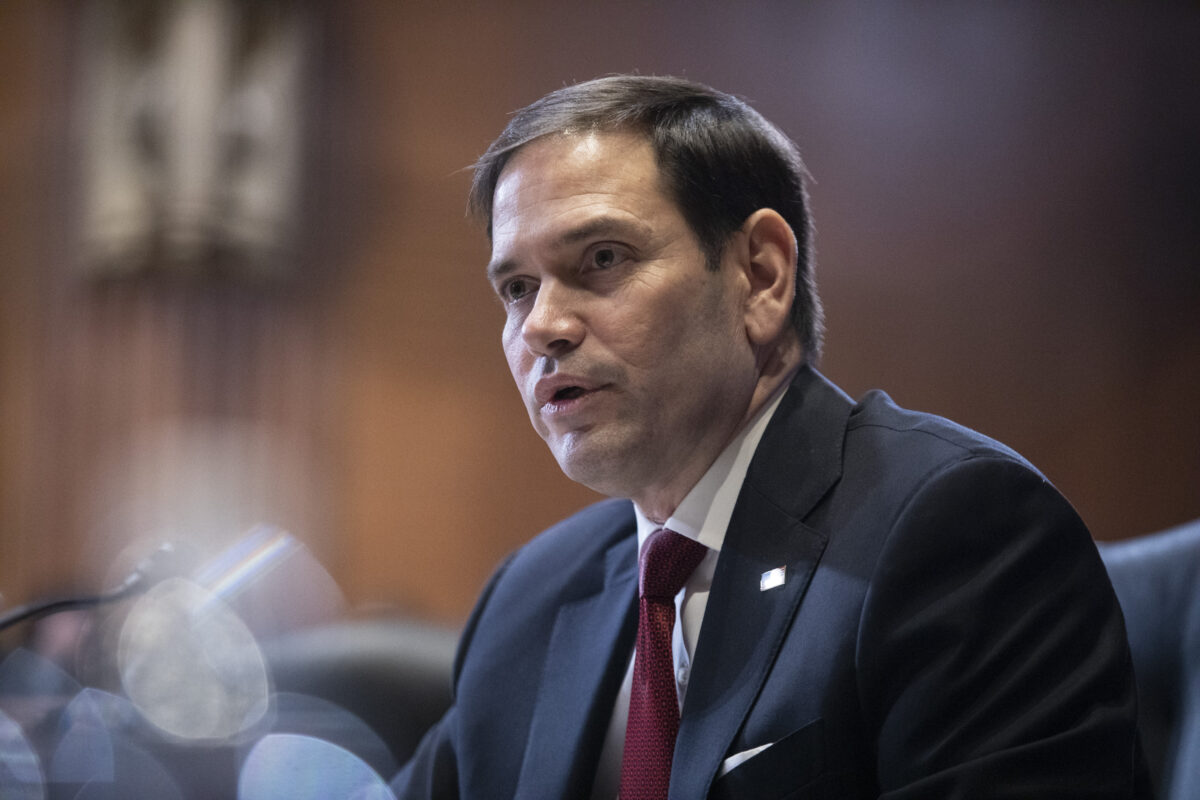
Marco-Rubio-1200x800.jpeg

A U.S. Senate committee has recommended that the nation’s intelligence agencies undergo reform in order to better counter U.S. adversaries.

The Senate Select Committee on Intelligence issued its redacted report (pdf) on Sept. 20. The document was based on two years of independent and nonpartisan research into foreign intelligence threats facing the nation.

Committee Vice Chair Sen. Marco Rubio (R-Fla.) issued a statement saying that foreign nations, including China, were rapidly developing new capabilities to target the United States for espionage.

“Foreign adversarial governments, including the People’s Republic of China, are now targeting all sectors of U.S. society,” Rubio said, using the official name of communist China. “This Committee aims to ensure that the American public, industry, and academia are aware of this, and also to ensure that the Intelligence Community has the authorities and resources necessary to effectively confront these new counterintelligence threats.”

The report detailed two years of investigation intended to assess the mission, duties, authorities, resources, and structure of the National Counterintelligence and Security Center (NCSC). The NCSC is part of the Office of the Director of National Intelligence, which provides counterintelligence support to the U.S. Intelligence Community, the federal government, and private entities.

Among the report’s conclusions was that U.S. spy agencies were frequently impeded in their efforts to conduct counterintelligence because of miscommunications, funding issues, and a failure to coordinate between agencies.

The report states that the NCSC wasn’t postured to effectively confront the whole-of-society threats now being faced. It notes that there needs to be better clarification on the NCSC’s mission, structure, and responsibilities.

The report also recommends that a new government-wide definition of counterintelligence needs to be developed in order to better position and respond to the modern threat landscape, cyberattacks, and influence operations targeting Americans.

Committee Chair Sen. Mark Warner (D-Va.) said sweeping changes would need to be made to the nation’s counterintelligence posture if it’s going to successfully combat the threat.

“The United States faces a dramatically different threat landscape today than it did just a couple of decades ago,” Warner said. “New threats and new technology mean that we have to make substantial adjustments to our counterintelligence posture if we are going to protect our country’s national and economic security.”

The committee’s report follows a contentious year in Sino–U.S. relations. The Department of Justice previously linked Chinese communist intelligence agencies to plots to spy on, harass, intimidate, and even attack U.S. citizens critical of the regime.

Despite the continued pressure from China’s ruling communist regime, the Biden administration terminated the Justice Department’s anti-espionage China Initiative in February and hasn’t replaced it with a new program.

Categories
Saved Web Pages

Turkey’s counterespionage chief linked to al-Qaeda group, harbors anti-Semitic views

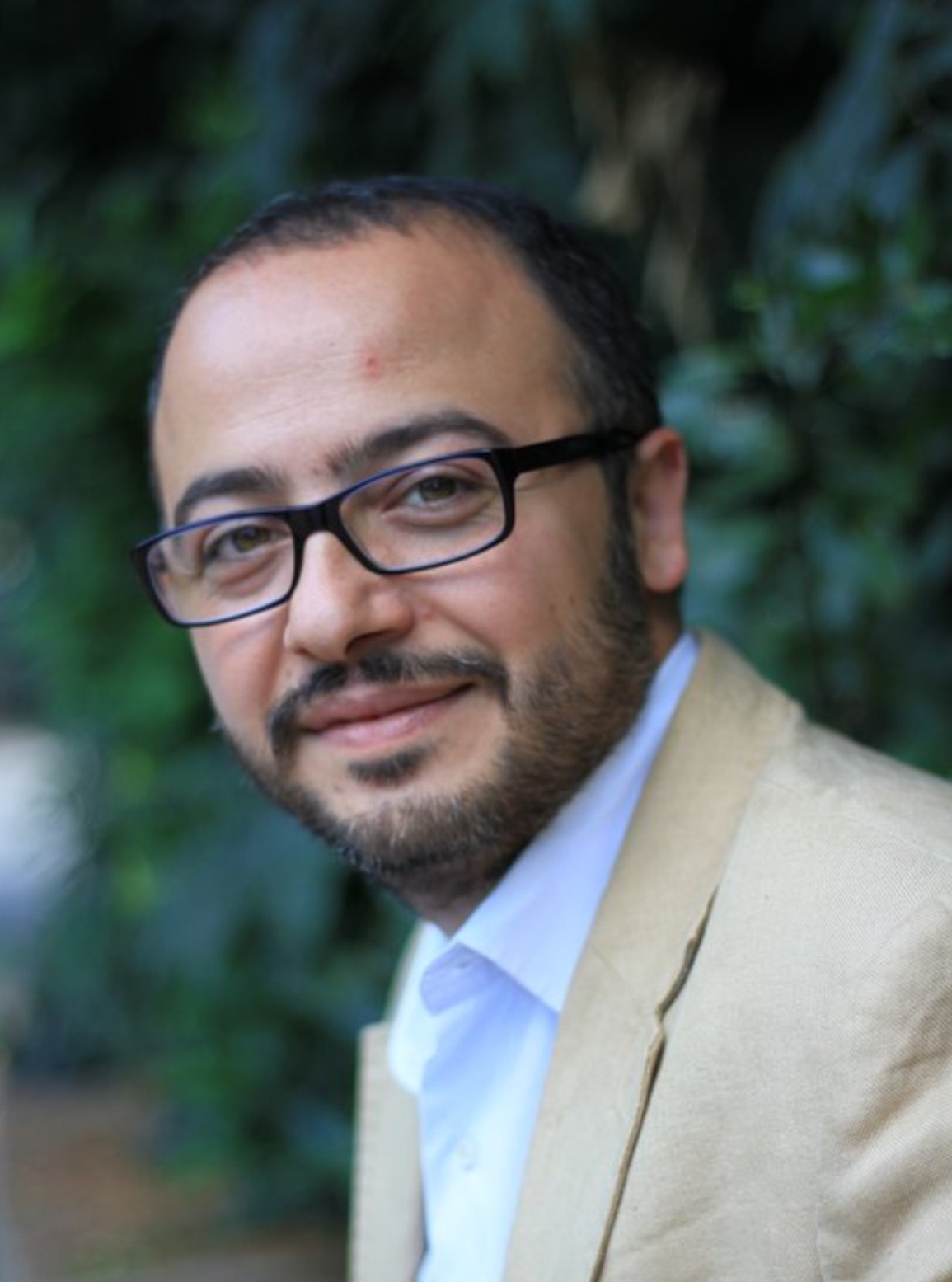
Nuh_Yilmaz.jpg

Abdullah Bozkurt/Stockholm

The head of the counterintelligence department in Turkey’s spy agency MIT has maintained close ties to a Turkish charity known as the logistics supplier for al-Qaeda groups worldwide and has long harbored anti-Semitic views, a Nordic Monitor investigation has found.

Nuh Yılmaz, a 48-year-old hard-core Islamist, has worked closely with the Foundation for Human Rights and Freedoms and Humanitarian Relief (İnsan Hak ve Hürriyetleri ve İnsani Yardım Vakfı, or IHH), described as the logistics supplier for al-Qaeda’s global operations.

Yılmaz, who had no experience in intelligence, was put into a senior position at MIT in a special appointment by the government of Recep Tayyip Erdoğan on August 15, 2013 and became the right-hand man of intelligence chief Hakan Fidan, a pro-Iran Islamist who was hand-picked to run the agency in May 2010.

Although his official title was press advisor, Yılmaz carried out clandestine operations that went beyond the mandate of his office, redesigned the media landscape in Turkey and planted key operatives in senior positions in various media outlets against the backdrop of the Erdoğan government’s crackdown on the Turkish media. He helped shutter nearly 200 media outlets including the nation’s leading newspapers and broadcast TV networks.

Nuh Yılmaz has developed a number of assets among journalists in Turkey. Hande Fırat, the Hürriyet daily’s Ankara bureau chief and anchor of a debate program on CNN Türk (pictured), is one of them. Through outlets planted in the Turkish media, Yılmaz shaped the coverage of a false flag coup bid in 2016, feeding a false government narrative to media outlets that blamed a group critical of the government to justify mass purges of pro-NATO officers from the Turkish army.

Evidence was uncovered showing that he was in charge of media propaganda concerning a false flag coup on July 15, 2016, promoted the official narrative pinning the blame on the Gülen movement, a critic of the government, and profiled investigative journalists who would be imprisoned to prevent them from discovering the involvement of MIT in the July 15 events.

Yılmaz was rewarded for this service with a new, high-profile position at the agency. In April 2017 he was appointed head of the counterespionage department, a critical role in the spy agency that defines friends and foes, develop policies and options for government leaders and allocates resources to run surveillance of perceived agents and assets of the countries that are targeted.

His former role as the behind-the-scenes coordinator of the huge media machine in Turkey was handed to his deputy, Temel Yücel Öztürk, which means he effectively kept control of that department as well. In his combined role, Yılmaz runs point in operations against targets who are alleged to pose political risks to the Erdoğan government. The details of such operations were later leaked to MIT-linked journalists to shape opinion in Turkey and abroad.

nuh_Yilmaz_Yeryuzu_1994

In other words MIT was directed to conduct clandestine operations to neutralize political threats to the Islamist-nationalist government of President Erdoğan rather than to counter real risks and dangers that pose fundamental threats to the national security of Turkey and its allies.

In his publicly available resumé, Yılmaz was careful to hide his dark past and links to the IHH. But a document submitted by the IHH to the Istanbul Public Prosecutor’s Office on June 15, 2015 as part of a 2014 criminal investigation described Yılmaz as the endorser of the 2010 Mavi Marmara flotilla, whose efforts to breach the Israeli blockade of Gaza resulted in a bloody clash with Israeli commandos and the loss of lives. Dozens of IHH administrators, employees and supporters were red-flagged by investigators during a multi-year probe into the Quds Force network.

Names of IHH-linked individuals who were flagged in wiretaps during a probe into the IRGC Quds Force: 

IHH_members_supporters

Yılmaz’s phone conversations with known Quds Force assets in Turkey were intercepted by police investigators who were probing Islamic Revolutionary Guard Corps (IRGC) Quds Force cells in Turkey. The Quds Force investigation, run from 2011 to 2014, revealed that some senior officials in the Erdoğan government had close ties to IRGC operatives.

The confidential Quds Force probe was killed by the Erdoğan government in February 2014 before Turkish and Iranian suspects were indicted and thus never went to trial. The government dismissed police chiefs and public prosecutors who had investigated the Quds Force and orchestrated sham trials to put them in jail for simply doing their job under the law.

Nuh Yılmaz

In a petition he filed with the public prosecutor’s office through his lawyer on February 26, 2015, Yılmaz complained about investigators who intercepted his phone calls; described the Quds Force’s Turkish network Tevhid-i Selam, designated as a terrorist organization in Turkey for years, as a bogus terrorist entity; and demanded the punishment of the police chiefs and prosecutors who ran the probe.

Yılmaz’s criminal complaint dismissed the Quds Force’s Turkish network Tevhid-i Selam as a terrorist organization even though it was designated a terrorist entity by Turkish courts and treated as such by police and prosecutors for decades: 

Nuh_Yilmaz_complaint_Quds_Force_Redacted

After securing his position at the spy agency, Yılmaz brought a number of IHH employees and volunteers into the intelligence field. Nordic Monitor previously published reports about confidential wiretaps that showed how the IHH president, Bülent Yıldırım, had been in close contact with the agency, running operations in Syria at the direction of the intelligence agency. Yılmaz was the point man in those communications.

Syria is a special case for Yılmaz, who wrote extensively on it before joining the agency. In one opinion piece for the pro-government Star daily on June 26, 2011, he lamented the fact that the Turkish government had declined Hitler’s offer to hand Syria over to Turkey during World War II. The piece was headlined “What Hitler proposed to Turkey.”

Nuh Yılmaz’s article that mentions Hitler’s proposal Turkey on Syria: 

nuh-yilmaz-hitler-suriye-26-haziran-2011

He argued that Turkey has been developing its capabilities thanks to developments in Syria that he claimed would take Turkey to the next league. He promoted the Muslim Brotherhood (MB) as the most powerful and organized Islamist group in Syria and advocated the view that MB will gain the most if it wins the civil war in the Arab country.

He clearly harbors anti-Semitic views and hates Israel. In the 1990s he had worked for a Turkish magazine called Yeryüzü, which was funded by the Iranian regime to promote the mullah’s views to the Turkish public. One article with Yılmaz’s byline in the April 1994 issue carried the title “Israel must be wiped out.” The article was about an event held on March 11, 1994 at the Iranian Consulate General in Istanbul to which Yılmaz was an invited attendee.

The farewell article written by Nuh Yılmaz in an Iranian-funded magazine reveals the mindset of Turkey’s counterintelligence chief: 

nuh_Yilmaz_Yeryuzu_last_article

In another issue, published in June 1994, Yılmaz wrote about Mustafa Dirani, a pro-Iran operative in Lebanon who was captured by Israeli forces in 1994. He labelled Israel as a terrorist state and condemned attacks on Hezbollah. He complained about pro-Israeli coverage in the Turkish press and the description of Hezbollah militants as fanatics.

He described the mainstream Turkish media as Zionists and collaborators and said one day Hezbollah would defeat them. As the mastermind behind the engineering of a new media outlook in Turkey under the Erdoğan government, Yılmaz has now delivered what he promised back in 1994. Hundreds of journalists who were deemed pro-Western or pro-Israel were either jailed or forced into exile when their media outlets were seized, shut down or turned into government mouthpieces.

In the 1990s Yılmaz closely followed the court cases of Islamist militants who were indicted and tried, defending them in articles he wrote for the Yeryüzü magazine.

Nuh Yılmaz’s article in an Iranian-funded magazine that was titled “Israel must be wiped out”: 

nuh_Yilmaz_Yeryuzu_Iran_consulate_event

Yeryüzü had been the subject of multiple criminal investigations for disseminating terrorist propaganda, with the courts several times ordering the confiscation of its copies after criminal complaints were filed by the Turkish authorities. The editor-in-chief, Burhan Kavuncu, linked to Quds Force cells, and its owner Ahmet Mayali were handed down prison sentences and fines after conviction in their trials. The magazine eventually shut itself down in July 1995 after five years of publication, with Yılmaz appearing in the special farewell issue.

In a three-page article he wrote in the last issue under the title of “Last Word,” Yılmaz described the magazine as revolutionary, helping to create a platform for a mass Islamic movement in Turkey by embracing various groups from both the left and the right. He promoted the view that Turks must develop an awareness of resistance in order to build a mass opposition and that that can only be done by engaging on issues that appeal to various groups in Turkey.

With his role in steering the coverage in the Turkish media and running covert intelligence operations with the huge resources available to Turkey’s spy agency, Yılmaz has been putting all the ideas he had back in the ’90s into practice in today’s Turkey. He has the full backing of the Erdoğan government to change Turkey into a regime of zealots who are bent on transforming the country into a new Iran in its region.

Articles written by Nuh Yılmaz about Islamist militants who were indicted and tried:

nuh_Yilmaz_Yeryuzu_court_cases

Categories
Saved Web Pages

‘Hey, hey, they’re subversive’: Micky Dolenz sues for release of Monkees’ FBI records

7f546f27-1b6d-45d7-b588-640b89d89614-bbs

0690b497-60a3-4d6f-afe7-84b44e7e7408_pos

play
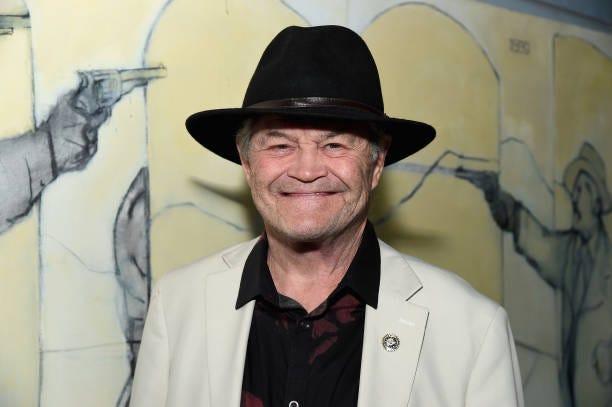
Monkees’ Micky Dolenz sues FBI over secret files on band
The Monkees’ last surviving member Micky Dolenz wants the FBI to release information it may have on the band and its members.

Last week, The Monkees’ Micky Dolenz filed a lawsuit to retrieve his records — and not the wax kind that spin on a turntable.

As the Washington Post reported Aug. 30, Dolenz has sued the Justice Department to have his and The Monkees’ unredacted FBI files and any related files made public — a redacted version came out 10 years ago.

Yes, J. Edgar Hoover and his mid-’60s G-Men surveilled The Monkees back in the day because they thought the band was subversive.

They were correct.

From 1966-68, The Monkees commanded the two most important media platforms of their era: radio and television (plus a whole lot of Tiger Beat covers).

And they made use of the opportunity to — in today’s parlance — groom children (and some teens and adults) with progressive political philosophy.

Predictably, online reaction to Dolenz’s lawsuit drew the standard derisive and dismissive comments Monkees fans such as me have become accustomed to hearing and rebutting. This time, the haters scoffed, too, at the notion that The Monkees were in any way political.

But the redacted file released a decade ago describes The Monkees as “four young men who dress as ‘beatnik types.’” It describes their concerts as using video to project “subliminal messages … depicted on the screen which, in the opinion of (redacted), constituted ‘left wing innovations of a political nature.’” These included anti-war and pro-civil rights messages.

For what it’s worth, here’s yet one more attempt to defend my “first band,” most of which is drawn from a column I wrote in 2006 when “The Monkees” television show reached its 40th anniversary.

Santa Claus is retiring:Peyton Manning wants to take over and ‘rub it in Brady’s face’

‘Talented singers, musicians, and songwriters’

As Eric Lefcowitz points out in “The Monkees Tale,” there were two “Monkees” — the characters on the television show and the musical quartet made up of the real-life Micky Dolenz, Davy Jones, Michael Nesmith and Peter Tork.

Beginning in the 1960s, some critics and members of the public scorned The Monkees because studio musicians played on their albums and singles, including providing virtually all the musical backing for the first two albums.

This ignores the fact that contemporaries such as The Grass Roots, The Association, The Mamas & the Papas, Sonny & Cher, and The Beach Boys all drew from the same stable of session musicians for some of their recordings.

The good news is that a re-evaluation of The Monkees’ music has occurred since I wrote this column in 2006.

The respected All Music Guide, for instance, has changed its tune. Back then, it wrote, “It would be foolish to pretend, however, that they were a band of serious significance, despite the occasional genuinely serious artistic aspirations of its members.”

Now, The Monkees’ entry says, “The Monkees were talented singers, musicians, and songwriters who made a handful of the finest pop singles of their day (as well as a few first-rate albums) and delivered exciting, entertaining live shows.”

Different drum:Monkees’ Nesmith pivotal to country-rock

As innovators, they were the first pop band to use a Moog synthesizer, and Nesmith’s Monkees songs and productions contributed to the creation of country-rock as a genre. Eventually, The Monkees wrote their own songs, played their own instruments and toured as a credible rock band.

And they had hip taste: The Monkees booked The Jimi Hendrix Experience to open for them on their summer 1967 tour. Alas, Hendrix was too much for The Monkees’ young fanbase, and he played only seven shows before dropping out of the tour.

‘Monkee vs. Machine’

The television show always has fared better with critics. John Lennon was a fan, comparing its humor to that of the Marx Brothers, and the series won two Emmy Awards in its first season, for outstanding comedy series and for directing in a comedy series.

“The Monkees,” however, was marketed as a children’s show (worked on me when I found the show in syndication in the ’70s), but its humor and visual techniques often broke ground for the medium.

“The Monkees” broke the fourth wall and allowed characters to address the audience directly, for example, improvisation played a large role in the filming of the scripts, and most pop culture historians credit the show with inventing the music video in its weekly “musical romps” — short films set to a Monkees song.

Thematically, the show’s humor provided teenagers and adults with political and social commentary, beginning with sampler that hangs on the wall near the front door of their “pad”: “Money is the root of all evil.”

The plots regularly put The Monkees in the position of defending what was right, which usually pitted them against authority.

In “Monkee vs. Machine,” for example, Tork foils the attempts of an efficiency expert to replace an old toymaker with automation to improve profits at the expense of quality and creativity.

‘We’ve got something to say’

To be sure, the majority of The Monkees’ songs belong to the love song genre, but a subversive perspective also carried over into The Monkees’ music and was present from the beginning: On “(Theme From) The Monkees,” Tommy Boyce and Bobby Hart write, “We’re the young generation, and we’ve got something to say.”

The Monkees’ song choices and original material would back that up time and again.

A year before The Beatles told the world “All You Need Is Love,” Tork co-wrote “For Pete’s Sake,” a hippie anthem with the same message. The song became the closing theme for the television show during the second season and perfectly encapsulated The Monkees’ pro-youth point of view: “In this generation, in this lovin’ time, in this generation, we will make the world shine.”

Despite such optimism, however, The Monkees also acknowledged the confusion that social change wreaks, with Barry Mann and Cynthia Weil’s “Shades of Gray”: “I remember when the answers seemed so clear. We had never lived with doubt or tasted fear.” Tork’s plaintive delivery of the final line of the chorus, “Only shades of gray,” vividly captures the song’s sense of uncertainty teetering on despair.

Gerry Goffin and Carole King’s “Pleasant Valley Sunday” kicks off with a classic guitar riff — played by Nesmith — and then deconstructs the malaise of “life” in “status symbol land” — the suburbs: “Rows of houses that are all the same, and no one seems to care. … Creature comfort goals, they only numb my soul and make it hard for me to see.” (Personal historical note: Goffin and King wrote the song after they moved to my hometown, West Orange, N.J., and named it for one of the main roads, Pleasant Valley Way. It was a much better place to grow up than how they portray it, and, frankly, the song is more relevant in today’s world of look-alike suburban sprawl subdivisions than it was in 1967.)

In concert, The Monkees encountered the sort of adulation and screaming that The Beatles experienced, and with “Star Collector,” they cut celebrity worship to pieces by exposing how “young celebrities” view their groupies: “How can I love her when I just don’t respect her? … It won’t take much time before I get her off my mind.”

In other self-referential songs, The Monkees agitated in favor of themselves on Nesmith’s “Listen to the Band,” but also satirized themselves on “Ditty Diego — War Chant,” from the “Head” soundtrack: “You say we’re manufactured. To that, we all agree. … Hey, hey we are The Monkees. We’ve said it all before. The money’s in, we’re made of tin. We’re here to give you more.”

“The Door Into Summer” delivers a double whammy, one against war profiteering and one against avarice in general: King Midas sits “in his counting house where nothing counts but more,” counting the “fool’s gold” he’s made from “a killing in the market on the war.” Outside his window, “the echo of a penny whistle band” forces him to realize “he pays for every year he cannot buy back with his tears.”

On the television show and on their records, The Monkees made several oblique and direct references to the war in Vietnam. Throughout the television series, for example, Tork’s character advocated pacifism with lines that appear in hindsight aimed at the escalation of the war in Vietnam.

Although some confusion exists over what Boyce and Hart knew when they wrote “Last Train to Clarksville,” they intended it as an anti-war song. One account says Clarksdale was the original name of the town, but the two songwriters changed it to Clarksville before they recorded it. Later, they learned Clarksville, Tenn., is home to Fort Campbell, an Army base from which soldiers shipped out to Vietnam. Even with that bit of serendipity on their side, the key line in Boyce and Hart’s song addresses the anxiety of soon-to-be-deployed soldiers: “And I don’t know if I’m ever coming home.”

“Zor and Zam” tells the story of two kings who agree to have a war, and through all their preparations, it looks as if it’ll be a really splendid war. Instead, “The war it was over before it begun. … Two little kings playing a game. They gave a war, and nobody came.”

On Dolenz’s “Randy Scouse Git,” the narrator adopts the voice of authority and sings, presumably to a counter-culture youth, “Why don’t you hate who I hate, kill who I kill to be free?”

The Monkees’ most strident socially conscious song, however, is Dolenz’s “Mommy and Daddy,” where the writer and singer lets loose with a series of questions he wants his preteen listeners to ask their parents: “Ask your mommy why everybody swallows all those little pills. Ask your daddy why that soldier doesn’t care who he kills. … Do you think I’m too young to know, to see, to feel, or hear? My questions need an answer, or a vacuum will appear.” It’s about as far from bubble gum as you can get, and that’s the tame, released version.

By then, however, no one was listening. After the television show was canceled in 1968 and left the air that September, The Monkees never hit the Top 10 again and their records sold fewer and fewer copies. A shame, because The Monkees did in fact have something to say and they still do. Go ahead and listen to the band.

And while you’re at it, FBI, release the full file on The Monkees.

Categories
Saved Web Pages

New York attorney general sues Trump and company, alleges fraud

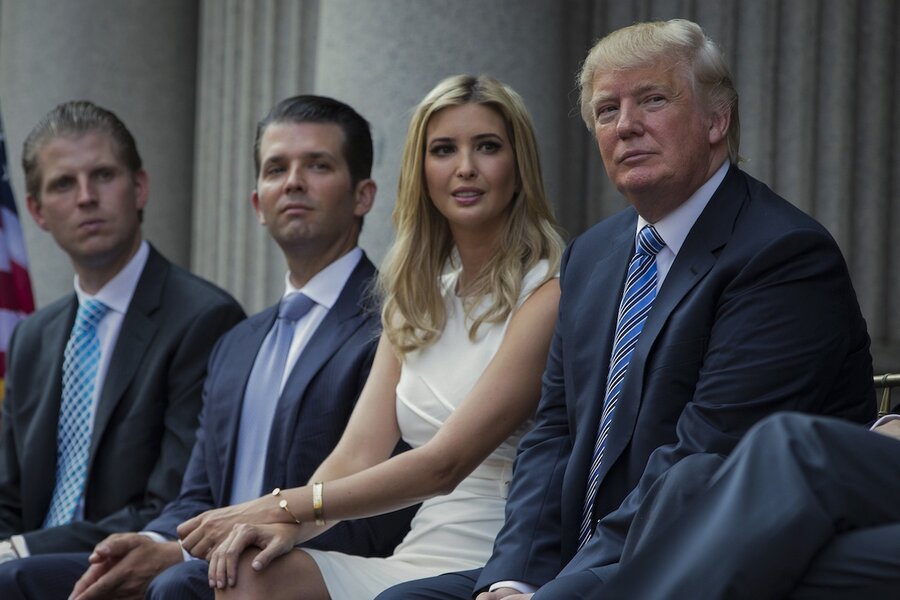
1144909_4_0921-TrumpFamily_standard.jpg?

New York’s attorney general sued former President Donald Trump and his company Wednesday, alleging business fraud involving some of their most prized assets, including properties in Manhattan, Chicago, and Washington, D.C.

Attorney General Letitia James’ lawsuit, filed in state court in New York, is the culmination of her office’s three-year civil investigation of Mr. Trump and the Trump Organization. Three of Mr. Trump’s adult children, Donald Jr., Ivanka, and Eric Trump, were also named as defendants, along with two longtime company executives, Allen Weisselberg and Jeffrey McConney.

The lawsuit seeks to strike at the core of what made Mr. Trump famous, taking a blacklight to the image of wealth and opulence he’s embraced throughout his career – first as a real estate developer, then as a reality TV host on “The Apprentice” and “Celebrity Apprentice,” and later as president.

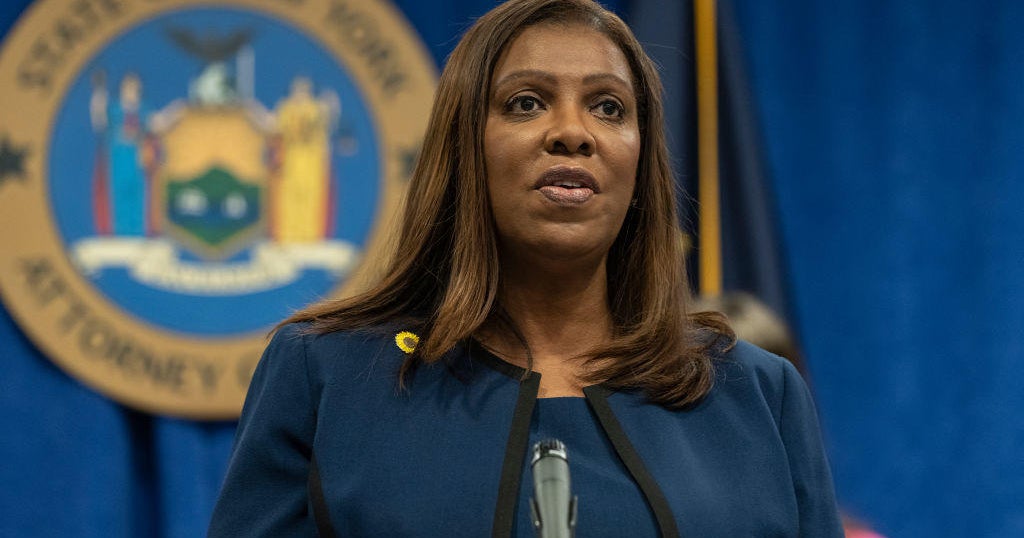
Ms. James, a Democrat, announced details of the lawsuit at a news conference on Wednesday. The case showed up on a court docket Wednesday morning.

Ms. James said Mr. Trump “falsely inflated his net worth by billions of dollars.”

The goal, the attorney general’s office has said, was to burnish Mr. Trump’s billionaire image and the value of his properties when doing so gave him an advantage, while playing down the value of assets at other times for tax purposes.

“This investigation revealed that Donald Trump engaged in years of illegal conduct to inflate his net worth, to deceive banks and the people of the great state of New York,” Ms. James said at the news conference. “Claiming you have money that you do not have does not amount to the art of the deal. It’s the art of the steal.”

Ms. James is seeking to remove the Trumps from businesses engaged in the alleged fraud and wants an independent monitor appointed for no less than five years to oversee the Trump Organization’s compliance, financial reporting, valuations, and disclosures to lenders, insurers, and tax authorities.

She is seeking to replace the current trustees of Mr. Trump’s revocable trust, which controls his business interests, with independent trustees, to bar Mr. Trump and the Trump Organization from entering into commercial real estate acquisitions for five years, from obtaining loans from banks in New York for five years, and permanently bar Mr. Trump and three of his adult children from serving as an officer or director in any New York corporation or similar business entity registered and/or licensed in New York State.

She also seeks to permanently bar Mr. Weisselberg and Mr. McConney from serving in the financial control function of any New York corporation or similar business entity registered and/or licensed in New York State.

Ms. James said her investigation uncovered potential criminal violations, including falsifying business records, issuing false financial statements, insurance fraud, conspiracy, and bank fraud. She said her office is referring those findings to federal prosecutors and the Internal Revenue Service.

Alina Habba, an attorney for Mr. Trump, said in a statement that the lawsuit “is neither focused on the facts nor the law – rather, it is solely focused on advancing the Attorney General’s political agenda.”

“It is abundantly clear that the Attorney General’s Office has exceeded its statutory authority by prying into transactions where absolutely no wrongdoing has taken place,” Ms. Habba said. “We are confident that our judicial system will not stand for this unchecked abuse of authority, and we look forward to defending our client against each and every one of the Attorney General’s meritless claims.”

Ms. James’ lawsuit comes amid a swirl of unprecedented legal challenges for a former president, including an FBI investigation into Mr. Trump’s handling of classified records and inquiries into his efforts to overturn the 2020 election.

The Trump Organization is set to go on trial in October in a criminal case alleging that it schemed to give untaxed perks to senior executives, including its longtime finance chief Mr. Weisselberg, who alone took more than $1.7 million in extras.

Mr. Weisselberg pleaded guilty Aug. 18. His plea agreement requires him to testify at the company’s trial before he starts a five-month jail sentence. If convicted, the Trump Organization could face a fine of double the amount of unpaid taxes.

Manhattan District Attorney Alvin Bragg has been conducting a parallel criminal investigation of the same business practices at the heart of Ms. James’ civil lawsuit. That probe lost momentum earlier this year after Mr. Bragg raised questions internally about whether a criminal case was viable, but the Democrat has said it has not been abandoned.

At the same time, the FBI is continuing to investigate Mr. Trump’s storage of sensitive government documents at his Mar-a-Lago estate in Florida, and a special grand jury in Georgia is investigating whether Mr. Trump and others attempted to influence state election officials.

All of the legal drama is playing out ahead of the November midterm elections, where Republicans are trying to win control of one or both houses of Congress.

Meanwhile, Mr. Trump has been laying the groundwork for a potential comeback campaign for president in 2024 and has accused President Joe Biden’s administration of targeting him to hurt his political chances.

State law allows a broad range of civil remedies against companies committing commercial fraud, including revoking licenses to conduct business in the state, removing company officers, and forcing the payment of restitution or disgorgement of ill-gotten gains.

Ms. James’ office could also seek to ban Mr. Trump from being involved in certain types of businesses, as happened in January when a judge barred ex-drug company CEO Martin Shkreli from the pharmaceutical industry for life.

In a previous clash with Mr. Trump, Ms. James oversaw the closure of his charity, the Trump Foundation, after her predecessor in the attorney general’s office, Barbara Underwood, filed a lawsuit alleging he misused its assets to resolve business disputes and boost his run for the White House. A judge ordered Mr. Trump to pay $2 million to an array of charities to settle the matter.

Ms. James, who campaigned for office as a Trump critic and watchdog, started scrutinizing his business practices in March 2019 after his former personal lawyer Michael Cohen testified to Congress that Mr. Trump exaggerated his wealth on financial statements provided to Deutsche Bank when he was trying to obtain financing to buy the NFL’s Buffalo Bills.

Since then, Ms. James’ office and Mr. Trump’s lawyers have repeatedly sparred over the direction of the investigation and Mr. Trump’s unwillingness to comply with subpoenas for his testimony and records. Mr. Trump spent months fighting the subpoena that led to his August deposition, his lawyers unable to convince courts that he should be excused from testifying because his answers could be used in Mr. Bragg’s criminal probe.

Get stories that
empower and uplift daily.

In May, Mr. Trump paid $110,000 in fines after he was held in contempt of court for being slow to respond to a subpoena Ms. James’ office issued seeking documents and other evidence. The contempt finding was lifted in June after Mr. Trump and his lawyers submitted paperwork showing they had made a good faith effort to find relevant documents.

This story was reported by The Associated Press.

Categories
Saved Web Pages

New York Attorney General Letitia James sues Trump and The Trump Organization, seeking end to their business in the state and $250 million in relief

gettyimages-1240622507.jpg

Alleging a widespread effort to manipulate property valuations by former President Donald Trump, three of his children, and their eponymous company, New York Attorney General Letitia James announced Wednesday her office is suing them, seeking $250 million and an end to their operations in the state.

James’ office alleged in a 220-page complaint filed Wednesday that Trump, Donald Trump Jr., Ivanka Trump and Eric Trump, as well as others who have served as company executives at the Trump Organization engaged in a yearslong scheme to enrich themselves by inflating the values of a wide swath of properties, stretching across his international real estate empire. 

James’ office is asking a judge to revoke the Trump Organization’s business certificate, effectively barring it from doing business in New York. Her office is seeking to permanently bar Trump and his children named in the suit from serving as officer or director of any business entity in New York, including their family’s company. It is also requesting a five-year ban on Trump and the company from acquiring real estate in New York or applying for loans from any New York-based company.

In a statement to CBS News, Alina Habba, an attorney for Donald Trump, said “today’s filing is neither focused on the facts nor the law – rather, it is solely focused on advancing the Attorney General’s political agenda.” 

“It is abundantly clear that the Attorney General’s Office has exceeded its statutory authority by prying into transactions where absolutely no wrongdoing has taken place,” Habba said. “We are confident that our judicial system will not stand for this unchecked abuse of authority, and we look forward to defending our client against each and every one of the Attorney General’s meritless claims.” 

The complaint accuses the company of more than 200 instances of false asset valuations. In one instance highlighted in the complaint, James’ office said Trump’s company said a dozen rent stabilized apartments in Trump Park Avenue were listed on corporate paperwork as being worth more than $49.5 million. In fact, James’ office said, they had been appraised at a combined $750,000.

James’ office launched its civil probe in 2019 after Michael Cohen, Trump’s former lawyer, testified to Congress, raising questions about whether the Trump Organization “had issued fraudulent financial statements,” according to court filings related to the investigation.  The initial focus of the investigation was on whether the Trump Organization inflated the valuations of assets while seeking loans and insurance coverage and deflated the value of other assets to reduce tax liability.  

It grew into a sweeping probe of dozens of Trump properties and years of Trump Organization finances. Investigators for James’ office examined more than a million pages of documents, according to  and issued subpoenas to dozens of current and former executives working for the Trump Organization and other companies with relationships to it. Ultimately, in August, Trump and two of his children — Ivanka and Donald Trump Jr. — sat for depositions after a nearly yearlong fight.

Trump invoked his Fifth Amendment right against self-incrimination, and refused to answer hundreds of questions.

The investigation played out as a “special proceeding,” in which a New York judge presided over years of contentious disputes over subpoenas and other challenges in often public filings and hearings.

The proceedings made public developments that might otherwise have remained confidential, such as a letter sent to the company in February by its longtime accounting firm, Mazars USA, cutting ties with the Trump Organization and saying a decade’s worth of its financial statements “should no longer be relied upon.”

In court, attorneys for James’ office described an effort to untangle finances at properties from Los Angeles to Scotland. They repeatedly said their investigation was uncovering evidence that Trump and his company “fraudulently” valued multiple assets and “misrepresented” those values to financial institutions they partnered with.

Attorneys for the Trump Organization decried the effort in hearings and filings as an unprecedented “fishing expedition.”

The company repeatedly tried to halt the investigation and shield the Trumps from depositions but they were rebuffed each time by New York courts that ruled the investigation and its subpoenas were legal.

Trump and his company have repeatedly denied all allegations of wrongdoing, calling it a “witch hunt” and “a political crusade.” Attorneys for Trump did not immediately reply to requests for comment.

The lawsuit comes as Trump and the company face mounting legal peril. The Trump Organization is being prosecuted in a criminal trial on Oct. 24 in Manhattan, where it will fight charges of fraud and tax evasion. The company has entered a not guilty plea in the case.

Trump is at the center of at least two federal investigations – a grand jury probe into his alleged role in the events leading up to the January 6, 2021 attack on the U.S. Capitol and a separate investigation into his handling of documents labeled “Top Secret” found at his home in Florida. He is also the focus of a grand jury in Fulton County, Georgia, which is investigating Trump’s conduct after he lost the 2020 election.

Categories
Saved Web Pages

Campaign finance in the US and the UK: a comparative assessment

lexology-social-media.png

Campaign finance systems in the US and the UK have provoked similar controversial discussions over the past few years especially due to reforms introduced in both jurisdictions by the Bipartisan Campaign Reform Act (BCRA) of 2002 in the US and the Political Parties, Elections and Referendum Act (PPERA) of 2000 in the UK, respectively. Despite the similarities characterizing the relevant debates in both countries and relating mostly to their source—which could be briefly described as the effort to decrease the influence of big money and special interests in government—striking differences exist, stemming from a number of factors: Different constitutional frameworks, governmental structures and roles of the judiciary as well as historical deviations in political cultures and in the public perception about donations to election campaigns have shaped dissimilar regulatory frameworks.

The purpose of this alert is not to extensively analyze the differences between such regulatory frameworks. It rather intends to provide a comprehensive overview of the different legislative approaches to traditional campaign finance measures to demonstrate the different approaches of the two systems.

Contribution limits

Contribution limits to candidates and political parties alike have consistently been an inextricable part of the US campaign finance system. The contribution limits provided by the Federal Election Campaign Act (FECA) of 1971 were upheld by the US Supreme Court in its landmark decision Buckley v. Valeo despite First Amendment objections and naturally survived FECA’s amendments that followed the decision in 1974 and 1979. Contribution limits are still applicable under FECA and are adjusted from time to time to reflect inflation and other circumstances. Indicatively, current individual candidate contribution limit at the federal level is set to $2,700 per candidate election while the limit on individual contributions to the six national party committees was raised to $33,400 per year. Similarly there is a special limit on national party committees that are now allowed to give up to $46,800 per candidate for the US Senate per campaign. Recently, the Supreme Court in McCutcheon v. FEC struck down the aggregate contribution limits provided by FECA initially thought to have been upheld in Buckley.

In the UK, no contribution limits to political parties for general parliamentary elections to the Westminster Parliament are provided by the PPERA or any other applicable campaign finance instrument. The system overall is characterized by a different philosophy and balances the absence of contribution limits with strict expenditure limits (see below) and permissible donor rules. Overall, it must be mentioned that the system in the UK is party-centered and there are no candidate centered organizations that run campaigns parallel with the political parties as in the US. This shall always be taken into account when considering where large contributions are directed during general elections in the UK.

Expenditure limits

A fundamental premise of US campaign finance law is that expenditure limits violate the First Amendment and are thus prohibited. The Supreme Court in Buckley subjected the expenditure limits provided by FECA to exacting scrutiny, striking them down as they “necessarily reduce […] the quantity of expression by restricting the number of issues discussed, the depth of their exploration, and the size of the audience reached.”

In the UK, spending caps apply at the national level in general elections during the campaign periods. Campaign period is defined under the PPREA as the period of 365 days ending with the date of the poll for the election. The spending cap is determined by the number of constituencies which are contested by a party, each constituency capped at £30,000. For example, the spending cap for the upcoming 2015 general election for those parties that filed candidates in all 650 seats was set at £19,500,000, equivalent to £30,000 for each of the UK’s 650 constituencies. Similar expenditure limits exist for individual candidates.

The formula upon which these are determined is based on the number of electors in the constituency of the candidate and a cap per elector is set by the Secretary of State. For the upcoming general election, the pre-candidacy spending limit, during the “long campaign” (as of December 19, 2014), was £30,700, plus 9p per voter in county constituencies, and 6p per voter in borough seats. During the “short campaign” (from March 30, 2015 up to the day of the general election on May 7, 2015), an official candidate may spend £8,700, plus 9p per voter in county constituencies and 6p per voter in borough seats. It must be noted that average reported expenditures per candidate in the UK during general elections are generally low (below £10,000) and cannot be compared to the definitely higher amounts spent by candidates for federal office in the US.

Disclosure requirements

If there is one campaign finance norm, where both jurisdictions are aligned and pretty similar obligations apply, it is disclosure requirements. From Justice Brandeis who over a century ago commented that “publicity is justly commended as a remedy for social and industrial diseases” as sunlight that “is said to be the best of disinfectants” to Chief Justice Roberts who more recently wrote for the Court in John Doe#1 v. Reed that disclosure “promotes transparency and accountability in the electoral process to an extent other measures cannot”, disclosure has long been central to thinking about campaign finance regulation in the US.

In particular, the FECA requires candidate committees, party committees and Political Action Committees (PACs) to file periodic reports disclosing the money they raise and spend. Candidates must identify, for example, all PACs and party committees that give them contributions, and they must identify individuals who give them more than $200 in an election cycle. Additionally, they must disclose expenditures exceeding $200 per election cycle to any individual or vendor.

As mentioned above, the UK campaign finance system is characterized by strict disclosure requirements which were introduced to balance the absence of contribution limits. Donations over £5,000 to the main political party offices or over £1,000 to a party’s unit are required to be reported to the Electoral Commission on a quarterly basis; the same reports need to be submitted to the Commission every week during a general election campaign. Prior to 2005, a scandal created by a parties’ coordinated effort to circumvent the strict disclosure requirements by taking out considerable loans for election purposes, which were not deemed as reportable at that time, monopolized the public opinion and media’s attention for some time. The law was then amended to include loans in the reporting requirements for political parties. Candidates are also required to submit a return detailing their campaign expenses to the Electoral Commission within thirty-five days of the declaration of the election result. Donations of more than £50 to the candidate must be included in the return.

Concluding remarks

As mentioned above, the purpose of this post is not to provide an exhaustive analysis of the differences between the US and the UK campaign finance systems. In fact, important differences concerning the function and the roles of the systems’ enforcement mechanisms, the Federal Election Commission and the Electoral Commission respectively, as well as the different provisions on electioneering communications will be part of a subsequent post.

Interested parties in financing political parties and candidates in the two countries should avoid misperceptions stemming from their experience in any of the two systems. The frameworks differ substantially and high level legal counseling is required to avoid violations that stem from unpermitted analogies between them. Dentons has a team of experienced lawyers involved in its Trans-Atlantic Political Law practice, who would be happy to assist you and respond to any questions you may have on either the US or the UK campaign finance system.

Categories
Saved Web Pages

Analysis: A Cornered Putin Is More Dangerous Than Ever

00putin-speeches-topart-facebookJumbo.jp

  • Send any friend a story

    As a subscriber, you have 10 gift articles to give each month. Anyone can read what you share.

By calling up roughly 300,000 reservists to fight, and abandoning the objective of demilitarizing and “de-Nazifying” Ukraine, President Vladimir Putin of Russia acknowledged the reality and growing resistance of a unified Ukraine.

By calling up roughly 300,000 reservists to fight, and abandoning the objective of demilitarizing and “de-Nazifying” Ukraine, President Vladimir Putin of Russia acknowledged the reality and growing resistance of a unified Ukraine.Credit…Pool photo by Gavriil Grigorov

Roger Cohen
  • Sept. 21, 2022, 8:25 a.m. ET

PARIS — President Vladimir V. Putin of Russia, in a speech on Wednesday that was a reminder of how easily the war in Ukraine could spread, doubled down on his nuclear threat, accused the West of seeking to “destroy” his country, and suggested that Ukrainians are mere pawns of the “military machine of the collective West.”

In a videotaped address to the nation, he effectively conceded that the war he started on Feb. 24 has not gone as he wished. By calling up roughly 300,000 reservists to fight on what he called a 620-mile front, and abandoning the original objective of demilitarizing and “de-Nazifying” all of Ukraine, he acknowledged something he had consistently denied: the reality and growing resistance of a unified Ukrainian nation.

But Mr. Putin cornered is Mr. Putin at his most dangerous. That was one of the core lessons of his hardscrabble youth that he took from the furious reaction of a rat he cornered on a stairwell in what was then Leningrad.

His speech at once inverted a war of aggression against a neighbor into one of defense of the “motherland,” a theme that resonates with Russians, and warned the West in unmistakable terms — “this is not a bluff” — that the attempt to weaken or defeat Russia could provoke nuclear cataclysm.

“Russia won its defensive wars against Napoleon and Hitler, and the most important thing Putin did here from a psychological perspective was to claim this, too, is a defensive war,” said Michel Eltchaninoff, the French author of “Inside the Mind of Vladimir Putin.” “It was an aggressive war. Now it’s the defense of the Russian world against the Western attempt at dismemberment.”

A military recruitment billboard in St. Petersburg, Russia, on Tuesday.Credit…Olga Maltseva/Agence France-Presse — Getty Images

That “Russkiy Mir,” or imagined world imbued with some inalienable Russian essence, grew in size as Mr. Putin suggested in the speech that the country’s nuclear arsenal could be used to defend eastern and southern areas of Ukraine captured since the war began.

Mr. Putin said Russia would support imminent referendums on the future of four regions in Ukraine. This method, described this week by President Emmanuel Macron of France as “simulacra” of referendums, was used in Crimea in 2014 to justify Russian annexation.

It seems likely that the referendums in Donetsk and Luhansk in the east, and Kherson and Zaporizhzhia in the south — which the United States and Western allies have denounced as “sham” votes — would also lead to Russian annexation. At that point, a Ukrainian attack next month on the city of Kherson in the south, captured by Russia at the start of the war, could, in Russia’s view, be viewed as an attack on Russian soil, justifying a nuclear riposte.

A Ukrainian counteroffensive is now underway in the Kherson region, and senior Ukrainian officials have vowed to recapture the city.

“If the territorial integrity of our country is threatened, we will of course use all means at our disposal to defend Russia and our people,” Mr. Putin said.

His speech, which may of course be a bluff despite his denial, nevertheless placed before the West a dilemma that has been inherent in its policy from the start of the war: How far can intense military and logistical support of Ukraine — effectively everything short of NATO troops on the ground — go without setting off nuclear confrontation?

It was also an attempt to divide the West ahead of a winter that promises to be hard, with inflation and energy costs rising. While the Biden administration has little apparent interest in diplomacy at this stage, France, Germany and Italy still seek the “dialogue” with Russia that Mr. Macron mentioned in his speech on Tuesday to the United Nations, a dialogue judged necessary, he said, because “we seek peace.”

Categories
Saved Web Pages

Ukraine Latest: Putin’s Moves Are ‘Signs of Weakness,’ US Says

1200x802.jpg

Russian President Vladimir Putin called a “partial mobilization” and vowed to annex territories his forces are occupying. In a televised address, he described the moves as “urgent, necessary steps to defend the sovereignty, security and territorial integrity of Russia.”

Bridget Brink, the US ambassador to Ukraine, said in a tweet that “sham referenda and mobilization are signs of weakness, of Russian failure.” Treasuries, gold and the dollar led gains in haven assets after Putin rattled markets that were already bracing for a super-sized rate hike from the Federal Reserve. Russian stocks tumbled to their lowest since the country invaded.

WP Radio
WP Radio
OFFLINE LIVE