Categories
Saved Web Pages

Britain’s Secret War With Russia

original.jpg

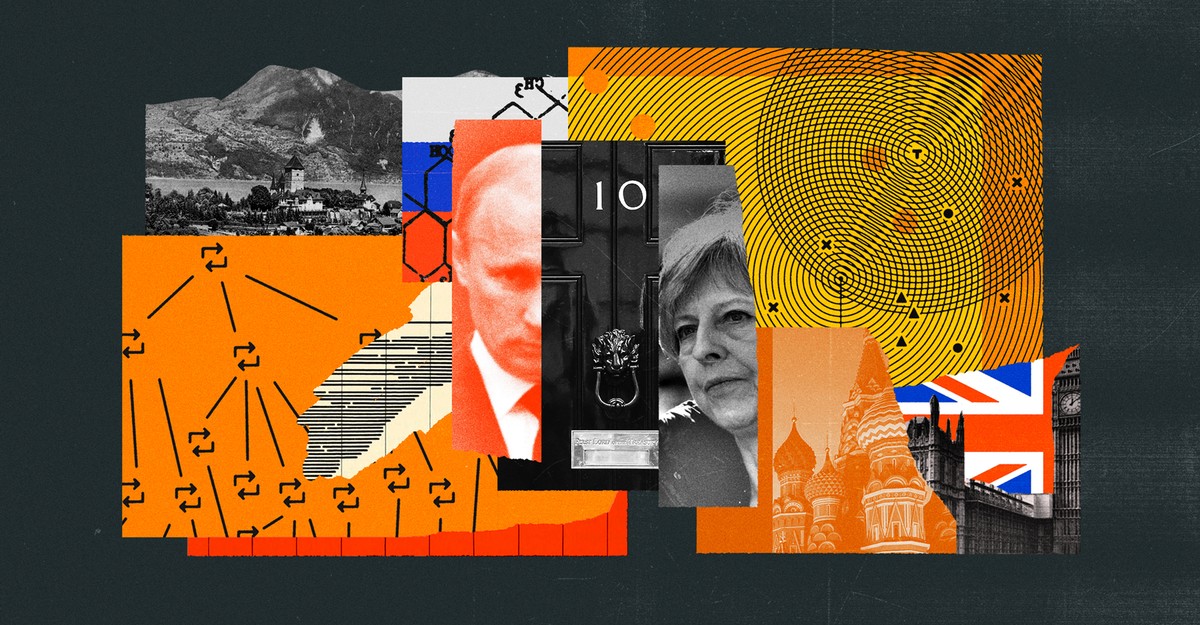
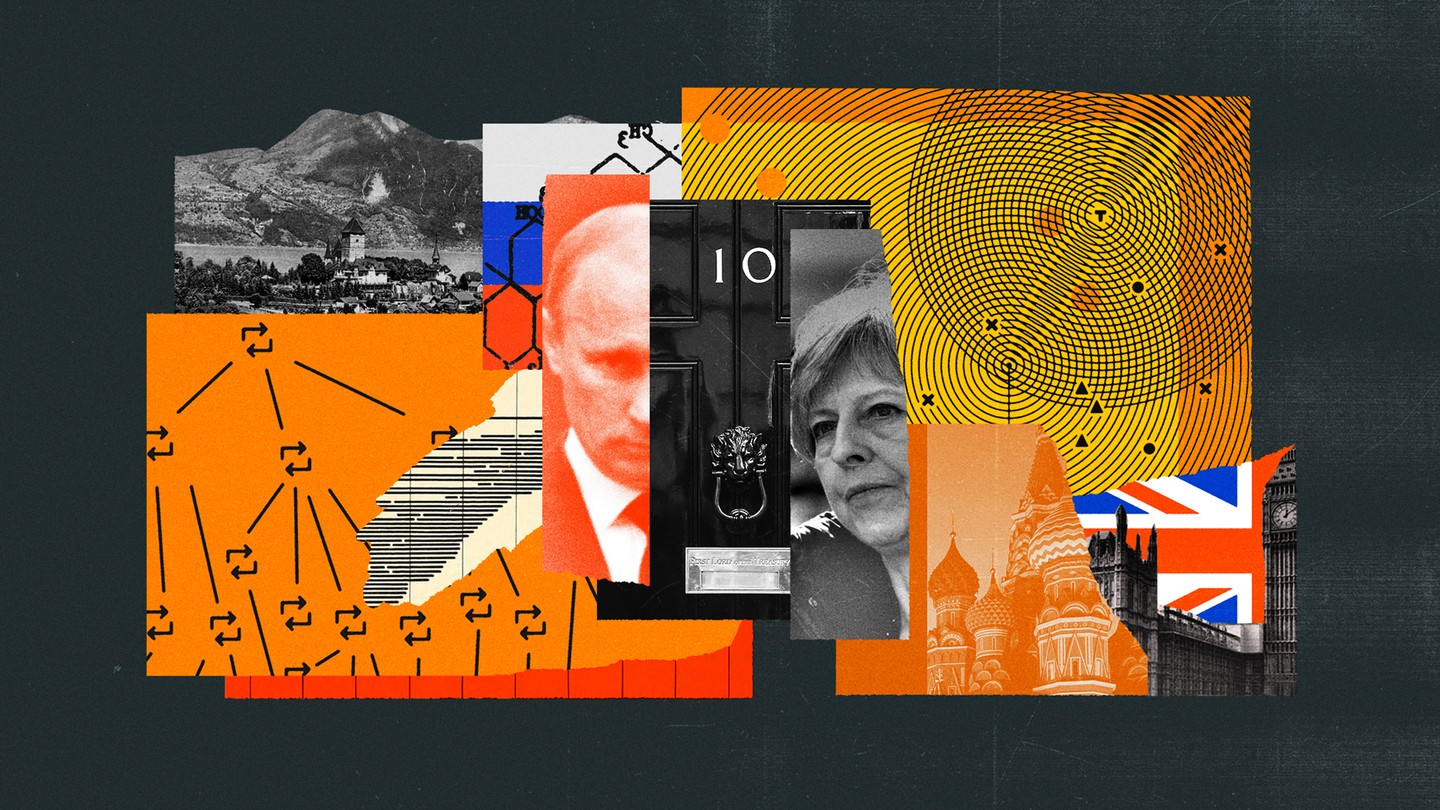
A collage of images, including Vladimir Putin, Theresa May, the door to 10 Downing Street, and British and Russian parliamentary sites.

Illustration by Ricardo Santos*

The poisoning of a double agent sparked an intelligence and PR battle between London and Moscow, the details of which are only now emerging.

Tucked away in a drab industrial estate on the outskirts of the Swiss town of Spiez lies a multistory concrete office block flanked by a parking lot and a soccer field. A modest gate with a small plaque is all that greets visitors. A river rolls behind the building, fed from the peaks of the Blüemlisalp massif above. This is the Bernese Oberland, the corner of Switzerland where James Bond met Blofeld in a revolving mountaintop hideaway; where Sherlock Holmes plunged to his death.

The building in question, an outpost of Switzerland’s Federal Office for Civil Protection, might be unassuming—home to just 98 academics, engineers, apprentices, and technicians—yet its occupant, the Spiez Laboratory, is world-renowned. The elite facility focuses on global nuclear, chemical, and biological threats, and is one of a limited number of sites designated by the Organisation for the Prohibition of Chemical Weapons (OPCW) to conduct research and analysis. Safely under the protective cloak of the country’s diplomatic neutrality, Spiez Laboratory carries out its work with little fanfare or controversy.

Over the course of a few months in 2018, however, this gentle existence was upended, as the lab became caught in a cold war between Russia on one side and the United Kingdom and the West on the other, fought in public and in the shadows, online and in person, occasionally flashing hot in deadly fashion. From the attempted assassination of a double agent in a sleepy English city to the expulsion of scores of Russian diplomats from Western capitals, this fight would grow and morph, drawing in a chemical-weapons attack in Syria and rolling scandals about Russian sports doping.

Through it all, Russia and Britain went toe-to-toe in an international intelligence and PR battle, one in which each landed blows, exposing fissures in their respective systems and societies. Yet, as NATO leaders meet in London this week to discuss the future of the military alliance 70 years after its founding, other lessons emerge, with implications for the wider contest between Russia and the West, which are vying for influence, respect, security, and raw geopolitical power.

Whereas NATO was founded to unite the Western world against the threat of conventional military aggression by the Soviet Union, eventually contributing to the Communist bloc’s demise, the alliance is today confronted with a recalcitrant Russia that seeks to leverage propaganda and disinformation to sow confusion and discontent, and that exhibits a willingness to use its traditional military force and intelligence agencies to expand its influence. It is a Moscow that is able to project disproportionate power—despite being dwarfed in economic size and resources by even mid-tier Western countries—thanks to a web of international influence, aggression, tactical cunning, and criminality.

At the same time, NATO and its members are divided, distracted, and shorn of a coherent strategy to deal with Russia’s efforts. The grouping’s superpower, the United States, is led by a president whose commitment to the alliance’s underlying principle of collective defense is in doubt; its other significant members are consumed by domestic strife (Britain), questioning NATO’s strategic future (France), or lack the military might and political will to fill the gap (Germany). And faced with a new array of threats from Russia, the alliance has more than once been caught unawares, at times thanks to its own unforced errors but also in no small part due to a lack of long-term vision to do anything other than de-escalate tensions. Despite Russia deploying a chemical weapon on the streets of a NATO member (also Britain), the country’s international freeze is already beginning to thaw, its economy is growing, and its leadership, on the face of it at least, remains secure. It has successfully expanded its influence in the Middle East and has secured its illegal land grab in Crimea.

The period from the attempted murder of the former Russian spy Sergei Skripal in March 2018 to a major Western counterblow exposing Moscow’s behavior in October 2018 offers a window not just into these challenges, but also into others that are only just emerging as technological advances change the very nature of information warfare. To understand how the battle played out, I spoke with several current and former officials—government aides, communications advisers, and members of the intelligence services—as well as politicians in London, most of whom would speak only on the condition of anonymity in order to discuss sensitive intelligence matters. I also consulted security, diplomatic, and cyber experts. (The Russian embassy in London declined to respond to a series of detailed questions I sent them, instead referring me to a statement on its website in which Moscow denies any involvement in the poisoning and claims it was an act carried out by the British secret services.)

Unlike a conventional battle, though in keeping with much of modern conflict, there are no obvious measures to determine who won and who lost. The months-long information war that Russia fought with Britain was one in which mistakes were difficult to judge and success hard to immediately quantify.

This is a story about disinformation and spycraft. It is also a story that again and again returns to the tiny Swiss town of Spiez.

The details of the Skripal poisoning are well known: On the night of March 4, 2018, the former Russian spy, who was living in retired exile in Britain, was found alongside his daughter, who was visiting from Russia, foaming at the mouth on a park bench in Salisbury, 90 miles southwest of London.

Eight days later, then-British Prime Minister Theresa May formally accused Russia of carrying out the attack. Britain’s Porton Down military-research facility—which, alongside the Spiez Laboratory, is one of the centers of expertise accredited by the OPCW—had determined that the Skripals were poisoned with a nerve agent called Novichok. The chemical weapon, May told Parliament, had been smuggled into the country by two hitmen working for Russia’s military-intelligence agency, the GRU. In response, Britain and its allies in 28 countries expelled more than 150 suspected Russian spies. Russia protested its innocence and denounced the Western response. (Skripal and his daughter ultimately survived. Another woman, Dawn Sturgess, died, after spraying what she thought was perfume, but was in fact Novichok, onto her wrists, and a police officer was hospitalized while investigating the poisoning of the Skripals.)

Details of the information war that ensued are only now emerging.

A tent covers the bench in Salisbury where Skripal and his daughter were found after they were poisoned. (Henry Nicholls / Reuters)

By the time May made her allegation in Parliament, a Russian campaign to discredit it was already in full swing. In just the first week after the attempted assassination, according to five British officials who spoke with me, the U.K. government tracked 11 alternative theories about the Skripal poisoning that all originated in Russia. A March 2019 report by King’s College London found that Russian-government funded outlets RT and Sputnik alone were responsible for 138 separate and often contradictory narratives about the Skripal poisoning in the four weeks following the incident. These included claims that the poison came from Porton Down; that the Skripals were never, in fact, poisoned; even that the poisoning was designed to distract from Brexit. Russian media also speculated variously that it was a British plot, an American plot, a Ukrainian plot, or a plot to frame Russia. May told members of Parliament that she had been personally accused of inventing Novichok.

The onslaught of such stories in the weeks and months after the Skripal attack—and their success in reaching a wide and receptive audience—emerges in lists of the most viral social-media content from that period. This data was gathered for The Atlantic by the online monitoring company NewsWhip, which tracks how many “interactions” a particular news story has garnered on social media sites like Facebook, Twitter and Pinterest—measured by the number of likes, shares or comments it has received. In some cases, there appeared to have been genuine orchestration of these efforts, but other instances show opportunism, with Russia-friendly outlets jumping on apparent contradictions in Britain’s public statements.

Moscow’s goal, according to U.K. officials tasked with monitoring and counteracting the Russian propaganda war, was simply to flood social media with false narratives and information that would cast doubt on the established British and Western positions, not with the goal of offering one particular alternative explanation, but simply to muddy the waters sufficiently to make people question their own government. Russia denies the allegation and accuses the U.K. government itself of manipulating the media with leaks and censorship.

This Russian strategy is wearily familiar to former Soviet satellite states in Eastern Europe (as well as the United States, during the 2016 presidential election), officials and experts I spoke with said. And early in the summer of 2018, there were concerning signs for London that it was having some effect. Internal government polling carried out in the months after the poisoning showed that a significant proportion of the population did not believe the British government’s assertion that Russia was behind the attack, according to an official briefed on the data, with the most skeptical being those aged 18 to 24. A September 2018 government memo, shared with The Atlantic, that distilled the results of polling showed that the “perception of Russian culpability” stood at just 55 percent. This was down from a peak of 65 percent at the end of March—the month of the attempted murders. (One of May’s aides told me that this lack of trust in government is now a major structural challenge when dealing with incidents of national security.)

Some of those I spoke with insisted that such setbacks were only temporary, but all largely agreed that Russia reacted quickly and effectively. “There was a private admission that we had lost the information battle,” one senior U.K. government official involved in the British counterattack told me. “We had ceded the ground. The Russians were just really quick off the mark.”

Numerous stories by outlets such as RT and Sputnik promoted dueling theories as to who carried out the Skripal poisoning, but when it comes to sowing confusion, one story stands out, and Spiez was at the center of it.

On April 14, 2018, RT published an article that would go on to become the most viral news story in 2018 about the incident as measured by online interactions, NewsWhip data shows. According to RT, Russian Foreign Minister Sergey Lavrov said that a “Swiss lab” had discovered that a different toxin was used to poison the Skripals—not Novichok, but BZ, which was, as RT put it, “in service” in the United States, Britain, and other NATO countries.

The report would go on to be shared on social media by RT as well as by accounts such as the WikiLeaks Task Force, which describes itself as the “official @WikiLeaks support account,” verified with a blue checkmark on Twitter. The story would rack up 137,360 social-media engagements, still the most of any story published on the Skripal affair.

Illustration by Ricardo Santos*

And yet the article was entirely misleading. Spiez was indeed one of a small number of international centers chosen by the OPCW to confirm the conclusions reached by Porton Down, and it did find a different toxin from Novichok. But that was part of the process: After receiving samples from the Skripal poisoning from the U.K., the OPCW, following protocol, added a new substance into the batch for quality control—a test, in effect, to ensure that Spiez’s and other laboratories’ results were accurate. If they did not find the added element, then whatever else they found could not be trusted. The toxin added by the OPCW was a derivative of BZ.

It would be surprising if Lavrov was not aware of this distinction. On April 11, the OPCW, of which Russia is a member, confirmed the British findings in a report that named the control substance. Was it a simple misstep on the foreign minister’s part? How did he know that Spiez had done the testing? That the Swiss lab was among those chosen by the OPCW to confirm Porton Down’s conclusions was kept confidential as per the OPCW’s security protocols, a rule seen as “sacrosanct,” according to one of the U.K. officials who spoke with me. Andreas Bucher, a spokesman for Spiez, told me that the research facility did not even know which other sites were used to test the findings. The Russian embassy in London declined to comment on the incident when I asked them about it.

Unsure of how to respond without confirming that it was one of the laboratories chosen by the OPCW, something it was not allowed to do, Spiez initially published a tweet saying that it could not comment on Lavrov’s assertions, and then later released another saying that it had “no doubt Porton Down has identified Novichok.” Lavrov claimed to be quoting from Spiez’s report on its tests, but Bucher said he had falsely cited the report. “We don’t write prose,” he said. “We write formulas.”

The U.K. government itself did not respond to Lavrov’s claims. The Spiez tweet partially correcting the story received only about 1,000 retweets—less than 1 percent of the engagements recorded by the original RT story. Regardless, the claim was out there, being shared across the world, even though the OPCW itself had said that its laboratories had confirmed Britain’s original findings.

If the most viral Skripal-related story illustrates how Moscow’s propaganda machine looked to actively plant disinformation, the second on that list highlights how Russia was able to take advantage of unexpected openings as well.

The Independent, an online British outlet, on April 3 published a story based on an interview given to Sky News by Gary Aitkenhead, Porton Down’s chief executive. Aitkenhead said that the British facility had confirmed that the toxin used in Salisbury was Novichok, but that its scientists “have not identified the precise source” of where it came from. Just days earlier, though, then–Foreign Secretary Boris Johnson had claimed that Porton Down had confirmed that the nerve agent originated in Russia.

The apparent contradiction exploded into life online, with the Independent story getting picked up and promoted by Kremlin supporters, as well as by the Russian embassy in Skopje, North Macedonia, an RT journalist in North America, and even a Facebook account, “San Diego For Bernie Sanders 2020,” eventually receiving 93,999 interactions on social media, according to NewsWhip, a high figure even for a story that was dominating the news. Britain rushed to repair the damage after a 10 Downing Street rapid-response unit, which monitors web traffic and works closely with the national-security communications team, noticed the story gaining traction online. (One security official told me that government analysis of social media showed that Salisbury-related posts made up 12 percent of the entire U.K. digital conversation on April 3, the second-highest figure during the entire crisis, after the day May blamed Russia for the attack.)

Later that day, Porton Down tried to clarify Aikenhead’s remarks, tweeting that the facility’s “experts have precisely identified the nerve agent as a Novichok. It is not, and has never been, our responsibility to confirm the source of the agent.” Security officials contacted journalists to explain the discrepancy, with calls made to Sky News in particular with a request for a public clarification. A week later, the U.K. released a letter sent from May’s national-security adviser to the secretary-general of NATO, which formally laid out the charges against the Russians.

The episode is seen by those inside Britain’s security communications team as the most serious misstep of the crisis, which for a period caused real concern. U.K. officials told me that, in hindsight, Aikenhead could never have blamed Russia directly, because that was not his job—all he was qualified to do was identify the chemical. Johnson, in going too far, was more damaging. Two years on, he is now prime minister.

The aftermath of the Skripal poisoning illustrated not only a PR offensive waged by outlets sympathetic to Moscow, but also the breadth of the Russian state’s capabilities and efforts to include its diplomatic corps as well as its intelligence agencies.

At the same time the media blitz was taking place, the Russian embassy in London was writing letter after letter to the U.K.’s Foreign Office with scores of detailed questions that British officials argued were designed to tie up their time and attention. From March 6—two days after the Skripal assasination attempt—to February 18, 2019, the embassy fired off dozens of note verbales, or official diplomatic correspondence, with 41 requests and 57 questions. (The Russian embassy has published a list of these demands.) Inside the U.K. government, an official told me, this barrage was referred to as a “diplomatic DDoS attack,” a reference to the cyberstrike in which a server is shut down simply by overwhelming it.

At the same time, a surge in malign Russian bot activity was detected online, in which social-media accounts were activated to amplify and spread messages. In the six weeks following the Skripal poisoning, through to the April 13 air strikes on Syria launched by the U.K., U.S., and France in response to Syrian President Bashar al-Assad’s use of chemical weapons, British officials say they calculated a 4,000 percent increase in this type of activity.

The GRU, the same organization that dispatched the two hitmen to Salisbury, also played a role, and, once again, Spiez was at the heart of it.

In May, 2018, OPCW facilities around the world received an email apparently from the Spiez Laboratory inviting them to a conference for specialists in chemical and biological warfare. The conference itself was real, the third such meeting organized by the Swiss research site, and the email was sent in the name of the Swiss Federal Department of Defence, the government agency responsible for the laboratory. Attached was a Word document that purported to contain information about the meeting.

There were, however, small giveaways that all was not right: The shade of red on the Swiss flag in the top left corner of the document was slightly off, and some formatting in the letterhead was wrong (the abbreviation FOCP—for Federal Office for Civil Protection—was used on the wrong line). In fact, the Word document contained malware that would embed itself into any computer that opened the file. But it would take weeks for anyone to notice, and only in July 2018 did Spiez issue a warning on its Twitter account that an email had been sent in its name without its knowledge, one that was actually a sophisticated spear-phishing attack, a cyber Trojan horse known as an advanced persistent threat, in which a computer is accessed by stealthily giving attackers full control of the compromised host’s network.

Who was behind the attack—and what they hoped to achieve—has never been confirmed. The Russian embassy declined to address this specific case when I asked them about it. Kaspersky, a cybersecurity firm that analyzed the incident, told me that it did not know for certain who the hackers were, whether they had been successful, or even what their goal was.* In the shadowy world of spycraft, it’s almost impossible to be sure about what is a false flag and what is real, the company said.

Britain’s National Cyber Security Centre is less circumspect, however, assessing “with high confidence that the GRU was almost certainly responsible.”

Through a special “link door” from 10 Downing Street, deep inside the Cabinet Office in central London, lies the U.K. government’s main emergency-response center: Cabinet Office Briefing Room A—or Cobra. This is the British equivalent of the White House Situation Room. It is where emergency meetings are held at times of crisis, to coordinate strategy in the most secure environment.

Attached to Cobra are a number of boardrooms where officials can listen in to what their ministers are discussing inside. Throughout the spring and summer of last year, a group of some of the most senior government communications officials, dubbed “Comms Cobra,” met daily to discuss how to respond to the Russian disinformation blitz. They were in full crisis mode—not only was the Russian campaign overwhelming in its scope, but Russia seemed to be one step ahead of the U.K. as well.

Among the measures the group took was to tighten the circle of who was in the know. At one point in the summer, the number of people, government departments, and agencies involved in responding to the Salisbury case was huge. The Department for Environment was leading the cleanup and the Home Office was dealing with security, while London’s Metropolitan Police, Britain’s intelligence services, and the local police force were investigating. Salisbury’s local council, the Foreign Office, Downing Street, and the Cabinet Office were involved too.

New processes were put in place, raising the level of official secrecy on some communications and resulting in often cumbersome procedures. Instead of having a single phone number for meeting participants to dial in to, for example, the Metropolitan Police—which leads Britain’s national counterterror and security operations—began holding conference calls by dialing each individual separately, one after the other, infuriating officials who were left waiting on the line for half an hour before discussions could start.

On September 5, 2018, Britain finally made its move. May told the House of Commons that the two Russian spies responsible for the Skripal poisoning had been identified, news that, because of the tightened communications, only a select number of cabinet ministers were even aware of. She outlined which flight the pair had arrived on, when and how they visited Salisbury, when they arrived at the Skripals’ house, and which flight they took back to Russia. CCTV footage was released of the two at various stages of their trip. Traces of Novichok were even found in their shared hotel room, May said. Hours earlier, the Metropolitan Police had held a “lock-in” with security journalists to brief them on the findings. (The Russian embassy claims the CCTV recordings of the two Russians “only confirm the fact of their visit to Salisbury and do not point at any wrongdoings.”)
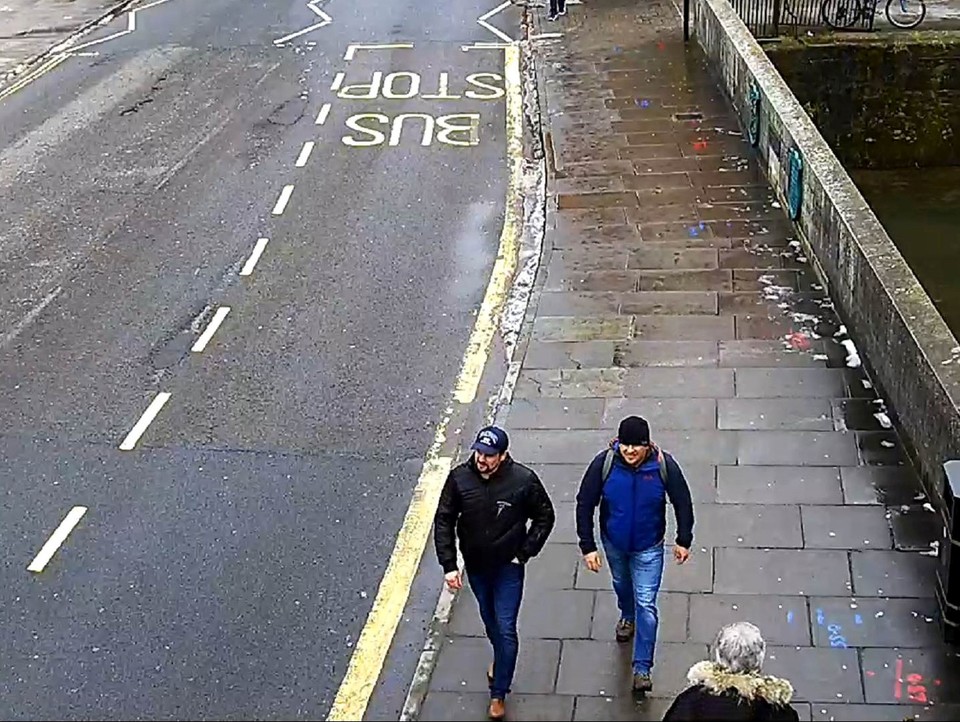
Two men wearing hats and jackets walk down a sidewalk, as captured on CCTV footage.The two men accused of poisoning Skripal and his daughter are seen on CCTV in Salisbury on the day of the attempted murder. (Handout / Reuters)

The effect of the surprise information barrage was dominance online. Only two of the 10 most viral stories in the weeks following the announcement were sympathetic to Russia, according to NewsWhip. Finally, officials recalled, it felt as though the U.K. was the aggressor. “This was all kept secret to put the Russians on the hop,” one told me. “Their response was all over the place from this point. It was the turning point.”

Amid an apparent failure to counter the British case, the accused hitmen appeared on Russian state media claiming that they had visited Salisbury on a sightseeing trip. Inside the Cabinet Office in Westminster, an official said, Britain’s security communications team sat “glued to the telly” watching their claims but ultimately decided not to react—across Europe, satirical TV shows and websites were picking up the story and making fun of it.

If September was the month Britain wrested control of the Skripal narrative, October was when it rocked Russia with a significant blow of its own, one that was months in the making.

On April 10, a month after the poisoning, four men arrived in the Netherlands on diplomatic passports. Three days earlier, Assad, a key ally of Russia, had launched a chemical-weapons attack on a suburb of Damascus, and the OPCW, which is based in The Hague, was tasked with investigating not only the Skripal poisoning but also the Syrian chemical-weapons attack. The men, all Russian intelligence officers, had been assigned a hacking operation in which they were to target the OPCW’s networks by sneaking in via Wi-Fi connections.

From their arrival, however, the group (subsequently identified as belonging to GRU Unit 26165) was being monitored by the Dutch security services, and on April 13, the four were arrested. Two of them had left their equipment in the trunk of a rental car parked outside the OPCW’s headquarters. For the Dutch, British, American, and Swiss secret services—all of which were involved in the operation—they had obtained a treasure trove.

The abandoned equipment revealed that the GRU unit involved had sent officers around the world to conduct similar cyberattacks. They had been in Malaysia trying to steal information about the investigation into the downed Malaysia Airlines Flight 17, and at a hotel in Lausanne, Switzerland, where a World Anti-Doping Agency (WADA) conference was taking place as Russia faced sanctions from the International Olympic Committee. Britain has said that the same GRU unit attempted to compromise Foreign Office and Porton Down computer systems after the Skripal poisoning.

The arrests were not immediately made public, though. On October 4, the U.K. published a list of transgressions by the Russian state and specifically the GRU unit that was caught. That morning, the British ambassador to the Netherlands joined the Dutch defense minister at a press conference in The Hague where they lifted the lid on the attempted Russian hack of the OPCW. In the afternoon, the U.S. Department of Justice announced charges against seven GRU agents linked to the Dutch investigation, accusing them of hacking into WADA and the OPCW, and of cyberattacks aimed at a U.S. nuclear-energy facility. Security officials in London told me that everything was carefully coordinated and timed to coincide with the U.S. indictments. A joint statement from the British and Dutch prime ministers was released to ram home the message. The Russian embassy declined to comment on the operation or the U.S. indictment.

During the week of the OPCW press conference just one of the top 25 most viral stories was from a pro-Russian outlet—and even this was a relatively straightforward piece from RT. “There were some signs that we had landed a blow,” one senior security official told me.

The OPCW was not the only target on the unit’s itinerary on its trip through Europe. According to the U.S. indictment, also in the GRU team’s possession on the day they were arrested were train tickets to Basel, Switzerland. American authorities allege that they would have then traveled onward—to Spiez.

Having been at the forefront of the international PR battle with Russia, the U.K. feels that it is now well placed for any future battles. It has created a national-security communications team based at the heart of government in 10 Downing Street and the adjoining Cabinet Office. Communications strategy is now seen as being part of national-security strategy.

Nina Jankowicz, a fellow at the U.S.-based Wilson Center specializing in disinformation who has advised the Ukrainian government on how to combat the Russian threat, told me that the U.K. effort was “leaps and bounds ahead of what we had seen before.” British officials did a good job of highlighting “all the absurd claims” coming out of Russia, she said. “The fact the U.K. system was able to respond under such stress shows the system was working as it should,” she added, pointing in particular to Britain leading the coordinated expulsion of diplomats. “We’ve not seen anything like it since the Cold War. The U.K. is filling in the leadership gap where the U.S. now cannot—or will not.”

Still, if Britain won a victory, it was tactical, not strategic. Officials say the problem for Western countries is that while Russia might be a relative economic minnow, it has continued to fund its national-security state to superpower levels while NATO has become more and more reliant on the U.S. for its defense since the end of the Cold War. Russia is also aided and abetted by a willingness to ignore international law, norms, and conventions—and the West’s apparent refusal to do the same in return. (Russia’s intervention into British politics remains a live issue, after the U.K. government refused to publish a report into Moscow’s infiltration before Britain’s election this month.)

Even more fundamentally, in the absence of any coordinated Western strategy to forcefully respond to a crisis sparked by limited forms of Russian aggression, Moscow has been able to achieve a significant expansion of its influence. By moving quickly, Russia changed the rules of the game on the ground before the West could react. Whether in Syria, Crimea, or elsewhere, Russia has filled a vacuum left by American withdrawal or indecision—in some cases literally, by moving troops to occupy territory abandoned by the U.S.—meaning that any subsequent retaliation from Washington comes with an even greater risk than before, leading to further inaction. The effect, as in Syria, is to hand victory to Russia for as long as it can sustain the cost of Western sanctions or diplomatic isolation.

A similar story played out in Britain, where the full reaction to the Skripal assassination was slow-moving, taking months to play out. The cost imposed on Moscow—the loss of spies and networks around the world, as well as the damage to the Russian intelligence service’s reputation for efficiency and skill—was serious, but appears to have been absorbed. Moscow may have gone relatively quiet about Skripal (an October tweet by the Russian embassy in London linking to a Guardian story about Donald Trump expressing skepticism that Moscow was behind the poisoning is a rare recent intervention), but it has not changed its behavior.

And yet, the West has already been showing signs that it wants a thaw in relations. In August, the leaders of the world’s most powerful Western countries, the G7, met in Biarritz, France, where Trump suggested that Russia could be allowed back into the club. And he’s not alone in seeking to soften his country’s stance. The same month, French President Emmanuel Macron gave a speech saying that it was time for Europe to “pacify and clarify our relations with Russia,” arguing that pushing Moscow away would be a “profound” strategic error, and setting out opposition to any further economic sanctions on Russia. He has since repeated that message in an interview with The Economist and again last week in the run-up to today’s NATO summit.

Those sanctions (which, along with Russia’s expulsion from the G8, were the result of the country’s annexation of Crimea) hit the Russian economy, but far from strangled it. In 2018, Russia’s GDP grew 2.3 percent. While growth is projected to slow in 2019 and 2020, Russia’s economy is nevertheless expected to continue to expand, according to the International Monetary Fund.

Since the October announcement, the U.K. has seen the Russian threat ease off, only for it to be replaced by other foreign-policy priorities: The future of the 2015 Iranian nuclear deal is uncertain and Tehran is testing the West’s collective patience; North Korea has resumed ballistic-missile tests; and months of pro-democracy protests in Hong Kong have raised the specter of China taking more aggressive steps there.

But despite alleged British confidence—and clear Russian amateurism on occasion—it is clear that Moscow landed real blows in its 2018 communications battle with London. The U.K. was at times blindsided, fell into traps, made mistakes, and saw a worrying subsection of public opinion run toward conspiratorial skepticism. It is beyond doubt that Russia had some success muddying the waters of blame throughout the summer of 2018.

That may well have been enough for the GRU. With campaigning for the 2020 U.S. presidential election now well under way, the focus of Russian disinformation efforts might once again shift to the United States. Is it prepared for what is to come? What did Moscow learn from its six-month propaganda war with Britain?

“No matter what action you take against Russian intelligence services, they are going to put a massive amount of resources into a divergence campaign,” said Bill Evanina, the head of counterintelligence for the U.S. government. “Vladimir Putin’s most amazing trait is his ability to deny that today is Thursday, and to convince people of that.”

In Spiez, they know what that is like. “These people had us in the crosshairs,” Bucher told me. Who’s next?

Mike Giglio contributed reporting.

* First collage: Andrei Nekrassov, Getty, Max Ryazanov, Reuters, Shutterstock, Steve Taylor/SOPA Images, and Toby Melville.

* Second collage: Chris J Ratcliffe, EuropaNewswire/Gado, Getty, and Reuters

* This article originally misstated where the cybersecurity company Kaspersky is headquartered; It is based in Moscow.

Categories
Saved Web Pages

Senate reports details inefficiencies, confusion at key U.S. counterintelligence center

Written by Suzanne Smalley
Sep 22, 2022 | CYBERSCOOP

The National Counterintelligence and Security Center is paralyzed by dysfunction, lack of resources and confusion about its mission, leaving a key national security asset dangerously vulnerable, U.S. senators said Wednesday.

The center’s inability to adapt to the growing role of cyber and the “whole-of-society threat landscape” are among several factors contributing to the organization’s decline, according to a blistering 153-page Senate Select Committee on Intelligence report.

“Intelligence traditions have changed dramatically from the post-war era, from the Cold War era,” Senate Intelligence Committee Chairman Mark Warner, D-Va., said at a Wednesday hearing focused on the report, which comes at a time when the senator said the U.S. is locked in a battle with China that will “define who becomes the security and economic leader of the 21st century.”

China and other adversaries now target a much broader array of American institutions than they once did, the report said, calling threats “more complex, diverse and harmful to U.S. interests than was true in the past.” Targets include national laboratories, the financial and energy sectors, academia and companies in the U.S. industrial base.

The Senate report said that because U.S. adversaries now have access to far more varied tools for influencing American officials and inflaming social tensions, the counterintelligence center must gain real authority and modernize its mission and strategies.

As it stands, one of its problems is that it has an entirely different conception of its role in the Intelligence Community than leadership in the Office of the Director of National Intelligence does, the report said, noting that ODNI is establishing a separate foreign malign influence center not under the counterintelligence center’s control. The counterintelligence center is one of more than a dozen intelligence entities housed under the ODNI umbrella.

“There is no consensus as to whether certain emergent threats, particularly foreign malign influence and cyber threats, fit within the definition of CI [counterintelligence],” the report says, revealing a surprising amount of confusion over stewardship of issues seen as critical to national security.

A spokesperson for the counterintelligence center told CyberScoop in a prepared statement that the center “appreciates the Committee identifying multiple recommendations to improve NCSC’s ability to lead the counterintelligence mission, and NCSC will remain engaged with the Committee as appropriate.”

The Senate Select Committee on Intelligence report was billed as a “bipartisan assessment” of foreign intelligence threats and was based on research conducted by non-partisan committee staff. 

Nation-state hacks and other examples of modern cyberwarfare are cited throughout the report, which makes clear that technological advances have turned the counterintelligence world on its head. Several sections of the report are heavily redacted, including multiple paragraphs in text focused on how the counterintelligence center relates to ODNI leadership, how China leverages U.S. technology for military applications and how Russia uses malign influence campaigns to target the U.S.

The report paints a picture of counterintelligence center leadership caught flat-footed in the face of a rapidly changing threat environment. Among other things, the report said, there is currently “no consensus” on whether the counterintelligence center should be “internally focused” or if it should instead embrace a broader mission to “defend the United States as a whole” rather than just individual intelligence entities and their “parochial operations.”

The center’s deficiencies have left the larger U.S. counterintelligence apparatus without a key player, the report suggests, saying that the center only plays a “marginal role” in offensive counterintelligence despite the discipline’s “importance.”

Some of these problems may stem from a lack of guidance from Congress and other institutions. The legal definition for counterintelligence hasn’t been updated since 2002, hearing witnesses said.

“The United States faces a dramatically different threat landscape today than it did just a couple of decades ago,” said Chairman Warner. “New threats and new technology mean that we have to make substantial adjustments to our counterintelligence posture if we are going to protect our country’s national and economic security.”

The committee’s ranking member, Sen. Marco Rubio, R-Fla., zeroed in on the same problem, saying that our system is set up for an era in which counterintelligence operations played out across a contained battle space where governments were trying to steal other governments’ secrets.

That has changed.

“We’re now in an era in which the activities of intelligence agencies from around the world come from a variety of countries with different intentions and they range from cyber intrusions designed to both steal secrets and ultimately generate revenue to disinformation and misinformation to try to steer and influence and shape American policy and divide us,” Rubio said.

U.S. government agencies “simply weren’t created to function” in a world with such threats, he added.

“They were created in an era where there wasn’t great power competition, where the number of nations around the world that had the capability to even do intelligence operations against the United States domestically, not to mention globally, was much smaller than it is today,” Rubio said.

Categories
Saved Web Pages

Who is Lynton Crosby, the ‘master of dark arts’ now behind Harper’s campaign?

INCCU6BILVHBZILHUCN72BNNUQ

Political strategist Lynton Crosby arrives at Downing Street in London October 16, 2014.STEFAN WERMUTH/Reuters

His detractors accuse him of being a propagandist and a practitioner of dog-whistle politics. Newspaper headlines talk about him being a “master of dark arts” and an “evil genius.”

Lynton Crosby, the Australian political strategist retained by Stephen Harper’s Conservatives, says the most important part of campaigning is finding key voters and finding a relevant message that connects with them.

“At its absolute simplest, a campaign is simply finding out who will decide the outcome … where are they, what matters to them, and how do you reach them?” Mr. Crosby said in 2013 during a masterclass to minority youth leaders in Britain.

Mr. Crosby is alleged to have made a similar point in a coarser fashion when he ran Boris Johnson’s 2008 London mayoral campaign.

The Daily Mail reported that Mr. Crosby told Mr. Johnson to concentrate on traditional Tory voters instead of chasing “fucking Muslims.”

A spokesman for Mr. Crosby told the Mail that he had “absolutely no recollection” of using the term.

Mr. Crosby has also been dogged with accusations that he exploited fears about asylum seekers when he worked for John Howard, Australia’s prime minister from 1996 to 2007, who used electoral slogans such as “We decide who comes into this country.”

A fifty-something grandfather, Mr. Crosby has lived with wife, Dawn, in Britain for a decade, where he added Mr. Johnson’s successful mayoral bid and this spring’s re-election of David Cameron’s Conservatives to a résumé that already included Mr. Howard’s four consecutive victories in Australia.

In an interview this spring with the Telegraph, Mr. Crosby cited familiar tropes as he explained his successes – his belief that the British political elite is out of touch with common folks, that pollsters misread the public mood, that pundits see politics as entertainment and miss the concerns of ordinary voters.

A boring campaign can be a virtue if it means that it focuses on the issues that matter to the electorate, he argued.

“For the voters it’s not entertainment, it’s a serious issue, it’s a serious thing that means a great deal to their lives. It is their future.”

His detractors accuse him of dog-whistle politics, where the political message comes with a coded appeal tailored for a specific segment of the electorate.

But it is also about something called the dead cat strategy.

Mr. Johnson mentioned that approach in a comment piece he penned in the Telegraph in 2013.

If you’re losing an argument, if you’re in a weak position, throw a dead cat on the table, the London mayor wrote.

“Everyone will shout ‘Jeez, mate, there’s a dead cat on the table!’; in other words they will be talking about the dead cat, the thing you want them to talk about, and they will not be talking about the issue that has been causing you so much grief.”

Mr. Johnson attributed the idea to an unnamed person he praised as an “Australian friend” and “great campaigner” with “the rich and fruity vocabulary of Australian political analysis.”

Mr. Johnson told the newspaper The Australian that Mr. Crosby got him to concentrate less on his pet projects and made him talk about cutting taxes and a “Crime Manifesto” that promised more policing and safer neighbourhoods.

“Being a straight-talking Australian, with no airs and graces, he can cut through the chaff and he makes you focus on the stuff that really matters to people.” Mr. Johnson recalled one unsatisfactory campaign appearance, following which he received a text message from Mr. Crosby: “crap speech, mate.”

When Mr. Crosby got involved with the British Conservatives 2015 election campaign, he was praised again by his former clients as someone who could bring the objectivity of an outsider, combined with bluntness, discipline and confidence.

He reportedly told the Tories they had to “scrape the barnacles off the ship,” in other words, simplify their message to ensure a smoother sailing.

Mr. Crosby grew up in rural South Australia, where his father was a farmer who later opened an arts and crafts shop.

He earned a degree in economics from the University of Adelaide and, like the rest of his family, supported the Liberals, Australia’s right-leaning party.

In his master class at the Patchwork Foundation, he said he got interested in politics when he was 16.

“Not enough people get involved in politics … many people are disillusioned by the political process but it’s an important part in society’s advancement,” he said.

As a Liberal, he ran in 1982 for a seat in the South Australia assembly but lost in the Adelaide district of Norwood. “I turned a marginal Labour seat into a safe Labour seat after campaigning there.”

He had caught the political bug, though he realized he was better suited for backroom work.

“In a campaign, what you try to do is either change or reinforce some perceptions that people have in order to influence their behaviour,” he said in the master class.

Mr. Crosby has not always been successful.

In 2005, he signed up as campaign manager for Britain’s struggling Conservative Party but was unable to help Michael Howard defeat Tony Blair’s Labour.

That election also featured its share of controversial slogans from the Conservatives, such as “It’s Not Racist to Impose Limits on Immigration” and “How Would You Feel if a Bloke on Early Release Attacked Your Daughter?”

According to the BBC, Mr. Crosby felt he had gotten involved too late in that campaign. “You can’t fatten a pig on market day,” he said.

Categories
Saved Web Pages

Money Laundering Scandal Forces Puerto Rico’s Governor to Cut His Vacation Short — Just in Time for Another Scandal

1563216910649-AP_18022791016644.jpeg?ima

Want the best of VICE News straight to your inbox? Sign up here.

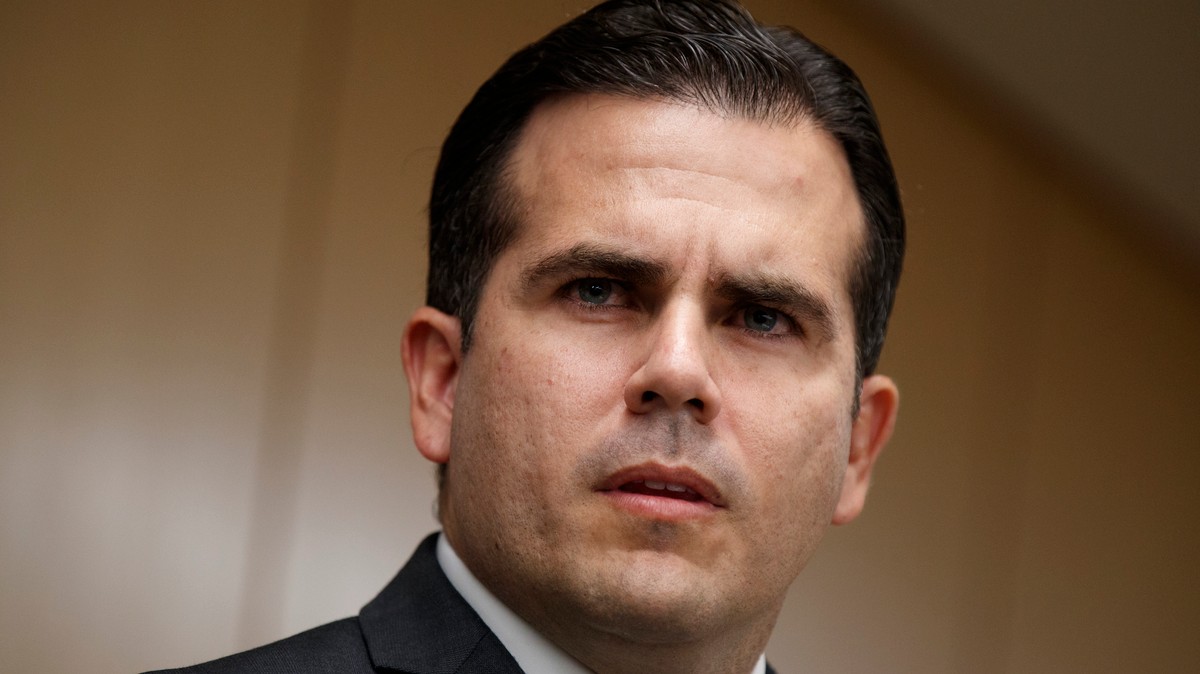
A leaked chat full of memes and misogyny has rocked the Puerto Rican political establishment and led to calls for the island’s governor to resign.

Two of Puerto Rico’s top government officials have stepped down in the midst of a scandal over the chat, filled with homophobic and misogynistic memes and jokes about journalists and other politicians. That news broke less than a week after six people, including two formerly high-ranking officials, were indicted on fraud-related charges for allegedly laundering millions of dollars in federal funds, which were supposed to be used for Medicaid and education on the island.

Puerto Rico’s governor, Ricardo Rosselló, is standing firm for now, even as protesters sleep outside his mansion to make their calls for his resignation heard. He’s still running for reelection.

“I was elected by the people and I will continue the mission that was granted to me, now more than ever,” he said in a statement on Saturday.

And all of this is going down as the island wades through historic bankruptcy negotiations. Puerto Rico is trying to restructure $120 billion worth of debt — and trying to get Congress to allocate more funds for healthcare and its ongoing Hurricane Maria recovery efforts. President Donald Trump has repeatedly accused the island of misusing its federal hurricane recovery funds.

The texting scandal

Almost 900 pages of messages published Saturday by the Puerto Rican Centro de Periodismo Investigativo, show Rosselló and his cabal of advisers exchanging unsavory texts about journalists in Puerto Rico and their political rivals. The dozen operatives, including several officials from within Rosselló administration, sent the messages over secure texting app Telegram between the end of 2018 and January of this year.

The scandal has aptly been dubbed #TelegramGate.

The leaked chats are largely about how Rosselló and his closest allies worked to shift public narrative on social media and in local media in their favor. In one message, they referred to a Puerto Rican journalist as a “mamabicho,” which translates loosely to “dicksucker.” One of Rosselló’s advisers asked another member of the group chat to make a gif of San Juan mayor Carmen Yulín Cruz “dancing and screaming like a crazy woman.”

“I am salivating to shoot her,” Christian Sobrino, the island’s now-former chief financial officer, who resigned on Saturday, shortly after the messages were made public, according to Centro de Periodismo Investigativo.

Puerto Ricans have since taken to the streets to protest and faced off with riot police outside of the governor’s mansion. Puerto Rican pop stars Ricky Martin, who was mocked for being gay in the chat, and Bad Bunny, who’s going to the island to join the protests, have both called on Rosselló to step down.

Rosselló has tried to contain the outrage by announcing that Secretary of State Luis Rivera Marin and Sobrino, would also resign. The governor also reportedly went to an evangelical church and prayed for forgiveness.

“I humble myself before you and before the Almighty for the faults I have committed,” he said, according to El Nuevo Día.

The corruption scandal

Before the texting scandal even broke, federal authorities unsealed a corruption indictment last week against two former officials accused of funneling about $15.5 million in big-ticket government contracts to businesses that they favored.

The FBI arrested both former officials Wednesday: Julia Keleher, the former secretary of Puerto Rico’s department of education, and Ángela Ávila-Marrero, the former head of the island’s Health Insurance Administration. Along with the two government officials, three consultants and an executive at auditing firm BDO were also arrested.

“Both Keleher and Ávila-Marrero took advantage of their privileged positions as agency chiefs,” said U.S. Attorney for Puerto Rico Rosa Emilia Rodríguez-Vélez said at a press conference. “They defrauded the U.S. and Puerto Rican governments.”

The scandal rocked the Puerto Rican political scene hard enough for Rosselló to cut a European vacation short and fly back to the island — just in time for another scandal to break.

5cf8108dbe40777d122ca6cb-1559779759522.j

Cover image: In this Nov. 13, 2017 file photo, Puerto Rico Gov. Ricardo Rossello speaks during a news conference, in Washington. Rossello said on Monday, Jan. 22, 2018, that he is privatizing the island’s government-owned power company following decades of mismanagement, corruption and blackouts. (AP Photo/Evan Vucci, File)

Categories
Saved Web Pages

Regulator in Puerto Rico suspends operations of Euro Pacific Bank.

merlin_178592865_70d3d490-b5af-497b-a023

An international group of tax authorities had moved two years ago to stop the boutique online bank from serving as a vehicle for suspected tax evasion and money laundering.

  • Send any friend a story

    As a subscriber, you have 10 gift articles to give each month. Anyone can read what you share.

Euro Pacific Bank, in San Juan, “has a long history of noncompliance,”  the head of Puerto Rico’s bank regulator said.

Euro Pacific Bank, in San Juan, “has a long history of noncompliance,” the head of Puerto Rico’s bank regulator said.Credit…Gabriella N. Baez for The New York Times

Matthew Goldstein

A bank regulator in Puerto Rico says it has suspended the operations of a boutique online bank that has been the focus of an international tax-evasion investigation and is owned by Peter Schiff, the outspoken libertarian economist and money manager.

The regulator, the Office of the Commissioner of Financial Institutions of Puerto Rico, issued the cease-and-desist order on Thursday against Euro Pacific Bank, which is based in San Juan, for having inadequate capital levels and compliance controls. Two years earlier, an international group of tax authorities known as the J5 opened an investigation into activities that allowed the bank to serve as a vehicle for suspected tax evasion and money laundering.

“Euro Pacific has a long history of noncompliance,” the office’s commissioner, Natalia Zequeira Díaz, said in a statement. She added that the bank regulator would “not allow or tolerate any financial entity with a license issued by the government of Puerto Rico to operate outside the law or ignore the clear mandates of applicable laws and regulations.”

The investigation by the J5 into Euro Pacific and some of its offshore customers was first reported in fall 2020 by The New York Times and two Australian media organizations. At the time, Mr. Schiff acknowledged that Internal Revenue Service agents had interviewed him, but he said neither he nor the bank was the subject of the inquiry.

In an emailed comment on Thursday, Mr. Schiff, who said he was now the full owner of the privately held bank, expressed surprise at the decision by the bank regulator and said there was “no advance warning.” He added that it “makes no sense” because “the bank has done nothing wrong.” When asked whether the bank would challenge the suspension order, Mr. Schiff said: “Doing what I can. I have no idea what’s driving this.”

He said later that the order referred to “insufficient capital” and that there was nothing about money laundering or tax evasion.

The J5, or the Joint Chiefs of Global Tax Enforcement, was formed in 2018 by tax authorities from the United States, Australia, Britain, Canada and the Netherlands. The group came together in response to some of the disclosures in the so-called Panama Papers, the leaked documents of a Panamanian law firm that detailed the shell companies and tax gimmicks the rich use to hide their wealth.

The J5 investigation into Euro Pacific — known as Operation Atlantis — was one of the first big inquiries by the multijurisdiction task force, which has been led by tax authorities from Australia and the United States.

Euro Pacific had about 8,000 depositors from around the world and held $140 million in deposits before the investigation was reported by The Times; The Age, an Australian newspaper; and the Australian version of “60 Minutes.” The reports noted that a former employee had said Euro Pacific did not do much vetting of its customers’ backgrounds.

Mr. Schiff has said that the reports about the investigation have caused the bank to lose business and that many of its customers closed accounts.

Euro Pacific’s owner, Peter Schiff, said on Thursday that “the bank has done nothing wrong.”Credit…Joe Buglewicz/Bloomberg

Mr. Schiff is well known for his deep-seated animosity to paying taxes, and he earned the name Dr. Doom after correctly predicting the 2008 financial crisis. More recently, he was a major critic of Bitcoin. Mr. Schiff founded Euro Pacific in 2011 in the lush Caribbean outpost of St. Vincent and the Grenadines before moving the bank to Puerto Rico in 2017. He had promoted Euro Pacific as an alternative to the established banking system.

The J5 issued a statement applauding the action by the banking regulator for Puerto Rico and said it sent a strong message to financial institutions that provide a safe haven for tax cheats.

“There is no doubt that O.C.I.F.’s work sends a strong message to others that the Puerto Rican financial industry will not be a haven for tax evaders or illegal conduct,” said Jim Lee, chief of the I.R.S.’s criminal investigation division.

Mr. Lee said the action taken by the bank regulator was separate from the J5 investigation. He said J5 was continuing to work on more than a hundred inquiries related to entities and individuals associated with Euro Pacific.

The Puerto Rican action is notable because the bank regulator has had a reputation for imposing light oversight of financial institutions on the island. In fall 2020, the regulator had yet to conduct an official examination of Euro Pacific even though the bank had been operating in Puerto Rico for three years.

Categories
Saved Web Pages

Puerto Rico suspends operations of bank amid global probe

abc_news_default_2000x2000_update_16x9_9

Authorities have announced a suspension of the operations of Puerto Rico-based Euro Pacific International Bank, which officials previously said was under suspicion of facilitating money laundering and offshore tax evasion

SAN JUAN, Puerto Rico — Authorities announced Thursday they have suspended the operations of Puerto Rico-based Euro Pacific International Bank, which officials previously said was under suspicion of facilitating money laundering and offshore tax evasion.

The bank was founded by Peter Schiff, a U.S. stock broker and financial analyst, and had 15,000 accounts by the end of 2019, according to online documents.

The investigation was launched by Puerto Rico’s Office of the Commissioner of Financial Institutions, which said the bank that obtained a license to operate in the U.S. territory in 2017 came under scrutiny following a lack of internal controls, a lack of compliance and a level of insolvency.

Commissioner Natalia Zequeira said that despite “numerous opportunities,” the bank “has not wanted to comply.”

The bank, located in the capital of San Juan, did not return a message asking for comment.

Jim Lee, chief of the International Revenue Service Criminal Investigation, said he could neither confirm nor deny whether Schiff was under investigation.

Zequeira declined to say how many clients the bank has and its total assets, saying that is confidential information. However, she said creditors would be paid in a certain order.

The bank was formed in the eastern Caribbean island of St. Vincent and the Grenadines in 2011, then later moved to Puerto Rico. In a 2020 presentation, the bank said 70% of its clients were corporations and small- and medium-size businesses. The other 30% was divided equally between individual investors and retail banking.

The bank does not provide loans or credit cards, but rather mutual funds and precious metals accounts, among other things.

Lee, with the IRS, said that the “Puerto Rico financial industry will not be a haven for tax evaders or illegal conduct.”

The announcement of the suspension came after the Joint Chiefs of Global Tax Enforcement launched an operation two years ago to scrutinize financial institutions in their member countries: the U.S., Canada, United Kingdom, Australia and the Netherlands.

Officials with the agency said their investigations into the Euro Pacific International Bank are independent from the one conducted by Puerto Rico’s government and are still underway. Overall, the organization said, it is overseeing some 100 civil and criminal investigations worldwide.

“Our message is that the game is up for offshore tax evaders and that any UK citizens involved with this bank should come and talk to us,” said Simon York, the United Kingdom’s chief in the international group.

Categories
Saved Web Pages

Puerto Rico Shuts Bank Tied to Tax Evasion, Money Laundering (1)

?url=http%3A%2F%2Fbloomberg-bna-brightsp

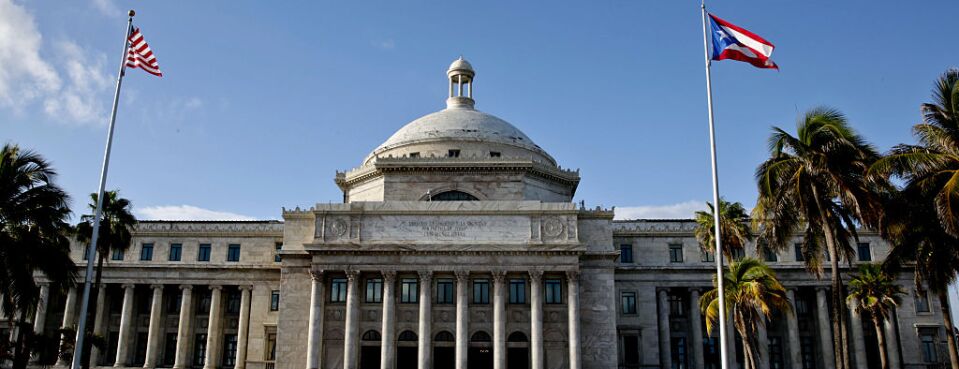
American, left, and Puerto Rican flags fly outside the Senate of Puerto Rico building in San Juan in 2015.

Photographer: Derick E. Hingle/Bloomberg via Getty Images

June 30, 2022, 7:00 PMUpdated: June 30, 2022, 9:14 PM

Puerto Rico-based Euro Pacific Bank will no longer operate on the island after a year-long investigation of the financial institution in a money laundering and tax evasion operation.

The island’s Office of the Commissioner of Financial Institutions, or OCIF, announced Thursday that it would revoke the license that allowed Euro Pacific Bank to operate as an international financial institution since 2017. It also said that the entity is financially insolvent and that it would appoint an emergency trustee. The bank must pay a $165,000 administrative fine.

US tax authorities and four other countries are investigating if the boutique firm offered …

Angélica Serrano-Román

Angélica Serrano-Román

Reporter

Hamza Ali

Hamza Ali

Senior Reporter International Tax

© 2022 The Bureau of National Affairs, Inc.

All Rights Reserved

Categories
Saved Web Pages

Excomisionado de Instituciones Financieras de Puerto Rico contó como un contratista medió a favor del venezolano Julio Herrera Velutini y su Bancrédito International Bank and Trust para cerrar investigación por incumplimientos de regulaciones

Victor-Rodriguez-Bonilla-John-Blakeman-O

En la imagen, de izquierda a derecha: Víctor Rodríguez Bonilla, John Blakeman Ortiz y Julio Herrera Velutini

El excomisionado de Instituciones Financieras de Puerto Rico, Víctor Rodríguez Bonilla, señaló que, poco después de haber sido confirmado en el cargo, recibió una visita, en su oficina, del contratista John Blakeman Ortiz quien le solicitó que interviniera a favor de Bancrédito International Bank and Trust, entidad que estaba bajo examen de la Oficina del Comisionado de Instituciones Financieras (OCIF) por incumplimientos con sus regulaciones.

Blakeman Ortiz era colaborador de la campaña electoral de la exgobernadora Wanda Vázquez Garced, pero Rodríguez Bonilla lo recordaba como alguien que asistió a la reunión, en la oficina del expresidente senatorial Thomas Rivera Schatz, durante el proceso de su confirmación para el cargo de OCIF, reveló El Nuevo Día.

A los pocos días de que Rodríguez Bonilla fue confirmado, el 4 de junio de 2020, Blakeman Ortiz se presentó a la oficina de OCIF en Santurce. “Recibo un mensaje de texto de John Blakeman en aparente representación de Bancrédito. Él llega al edificio. Mi recuerdo es que la reunión duró unos tres a cuatro minutos”, contó en llamada telefónica con El Nuevo Día.

Tal como reseñó El Nuevo Día, el banco internacional, del dueño venezolano Julio Herrera Velutini, tenía abierto un examen de la OCIF “desde hace muchísimos años porque estaba en incumplimiento”.

Rodríguez Bonilla contó que Blakeman Ortiz “se acerca a mi persona con el propósito de que yo intervenga” en la resolución del examen en contra de Bancrédito.

Sin embargo, Rodríguez Bonilla estaba inhibido de tratar asuntos de esa institución bancaria por haber servido de consultor del comité de cumplimiento de Bancrédito, previo a asumir el cargo en la OCIF, como publicó El Nuevo Día. “Le digo que es imposible porque estoy inhibido, que lo que me pedía era una acción antiética e ilegal”, afirmó quien acudió adonde las autoridades federales para explicar lo que estaba pasando.

“Lo vi como una presión indebida, totalmente antiética e ilegal e inmoral, que iba en contra de mi dignidad como persona”, contó Rodríguez Bonilla.

El excomisionado de OCIF recalcó que “jamás recibí una llamada de la exgobernadora” y la única reunión que tuvo con ella fue sobre aspectos presupuestarios de su agencia.

Negó, a su vez, cualquier relación con el gerente general de Paulson & Co., Fahad Ghaffar, de quien una fuente comentó que fue quien le recomendó a la entonces gobernadora que lo nombrara al cargo de comisionado. El nombramiento ocurrió en mayo, un mes después de que la exprimera ejecutiva le removió la confianza a George Joyner como comisionado.

Las autoridades federales investigaron el despido de Joyner como una de las acciones presuntamente tomadas por Vázquez Garced para beneficiar ilegalmente al dueño de Bancrédito por financiar gastos de su campaña contra el gobernador Pedro Pierluisi. El donativo, en si mismo, también se considera ilegal por haber provenido de un extranjero sin derecho a influir en los resultados electorales.

“Por alguna razón, pensaron que por yo haber sido consultor de Bancrédito, les iba a favorecer en los procesos en su contra, cuando es todo lo contrario: yo estaba inhibido”, contestó Rodríguez Bonilla a preguntas de El Nuevo Día.

Share on FacebookPin on PinterestTweet about this on TwitterShare on LinkedIn
Categories
Saved Web Pages

UK inquiry was warned of Russian infiltration, leaked testimony shows

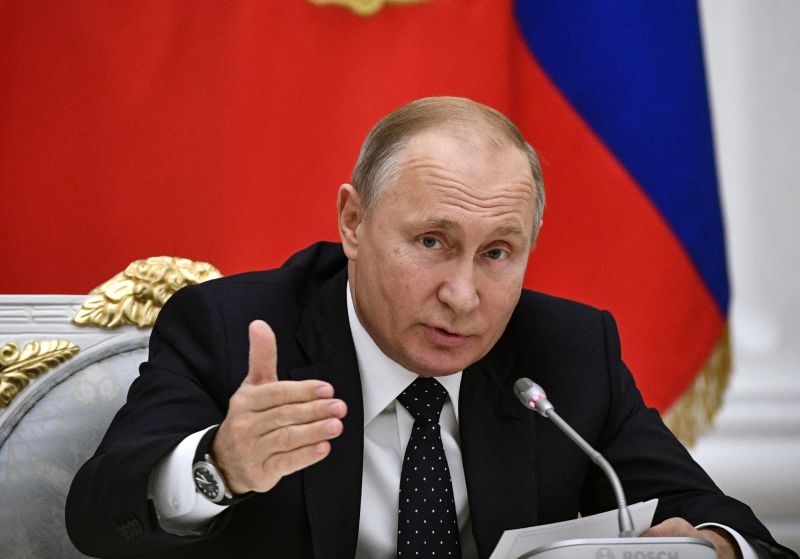
190307151253-vladimir-putin.jpg?q=w_800,

Russia’s influence reaches deep into the British establishment and successive UK governments have turned a blind eye to it, lawmakers were warned, according to multiple sources familiar with testimony given to a parliamentary inquiry.

Members of the cross-party Intelligence and Security Committee (ISC) were told that Moscow built up a network of friendly British diplomats, lawyers, parliamentarians and other influencers from across the political spectrum. One witness described the development as “potentially the most significant threat to the UK’s institutions and its ways of life,” according to testimony seen by CNN.

The committee’s unpublished final report into Russian meddling in UK politics, titled simply “Russia,” is at the center of a storm in the UK, where parliament was dissolved on Wednesday ahead of a general election in December. The committee’s chairman, Dominic Grieve, has accused Prime Minister Boris Johnson of sitting on the report and claimed Downing Street had given “bogus” explanations for not publishing it.

Opposition politicians have accused the government of a cover-up, saying it could raise awkward questions about the validity of the Brexit referendum in 2016 and expose the alleged Russian connections of some in the ruling Conservative party.

The ISC, which provides oversight of Britain’s intelligence and security agencies, and whose nine members are bound by the UK’s Official Secrets Act, completed its investigation in March. Its report was submitted to Downing Street for approval on October 17, after a lengthy period of clearance with the security services. Sources have told CNN the report includes a heavily redacted annex.

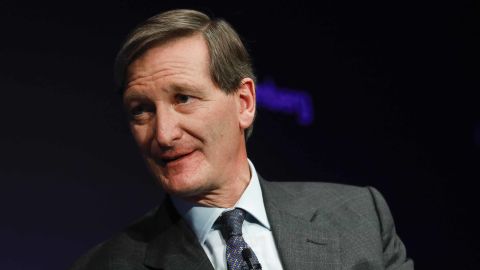
Intelligence and Security Committee chairman Dominic Grieve.

Grieve, a former attorney general who is no longer a member of the ruling Conservative party, told the House of Commons on Tuesday that it was usual practice for Downing Street to approve ISC publications within 10 days. The report may not now be published for months, he said, as ISC reports can only be released when parliament is sitting and the committee is constituted.

Downing Street has repeatedly denied that the failure to publish the report before the election was politically motivated. In Parliament this week, Foreign Office minister Christopher Pincher said it was routine for Downing Street to subject ISC reports to further checks before they were published, and that it would be released “in due course.” Downing Street declined to comment further to CNN.

The contents of the ISC report, the product of an extensive investigation, have remained tightly under wraps. But CNN has been provided with written testimony from two of the committee’s witnesses, and has been briefed on oral testimony given by two others, all of whom warned that Russia had established deep ties to the UK political scene and that not enough had been done about it.

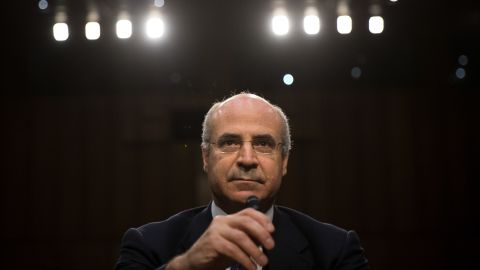
Among those invited to give evidence were Christopher Steele, the ex-British spy behind the Trump-Russia dossier and Bill Browder, founder and CEO of Hermitage Capital Management and a vocal critic of Russian President Vladimir Putin. Britain’s domestic and foreign intelligence agencies, MI5 and MI6, also fed into the committee’s inquiry, according to sources familiar with the material gathered.

During their investigations, lawmakers were told that successive British governments had downplayed the threat. One witness said “political considerations seemed to outweigh national security interests,” according to testimony reviewed by CNN.

Witnesses whose testimony CNN is familiar with told the committee that Russian agents were targeting research roles in the House of Commons, acquiring British citizenship to funnel cash to political parties and employing public relations firms to cleanse reputations.

Bill Browder, giving evidence to a US Senate committee in 2017.

Browder gave the committee a list of Dubai-based UK citizens who, he alleged, had acted on behalf of thousands of shell companies used to launder Russian cash linked to an organized crime network.

In written testimony submitted to the committee and seen by CNN, Browder alleges that Putin had used the proceeds of illegal asset seizures and money from corrupt sources to develop a “network” of well-connected, influential British figures, enabling the Kremlin “to infiltrate UK society and to conceal the underlying Russian controllers and their agendas.”

Unless tackled, such a network “will have serious detrimental effects on the UK democratic process, rule of law and integrity of the financial systems,” he warned.

In the statement, submitted in September 2018, he went on to say that “the Russian state effectively uses the Western persons… taking advantage of their identities, skills, expertise and contacts in the West to infiltrate Western societies,” to amass intelligence which is then used for the Kremlin’s propaganda purposes.

There is no suggestion in Browder’s testimony that British citizens broke the law, but the American-born financier recommended to the committee that lobbyists be required to register their work for foreign entities and law enforcement agencies are given more resources to crack down on money laundering.

CNN has approached the Kremlin for comment and will update this story if and when a statement is provided.

Browder, who has described himself as “Putin’s No. 1 foreign enemy,” was once a supporter of the Russian president and the largest foreign investor in the country’s stock market. In 2005, five years after Putin was first elected president, Browder fled to London after being deemed a threat to Russian national security. He says his expulsion was due to his outspoken criticism of Russia’s corporate governance.

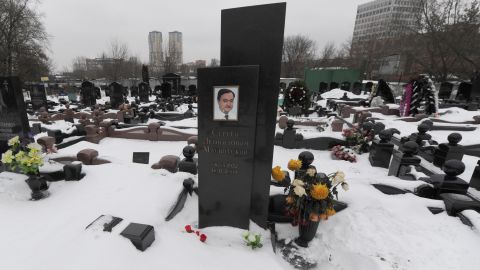
Browder campaigned forcefully for the Magnitsky Act, a US law that provides for sanctions to be imposed on Russian individuals. It’s named for Browder’s former lawyer, Sergei Magnitsky, who died in suspicious circumstances in 2009.

The grave of Russian lawyer Sergei Magnitsky at the Preobrazhenskoye cemetery in Moscow, in 2012.

In his written testimony to the ISC, Browder accuses well-connected figures of involvement in an effort to help Russians who wanted to avoid being targeted by European Union sanctions. According to Browder’s testimony, among those involved was Peter Goldsmith, who was attorney general in the Labour government of Tony Blair, and his firm Debevoise & Plimpton. That firm hired CTF Corporate and Financial Communications (CTFCFC), a public affairs outfit co-founded by Lynton Crosby, a polling expert who has worked on Conservative party election campaigns.

Debevoise said it could not comment on confidential client matters. In an emailed statement the firm, which said it was also speaking on behalf of Goldsmith, said: “Everyone is entitled to legal representation, and efforts to discourage lawyers from representing certain clients are irresponsible and undermine a central pillar of the rule of law. Debevoise provides legal representation consistent with the profession’s best traditions of integrity and probity, and we will continue fearlessly to defend the interests of all our clients.”

CTFCFC, through its solicitors Atkins Thomson, said it was hired by Debevoise to “research the European Union sanctions landscape” but did not have contact with anyone else. “This was the extent of our involvement and to try to claim otherwise would be utterly false.”

There is no suggestion that Crosby personally worked on or was aware of the work on EU sanctions carried out by CTFCFC until it was revealed in media reports.

“Lynton Crosby was working exclusively on the 2015 general election campaign for the Conservative party at this time, and had no client involvement, outside of the Conservative party,” according to a statement provided by the Atkins Thomson law firm. “He was not aware of this research project by CTFCFC for Debevoise until reference first appeared in the media nor has he ever met or worked with Lord Goldsmith or Debevoise.”

Journalist and Russia expert Edward Lucas, who was among the first to contribute to the ISC inquiry in July 2018, told CNN his testimony to the committee centered on the role of lobbyists who were advocating in the UK on behalf of Russian clients with dubious sources of wealth.

In his two-hour, 45-minute oral testimony alongside Chris Donnelly, founder of the Institute for Statecraft, a UK-based non-profit that has in the past received UK government funding, Lucas said British authorities should increase their cooperation with other countries to tackle Russian subversion.

Other witnesses warned that Moscow was emboldened by British governments’ failures to take a tougher stance after a former Russian spy, Alexander Litvinenko, was fatally poisoned with a rare radioactive isotope in London in November 2006.

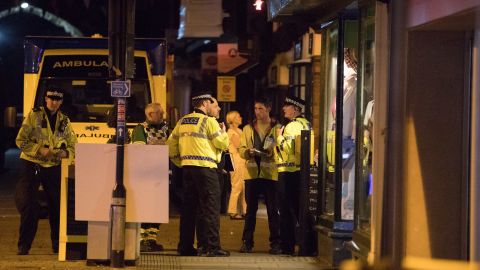
The aftermath of the Salisbury attack, widely blamed on Russia.

In March 2018, an ex-Russian spy Sergei Skripal and his daughter Yulia were the targets of a nerve agent attack in Salisbury, England that left one British citizen dead and prompted the UK and other countries to expel dozens of Russian diplomats. One witness to the ISC inquiry pointed out in evidence that Russia had successfully used on British soil both a chemical weapon (the Skirpal case) and radioactive material (Litvinenko), an achievement unmatched by any terrorist organization. “We are now in an accelerating downward spiral that needs to be checked,” that person’s testimony reads, according to a copy reviewed by CNN.

In Parliament on Tuesday, Pincher, the government minister, said Britain had taken firm action to counter the Russian threat. “The government are prepared to be robust and transparent with respect to Russia – look at the way we carefully collated, assessed, scrutinized and presented the evidence of the Kremlin’s involvement in the attacks in Salisbury and Amesbury, and at the way we built an international alliance that responded to that threat.”

The government’s decision not to publish the ISC report has given the UK government’s critics plenty of ammunition. The opposition Labour party’s foreign affairs spokeswoman, Emily Thornberry, said the report could raise difficult questions about links between Moscow and the leadership of Boris Johnson’s Conservative party, and suggested that his director of communications, Dominic Cummings, had questions to answer about a period he spent in Russia in the 1990s. Ministers should have published the report, she told Parliament on Tuesday, adding: “What have you got to hide?”

If there is information that we should know about what has happened in previous democratic events and who has tried to interfere, the public has a right to know and the government shouldn’t be keeping it a secret.

Jo Swinson

Replying to Thornberry, Pincher, the government minister, accused her of a “giving a rundown of her interest in smears and conspiracy theories.” He said the government had taken “robust” action to counter the threat from Russia.

Downing Street and the Conservative party both declined to comment when asked to provide a statement from Cummings.

The failure to publish the ISC report means that the credibility the committee attached to the witnesses, and the conclusions it drew from their testimony, will not now be known until well after the election. Members of the ISC are appointed by the government and must go through a strict vetting process. Grieve told Parliament this week that after the last election, in 2017, it took six months to reconstitute the committee.

Britain’s low-tech voting processes are not thought to be under threat – voters mark their choices with pencils on paper ballots. But some politicians argue that the ISC report has the potential to contain material that could influence voters’ choices at the poll. Liberal Democrat leader Jo Swinson told Britain’s PA news agency this week that the government should have published the report before the election.

“If there is information that we should know about what has happened in previous democratic events and who has tried to interfere, the public has a right to know and the government shouldn’t be keeping it a secret,” she said.

Categories
Saved Web Pages

UK: Political Strategy Firm Hired By “Key Member” of Russia’s Klyuev Gang

kluev.jpg

A firm co-owned by Australian political strategist, Sir Lynton Crosby, allegedly accepted £45,000 (US$ 64,818) to work for a member of a Russian crime gang implicated in the death of anti-corruption whistleblower Sergei Magnitsky, BuzzFeed said.

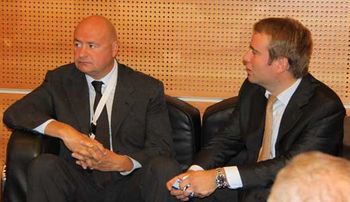
Dmitry Klyuev (left) and Andrei Pavlov (right) at an OSCE meeting in Monaco, in July 2012Dmitry Klyuev (left) and Andrey Pavlov (right) at an OSCE meeting in Monaco, in July 2012.
Crosby, who’s worked on election campaigns for both the United Kingdom (UK) Prime Minister David Cameron and London Mayor Boris Johnson, co-owns CTF Corporate and Financial Communications Limited (“CTF”). According to emails seen by BuzzFeed, the firm was engaged by law firm Debevoise & Plimpton LLP (“Debevoise”) on behalf of Russian lawyer, Andrey Pavlov.

The Lawyer and the Russian Crime Gang

US prosecutors alleged Pavlov is a “key member” of a “Russian criminal organization” which executed a US$ 230 million fraud and money laundering scheme against hedge fund Hermitage Capital Management and the Russian Treasury, BuzzFeed said. He represented companies at the center of the fraud.

The criminal organization is known as the Klyuev Group, named after Dmitry Klyuev, the Daily Beast said. The group, and its alleged links to the Magnitsky murder, have been reported on extensively by OCCRP and its partner Novaya Gazeta.

Pavlov provided legal services to Klyuev from time to time since 2001, US prosecutors said in a criminal complaint. The head of Hermitage Capital Management, William Browder, also alleged Pavlov was a deputy of Klyuev in a US court deposition in April 2015.

Several senior Russian officials from tax authorities and police were also complicit in the scheme. Some are now on US sanctions lists under the Magnitsky Act.     

The “Lobbying” Firm

Crosby’s company CTF agreed, in October 2014, to four weeks’ work identifying lobbying targets for the eventual purpose of having Pavlov’s name removed from the European Parliament’s recommended sanctions list, according to BuzzFeed.

In particular, CTF was to pinpoint MEPs “who might be amenable to representations to move to repeal the recommendation against Mr Pavlov.”

Pavlov’s lawyers described CTF to him as “the lobbying firm,” in correspondence obtained by BuzzFeed. The firm is not registered as an outside lobbyist on either UK or EU registers of lobbyists, BuzzFeed said.

Crosby himself was not personally involved in CTF’s work for Pavlov, according to emails obtained by BuzzFeed. Crosby’s spokesperson said he was working with the British Conservative Party at the time and would not have known what the firm was doing for other clients.

CTF told BuzzFeed its work for Pavlov was background research and nothing to do with lobbying.

Pavlov is one of 32 people named by Members of the European Parliament (MEP) in 2014 for being “involved in the death of Russian lawyer Sergei Magnitsky, its judicial cover-up and the continuing harassment of his family.” MEPs called for asset freezes and travels bans against the sanctioned names on the list.

Despite these moves, Pavlov continued to make regular trips to the UK even after being sanctioned, BuzzFeed found.

High-Profile Legal Representation

Pavlov was represented by former UK Attorney General Lord Peter Goldsmith, now a partner at Debevoise, BuzzFeed said. Goldsmith was also acting on behalf of another individual named on the sanctions list—Konstantin Ponomarev.

Goldsmith’s role was to challenge the sanctions recommendations for both men. He had apparently been sought out by Ponomarev to “add value” to his case, BuzzFeed said.  

Debevoise told BuzzFeed they couldn’t comment on confidential client matters but that “everyone was entitled to legal representation.”

Pavlov and Ponomarev have denied any wrongdoing in connection with the Magnitsky case, Buzzfeed said.

No UK “Magnitsky Act”?

Prime Minister Cameron has made public statements condemning the death of Sergei Magnitsky but has faced pressure from MPs for not having introduced UK sanctions or asset freezes, BuzzFeed reported.

Cameron said that despite the lack of a Magnitsky Act in the UK, which would ban people involved in Magnitsky’s murder or the corruption he uncovered from coming into the country, the UK does take action in such cases.  

However, BuzzFeed said that individuals allegedly connected to the Magnitsky case have regularly flown in and out of the UK without repercussions.

WP Radio
WP Radio
OFFLINE LIVE