Categories
Audio Sources - Full Text Articles

Henry Ford, Elon Musk, and the Dark Path to Extremism

elon-musk-henry-ford-2

A photo illustration of Henry Ford, left, and Elon Musk, right.

Photo illustration: Elise Swain/The Intercept; Photos: Getty Images

Elon Musk is on his way to becoming the next Henry Ford.

That is not a compliment.

In his early entrepreneurial years, Ford was a revolutionary: an innovative genius who transformed the way Americans traveled, worked, and lived. Ford effectively created the modern assembly line, driving down manufacturing costs, raising productivity, and making it possible to sell cars at low prices. Ford’s inexpensive and durable Model T, introduced in 1908, brought automobiles within the reach of average Americans. Ford dominated the car industry as a result; in the early 1920s, more than half the cars on the world’s roads were built by Ford.

Following in Ford’s footsteps, Musk has become the leading innovator in the 21st century auto industry. Thanks to the successful line of electric vehicles produced by his company, Tesla, Musk has challenged a century of rigid orthodoxy — dating back to Ford — that proclaimed the gasoline-powered engine king of the road. By taking on the corporate giants of the auto industry and winning, Musk has succeeded where other flamboyant and egocentric entrepreneurs like John DeLorean, who briefly built the 1980s-era gull-winged car now mainly remembered for its time-traveling role in the movie “Back to the Future,” failed.

Unfortunately, Elon Musk now seems grimly determined to walk Henry Ford’s path much further than he should, for after his spectacular early success, Ford turned very dark, very quickly. The consequences of his hateful actions continue to poison the world today.

After he had accumulated massive wealth and achieved global fame, Ford allowed bigotry and paranoia to dominate his life. Deeply anti-union, he created a network of company spies who surveilled his employees and tried to control their lives. He also bought a newspaper that disseminated lies and antisemitic conspiracy theories. He followed that up by publishing a series of antisemitic books that were influential among Nazis and other European fascists between the First and Second World Wars.

Ford became a favorite of Adolf Hitler, who kept a photo of the automaker in his office. “I regard Henry Ford as my inspiration,” Hitler told the Detroit News in 1931.

The Ford Motor Company eventually began to decline as a result of its owner’s hateful and erratic behavior; it was saved only when Ford was forced to turn over control to his grandson.

Musk seems to be on the same trajectory that led Ford into the abyss. Tesla investigators hired by Musk allegedly hacked an employee’s phone and spied on his messages, and the stridently anti-union Musk reportedly hired a public relations firm to investigate an employee Facebook group just as Tesla workers were trying to unionize.

Earlier this year, SpaceX, another firm that Musk controls, fired employees who had written a letter calling on SpaceX to condemn Musk’s tweets, in which he’d ridiculed reports that SpaceX had settled a sexual harassment complaint against him. After Musk acquired Twitter in October, he began slashing the company’s workforce — including firing employees who had dared to criticize him.

Now, like Ford, Musk is going further, enabling right-wing hate on a massive scale.

After buying a social media platform whose reach far exceeds the newspapers of Henry Ford’s era, Musk is rapidly turning Twitter into his personal plaything, making a series of arbitrary moves to showcase his right-wing political agenda. He has unblocked the Twitter accounts of Donald Trump and other right-wing extremists, and ended enforcement of the site’s Covid misinformation policy. QAnon accounts are now returning to Twitter too.

Musk has also looted the platform’s internal files to further his political goals. Last week, he suspended the Twitter accounts of journalists at The Intercept and elsewhere who have criticized him, and then tried to make demands on the journalists in return for lifting the suspensions. Over the weekend, he briefly suspended the account of Washington Post reporter Taylor Lorenz after she tried to contact him for a story.

“Elon Musk has demonstrated to the entire world in the space of a few weeks that his management of Twitter is a disaster for the right to information,” Reporters Without Borders said in a statement after Musk suspended the reporters’ accounts. Officials from the European Union have also warned that Twitter may face sanctions for failing to live up to the EU’s standards for press freedom.

Musk has embraced Russian dictator Vladimir Putin and in October showed his willingness to become Putin’s de facto messenger to the West by laying out specific pro-Russian terms for a settlement of the war in Ukraine. On Sunday, Musk was photographed at the World Cup in Qatar, standing in what appeared to be a stadium suite with Donald Trump’s son-in-law, Jared Kushner.

If Henry Ford’s life is any guide, the hate Musk is now unleashing will continue to spread long after he’s gone. A century after it was published, references to Ford’s book, “The International Jew,” can still be found on white nationalist, pro-Nazi and antisemitic websites.

Like Ford, Musk is playing with right-wing fire just as his auto company is about to come under siege. Automotive experts now predict that Tesla will see its share of the electric vehicle market drop from 70 percent to 11 percent by 2025 as a result of increased competition from the world’s major carmakers. General Motors, Ford, Volkswagen, and other big firms are set to enter the electric vehicle market with a combined total of 135 new models, and to begin large-scale production over the next two to three years.

Even Ford Motor Company — which survived Henry Ford — plans to produce two million electric vehicles a year by 2026.

The post Henry Ford, Elon Musk, and the Dark Path to Extremism appeared first on The Intercept.
Categories
Audio Sources - Full Text Articles

Ukraine’s president visits front-line city in country’s east

Ukrainian President Volodymyr Zelenskyy has visited the embattled Ukrainian city of Bakhmut, the recent focus of some of the most intense fighting of Russia’s war, his office said.

The eastern city is the scene of “fierce battles” between Ukraine’s defenders and Russia’s invading forces, the president’s office in Kyiv said Tuesday.

The office said that Zelenskyy met and chatted with military personnel.

Earlier this month, Zelenskyy said Russia’s efforts to conquer Bakhmut had turned the eastern Ukrainian city into ruins.

“The occupiers actually destroyed Bakhmut, another Donbas city that the Russian army turned into burnt ruins,” he said.

Bakhmut has remained in Ukrainian hands during the almost 10-month war, thwarting Moscow’s goal of capturing Donetsk province, part of the Donbas region bordering Russia.

Taking Bakhmut would rupture Ukraine’s supply lines and open a route for Russian forces to press on toward Kramatorsk and Sloviansk, which are key Ukrainian strongholds in the province. Pro-Moscow separatists have controlled part of Donetsk and neighboring Luhansk province since 2014.

Mercenaries from the Wagner Group, a shadowy Russian military company, are reported to be leading the charge in Bakhmut.

Categories
Audio Sources - Full Text Articles

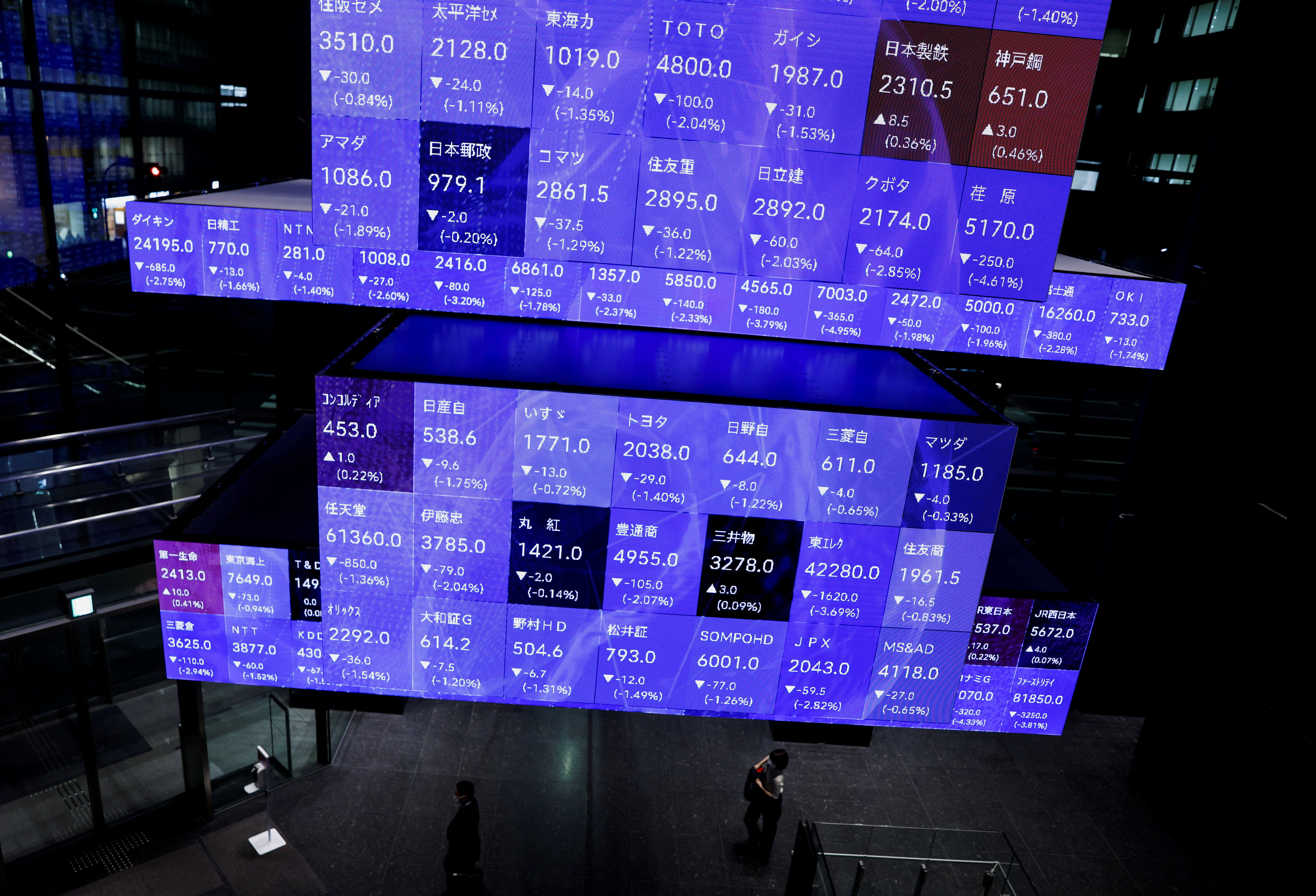
Stocks, bonds fall as BOJ“s surprise policy shift spooks investors

2022-12-20T10:36:11Z

Global stocks and bonds fell on Tuesday as a surprise policy tweak by Japan’s central bank rattled investors already worried about the economic fallout of rising interest rates and lifted domestic bond yields to seven-year highs.

The Bank of Japan (BOJ) widened the allowable band for long-term yields to 50 basis points either side of its 0% target, from 25 basis points previously.

European stock markets hit six-week lows, with the German (.GDAXI) and French benchmark indices (.FCHI) falling by as much as 1%, while London’s FTSE 100 (.FTSE) lost as much as 0.8%.

Japanese 10-year government bond yields surged to their highest since 2014, with euro zone yields following suit. Yields rise when bond prices fall. ,

“There have got to be a lot of people on holiday saying ‘wait this wasn’t supposed to happen’,” said James Rossiter, head of global macro strategy at TD Securities.

Rossiter pointed to BOJ Governor Haruhiko Kuroda’s speech in which he said the policy tweak was “aimed at improving market functions” and was “not an interest rate hike”.

“That is not how markets have taken this,” said Rossiter, adding that thin liquidity in markets might be playing into the size of the price moves.

Others took the BOJ decision as a sign that the forces that drove the yen to three-decade lows against the U.S. dollar this year may be beginning to turn.

“While there is still a wide gap, the hint that the BOJ is moving incrementally away from ultra-loose policy should be yen positive in the near term,” Kerry Craig, JPMorgan Asset Management’s global markets strategist, said.

The BOJ has steadily bought billions of dollars’ worth of government bonds to keep long-term interest rates low, despite a pickup in inflation, both at home and abroad.

Allowing yields to move in a wider band could lure fresh cash back to Japan and boost the yen, analysts said.

The policy decision caused an immediate spike in the yen with the dollar index dropping 0.80% to 103.95, a six-month low.

This knocked other currencies from recent gains with both the euro and pound falling more than 3.5% against the yen.

In turn, the Nikkei benchmark index (.N225) slumped 2.71% after trading in positive territory earlier in the day, while U.S. stock futures fell between 0.1-0.2%, suggesting a modestly weaker start to trading later.

Meanwhile, China’s reopening to the rest of the world from nearly three years of COVID lockdowns remained a point of focus for investors.

Credit Suisse on Monday upgraded its outlook from neutral to outperform for China’s stock markets in the year ahead.

“The whole narrative of China has changed, it’s gone from COVID zero that was putting the economy under pressure and there’s now an intention to move towards a reopening,” Suresh Tantia, Credit Suisse’s senior investment strategist.

“And as that happens, we will see an recovery in China’s economy and markets.”

In the oil market, Brent crude rose 0.8% to $80.41 per barrel, while U.S. crude rose 1.1% to $75.98.

Spot gold benefited from the weakness in the dollar, rising 1% to around $1,805 per ounce.

Related Galleries:

Visitors walk past Japan’s Nikkei stock prices quotation board inside a conference hall in Tokyo, Japan September 14, 2022. REUTERS/Issei Kato


Pedestrians wait to cross a road at a junction near a giant display of stock indexes in Shanghai, China August 3, 2022. REUTERS/Aly Song

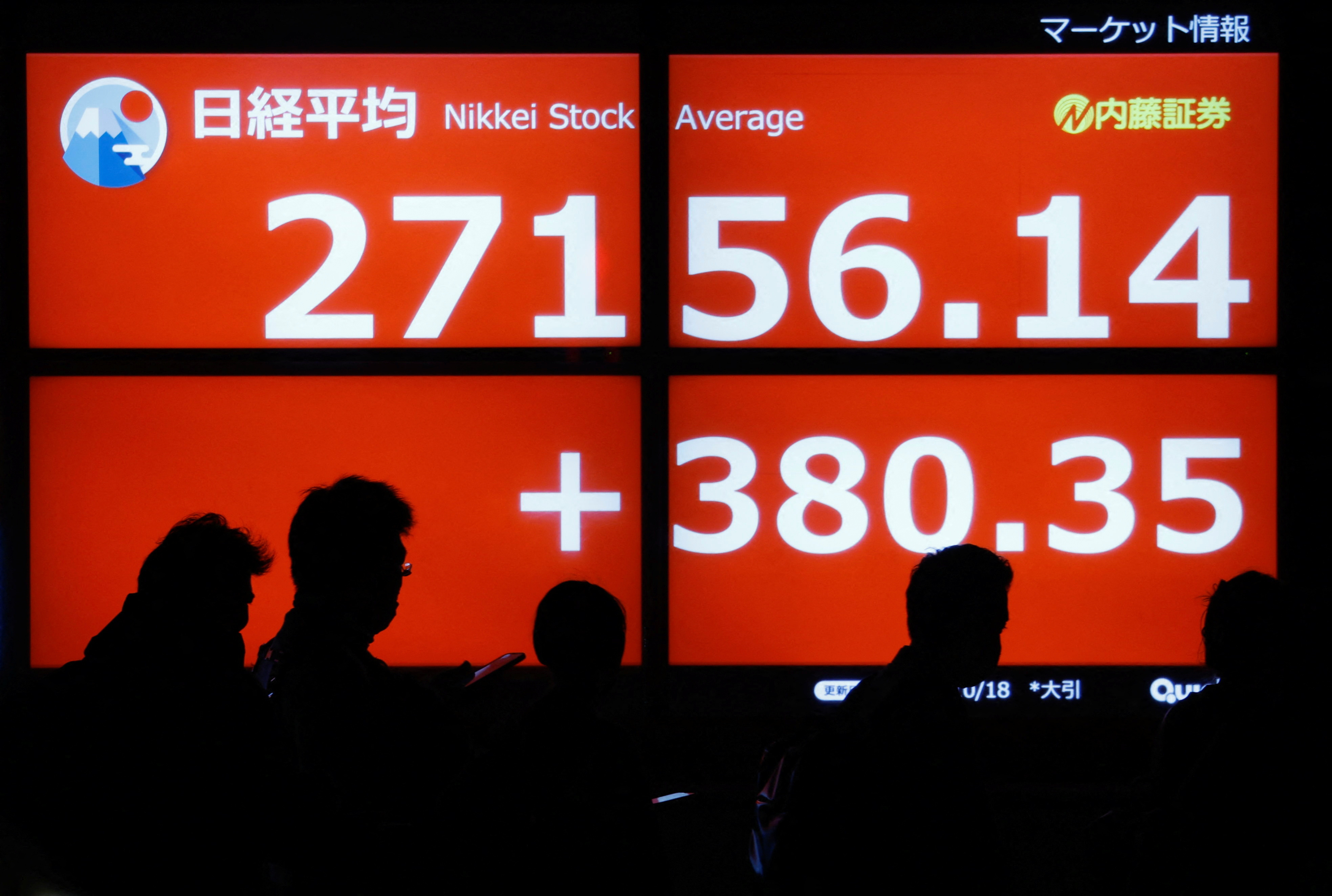
Passersby are silhouetted as they walk past in front of an electric monitor displaying the Japan’s Nikkei share average outside a brokerage in Tokyo, Japan October 18, 2022 REUTERS/Issei Kato
Categories
Audio Sources - Full Text Articles

1/6 takeaways: Record for history and ‘roadmap to justice’

WASHINGTON (AP) — The Jan. 6 committee set out to compile a public record for history of the 2021 attack on the U.S. Capitol, but its final report has become so much more — a “roadmap to justice,” as Americans come to terms with Donald Trump’s efforts to overturn the 2020 presidential election.

The panel unanimously made four criminal referrals Monday against Trump for his role in the “multi-part conspiracy,” that started with his false claims of a stolen election and ended in the mob siege of the Capitol. It’s sending the recommendations to the Justice Department, which is already conducting its own probe.

In adopting its final report, the panel also recommended a congressional ethics investigations for House Republican Leader Kevin McCarthy and other members of Congress for their actions in defying congressional subpoenas for information about their interactions with Trump before, during and after the bloody assault.

“The committee is nearing the end of its work, but as a country we remain in strange and uncharted waters,” said Chairman Bennie Thompson, D-Miss. “Nearly two years later this is still a time of reflection and reckoning.”

He said, “We have every confidence that the work of this committee will help provide a roadmap to justice.”

‘ONE MAN’ CAUSED JAN. 6

Over its 18-month investigation, the panel laid out evidence that the Jan. 6 attack at the Capitol was not a spontaneous rally, but an orchestrated “scheme” by Trump to try to overturn the 2020 election he lost to Joe Biden.

Trump urged supporters to come to Washington for a “big rally” Jan. 6. He whipped up supporters in a rally at the White House. Knowing that some were armed, he sent the mob to the Capitol and “fight like hell” for his presidency. He tried to join them on Capitol Hill to stop Congress from counting the votes.

All the while, Trump stoked theories from conservative lawyer John Eastman to create alternative slates of electors, switching certain states that voted for Biden to Trump, that could be presented to Congress for the tally. Eastman also faces criminal referral by the committee to Justice.

“The central cause of January 6th was one man, former President Donald Trump, who many others followed. None of the events of January 6th would have happened without him,” the panel said in its report.

Said Rep. Adam Schiff, D-Calif., “Those responsible must be held accountable.”

NO ‘RINGLEADERS GET A PASS’

More than 800 people have been charged in the attack on the Capitol, and the panel showed that many of them were hanging on Trump’s every word in the weeks after the November election.

Along with militant Oath Keepers and Proud Boys, many other Americans stormed the Capitol that day. One said he wanted to “do my part to stop the steal and stand behind Trump.” Others detailed how the fighting only subsided once Trump tweeted hours later they should go home.

In unveiling its decision to make criminal referrals to the Justice Department, the panel indicated the importance of holding Trump and those around him responsible.

“Ours is not a system of justice where foot soldiers go to jail and the masterminds and ringleaders get a pass,” said Rep. Jamie Raskin, D-Md., a constitutional scholar who played a lead role in drafting the documents.

The Department of Justice has appointed a special prosecutor to investigate Trump’s role in the Capitol attack, and the former president’s efforts to upend the election results in Georgia are being probed by prosecutors in the state.

Still, the criminal referrals of a former president are rare, and grave. The panel quieted for a solemn roll call vote as each committee member agreed to adopt the final report and its recommendations for prosecuting Trump on inciting the insurrection and other charges.

“We understand the gravity of each and every referral we are making today, just as we understand the magnitude of the crime against democracy,” Raskin said.

GOP LAWMAKERS UNDER SCRUTINY

Top Republicans in Congress — including McCarthy, who is in line to become House speaker when Republicans take control in the new year — face ongoing scrutiny over their actions before, during and after Jan. 6.

McCarthy was in close contact with Trump and White House officials that day, and wanted Trump to call off the rioters and stop the siege. At one point, he sounded “scared,” according to Trump son-in-law Jared Kushner’s testimony before the panel.

Other Republicans referred for ethics investigations by the committee are leaders of the conservative Freedom Caucus vying for power in the new Congress. Among them: Rep. Andy Biggs, R-Ariz., who is challenging McCarthy for the speaker’s gavel; Rep. Jim Jordan, R-Ohio, who is set to become the chairman of the House Judiciary Committee; and Rep. Scott Perry, R-Pa., who is the chairman of the Freedom Caucus.

In its report, the committee said it believes these lawmakers and others “should be questioned in a public forum about their advance knowledge of and role in President Trump’s plan to prevent the peaceful transition of power.”

A DIVIDED COUNTRY

Rather than bring the country together, the events of Jan. 6 continue to divide the Congress and the country.

The committee was born from division, established by Democrats after Republicans in Congress blocked the formation of a 9/11-style independent commission that could probe the Capitol attack and make recommendations.

The panel’s purpose was to investigate and report on the “facts, circumstances, and causes” of the 2021 attack on the U.S. Capitol — a public record for history.

But after 18 months and 10 public hearings, the panel closed by acknowledging it still has work to do reaching all Americans in a country often riven by partisanship.

“We understood that millions of Americans still lack the information necessary to understand and evaluate what President Trump has told them about the election,” the report said.

The committee interviewed more than 1,000 witnesses, and noted much of the public testimony came from some four dozen Republicans — including Trump’s former attorneys general and other top White House officials.

The hearings “featured a number of members of President Trump’s inner circle refuting his fraud claims and testifying that the election was not in fact stolen,” the report said.

Categories
Audio Sources - Full Text Articles

Analysis: Grim battle for Bakhmut may yield only pyrrhic victory for Russia

2022-12-20T09:59:08Z

The nearly five-month battle for the small city of Bakhmut in eastern Ukraine has ground on for so long and wrought so much death and destruction that, even if Russia does prevail, it will be a pyrrhic victory, military experts say.

Wrecked apartment blocks, badly wounded soldiers, mud-filled trenches and civilians cowering in cellars under incessant bombardment have become familiar scenes in and around Bakhmut since the fighting began.

Gaining control of the city, with a pre-war population of 70-80,000 that has shrunk to close to 10,000, could give Russia a stepping stone to advance on two bigger cities – Kramatorsk and Sloviansk.

It would also deprive Ukraine of a useful road and rail supply line intersection.

But with fierce fighting there since Aug. 1, and Russian shelling since May, much of Bakhmut lies in ruins, while Ukrainian forces to the west have had ample time to build defensive lines nearby to fall back to.

“If Bakhmut had been captured when they started their attack in August then it would have been significant. But it’s all about momentum,” said Konrad Muzyka, a Polish military analyst.

He said Bakhmut’s strategic value had been reduced by Ukraine’s fortification of the surrounding area in the months that followed, making it hard for Russia to convert the city’s capture, if it happens, into a broader breakthrough.

Still, the clash has taken on outsized significance on both sides because it is the main theatre of fighting as winter bites, major resources have been deployed and it is the first battle in months Russia appears to have a chance of winning.

Described as a “meat grinder” by commanders on both sides, some Russian, Ukrainian and Western experts liken the struggle to World War One, where Germany and Britain suffered huge losses in trench warfare for often scant territorial gain.

Igor Girkin, a Russian nationalist and former Federal Security Service officer who helped launch the original Donbas war in 2014 and is under U.S. sanctions, said this week he thought his own side’s strategy in Bakhmut was “idiotic”.

“What will happen next (after the potential Russian capture of Bakhmut)?” Girkin mused in a video, adding the Ukrainians would merely fall back to a second defensive line while continuing to build other defensive lines behind that one.

“It’s chewing through the enemy’s defences according to the World War One model,” said Girkin, arguing that Moscow needed to change battlefield strategy and deploy its forces differently.

Michael Kofman, an expert on the Russian military at the U.S.-based CNA think-tank, said Moscow appeared committed to the battle because of resources it had already spent rather than because of “sound strategy”.

“The fighting for Bakhmut is not senseless, but strategically unsound (for Russia) given weak offensive potential and no prospect of breakthrough even if the city is captured,” said Kofman.

Neither side discloses the full extent of fatalities in Ukraine.

But Kyiv says Russia has been taking heavy losses and that many of those killed were convicts recruited by Moscow’s Wagner private mercenary company.

Yevgeny Prigozhin, Wagner’s founder, who is sanctioned in the West, has confirmed his men are fighting there.

The deal he offered convicts was to fight and be pardoned in six months or, if they joined up and deserted, face execution.

In November, independent Russian news outlet Mediazona reported that publicly available data from Russia’s Federal Penitentiary Service showed the overall prison population shrank by over 23,000 people in September and October, the biggest drop of its kind in more than a decade.

That suggested convicts had taken up Prigozhin’s offer. Reuters could not independently verify the data.

Prigozhin has cautioned against expecting rapid breakthroughs, and, in a Dec. 12 comment, said Wagner’s task in fighting for Bakhmut was to “kill as many enemy soldiers as possible, and bleed the Ukrainian army dry”.

Battlefield footage suggests intense fighting for relatively modest stretches of ground, with the frontline edging back and forth.

Russia, in its own battlefield updates, has spoken of Ukraine suffering heavy losses in men and hardware. Ukrainian President Volodymyr Zelenskiy said on Monday that Bakhmut was the “hottest spot” on a 1,300-km (800-mile )frontline.

For Russia, Bakhmut, which it calls Artyomovsk, the city’s Soviet-era name, has long held political value.

Lying on the frontline that bisects Ukraine’s eastern Donetsk region, taking Bakhmut would move Russia a step closer to full control of the Donbas, parts of which have been controlled by Russian proxies since 2014.

After Russian troops withdrew from Ukraine’s north in April in a humiliating retreat, Moscow publicly reframed its core war aim as the “liberation” of the largely Russian-speaking Donbas, of which Donetsk region makes up roughly half.

Muzyka, the Polish military analyst, said Bakhmut had become a battle of attrition.

“The Ukrainians are just wearing the Russians down and it’s quite effective in terms of manpower and equipment,” he said. “They are increasing the costs to the Russians.”

For Moscow, says British military intelligence, there is “a realistic possibility that Bakhmut’s capture has become primarily a symbolic, political objective”.

A win there would help lift morale and General Sergei Surovikin, overall commander of Russia’s forces in Ukraine since Oct. 8, could show he was right to redeploy his forces elsewhere after withdrawing from the southern city of Kherson.

It could also boost Prigozhin’s political capital in Moscow if he can take some credit for such a victory.

For Ukraine, say experts, the calculus in holding Bakhmut is partly about sustaining support from Western countries on whose arms supplies Ukraine’s war effort is dependent.

With Ukraine having scored a string of battlefield successes, even a relatively insignificant defeat risks creating the perception of stalemate, which could make Western countries less willing to extend support for Kyiv amid their own mounting economic problems stemming from the war.

“At this stage, Ukraine is the victim of its own recent success, and suffers from heightened expectations of sustained momentum,” said Kofman.

Related Galleries:

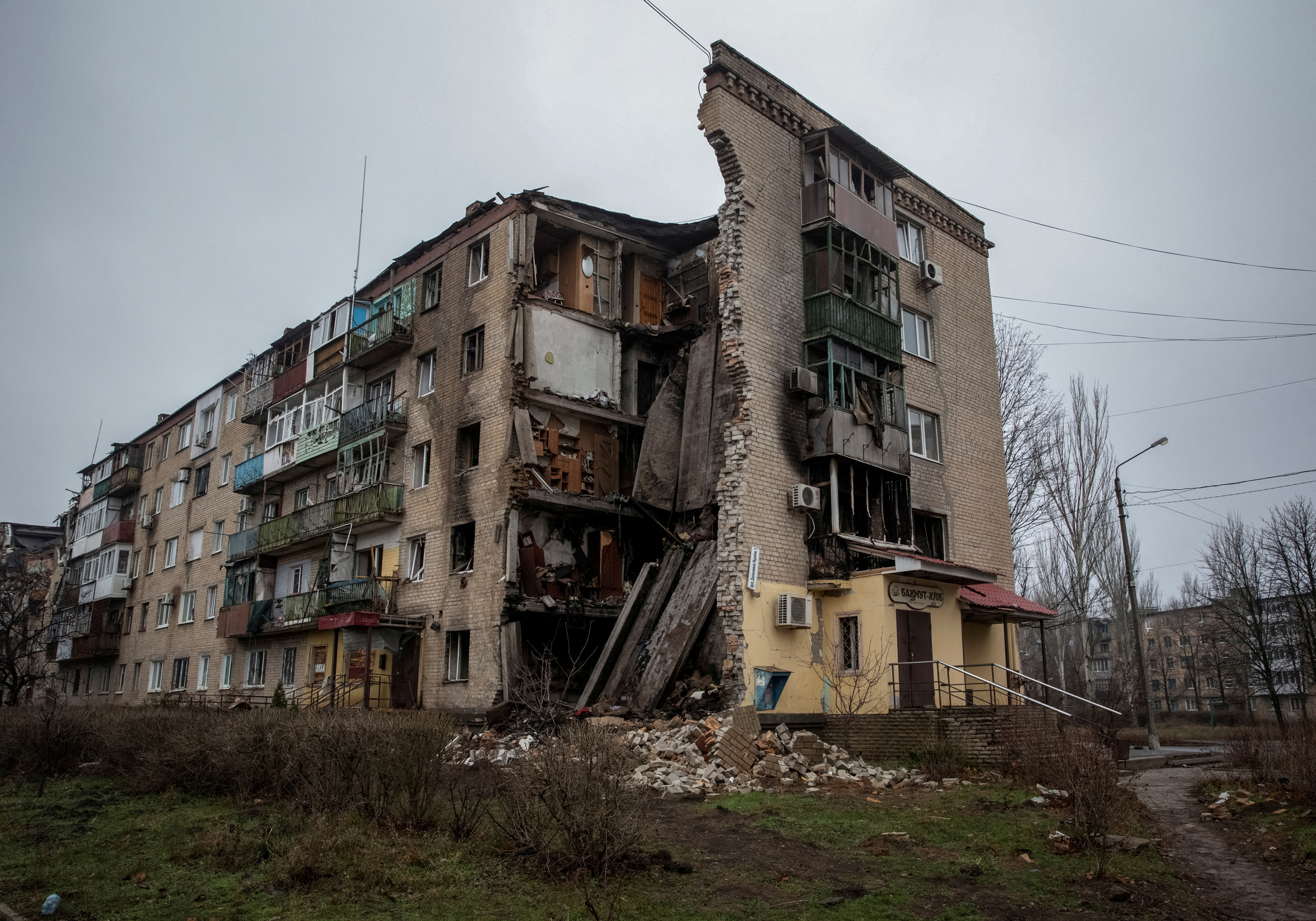
A view shows a residential building damaged by a Russian military strike, amid Russia’s attack on Ukraine, in Bakhmut, Ukraine December 18, 2022. REUTERS/Oleksandr Ratushniak

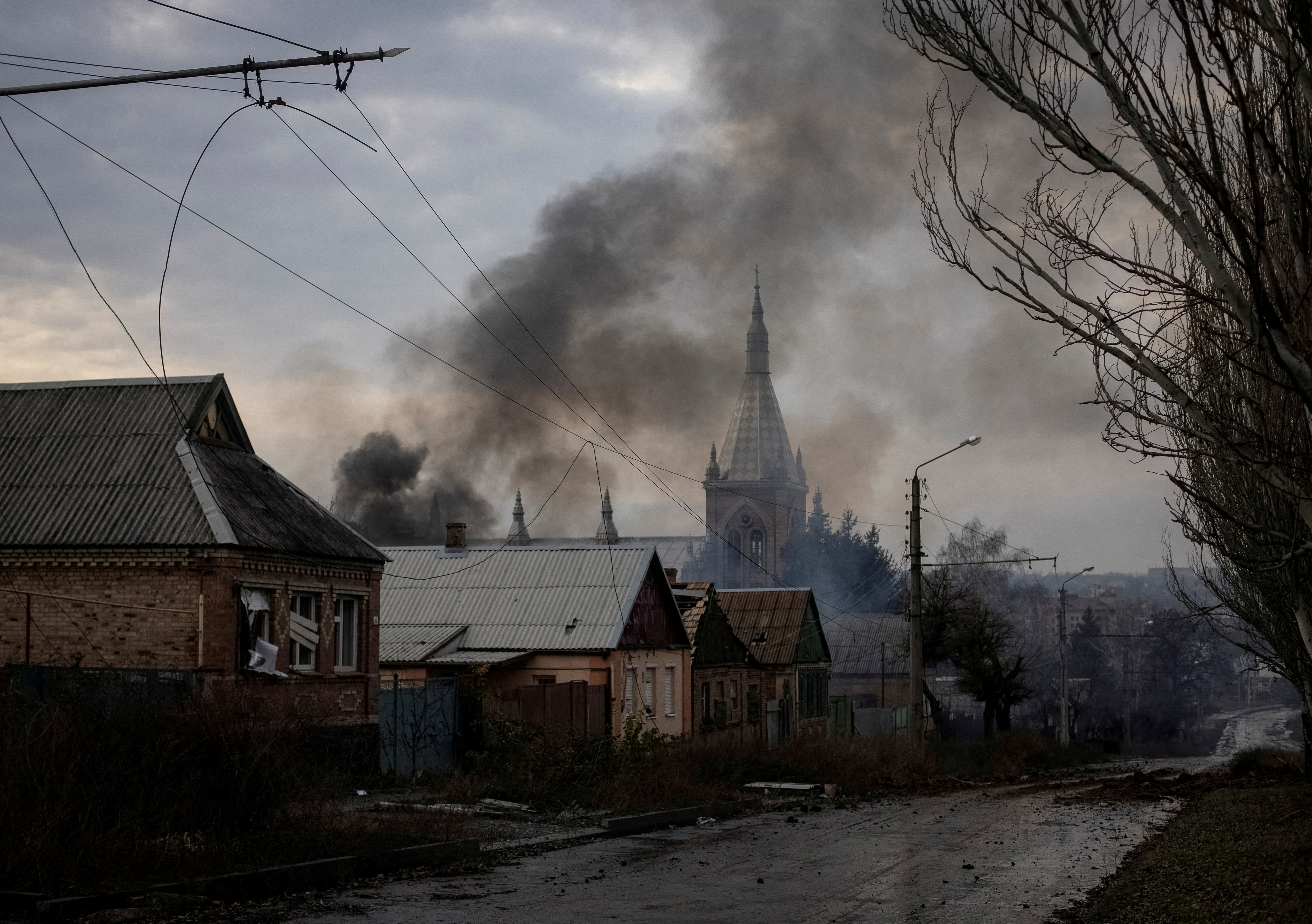
Residential houses are damaged by a Russian military strike, amid Russia’s attack on Ukraine, in Bakhmut in Donetsk region, Ukraine, December 9, 2022. REUTERS/Yevhen Titov

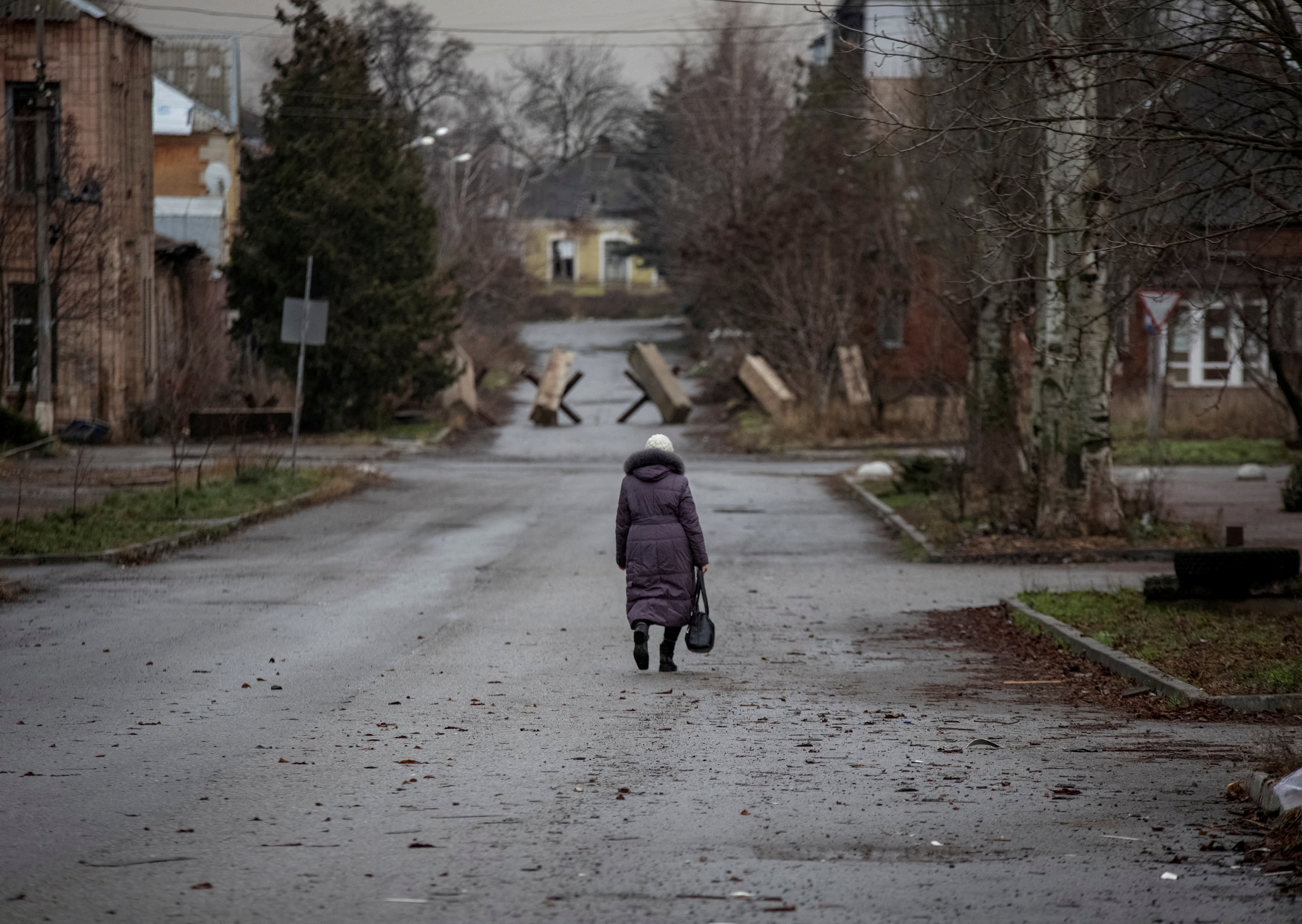
A local resident walks on an empty street, as Russia’s attack on Ukraine continues, in Bakhmut, Ukraine December 18, 2022. REUTERS/Oleksandr Ratushniak
Categories
Audio Sources - Full Text Articles

Japan, U.S. discussing Biden visit to Nagasaki in 2023 – Kyodo News

2022-12-20T09:52:39Z

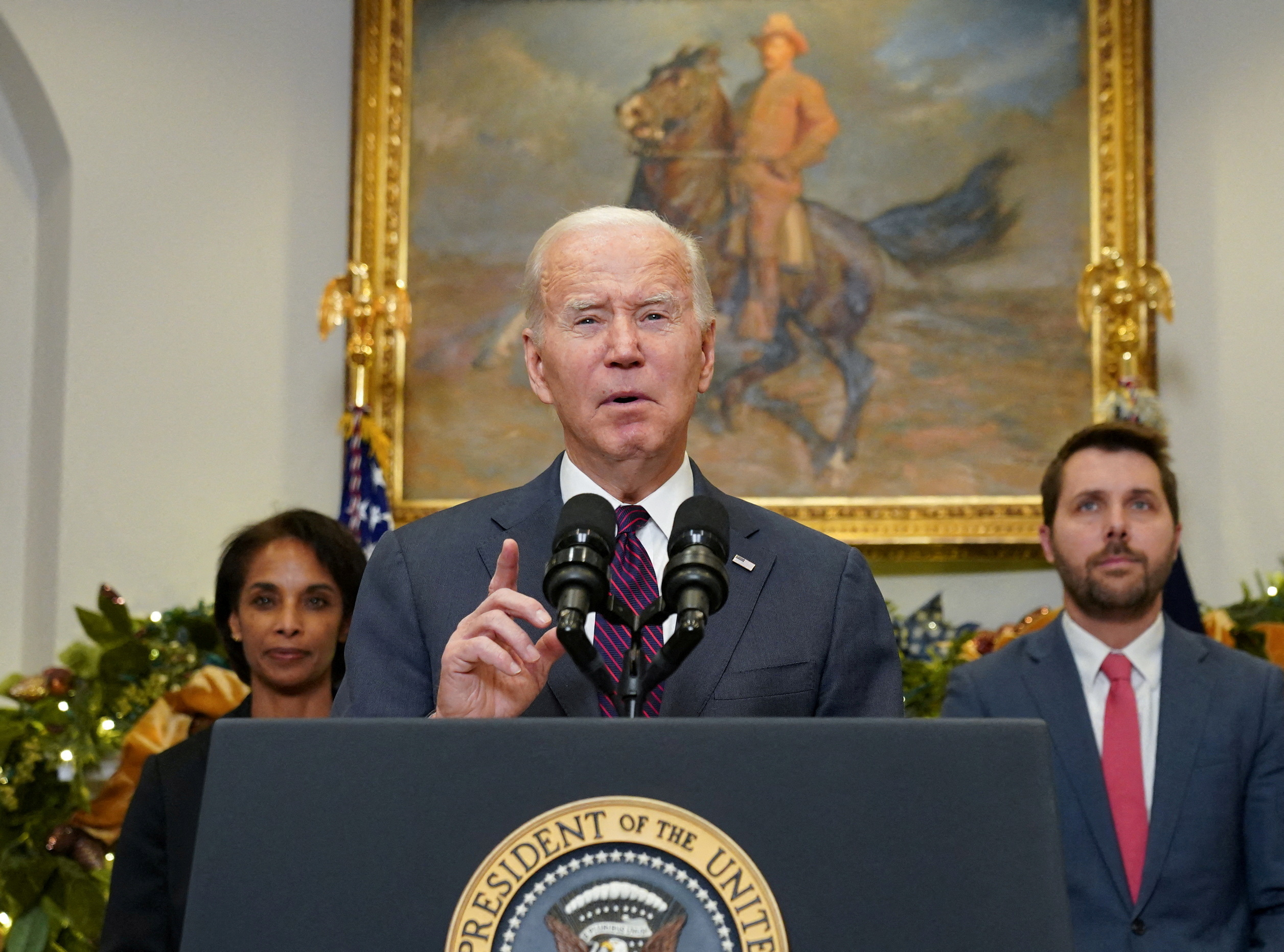
U.S. President Joe Biden speaks about inflation at the White House in Washington, U.S., December 13, 2022. REUTERS/Kevin Lamarque

Japan and the United States are discussing a visit by U.S. President Joe Biden to Nagasaki in 2023, Kyodo News reported on Tuesday, citing sources.

Categories
Audio Sources - Full Text Articles

Russians launch missile strikes on Kharkiv region, industrial object on fire

630_360_1670571938-949.jpg

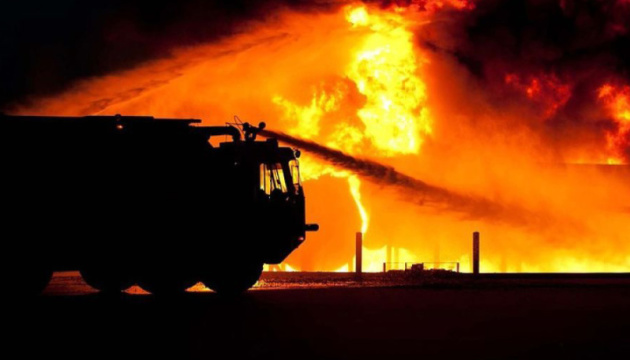
Past night Russian troops launched missile strikes on the Kharkiv region’s Izium district. As a final result, an industrial object caught fire.

The related statement was manufactured by Kharkiv Regional Navy Administration Head Oleh Syniehubov on Telegram, an Ukrinform correspondent reports.

“Around 02:00 a.m., a large fireplace broke out in a civil industrial infrastructure facility, following the occupier’s missile strikes on the Izium district. Thankfully, no casualties have been claimed. Rescuers are doing work at the scene,” the report states.

In addition, the enemy opened hearth on the border settlements in such districts as Kharkiv, Chuhuiv and Kupiansk.

The town of Vovchansk and the Vovchansk community’s settlements (Starytsia, Hatyshche, Vovchanski Khutory) came beneath substantial fireplace. According to the preliminary information, civilians remained unharmed.

Russian troops also launched artillery strikes on the town of Kupiansk and neighboring villages. A residential residence caught fire in the urban-sort settlement of Dvorichna.

mk

Source link

The post Russians launch missile strikes on Kharkiv region, industrial object on fire appeared first on Ukraine Intelligence.

Categories
Audio Sources - Full Text Articles

Hindutva Pop Is the New Soundtrack to the Anti-Muslim Movement in India

Brassy beats, poorly-synced visuals, and jarring edits haven’t stopped Prem Krishnvanshi─ an engineer-turned-singer from the north Indian state of Uttar Pradesh─ from becoming a sensation on YouTube and social media. It’s his music’s message that resonates more than the quality. Krishnvanshi is one of several increasingly popular artists in India producing a relatively new rancorous genre of music, commonly known as “Hindutva pop.”

Hindutva is a term used to describe Hindu nationalism, the more than a century-old supremacist movement seeking to establish Hindu hegemony in India. Hindutva pop songs, which have become ubiquitous in the last several years, typically praise the ruling rightwing government of the Bharatiya Janata Party (BJP) led by Prime Minister Narendra Modi. The lyrics spew hate toward Muslims─India’s largest minority community that constitutes nearly 200 million of the country’s 1.4 billion people.

[time-brightcove not-tgx=”true”]

Read More: With Religious Tensions Worsening in India, Understanding Caste Is More Urgent Than Ever

Recently, Hindutva pop has also been blamed for instigating violence. Syed Zubair Ahmad, founding editor of Muslim Mirror, an independent media organization that tracks cases of violence against Muslims in India, believes the music normalizes the dehumanization of Muslims in India and encourages listeners to commit violence. “They are making people inure to the violence that accompanies these songs.”

Hinduo kaa hae Hindustan, Mullo jaao Pakistan” (India is a land of Hindus, Muslim preachers should go to Pakistan) is a line from one of Krishnavanshi’s hits, which YouTube pulled from his official channel but hasn’t been able to completely remove from the platform as it continues to be reuploaded by others.

A common refrain of Hindutva pop songs is that Muslims of the country are disloyal and work for the interests of Pakistan, the neighbouring Muslim majority nation that has been at loggerheads with India since separating from it more than seven decades back.

“Secularism is the problem of our country,” Krishnvanshi tells TIME. “Whatever I sing is, in a way, a response to the extremist ideology propagated by some Muslims. That invokes division, not our songs.”

Read More: Is India Headed for an Anti-Muslim Genocide?

“I find it my duty to spread awareness about our history. Our true history, not the concocted one,” he explains, referring to the common rightwing belief that India’s history taught in schools overemphasizes Muslim kings rather than Hindu emperors. “I believe that my nation and Hindutva are very important to me and I want to talk about these topics.”

“My aim is not to hurt Muslims though,” he adds. But Krishnvanshi’s lyrics speak for themselves.

Insan nahi ho salo tum ho kasai, boht huwa Hindu Muslim bhai bhai,” (You are not humans, you are butchers, enough of this Hindu Muslim brotherhood) he rants in another song.

Krishnvanshi’s music videos often appear as tributes to the BJP, Modi, and Yogi Adityanath, a saffron-robed monk and firebrand Hindu nationalist leader known for his anti-Muslim tirades. Adityanath quickly rose through the ranks of the party to become the Chief Minister of Uttar Pradesh, India’s largest state, in 2017 before being re-elected in 2022.

Krishnvanshi takes pride in singing about the two most popular and powerful men in today’s India. “Yes, I sing about Yogi and Modi,” he says. “The songs in praise of them become instant hits.” Fittingly, Krishnvanshi has received state accolades and recognition for his songs.

“These singers have the full support of the government,” says Ahmad. “This is a win-win situation for both. The singers promote their leaders and policies, and the government in return provides them support and validation.”

A growing mass culture

Krishnvanshi is not the only singer thriving on the rise of Islamophobia in India. In the vast northern expanses of the country known as the “Cow belt,” a hotbed of conservative Hindu nationalism, Hindutva pop is in huge demand, both online and offline.

Laxmi Dubey is one such singer of this rapidly emerging cohort. Born in the central Indian state of Madhya Pradesh, she started as a small-time reporter at a local daily before turning to music as a profession.

Donning a turban and with vermillion powder smeared on her forehead, Dubey can often be seen dressed in saffron—a colour that has come to be associated with Hindu nationalism—while she sings in a ferocious voice. Her aggressive vocalization, parlance, and body language has made her a star in Hindutva circles, as she often gets called for events organized by rightwing ideologues in many states.

“I am proud of what I am doing,” Dubey tells TIME unapologetically when asked if she feels her songs may be too charged.“I have never sung anything against any religion. I have always promoted my religion, though,” she says.

Her songs like Har Ghar Bhagwa Chayega (Every House Shall Turn Saffron), which has been viewed more than 65 million times, explicitly call for Hindu rule in India. In that one, she sings in Hindi what roughly translates to, “In front of Hindu lions, the enemy will crumble … India would be of Hindus, only saffron would fly high.”

Dubey claims that these songs do not target any community, but the soundtracks are proving to be a trigger for violence against Muslims in the country.

Precursor to pogroms

Earlier this April, on the eve of the holy Islamic month of Ramadan, 25-year-old Abrar Khan was at home preparing to break fast with his family in the bustling city of Khargone in the central Indian state of Madhya Pradesh when he heard sounds blaring from loudspeakers at Talab Chowk, a busy road junction. A huge procession of rightwing Hindus brandishing swords and sticks had stopped there to celebrate Ramnavmi, a Hindu festival that celebrates the birthday of deity Ram. The frenzied mob stopped outside the nearby mosque and played incendiary Hindutva pop over speakers. Then they started to break into nearby Muslim homes, torching several of them, including Khan’s.

Read More: Anti-Muslim Hate Demolished My Home

“I had a narrow escape, but I couldn’t save my home,” Khan told TIME months after the attack. “My house is located in the main area, so it was the first house they entered. I quickly ran away once they entered my place and managed to save my life.”

“They were constantly playing these provocative songs over DJ speakers before they attacked our homes,” he said. By all appearances, he added: “It was a pre-planned event.”

Khan also said he believes the mob was actively supported by local officials. “There didn’t seem to be any attempts to stop them. In fact, after the violence, the authorities, rather than catching the culprits, arrested dozens of Muslims and demolished their properties,” he said.

Ayesha Khan, a Muslim woman from the area whose house was also burnt in the violence, echoed similar concerns: “We are living in fear since mobs and government both punish us alike. To whom would we go for justice?”

While the rise of Hindu nationalist violence has led to uneasiness and fear among Muslims, many believe the Hindutva pop music phenomenon has worsened already strained relationships between communities. “These songs have clearly influenced the minds of the people from the majority who view us with suspicion. Even my Hindu friends are now hateful towards me. They have made everything about Hindutva, even the Independence Day celebrations,” said Khan.

“During Modi’s first five-year term, there were continuous attacks on Muslim individuals, which kind of made the community feel under siege,” Ghazala Jamil, an assistant professor at Jawaharlal Nehru University in New Delhi, told the Council on Foreign Relations in July. “The idea was that if you were a Muslim, you were liable to be attacked anywhere, anytime.”

Read More: What a Rising Tide of Violence Against Muslims in India Says About Modi’s Second Term

Rights activists and experts based out of India see an association between the rise of Hindutva pop music and the recent violence against the minority Muslim community. Aasif Mujtaba, a minority rights activist and founder of Miles2Smile Foundation, a nonprofit organization that serves Rohingya refugees and survivors of religious attacks across the country, believes that the hate-filled songs are increasingly becoming a prelude to the attacks against Muslims in India. “A definite pattern is clearly seen,” he says.

Mujtaba who tracks violence committed against the minority Muslim community says that in Khargone, where survivors like Khan and Ayesha lost their homes, incendiary songs by artists including Laxmi Dubey, Prem Krishnavanshi, and others were played that exhorted Hindus to commit violence.

“These songs are so provocative,” he says, “if you play it just once on the DJ, the violence will reverberate across the streets in no time.” Mujtaba says the use of such hate-filled songs before and during attacks has been observed all across the country. “You don’t need an instigator to incite violence anymore. You just set the tone, set the track, and the hate will rock, as these songs openly call for violence against Muslims,” he explained.

“These singers are helping government to further their narrative,” says Ahmad of Muslim Mirror, “that Muslims are unwanted and responsible for all the mess the country is in.”

“Considering that there is rarely any opposition to this new mass culture in the country,” he adds, “it seems we are in for big trouble.”

Categories
Audio Sources - Full Text Articles

At least 20 enemy projectiles fired at Nikopol district last night

630_360_1669175248-328.jpg

Last night time Russian troops yet again opened fireplace on the Dnipropetrovsk region’s Nikopol district.

The related assertion was built by Dipropetrovsk Regional Armed forces Administration Head Valentyn Reznichenko on Telegram, an Ukrinform correspondent reviews.

“Two communities, Myrove and Pokrovske, arrived under large artillery hearth a few situations. At least 20 projectiles were fired at tranquil villages,” Reznichenko wrote.

In his words, civilians remained unharmed. A dozen of detached residences were harmed, as well as family structures, gas pipelines and electricity transmission traces.

In the rest of districts, no enemy shelling was recorded.

Photo: Dnipropetrovsk Regional Military Administration

mk

Source link

The post At least 20 enemy projectiles fired at Nikopol district last night appeared first on Ukraine Intelligence.

Categories
Audio Sources - Full Text Articles

Factbox: How many people might die, and why, under relaxed China COVID curbs

2022-12-20T08:59:46Z

China’s abrupt end to its zero-COVID policy has raised concerns of widespread infections among a vulnerable, undervaccinated population with little natural immunity that would overload the health system and result in up to 2 million deaths, or more, various research groups are reporting.

New analyses by various modelling groups predict the reopening could result in as many as 2.1 million deaths.

As of Monday, China has officially reported 5,242 COVID-related deaths during the pandemic, a tiny fraction of its 1.4 billion population.

Here are some of the estimates:

Zhou Jiatong, head of the Center for Disease Control in southwestern Guangxi region, said last month in a paper published by the Shanghai Journal of Preventive Medicine that mainland China faces more than 2 million deaths if it loosened COVID curbs in the same way Hong Kong did this year.

Infections could rise to more than 233 million, his forecast showed.

In May, scientists in China and the United States estimated that China risks just over 1.5 million COVID deaths if it drops its tough zero-COVID policy without any safeguards such as ramping up vaccination and access to treatments, according to research published in Nature Medicine.

They forecasted that peak demand on intensive care would be more than 15 times capacity, causing roughly 1.5 million deaths, based on worldwide data gathered about the variant’s severity.

However, the researchers, the lead authors among whom were from Fudan University in China, said the death toll could be reduced sharply if there was a focus on vaccination.

China could see 1.3 million to 2.1 million people die if it lifts its zero-COVID policy due to low vaccination and booster rates as well as a lack of hybrid immunity, British scientific information and analytics company Airfinity said in late November.

The company said it modelled its data on Hong Kong’s BA.1 wave in February, which occurred after the city eased restrictions after two years.

The U.S.-based Institute of Health Metrics and Evaluation (IHME), part of the University of Washington, in an updated model said on Friday it expects more than 1 million deaths through 2023. The group expects cases to peak in April, when deaths will have reached 322,000.

About a third of China’s population will have been infected by then, IHME Director Christopher Murray said.

A modelling team at the University of Hong Kong estimated simultaneous reopening of all provinces in December 2022 through January 2023 would result in 684 deaths per million, according to a paper released on Wednesday on the Medrxiv preprint server that has yet to undergo peer review.

Based on China’s population of 1.41 billion, and without measures such as a mass vaccination booster campaign, that amounts to 964,400 deaths.

Related Galleries:

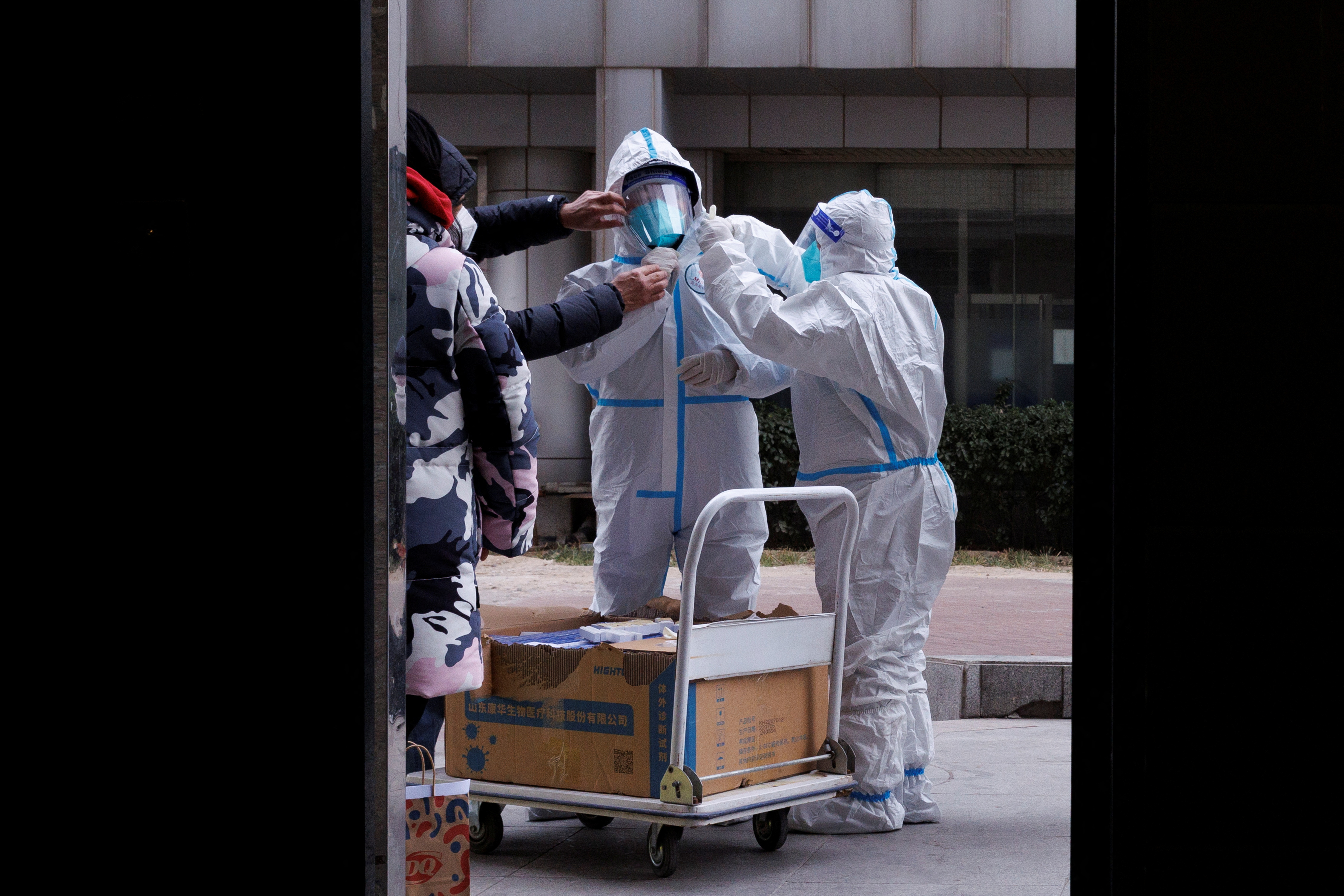
Pandemic prevention workers in protective suits get ready to enter an apartment building that went into lockdown as coronavirus disease (COVID-19) outbreaks continue in Beijing, December 2, 2022. REUTERS/Thomas Peter

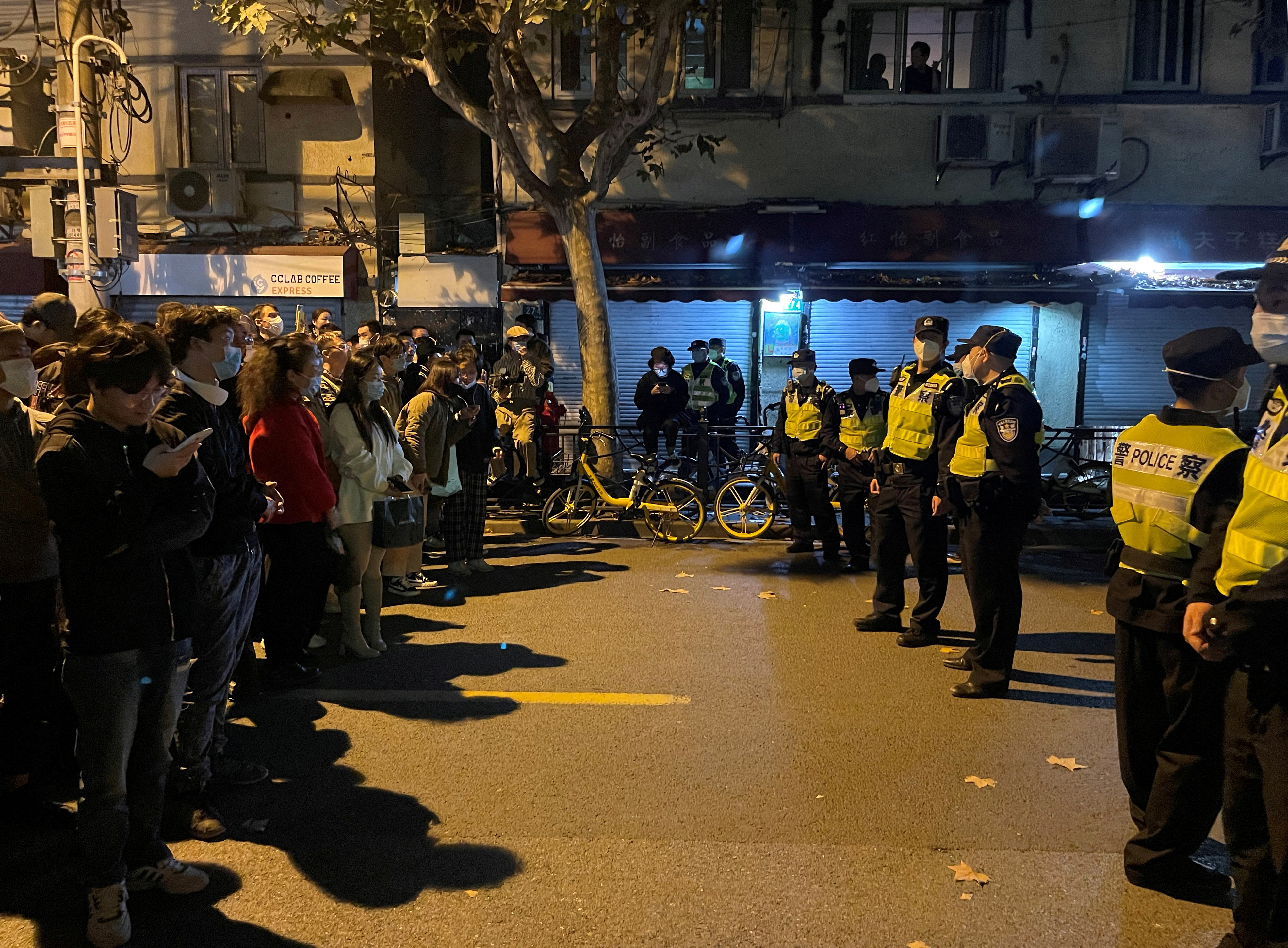
People stand in front of a line of police officers during a demonstration against COVID-19 curbs following the deadly Urumqi fire, in Shanghai, China November 27, 2022. REUTERS/Casey Hall

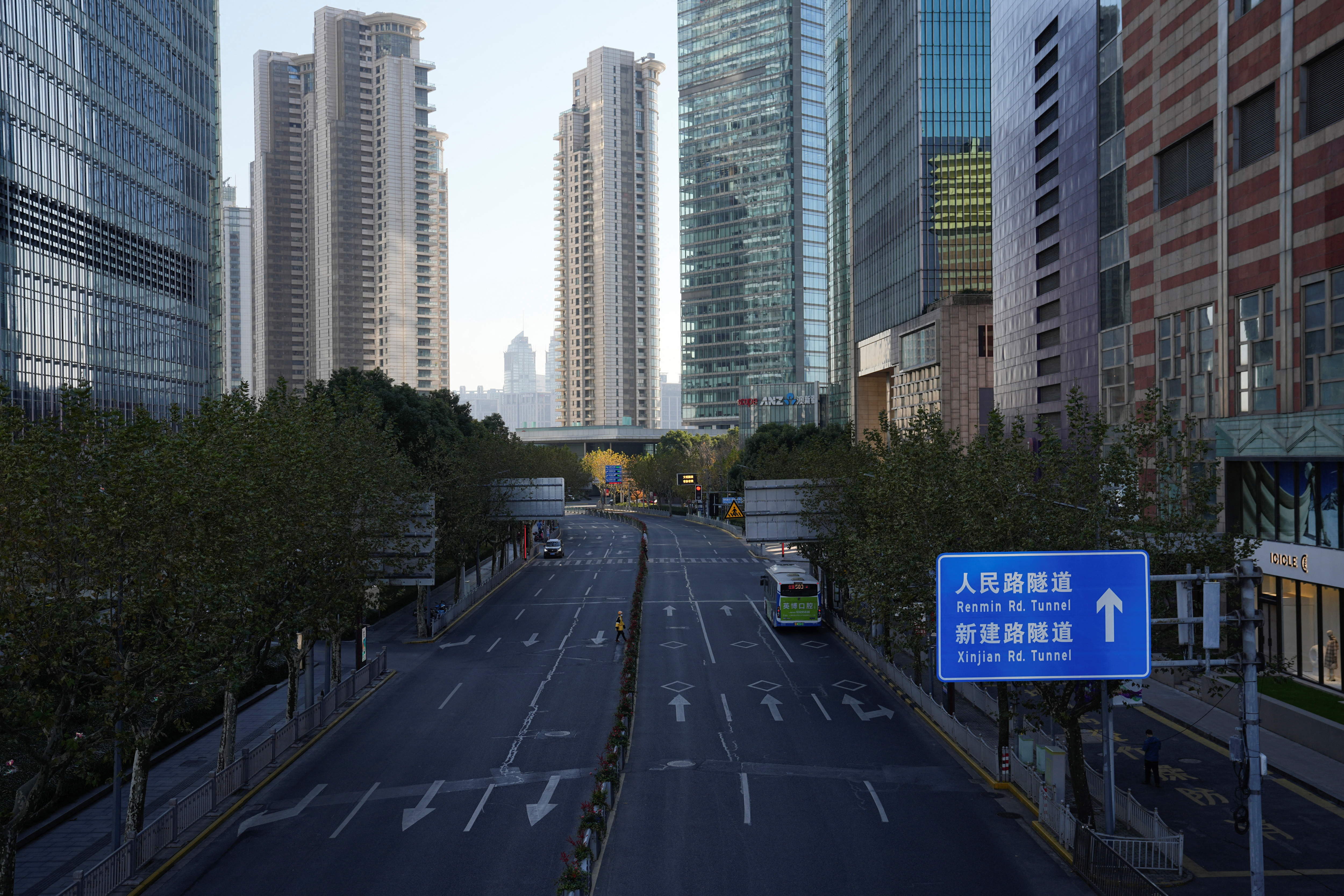
A delivery worker crosses an empty road in Lujiazui financial district, as coronavirus disease (COVID-19) outbreaks continue in Shanghai, China, December 19, 2022. REUTERS/Aly Song

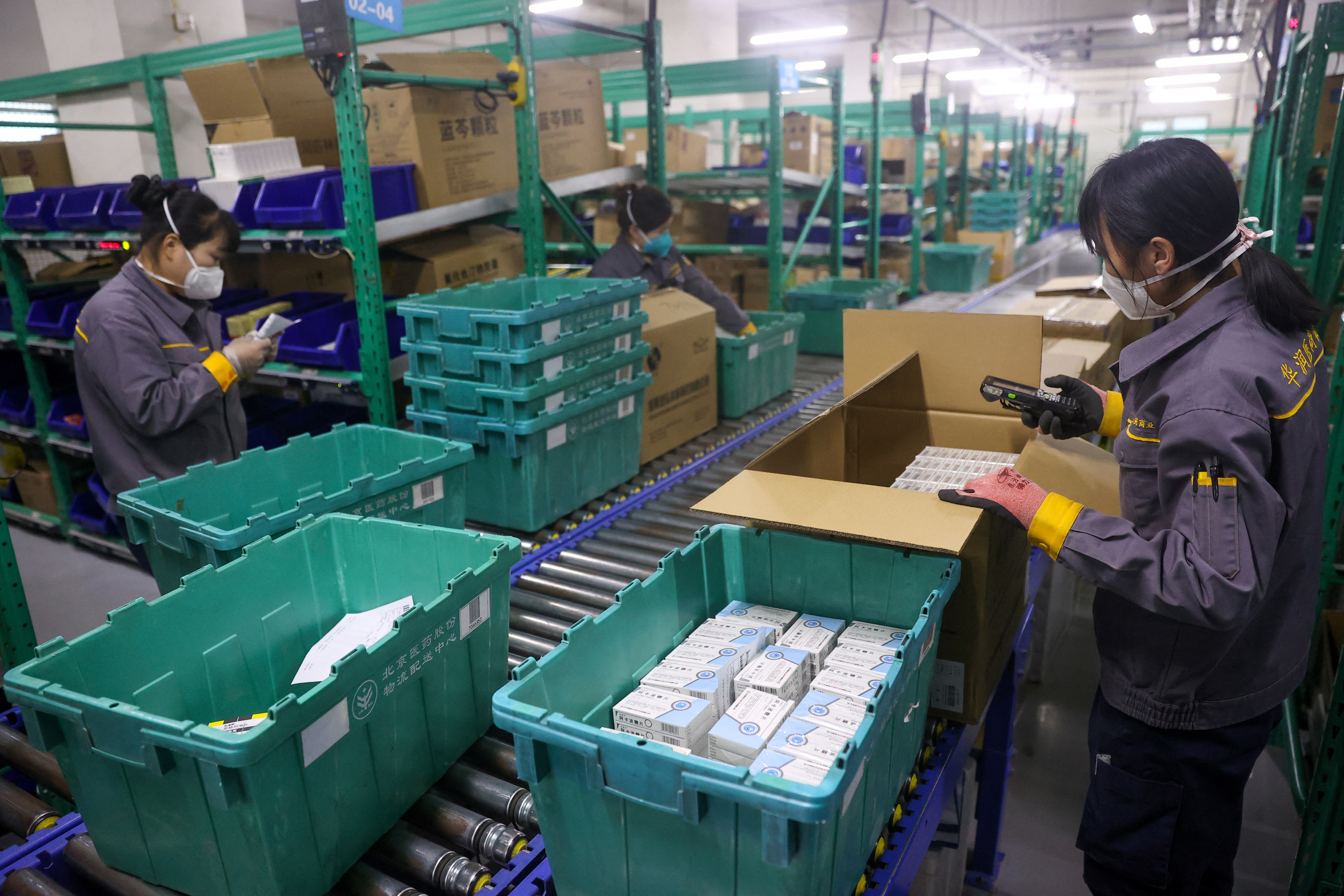
Workers sort medicines at a logistics centre of China Resources Pharmaceutical Group Limited, amid the coronavirus disease (COVID-19) outbreaks in Beijing, China December 19, 2022. cnsphoto via REUTERS
WP Radio
WP Radio
OFFLINE LIVE