Categories
Audio Sources - Full Text Articles

The SEC announces it has authorized charges against FTX founder Sam Bankman-Fried hours after his arrest in the Bahamas

sam bankman-friedSam Bankman-Fried testifies during a hearing before the House Financial Services Committee on December 8, 2021 in Washington, DC.

Alex Wong/Getty Images

  • The SEC has authorized charges against FTX founder Sam Bankman-Fried, the regulator said on Monday.
  • The announcement came shortly after the Bahamian authorities arrested Bankman-Fried.
  • Bankman-Fried resigned as FTX’s CEO on November 11, the same day the exchange filed for Chapter 11 bankruptcy.

The US Securities and Exchange Commission said it will file charges against FTX founder Sam Bankman-Fried on Tuesday relating to violations of securities law.

The SEC made the announcement on Monday, shortly after Bahamian authorities arrest Bankman-Fried, the US Attorney’s Office Southern District of New York confirmed.

“We commend our law enforcement partners for securing the arrest of Sam Bankman-Fried on federal criminal charges,” Gurbir Grewal, the enforcement director for the SEC, wrote in a statement posted to Twitter. 

—U.S. Securities and Exchange Commission (@SECGov) December 13, 2022

Bankman-Fried resigned as the CEO of FTX on November 11, the same day the exchange filed for Chapter 11 bankruptcy, as it failed to secure a rescue following an intense week-long liquidity squeeze. 

The SEC did not immediately respond to Insider’s request for comment sent outside regular business hours.

This is a developing story. Check back for updates.

Read the original article on Business Insider
Categories
Audio Sources - Full Text Articles

S.Korea says to coordinate with U.S., Japan on N.Korea sanctions

2022-12-13T04:20:34Z

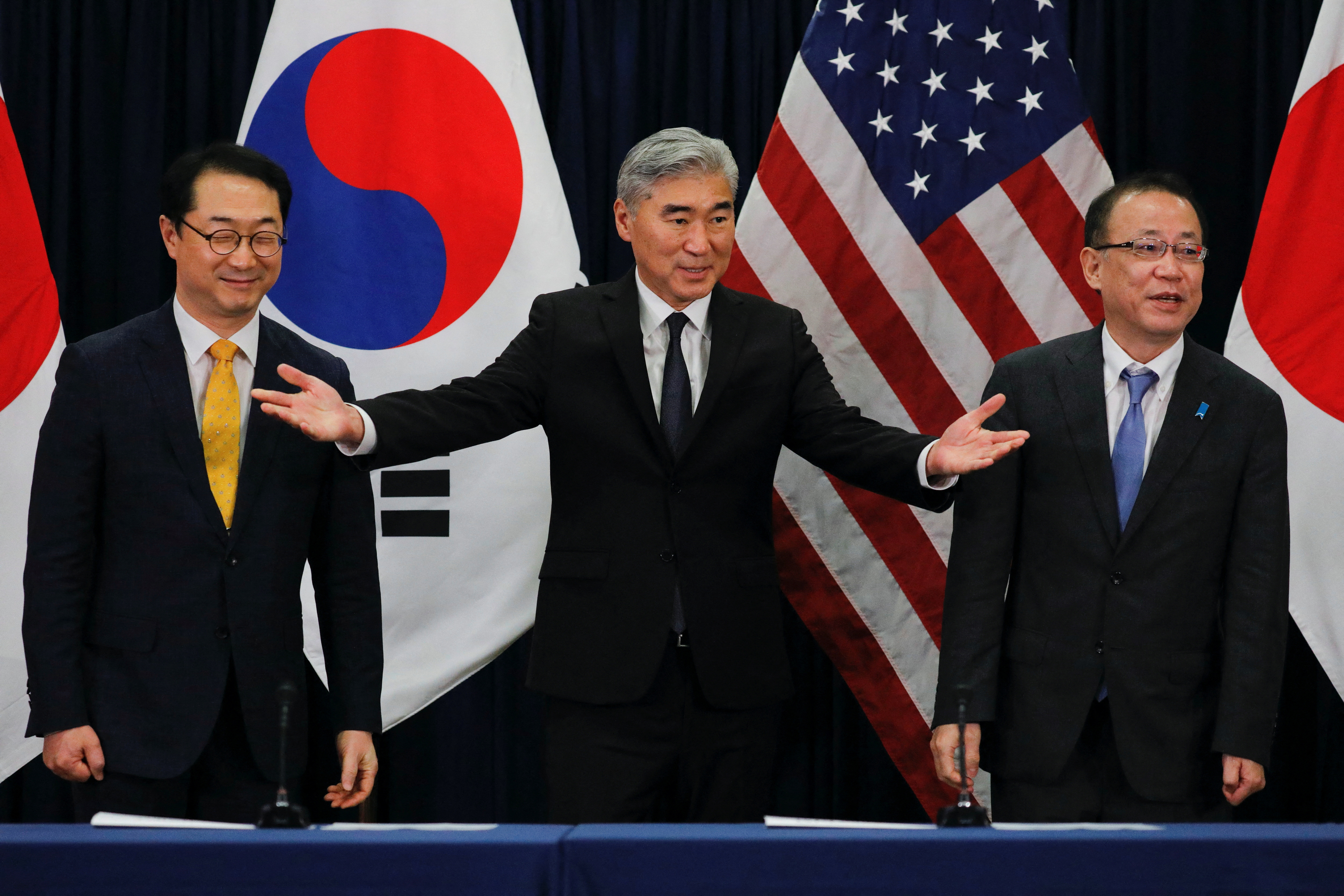
South Korea, Japan and the United States will coordinate sanctions and close gaps in the international sanctions regime against North Korea, Seoul’s envoy for North Korea said on Tuesday.

Kim Gunn, South Korea’s Special Representative for Korean Peninsula Peace and Security Affairs, said at a meeting with his U.S. and Japanese counterparts that North Korea was “becoming more aggressive and blatant in its nuclear threat”.

“North Korea’s further provocation will be met by a firm and united response from the international community,” he said.

The three countries this month imposed more sanctions on North Korean officials connected to the country’s weapons programmes after Pyongyang’s intercontinental ballistic missile test.

The sanctions follow a Nov. 18 ICBM test by North Korea, part of a spate of more than 60 missile launches this year, and amid concerns that it may be about to resume nuclear weapons testing, which has been suspended since 2017.

Decades of U.S.-led sanctions have failed to halt North Korea’s increasingly sophisticated missile and nuclear weapon programmes.

U.S. Special Representative for North Korea Sung Kim said on Tuesday at the meeting in Jakarta that the behaviour of Pyongyang presented one of the most serious security challenges to the region and beyond.

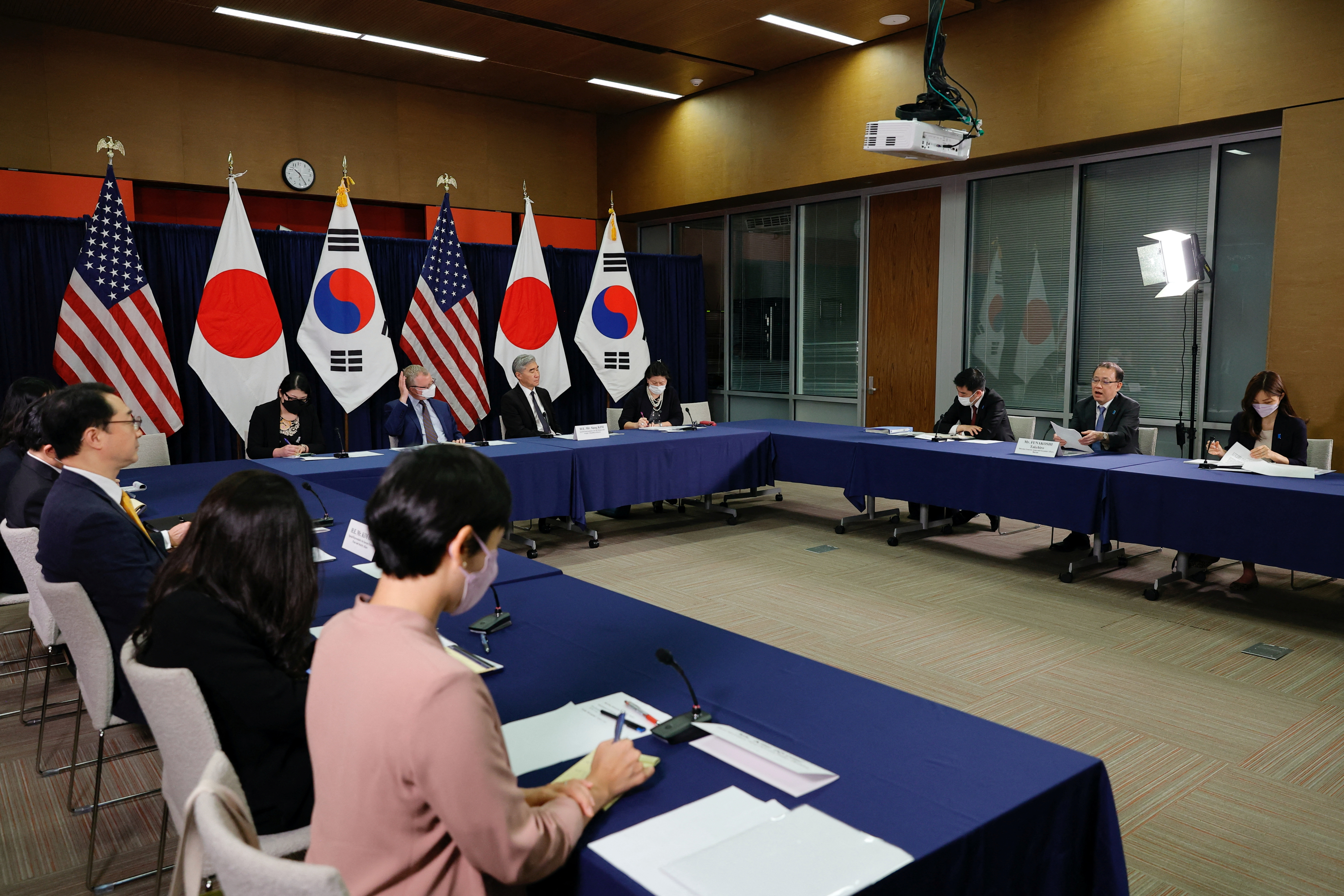
Meanwhile, Japanese Ministry of Foreign Affairs Director General for Asian and Oceanian Affairs Bureau Funakoshi Takehiro said the three allies had elevated security cooperation to an unprecedented level.

He said the trio would examine all options including counter strike capabilities and be more vigilant against North Korea’s cyber threat.

Japan recently designated three entities and an individual for new sanctions, including the Lazarus Group suspected of carrying out cyberattacks.

China and Russia have blocked recent efforts to impose more United Nations sanctions, saying they should instead be eased to jumpstart talks and avoid humanitarian harm. That has left Washington to focus on its efforts with South Korea and Japan, as well as European partners.

Related Galleries:

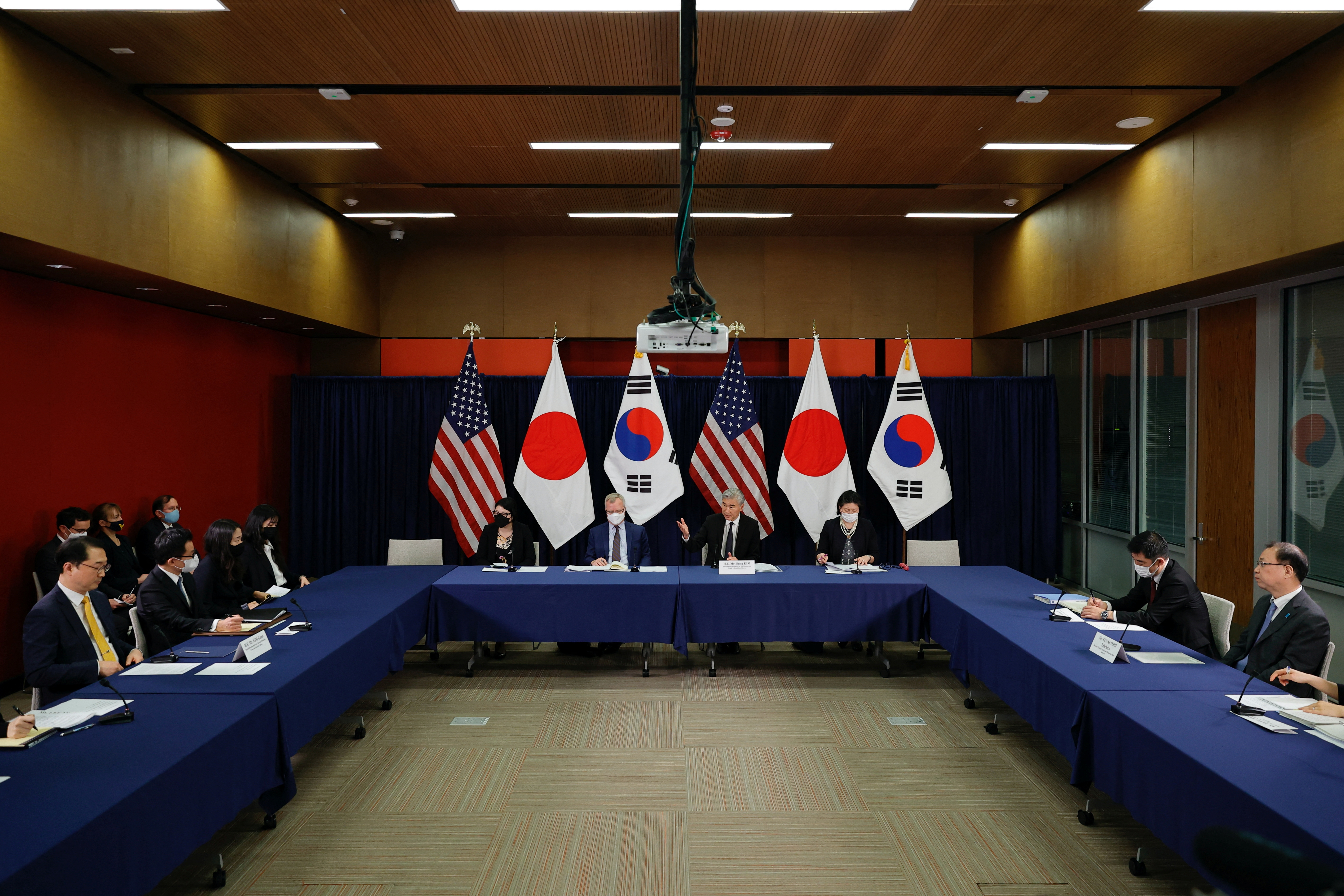
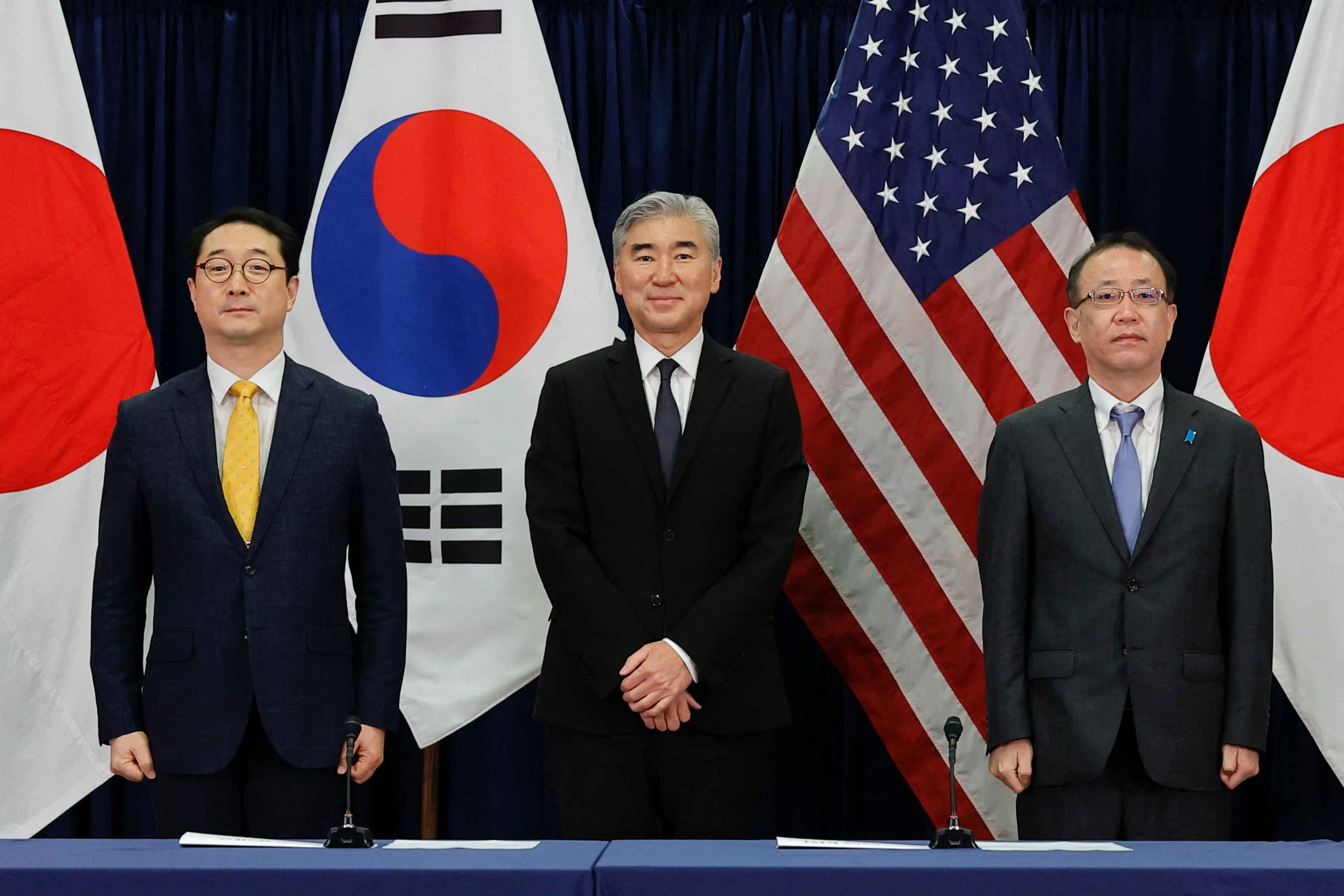
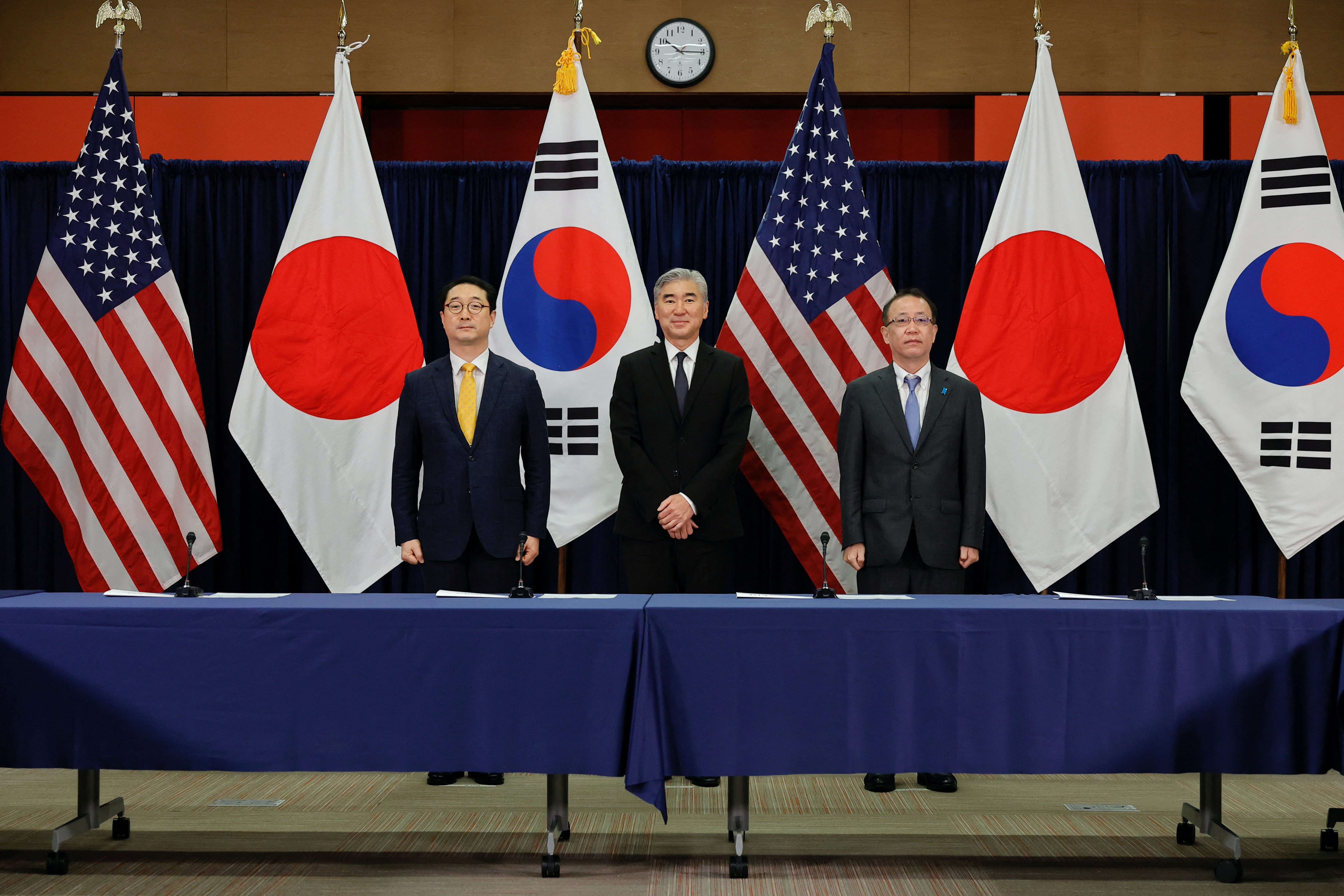
U.S. Special Representative on North Korea Sung Kim, South Korea’s special representative for Korean Peninsula peace and security affairs Kim Gunn and Japanese Ministry of Foreign Affairs Director General for Asian and Oceanian Affairs Bureau Funakoshi Takehiro meet at the U.S. Embassy in Jakarta, Indonesia, December 13, 2022. REUTERS/Willy Kurniawan

U.S. Special Representative on North Korea Sung Kim gestures during a meeting with South Korea’s special representative for Korean Peninsula peace and security affairs Kim Gunn and Japanese Ministry of Foreign Affairs Director General for Asian and Oceanian Affairs Bureau Funakoshi Takehiro, at the U.S. Embassy in Jakarta, Indonesia, December 13, 2022. REUTERS/Willy Kurniawan

Japanese Ministry of Foreign Affairs Director General for Asian and Oceanian Affairs Bureau Funakoshi Takehiro speaks during a meeting with U.S. Special Representative on North Korea Sung Kim and South Korea’s special representative for Korean Peninsula peace and security affairs Kim Gunn at the U.S. Embassy in Jakarta, Indonesia, December 13, 2022. REUTERS/Willy Kurniawan

U.S. Special Representative on North Korea Sung Kim, South Korea’s special representative for Korean Peninsula peace and security affairs Kim Gunn and Japanese Ministry of Foreign Affairs Director General for Asian and Oceanian Affairs Bureau Funakoshi Takehiro meet at the U.S. Embassy in Jakarta, Indonesia, December 13, 2022. REUTERS/Willy Kurniawan

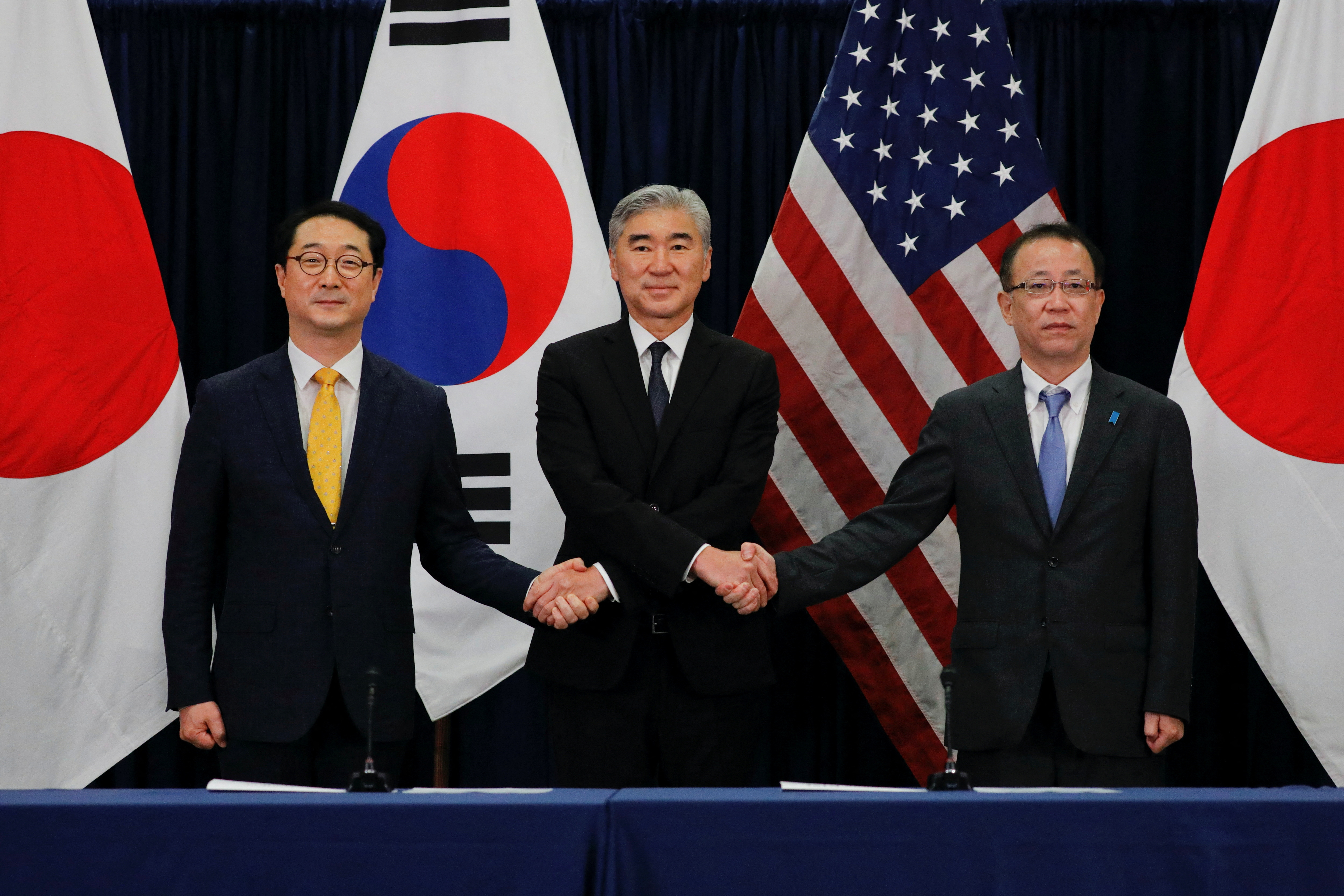
U.S. Special Representative on North Korea?Sung?Kim, South Korea’s special representative for Korean Peninsula peace and security affairs Kim?Gunn, and Japanese Ministry of Foreign Affairs Director General for Asian and Oceanian Affairs Bureau Funakoshi Takehiro, pose for photographs during their meeting, at the U.S. Embassy in Jakarta, Indonesia, December 13, 2022. REUTERS/Willy Kurniawan

U.S. Special Representative on North Korea?Sung?Kim, South Korea’s special representative for Korean Peninsula peace and security affairs Kim?Gunn, and Japanese Ministry of Foreign Affairs Director General for Asian and Oceanian Affairs Bureau Funakoshi Takehiro, pose for photographs during their meeting, at the U.S. Embassy in Jakarta, Indonesia, December 13, 2022. REUTERS/Willy Kurniawan

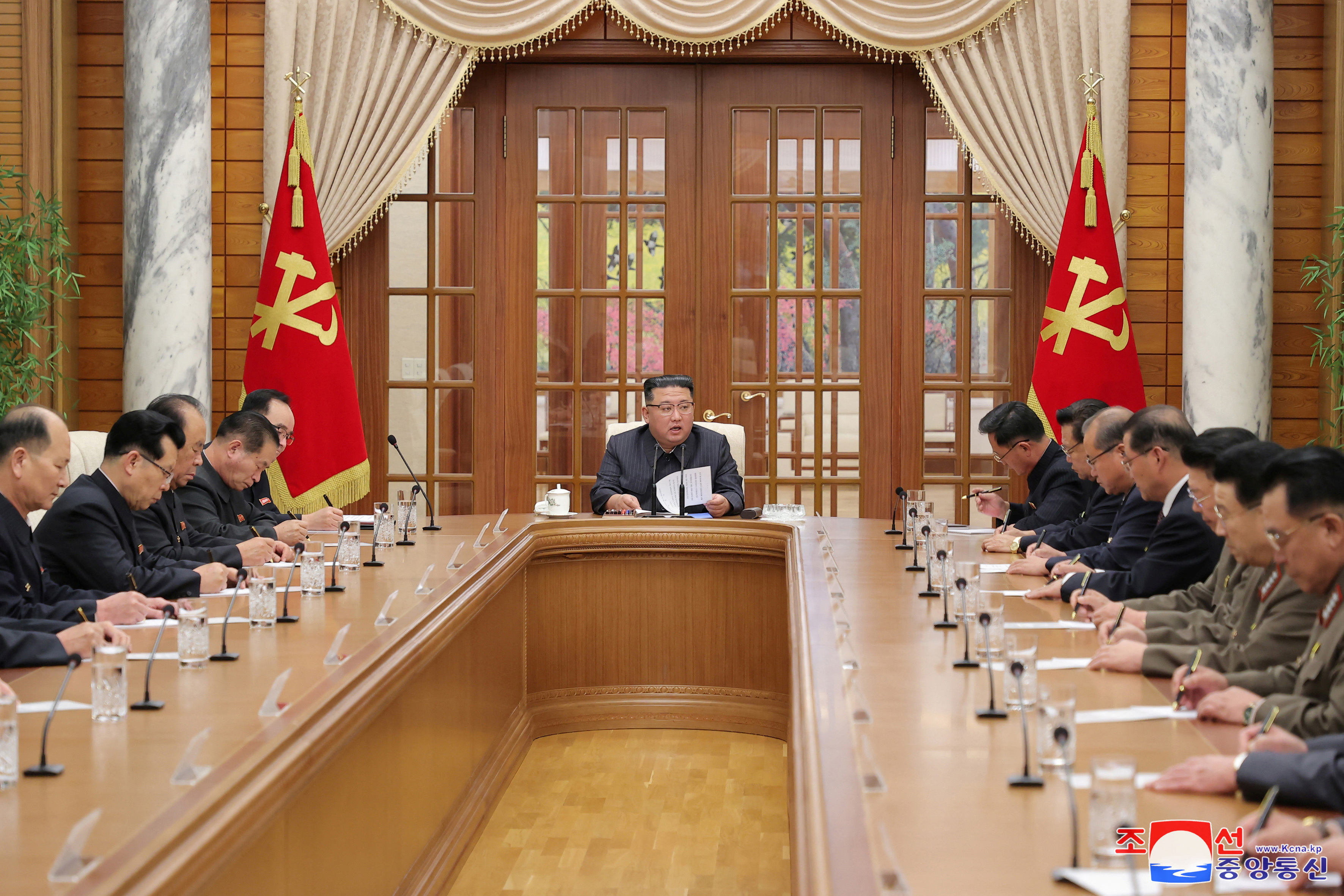
North Korean leader Kim Jong Un attends the 11th Meeting of the Political Bureau of the 8th Central Committee in this undated photo released on December 1, 2022. KCNA via REUTERS

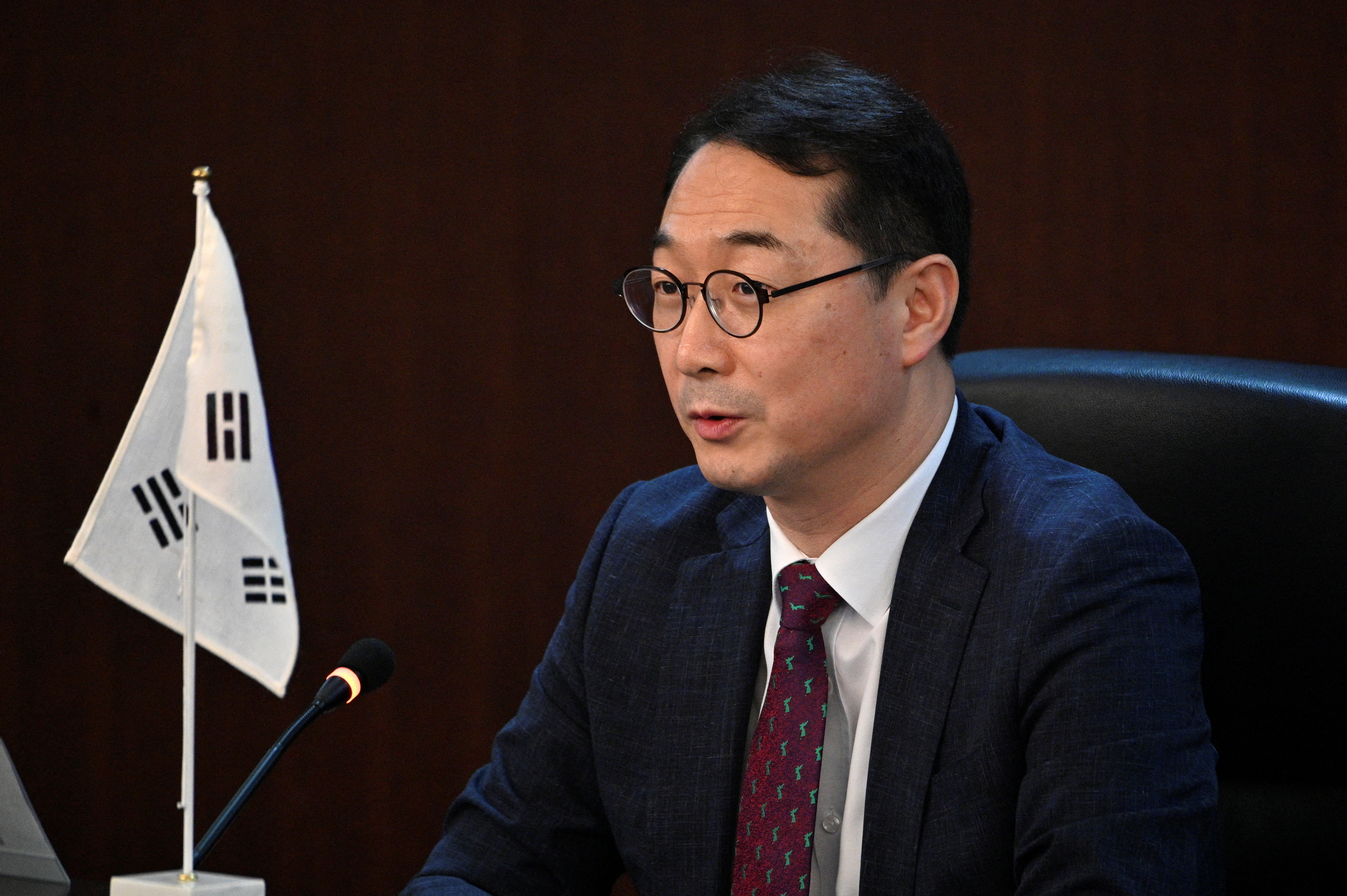
South Korea’s Special Representative for Korean Peninsula Peace and Security Affairs Kim Gunn speaks during the Japan-US-Soutn Korea Trilateral Meeting on North Korea at the Foreign Ministry in Tokyo on September 7, 2022. Kazuhiro Nogi/Pool via REUTERS


Categories
Audio Sources - Full Text Articles

EXPLAINER: Why fusion could be a clean-energy breakthrough

The Department of Energy planned an announcement Tuesday on a “major scientific breakthrough” at the Lawrence Livermore National Laboratory, one of several sites worldwide where researchers have been trying to develop the possibility of harnessing energy from nuclear fusion.

It’s a technology that has the potential to one day accelerate the planet’s shift away from fossil fuels, which are the major contributors to climate change. The technology has long struggled with daunting challenges.

Here’s a look at exactly what nuclear fusion is, and some of the difficulties in turning it into the cheap and carbon-free energy source that scientists believe it can be.

WHAT IS NUCLEAR FUSION?

Look up, and it’s happening right above you — nuclear fusion reactions power the sun and other stars.

The reaction happens when two light nuclei merge to form a single heavier nucleus. Because the total mass of that single nucleus is less than the mass of the two original nuclei, the leftover mass is energy that is released in the process, according to the Department of Energy.

In the case of the sun, its intense heat — millions of degrees Celsius — and the pressure exerted by its gravity allow atoms that would otherwise repel each other to fuse.

Scientists have long understood how nuclear fusion has worked and have been trying to duplicate the process on Earth as far back as the 1930s. Current efforts focus on fusing a pair of hydrogen isotopes — deuterium and tritium — according to the Department of Energy, which says that particular combination releases “much more energy than most fusion reactions” and requires less heat to do so.

HOW VALUABLE WOULD THIS BE?

Daniel Kammen, a professor of energy and society at the University of California at Berkeley, said nuclear fusion offers the possibility of “basically unlimited” fuel if the technology can be made commercially viable. The elements needed are available in seawater.

It’s also a process that doesn’t produce the radioactive waste of nuclear fission, Kammen said.

HOW ARE SCIENTISTS TRYING TO DO THIS?

One way scientists have tried to recreate nuclear fusion involves what’s called a tokamak — a doughnut-shaped vacuum chamber that uses powerful magnets to turn fuel into a superheated plasma (between 150 million and 300 million degrees Celsius) where fusion may occur.

The Livermore lab uses a different technique, with researchers firing a 192-beam laser at a small capsule filled with deuterium-tritium fuel. The lab reported that an August 2021 test produced 1.35 megajoules of fusion energy — about 70% of the energy fired at the target. The lab said several subsequent experiments showed declining results, but researchers believed they had identified ways to improve the quality of the fuel capsule and the lasers’ symmetry.

“The most critical feature of moving fusion from theory to commercial reality is getting more energy out than in,” Kammen said.

___

Associated Press climate and environmental coverage receives support from several private foundations. See more about AP’s climate initiative here. The AP is solely responsible for all content.

Categories
Audio Sources - Full Text Articles

FTX Founder Sam Bankman-Fried Was Arrested in the Bahamas. Here’s What to Know

Sam Bankman-Fried, the former FTX CEO who was hailed as crypto’s savior just a few months ago, was arrested on Monday night on criminal charges, according to a statement from the Royal Bahamas police force. Bankman Fried lives in the Bahamas but will be extradited to the U.S., where he will face federal charges from a sealed indictment that is set to be opened on Tuesday morning.

According to the New York Times, the criminal charges include wire fraud, wire fraud conspiracy, securities fraud, securities fraud conspiracy, and money laundering.

[time-brightcove not-tgx=”true”]

The arrest cements a stunning fall from grace for the 30-year-old, whose crypto exchange FTX was once considered one of the most reputable and secure parts of the crypto ecosystem. The exchange allowed customers to swap dollars for cryptocurrencies like Bitcoin and Ether, and it made a point to court newcomers to the space. Over the summer, when the crypto industry was rocked by a series of crashes, Bankman-Fried loaned out $750 million to damaged crypto firms through FTX and its sister hedge fund, Alameda Research.

Last year, Bankman-Fried was anointed by Forbes as “the world’s richest 29-year-old,” with a net worth over $22 billion. But his empire started to unravel after FTX was accused of being secretly insolvent—and of lending FTX customer funds to Alameda Research.

When FTX was unable to quell those accusations, a bank run ensued, in which customers rushed to pull their money out. On Nov. 11, FTX filed for bankruptcy, and Bankman-Fried resigned as CEO. According to bankruptcy filings, the company owes at least $3 billion to more than one million creditors. Legal and banking experts say that it’s unlikely FTX customers will ever see their money again.

“This company was run by inexperienced, unsophisticated and potentially personally compromised individuals,” said FTX’s lawyer James Bromley, in a bankruptcy hearing on Nov. 22. “It is one of the most abrupt and difficult company collapses in the history of corporate America.”

Read More: Crypto Is Crashing. This Time, Blame FTX and Sam Bankman-Fried

Despite FTX’s collapse, Bankman-Fried continued to give interviews to the press from his home in the Bahamas, arguing that he did not know how much financial trouble both of his companies were in. When asked by the New York Times on November 30 about the potential prison time he could face, he responded: “There will be a time and place to sort of think about myself and my own future. But I don’t think this is it.”

Bankman-Fried was set to testify at a hearing before the House Committee on Financial Services on Tuesday morning, with members of Congress expected to grill Bankman-Fried about the exchange’s collapse. Instead, he will appear in Bahamian court.

U.S. Attorney Damian Williams posted a statement on Twitter stating that Bankman-Fried was arrested “at the request of the U.S. government” and that more information would become available Tuesday morning.

Several other entities are also investigating Bankman-Fried’s potential wrongdoings. The Securities and Exchange Commission posted on Monday night that “authorized separate charges relating to his violations of securities laws [will] be filed publicly tomorrow in SDNY.” On Monday evening, Bahamian Prime Minister Davis said in a statement that the Bahamas would “continue its own regulatory criminal investigations into the collapse of FTX.”

Nicholas Biase, a spokesman for the U.S. attorney’s office, did not immediately respond to a request for comment. Neither did a representative for FTX.

FTX’s collapse is likely to have long-lasting implications for crypto, which has suffered massive declines in value and popularity since spiking in 2021. Bankman-Fried himself was the face of the industry in Washington: he has said he spent “hundreds, probably thousands of hours” seeking meetings with regulators and legislators. On Dec. 2, the Senate Agriculture Committee held a hearing about the collapse, at which some lawmakers called for greater regulation of the space that is often compared to the wild west.

“The risks of trading crypto have come into sharp focus in the past few weeks,” said Senator Debbie Stabenow, a Michigan Democrat. “The lack of clear consistent rules has allowed crypto to flourish despite the harmful conflicts of interest, an absence of responsible governance and risk management, and a failure to safeguard customer assets.”

Categories
Audio Sources - Full Text Articles

Supporters of Brazil“s defeated Bolsonaro attack police headquarters

2022-12-13T03:32:33Z

Supporters of far-right Brazilian President Jair Bolsonaro on Monday (December 12) attempted to invade the federal police headquarters in Brasilia, the capital, protesting the arrest of an indigenous leader in the first major flash of post-election violence.

Supporters of far-right Brazilian President Jair Bolsonaro on Monday attempted to invade the federal police headquarters in the capital Brasilia, in a flash of post-election violence on the day the president’s electoral defeat was certified.

Reuters witnesses saw Bolsonaro supporters, many in their trademark yellow national soccer jerseys or draped in Brazilian flags, confronting security forces at police headquarters. Police fired stun grenades and tear gas to disperse the crowd. Nearby buses and cars were set on fire.

Federal police said “disturbances” near the headquarters were being handled with support from capital security forces.

The violence unfolded after a Bolsonaro supporter was detained for allegedly organizing violent “anti-democratic acts,” according to the judge who ordered his arrest.

Earlier on Monday, the federal electoral court (TSE) certified the Oct. 30 election victory of Bolsonaro’s leftist rival, Luiz Inacio Lula da Silva, as president. After months of baseless suggestions that Brazil’s voting system is vulnerable to fraud, Bolsonaro has neither conceded defeat to Lula nor has he formally blocked the handover of power.

But some of the president’s most diehard supporters have blocked highways in protest and camped out in front of army barracks, calling for a military coup to bar Lula from office.

Hundreds of Bolsonaro supporters gathered outside the presidential residence on Monday afternoon with banners calling for “military intervention.” The president joined them for a public prayer but did not address the crowd.

“There’s not going to be an inauguration,” said Jose Trindade, 58, one of the Bolsonaro supporters in the crowd. “Bolsonaro was re-elected, but they stole it. So only the army can put things in order.”

The conspiracy theories and subsequent violence have rekindled memories of the January 2021 invasion of the U.S. Capitol by supporters of former U.S. President Donald Trump. It also raises security concerns about Jan. 1, when Lula takes office in a public ceremony in Brasilia.

Senator Randolfe Rodrigues, a key Lula aide, said there were concerns about the physical safety of Lula and Vice President-elect Geraldo Alckmin, as protesters had surrounded the hotel where he is staying in Brasilia. Lula’s team denied reports that Lula would be removed from the hotel by helicopter.

Brasilia’s public security officials said they had secured the area around Lula’s hotel, and urged motorists to avoid the center of the city where many roads had been closed.

The violence in Brasilia came after Supreme Court Justice Alexandre de Moraes, who has led probes into Bolsonaro and his allies, on Monday ordered the temporary arrest of José Acácio Serere Xavante for allegedly carrying out anti-democratic acts.

Xavante, an indigenous leader, is among the Bolsonaro supporters who have protested in defiance of the Oct. 30 election result.

“I cannot accept criminals reigning in Brasil,” Xavante tweeted last month. “Lula cannot be certified.”

Last week, Bolsonaro broke weeks of post-election silence to say that his situation “hurts my soul.”

“Who decides where I go are you. Who decides which way the armed forces go are you,” Bolsonaro told his supporters at the gates of the presidential residence on Friday.

In a statement, the Supreme Court said Moraes “decreed the temporary arrest, for 10 days, of the indigenous José Acácio Serere Xavante, due to evidence of the commission of crimes of threat, persecution and violent abolition of the Democratic State of Law.”

It said Xavante had led protests across Brasilia and had used “his position as chief of the Xavante people to enlist indigenous and non-indigenous people to commit crimes,” threatening Lula and Supreme Court justices.

Xavante had “expressly summoned armed people to prevent the certification of elected” politicians, the statement added.

Related Galleries:

A woman walks near a bus on fire as supporters of Brazil’s President Jair Bolsonaro protest after supreme court justice Alexandre de Moraes ordered a temporary arrest warrant of indigenous leader Jose Acacio Serere Xavante for alleged anti-democratic acts, in Brasilia, Brazil, December 12, 2022. REUTERS/Ueslei Marcelino

A police officer fires a shotgun as supporters of Brazil’s President Jair Bolsonaro protest after supreme court justice Alexandre de Moraes ordered a temporary arrest warrant of indigenous leader Jose Acacio Serere Xavante for alleged anti-democratic acts, in Brasilia, Brazil, December 12, 2022. REUTERS/Ueslei Marcelino

Members of the military stand guard as supporters of Brazil’s President Jair Bolsonaro protest after supreme court justice Alexandre de Moraes ordered a temporary arrest warrant of indigenous leader Jose Acacio Serere Xavante for alleged anti-democratic acts, in Brasilia, Brazil, December 12, 2022. REUTERS/Adriano Machado

Security forces take position as supporters of Brazil’s President Jair Bolsonaro protest after supreme court justice Alexandre de Moraes ordered a temporary arrest warrant of indigenous leader Jose Acacio Serere Xavante for alleged anti-democratic acts, in Brasilia, Brazil, December 12, 2022. REUTERS/Ueslei Marcelino

A police officer fires a shotgun as supporters of Brazilian President Jair Bolsonaro protest in Brasilia, Brazil, December 12, 2022. REUTERS/Ueslei Marcelino

A person stands next to a burning vehicle as supporters of Brazil’s President Jair Bolsonaro protest after supreme court justice Alexandre de Moraes ordered a temporary arrest warrant of indigenous leader Jose Acacio Serere Xavante for alleged anti-democratic acts, in Brasilia, Brazil, December 12, 2022. REUTERS/Adriano Machado

Firefighters work to put down a fire as supporters of Brazil’s President Jair Bolsonaro protest after supreme court justice Alexandre de Moraes ordered a temporary arrest warrant of indigenous leader Jose Acacio Serere Xavante for alleged anti-democratic acts, in Brasilia, Brazil, December 12, 2022. REUTERS/Adriano Machado

A bus is seen on fire as supporters of Brazil’s President Jair Bolsonaro protest after supreme court justice Alexandre de Moraes ordered a temporary arrest warrant of indigenous leader Jose Acacio Serere Xavante for alleged anti-democratic acts, in Brasilia, Brazil, December 12, 2022. REUTERS/Adriano Machado

Supporters of Brazil’s President Jair Bolsonaro take part in a protest against Brazilian President-elect Luiz Inacio Lula da Silva at the Alvorada Palace, in Brasilia, Brazil, December 12, 2022. REUTERS/Adriano Machado

Brazil’s President Jair Bolsonaro looks on, as he meets supporters at the Alvorada Palace, in Brasilia, Brazil, December 12, 2022. REUTERS/Adriano Machado
Categories
Audio Sources - Full Text Articles

Peru“s new leader offers early election as seven die in protests

2022-12-13T03:12:36Z

Following a weekend of deadly clashes between police and protesters, Peru’s new president on Monday said she would ask Congress to hold elections ahead of schedule – but maybe not soon enough to calm the unrest as the nation moves from crisis to crisis. This report produced by Freddie Joyner.

Peru’s new president offered lawmakers a plan to bring elections forward by two years on Monday, after the ouster of her predecessor last week sparked protests that have left at least seven dead.

President Dina Boluarte, previously the vice president, was sworn in last week after former President Pedro Castillo was removed by Congress and arrested for trying to dissolve the legislature while preventing an impeachment vote against him.

But Castillo supporters argue that Boluarte was not elected by the people. Demonstrators have taken to the streets to demand that Peru hold new elections, with some also calling for Congress to be shuttered and Castillo released.

The head of the Peru ombudsman’s office, Eliana Revollar, said seven people had died during two days of protests, all from gunshot wounds.

Authorities in Apurimac had earlier Monday reported the death of a 16-year-old and two 18-year-olds, while another death was reported in Arequipa and two teenagers were killed on Sunday.

“These are really are needless deaths,” Revollar told local broadcaster Epicentro, adding that at least 32 civilians and 24 police had been injured.

Citing “difficult times,” Peru’s sixth president in the past five years said she was proposing to move up the next general election to April 2024. It was previously scheduled for 2026.

In a handwritten letter posted to his Twitter page on Monday, Castillo called Boluarte’s early election pledge a “dirty game” and derided her as a “usurper,” calling for an immediate assembly to rewrite the nation’s constitution.

Castillo also said he would not resign as president despite his lawful removal from power. He is being held in a penitentiary center in Lima while he is being investigated by prosecutors for the alleged crimes of rebellion and conspiracy.

The leftist governments of Argentina, Bolivia, Mexico and Colombia issued a joint statement on Monday calling for the protection of Castillo’s human and judicial rights, adding that the “agents” of Castillo’s removal should prioritize “the will of the citizens that was declared at the polls.”

Castillo was elected by a narrow margin last year with Boluarte as his running mate.

Some civil and indigenous groups in the world’s No. 2 copper producer also announced a strike starting on Monday in Apurimac, home to significant mining projects including Las Bambas, a major copper mine owned by China’s MMG Ltd (1208.HK).

A source at Las Bambas, which has battled blockades for years, told Reuters it has received more blockade threats amid a “radicalization” of protests against the firm by locals.

A former teacher and peasant farmer, Castillo attracted strong support last year from rural and mining areas. But during the first year of his administration, corruption allegations against him mounted while he presided over unprecedented turnover among senior ministers.

Protests involving hundreds or thousands of people have been held since last week in cities in Peru’s interior and capital Lima, at times turning violent.

The U.N. Human Rights Office warned of further escalation in a statement on Monday, calling on authorities to exercise restraint and fully investigate the deaths of protesters.

In Apurimac, authorities ordered the airport’s closure after an attack by protesters, and parts of Peru’s main coastal highway was blocked on Monday in Ica and Arequipa.

LATAM Airlines (LTM.SN) said it had canceled flights to and from the city of Arequipa after reports protesters invaded a runway.

“Dina Boluarte doesn’t represent us. She’s a traitor. She’s incompetent,” said Juan Calle at a march in Lima, calling on the new president to be jailed and Castillo released.

Boluarte, 60, declared a state of emergency in areas of “high conflict,” allowing soldiers to take more control.

“I have given the instructions so that control of internal order can be recovered peacefully, without affecting the people’s fundamental rights,” said Boluarte, who lamented the deaths.

Related Galleries:
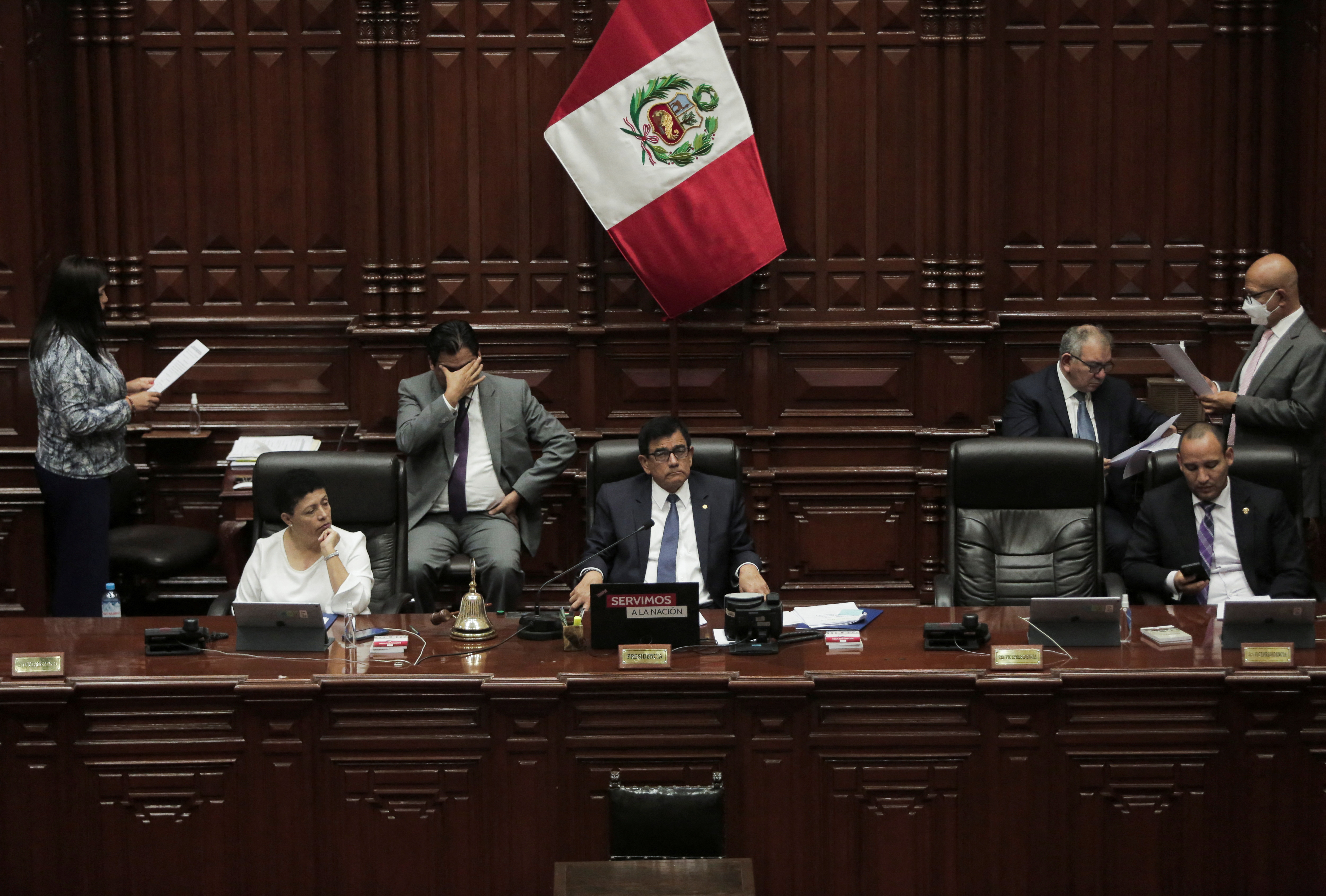
Peruvian lawmakers attend a session at Congress as new President Dina Boluarte offered a plan to bring elections forward, after the ouster of her predecessor Pedro Castillo sparked protests that have left several dead, in Lima, Peru December 12, 2022. REUTERS/Gerardo Marin
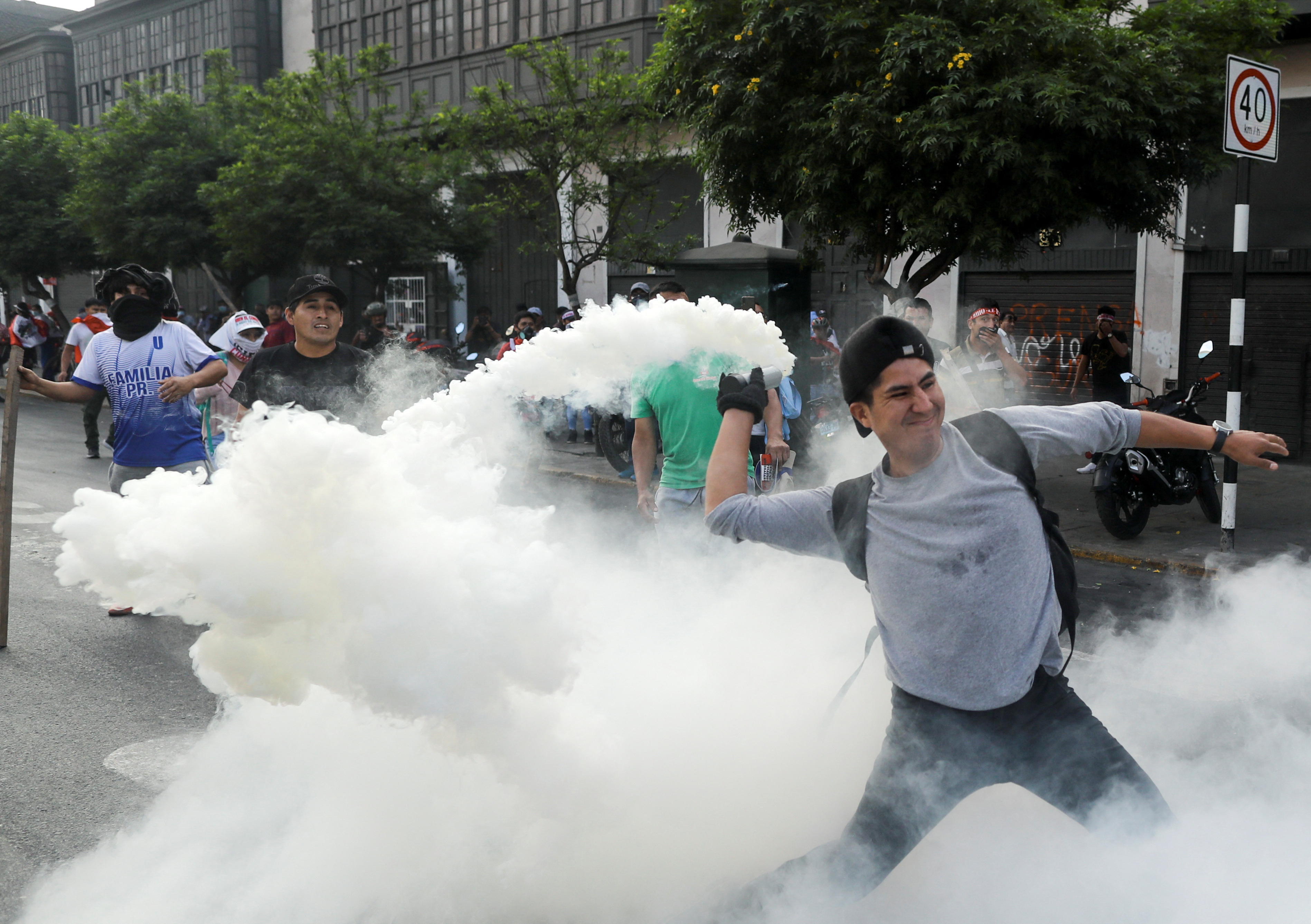
A demonstrator prepares to throw back a tear gas canister during a protest demanding the dissolution of Congress and to hold democratic elections rather than recognize Dina Boluarte as Peru’s President, after the ousting of Peruvian President Pedro Castillo, in Lima, Peru December 12, 2022. REUTERS/Sebastian Castaneda

Police clash with protesters who demand the dissolution of Congress as well as democratic elections, rejecting Dina Boluarte as Peru’s president after former leader Pedro Castillo was ousted, during a demonstration on the runway of the Arequipa airport, in Arequipa, Peru December 12, 2022. REUTERS/Oswald Charca

Police clash with protesters who demand the dissolution of Congress as well as democratic elections, rejecting Dina Boluarte as Peru’s president after former leader Pedro Castillo was ousted, during a demonstration on the runway of the Arequipa airport, in Arequipa, Peru December 12, 2022. REUTERS/Oswald Charca

Demonstrators gather at the Cuzco Cathedral during a protest demanding the dissolution of Congress and to hold democratic elections rather than recognize Dina Boluarte as Peru’s President, after the ouster of Peruvian leader Pedro Castillo, in Cuzco, Peru December 12, 2022. REUTERS/Alejandra Orosco

Peru’s Prime Minister Pedro Angulo attends a session with lawmakers at Congress as new President Dina Boluarte offered a plan to bring elections forward, after the ouster of her predecessor Pedro Castillo sparked protests that have left several dead, in Lima, Peru December 12, 2022. REUTERS/Gerardo Marin

Police officers clash with protesters during a demonstration near the Arequipa airport, demanding the dissolution of Congress as well as democratic elections, rejecting Dina Boluarte as Peru’s president after former leader Pedro Castillo was ousted, in Arequipa, Peru December 12, 2022. REUTERS/Oswald Charca
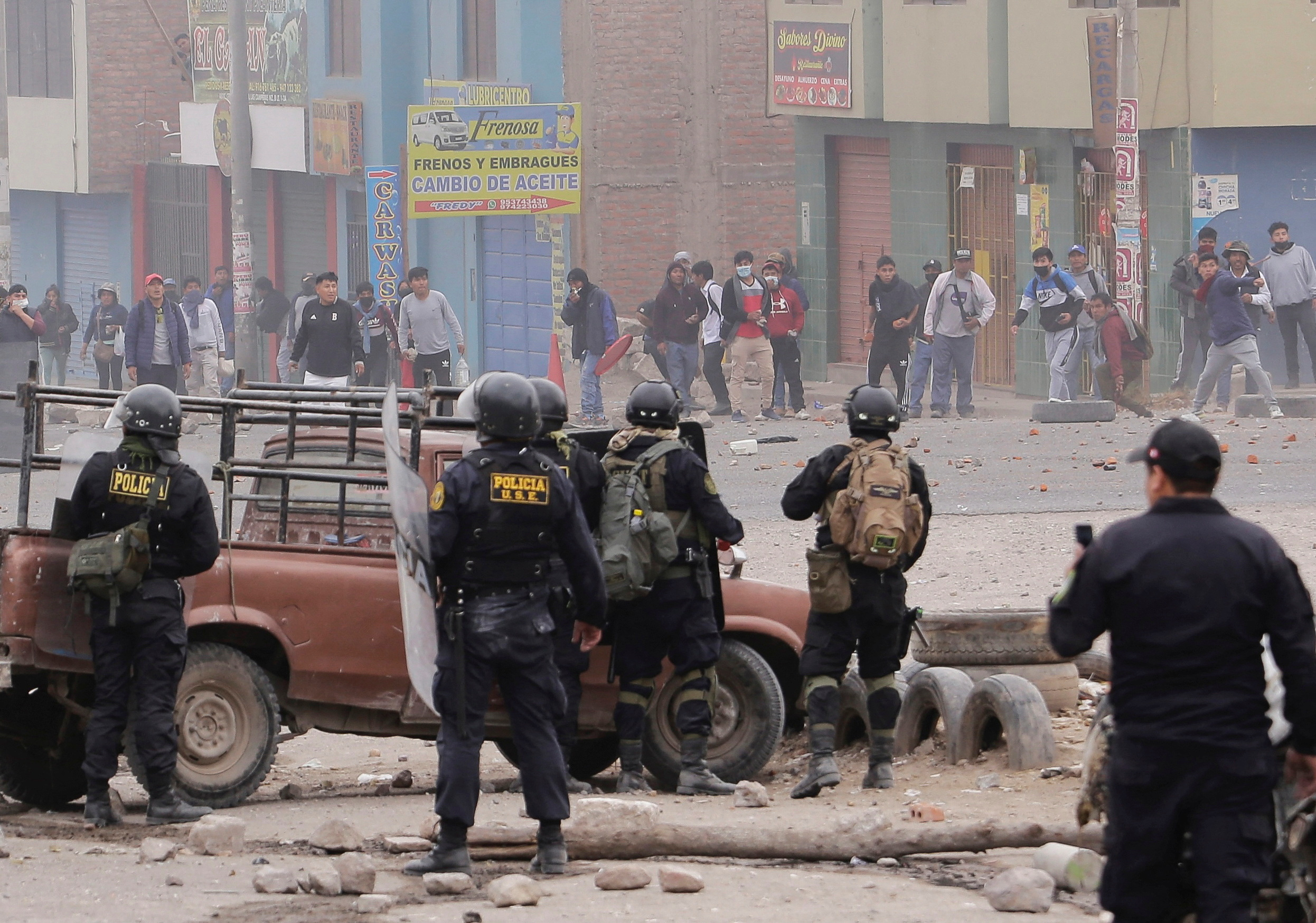
Police officers clash with protesters who demand the dissolution of Congress as well as democratic elections, rejecting Dina Boluarte as Peru’s president after former leader Pedro Castillo was ousted, during a demonstration in Arequipa, Peru December 12, 2022. REUTERS/Oswald Charca

Police officers clash with protesters during a demonstration near the Arequipa airport, demanding the dissolution of Congress as well as democratic elections, rejecting Dina Boluarte as Peru’s president after former leader Pedro Castillo was ousted, in Arequipa, Peru December 12, 2022. REUTERS/Oswald Charca

Police officers clash with protesters during a demonstration near the Arequipa airport, demanding the dissolution of Congress as well as democratic elections, rejecting Dina Boluarte as Peru’s president after former leader Pedro Castillo was ousted, in Arequipa, Peru December 12, 2022. REUTERS/Oswald Charca

Categories
Audio Sources - Full Text Articles

Apple“s Japan investment crosses $100 bln, CEO Cook visits chip epicentre

2022-12-13T03:19:10Z

The Apple Inc. logo is seen hanging at the entrance to the Apple store on 5th Avenue in Manhattan, New York, U.S., October 16, 2019. REUTERS/Mike Segar

Apple Inc (AAPL.O) said on Tuesday it had invested more than $100 billion in its Japanese supply network over the last five years, as its Chief Executive Officer Tim Cook visited the epicentre of the country’s semiconductor industry.

Cook said in a Monday tweet he visited Kumamoto prefecture in southwestern Japan, home to factories of many semiconductor and leading technology firms, including one under construction by Taiwan Semiconductor Manufacturing Co (TSMC) (2330.TW).

In a statement, Apple said it had boosted its spending on suppliers in Japan by more than 30% since 2019, with a network spanning nearly 1,000 companies, from multi-nationals to family-run businesses.

It called Sony Group Corp (6758.T) one of its biggest suppliers in Japan for providing camera sensors for iPhone products, while also mentioning medium- and small enterprises including textile firm Inoue Ribbon Industry Co and mold manufacturer Shincron Co as partners.

Apple said 29 Japanese suppliers have committed to converting to renewable energy for Apple-related businesses by 2030, including Sony, Murata Manufacturing Co (6981.T), Keiwa Inc (4251.T), Fujikura (5803.T) and Sumitomo Electric Industries (5802.T).

($1 = 137.6700 yen)


Categories
Audio Sources - Full Text Articles

China axes travel tracking app in latest easing of COVID curbs

2022-12-13T03:05:15Z

People in China celebrated the withdrawal on Tuesday of a state-mandated app used to track whether they had travelled to COVID-stricken areas, in the latest loosening of some of the world’s toughest anti-virus rules.

China last week started axing key parts of its stringent ‘zero-COVID’ regime in the wake of widespread protests against the curbs last month which had marked the biggest show of public discontent in mainland China since President Xi Jinping came to power in 2012.

This has included dropping mandatory testing prior to many public activities, reining in quarantine, and now shutting down an app called ‘itinerary code’ which critics had said could be used for mass surveillance and social control of the population.

As authorities deactivated the app at midnight on Monday, China’s four telecoms firms said they would delete users’ data associated with the app. Netizens took to social media platform Weibo to cheer its demise.

“Goodbye itinerary code, I hope to never see you again,” wrote one user. “The hand that stretched out to exert power during the epidemic should now be pulled back,” wrote another.

Itinerary codes were mainly used to track domestic travel within China, while authorities also use so-called health codes that residents must scan to enter public venues in order to check whether they may have been in contact with the virus.

While authorities have not announced their demise, several cities including Shanghai have said that residents are no longer required to show these codes when entering places such as shops and restaurants.

The removal of the restrictions come ahead of Chinese New Year holidays next month, when large numbers of people are expected to travel across China to visit family for the first time in years.

Beijing’s envoy to the United States on Monday said he believes China’s COVID-19 measures will be further relaxed in the near future and international travel to the country will also become easier.

China has all but shut its borders to international travel since the pandemic first erupted in the central Chinese city of Wuhan in later 2019. International flights are still at a fraction of pre-pandemic levels and arrivals face eight days in quarantine.

Border closures and repeated lockdowns in major cities to try and eradicate the virus have battered the world’s second-largest economy.

While the lifting of controls is seen as brightening the prospects for global growth longer term, analysts say Chinese business will struggle in the weeks ahead, as a wave of infections create staff shortages and make consumers wary.

The spread of the disease, evidenced by long queues outside fever clinics and testing centres in recent days, will also likely heap pressure on China’s fragile healthcare system, which experts say could be quickly overwhelmed.

In China’s capital Beijing, empty seats on commuter trains and deserted downtown restaurants have underlined the hesitancy some people harbour about embracing new found freedoms.

“I can understand,” Gao Lin, a 33-year-old financier, told Reuters on the streets on the capital. “Maybe other people are afraid or are worried about kids and grandparents health conditions. It’s a personal choice.”

Related Galleries:

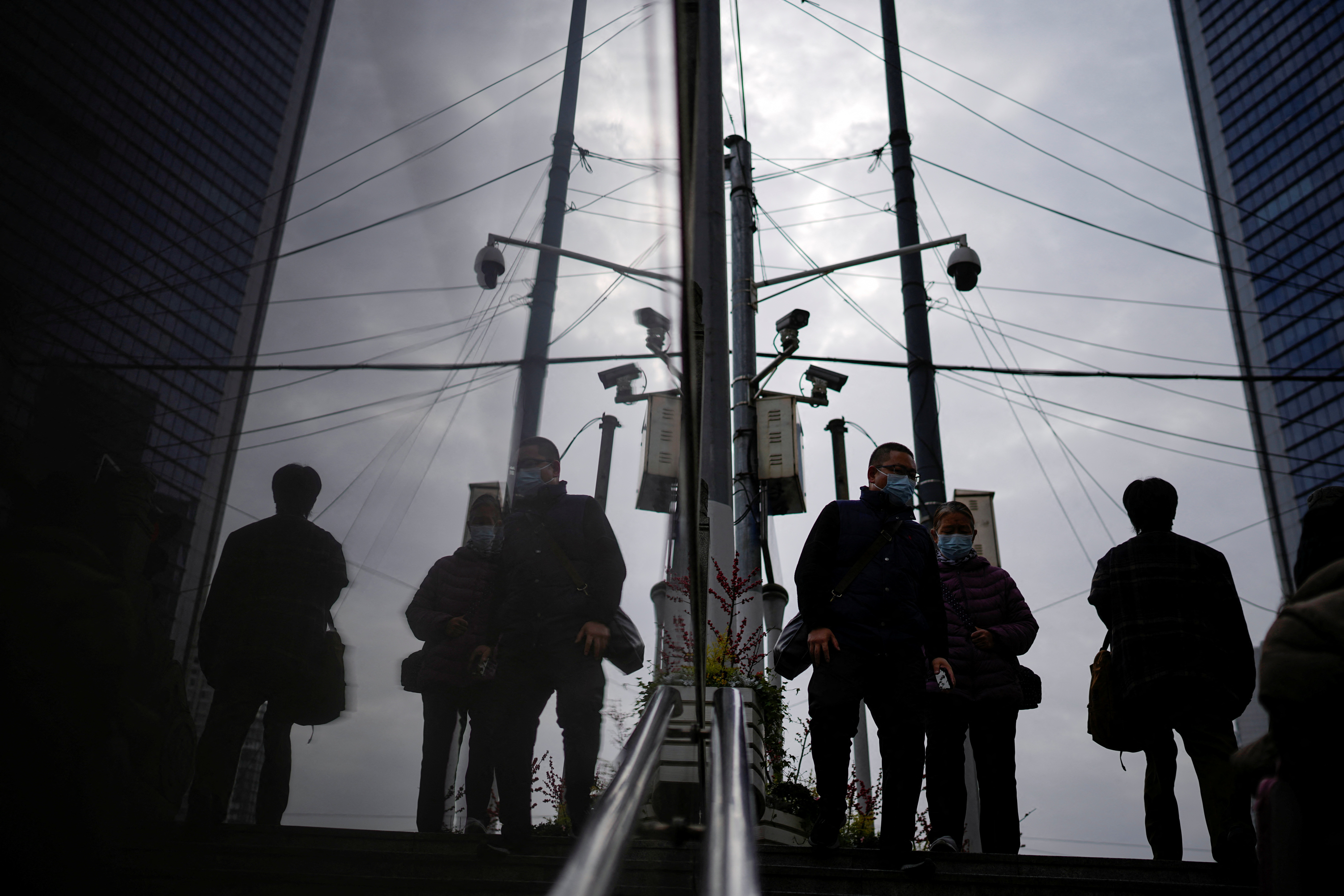
People wearing face masks walk under surveillance cameras on a street, as coronavirus disease (COVID-19) outbreaks continue in Shanghai, China, December 12, 2022. REUTERS/Aly Song

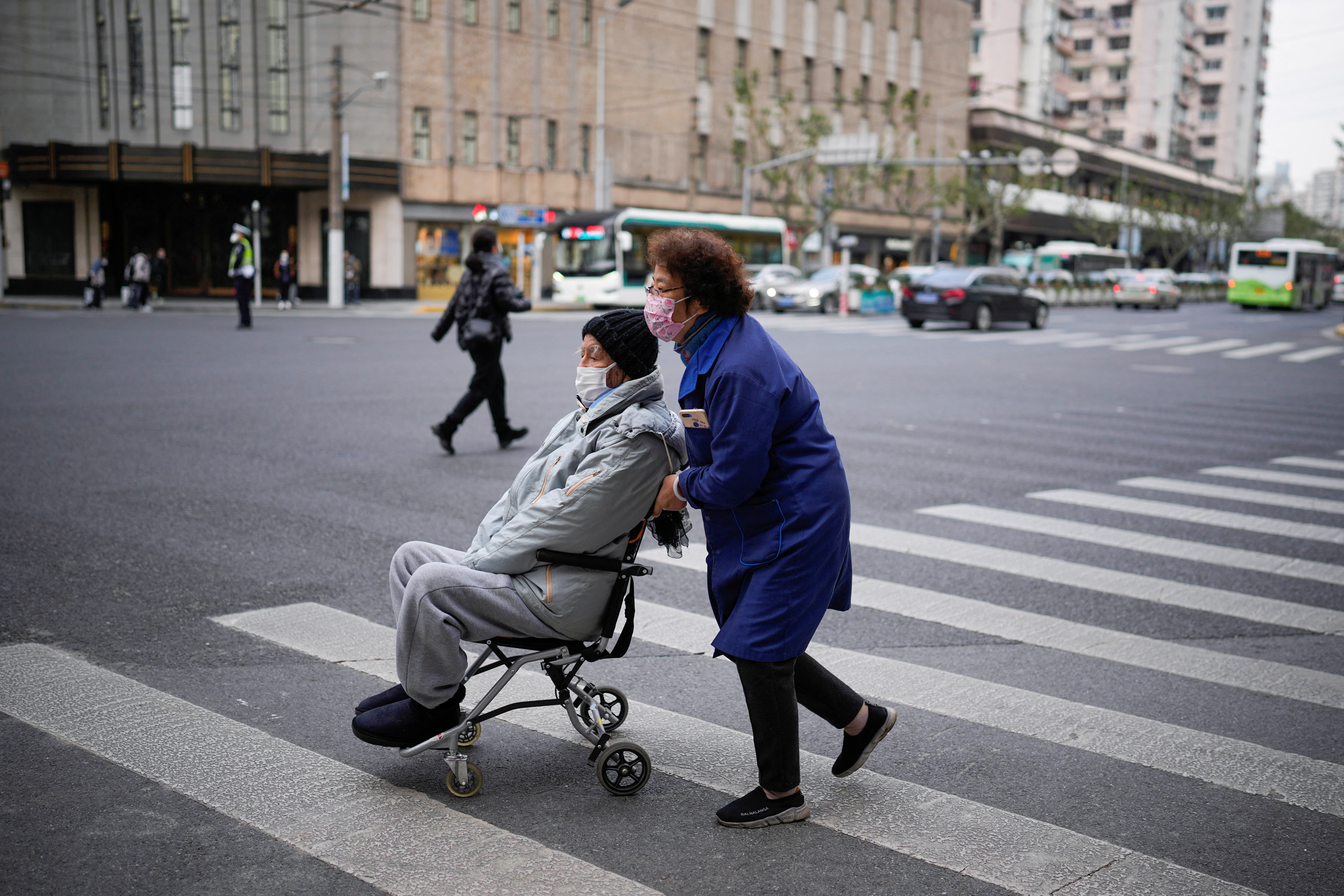
A woman pushes an old man in wheelchair to cross a street, as coronavirus disease (COVID-19) outbreaks continue in Shanghai, China, December 12, 2022. REUTERS/Aly Song
Categories
Audio Sources - Full Text Articles

Twitter appears to disband council responsible for recommending safety measures amid uptick in hate speech on the site

An image of new Twitter owner Elon Musk is seen surrounded by Twitter logos in this photo illustration.Elon Musk acquired Twitter on October 27.

Getty Images

  • Twitter seemed to disband its Trust and Safety Council in an abrupt Monday email.
  • The group was made up of several people and organizations that advocated for safety on the site.
  • The move comes amid a recently-reported uptick in hate speech on the site.

Twitter disbanded its Trust and Safety Council in the latest development in Elon Musk’s ongoing and turbulent takeover.

On Monday, the company sent a memo to remaining members of the council announcing the dissolution of the group, with the subject line “Thank you,” according to The Washington Post. 

In a copy of the email obtained by tech journalist Avi Asher-Schapiro, the company said it is “reevaluating” how best to bring outside insights into its product and policy work as Twitter moves into “a new phase.” As part of that process, the company said it decided that the Trust and Safety Council is “not the best structure to do this.”

The council, which was formed in 2016, was made up of several dozen people and independent organizations, including civil rights leaders and academics that helped “advocate for safety” on the site. Many of the people involved were volunteers.

As of Monday night, Twitter appeared to have taken down the council’s webpage on its website. Neither Musk nor Twitter immediately responded to Insider’s request for comment.

The email announcing the council’s end came less than an hour before members of the group were set to meet with top Twitter executives via Zoom about recent happenings at the company, people familiar with the matter told The Post. 

“Our work to make Twitter a safe, informative place will be moving faster and more aggressively than ever before and we will continue to welcome your ideas going forward about how to achieve this goal,” the email said.

Musk last month seemed to backtrack after previously suggesting the creation of a content moderation council for the site. 

The Monday dissolution comes just three days after three members of the Trust and Safety Council publicly quit, citing a decline in the “safety and wellbeing” of Twitter’s users in the less than two months since Musk took over.

Research from two watchdogs, the Center for Countering Digital Hate and the Anti-Defamation League, recently reported a sharp uptick in hate speech, including racist and homophobic slurs, as well as antisemitic posts on the site.

Read the original article on Business Insider
Categories
Audio Sources - Full Text Articles

“Kiss of death”

Help support Palmer Report! Our articles are all 100% free to read, with no forced subscriptions and nothing hidden behind paywalls. If you value our content, you’re welcome to pay for it:

Pay $5 to Palmer Report:

Pay $25 to Palmer Report:

Pay $75 to Palmer Report:


Sign up for the Palmer Report mailing list

Help support Palmer Report! Our articles are all 100% free to read, with no forced subscriptions and nothing hidden behind paywalls. If you value our content, you’re welcome to pay for it:

Pay $5 to Palmer Report:

Pay $25 to Palmer Report:

Pay $75 to Palmer Report:

Sign up for the Palmer Report Mailing List.


In ancient folklore, the Visha Kanya was said to be lethal. Also referred to as “poison damsels,” Visha Kenyas were young women of ancient India whose very touch was considered lethal. They were often used as assassins, as just a kiss from one of these women could ensure the destruction of their enemy. These damsels are still quite popular in modern literature.

I was reminded of the Visha Kanya the other day after a remark made by Utah Senator Mitt Romney. Senator Romney spoke out against Donald John Trump (traitor, insurrection party, soon to be in prison.) Romney said Trump “is not a person who ought to have the reins of the government of the United States.” And Romney also noted that a trump endorsement is “the kiss of death.”

Of course, Romney was speaking metaphorically. He was not suggesting that anyone should kiss Trump (shudder.) No, he was saying that a Trump endorsement essentially spells doom for any chance of that particular Republican winning an election — and we did see this play out in the midterms.

Most of the Trump-endorsed candidates lost bigly. It is getting pretty obvious that the closer any Republican candidate is to Trump, the higher the chances for failure. Here is more from Romney: “The difference between Trump’s nominees and others is not their policy, but whether they subscribe to the president’s lie about the 2020 elections. If we focus on obsession with his loss, I think we’re going to get stuck with candidates who lose.”


How insightful Senator Romney is! (A bit of sarcasm there.) But sarcasm is most definitely warranted here, as we, the democrats, have been saying this for quite a long time. I do not trust Romney as far as I could throw him, but he happens to be right on this issue.

Any trump endorsement IS the “kiss of death.” It is why the GOP flopped so badly in the midterms. Trump has gone from kingmaker to the “kiss of death,” and until other republicans see it, which they show no sign of doing, they will continue to lose elections.

Save Palmer Report! Our articles are all 100% free to read, with no forced subscriptions and nothing hidden behind paywalls. If you value our content, you’re welcome to pay for it:

Pay $5 to Palmer Report:

Pay $25 to Palmer Report:

Pay $75 to Palmer Report:

Write for the Palmer Report Community Section.

Help support Palmer Report! Our articles are all 100% free to read, with no forced subscriptions and nothing hidden behind paywalls. If you value our content, you’re welcome to pay for it:

Pay $5 to Palmer Report:

Pay $25 to Palmer Report:

Pay $75 to Palmer Report:

The post “Kiss of death” appeared first on Palmer Report.

WP Radio
WP Radio
OFFLINE LIVE