Categories
Audio Sources - Full Text Articles

Canada imposes new sanctions on two former Haiti ministers accused of corruption

2022-12-20T09:02:08Z

(Reuters) – Canada will impose new sanctions on two former Haiti government ministers accused of corruption and protecting criminal gangs, Ottawa said on Tuesday, the latest in a string of sanctions against Haitian politicians and business leaders.

The sanctions on Berto Dorce and Liszt Quitel, who resigned from their positions in the Haitian government in November, freeze assets they may hold in Canada, Melanie Joly, Canadian minister of foreign affairs, said in a written statement.

Quitel was justice minister and interior minister when Haitian authorities were negotiating the release of American and Canadian missionaries kidnapped by gangs in 2021, an incident that drew worldwide attention.

Dorce later became justice minister and came under scrutiny in July when an aide of his was implicated in weapons trafficking, a major problem for Haiti given the power of gangs.

U.S. members of Congress in September called for sanctions against politicians and oligarchs who finance Haitian gangs, in response to a gang blockade of a fuel terminal for nearly six weeks.

But Canada has since then taken the lead sanctioning Haitians accused of gang ties, designating a former president and two ex-prime ministers as well as three high-profile entrepreneurs.

“Canada is increasing its pressure by imposing corruption sanctions against Haitian elites so we can help the people of Haiti emerge from this crisis and restore peace and security in their country,” Joly said.

“Corruption sanctions not only freeze any assets gang members and their supporters may hold in Canada, but they also prevent them from coming into our country,” she said.

The Canadian government said Dorce and Quitel are accused of “protecting and enabling the illegal activities of armed criminal gangs” through money laundering and other means of corruption.


Categories
Audio Sources - Full Text Articles

Analysis: Politics and Islam bring Indonesian compromise on criminal code

2022-12-20T08:57:41Z

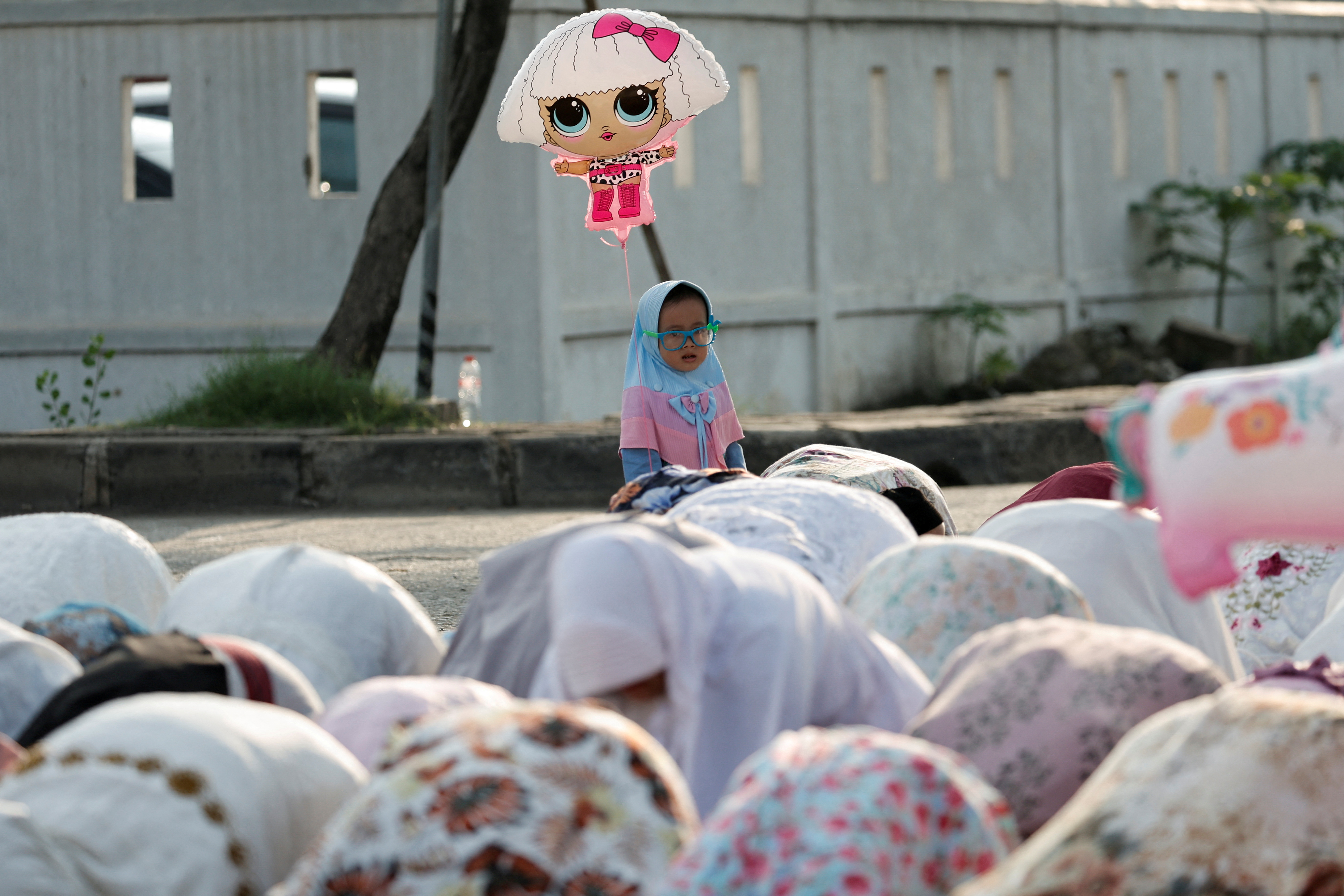
Muslim girl holds a balloon while attending mass prayers at the Sunda Kelapa port during Eid al-Fitr, marking the end of the holy fasting month of Ramadan, in Jakarta, Indonesia, May 2, 2022. REUTERS/Willy Kurniawan/File Photo

Indonesia’s new criminal code has grabbed headlines for making sex outside marriage illegal but Islamic parties wanted even harsher punishment for moral crimes in the world’s largest Muslim-majority nation, accounts of behind-the-scenes negotiations reveal.

The so-called morality code is just one part of the legislative overhaul that the Indonesian parliament ratified this month, a 226-page set of new laws that critics say threaten civil liberties, but officials defend as reflective of Indonesia’s identity.

Behind the scenes, secular nationalist parties holding a majority in parliament opposed the tighter laws on morality but risked being branded supportive of adultery if they remained unyielding in their opposition.

What resulted was a compromise between political parties and the government, said Taufik Basari, a member of the parliamentary commission overseeing the changes.

“We found a middle ground, not only between nationalists and religious parties but also between progressive liberals and conservatives,” he said.

The world’s third-largest democracy has a tradition of pluralism and moderate Islam, although more conservative interpretations of Islam have gained ground since the fall of authoritarian leader Suharto in 1998.

The new criminal code, decades in the making and created to replace a colonial-era set of laws, includes articles that ban insulting the president and state institutions, and spreading views counter to the state ideology, known as Pancasila.

The United Nations has warned the laws threaten media freedom, privacy and human rights.

The morality laws have, not surprisingly, drawn the most attention and criticism but some officials said they would have been even stricter if the religious parties had their way.

Islamic parties had called for a maximum jail term of seven years for sex outside marriage, and for anyone to be able to report a suspected offence, said sources familiar with the discussions.

With negotiations deadlocked until late November, the religious parties called for a parliamentary vote, something the nationalist parties were reluctant to see as it would have meant every party having to reveal its stand in parliament, and potentially to the public, said Muhammad Nasir Djamil of the Islamic Solidarity Party.

“This issue is very sensitive among religious people,” he said.

In forming the laws, a team of legal professors had turned to Indonesia’s official dictionary, which defines adultery as any sex outside marriage, not just extramarital sex.

That definition is now law.

Other articles criminalise cohabitation between unmarried couples, promoting contraception to minors, and abortion, apart from cases linked to rape or a medical emergency.

“Indonesia was trying to make its own code, based on its values,” said University of Indonesia law professor Harkristuti Harkrisnowo, part of the drafting team.

None of the nationalist parties, which dominate the ruling coalition, favoured the morality clauses but eventually agreed to the watered-down version, said President Joko Widodo’s deputy chief of staff, Jaleswari Pramodhawardani.

The compromise reached in the final version carries a maximum one-year sentence for sex outside marriage and six months for cohabitation. Suspected offences can only be reported by a spouse, parent or child, which officials hope will prevent police raids and finger-pointing by moral crusaders.

“This was the best we could do … It was a win-win solution, a middle ground,” said Taufik. “The article is still there, but we included some tight limitations.”

The new laws come into effect in three years and the largely muted public response indicates they are unlikely to threaten political stability.

Jokowi, as the president is known, is constitutionally barred from running again in the 2024 election but ahead of the polls, support for the morality laws carries a political advantage, analysts said.

“Nationalist parties were thinking ahead to the 2024 election,” said Greg Fealy of the Australian National University.

“They want to defuse potential Islamist attacks upon them.”

If the Islamic parties largely got what they wanted on sex, the government and its allies got some of what they wanted too, parliamentary and government sources said.

A contentious article that outlaws insulting the dignity of the president was reintroduced by the government, said law professor Harkristuti, despite a similar law being annulled by the constitutional court for being undemocratic.

That offence, which sources said was not supported by Jokowi himself, can only be reported by the president.

The government was also able to include a last-minute adjustment in its favour to a law banning the spread of values counter to the state ideology, without public consultation, said two sources involved.

Andreas Harsono of Human Rights Watch said both sides got what they wanted at a cost to rights.

“The Islamic parties benefit from the morality agenda … while the other parties will benefit from strengthening of authoritarianism,” he said.

Categories
Audio Sources - Full Text Articles

Essa gente ‘que se acha’ desafia o poder branco e rico

coluna-fabiana-moraes-desafio-poder-branco-rico-header

Ilustração: Nicholas Steinmetz para o Intercept Brasil

“Tu se acha”. Quando escreveu o breve comentário no perfil do artista Maxwell Alexandre, a escultora Natalia Gerschcovich desencadeou, sem saber, um processo público bastante pedagógico sobre raça, ego, fetiche e representação. A frase foi inserida em uma das postagens de Maxwell no Instagram, quando ele determinou que o Instituto Inhotim retirasse uma obra sua da exposição Quilombo: vida, problemas e aspirações do negro.

Não é dessa questão que este texto trata (se quiser saber mais, leia a respeito aqui ou no perfil do artista), mas do terremoto social causado quando uma pessoa preta, publicamente e sem pudor, “se acha”. Mais ainda: sobre a insistência branca em trazer prioritariamente representações que exibem pretos, indígenas, pobres, nordestinos, etc. em sofrimento e vulnerabilidade, estratégia de poder e colonização muitas vezes apresentada como uma heróica “denúncia”.

Ao entrar no perfil da escultora que o criticava negativamente, Maxwell se deparou com trabalhos nos quais a artista, por exemplo, esculpe meninos negros em situação de rua. Há também imagens dessas crianças reproduzidas em pratos. Em uma escultura particularmente medonha, um garoto aponta uma arma para a própria cabeça. Em outras, vemos meninos muito magros dormindo pelas ruas, em posição fetal. A maioria está sem camisa, descalça. A série foi batizada como “Crianças invisíveis”.

Sim, você já viu bastante esses meninos pelas ruas, e a artista argentina, que vive no Rio, não está reproduzindo uma realidade paralela, um mundo não tangível. Em um país que há muito figura entre aqueles com maior índice de desigualdade social, crianças violadas e sem proteção não são, infelizmente, novidade. No entanto, o que a escolha da escultora revela (e é importante dizer que esse movimento não é individual, mas coletivo e compartilhado no campo das artes, da mídia e no imaginário social) é a preferência em iluminar – e se capitalizar – com a condição de sofrimento de gente vulnerável.

Afinal, o que crianças pretas e pobres fazem quando não estão sujas, descalças, fora da escola, famintas? O que homens negros pobres, outro exemplo, fazem quando não estão sendo presos ou assassinados? Aliás, quando eu escrevo “homens negros”, que imagens vêm imediatamente à sua cabeça? Tenho quase certeza que não são representações de felicidade, lazer, sucesso. Não são imagens de homens pretos vivos, orgulhosos e amando – inclusive, a si mesmos.

Em “Casa de Alvenaria (volume 2: Santana)”, a escritora Carolina Maria de Jesus expõe explicitamente essas violentas operações de reiteração da condição de sofrimento. Ela conta como muitos jornalistas pediam que ela, já morando em um sobrado no bairro de Santana, em São Paulo, voltasse para a Favela do Canindé, da qual havia saído, para ser fotografada. Pediam também que colocasse as roupas e o lenço que usava quando vivia no barracão. Às vezes, posava revirando latas de lixo, como fazia no passado. Afinal, era importante para os jornais mostrar a aparentemente contraditória condição de escritora e “favelada”.

O Profiles de Gente que se Acha era, na verdade, o Profiles de Gente que nos Afronta.

Algo similar aconteceu quando ela escreveu “Pedaços da Fome”, em 1963. A escritora não batizou o livro com este título: originalmente, a obra se chamaria “A Felizarda”. Sua editora, no entanto, preferiu resgatar o fio pelo qual Carolina havia se tornado uma celebridade, o clássico “Quarto de Despejo”, no qual narra o cotidiano na favela. O primeiro título era uma ironia da escritora para falar das desventuras de Maria Clara, personagem que cai em desgraça após se casar com um homem de má índole. Mas a criatividade e o deboche de Carolina foram suplantados pela insistência em mantê-la em um lugar mais conhecido publicamente: o da fome e da necessidade, não o da inventividade. Pode-se dizer que Carolina era mais interessante, noticiável, enquanto ocupava não o lugar de escritora, mas o de escritora e miserável.

Os episódios vividos por Maxwell e Carolina expõem uma operação bastante perversa, na qual a visibilidade de gente em situação vulnerável é reiterada a partir de um recorte específico, o da dor. Ele não permite associarmos pessoas que nos acostumamos a ver como coitadas ou incapazes a gestos de poder e autonomia. E, quando isso acontece, gera espanto – aqui, no caso do artista, traduzido em um racista “tu se acha”.

Afinal, há quanto tempo, para ficar somente no campo das artes, lidamos com vaidades enormes, às vezes classificadas simplesmente como “excêntricas” ou muito admissíveis, uma vez que o dono do ego reluzente é um branco “artista genial”? Sobre isso, Maxwell, que nos últimos anos ganhou espaço e dinheiro nesse circuito fechado e ainda majoritariamente de elite, escreveu:

irmãos, o jogo da arte é sobre ego e vaidade, se tu se despir disso tu vai ser atropelado. muita vaidade na maneira como os brancos agem. importante a gente mapear esses comportamentos e entender o pq só a vaidade deles é válida. a vaidade silenciosa. eles ainda querem manter o controle da narrativa, da representação e dos nossos corpos. se um preto se envaidecer é perigoso para eles. por isso condenam nossa vaidade e ego. nos querem subjugados, calados, obedientes.

Faço questão de estudar esse “tu se acha” há mais de uma década, quando entendi que a frase era quase sempre um rebate a ações de emancipação e autoestima de pessoas que, no pacto da falsa “democracia racial”, deveriam “ficar em seus lugares”: mulheres, pretas, pobres, bichas, travestis. Investiguei a relação entre celebridades e pobreza e analisei, entre outros veículos, um site (já extinto) chamado Profiles de Gente que Se Acha, ou Blog da PGA.

Era 2010, uma outra era na internet, mas as redes sociais já serviam como matéria-prima para que os autores da página selecionassem, em plataformas como o Facebook, imagens de pessoas que se retratavam, se exibiam. Mostravam suas casas de paredes descascadas ou tijolos aparentes, mostravam o corpo gordo, o corpo preto, o corpo trans ou travesti, o corpo geralmente não visível nas revistas de celebridades, nas direções de empresas e demais espaços legitimados de poder.

Justamente por isso, eram motivo do riso e do escracho público: como ousavam colocar suas existências periféricas aos olhos de todos? Mas, apesar dos achaques, elas não deixaram, ao longo dos anos, de aparecer ainda mais. Como eu escrevi na época, elas, felizmente, “se achavam” e entendiam que também eram dignas de surgir publicamente e rachar o padrão de visibilidade magro, branco, jovem, rico. O Profiles de Gente que se Acha era, na verdade, o Profiles de Gente que nos Afronta.

Naquele mesmo início de década, não posso deixar de trazer aqui, a DJ Lala K, uma das criadoras da festa Sem Loção, estava indo trabalhar, durante o carnaval. Para conseguir atravessar a multidão em Olinda e garantir tanto a sua integridade quanto a do equipamento que levava, contratou um segurança. Enquanto atravessava o rojão de gente, ouviu uma mulher se espantar e dizer: “Quem essa negrinha pensa que é para estar com segurança?”. O chilique racista foi devolvido com graça, invenção e beleza, essas coisas de preto: ali, surgia a festa Seguranças de Lala K – Quem essa negrinha pensa que é?, até hoje parte do freje carnavalesco de Pernambuco.

Eu ouvi algo com certa similaridade: quando ganhei meu primeiro Prêmio Esso, em 2007, um homem branco, ao me ver chegar na redação após receber a honraria no Rio de Janeiro, gritou, em tom jocoso: “Esso, Esso, Esso: a neguinha é um sucesso”. Nunca esqueci. Ele estava, na sua cabeça forjada no racismo brasileiro, “apenas brincando”.

A obra "Santa Cruz", do artista Maxwell Alexandre.

A obra ‘Santa Cruz’, do artista Maxwell Alexandre.

Foto: Reprodução

Negros na piscina

Confrontar as questões sobre representação e poder são fundamentais para alcançar uma democracia para além das geralmente superficiais políticas de “diversidade”. Desde que entrei em uma redação, há mais de 20 anos, percebi como eram homogêneas as formas de falar e retratar pessoas pobres, pretas, travestis, etc. Vi, de dentro, como geralmente nem precisávamos abrir a boca: já éramos vistas como incapazes de algo para além de servir e, no melhor dos casos, entreter. Mas, estando dentro da máquina, entendi que também podia, a partir dela, produzir formas de contradiscurso. Para isso, bastava, por exemplo, falar não sobre travestis assassinadas, mas vivas, trabalhando, sonhando, desejando e querendo uma vida boa, assim como eu e você. Uma vez falei com Dávila, que adorava frequentar a piscina pública de seu bairro. Escrevi sobre ela, cuja foto está no texto, aqui.

Com o tempo, entendi que mostrar populações como sempre infelizes e desesperadas também era uma forma de marcar o próprio lugar de herói – e geralmente são pessoas ou empresas brancas que detêm o monopólio da representação. Ou seja: mostrar alguém em contínuo sofrimento é uma forma de colonização e manutenção do poder. Sim, havia e há sofrimento na vida da maioria da população brasileira, cujo acesso a uma cidadania básica – transporte, escolas, saneamento, lazer, segurança – é precário. Mas esse sofrer, sem romantização e enxergando o óbvio, nunca impediu (na verdade, muitas vezes impulsionou) movimentos coletivos de emancipação e alegria, como o maravilhoso Grêmio Recreativo de Arte Negra e Escola de Samba Quilombo, criado em 1975 por Candeia. O sambista, felizmente, se achava.

Essa percepção é o mote da exposição Negros na Piscina, que desenhei ao lado do curador Moacir dos Anjos. Nela, estão reunidas representações de felicidades coletivas e, portanto, políticas: o banquete reunindo famílias pretas (obra de Renata Felinto); as polaroids que mostram a orgulhosa Vênus Val Souza; os aniversários e casamentos fotografados pelos Retratistas do Morro; as faixas de miss feitas por Bispo do Rosário; os forrós feitos pelas mãos delicadas de Mestre Vitalino; o jovem negro de pé sobre um ônibus, uma das Caravelas de Hoje pintadas por Maxwell Alexandre.

Tem tule, tem sonho, tem piscina e tem futuro em diversas outras obras que compõem a mostra, em cartaz até meados de maio de 2023 na Pinacoteca do Ceará, Fortaleza (aliás, é significativo como o investimento em cultura no estado, que também inaugurou um enorme centro de artes no Cariri, não ganha espaço nos jornalões). Em um país que destruiu durante tanto tempo a auto-estima da maioria de sua população, só a tolerando quando ela respondia educadamente “sim, senhor”, é preciso entender que pretos, bichas e todas as pessoas periféricas “que se acham” estão também reconquistando sua humanidade. E exibir essas expressões é fundamental.

Termino contando um presente inesquecível que ganhei quando estava voltando justamente da montagem e inauguração da exposição. Na sala de embarque do aeroporto, às 7h30 da manhã, me deparei com uma mulher alta, de cabelos muito curtos, vestindo uma reluzente blusa de paetês prateados. Usava ainda um colar de pérolas, saia e saltos altos dourados. Era uma celebração, um espetáculo, um VRÁ elegante no meio da monotonia dos jeans e camisetas. Sentou próxima a mim e eu não resisti: me aproximei e elogiei seu brilho.

Camilla Requião, que trabalha como cuidadora, tinha saído de Goiás às 18h do dia anterior e seguia para uma celebração em Recife. “Aí já vim arrumada para a festa”, contou. Ela me passou seu telefone e, mais tarde, mandei mensagem e perguntei se podia postar uma foto que fiz enquanto ela aguardava a bagagem. A resposta foi maravilhosa: Camilla não só permitiu, como também enviou uma série de imagens  nas quais ela aparece igualmente chique, brilhante, montada, bonita, feliz, negra e orgulhosa de si. Eu as divido aqui, após a permissão dela, como presente também para vocês.

camilla-requiao

Parte das imagens enviadas por Camilla.

Foto: Arquivo Pessoal/Camilla Requião

Desejo um 2023 no qual Camilla, Maxwell, Carolina, Lala, eu e todas as pessoas historicamente vistas como pouco, vistas como nada, vistas como descartáveis, se achem. Que a gente se ache e se ame muito, entendendo que nosso fortalecimento não se dá por meio de projetos meramente individuais, mas principalmente em rede. Em um país que ensinou tantas formas de auto-ódio, amar a si é urgente. Desejo um país onde toda Ester esteja viva e dançando Vogue. Desejo um país que não volte a eleger um destruidor e amante do fascismo. Feliz 2023, pessoal.

PS: Deixo ainda um banho de gente que se acha dançando na pista (ou na piscina):

The post Essa gente ‘que se acha’ desafia o poder branco e rico appeared first on The Intercept.

Categories
Audio Sources - Full Text Articles

Factbox: How many people might die, and why, under relaxed China COVID curbs

2022-12-20T08:35:31Z

China’s abrupt end to its zero-COVID policy has raised concerns of widespread infections among a vulnerable, undervaccinated population with little natural immunity that would overload the health system and result in up to 2 million deaths, or more, various research groups are reporting.

New analyses by various modelling groups predict the reopening could result in as many as 2.1 million deaths.

As of Monday, China has officially reported 5,237 COVID-related deaths during the pandemic, a tiny fraction of its 1.4 billion population.

Here are some of the estimates:

Zhou Jiatong, head of the Center for Disease Control in southwestern Guangxi region, said last month in a paper published by the Shanghai Journal of Preventive Medicine that mainland China faces more than 2 million deaths if it loosened COVID curbs in the same way Hong Kong did this year.

Infections could rise to more than 233 million, his forecast showed.

In May, scientists in China and the United States estimated that China risks just over 1.5 million COVID deaths if it drops its tough zero-COVID policy without any safeguards such as ramping up vaccination and access to treatments, according to research published in Nature Medicine.

They forecasted that peak demand on intensive care would be more than 15 times capacity, causing roughly 1.5 million deaths, based on worldwide data gathered about the variant’s severity.

However, the researchers, the lead authors among whom were from Fudan University in China, said the death toll could be reduced sharply if there was a focus on vaccination.

China could see 1.3 million to 2.1 million people die if it lifts its zero-COVID policy due to low vaccination and booster rates as well as a lack of hybrid immunity, British scientific information and analytics company Airfinity said in late November.

The company said it modelled its data on Hong Kong’s BA.1 wave in February, which occurred after the city eased restrictions after two years.

The U.S.-based Institute of Health Metrics and Evaluation (IHME), part of the University of Washington, in an updated model said on Friday it expects more than 1 million deaths through 2023. The group expects cases to peak in April, when deaths will have reached 322,000.

About a third of China’s population will have been infected by then, IHME Director Christopher Murray said.

A modelling team at the University of Hong Kong estimated simultaneous reopening of all provinces in December 2022 through January 2023 would result in 684 deaths per million, according to a paper released on Wednesday on the Medrxiv preprint server that has yet to undergo peer review.

Based on China’s population of 1.41 billion, and without measures such as a mass vaccination booster campaign, that amounts to 964,400 deaths.

Related Galleries:

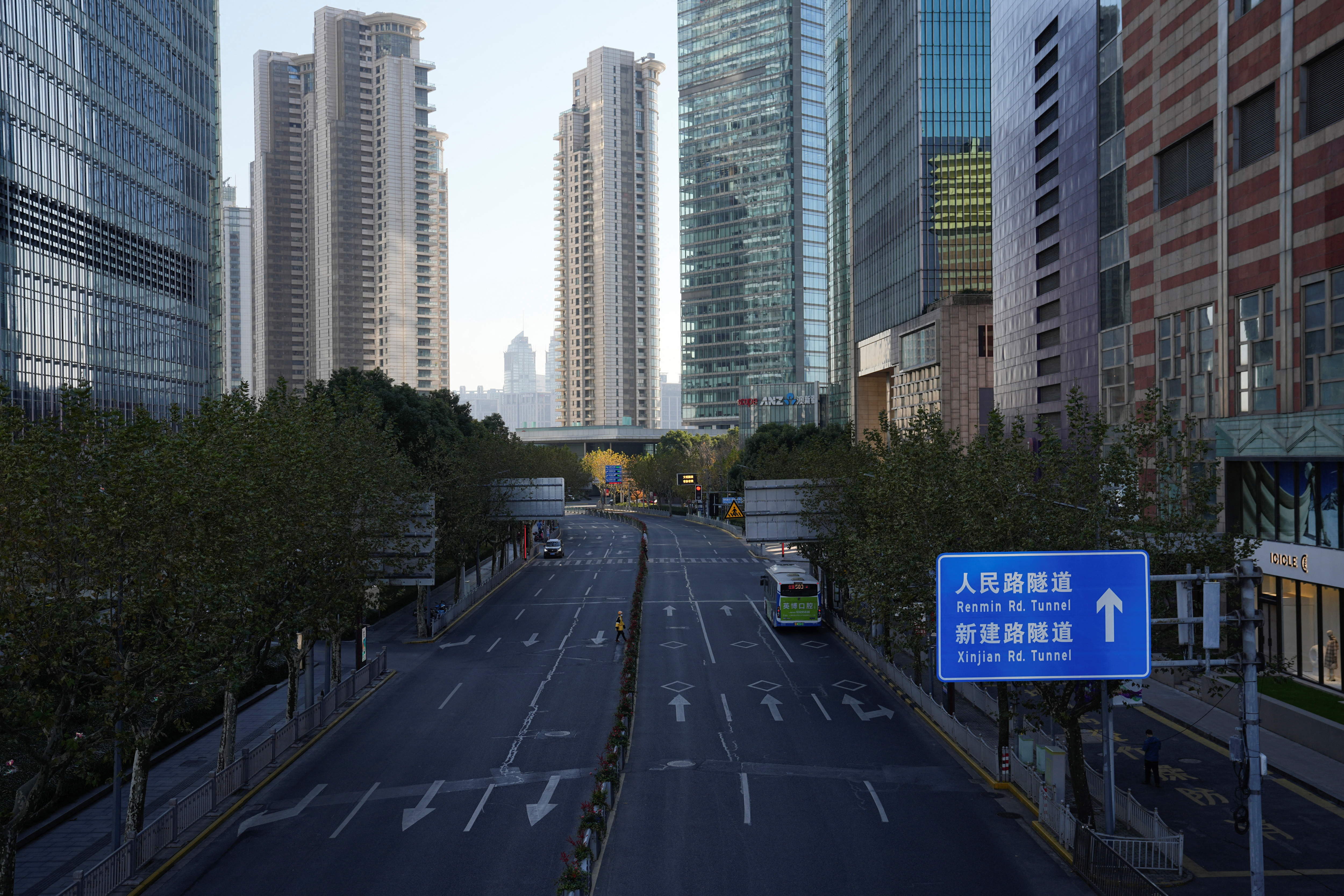
A delivery worker crosses an empty road in Lujiazui financial district, as coronavirus disease (COVID-19) outbreaks continue in Shanghai, China, December 19, 2022. REUTERS/Aly Song

Workers sort medicines at a logistics centre of China Resources Pharmaceutical Group Limited, amid the coronavirus disease (COVID-19) outbreaks in Beijing, China December 19, 2022. cnsphoto via REUTERS

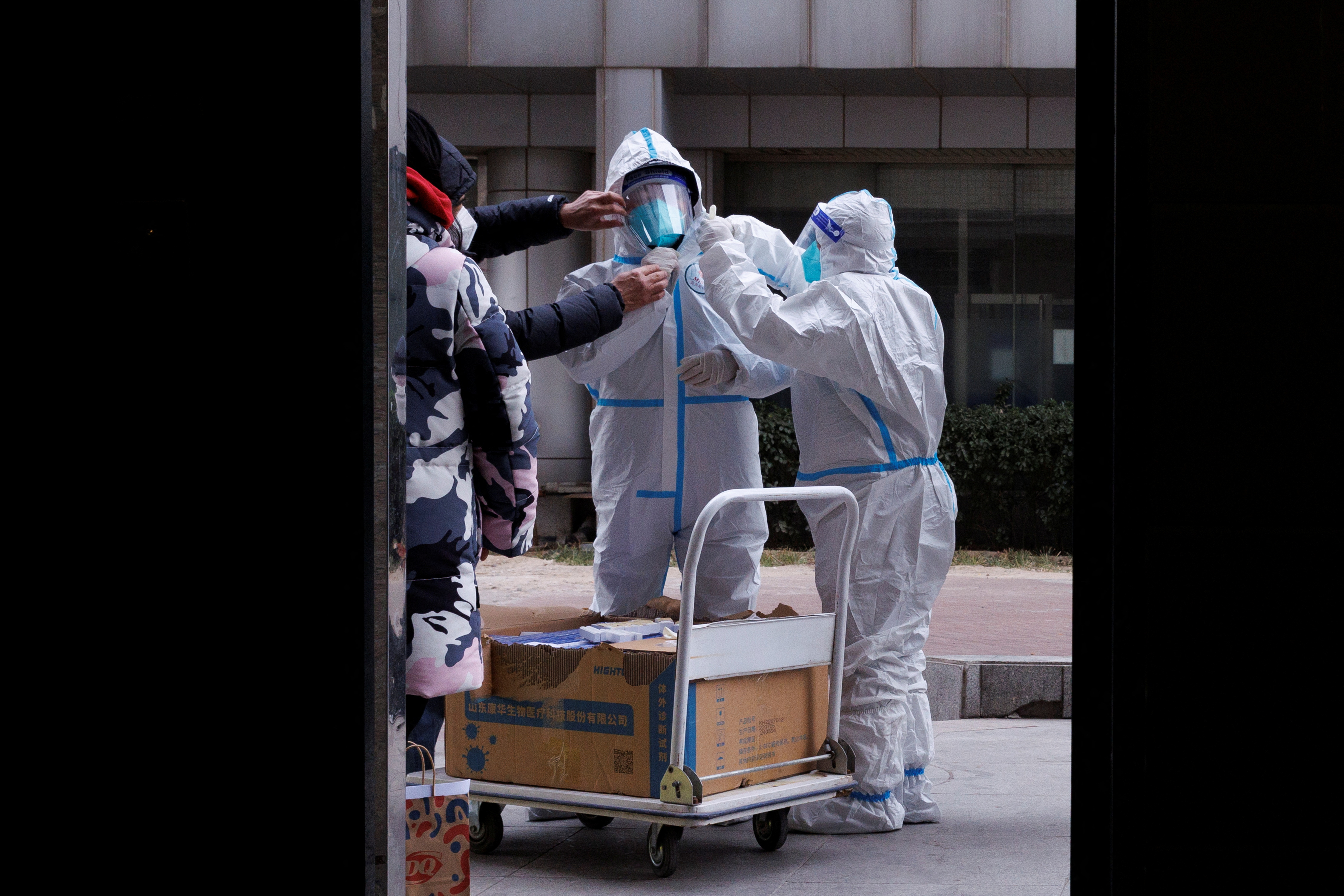
Pandemic prevention workers in protective suits get ready to enter an apartment building that went into lockdown as coronavirus disease (COVID-19) outbreaks continue in Beijing, December 2, 2022. REUTERS/Thomas Peter

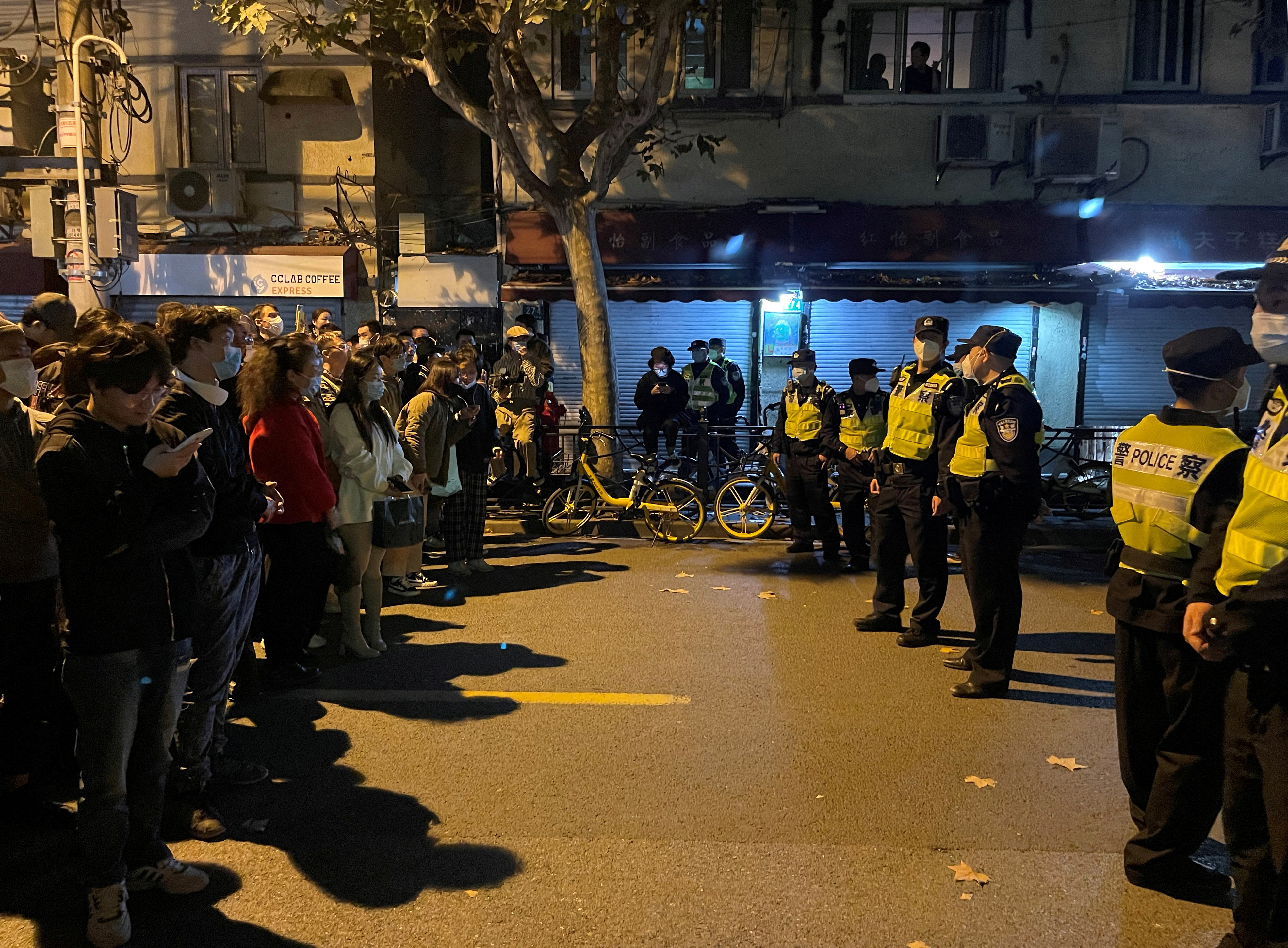
People stand in front of a line of police officers during a demonstration against COVID-19 curbs following the deadly Urumqi fire, in Shanghai, China November 27, 2022. REUTERS/Casey Hall
Categories
Audio Sources - Full Text Articles

U.S. lawmakers back key Boeing 737 MAX deadline waiver

2022-12-20T08:26:44Z

The Boeing 737 MAX aircraft is displayed at the Farnborough International Airshow, in Farnborough, Britain, July 20, 2022. REUTERS/Peter Cziborra

Boeing Co (BA.N) won backing from Congress early on Tuesday to lift a looming deadline imposing a new safety standard for modern cockpit alerts for two new versions of the U.S. planemaker’s best-selling 737 MAX aircraft.

The company had been heavily lobbying for months to convince lawmakers to waive the Dec. 27 deadline that affects its MAX 7 and MAX 10 airplanes which was imposed by Congress in 2020 after two fatal 737 MAX crashes killed 346 people in Indonesia and Ethiopia.

Congressional leaders attached thewaiver to a bill to fund U.S. government operations and to require new safety enhancements for existing MAX aircraft proposed by U.S. Senator Maria Cantwell, chair of the Senate Commerce Committee, according to the text made public early on Tuesday. Congress is expected to approve the legislation this week.

Reuters first reported the plan on Monday. Boeing has logged more than 1,000 orders for the two new versions of its best-selling MAX.

Some aviation unions had warned Congress in recent days that a failure to lift the deadline could threaten the new planes and cost jobs, while families of those killed in the two crashes and “Miracle on the Hudson” pilot Sully Sullenberger were among those opposed to it.

Cantwell’s bill requires retrofitting existing MAX planes with a synthetic enhanced angle-of-attack system and the ability to shut off stall warning and overspeed alerts. It gives airline operators three years from the time the 737 MAX 10 is certified to retrofit existing MAX planes and says Boeing must bear those costs.

Faulty data from a single sensor erroneously activated a software function called MCAS and played critical roles in both fatal 737 MAX crashes, investigations found.

The Federal Aviation Administration (FAA) in 2020 required Boeing to retrofit planes to ensure MCAS would activate only if it received data from two AOA sensors. The new synthetic sensor will provide additional data to help prevent an erroneous MCAS activation, officials said.

Boeing declined to comment on Monday, but Boeing Commercial Airplanes Chief Executive Stan Deal said last week the planemaker supported Cantwell’s safety retrofit proposal.

Without action by Congress, after Dec. 27, all planes must have modern cockpit alerting systems in order to be certified by the FAA, which could jeopardize the futures of the MAX 7 and 10 or mean significant delays for the new aircrafts’ deployment.

The bill will allow the new MAX variants to have the same alerting systems as the MAX 8 and MAX 9 currently in service. The alerting requirement in the 2020 law that reformed aircraft certification does not apply to in-service MAX airplanes previously certified by the FAA.

Boeing said in October it expects the 737 MAX 7 to be certified this year or in 2023 and last week Boeing’s Deal said he thinks the MAX 10 could receive certification in late 2023 or early 2024.

Categories
Audio Sources - Full Text Articles

British nurses walk out again, threaten further strikes in pay dispute

2022-12-20T08:31:48Z

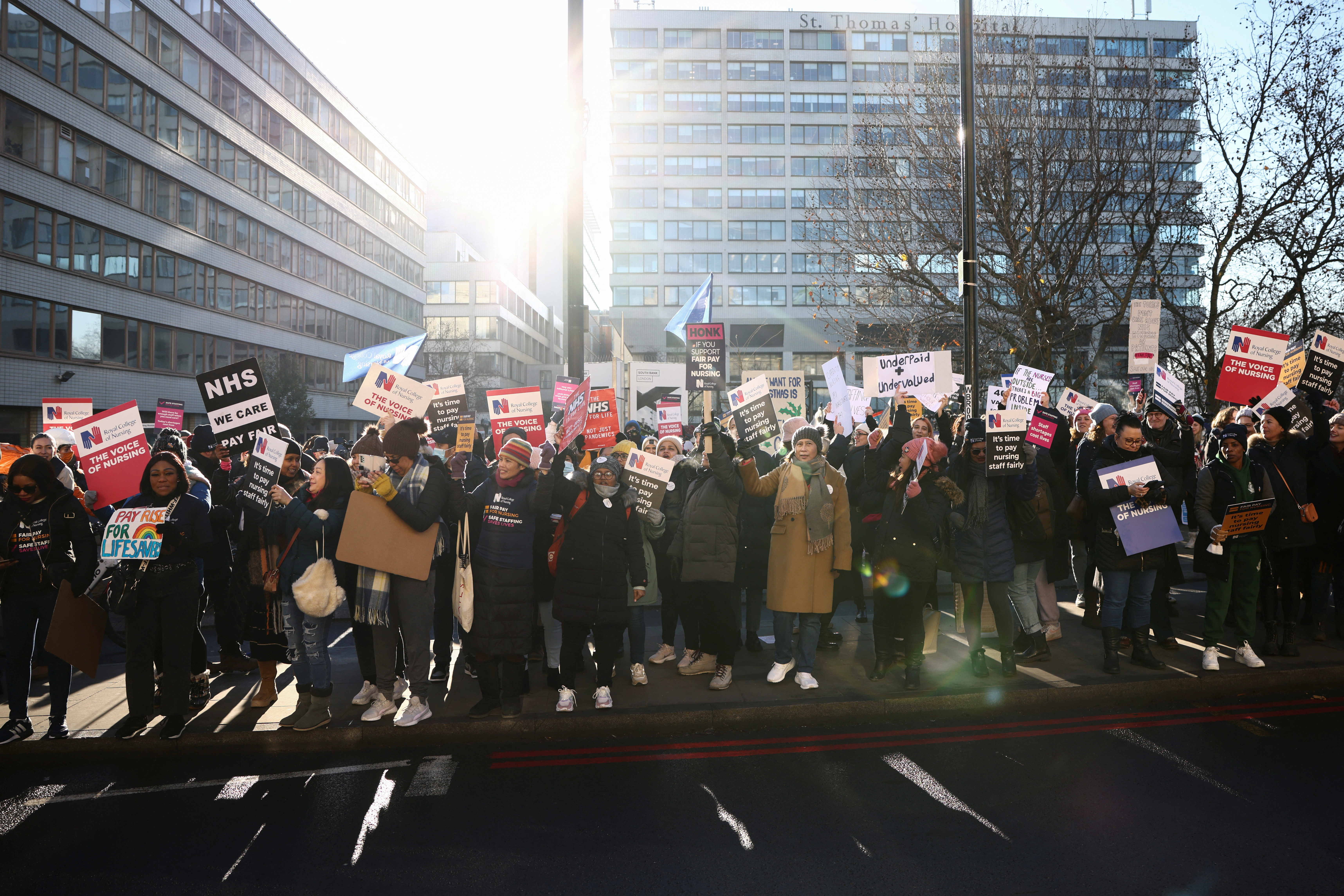
NHS nurses cast shadows as they strike, amid a dispute with the government over pay, outside St Thomas’ Hospital in London, Britain December 15, 2022. REUTERS/Henry Nicholls/Files

Nurses in Britain went on strike for the second time this month on Tuesday, and their union threatened to escalate a dispute over pay by setting out further strike days if the government does not respond to its demands within 48 hours.

The industrial action by up to 100,000 nurses is unprecedented in the British nursing union’s 106-year history, but it says it has no choice as workers struggle to make ends meet with inflation running at more than 10%.

The government has offered nurses around 4% and declined to discuss pay further, with Prime Minister Rishi Sunak saying the nurses’ demand for a pay rise of 5% plus inflation would equate to a 19% hike and is unaffordable.

“Let’s get this wrapped up by Christmas. I will negotiate with him at any point to stop nursing staff and patients going into the new year facing such uncertainty,” the head of the Royal College of Nursing (RCN) union Pat Cullen said.

“But if this government isn’t prepared to do the right thing, we’ll have no choice but to continue in January and that will be deeply regrettable.”

The RCN said it was giving the government 48 hours from the end of Tuesday’s walk out to respond, before it announces further strike dates.

Britain is facing a wave of industrial action this winter, with ambulance workers also due to strike on Wednesday, as the government prepares to use the military to step in and drive ambulances.

“Our door is open to discuss with the unions anything relating to working conditions. What we can’t do is go back into reopening the pay award,” junior health minister Will Quince told Sky News.

Categories
Audio Sources - Full Text Articles

As climate clock ticks, aviator races to photograph glaciers

VOSS, Norway (AP) — Chunks of ice float in milky blue waters. Clouds drift and hide imposing mountaintops. The closer you descend to the surface, the more the water roars — and the louder the “CRACK” of ice, as pieces fall from the arm of Europe’s largest glacier.

The landscape is vast, elemental, seemingly far beyond human scale. The whole world, it seems, lies sprawled out before you. Against this outsized backdrop, the plane carrying the man who chases glaciers seems almost like a toy.

“No one’s there,” the man marvels. “The air is virtually empty.”

This is Garrett Fisher’s playground — and, you quickly realize, his life’s work.

He is traveling the world, watching it from far above, sitting in the seat of his tiny blue-white “Super Cub” aircraft. It’s here that he combines his two longtime passions — photography and flight — in a quest to document every remaining glacier on the face of the Earth.

On one level, the 41-year-old Fisher does it for a simple reason: “Because I love them.”

But he does it, too, because of weightier things. Because the climate clock is ticking, and the planet’s glaciers are melting. Because Fisher is convinced documenting, archiving, remembering all of this serves a purpose.

Because, in the end, nothing lasts forever — not even ancient glaciers.

___

Glaciers aren’t static. In a world that’s getting warmer, they’re getting smaller.

“In 100 or 200 years, most of them will be gone or severely curtailed,” Fisher says. “It is the front line of climate change … the first indication that we’re losing something.”

According to data from the European Environmental Agency, the Alps, for example, have lost about half their volume since 1900, with the most evident acceleration of melting happening since the 1980s. And the glacier retreat is expected into continue in the future.

Estimates from the EEA say that by 2100, the volume of European glaciers will continue to decline by between 22% and 84% – and that’s under a moderate scenario. More aggressive modeling suggests up to 89% could be lost.

“We have a record of observations of small glaciers in settled areas, particularly in the Alps and Norway and New Zealand,” says Roderik van de Wal, a glacier expert at Utrecht University in the Netherlands. That record, he says, shows glaciers retreating even more. “That’s a consequence of climate change.”

The slow demise of glaciers, of course, is a problem that transcends aesthetics or even the glaciers themselves. A rise in sea level of about 15 centimetres around the globe during the past century is due in large part to glacier melt.

Which sets that ticking clock running. And which has gotten Garrett Fisher moving.

For Fisher, it started – as so many things do for so many people – in childhood.

He grew up in a quiet rural community in upstate New York, the child of local business owners and grandson of a scrappy pilot who introduced him early to aviation. He lived next door to a private airport.

Fisher was only a toddler when his grandfather Gordon plopped him in the back of his plane. The boy wasn’t happy about it, but the dismay quickly turned to delight. By age 4, he was hooked on flight.

Fisher recalls endless hours spent gazing out of his bedroom window, waiting for the barn door to his grandfather’s airplane hangar to open. The older man would tell him: “Whatever you set your mind to, you can do.”

Then, as a young man, he took up photography. Two of the three parts of his obsession were in place.

___

Sometime in the late 1990s, a friend told Fisher that the world’s glaciers were disappearing. It has haunted him ever since, so much so that it added the third piece of the triangle: the urgency to beat the clock.

He saw them disappearing, and he wanted to make sure these pieces of the world – pieces he saw as indescribably beautiful – were preserved, if only in pixels.

“When I’m high up, I see these forbidden views,” he says. “They’re views you can’t have on the ground, that don’t really exist for anyone else.”

He aims his efforts squarely at posterity. Any documentation he makes of the glaciers before their demise, he believes, could be invaluable to future generations. So, he has launched a glacier initiative, a non-profit to support and showcase his work, and he plans to open his archive to the public for research – some now, the rest when he is gone.

Fisher is hardly the first to feel the archival instinct when it comes to glaciers. Since the invention of photography in the early decades of the 19th century, glaciers have been documented with fascination by everyone from passing travelers to scientists.

Norwegian photographer Knud Knudsen, one of his nation’s founding art photographers, delved into the landscape with an obsession similar to Fisher’s. He traveled around Norway’s west coast, photographing nature: fjords, mountains, waterfalls … and glaciers.

But in an era where everything related to photography was heavy, unwieldy, and slow, Knudsen was earthbound, traveling on wagons and boats. On one trip, he brought about 175 pounds in gear – including glass negatives. Unlike Fisher, he could not soar – and could not capture the feeling of looking down upon the vast and magnificent natural formations that he was chronicling in his homeland.

For Fisher, Norway is only the latest glacier frontier. He spent years documenting them in other places, including the American West, before shifting his focus to the Alps and Europe. He has photographed thousands of glaciers and is hungry for more.

Never, though, even amid the silence and beauty of his flights, does Fisher lose the sense of documenting the “decisive moment” – the inflection points of a glacier that is still here but in the process of disappearing.

He knows, with every flight, that he is documenting a slow-moving tragedy as it unfolds.

___

The Piper Super Cub is a small two-seater. Fisher squeezes in. He is about to ascend into skies of crystal and cotton in hopes of photographing Nigardsbreen.

“There’s about a 30% chance we get to see the glacier,” he says. “There’s a bunch of clouds sitting right there.”

The Piper feels – and rumbles – like an old car. It smells of oil and fuel and everything is manual. Fisher brings in his iPad for navigation, but his aviation software doesn’t have GPS information on glaciers. So he flies using a mix of instinct, observation and Google Maps.

The aircraft’s huge glass windows serve up incredible views. When he’s aloft, the houses start to feel like Monopoly pieces. Anxiety dispels into moments of profound peace. It’s as if the altitude – the distance from the world we know – makes all that’s happening on the planet below seem a little more manageable. And yet he knows: One false move would end all this.

“The weather’s bad, extremely cold, the winds are very strong and the flying’s extremely technically challenging,” Fisher says. “And to photograph glaciers, we’re getting very close to all of this action. So, it requires a lot of skill, time and determination.”

Lots of people are afraid of flying, especially in small planes. When news hits of a plane down, it’s usually a small craft.

He adds: “I’ve been told by many pilots that I’m crazy.”

Many glaciers are remote and hard to reach or document – except by satellite or by air, making the tiny Super Cub the perfect vehicle for this photographic journey. It is built to navigate the blustery winds and dangerous environments necessary for his work.

Why risk it? Fisher believes satellite images will never capture glaciers effectively – not aesthetically and not scientifically. The glow of a glacier at “magic hour.” The way shadow falls on the ice, revealing an unending, undefinable blue. The sheer epic presence of these ice goliaths that are in a constant state of unbecoming.

Will the engine quit? He has detailed plans in case of a crash on a glacier. He has calculated that he can survive for about 24 hours if he goes down and has measured the tail of the plane to be sure he can fit into it and stay out of the elements while he waits for help. Not for the faint of heart.

Fisher moves around a lot: The United States, Spain, Norway. He rarely stops. His wife, Anne, his friend since childhood, drags him to bed most nights; left to his own devices, he says, he would hardly sleep. This is what happens to people so bent on something that everything else starts to fall away.

Until now, Fisher has paid for his passion with his own money, but it’s not cheap; he is running out of funding and looking for backers.

He positions the work carefully. It is, in many ways, science. In other ways, it is public service. But he always comes back to one thing: beauty.

“Science has all of the data we need. They have tons of datasets, which will be available in the future,” Fisher says. “The problem is, it’s not beautiful.”

What he does, he says, is something whose aesthetics are not only pleasing but might encourage people to change their ways.

He adds: “It’s not a dataset. It’s a very motivating, emotionally compelling rendition of these glaciers while they’re here. Because these views will not come back.”

___

Glaciers are a window to our past. Photography, too, is a window to our past. Garrett Fisher has combined these pursuits to ensure many views to this moment are available – and that whatever disappears will be remembered.

In the end, so much of his work is about memory. But what about the here and now? Can a photograph communicate the profound experience of being in front of something that is soon to be lost forever? In many ways, that is what his work is trying to figure out.

The archive is the thing he has poured everything into, dedicating countless hours. And beyond the archival dreams, he dares to hope for change.

If he finds the right light, the right angle, the right moment, then maybe people will care more. He’s chasing the perfect image; one so beautiful it can make people and policymakers act. And if it isn’t one image, then maybe an entire archive convinces people to come, to look, to get close, to pay attention.

“We can live without them. We will live without them,” Fisher says. “However, it hurts us to lose them.”

Everything disappears. But not yet. There is still time, and Garrett Fisher has an airplane and a camera and is not turning away.

___

Associated Press journalist Bram Janssen reported from Voss.

Categories
Audio Sources - Full Text Articles

South African flying school executive investigated by police in Australia

2022-12-20T04:18:09Z

SYDNEY (Reuters) – Australian police have searched a property of, but not charged, a former British military pilot who is an executive of a South African flight school under scrutiny by British authorities for training Chinese military pilots.

Another ex-military pilot who previously worked for the flying school was arrested in Australia in October. Former U.S. Marine pilot Daniel Duggan is in custody in Sydney awaiting a decision by the Attorney General on a U.S. extradition request.

Australian federal police executed a search warrant in November on the South Australian property of Keith Hartley, who is the chief operating officer of the Test Flying Academy of South Africa (TFASA), a police spokesman confirmed to Reuters on Tuesday.

The investigation of a second pilot was first reported by The Australian newspaper.

Hartley declined to comment to Reuters. His lawyer, Dennis Miralis, said Hartley had not been charged with any offence and was seeking a judicial review of the police search warrant in the Federal Court.

“Mr Keith Hartley and TFASA firmly deny any criminal wrongdoing and will continue to exercise their legal rights under Australian law,” Miralis said in a statement to Reuters.

Britain announced a crackdown on its former military pilots working to train Chinese fliers in the same week Duggan was arrested in Australia, and vowed to change national security law to stop them working for intermediaries such as the South African flying academy. TFASA denied it or its British instructors had broken any British law.

A 2017 indictment unsealed by a Washington district court this month showed Duggan faces four charges in the United States including breaking U.S. arms control law by training Chinese military pilots to land on aircraft carriers.

“Duggan provided military training to PRC (People’s Republic of China) pilots” through a South African flight school in 2010 and 2012, the indictment said.

Duggan has denied breaking any law.

The indictment also lists a British national who is the chief operating officer of “a test flying academy based in South Africa with a presence in the PRC” as an unidentified co-conspirator.

Miralis, who is also Duggan’s lawyer, said he had not seen the U.S. extradition request for Duggan and it was unclear if it was based on the 2017 indictment or a new one. Miralis said he had seen the 2017 indictment but he and Hartley both declined to comment on the unidentified British co-conspirator.

“The Attorney General has informed us previously that it shouldn’t be assumed that will in fact be the ultimate indictment upon which his extradition is sought,” he said outside a Sydney court on Tuesday.

Miralis said extradition should be opposed. He has previously said Duggan was an Australian citizen who renounced his U.S. citizenship and denies breaking any law.

The Attorney General has until Dec. 25 to make a decision on the extradition request.

Categories
Audio Sources - Full Text Articles

Russian deputy foreign minister says 60 Russian “hostages“ held in U.S

2022-12-20T07:20:41Z

(Reuters) – Russian Deputy Foreign Minister Sergei Vershinin said that more than 60 Russian “hostages” are serving prison sentences in the U.S., Russian state-owned news agency RIA reported on Tuesday.

In excerpts from an interview with RIA, Vershinin said: “The total number of Russian citizens, who have been in effect taken hostage, exceeds 60.”

Vershinin provided no evidence that the Russians’ sentences were politically motivated or otherwise unfair.

Earlier this month, the United States released convicted Russian arms dealer Viktor Bout, who had been serving a 25-year sentence in a prisoner swap for Brittney Griner, an American basketball star jailed in Russia for drug offences.

U.S. media have reported that Russia refused to include Paul Whelan, a U.S. Marine Corps veteran convicted of espionage in 2020, in the exchange.

Categories
Audio Sources - Full Text Articles

Wartime Ukraine erasing Russian past from public spaces

KYIV, Ukraine (AP) — On the streets of Kyiv, Fyodor Dostoevsky is on the way out. Andy Warhol is on the way in.

Ukraine is accelerating efforts to erase the vestiges of Soviet and Russian influence from its public spaces by pulling down monuments and renaming hundreds of streets to honor its own artists, poets, soldiers, independence leaders and others — including heroes of this year’s war.

Following Moscow’s invasion on Feb. 24 that has killed or injured untold numbers of civilians and soldiers and pummeled buildings and infrastructure, Ukraine’s leaders have shifted a campaign that once focused on dismantling its Communist past into one of “de-Russification.”

Streets that honored revolutionary leader Vladimir Lenin or the Bolshevik Revolution were largely already gone; now Russia, not Soviet legacy, is the enemy.

It’s part punishment for crimes meted out by Russia, and part affirmation of a national identity by honoring Ukrainian notables who have been mostly overlooked.

Russia, through the Soviet Union, is seen by many in Ukraine as having stamped its domination of its smaller southwestern neighbor for generations, consigning its artists, poets and military heroes to relative obscurity, compared with more famous Russians.

If victors write history, as some say, Ukrainians are doing some rewriting of their own — even as their fate hangs in the balance. Their national identity is having what may be an unprecedented surge, in ways large and small.

President Volodymyr Zelenskyy has taken to wearing a black T-shirt that says: “I’m Ukrainian.”

He is among the many Ukrainians who were born speaking Russian as a first language. Now, they shun it — or at least limit their use of it. Ukrainian has traditionally been spoken more in the western part of the country — a region that early on shunned Russian and Soviet imagery.

Large parts of northern, eastern and central Ukraine are making that linguistic change. The eastern city of Dnipro on Friday pulled down a bust of Alexander Pushkin — like Dostoevsky, a giant of 19th century Russian literature. A strap from a crane was unceremoniously looped under the statue’s chin.

This month, Kyiv Mayor Vitali Klitschko announced about 30 more streets in the capital will be rechristened.

Volodymyr Prokopiv, deputy head of the Kyiv City Council, said Ukraine’s “de-Communization” policy since 2015 had been applied in a “soft” way so as not to offend sensitivities among the country’s Russian-speaking and even pro-Moscow population.

“With the war, everything changed. Now the Russian lobby is now powerless – in fact, it doesn’t exist,” Prokopiv said in an interview with The Associated Press in his office overlooking Khreschatik Street, the capital’s main thoroughfare. “Renaming these streets is like erasing the propaganda that the Soviet Union imposed on Ukraine.”

During the war, the Russians have also sought to stamp their culture and domination in areas they have occupied.

Andrew Wilson, a professor at University College London, cautioned about “the dangers in rewriting the periods in history where Ukrainians and Russians did cooperate and build things together: I think the whole point about de-imperializing Russian culture should be to specify where we have previously been blind — often in the West.”

Wilson noted that the Ukrainians “are taking a pretty broad-brush approach.”

He cited Pushkin, the 19th century Russian writer, who might understandably rankle some Ukrainians.

To them, for example, the Cossacks — a Slavic people in eastern Europe — “mean freedom, whereas Pushkin depicts them as cruel, barbarous, antiquated. And in need of Russian civilization,” said Wilson, whose book “The Ukrainians” was recently published in its fifth edition.

In its program, Kyiv conducted an online survey, and received 280,000 suggestions in a single day, Prokopiv said. Then, an expert group sifted through the responses, and municipal officials and street residents give a final stamp of approval.

Under the “de-Communization” program, about 200 streets were renamed in Kyiv before this year. In 2022 alone, that same number of streets have been renamed and another 100 are scheduled to get renamed soon, Prokopiv said.

A street named for philosopher Friedrich Engels will honor Ukrainian avant-garde poet Bohdan-Ihor Antonych. A boulevard whose name translates as “Friendship of Peoples” — an allusion to the diverse ethnicities under the USSR – will honor Mykola Mikhnovsky, an early proponent of Ukrainian independence.

Another street recognizes the “Heroes of Mariupol” — fighters who held out for months against a devastating Russian campaign in that Sea of Azov port city that eventually fell. A street named for the Russian city of Volgograd is now called Roman Ratushnyi Street in honor of a 24-year-old civic and environmental activist who was killed in the war.

A small street in northern Kyiv still bears Dostoevsky’s name but soon will be named for Warhol, the late Pop Art visionary from the United States whose parents had family roots in Slovakia, across Ukraine’s western border.

Valeriy Sholomitsky, who has lived on Dostoevsky Street for nearly 40 years, said he could go either way.

“We have under 20 houses here. That’s very few,” Sholomitsky said as he shoveled snow off the street in front of a fading address sign bearing the name of the Russian writer. He said Warhol was “our artist” — with heritage in eastern Europe:

Now, “it will be even better,” he said.

“Maybe it is right that we are changing many streets now, because we used to name them incorrectly,” he added.

___

Vasilisa Stepanenko and Hanna Arhirova in Kyiv contributed.

WP Radio
WP Radio
OFFLINE LIVE