Categories
Audio Sources - Full Text Articles

Analysis: Russia“s grim battle for Bakhmut may yield pyrrhic victory at best

2022-12-20T11:39:33Z

The nearly five-month battle for the small city of Bakhmut in eastern Ukraine has ground on for so long and wrought so much death and destruction that, even if Russia does prevail, it will be a pyrrhic victory, military experts say.

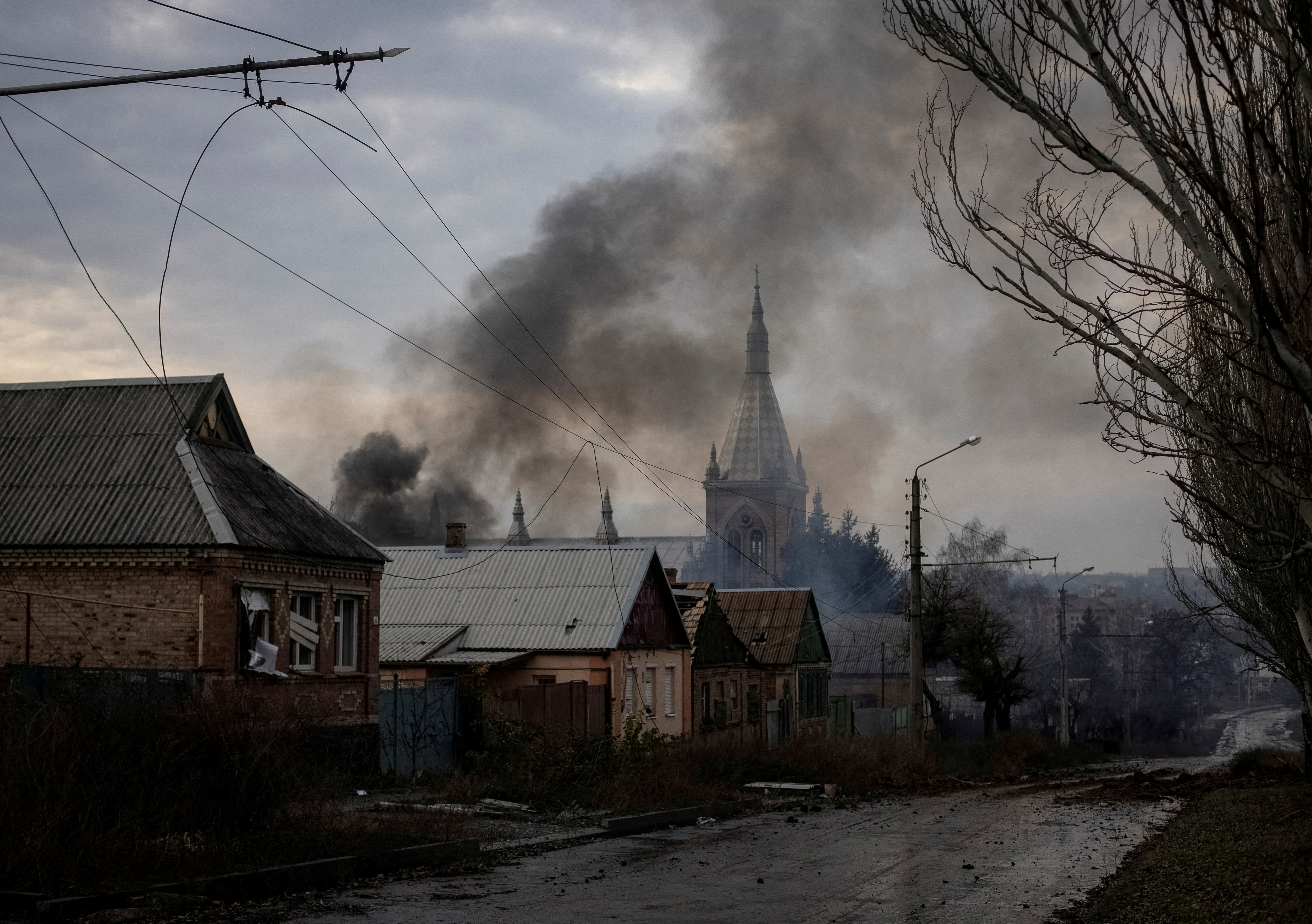
Wrecked apartment blocks, badly wounded soldiers, mud-filled trenches and civilians cowering in cellars under incessant bombardment have become familiar scenes in and around Bakhmut since the fighting began.

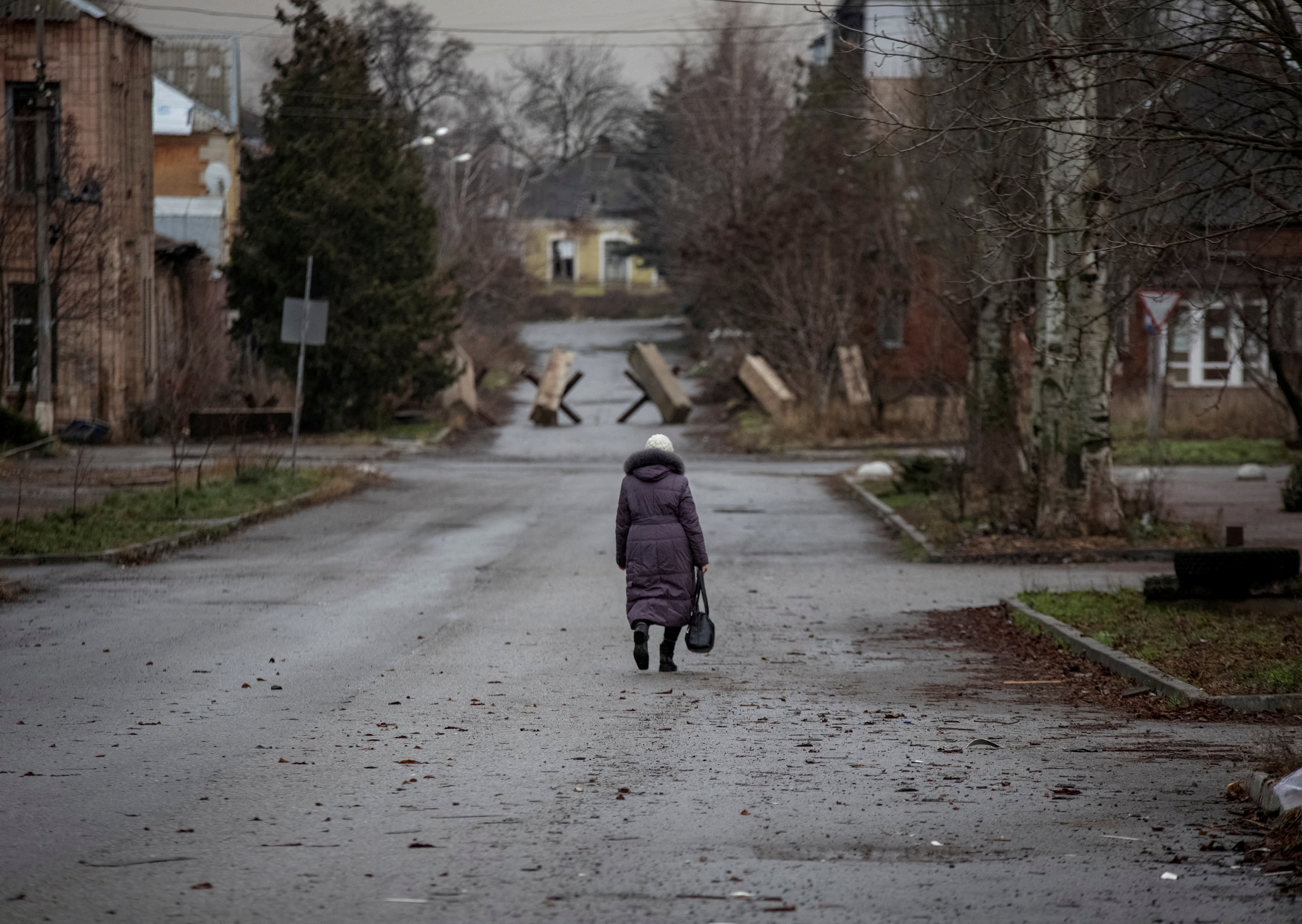
Gaining control of the city, with a pre-war population of 70-80,000 that has shrunk to close to 10,000, could give Russia a stepping stone to advance on two bigger cities – Kramatorsk and Sloviansk.

It would also deprive Ukraine of a useful road and rail supply line intersection.

But with fierce fighting there since Aug. 1, and Russian shelling since May, much of Bakhmut lies in ruins, while Ukrainian forces to the west have had ample time to build defensive lines nearby to fall back to.

“If Bakhmut had been captured when they started their attack in August then it would have been significant. But it’s all about momentum,” said Konrad Muzyka, a Polish military analyst.

He said Bakhmut’s strategic value had been reduced by Ukraine’s fortification of the surrounding area in the months that followed, making it hard for Russia to convert the city’s capture, if it happens, into a broader breakthrough.

Still, the clash has taken on outsized significance on both sides because it is the main theatre of fighting as winter bites, major resources have been deployed and it is the first battle in months Russia appears to have a chance of winning.

Described as a “meat grinder” by commanders on both sides, some Russian, Ukrainian and Western experts liken the struggle to World War One, where Germany and Britain suffered huge losses in trench warfare for often scant territorial gain.

Igor Girkin, a Russian nationalist and former Federal Security Service officer who helped launch the original Donbas war in 2014 and is under U.S. sanctions, said this week he thought his own side’s strategy in Bakhmut was “idiotic”.

“What will happen next (after the potential Russian capture of Bakhmut)?” Girkin mused in a video, adding the Ukrainians would merely fall back to a second defensive line while continuing to build other defensive lines behind that one.

“It’s chewing through the enemy’s defences according to the World War One model,” said Girkin, arguing that Moscow needed to change battlefield strategy and deploy its forces differently.

Michael Kofman, an expert on the Russian military at the U.S.-based CNA think-tank, said Moscow appeared committed to the battle because of resources it had already spent rather than because of “sound strategy”.

“The fighting for Bakhmut is not senseless, but strategically unsound (for Russia) given weak offensive potential and no prospect of breakthrough even if the city is captured,” said Kofman.

Neither side discloses the full extent of fatalities in Ukraine.

But Kyiv says Russia has been taking heavy losses and that many of those killed were convicts recruited by Moscow’s Wagner private mercenary company.

Yevgeny Prigozhin, Wagner’s founder, who is sanctioned in the West, has confirmed his men are fighting there.

The deal he offered convicts was to fight and be pardoned in six months or, if they joined up and deserted, face execution.

In November, independent Russian news outlet Mediazona reported that publicly available data from Russia’s Federal Penitentiary Service showed the overall prison population shrank by over 23,000 people in September and October, the biggest drop of its kind in more than a decade.

That suggested convicts had taken up Prigozhin’s offer. Reuters could not independently verify the data.

Prigozhin has cautioned against expecting rapid breakthroughs, and, in a Dec. 12 comment, said Wagner’s task in fighting for Bakhmut was to “kill as many enemy soldiers as possible, and bleed the Ukrainian army dry”.

Battlefield footage suggests intense fighting for relatively modest stretches of ground, with the frontline edging back and forth.

Russia, in its own battlefield updates, has spoken of Ukraine suffering heavy losses in men and hardware. Ukrainian President Volodymyr Zelenskiy said on Monday that Bakhmut was the “hottest spot” on a 1,300-km (800-mile)frontline.

His office said on Tuesday that Zelenskiy had visited the city to meet military representatives and hand out awards to soldiers.

For Russia, Bakhmut, which it calls Artyomovsk, the city’s Soviet-era name, has long held political value.

Lying on the frontline that bisects Ukraine’s eastern Donetsk region, taking Bakhmut would move Russia a step closer to full control of the Donbas, parts of which have been controlled by Russian proxies since 2014.

After Russian troops withdrew from Ukraine’s north in April in a humiliating retreat, Moscow publicly reframed its core war aim as the “liberation” of the largely Russian-speaking Donbas, of which Donetsk region makes up roughly half.

Muzyka, the Polish military analyst, said Bakhmut had become a battle of attrition.

“The Ukrainians are just wearing the Russians down and it’s quite effective in terms of manpower and equipment,” he said. “They are increasing the costs to the Russians.”

For Moscow, says British military intelligence, there is “a realistic possibility that Bakhmut’s capture has become primarily a symbolic, political objective”.

A win there would help lift morale and General Sergei Surovikin, overall commander of Russia’s forces in Ukraine since Oct. 8, could show he was right to redeploy his forces elsewhere after withdrawing from the southern city of Kherson.

It could also boost Prigozhin’s political capital in Moscow if he can take some credit for such a victory.

For Ukraine, say experts, the calculus in holding Bakhmut is partly about sustaining support from Western countries on whose arms supplies Ukraine’s war effort is dependent.

With Ukraine having scored a string of battlefield successes, even a relatively insignificant defeat risks creating the perception of stalemate, which could make Western countries less willing to extend support for Kyiv amid their own mounting economic problems stemming from the war.

“At this stage, Ukraine is the victim of its own recent success, and suffers from heightened expectations of sustained momentum,” said Kofman.

Related Galleries:
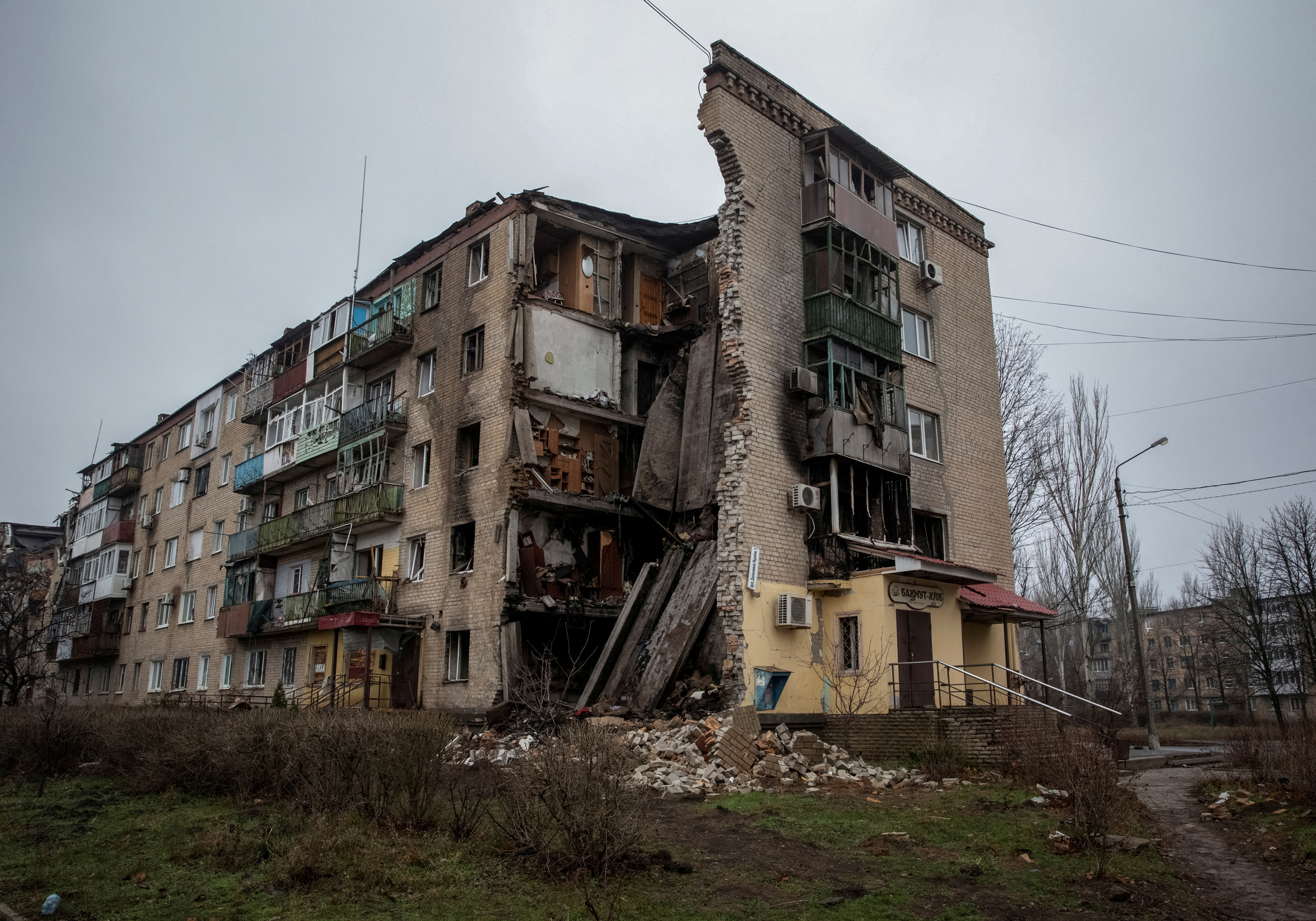
A view shows a residential building damaged by a Russian military strike, amid Russia’s attack on Ukraine, in Bakhmut, Ukraine December 18, 2022. REUTERS/Oleksandr Ratushniak

Residential houses are damaged by a Russian military strike, amid Russia’s attack on Ukraine, in Bakhmut in Donetsk region, Ukraine, December 9, 2022. REUTERS/Yevhen Titov

A local resident walks on an empty street, as Russia’s attack on Ukraine continues, in Bakhmut, Ukraine December 18, 2022. REUTERS/Oleksandr Ratushniak
Categories
Audio Sources - Full Text Articles

U.S. abortion fight in 2023 to focus on state laws, medication

2022-12-20T11:11:29Z

Six months after the U.S. Supreme Court overturned its 1973 Roe v. Wade ruling, the state of abortion rights around the country remains unsettled, thanks to a patchwork of lawsuits in state courts and emergency court orders.

Experts predict that the uncertainty will continue in the coming year, as cases wend their way through courts, and state legislatures consider new restrictions, potentially drawing new battle lines in the fight over abortion rights.

About half of all states are ultimately expected to adopt new abortion restrictions in the wake of the Supreme Court’s June ruling on Dobbs v. Jackson Women’s Health.

Since Dobbs, more than 20 million women of childbearing age have lost access to abortion, according to an October report from the Guttmacher Institute.

The litigation has resulted in chaos for abortion providers and patients, according to people involved in the lawsuits and legal experts. In state after state, courts have issued emergency orders blocking the new bans while lawsuits unfold, only to be reversed weeks or even days later on appeal.

“On a day-to-day basis for people who are trying to provide abortions and people who are trying to get abortions it can be very complex,” said Kimberly Mutcherson, a professor and co-dean at Rutgers Law School who focuses on reproductive rights issues.

Among the 18 states where new, or newly enforceable, abortion bans have been challenged since Dobbs, restrictions have been blocked pending further review in eight states – including by top courts in some deeply conservative states like Indiana and South Carolina.

No one expects all of the confusion to be resolved in 2023. But the state-by-state fight over abortion will move into a new phase, potentially providing long-awaited certainty on some issues while opening new battlefronts on others.

First, many of the currently pending lawsuits will move past their initial, emergency phase and onto final resolution in states’ highest courts, providing clarity at least in some states.

Mutcherson said that while the emergency orders blocking some states’ bans could be a “good sign” for abortion providers, it does not necessarily mean they would ultimately win. Courts could also simply be exercising caution while they confront new legal issues, she said.

“Part of what states have to do now, which they haven’t had to do before because of this federal right (under Roe), is they have to think more deeply” about what their constitutions say about abortion, she said.

Thus far, most of the successful challenges, at the emergency order stage, have relied on explicit language in state constitutions guaranteeing a right to privacy or equal rights specifically for women, both absent from the federal constitution.

Several conservative state legislatures will meet in 2023 for the first time since Dobbs. They could pass not only new abortion bans, but other kinds of laws aimed at penalizing people or companies that help women get abortions – for example, by funding or helping women travel to states where the procedure is legal, or publishing information online.

“I think we will see a lot of new and creative kinds of legislation, things I have not even contemplated,” said Katie Glenn, state policy director at the anti-abortion group Susan B. Anthony Pro-Life America.

Medication abortion has already become a battlefront, with anti-abortion groups filing a lawsuit seeking to pull one of the drugs used in the procedure from the market.

The battle over medication abortion, which accounts for more than half of abortions in the United States, is likely to expand in the coming year. Demand surged for shipments of abortion pills from overseas in the wake of Dobbs, and conservative states could pass laws aimed at cracking down on such shipments.

There are signs that the politics of abortion have shifted since Dobbs. While Republicans have historically campaigned on the issue, Democrats embraced it ahead of their unexpectedly strong performance in November’s midterm elections, portraying their opponents’ abortion measures as extreme.

Voters in Kansas and Kentucky also this year voted down anti-abortion ballot measures, and South Carolina’s legislature failed to pass a near-total abortion ban in a special session last month – all suggesting that the most stringent abortion measures may face political headwinds even in conservative states.

Explore the Reuters round-up of news stories that dominated the year, and the outlook for 2023.

Related Galleries:

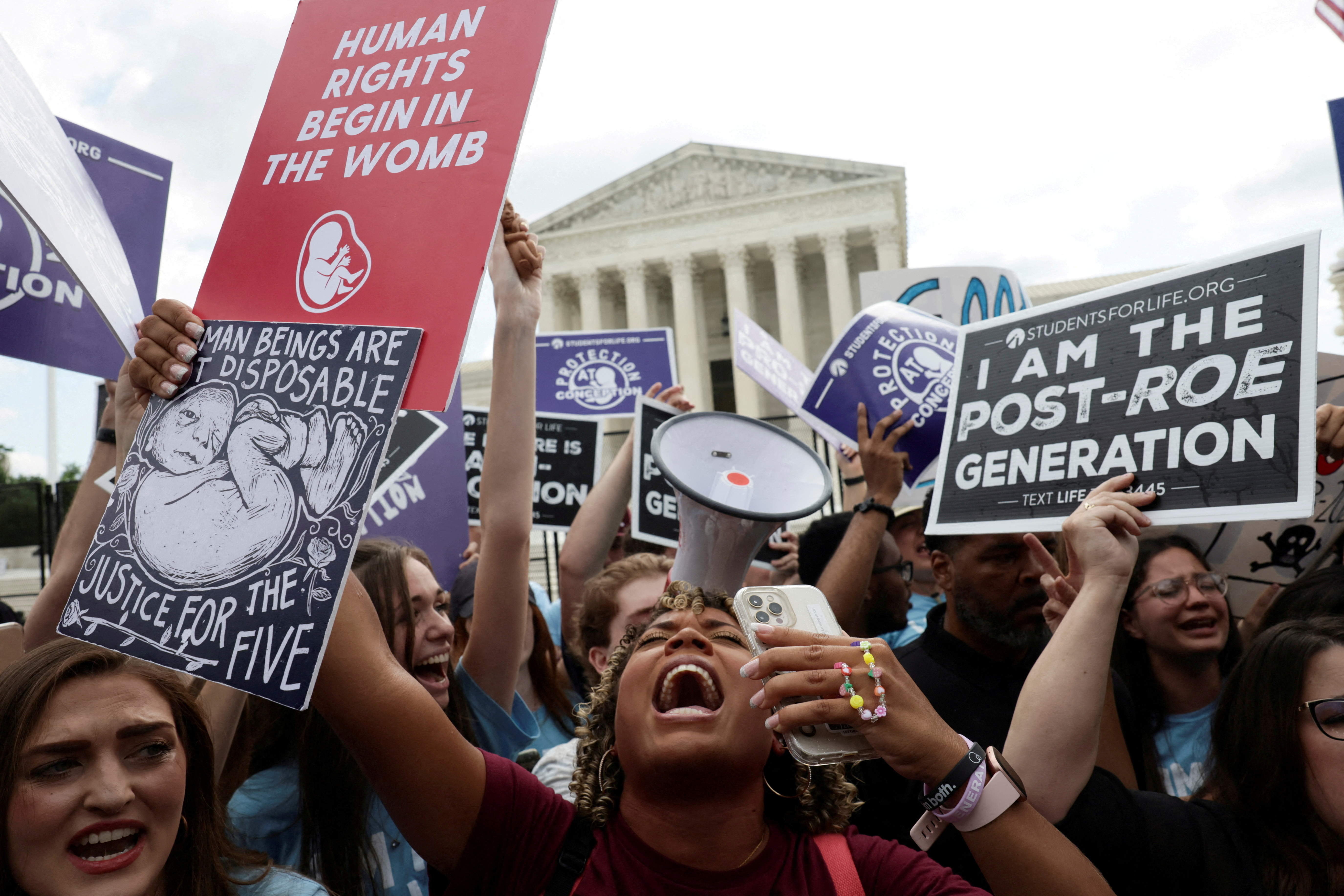
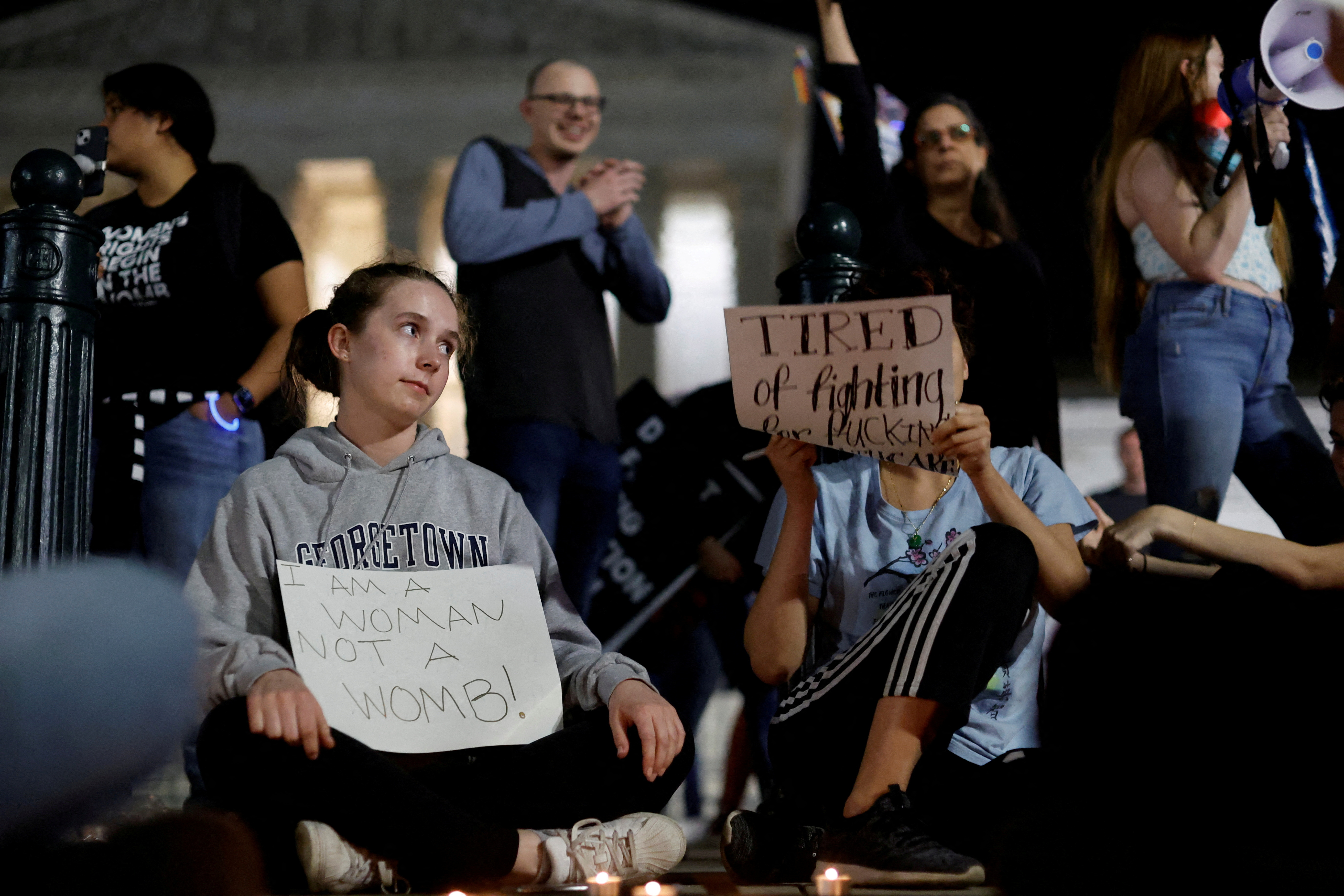
Anti-abortion demonstrators celebrate outside the United States Supreme Court as the court rules in the Dobbs v Women’s Health Organization abortion case, overturning the landmark Roe v Wade abortion decision in Washington, U.S., June 24, 2022. REUTERS/Evelyn Hockstein

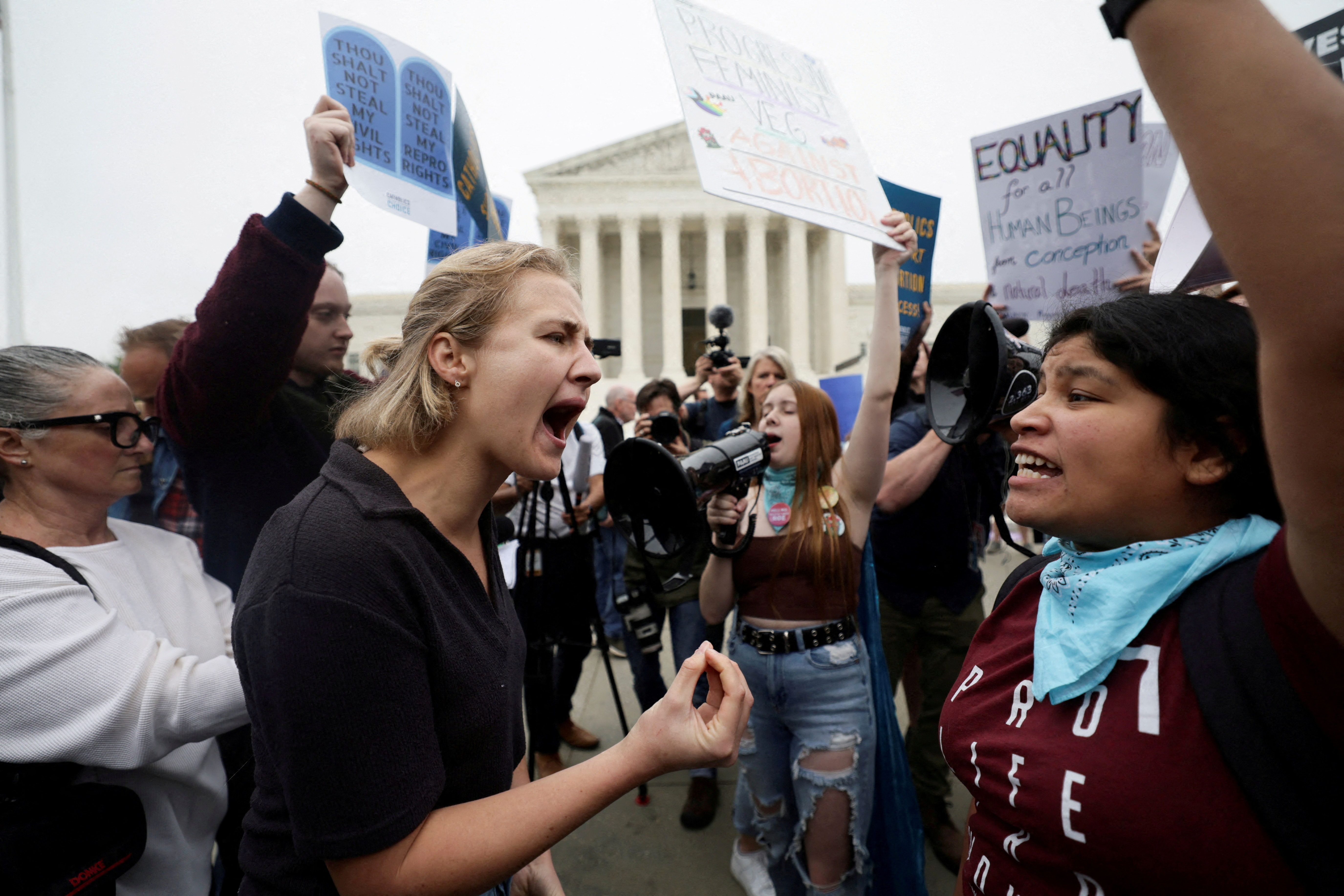
Pro-abortion and anti-abortion demonstrators protest outside the U.S. Supreme Court after the leak of a draft majority opinion written by Justice Samuel Alito preparing for a majority of the court to overturn the landmark Roe v. Wade abortion rights decision later this year, in Washington, U.S., May 3, 2022. REUTERS/Evelyn Hockstein

Pro-abortion rights protesters take part in a vigil while anti-abortion protesters celebrate behind them outside the U.S. Supreme Court after the leak of a draft majority opinion written by Justice Samuel Alito preparing for a majority of the court to overturn the landmark Roe v. Wade abortion rights decision later this year, in Washington, U.S., May 2, 2022. REUTERS/Jonathan Ernst
Categories
Audio Sources - Full Text Articles

U.S. Flies Nuclear-capable Bombers, Stealth Jets in Show of Force Against North Korea

SEOUL, South Korea — The United States flew nuclear-capable bombers and advanced stealth jets in a show of force against North Korea on Tuesday, as the powerful sister of North Korean leader Kim Jong Un derided doubts about her country’s military and threatened a full-range intercontinental ballistic missile test.

The deployment of the U.S. B-52 bombers and the F-22 stealth fighter jets for joint drills with South Korean warplanes was part of an agreement to protect South Korea with all available means, including nuclear, South Korea’s Defense Ministry said.

The drills, which also included F-35 and F-15 fighter jets from South Korea, took place in the waters southwest of Jeju island, the ministry said. The U.S. F-22 jets were deployed in South Korea for the first time in four years and will stay throughout this week for training with South Korean forces, it said.

[time-brightcove not-tgx=”true”]

The drills were held after North Korea claimed to have launched a test satellite for the development of its first military spy satellite, and tested a solid-fueled motor to be used on a more mobile intercontinental ballistic missile in the past several days.

North Korea already has fired a record number of missiles this year as a warning over the previous U.S.-South Korea military drills that it views as an invasion rehearsal. There are concerns it may react to the latest aerial training by the allies with a new round of missile tests.

Earlier Tuesday, Kim’s sister, Kim Yo Jong, used a slew of derisive terms—such as “malicious disparaging,” “rubbish” and “dog barking”—when she dismissed the outside assessments that cast doubt on North Korea’s spy satellite development and long-range missiles.

North Korea said its rocket launches Sunday were tests of systems for its first military reconnaissance satellite and released two low-resolution photos of South Korean cities as viewed from space. Some civilian experts in South Korea and elsewhere said the photos were too crude for a surveillance purpose and that the launches were likely a cover for North Korea’s missile technology. South Korea’s military maintained North Korea fired two medium-range ballistic missiles.

Kim Yo Jong said the test satellite carried a commercial camera because there was no reason to use an expensive, high-resolution camera for a single-shot test. She said North Korea used two old missiles as space launch vehicles.

“Didn’t they think their assessments are too inadequate and imprudent as they commented on our satellite development capability and related preparations only with two photos that we’ve published in our newspaper,” Kim Yo Jong, a senior ruling Workers’ Party official, said in a statement carried in state media.

A spy satellite was among several high-tech weapons systems that Kim Jong Un has vowed to acquire to better cope with what he called U.S. hostility. Other weapons Kim wants to build are multi-warhead missiles, solid-fueled long-range missiles, underwater-launched nuclear missiles, nuclear-powered submarines, and hypersonic missiles. Some experts say North Korea would eventually use such modern weapons systems and an enlarged nuclear arsenal to pressure the U.S. to win sanctions relief and other concessions.

Kim’s sister dismissed the South Korean government’s assessment that North Korea still has key remaining technological hurdles to overcome for functioning ICBMs that can reach the U.S. mainland—such as the ability to protect its warheads from the harsh conditions of atmospheric reentry.

Kim Yo Jong questioned how North Korea could have received data from warheads until they landed at targeted areas in the ocean in previous launches if the country truly lacked reentry technology.

“I think it’s better for them to stop talking nonsense, behave carefully and think twice,” she said.

Whether North Korea has a reliable arsenal of nuclear-armed missiles is a source of debate. But North Korea has repeatedly argued its tests of missiles capable of reaching the U.S. and its allies have confirmed warheads can survive atmospheric reentry and other challenges.

All of North Korea’s ICBM tests have been performed at a steep angle to avoid neighboring countries. Some experts have said without the standard-trajectory launch of ICBMs, the reliability of North Korean weapons cannot be guaranteed.

Touching upon those doubts, Kim Yo Jong suggested North Korea might fire an ICBM at a normal trajectory, a launch that could be considered as a much bigger provocation to the U.S. as the weapon would fly toward the Pacific Ocean.

“I can clear up their doubt about it. They will immediately recognize it in case we launch an ICBM in the way of real angle firing straight off,” Kim Yo Jong said.

Kim, whose official title is a vice department director at the Central Committee of the Workers’ Party, is considered as the North’s most influential official after her brother, according to South Korea’s spy service.

Lim Soosuk, a spokesperson at the South Korean Foreign Ministry, called her threats of a standard-trajectory ICBM launch “very regrettable.” He told reporters that North Korea’s nuclear ambitions would only deepen its international isolation and worsen its residents’ economic difficulties.

North Korea is one of the most heavily sanctioned countries in the world due to its nuclear and missile programs. But Kim Yo Jong said Tuesday North Korea is determined to boost its defenses at all costs.

“We make it clear that we will not remain a passive onlooker to any attempt to violate a sovereign state’s legitimate right but exercise our bounden rights and retake them at the risk of our lives if necessary,” she said.

Categories
Audio Sources - Full Text Articles

Tech founders love Elon Musk — and hope to emulate his brutal Twitter crackdown

Only two more Tuesdays left this year, readers. We didn’t think refreshing Elon Musk’s Twitter feed was how we’d spend it. But here we are. ¯_(ツ)_/¯ 

It’s Jordan Parker Erb and Diamond Naga Siu. Today, we’re taking you inside the latest club in Silicon Valley: Elon Musk’s fan club. Filled with tech executives, the group has gone almost unnoticed amid Musk’s chaotic takeover of Twitter — but they’re there, quietly cheering on the CEO from the sidelines.

We’ve got that, and more, below.


If this was forwarded to you, sign up here. Download Insider’s app here.


Tech execs applauding Elon

Lisa Blue/Philip Pacheco/Getty Images; Jenny Chang-Rodriguez/Insider

1. Welcome to the Elon Musk fan club. Dunking on how he changed Twitter’s company culture seems to be popular on social media. But for tech founders, Musk’s approach makes him a visionary. His “hardcore” approach to cost-cutting and efficiency is a stark contrast to the Silicon Valley norm of lavish benefits and idealistic visions.

  • Tech companies have historically offered many creative perks: nap pods, onsite acupuncturists and massages, free dry cleaning, nitro cold brew by the keg, rock climbing, and more. But critics say the high pay and cushy benefits made tech workers lazy.
  • Cue Musk’s Twitter takeover: slashing headcount, revoking benefits, and cranking up productivity. Tech founders are keen to adopt a similar reset, and Musk gives them a perfect playbook to follow. 
  • This freedom to crack down harder on workers is part of a larger power shift back to employers. With the tech labor market in flux, companies are able to let go of low performers without fear of not being able to fill the role.

Take a peek at his ardent, under-the-radar fan club.


In other news:

Elon Musk Tesla

Carina Johansen/Getty Images; Jeremy Moeller/Getty Images

2. Team Tesla or Team Twitter? Elon Musk is being forced to choose a company. Tesla shareholders have been jittery after the Twitter takeover, and Musk appears to be leaning toward his car company. Go behind the scenes of his decision.

3. Big Tech recruiters share their top job-seeking advice. Professional career coach Jonathan Javier was laid off twice — and both times ended up fast-tracking his career. He got Big Tech recruiters to dish their best job-seeking advice and share when they think hiring might pick back up. Check out their advice here.

4. Black women are worn out from discrimination in corporate America. Several Black women told Insider they’re starting their own businesses instead of dealing with statements like “David’s here. Susan’s here. And diversity is here.” Here’s how the fastest-growing group of entrepreneurs could take down corporate America.

5. ChatGBT probably won’t replace Google search anytime soon. ChatGBT, the sophisticated chatbot from OpenAI, may struggle to go beyond the current phase of an interesting — but deeply flawed — novelty tool, experts said. We explain why. 

6. Uh oh! You might owe scooter company Bird a few cents. Following a dismal third-quarter earnings report, the company has begun emailing customers that they still owe $0.62, $0.93, or $0.78 — from rides they took years ago. Inside Bird’s frantic bid for funds.

7. Twitter has a $1.3 million competitor. Spill is a new social platform (named after the phrase “spill the tea“) created by former Twitter employees — and already has 20,000 people on its waitlist, its founder told us. We got a look at the pitch deck Spill used to raise a $1.3 million pre-seed funding round. Check it out here.

8. Meet the designer behind Karlie Kloss’ metaverse clothing collection. RynityRift has partnered with Paris Hilton, Elton John, Alo Yoga, and other big names to design their metaverse clothing. He is able to reach a bigger audience in the metaverse than in real life. Follow a day in his life here.


Odds and ends:

The Apple Watch Ultra sitting on a pile of rocks.

Antonio Villas-Boas/Insider

9. We reviewed the rugged Apple Watch Ultra. Even if you’re neither outdoorsy nor an extreme athlete, the new Ultra stands out from the rest of the lineup. With its long battery life and unique functions, the Ultra is a great option for anyone willing to splurge. Read the full review here.

10. Time is running out to buy the best tech gifts. The holidays are quickly approaching, so we put together a list for a group that’s notoriously hard to shop for: teenagers. From the latest earbuds to new gaming gear, these are 25 tech gifts teens will actually be excited about.


What we’re watching today:


Curated by Jordan Parker Erb and Diamond Naga Siu in New York. (Feedback or tips? Email jerb@insider.com + dsiu@insider.com or tweet @jordanparkererb + @diamondnagasiu.) Edited by Hallam Bullock (tweet @hallam_bullock) in London.

Read the original article on Business Insider
Categories
Audio Sources - Full Text Articles

The US housing market faces a ‘triple whammy’ of threats – and stocks may stage a Santa Claus rally, a top strategist says

for sale sign flag america home

REUTERS/Jonathan Ernst

  • The US housing market has been hit by labor shortages, rising costs, and soaring mortgage rates.
  • Brian Jacobsen, an Allspring strategist, described those three trends as a “triple whammy.”
  • Signs of fading inflation this week could spark a Santa Claus rally for stocks, he said.

The US housing market is under severe pressure, stocks might stage a year-end rally, and the Federal Reserve probably won’t raise interest rates much higher, a leading strategist has said.

The NAHB/Wells Fargo Housing Market Index, which measures homebuilders’ sentiment on a scale of 0 to 100 with 50 being neutral, fell for a 12th straight month to 31 in December. That was its lowest reading since mid-2012, excluding a blip in the data when the COVID-19 virus struck the US in early 2020.

Brian Jacobsen, a senior investment strategist at Allspring Global Investments, blamed the gloomy data on growing fear of a recession, which he expects to strike by the middle of 2023.

“It’s been bad for housing,” he told Yahoo Finance on Monday.

The industry has already been hit by worker shortages during the pandemic, surging construction costs, and rising mortgage rates — and that has made homes less affordable and dampened demand, according to Jacobsen.

“Kind of a triple whammy there for housing,” he said.

On the other hand, the Allspring strategist suggested US stocks could reverse some of their recent declines before the new year. Allspring said in August that it had $476 billion in assets under management.

Jacobsen noted the November reading of the Fed’s preferred inflation gauge — the Personal Consumption Expenditures price index — is slated for release Friday. If the data suggests US inflation is moderating, stocks could jump on hopes that the central bank will end its interest-rate hikes earlier than expected.

“We could be setting ourselves up for at least maybe a little bit of a bounceback to end the year,” he said, raising the prospect of a “Santa Claus rally.”

Inflation surged to a 40-year high of 9.1% in June, and remained above 7% in November, well ahead of the Fed’s annual target of 2%. Its policymakers have responded by raising interest rates from almost zero in March to over 4% today.

Higher interest rates encourage people to save rather than spend, and they raise the cost of borrowing, relieving upward pressure on prices.

Jacobsen argued the Fed won’t hike rates much higher, and suggested fixed-income investors could benefit as the central bank eases off the gas.

“The end is near for rate hikes, and that tends to be a pretty bullish indicator for the bond market,” he said.

Jacobsen also touted emerging markets, saying they’ve been oversold this year in anticipation of dismal company earnings, and predicted small-cap stocks will lead the market higher next year.

Read more: Bank of America: Buy these 21 top-rated stocks that have been oversold in 2022 and are poised for outsize moves in 2023

Read the original article on Business Insider
Categories
Audio Sources - Full Text Articles

Obstruction is the charge Trump should fear most from the Jan. 6 panel referral, former chief of staff says

Mick MulvaneyFormer President Donald Trump (R) and his then-acting chief of staff Mick Mulvaney (L) at the White House on December 5, 2019.

Mark Wilson/Getty Images

  • Mick Mulvaney said Donald Trump should most fear the prospect of being charged with obstruction. 
  • “It’s not the crime, it’s the cover-up,” the former acting White House chief of staff said.
  • The Jan. 6 panel referred Trump to the DOJ Monday on four criminal charges, obstruction among them.

Former President Donald Trump has most to fear from the House Jan. 6 committee’s recommendation that he be charged with obstruction, according to his former acting chief of staff Mick Mulvaney.

The Democratic-led committee on Monday said it was unanimously referring Trump to the DOJ on charges of insurrection, defrauding the United States, obstructing an official proceeding, and making false statements to investigators.

It said it had uncovered substantial evidence in its 18-month probe that Trump violated the laws in seeking to cling to power after his defeat in the 2020 presidential election.

The referral is not binding — the DOJ can decide whether or not to act on the information it was sent.

Among the crimes the committee alleges Trump committed was seeking to influence witnesses testifying to the panel.

One claimed she was offered a lucrative job as the date of her testimony to the committee approached.

In an interview on Monday with CNN, Mulvaney said the most concerning charge for Trump was likely obstruction, since he didn’t think there was “hard evidence” to substantiate the other three. 

“It’s that obstruction charge that continues to get my attention,” Mulvaney told host Jake Tapper.

“So often in this business, it’s not the crime, it’s the cover-up. And if they’ve got people willing to go under oath and say that Trump or someone on his team offered them benefits or tried to interfere with their testimony, that could be a real problem for him.”

He said that he doubts the DOJ will be significantly influenced by the referral. There is already a special counsel at the department conducting a separate investigation into the Capitol riot, and the committee has shared its evidence with the department.

“I don’t know how these criminal referrals change much,” he commented. 

Trump has denied any wrongdoing in relation to the riot, in which supporters angered by Trump’s false claims of mass fraud in the 2020 election attacked the Capitol in the hope of keeping Trump in office.

He has also continued to defend the rioters and push his baseless election-fraud claims as he carries out a new campaign for the presidency in 2024. 

Read the original article on Business Insider
Categories
Audio Sources - Full Text Articles

The collapse of FTX has left many crypto investors without access to their cash. Meet one student who got $14,000 stuck on Sam Bankman-Fried’s exchange.

Good morning to the smartest corner of the internet. Phil Rosen here. I’m in sunny Los Angeles now, but don’t fret — I’ll still be ready to meet you in your inbox bright and early from the west coast.

In light of the hubbub surrounding FTX and Sam Bankman-Fried, this morning I’m thinking about a quote by novelist G. Michael Hopf: 

“Hard times create strong men, strong men create good times, good times create weak men, and weak men create hard times.”

This idea shows up often (Dune comes to mind), but I’m weighing this as it relates to the ongoing crypto drama. 

The billions of dollars that seemingly evaporated overnight with the collapse of FTX has left many feeling duped — but it’s also made everyone a little wiser.

More stringent regulatory scrutiny has arrived, influencers and commentators are voicing concern, and retail traders are pivoting into safer positions. 

The next time an earnest, wunderkind-founder in shorts tries to pitch a multibillion-dollar venture, interested parties will be more cautious.

In other words: Tough times make more cautious investors.

And that’s the sense I got from speaking to one 26-year-old investor who lost a sizable chunk of his portfolio in FTX. 


If this was forwarded to you, sign up here. Download Insider’s app here.


Sam Bankman-Fried

Jabin Botsford/Getty Images

1. I just caught up with FTX user Daniil Pemberton, who lost access to roughly $14,000 in funds when the crypto exchange imploded last month. 

When headlines first emerged about the faltering firm, Pemberton — a graduate student based in the Netherlands — had tried to withdraw his holdings

The FTX app showed the transactions were pending, but ultimately his attempts were not successful. All told, he lost access to about 60% of his total portfolio, including assets held in other platforms.

“The tech itself, the crypto, seems fine, but the problem is the institutions around it,” he told me on the phone Monday. “They are the ones who undermine the trust, because at any point a platform could make a bad decision which leads them to becoming bankrupt, and everyone loses.”

The SEC last week alleged that Bankman-Fried orchestrated a multiyear scheme to defraud investors. FTX’s new CEO, John Ray III, warned that, thanks to the company’s horrendous bookkeeping, it could take years to return funds to creditors. 

Now, FTX users like Pemberton have been left with a hole in their pockets and faltering faith in the digital asset sector. 

“I’m skeptical on who to entrust with my funds,” he said. 

Pemberton said one of the main reasons he initially deposited funds in FTX was because everywhere he turned, he saw people and media applauding the company, including many finance YouTubers he followed. 

“The New York Times had wrote about Sam Bankman-Fried, and so did other prestigious publications and individuals,” he said. “I thought surely they did their research and wouldn’t praise him without due diligence.”

Not only that, but Pemberton liked FTX’s promise of high yields on crypto. 

Looking back now, though, ramping up investments because of that feature was a dumb decision, he added.

Read the full story on this FTX investor — and how he plans to pivot to traditional investments.

Do you have a story to share about losing access to funds in FTX, or on how you’re changing your investment strategy? Tweet me (@philrosenn) or email me (prosen@insider.com) to let me know.


In other news: 

Wall Street street signThe stock market rout has continued this week, as hawkish Fed policy and global growth concerns weigh on investors.

Kolderal via Getty Images

2. Global stocks fall early Tuesday, after the Bank of Japan shocked markets with an easing in bond-yield controls that many are interpreting as a potential shift to hiking interest rates. Here are the latest market moves.

3. Earnings on deck: Nike, General Mills, and Oracle, all reporting.

4. Here’s where to put your money in 2023 with a recession closing in. Goldman Sachs, JPMorgan, and nine other Wall Street giants shared their year-ahead investment outlooks as risks to stocks and the economy continue to mount. Get the details here.

5. Global IPO launches sank by 45% this year. Aggressive central bank rate hikes, high inflation, and geopolitical tensions kept companies away, according to consultancy firm EY. Still, the energy sector saw a surge in IPOs as prices for oil and gas jumped.

6. The worst earnings recession since 2008 could throttle stocks next year. That’s according to Morgan Stanley’s chief US equity strategist, Mike Wilson. In his view, that downturn has likely not been priced in yet.

7. If Elon Musk steps down as Twitter CEO, that would be bullish for Tesla. The outspoken exec has damaged Tesla’s brand through his social media antics, Loup’s Gene Munster said. That means a resignation could potentially be a “big deal” for investors in the EV maker.

8. Morningstar strategists shared the best stocks to own in 2023. These names are set to produce returns for the next 20 years as consumer favorites, the firm said. See the list of 19 companies.

9. This couple in their 20s turned their side hustle into a business that brings in $19,000 a month. Steph Gordon and Den Mathu have learned how to negotiate raises and carefully select what to focus on. Here are their top three strategies to increase income. 

Lumber price today

Markets Insider

10. Lumber dropped to a new low for 2022 as homebuilder sentiment slips for the 12th month in a row. The critical building commodity is now down 68% year-to-date, and is off 79% from its record high reached in May 2021. “NAHB is expecting weaker housing conditions to persist in 2023 and we forecast a recovery coming in 2024,” economist Robert Dietz said.


Curated by Phil Rosen in New York. Feedback or tips? Tweet @philrosenn or email prosen@insider.com

Edited by Jason Ma in Los Angeles and Hallam Bullock (@hallam_bullock) in London.

Read the original article on Business Insider
Categories
Audio Sources - Full Text Articles

Exclusive: Afghan government officials helped smugglers sneak almost $1 billion in cash and gold out of Afghanistan as the US-backed government neared collapse, documents show

Money falling out of a wallet through the shape of AfghanistanHow corrupt was the US-backed government of Afghanistan? Who was involved and who knew about it? An official investigation into a massive smuggling ring reveals a troubling picture.

iStock; Rebecca Zisser/Insider

During the final months of the Islamic Republic of Afghanistan, as the Taliban advanced on the capital, the elected government struggled to reassure its US patrons that it could maintain control. Yet at the same time, smugglers were illegally carrying hundreds of millions of dollars in cash and gold out of the country with the assistance of officials from within the Afghan government, according to internal government documents and former Afghan officials. 

The office of Ashraf Ghani, the US-backed Afghan president, had been informed about the problem, insiders say. But it did nothing to stop it.

Documents assembled by Afghanistan’s now-defunct government and obtained by Insider show that $59.7 million in cash and gold went from Afghanistan to Uzbekistan through the port of Hairatan during the first three months of 2021, as the US contemplated withdrawing its forces and the Taliban geared up for the spring offensive that eventually toppled Kabul. During a 13-month period running from May 2019 through May 2020, the total was a staggering $824 million.

Though the couriers failed to declare the money to Afghan officials as it left the country, Uzbek customs agents on the other side of the border did record the cash and gold on handwritten customs forms. Those records were obtained by Afghan anti-corruption officials as part of an investigation into money smuggling, and they form the basis of a scathing report documenting a river of cash flowing out of the impoverished nation.

Much of the money, the Uzbek customs forms show, was bound for the United Arab Emirates, where top Afghan officials would flee when their government collapsed later that year. 

Gold and cash totaling four percent of Afghanistan’s GDP was smuggled through one border crossing

Situated on a river with one bridge crossing, Hairatan is the highest-volume customs port in Afghanistan. Insider obtained 457 pages of customs records showing that more than $824 million in cash and gold illegally crossed the border there during the second half of 2019 and the first half of 2020  — roughly four percent of Afghanistan’s GDP and more than the total amount of humanitarian assistance that the US government was providing to the country each year. In early 2021, as the new US administration was evaluating a sped-up withdrawal plan, between $500,000 and $1 million was passing through each day, the documents show. 

The smuggling flouted Afghan laws requiring travelers to declare cash or gold worth $10,000 or more and a strict ban on exporting $20,000 or more. The Uzbek customs forms don’t specify who the money belonged to or how the smugglers obtained it, but such a large and illicit flight of capital out of the country was one of many warning signs that the Afghan government’s survival could be in jeopardy. 

The documents accuse Mirza Mohammad Katawazai, the former deputy speaker of Afghanistan’s parliament, of directing the smuggling ring with the help of a network of Afghan intelligence officials, border guards, and port officials. (Katawazai has denied previous allegations of smuggling ties.) They also accuse Atta Mohammed Noor, the former governor of Balkh province, where Hairatan is located, of providing security for the smugglers and issuing threats to potential competition. The documents identify the two men as being part of the 2021 smuggling ring; they do not allege who was behind the $824 million smuggled in 2019 and 2020.

Noor did not immediately respond to a request for comment made through his former spokesperson; Katawazai did not immediately respond to a message sent via his Facebook page.

Afghan President Ashraf Ghani had a history of failing to combat smuggling, insiders say

The investigation into the smuggling ring was led by an Afghan official who provided Insider with contemporaneous emails, meeting notes, investigative materials including interviews and videos, as well as additional reports on corruption compiled as part of their official duties. The investigator told Insider that they brought the records to the attention of the administration of Afghan president Ashraf Ghani, but that the findings languished on the president’s desk for months. Eventually, the investigator said, they shared the documents with the US Embassy and European diplomats in the hope that they could prod Ghani to crack down on the corruption in his own administration. That didn’t happen. Instead, the investigator said, they began to receive death threats. 

A senior official in Ghani’s administration told Insider that the former president had a history of failing to act against smuggling. While the official didn’t have direct knowledge of the Hairatan investigation, they said Ghani overlooked a different money-smuggling case in 2020, when smugglers were caught attempting to move millions of dollars through a northern province. “I expected Ghani would make a big issue out of this,” the official said. Instead, no charges were filed and the money was released back to the smugglers. This could not have happened, the official said, without Ghani’s approval.

US President Joe Biden and Afghan President Ashraf Ghani meet in the Oval Office.Afghan President Ashraf Ghani meets with President Joe Biden in June 2021. Less than eight weeks later, Ghani would flee the capital amid the collapse of the US-backed Islamic Republic.

Susan Walsh/AP

American officials spent the first months of 2021 publicly extolling the durability of Ghani’s government, which would collapse almost immediately upon the US exit in August. But in private, they were airing serious concerns about corruption. On March 31, 2021, diplomats from the US Embassy in Kabul met with an Afghan government delegation that included members of the team investigating the Hairatan smuggling. According to notes of the meeting obtained by Insider, the Americans told their Afghan counterparts that corruption could only be stopped “if there is will” and expressed concerns about corruption “at the inner circle of the President.”

Meanwhile, the Biden administration continued to pour billions of dollars into Ghani’s government and spoke publicly about an enduring US-Afghanistan partnership. Even after Biden announced in April 2021 that the US military would leave the country by September, the official US plan was to continue funding Ghani’s government, having already spent $2.3 trillion on the war and $145 billion on reconstruction. 

“The president would say, ‘Oh, we’re working on it.'”

The corruption plaguing the Afghan government was no secret. It is mentioned repeatedly in the final report of the US Afghan Study Group and investigations by the Special Inspector General for Afghanistan Reconstruction (SIGAR). What the details of the Hairatan money-smuggling investigation offer is a window into the vast scale of that corruption, and the lack of action by the person in Afghanistan — Ghani — who was in the best position to do something about it.

“The president would say, ‘Oh, we’re working on it,” said the investigator, whose identity is known to Insider but whose name and other details are being withheld due to the ongoing risk of reprisals. “We would follow up two or three times and nothing would happen. It was clear he wasn’t interested. If the president wasn’t going to take any action, there was no way we could go further.”

The sheer volume of capital flight has echoes of the 2010 Kabul Bank scandal, when nearly $1 billion went missing and hundreds of millions in fraudulent loans to government insiders were routed to companies in Dubai. In that case, some of the money was smuggled out in airline food trays. In some ways, the Hairatan scheme was more brazen. According to the investigator, smugglers simply packed up the cash and gold and carried it over the border, secure in the knowledge that even if they were searched, the customs authorities had already been paid off.

A spokesperson for the US State Department acknowledged that “endemic corruption across multiple Afghan administrations” contributed to the Taliban’s takeover. “Since 2002, the United States consistently stressed to the Afghan government the importance of combating corruption, raising these concerns frequently at the highest levels of the Afghan government,” the spokesperson wrote in an emailed statement. They declined to address the particulars of the smuggling allegations, or comment on US knowledge of them.

Ghani’s US lawyers, Reid Weingarten and Michelle Levin, declined to comment. Some details of the Hairatan smuggling operation, from 2021, were previously reported by TOLO News.

“We’re going to take you out”

Ghani, long touted by Washington as a trusted partner for building a democratic, independent Afghanistan, is a former academic with ties to the World Bank and United Nations. He renounced his US citizenship in 2009 to run for office, and served as president of Afghanistan from 2014 until its fall in August 2021. Ghani’s salary was roughly $150,000 a year; a typical Afghan civil servant earned $2,400. As the Taliban closed in on Kabul, he fled the country by helicopter with a small group of advisors, surprising the Biden White House, which had expected him to stay and lead the fight.

Rumors that Ghani left with more than $169 million in cash from public coffers were later debunked by SIGAR, but questions remain about Ghani’s considerable personal wealth and use of discretionary funds from Afghanistan’s budget. Today, the former president resides in the United Arab Emirates, where he established a temporary headquarters in the luxury suite of a 5-star hotel, according to the Wall Street Journal

In the autumn of 2020, as word of the money-smuggling investigation spread through the highest levels of Ghani’s government, the investigator began to receive anonymous threats. Some of the phone numbers began with several zeroes, indicating that the calls came from inside the presidential palace. “You are touching something very serious,” one of the callers said. The investigator told Insider that they were followed and that on one occasion, a man accosted them in a coffee shop and tried to convince them to get in their vehicle. 

As the investigator continued to gather evidence, the threats became more extreme. “If you keep doing this, we’re going to take you out,” said one anonymous caller.

Two of the investigator’s sources, who had lodged complaints about corruption, disappeared.

Insider could not independently verify the investigator’s account of being threatened and harassed.

The Taliban around a desk in the presidential palace in Kabul.Taliban fighters on August 15, 2021, shortly after seizing the presidential palace in Kabul.

Zabi Karimi/AP

After Ghani’s government imploded, the investigator decided to leave the country with their family. They emphasized to Insider that, Ghani’s inaction notwithstanding, there were many people inside the old government who wanted things to change. “It isn’t just me,” they said. “A lot of people were doing the right thing. They were keeping track of the corruption, filing complaints, and helping me gather more evidence. If there were not many people with integrity, we wouldn’t have known about what was happening.”

Sarah Chayes, a former special adviser to the Joint Chiefs of Staff on Afghanistan and author of Thieves of State: Why Corruption Threatens Global Security, told Insider that corruption issues within the Afghan government extended both beyond and before President Ghani. “Yes, Ghani knew there was significant corruption within the executive branch,” she said. “And yes, he did little to curtail it. But he had a lot on his plate. He ended up spending most of his time managing the military situation….  And taking a longer view, the US owned the country for 20 years. Though people were ringing alarm bells for years — saying the mission would fail if corruption was ignored — Washington refused to take meaningful action.”  

Those in Ghani’s inner circle appear to have prospered during their time in power. In June, the Wall Street Journal reported that the former president’s ministers have been snapping up rental properties in California and villas in the UAE, where the bulk of the smuggled money was headed. The UAE is also the home of Ghani and Noor, the former provincial governor with alleged ties to the Hairatan smuggling ring.

Read the original article on Business Insider
Categories
Audio Sources - Full Text Articles

Biden weighs visit to Japan“s Nagasaki during G-7 summit in May – reports

2022-12-20T11:00:55Z

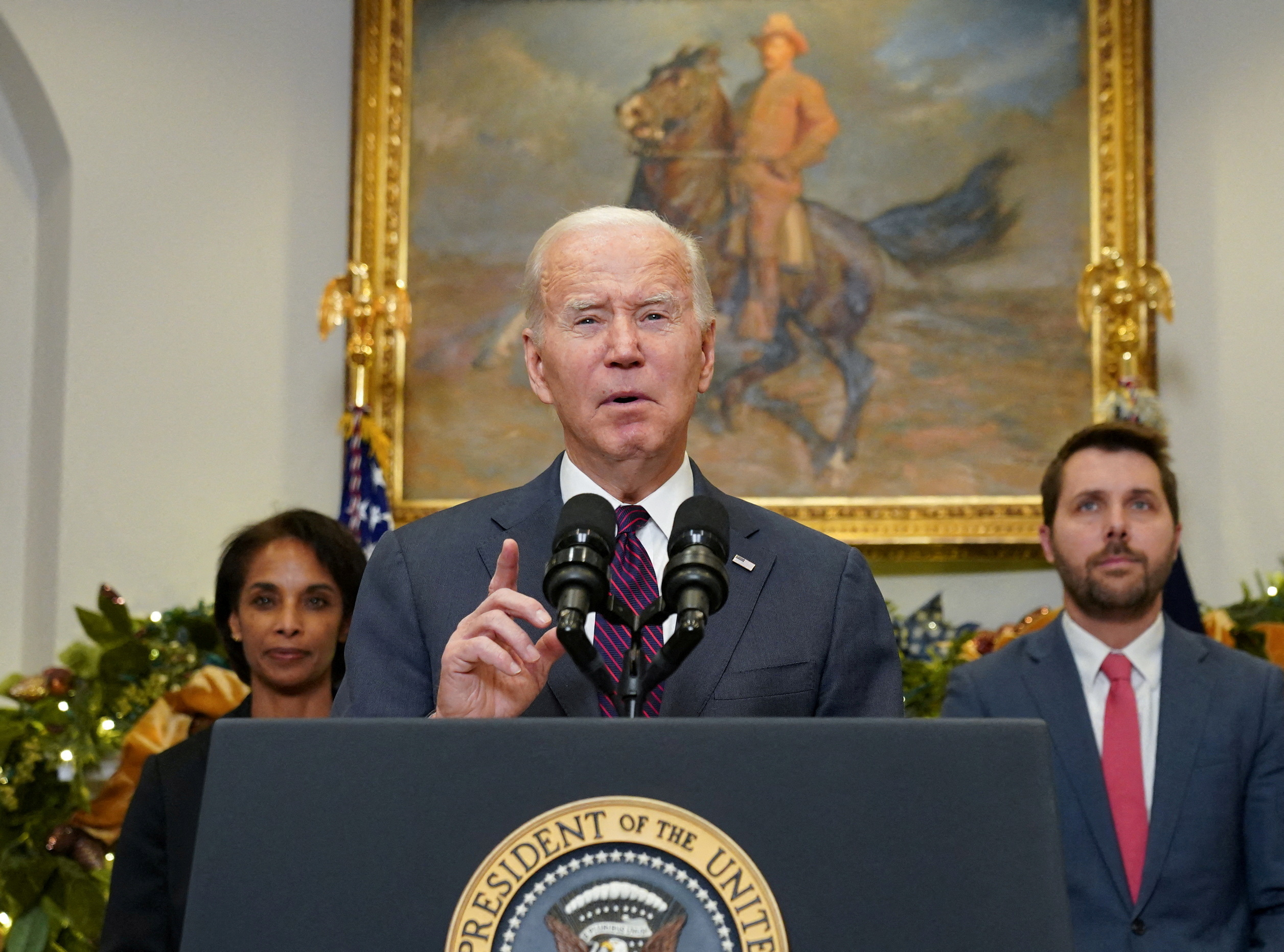
U.S. President Joe Biden speaks about inflation at the White House in Washington, U.S., December 13, 2022. REUTERS/Kevin Lamarque

U.S. President Joe Biden is considering a trip to the Japanese city of Nagasaki with Prime Minister Fumio Kishida during a G-7 summit visit next year, media reported on Tuesday.

Kishida will host G7 leaders in the city of Hiroshima for a summit in May that is expected to focus on threats posed by nuclear weapons.

The United States dropped a nuclear bomb on Hiroshima on Aug. 6, 1945, during World War Two. It dropped one on Nagasaki three days later.

In 2016, then U.S. President Barack Obama became the first incumbent U.S. president to visit Hiroshima. No sitting U.S. president has ever visited Nagasaki.

Both the U.S. and Japanese governments have come up with a proposal for a Nagasaki visit, the Nikkei newspaper reported, adding that the United States had approached Japan with the plan. Kyodo News first reported the plan.

The White House and Japanese government did not immediately respond to requests for comment.

Japan will use its turn next year in a leadership role at the Group of Seven and elsewhere to press Russia to halt its war in Ukraine, Minister of Foreign Affairs Yoshimasa Hayashi said at a Reuters NEXT conference this month.


Categories
Audio Sources - Full Text Articles

Venezuelans try to rebuild after shattered U.S. migration dreams

2022-12-20T11:10:24Z

Julio Perez, a 38-year-old auto mechanic, sold his car and tools to make the dangerous journey from Venezuela to the United States.

But like many migrants in the two months since the United States changed its immigration policy, he opted to board a plane back to Venezuela.

The United States on Oct. 12 expanded the existing Title 42 policy, used since the pandemic to send migrants from Central America and elsewhere back to Mexico and other countries without a chance to seek asylum, to include Venezuelans.

Perez, who went without eating for two of the four days trekking through the Darien jungle, says he dreams of trying again by plane, but that his means are limited.

“For now, I’m staying here, to start from scratch,” he said.

A U.S. Department of Homeland Security (DHS) spokesperson told Reuters that the number of Venezuelans who crossed the southwest border without authorization is down to around 100 a day on average from 1,100 a day the week before the Oct. 12 announcement.

Reuters spoke to nine migrants who crossed the Darien and had to return because of the policy change, including Franklin Sandoval a 22-year-old, who, like Perez, hails from Venezuela’s west-central city of El Tocuyo.

Sandoval trekked through muddy pathways and waste-high rivers, only to find out the news of the Title 42 policy after emerging.

“To be told this news was really, really awful after everything I experienced there in the jungle,” Sandoval said.

Upon receiving the news of the U.S. policy change, which has been slammed by human rights groups, Sandoval too decided to cut his losses and return to Venezuela via Panama.

Since returning, he has been unable to find work and says he suffers anxiety attacks remembering the journey.

“When you leave the Darien, you don’t laugh or cry, you’re traumatized,” he said.

The Washington Office on Latin America (WOLA), a rights group, says the move has exacerbated an existing humanitarian crisis pointing to families traveling with children and a lack of shelters.

One Mexican official told Reuters that the comprehensive deal they reached with the United States on Venezuelan asylum seekers had shown “good results” since it granted humanitarian access to thousands of them by air in addition to the expulsion provision.

The Title 42 policy is now set to end on Dec. 21 unless legal challenges delay that deadline, adding to more confusion for migrants.

Like Sandoval, Perez – who says he would never attempt to cross the Darien again – is still haunted by his journey of broken dreams.

“I don’t sleep well,” Perez said. “I keep waking up remembering what we went through there.”

Related Galleries:

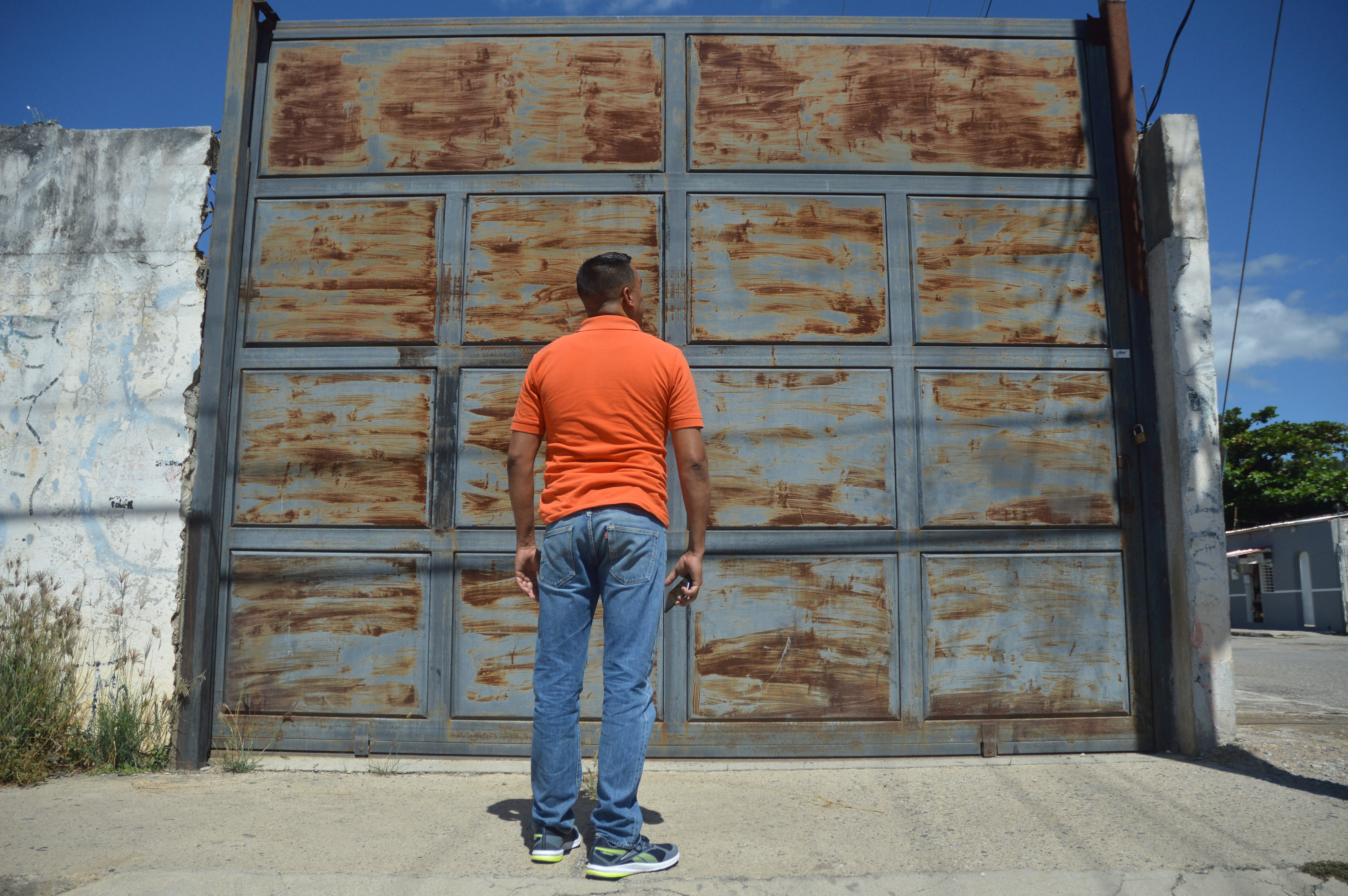
Julio Perez, 38, who had hoped to get to the U.S. to work for money to build a house for his family in Venezuela, stands in front of the gate of his old mechanical workshop, in Caracas, Venezuela December 6, 2022. REUTERS/Jesus Hernandez

Franklin Sandoval, 22, who tried to reach the U.S. in search of a better life, kisses a rosary while talking to Reuters at his home, in Caracas, Venezuela December 6, 2022. REUTERS/Jesus Hernandez

Venezuelan migrants, some expelled from the U.S. to Mexico under Title 42 and others who have not yet crossed after the new immigration policies, rest in an old warehouse that was improvised as a shelter in Ciudad Juarez, Mexico December 1, 2022. REUTERS/Jose Luis Gonzalez

Julio Perez, 38, who had hoped to get to the U.S. to work for money to build a house for his family in Venezuela, pushes his car in a fuel line, in Caracas, Venezuela December 6, 2022. REUTERS/Jesus Hernandez

Franklin Sandoval, 22, who tried to reach the U.S. in search of a better life, holds a rosary and Venezuela flag while talking to Reuters at his home, in Caracas, Venezuela December 6, 2022. REUTERS/Jesus Hernandez
WP Radio
WP Radio
OFFLINE LIVE