Categories
Audio Sources - Full Text Articles

Rebuilding Ukraine: London Forum Highlights Opportunities and Barriers

As Ukraine, with the help of its allies, pursues victory against the destructive Russian predator, a discussion on the future reconstruction of Ukraine is underway. Private financing is a top priority, but questions remain over Ukraine’s governance and management.

The Ukraine Infrastructure Forum took place in London on Dec. 2, organized by the Strategy Council with support from a host of sponsors. Attendees included representatives of the international finance and banking sectors, private business, the Ukrainian government and representatives from Ukraine’s local authorities.

The forum sought to build on the agreements and structures of the benchmark Lugano forum earlier this year and prepare a system of reconstruction following the cessation of hostilities.

While Russia’s war against Ukraine continues to rage and new waves of Russian missiles rain down on the country, restoration of the vast quantity of infrastructure destroyed by Kremlin aggression may seem like a distant future.

However, aware that the country needs to kick reconstruction into gear from the first day of victory, the Ukrainian government is looking to have systems and partners in place well in advance.

Baroness Meyer opening the Forum on behalf of the British government/Kyiv Post

Importance of private financing

Whilst favorable that Ukraine’s partners have not abandoned the country in its time of need, the scale of the work at hand is dauting even for the most robust publicly funded body. As such, privately financed projects remain the priority.

Susan Goeransson, director for the Municipal and Environmental Infrastructure of the European Bank for Reconstruction and Development (EBRD) said “Ukraine has always been a key country of operation for us. We have a portfolio of $4.4 billion and 53 percent of that is in infrastructure.”

The EBRD has already committed $1.1 billion this year and is looking to provide a further $1.5 billion next year.

Goeransson said “I am talking of energy security and vital infrastructure. This has included a liquidity loan to Ukrenergo and loans to Naftogaz and the Ukrzaliznytsya.”

Financial help is also being provided by the International Financial Corporation (IFC) of the World Bank. Already offering $2 billion to fund the private sector and local governments, it is now ensuring the supply of critical goods and services in the wake of Russian missile barrages.

It recognizes the importance of assessing levels of funds that Ukraine will need for reconstruction, as well as making it deliverable through a breakdown of priorities and sectors in need of financing.

Patric Acato, IFCs principal operations officer, said “That analytical base is key and something that we should be doing right now.”

Obstacles

However, issues relating to what Ukraine’s model of governance and infrastructure management will look like, continues to worry western investors.

Christopher Mackenzie of IST is in the business of refurbishing sewage pipes – a growing problem in Ukraine since the systems are based on Soviet period infrastructure. He spoke of the environmental and “healing” issues the country faces if this vital infrastructure sector is not addressed.

Echoing the worries of larger institutional investors, Mackenzie voiced concerns over current governing structures, saying “Kyiv is a bottleneck for the municipalities. They don’t like to hear it, but it’s how we see it as operators.”

Perhaps the solution to the ever-present question of governmental transparency is privatization. With reference to sewage pipe liners, Mackenzie said “Why are we buying all this liner from Germany. Why can’t Ukraine make its own liner?  What’s holding us up?  Maybe it’s time we talk of privatizing water and sewage systems in Ukraine.”

Reassuring investor concerns regarding Ukrainian governmental “interference” in private investment, Oleksandr Gryban, deputy economy minister of Ukraine, took time to reiterate Ukraine’s commitments to privatization and continued governmental guarantees of lawful means of doing business.

Another discussion, vital to Ukraine’s future, covered the needs of the agriculture sector.

Speaking for Ukrainian agricultural producers, Julia Bereschenko of Astrata voiced her concerns over farmers’ ability to export produce. Ukraine’s export commitment in the present war climate stands at 4 million tons per month. However, Bereschenko expressed doubt about the country’s ability to deliver.

“The throughput of seaports is down from ten to five vessels per day, and the 4 million ton [commitment] may not be achievable. In addition to increased logistical costs, small farmers are losing money as logistics account for 60 to 70 percent of costs.”

“Farmers are unlikely to be able to plant all available land in spring and this will have enormous consequences for global food security. We also need to keep the sea-ports open. This is the main condition for Ukrainian agriculture to survive.”

Key issues to progress are the ongoing war combined with the sluggishness of deployment when it comes to large scale infrastructure projects. The private sector is seen as the answer by EBRDs Goeransson, saying “EBRD has showed that it can approve projects. We see that private sector investments do move much more quickly”.

IFC’s Acato was more cautions, also warning of the governmental aspect of infrastructure projects. He said: “Talking of rebuilding better – projects need to be planned well but also in government. If there is public money going into supporting these projects, we need to make sure that it’s done well”.

Reminder that the war is not over

The forum was also given a reminder of what Ukraine is facing every day.

Vitaly Vlasyuk, deputy governor of the Kyiv regional military administration, outlined the current achievements of the government in dealing with the horrific toll of attacks and the resilience of the Ukrainian people, as demonstrated by the centers of resilience peppered throughout the country.

Often with nothing but tents with basic power and a stove for heating, they offer a chance for people to take time to charge their phones and use vital life-saving medical equipment, with parents taking children there to use inhalers and other medical equipment.

While the mood of the forum was generally upbeat, the vast scale of the undertaking to restore and renew Ukraine – estimated at no less than $1 trillion, opened many questions that will need to be addressed in the near future.

The post Rebuilding Ukraine: London Forum Highlights Opportunities and Barriers appeared first on Kyiv Post.


Categories
Audio Sources - Full Text Articles

ISW Russian Offensive Campaign Assessment, December 5 – Kyiv Post

Crucial inflections in ongoing armed service operations on December 5:

  • Russian forces continued to protect their positions alongside the Svatove-Kreminna line versus Ukrainian assaults.[16]
  • Russian forces ongoing to make incremental gains about Bakhmut but have not still surrounded the city, and conducted offensive operations in the Avdiivka-Donetsk Town location. Ukrainian sources claimed that compact Russian assault groups of 15-20 personnel are trying to penetrate Ukrainian lines.[17]
  • Russian profession officials continued the forceful transfer of Ukrainian children from occupied territories in Donetsk and Luhansk Oblasts to Russia beneath the guise that the young children call for distinctive medical care.[18]
  • Russian forces shelled additional than 20 settlements on the right (west) bank of the Dnipro River and continued to strike Kherson Town.[19]
  • Russian senator Andrey Klishas of the ruling United Russia party proposed the Kremlin restrict the capacity of Russians who fled the place to avoid mobilization to secure do the job on returning to Russia.[20]
  • Ukraine’s Main Intelligence Directorate (GUR) reported that the Russian military services, in live performance with the Russian Interior Ministry, is using measures to start an digital database by February 2023 to doc the personalized facts of all servicemen and prohibit their motion even when out of uniform.[21]

Russian forces performed a further wave of missile strikes concentrating on Ukraine’s electricity infrastructure on December 5. Russian and Ukrainian sources documented on December 5 that Russian forces carried out missile strikes concentrating on Ukrainian civilian and electricity infrastructure in Kyiv, Odesa, Vinnetysia, and Zaporizhia Oblasts.[1]  The Ukrainian General Staff noted that Ukrainian air defenses shot down 60 of over 70 missiles launched.[2] Deputy Head of Ukraine’s Presidential Office environment Kyrylo Tymoshenko Kyrylo Tymoshenko stated that the Russian strikes weakened a electric power provide line in Sumy Oblast.[3] ISW beforehand assessed on December 2 that while Ukrainian and Western-presented air defenses are further more lessening Russia’s dwindling source of precision munitions, the small proportion of Russian strikes having via Ukraine’s air defenses are nonetheless possessing major consequences on Ukrainian vital infrastructure.[4]

Ukrainian forces probably performed strikes on two Russian strategic airbases on December 5, inflicting mild damage even though demonstrating Ukraine’s capability to strike Russian rear parts and potentially disrupt Russia’s campaign of strikes towards Ukrainian infrastructure. The Russian Ministry of Defense and a number of milbloggers described that Ukrainian forces employed UAVs to strike the Engels-2 airbase in Saratov Oblast (roughly 315 miles from Ukrainian territory) and the Dyagilevo Air Base in Ryazan Oblast (somewhere around 285 miles from Ukrainian territory).[5] Both airbases property aspects of Russia’s strategic bomber fleet, which Russia has utilized to strike Ukraine throughout the war. Ukrainian Presidential Advisor Mikhail Podolyak tweeted that the Kremlin should really have identified that “if a little something is released into other countries’ airspace, quicker or afterwards unidentified traveling objects will return to departure place.” Even now, Ukrainian authorities have not formally claimed obligation for the strikes as of publication.[6] Russian resources claimed that a Ukrainian drone struck plane at the Engels-2 Airbase in Saratov Oblast, Russia, damaging strategic bombers and missile carriers.[7] Russian resources also claimed that a Ukrainian drone destroyed a Russian fuel truck at the Dyagilevo Air Foundation in Ryazan Oblast, Russia.[8] The Russian Ministry of Defense claimed that the strike deliberately focused Russian extensive-selection plane.[9] Ukrainian forces possible sought to disrupt Russian strikes towards Ukrainian significant infrastructure and show Ukraine’s ability to focus on Russian strategic belongings.

Anger more than the Russian military’s inability to avoid the Ukrainian strikes on Russian strategic airbases over 280 miles from Ukrainian positions outweighed praise for the hottest round of strikes from Ukraine within the Russian milblogger community. Russian milbloggers criticized Russian officers for failing to foresee and reduce the drone strikes at the Engels-2 and Dyagilevo Air Bases on December 5.[10] Select milbloggers observed that Russian military services officers have not adequately shielded the airbases, with some suggesting that Russian officials did not adequately defend the bases irrespective of knowing that they have been very clear targets for Ukrainian strikes.[11] Several distinguished Russian milbloggers claimed that Ukrainian sabotage and reconnaissance teams have to have released the strike towards the Engels-2 air foundation from within Russian territory, asserting both that Ukrainian sabotage and reconnaissance groups are lively within Russia or – if the UAVs have been released from Ukrainian territory – that Moscow is under danger from Ukrainian territory.[12]

Russian milbloggers also referred to as on Russian navy officers to authorize major retaliation strikes in opposition to Ukraine and intensify counter-terrorism steps inside of Russian territory.[13] The milblogger community complained that Russian armed service officers do not contemplate their ideas and overlook open-source intelligence (OSINT) and that, had Russian officers taken milbloggers’ warnings into account, the two strikes on Russian military services bases would have likely been prevented.[14] Select milbloggers prompt that the strikes on Engels-2 and Dyagilevo Air Bases threaten Russia’s legitimacy as a nuclear ability as the strikes weakened plane able of carrying a number of nuclear weapons.[15]

See the full report listed here.

Resource connection

The post ISW Russian Offensive Campaign Assessment, December 5 – Kyiv Post appeared first on Ukraine Intelligence.

Categories
Audio Sources - Full Text Articles

Exclusive Insight: Crackdown on Corruption in Odesa – Kyiv Post

On On Dec 5, Ukrainian law enforcement officers raided the premises of the Odesa Metropolis Corridor to search the office environment of Mayor Gennadiy Trukhanov and his deputies. Investigators of the National Anti-Corruption Authority of Ukraine (NABU) in coordination with the Anti-Corruption Prosecutor’s Business office seized paperwork in lawful and fiscal offices of Odesa City Council.

The police also arrested Oleksandr Hranovsky (Aleksandr Granovsky) and Boris Kaufman, homeowners of the Vertex group, which controls the oldest resorts in Odesa (Bristol, Londonskaya, Passage), the greatest cigarette distributor in Ukraine (TEDIS), and other folks genuine estate and industrial properties. This was documented by the local newspaper Dumskaya.web, which added that a third man was arrested but his identity is continue to unknown.

“On Dec 5, 2022, in compliance with the prosecutorial procedures of the Anti-Corruption Prosecutor’s Business, NABU investigators arrested 3 individuals suspected of making a prison group that managed Odesa Town Council officials and of committing other crimes of corruption. Preliminary legal qualification in accordance to section 1 of art. 255, element 3 of art. 369 of the Legal Code of Ukraine,” the press release of the Anti-Corruption Prosecutor’s Place of work reported.

Hennady Trukhanov (C) talks throughout a Large Anti-Corruption Courtroom listening to on Oct. 11, 2021, set to determine his bail. On Oct. 6, Trukhanov was charged with structured crime and abuse of ability.
Photograph by High Anti-Corruption Court docket/Kyiv Post

“In truth, the felony organization controlled all substantial budget expenses in Odesa and coordinated the key concerns on the agenda of City Council classes. To have out criminal actions, folks initiated a systemic corruption method of officials and deputies of the regional council, which ensured that the important conclusions have been taken by the nearby govt.”

The two business people, regarded as by Ukrainian media to be really near to Mayor Trukhanov, notorious for his alleged corrupt techniques, have been taken from Odesa to Kiev. Hranovsky, a previous lawmaker who had been closely linked to previous president Petro Poroshenko, had by now been positioned on a preferred list by NABU.

That NABU had been investigating activities of the people in query for some time is no solution. What is astonishing is the acceleration of the legislation enforcement system’s steps while the war with Russia carries on. It seems that the war by itself has necessitated the combat from corruption and highly effective “business” cliques to be stepped up, and especially in a city of such strategic significance as Odesa – the sea gate of Ukrainian export.

In fact, NABU suspects Hranovsky of possessing organized a scheme, thanks to which the Odesa port facility lost Hr 93.3 million.

In addition, on Oct 6, 2022, the former Common Prosecutor of Ukraine, Iryna Venediktova, declared that she experienced signed the initiation of a criminal investigation into five suspects for allegedly acquiring, in the interval from 2016 to 2019, a prison approach to seize of nearby finances funds and of municipal land for speculation. Because of to their strategy, 6 land plots with a full spot of 15.9 hectares ended up transferred to private possession, and Hr 131 million was illegally taken from the town budget.

Subsequently, the Anti-Corruption Prosecutor’s Office environment said that the mayor of Odesa and a few other town council officers experienced been educated of the suspected crime beneath Section 1 of Artwork. 255, paragraph 2 of the art. 364 of the Prison Code of Ukraine. In whole, 16 people today have been regarded element of a prison corporation, of which 10 were users and the rest were being accomplices.

What has just occurred in Odesa is not an isolated progress and seems to be component of an unfolding broader offensive to control corruption at a time when Ukraine’s safety and reputation are owning to be defended to the utmost.

Supply url

The post Exclusive Insight: Crackdown on Corruption in Odesa – Kyiv Post appeared first on Ukraine Intelligence.

Categories
Audio Sources - Full Text Articles

U.N. summit aims for global pact to protect nature

2022-12-06T08:09:45Z

Countries are gathering Tuesday for a key U.N. nature conference in Montreal, aiming to broker a new global agreement to protect what’s left of Earth’s wildlife and natural spaces.

Negotiators hope that the two-week summit, known as COP15, yields a deal that ensures there is more “nature” — animals, plants, and healthy ecosystems — in 2030 than what exists now. But how that progress is pursued and measured will need to be agreed by all 196 governments under the U.N. Convention on Biological Diversity (CBD).

“How do you translate ‘nature positive’ into an actual term we can measure?” said Basile van Havre, one of the co-chairs of the group responsible for drafting the agreement. “That’s what we’re doing through the creation of the new goals.”

More than 10,000 participants, including government officials, scientists, and activists, were set to attend the summit starting Wednesday and running through Dec. 19.

The talks follow years of negotiations and calls by environmentalists and businesses to both protect natural resources and halt what scientists have labeled the sixth mass extinction.

More than 1 million species are now threatened with extinction, vanishing at a rate not seen in 10 million years. As much as 40% of Earth’s land surfaces are considered degraded, according to a 2022 U.N. Global Land Outlook assessment.

“We need governments to adopt a clear and urgent mission to halt and reverse biodiversity loss by 2030,” said Eva Zabey, executive director of Business for Nature, a global coalition of businesses and conservation groups.

Like many other campaigners, Zabey called for “an ambitious, clear and enforceable international agreement” similar to the Paris Agreement on climate change. “We cannot afford to squander what could be a historic moment” in Montreal.

The U.N. biodiversity talks, held every two years, have never garnered the same attention as the world’s main environmental focus – the annual U.N. talks on climate change. But there is increasing awareness that protecting nature and controlling climate change go hand-in-hand.

Healthy ecosystems such as forests and seagrass beds are key to controlling global warming. At the same time, rising global temperatures are increasingly threatening many ecosystems as well as species unable to adapt quickly or to move to cooler climes.

Overall, the U.N. hopes to persuade all countries to pledge to put at least 30% of their land and sea areas under conservation by 2030 – a target often referred to as the “30-by-30” goal. Currently, only about 17% of the world’s land area falls under some sort of protection, while less than 8% of the global ocean is protected.

Another 22 potential targets are also being considered, from curbing pesticide use to canceling some $500 billion in subsidies for activities that cause damage to nature.

But the draft deal is still riddled with bracketed phrases – indicating a lack of agreement and ongoing discussion on hundreds of points, negotiators said. Some of toughest areas include how to ensure poor nations will have the funding needed to restore degraded areas, whether to include efforts to curb climate-warming emissions, and whether to impose a deadline for phasing out pesticides.

Even the 30-by-30 goal gets tricky in the details, given that some nations hold vast land or ocean areas teeming with wildlife, while others do not.

“There’s a lot that’s not agreed,” said Sue Lieberman, vice-president of international policy at non-profit the Wildlife Conservation Society. “It’s going to be a very challenging process.”

Unlike the U.N. climate talks, Montreal’s summit will see few world leaders, which negotiators say could make it tougher to reach an ambitious agreement.

Canadian Prime Minister Justin Trudeau plans to attend some of the summit, his government said.

China was due to hold the summit in the city of Kunming, but postponed the event four times from its original date in 2020 due to COVID before agreeing to hold the talks in Montreal.

Meanwhile, Montreal police have put up a 3-meter (10-foot) fence around the downtown summit venue, Palais des congrès, and are preparing for thousands of student protesters expected to swarm the Montreal’s streets to demand a strong deal to protect nature.

Related Galleries:

Atlantic Puffins are seen among the daisies on Skomer Island, Pembrokeshire, Wales, Britain July 16, 2019. REUTERS/Rebecca Naden/File Photo

An aerial view of soil erosion near Arusha, January 20, 2012. Overgrazing and unusually intense rains have severely impacted the fragile ecosystem around Arusha. Picture taken January 20, 2012. REUTERS/Stringer/File Photo

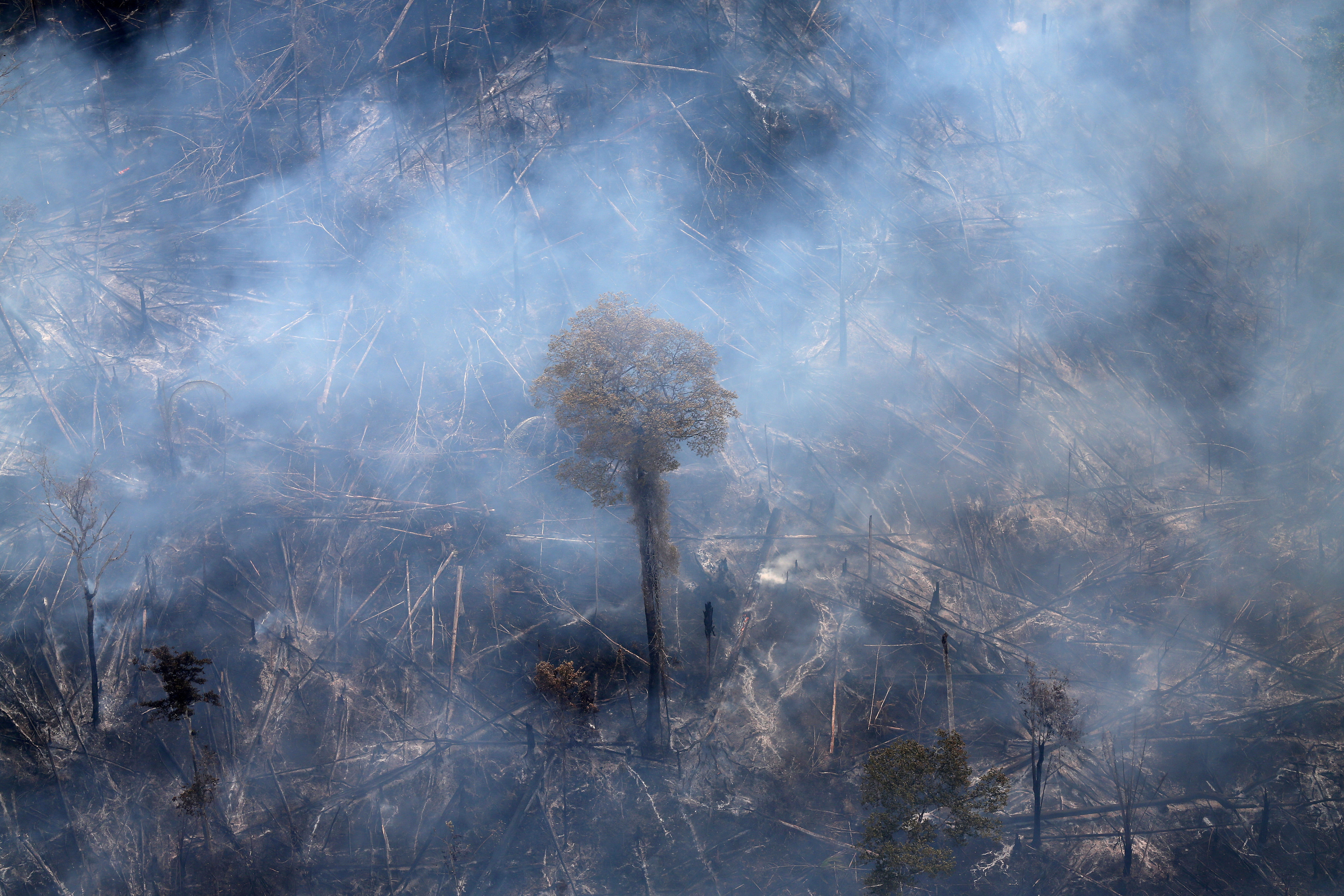
An aerial view shows a tract of Amazon jungle burning as it is cleared by farmers in Itaituba, Para, Brazil September 26, 2019. REUTERS/Ricardo Moraes/File Photo

A hammerhead shark swims close to Wolf Island at Galapagos Marine Reserve August 19, 2013. REUTERS/Jorge Silva/File Photo

A hammerhead shark swims close to Wolf Island at Galapagos Marine Reserve August 19, 2013. REUTERS/Jorge Silva/File Photo
Categories
Audio Sources - Full Text Articles

Beijing drops COVID testing burden as wider easing beckons

2022-12-06T08:03:58Z

Scores of university students in Nanjing gathered to protest against the campus’ COVID policies, videos released on Tuesday (December 6) showed, as frustration continues to mount against China’s strict zero-tolerance measures.

People in China’s capital Beijing were allowed to enter parks, supermarkets, offices and airports without showing proof of a negative COVID-19 test on Tuesday, the latest in a mix of easing steps nationwide after last month’s historic protests.

“Beijing readies itself for life again” read a headline in the government-owned China Daily newspaper, adding that people were “gradually embracing” their newfound freedoms.

Authorities have been loosening some of the world’s toughest COVID curbs to varying degrees and softening their tone on the threat of the virus, in what many hope could herald a more pronounced shift towards normalcy three years into the pandemic.

“This might be the first step towards reopening from this pandemic,” Hu Dongxu, 27, told Reuters as he swiped his travel card to enter a train station in Beijing, which has also dropped the need for tests to ride the subway.

Both of the city’s airports also no longer require people to test to enter the terminal, state media reported on Tuesday, although there was no indication of changes to rules requiring passengers to show negative tests prior to boarding.

But further loosening beckons after a string of protests last month that marked the biggest show of public discontent in mainland China since President Xi Jinping took power in 2012.

China may announce 10 new national easing measures as early as Wednesday, two sources with knowledge of the matter told Reuters.

The prospect of further relaxation of the rules has sparked optimism among investors that the world’s second biggest economy would regather strength, and help to boost global growth.

The Chinese yuan has risen about 5% against the dollar since early November on expectations of an eventual reopening of China’s economy.

But on the ground, many people have been slow to adapt to the changing rules. Commuter traffic in major cities such as Beijing and Chongqing has remained at a fraction of normal levels.

Some people remain wary of catching the virus, especially the elderly, while there is concern about the strain the loosening could put on China’s fragile health system.

“My parents are still very cautious,” said James Liu, 22, a student in Shenzhen in the southern province of Guangdong, where authorities “abruptly” dropped testing requirements for entry into the family’s residential compound.

China has reported 5,235 COVID-related deaths as of Monday, but some experts have warned that toll could rise above 1 million if the exit is too hasty.

Analysts at Nomura estimate that areas now under lockdown represent around 19.3% of China’s total GDP, equivalent to the size of India’s economy but down from 25.1% last Monday.

This marks the first decline in Nomura’s closely watched China COVID lockdown index since the start of October.

Meanwhile, officials continue to play down the dangers posed by the virus, bringing China closer to what other countries have been saying for more than a year as they dropped restrictions and opted to live with the virus.

Tong Zhaohui, director of the Beijing Institute of Respiratory Diseases, said on Monday that the latest Omicron variant of the disease had caused fewer cases of severe illness than the 2009 global influenza outbreak, according to Chinese state television.

China’s management of the disease may be downgraded as soon as January, to the less strict Category B from the current top-level Category A of infectious disease, Reuters reported exclusively on Monday.

“The most difficult period has passed,” the official Xinhua news agency said in a commentary published late on Monday, citing the weakening pathogenicity of the virus and efforts to vaccinate 90% of the population.

Hu Xijin, a prominent commentator and former editor-in-chief of state-run tabloid Global Times, called for more measures to allow people to travel freely around the country.

“The general direction for the return to normal life is already very clear, and it is essential to restore the free movement of people across provinces to restore the economy,” he wrote in a blog post on Monday.

Analysts now predict China may reopen the economy and drop border controls sooner than expected next year, with some seeing it fully open in spring.

But more than half of Chinese say they will put off travel abroad even if borders reopen tomorrow, according to a survey of 4,000 consumers in China by consultancy Oliver Wyman.

But for all those wary of returning to normality, there are others clamouring for more freedoms.

“Let’s implement these policies quickly,” a Beijing-based lawyer surnamed Li wrote on WeChat, reacting to Tuesday’s announcement of the drop in testing requirements in the capital.

“Our lives and work have been affected for so long.”

Related Galleries:

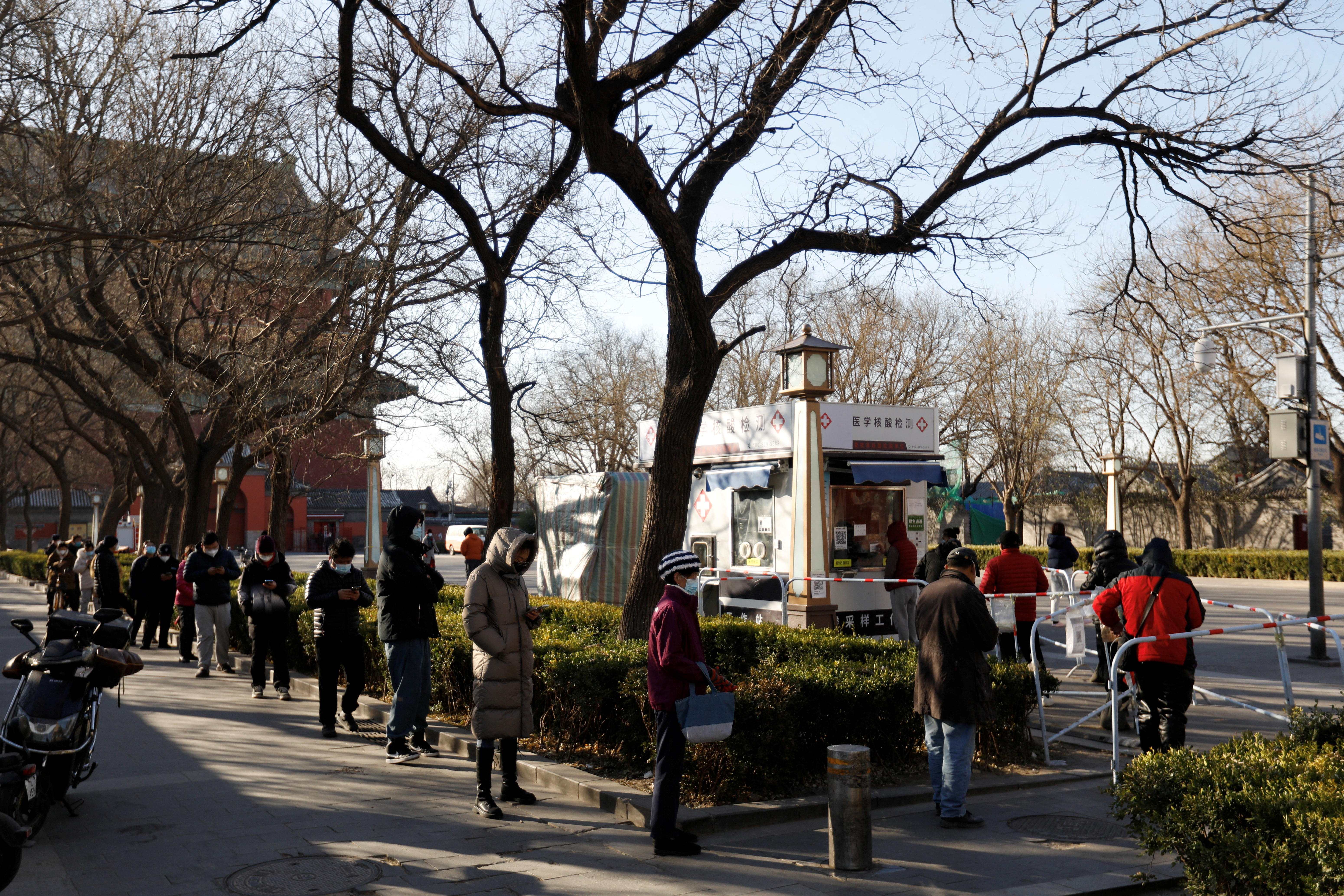
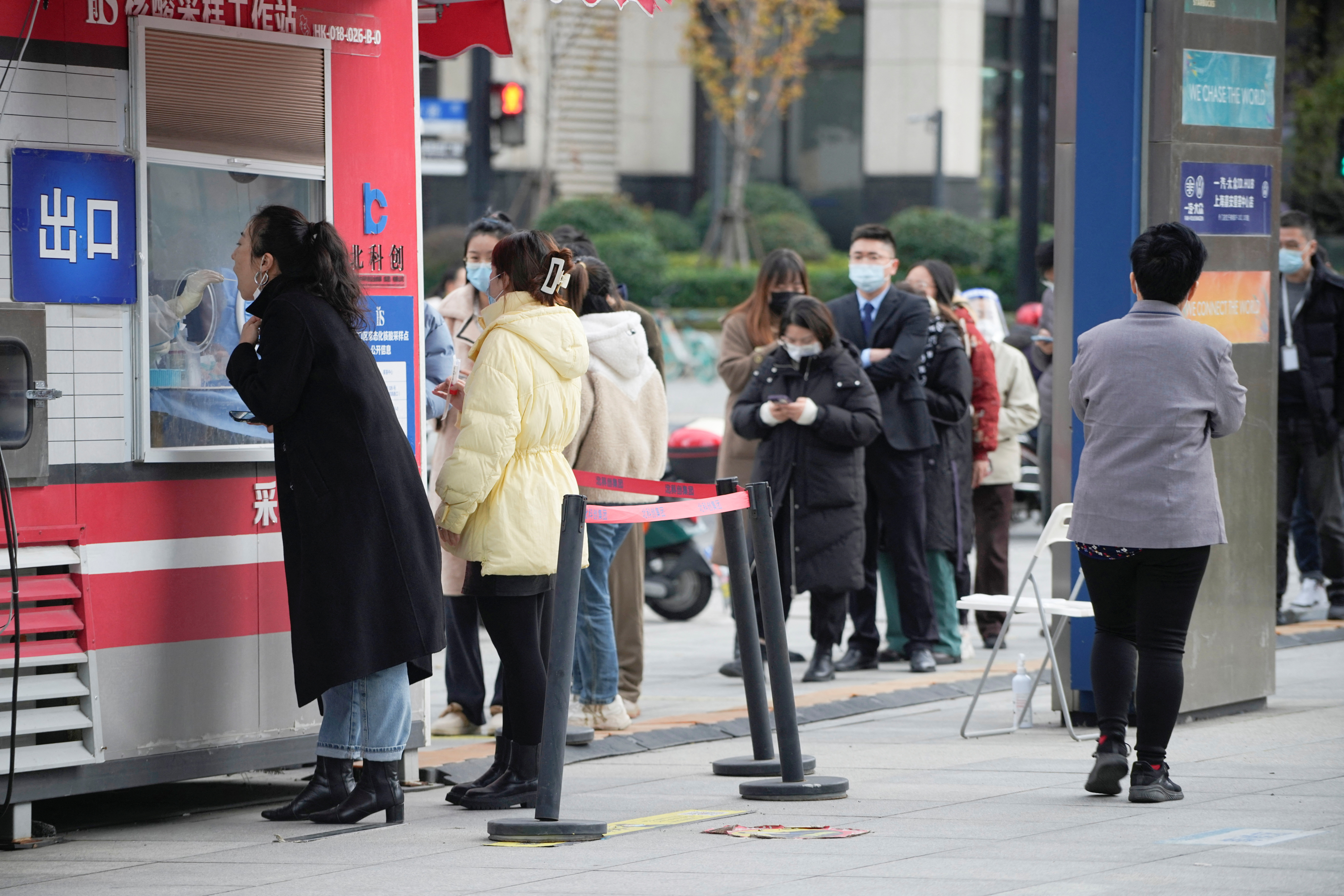
People line up at a nucleic acid testing site to get tested for the coronavirus disease (COVID-19) in Beijing, China December 6, 2022. REUTERS/Florence Lo

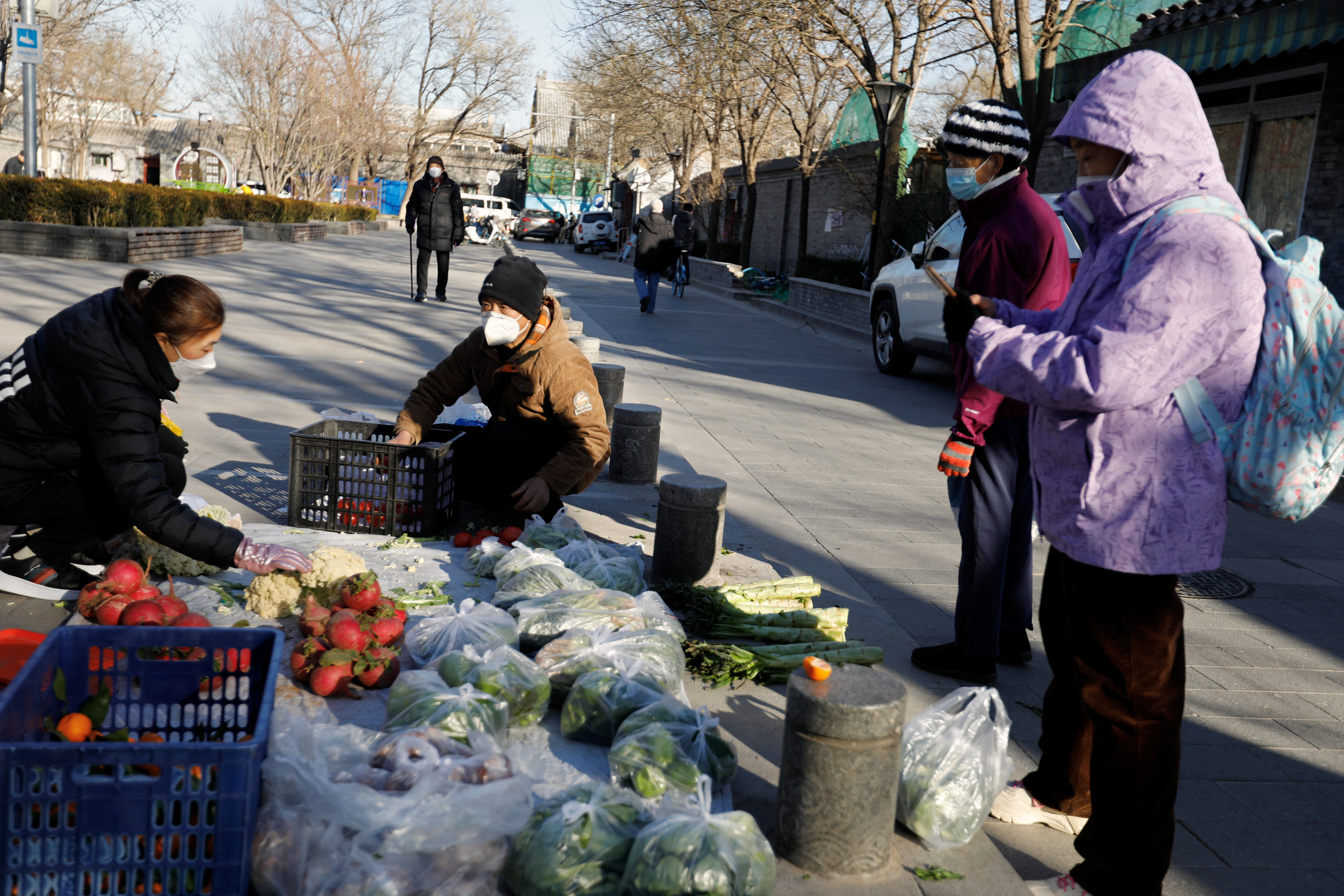
People shop for vegetables at a street stall amid the coronavirus disease (COVID-19) outbreak in Beijing, China December 6, 2022. REUTERS/Florence Lo

Students protest at the Nanjing Tech University demanding to be allowed to go home after a student tested positive for coronavirus disease (COVID-19) in Nanjing, Jiangsu Province, China, in this screen grab obtained by REUTERS on December 6, 2022.

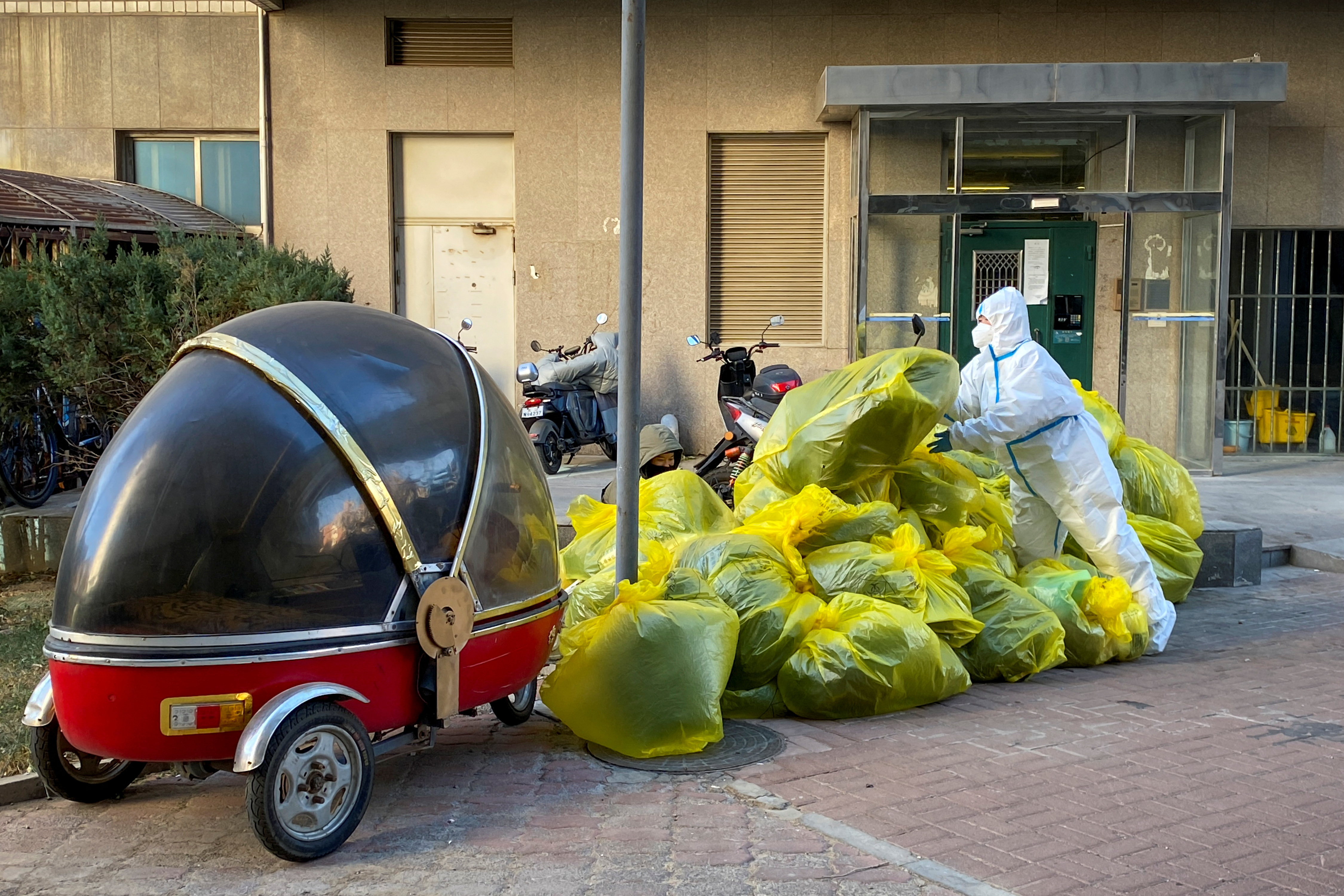
A pandemic prevention worker in a protective suit piles up bags of medical waste outside a building where residents isolate at home as coronavirus disease (COVID-19) outbreaks continue in Beijing, December 5, 2022. REUTERS/Thomas Peter

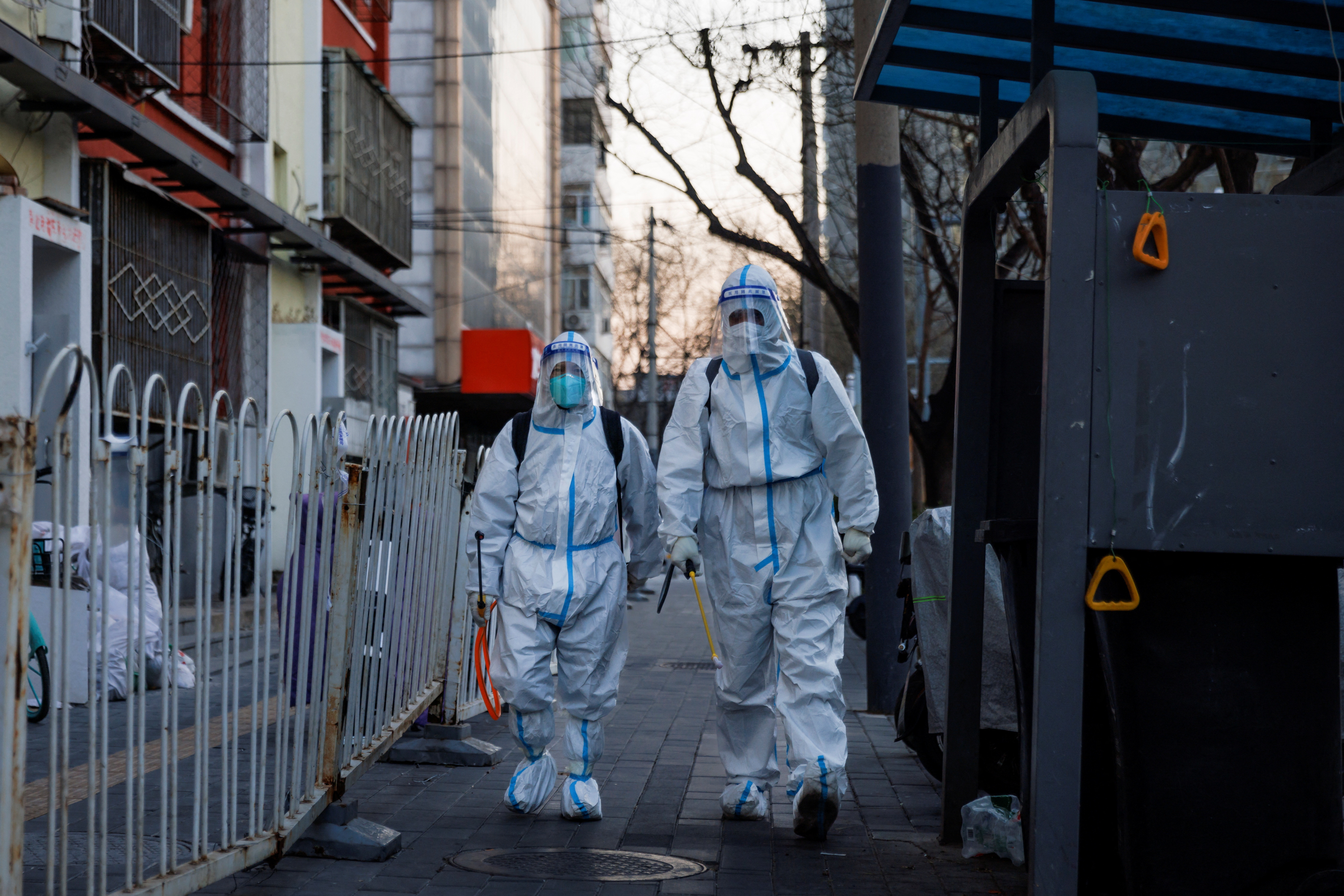
Pandemic prevention workers in protective suits walk in a street as coronavirus disease (COVID-19) outbreaks continue in Beijing, December 4, 2022. REUTERS/Thomas Peter

A woman gets tested at a nucleic acid testing site, as coronavirus disease (COVID-19) outbreaks continue in Shanghai, China, December 5, 2022. REUTERS/Aly Song

A worker in protective suit walks, as coronavirus disease (COVID-19) outbreaks continue in Shanghai, China, December 5, 2022. REUTERS/Aly Song


Categories
Audio Sources - Full Text Articles

Explainer: What“s on the agenda at the U.N.“s COP15 nature summit?

2022-12-06T08:09:15Z

A key United Nations summit to halt nature loss begins this week in Montreal, Canada. Delegates from nearly 200 countries will spend two weeks hashing out a new global deal to protect the world’s struggling species and fast-vanishing wild places.

Here is what you need to know:

This month’s Montreal summit is sometimes referred to as COP15, as it is the 15th “conference of parties” – or nations – signed onto the 1992 U.N. Convention on Biological Diversity (CBD).

China holds the COP15 presidency, meaning it is responsible for facilitating year-round negotiations ahead of hosting the deal-making summit. The CBD holds a summit every two years under a rotating presidency. China’s COP15 summit has been delayed four times, however, from its original date in 2020 due to COVID.

The world’s last set of nature targets – the Aichi Targets – expired in 2020. Currently, there is no global agreement in effect.

Nevertheless, there are currently more than 1 million species threatened with extinction, as plant and animal species vanish at a rate 1,000 times faster than the natural extinction rate.

In Montreal, negotiators are considering 23 new targets, tackling everything from pesticides and noise pollution to corporate disclosures around the use of natural resources.

Scientists and campaigners are pushing for countries to adopt a “Paris Agreement for nature” – referring to the 2015 deal brokered at the U.N. climate talks in Paris to hold global warming to within 1.5 degrees Celsius.

The hoped-for conservation agreement would see countries commit to ensuring that, at the end of this decade, the world holds more “nature” — animals, plants, and healthy ecosystems — than there is now.

A robust agreement would include goals that are easy to measure and monitor, with countries reporting regularly on their progress in protecting nature. So aside from deciding which targets to set, countries will also be debating how much oversight they will commit to.

Of the 23 proposed targets, one has garnered more attention and ambition than others. Known informally as “30-by-30,” this target would see countries commit to protecting 30% of their land and sea territories by 2030.

Already, more than 110 countries, including the United States and Canada, have pledged support for this goal, though the United States is the only country to have never signed onto the CBD. COP15 host China has so far committed to 25%.

The target builds on a previous, unmet global goal that countries protect 17% of their land and inland waters and 10% of their marine areas by 2020. While that goal inspired some conservation measures, overall the world fell short.

To protect nature, countries will need cash – a lot of it. Currently, there is a funding gap of at least $711 billion per year, according to a 2019 assessment by several conservation institutes.

As part of the talks, countries will discuss ways of raising money and redirecting funds toward conservation goals. These could include rethinking subsidies for industries that pollute or in other ways harm nature.

A draft of the deal being negotiated includes a call for slashing these so-called harmful subsidies by at least $500 billion annually from the estimated $1.8 trillion given to activities that degrade nature. It also envisions increasing both public and private sector financing to at least $200 billion per year.

That’s still short of what U.N. experts themselves say is needed. While $154 billion in private finance is now going toward “nature-based solutions” that tackle climate change, land restoration and biodiversity protection, that amount needs to more than double to $384 billion per year by 2025, according to a U.N. Environment Programme report last week.

Environmental groups argue that rich nations should provide at least $60 billion per year to help developing countries meet their nature targets.

While countries are discussion how much reporting and oversight to include in the agreement, big business is also being asked to disclose more about their impact on the natural world.

One of the 23 proposed targets would require all businesses and financial institutions to assess and disclose their impacts and dependencies on nature by 2030. From there, they would have to reduce their negative impacts by at least half.

While this target could see some resistance from some industries including agriculture or mining, there is also widespread support among many businesses that rely to some extent on natural resources. More than 330 business and finance institutions with combined revenues of some $1.5 trillion have urged world leaders to adopt this goal.

Related Galleries:

A hammerhead shark swims close to Wolf Island at Galapagos Marine Reserve August 19, 2013. REUTERS/Jorge Silva/File Photo

A bee collects pollen on a sunflower in a field in Chernihiv region, while Russia’s attack on Ukraine continues, Ukraine August 8, 2022. REUTERS/Valentyn Ogirenko/File Photo

An aerial view of soil erosion near Arusha, January 20, 2012. Overgrazing and unusually intense rains have severely impacted the fragile ecosystem around Arusha. Picture taken January 20, 2012. REUTERS/Stringer/File Photo

A tree that is about to be planted is seen during a reforestation project in Nova Mutum, Brazil, February 19, 2020. REUTERS/Alexandre Meneghini/File Photo

Starlings form a murmuration during sunset in Newton Aycliffe, County Durham, Britain March 22, 2021. REUTERS/Lee Smith/File Photo
Categories
Audio Sources - Full Text Articles

Fuel runs short at South Korean petrol stations as union plans general strike alongside truckers

2022-12-06T08:16:19Z

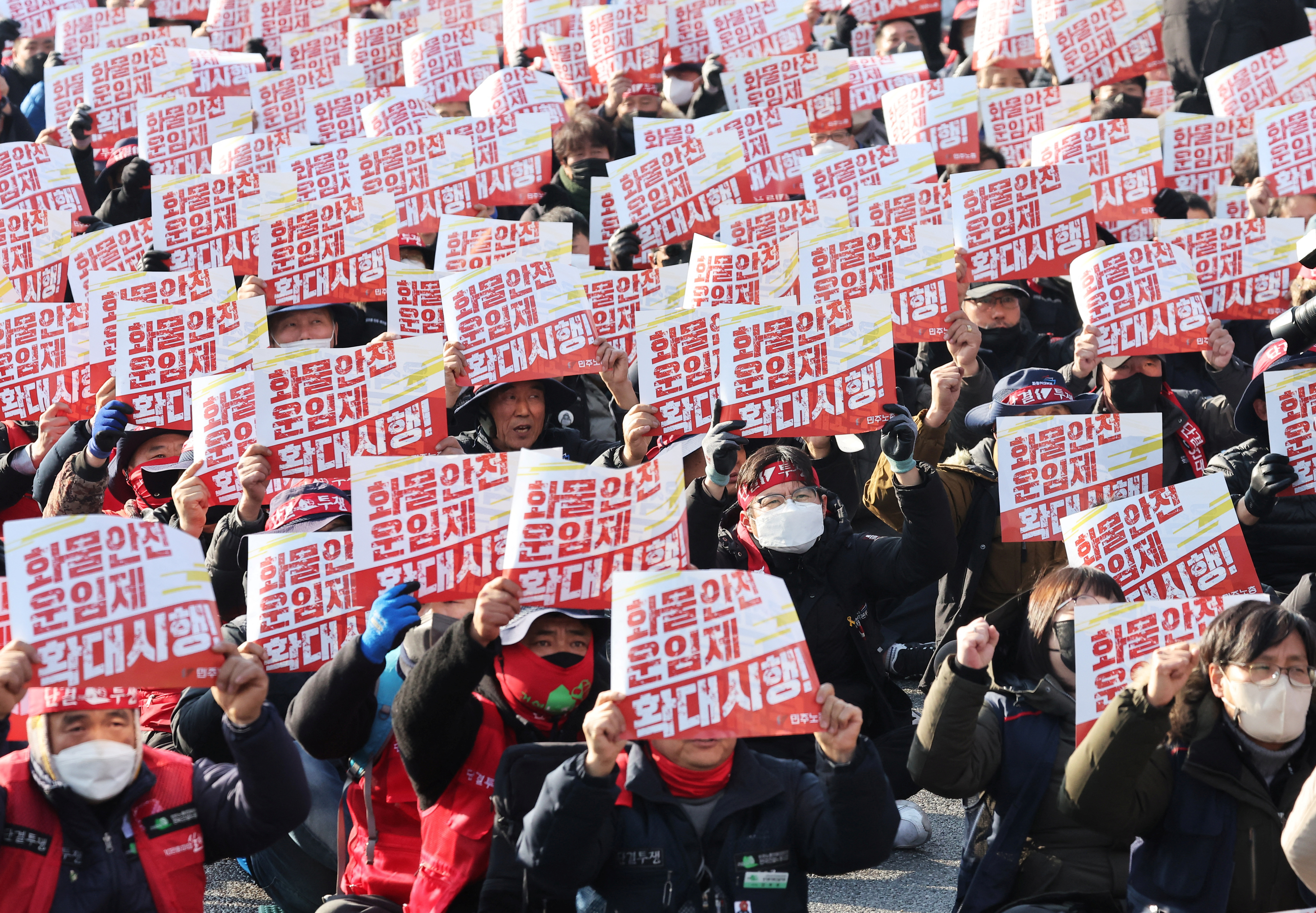
A nationwide strike by South Korean truckers has led nearly 100 petrol stations across the country to run dry, government data show, and a national trade union said it would launch a general strike on Tuesday in support of the drivers.

The truckers’ strike over a minimum pay programme, which began on Nov. 24, has seen two negotiation sessions between the union and the government, but so far there has been no breakthrough.

As supplies of fuel and construction materials run low, the South Korean government has stepped up pressure to end the strike.

President Yoon Suk-yeol on Sunday ordered preparations to issue a return-to-work order for drivers in sectors such as oil refining and steelmaking, where additional economic damage is expected. Yoon last week invoked such an order, the first in the country’s history, for 2,500 truckers in the cement industry.

The Korean Confederation of Trade Unions (KCTU), an umbrella union under which the truckers’ union falls, has called the President’s “start work” order the equivalent of martial law and says the government should negotiate.

The KCTU said it had planned a walkout on Tuesday to support the truckers’ protests.

As of Monday afternoon, nearly 100 petrol stations had run out of fuel. About 60% of them were in Seoul and Gyeonggi province, a densely populated region near the capital, according to Korea National Oil Corp data. That is up from the 21 petrol stations that the industry ministry had said were out of fuel on Nov. 28.

Amid soaring fuel costs, as many as 25,000 truckers are calling on the government to provide a permanent minimum-pay system known as the “Safe Freight Rate”, which was introduced temporarily in 2020 for a small portion of more than 400,000 truckers.

In their second strike in less than six months, those truckers are fighting the bitter cold and the government’s narrative that they are well paid “labour aristocracy”.

The Yoon administration has said it would not give in to the union’s demands. The government has said it would extend the current program for three more years.

The impact of a general strike is unclear and depends on participation, said Han Sang-jin, a KCTU spokeperson.

Labour minister Lee Jung-sik said on Monday that a general strike would not win public support.

The strikes have disrupted South Korea’s supply chain, and cost more than 3.2 trillion won ($2.46 billion) in lost shipments over the first 10 days, the industry ministry said on Sunday.

Losses are expected to have grown in various industries, but traffic at ports has slightly improved to 69% of its pre-strike average since the back-to-order was issued, according to the government.

($1 = 1,303.4400 won)

Related Galleries:

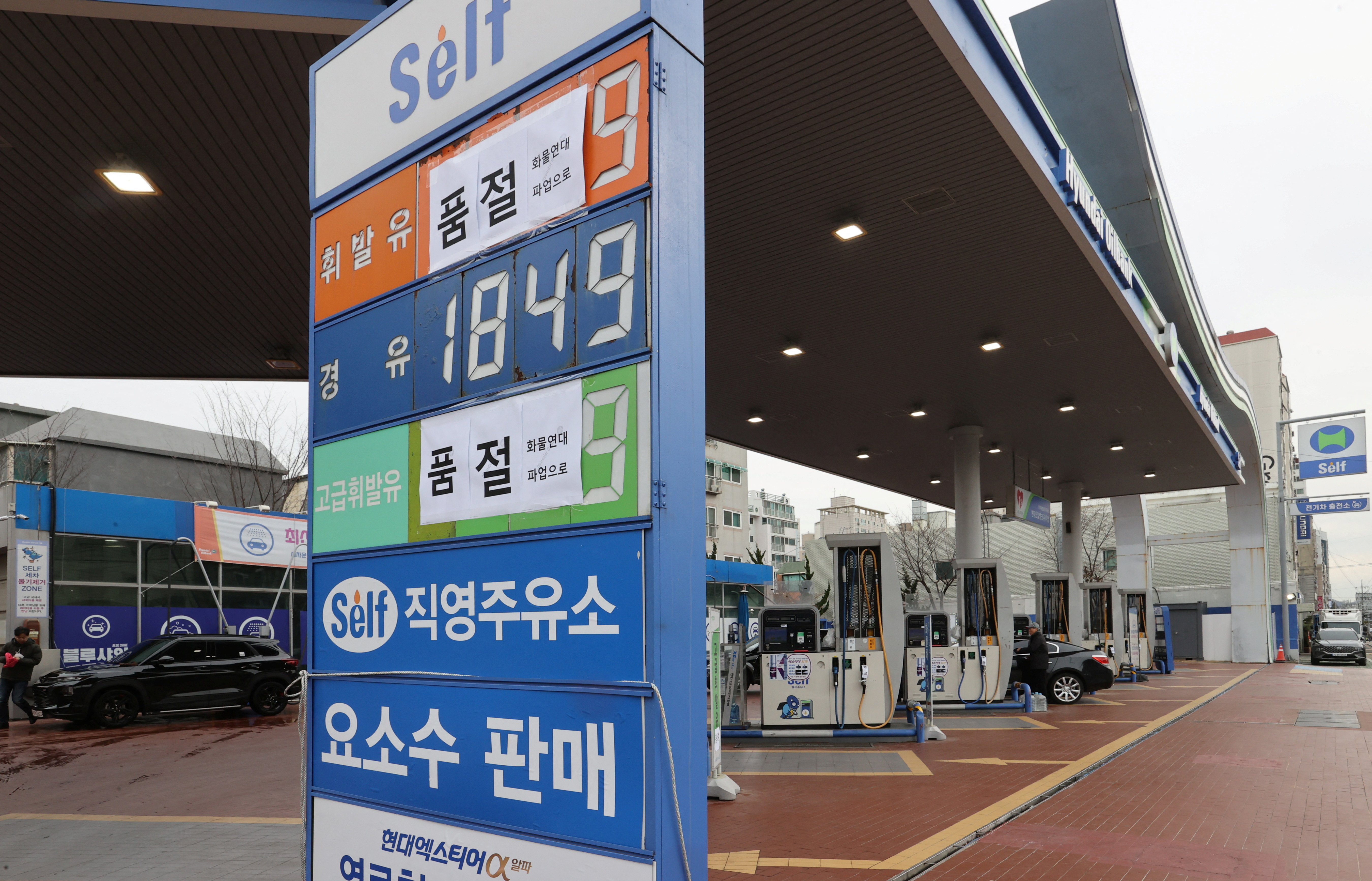
Signs reading ‘Gasoline sold out, due to a strike by truckers’ are seen at a gas station in Seoul, South Korea December 4, 2022. Yonhap via REUTERS

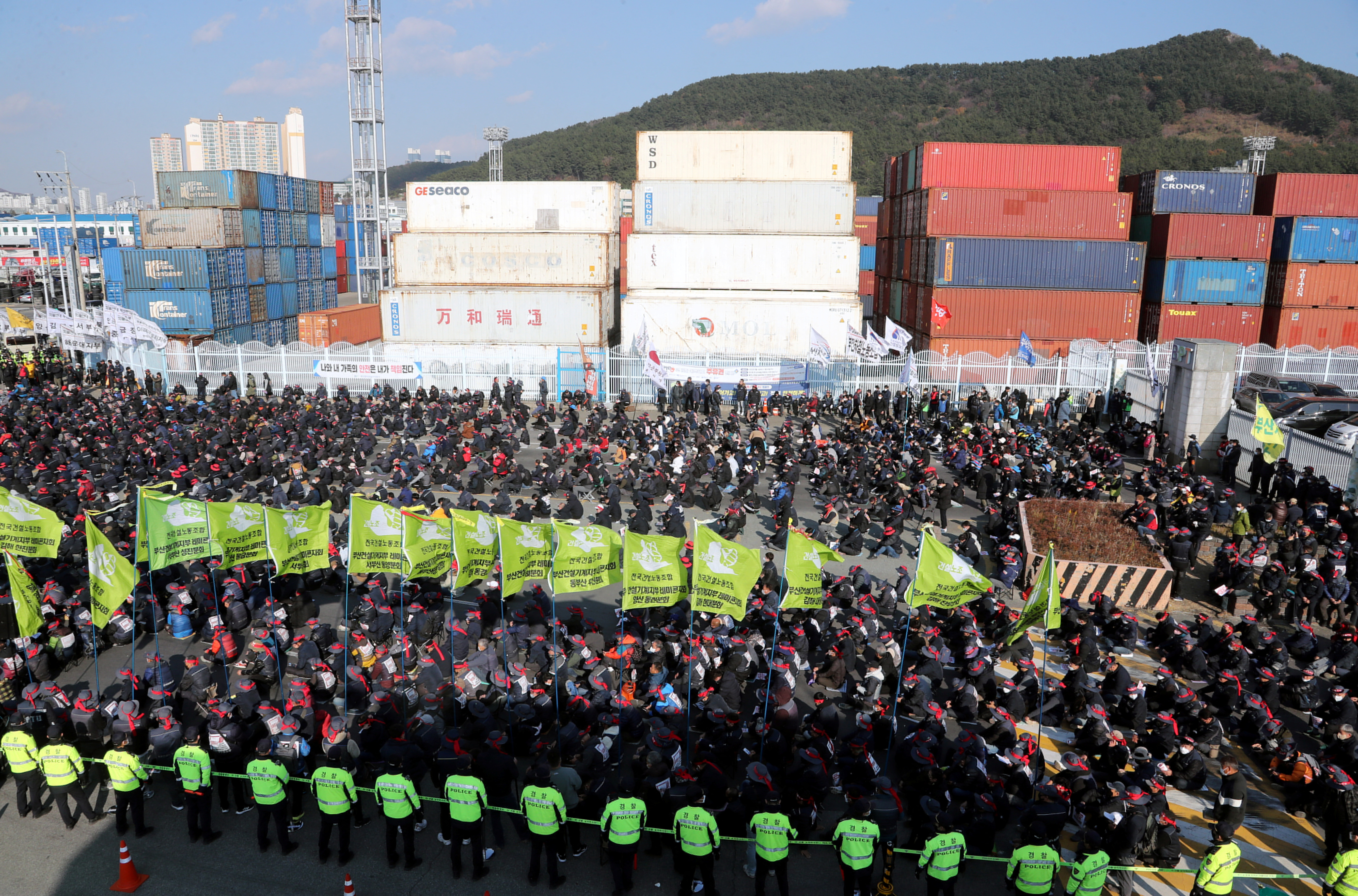
Protesters chant slogans during a rally in support of the ongoing strike by truckers at a port in Busan, South Korea December 6, 2022. Yonhap via REUTERS

Protesters chant slogans during a rally in support of the ongoing strike by truckers in Uiwang, south of Seoul, South Korea December 6, 2022. Yonhap via REUTERS

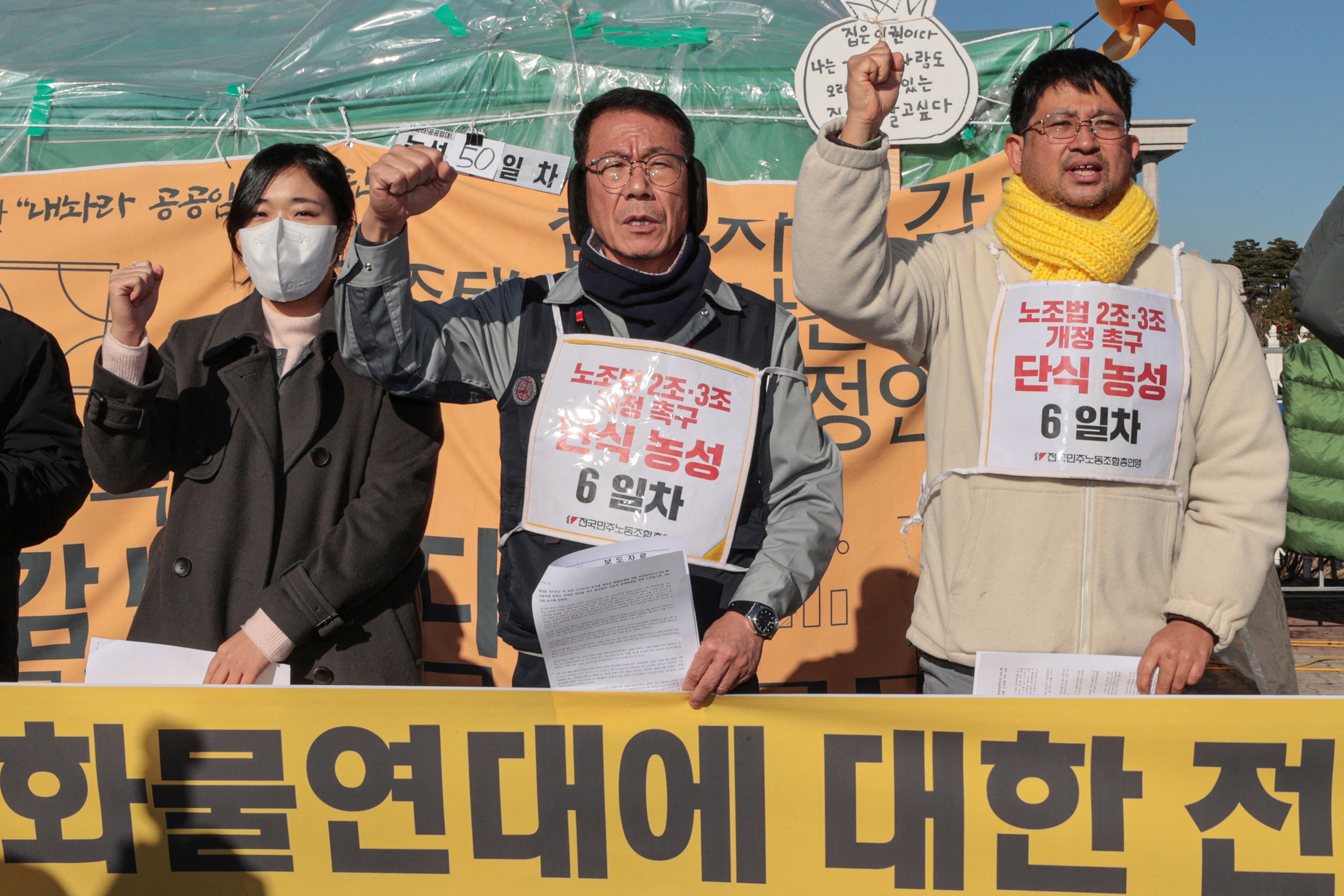
Protesters chant slogans at a news conference in support of the ongoing strike by truckers in Seoul, South Korea December 5, 2022. Yonhap via REUTERS

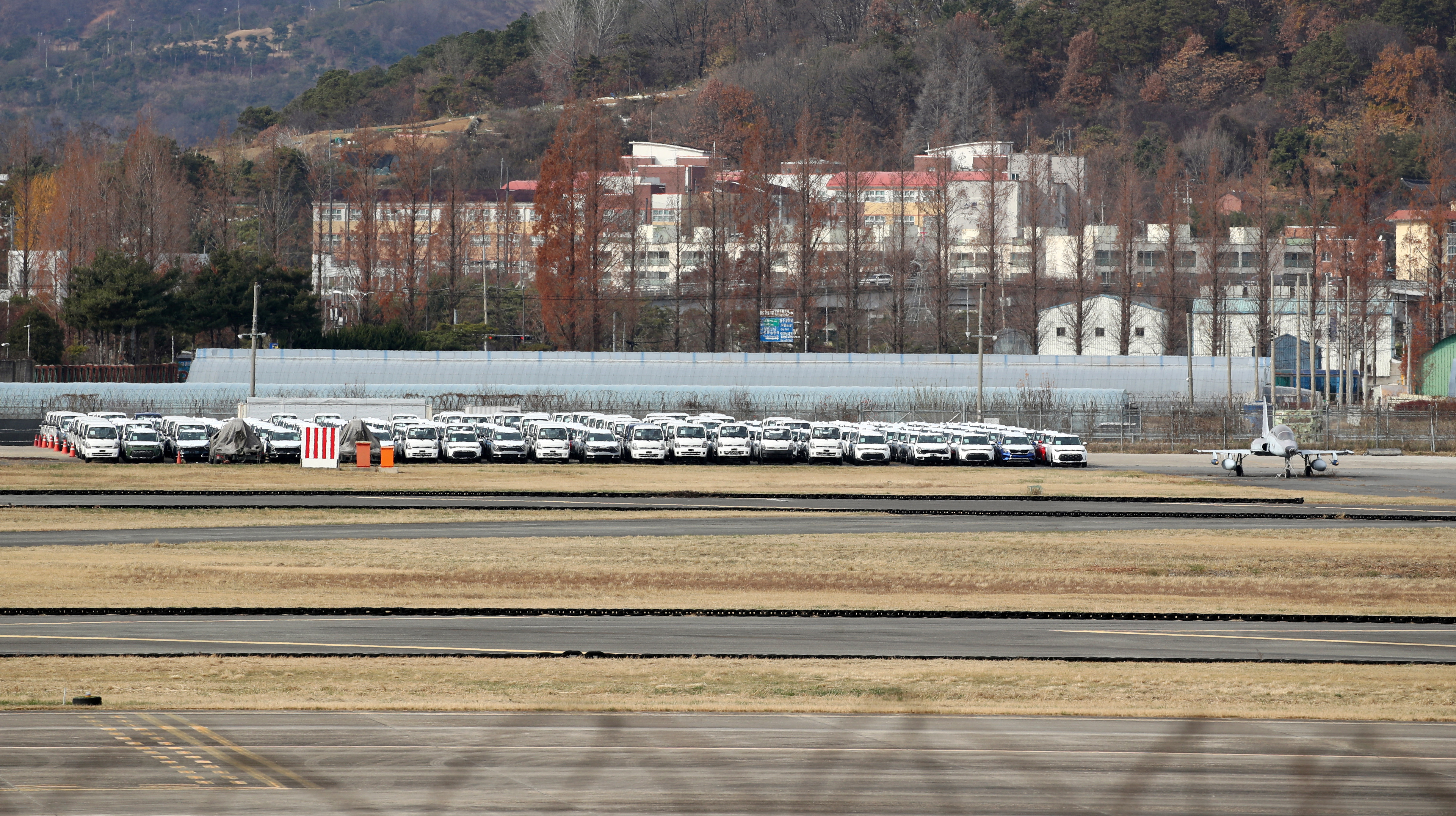
Finished vehicles are parked and wait to be delivered at an airport due to the nationwide strike by truckers, in Gwangju, South Korea December 5, 2022. Yonhap via REUTERS
Categories
Audio Sources - Full Text Articles

EU, Western Balkans to boost partnership amid Ukraine war

TIRANA, Albania (AP) — EU leaders and their Western Balkan counterparts gathered Tuesday for talks aimed at boosting their partnership as Russia’s war in Ukraine threatens to reshape the geopolitical balance in the region.

The EU wants to use the one-day summit in Albania’s capital to tell leaders from Albania, Bosnia, Kosovo, Montenegro, North Macedonia and Serbia that they have futures within the wealthy economic bloc and give them concrete signs, rather than just promises, that they will join one day.

Since Russia invaded Ukraine in February, the EU’s top diplomat, Josep Borrell, has been repeating that stepping up the bloc’s engagement with the six nations is more crucial than ever to maintaining Europe’s security.

As Europe’s relationship with Russia deteriorates further because of the war, tensions have also mounted in the Balkans and the EU wants to avoid other flashpoints close to its borders.

“In the Western Balkans, several crises are looming, and partners feel the immediate damaging impact of Russia’s aggression against Ukraine,” Borrell said last month. “The shockwaves of this war are hitting the Western Balkans. To counter that, we are stepping up our engagement as the Western Balkans remain our geostrategic priority — the closest and most important geostrategic priority.”

According to a draft of the declaration to be adopted at ithe summit, the EU will repeat “its full and unequivocal commitment to the European Union membership perspective of the Western Balkans” and call for an acceleration of accession talks with the incumbents.

In return, the EU expects full solidarity from its Western Balkans partners and wants them fully aligned with its foreign policies.

That particular point has been problematic with Serbia, whose president, Aleksandar Vucic, claims he wants to take Serbia into the European Union but has cultivated ties with Russia.

Although Serbia’s representatives voted in favor of various U.N. resolutions condemning Russia’s invasion of Ukraine, Vucic has refused to explicitly condemn Moscow. His country has not joined Western sanctions against Russia over the war.

Although the progress of the six nations toward EU membership had stalled recently, there has been some progress over the past few months.

This summer, the EU started membership negotiations with Albania and North Macedonia following years of delays. And Bosnia moved a small step closer on its path to joining the powerful economic bloc when the commission advised member countries in October to grant it candidate status despite continuing criticism of the way the nation is run.

Kosovo has only started the first step, with the signing of a Stabilization and Association Agreement. It said it would apply for candidate status later this month.

Among the concrete measures to be adopted in Tirana, a deal involving telecommunications operators that will bring down data roaming charges will be announced. Discussions will also focus on the negative effects for energy and food security from Russia’s war in Ukraine. European Commission President Ursula von der Leyen has already announced financial support to help countries in the Western Balkans cope with shortages and higher prices.

The EU last admitted a new member — Croatia, which is also part of the Balkans — in 2013. Before that, Bulgaria and Romania joined in 2007. With the withdrawal of the United Kingdom in 2021, the EU now has 27 member nations.

Categories
Audio Sources - Full Text Articles

Kyiv Post Morning Memo – Everything You Need to Know on Tuesday, Dec. 6

memo_6-1024x576.png

Good morning from Kyiv where the city – and the rest of the country – is assessing the damage from Russia’s latest mass missile strike against Ukraine’s energy infrastructure.

President Zelensky announced in his nightly address that four people were killed in the strikes but added that “our people never give up.”

What’s happening today?

While not as devastating as previous attacks, authorities are today racing to fix the country’s already battered energy infrastructure, and power cuts have been announced in all regions.

But given the relatively long time Russia spent preparing for Monday’s attack, the Kremlin likely expected to cause far more damage.

You can read more on this story here. 

What was Zelensky’s latest message?

 Unsurprisingly, President Zelensky focused on the day’s attacks, saying “I am grateful to all our warriors of the air commands ‘East’, ‘South’ and ‘Center’.

“Well done! I am also grateful to our partners for the air defense systems we are currently using. Every downed Russian missile is concrete proof that terror can be defeated.

“Unfortunately, there are victims. As of this time, there are four people killed by Russian strikes today. My condolences to families and friends.” 

What’s the latest military situation?

The British Ministry of Defence (MoD) focuses on the explosions at Engels Airbase on Monday during which two Tu-95 heavy bombers were reportedly damaged and three people killed in suspected Ukrainian drone attacks.

The MoD notes the exact cause has not yet been confirmed but if the suspicions turn out to be true, the Kremlin “will probably consider them as some of the most strategically significant failures of force protection since its invasion of Ukraine”.

It adds: “The Russian chain of command will probably seek to identify and impose severe sanctions on Russian officers deemed responsible for allowing the incident.”

The Institute for the Study of War’s Dec. 5 daily assessment covers a multitude of topics, most notably:

  • Anger over the Russian military’s inability to prevent the Ukrainian strikes on Russian strategic airbases over 280 miles from Ukrainian positions outweighed praise for the latest round of strikes against Ukraine within the Russian milblogger community.
  • Russian occupation officials continued the forceful transfer of Ukrainian children from occupied territories in Donetsk and Luhansk Regions to Russia under the guise that the children require special medical care.
  • Russian senator Andrey Klishas of the ruling United Russia party proposed the Kremlin restrict the ability of Russians who fled the country to avoid mobilization to secure work upon returning to Russia.

And that’s it for today’s Morning Memo.

Kyiv Post will bring you the latest news throughout the day and we’ll be back with another edition tomorrow.

The post Kyiv Post Morning Memo – Everything You Need to Know on Tuesday, Dec. 6 appeared first on Kyiv Post.
Categories
Audio Sources - Full Text Articles

EXPLAINED: Damage to Ukraine From Russia’s Latest Mass Missile Strike

000_32xk72p.jpg

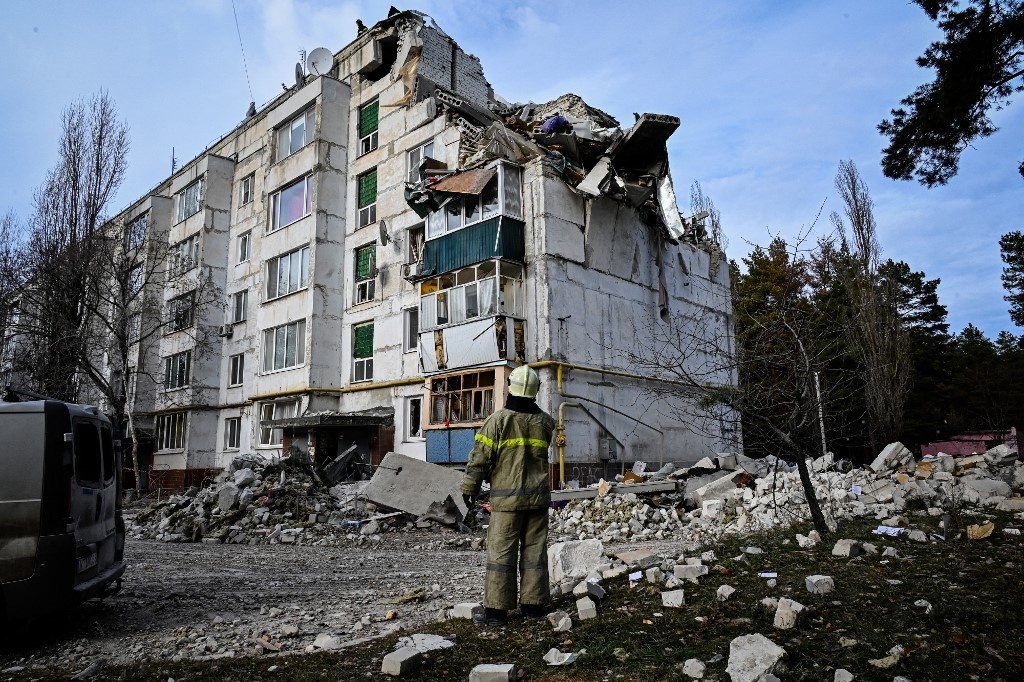
In what is now a darkly familiar scenario, Ukraine is racing to fix the damage caused by a mass missile strike from Russia targeting the country’s already battered energy infrastructure.

The latest wave came on Tuesday afternoon after days of warnings from the Ukrainian government that a big attack was imminent.

How big was the attack?

According to the Ukrainian air force, more than 70 missiles were launched, a massive attack but smaller than those in November when Russia fired around 100.

How many were shot down?

We don’t have exact numbers right now, but Ukrainian authorities said “more than 60” were destroyed by air defences, though enough made it through to cause significant damage.

What was hit?

Fresh power cuts were announced in all regions “due to the consequences of shelling,” national electricity provider Ukrenergo said on Telegram, and the company’s head said he had “no doubt that Russian military consulted with Russian power engineers during this attack”, judging by where the missiles landed.

“The time that Russians chose for this attack was connected with their desire to inflict as much damage as possible,” Volodymyr Kudrytsky told a Ukrainian news programme, explaining the attacks were launched as the country enters a “peak frost” period.

“Our repairmen will be working on the energy system’s restoration.”

Nearly half of Ukraine’s energy system has already been damaged after months of strikes on power infrastructure, leaving people in the cold and dark for hours at a time as outdoor temperatures drop below zero degrees Celsius (32 degrees Fahrenheit).

Zelensky announced in his nightly address that four people were killed in the strikes but added that “our people never give up.”

Will Russia judge it a success?

Given the relatively long time Russia spent preparing for Monday’s attack, the Kremlin likely expected to cause far more damage.

While new power cuts were introduced, it failed to have as devastating an effect as its last attack in November which plunged large parts of the country into darkness for long periods and cut off water supplies in Kyiv.

Adding to Russia’s woes, it is reportedly running low on missiles, so would have been hoping to cause far more damage with what it has left.

Has Ukraine responded militarily?

Possibly – across the border in Russia’s Kursk Region, an airfield saw a “drone attack” in the early hours of Tuesday, Dec. 6, said local governor Roman Starovoyt, without specifying where the drone originated.

“As a result of a drone attack in the area of the Kursk airfield, an oil storage tank caught fire,” he said on social media, adding that there were no casualties.

Tuesday’s incident comes a day after Moscow accused its neighbour of carrying out deadly drone strikes on two other airfields.

The post EXPLAINED: Damage to Ukraine From Russia’s Latest Mass Missile Strike appeared first on Kyiv Post.

WP Radio
WP Radio
OFFLINE LIVE