Categories
Audio Sources - Full Text Articles

Arizona certifies 2022 election despite GOP complaints

PHOENIX (AP) — Arizona’s top officials certified the midterm election results Monday, formalizing victories for Democrats over Republicans who falsely claimed the 2020 election was rigged.

The certification opens a five-day window for formal election challenges. Republican Kari Lake, who lost the race for governor, is expected to file a lawsuit after weeks of criticizing the administration of the election.

Election results have largely been certified without issue around the country, but Arizona was an exception. Several Republican-controlled counties delayed their certification despite no evidence of problems with the vote count. Cochise County in southeastern Arizona blew past the deadline last week, forcing a judge to intervene on Friday and order the county supervisors to certify the election by the end of the day.

“Arizona had a successful election,” Secretary of State Katie Hobbs, a Democrat, said before signing the certification. “But too often throughout the process, powerful voices proliferated misinformation that threatened to disenfranchise voters.”

The statewide certification, known as a canvass, was signed by Hobbs, Republican Gov. Doug Ducey, Republican Attorney General Mark Brnovich and Chief Justice Robert Brutinel, a Ducey appointee.

When the same group certified the 2020 election, Ducey silenced a call from then-President Donald Trump, who was at the time in a frenetic push to persuade Republican allies to go along with his attempts to overturn the election he lost.

“This is a responsibility I do not take lightly,” Ducey said. “It’s one that recognizes the votes cast by the citizens of our great state.”

Republicans have complained for weeks about Hobbs’ role in certifying her own victory over Lake in the race for governor, though it is typical for election officials to maintain their position while running for higher office. Lake and her allies have focused on problems with ballot printers that produced about 17,000 ballots that could not be tabulated on site and had to be counted at the elections department headquarters.

Lines backed up in some polling places, fueling Republican suspicions that some supporters were unable to cast a ballot, though there’s no evidence it affected the outcome. County officials say everyone was able to vote and all legal ballots were counted.

Hobbs planned to immediately petition the Maricopa County Superior Court to begin an automatic statewide recount required by law in three races decided by less than half a percentage point. The race for attorney general was one of the closest contests in state history, with Democrat Kris Mayes leading Republican Abe Hamadeh by just 510 votes out of 2.5 million cast.

The races for superintendent of public instruction and a state legislative seat in the Phoenix suburbs will also be recounted, but the margins are much larger.

Once a Democratic stronghold, Arizona’s top races went resoundingly for Democrats after Republicans nominated a slate of candidates backed by Trump who focused on supporting his false claims about the 2020 election. In addition to Hobbs and Mayes, Democratic Sen. Mark Kelly was re-elected and Democrat Adrian Fontes won the race for attorney general.
Categories
Audio Sources - Full Text Articles

Kirstie Alley, Emmy-Winning Actress, Dies at 71

LOS ANGELES — Kirstie Alley, who won an Emmy for her role on “Cheers” and starred in films including “Look Who’s Talking,” died Monday. She was 71.

Alley died of cancer that was only recently discovered, her children True and Lillie Parker said in a post on Twitter. Alley’s manager Donovan Daughtry confirmed the death in an email to The Associated Press.

“As iconic as she was on screen, she was an even more amazing mother and grandmother,” her children’s statement said.

She starred opposite Ted Danson as Rebecca Howe on “Cheers,” the beloved NBC sitcom about a Boston bar, from 1987 to 1993. She joined the show at the height of its popularity after the departure of original star Shelley Long.

[time-brightcove not-tgx=”true”]

Alley would win an Emmy for best lead actress in a comedy series for the role in 1991.

Cheers
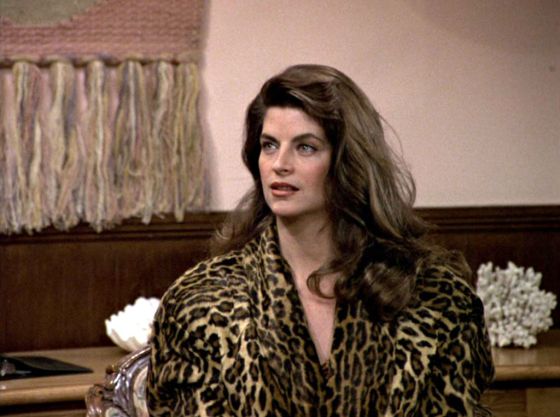
CBS/Getty ImagesKirstie Alley as Rebecca Howe in an episode of “Cheers” that originally aired on September 28, 1989.

“I only thank God I didn’t have to wait as long as Ted,” Alley said in her acceptance, gently ribbing her “Cheers” co-star Ted Danson, who had finally won an Emmy for his role as Sam Malone in his eighth nomination the previous year.

She would take a second Emmy for best lead actress in a miniseries or television movie in 1993 for playing the title role in the CBS TV movie “David’s Mother.”

She had her own sitcom on the network, “Veronica’s Closet,” from 1997 to 2000.

In the 1989 comedy “Look Who’s Talking,” which gave her a major career boost, she played the mother of a baby who’s inner thoughts were voiced by Bruce Willis. She would also appear in a 1990 sequel “Look Who’s Talking Too,” and another in 1993, “Look Who’s Talking Now.”

John Travolta, her co-star in the trilogy, paid her tribute in an Instagram post.

“Kirstie was one of the most special relationships I’ve ever had,” Travolta said, along with a photo of Alley. “I love you Kirstie. I know we will see each other again.”

She would play a fictionalized version of herself in the 2005 Showtime series “Fat Actress,” a show that drew comedy from her public and media treatment over her weight gain and loss.

Showtime TCA Day
Jeff Kravitz/FilmMagic/Getty ImagesKirstie Alley promotes “Fat Actress,” a show she co-wrote and starred in, during Showtime TCA Day in Los Angeles in January 2005.

She dealt with the same subject matter in the 2010 A&E reality series “Kirstie Alley’s Big Life,” which chronicled her attempt to lose weight and launch a weight-loss program while working as a single mother in an unconventional household that included pet lemurs.

Alley said she agreed to do the show in part because of the misinformation about her that had become a tabloid staple.

“Anything bad you can say about me, they say,” Alley told the AP at the time. “I’ve never collapsed, fainted, passed out. Basically, anything they’ve said, I never. The only true thing is I got fat.”

In recent years she appeared on several other reality shows, including a second-place finish on “Dancing With the Stars” in 2011. She appeared on the competition series “The Masked Singer” wearing a baby mammoth costume earlier this year.

She appeared in the Ryan Murphy black comedy series “Scream Queens” on Fox in 2015 and 2016.

One of her co-stars on the show, Jamie Lee Curtis, said on Instagram Monday that Alley was “a great comic foil” on the show and “a beautiful mama bear in her very real life.”

Alley’s “Cheers” co-star Kelsey Grammar said in a statement that “I always believed grief for a public figure is a private matter, but I will say I loved her.”

A native of Wichita, Kansas, Alley attended Kansas State University before dropping out and moving to Los Angeles.

Her first television appearances were as a game show contestant, on “The Match Game” in 1979 and “Password” in 1980.

She made her film debut in 1982’s “Star Trek: The Wrath of Khan.”

Alley was married to her high school sweetheart from 1970 to 1977, and to actor Parker Stevenson from 1983 until 1997.

She told the AP in 2010 if she married again, “I’d leave the guy within 24 hours because I’m sure he’d tell me not to do something.”

Categories
Audio Sources - Full Text Articles

China says U.S. nuclear weapons report is speculation

2022-12-06T04:57:00Z

Visitors stand in front of a giant screen displaying Chinese President Xi Jinping next to a flag of the Communist Party of China, at the Military Museum of the Chinese People’s Revolution in Beijing, China October 8, 2022. REUTERS/Florence Lo

China’s defence ministry on Tuesday dismissed a Pentagon report about the pace of its nuclear weapons programme as unfair “gesticulation” and speculation.

The Pentagon said in a report last month that China would likely have a stockpile of 1,500 nuclear warheads by 2035 if it continues with its current pace of its nuclear buildup.

The figure underscores mounting U.S. concerns about China’s intentions for its expanding nuclear arsenal, even though the projections do not suggest China is accelerating the pace of its already-brisk warhead development.

Responding to the report, China’s defence ministry said the United States was “gesticulating and absurdly guessing about the modernisation of China’s nuclear forces”.

The United States should reflect on its own nuclear policy, especially as it has the world’s largest nuclear arsenal, the ministry added.

The United States was “vigorously” developing and seeking to deploy front-line tactical nuclear weapons, had reduced the threshold for deploying nuclear weapons and was conducting nuclear proliferation through its security partnership with Britain and Australia, it said.

“It should be emphasised that China firmly pursues a self-defence nuclear strategy, always adheres to the policy of not being the first to use nuclear weapons at any time or under any circumstance, and maintains its nuclear forces at the lowest level required by national security.”

The United States has a stockpile of about 3,700 nuclear warheads, of which about 1,740 were deployed, according to the Stockholm International Peace Research Institute (SIPRI) think-tank.

The Chinese ministry said it was the United States that was the “biggest trouble maker” when it came to global security.

“It has fanned the flames for its own self-interest, creating divisions and confrontation in the world, and bringing turmoil and disasters wherever it goes,” the ministry said.

Categories
Audio Sources - Full Text Articles

United States, Australia to counter China“s “destabilizing military activities“ -statement

2022-12-06T05:00:42Z

Australia and United States defense ministers are determined to “counter destabilizing military activities by the People’s Republic of China”, they said in a statement after a meeting at the Pentagon.

U.S. Defense Secretary Lloyd Austin met with Australia’s Defence Minister Richard Marles in Washington on Monday as part of the annual AUSMIN talks that on Tuesday will include the two nations’ foreign ministers.

Britain’s defence minister, Ben Wallace, will also attend the first in-person meeting of AUKUS ministers on Wednesday in Washington. The defence technology group of Australia, United States and Britain was formed to deliver nuclear-powered submarine technology to Australia.

The AUKUS meeting comes at a critical time for the partners, which are due to decide in March whether the submarine will be British or American, and set a road map for an Australian fleet.

Australia has said it needs the long range and stealth capability of nuclear-powered submarines, which would carry conventional weapons.

A U.S. Department of Defense report on China last week said Beijing was making a diplomatic push to criticise and “subvert” AUKUS.

“PRC officials have inaccurately framed AUKUS as an act of nuclear proliferation,” the report said.

Canberra has said the Non-Proliferation Treaty (NPT) Australia is party to does not prohibit nuclear propulsion.

A statement released after the Pentagon meeting said Australia and the United States would deepen defense cooperation, including technology cooperation.

China is Australia’s largest trading partner and the top market for exported iron ore, but Canberra has grown concerned about Beijing’s military ambitions in the South Pacific after it struck a security pact with the Solomon Islands this year.

A meeting between Australia’s Prime Minister Anthony Albanese and Chinese President Xi Jinping last month at the G20 was a step towards normalising ties but would not bring a shift in Canberra’s defense policy, Australian diplomats said. read more

Related Galleries:

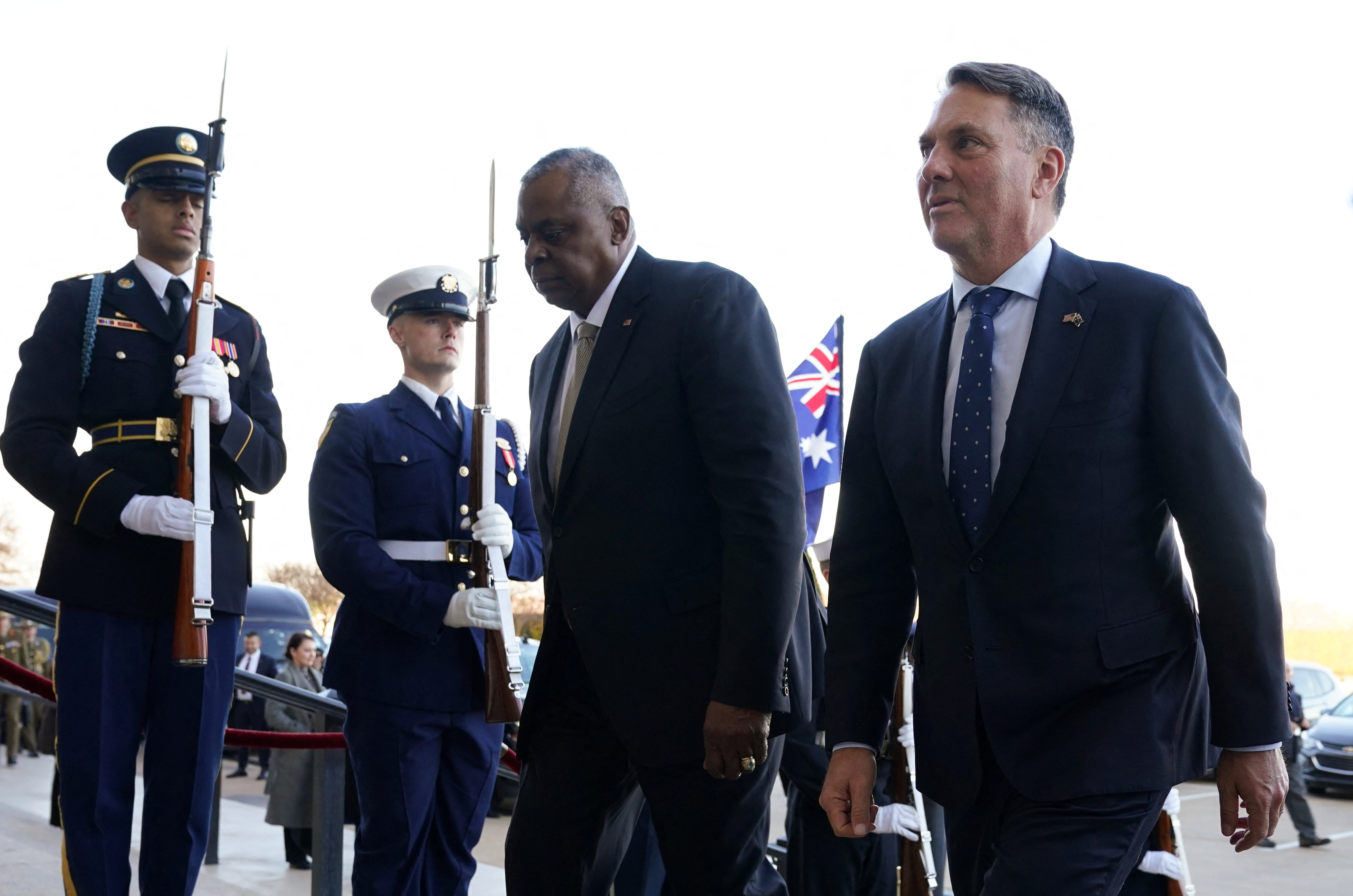
U.S. Defense Secretary Lloyd Austin escorts Australian Defense Minister Richard Marles into the Pentagon for their meeting in Washington, U.S., December 5, 2022. REUTERS/Kevin Lamarque

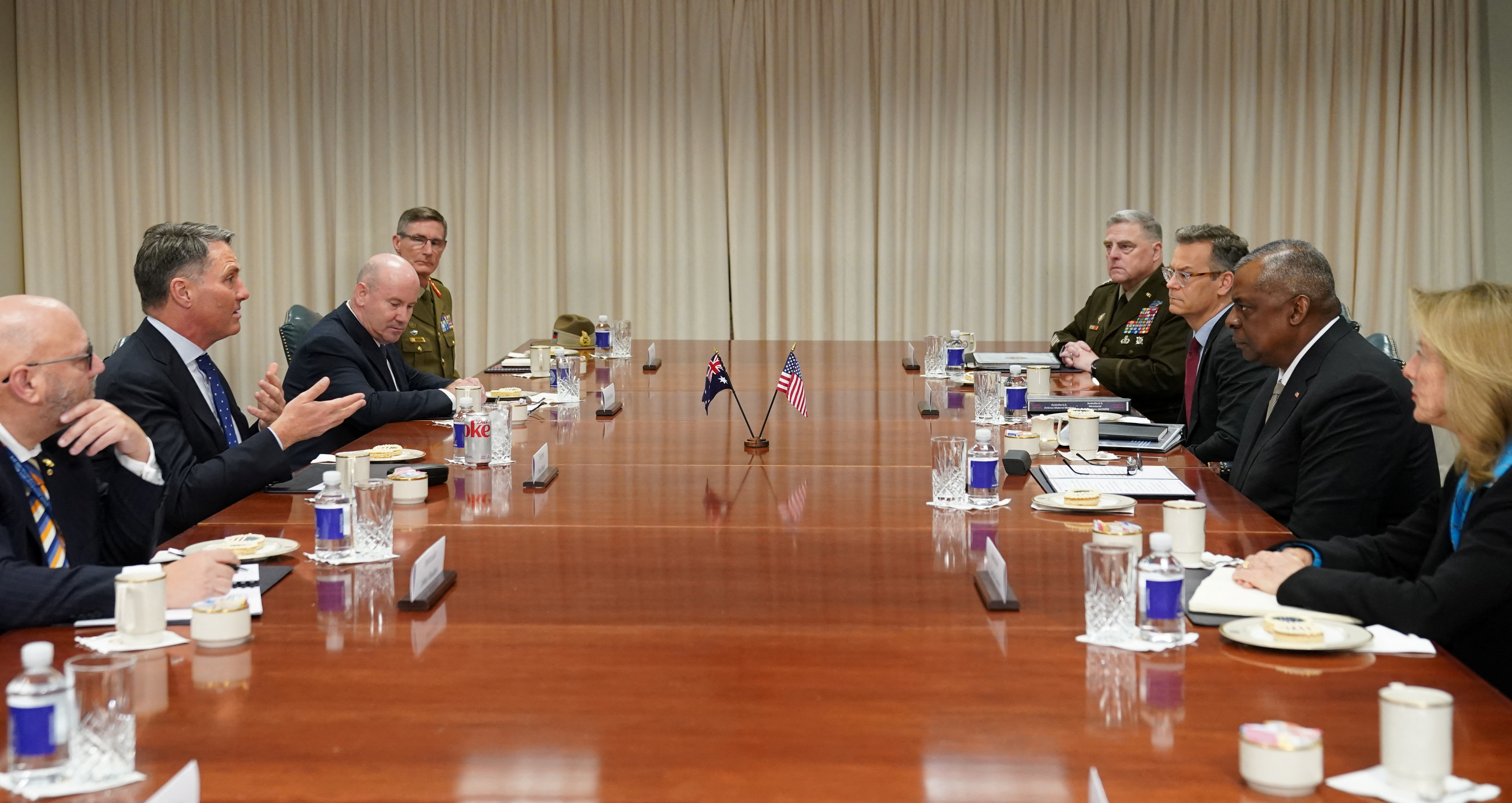
U.S. Defense Secretary Lloyd Austin and Australian Defense Minister Richard Marles meet at the Pentagon in Washington, U.S., December 5, 2022. REUTERS/Kevin Lamarque
Categories
Audio Sources - Full Text Articles

Same-sex couples wary despite federal marriage rights bill

Mary and Sharon Bishop-Baldwin were jubilant after winning a decadelong fight for the right to wed in Oklahoma.

But eight years after tying the knot — on the day they won their lawsuit challenging a state ban on gay marriage — and seven years after the U.S. Supreme Court affirmed same-sex couples’ constitutional right to marry, they no longer take their union for granted.

While they’re happy that Congress is moving swiftly to ensure nationwide recognition of same-sex and interracial marriages, they — like many in LGBTQ communities — are frustrated it’s even necessary after so many years and are unsure whether it’s enough.

“The very fact we’re even having these conversations is really disheartening to me,” especially given a dramatic shift in public opinion over the past decade, with polls showing 70% of U.S. adults now favor same-sex marriage rights, said Sharon Bishop-Baldwin, 54.

But when the high court overturned Roe v. Wade, which had guaranteed abortion rights, Justice Clarence Thomas suggested in a concurring opinion that the decision upholding gay marriage should also be reconsidered. That prompted Democrats to act quickly to protect same-sex marriage while the party still holds the majority in both chambers of Congress.

The Senate passed the Respect for Marriage Act last week with support from 12 Republicans; it’s expected to easily win approval in the House before being signed by President Joe Biden.

At first, Sharon Bishop-Baldwin said, she thought the act was “lip service.” But she changed her mind because it would at least provide some protection.

“It’s ridiculous to think that anybody in this country who has legally married one place could suddenly be unmarried in another,” Bishop-Baldwin said.

When the couple filed their 2004 Oklahoma lawsuit, 76% of state voters had just approved a constitutional ban on gay marriage. Ten years later, the U.S. Supreme Court let stand a federal appeals court ruling that declared the state ban unconstitutional. A year later, the high court decided in another case that all states had to issue marriage licenses to gay couples.

“When we won, one of our lawyers said, ‘This is game, set, match, marriage’ … and that’s what we thought: We’re done,” said Bishop-Baldwin, who runs a small newspaper and met her wife in 1995 when both were editors at the Tulsa World.

The legislation wouldn’t codify, or enshrine into law, the Supreme Court decision requiring states to issue same-sex marriage licenses. But if that decision were overturned and states revived bans, they still would have to recognize same-sex marriages performed legally in other states.

“I can’t imagine that happening at the Supreme Court … but we have to be prepared,” said Mary Bishop-Baldwin, 61, who notes that Oklahoma’s ban is still on the books.

The possibility has created “a state of extreme anxiety and stress” among same-sex couples, said Jenny Pizer, chief legal officer at Lambda Legal, an LGBTQ civil rights group.

That’s especially true for those with children, she said. Currently, both spouses are considered legal parents, which is especially important if one of them dies or they divorce. “So this bill really does matter,” Pizer said.

Some also fear the high court or a future Congress could undo the federal legislation.

“Every time the House and Senate overturn, you’ll wonder what might happen this time,” said Dawn Betts-Green, 43, who lives in Birmingham, Alabama, with her wife, Anna Green, whom she married in Florida in 2016. “It’s honestly in the hands of whoever we elect, and that is scary.”

A scenario in which constitutional protections are overturned by the Supreme Court and the Respect for Marriage Act is overturned by the court or Congress might be a long shot, but “it is certainly possible for there to be a series of events that really took us back to that earlier time when it was incredibly difficult for families,” Pizer said.

“The idea of returning to those days, frankly, is terrifying,” she said.

Betts-Green and her wife hurried to complete paperwork, such as wills and powers of attorney, after Roe v. Wade was overturned, getting “all of our legal ducks in a row (because) they’re clearly coming for us,” she said, recalling a time when her wife was hospitalized in Florida — before they were married — and a nurse said Betts-Green would not be permitted to make medical decisions.

Marriage also provides many other legal protections, including the ability to claim survivor benefits from Social Security and to obtain health insurance through a spouse’s plan, and tax benefits, such as the ability to leave assets to a spouse.

The Respect for Marriage Act makes Betts-Green feel a little more secure, she said, though “I find it absolutely ridiculous that we’re having to go through this kind of thing in 2022, not only just for queer people, but also interracial marriages. It’s not 1941, but it certainly feels like we’ve gone back in time.”

The issue of same-sex marriage also is overshadowing other concerns, including anti-LGBTQ legislation and harassment of and attacks on LGBTQ people, most notably the recent shooting at a Colorado nightclub that killed five people, Betts-Green said.

“I’m constantly reminded that this is the least of our issues in a lot of ways,” she said.

Minneapolis legal aide Robbin Reed, a white woman who is married to a Black transgender man, supports the act but worries it could mean more danger from people who might be angered by its protections.

“The law won’t really change anything about my life … because there’s still so much to worry about,” said Reed, who has an 8-month-old child and performs with her husband in queer nightclubs. “This is a ridiculous situation to be in.”

The Bishop-Baldwins said they doubt the Supreme Court will strip away same-sex marriage rights, but are relieved there will be some protections in place just in case. Still, federal legislation shouldn’t even be required, they say.

“Is the Respect for Marriage Act good enough? No, of course not. Good enough should be” constitutional protection, said Sharon Bishop-Baldwin.

Betts-Green said nothing would surprise her now: “You can never really be comfortable.”

WP Radio
WP Radio
OFFLINE LIVE