
Categories
Audio Sources - Full Text Articles

Cryptoverse: Forget crypto winter, this is a bitcoin “bloodbath“

2022-12-06T06:26:44Z

A representation of bitcoin is seen in front of a stock graph in this illustration taken May 19, 2021. REUTERS/Dado Ruvic/File Photo

“I’m nearly bankrupt,” says Jad Fawaz, a crypto trader in Abu Dhabi. “I’m laughing because there’s no point in exerting more depression and more frustration about it.”

The 45-year-old, who quit his real-estate job a year ago to focus on trading, has seen his holdings evaporate in recent months. He hasn’t slept in a week because of the stress.

“I had about 40 coins and then I came down to 20 coins then I came down to 10 coins, came down to five coins and now I’m down to the last two coins, and it’s bitcoin and ripple XRP,” he says.

“So these are the last two coins and I will die before selling them.”

For many retail traders and investors, enough is enough.

Bitcoin balances on crypto exchanges – where retail investors typically transact – have fallen to around 2.3 million from its 2020 all-time high of 3.1 million, exchange Bitfinex said. Self-custody wallet balances have not grown at the same pace, indicating more selling than storage, it added.

“There are signs that a significant number of retail investors have been discouraged to the point of exiting crypto entirely,” Bitfinex analysts said.

Indeed, Fawaz is not alone.

It’s been a brutal year for investors. Bitcoin’s price has dropped 63%, while the overall cryptocurrency market capitalization has lost $1.63 trillion in value.

The collapse of Sam Bankman-Fried’s FTX exchange hammered a long nail into the market.

November saw a 7-day realized loss of $10.16 billion in bitcoin investments as investors were forced to exit long-term positions, the fourth-largest loss on record by this measure, according to Glassnode data.

“This is not the winter season anymore, this is a bloodbath, because the FTX crisis was like a domino that toppled so many companies,” said Linda Obi, a crypto investor in the Nigerian city of Lagos who works at blockchain firm Zenith Chain.

The 38-year-old said she was a “long-haul” investor with an investment horizon of five years and traded “a bit of everything”, including altcoins and memecoins.

“I’m gonna be very honest, I do think there’s a whole lot of hype around crypto, with influencer marketing and your favorite celebrities talking about crypto,” she added.

“People don’t research, and just jump in, and that should change. We have started to have serious conversations around how we can actually sanitize and advertise the space.”

Crypto retail investors losing money is nothing new. A study from the Bank of International Settlements (BIS), conducted between 2015 and 2022, estimated that 73% to 81% likely lost money on their investments in cryptocurrencies.

Retail trading has grown increasingly difficult as deeper-pocketed, more sophisticated investors like hedge funds entered crypto as the asset class grew.

“It’s really difficult to trade on news because we don’t have inside information, a tweet can change everything,” said Lisbon-based Adalberto Rodrigues, 34, who trades crypto in addition to running a software firm.

BIS researchers said blockchain data analysis found that the largest holders of bitcoin often sold while smaller players were buying, “making a return at the smaller users’ expense”.

Eloisa Marchesoni, a trader who said she had about $2,000 on FTX she was unable to withdraw, is sure crypto will retain its attraction for smaller investors.

“Retail will suck it up, like always,” said Marchesoni, who leaves near Tulum on the coast of Mexico’s Yucatan Peninsula.

Yet the hefty investor losses from the FTX collapse could serve to kick regulators into action, said Charley Cooper, communications chief at blockchain technology firm R3.

“Politicians have a lot harder time ignoring calls from constituents that lost their savings or grocery money than from high-flying crypto hedge funds.”
Categories
Audio Sources - Full Text Articles

Stocks suffer biggest drop in two weeks; dollar gains on upbeat U.S. data

2022-12-06T06:33:38Z

Asian stocks logged their sharpest declines in two weeks but the dollar held on to gains following strong U.S. data that again suggested the Federal Reserve might stick longer with aggressive interest rate increases.

While investors stayed hopeful of China’s economy improving with the easing of the country’s zero-COVID policy, analysts said markets had already priced in a lot of the upbeat news.

MSCI’s broadest index of Asia-Pacific shares outside Japan (.MIAPJ0000PUS) declined 1.4%, the biggest fall since Nov. 21, after climbing to a three-month high in the previous session. The benchmark has gained 20% from October lows on persistent chatter about China easing pandemic measures.

Stocks in Korea (.KS11) fell 1%, Taiwan (.TWII) slumped by 1.6%, and Hong Kong (.HSI) shed 1.1%. Chinese stocks extended their recovery, with the broader index (.CSI300) gaining 0.6%, while Japan (.N225) was up 0.3%.

“The black swan in the room is the risk of the Fed being too late again, but this time in cutting rates,” said Havard Chi, head of research at hedge fund Quarz Capital Asia.

Tuesday’s declines in Asian equities came after global stocks and Treasury prices fell on Monday as new evidence of a strong U.S. economy raised expectations that interest rates would stay higher for longer.

“Monetary policy works with a lag and key spot indicators such as falling housing prices, rental rates, commodities, and freight pricing as well as rising layoffs and inventories are already signalling a weakening U.S. economy,” said Chi.

U.S. services industry activity unexpectedly picked up in November and employment rebounded. It was the latest data showing economic momentum that could push the Federal Reserve to tighten policy further, and it followed a robust U.S. payrolls report for November.

Futures show the market expects U.S. short-term interest rates to peak at 5.001% in May. The expectation is about 9 basis points higher than it was last week. By December 2023, the rates will have declined to 4.574%, according to futures markets.

The dollar stayed firm versus major peers, following its biggest rally in two weeks on Monday, which was helped by the strong U.S. services data.

The Australian dollar regained some ground after the country’s central bank raised interest rates to decade highs and stuck with a prediction of further hikes ahead, quashing any thought it was near to pausing.

While Chinese stocks have rallied in recent weeks, they are among the worst performers in Asia so far this year, despite the country easing lockdown restrictions.

On Tuesday, Beijing dropped the need for people to show negative COVID tests to enter supermarkets and offices, the latest in an easing of curbs across the country following last month’s historic protests.

“We are taking a ‘buy the dips’ approach in increasing our allocation as we believe that a full-reopening of the Chinese borders will only be from mid-Feb onwards, said Chi, adding that the investment firm was generally bullish on Asian equities.

Oil prices edged up, after a G7 price cap on Russian seaborne oil came into force on Monday on top of a European Union embargo on imports of Russian crude by sea.

Brent crude futures ticked up 0.5% to $83.1 a barrel. Futures fell more than 3% in the previous session after the U.S. economic data.

Related Galleries:

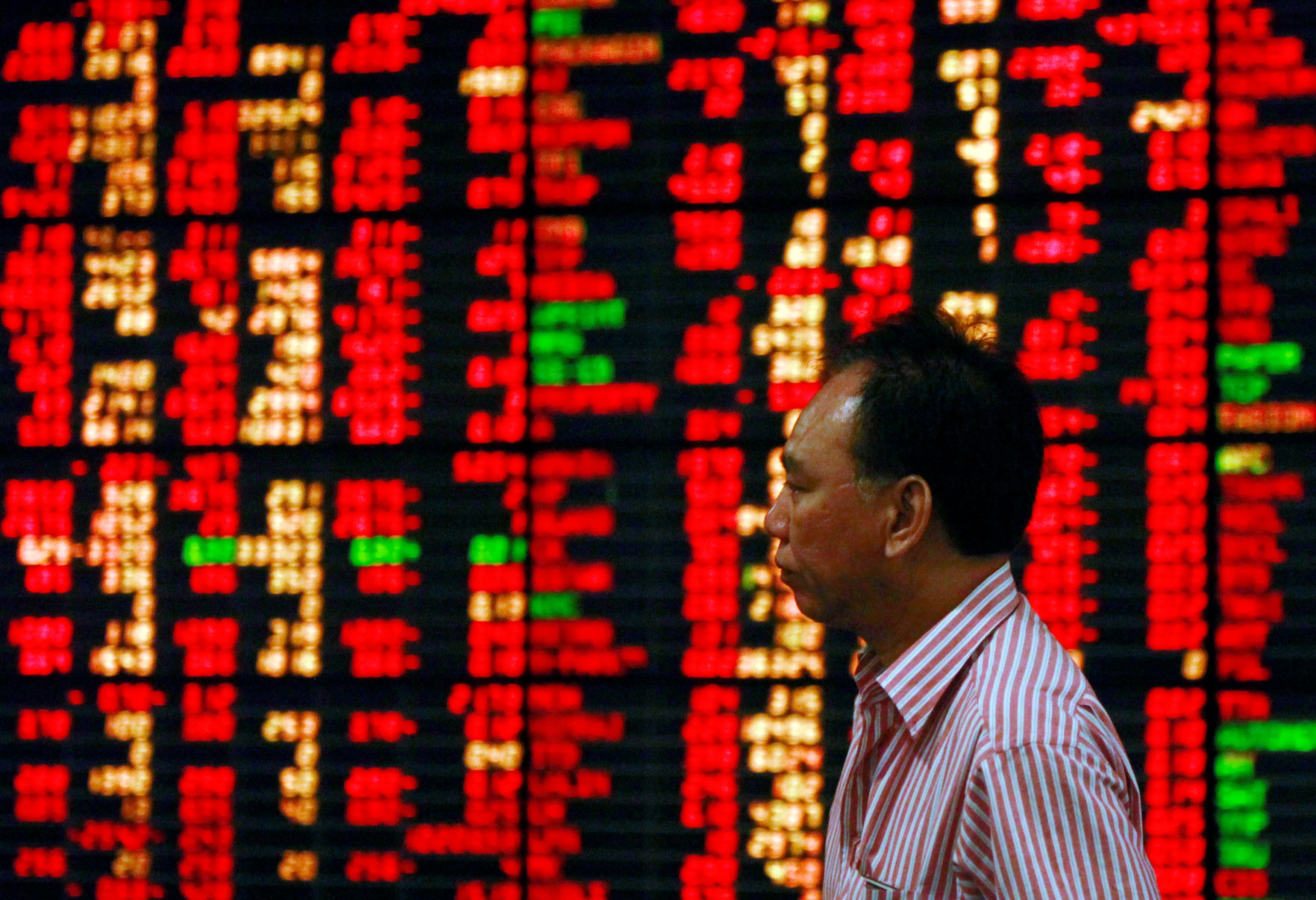
A Thai investor walks past an electronic board displaying live market data at a stock broker’s office in central Bangkok August 9, 2011. REUTERS/Chaiwat Subprasom/Files

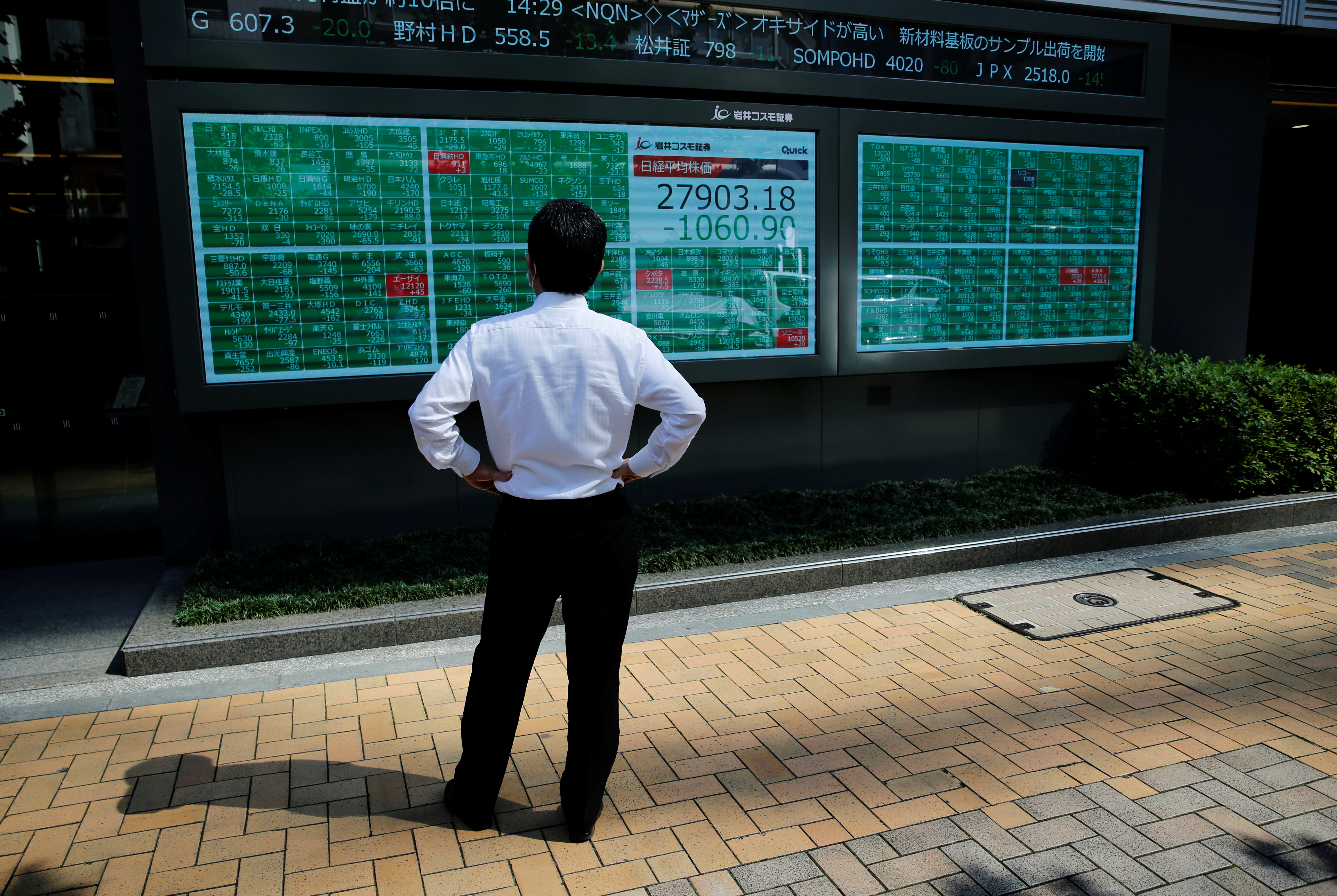
A man watches an electric board showing Nikkei index outside a brokerage at a business district in Tokyo, Japan, June 21, 2021. REUTERS/Kim Kyung-Hoon/File Photo

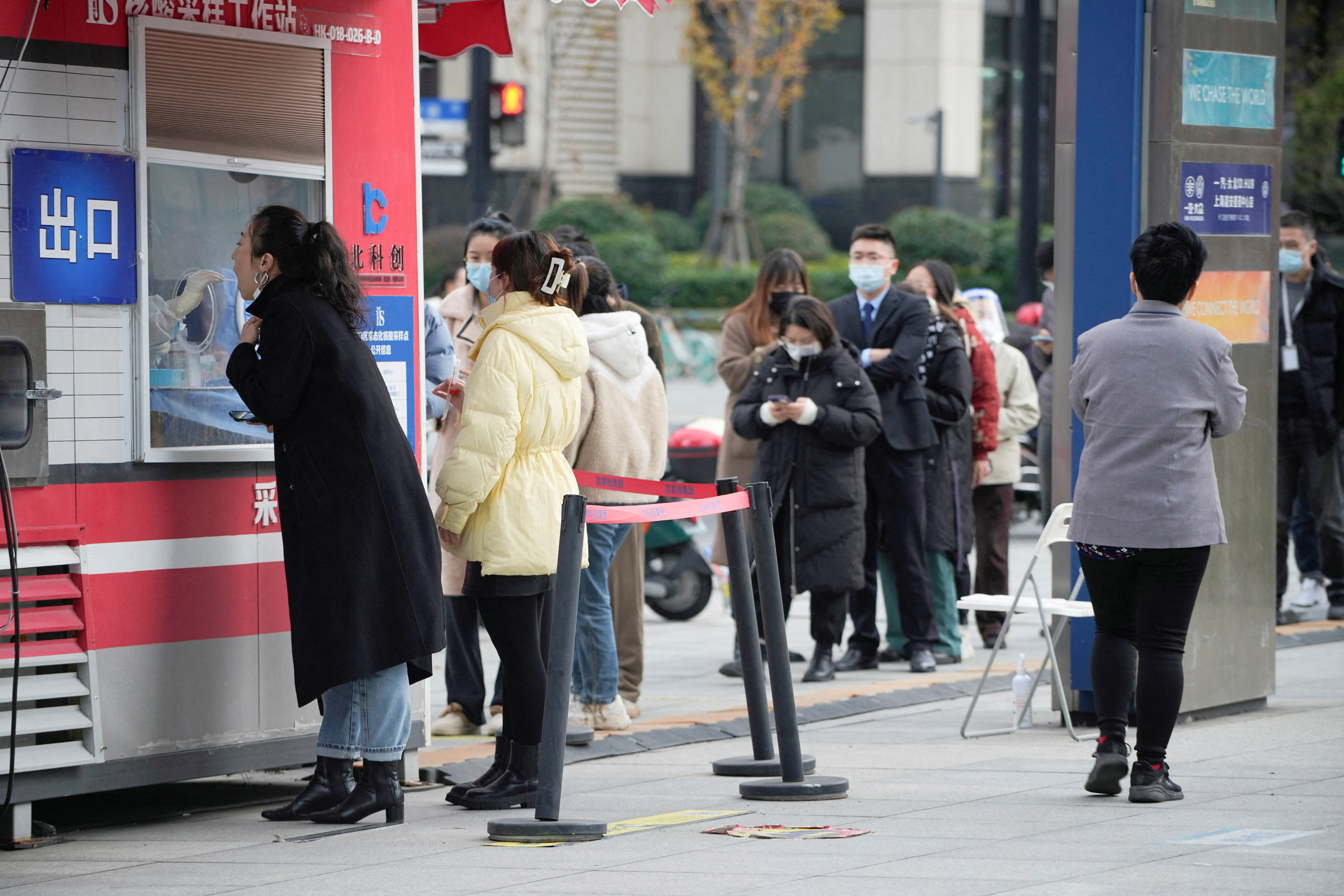
A woman gets tested at a nucleic acid testing site, as coronavirus disease (COVID-19) outbreaks continue in Shanghai, China, December 5, 2022. REUTERS/Aly Song/File Photo
Categories
Audio Sources - Full Text Articles

Nine civilians injured in Donetsk region in past day

630_360_1644425983-426.jpg

Russian troops wounded 9 civilians in Donetsk location around the previous working day.

“On December 5, the Russians hurt nine civilians in Donetsk location: four – in Ivanivske, 3 – in Bakhmut, 1 – in Maksymilyanivka, and a single – in Toretsk,” Pavlo Kyrylenko, Head of the Donetsk Regional Navy Administration, posted on Telegram.

In total, 1,237 civilians have been killed and 2,691 civilians have been injured in Donetsk area because the starting of Russia’s full-scale invasion of Ukraine.

In accordance to Kyrylenko, it is now impossible to establish the actual quantity of casualties in Mariupol and Volnovakha, but every single war legal will be punished.

As claimed, on December 5, the Russian troops released a substantial missile attack on Ukraine. Residential properties and vital infrastructure services in Vinnytsia, Kyiv, Mykolaiv, Odesa and other regions had been destroyed.

ol

Source link

The post Nine civilians injured in Donetsk region in past day appeared first on Ukraine Intelligence.

Categories
Audio Sources - Full Text Articles

Wirecard in the dock as Germany“s biggest fraud trial starts

2022-12-06T06:08:16Z

Former Wirecard executives go on trial on Thursday, two years after the collapse of the payments company that produced Germany’s biggest post-war fraud scandal and sent shockwaves through the country’s political and financial establishment.

Austrian former chief executive Markus Braun and two other high-ranking managers of the defunct blue-chip company are facing a number of charges, including fraud and market manipulation, and could be jailed for up to 15 years if convicted.

Braun denies wrongdoing and accuses others of running a shadow operation without his knowledge.

The prosecution has said Wirecard’s management invented vast sums of phantom revenue to hoodwink investors and creditors.

A verdict in the Munich court is not expected until 2024 at the earliest.

Founded in 1999 and based in the Munich suburb of Aschheim, Wirecard had a fairy tale rise and became a showpiece for a new type of German tech company that could compete with the established titans of Europe’s largest economy.

Wirecard, which started out processing payments for pornography and online gambling, rose to be worth $28 billion and displaced Commerzbank (CBKG.DE) in Germany’s DAX blue-chip index.

Wirecard batted away suspicions of wrongdoing from some investors and journalists and successfully lobbied German authorities to investigate those who were scrutinising its finances.

But in June 2020, Wirecard was forced to admit that 1.9 billion euros were missing from its balance sheet.

The government of then Chancellor Angela Merkel, which had previously backed Wirecard’s pursuit of an acquisition in China, briefly considered bailing out the company.

But within days, Wirecard became the first-ever DAX member to file for insolvency, owing creditors nearly $4 billion.

“The Wirecard scandal has caused lasting damage to the reputation of our financial centre and our business location internationally,” said Danyal Bayaz, state finance minister of Baden-Wuerttemberg, who was formerly on a parliamentary committee investigating Wirecard.

“Politicians, financial regulators, banks, auditors, supervisory boards – almost everyone has made a fool of themselves with Wirecard, with high costs for investors,” he told Reuters.

“The investigative committee in the Bundestag (parliament) has uncovered many mistakes and identified weaknesses that urgently need to be addressed. We are on a long road to restoring lost trust in our regulators and institutions.”

Munich prosecutors and a special police task force pursued an investigation, carrying out 450 interrogations, searching more than 40 properties in Germany alone and sifting through 42 terabytes of data, resulting in a 474-page indictment.

Authorities in more than two dozen countries have become involved, from Switzerland to Singapore, Austria, the Philippines, Britain and Russia.

Prosecutors will draw on evidence from Braun’s co-defendant Oliver Bellenhaus, the former head of Wirecard’s subsidiary in Dubai, who became a key witness after turning himself in to the German authorities in 2020.

Another former Wirecard executive, Stephan von Erffa, is also on trial. He has publicly expressed regret about the events at Wirecard but denied orchestrating them. His lawyer said von Erffa did not want to comment on the charges.

In the ructions that followed Wirecard’s demise, the head of German financial regulator BaFin resigned and the head of Germany’s accounting watchdog also stepped down.

Merkel and her then Finance Minister, now Chancellor, Olaf Scholz faced criticism for bungling oversight of the company.

Merkel and Scholz have said they are not to blame. Scholz beefed up BaFin’s powers and installed a new leadership in 2021. Scholz also criticised Wirecard’s auditor, EY, for failing to catch the fraud. EY has said it acted professionally.

There are 100 court dates provisionally scheduled until the end of next year in the case.

Related Galleries:

The headquarters of Wirecard AG in Aschheim near Munich, Germany, September 22, 2020. REUTERS/Michael Dalder

Wirecard’s former boss Markus Braun is seen ahead of testifying before a German parliamentary committee in Berlin, Germany, November 19, 2020. REUTERS/Fabrizio Bensch/Pool
Categories
Audio Sources - Full Text Articles

Exclusive: Goldman Sachs on hunt for bargain crypto firms after FTX fiasco

2022-12-06T06:14:38Z

Goldman Sachs (GS.N) plans to spend tens of millions of dollars to buy or invest in crypto companies after the collapse of the FTX exchange hit valuations and dampened investor interest.

FTX’s implosion has heightened the need for more trustworthy, regulated cryptocurrency players, and big banks see an opportunity to pick up business, Mathew McDermott, Goldman’s head of digital assets, told Reuters.

Goldman is doing due diligence on a number of different crypto firms, he added, without giving details.

“We do see some really interesting opportunities, priced much more sensibly,” McDermott said in an interview last month.

FTX filed for Chapter 11 bankruptcy protection in the United States on Nov. 11 after its dramatic collapse, sparking fears of contagion and amplifying calls for more crypto regulation.

“It’s definitely set the market back in terms of sentiment, there’s absolutely no doubt of that,” McDermott said. “FTX was a poster child in many parts of the ecosystem. But to reiterate, the underlying technology continues to perform.”

While the amount Goldman may potentially invest is not large for the Wall Street giant, which earned $21.6 billion last year, its willingness to keep investing amid the sector shakeout shows it senses a long term opportunity.

Its CEO David Solomon told CNBC on Nov. 10, as the FTX drama was unfolding, that while he views cryptocurrencies as “highly speculative”, he sees much potential in the underlying technology as its infrastructure becomes more formalized.

Rivals are more sceptical.

“I don’t think it’s a fad or going away, but I can’t put an intrinsic value on it,” Morgan Stanley (MS.N) CEO James Gorman said at the Reuters NEXT conference on Dec. 1.

HSBC (HSBA.L) CEO Noel Quinn, meanwhile, told a banking conference in London last week he has no plans to expand into crypto trading or investing for retail customers.

Goldman has invested in 11 digital asset companies that provide services such as compliance, cryptocurrency data and blockchain management.

McDermott, who competes in triathlons in his spare time, joined Goldman in 2005 and rose to run its digital assets business after serving as head of cross asset financing.

His team has grown to more than 70 people, including a seven-strong crypto options and derivatives trading desk.

Goldman Sachs has also together with MSCI and Coin Metrics launched data service datonomy, aimed at classifying digital assets based on how they are used.

The firm is also building its own private distributed ledger technology, McDermott said.

The global cryptocurrency market peaked at $2.9 trillion in late 2021, according to data site CoinMarketCap, but has shed about $2 trillion this year as central banks tightened credit and a string of high-profile corporate failures hit. It last stood at $865 billion on Dec. 5.

The ripple effects from FTX’s collapse have boosted Goldman’s trading volumes, McDermott said, as investors sought to trade with regulated and well capitalized counterparties.

“What’s increased is the number of financial institutions wanting to trade with us,” he said. “I suspect a number of them traded with FTX, but I can’t say that with cast iron certainty.”

Goldman also sees recruitment opportunities as crypto and tech companies shed staff, McDermott said, although the bank is happy with the size of its team for now.

Others also see the crypto meltdown as a chance to build their businesses.

Britannia Financial Group is building its cryptocurrency-related services, its chief executive Mark Bruce told Reuters.

The London-based company aims to serve customers who are eager to diversify into digital currencies, but who have never done so before, Bruce said. It will also cater to investors who are very familiar with the assets, but have become nervous about storing funds at crypto exchanges since FTX’s collapse.

Britannia is applying for more licenses to provide crypto services, such as doing deals for wealthy individuals, he said

“We have seen more client interest since the demise of FTX,” he said. “Customers have lost trust in some of the younger businesses in the sector that purely do crypto, and are looking for more trusted counterparties.”

Related Galleries:

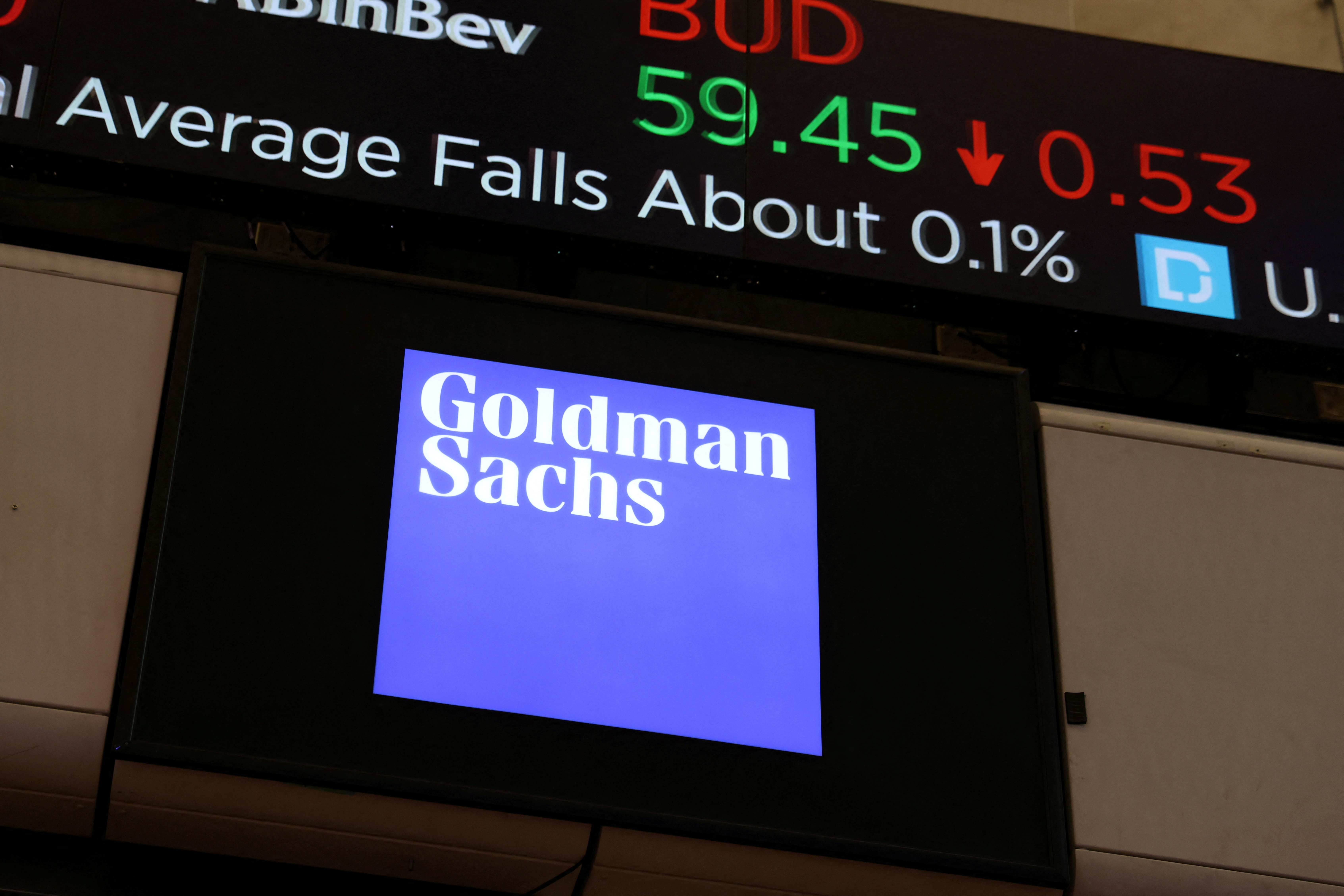
The logo for Goldman Sachs is seen on the trading floor at the New York Stock Exchange (NYSE) in New York City, New York, U.S., November 17, 2021. REUTERS/Andrew Kelly/File Photo

Representations of cryptocurrencies are seen in front of displayed FTX logo and decreasing stock graph in this illustration taken November 10, 2022. REUTERS/Dado Ruvic/Illustration/File Photo
Categories
Audio Sources - Full Text Articles

Russian troops fire half a hundred shells at Nikopol district

630_360_1670304996-453.jpeg

Russian troops have been shelling Nikopol district of Dnipropetrovsk location all evening very long. Half a hundred shells were fired at peaceful settlements.

“The shelling of Nikopol district does not abate… The Russians have been firing hefty artillery at Nikopol town, Chervonohryhorivka and Marhanets communities all evening lengthy. Nearly 50 enemy shells slammed into peaceful towns and villages,” Valentyn Reznichenko, Head of the Dnipropetrovsk Regional Armed forces Administration, posted on Telegram.

No casualties were documented.

“In Nikopol, extra than 10 personal houses, outbuildings, gasoline pipelines, and electrical power traces have been harmed. In Chervonohryhorivka neighborhood, a line that powered a pumping station of the regional water source corporation was slash off. A lot more than 9,000 households from a number of villages and towns were remaining with out h2o provide. Vitality personnel have now begun eradicating outcomes. In Marhanets group, private houses and a gas pipeline were destroyed,” Reznichenko extra.

As noted, on December 5, the Russian troops released a enormous missile assault on Ukraine. Household structures and essential infrastructure services in Vinnytsia, Kyiv, Mykolaiv, Odesa and other regions had been destroyed.

ol

Source link

The post Russian troops fire half a hundred shells at Nikopol district appeared first on Ukraine Intelligence.

Categories
Audio Sources - Full Text Articles

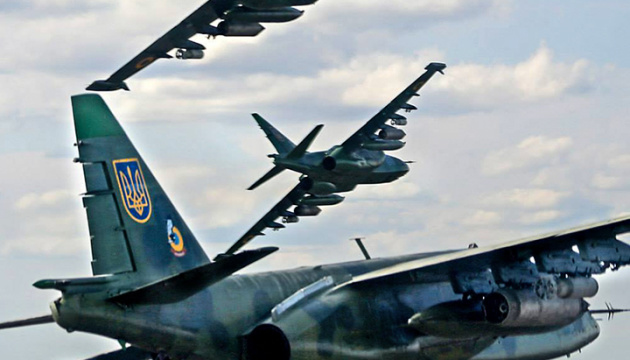
Ukraine’s Air Force hits 20 enemy positions

630_360_1663863647-147.jpg

Over the earlier day, the Air Pressure of the Armed Forces of Ukraine released 20 strikes on enemy staff, weapons and navy tools clusters and anti-aircraft missile methods.

This is stated in the report of the Standard Team of the Armed Forces of Ukraine as of 06:00, December 6, posted on Fb.

“The Russian occupiers proceed their armed aggression versus our state, keep putting civilian infrastructure objects. They try out to hold the temporarily captured territories, concentration their initiatives on restraining the actions of units of the Protection Forces of Ukraine, boost defense lines and positions in the temporarily captured and occupied territories of Ukraine. In Bakhmut and Avdiivka instructions, the enemy proceeds to attack, actively working with aviation to assist the steps of its ground teams,” the report claims.

Over the earlier working day, the models of the Protection Forces of Ukraine repelled Russia’s attacks in the parts of Verkhniokamyanske, Bakhmut, Andriivka, Yakovlivka, Soledar, Kurdiumivka, Krasnohorivka settlements in Donetsk region.

In transform, the enemy does not prevent shelling populated settlements and positions of units of the Armed Forces alongside the contact line, conducts aerial reconnaissance, carries on to strike critical infrastructure and civilian residences in violation of worldwide humanitarian regulation, the legislation and customs of war.

“About the previous day, the enemy introduced a enormous missile assault on significant and civilian infrastructure of Ukraine. Household properties and important infrastructure amenities in Vinnytsia, Kyiv, Mykolaiv, Odesa and other regions of our state arrived under fireplace,” the Standard Employees emphasizes.

In particular, the enemy introduced 70 Kh-101, Kh-555, Kh-22, Kh-59, Kh-31P and Kalibr missiles on the territory of Ukraine. In total, the air protection units of the Armed Forces of Ukraine wrecked additional than 60 enemy missiles.

At the same time, the Basic Team emphasizes, there is however a danger of enemy missile strikes on the electrical power technique and significant infrastructure objects through the territory of Ukraine.

In specific, about the past day, the enemy introduced 17 airstrikes and 38 MLRS assaults.

In Volyn and Polissia instructions, the problem stays unchanged, no indications of the development of enemy offensive teams have been detected. The Republic of Belarus carries on to aid the Russian Federation’s armed aggression from Ukraine, giving territory and airspace for launching missile and air strikes.

In Siversky path, the enemy fired mortars and tube artillery at the settlements of Senkivka, Sosnivka, Cherhihiv region Homelivske, Manukhivka, Oleksandrivka, Slavhorod, Sumy area.

In Slobozhansky direction, the enemy continues to retain its troops in the border places of Belgorod region. The locations of Volokhivka, Vilkhuvatka, Dvorichna, Krasne, Ohirtseve, Starytsia, Strilecha, Ternova settlements in Kharkiv area came underneath tank, mortar, and barrel artillery fire.

In Kupyansk and Lyman instructions, the enemy defends by itself, opened hearth from tanks, mortars and tube artillery on the areas of Berestove, Kyslivka, Kotliarivka, Tabaivka, Pishchane, Krokhmalne in Kharkiv region Novoselivske, Stelmakhivka in Luhansk location Makiivka, Nevske, Terny in Donetsk region. The enemy employed army aircraft for strikes in the place of Kotliarivka settlement.

In Bakhmut and Avdiivka directions, the enemy focuses its most important efforts on conducting offensive functions, striving to increase its tactical place. Twenty settlements, including Bilohorivka, Soledar, Bakhmutske, Bakhmut, Klishchiivka, Bila Hora, Druzhba, Avdiivka, Pervomaiske, Nevelske, Krasnohorivka, Marinka, and Novomykhailivka in Donetsk area, were being struck with tanks and the complete selection of artillery. The enemy attacked the areas of Spirne, Kamyanka, and Marinka settlements with aircraft.

The enemy holds the defense in Novopavlivka direction. The invaders fired diverse varieties of artillery at the parts of Bohoyavlenka, Vuhledar and Prechystivka settlements in Donetsk region.

The enemy also retains the defense in Zaporizhzhia and Kherson instructions. The invaders utilized tanks and artillery to shell the parts of a lot more than 16 settlements bordering the speak to line, which include Vremivka, Novopil in Donetsk region Olhivske, Dorozhnianka, Zaliznychne, Plavni in Zaporizhzhia area Zolota Balka, Novosilka in Kherson area and Kherson metropolis.

” Above the past working day, the Air Power of the Armed Forces of Ukraine introduced 15 strikes on enemy personnel, weapons and armed forces tools clusters and five extra strikes on the positions of enemy anti-aircraft missile units,” the Standard Workers provides.

The missile and artillery models of the Defense Forces of Ukraine strike two command posts, 8 personnel clusters, and an crucial enemy item more than the past working day.

ol

Source link

The post Ukraine’s Air Force hits 20 enemy positions appeared first on Ukraine Intelligence.

Categories
Audio Sources - Full Text Articles

What the Protests Tell Us About China’s Future

As thousands took to the streets across multiple Chinese cities over the last ten days, many have sought to understand the state’s response, any impact this wave of mobilization might have on Chinese politics, and how things might evolve in the coming weeks. It is still very early days and prediction is dangerous, but we can begin to draw some basic lessons.

First, it’s important to recall that Chinese society is intensely contentious. Numerous protests happen every day and have for many years. What made these demonstrations special was that they appeared to have been spurred on by what we might call a master, or umbrella, frame. Sparked by the tragic fire in Urumqi, workers, students, other young people, urbanites upset about delivery of services and public goods, and at least a certain number of broader regime critics all hit upon an anti-lockdown frame that resonated especially strongly. No one seems to have coordinated the protests and there certainly has not been any obvious organization. But what we might call a structural framing process has stood in for any type of entrepreneurial agency we might associate with many social movement, like that in support of Civil Rights in the U.S. during the 1960s.

[time-brightcove not-tgx=”true”]

China’s current contentious coalition is fragile, and already it seems that disparate agendas have started to unravel—likely prefiguring a return to separate spheres of mobilization around labour disputes, campus issues, urban governance, and other concerns that the government finds easier to address and control individually. Indeed, the past several days have not seen high levels of mobilization maintained, not least as claims began to shift toward more general and abstract issues (e.g. censorship and systemic issues in politics) and away from the more concrete and specific grievances that likely animated many at the outset.

Read More: Why a Blank Sheet of Paper Became a Symbol of Protest

Second, the state’s response is critical. When looking at social movements, we often tend to think about state responses in binary form – concede or repress. China’s government hasn’t done either in simple terms. At the very beginning, it seems police stood by and took little meaningful action, perhaps hoping that protests would fizzle of their own accord. Later, they turned the dial toward repression ever so slightly, checking cell phones, asking for identity papers, putting up street barriers, and implementing other ‘nuisance measures’ that seemed to deter many people from protesting. Should more demonstrations break out, or should any movement spiral, there are many options in the CCP’s toolbox short of a sharp or brutal crackdown. Slow-motion, piecemeal, and targeted repression is by far the most likely response.

If the protests peter out, in other words, they will bear greatest resemblance to the ‘Democracy Wall’ movement of 1978-79. If the state manages to choreograph a slow-rolled repressive response successfully, they will look more like what we saw in Hong Kong in 2019-2020. Only if repression on the ground spins out of central leaders’ control, or if protesters refuse to be deterred to the point of provoking a general crisis, will we see anything on the order of Tiananmen in 1989. This last scenario is extremely unlikely.

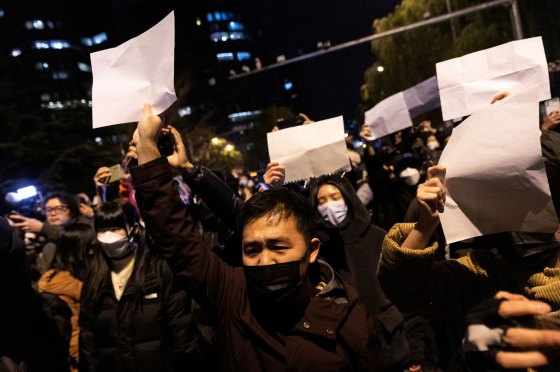
People hold white sheets of paper in protest over COVID-19 restrictions, after a vigil for the victims of a fire in Urumqi, as outbreaks of COVID-19 continue, in Beijing, China, on Nov. 28, 2022.
Thomas Peter—ReutersPeople hold white sheets of paper in protest over COVID-19 restrictions, after a vigil for the victims of a fire in Urumqi, as outbreaks of COVID-19 continue, in Beijing, China, on Nov. 28, 2022.

Assuming they do not escalate further, it’s tempting to think the protests haven’t had any significant impact. That would be a mistake. Just this one-off mobilization has shown three things: 1) That an anti-lockdown framing has potential to resonate across a broad range of contentious constituencies; 2) That a non-trivial segment of urban Chinese society is sufficiently aggrieved to turn out in force to support general regime critiques in a manner not seen recently; and 3) That the state has learned valuable lessons about how most effectively to deter or demobilize protesters without resort to costly (in terms of both resources and reputation) and dangerous repression. If this is all that comes of them, the past week’s demonstrations have still taught us to look for more broad-based contention in the future and, perhaps, to set aside our long-held assumptions about the limits of Chinese ‘cellular activism’. They have also shown us that grievances have likely not been assuaged and, if anything, deeper issues have taken root in the hearts of many that could lead them to take bigger risks in challenging the CCP in the future. Finally, we need to adjust our thinking about how authoritarian governments like China’s respond when their citizens mobilize and look for them to deploy much subtler tactics and strategies than we might have realized.

So, where are the protests going? Have they really dissipated? We won’t know that except in hindsight. But we can consider what factors might spur them back to life. Assuming the anti-lockdown frame has run its course, there would need to be a new such construct—or at least a new touchstone similar to the Urumqi fire. It is just possible that former leader Jiang Zemin’s death on November 30 could provide such an event— possible, but not likely. After all, the death of Hu Yaobang on April 15, 1989, was what initially brought students out from campus in displays of mourning that later gradually morphed into a protest movement that culminated in the repression of June 4. Hu had been forced out as CCP General Secretary in 1987 and came to be viewed as a hero among more liberally inclined Chinese citizens. Jiang never enjoyed such a reputation. Indeed, in drawing such a comparison, one is tempted to recall the words of Lloyd Benson to Dan Quayle in deciding that Jiang Zemin is no Hu Yaobang.

That aside, there could well be another moment that gives rise to a widely resonant structural frame. This could come from a new and large outbreak of Covid-19 that the government doesn’t control. It could also come from some less obvious incident or accident that appears related in some way to ongoing lockdowns. It could even come from a wider crisis such as a meltdown in the real estate sector or runaway inflation of food or energy prices. We cannot guess whether any such critical events or moments might occur. Even less can we predict whether they might provide a spark to reignite large-scale protests. But we’ve definitely seen that there is potential for contention encompassing a wide swathe of Chinese society to spring up under current conditions.

Looking further ahead, returning to something closer to what was normal as of the end of 2019 might go some way toward diffusing the underlying grievances that animated the recent protests. But this too is not guaranteed. Chinese society and politics have been in a lengthy cycle of tightening since at least 2007. Loosening—even just in terms of lockdowns and anti-Covid measures—can have unpredictable consequences. Further, Xi Jinping has solidified a degree of political domination and personal control over the apparatus of the state and Party not seen in decades. But he’s also done this in a manner rather different from Mao or even Deng. By emphasizing rules and discipline, he has set up something much more like a rational-bureaucratic authoritarian order than the charismatic and mercurial regime of Mao’s day. This could portend some type of significant initiative is due to follow (for example, with significant new economic reform).

Any major new reform would be fraught, however, as powerful vested interests would need to be either placated or pushed aside. These would include both those who’ve benefitted most under China’s current partial reform equilibrium and many of those least well off, who might stand to lose even more. If Jiang Zemin was wedded to the belief that China needed to strengthen its economy to facilitate greater political power, Xi might well be looking at this through a converse lens, suggesting that political institutions must be strengthened and their control over society cemented before further high-stakes or systemic economic change can occur. Having basically achieved the former, we just might see the latter in the coming years—but not directly because of the recent protests.

Categories
Audio Sources - Full Text Articles

Drone attacks oil tank at airfield inside Russia – governor

2022-12-06T05:44:30Z

Ukraine said Russia destroyed homes in the southeast and knocked out power in many areas with a new volley of missiles on Monday, while Moscow said Ukrainian drones had attacked two air bases deep inside Russia hundreds of miles from frontlines. This report produced by Jillian Kitchener.

A drone attack on an airfield in Russia’s Kursk region set fire to an oil storage tank, a governor said on Tuesday, a day after Russia accused Ukraine of audacious drone attacks on two military airfields deep inside Russian territory.

Roman Starovoyt, the governor of the Kursk region bordering Ukraine, said on the Telegram messaging app there were no casualties from the attack and the fire was “localised”. Reuters was not able to immediately verify the reports.

Russia’s defence ministry said earlier that Ukrainian drones attacked two air bases at Ryazan and Saratov in south-central Russia on Monday, killing three servicemen and wounding four, and damaging two aircraft.

Ukraine did not directly claim responsibility for any of the attacks. If it was behind them, Monday’s strikes would be the deepest inside Russia since Moscow invaded Ukraine on Feb. 24.

The New York Times, citing a senior Ukrainian official, said the drones involved in Monday’s attacks were launched from Ukrainian territory, and at least one of the strikes was made with the help of special forces close to the base.

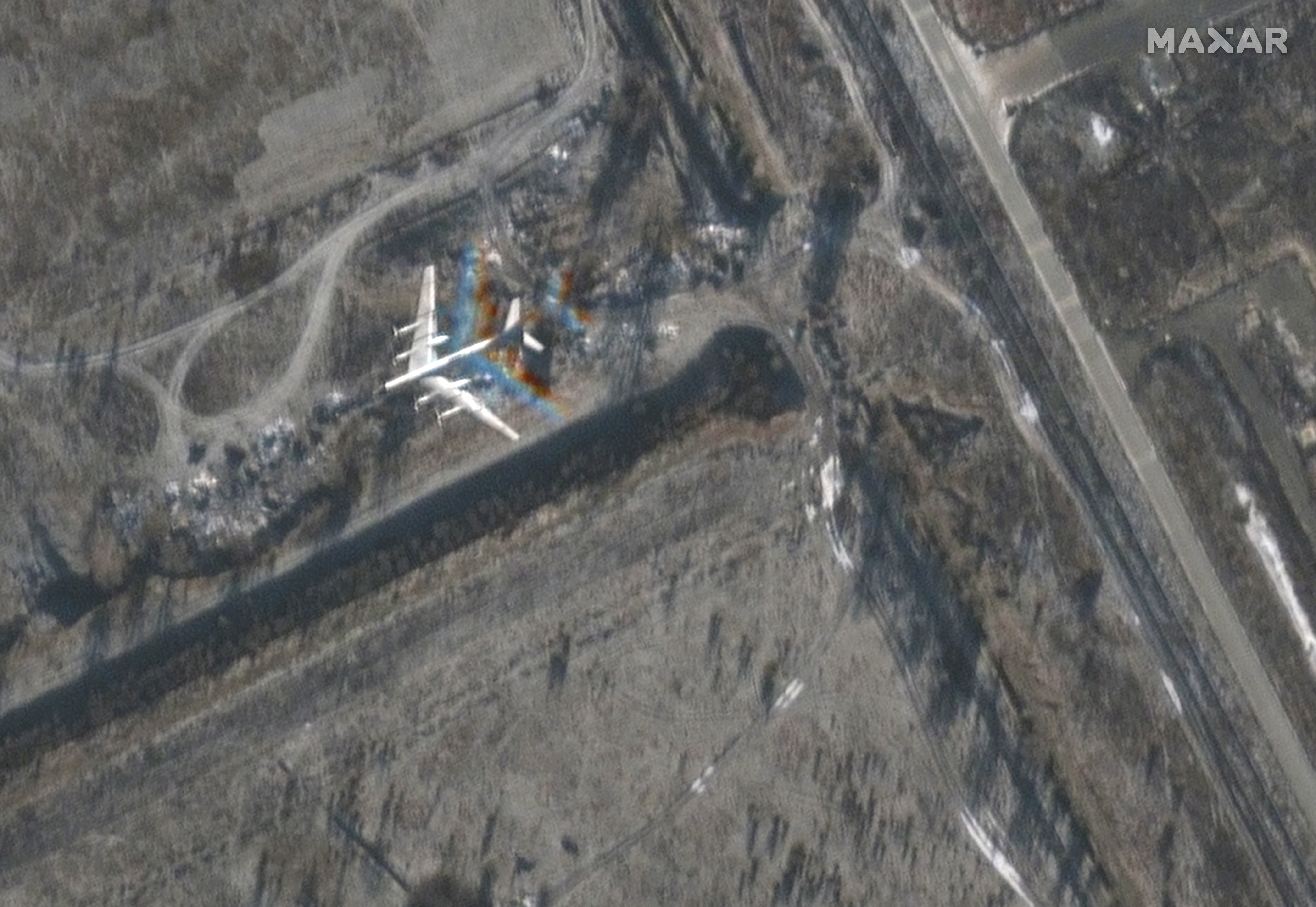
Israeli satellite imaging company ImageSat International shared images it said showed burn marks and objects near a Tu-22M aircraft at the Dyagilevo airbase.

Russia’s defence ministry said Monday’s attacks were acts of terrorism intended to disable long-range aircraft, and the low-flying drones were shot down. The deaths were reported on the Ryazan base, 185 km (115 miles) southeast of Moscow.

Saratov is at least 600 km (370 miles) from the nearest Ukrainian territory. Russian commentators said on social media that if Ukraine could strike that far inside Russia, it might also be capable of hitting Moscow.

Ukrainian military analyst Serhiy Zgurets said the air force bases hit on Monday were the only facilities in Russia that could fully service bombers used to launch attacks on Ukraine.

“It is still too early to say what is at issue here, but the ability of the armed forces of Ukraine to reach military targets deep in the territory of the Russian Federation has a very symbolic and important meaning,” he wrote on the Espreso TV website.

There was no immediate comment from Kyiv or Moscow on the latest report of a drone attack in Kursk.

Russia responded to Monday’s attacks with a “massive strike on the military control system” and other targets using high-precision air- and sea-based weapons in which all 17 objectives were hit, Russia’s defence ministry said.

Ukraine warned there would be emergency blackouts once again in several regions as it repaired damage from missile attacks it said destroyed homes and knocked out power.

The strikes, which plunged parts of Ukraine back into freezing darkness with temperatures below zero Celsius (32 Fahrenheit), were the latest in weeks of attacks hitting critical infrastructure.

At least four people were killed, Ukrainian President Volodymyr Zelenskiy said, adding that most of some 70 missiles were shot down.

“In many regions, there will have to be emergency blackouts,” he said in a late Monday video address. “We will be doing everything to restore stability.”

Russia has been attacking Ukraine’s energy infrastructure regularly since early October in what it says is a bid to degrade its military. Ukraine says such attacks are aimed at civilians and constitute war crimes. Russia denies that.

The United States said it would convene a virtual meeting on Thursday with oil and gas executives to discuss how it can support Ukrainian energy infrastructure, according to a letter seen by Reuters.

U.S. Secretary of State Antony Blinken said Russia would fail in its “current gambit of trying to, in effect, get the Ukrainian people to throw up their hands”.

“The point is this, unless and until Russia demonstrates that it’s interested in meaningful diplomacy, it can’t go anywhere. If and when it does, we’ll be the first to be ready to help out,” he said at the Wall Street Journal CEO Council in Washington.

Russia says it is waging a “special military operation” in Ukraine to rid it of nationalists and protect Russian-speaking communities. Ukraine and its allies accuse Russia of an unprovoked war to grab territory.

Ukraine’s military said on Tuesday its forces had repelled Russian attacks in or around seven settlements in the Donetsk region, including the town of Bakhmut, over the past 24 hours.

Russian soldiers were attempting to cut roads to Bakhmut from the west and northwest, Ukrainian presidential adviser Oleksiy Arestovych said on YouTube.

Donetsk Governor Pavlo Kyrylenko told Ukrainian television late on Monday that there were only about 12,000 people left in Bakhmut, from 80,000 before the war, and there was no electricity or gas.

In Ukraine’s southern Zaporizhzhia region, at least two people were killed and several houses destroyed by Russian missile strikes on Monday, an official in the presidential office said.

Reuters video showed two bodies next to a damaged car in the village of Novosofiivka, about 25 km (16 miles) east of Zaporizhzhia city.

“Both of my neighbours were killed,” Olha Troshyna 62, said. “They were standing by the car … seeing off their son and daughter-in-law.”

Ukraine’s air force said it downed over 60 of more than 70 missiles fired by Russia on Monday.

Related Galleries:

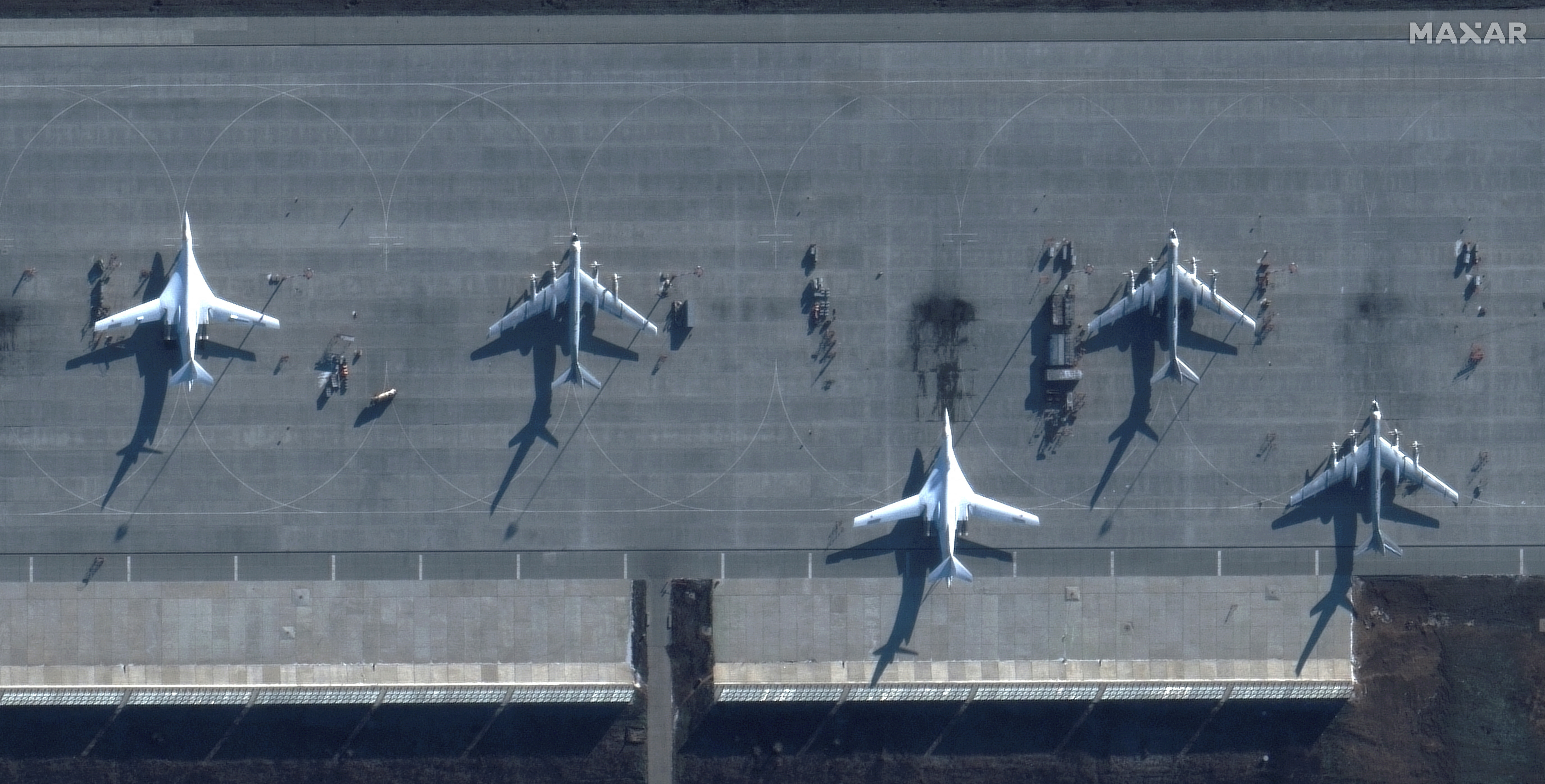
A satellite image shows bomber aircrafts at Engels Air Base in Saratov, Russia, December 4, 2022. Satellite image 2022 Maxar Technologies/Handout via REUTERS

A satellite image shows bomber in flight at northeast of Engels Air Base in Saratov, Russia, December 3, 2022. Satellite image 2022 Maxar Technologies/Handout via REUTERS

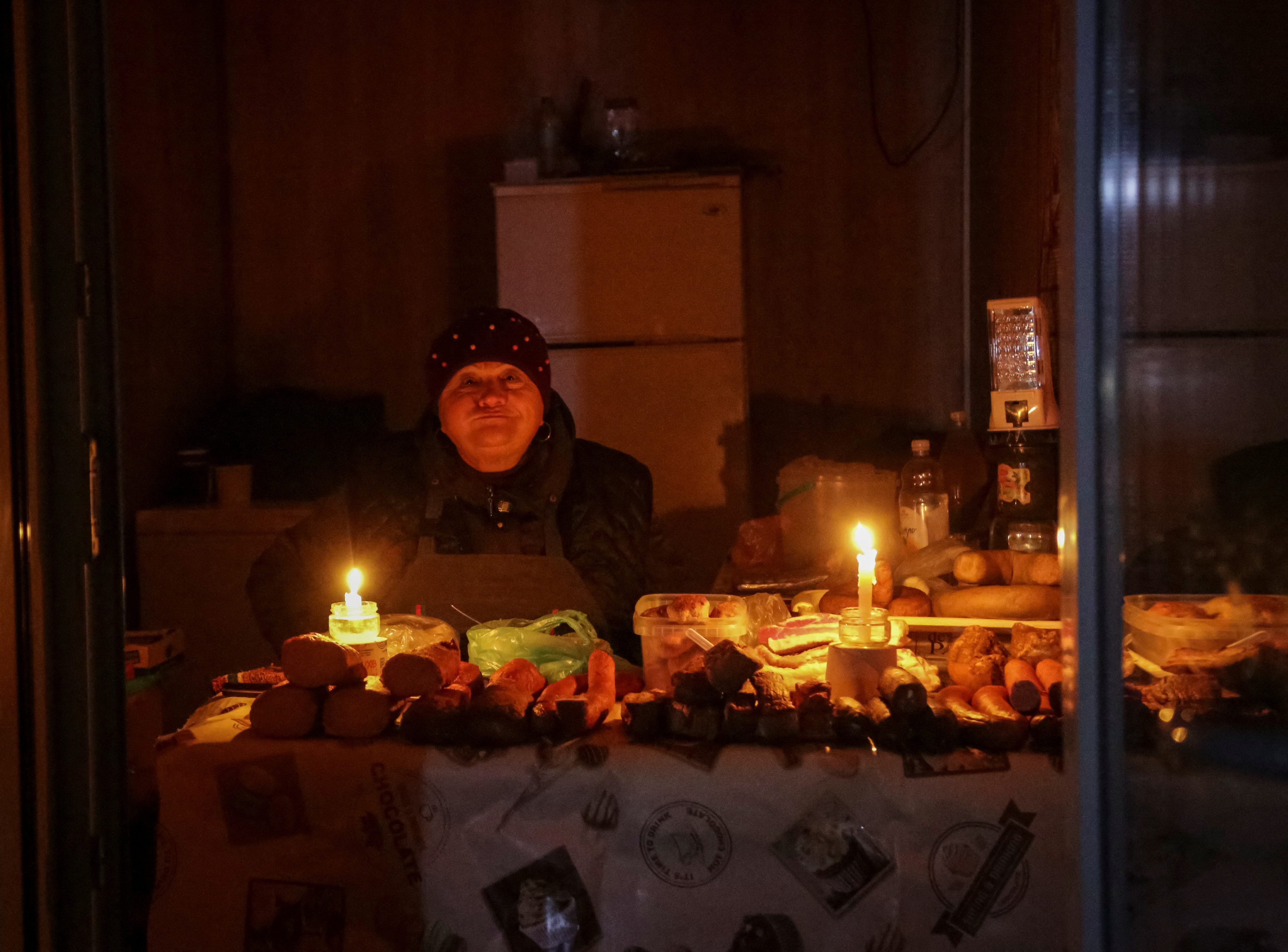
A vendor waits for customers in a small store that is lit with candles during a power outage after critical civil infrastructure was hit by Russian missile attacks, as Russia’s invasion of Ukraine continues, in Odesa, Ukraine December 5, 2022. REUTERS/Serhii Smolientsev

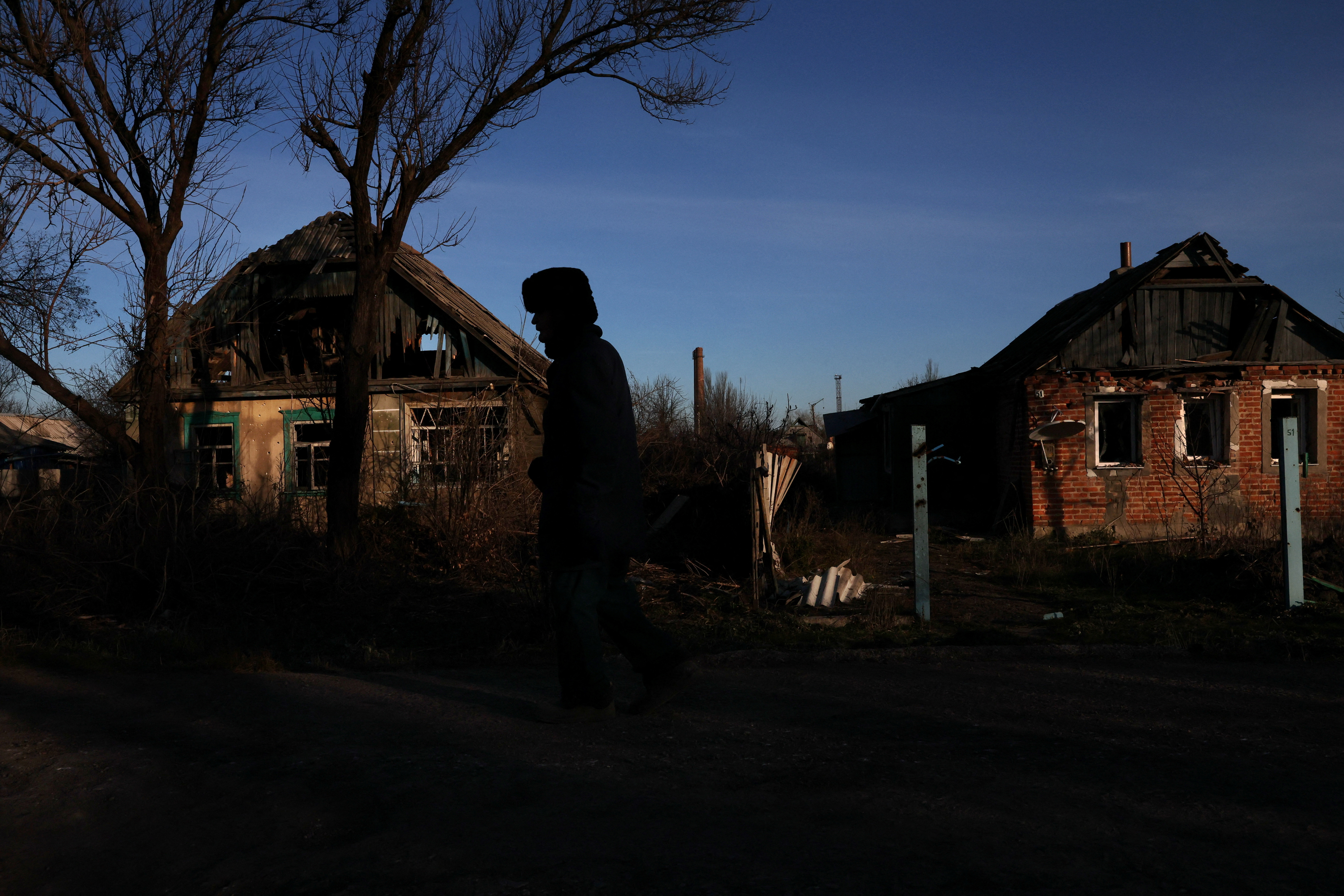
A man walks down a street of destroyed homes as Russia’s invasion on Ukraine continues in Siversk, Ukraine, December 4, 2022. REUTERS/ Leah Millis

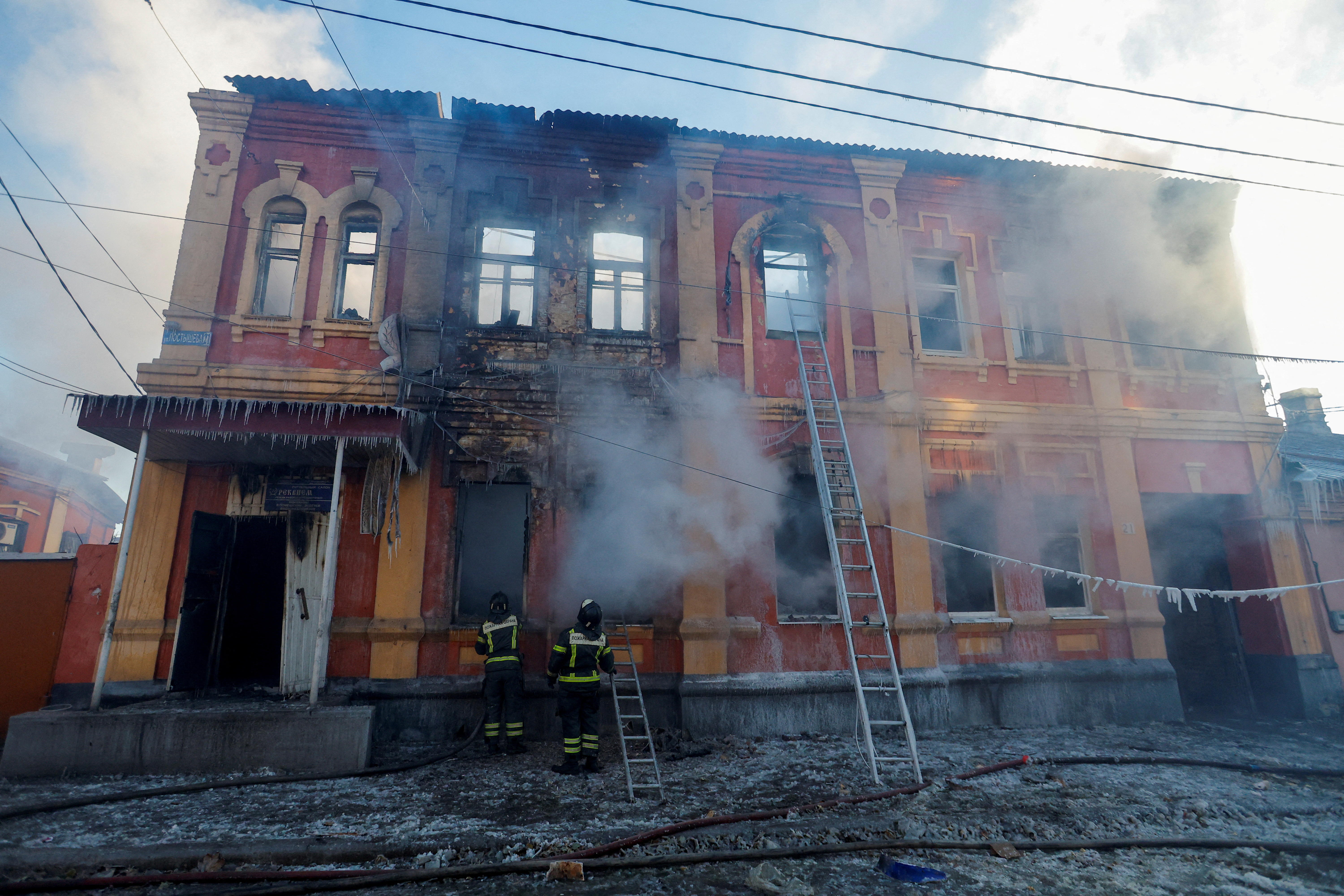
Firefighters work outside an office building destroyed in shelling in the course of Russia-Ukraine conflict in Donetsk, Russian-controlled Ukraine, Ukraine December 5, 2022. REUTERS/Alexander Ermochenko

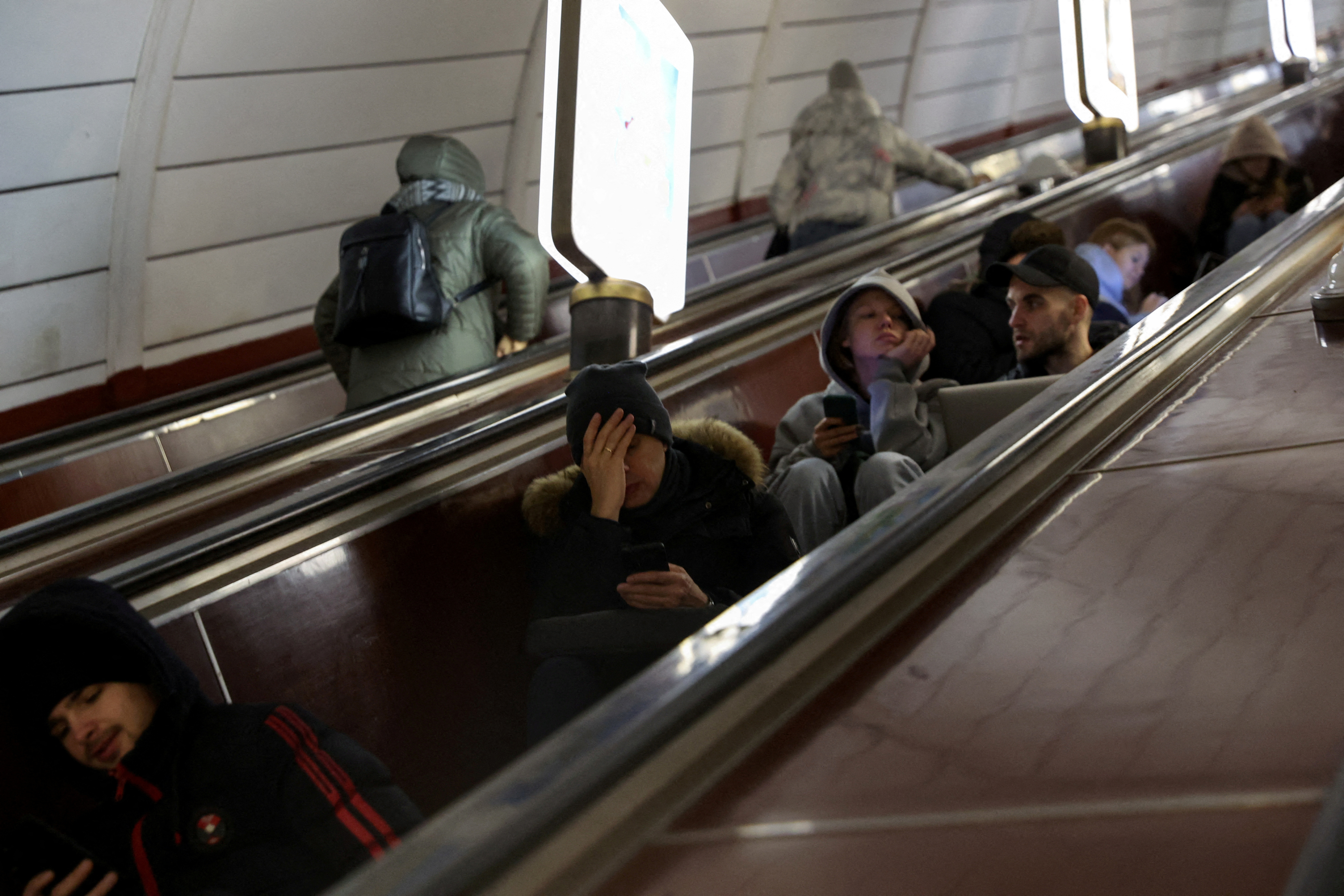
People take shelter inside the metro station amid Russian missile attacks in Kyiv, Ukraine, December 5, 2022. REUTERS/Shannon Stapleton
Categories
Audio Sources - Full Text Articles

Russian missile strikes ineffective against Ukrainian spirit and determination

630_360_1580477712-113.jpg

British Ambassador to Ukraine Melinda Simmons called the Russian missile strikes on Ukraine’s energy infrastructure cruel and cynical but ineffective in opposition to the Ukrainian spirit.

“Russian missile strikes on Ukrainian civilian vitality infrastructure are cruel, cynical and ineffective against Ukrainian spirit and resolve,” Ambassador Simmons posted on Twitter.

🇷🇺 missile strikes on 🇺🇦 civilian electrical power infrastructure are cruel, cynical and ineffective in opposition to Ukrainian spirit and resolve.

— Melinda Simmons (@MelSimmonsFCDO) December 5, 2022

As noted, on December 5, Russian troops launched another huge assault on Ukraine. According to the Air Pressure of the Armed Forces of Ukraine, the enemy introduced extra than 70 missiles. The Protection Forces of Ukraine shot down more than 60 of them.

ol

Source link

The post Russian missile strikes ineffective against Ukrainian spirit and determination appeared first on Ukraine Intelligence.

WP Radio
WP Radio
OFFLINE LIVE