
Day: December 6, 2022
Russian troops have executed a substantial assault on the Kherson area, targeting condominium blocks and infrastructure.
That is according to the Kherson regional law enforcement, Ukrinform reviews.
“The Russians continue on to massively bombard the Kherson region with artillery and several rocket launchers, intentionally targeting apartment properties and infrastructure facilities in buy to induce as a great deal damage as attainable and bring about casualties amid the civilian population,” the report explained.
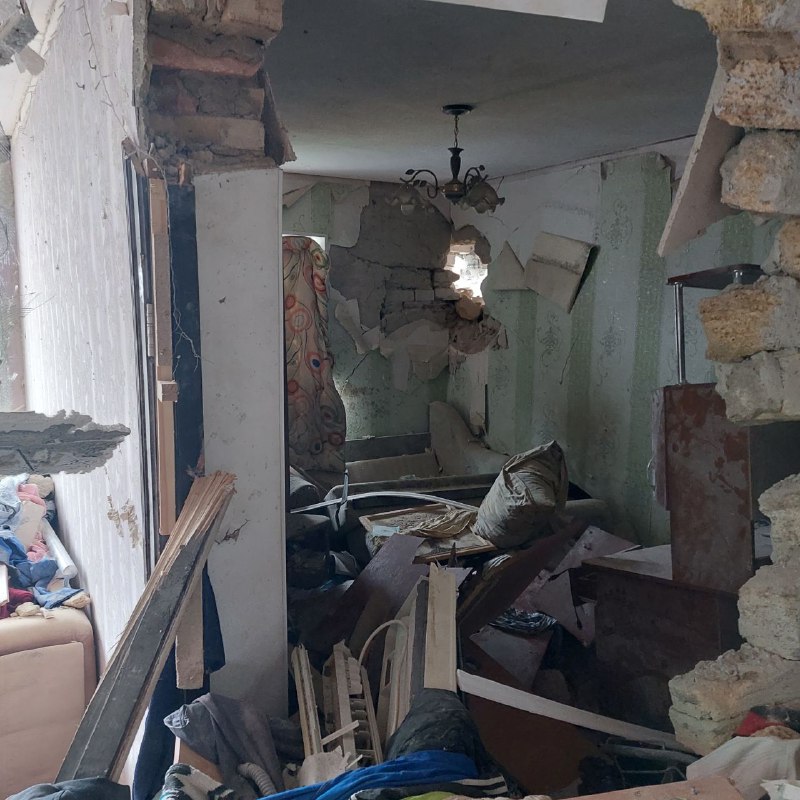
Following highly effective explosions in the regional middle, home windows in apartment properties had been damaged, balconies were crushed and gasoline pipes had been damaged. The occupiers also shelled the settlements of the Beryslav district, the Hola Prystan metropolis community and the suburbs of Kherson. Residential properties were being weakened there.
More than the previous working day, the law enforcement of the Kherson area responded to 350 reports from citizens about felony offenses and other occasions. Investigators opened 43 legal proceedings relating to war crimes fully commited by the military of the occupying region.
Yaroslav Yanushevych, the head of the regional armed service administration, explained on Telegram that on December 5, the Russian occupiers shelled the Kherson location 17 situations. The invaders attacked the peaceful settlements of the region with artillery, MLRS, mortars and tanks.
The Russians fired on civilian infrastructure and household structures. A person resident of the Kherson location was wounded by enemy shelling, the report mentioned.
Image credit history: Kherson regional police
The post Russian troops attack Kherson region, targeting apartment buildings, infrastructure appeared first on Ukraine Intelligence.

MOSCOW, Idaho – Kaylee Goncalves, one of four University of Idaho students killed in a shocking pre-dawn stabbing attack this month, may have had a stalker.
Police are asking anyone with information on the subject to contact them, as their homicide investigation enters day 12 without a suspect.
Goncalves, 21; Madison Mogen, 21; Xana Kernodle, 20; and Ethan Chapin, 20, were found dead hours after police say someone attacked them in their sleep on Nov. 13.
Detectives and FBI agents worked through the Thanksgiving holiday but have revealed no further details about the attacker’s identity.
WITH IDAHO MURDERS UNSOLVED AND INVESTIGATION LENGTH ‘UNCLEAR,’ STUDENTS ALLOWED TO LEARN REMOTELY

University of Idaho victim Kaylee Goncalves may have had a stalker, according to police in Moscow, Idaho, but they have not corroborated the claim. Investigators have not named a suspect or person of interest 12 days after the brutal quadruple homicide of Goncalves and three friends. (Instagram @kayleegoncalves)
Investigators tell Fox News Digital that they did not find signs of a forced entry or the murder weapon, which they believe was a fixed-blade knife.
“We continue looking into the stalker issue and are asking for any information from the public on this topic,” Aaron Snell, the communications director for the Idaho State Police, told Fox News Digital on Friday morning.
WATCH: Former homicide detective Pat Diaz explains ‘crucial’ investigation points
However, as investigators continue their quest for answers, a friend of the victims told Fox News Digital he believes they were attacked by an outsider.

Ethan Chapin, Xana Kernodle, Madison Mogen and Kaylee Goncalves, along with the women’s two other roommates in Goncalves’ final Instagram post, shared the day before the slayings. (@kayleegoncalves/Instagram)
“They were college girls — they have stalkers,” said Corbin, a bartender at the Corner Club, where Goncalves and Mogen were seen hours before the slayings. “But you’d never think anyone would go that far.”
UNIVERSITY OF IDAHO STUDENTS KILLED: A TIMELINE OF EVENTS
Corbin said he was a fraternity member and that the campus’s Greek life is close-knit and insular.
Chapin was a member of the Sigma Chi fraternity, the University of Idaho said earlier this month. Kernodle and Mogen were both part of the Pi Beta Phi sorority, and Goncalves belonged to Alpha Phi.
“Whoever did this is not in their circle,” Corbin said.
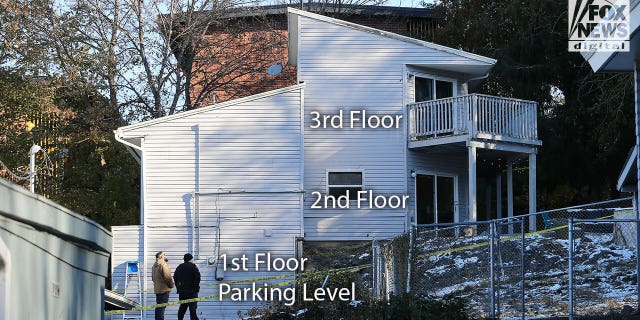
The home where four University of Idaho students were murdered Nov. 13, 2022. The slayings happened on the second and third floors. Two other roommates sleeping downstairs were unharmed. (Derek Shook for Fox News Digital)
Pat Diaz, a former Miami-Dade County detective with more than 30 years on the homicide squad, said it is possible that the suspect could be an outsider.
IDAHO MURDERS: INVESTIGATORS WORK THROUGH THANKSGIVING DAY AS COLLEGE TOWN SHUTS DOWN
“It’s gonna be a stranger who saw these girls on campus, or outside at a bar and possibly followed them home,” he said. With a knife as the murder weapon, he said the suspect may be an experienced outdoorsman or hunter.
Most students have left town for the Thanksgiving holiday, but University of Idaho President Scott Green has said that all students will have the option to finish the semester remotely.
Moscow police previously said they believe the attack was “targeted,” and they were looking into reports that Goncalves had a stalker before the massacre — but had not found evidence to support that yet.
CLICK HERE TO GET THE FOX NEWS APP
“Kaylee mentioned having a stalker, but detectives have been unable to corroborate the statement,” police said Wednesday. “Investigators are requesting anyone with information about a potential stalker, or unusual instances, to contact the tip line.”
The number is 208-883-7180, or email tipline@ci.moscow.id.us.
2022-12-06T09:17:58Z
A third Russian airfield was ablaze on Tuesday from a drone strike, a day after Ukraine demonstrated an apparent new ability to penetrate hundreds of kilometers deep into Russian air space with attacks on two Russian air bases.
Officials in the Russian city of Kursk, located closer to Ukraine, released pictures of black smoke above an airfield in the early morning hours of Tuesday after the latest strike. The governor said an oil storage tank there had been set ablaze but there were no casualties.
It came a day after Russia confirmed it had been hit by what it said were Soviet-era drones – at Engels air base, home to Russia’s fleet of giant strategic bombers, and in Ryazan, just a few hours drive from Moscow. Kyiv did not directly claim responsibility for the strikes but celebrated them.
“If Russia assesses the incidents were deliberate attacks, it will probably consider them as some of the most strategically significant failures of force protection since its invasion of Ukraine,” Britain’s ministry of defence said on Tuesday.
“The Russian chain of command will probably seek to identify and impose severe sanctions on Russian officers deemed responsible for allowing the incident.”
Russia’s defence ministry said three service members were killed in the attack at Ryazan. Although the attacks struck military targets it characterised them as terrorism and said the aim was to disable its long-range aircraft.
The New York Times, citing a senior Ukrainian official, said the drones involved in Monday’s attacks were launched from Ukrainian territory, and at least one of the strikes was made with the help of special forces close to the base.
Ukraine never acknowledges responsibility for attacks inside Russia. Asked about the strikes, Ukrainian Defence Minister Oleskiy Reznikov repeated a longstanding joke that explosions at Russian bases were caused by careless cigarette smokers.
“Very often Russians smoke in places where it’s forbidden to smoke,” he said.
Ukrainian presidential adviser Oleksiy Arestovych went further, noting that Engels was the only base Russia has that is fully equipped for the giant bombers which Russia has used in attacks on Ukraine.
“They will try to disperse (strategic aircraft) to airfields, but all this complicates the operation against Ukraine. Yesterday, thanks to their unsuccessful smoking, we achieved a very big result,” he said.
Russian commentators said on social media that if Ukraine could strike that far inside Russia, it might also be able to hit Moscow.
“The ability of the armed forces of Ukraine to reach military targets deep in the territory of the Russian Federation has a very symbolic and important meaning,” Ukrainian military analyst Serhiy Zgurets wrote on the Espreso TV website.
The huge Tupolev long-range bombers that Russia stations at Engels air base are a major part of its strategic nuclear arsenal, similar to the B-52s deployed by the United States during the Cold War. Russia has used them in its campaign since October to destroy Ukraine’s energy grid with near weekly waves of missile strikes.
The Engels base, near the city of Saratov, is at least 600 km (372 miles) from the nearest Ukrainian territory.
Russia responded to Monday’s attacks with what it called a “massive strike on Ukraine’s military control system”. Missile strikes across Ukraine destroyed homes and knocked out power, but the impact seemed to be less severe than barrages last month that plunged millions of Ukrainians into darkness and cold.
Ukraine’s air force said it had shot down more than 60 of around 70 missiles.
A missile had torn a huge crater out of the earth in the village of Novosofiivka, about 25 km (16 miles) east of Zaporizhzhia city in southern Ukraine and completely shredded a nearby house. Ambulance workers collected two bodies lying by a destroyed car.
Olha Troshyna, 62, said the dead were her neighbours who were standing by the car seeing off their son and daughter-in-law when the missile struck. With houses now destroyed and winter setting in, she had no idea where she would go.
“We have no place to go back to,” she said. “It would be fine if it were spring or summer. We could have done something if it were a warm season. But what am I going to do now?”
Ukraine warned there would be emergency blackouts once again in several regions as it repaired damage.
At least four people were killed in Russia’s latest strikes, Ukrainian President Volodymyr Zelenskiy said.
“In many regions, there will have to be emergency blackouts,” he said in a late Monday video address. “We will be doing everything to restore stability.”
Russia, which calls the invasion a “special military operation” to root out nationalists, claims a military justification for its attacks on Ukraine’s civilian infrastructure. Kyiv says the attacks have no military purpose and are intended to hurt civilians, a war crime.
“They do not understand one thing – such missile strikes only increase our resistance,” Ukraine’s defence minister Reznikov said. “Moreover, they increase the desire of our partners to support us.”
The United States said it would convene a virtual meeting on Thursday with oil and gas executives to discuss how it can support Ukrainian energy infrastructure, according to a letter seen by Reuters.
U.S. Secretary of State Antony Blinken said Russia would fail in its “current gambit of trying to, in effect, get the Ukrainian people to throw up their hands”.
Michael Novakhov retweeted:
@mikenov Fort Bragg is in Cumberland County — not Moore County. There are plenty of other bases far closer. This makes no sense at all. These are almost certainly local boys.

The International Criminal Court’s Ukraine investigation should not be “set up to fail” by plans to create a separate special tribunal for Russia, its prosecutor said on Monday, Dec. 5.
European Commission president Ursula von der Leyen last week proposed a UN-backed special court to prosecute the Russian leadership for the “crime of aggression” over its invasion of Ukraine.
But ICC prosecutor Karim Khan urged the international community to get behind — and fund — the ICC as it carries out its own investigation into war crimes and crimes against humanity in Ukraine.
“We can’t be set up to fail. We need the tools to do the job. We do not have those tools,” Khan told a press conference at the annual meeting of the ICC’s 123 member countries in The Hague.
Khan said there had been “a lot of promises that any initiatives (for a Russia tribunal) will not undermine the court” but that the ICC was already facing a budgetary shortfall.
“We should avoid fragmentation and instead prefer consolidation.”
Von der Leyen said last week that a special court was needed.
This is because the ICC cannot try the “leadership” crime of aggression in the case of a non-member state like Russia — the only way it can do so is by a United Nations Security Council resolution, which Moscow, with its permanent seat, would instantly veto.
The EU also said leaders like Russian President Vladimir Putin would have immunity from prosecution at the ICC.
But Khan said it was “not beyond the wit of states” to look at ways of closing the loophole and allowing the ICC to bring a non-member country to book for aggression.
Brussels had also got the law on immunity wrong, Khan said, adding that he would take up the issue with von der Leyen herself.
“The EU has mis-stated the law quite patently,” the prosecutor said.
“Clearly they seem not to have been blessed with complete understanding of the Rome Statute (the ICC’s founding charter)… and that is unequivocal.”
Ukraine and a number of western countries have backed calls for a special tribunal and the Netherlands has offered to host it.
Moscow has said plans for such a court are illegitimate.
The post ICC Prosecutor Warns over Russia Tribunal Plan appeared first on Kyiv Post.

Ilustração: Nicholas Steinmetz para o Intercept Brasil
Durante meu ensino fundamental, lá na Escola Monsenhor Viana, zona norte recifense, o Dia do Professor era comemorado com uma festa em cada turma. Juntos, os docentes iam de sala em sala ouvir as homenagens de alunas e alunos, que traçavam uma competição velada entre classes para ver quem fazia o bolo mais incrível, a decoração mais bonita, a fala mais emocionada. Era engraçado ver o grupo, já entupido de docinhos e guaraná depois de passar por quintas, sextas e sétimas séries, chegar até a oitava e aguentar uma nova rodada de salgados, refrigerantes e discursos inocentes, melosos – e completamente maravilhosos.
Escrevo no masculino porque convencionou-se chamar o 15 de outubro “Dia do Professor”. Mas o correto – e é assim que passarei a falar – seria “Dia da Professora”: são as mulheres a vasta maioria das pessoas que se dedicam ao ensino de crianças, adolescentes e adultos neste país. Volto a falar sobre isso.
Lembrei muito dessas festas no Monsenhor Viana quando li que foi justamente na sala das professoras da Escola Estadual de Ensino Fundamental e Médio Primo Bitti que o atirador de 16 anos entrou no último dia 25, disparando contra as pessoas presentes. Ali, mirou e matou três mulheres. Maria da Penha Banhos, de 48 anos, e Cybelle Bezerra, de 45, morreram no local. Flavia Amboss, de 38, faleceria um dia depois.
O assassino seguiria, ornado com uma suástica, até o Centro Educacional Praia de Coqueiro, uma escola particular. Lá, abriu fogo contra três estudantes e matou a adolescente Selena Zagrillo, de 12 anos, aluna da sexta série. Feriu ainda mais 13 pessoas, diversas delas, até o fechamento desta coluna, em estado grave.
Menos de uma semana depois, um adolescente de 14 anos entrou na Escola Estadual Coronel Camilo Soares, em Ubá, Minas Gerais, com um machado e um martelo na mochila. Planejava matar outra mulher, a diretora da instituição. Uma denúncia anônima, felizmente, evitou que mais uma tragédia acontecesse. Um mês antes, um rapaz de 15 anos entrou na Escola Professora Carmosina Ferreira Gomes, em Sobral, no Ceará, e atirou em três colegas. Matou um, o estudante Júlio César de Souza Alves, de 15 anos.

Pessoas reunidas na sala de professores da Escola Estadual de Ensino Fundamental e Médio Primo Bitti.
Foto: Reprodução
Estes ataques deveriam nos fazer estancar imediatamente o passo. Deveriam nos fazer olhar para a gente, para fora, para o que nos importamos e para nossas prioridades como sociedade. Quando nos tornamos um país no qual são escolas e universidades, professoras, professores e estudantes os grandes alvos do ódio extremo e ao mesmo tempo da displicência coletiva, deveríamos, imediatamente, nos levantar.
De cara, há uma óbvia correlação entre morte, educação e gênero. Assim como há uma óbvia correlação entre os extremismos e violência que aumentaram no Brasil e posições de classe, raça, poder (e, novamente, gênero); entre as conquistas por mais espaços com pessoas negras e a multiplicação de células nazistas; entre a maior democratização do debate sobre feminismo e o crescimento do número de mortes de mulheres, inclusive dentro da própria casa durante a pandemia.
Sabemos que todos os movimentos contra uma sociedade menos desigual, misógina, transfóbica, racista – e, portanto, menos babaca – bateram em altíssimos muros, geralmente erguidos com boas doses de hipocrisia. Só que nos últimos anos, graças ao atual mandatário-chefe do Executivo federal, a hipocrisia anda fartamente armada – e mira parte de sua fúria nas escolas.
O atentado em Aracruz é um termômetro de nosso cinismo quando bradamos por mais educação.
Somente os agentes das forças de segurança (polícias, bombeiros, Abin, Gabinete de Segurança Institucional, Forças Armadas, etc.) possuem 825 mil armas de uso pessoal, sem falar no equipamento usado no âmbito do trabalho. Os dados são do Fórum Brasileiro de Segurança Pública e foram divulgados no último episódio do Foro de Teresina. Era o caso do tenente da Polícia Militar Fábio Castiglione, pai do assassino que atacou as escolas de Aracruz. Eram do PM a pistola .40, usada para cometer os crimes, além de um revólver calibre 38 também carregado pelo rapaz.
Os últimos anos, aliás, também mostraram o quanto amamos e valorizamos, sim, as escolas – mas as de tiro. Antes do governo Bolsonaro, eram mil delas em solo nacional. Agora, somamos mais de 2 mil. Saímos de 237 mil caçadores, colecionadores e atiradores, os chamados CACs, para 687 mil. Segundo o Instituto Sou da Paz, são mais de 1 milhão de armas circulando no país, contra 330 mil em 2018. Foi com uma delas, registrada em nome de um CAC, que Julio César foi assassinado em Sobral.
Tudo isso adiciona uma terrível camada de sentido e ação terrorista sobre uma população que finge se importar com educação, enquanto quase nunca se mobiliza efetivamente contra enormes cortes de verbas na merenda e infraestrutura escolar, por exemplo. Um exército de gente que fala sobre a importância da educação quando está pouco se lixando sobre os salários das redes municipais e estaduais de ensino. Mais: uma população que apoiou massivamente que se filmassem professoras e professores em sala de aula para denunciá-los, como se fossem criminosos em potencial, à espreita de atacar famílias. Tudo isso, sabemos, quase sempre esperando que as escolas resolvam sozinhas questões de ordem social e familiar, como a falta de acesso à boa alimentação, a insegurança, a violência doméstica, o racismo, etc.
O que houve em Aracruz é, entre a série de 12 ataques a escolas nos últimos anos, um termômetro que mede nosso cinismo quando bradamos por mais educação e valorização da família. Há pouquíssimo tempo, nos levantamos “contra a corrupção”, enquanto menosprezamosignoramos completamente a eloquente notícia de que 75% dos royalties do petróleo iriam, especificamente, para os gastos com escolas e estudantes. Gostaria, aliás, de mostrar por meio de um simples print o quanto costumamos a ser mesquinhos e levianos sobre o assunto:

Esta é uma manchetinha de O Globo em setembro de 2013. Em agosto daquele ano, uma lei sancionada pela então presidente Dilma destinou 50% do Fundo Social do Pré-Sal para a educação. Essas medidas foram praticamente ignoradas por uma imprensa muito mais afeita a registrar este ou aquele melindre do mercado do que a realizar coberturas sobre políticas públicas de impacto para a maioria da população. Quando mostradas, vinham com um impulsionador da antipolítica, como o tal “Presidente não mencionou denúncias de espionagem”.
Em junho deste ano, o atual presidente encaminhou ao Congresso um projeto de lei desobrigando a destinação dos recursos do pré-sal para a saúde e a educação. O pessoal de verde e amarelo que já bradou por melhorias no ensino, mas tem mesmo tesão é por golpe militar, ficou quietinho. O pessoal de verde e amarelo, que se arrepia de horror ao ouvir o nome de Paulo Freire, também não fez barulho quando descobriu que um dos livros recomendados pelo PM ao filho assassino em Aracruz foi escrito por Hitler.
Também não houve alarde social e midiático quando o ensino público profissional foi desmontado no governo Temer. Esse fator é mostrado em uma análise feita em 2017 de uma unidade de ensino profissional em Acaraú, no Ceará, na qual o ensino técnico estava integrado ao ensino médio. Na pesquisa, um dos estudantes entrevistados comemora que, com a formação técnica, já podia trabalhar como profissional autônomo e, antes mesmo da conclusão do ensino médio, havia entrado na universidade pública.
O governo Temer, no entanto, findou o modelo com a Lei 13.415/2017. Com ela, o aluno ou a aluna tem que optar por uma área específica de formação, e a educação profissional é uma delas. Desvinculou-se educação e trabalho, ao contrário do que fazia a Lei nº 11.741/2008, de integração entre o ensino médio e técnico, sancionada no governo Lula.
É preciso manter as crianças malnutridas e mal ensinadas para garantir mão de obra a quem acessa ensino e alimentação de qualidade.
Aqui, eu volto para a questão do gênero: essa cobertura mal ajambrada sobre políticas públicas no ensino, que tanto reflete quanto constrói o real interesse nacional sobre o tema, tem impacto negativo principalmente entre as mulheres, que somam mais de 80% da população docente no Brasil. De acordo com o Censo Escolar de 2020, apesar de ocuparem essa enormidade de espaço – fenômeno conhecido como a feminização do ensino –, elas recebem 12% a menos que os homens. Isso se explica pelo fato de as mulheres professoras povoarem principalmente os níveis escolares mais baixos e as regiões com menor salário.
Na educação infantil, 96% são professoras. No ensino médio, esse número cai para 58%. No ensino superior, elas, que são maioria populacional no país, ocupam 43% dos postos. Quando, no último, relacionamos essa presença à raça, o número despenca. Um artigo com base em dados do Inep de 2016 mostrou que a feliz ocupação de pessoas negras nas federais não se reflete na docência. Aliás, tanto nas universidades públicas quanto privadas, dos 383.683 docentes, apenas 1,34% declararam-se negras ou negros. Na pós-graduação, o censo mostrou que as mulheres negras não chegam a 3% do corpo docente. Eu faço parte desse time de poucas e hoje, dentro de uma instituição de ensino superior, percebo que ocupamos um espaço de dualidade única, no qual somos encaradas tanto com respeito quanto como ameaça.
Em fevereiro deste ano, de olho na reeleição e em disputa com diversos prefeitos e governadores que seguiram os protocolos contra o coronavírus, o presidente assinou a portaria do novo Piso Salarial Profissional Nacional para os Profissionais do Magistério Público da Educação Básica. Fixou o valor em R$ 3.845,63 para 2022. Em diversas cidades e estados, os profissionais tentam transformar a quantia em realidade.
A ignorância, o descaso e a violência destinados aos espaços de ensino no Brasil, principalmente os públicos, revelam um bocado de nosso ethos classista e meritocrático. O ódio à pobreza e o racismo são pedras fundamentais dos discursos anticorrupção – balizados pela imprensa – que na verdade estão pouco se lixando para o que se passa nas redes municipais e estaduais de ensino e que adoram perseguir as universidades. Uma notícia sobre crianças dividindo um único ovo na merenda escolar é só mais uma notícia sobre crianças pobres passando perrengue na escola. É preciso mantê-las malnutridas e mal ensinadas, e assim garantiremos mão de obra farta e barata para atender aos futuros pedidos de quem acessa o ensino e a alimentação de qualidade. Um especial do coletivo de jornalismo O Joio e o Trigo, aliás, mostra bem as negociações, avanços e retrocessos envolvidos nas merendas brasileiras.
É um cenário que explica bem por que, em frente aos quartéis, milhares de “patriotas” estão gritando por “socorro” e mostram-se assustados com o “comunismo”, enquanto ignoram as privações recorrentes no ensino e os ataques a tiros em nossas escolas. O assassinato de mulheres, jovens e crianças. Nunca foi pelo Brasil com educação de qualidade, sejamos sinceras. Foi, quase sempre, sobre o sufoco de ter que lavar os próprios pratos e não comprar o carro automático do ano, uma vez que escolas e universidades, estas sim, ameaçam desmontar a estrutura de privilégios que as e os patriotas, nas ruas, nas empresas e nas redações, aprenderam a amar.
The post Um país que aprendeu a valorizar a escola – só que a de tiro appeared first on The Intercept.
KYIV, Ukraine (AP) — A fire broke out early Tuesday at an airport in Russia’s southern Kursk region, which borders Ukraine, the regional governor reported, blaming a drone attack.
The fire occurred the day after Moscow blamed Kyiv for drone strikes on two air bases deep inside Russia and launched another wave of missile strikes on Ukrainian territory.
“As a result of a drone attack, an oil reservoir caught on fire in the area of Kursk airport. The fire is being contained. All emergency services are working on the spot,” Kursk Governor Roman Starovoy said in a Telegram post.
Ukrainian officials have not formally confirmed carrying out the attacks.
The unprecedented attacks in Russia threatened a major escalation of the nine-month war. One of the airfields that was hit houses bombers capable of carrying nuclear weapons.
The attacks showed the vulnerability of some of Russia’s most strategic military sites, raising questions about the effectiveness of their air defenses if drones could come so close to them.
The ministry didn’t say where the drones had originated, but Russian military bloggers said they likely were launched by Ukrainian scouts.
The Russian Defense Ministry said it had shot down two Ukrainian drones. It said three Russian servicemen were killed and four others wounded by debris, and that two aircraft were slightly damaged.
The attacks on the Engels base in the Saratov region on the Volga River and the Dyagilevo base in the Ryazan region in western Russia were part of Ukraine’s efforts to curtail Russia’s long-range bomber force, the ministry said.
The Engels base, located more than 600 kilometers (more than 370 miles) east of the border with Ukraine, houses the Tu-95 and Tu-160 nuclear-capable strategic bombers that have been involved in launching strikes on Ukraine. The Dyagilevo air base, which houses tanker aircraft used to refuel other planes in flight, is about 500 kilometers (over 300 miles) northeast of the Ukrainian border.
___
Follow AP’s coverage of the war in Ukraine: https://apnews.com/hub/russia-ukraine
2022-12-06T08:29:48Z
Indonesia’s parliament approved a new criminal code on Tuesday that bans sex outside marriage with a punishment of up to one year in jail, despite worries the laws may scare away tourists from its tropical shores and harm investment.
The new code, which will apply to Indonesians and foreigners alike, also prohibit cohabitation between unmarried couples. It was passed with support from all political parties.
However, the code will not come into effect for three years to allow for implementing regulations to be drafted.
Currently, Indonesia bans adultery but not premarital sex.
Maulana Yusran, deputy chief of Indonesia’s tourism industry board, said the new code was “totally counter-productive” at a time when the economy and tourism were starting to recover from the pandemic.
“We deeply regret the government have closed their eyes. We have already expressed our concern to the ministry of tourism about how harmful this law is,” he said.
Foreign arrivals in the holiday destination of Bali are expected to reach pre-pandemic levels of six million by 2025, the tourism association has said previously, as the island recovers from the impacts of COVID-19.
Indonesia is also trying to attract more so-called “digital nomads” to its tropical shores by offering a more flexible visa.
Speaking at an investment summit, U.S. Ambassador to Indonesia Sung Kim said the news could result in less foreign investment, tourism and travel to the Southeast Asian nation.
“Criminalising the personal decisions of individuals would loom large within the decision matrix of many companies determining whether to invest in Indonesia,” he said.
Albert Aries, a spokesperson for Indonesia’s justice ministry, said the new laws regulating morality were limited by who could report them, such as a parent, spouse or child of suspected offenders.
“The aim is to protect the institution of marriage and Indonesian values, while at the same time being able to protect the privacy of the community and also negate the rights of the public or other third parties to report this matter or ‘playing judge’ on behalf of morality,” he said.
These laws are part of a raft of legal changes that critics say undermine civil liberties in the world’s third-largest democracy. Other laws include bans on black magic, insulting the president or state institutions, spreading views counter to state ideology, and staging protests without notification.
Editorials in national newspapers decried the new laws, with daily newspaper Koran Tempo saying the code has “authoritarian” tones, while the Jakarta Post said it had “grave concerns” about their application.
Decades in the making, legislators hailed the passage of the criminal code as much needed overhaul of a colonial vestige.
“The old code belongs to Dutch heritage … and is no longer relevant now,” Bambang Wuryanto, head of the parliamentary commission in charge of revising the code told lawmakers.
Opponents of the bill have highlighted articles they say will curb free speech and represent a “huge setback” in ensuring the retention of democratic freedoms after the fall of authoritarian leader Suharto in 1998.
“This is not only a setback but a death for Indonesia’s democracy,” said Citra Referandum, a lawyer from Indonesia’s Legal Aid Institute. “The process has not been democratic at all.”
Responding to the criticism, Indonesia’s Law and Human Rights Minister Yasonna Laoly told parliament: “It’s not easy for a multicultural and multi-ethnic country to make a criminal code that can accommodate all interests.”
Legal experts say that an article in the code on customary law could reinforce discriminatory and sharia-inspired bylaws at a local level, and pose a particular threat to LGBT people.
“Regulations that are not in accordance with human rights principles will occur in conservative areas,” said Bivitri Susanti, from the Indonesia Jentera School of Law, referring to existing bylaws in some regions that impose curfews on women, or target what are described as “deviant” sexualities.
The new laws will also include more lenient sentences for those charged with corruption.
The morality charges have been partially watered down from an earlier version of the bill so that they can only reported by limited parties, such as a spouse, parent or child.
The government had planned to pass a revision of the country’s colonial-era criminal code in 2019 but nationwide protests halted its passage.
Lawmakers have since diluted down some of the provisions with President Joko Widodo urging parliament to pass the bill this year, before the country’s political climate heats up ahead of the presidential elections scheduled for early 2024.
The public response to the new code has been muted so far, with only small protests held in the capital on Monday on Tuesday.
Related Galleries:
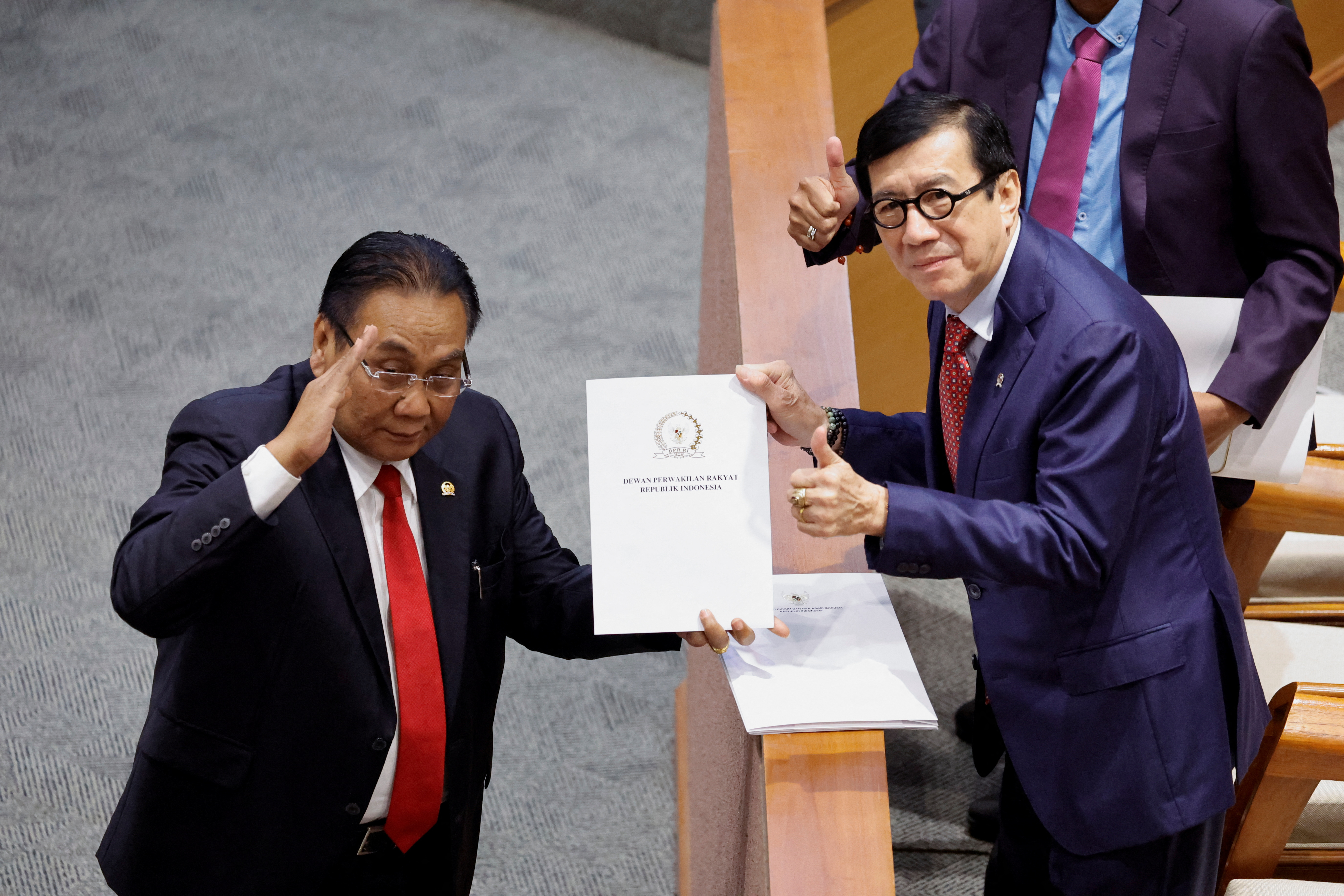
Yasonna Laoly, Indonesian Minister of Law and Human Rights, receives the new criminal code report from Bambang Wuryanto, head of the parliamentary commission overseeing the revision, during a parliamentary plenary meeting in Jakarta, Indonesia, December 6, 2022. REUTERS/Willy Kurniawan
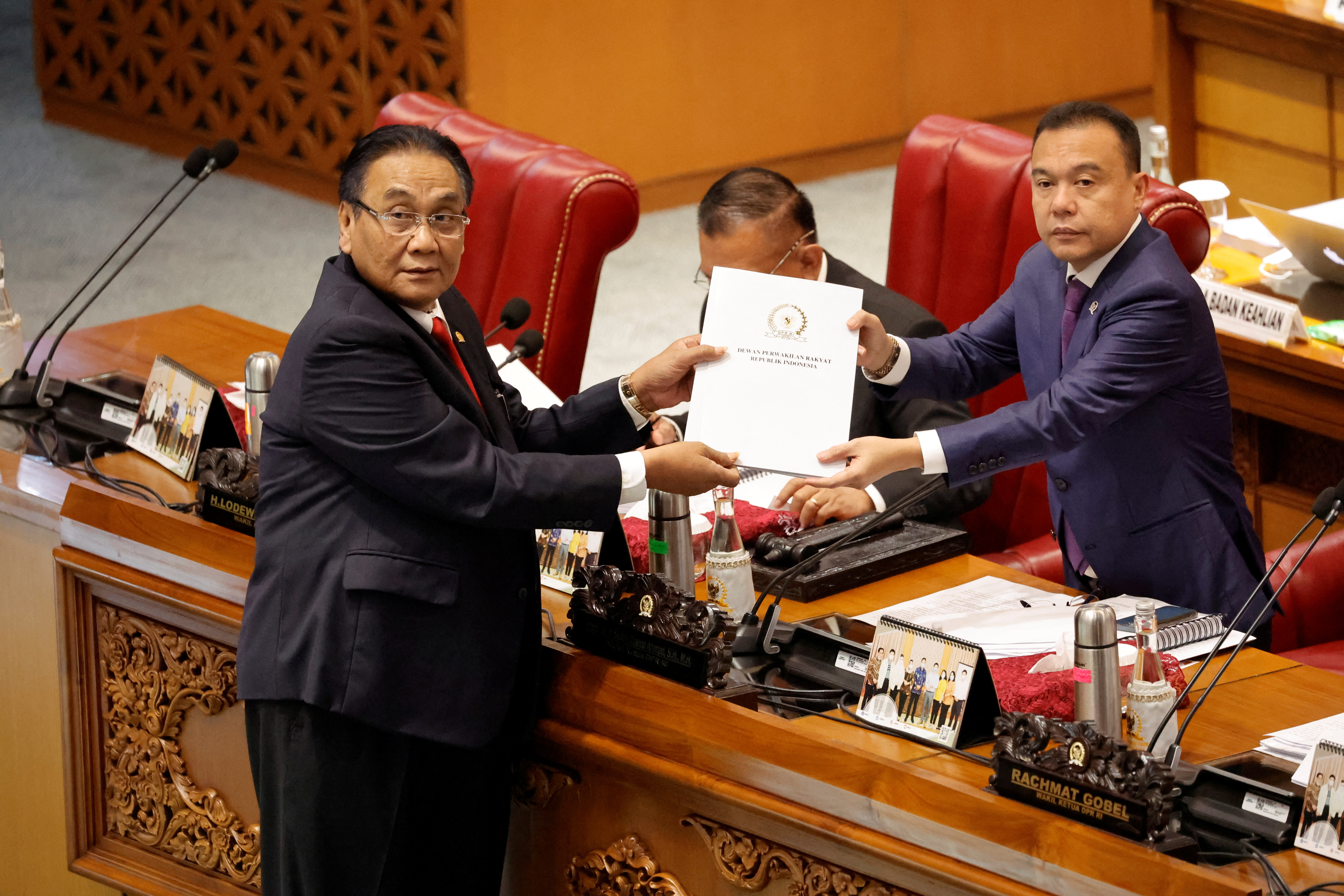
Bambang Wuryanto, head of the parliamentary commission overseeing the revision, passes the report of the new criminal code to Sufmi Dasco Ahmad, Deputy speaker of the House of Representatives, during a parliamentary plenary meeting in Jakarta, Indonesia, December 6, 2022. REUTERS/Willy Kurniawan
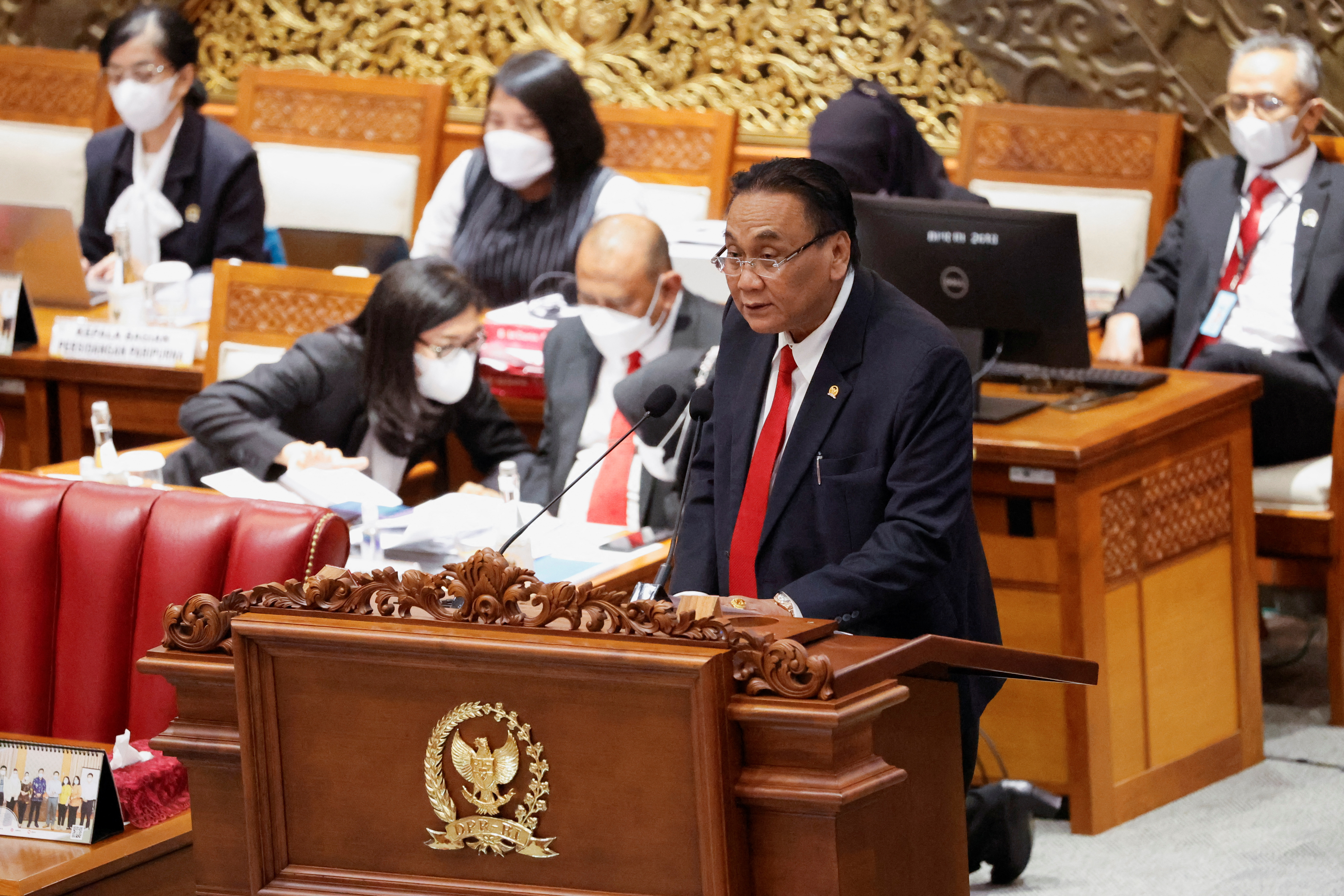
Bambang Wuryanto, head of the parliamentary commission overseeing the revision of Indonesia’s criminal code, speaks during a parliamentary plenary meeting in Jakarta, Indonesia, December 6, 2022. REUTERS/Willy Kurniawan
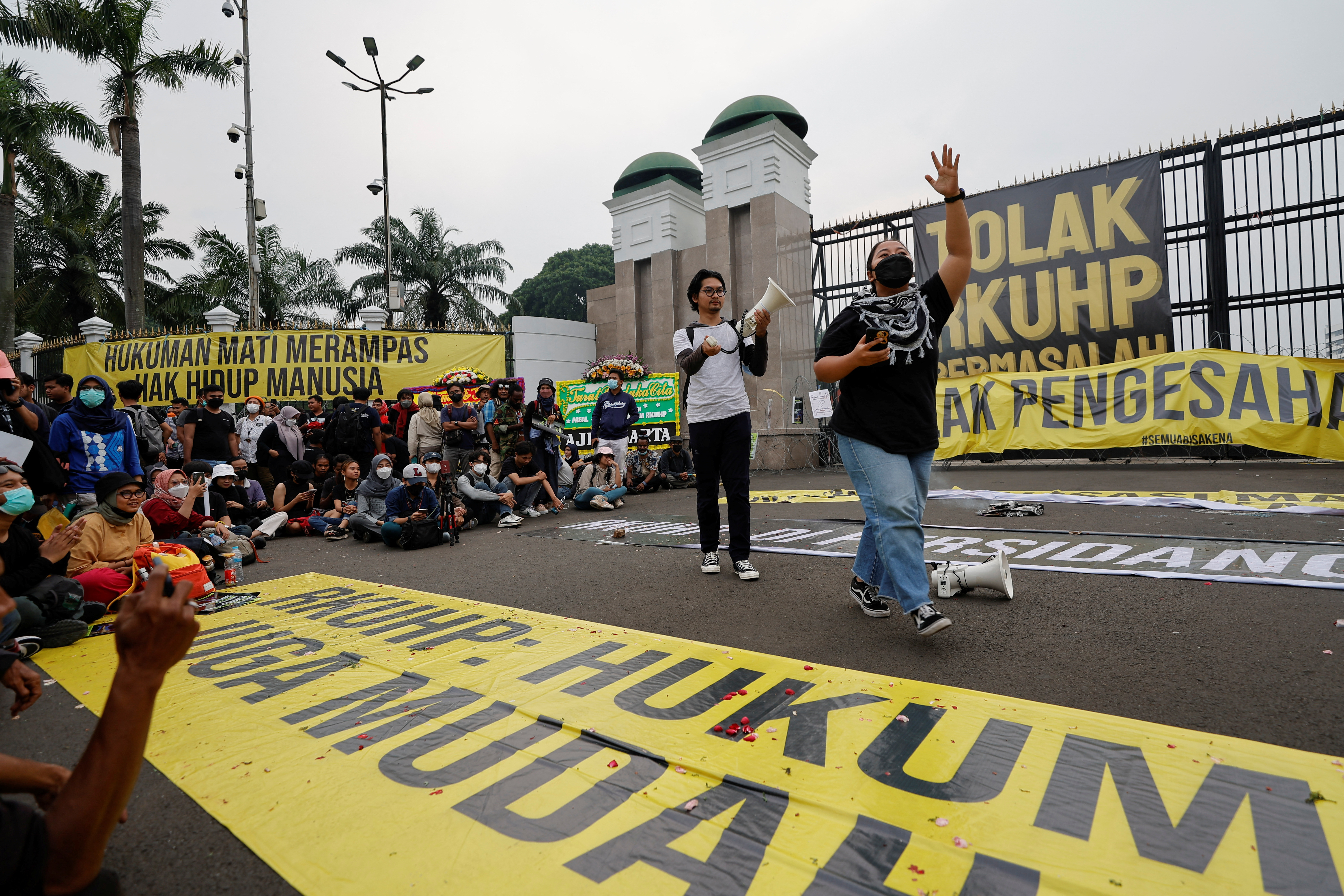
An activist shouts slogans during a protest, as Indonesia is set to pass a new criminal code that will ban sex outside marriage, cohabitation between unmarried couples, insulting the president, and expressing views counter to the national ideology, outside the Indonesian Parliament buildings in Jakarta, Indonesia, December 5, 2022. REUTERS/Willy Kurniawan
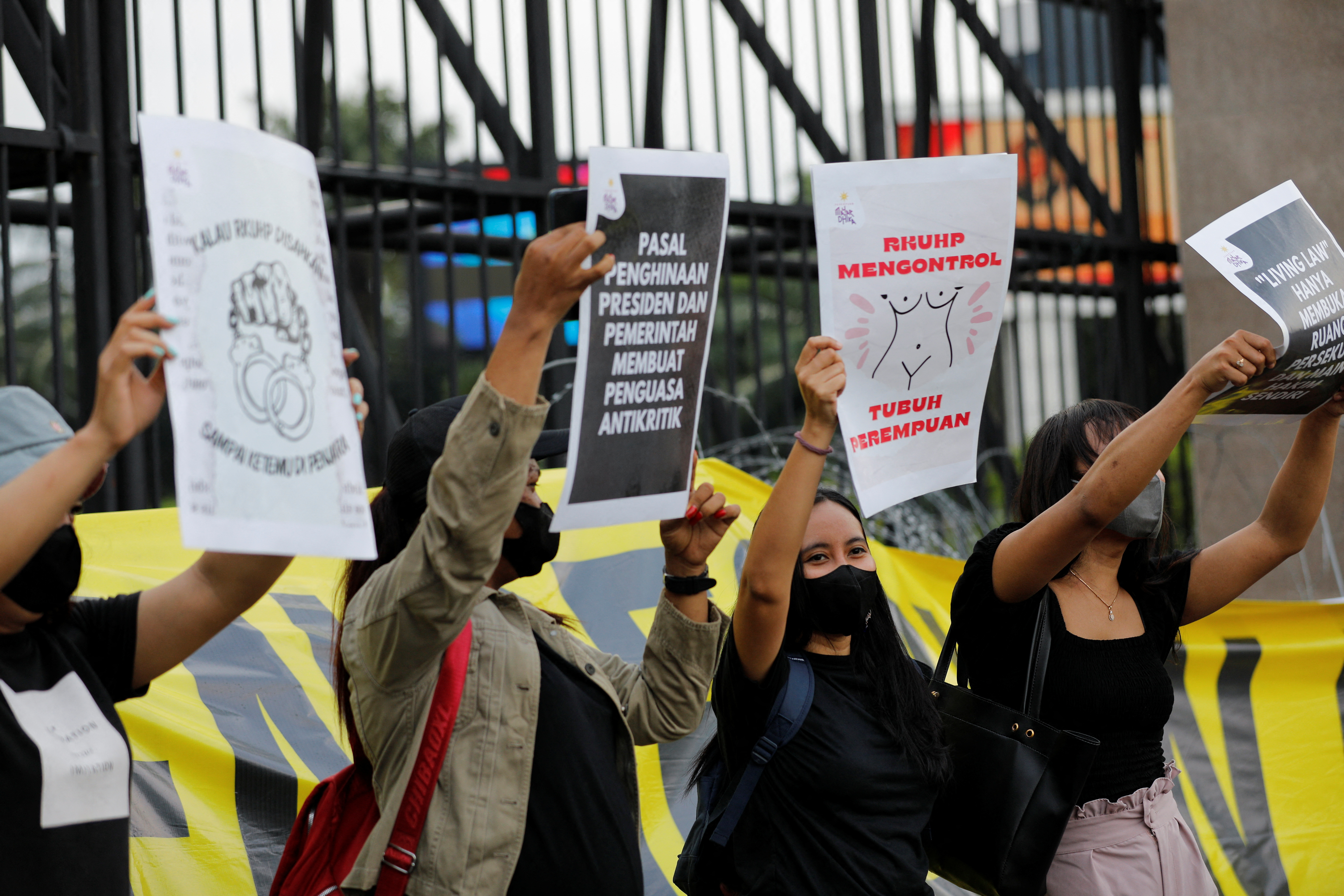
People hold up signs during a protest as Indonesia is set to pass a new criminal code that will ban sex outside marriage, cohabitation between unmarried couples, insulting the president, and expressing views counter to the national ideology, outside the Indonesian Parliament buildings in Jakarta, Indonesia, December 5, 2022. REUTERS/Willy Kurniawan
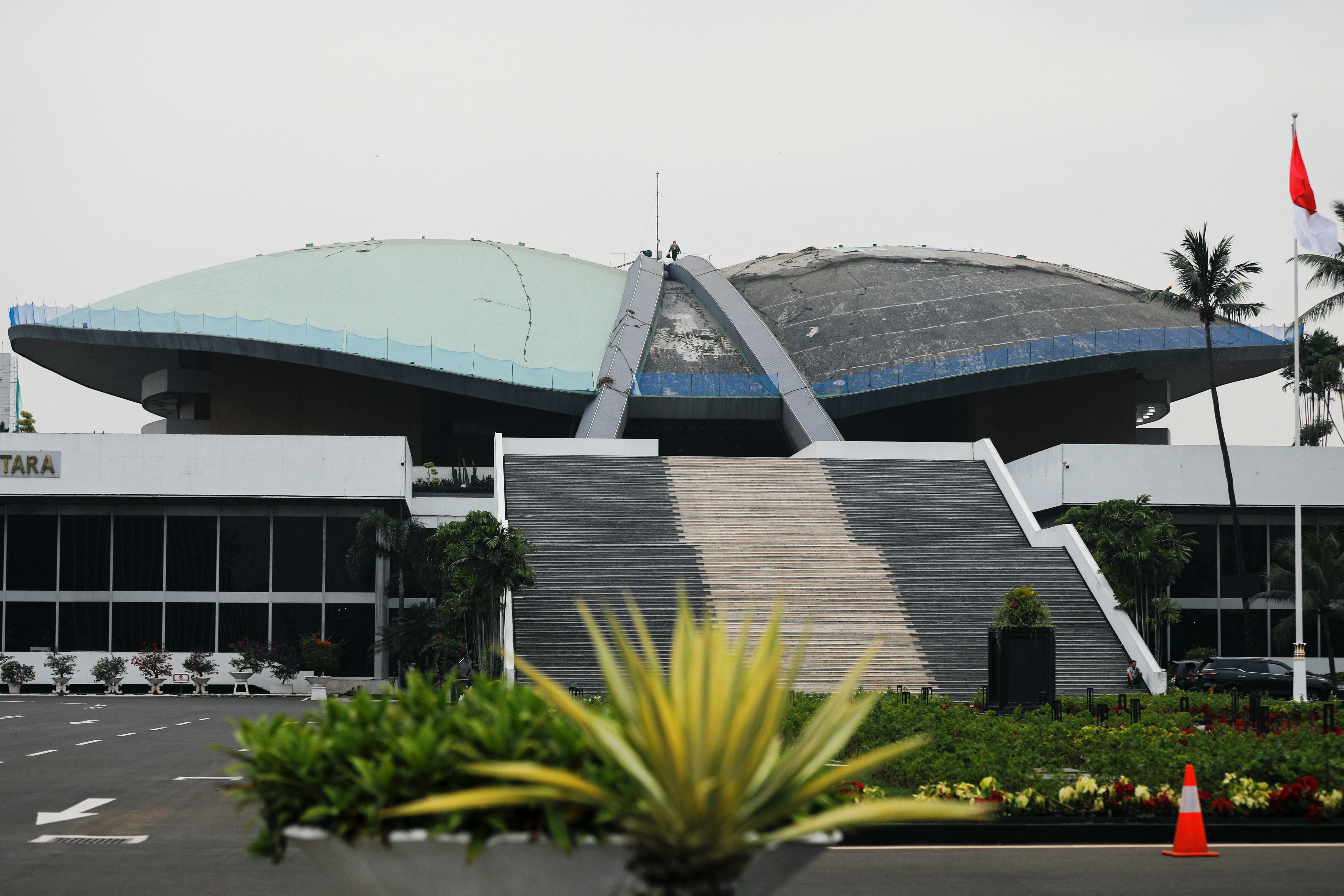
A worker walks on the roof of Indonesian Parliament Building in Jakarta, Indonesia, December 5, 2022. REUTERS/Willy Kurniawan
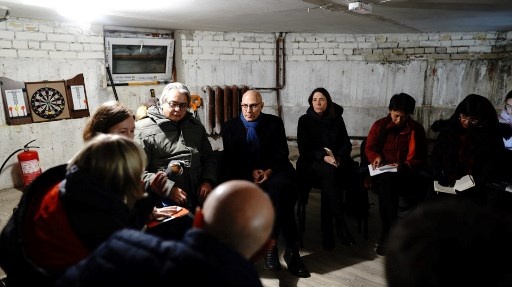
The UN rights chief said Monday, Dec. 5, he had met with activists in an underground shelter in Kyiv as missiles rained down and called for an end to the “senseless” war.
Volker Turk, who took over as the UN High Commissioner for Human Rights in October, arrived on Sunday for a four-day visit to Ukraine, which has been ravaged by war since Russia’s full-scale invasion in February.
He had been scheduled to meet with a number of human rights defenders in the Ukrainian capital on Monday, but then air sirens sounded and they had to move into an underground shelter.
In a shaky video seen by AFP, he was among a large group moving quickly along an alley and then down a flight of steps lined with cinder block walls as alarms wailed.
“I was on the point of meeting human rights defenders on my second day in Kyiv, and I had to move the meeting down here, to this shelter… because air sirens went off,” Turk said in the video, provided by his office.
“And as we were having this discussion here in this shelter there was a wave of missile attacks against Ukraine, including some of them ending up in the proximity of Kyiv,” he said.
Can’t be ‘new normal’
The video as well as a picture that Turk tweeted out showed him and other high-ranking UN rights officers sitting in the cold, dark cellar, bundled up in winter coats.
“Unbelievable that this is happening almost daily in Ukraine,” he said in the tweet.
“This must not become a new normal.”
His comments came after Ukraine was targeted on Monday by a new wave of deadly Russian missiles, the latest attack to disrupt power across the country and pile pressure on its embattled critical infrastructure as temperatures plunge.
Russia began targeting Ukraine’s energy grid in October, and the strikes have destroyed close to half of the Ukrainian energy system and left millions in the cold and dark at the onset of winter.
“I am in Ukraine at this point in time out of solidarity with the victims of this horrible war,” Turk said in another video message posted Monday on Twitter, laying the blame for the destruction squarely on Russia.
“I am here to express solidarity especially during these harsh winter months,” he said, standing in a snow-covered Kyiv street, wearing a woollen hat and a flak jacket over his winter coat.
The targeting of critical infrastructure in Ukraine comes after thousands of Ukrainian civilians have already been killed in the fighting and millions more forced to flee their homes.
“War is senseless. Killings of this kind are totally unacceptable and senseless,” Turk said in the second video.
“I can only appeal to those who have done this, that they stop doing it, and that they respect international humanitarian law and international human rights law.”
During his Ukraine visit, which is due to wrap up on Wednesday, Turk is scheduled to visit the capital and neighbouring areas, as well as Kharkiv and Izyum in the east and Uzhhorod in the west.
His office said last week he would meet with senior national and local government officials, civil society and representatives of victims’ groups, including relatives of missing or captured civilians and prisoners of war.
The post UN Rights Chief Moves Kyiv Meeting Underground as Sirens Sound appeared first on Kyiv Post.