

Month: July 2022

Президент Узбекистана вылетел в полуавтономную республику Каракалпакстан, где разгорелась напряженность, и велел отменить предложенные конституционные поправки, в случае принятие которых Каракалпакстан лишился бы любых форм местного самоуправления.
Президент Шавкат Мирзиёев заявил в столице Каракалпакстана Нукусе во время встречи с местными законодателями и представителями общественности 2 июля, что при принятии данного решения он учел мнение местного населения.
«С учетом того, что процесс обсуждения изменений и дополнений в Конституцию еще продолжается, а также на основе изучения высказываемых жителями Каракалпакстана мнений, Президент обозначил необходимость сохранить без изменений действующие редакции статей 70, 71, 72, 74, 75 Конституции Республики Узбекистан», – говорится в официальном заявлении Мирзиёева.
Хотя Мирзиёев занял примирительную позицию, другие официальные лица назвали события 1 июля, когда тысячи демонстрантов столкнулись с милицией в Нукусе, делом рук преступников.
Получить четкое представление о произошедших на этой неделе в Нукусе событиях стало практически невозможно после решения правительства отключить там мобильный и стационарный интернет.
Тем не менее жителям удалось сообщить определенную скудную информацию о произошедшем 1 июля. Все началось с мирной демонстрации, в ходе которой многие тысячи людей вышли на площадь возле центрального рынка Нукуса, но в итоге произошли столкновения.
Силовики настаивают, что толпа собиралась штурмовать правительственные здания, но введенный правительством информационный блэкаут не позволяет установить достоверность этой информации. По словам очевидцев, мобильный отряд специального назначения МВД применил против протестующих дымовые шашки, светошумовые гранаты, резиновые пули и водомет.
Поступали разрозненные сообщения о том, что демонстранты получили серьезные ранения, возможно, не совместимые с жизнью. На изображениях, широко разошедшихся в социальных сетях, видно, что по крайней мере двое граждан получили крайне тяжелые травмы. По состоянию на 2 июля, Eurasianet.org не смог подтвердить сообщения о погибших, а официальных комментариев по этому поводу пока нет.
В то время как демонстранты не могут донести свою позицию до всего мира из-за блокировки интернета, власти стремятся представить протесты – те самые, чей посыл Мирзиёев пообещал учесть – делом рук «преступной группировки», пытающейся захватить правительственные здания.
«Прикрываясь популистскими лозунгами, манипулируя сознанием и доверием граждан, организаторы беспорядков не подчиняются законным требованиям представителей власти», – говорится в совместном заявлении Жокаргы Кенеса, Совета министров и МВД Каракалпакстана.
Согласно заявлению, было задержано некое неназванное количество человек.
Следуя обычной постсоветской практике, узбекские власти пытаются представить все так, что беспорядки могли быть спровоцированы темными внешними силами, а не произошли из-за внутренних проблем.
«В этих условиях вызывают обеспокоенность попытки отдельных нездоровых внешних сил из зарубежа повлиять на развитие ситуации в Каракалпакстане, в том числе путем целенаправленных информационных выбросов и искажения происходящих событий», – также говорится в заявлении.
Предлагаемые поправки к конституции, представленные общественности в прошлом месяце, преподносятся как попытка сделать государство более гуманным и демократичным. Между тем поправкой, возмутившей жителей Каракалпакстана, предусматривается лишение этой полуавтономной республики конституционного права на проведение референдума об отделении.
Это право – продукт непростой истории каракалпакского суверенитета. Каракалпакстан был создан в 1925 году в качестве автономного образования в составе советского Казахстана, затем с 1930 по 1936 год, сохраняя автономию, управлялся напрямую из Москвы, а потом был передан Узбекской ССР.
В 1993 году, в условиях неопределенности того периода, Каракалпакстан достиг соглашения с центральным правительством Узбекистана о том, что останется в составе страны как минимум 20 лет, а потом оставляет за собой право провести референдум о выходе из состава Узбекистана. Хотя об этой части договоре по-тихому забыли, руководство Каракалпакстана по прежнему теоретически имеют право потребовать организации референдума.
Несмотря на то, что Мирзиёев демонстрирует решимость снизить напряженность в Каракалпакстане, останутся вопросы по поводу введения его администрацией цензуры и, судя по всему, применения насильственных мер для подавления сторонников автономии.
За несколько часов до того, как противостояние между толпой и силовиками переросло в насилие, службы безопасности задержали местную журналистку Лолагуль Каллыханову, якобы после того, как она загрузила видеообращение с призывом к отделению Каракалпакстана. Сестра Каллыхановой сообщила Eurasianet.org 2 июля, что ей не удалось связаться с ней.
Силовики в Каракалпакстане известны своей склонностью быстро и жестко реагировать на действия журналистов, и Каллыхановой в частности.
В июле 2020 года сотрудники спецслужб задержали Каллыханову в ее доме в Нукусе и конфисковали у нее ноутбук и мобильный телефон после того, как она в своем Telegram-аккаунте опубликовала ссылку на новость о том, что председатель законодательного органа Каракалпакстана умер от COVID-19. Новость оказалась неверной, хотя ссылка была на реальную статью, опубликованную на авторитетном информационном портале Repost.uz.
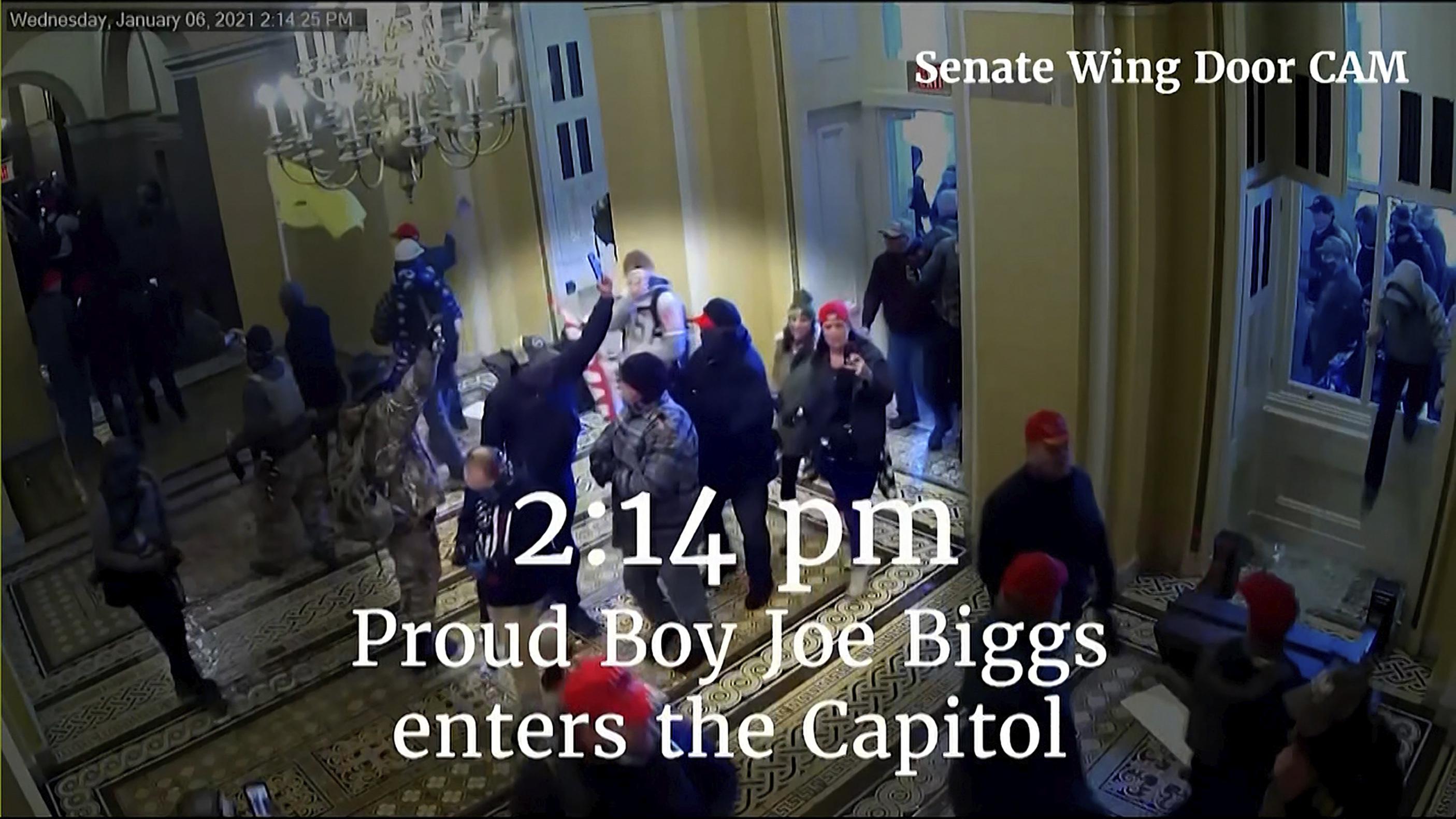
The first public hearing of the U.S. House committee investigating the Jan. 6 Capitol attack put a spotlight on two far-right extremist groups whose members are accused of plotting for weeks to stop the peaceful transfer of power.
Top leaders and members of the Proud Boys and Oath Keepers have been charged with seditious conspiracy in what authorities have described as an organized effort to subvert the election results and keep former President Donald Trump in office.
Here’s a look at the two groups and the accusations against them:
____
WHO ARE THEY?
Proud Boys describe themselves as a politically incorrect men’s club for “Western chauvinists.” Before the Jan. 6 insurrection, Proud Boys members mostly were known for brawling with antifascist activists at rallies and protests.
Less than two months before the 2020 election, group members celebrated when Trump refused to outright condemn the group during his first debate with Democrat Joe Biden. Instead, Trump said the Proud Boys should “stand back and stand by.”
The Oath Keepers were founded in 2009 by Stewart Rhodes, a former U.S. Army paratrooper and Yale Law School graduate. The antigovernment group recruits current and former military, police and first responders. Its members pledge to “fulfill the oath all military and police take to ‘defend the Constitution against all enemies, foreign and domestic,’” and to defend the Constitution, according to its website.
WHAT ARE THEY ACCUSED OF DOING?
Messages and social media posts detailed in court documents show how members of the Proud Boys and Oath Keepers were discussing as early as November 2020 the need to fight to keep Trump in office.
Days after the election, Henry “Enrique” Tarrio, then-chairman of the Proud Boys, posted messages online calling on his followers to fight the results.
“No quarter. Raise the black flag,” Tarrio said in one post. In another, he wrote that the Proud Boys would become “political prisoners” if Biden “steals the election,” warning that the group “won’t go quietly.”
“The media constantly accuses us of wanting to start a civil war,” Tarrio wrote in another message. “Careful what the f—-k you ask for we don’t want to start one … but we will sure as f—-k finish one.”
Shortly before the riot, an unnamed person sent Tarrio a document that laid out plans for occupying a few “crucial buildings” in Washington on Jan. 6, including House and Senate office buildings around the Capitol, authorities say. The document entitled “1776 Returns” called for having as “many people as possible” to “show our politicians We the People are in charge.”
Tarrio was arrested in Washington two days before the riot and charged with vandalizing a Black Lives Matter banner at a historic Black church during a protest in December 2020. He was ordered to stay away from Washington and wasn’t at the Capitol on Jan. 6.
Other Proud Boys, however, met at the Washington Monument on the morning of the riot and marched to the Capitol before Trump finished speaking near the White House. As the angry mob swarmed the Capitol, Proud Boys members dismantled metal barricades, and directed and led members of the crowd into the building, authorities say.
The Oath Keepers also spent weeks discussing trying to overturn the election results, laying out battle plans and purchasing weapons, authorities say. Two days after the election, Rhodes told followers in an encrypted group chat to prepare their mind, body and spirit for a “civil war.”
Rhodes urged members to go to Washington to let Trump know “that the people are behind him,” and expressed hope that Trump would call up the militia to help stay in power, authorities say. Oath Keepers repeatedly wrote in chats about the prospect of violence and the need, as Rhodes allegedly wrote in one text, “to scare the s—-out of” Congress.
The group stashed guns in a hotel outside Washington as part of a “quick reaction force” that would come to their aid if needed, prosecutors say. Days before Jan. 6, one defendant suggested getting a boat to ferry “heavy weapons” across the Potomac River into their “waiting arms,” according to prosecutors.
On Jan. 6, Oath Keepers wearing camouflaged combat attire were seen on camera shouldering their way through the crowd and into the Capitol in a military-style stack formation. Rhodes isn’t accused of going inside the Capitol building, but was seen gathered outside with several Oath Keepers after the riot, authorities said.
WHAT WAS REVEALED IN THE HEARING?
Thursday’s House committee hearing highlighted how the Proud Boys were energized by Trump’s comment to “stand back and stand by.” A member of the Proud Boys told the committee that Trump’s remark prompted membership in the group to skyrocket.
The committee also showed how members of the Proud Boys were among those leading the charge into the Capitol, having marched there while Trump was still speaking on the Ellipse.
Video shown during the hearing showed that Dominic Pezzola, a former Marine known as “Spaz” from Rochester, New York, used a stolen Capitol police riot shield to break a window, allowing the first rioters to enter the building. Pezzola has been charged with seditious conspiracy in the attack.
A documentary filmmaker who was with the Proud Boys on Jan. 6 testified about witnessing a meeting the day before the riot between Rhodes and Tarrio at an underground garage.
No new details about what the two extremist group leaders spoke about were revealed during the hearing and prosecutors have said only that one of the meeting’s participants “referenced the Capitol.” Publicly released video of the meeting doesn’t reveal much about their discussion.
The Proud Boys and Oath Keepers have been charged in separate indictments and the Justice Department hasn’t accused them of plotting with one another.
But prosecutors have indicated there was at least some communication between the two groups. In one message, a man described by authorities as the leader of the Florida chapter of the Oath Keepers discussed forming an “alliance” and coordinating with the Proud Boys ahead of the riot, authorities have said in court documents.
WHAT HAVE THE LEADERS SAID IN DEFENSE?
Rhodes has said in interviews with right-wing hosts that there was no plan to storm the Capitol and that the members who did so went rogue. But he has continued to push the lie that the 2020 election was stolen, while posts on the Oath Keepers website have depicted the group as a victim of political persecution.
Oath Keeper defendants have argued in court that the only plan was to provide security at the rally before the riot or protect themselves against possible attacks from far-left antifa activists. Text messages revealed in court documents show Oath Keepers discussing plans to provide security around Jan. 6 for longtime Trump political confidant Roger Stone and “Stop the Steal” organizer Ali Alexander.
Defense attorney Nayib Hassan said Tarrio never instructed nor encouraged anyone to enter the Capitol or to engage in any violence or destruction on Jan. 6. Hassan also described prosecutors’ arguments about the garage meeting with Rhodes as “frivolous at best.” Tarrio went to the nearby hotel to get information about a potential attorney to represent him in the vandalism case, Hassan said in a court filing.
A jury trial for Tarrio and four other Proud Boys charged with seditious conspiracy is scheduled to start on Aug. 8. The trial for Rhodes and four other Oath Keepers members and associates is scheduled to begin in Sept. 26. The seditious conspiracy charge calls for up to 20 years in prison.
___
For full coverage of the Jan. 6 hearings, go to https://www.apnews.com/capitol-siege.
Ever since Moscow’s full-scale invasion of Ukraine in February, the war has been an uneven fight of sweeping breakthroughs, tactical withdrawals, and grinding attrition that has made progress in the conflict difficult to gauge.
In a recent sign of this, Kyiv won a symbolic and strategic victory on June 30 when Russian forces withdrew from Snake Island in the Black Sea less than a week after its own forces pulled back from heavy shelling and a Russian advance on the city of Syevyerodonetsk in Ukraine’s eastern Donbas region.
Russian forces are continuing to press forward with their aims of capturing more of the Luhansk and Donetsk provinces and now have their sights on Lysychansk, the sister city of Syevyerodonetsk, where Ukrainian troops once again find themselves under fire from a devastating Russian artillery barrage.
Meanwhile, Ukrainian forces have made several counterattacks in the country’s south and made new territorial gains.
To find out more about how to measure the pace of the war and how Russian and Ukrainian forces compare, RFE/RL spoke with Dara Massicot, a senior researcher at the U.S.-based RAND think tank and a former senior analyst at the Pentagon, where she focused on the Russian military’s capabilities.
RFE/RL: In recent weeks, we’ve seen a far slower moving and grinding war in Ukraine, especially in the Donbas. In your view, is it possible to tell who is winning a war like this and, if yes, what are some of the key indicators to watch?

Dara Massicot
Dara Massicot: You’re correct. We are seeing a slower, more deliberate Russian approach featuring a lot of artillery strikes, followed by incremental movements behind them.
In the weeks ahead, I would be watching out for controlled departures, [such as] from the Ukrainian side, like we’ve seen in Syevyerodonetsk and will likely see in other areas [nearby]. Sometimes things stall in particular areas for a few weeks or a few months and then progress can be quite rapid. So it’s not necessarily a linear fight happening.
RFE/RL: Obviously, it’s difficult to say who’s winning the war, but is there anything else to keep an eye on?
Massicot: I listen to the words of the Ukrainian military themselves, and they’re saying that they are outgunned by a significant margin, particularly in terms of artillery strikes. Russian [forces] have numbers, both in terms of quantity and the range that they can apply against them, and those kinds of things are unlikely to change, even with the deliveries of some of the more advanced equipment in the weeks and months ahead.
This isn’t only a numbers game, though. The Ukrainians have been fighting very smartly and very wisely, but I think the Russians do have a bit of an upper hand on the ground. They also have collapsed their objectives, [and] they’re now focusing on two particular areas right now. In Syevyerodonetsk, they applied airpower and they’re learning how to apply closer air support more effectively.
I was surprised this week to see more robust strikes from Russia into other areas of Ukraine. We haven’t really seen dozens of missiles being launched at the same time in quite some time. So I’m looking at that closely right now, but again, I think the area to watch is in [the] eastern Luhansk [Province] right now.
RFE/RL: What sort of things can Kyiv do to build an advantage on the ground, especially when they’re outgunned and outnumbered?
Massicot: They were really effective in the early days about attacking logistics lines and going after resupply lines and disrupting routes. Those types of things would continue to have an impact on Russian forces, but again, it’s difficult for them to get to do that in Luhansk and Donetsk because the lines have been set [since 2014].
RFE/RL: There are growing reports that Russia is increasingly relying on reserve forces, including so-called “volunteers.” Is this enough to allow Russia to sustain itself on the ground at its current rate without calling for a full-scale mobilization?
Massicot: I think it’s a pretty bad sign for the health of Russia’s professional enlisted fighting force that we’re five months into this conflict and they’re already going to these particular lengths to recruit troops. We have to consider that Russia’s mobilization base and Russia’s professional reserve program have been relatively dormant for the last 10 years, apart from maybe seeing a little bit of activity in the last 12 months. So these are not particularly well-trained individuals. They’re not receiving adequate training — maybe two to three weeks at most — and then they’re being put into a combat situation. Some of them are also older — we’re seeing around 40- to 50-year-old volunteers fighting in the Donbas.
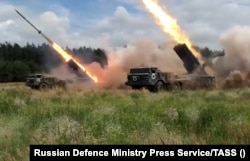
Russian rocket systems fire a barrage in eastern Ukraine in late June.
But when I look at the different policy decisions that they’re making inside Russia, I think that they believe they can still achieve their aims. They’re already looking to the future in a world where they are attempting to annex parts of Luhansk, Donetsk, and parts of Zaporizhzhya and Kherson. [They’re] also trying to put policy options in place right now as if they’re going to have this as their territory. So, clearly, they think that they have enough.
RFE/RL: But is that belief credible in your mind?
Massicot: I think we have to talk about short term and long term. In the short term, they’re clearly scraping from wherever they can to avoid [full-scale] mobilization. I don’t know that they have enough for a major offensive again [and] I don’t think that’s possible. They have a very limited set of things that they can do, [and] I don’t think they can recover from the losses that they’ve taken in personnel and equipment. So we might see [something] like a frozen conflict again, but you’re not going to see another push to Kyiv or something like that.
[Looking further ahead], what they’ve done to their professional enlisted force is that they’ve basically committed all of it from the army and the air force to this war. They’ve taken significant casualties and people do not wish to participate anymore. Many are not going to reenlist after they serve out their contract. So I think we need to pay attention to signs about recruitment and retention.
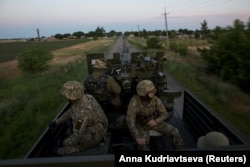
Ukrainian soldiers in the Mykolayiv region in June.
RFE/RL: Ukrainian forces have pulled back from Syevyerodonetsk and appear to be entrenched at higher ground across the river at its sister city in Lysychansk, where they are also facing heavy fire. What can we expect for this coming fight?
Massicot: I’m not overly familiar with the terrain of that particular area, but Lysychansk will continue to be a focal point. You’re going to see air strikes [and] we’re going to see more artillery barrages. These types of things are very difficult, even if you’re in dug-in positions, to withstand the destructiveness of the fire. I think it’s important for Ukraine to focus on preserving their forces and not just let their units get shredded in order to hold on to a position. They seem to be mindful of this and know that it’s more important for them to have their fighters survive, and when it’s possible, they may try to move to more advantageous ground.
What they don’t want to do is get surrounded or get their troops caught and be taken into Russian custody. There’s so many warning signs at this point that the Geneva Convention is not really being followed on the Russian side — and in a few cases on the Ukrainian side, too. So I would assume that they would not want to put units in that position.
This interview has been condensed and edited for clarity.
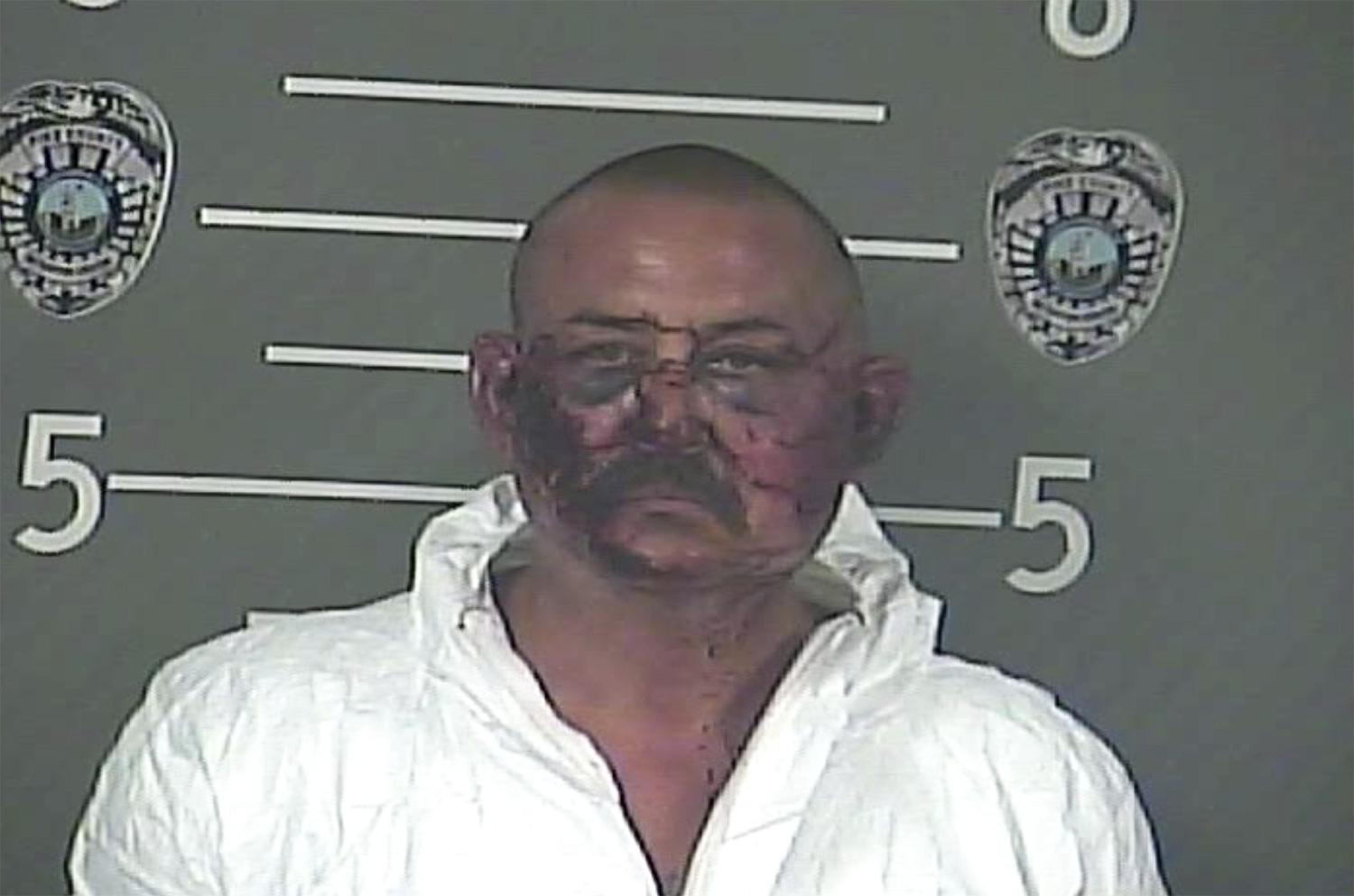
ALLEN, Ky. (AP) — Three law enforcement officers were killed and five wounded in eastern Kentucky when a man with a rifle opened fire on police attempting to serve a warrant, authorities said.
Police took 49-year-old Lance Storz into custody late Thursday night after an hourslong standoff at a home in Allen, a small town in the hills of Appalachia.
An emergency management official was also injured and a police dog was killed, according to the arrest citation.
The responding officers encountered “pure hell” when they arrived on the scene, Floyd County Sheriff John Hunt told reporters Friday afternoon.
“They had no chance,” he said.
Hunt said four deputies initially responded, then called for backup when they were shot at. The sheriff said Storz surrendered after negotiations that included his family members. Hunt had told local media the deputies were serving a court-issued warrant Thursday evening related to a domestic violence situation.
Hunt said one of his deputies, William Petry, and Prestonsburg Police Capt. Ralph Frasure were killed in the shooting. Frasure worked for 39 years in law enforcement in Floyd County. Another Prestonsburg officer, Jacob Chaffins, died after being hospitalized, the police department said in a social media post Friday night.
Storz was arraigned Friday morning by a judge in Pike County. He pleaded not guilty to two counts of murder of a police officer and was jailed on a $10 million bond. One of the charges was originally attempted murder of a police officer, but a judge said at the hearing that was upgraded to murder. He is also facing another attempted murder charge and assault on a service animal.
Few details were available Friday. State police had said in a brief statement that they were investigating an officer-involved shooting.
“This is a tough morning for our commonwealth,” Gov. Andy Beshear said in a social media post Friday morning. “Floyd County and our brave first responders suffered a tragic loss last night. I want to ask all of Kentucky to join me in praying for this community.”
Kentucky Attorney General Daniel Cameron posted on social media that he was heartbroken over news of the officers’ deaths.
“Our law enforcement exhibited unimaginable heroism and sacrifice last night in the face of evil,” he said.
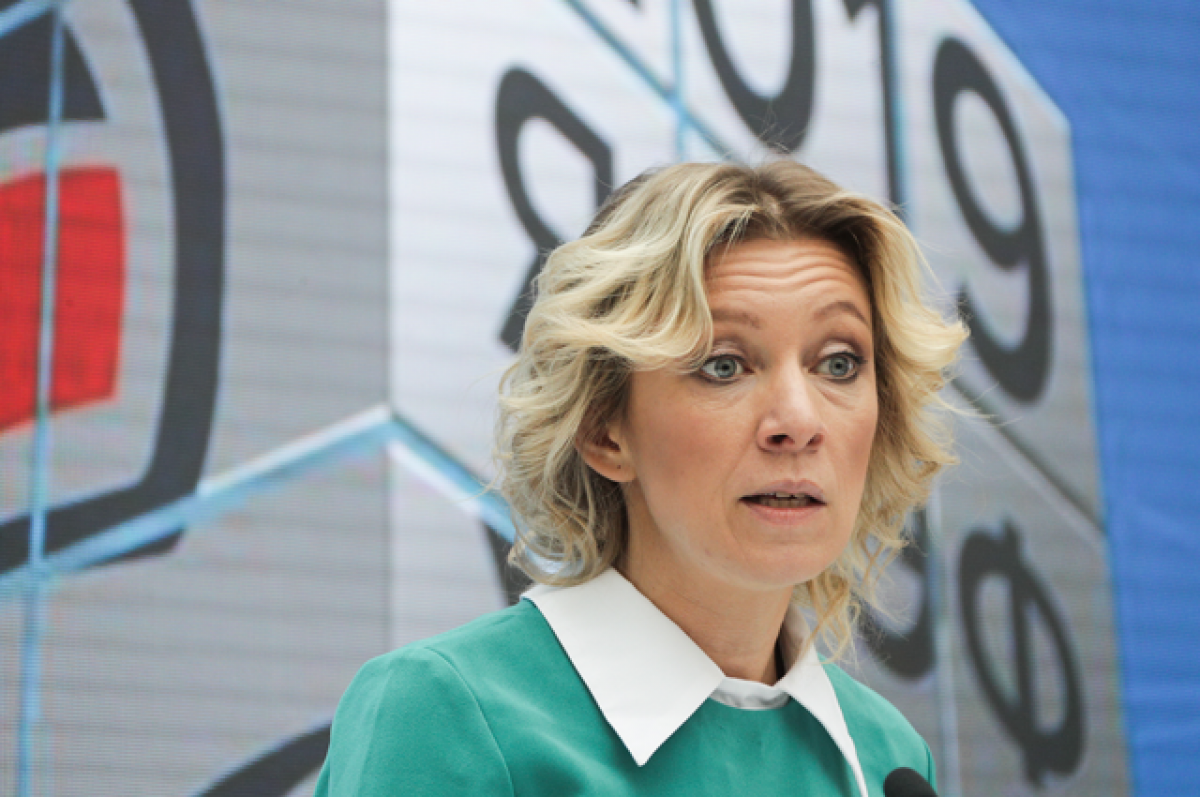
Официальный представитель МИД России Мария Захарова в своем Telegram-канале ответила министру иностранных дел Латвии Эдгару Ринкевичу на фразу о красавице.
Напомним, что Захарова высмеяла включение украинского борща в список нематериального наследия ЮНЕСКО. Ринкевич написал в Twitter, обращаясь к представителю российского МИД: «Нравится — не нравится, терпи, моя красавица».
Захарова напомнила Ринкевичу, что «не его» красавица, а также добавила, что министр «не по красавицам» и посоветовала «найти себе красавца».
Также официальный представитель МИД РФ поинтересовалась, можно ли считать фразу Ринкевича «очередным каминг-аутом».
Напомним, что 7 февраля в ходе пресс-конференции по итогам российско-французских переговоров глава РФ Владимир Путин, комментируя Минские договоренности и отношение к ним президента Украины Владимира Зеленского, привел журналистам ту же шуточную фразу, которую использовал Ринкевич.


Credit…Damon Winter/The New York Times

There’s a saying among cult experts: Nobody ever joins a cult.
Of course, people join what, to outsiders, certainly appear to be cults — the Branch Davidians, the Moonies, the Peoples Temple and so on. But these groups never describe themselves as cults, and they don’t necessarily understand themselves that way, either.
Usually, they claim to be religious or spiritual movements, personal-development or leadership training organizations, and so on. Keith Raniere of NXIVM offered his members “executive success programs.” What the rest of the world eventually saw was a sex cult.
Americans may someday come to understand Donald Trump as the most successful cult leader of our times. The question is whether the House select committee investigating the Jan. 6, 2021, attack on the Capitol can begin to steer some of the Trump faithful toward the kind of cult deprogramming they so desperately need.
I’m starting to think it might, if not with his most fervent loyalists, then at least with a critical mass of his voters.
Tuesday’s dramatic testimony to the committee by Cassidy Hutchinson, an aide to Trump’s chief of staff, Mark Meadows, changes the game. If what she says is true, no longer are we dealing with a committee that is putting a fluorescent light to a set of facts with which we were already broadly familiar.
This is something else: testimony that the president didn’t care that the mob that stormed Congress was armed and that he even tried to lead it by grabbing for the steering wheel of his armored limousine.
“You know, I don’t f-ing care that they have weapons,” Hutchinson testified she overheard the president saying during his rally on Jan. 6. “Let my people in. They can march to the Capitol from here.”
Until now, Trump’s supporters have told themselves an exculpatory story about Jan. 6 that goes like this: The president sincerely believed he had been robbed of the election. His efforts to reverse the outcome were the result of honest indignation. His “Be there, will be wild!” tweet inviting people to the Jan. 6 rally was just his usual hyperbole, not a threat.
So too — to continue with this story — was his call at the rally itself to “fight like hell,” which was ordinary free speech, not an incitement to riot. The people who assaulted the Capitol were a mix of enthusiastic patriots, a few hooligans who got out of hand and probably a few antifa provocateurs. Mike Pence, surrounded by bodyguards, was never at serious personal risk. Congressional Republicans who questioned the legitimacy of Joe Biden’s victory were no worse than the congressional Democrats who questioned the legitimacy of Trump’s four years earlier.
But the committee’s work made nonsense of that narrative. Trump knew perfectly well that fraud hadn’t caused his defeat: So he had been told, in no uncertain terms, by his loyal attorney general, Bill Barr. The theory that Pence had the authority to stop the counting of electoral votes struck even the author of that theory, John Eastman, as a nonstarter in any court. We heard that Rudy Giuliani admitted he had no evidence of significant fraud. Republicans who aided the president’s attempts sought pardons for themselves, hardly admissions of innocence. Among them, according to Hutchinson, was Meadows himself.
Maybe Hutchinson is lying, but she was under oath. Trump supporters may find it easy to dismiss Democrats like Adam Schiff or even anti-Trump conservatives like Judge J. Michael Luttig.
But Hutchinson is a source from within the inner sanctum. On Tuesday, she was a picture of credibility. If Meadows continues to refuse to testify to the committee, that credibility will be enhanced.
Maybe this is where the cult of Trump will begin to crack.
Margaret Singer, a clinical psychologist who studied cults, noted that among the ways cults succeeded was by creating “a closed system of logic” and belief.
That, of course, has always been essential to Trump’s messaging. Either you love Trump or you are an enemy of the people. Either you want to Make America Great Again or you hate America. Either you accept that Trump is always right, even when he contradicts your deepest values — or when he contradicts himself — or you are deficient in loyalty to him and hatred of his enemies. Either you stick with Trump or you’re a Republican in name only, a RINO, and we know what Trump loyalists like Missouri’s Eric Greitens plan to do with RINOs.
All this was central to the Trump playbook. But after Tuesday, the threat of a legal indictment has become very real. The president may indeed be liable for seditious conspiracy, especially if he tried, via Meadows’s calls to Roger Stone and Michael Flynn, to reach out to extremist groups.
To Trump’s supporters, his name was all but synonymous with their sense of America. They saw in him a proudly raised middle finger to progressives who found more to fault than praise with the country. Now it doesn’t entirely compute.
I doubt there will be any sort of moment when the Sean Hannitys and Laura Ingrahams of the world will tell the faithful: We were wrong; we made an idol of the wrong man. But there may be a quiet drifting away. In a moment like this, that might be just enough.
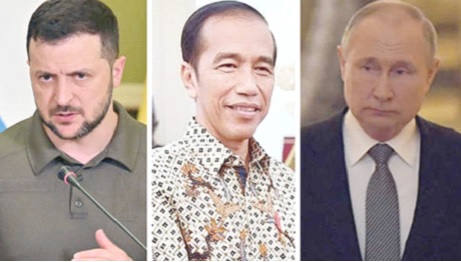
Widodo delivers Zelensky’s message to Putin
Published on: Saturday, July 02, 2022
By: AFP
Text Size:
Moscow: Indonesian President Joko Widodo (pic) said in Moscow on Thursday he delivered a message from Ukrainian President Volodymyr Zelensky to Russian leader Vladimir Putin.Putin hosted Widodo more than four months into Moscow’s offensive in Ukraine, as Russia seeks to pivot toward Asia and Africa following the onset of unprecedented Western sanctions.
Indonesia holds the rotating presidency of the G20 this year and is preparing to host a summit in Bali in November.
Indonesia holds the rotating presidency of the G20 this year and is preparing to host a summit in Bali in November.
ADVERTISEMENT
“I conveyed President Zelensky’s message to President Putin,” Widodo said after talks with the Kremlin chief in comments translated into Russian.
Widodo said he expressed his “readiness” to help start “communication” between the two leaders.
He did not provide further details, and neither side said what was in the note.
Widodo was in Kyiv on Wednesday before heading to Moscow to meet Putin, who on February 24 sent troops into pro-Western Ukraine.
“Although the external situation is still difficult, it is still important to move towards a settlement and open dialogue,” Widodo said in Moscow.
ADVERTISEMENT
He said that his country would like “the war to end soon”.
“I call on all world leaders to revive the spirit of cooperation,” Widodo added.
Jakarta has come under Western pressure to exclude Putin from the G20 gathering after announcing in April he had been invited.
Ukraine’s Zelensky told Widodo on Wednesday that he will attend the upcoming G20 summit in Bali depending on who else is attending.
Putin on Thursday praised his talks with Widodo as “productive”.
ADVERTISEMENT
“I am convinced that the agreements reached today will further strengthen the Russian-Indonesian partnership,” Putin added.

Ukrainian forces are having “a good deal of success” using a U.S.-given advanced rocket system to target Russian command posts, a senior U.S. defense official said Friday.
The Ukrainians have used the High Mobility Artillery Rocket Systems (HIMARS) advanced rocket system to target the Kremlin positions in its fight for the eastern region of the country known as the Donbas.
“Because it is such a precise, longer-range system, Ukrainians are able to carefully select targets that will undermine the effort by Russia in a more systematic way, certainly than they would be able to do with the shorter-range artillery systems,” the official told reporters.
Ukrainian forces are still in the early days of operating the HIMARS systems — four of which the U.S. has already sent to the former Soviet country and four additional it pledged late last month — as only a handful of Ukrainian troops can operate it after taking a brief training course.
Defense & National Security — More rocket systems for Ukraine Hillicon Valley — Uber report finds thousands of assault claims
The HIMARS, which has a range of about 40 miles, has given the Ukrainians the ability to hit faraway targets with more accuracy than they have been able to prior when using shorter-ranged artillery.
“What you see is the Ukrainians are actually systematically selecting targets and then accurately hitting them, thus providing this, you know, precise method of degrading Russian capability,” the official said.
“I see them being able to continue to use this throughout Donbas.”
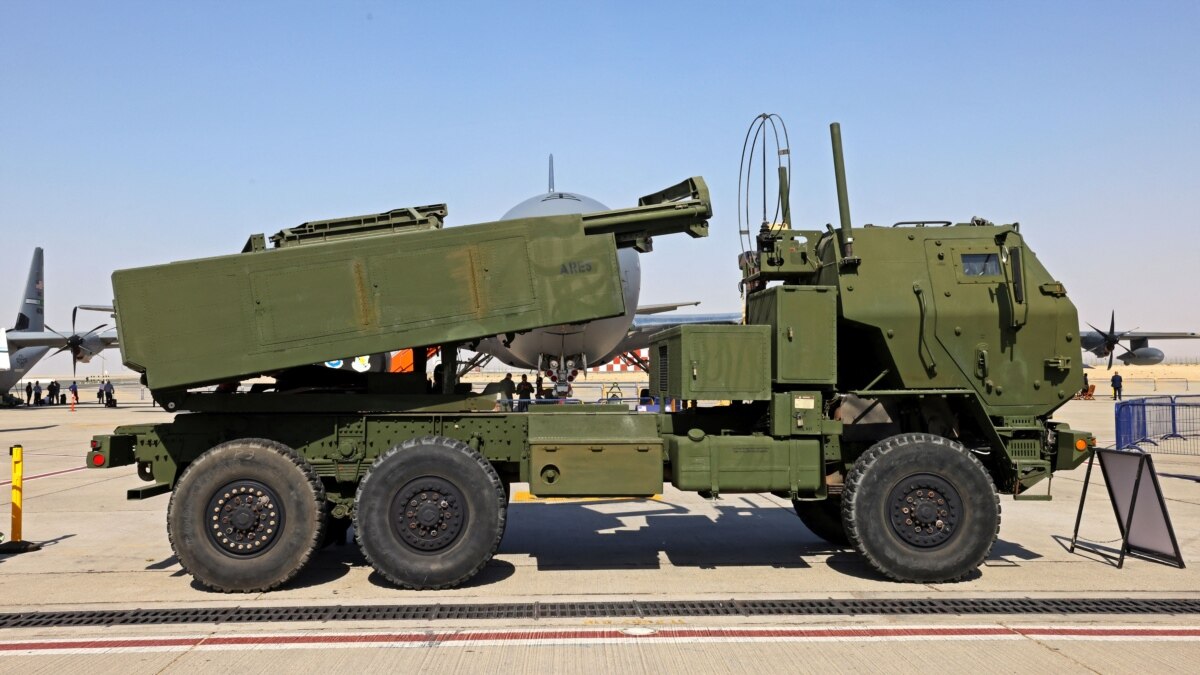
Украинские военные добились “значительного успеха”, используя на поле боя американские системы залпового огня HIMARS, заявил в пятницу репортерам непоименованный высокопоставленный сотрудник Пентагона.
“Поскольку это высокоточная система значительного радиуса действия украинцы способны систематически наносить точные удары по тщательно выбранным целям, значительно подрывая боеспособность российских сил”, – подчеркнул представитель американского оборонного ведомства.
В пятницу газета Wall Street Journal опубликовала эксклюзивный репортаж из подразделения, которое в последние две недели первым начало использовать четыре установки HIMARS, переданные Соединенными Штатами Украине. Украинские военнослужащие прошли краткосрочную подготовку в Германии. Они говорят, что это оружие уже начинает изменять баланс сил в Донбассе, где у России есть значительное преимущество в артиллерии. Но подобного оружия у России нет. По словам украинских военных, они уничтожили десять важных российских военных объектов, включая штаб российской армии в Изюме. Прежде у них не было оружия такой точности и такого радиуса действия – до 80 километров, способного поражать цели далеко за линией противостояния. На подготовку HIMARS к стрельбе уходит 2-3 минуты, система снимается с места через 20 секунда после выпуска ракет, избегая потенциального ответного удара. Из-за высокой цены каждой ракеты, которая стоит 155 тысяч долларов перед каждым ударом цели тщательно отбираются, устанавливаются их точные координаты. Пока предпочтение отдается российским штабам, складам вооружений и военным казармам.
В июле Украина должна получить еще четыре установки HIMARS. Германия и Великобритания заявили о готовности предоставить Украине по три подобных комплекса. Американские военные военные аналитики, цитируемые газетой New York Times, говорят, что Украине требуется от шестидесяти до ста современных установок залпового огня, чтобы получить преимущество на поле боя.
Россия подвергла резкой критике передачу Украине этого типа оружия, пообещав решительный ответ в случае использования ракетных установок для нанесения ударов по российской территории.