Categories
Saved Web Pages

Why Zelensky is purging the security services of Ukraine | The Spectator

GettyImages-1241340706.jpg

Could a general of the SBU, the security service of Ukraine, really have helped Russia take the city of Kherson? Could a colonel have tipped off the Russians as to where the Ukrainians had lain mines north of Crimea?

The Ukrainian government certainly appears to believe that fifth columnists within the SBU have been Moscow’s secret weapon in this war – this week Volodymyr Zelensky fired the head of the agency (and his childhood friend) Ivan Bakanov, along with the country’s prosecutor general, Iryna Venediktova. A total of 651 alleged treason and collaboration cases have now been opened against prosecutorial and law enforcement officials, and more than 60 officials from Bakanov and Venediktova’s agencies have been accused of working against Ukraine in Russian-occupied territories.

Zelenksy’s purge of the SBU did not come out of the blue. For years there have been deep-seated concerns about the agency, which has been dogged with allegations of corruption, abuses of power and Russian penetration.

Back in 2020, I asked a Ukrainian think tanker what he thought the biggest threat to his country was, expecting him to say Russia. Instead, he immediately answered, ‘the SBU, because only we Ukrainians can break our own revolution.’

Formed out of the Ukrainian division of the Soviet KGB in 1991, the SBU managed to avoid serious reform for decades. It remains a huge agency with more than 35,000 staff, close to the size of the US Federal Bureau of Investigation and eight times as big as MI5.

Since the 2014 ‘Revolution of Dignity’ there has been progress in bringing greater transparency, professionalism and honesty to the agency though. One US intelligence officer was fulsome in praising the work done by a unit he worked with from 2019 to 2021, before pausing and reluctantly adding ‘but there are still some people and whole departments that really wouldn’t be out of place in the KGB.’

From my own experiences, I have met tremendously impressive SBU officers, genuinely committed not just to defending their country from foreign threats and domestic challenges, but doing so in a way that is transparent and follows the law. Yet at the same time – despite the fact that I have been blacklisted by the Kremlin – the closest I have come to being arrested by any security agency in the region was by a bunch of thuggish SBU heavies who were looking either for a payoff or some fun at a foreigner’s expense.

The fear that the SBU could be a serious threat to genuine political reform helps explain why, in 2019, Zelensky appointed as the SBU’s director not a career intelligence professional but his childhood friend and the manager of his election campaign headquarters.

It was controversial at the time, but reflected the new president’s clear mistrust of the existing power structures inside the agency. He thought an outsider like Bakanov had the best chance of being able to bring about real change. Bakanov has had successes to be sure, helped by considerable western assistance. While the British, American and other intelligence communities focused on practical capacity-building, EUAM, the EU Advisory Mission for Civilian Security Sector Reform, pushed for proper legal oversight.

This led to what one American intelligence veteran called the ‘two SBUs.’ There were departments in which predominantly younger officers had embraced the reforms, and others where cabals of old-style spooks resolutely resisted it. Sometimes it was simply because they were corrupt and had no intention of trimming their lifestyles to match their salaries. General Andriy Naumov, for example, fled Ukraine just before the Russian invasion and was subsequently arrested in Serbia, in the company of an alleged German smuggler, and in possession of a collection of emeralds and more than £600,000 in dollars and euros. He was the head of the SBU’s internal affairs department.

In other cases, though, there has been a perverse resistance to change from conservatives who feel that all this new-fangled transparency and accountability gets in the way of defending Ukraine from Russian espionage and subversion. This is not a simple story of corrupt officers suborned by Russia pitted against liberals and reformists, fighting for the soul of the SBU.

Of course, many corrupt officers were targets for Moscow’s recruitment. However, one of the many reasons why Russia’s initial attack in Ukraine failed was that Putin believed there was a trove of Ukrainians, including corrupt officers paid by Moscow, ready to welcome the invasion. But while many officials, oligarchs and officers gladly took Russian money, when the invasion arrived they had no real intention of helping Putin’s forces.

In fact, many of the old hands inside the SBU resisting reform consider themselves true loyalists. Before the war transfigured Zelensky into a cross between Churchill and Che Guevara, nationalists regarded him as weak, untrustworthy, and possibly even unpatriotic – including many within the SBU.

A US officer, for example, recounted a bibulous retirement party for one SBU veteran at which the mere mention of the president’s name was enough to trigger a torrent of vitriolic (and anti-Semitic) abuse from what he described as ‘real hard-core patriots,’ one of whom has since been killed running weapons to guerrillas behind Russian lines.

These hard-core elements of the agency arguably meant that Bakanov was bound to fail. And now that Ukraine is in a full-scale war, any talk of reform of the SBU has been shelved indefinitely.

The agency will continue to be one of the fiercest and most dedicated guarantors of Ukraine’s sovereignty and also one of the most serious potential threats to the vision of a democratic, law-based nation that was at the heart of the ‘Revolution of Dignity.’ Of such paradoxes and complexities, after all, modern Ukraine is made.

The agency has been dogged with allegations of corruption, abuses of power and Russian penetration

Categories
Saved Web Pages

Kremlin’s grip on Kyiv: Chaos and mass exodus at Ukrainian security services as Zelensky fires dozens of officials for treason

GettyImages-1239023423.jpg

Categories
Saved Web Pages

Top Vatican prelate calls Russian patriarch’s defense of Ukraine war ‘heresy’

cardinalkoch-678x375-1.jpg?w=1200

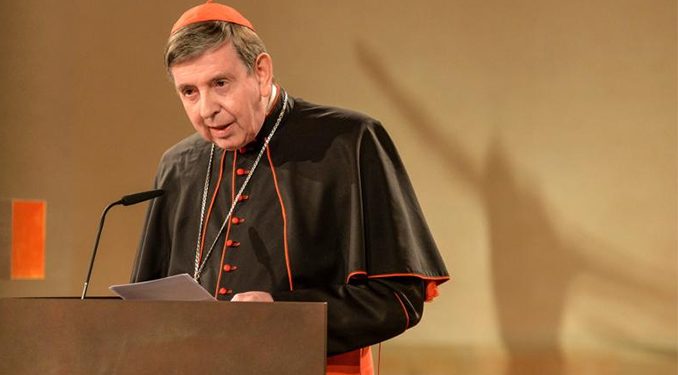
ROME – In a new interview with a German newspaper, the Vatican’s point man on ecumenical affairs says Russian Orthodox Patriarch Kirill’s defense of the war in Ukraine amounts to “heresy,” and has fractured the unity of the Orthodox community.

Speaking to German newspaper Würzburg Die Tagespost in an interview that was published Wednesday, June 29, Swiss Cardinal Kurt Koch, president of the Pontifical Council for Promoting Christian Unity, said that in his opinion, “it is heresy that the patriarch dares to legitimize the brutal and absurd war in Ukraine for pseudo-religious reasons.”

He noted that Kirill in the past has not only defended the war as a protection of Russian security and interests, but he has implied that Russians and Ukrainians share a national unity given the baptism of Grand Duke Vladimir of Kievan Rus’ in 988, after which he declared Christianity the state religion.

In Koch’s view, this vision of unity “is cruelly refuted today: if Russians and Ukrainians emerged from the same baptismal bath, but the Russians today attack the Ukrainians and wage war, then the unity is denied.”

The main problem, the cardinal said, “lies in the relationship between church and state, which in Orthodoxy is seen and shaped in the sense of a symphony between the two realities.”

Noting that tensions existed within Orthodoxy long before Russia’s Feb. 24 invasion of Ukraine, Koch said the current war has made these tensions worse, with added strain being placed on relations between the Patriarchate of Moscow and the Ecumenical Patriarchate of Constantinople, led by Patriarch Bartholomew I, which has been criticized by Moscow for being overly supportive of the West.

This friction was heightened in 2018 with Constantinople’s decision to grant autocephaly, or independence, to the Ukrainian Orthodox Church, which went against Kirill’s wishes.

Speaking of these tensions, Koch said, “it would be pathetic if they had led to the terrible war in Ukraine or were being used to legitimize it. Because church conflicts must never be ‘solved’ with violence.”

“Patriarch Kirill’s pseudo-religious justification of the war must shake every ecumenical heart,” Koch said, adding that from a Christian perspective, “one cannot justify aggressive war, but at most, under certain conditions, defense against an unjust attacker.”

“Playing down Putin’s brutal war of aggression as a ‘special operation,’” which is how Russia has described the war, “is a misuse of language,” Koch said, and condemned this description as “an absolutely impossible position.”

Koch said he had a Zoom conversation with Metropolitan Hilarion, the former president of the Patriarchate of Moscow’s Department for External Ecclesial Relations, in February, in which he proposed a joint condemnation of the war be made by Pope Francis and Kirill, but this proposal was rejected.

Shortly after this, he said, the Moscow Patriarchate requested its own Zoom call with Pope Francis. During that conversation, which took place in March, the pope said there was no such thing anymore as a “just war.”

Francis, in that conversation, also insisted that as religious leaders, he and the Russian Patriarch were not “state clergyman,” but rather “shepherds of the people,” and as such, must advocate for a rapid end to the war and must vocally condemn the violent killing and destruction.

RELATED: Pope tells Russian Orthodox leader there’s no such thing as ‘just war’

According to Koch, immediately after that conversation the Russian Orthodox Patriarchate released the statement saying Kirill “was grateful that the pope and he had a common view of the conflict in Ukraine,” which prompted the Vatican to put out its own statement publicly relaying “what the pope really said.”

Recalling Francis and Kirill’s historic first meeting in Havana, Cuba, in 2016, which marked the first time a pope and Russian Orthodox patriarch had met, Koch said this meeting, while celebrated, has not changed the Catholic Church’s relations with the Patriarchate of Constantinople, which have been strengthened.

“It is clear to us that the Ecumenical Patriarch is the honorary head of Orthodoxy,” Koch said, saying the Vatican has always respected Bartholomew’s position that theological dialogue between the Catholic Church and Orthodox Churches “should not be conducted bilaterally but only multilaterally.”

“There has therefore never been a theological dialogue between Rome and Moscow, even if Moscow wanted it,” he said, but insisted that “you must never close the doors.”

Koch said a gap must always be left open, “otherwise you can’t do anything at all,” but that this gap is currently difficult because “there is no telling how long the terrible war in Ukraine will last.”

Noting that a second meeting between Francis and Kirill was being planned but was called off due to the war in Ukraine, Koch said that if a second meeting between the two were to take place while the war is still raging “and Patriarch Kirill was clinging to his untenable justification of war, it would be subject to grave misunderstandings.”

Koch also noted that Kirill’s position on the war has caused division within the global Orthodox community, most notably with the decision of the Ukrainian Orthodox Church-Moscow Patriarchate (UOC-MP)’s decision to disassociate itself with the Moscow Patriarchate over Kirill’s vocal support of the conflict.

“It is not yet clear in which direction she wants to orientate herself in the future,” in terms of whether to now join the Patriarchate of Constantinople, Koch said, but noted that either way, with UOC-MP’s decision, “the Russian Orthodox Patriarchate lost a large part of its faithful.”

Follow Elise Ann Allen on Twitter: @eliseannallen

Categories
Saved Web Pages

Ukraine says Russia targeted Odessa port; Russia denies vehemently

c8ae0bdd-184a-4489-a7e5-3e14e407540a.jpg

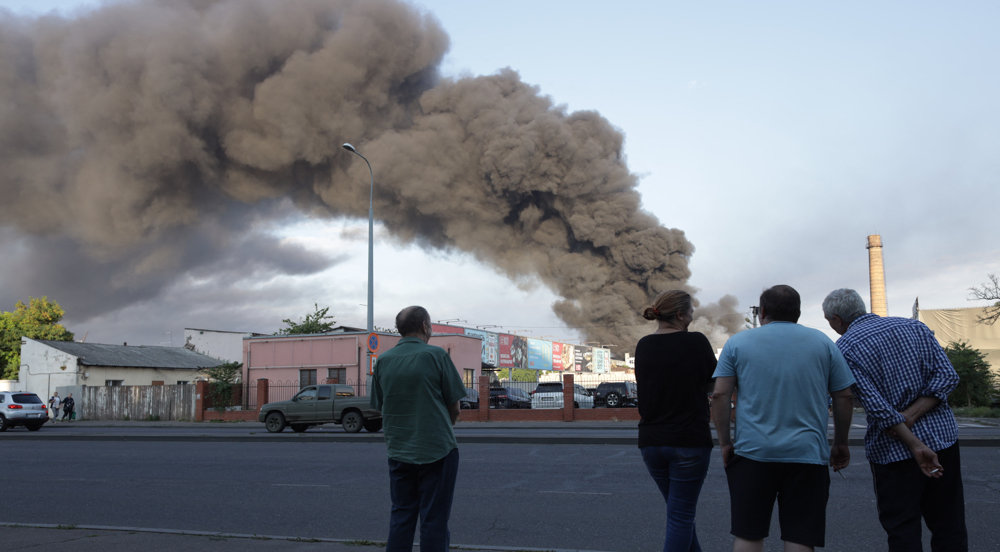
Ukraine has said that Russian missiles struck the key Black Sea port of Odessa, an incident that Moscow said had nothing do to with and is looking into it very closely.

Ukraine’s military said two Russian cruise missiles hit the port city in the early hours of Saturday morning.

“The enemy attacked the Odessa sea port with Kalibr cruise missiles,” Sergiy Bratchuk, a representative of the Odessa region said in a statement on social media. “Two of the missiles were shot down by air defenses. Two hit port infrastructure.”

Ukraine’s Foreign Ministry spokesman Oleg Nikolenko described the missile attack as a “spit in the face” of a deal signed by the warring neighbors a day earlier to resume grain exports blocked by the conflict.

“The Russian missile (strike) is (Russian President) Vladimir Putin’s spit in the face of UN Secretary-General Antonio Guterres and Turkish President Recep (Tayyip) Erdogan, who made enormous efforts to reach an agreement,” said Nikolenko.

He accused Russia of being responsible “for deepening the global food crisis” if the agreement were jeopardized by the assault.

‘Moscow examining issue very closely’

However, Turkey’s defense minister said later on Saturday that Russian officials had told Ankara that Moscow had “nothing to do” with the attack on Odessa port.

“In our contact with Russia, the Russians told us that they had absolutely nothing to do with this attack, and that they were examining the issue very closely and in detail,” Hulusai Akar said in a statement.

“The fact that such an incident took place right after the agreement we made yesterday really worried us,” he added.

Moscow and Kiev signed separate but identical agreements with the United Nations and Turkey on reopening Black Sea shipment routes. Under the terms of the deal, Moscow agreed not to target ports while grain shipments are in transit.

US ambassador accuses Russia of weaponizing food

US Ambassador to Kiev Bridget Brink also reacted to the missile strike, describing it as “outrageous.”

“Russia strikes the port city of Odessa less than 24 hours after signing an agreement to allow shipments of agricultural exports,” she said on Twitter. She accused Russia of weaponizing food, saying, “Russia must be held to account.”

The war in Ukraine began on February 24, after President Putin ordered a military campaign “to demilitarize” and “de-Nazify” Ukraine and to “liberate” Donbas, composed of two breakaway regions of Donetsk and Luhansk.

Since the onset of the operation, the United States and its European allies have supplied billions of dollars worth of weaponry to Ukraine and imposed waves of unprecedented sanctions on Moscow, despite Russia’s repeated warning that such a Western flood of weapons will only prolong the war.

On Friday, Washington signed off on another $270 million in military aid to Kiev, including four more high mobility artillery rocket systems (HIMARS).

The latest aid will bring to 20 the number of the HIMARS, which can precisely strike targets within 80 kilometers.

Earlier this week, Russian Defense Minister Sergei Shoigu ordered generals to prioritize destroying Ukraine’s long-range missile and artillery weapons, according to the ministry.

White House spokesman John Kirby said on Friday that Russia has “launched deadly strikes across the country, striking malls, apartment buildings, killing innocent Ukrainian civilians.”

Washington most recently shipped rocket launchers to Ukraine as part of a $450 million military assistance package announced last month.

The US has spent $8 billion on military aid to Kiev since the start of the war in Ukraine.

Categories
Saved Web Pages

ГБР сообщило о подозрении в госизмене экс-заместителю секретаря СНБО Сивковичу и трем сотрудникам ФСБ РФ

filestoragetemp-77.jpg?size=1200x630

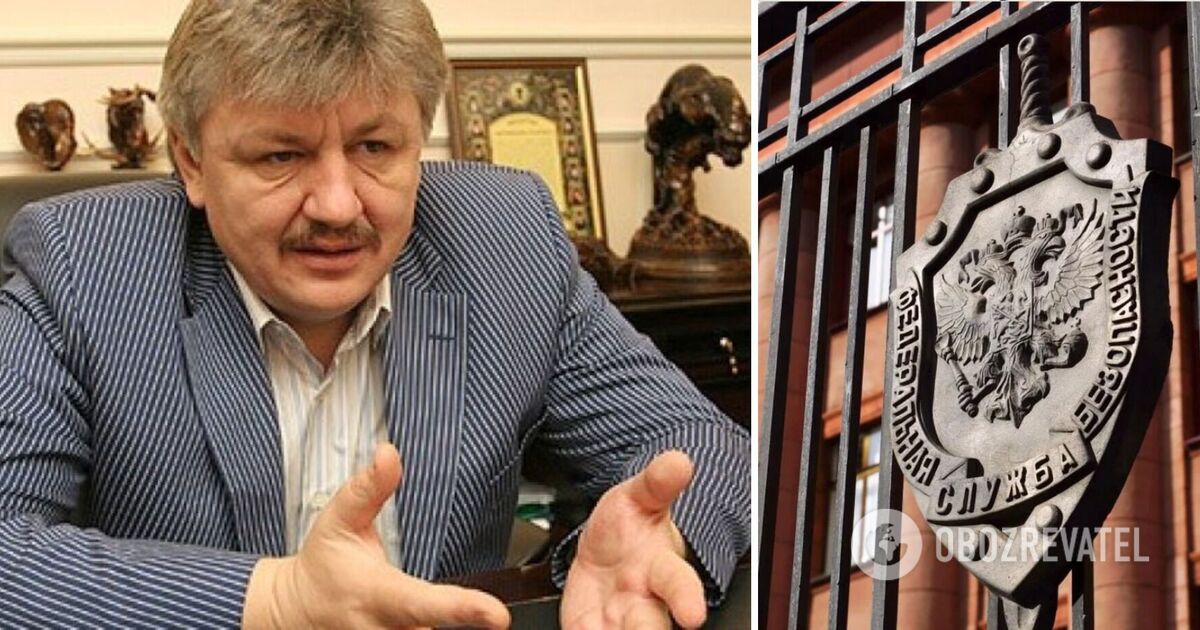
Государственное бюро расследований Украины сообщило о подозрении в государственной измене бывшему заместителю секретаря Совета нацбезопасности и обороны Украины Владимиру Сивковичу. Он помогал сотрудникам ФСБ России получать от агентурной сети в Украине сведения, составляющие государственную тайну.

Трем “кураторам” Сивковича из ФСБ объявлены подозрения в шпионаже. Подробности сообщили в ГБР.

В ходе следствия сотрудники Госбюро расследований Украины установили, что 5-я служба федеральной службы безопасности России создала преступную организацию для проведения разведывательно-подрывной деятельности против Украины. Возглавил ее начальник 9 (“украинского”) управления департамента оперативной информации 5-й службы ФСБ России Игорь Чумаков. В ее состав входили сотрудники ФСБ, в том числе Александр Чулиндин, Марина Терентьева и представители других государственных органов страны-агрессора.

“Привлекли фесбешники к своей противоправной деятельности и представителям бывшей власти в Украине, которые в 2014 году “перебрались” в Москву, в частности Владимира Сивковича. Также в преступную группу входил экс-начальник ГУ СБУ в Крыму Олег Кулинич, который в свою очередь привлек в группу других граждан Украины. Владимир Сивкович координировал работу с украинской частью группировки, которая собирала и передавала представителям РФ сведения, составляющие государственную тайну, а также пыталась влиять на кадровые решения в органах безопасности Украины“, – пояснили в ГБР.

Свою деятельность Сивкович, по данным следствия, пытался замаскировать под “общественно-политическую работу”.

“Для прикрытия бывший заместитель секретаря СНБО создал в Москве “политический офис”, работники которого якобы занимались общественно-политической деятельностью. А на самом деле проводили разведывательно-подрывную деятельность против Украины. Они привлекали к негласному сотрудничеству лиц, имеющих разведывательные возможности на территории Украины и способных оказывать помощь работникам ФСБ”, – подчеркнули в ГБР.

В настоящее время Сивковичу объявлено подозрение в совершении преступлений, предусмотренных ч. 1 ст. 255 (создание, руководство преступным сообществом или преступной организацией, а также участие в ней), ч. 1 ст. 111 (государственная измена), а сотрудникам 5-й службы ФСБ Игорю Чумакову, Александру Чулиндину и Марине Терентьевой по ч. 1 ст. 114. (шпионаж).

Напомним, “подельник” Сивковича, бывший начальник СБУ в Крыму Олег Кулинич был задержан в ходе совместной операции ДБР и СБУ 16 июля. Ему сообщено о подозрении в совершении преступлений, предусмотренных ч. 3 ст. 255 (создание, руководство преступным сообществом или преступной организацией, а также участие в ней), ч. 1 ст. 111 (государственная измена), ч. 5 ст. 27 ч. 1 ст. 114 (пособничество в передаче или сборе с целью передачи иностранному государству, иностранной организации или их представителям сведений, составляющих государственную тайну).

Впоследствии были обнародованы детали работы экс-главы управления СБУ в Крыму на ФСБ. Тогда стало известно, что Сивкович руководил деятельностью Кулинича и привлеченных им лиц по сбору и передаче информации, представляющей оперативный интерес ФСБ. Кулинич, имея доступ к гостайне, непосредственно собирал необходимую стране-агрессору информацию как лично, так и с помощью привлеченных лиц.

Только проверенная информация у нас в Telegram-канале Obozrevatel и Viber. Не ведитесь на фейки!

Categories
Saved Web Pages

Zelenskyy says there’s no point in negotiating with Russia until it gets ‘smashed in the face’ and all Ukrainian territories are liberated

6229c4de7eb82f00180e475a?width=1200&form

Ukrainian President Volodymyr Zelenskyy said in a new interview with The Wall Street Journal that establishing a ceasefire in the war with Russia while allowing it to maintain control of parts of Ukraine would result in a prolonged conflict.

“Freezing the conflict with the Russian Federation means a pause that gives the Russian Federation a break for rest,” Zelenskyy said, adding, “They will not use this pause to change their geopolitics or to renounce their claims on the former Soviet republics.”

Zelenskyy said Russia would use a ceasefire to regain strength and then resume its offensive against Ukraine later on.

Russia would “rest and in two or three years, it will seize two more regions and say again: Freeze the conflict. And it will keep going further and further. One hundred percent,” Zelenskky said.

Ukrainians believe “all the territories must be liberated” before negotiations can start, he said. “Our people are convinced we can do it. And the faster we do it, the fewer will die.”

“We would prefer to de-occupy in a way that’s not military and to save lives,” Zelenskyy went on to say. “But we are dealing with who we are dealing with. Until they get smashed in the face, they won’t understand anything.”

Zelenskyy’s comments came after Russian President Vladimir Putin earlier this week accused Ukraine of standing in the way of a draft peace deal from March. 

The Ukrainian leader ripped into Putin in response, telling The Wall Street Journal: “He came here without talking, killed people, displaced 12 million, and now says Ukraine doesn’t want to negotiate.”

“They just murder people, destroy cities, enter them, and then say: ‘Let’s negotiate.’ With whom can they talk? With rocks? They are covered in blood, and this blood is impossible to wash off. We will not let them wash it off,” he added.

‘Putin wants to find a way of subjugating Ukraine one way or another’

putin

Russian President Vladimir Putin speaks during his press conference at the Ashgabat International Airport in, Turkmenistan, on June 29, 2022. Contributor/Getty Images

Fiona Hill, who served as the top Russia expert on the National Security Council under the Trump administration, expressed similar concerns to Zelenskyy in a recent interview with Insider.

Though Russia has issues with manpower and the maintenance of military equipment, Hill underscored that Russian President Vladimir Putin’s goals in Ukraine have not changed.

“Putin wants to find a way of subjugating Ukraine one way or another,” Hill said.

“He might take what he can get in the short-term and medium-term. One of the big risks is that if he manages to get some kind of nominal control of the Donbas — Donetsk and Luhansk. But then there might be some kind of effort to create an operational pause for regrouping,” Hill added, “And then it just results in a renewal of conflict when the Russians feel that they’re in a good position to press ahead again.”

A number of Western officials and Kremlinologists have made the case that Russia is losing momentum in Ukraine, which they’ve said could offer an important opportunity for Kyiv. 

Richard Moore, chief of Britain’s Secret Intelligence Service (MI6), on Thursday said that Russia’s forces appeared to be running “out of steam” and this could open the door for Ukrainian forces to “strike back.”

“They will have to pause in some way, and that will give the Ukrainians opportunities to strike back,” Moore said at the Aspen Security Forum in Colorado.

Retired Lt. Gen. Ben Hodges, the former commanding general of the US Army in Europe, earlier this month told Insider that Russian forces are “exhausted.” Hodges said that Ukraine could potentially push Russia back to its pre-war borders by 2023. 

That said, officials have also underscored that the conflict has morphed into a grinding war of attrition that is taking a heavy toll on both sides. 

CIA Director William Burns, who also attended the Aspen Security Forum this week, said that the latest US intelligence assessments place the Russian death toll at around 15,000, with an additional 45,000 wounded. 

But Burns went on to say, “The Ukrainians have suffered as well — probably a little less than that. But, you know, significant casualties.”

‘The cost is very high. The gains are very low.’

Ukrainian soldiers riding a tank

Ukrainian soldiers ride a tank on a road in the Donetsk region on July 20, 2022, near the front line between Russian and Ukrainian forces Anatolii Stepanov/Getty Images

After failing to take Kyiv during the early days of the war, Russia turned its attention to Ukraine’s eastern Donbas region. Fighting had already been raging on between Ukrainian forces and Kremlin-backed rebels for eight years in that region prior to Russia’s large-scale invasion in late February. By the time Moscow launched the so-called “special operation” in Ukraine, the rebels already controlled roughly one-third of the Donbas. 

Since shifting the focus of the war to the Donbas, Russia has made incremental progress. By early July, Russian forces had control of Luhansk, which along with Donetsk is one of two provinces that make up the Donbas. 

Russia has only advanced roughly six to 10 miles in the past few months, Gen. Mark Milley, chairman of the joint chiefs of staff, said on Wednesday. 

“The cost is very high. The gains are very low,” Milley said. “The Ukrainians are making the Russians pay for every inch of territory that they gain. Advances are measured in literally hundreds of meters — some days you might get a kilometer or two from the Russians, but not much more than that.” 

Weapons provided by the US to Ukraine, particularly the High Mobility Artillery Rocket Systems (HIMARS), appear to have made a difference in terms of putting a dent in the Russian offensive. The Pentagon this week announced it was sending, among other systems, four additional HIMARS to Ukraine on top of the 12 already provided. 

Categories
Saved Web Pages

Ukraine war: Explosions rock Ukrainian port hours after grain deal

The deal – which took two months to reach – is set to last for 120 days, with a co-ordination and monitoring centre to be established in Istanbul, staffed by UN, Turkish, Russian and Ukrainian officials. It can be renewed if both parties agree.

Categories
Saved Web Pages

Ukraine War: As It’s Happening

The Moscow Times is collecting all the latest breaking news and developments in Russia’s deadly attack on Ukraine.

You can access our earlier live coverage here.

Includes reporting from AFP.

flipboard_mrrw.png

At least 10 independent media outlets have been blocked or closed down over their coverage of the war in Ukraine.

The Moscow Times needs your help more than ever as we cover this devastating invasion and its sweeping impacts on Russian society.

Categories
Saved Web Pages

Putin bets on an ancient weapon in Ukraine: time

np_file_172474-870x489.jpeg

London – Russian President Vladimir Putin is betting on an ancient weapon more powerful than any of the missiles now being supplied by the United States and its European allies to Ukraine: time.

Nearly five months since Putin ordered the Feb. 24 invasion that has devastated parts of Ukraine, Russia is hoping that Western resolve will be sapped by alarm over surging global energy and food prices that the war has helped to stoke.

This could be due to a conflict with your ad-blocking or security software.

Please add japantimes.co.jp and piano.io to your list of allowed sites.

If this does not resolve the issue or you are unable to add the domains to your allowlist, please see this support page.

We humbly apologize for the inconvenience.

PHOTO GALLERY (CLICK TO ENLARGE)

WP Radio
WP Radio
OFFLINE LIVE