Categories
Saved Web Pages

‘Law & Order’ Crew Member Is Fatally Shot at Brooklyn Film Location

19lawandorder-killing1-facebookJumbo.jpg

The man, who was enforcing parking restrictions on a Greenpoint block before filming began on Tuesday, was sitting in a car when he was killed by a lone gunman.

Investigators on the Brooklyn block where a man working on “Law & Order: Organized Crime” was fatally shot.

Investigators on the Brooklyn block where a man working on “Law & Order: Organized Crime” was fatally shot. Credit…Dakota Santiago for The New York Times

July 19, 2022Updated 5:28 p.m. ET

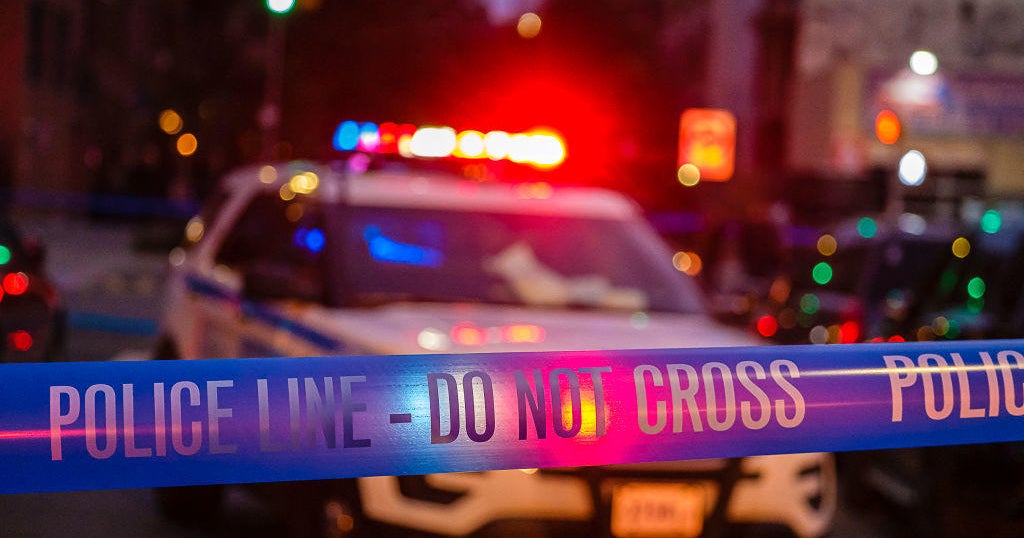
A Brooklyn film location for a ripped-from-the-headlines television crime show became a murder scene early Tuesday when a man who was enforcing parking restrictions connected to the production was fatally shot while he sat in a car, the police said.

The killing happened on North Henry Street near Norman Avenue in the Greenpoint neighborhood as a crew working on the crime show, “Law & Order: Organized Crime,” was preparing to film on the block, according to the police and fliers posted there.

The police identified the victim as Johnny Pizarro, 31, of Queens.

Mr. Pizarro, whose job was to make sure the street was clear so that vehicles affiliated with the show could park, was sitting in a car when a lone assailant approached the vehicle, opened the door and shot him in the head and neck, the police said. He was taken to Woodhull Hospital Center in Brooklyn, where he was pronounced dead, the police said.

No arrest had been made and no motive had been established by Tuesday afternoon, the police said. A short, thin man in a black hooded sweatshirt and dark pants was seen running from where the shooting occurred, the police said.

“Law & Order: Organized Crime,” which airs on NBC and stars Christopher Meloni, is the latest iteration of the durable crime-procedural franchise created by the producer Dick Wolf. It is produced by Universal Television, a division of Universal Studio Group, in association with Wolf Entertainment, and is filming its third season.

“We were terribly saddened and shocked to hear that one of our crew members was the victim of a crime early this morning and has died as a result,” a spokeswoman for NBC and Universal Television said in a statement. “We are working with local law enforcement as they continue to investigate.”

The block where the killing occurred is lined with large trees and mostly three-story homes inhabited by a mix of longtime residents and newer arrivals. Msgr. McGolrick Park, a shady, dog-friendly oasis, is close by. Monthly rents for some renovated units run from $3,500 to $5,000, according to online listings.

The area is in the 94th Precinct, where serious crime is relatively rare, according to police statistics. There had not been a murder in the precinct this year as of Sunday, the data shows.

Janus Czuj, a 35-year neighborhood resident who lives around the corner from the site of the shooting, said violent crime was indeed rare in the area.

“Every night I walk here,” Mr. Czuj, 60, said, adding that there was “never a single problem” in the neighborhood and “never something crazy like this.”

He said his truck had been parked Monday evening on the block where the killing occurred and that a man he believed was Mr. Pizarro had asked him to move it.

“I saw him yesterday,” Mr. Czuj said. He added: “He was so energetic.”

Gabrielle Van den Berg, who lives across the street from where the shooting happened, said her husband had gone outside after hearing shots, then came back inside after noticing nothing amiss.

“It was really loud,” Ms. Van den Berg said of the gunfire. “I’m pretty sure it was three gunshots.”

Crews filming shows like “Law & Order: Organized Crime” have long been a presence in certain city neighborhoods, often to the chagrin of local residents who are frustrated about having to give up coveted parking spaces to make way for production-related vehicles.

Such productions typically post notices on light poles advising residents about when they must move their cars and when filming will begin. Workers affiliated with a production, like Mr. Pizarro, will then sit out all night to ensure that the streets are clear and stay that way.

In the case of the “Law & Order: Organized Crime” production, fliers indicated that cars were to be moved off the block by 10 p.m. Monday and that filming was set to begin at 6 a.m. Tuesday — about an hour after Mr. Pizarro was killed.

The shooting prompted production to shut down for the day. A little after 4 p.m., the last police investigators left the area, as did a tow truck pulling what was presumably the car that Mr. Pizarro was in when he was shot.

Olivia Bensimon contributed reporting.
Categories
Saved Web Pages

Police: “Law & Order” crew member fatally shot on Brooklyn set

gettyimages-1241979535.jpg

By Zoe Christen Jones

Updated on: July 19, 2022 / 12:27 PM / CBS News

A crew member was fatally shot on a “Law & Order” set in Brooklyn Tuesday, the New York Police Department confirmed to CBS News. 

The 31-year-old man was working for the parking detail of “Law & Order: Organized Crime,” a spin-off of the original “Law & Order” show starring actor Christopher Meloni. He was working on North Henry Street, near Norman Avenue in Greenpoint, Brooklyn around 5:15 a.m. when he was fatally shot in the head and neck, according to police. 

EMS arrived on the scene and took the man to Woodhull Medical Center, where he was pronounced dead. Officials have not yet released the man’s name. 

In a statement shared with CBS News, NBC and Universal Television said they were “terribly saddened and shocked” to hear of the man’s death. 

“We are working with local law enforcement as they continue to investigate,” they added in the statement. “Our hearts go out to his family and friends and we ask that you respect their privacy during this time.”

There have been no arrests, and police have not established a motive.

First published on July 19, 2022 / 11:49 AM

© 2022 CBS Interactive Inc. All Rights Reserved.

Categories
Saved Web Pages

World War III on the brink and U.S. leadership is missing

B3yohoLGbrinkofww3_c0-288-2200-1571_s120

OPINION:

The world is at the precipice of World War III and American leadership is missing. The unjustified and unprovoked invasion of Ukraine by Russia at the direction of President Vladimir Putin, along with the increased campaign of aggression and intimidation toward Taiwan and Australia at the direction of President Xi Jinping and the Chinese Communist Party have brought increased tension and uncertainty to the European Union and the Asia-Pacific regions respectively.

In fact, the world has not seen such destabilizing actions since pre-WWII brought on by the actions of Germany, Italy and Japan. Some view these moves as a prelude to WWIII.

Since the end of WWII, the world has not had a major war between strong militarized nations. Much of this is due to the formation of NATO and the security alliances created between member nations. The United States has played a pivotal role in maintaining world peace through leadership and forging strong security alliances with countries inside and outside of the NATO umbrella. 

Countries that the U.S. has strong cooperation and inter-operative security relationships with outside of the NATO umbrella are Japan, South Korea, India and Australia, which by working together helps maintain world stability. The United States leadership along with our allies have established and have worked to maintain a rule based world order that honors international laws, treaties and national sovereignty.

Mr. Putin’s maniacal attack on Ukraine is strictly a move to recreate what he views as the lost motherland due to the financial breakup of Russia. Thousands of Ukrainians and Russians have been murdered to date by Mr. Putin’s actions. His motive is solely to appease his narcissistic ambitions to recreate “Mother Russia.” 

Ukraine became a sovereign and independent nation after the breakup of the failed Soviet Union. The Soviet Union failed because it forced its citizens to serve the socialist authoritarian government instead of a government protecting the rights of the people, and went broke in the process. History has moved on. Mr. Putin too, should move on to make the remaining parts of Russia a productive member of responsible nations in the world and stop being the pariah of the northern Euro-Asia region. His actions will go down in history and face the same fate paralleling other irrational and egomaniac authoritarians such as Hitler and Mussolini.

The rapid response of disdain, condemnation and sanctions evoked by the many nations of the world, including all the EU, U.S., U.K., Canada, Latin America and many Asian nations, should be proof enough for Mr. Putin to reverse course and withdraw from Ukraine. The message is clear, nation invasion and destabilizing actions in the 21st century are not acceptable. China’s Mr. Xi should take note.

At the southern end of the region, China’s provocation and rhetoric toward the nation of Taiwan have increased tensions in the Asia-Pacific region. China’s intentional and belligerent actions that violates Taiwan’s sovereign airspace and economic exclusive zones are attempts to intimidate the Taiwanese government and are nothing more than a bullying attempt to force unification with mainland China. Beijing’s actions are also increasing tensions in the region as China taunts other sovereign nations such as Australia, Vietnam, Japan and the Philippines in the same fashion. This again is a narcissistic desire for Mr. Xi and the CCP to reestablish China as the world hegemon.

The recent CCP sponsored social media sites — which praise the assassination of the respected former Prime Minister of Japan Shinzo Abe, while also encouraging stabbing to death Taiwan President Tsai Ing-wen to aid the unification of Taiwan and China — only increase the tension in the region and further isolates China.

The actions of both Russia and China are creating a destabilizing tectonic shift in the world order not seen since WWII. At the conclusion of WWII and with the collapse of the Soviet Union in 1991, America became the sole superpower in the world. The strong leadership of the United States along with its allies is what many say kept the world peace dividend in place since then. Unfortunately, America’s leadership on the world stage has weakened and lost its focus, thus creating a vacuum which nature abhors. That vacuum is in danger of being filled by two of the world’s strong authoritarian leaders.

It’s time for America to regain its focus and work at shoring up that peace dividend by reestablishing strong partnerships with like-minded countries along with clear, concise foreign policies that do not change with each new administration. 

If Congress puts forth a long-reaching foreign policy that promotes peace to guide each subsequent administration it will reassure our allies and adversaries alike of America’s stance on future foreign policy issues. We need to have a united front and let Mr. Putin’s Russia and Mr. Xi’s China understand that disrupting the world order will have severe consequences for them both. All nations should be allowed to exist in the 21st century, and the threat of an invading force desiring to conquer foreign lands should be relegated too and remain in the history books of past centuries.

• Ted S. Yoho, D.V.M., was a member of Congress for Florida’s 3rd Congressional District from 2013 to 2021 and was chair Subcommittee on Asia and the Pacific in the 115th Congress.

Click to Read More and View Comments

Categories
Saved Web Pages

Opinion | A Feckless American Foreign Policy’s Legacy

social

Photo: Saudi Press Agency/Zuma Press

America’s strategic pivot from the Middle East was a mistake, President Biden acknowledged on his recent swing through the region. Admitting that is a good thing; you can’t begin to fix a problem before acknowledging that you have one. Unfortunately, this “mistake” was only one part of the profound failure of American strategic culture that has taken this country and the world into an increasingly dark place. The question now is whether Mr. Biden and his team understand how much more needs to be done to get American foreign policy back on track.

At the beginning of the 21st century, the world seemed more peaceful and American power more solidly entrenched than ever before. Twenty-two years into the new century, Americans face the most threatening international environment since the darkest days of the Cold War. The war in Ukraine threatens the post-Cold War order in Europe. Iran is well on its way to a nuclear bomb, and China’s shadow looms larger than ever over Taiwan.

The record of American statecraft since 2000 has been, to put it mildly, unsatisfactory. The wars in Iraq and Afghanistan involved immense human and economic costs even as Iranian power surged across the Middle East. America’s failure to enforce trade rules against China facilitated the rise of a hostile communist rival while undermining political support for free trade in both political parties. What posterity will likely regard as the Chamberlainesque responses of American presidents in both parties to Russia’s growing assertiveness allowed Vladimir Putin to rebuild the Kremlin’s power.

Today, China, Russia and Iran are deepening their mutual ties and doubling down on their assault on the U.S. and its alliances. Meanwhile, what some Washington circles still call the liberal world order looks more illiberal and less orderly every day. In the Middle East, Iraq, Syria, Lebanon, Yemen and Libya are plagued by conflict and militias. In Asia, Sri Lanka has collapsed, and Myanmar’s civil war grows uglier and more intractable by the day. The threat from North Korea continues to grow. Europe may be facing its worst energy and economic crisis since the 1940s. Jihadist violence is raging across Africa as food price inflation and supply disruptions from the war in Ukraine leave millions vulnerable to famine and want.

China, Russia and Iran have problems of their own, and their continuing rise is by no means foreordained. But if world events continue on their present trajectory, our current decade could fall into chaos and conflict as destructive as the 20th century’s world wars. To stop the grim downhill slide, American foreign policy will have to change course.

One idea in particular is going to have to go. Following the Cold War, the American foreign-policy establishment embraced the tragically misguided belief that we could set aside traditional forms of great-power competition and balance-of-power diplomacy while focusing our efforts on “global issues” like human rights, climate change and the construction of an ever-stronger set of international institutions operating under an ever-more-pervasive system of international law.

That destructive consensus rested on two mistaken perceptions. The first was that America’s victory in the Cold War was final and America’s economic and military power plus our diplomatic prestige ensured our unchallengeable supremacy for decades.

The second was that the so-called rules-based world order we were using our power to build would be popular abroad and uncontroversial at home. The economic benefits of the free-market, free-trading world system were so great that no serious country abroad or political movement at home would be insane enough to challenge it. And the elegant international system was going to be so ethically beautiful and politically inspiring that countries all over the world would be irresistibly drawn into it.

The war in Afghanistan illustrates the feckless nature of two decades of American foreign policy. In Afghanistan, we expanded our objectives, and our war aims shifted from removing and punishing a government that sheltered the terrorists who engineered 9/11 to changing the culture and political system of a society very different from our own.

Unfortunately, in the midst of our inspiring campaigns of institution-building and civil-society promotion, we neglected one tiny detail: We never developed and implemented a military strategy capable of winning the war.

The same disastrous mix of mission creep and strategic incompetence that wrecked our Afghan policy threatens our global strategy today. Our plans for world order grow increasingly ambitious and elaborate even as the security underpinnings of that system become dangerously weak. Global issues are real, and hard power on its own is never enough. But if you don’t get the hard-power issues right, nothing else matters much.

Jimmy Carter lost the 1980 general election by a landslide to Ronald Reagan, so it’s difficult to understand why Joe Biden continues to follow the Carter ‘malaise’ playbook today. Bettman via Getty Images/Shutterstock Composite: Mark Kelly

Copyright ©2022 Dow Jones & Company, Inc. All Rights Reserved. 87990cbe856818d5eddac44c7b1cdeb8

Categories
Saved Web Pages

Sickly Putin HOBBLES with arm hanging limp as he arrives at anti-West summit

PUTIN-2.jpg?strip=all&quality=100&w=1249

SICKLY Vladimir Putin hobbled along the red carpet with his arm hanging limp by his side as he arrived in Iran today.

Footage of the Russian leader’s arrival showed him shuffling down the steps of his jet as he landed in Tehran to meet with fellow global terror master Ayatollah Ali Khamenei.

Vladimir Putin appeared to be struggling as he shuffled down the steps of his jet

Vladimir Putin appeared to be struggling as he shuffled down the steps of his jetCredit: RT

Putin briefly waved to the gathered crowds before being whisked away

Putin briefly waved to the gathered crowds before being whisked awayCredit: Getty

With his right arm limp by his side, Putin was seen hobbling down a long red carpet

With his right arm limp by his side, Putin was seen hobbling down a long red carpetCredit: RT

Iran’s Ayatollah Ali Khamenei and Vladimir Putin sit metres apart as they meet

Iran’s Ayatollah Ali Khamenei and Vladimir Putin sit metres apart as they meetCredit: Reuters

With his right arm limp by his side, Putin, 69, was seen looking unsteady on his feet as he walked down a long red carpet rolled out for him at the capital’s Mehrabad airport.

The Russian dictator is right-handed – but there’s speculation he’s ambidextrous as he wears his watch on his right hand.

He briefly waved to the gathered crowds before being whisked into his presidential convoy to the city.

Putin – who is rumoured to have Parkinson’s or terminal cancer – and hardline Islamist tyrant Khamenei are set to discuss war plans and weapon exchanges in their coordinated campaign against the West.

Russia's top female tennis star bravely comes out as gay and slams Ukraine war
Russia loses third of army's strength since invasion with 50,000 troops dead

It’s Putin’s first trip outside the boundaries of the former Soviet Union since the invasion of Ukraine in February.

Khamenei – sworn enemy of the US, UK and Israel – is one of only a handful of world leaders still willing to do business with blood-soaked outcast Putin.

Turkey’s strongman president Recep Tayyip Erdogan – blasted over human rights abuses and strained relations with NATO allies – was also expected to join the pair for talks.

The Russian leader has described Western sanctions as a declaration of economic war – and is also attempting to build bridges with China and India.

Yuri Ushakov, Mr Putin’s foreign policy adviser said: “The contact with Khamenei is very important.

“On most issues, our positions are close or identical.”

An Iranian official said: “We need a strong ally, and Moscow is a superpower.”

The summit comes days after US President Joe Biden visited the Middle East for the first time in his presidency, with stops in Iran’s regional foes Israel and Saudi Arabia.

In recent weeks, Russian officials visited an airfield in central Iran at least twice to review Tehran’s weapons-capable drones for possible use in Ukraine, the White House has alleged.

Putin’s jaded appearance as he landed in Iran comes after he struggled to keep his eyes open during a crunch meeting with his defence minister earlier this month.

The Russian president, rumoured to be undergoing debilitating cancer treatment, was seen slumped over and bleary-eyed in the footage.

I worked in Asda, the weird items people would return & why Sunday's the worst
I live in a house on wheels - I built it with my dad, now I’m mortgage free

Rumours of Putin’s ill health have continued to swirl after the leader was spotted looking unwell at public gatherings and was pictured with a thyroid cancer doctor.

It’s even been claimed that Putin could already be using tricks such as pre-recorded appearances and body doubles to stage manage his health.

Vladimir Putin and Iranian President Ebrahim Raisi on Tuesday

Vladimir Putin and Iranian President Ebrahim Raisi on TuesdayCredit: Reuters

Categories
Saved Web Pages

Russia’s antisemitism aimed at Ukraine’s Zelenskyy is just the Kremlin variant of a very old European virus

opengraph_default.jpg

(The Conversation is an independent and nonprofit source of news, analysis and commentary from academic experts.)

Michael Brenner, American University

(THE CONVERSATION) Russian President Vladimir Putin’s foreign minister, Sergei Lavrov, was asked in May 2022 how Russia could claim that Ukraine was run by Nazis, since Ukraine’s president, Volodymyr Zelenskyy, is Jewish.

Lavrov’s response: “So what if Zelenskyy is Jewish? The fact does not negate the Nazi elements in Ukraine.” In fact, he claimed, Hitler himself had “Jewish blood,” and “the most ardent antisemites are usually Jews.”

Lavrov deliberately used offensive language aimed at a Ukrainian president who happens to be Jewish; his comments sparked an international uproar. Israel’s Foreign Minister, Yair Lapid, said in a statement, “The lowest level of racism against Jews is to accuse Jews themselves of antisemitism.”

Antisemitism has been used as a weapon against leading Jewish politicians in Europe for over a century, no matter how assimilated they were into their respective societies. As I wrote in my book, “In Hitler’s Munich: Jews, the Revolution, and the Rise of Nazism,” verbal attacks were often followed by physical assaults, and Jews served as scapegoats for all kinds of societal ills.

In Germany, the three most prominent Jewish leaders after World War I – the communist revolutionary Rosa Luxemburg; the moderate socialist founder of the Free State of Bavaria, Kurt Eisner; and the moderately conservative German foreign minister, Walther Rathenau – were all assassinated only a few months after they reached the heights of their political careers.

Political murders

Polish-born Luxemburg was assassinated in January 1919, together with her non-Jewish comrade-in-arms, Karl Liebknecht. Her body was found in Berlin’s Landwehr Canal. Both were leaders of the newly established Communist Party in Germany and hoped for a socialist uprising in the early days of the Weimar Republic.

Even though Luxemburg distanced herself from her Jewish heritage and refused to recognize any “special suffering of the Jews,” anti-Jewish tropes were often part of the fierce attacks against her.

Antisemitism played a much larger role in the attacks on Germany’s highest-ranking Jewish politician, Foreign Minister Walther Rathenau.

“Knock down Walther Rathenau – the God-damned Jewish sow!” was one of the most vitriolic anti-Jewish slogans of hate in the early years of the Weimar Republic. In fear for Rathenau’s life, Albert Einstein and the president of Germany’s Zionist organization, Kurt Blumenfeld, spent a long night at Rathenau’s house, trying to convince him that Germany was not ready for a Jewish foreign minister and that he should resign.

Rathenau did not heed their advice. Two months later he was shot dead.

‘King of the Jews’

The case of Kurt Eisner, the founder of the Free State of Bavaria, deserves special attention for its connection to the rise of Adolf Hitler.

Eisner took office as prime minister of Bavaria – equivalent to a state governor in the U.S. – in November 1919 as the result of a peaceful revolution that ended the 700-year rule of the Wittelsbach dynasty. The last Bavarian king fled the country. With the help of newly established councils of workers, farmers and soldiers, the socialist Eisner proclaimed the Free State of Bavaria, a semi-autonomous part of Germany.

Eisner was the first Jew ever to be head of a German state. He had to deal with a campaign of defamation that came from well beyond the narrow circles of dedicated right-wing extremists.

The Berlin-born Eisner was widely described by his detractors as an East European Jew whose real name was sometimes given allegedly as Salomon Kosmanowsky, Koschinsky or another supposedly Jewish-sounding name. Among those who denounced him were respected conservative politicians and the papal nuncio in Munich, Eugenio Pacelli, who would later become Pope Pius XII.

In Eisner’s papers in a Berlin archive is a bundle of two thick files with hundreds of mostly anonymous antisemitic hate letters against Eisner, which contain frequent incitements to violence. They include a postcard addressed to the “Hebrew Residence” and a letter to the “King of the Jews” which says: “Control yourself, or disappear to the country where you belong, to Palestine! The broad masses of the German people will eradicate you, something one person can accomplish!”

The tenor of all the letters was that Eisner is, as one letter said, “after all, a Jew, not a German.”

It was by no means only radical antisemites who participated in this campaign. The writer and later Nobel Prize winner Thomas Mann was the son-in-law of the mathematician Alfred Pringsheim, one of the few Jewish professors at the University of Munich. Despite Mann’s Jewish-born wife, Katia, and his connection to the Pringsheims, Mann expressed his disgust about the prominent role of Jews and the “big-city piss elegance of the Jew-boy” leading to a “Jew regiment.”

And as early as Nov. 8, 1918, Mann asked in his diary: “Both Munich and Bavaria governed by Jewish scribblers. How long will the city put up with that?”

Not very long, indeed.

Three months after he became prime minister during the revolution, Eisner was assassinated while on the way to the Bavarian parliament with a letter of resignation in his pocket, after his party had lost the subsequent elections.

The Bavarian revolution was followed by two short-lived Soviet-style republics with a few additional prominent Jewish leaders, and a brutal conservative reaction. These developments might have remained nothing more than a footnote in history were it not for the fact that all of this was witnessed by a young Adolf Hitler, who had just returned to Munich from fighting in World War I.

Hitler would later claim in “Mein Kampf” that it was the “Jewish rule” he had witnessed during this time that inspired his early political activities including his leadership role of the Nazi party, founded in Munich shortly after the Bavarian revolution.

From Munich to Kyiv

After the Holocaust, European Jewry was reduced to a mere shadow of its prewar size. There were only a handful of Jewish political leaders, among them a couple of short-term prime ministers of France, and most prominently Bruno Kreisky, chancellor of Austria from 1970 to 1983. In contrast to Rathenau, who was shot after three months in office, Kreisky was reelected several times.

Official antisemitism was taboo in post-Holocaust Europe, and the voices who criticized Kreisky for his Jewish background did so indirectly. Kreisky had a difficult relationship with his own Jewish heritage. He invited former Nazis to his government and distanced himself from Austria’s Jewish community. He called Israeli Prime Minister Menachem Begin “a little lawyer from Warsaw with a soul of a small-minded shopkeeper” while at the same time becoming the first West European politician to embrace PLO leader Yasser Arafat. The most famous Jew in postwar Vienna, Nazi hunter Simon Wiesenthal, and Kreisky shared a well-known aversion for each other.

The first Jewish leader of a European state who speaks openly about his own Jewishness is Ukraine’s Volodymyr Zelenskyy. Zelenskyy is president of a country that is certainly not free of its own antisemitic tradition.

The antisemitic attacks on Zelenskyy, who might one day be remembered as the most popular Jewish hero of this era, now come from outside the country. As a historian of European Jewish history and antisemitism, I believe they are designed to foment hate and undermine his extraordinary leadership in the face of an unsolicited attack on a free nation.

The fate of today’s Jewish politicians in Europe will most likely not be as tragic as Eisner’s, Rathenau’s and Luxemburg’s. But as the Russian attacks on Zelenskyy demonstrate, in times of conflict, the Jewish background of a leader can be used as part of a broader political and wartime strategy of defamation.

This latest version, originating in the Kremlin, is just a new, perfidious variant of the old virus called antisemitism.

This article is republished from The Conversation under a Creative Commons license. Read the original article here: https://theconversation.com/russias-antisemitism-aimed-at-ukraines-zelenskyy-is-just-the-kremlin-variant-of-a-very-old-european-virus-183592.

Categories
Saved Web Pages

BA.4, BA.5 and More: Latest Look at Symptoms and What to Expect

sick-african-american-girl-working-from-

With new COVID variants and subvariants behind rising cases in Illinois and other parts of the country, many are wondering if symptoms are changing as more begin to experience them.

Currently, the highly contagious BA.4 and BA.5 omicron subvariants account for most reported cases this summer.

Those subvariants have caused more upper respiratory, cold and flu-like symptoms, according to Chicago’s top doctor, including fever, night sweats and sore throat. Some patients, though not all, are again experiencing a loss of taste and smell.

But Chicago Department of Public Health Commissioner Dr. Allison Arwady said that while the variants may be newer, the symptoms remain similar to previous cases, with one noticeable shift.

“Nothing really significantly different, I would say, but just more symptoms. It’s a more virulent infection,” Arwady said during a Facebook live last week.

Arwady has also said previously that a lingering cough is common among those infected by the most recent COVID variants.

Some doctors and researchers believe that because these new variants spread so rapidly, they more commonly impact mucosal immunity as opposed to longer-lasting immunity, Arwady noted.

The latest variants tend to sit in the nasal passage and cause infection, she said, instead of settling in the lungs. That shift could lead to a nasal COVID vaccine in the future, according to Arwady.

The U.K., where BA.4 and BA.5 infections also account for the majority of recent COVID cases, reported runny nose, sore throat, headache, persistent cough and fatigue as its most common symptoms last week.

Less than one-third of people surveyed reported fevers, according to data from the Zoe COVID Symptom Study, which allows people to self-report symptoms through smartphone apps. The symptoms are consistent with those reported in the spring, when the BA.2 subvariant was dominant in the country.

According to the University of California Davis Health, the reported symptoms of BA.5 are similar to previous COVID variants: fever, runny nose, coughing, sore throat, headaches, muscle pain and fatigue. At this point, there doesn’t appear to be a difference in the symptoms seen in BA.4 or BA.5 cases, compared to earlier omicron strains.

Here’s what else we know so far.

As of July 2, the subvariant BA.5 was responsible for nearly 54% of COVID cases in the U.S. BA.4, a similar subvariant, accounted for nearly 17% more, according to the latest data from the Centers for Disease Control and Prevention.

David Montefiori, a professor at the Human Vaccine Institute at Duke University Medical Center, told NBC News that BA.4 and BA.5 are about three times less sensitive to neutralizing antibodies from existing COVID vaccines than the original version of the omicron variant, BA.1. Additional research suggests that BA.4 and BA.5 are four times more resistant to antibodies from vaccines than BA.2. That subvariant replaced omicron as the U.S.’s dominant version of the coronavirus in April.

The European Medicines Agency’s Marco Cavaleri told an online briefing that the BA.4 and BA.5 mutations are expected to become dominant across the continent, “likely replacing all other variants by the end of July.”

He said that while there is no evidence the variants make people more sick than earlier strains of the virus, “the increase in transmission among older age groups is starting to translate into severe disease.”

Francois Balloux, the director of the University College London Genetics Institute, said while BA.1 and BA.2 are “pretty different…BA.2, BA.4 and B.5 from a neutralizing antibody perspective are essentially interchangeable.”

Because of that, people who had BA.2 infections may have some protection from the latest subvariants, he said. While they spread quicker than any others, BA.4 and BA.5 haven’t been found to cause more severe disease, according to doctors.

“There’s really no clear evidence that they’re more or less likely to make people sick and cause severe illness and death,” stated Montefiori.

Dr. Nathan Grubaugh, an epidemiologist at the Yale School of Public Health, said people need to understand that variants like Omicron and BA.5 are a natural part of the progression of the virus.

“Delta was never going to be the last variant—and Omicron is not going to be the last one,” he said, according to an article on the school’s website. “As long as there is a COVID-19 outbreak somewhere in the world, there is going to be something new that emerges.”

The best way to prevent new variants, Grubaugh and other doctors say, is to get vaccinated and booster shots. If more people are fully vaccinated, the opportunity for the virus to spread and mutate decreases, they contend.

The European Union said Monday it’s “critical” that authorities in the 27-nation bloc consider giving second coronavirus booster shots to people between the ages of 60 and 79 years and other vulnerable people, as a new wave of the pandemic sweeps over the continent.

“With cases and hospitalizations rising again as we enter the summer period, I urge everybody to get vaccinated and boosted as quickly as possible. There is no time to lose,” European Commissioner for Health and Food Safety Stella Kyriakides said in a statement.

ECDC Director Andrea Ammon said that the new wave is being driven by the highly transmissible BA.5 mutation of the omicron variant of the coronavirus.

‘This signals the start of a new, widespread COVID-19 wave across the European Union,” she said. “There are still too many individuals at risk of severe COVID-19 infection whom we need to protect as soon as possible. We need to remind people of the importance of vaccination from the very first shot to the second booster. We have to start today.”

Meanwhile, New York City public health officials on Friday urged residents to return to indoor mask-wearing, noting how they’re seeing high levels of COVID-19 infection.

To help slow the spread, the city’s Department of Health and Mental Hygiene recommended in a tweet that “all New Yorkers should wear a high-quality mask, such as an N95, KN95 or KF94 in all public indoor settings and around crowds outside.”

The spread of BA.5 also comes as scientists worry about a new omicron mutant — called BA2.75 — that is gaining ground in India and popping up in other countries.

Scientists say the new variant may be able to spread rapidly and get around immunity from vaccines and previous infection. It’s unclear whether it could cause more serious disease than other omicron variants, including BA.5.

“It’s still really early on for us to draw too many conclusions,” said Matthew Binnicker, director of clinical virology at the Mayo Clinic in Rochester, Minnesota. “But it does look like, especially in India, the rates of transmission are showing kind of that exponential increase.” Whether it will outcompete BA.5, he said, is yet to be determined.

Still, the fact that it has already been detected in many parts of the world even with lower levels of viral surveillance “is an early indication it is spreading,” said Shishi Luo, head of infectious diseases for Helix, a company that supplies viral sequencing information to the U.S. Centers for Disease Control and Prevention.

The latest mutant has been spotted in several distant states in India, and appears to be spreading faster than other variants there, said Lipi Thukral, a scientist at the Council of Scientific and Industrial Research-Institute of Genomics and Integrative Biology in New Delhi. It’s also been detected in about 10 other countries, including Australia, Germany, the United Kingdom and Canada. Two cases were recently identified on the West Coast of the U.S., and Helix identified a third U.S. case last week.

Fueling experts’ concerns are a large number of mutations separating this new variant from omicron predecessors. Some of those mutations are in areas that relate to the spike protein and could allow the virus to bind onto cells more efficiently, Binnicker said.

Another concern is that the genetic tweaks may make it easier for the virus to skirt past antibodies — protective proteins made by the body in response to a vaccine or infection from an earlier variant.

Categories
Saved Web Pages

History 101: Parallels between Putin’s Russia and Hitler’s Germany, plus U.S. reaction then and now

AP_19179201543127.jpg?1561741729

Categories
Saved Web Pages

Opinion: The global jihadist movement is down — but not out

210527162501-afghanistan-taliban-al-qaed

afghanistan taliban al qaeda ties paton walsh pkg vpx_00001628

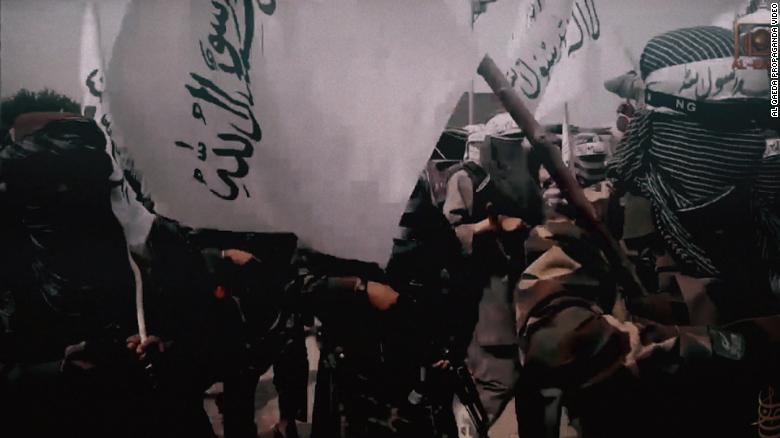
(CNN)ISIS and al Qaeda have largely receded from the headlines. It’s been three years since ISIS lost the last vestiges of the vast geographical “caliphate” that it had once lorded over in Iraq and Syria, while al Qaeda has found it hard to regroup after the death of its founder Osama bin Laden more than a decade ago.

Yet ISIS is far from defeated in its heartland. The United Nations points to the continued presence of ISIS fighters in Iraq and Syria, estimating their total strength to be between 6,000 and 10,000 fighters, according to a report published on Tuesday.

That strength was underlined by a dramatic prison break in January at a prison in Hasakah in northeastern Syria, where more than 3,000 ISIS fighters reportedly were held. ISIS fighters and US-allied Kurdish forces fought a 10-day battle at the prison, during which 100 to 300 ISIS fighters escaped, according to the UN report.

As a result of this resilience, the US continues a campaign of special operations forces ground raids and airstrikes against ISIS leaders. In February, Abu Ibrahim al-Hashimi al-Qurayshi, the group’s leader, died in a US ground operation, while earlier this month, a US airstrike killed another militant who was part of the group’s leadership, according to US Central Command.

But these military operations will not achieve much in the long term if the thousands of ISIS fighters and tens of thousands of displaced women and children from multiple countries remain unrepatriated in lightly secured and unsafe prisons and camps in northeastern Syria, creating what could be a whole new generation of ISIS recruits.

The solution is for the many countries that have their nationals in prisons and camps in northeastern Syria to take back their ISIS fighters for prosecution in cases where it’s merited. As for women and children living in the camps, they should be reintegrated back into their home societies and entered into deradicalization programs if that should prove necessary.

Senior US government officials, speaking Wednesday at a conference at the Middle East Institute in Washington, stressed that ISIS is far from defeated. Joshua Geltzer, US deputy homeland security adviser, told me in a discussion at the institute that ISIS remains “a threat to countries where it continues to have a presence, which is about 30 countries worldwide. It is still a threat to the region, Iraq, Syria and neighbors. And it is still a threat to the United States and our allies and partners.”

Of particular concern are more than 10,000 ISIS fighters and around 60,000 mostly women and children who are being held by America’s Kurdish allies, the Syrian Democratic Forces, in prisons and camps in northeastern Syria. The United Nations estimates that 30,000 of those held in the camps are under the age of 12 and are “at risk of radicalization” by ISIS ideologues.

Few countries will take back their nationals who are living in the squalid camps, fearing that they may be importing an ISIS problem. In the past three years, Iraq has taken back more than 600 fighters and nearly 2,500 “displaced Iraqi nationals,” according to Timothy Betts, the acting US special envoy for the Global Coalition to Defeat ISIS. This month, France took back 51 women and children, while 39 Americans have been returned to the United States, according to Betts.

Yet that number is less than 5% of the mostly 60,000 women and children — the majority from Iraq and Syria — and the more than 10,000 ISIS fighters who are being held in northeastern Syria.

At the current slow rate of repatriation, the ISIS fighters and tens of thousands of women and children might take decades to return to their home countries. By that time, even the youngest children in the camps could be adults in their 30s and will have spent almost their entire lives living in the filthy, disease-infested camps, which are ripe for ISIS indoctrination.

A wild card causing considerable consternation among US national security officials is the saber rattling by Turkey in recent weeks that it plans to send its military into neighboring northeastern Syria to annex territory controlled by the US-allied Kurdish groups fighting ISIS and running the facilities where the ISIS fighters and the women and children are being held. Turkey considers those Kurdish groups to be terrorists.

Dana Stroul, deputy assistant secretary of defense for the Middle East, warned last week, “The United States opposes any Turkish operation in northern Syria. Such an operation puts at risk US forces, the coalition’s campaign against ISIS, and will introduce more violence into Syria. It would effectively end a ceasefire that has been in place for years at a time when violence is at its lowest levels since the onset of the conflict.”

Also concerning is that the Taliban’s return to power in Afghanistan almost a year ago because of President Joe Biden’s foolhardy decision to pull out all US troops from the country has given both al Qaeda and ISIS greater room to maneuver there, according to Tuesday’s UN report. Biden’s move was bad policy, and the US pullout was terribly executed, allowing the Taliban to maintain their alliance with al Qaeda and to bar women from jobs and teenage girls from education.

The UN report noted that Ayman al-Zawahiri, who replaced bin Laden as al Qaeda’s leader, is issuing “regular video messages that provided almost current proof of life” and “Zawahiri’s apparent increased comfort and ability to communicate has coincided with the Taliban’s takeover of Afghanistan. …”

In Afghanistan, both ISIS and al Qaeda have acquired “night vision equipment, thermal imagers, and steel-penetrating bullets,” according to the UN report.

The United Nations assessed, however, that — for the moment — al Qaeda does not pose an “immediate international threat from its safe haven in Afghanistan … and does not currently wish to cause the Taliban international difficulty or embarrassment.”

That’s the good news. But the bad news, according to the UN, is that al Qaeda now has key allies within the Taliban’s de facto government in Afghanistan, which will doubtless give al Qaeda more resources to regroup. Meanwhile, the local branch of ISIS in Afghanistan is now one of the “most vigorous” of ISIS’ regional networks globally, according to the UN.

The global jihadist movement, whether in Afghanistan, Iraq or Syria, and whether part of ISIS or al Qaeda, is down but not out. And these groups will continue to take advantage of ungoverned or lightly governed spaces in the Muslim world, where they will remain a threat to the governments and populations of Muslim-majority countries — and to the West — for the foreseeable future.

Categories
Saved Web Pages

Russian Investments in the United States: Hardening the Target

sec.jpg?itok=iHt9oHu8

The German Marshall Fund celebrates 50 years of GMF and 75 years of the Marshall Plan

Learn More

The United States is the single largest recipient of foreign investment worldwide. This openness reflects the country’s innovative industries, deep capital markets, and ease of doing business – and it also contributes to making them possible. At the same time, a hands-off reporting regime makes it difficult for law enforcement and other government agencies to determine whose money is behind investment flows or where they should focus their investigative resources. While most foreign investment is benign, the current framework presents inviting loopholes through which adversaries can gain non-transparent access to U.S. businesses, technology, and data.
The method of choice for the sophisticated actor to make a targeted investment in the United States – as opposed to taking a passive stake in a publicly traded company – is a private investment fund.[1]As investment vehicles, they are ideal for gaining access to the most prestigious, highly sought-after opportunities, and they allow investors to be selective in a way that more plain vanilla strategies like index funds do not.  Private funds have only limited obligations to disclose their investors or their investments.  And unlike banks, broker-dealers, and mutual funds, they have no legal obligation to detect suspicious activity by their clients.  This lack of transparency is troubling in any case, but especially in the context of malign influence operations by Russia and other actors. To protect ourselves, we need more transparency into and enhanced vigilance over this $12.5 trillion pool of capital,[2] in the form of disclosure requirements and anti-money laundering (AML) obligations.
Known Unknowns
A number of large-scale Russian holdings in the U.S. via private investment funds have already made the press, and many more likely remain unreported. The sanctioned Russian businessman Viktor Vekselberg invested in the U.S. through Columbus Nova, a private investment firm. Vekselberg’s company, Renova, was Columbus Nova’s largest client. LetterOne, the international investment group co-founded by the billionaire owners of Russia’s Alfa Group, maintains a U.S. office and over $2 billion of investments in the United States.
Altpoint Capital, the private equity firm of Russian billionaire Vladimir Potanin – who made his fortune in metals and mining– made the news recently because in 2015 it bought a company that has the contract to store Maryland’s statewide list of eligible voters on its servers.  Governor Larry Hogan has stated that Maryland was unaware of Potanin’s ownership until informed by the FBI. The contract still appears to be in effect. The same company has also won data center work for the Department of Defense and the Department of Labor. Another data center company in which Altpoint has invested received an Energy Department contract last year.
The concerns posed by opaque private investment funds extend to allegations of espionage, as described by Zachary Dorfman in Politico Magazine in July. “Because of increasing Russian and Chinese aggressiveness, and the local concentration of world-leading science and technology firms, there’s a full-on epidemic of espionage on the West Coast right now,” Dorfman wrote. “And even more worrisome, many of its targets are unprepared to deal with the growing threat.”
Dorfman’s article cites as an example Rusnano USA, the U.S. affiliate of Rusnano, a Russian state-owned entity focused on nanotechnology. Anonymous former U.S. intelligence officials quoted in the story say Rusnano USA has been used both to facilitate “the acquisition of technology” and “as an intelligence platform, from which [Russia] launched operations.” Rusnano and Rusnano USA have made a broad array of investments in the United States, often in biotech or semiconductors. According to a Russian state-owned media outlet, Rusnano’s U.S. holdings topped $1 billion in 2013.
The vulnerabilities presented by private investment funds are not limited to risk from Russia, China, or geopolitical adversaries. These vehicles have featured prominently in three of the largest public corruption cases in recent years. The Justice Department’s civil forfeiture complaint seeking to recover assets allegedly stolen from Malaysia’s state-owned development company, known as 1Malaysia Development Berhad or 1MDB, claims that hundreds of millions of dollars were layered through private investment funds. According to the complaint, the proceeds of a 1MDB bond offering were “invested” in Curacao-based private investment funds, which immediately transferred the same amount of money to shell companies controlled by the alleged perpetrator of the scheme. A similar technique may have been used in the alleged theft of hundreds of millions of dollars from Venezuela’s state oil company, with the proceeds layered through a Malta-based investment fund, according to a recently filed Justice Department criminal complaint. In the world of private equity, the Angolan government has sued a Swiss-based asset manager in the UK, claiming the Swiss firm (run by a friend and former business partner of the former Angolan president’s son) stole money from the country’s sovereign wealth fund via its Mauritius-based private equity funds. The claims have led to the opening of a criminal money laundering investigation in Switzerland. To be clear, the asset managers involved in the Malaysia, Venezuela, and Angola cases are not U.S.-based, but lax U.S. rules create the risk of similar malfeasance.
There is no evidence that any of the Russia-linked private investments funds described above, or their managers, have engaged in nefarious behavior in the United States. However, their extensive and wide-ranging holdings are often opaque and generally not subject to meaningful reporting requirements, such that the full universe of their positions is unknown. In fact, it is entirely possible that the Russian government and Russian oligarchs hold many billions more in undeclared venture capital, private equity, and hedge fund investments in the United States. 
Mind the Gaps
Current rules prevent the U.S. government from understanding the full scope of foreign actors’ private investment fund holdings and assessing the risk that some of them could potentially be used as pathways for malign influence or other illicit activity.   
Under the current framework, there are three main gaps related to private investment funds:[3] Fund managers are not required to report or maintain records of the identities of the beneficial owners of the funds they manage. Fund managers are only required to report to the Securities and Exchange Commission (SEC) the percentage of investors who are foreign, without disclosing their names or nationalities. Fund managers are not required to disclose their investments in the United States. SEC rules generally mandate that fund managers disclose only positions in publicly traded stock.[4] Recently passed reforms to the Committee on Foreign Investment in the United States (CFIUS), which reviews foreign acquisitions for national security risk, will improve the U.S. government’s ability to block high-risk transactions that were previously outside the Committee’s purview, especially transactions in which foreign actors gain influence but not control over a U.S. company. Increased disclosure requirements for private investment funds would be complementary to, rather than duplicative of, the CFIUS process and would help inform the allocation of the Committee’s resources.[5] Fund managers are not required to maintain an AML compliance program or file suspicious activity reports. By contrast, banks, broker-dealers, and mutual funds must do both.  Since private investment firms are among financial institutions’ most important clients, this opacity inhibits the effective functioning of banks’ and broker-dealers’ compliance programs. The Treasury Department issued a proposed rule to close this gap in 2015 (after withdrawing its 2002 rulemaking in 2008) but has yet to complete the process. Congress called for such requirements in Section 352 of the USA PATRIOT Act, passed in 2001. Closing this gap would also bring the United States into compliance with global AML standards.[6] In order to understand the landscape of strategic investments by the Russian government and Russian oligarchs that may be of national security concern, the U.S. government will need to rely on the help of the private investment fund industry. That means disclosing investors and holdings to the SEC, checking the sources of investors’ money, and reporting suspicious activity to Treasury.  Importantly, such confidential reporting would be collected by the government for internal use and not made public. This confidentiality would ensure that fund managers’ proprietary ideas, which give them their competitive edge, are protected. As the United States continues to strengthen the financial system’s defenses against illicit influence, it is prudent to harden the highest-value priority targets first. Private investment firms are the smart place to start.
 

The United States is the single largest recipient of foreign investment worldwide. This openness reflects the country’s innovative industries, deep capital markets, and ease of doing business – and it also contributes to making them possible. At the same time, a hands-off reporting regime makes it difficult for law enforcement and other government agencies to determine whose money is behind investment flows or where they should focus their investigative resources. While most foreign investment is benign, the current framework presents inviting loopholes through which adversaries can gain non-transparent access to U.S. businesses, technology, and data.

The method of choice for the sophisticated actor to make a targeted investment in the United States – as opposed to taking a passive stake in a publicly traded company – is a private investment fund.[1]As investment vehicles, they are ideal for gaining access to the most prestigious, highly sought-after opportunities, and they allow investors to be selective in a way that more plain vanilla strategies like index funds do not.  Private funds have only limited obligations to disclose their investors or their investments.  And unlike banks, broker-dealers, and mutual funds, they have no legal obligation to detect suspicious activity by their clients.  This lack of transparency is troubling in any case, but especially in the context of malign influence operations by Russia and other actors. To protect ourselves, we need more transparency into and enhanced vigilance over this $12.5 trillion pool of capital,[2] in the form of disclosure requirements and anti-money laundering (AML) obligations.

Known Unknowns

A number of large-scale Russian holdings in the U.S. via private investment funds have already made the press, and many more likely remain unreported. The sanctioned Russian businessman Viktor Vekselberg invested in the U.S. through Columbus Nova, a private investment firm. Vekselberg’s company, Renova, was Columbus Nova’s largest client. LetterOne, the international investment group co-founded by the billionaire owners of Russia’s Alfa Group, maintains a U.S. office and over $2 billion of investments in the United States.

Altpoint Capital, the private equity firm of Russian billionaire Vladimir Potanin – who made his fortune in metals and mining– made the news recently because in 2015 it bought a company that has the contract to store Maryland’s statewide list of eligible voters on its servers.  Governor Larry Hogan has stated that Maryland was unaware of Potanin’s ownership until informed by the FBI. The contract still appears to be in effect. The same company has also won data center work for the Department of Defense and the Department of Labor. Another data center company in which Altpoint has invested received an Energy Department contract last year.

The concerns posed by opaque private investment funds extend to allegations of espionage, as described by Zachary Dorfman in Politico Magazine in July. “Because of increasing Russian and Chinese aggressiveness, and the local concentration of world-leading science and technology firms, there’s a full-on epidemic of espionage on the West Coast right now,” Dorfman wrote. “And even more worrisome, many of its targets are unprepared to deal with the growing threat.”

Dorfman’s article cites as an example Rusnano USA, the U.S. affiliate of Rusnano, a Russian state-owned entity focused on nanotechnology. Anonymous former U.S. intelligence officials quoted in the story say Rusnano USA has been used both to facilitate “the acquisition of technology” and “as an intelligence platform, from which [Russia] launched operations.” Rusnano and Rusnano USA have made a broad array of investments in the United States, often in biotech or semiconductors. According to a Russian state-owned media outlet, Rusnano’s U.S. holdings topped $1 billion in 2013.

The vulnerabilities presented by private investment funds are not limited to risk from Russia, China, or geopolitical adversaries. These vehicles have featured prominently in three of the largest public corruption cases in recent years. The Justice Department’s civil forfeiture complaint seeking to recover assets allegedly stolen from Malaysia’s state-owned development company, known as 1Malaysia Development Berhad or 1MDB, claims that hundreds of millions of dollars were layered through private investment funds. According to the complaint, the proceeds of a 1MDB bond offering were “invested” in Curacao-based private investment funds, which immediately transferred the same amount of money to shell companies controlled by the alleged perpetrator of the scheme. A similar technique may have been used in the alleged theft of hundreds of millions of dollars from Venezuela’s state oil company, with the proceeds layered through a Malta-based investment fund, according to a recently filed Justice Department criminal complaint. In the world of private equity, the Angolan government has sued a Swiss-based asset manager in the UK, claiming the Swiss firm (run by a friend and former business partner of the former Angolan president’s son) stole money from the country’s sovereign wealth fund via its Mauritius-based private equity funds. The claims have led to the opening of a criminal money laundering investigation in Switzerland. To be clear, the asset managers involved in the Malaysia, Venezuela, and Angola cases are not U.S.-based, but lax U.S. rules create the risk of similar malfeasance.

There is no evidence that any of the Russia-linked private investments funds described above, or their managers, have engaged in nefarious behavior in the United States. However, their extensive and wide-ranging holdings are often opaque and generally not subject to meaningful reporting requirements, such that the full universe of their positions is unknown. In fact, it is entirely possible that the Russian government and Russian oligarchs hold many billions more in undeclared venture capital, private equity, and hedge fund investments in the United States. 

Mind the Gaps

Current rules prevent the U.S. government from understanding the full scope of foreign actors’ private investment fund holdings and assessing the risk that some of them could potentially be used as pathways for malign influence or other illicit activity.   

Under the current framework, there are three main gaps related to private investment funds:[3]

  • Fund managers are not required to report or maintain records of the identities of the beneficial owners of the funds they manage. Fund managers are only required to report to the Securities and Exchange Commission (SEC) the percentage of investors who are foreign, without disclosing their names or nationalities.

  • Fund managers are not required to disclose their investments in the United States. SEC rules generally mandate that fund managers disclose only positions in publicly traded stock.[4] Recently passed reforms to the Committee on Foreign Investment in the United States (CFIUS), which reviews foreign acquisitions for national security risk, will improve the U.S. government’s ability to block high-risk transactions that were previously outside the Committee’s purview, especially transactions in which foreign actors gain influence but not control over a U.S. company. Increased disclosure requirements for private investment funds would be complementary to, rather than duplicative of, the CFIUS process and would help inform the allocation of the Committee’s resources.[5]

  • Fund managers are not required to maintain an AML compliance program or file suspicious activity reports. By contrast, banks, broker-dealers, and mutual funds must do both.  Since private investment firms are among financial institutions’ most important clients, this opacity inhibits the effective functioning of banks’ and broker-dealers’ compliance programs. The Treasury Department issued a proposed rule to close this gap in 2015 (after withdrawing its 2002 rulemaking in 2008) but has yet to complete the process. Congress called for such requirements in Section 352 of the USA PATRIOT Act, passed in 2001. Closing this gap would also bring the United States into compliance with global AML standards.[6]

In order to understand the landscape of strategic investments by the Russian government and Russian oligarchs that may be of national security concern, the U.S. government will need to rely on the help of the private investment fund industry. That means disclosing investors and holdings to the SEC, checking the sources of investors’ money, and reporting suspicious activity to Treasury.  Importantly, such confidential reporting would be collected by the government for internal use and not made public. This confidentiality would ensure that fund managers’ proprietary ideas, which give them their competitive edge, are protected. As the United States continues to strengthen the financial system’s defenses against illicit influence, it is prudent to harden the highest-value priority targets first. Private investment firms are the smart place to start.

[1]  The terms “private investment funds” or “alternative investments” refer to arrangements in which an investment vehicle is open only to “accredited investors,” generally wealthy individuals or institutions such as pension funds.  Such structures include private equity firms, venture capital firms, and hedge funds.  The typical arrangement would consist of multiple investment funds managed by one “adviser.”  The advising management firm typically registers with the Securities and Exchange Commission and reports the names of the funds under its management on Form ADV. The minimum figure of $100 million in assets under management triggers registration. Firms managing less than $100 million are typically registered at the state level.

[2]  To paraphrase the (apocryphal) old Everett Dirksen saw, “$12.5 trillion here, $12.5 trillion there, and pretty soon you’re talking real money.”

[3]  American investments made by foreign firms, including sovereign wealth funds, are even more opaque. Most of the time, the U.S. government knows virtually nothing about them, or even that they exist at all. That is a related but distinct issue that the U.S. will also need to address.

[4]  Positions in publicly traded equities may be covered either by Form 13F orSchedules 13D or G, both of which the SEC includes in its searchable EDGAR database. Certain large trades are also covered by Form 13H. Advisers managing over $150 million in assets report certain aggregate information about the composition of its investments on the non-public Form PF. This information is intended to help assess systemic financial risk and does not require the disclosure of specific investment positions. An exception to these generally limited disclosure requirements is the detailed reporting required of large private liquidity fund advisers on Form N-MFP.

[5]  The Foreign Investment Risk Review Modernization Act of 2018 will, among other things, expand the scope of CFIUS to cover transactions for “investments in certain U.S. businesses that afford a foreign person access to material nonpublic technical information in the possession of the U.S. business, membership on the board of directors, or other decision-making rights, other than through voting of shares.” The extent to which private equity investments will constitute covered transactionswill be determined in forthcoming regulations.

[6] Failure to require private investment fund managers to maintain AML programs and file suspicious activity reports puts the United States in breach of the global standards set by the Financial Action Task Force. This was one of the key shortcomings highlighted by the task force in its 2016 evaluation of the United States.

WP Radio
WP Radio
OFFLINE LIVE