Why it lacks resilience, and What will take its place
Paper presented on July 11, 2022 to The Ninth South-South Forum on Sustainability.
THE COLLAPSE OF MODERN CIVILIZATION AND THE FUTURE OF HUMANITY.
The greatest challenge facing societies has always been how to conduct trade and credit without letting merchants and creditors make money by exploiting their customers and debtors. All antiquity recognized that the drive to acquire money is addictive and indeed tends to be exploitative and hence socially injurious. The moral values of most societies opposed selfishness, above all in the form of avarice and wealth addiction, which the Greeks called philarguria – love of money, silver-mania. Individuals and families indulging in conspicuous consumption tended to be ostracized, because it was recognized that wealth often was obtained at the expense of others, especially the weak.
The Greek concept of hubris involved egotistic behavior causing injury to others. Avarice and greed were to be punished by the justice goddess Nemesis, who had many Near Eastern antecedents, such as Nanshe of Lagash in Sumer, protecting the weak against the powerful, the debtor against the creditor.
That protection is what rulers were expected to provide in serving the gods. That is why rulers were imbued with enough power to protect the population from being reduced to debt dependency and clientage. Chieftains, kings and temples were in charge of allocating credit and crop-land to enable smallholders to serve in the army and provide corvée labor. Rulers who behaved selfishly were liable to be unseated, or their subjects might run away, or support rebel leaders or foreign attackers promising to cancel debts and redistribute land more equitably.
The most basic function of Near Eastern kingship was to proclaim “economic order,” misharum and andurarum clean slate debt cancellations, echoed in Judaism’s Jubilee Year. There was no “democracy” in the sense of citizens electing their leaders and administrators, but “divine kingship” was obliged to achieve the implicit economic aim of democracy: “protecting the weak from the powerful.”
Royal power was backed by temples and ethical or religious systems. The major religions that emerged in the mid-first millennium BC, those of Buddha, Lao-Tzu and Zoroaster, held that personal drives should be subordinate to the promotion of overall welfare and mutual aid.
What did not seem likely 2500 years ago was that a warlord aristocracy would conquer the Western world. In creating what became the Roman Empire, an oligarchy took control of the land and, in due course, the political system. It abolished royal or civic authority, shifted the fiscal burden onto the lower classes, and ran the population and industry into debt.
This was done on a purely opportunistic basis. There was no attempt to defend this ideologically. There was no hint of an archaic Milton Friedman emerging to popularize a radical new moral order celebrating avarice by claiming that greed is what drives economies forward, not backward, convincing society to leave the distribution of land and money to “the market” controlled by private corporations and money-lenders instead of communalistic regulation by palace rulers and temples – or by extension, today’s socialism. Palaces, temples and civic governments were creditors. They were not forced to borrow to function, and so were not subjected to the policy demands of a private creditor class.
But running the population, industry and even governments into debt to an oligarchic elite is precisely what has occurred in the West, which is now trying to impose the modern variant of this debt-based economic regime – U.S.-centered neoliberal finance capitalism – on the entire world. That is what today’s New Cold War is all about.
By the traditional morality of early societies, the West – starting in classical Greece and Italy around the 8th century BC – was barbarian. The West was indeed on the periphery of the ancient world when Syrian and Phoenician traders brought the idea of interest-bearing debt from the Near East to societies that had no royal tradition of periodic debt cancellations. The absence of a strong palace power and temple administration enabled creditor oligarchies to emerge throughout the Mediterranean world.
Greece ended up being conquered first by oligarchic Sparta, then by Macedonia and finally by Rome. It is the latter’s avaricious pro-creditor legal system that has shaped subsequent Western civilization. Today, a financialized system of oligarchic control whose roots lead back to Rome is being supported and indeed imposed by U.S. New Cold War diplomacy, military force and economic sanctions on countries seeking to resist it.
Classical antiquity’s oligarchic takeover
In order to understand how Western Civilization developed in a way that contained the fatal seeds of its own economic polarization, decline and fall, it is necessary to recognize that when classical Greece and Rome appear in the historical record a Dark Age had disrupted economic life from the Near East to the eastern Mediterranean from 1200 to about 750 BC. Climate change apparently caused severe depopulation, ending Greece’s Linear B palace economies, and life reverted to the local level during this period.
Some families created mafia-like autocracies by monopolizing the land and tying labor to it by various forms of coercive clientage and debt. Above all was the problem of interest-bearing debt that the Near Eastern traders had brought to the Aegean and Mediterranean lands – without the corresponding check of royal debt cancellations.
Out of this situation Greek reformer-“tyrants” arose in the 7th and 6th centuries BC from Sparta to Corinth, Athens and Greek islands. The Cypselid dynasty in Corinth and similar new leaders in other cities are reported to have cancelled the debts that held clients in bondage on the land, redistributed this land to the citizenry, and undertaken public infrastructure spending to build up commerce, opening the way for civic development and the rudiments of democracy. Sparta enacted austere “Lycurgan” reforms against conspicuous consumption and luxury. The poetry of Archilochus on the island of Paros and Solon of Athens denounced the drive for personal wealth as addictive, leading to hubris injuring others – to be punished by the justice goddess Nemesis. The spirit was similar to Babylonian, Judaic and other moral religions.
Rome had a legendary seven kings (753-509 BC), who are said to have attracted immigrants and prevented an oligarchy from exploiting them. But wealthy families overthrew the last king. There was no religious leader to check their power, as the leading aristocratic families controlled the priesthood. There were no leaders who combined domestic economic reform with a religious school, and there was no Western tradition of debt cancellations such as Jesus would advocate in trying to restore the Jubilee Year to Judaic practice. There were many Stoic philosophers, and religious amphictyonic sites such as Delphi and Delos expressed a religion of personal morality to avoid hubris.
Rome’s aristocrats created an anti-democratic constitution and Senate, and laws that made debt bondage – and the consequent loss of land – irreversible. Although the “politically correct” ethic was to avoid engaging in commerce and moneylending, this ethic did not prevent an oligarchy from emerging to take over the land and reduce much of the population to bondage. By the 2nd century BC Rome conquered the entire Mediterranean region and Asia Minor, and the largest corporations were the publican tax collectors, who are reported to have looted Rome’s provinces.
There always have been ways for the wealthy to act sanctimoniously in harmony with altruistic ethics eschewing commercial greed while enriching themselves. Western antiquity’s wealthy were able to come to terms with such ethics by avoiding direct lending and trading themselves, assigning this “dirty work” to their slaves or freemen, and by spending the revenue from such activities on conspicuous philanthropy (which became an expected show in Rome’s election campaigns). And after Christianity became the Roman religion in the 4th century AD, money was able to buy absolution by suitably generous donations to the Church.
Rome’s legacy and the West’s financial imperialism
What distinguishes Western economies from earlier Near Eastern and most Asian societies is the absence of debt relief to restore economy-wide balance. Every Western nation has inherited from Rome the pro-creditor sanctity of debt principles that prioritize the claims of creditors and legitimize the permanent transfer to creditors of the property of defaulting debtors. From ancient Rome to Habsburg Spain, imperial Britain and the United States, Western oligarchies have appropriated the income and land of debtors, while shifting taxes off themselves onto labor and industry. This has caused domestic austerity and led oligarchies to seek prosperity through foreign conquest, to gain from foreigners what is not being produced by domestic economies driven into debt and subject to pro-creditor legal principles transferring land and other property to a rentier class.
Spain in the 16th century looted vast shiploads of silver and gold from the New World, but this wealth flowed through its hands, dissipated on war instead of being invested in domestic industry. Left with a steeply unequal and polarized economy deeply in debt, the Habsburgs lost their former possession, the Dutch Republic, which thrived as the less oligarchic society and one deriving more power as a creditor than as a debtor.
Britain followed a similar rise and fall. World War I left it with heavy arms debts owed to its own former colony, the United States. Imposing anti-labor austerity at home in seeking to pay these debts, Britain’s sterling area subsequently became a satellite of the U.S. dollar under the terms of American Lend-Lease in World War II and the 1946 British Loan. The neoliberal policies of Margaret Thatcher and Tony Blair sharply increased the cost of living by privatizing and monopolizing public housing and infrastructure, wiping out Britain’s former industrial competitiveness by raising the cost of living and hence wage levels.
The United States has followed a similar trajectory of imperial overreaching at the cost of its domestic economy. Its overseas military spending from 1950 onwards forced the dollar off gold in 1971. That shift had the unanticipated benefit of ushering in a “dollar standard” that has enabled the U.S. economy and its military diplomacy to get a free ride from the rest of the world, by running up dollar debt to other nation’s central banks without any practical constraint.
The financial colonization of the post-Soviet Union in the 1990s by the “shock therapy” of privatization giveaways, followed by China’s admission to the World Trade Organization in 2001 – with the expectation that China would, like Yeltsin’s Russia, become a U.S. financial colony – led America’s economy to deindustrialize by shifting employment to Asia. Trying to force submission to U.S. control by inaugurating today’s New Cold War has led Russia, China and other countries to break away from the dollarized trade and investment system, leaving the United States and NATO Europe to suffer austerity and deepening wealth inequality as debt ratios are soaring for individuals, corporations and government bodies.
It was only a decade ago that Senator John McCain and President Barack Obama characterized Russia as merely a gas station with atom bombs. That could now just as well be said of the United States, basing its world economic power on control of the West’s oil trade, while its main export surpluses are agricultural crops and arms. The combination of financial debt leveraging and privatization has made America a high-cost economy, losing its former industrial leadership, much like Britain did. The United States is now attempting to live mainly off financial gains (interest, profits on foreign investment and central bank credit creation to inflate capital gains) instead of creating wealth through its own labor and industry. Its Western allies seek to do the same. They euphemize this U.S.-dominated system as “globalization,” but it is simply a financial form of colonialism – backed with the usual military threat of force and covert “regime change” to prevent countries from withdrawing from the system.
This U.S. and NATO-based imperial system seeks to indebt weaker countries and force them to turn control over their policies to the International Monetary Fund and World Bank. Obeying the neoliberal anti-labor “advice” of these institutions leads to a debt crisis that forces the debtor country’s foreign-exchange rate to depreciate. The IMF then “rescues” them from insolvency on the “conditionality” that they sell off the public domain and shift taxes off the wealthy (especially foreign investors) onto labor.
Oligarchy and debt are the defining characteristics of Western economies. America’s foreign military spending and nearly constant wars have left its own Treasury deeply indebted to foreign governments and their central banks. The United States is thus following the same path by which Spain’s imperialism left the Habsburg dynasty in debt to European bankers, and Britain’s participation in two world wars in hope of maintaining its dominant world position left it in debt and ended its former industrial advantage. America’s rising foreign debt has been sustained by its “key currency” privilege of issuing its own dollar-debt under the “dollar standard” without other countries having any reasonable expectation of ever being paid – except in yet more “paper dollars.”
This monetary affluence has enabled Wall Street’s managerial elite to increase America’s rentier overhead by financialization and privatization, increasing the cost of living and doing business, much as occurred in Britain under the neoliberal policies of Margaret Thatcher and Tony Blair. Industrial companies have responded by shifting their factories to low-wage economies to maximize profits. But as America deindustrializes with rising import dependency on Asia, U.S. diplomacy is pursuing a New Cold War that is driving the world’s most productive economies to decouple from the U.S. economic orbit.
Rising debt destroys economies when it is not being used to finance new capital investment in means of production. Most Western credit today is created to inflate stock, bond and real estate prices, not to restore industrial ability. As a result of this debt-without-production approach, the U.S. domestic economy has been overwhelmed by debt owed to its own financial oligarchy. Despite America’s economy’s free lunch in the form of the continued run-up of its official debt to foreign central banks – with no visible prospect of either its international or domestic debt being paid – its debt continues to expand and the economy has become even more debt-leveraged. America has polarized with extreme wealth concentrated at the top while most of the economy is driven deeply into debt.
The failure of oligarchic democracies to protect the indebted population at large
What has made the Western economies oligarchic is their failure to protect the citizenry from being driven into dependency on a creditor property-owning class. These economies have retained Rome’s creditor-based laws of debt, most notably the priority of creditor claims over the property of debtors. The creditor One Percent has become a politically powerful oligarchy despite nominal democratic political reforms expanding voting rights. Government regulatory agencies have been captured and taxing power has been made regressive, leaving economic control and planning in the hands of a rentier elite.
Rome never was a democracy. And in any case, Aristotle recognized democracies as evolving more or less naturally into oligarchies – which claim to be democratic for public-relations purposes while pretending that their increasingly top-heavy concentration of wealth is all for the best. Today’s trickle-down rhetoric depicts banks and financial managers as steering savings in the most efficient way to produce prosperity for the entire economy, not just for themselves.
President Biden and his State Department neoliberals accuse China and any other country seeking to maintain its economic independence and self-reliance of being “autocratic.” Their rhetorical sleight of hand juxtaposes democracy to autocracy. What they call “autocracy” is a government strong enough to prevent a Western-oriented financial oligarchy from indebting the population to itself – and then prying away its land and other property into its own hands and those of its American and other foreign backers.
The Orwellian Doublethink of calling oligarchies “democracies” is followed by defining a free market as one that is free for financial rent-seeking. U.S.-backed diplomacy has indebted countries, forcing them to sell control of their public infrastructure and turn their economy’s “commanding heights” into opportunities to extract monopoly rent.
This autocracy vs. democracy rhetoric is similar to the rhetoric that Greek and Roman oligarchies used when they accused democratic reformers of seeking “tyranny” (in Greece) or “kingship” (in Rome). It was the Greek “tyrants” who overthrow mafia-like autocracies in the 7th and 6th centuries BC, paving the way for the economic and proto-democratic takeoffs of Sparta, Corinth and Athens. And it was Rome’s kings who built up their city-state by offering self-support land tenure for citizens. That policy attracted immigrants from neighboring Italian city-states whose populations were being forced into debt bondage.
The problem is that Western democracies have not proved adept at preventing oligarchies from emerging and polarizing the distribution of income and wealth. Ever since Rome, oligarchic “democracies” have not protected their citizens from creditors seeking to appropriate land, its rental yield and the public domain for themselves.
If we ask just who today is enacting and enforcing policies that seek to check oligarchy in order to protect the livelihood of citizens, the answer is that this is done by socialist states. Only a strong state has the power to check a financial and rent-seeking oligarchy. The Chinese embassy in America demonstrated this in its reply to President Biden’s description of China as an autocracy:
Clinging to a Cold War mentality and the hegemon’s logic, the US pursues bloc politics, concocts the “democracy versus authoritarianism” narrative … and ramps up bilateral military alliances, in a clear attempt at countering China.
Guided by a people-centered philosophy, since the day when it was founded … the Party has been working tirelessly for the interest of the people, and has dedicated itself to realizing people’s aspirations for a better life. China has been advancing whole-process people’s democracy, promoting legal safeguard for human rights, and upholding social equity and justice. The Chinese people now enjoy fuller and more extensive and comprehensive democratic rights.
Nearly all early non-Western societies had protections against the emergence of mercantile and rentier oligarchies. That is why it is so important to recognize that what has become Western civilization represents a break from the Near East, South and East Asia. Each of these regions had its own system of public administration to save its social balance from commercial and monetary wealth that threatened to destroy economic balance if left unchecked. But the West’s economic character was shaped by rentier oligarchies. Rome’s Republic enriched its oligarchy by stripping the wealth of the regions it conquered, leaving them impoverished. That remains the extractive strategy of subsequent European colonialism and, most recently, U.S.-centered neoliberal globalization. The aim always has been to “free” oligarchies from constraints on their self-seeking.
The great question is, “freedom” and “liberty” for whom? Classical political economy defined a free market as one free from unearned income, headed by land rent and other natural-resource rent, monopoly rent, financial interest and related creditor privileges. But by the end of the 19th century the rentier oligarchy sponsored a fiscal and ideological counter-revolution, re-defining a free market as one free for rentiers to extract economic rent – unearned income.
This rejection of the classical critique of rentier income has been accompanied by re-defining “democracy” to require having a “free market” of the anti-classical oligarchic rentier variety. Instead of the government being the economic regulator in the public interest, public regulation of credit and monopolies is dismantled. That lets companies charge whatever they want for the credit they supply and the products they sell. Privatizing the privilege of creating credit-money lets the financial sector take over the role of allocating property ownership.
The result has been to centralize economic planning in Wall Street, the City of London, the Paris Bourse and other imperial financial centers. That is what today’s New Cold War is all about: protecting this system of U.S.-centered neoliberal financial capitalism, by wrecking or isolating the alternative systems of China, Russia and their allies, while seeking to further financialize the former colonialist system sponsoring creditor power instead of protecting debtors, imposing debt-ridden austerity instead of growth, and making the loss of property through foreclosure or forced sale irreversible.
Is Western civilization a long detour from where antiquity seemed to be headed?
What is so important in Rome’s economic polarization and collapse that resulted from the dynamics of interest-bearing debt in the rapacious hands of its creditor class is how radically its oligarchic pro-creditor legal system differed from the laws of earlier societies that checked creditors and the proliferation of debt. The rise of a creditor oligarchy that used its wealth to monopolize the land and take over the government and courts (not hesitating to use force and targeted political assassination against would-be reformers) had been prevented for thousands of years throughout the Near East and other Asian lands. But the Aegean and Mediterranean periphery lacked the economic checks and balances that had provided resilience elsewhere in the Near East. What has distinguished the West from the outset has been its lack of a government strong enough to check the emergence and dominance of a creditor oligarchy.
All ancient economies operated on credit, running up crop debts during the agricultural year. Warfare, droughts or floods, disease and other disruptions often prevented the accrual of debts from being paid. But Near Eastern rulers cancelled debts under these conditions. That saved their citizen-soldiers and corvée-workers from losing their self-support land to creditors, who were recognized as being a potential rival power to the palace. By the mid-first millennium BC debt bondage had shrunk to only a marginal phenomenon in Babylonia, Persia and other Near Eastern realms. But Greece and Rome were in the midst of a half-millennium of popular revolts demanding debt cancellation and liberty from debt bondage and loss of self-support land.
It was only Roman kings and Greek tyrants who, for a while, were able to protect their subjects from debt bondage. But they ultimately lost to warlord creditor oligarchies. The lesson of history is thus that a strong government regulatory power is required to prevent oligarchies from emerging and using creditor claims and land grabbing to turn the citizenry into debtors, renters, clients and ultimately serfs.
The rise of creditor control over modern governments
Palaces and temples throughout the ancient world were creditors. Only in the West did a private creditor class emerge. A millennium after the fall of Rome, a new banking class obliged medieval kingdoms to run into debt. International banking families used their creditor power to gain control of public monopolies and natural resources, much as creditors had gained control of individual land in classical antiquity.
World War I saw the Western economies reach an unprecedented crisis as a result of Inter-Ally debts and German reparations. Trade broke down and the Western economies fell into depression. What pulled them out was World War II, and this time no reparations were imposed after the war ended. In place of war debts, England simply was obliged to open up its Sterling Area to U.S. exporters and refrain from reviving its industrial markets by devaluing sterling, under the terms of Lend-Lease and the 1946 British Loan as noted above.
The West emerged from World War II relatively free of private debt – and thoroughly under U.S. dominance. But since 1945 the volume of debt has expanded exponentially, reaching crisis proportions in 2008 as the junk-mortgage bubble, massive bank fraud and financial debt pyramiding exploded, overburdening the U.S. as well as the European and Global South economies.
The U.S. Federal Reserve Bank monetized $8 trillion to save the financial elite’s holdings of stocks, bonds and packaged real estate mortgages instead of rescuing the victims of junk mortgages and over-indebted foreign countries. The European Central Bank did much the same thing to save the wealthiest Europeans from losing the market value of their financial wealth.
But it was too late to save the U.S. and European economies. The long post-1945 debt buildup has run its course. The U.S. economy has been deindustrialized, its infrastructure is collapsing and its population is so deeply indebted that little disposable income is left to support living standards. Much as occurred with Rome’s Empire, the American response is to try to maintain the prosperity of its own financial elite by exploiting foreign countries. That is aim of today’s New Cold War diplomacy. It involves extracting economic tribute by pushing foreign economies further into dollarized debt, to be paid by imposing depression and austerity on themselves.
This subjugation is depicted by mainstream economists as a law of nature and hence as an inevitable form of equilibrium, in which each nation’s economy receives “what it is worth.” Today’s mainstream economic models are based on the unrealistic assumption that all debts can be paid, without polarizing income and wealth. All economic problems are assumed to be self-curing by “the magic of the marketplace,” without any need for civic authority to intervene. Government regulation is deemed inefficient and ineffective, and hence unnecessary. That leaves creditors, land-grabbers and privatizers with a free hand to deprive others of their freedom. This is depicted as the ultimate destiny of today’s globalization, and of history itself.
The end of history? Or just of the West’s financialization and privatization?
The neoliberal pretense is that privatizing the public domain and letting the financial sector take over economic and social planning in targeted countries will bring mutually beneficial prosperity. That is supposed to make foreign submission to the U.S.-centered world order voluntary. But the actual effect of neoliberal policy has been to polarize Global South economies and subject them to debt-ridden austerity.
American neoliberalism claims that America’s privatization, financialization and shift of economic planning from government to Wall Street and other financial centers is the result of a Darwinian victory achieving such perfection that it is “the end of history.” It is as if the rest of the world has no alternative but to accept U.S. control of the global (that is, neo-colonial) financial system, trade and social organization. And just to make sure, U.S. diplomacy seeks to back its financial and diplomatic control by military force.
The irony is that U.S. diplomacy itself has helped accelerate an international response to neoliberalism by forcing together governments strong enough to pick up the long trend of history that sees governments empowered to prevent corrosive oligarchic dynamics from derailing the progress of civilization.
The 21st century began with American neoliberals imagining that their debt-leveraged financialization and privatization would cap the long upsweep of human history as the legacy of classical Greece and Rome. The neoliberal view of ancient history echoes that of antiquity’s oligarchies, denigrating Rome’s kings and Greece’s reformer-tyrants as threatening too strong a public intervention when they aimed at keeping citizens free of debt bondage and securing self-support land tenure. What is viewed as the decisive takeoff point is the oligarchy’s “security of contracts” giving creditors the right to expropriate debtors. This indeed has remained a defining characteristic of Western legal systems for the past two thousand years.
A real end of history would mean that reform stops in every country. That dream seemed close when U.S. neoliberals were given a free hand to reshape Russia and other post-Soviet states after the Soviet Union dissolved itself in 1991, starting with shock therapy privatizing natural resources and other public assets in the hands of Western-oriented kleptocrats registering public wealth in their own names – and cashing out by selling their takings to U.S. and other Western investors.
The end of the Soviet Union’s history was supposed to consolidate America’s End of History by showing how futile it would be for nations to try to create an alternative economic order based on public control of money and banking, public health, free education and other subsidies of basic needs, free from debt financing. China’s admission into the World Trade Organization in 2001 was viewed as confirming Margaret Thatcher’s claim that There Is No Alternative (TINA) to the new neoliberal order sponsored by U.S. diplomacy.
There is an economic alternative, of course. Looking over the sweep of ancient history, we can see that the main objective of ancient rulers from Babylonia to South Asia and East Asia was to prevent a mercantile and creditor oligarchy from reducing the population at large to clientage, debt bondage and serfdom. If the non-U.S. Eurasian world now follows this basic aim, it would be restoring the flow of history to its pre-Western course. That would not be the end of history, but it would return to the non-Western world’s basic ideals of economic balance, justice and equity.
Today, China, India, Iran and other Eurasian economies have taken the first step as a precondition for a multipolar world, by rejecting America’s insistence that they join the U.S. trade and financial sanctions against Russia. These countries realize that if the United States could destroy Russia’s economy and replace its government with U.S.-oriented Yeltsin-like proxies, the remaining countries of Eurasia would be next in line.
The only possible way for history really to end would be for the American military to destroy every nation seeking an alternative to neoliberal privatization and financialization. U.S. diplomacy insists that history must not take any path that would not culminate in its own financial empire ruling through client oligarchies. American diplomats hope that their military threats and support of proxy armies will force other countries to submit to neoliberal demands – to avoid being bombed, or suffering “color revolutions,” political assassinations and army takeovers, Pinochet-style. But the only real way to bring history to an end is by atomic war to end human life on this planet.
The New Cold War is dividing the world into two contrasting economic systems
NATO’s proxy war in Ukraine against Russia is the catalyst fracturing the world into two opposing spheres with incompatible economic philosophies. China, the country growing most rapidly, treats money and credit as a public utility allocated by government instead of letting the monopoly privilege of credit creation be privatized by banks, leading to them displacing government as economic and social planner. That monetary independence, relying on its own domestic money creation instead of borrowing U.S. electronic dollars, and denominating foreign trade and investment in its own currency instead of in dollars, is seen as an existential threat to America’s control of the global economy.
U.S. neoliberal doctrine calls for history to end by “freeing” the wealthy classes from a government strong enough to prevent the polarization of wealth, and ultimate decline and fall. Imposing trade and financial sanctions against Russia, Iran, Venezuela and other countries that resist U.S. diplomacy, and ultimately military confrontation, is how America intends to “spread democracy” by NATO from Ukraine to the China Seas.
The West, in its U.S. neoliberal iteration, seems to be repeating the pattern of Rome’s decline and fall. Concentrating wealth in the hands of the One Percent has always been the trajectory of Western civilization. It is a result of classical antiquity having taken a wrong track when Greece and Rome allowed the inexorable growth of debt, leading to the expropriation of much of the citizenry and reducing it to bondage to a land-owning creditor oligarchy. That is the dynamic built into the DNA of what is called the West and its “security of contracts” without any government oversight in the public interest. By stripping away prosperity at home, this dynamic requires a constant reaching out to extract an economic affluence (literally a “flowing in”) at the expense of colonies or debtor countries.
The United States through its New Cold War is aiming at securing precisely such economic tribute from other countries. The coming conflict may last for perhaps twenty years and will determine what kind of political and economic system the world will have. At issue is more than just U.S. hegemony and its dollarized control of international finance and money creation. Politically at issue is the idea of “democracy” that has become a euphemism for an aggressive financial oligarchy seeking to impose itself globally by predatory financial, economic and political control backed by military force.
As I have sought to emphasize, oligarchic control of government has been a major distinguishing feature of Western civilization ever since classical antiquity. And the key to this control has been opposition to strong government – that is, civil government strong enough to prevent a creditor oligarchy from emerging and monopolizing control of land and wealth, making itself into a hereditary aristocracy, a rentier class living off land rents, interest and monopoly privileges that reduce the population at large to austerity.
The unipolar U.S.-centered order hoping to “end history” reflected a basic economic and political dynamic that has been a characteristic of Western civilization ever since classical Greece and Rome set off along a different track from the Near Eastern matrix in the first millennium BC.
To save themselves from being swept into the whirlpool of economic destruction now engulfing the West, countries in the world’s rapidly growing Eurasian core are developing new economic institutions based on an alternative social and economic philosophy. With China being the largest and fastest growing economy in the region, its socialist policies are likely to be influential in shaping this emerging non-Western financial and trading system.
Instead of the West’s privatization of basic economic infrastructure to create private fortunes through monopoly rent extraction, China keeps this infrastructure in public hands. Its great advantage over the West is that it treats money and credit as a public utility, to be allocated by government instead of letting private banks create credit, with debt mounting up without expanding production to raise living standards. China also is keeping health and education, transportation and communications in public hands, to be provided as basic human rights.
China’s socialist policy is in many ways a return to basic ideas of resilience that characterized most civilization before classical Greece and Rome. It has created a state strong enough to resist the emergence of a financial oligarchy gaining control of the land and rent-yielding assets. In contrast, today’s Western economies are repeating precisely that oligarchic drive that polarized and destroyed the economies of classical Greece and Rome, with the United States serving as the modern analogue for Rome.
Photo by Duy Pham on Unsplash

Macro and Cheese pod, July 9 2022.
Michael Hudson
A central tenet of the World Bank from the beginning is to convince countries not to grow their own food, but to create plantation agriculture to prevent family-owned farming of food, to grow plantation export crops and they become dependent on the United States for their grain.
Steve Keen
If you look at just the shipping involved in international trade, it’s something of the order of 20%, I think, of our carbon production comes out of the entire mechanics of shipping goods around the planet. And we realize we’ve massively overshot the capacity of the biosphere to support our industrial sedentary civilization. So, one way to reduce that is by reducing international trade.
Geoff Ginter
Now, let’s see if we can avoid the apocalypse altogether. Here’s another episode of Macro N Cheese with your host, Steve Grumbine.
Steve Grumbine
All right. And this is Steve with Macro N Cheese. Another great episode for everyone today. I have two guests, two very good friends, and very happy to have them join me today. Professor Steve Keen and Michael Hudson. You can’t get two better guys than this. And we’re going to have a very action packed conversation.
We’re going to be talking about central banking, the IMF, World Trade Organization, World Bank. And we’re going to be looking at how the US uses the monetary system to bring about its imperial powers that it exerts on the world. And we’re going to look at some of the things that are happening with Russia and Ukraine right now that ship the US control over the global commerce and the behaviors of non US countries.
They’re starting to think for themselves and make some decisions, and we’re watching the facade crack a little bit. Steve Keen, who is the author of the book Debunking Economics and more recently The New Economics: A Manifesto, is joining me, as well as Michael Hudson, who has just recently written the book The Destiny of Civilization: Finance Capitalism, Industrial Capitalism or Socialism. So, without further ado, Michael and Steven, welcome to the show, sirs.
Michael Hudson
Good to be here.
Steve Keen
Thank you indeed.
Grumbine
So the reason why I brought us together, you guys are both phenomenal on your own, but together, I think that we can maybe tackle this. As an MMT advocate, I find myself friends with an awful lot of people, and you gentlemen have been doing this for a long time, and I know that you have some pushback within the MMT community.
In particular, this concept of “imports are a benefit and exports are a cost.” This is a core MMT staple. And some of the concerns that came out as a result of the Covid crisis showed us the resource based failures of a global supply chain and how some of the aspects of our financial system and the shipping of real resources from areas that had high Covid, how it impacted our abilities to take care of life on life’s terms.
It also became quite clear that the US hegemony over the world using dollar diplomacy is starting to show cracks in the foundation as well, as we watch Russia thumb its nose at US sanctions. So, getting into this, Steve Keen, I know that you have taken some issue with Warren Mosler’s prescription that imports are a benefit and exports are a cost.
Taking Warren’s position on this, I believe Warren is saying exports are real goods and services we’re sending out, whereas imports we’re handing pieces of paper to people. And this is a win for the importing nation. And we’ve seen the power of the US dollar and the ability to basically create colonial outposts, colonized communities living and dying off of US dollars. So there’s a power dynamic as well. What is your pushback with Warren’s import/export model?
[00:05:03.270] – Keen
There are quite a few elements to it. First of all, the idea that exports are a cost and imports are a benefit. One term that I’ve seen one Modern Monetary Theory advocate used to explain is to say, the opportunity cost is all theirs. In other words, they have therefore gone by sending a good to us like an automobile to the buyer in return for currency.
They’re doing without the opportunity of the vehicle. And when you take a good look at the manufacturing side of things, the reality for most firms is they have diminishing marginal cost and excess capacity. So the standard thing when you’re competing in a domestic market is you have spare capacity you’re not using, but you can’t get enough demand domestically.
Now, I know MMT can say that should be handled by the government using additional spending power and creating the spending power to absorb the excess capacity. But they don’t at the moment. So what tends to happen instead is that countries will use export-oriented industrialization to use their additional capacity more effectively, which is what’s led to the industrialization of China and in many ways the de-industrialization of America.
Personally, I don’t think the opportunity cost is the right way to think about international trade at all. It’s a neoclassical way of thinking. It assumes neoclassical conditions about production which are empirically false. I don’t think anything in MMT should be based on bad foundations and I think that is a bad foundation.
Then when you see the discussions about monetary sovereignty and saying that countries who don’t have to issue debt in the currency which is not their own currency, they have monetary sovereignty, those who have to issue debt in a currency which is not their own don’t have monetary sovereignty. One way you end up in not having monetary sovereignty is running large balance of trade deficits and not being the reserve currency of the planet.
So I think the advice that exports are a cost and imports are a benefit doesn’t make sense for countries which have been running a trade deficit, are importing more than they’re exporting, so they’re using their own pieces of paper fundamentally, initially, but if they keep on doing it, they’ve got to start using American pieces of paper, and then they’re in deep trouble. So I just think it’s a nice slogan, but I think it’s a bad idea.
[00:07:20.250] – Grumbine
So it makes sense to me given the nature of the pandemic. You and I spoke, I guess it was almost two years ago, about supply chains and pandemics, and we talked at length about how the iPhone is made in some 37 different countries – and countries that were isolated due to the pandemic. It also impacted production in general. Right now I’m in Information Technology, and I work with Cisco, and Cisco being the backbone of the entire Internet globally.
They have lead times even today of up to a year for some of the equipment, partially because of semiconductor shortages. But this is a piggyback to that in that there is the accounting identities of trading paper for goods and services, but then there is the actual functional output of that. And for countries like the United States, we do have Most Favored Nation status in the sense that we are the primary world reserve currency.
And I think part of that has to do with the fact that the price gas and gas purchases are done through US dollars as well. But overall, I think that we have to be aware that we’re not being a very good partner on the planet in general. A lot of the power plays the United States uses to be able to get those goods and services into the US Is done through warfare and sanctions, as we’ve seen all around the world. We use them to great harm in the global South.
However, we saw Russia here recently thumb their nose at us and say, the only thing we’re really lacking is high tech products, and we got China that can hook us up with that. All you’ve done is accelerated our departure from a dollar denominated world, which I guess brings us to you, Michael. Your book talks extensively about this. Can you help piggyback off of what Steve said regarding the supply chains and the impact of that import/export dynamic with what’s going on right now with Russia, China and Ukraine?
[00:09:34.590] – Hudson
Well, MMT has not spent much time talking about the balance of payments. It’s basically a theory of the domestic economy. The problem of the whole discussion that just took place is that trade is not the most important element of the balance of payments. For the United States, the trade balance has been just about in balance for almost 50 years, 70 years, actually.
What’s in balance is America’s military spending abroad. That’s the deficit that is pumping dollars into the world economy. But now to get back to Steve’s point, realizing that we’re dealing with trade, only a small portion of the balance of payments, Steve’s point is, let’s ignore all the other elements of the balance of payments – the debt service and the capital accounts and others.
If you import more than you export, and you have to actually pay cash for the imports and get cash for the export, then you have to borrow money. And once you borrow money, because most trade is denominated in dollars, this means you have to borrow US dollars. You don’t buy imports with your own currency. Now, MMT is all about how sovereign governments can create their own money and create their own currency, but they can’t print their foreign currency.
That’s the problem with having more imports than exports. And once you begin to borrow dollars, you have to pay interest on it. And all of a sudden, they’re running a deficit, it’s going to reduce your foreign exchange rates. Well, let’s look at what’s going to happen this summer as an example. We know that energy prices, oil prices are going way up.
And President Biden just says they’re going to be with us for a very long time because his major contributors are the oil companies, and he’s promised them that he’s going to enable them to make super profits to help raise the Dow Jones average. And the other element is food. Well, America is going to make a killing on oil exports because the United States controls the world oil trade.
The United States is also a major agricultural exporter, and it’ll make a killing because NATO has imposed sanctions on Russia, preventing Russia from exporting oil and food – it’s the largest grain exporter – into the economy. So you’re going to have South America, Africa, and the global South countries all of a sudden running big deficits.
Well, at the same time, there’s an enormous deficit of debt service that they owe to finance all of the trade deficits that they’ve been running ever since they followed neoliberal ideals to open their markets to depend on foreign food and basically US manufacturers. The Federal Reserve has just begun to raise interest rates. And the result of raising interest rates has been the dollar is going way up against the Latin American currencies, the African currencies, the South African rand, the Brazilian currency.
So you’re going to have the global South being in an absolute currency squeeze this summer. What are they going to do? Well, President Putin has said, well, we’re going to offer an alternative in the form of the BRICS bank. Well, it’s true that a bank can’t create foreign currency. The BRICS bank can enable countries to run a deficit in two ways.
Number one, the bank can be fueled by each member giving, say, a trillion dollars or some kind of proportional currency to the bank. So currency swap agreements, just like the United States has been negotiating for the last 50 years. You can all have a currency swap. Also, the BRICS bank can create its version of Special Drawing Rights – IMF SDRs – or what John Maynard Keynes proposed in 1944: “bancors.”
It can create paper gold of its own and distribute to countries. Well, the problem is, Putin said, we’re willing to sell your grain and oil and to take your currency in exchange, but we don’t want to save your balance of payments simply so that now you can afford to pay the debt service that you owe to US dollar bond holders, bank holders, and the IMF and the World Bank that got you into the mess you’re in to begin with.
So the problem is the stability of insulating your trade from the foreign exchange going up and down requires a split of the world into two different economic zones: US/NATO, the white people’s economic zones, and let’s call it the nonwhite economic zones. And remember, the Ukraine say that Russians are not white and racially different. Basically, the Nazi ideology is that any country that’s not neoliberal is not white.
So you’re going to have the world splitting, and we’re really talking about how to create a monetary system for the world splitting. I want to get back to one other thing Steve said about the opportunity cost. If imports are a great advantage to the United States, is it worth having American corporations move to low wage labor abroad, shifting the production abroad so that America is deindustrialized?
Has that been an advantage? Or let’s look at it from Russia’s point of view. Until this last spring, Russia was importing food, cheese, raw materials. And because of the sanctions, Russia has had to all of a sudden develop import substitution. It’s producing its own cheese. It produced its own agriculture that’s thriving.
And President Putin has said that Russia is going to spend more and more of its oil export receipts on funding import-replacing industry. Well, that sounds like a good idea, because we’re really talking about independence. And the balance of payments ultimately determines a constraint on domestic policy. I think that’s what Steve was talking about for opportunity costs.
You can’t just look at the flows on a balance sheet: “Well, we’re getting something for nothing.” If you import more than you export, you’re running up foreign debt, and you’re becoming more and more dependent on foreign countries who are acting in their own interests, not your own interests. So you have to put this whole discussion in the political context.
[00:16:15.210] – Grumbine
So I would see this as a national security issue in that with these essentials – Fadhel Kaboub talks about the spectrum of sovereignty: energy sovereignty, food sovereignty, technological sovereignty, the ability to live without external supports. And each country has varying levels of that. And so each country would have to be looked at differently just based on what they’re even capable of producing.
I guess my question to you, as we think about countries in the global South that have had the kiss of the IMF on them and the debt peonage that they have been laboring under. In Africa, Sankara’s speech talking about “I can either pay you or I can feed my people.” You can see the role that US interests through the IMF have had to import their goods and services into our country.
They don’t have a choice. They are basically colonial states that have the US thumbprint on them. So the United States has exerted this imperial power in this geopolitical nightmare. We are watching them break away from that today.
[00:17:34.050] – Hudson
But you’re leaving one of the real villains in the piece, and that’s the World Bank.
[00:17:38.290] – Grumbine
Oh, yes.
[00:17:39.020] – Hudson
A central element of the World Bank from the beginning is to convince countries not to grow their own food, but to create plantation agriculture, to prevent family-owned farming of food, to grow plantation export crops, and to become dependent on the United States for their grain. Well, if imports are a benefit and imports mean that the United States can put a sanction on you and starve your people like the United States tried to do in China in the 1950s, do you really want to become import dependent on food?
Let’s compare the World Bank to the Chinese Belt and Road and the BRICS bank that’s proposed. The World Bank would only make foreign exchange loans. That meant it would only make loans to countries who would invest in infrastructure that would help its exports. Well, imagine how this works for agriculture.
If you were going to develop your agriculture in the global South countries, you’d do pretty much what the United States did in the 1930s that had the most rapid increase in productivity of any industry in the last few centuries. And that was because the government took the lead in agricultural extension services, seed testing, educating farmers as to seed variety, setting up local farm management organizations.
Before the time that Cargill and Archer Daniels Midland became the great intermediaries in promotion of domestic self-sufficiency for farms, the World Bank wouldn’t make any loans at all for this, even though the World Bank local commissions and reports all said that this is what they need. The World Bank was almost always headed by someone very close to the US Military, starting with John J. McCloy at the beginning and going through McNamara and all of the subsequent Pentagon people who were put in charge of the World Bank.
And above all, they wanted to continue to base America’s export boom in agriculture and to make other countries food dependent. And that is one of the things that has led them into debt. So if you have a country like Chile that has the richest land in the world because it has the richest supply of guano deposits in the world. It also has the most unequal land distribution in Latin America – latifundia and microfundia – not any kind of balanced food production.
So that all of Chile’s exports and copper, by specializing, have been overwhelmed by the costs of importing food that it could have grown all by itself. So the idea of free trade is shaped by what will the international organizations controlled by the US give credit for, ends up to create underdevelopment and dependency instead of development. And that developmental aspect is a different story from MMT money creation. And we’re talking about something else that is part of a much bigger system.
[00:20:43.410] – Grumbine
Steve, based on what Michael just said, I know that you are concerned with the environment and bringing production back home. And around the world, people that are not hip to the US empire are trying to convince countries to look at building bonds between each other to create trade zones that mitigate some of the US power over dominating their countries.
We’ve got a very tiny window to solve climate crisis as well. So all these things are converging at one time trying to deleverage US interests from the world interests and watching as the nonwhite countries are banding together and the white countries are banding together. And it seems like the opportunity to save ourselves from extinction is passing before our very eyes.
In the vein of what he just said, how do we marry some of the ideas that we have, the climate crisis with the geopolitical crisis that we’re battling here?
[00:21:49.110] – Keen
Well, the large part of it is that the focus of neoclassical economics has always been on specialization and doing it with so-called comparative advantage. And what that gives you is an incredibly fragile system, as we’ve seen with Covid, because if you actually distribute production across the planet and you have a long supply chain, then of course that can collapse in an instant with something like Covid coming along.
And equally, if you have a famine, if the major food baskets get wiped out by a famine or a war. We’ve got the war already. The famine may well come by a drought and a crop failure as well. Then suddenly you can’t feed your people and you have no domestic alternative. So I think we have to get away from the focus on efficiency and even in that sense, the gain of swapping paper for goods, which is part of the MMT slogan.
Start thinking: no, we need to be resilient and capable of handling a range of different disturbances which could come our way. And on that basis you need to have your production local.
[00:22:47.310] – Grumbine
So within that space mitigating some of the travel carbon footprint expenses that clearly solves one problem. But where you had smokestacks to create basic amounts of goods and services in one country, now you’re building smokestacks across the globe and I don’t see any meaningful effort to green technology to make those things happen.
I am curious what decentralizing production does in terms of the carbon footprint and how developing local supply chains will in turn impact our ability to stave off climate crisis.
[00:23:30.090] – Keen
Yeah, if you look at just the shipping involved in international trade. It’s something at the order of 20%, I think, of our carbon production comes out of the entire mechanics of shipping goods around the planet, and we realize we’ve massively overshot the capacity to support our industrial sedentary civilization. So one way you can reduce that is by reducing international trade.
I think that’s what’s going to start happening, partly because you have the example of Cisco. You suddenly wait a year to get a piece you used to wait two weeks for because of the breakdown of the supply chain. The same thing will become even, I think, even more extreme when climate change forces us to drastically reduce our production levels.
If you don’t have the domestic production capability, you’re going to lose the possibility of those goods. And in some cases, we have to drastically reduce our consumption of a range of goods. Automobiles is an obvious instance of that. But in others, we want to continue – and food production is one of those. Clearly, you want to produce your food locally.
So, again, I think we’ve been very blase about the physical side of production, and that’s what I would like MMT to start looking at. And in that context, I think it might change the attitude about imports and exports.
[00:24:57.730] – Intermission
You are listening to Macro N Cheese, a podcast brought to you by Real Progressives, a nonprofit organization dedicated to teaching the masses about MMT, or Modern Monetary Theory. Please help our efforts and become a monthly donor at PayPal or Patreon, like and follow our pages on Facebook and YouTube, and follow us on Periscope, Twitter, Twitch, Rokfin, and Instagram.
[00:25:49.010] – Grumbine
Michael, in the Russia example, where in one fell swoop they get cut off from the SWIFT system and the US is beating their chest, “We’ve got Putin on the run.” It doesn’t look like Putin is on the run at all right now.
[00:26:02.900] – Hudson
I’m glad you’re bringing up the NATO war against countries resisting neoliberalism, because you use the word “green.” And the European Greens basically are advocating two fuels of the future: coal and cutting down the forests. Germany, by blocking Russia’s gas, they are essentially replacing Russian gas and oil with Polish and Ukrainian coal – and digging down the forest.
I’ve walked very often through German villages, and most houses have whole stacks of cut-down lumber that they essentially burn in their fireplaces for heat. You’re having an enormous deforestation and replacement of gas with coal. And the Green Parties are the advocates for the major polluters in the world, and they’re the advocates for global warming.
And that’s because they’re part of the Cold War attack on Russia. And they say it’s worth having global warming as long as we can fight against countries that resist neoliberalism and resist the American European takeover. So you want to realize the politics – that the Greens of Europe are not friends of the environment.
Now, to get back to your question about the isolating of Russia. Isolating Russia hasn’t isolated it at all. It’s driven Russia together with China, in the first instance, and then China and Russia together have joined with India, Iran, Syria, they’re now joining with Brazil and Argentina all to create an alternative economic order and social order and political order.
And the political order is basically based on the main distinction between the non-neoliberals and the neoliberals, and that is: who will control the money supply. And China is the prime example. Instead of private banking creating the credit to create loans basically for financial reasons, China will create credit to spend into the economy the way that MMTers hope to see credit created.
Namely, spend to hire labor, to make new means of production, hopefully in an environmental way, as opposed to the commercial banks that look at “how do we make money in the short term?” Well, you make money in the short term by cutting down the forest of the Amazon. You don’t look at global warming.
And already you’ve had the heads of American oil companies and investment firms say “what do we care about global warming ten years in the future? We care about the next three months’ earning statement, and the next year. Ten years from now, the sea levels go up. We can deal with it then.” So you’re dealing with two different economic philosophies and as the world divides into these two different economies, this is an important element.
And as Steve just pointed out, neoliberal economics doesn’t take into account the environment because that’s long term. Economists call that exogenous, meaning it’s outside our tunnel vision. And the question is whether you’re going to look at the world economy as the overall system interconnected, which is what Steve and I do, or whether you’re going to say we’re going to just cut the financial sector apart and only look at the corporate and financial sector of how to make money quickly.
That’s really the difference. So obviously Russia was not really troubled very much by being cut off – or even by being isolated. What America is doing is driving Russia together with all of the countries that have refused to condemn it. And America basically is creating an iron curtain, locking these countries – isolating them from Europe and the United States – going their own way, which I don’t think Russia and China are unhappy to see occurring.
[00:29:54.480] – Grumbine
I completely agree with that. The idea that the US thinks they are going to knock these giants down and they’ve just said we’re going to invest in our own country. Instead of being a cooperative society, we see this as a combative society. We decided we have to fight them and create cold wars to isolate them so we can catch up.
But you nailed it with the concept of the private short-term thinking that private collateral, banking, loans, filling short-term needs because we can’t see out as far as those folks because they aren’t living and dying the same capitalist way that we do things here in the United States. They have invested in the public purpose.
China has got the ability to do just about everything. Do you think it’s going to take us getting our proverbial asses handed to us by the rest of the world to wake up? Do you think we’ll ever wake up? Or this is just the way it will always be, at least until tsunamis take us out?
[00:30:56.870] – Hudson
Who is the we? Who’s going to wake up? When you say we, it’s as if you mean American citizens in the population. But we are not the government who makes the policy. We are not the Davos Group and the campaign contributors. Their “we” are the oil industry, the big agricultural monopolies, the other monopolies, and Wall Street. That’s the finance, insurance and real estate sector [FIRE].
And they are going to just continue doing what they want. And you’ve seen from the recent Supreme Court rulings in the United States that the government is not permitted to enforce any climate preservation rules. That has been ruled unconstitutional unless Congress can pass environmental law. And in order for Congress to pass a law, as opposed to just an executive branch joining the environment, you have to have 60 out of 100 votes.
American dual politics doesn’t permit either party to get 60 votes unless there’s a landslide. And the only party that has a prospect of getting 60% would be the Republicans. So basically, even if the people wake up, the government people and their campaign contributors are just going to continue to make money to live in the short term. That’s what differentiates neoliberalism and socialism.
[00:32:17.630] – Grumbine
Very well stated. To me, I think of this as war. Murder. I don’t think of this as some polite gentleman’s disagreement. I see this as wanton death and destruction, all in the name of profit. How do we stop this? Can we stop this? Congress is bought and paid for. Our government, our Supreme Court doesn’t represent the people, and the President has proven to be a feckless neoliberal as well.
I see nothing to feel any sense of hope, and I’m not sure that hope is a requirement. It seems like the only alternative we have is in the street, is to become ungovernable, is to get rid of a government that is no longer representative of the people.
[00:33:04.010] – Hudson
[laughs] Well, Steve’s gone to Thailand and I’m dealing mainly with China. That’s how we’ve coped. [laughter] Neither of us are going to be President of America.
[00:33:15.690] – Keen
No. The American political system is almost designed to stop anything being done. I was involved in the Australian election recently, as you probably remember. And though my party did extremely badly and money still was obviously vitally necessary to get a political profile, even in countries with good electoral systems, Australia does have a good electoral system, and America has got the best electoral system money can buy, and that’s a disaster.
It’s hard to get away from money enabling parties to have political position to be seen in the media. And that’s actually a great reason for MMT: create money for publicly financed election campaigns rather than having it out of private pockets. But given that, you have an electoral system where you don’t actually vote for anybody, the electoral college piece of nonsense, which itself is crazy.
Every state has got a different system, which is crazy. You don’t have the central bureaucracy handling the voting system, which is crazy. And you have gerrymandering because the boundaries are decided by local political groups, which is crazy. So the extent to which America needs to reform its political structure to approximate a democracy is ridiculous. And that’s partly why money interests can so easily dominate what happens in the American political sphere. And right-wing religious ideology as well.
[00:34:43.950] – Grumbine
Absolutely. The Calvinistic bullshit in this country is over the top. But there’s a tone policing aspect to this. I think there are people out there who don’t understand that this election system that we have in the United States isn’t getting us what we want or need. They think they just need to phone bank harder, vote harder.
Fact is, in my 53 years, I have not seen any meaningful legislation passed. I do not consider the ACA meaningful legislation. I’ve seen a lot of bad legislation pass that hurts us. And this is not really intended to be an America-centric show, except that America seems to be the big bully. It’s creating a lot of the problems. It’s got its own citizens in hell and it’s trying to create hell on earth for the rest of the world.
I spend a lot of time trying to get this information out the door. It’s very important information, but it’s only important in the sense that it’s good to know. I don’t see any of it amounting to a movement, a passing of legislation. We can tell people that if we don’t consider the economy in the world as a superorganism and degrowth, we don’t have anybody thinking this way.
[00:36:00.090] – Keen
There is actually – I don’t know the name of it, but I do know that there’s a political group in America which is campaigning to have Australia’s electoral system adopted by America. Have it include an electoral commission that determines borders between one electorate and another, a single centralized system that counts the votes rather than the crazy range of stuff you have at the state level.
And controls on the size of electorates so they can be no more than 20% larger or smaller than a target – and they should be 10%. And then preferential voting so you don’t just vote for one candidate, like if you vote for the Greens in America, you guarantee the Republicans win the election because the Green votes are taken away from the Democrat.
So have preferential voting, which means you can actually put the party you prefer first and know that the party that’s your fallback will actually get the vote if your first party doesn’t get up. So all these sorts of reforms. I know that there are people who are campaigning about it because the frustration that you’re expressing is very widely felt in America. But of course, try getting that through a Republican-dominated Congress. It ain’t going to be easy.
[00:37:01.170] – Grumbine
No. It does leave you wondering if this is not just political theater. I talked to Warren the other day and Warren asked the question to me. He said, “you ask, are they doing a good job? And I answer back, well, for whom?” Somebody’s doing okay right now. It just isn’t the regular people in society. Somebody’s doing great, though. And I don’t see a path. As much as I want to, I see no path forward.
I don’t want to feel this way, but I don’t see a path forward. Michael, with your international perspective, I guess my question to you, given the fact that you’re focusing on China and you see the US through the lens that we’ve just discussed, do you see an ending to this that is positive for the world, that gets us to a successful conclusion, meaning we survive? Do you see any hope whatsoever in changing that narrative? And if not, what’s next?
[00:38:01.530] – Hudson
There’s no path forward in the way that we’ve been talking about because the suggestions that Steve makes cannot be legislated by Congress. They are limited by the Constitution. And in order to do what Steve recommends – very good ideas – you would need a new Constitutional Convention. The right-wing, the polluters, the monopolists, the bankers, have been preparing for a Constitutional Convention for about 30 years, and it wouldn’t be very nice.
[00:38:32.370] – Grumbine
Yep.
[00:38:32.370] – Hudson
Our Constitution in America was written for the slave owners to permit any states to block any federal power because they worried that the federal power might try to free the slaves. Well, now that element of the Constitution, of state’s rights, is enabling the oil industry, the polluting industry, the banks, the credit card companies to essentially prevent any solution along any lines except those of the ultra right-wing.
But the problem goes beyond America and beyond Europe. Western civilization took a wrong track about 3000 years ago. The Near East and almost all of Asia had a tradition of canceling the debts when they threatened the economy. In Japan, you had revolutions, you had the Near East rulers canceling the debts. That’s what my books are about.
And you had essentially the jubilee years throughout the Near East. And this promotion of economic growth and in effect, prosperity, was always run by a central ruler. There had to be a ruler, the job of divine kingship or undivine kingship, throughout the Near East, Asia, all the way to China. And India. All of these cultures sought to prevent a commercial class and a financial class from emerging and taking over.
And the merchant class was realized as playing an important role, but it was not allowed to dominate society. But around the 8th century BC, when Syrian traders began to move into the Aegean and Mediterranean to Greece and Italy. There weren’t any kings. The west didn’t have kings. They had local chieftains who were a Mafia-type society.
And the result is that ever since Greece and Rome, you had a completely different set of laws and legal philosophy than what you had in the Near East and Asia. You had pro-creditor laws making what is called the security of contracts and the irreversibility of land being forfeited to creditors. And the result is you had creditors oligarchy evolving.
So when President Biden said the current war of NATO against Russia and China is a war of democracy against autocracy, what it means by democracy are Western civilization’s oligarchies. There haven’t been any democracies, really – maybe very briefly in Athens – but the Western cultures are all oligarchies. What he calls an autocracy is a government strong enough to prevent a financial oligarchy from developing and taking over the land and taking over politics and making its own laws for itself.
And it’s a civilizational difference. And both Steve and I have spent a lot of our time talking about how the Western economies cannot evolve further without a debt write-down, without writing down the debts that are of the 99%, they’re owed to the 1%, the oligarchy that’s controlling all of Western politics. Asia has a way to go a different way.
China doesn’t have a financial oligarchy because it treats money and credit as a public utility through the Bank of China. And so the Bank of China, as we said, makes loans to actually develop the economy. And that’s what Russia says it’s going to begin doing, not to create a financial class to make money at the expense of the 99%. So we’re dealing with a civilizational problem.
And the question is, which form of civilization? Can you rescue Western civilization from the wrong track? Well, only by creating an alternative on the right track and leaving Western civilization and say, well, you’re missing out on the development. Do you want to continue in poverty or are you going to have a revolution?
[00:42:31.650] – Grumbine
You’ve seen yellow and blue profile pictures for everybody totally sympathetic to Ukraine. And our government saying “we are not going to abandon them no matter what.” Biden has signaled that we have unlimited money to give to Ukraine, and he can’t possibly write down $2 trillion in student debt. This weird split dichotomy of truth and lies passes right by the average person.
With what you just stated, which side is going to win? Sadly, the bad guys seem to always win. I rarely see the good guys win. Who is “the good guys”? In full disclosure, I’m a socialist. We don’t even have a left party in the United States. There’s no appetite for that kind of thing in the United States. And those of us that want it are the minority. How do you envision this playing out?
[00:43:26.670] – Hudson
I thought I just said it: a different civilization going its own way.
[00:43:31.740] – Grumbine
Well, what you said was the question of good and evil, basically, which one is going to win? I’m asking you, how do you see it playing out? Because the US can’t continue doing what it’s doing and grow. You need the debt jubilee. We’ve chosen not to. Asia has those systems built and they have choices. So the question I’m proposing, given that, do you see any chance of the US coming to grips with itself? Or do you see this being a one-way trip to destitution?
[00:44:03.570] – Hudson
The latter.
[00:44:05.010] – Grumbine
Fair enough.
[00:44:05.830] – Hudson
That’s all I can say. There is no sign at all of a change. The fact that Steve and I can be on your show – we are not published in the major magazines anymore. We’re not on the major network shows. What you call the bad guys always call themselves the good guys. What you call evil calls itself good. So the question is, what kind of good guys you’re going to have?
The good guys that want to blow up the world and impoverish society, which is what neoliberalism says are the good guys or the good guys for the 99%, which America says are autocracies that we have to fight?
[00:44:41.830] – Grumbine
Yeah.
[00:44:42.670] – Keen
I think I might put a bit of a perspective. People often say, “what’s your alternative?” And what they really mean is “what’s your alternative that I’m going to like?” And I think there is an alternative, but as people feel, “I don’t like it” then other people won’t like it as well. And that is that given the scale of the environmental crisis we’re facing and the fact that it’s coming far sooner than we’re being led to believe, because courtesy of believing their classical economists on it.
When it hits, the countries that are most likely to survive will hold together are those that the West calls authoritarian. And the defining feature of those cultures when you’ve actually been inside them, is that, yes, there is a very strong state and yes, it tends to get its own way and people do what they’re told to some extent, but it’s because at the same time they know they’ve benefited from that state.
So back in China, when you talk to people in China, they will be critical of the Communist Party and say at the same time, the industrialization since then has been incredible and their lives have improved radically over that period of time. I know people who were literally in Mao suits in 1969 who are having a very comfortable retirement when they faced far worst terms back under the old strictly communist regime.
But what you have with a country like that is if China decides it has to radically ramp up renewable energy resources, also install nuclear if necessary, it’s going to do it and not face the opposition the German Greens give to new nuclear power stations, for example. So the capacity to have a top down society is more likely to be then you’re going to survive the crisis that comes forward from climate change.
I can’t see countries that call themselves democracies succeeding in that situation because they will not be able to agree on the level of cutback that’s necessary and who it gets imposed upon. We’re a more centralized society. We’re more successful at doing that and more likely to hold together during the downturn the climate will cause.
[00:46:40.110] – Hudson
You need a strong enough government to check the power of an oligarchy and to prevent a creditor landowner oligarchy from developing. And libertarians, while pretending to be for liberty, they’re for a centrally planned economy, but a centrally planned economy by the oligarchy, by the financial sector, and by the real estate owners. So every economy is planned. And the question is, who’s going to do the planning?
[00:47:05.190] – Grumbine
Yes. And with that in mind, I want to read to you some stuff that came out of this NATO 2022 Strategic Concept – just so that people understand exactly how bad it is. Document defines Russia as the most significant and direct threat to the allies’ security while addressing China for the first time and the challenges that Beijing poses towards allies’ security interests and values.
Documents also state that climate change is a defining challenge of our time. Strategic Concept is updated roughly every decade as NATO’s second most important document. It reaffirms the values of the alliance, provides a collective assessment of security challenges, and guides the alliance’s political and military activities. Previous version was adopted at the NATO Lisbon Summit in 2010.
Point I’m making is they’re bringing more countries in and now setting up China and Russia as the bad guys. This has been going on for a long time, I guess Reaganism with the Cold War. And you brought it up, I think it’s worth mentioning, towards the end of the Chinese Revolution and the US efforts back then to do these same things to China then.
All these institutions, World Bank, IMF, the Peace Corps, all these different NGOs, these were brought out as a direct counter to Russia’s communism and a fear that communism would spread to the global South to prevent them from getting in bed with the Russians. But our country, the United States in this case, has been instrumental in setting up these shadow organizations to prevent any kind of socialism or people-led initiatives around the world.
And it seems like this is going to become the next war. If it’s not going to be just another Cold War, it’s definitely going to be some war because they are lining up the Axis and allies already. I guess. Take us out on this note.
[00:49:13.290] – Keen
I think I take it over a different angle and say that the global politics we’ve had over the last 80-100 years, actually, since the dominance of America, which we pretty much say from the end of the Second World War, has been completely oblivious to the impact we’re having on the planet. The biosphere itself. And the biggest political player on the planet is the biosphere.
And that’s going to start determining what the wars are in future. And I don’t think any country in the world is prepared for that battle. China has maybe probably the most effective capacity to respond to the challenges that are coming this way, but there’s no way America or Russia or anywhere in Europe are aware of the threats they face.
This is a warfare against an implacable foe which we’ve created by destroying the sustainability of the biosphere, by expanding human industry to three to four times the scale that the planet could actually support. That’s the real war that is coming our way.
[00:50:08.600] – Hudson
And Steve, you mentioned how global shipping and trade adds to the global warming. Obviously, the military spending is a huge, huge factor. So the Americans and the Green Parties of Europe are on the wrong side of history. They are doing just the opposite of preserving de-development. They are the advocates of more and more global warming. So literally, you have a group, a bloc, wanting to destroy the environment and a bloc trying to protect itself from the Western destruction.
[00:50:40.830] – Grumbine
Yeah, very scary. And then we’ve got a lot of folks that think that they’re going to appeal to their greater sense of reason to get them to suddenly stop all this, vote their way to a Green New Deal, and it’s all just going to go away. Gentlemen, thank you so much for this time. I really appreciate it. It’s rare to have two such phenomenal guests at once, so I really do appreciate this immensely. Michael, tell us where we can find more about your work.
[00:51:07.230] – Hudson
Well, on my website, michael-hudson.com, and on my Patreon account. Steve also has a Patreon account. He got me onto Patreon. And the books that I describe what we’re talking about are available on Amazon. The Destiny of Civilization and Super Imperialism.
[00:51:27.450] – Grumbine
Very good. Steve, I know we got you on Patreon, but tell us a little bit about your books and where we can find more of your work.
[00:51:33.710] – Keen
Okay, well, again, my main recent book is The New Economics: A Manifesto, and that’s published by Polity press. So you can get it through Polity or you can get it through Amazon. There’s more than one way to get a hold of it. And the main thing I’m doing is developing the software package to enable us to think about the economy the way we should think about it, which is dynamically, non equilibrium, monetary and so on.
And that’s Minsky, which people can find at SourceForge, the open source software package site, SourceForge. Search for SourceForge and Minsky together and you’ll find it. But those are my main two things. I’ve also opened up a substack account recently – profstevekeen.substack.com – mainly because Patreon loses a lot of customers by stuffing up their credit cards. So Patreon, Substack and Minsky.
[00:52:18.030] – Grumbine
Very good. All right. And with that, my name is Steve Grumbine. My special guests, Steve Keen and Michael Hudson. This is the podcast Macro N Cheese. We’re out of here.
Image by jhenning from Pixabay
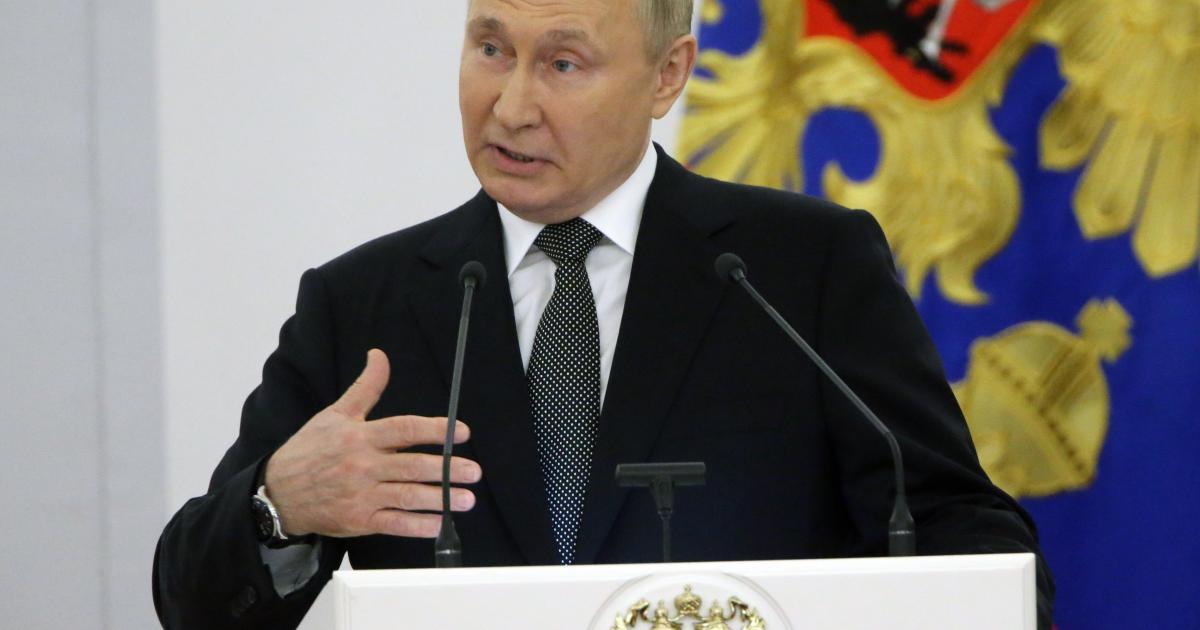


/cloudfront-us-east-2.images.arcpublishing.com/reuters/QIKTV2PEXJLHHEOG7FECYMOURE.jpg)