Categories
Audio Sources - Full Text Articles

Australian Turnell, Briton Bowman freed in Myanmar, headed for Thailand – diplomatic source

2022-11-17T10:51:22Z

An Australian economist and a former British ambassador were freed from prison in Myanmar on Thursday and were due to leave for Thailand, a diplomatic source told Reuters.

The pair, Sean Turnell, a former adviser to deposed Myanmar leader Aung san Suu Kyi and Vicky Bowman, were headed to Bangkok on an evening flight, the source said.

Categories
Audio Sources - Full Text Articles

In Seattle, an Iranian protests in a way banned back home – through dance

2022-11-17T11:10:16Z

Hair uncovered and hands painted red, Iranian-born choreographer Parmida Ziaei dances in the streets and on stage to show her support for demonstrators more than 6,000 miles (10,000 km) from her home in Seattle.

Iran has been engulfed in protests since Mahsa Amini, 22, died on Sept. 16 after she was arrested for allegedly flouting the Islamic Republic’s strict dress code imposed on women.

At least 344 protesters have been killed in the protests, including 52 minors, according to the rights activist HRANA news agency. It also reported 40 members of the security forces have been killed, and 15,820 people being arrested. Iranian authorities have not given any numbers on those killed or injured; they have neither denied nor confirmed HRANA reports.

At one street protest, Ziaei and two other performers, one Iranian and one American, wore red skirts and painted their hands red to symbolize the blood that has been shed.

Her choreography includes gestures that draw attention to their hair, as if to defy Iranian authorities who have decreed women must hide their hair under scarves in public.

Ziaei, who also performs solo, incorporates into her performances a pair of songs that have become anthems of the Iranian movement: “Baraye” (“For”) by Shervin Hajipour, with lyrics derived from the tweets of protesters, and “Zan, Zendegi Azadi” (“Woman, Life, Freedom”) by an anonymous woman demanding rights.

“Women have not been able to dance in public in Iran for the past 43 years,” said Ziaei, 29, who left Iran for the United States a decade ago to attend university. “We’re not allowed to perform in front of men. We’re not allowed to dance with men. I can create a piece here and I don’t have to ask permission from anybody. I can be naked if I wanted to, right?”

Some of the Iranian demonstrators have defiantly danced in the streets as part of the latest protests in the country.

In Seattle, Ziaei has performed her protest dances before small audiences at a dance festival, a symposium for artists of color, and a street demonstration so far. Her work also can be seen on her Instagram account, though not easily in Iran, where the internet is censored.

Her protest is one of many organized by Iranians across the United States.

The current protests in Iran are among the most forceful to confront the clerical establishment since the Islamic Revolution of 1979 that overthrew the country’s U.S.-backed monarch.

“We’re seeing a bravery that for me as a millennial is just so incredible,” Ziaei said. “These 15- or 16- year olds – Gen Z – running in front of the bullets. They don’t have anything to lose anymore. They just want to have a future.”

Related Galleries:

Choreographer and dancer Parmida Ziaei rehearses for a performance inside her studio at 2+U in downtown Seattle, Washington, U.S., November 1, 2022. REUTERS/Matt Mills McKnight

Choreographer and dancer Parmida Ziaei talks with fellow dancers in her studio at 2+U in downtown Seattle, Washington, U.S., November 1, 2022. REUTERS/Matt Mills McKnight

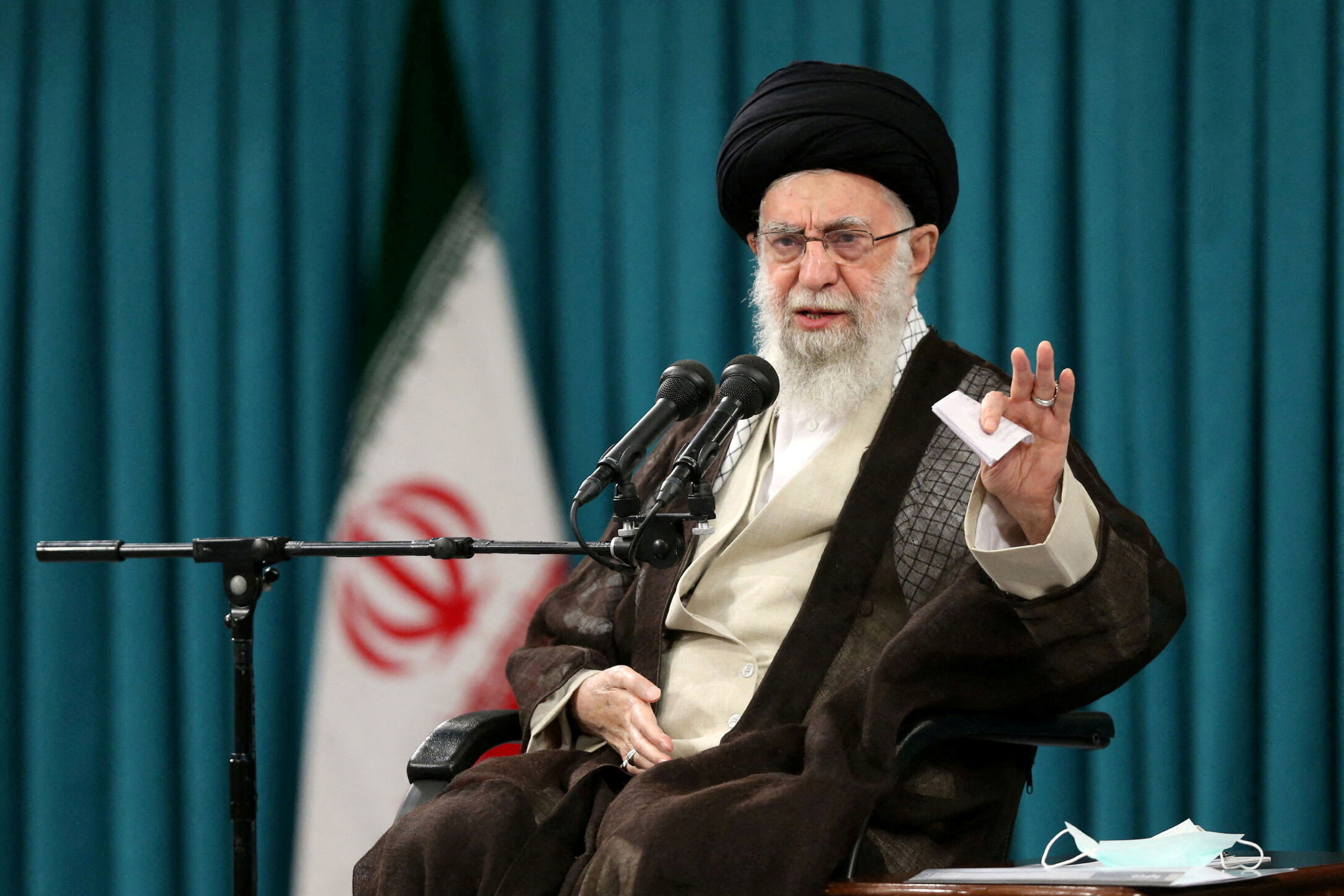
Iran’s Supreme Leader Ayatollah Ali Khamenei speaks during a meeting with a group of students in Tehran, Iran November 2, 2022. Office of the Iranian Supreme Leader/WANA (West Asia News Agency)/Handout via REUTERS/File Photo
Categories
Audio Sources - Full Text Articles

John Fetterman shows how Democrats can win back working-class Trump voters

His campaign proved that class can be a driver of political behavior and a foundation of redistributive economic policy

The midterm elections last Tuesday blew a hole in conventional political wisdom. The supposed law that the president’s party could never win a midterm. That partisanship was too entrenched for voters to split their tickets between parties at a high rate. That candidate quality and experience no longer mattered. That politics has been so nationalized that the entire country would get more Republican or Democratic together, rather than different climates in different states or regions. The most important myth busted for people with leftwing politics is the impressive win of John Fetterman for Senate in Pennsylvania. Fetterman proved that progressive politics really could win back working class white Trump voters in rural areas.

The idea that populist redistributive economics could win back working class Trump voters has been proposed since immediately after the 2016 election. It made sense ideologically to leftists, but there was no proof of concept until this election. Every attempt at using Medicare for All and anti-elite rhetoric to bring Trump voters in ancestrally Democratic areas back to the party had failed miserably. The platform and messaging of Fetterman, however, led him to a shocking 4.4% win in a state that President Biden won by just 1.1%. The president’s party flipping a Senate seat in a midterm election, let alone quadrupling the president’s winning margin, is incredibly rare. Respected sites like Fivethirtyeight and Sabato’s Crystal Ball viewed Oz as a clear favorite. Beyond this, Fetterman flipped the script on 40 years of partisan trends. Fetterman matched Biden’s margins in highly educated urban and suburban areas that have been getting more Democratic for decades, especially in the Trump era. His surprising winning margin came most of all from drastically improving on Biden’s margins in working class post-industrial and rural areas that had been getting redder for the last few decades, even faster than the suburbs had been getting bluer. How did he do this, and what does this mean for Democrats going forward?

Ben Davis works in political data in Washington, DC. He worked on the data team for the Bernie Sanders 2020 campaign

Continue reading…

Categories
Audio Sources - Full Text Articles

Right backs, left backs are Brazil’s weak spots at World Cup

SAO PAULO (AP) — When Brazil coach Tite uttered the name of veteran Dani Alves in his call for the World Cup squad, reactions around the country spanned from anger to disappointment.

The Brazil coach, who has faced little criticism in his six years on the job, described his pick in a paused, not-so-confident tone.

“The criteria for Daniel Alves is the criteria for all,” Tite said. “It is about rewarding individual skill, his fitness and his mental aspect. Just like the others.”

Alves himself, however, recognized that many didn’t want him in the squad for Qatar.

“I am not here to please everyone,” he said in a video.

The rancor has nothing to do with the right back’s brilliant past, but the presence of a 39-year-old player who has struggled to play for any club in the past year laid bare the lack of options Brazil has on both flanks of the defense.

Tite’s most likely options to start at the World Cup are right back Danilo, who has become more of a central defender at Juventus, and Alex Sandro, a player with little background as a typical Brazilian left back that runs from box to box.

Neither Danilo nor Alex Sandro are regarded as two of the best in the world in their positions, such as predecessors Cafu, Roberto Carlos, Marcelo and the peak Alves of 10 years ago were. At the same time, the duo has not caused Brazil much defensive trouble, being part of a team that conceded only five goals in South American qualifying.

Alves and Alex Telles are expected to be on the bench in Qatar, with Eder Militão also capable of playing as a right back and midfielder Fabinho as a left back.

“They are OK,” former Brazil left back Junior, now a TV commentator, said this month about Tite’s options. “They are not players who will be up front all the time. They are more cautious. But I don’t see any other choices that would be better to start at this time.”

Over the last year, Tite lost another two options that could have helped.

Fagner, a 33-year-old right back who replaced an injured Alves four years ago in Russia, had a poor season at Corinthians. Former Sevilla left back Guilherme Arana picked up a knee injury in September, ruling him out of the World Cup.

Brazil’s coach also found little reason to bring back Renan Lodi, who was loaned to Nottingham Forest after struggling at Atletico Madrid.

Lodi was blamed for Brazil’s 1-0 loss to Argentina in the 2021 Copa America final, with goal scorer Ángel di Maria saying he knew the Brazilian “slept a little” during matches. The left back didn’t find any sympathy from Tite after he missed a callup earlier in the year because he wasn’t vaccinated against COVID-19.

Brazil’s right back at the World Cup, whoever he may be, could also face increased pressure playing alongside 38-year-old defender Thiago Silva.

Silva has been less consistent than usual at Chelsea, highlighted by a dreadful performance in the 4-1 loss to Brighton in the Premier League last month. A right back that can also run for an aging Silva could be key to avoid conceding goals in Qatar.

Cafu, who was on Brazil’s World Cup-winning team in 2002, said protecting Silva is one of the reasons why Tite will eventually use Militão as a starting right back during the World Cup. He also trusts Brazil to do well in Qatar regardless of the lack of options at the back.

“I don’t know why we have this shortage of players for those positions. But it is not only for the national team, we see that in clubs, too,” Cafu said in an interview last month. “Coaches are adapting midfielders to that position because they don’t know how to specifically work with right and left backs.

“Also, it is unfair to compare these players with us. Anyone playing as a right or left back today has a lot of responsibility. They have to replace people who made history for Brazil.”

___

AP World Cup coverage: https://apnews.com/hub/world-cup and https://twitter.com/AP_Sports

Categories
Audio Sources - Full Text Articles

MH17 judgment day: Verdicts due against 4 suspects at trial

SCHIPHOL, Netherlands (AP) — A Dutch court is passing judgment Thursday on three Russians and a Ukrainian charged in the downing of Malaysia Airlines flight MH17 over Ukraine and the deaths of all 298 passengers and crew on board.

The verdict comes more than eight years after the Boeing 777 flying from Amsterdam to Kuala Lumpur was blown out of the sky on July 17, 2014, amid a conflict between pro-Russia rebels and Ukrainian forces, scattering wreckage and bodies over farmland and fields of sunflowers.

None of the suspects appeared for the trial that began in March 2020 and if they are convicted, it’s unlikely they will serve any sentence anytime soon. Prosecutors have sought life sentences for all four. Prosecutors and the suspects have two weeks to file an appeal.

The Hague District Court, sitting at a high-security courtroom at Schiphol Airport, is passing judgment against a backdrop of global geopolitical upheaval caused by Russia’s full-blown invasion of Ukraine in February and the nearly nine-month war it triggered.

Hundreds of family members of people killed traveled to the court to hear the verdict, bringing them back to the airport their loved ones left on the fateful day MH17 was shot down.

Dutch prosecutors say the missile launcher came from the 53rd Anti-Aircraft Missile Brigade, a unit of the Russian armed forces based in the Russian city of Kursk and was driven back there after MH17 was shot down.

The suspects aren’t accused of firing the missile but of working together to get it to the field where it was fired. They are accused of bringing down the plane and the murder of all those on board.

The most senior defendant is Igor Girkin, a 51-year-old former colonel in Russia’s Federal Security Service, or FSB. At the time of the downing, he was defense minister and commander of the armed forces of the self-proclaimed Donetsk People’s Republic — the region where the plane was shot down. Girkin reportedly is currently involved in Russia’s war on Ukraine.

Also on trial are Girkin’s subordinates, Sergey Dubinskiy, Oleg Pulatov, and Leonid Kharchenko, a Ukrainian who prosecutors say was commander of a pro-Russia rebel combat unit and took orders directly from Dubinskiy.

Pulatov is the only one of the suspects who was represented by defense lawyers at the trial. They accused prosecutors of “tunnel vision” in basing their case on the findings of an international investigation into the downing while ignoring other possible causes.

Pulatov’s defense team also sought to discredit evidence and argued he didn’t get a fair trial.

In a video recording played in court, Pulatov insisted he was innocent and told judges: “What matters to me is that the truth is revealed. It’s important for me that my country is not blamed for this tragedy.”

Categories
Audio Sources - Full Text Articles

Meet the Democratic Grifters Who Profited From the 2022 Midterms

The balance of power in Washington is still up for grabs after a contentious midterm election, but one group can celebrate regardless of which party comes out on top: the anti-Trump political action committees whose leaders pocketed the money they ostensibly raised to attack the former president.

These groups raised millions from progressive donors, pledging that their funds would help elect Democrats across the country. The Democratic Coalition, which senator-elect John Fetterman’s (D., Pa.) campaign slammed as a “scam PAC,” spent just $2,840 of the $375,000 it’s raised on campaign advertisements, but doled out $65,000 to executive director Scott Dworkin’s consulting firm. Dworkin was one of several Democratic grifters who came together at an Oct. 21 White House social media summit.

This was the latest election cycle where anti-Trump PACs profited without making a real impact. The Lincoln Project, whose cofounder once touted the organization as a vehicle for its leaders to attain “generational wealth,” raked in $90 million during the 2020 election cycle, over half of which went to its founders’ consulting firms, according to Fox Business. Rep. Alexandria Ocasio-Cortez (D., N.Y.) in 2020 dismissed the group as a “scam.” Wary of its reputation, Ohio Democratic Senate candidate Tim Ryan’s campaign begged the Lincoln Project to stay away from the race in May.

Dworkin, whose Democratic Coalition doled out $128,000 to its top employees and consultants, was in good company at the White House’s October summit. Also in attendance was the executive editor of Occupy Democrats, whose Election Fund raised $1.3 million in the midterm cycle and paid $250,000 to a consulting firm owned by cofounder Omar Rivero, all while spending just $120,590 on political advertisements, according to Federal Election Commission records.

In a since-deleted tweet, Rivero defended the quarter-million-dollar payout, saying “If you understood the time and effort that goes into making viral memes—and the impact that they have—you might respect our work more.”

Rivero told Newsweek in September that there was nothing wrong with the Occupy Democrats Election Fund paying employees for their work. He touted that his group delivered “over 12.3 million meme impressions, over 1.2 million engagements, and over 100,000 shares” with its $50,000 investment in the failed 2021 effort to recall California Gov. Gavin Newsom (D.).

The founders of the anti-Trump group MeidasTouch also rubbed shoulders at the White House social media summit. Founded by three brothers in March 2020, the progressive super PAC claims to have racked up more than a billion views for viral videos it creates for “fractions of pennies on the dollar.”

The super PAC raised $2.4 million in the 2022 cycle, $1.1 million of which was paid to a consulting firm called Prestige WW that, according to Rolling Stone, shares an “unusual financial relationship” with MeidasTouch cofounder Brett Meiselas. MeidasTouch spent just $240,000 on political advertisements during the midterms, FEC records show.

Prestige WW, which draws its name from the 2008 Will Ferrell comedy Step Brothers, pays Meiselas consulting fees for his services as the super PAC’s treasurer. Adav Noti, a former Federal Election Commission lawyer, told Rolling Stone in April 2021 that MeidasTouch’s lack of transparency surrounding its arrangement with the consulting firm likely ran afoul of campaign finance laws.

“That’s not OK,” said Noti, who now serves as the legal director for the Campaign Legal Center watchdog group. “If the PAC is paying the company just as a pass-through for the money to get to its treasurer or to some fundraising company or whatever, what they need to be disclosing are the ultimate payments to those recipients.”

The Democratic Coalition, Occupy Democrats, and MeidasTouch did not return requests for comment.

The post Meet the Democratic Grifters Who Profited From the 2022 Midterms appeared first on Washington Free Beacon.

Categories
Audio Sources - Full Text Articles

Before Pulling Out of Rankings, Yale Law School Took a Hit on Key Metric

Yale Law School dean Heather Gerken is framing the school’s decision to pull out of the U.S. News & World Report law-school rankings as an altruistic one, arguing that the “profoundly flawed” rankings “disincentivize programs that support public interest careers.”

But a closer look at those rankings suggests that Yale, which has over the past year been the locus of a fierce debate about free speech and drawn unwanted attention for its response to campus controversies, may have had a selfish reason to jump ship. The elite law school was starting to slip on one of the key indicators that determine a law school’s overall ranking, according to U.S. News & World Report‘s published methodology, raising questions about how long it would continue to occupy the number-one slot.

The “peer assessment” score is a measure of how deans and tenured professors across the country rate a law school’s quality on a scale of 1 to 5. Accounting for 25 percent of each school’s overall rank, this metric is the single most important factor in U.S. News & World Report law-school rankings—and one reason why Yale consistently lands at the top of them.

For many years, the law school’s peer assessment score hovered between a 4.8 and a 4.9, which meant it usually tied or exceeded Harvard and Stanford’s scores. But in March 2022—amid the free speech controversies, including the administration’s abuse and intimidation of a second-year law student, that thrust the top-ranked school into the national spotlight—Yale’s peer assessment score dropped to 4.6, its lowest in over a decade.

Though the drop didn’t dislodge Yale from its number-one position overall, it did put the school behind Harvard and Stanford in the reputational rankings, a sign that the law school’s perch was more precarious than it once seemed. Further hits to the peer assessment score could have pushed Yale to second or third place for the first time since U.S. News & World Report began ranking law schools, shattering a major source of its prestige.

A few hours after Yale’s announcement, Harvard Law said that it would also be pulling out of the rankings, a decision it claimed had been in the works for “several months.” The school saw a slight drop in its peer assessment score, from 4.8 in 2021 to 4.7 in 2022.

Yale Law School did not respond to a request for comment.

In recent months, Gerken has struggled to fend off a series of public relations disasters related to the political climate on campus and the administration’s response to it.

Between September and October, 14 federal judges, including James Ho of the 5th Circuit and Elizabeth Branch of the 11th Circuit, said they would no longer hire clerks from Yale Law School, citing concerns about free speech and intellectual diversity. They pointed to a September 2021 incident in which administrators pressured second-year law student Trent Colbert to apologize for using the term “traphouse” in an email, as well as an incident from early March in which hundreds of students disrupted a bipartisan panel on civil liberties.

The clerkship boycott prompted Yale Law to issue a statement affirming its “commitment to the free and unfettered exchange of ideas,” which outlined a number of steps the law school was taking to protect free speech—a tacit indication that administrators, including Gerken, are aware they have a problem on their hands.

Gerken’s statement about the school’s decision to pull out of the rankings did not address the drop in its peer assessment score. Instead, she blasted an “ill-conceived” system that “stands squarely in the way of progress,” announcing that the “rankings process is undermining the core commitments of the legal profession.” As a result, she said, “we will no longer participate.”

The post Before Pulling Out of Rankings, Yale Law School Took a Hit on Key Metric appeared first on Washington Free Beacon.

Categories
Audio Sources - Full Text Articles

Congress Eyes Investigation Into Anti-Israel Bias at Biden Justice Department

The Biden administration’s decision to launch an unprecedented investigation into Israel’s accidental shooting of a Palestinian-American reporter has landed the administration in hot water with Congress, which is signaling it will launch its own probe into anti-Israel bias and politicization at the Justice Department.

Attorney General Merrick Garland and “everyone involved in this disgraceful stunt should be investigated and then either fired or impeached,” Sen. Ted Cruz (R., Texas) told the Washington Free Beacon. The senator’s comments come just days after the Justice Department shocked the American Jewish community and Israeli government when it announced it would investigate the May 2022 shooting of Shireen Abu Akleh, a Palestinian-American Al Jazeera reporter who was killed during a standoff between Israeli forces and Palestinian terrorists. Congressional investigators want to know who signed off on this investigation and whether it was motivated by anti-Israel bias.

The DOJ’s investigation comes after Israel in coordination with the U.S. State Department conducted its own investigation into the matter. Israel determined Abu Akleh was killed by a stray bullet fired by an Israeli soldier and deemed the death accidental. The State Department said it was satisfied with the investigation, but Biden’s DOJ overrode this assessment on Monday when it informed the Israeli government the FBI would get involved.

Cruz and other congressional officials who spoke to the Free Beacon said the DOJ’s decision to target Israel is the result of the federal law enforcement agency’s politicization under President Joe Biden. Biden Justice Department appointee Kristen Clarke, for instance, came under fire during her Senate confirmation hearing after the Free Beacon revealed she edited a law journal that featured an anti-Semitic black nationalist who peddles conspiracy theories about Jews. The only way to root out this bias, sources said, is for Congress to launch an investigation into the DOJ’s anti-Israel agenda, which has been fueled by a cadre of anti-Semitic lawmakers in Congress known as “the Squad.” These lawmakers, which include Reps. Ilhan Omar (D., Minn.) and Rashida Tlaib (D., Mich.), pressured the DOJ for months to investigate the Abu Akleh shooting.

Garland is “using the FBI to attack and undermine one of our closest allies at the behest of the anti-Semitic Squad,” Cruz said. “Merrick Garland has already done more damage to the FBI’s credibility and legitimacy than anyone in history, including [Richard] Nixon’s [attorney general] who was literally sent to prison.”

Two senior congressional officials tracking the situation told the Free Beacon that the DOJ should prepare to face its own probe into politicized weaponization.

“We’re going to find out who thought it was a good idea to unleash the FBI on Israel and reopen something that everyone else—including the president’s State Department—had already resolved,” said one of the sources, who was not authorized to speak on the record.

The second source, also not authorized to speak on record, said the DOJ’s probe is the result of the president hiring far-left progressive activists, including anti-Israel agitators, who are now working at all levels of government.

“Biden has seemingly filled every department with woke activists who hate Israel, and now they’re burrowing in,” said the source, a veteran congressional official who works on Israeli issues. “They’re everywhere. It’s going to take years of investigations and work, and ultimately a new president, to even begin to fix the problem.”

Pro-Israel organizations are also applying pressure on Congress to find out why the DOJ decided to reopen the Abu Akleh case.

“It is both shocking and appalling that the Department of Justice has allowed anti-Israel Members of Congress to pressure an allegedly independent arm of the executive branch into this investigation,” Pastor John Hagee, founder of Christians United for Israel (CUFI), the nation’s largest pro-Israel advocacy organization, said in a statement.

A senior official with a pro-Israel organization told the Free Beacon the DOJ probe “smacks of politics.” The probe was announced shortly after conservative Israeli leader Benjamin Netanyahu—who was close with former president Donald Trump—was reelected as the country’s prime minister.

“This investigation, coupled with its being made public coming one week after the midterms, smacks of politics,” said the source, who could only speak on background while criticizing the administration.

A State Department spokesman declined to answer Free Beacon questions about what changed in the time between its assessment the case was resolved adequately and the DOJ’s backtrack. The DOJ declined to comment on the matter.

Israeli leaders have made clear they will not comply with the DOJ.

“Our soldiers will not be investigated by the FBI or by any other foreign country or entity, however friendly it may be,” outgoing Israeli prime minister Yair Lapid said on Tuesday. “The IDF thoroughly investigates any irregular event and is committed to the values and laws of democracy.”

The post Congress Eyes Investigation Into Anti-Israel Bias at Biden Justice Department appeared first on Washington Free Beacon.

Categories
Audio Sources - Full Text Articles

Analysis: Libya“s festering crisis risks slide back to war

2022-11-17T10:35:05Z

As its political stalemate festers, Libya risks sliding back towards civil war with diplomacy at a standstill, politicians thwarting progress towards elections and military leaders including eastern commander Khalifa Haftar threatening violence.

A move by forces aligned with the Tripoli government this week to blockade a meeting by a legislative body, a bout of deadly fighting in August and Haftar’s warnings of a new war all underscore the risks.

With the new U.N. envoy Abdoulaye Bathily warning in a first report this week that “some institutional players are actively hindering progress towards elections” there seems little prospect of any real move towards a settled peace.

“No one is talking about elections any more. The game playing that political leaders are doing is always to obstruct. It’s all delaying tactics,” said Otman Gajiji, a former Libyan electoral commission head.

In Tripoli, many people fear that continued gridlock raises the chances of violence, which has flared several times in the capital this year and always risks escalating into wider conflict.

“The crisis is mainly getting prolonged because those in power seek their own interests, not those of Libyans,” said Adel al-Sheikh, 39, a Tripoli shop owner.

Fair national elections were the only solution, he said. “Otherwise we won’t have a stable country and for sure there will be more wars,” he added.

The prospect of more conflict would not only create misery for ordinary Libyans: the stakes are also high for an inattentive world.

War could mean a new theatre for Russia-Western friction on the Mediterranean, cuts to Libya’s 1.2 million barrels-per-day oil output during a global energy shortage, a space for Islamist militants to prosper and fuel for a global migration crisis.

Libya has had little open warfare since the 2020 ceasefire that ended Haftar’s last assault on Tripoli, the culmination of years of division between factions who emerged during a 2011 NATO-backed uprising and split between east and west in 2014.

On the surface, Libya’s political standoff seems defined by disputes over an eventual constitution, the rules of a future election, regional divisions of wealth and the shape of a transitional government.

However, many Libyans suspect that behind the public facade of each faction’s avowed support for elections, none has much interest in a long-term resolution because each benefits from the messy status quo.

National elections could sweep away most of the squabbling political forces that have dominated Libya through years of institutional division, outright warfare and unstable peace.

In Tripoli, Prime Minister Abdulhamid al-Dbeibah runs the Government of National Unity, installed early last year through a U.N.-backed process to oversee a short transition that was meant to culminate in elections last year.

His government’s direct access to oil revenue through the Central Bank and spending on development projects run by political allies has drawn repeated accusations of widespread corruption, which Dbeibah denies.

The eastern parliament has rejected his legitimacy since last year’s election process fell apart amid disputes over the rules. It backs a separate administration under Fathi Bashagha, urging its own plan for an election.

However, the parliament’s own term formally expired years ago and critics of the speaker, Aguila Saleh, accuse him of playing loose with legislative rules to issue laws aimed at consolidating his power base, something he also denies.

Another legislative body, the High State Council, whose legitimacy stems from a 2012 election and a political agreement that was never fully implemented, has moved back and forth on the issues, furthering hindering any prospect of a deal.

However, even if elites are unwilling to upset the status quo through a long-term political settlement, there is no guarantee they will not upset it by returning to arms.

Haftar remains entrenched in eastern and southern Libya and his recent speeches, appearing to threaten a new war if the political stalemate persists, reveal a man again chafing to expand his influence to the capital.

“We are waging the decisive battle for liberation, whatever the price and however long it takes,” he said on October 31, adding that unnamed corrupt leaders “will not escape punishment – the armed forces will not allow it.”

In Tripoli itself, and the rest of the northwest, two years of ceasefire have scrambled the military coalition of armed factions that had fought off Haftar’s assault.

That was brought home in August when rival factions fought in the worst battle in the capital for years as Bashagha attempted to enter the city. He turned back and groups aligned with him were pushed out of Tripoli, leaving Dbeibah more firmly ensconced there.

Recent fighting in Tripoli has allowed one powerful group to consolidate its hold over territory, but its rivals still exist and could mount new attempts to win sway.

With Turkish forces still present around Tripoli and able to fend off any major assault there with drone strikes, battles between rival groups in the northwest present the most likely trigger for any wider conflict involving Haftar.

Related Galleries:
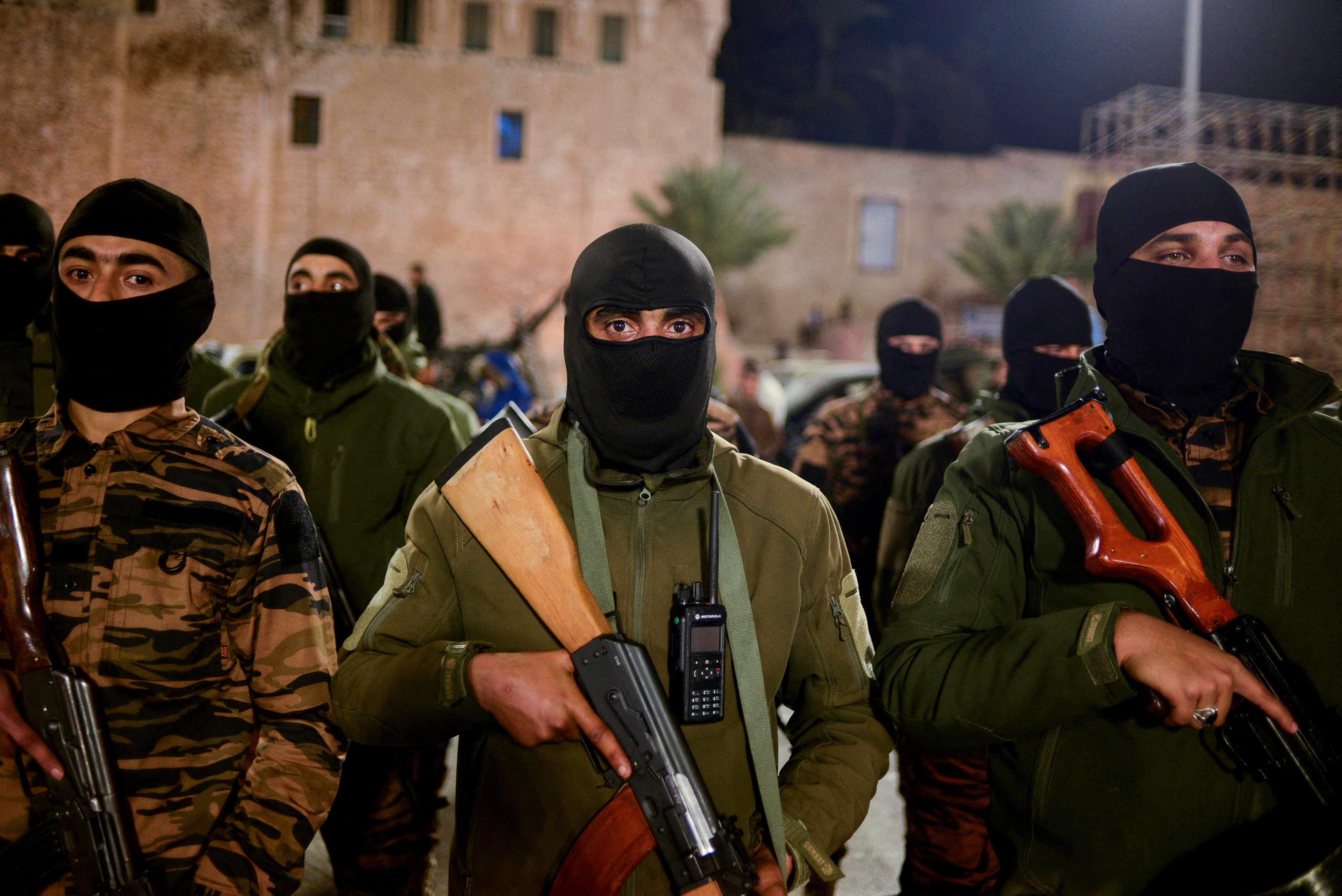
Members of the military personnel arrive to take part in a parade calling for parliamentary and presidential election, at Martyr’s square in Tripoli, Libya February 12, 2022. REUTERS/Nada Harib/File Photo
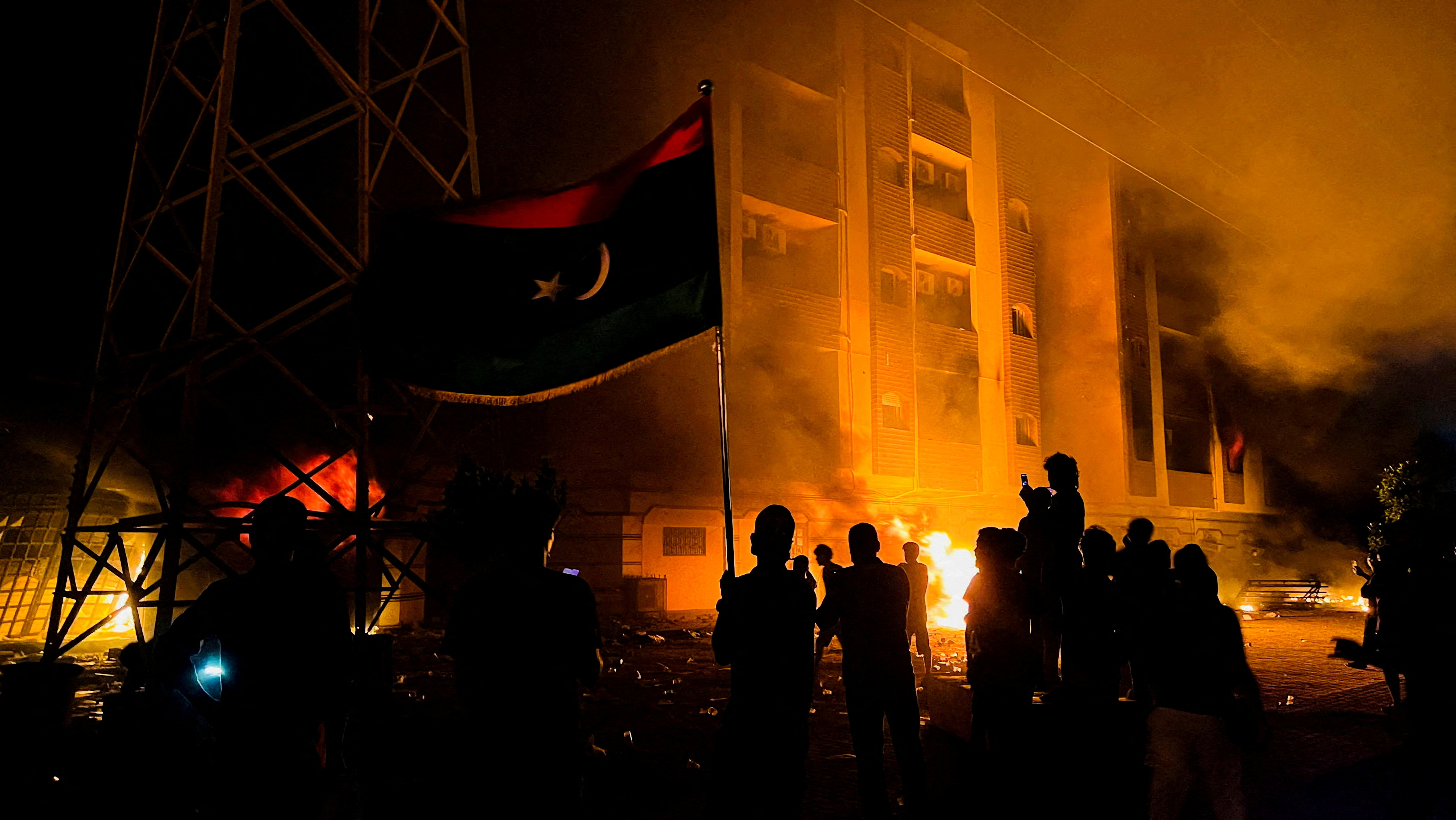
Protesters set fire to the Libyan parliament building after protests against the failure of the government in Tobruk, Libya July 1, 2022. REUTERS/Stringer/File Photo
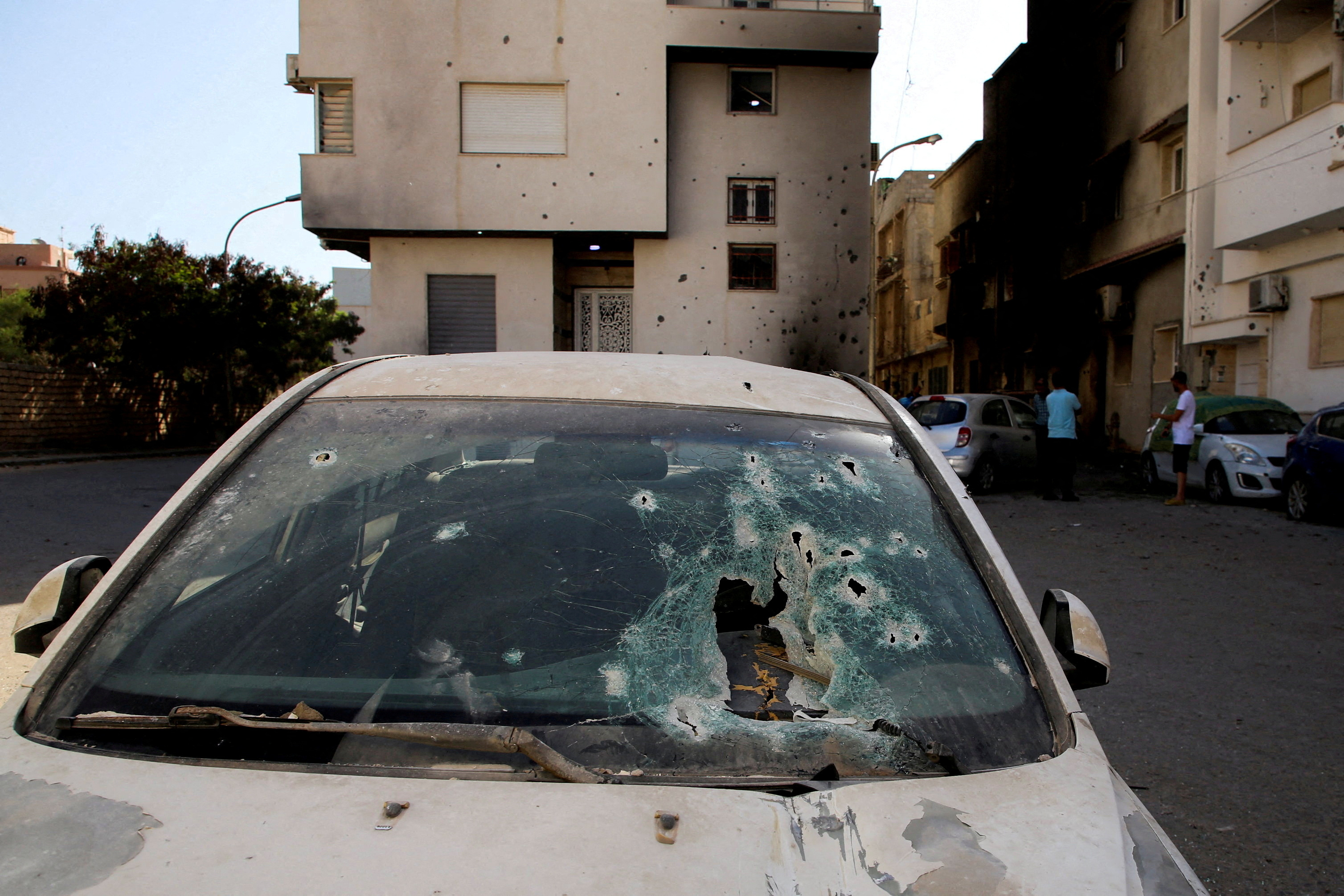
Holes are seen in the windshield of a destroyed car following clashes in Tripoli, Libya August 28, 2022. REUTERS/Hazem Ahmed/File Photo

Categories
Audio Sources - Full Text Articles

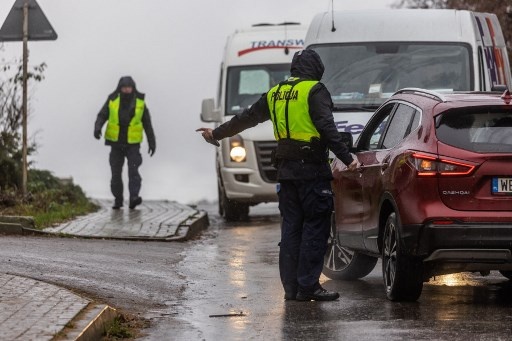
Eurotopics – Missile Explosion in Poland: What Comes Next?

000_32nm6cz.jpg

Avoid escalation

Nothing suggests Russia is deliberately attacking Nato territory, the BBC reassures its readers:

“What matters here is what the intended target was, whoever fired the missile. And so far there is no indication that Russia was intentionally targeting anywhere beyond Ukraine’s borders. The Kremlin knows that such a move would potentially trigger Article 5 of Nato’s constitution, theoretically bringing the entire alliance to Poland’s defence. That is not a place Nato wants to be in, especially just a day after Russia and America’s spy chiefs have just been meeting to discuss how to avoid unnecessary escalation in this war.”

Half-hearted response the most likely

If Russia is responsible, Tygodnik Powszechny sees three different scenarios:

“The first: pretend that nothing happened. … The second, half-hearted option: we make good on our declarations with limited action, for example moving parts of Poland’s air defence closer to the border. … We use the situation to up the pressure on the allies to supply Ukraine with effective air defence systems more quickly and on a larger scale. … And finally the third option: we use the situation to change the policy towards Russian aggression and take a truly resolute stance. … Of these three options, the second seems the most likely today.”

The missile defence system failed

Poland is more vulnerable than it has been led to believe, Onet worries:

“We still don’t know whether it was a Russian or a Ukrainian missile that fell on Polish territory. … Be that as it may, the Nato missile defence system has now been tested. … Our biggest problem at the moment is that the system didn’t work, and that the Russians know it. In March, US President Joe Biden declared in Warsaw that the Atlantic Alliance would protect every inch of Nato territory. Today it has become clear that, for the time being, this protection has failed across the board.”

Time for peace

Once again we must push for negotiations, Avvenire urges:

“If we were really dealing with a deliberate Russian attack, a targeted provocation, we would be plunged into the nightmare that only yesterday the signals from the US-Chinese summit in Bali seemed to avert. The other two hypotheses – error or coincidence – could, if the political protagonists are up to the task of these dramatic circumstances, even strengthen the effort to find a negotiated way out of a war that brings us to the brink of Armageddon. … For nine months now we have remained on this insane brink while weapons are sent and death and devastation are sown. It is time to bring about peace.”

Neither routine nor an emergency

Commenting on Poland’s request to convene a Nato meeting on the basis of Article 4 rather than Article 5 of the defence case, La Stampa says:

“Poland has asked for a meeting of the Atlantic Council, but within the framework of Article 4, which provides for consultations in situations of potential security threats. It is not a day-to-day matter, but neither is it an emergency. … This is a sign that Warsaw, while blaming Moscow for the incident, does not feel it has been militarily attacked. Nato’s collective defence [set out in Article 5] is not triggered automatically. It must be requested and unanimously approved by all allies. This is not the case today. This does not change the fact that Moscow is playing with fire.”

The post Eurotopics – Missile Explosion in Poland: What Comes Next? appeared first on Kyiv Post.

WP Radio
WP Radio
OFFLINE LIVE