Categories
Audio Sources - Full Text Articles

Russian missiles hit critical infrastructure in Kharkiv region, three injured

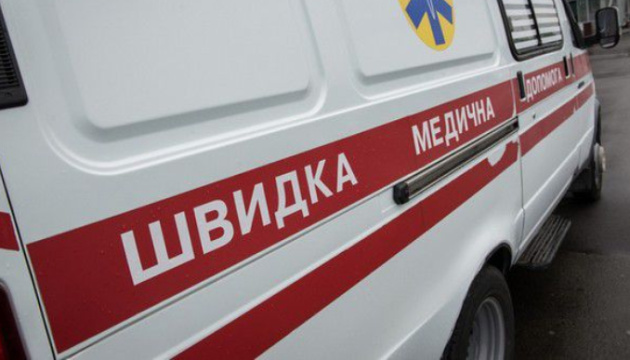
630_360_1654768443-794.jpg

Russian troops introduced a missile attack on essential infrastructure in the Izium district, Kharkiv region, injuring three people today.

Oleh Syniehubov, the head of the Kharkiv regional armed service administration, mentioned this in a statement on Telegram, Ukrinform reports.

“Russian occupiers introduced missile strikes on the Izium district. Vital infrastructure was hit. Sadly, a few staff have been hurt. The adult men ended up hospitalized,” the report said.

On November 17, Russian troops attacked different locations in Ukraine with missiles and Shahed drones.

Source link

The post Russian missiles hit critical infrastructure in Kharkiv region, three injured appeared first on Ukraine Intelligence.

Categories
Audio Sources - Full Text Articles

Starbucks workers plan strikes at more than 100 US stores

Starbucks workers at more than 100 U.S. stores say they’re going on strike Thursday in what would be the largest labor action since a campaign to unionize the company’s stores began late last year.

The walkouts are scheduled to coincide with Starbucks’ annual Red Cup Day, when the company gives free reusable cups to customers who order a holiday drink. Workers say it’s often one of the busiest days of the year. Starbucks declined to say how many red cups it plans to distribute.

Workers say they’re seeking better pay, more consistent schedules and higher staffing levels in busy stores. Starbucks opposes the unionization effort, saying the company functions best when it works directly with employees. The Seattle coffee giant has more than 9,000 company-owned stores in the U.S.

Stores in 25 states planned to take part in the labor action, according to Starbucks Workers United, the group organizing the effort. Some workers planned to picket all day while others planned shorter walkouts. The union said the goal is to shut the stores down during the walkouts.

Willow Montana, a shift manager at a Starbucks store in Brighton, Massachusetts, planned to strike because Starbucks hasn’t begun bargaining with the store despite a successful union vote in April.

“If the company won’t bargain in good faith, why should we come to work where we are understaffed, underpaid and overworked?” Montana said.

Others, including Michelle Eisen, a union organizer at one of the first stores to organize in Buffalo, New York, said workers are angry that Starbucks promised higher pay and benefits to non-union stores. Starbucks says it is following the law and can’t give union stores pay hikes without bargaining.

At least 257 Starbucks stores have voted to unionize since late last year, according to the National Labor Relations Board. Fifty-seven stores have held votes where workers opted not to unionize.

Starbucks and the union have begun contract talks at 53 stores, with 13 additional sessions scheduled, Starbucks Workers United said. No agreements have been reached so far.

The process has been contentious. Earlier this week, a regional director with the NLRB filed a request for an injunction against Starbucks in federal court, saying the company violated labor law when it fired a union organizer in Ann Arbor, Michigan. The regional director asked the court to direct Starbucks to reinstate the employee and stop interfering in the unionization campaign nationwide.

It was the fourth time the NLRB has asked a federal court to intervene. In August, a federal judge ruled that Starbucks had to reinstate seven union organizers who were fired in Memphis, Tennessee. A similar case in Buffalo has yet to be decided, while a federal judge ruled against the NLRB in a case in Phoenix.

Meanwhile, Starbucks has asked the NLRB to temporarily suspend all union elections at its U.S. stores, citing allegations from a board employee that regional officials improperly coordinated with union organizers. A decision in that case is pending.

Categories
Audio Sources - Full Text Articles

S. Korea’s leader discusses megaprojects with Saudi prince

SEOUL, South Korea (AP) — South Korean President Yoon Suk Yeol hoped for greater cooperation with Saudi Arabia — including on its $500 billion futuristic desert city project — as he met the kingdom’s powerful crown prince Thursday, Seoul officials said.

Crown Prince Mohammed bin Salman flew to South Korea earlier Thursday for talks with Yoon and business tycoons in his first visit to South Korea since June 2019.

During talks attended by senior officials from both countries, Yoon said he hopes that South Korean companies will participate in megaprojects in Saudi Arabia such as Neom, a futuristic, carbon-free city planned along the kingdom’s Red Sea coast, Yoon’s office in a statement.

Yoon also wanted the two countries to cooperate on defense industries and the development of hydrogen and other new energies and promote tourism and cultural exchanges, the statement said. Prince Mohammed said he wants to drastically expand bilateral cooperation on the areas of infrastructure construction, energy and defense industries, Yoon’s office said.

The prince’s trip to South Korea spawned hopes that South Korean companies’ active participations in the Neom city project would greatly invigorate the country’s economy, like a previous construction boom in the Middle East backed up South Korea’s rapid economic rise in the 1970s.

“There are political and geopolitical risks in Middle East and it’s true that there are questions about the Neom city project. … But the Neom city can still be a new breakthrough for the South Korean economy,” the Maeil Business newspaper said Wednesday in an editorial. “The (South Korean) government must support a possible second Middle East boom by reforming regulations.”

The Neom project envisions flying cars and a 170-kilometer (105-mile) -long, zero-carbon emissions city that’s entirely enclosed and powered by Artificial Intelligence. In 2017, when Prince Mohammed announced plans to build the city, he said that “this will be a place for the dreamers of the world.”

Some observers say Prince Mohammed hopes the city will become a skyline-studded Saudi version of Dubai that will offer the kingdom jobs and cement a future beyond its vast crude oil reserves. It also would reframe a rule so far colored by the killing of Washington Post columnist Jamal Khashoggi and the kingdom’s grinding war in Yemen.

“Some people say the idea of the Neom city project is too utopian and doubt whether it can be really established,” said Paik Seunghoon, principal researcher at the Institute of Middle East Studies at Hankuk University of Foreign Studies in Seoul. “But it’s one of the projects that Prince (Mohammed) is pushing hard so that he will try to have (the Neom project) running to some extent.”

Joo Won, deputy director at the Seoul-based Hyundai Research Institute, noted that there have been “more negative views toward the project” than positive ones.

“It’s a matter of financial resources. Saudi Arabia needs money to build such a city. During the period of high oil prices like these days, they can afford it. But oil prices would go down one day and the project could stop,” Joo said

Categories
Audio Sources - Full Text Articles

France faces weight of history in bid to retain World Cup

PARIS (AP) — As well as coping with injuries to key players again, France has the weight of World Cup history to contend with in Qatar.

Good luck, Les Bleus.

Not since Brazil lost the 1998 final to France has the defending champion come close to retaining the title.

Of the next five World Cup defending champions, four failed to reach the knockout stage and three finished last in their group.

As World Cup champions in 1998, many favored France to win again in 2002, especially with the front line featuring top scorers from three major European leagues.

France boasted Arsenal striker Thierry Henry, Juventus marksman David Trezeguet and rising talent Djibril Cisse in a glittering attack blending speed, skill and power. But the French flopped and, with an injured Zinedine Zidane unable to perform properly in midfield, limped out of the group stage without winning a game.

It was one of the greatest shocks in World Cup history, and the warning signs are chillingly similar this time.

Defending champion France boasts arguably the best attack in the world with Ballon d’Or winner Karim Benzema alongside 2018 World Cup star Kylian Mbappe, with either Antoine Griezmann or Olivier Giroud to support them.

Speed, skill and power.

But, like in 2002, France also has problems in midfield, with World Cup winners Paul Pogba and N’Golo Kante both out injured, depriving coach Didier Deschamps of his engine room. Central defender Raphael Varane, another mainstay from four years ago, is trying to recover from a hamstring injury.

Here’s a look at where it went wrong for France in 2002, Brazil four years later in 2006, Italy in 2010, Spain in 2014 and Germany in 2018.

FRANCE in 2002

What could go wrong for a France team with Zidane playing behind Henry, Trezeguet and Cisse in a group featuring Senegal, Uruguay and Denmark?

The first mistake coach Roger Lemerre made was picking Zidane in a warmup against South Korea five days before the tournament. He limped off with a thigh injury that ruled him out of the first two group games, and he was rushed back for the last.

France, however, still had the core of its victorious team from 1998. Youri Djorkaeff was in the midfield alongside Patrick Vieira, who had just won the Premier League and FA Cup double with Arsenal teammate Henry. There was also Emmanuel Petit, who had scored in the 3-0 win over Brazil in the last final.

But in the opening match of 2002, Papa Bouba Diop scored the lone goal for Senegal in a 1-0 win over the defending champions.

France’s hopes of bouncing back took a hit when Henry was sent off after 25 minutes for a reckless challenge in a 0-0 draw against Uruguay.

That left France needing to beat Denmark by two goals. A strapped-up Zidane did what he could but France lost 2-0 and went home in embarrassment.

BRAZIL in 2006

Brazil boasted a team packed with stars, featuring the showboating brilliance of Ronaldinho; the sharp-shooting of Ronaldo and Adriano; the marauding runs of Cafu, and the swirling long-range free kicks of Juninho. Ronaldinho even had a personalized headband with his own initial “R” written in gold.

There was a sense that Brazil might be a little overconfident in the quarterfinals against a France team featuring a rejuvenated Zidane.

And that’s the way it turned out.

Zidane produced one of the most dazzling midfield performances in World Cup history. His incredible skill, balletic balance and pirouetting moves bamboozled Brazil, and his free kick set up Henry for a volley — the only goal of the match.

ITALY in 2010

Just like France in 2002, Italy finished at the bottom of its group.

At least the Italians scored — four times — but the group looked a bit easier: Paraguay, New Zealand and Slovakia.

Italy made a poor start and needed an equalizer from midfielder Daniele De Rossi to get a draw against Paraguay. Worse followed for the four-time champions: a 1-1 draw with New Zealand, which took an early lead through unheralded forward Shane Smeltz. In the final group game, Italy was in tatters and trailed 2-0 against Slovakia before losing 3-2.

Italy coach Marcello Lippi just couldn’t seem to get the balance right, unlike in 2006. His team conceded too easily even with Fabio Cannavaro and Giorgio Chiellini in central defense, and had problems up front. Vincenzo Iaquinta, Antonio Di Natale and Fabio Quagliarella did score but first-choice striker Alberto Gilardino failed to.

Gilardino had been in good form with AC Milan that season and was known for a peculiar goal celebration, sinking to his knees to play the violin.

This time, Gilardino had nothing to celebrate.

SPAIN in 2014

It was quite the rude awakening for Spain coach Vicente del Bosque after back-to-back major trophies.

European champion Spain’s opening game ended in a 5-1 loss to the Netherlands — despite a tough central defensive pairing of Sergio Ramos and Gerard Pique and a slick midfield including Barcelona greats Xavi Hernandez and Andres Iniesta.

In the next game, Spain was unable to stop conceding and lost to Chile 2-0 with both goals coming in the first half.

A 3-0 win over Australia was scant consolation for a star-studded Spain team, whose slide symbolized how two golden eras were coming to an end. Barcelona’s glory years, which centered around the passing of Xavi and Iniesta, coincided with Spain’s successes at Euro 2008, the 2010 World Cup and Euro 2012.

GERMANY in 2018

So much for ruthless Germany, the attacking machine that put seven goals past Brazil in the semifinals at the previous World Cup on the way to its fourth title.

From the outset, Germany struggled in Russia, losing a scrappy game 1-0 to Mexico and then needing a goal from midfielder Toni Kroos in the fifth minute of injury time to beat Sweden.

That should have been enough of a wake-up call.

Germany needed to beat South Korea to have a shot at advancing, but instead conceded two goals deep in stoppage time after squandering many chances to score.

The loss was met with disbelief back home, a feeling familiar to that star-studded France team 20 years ago.

___

AP World Cup coverage: https://apnews.com/hub/world-cup and https://twitter.com/AP_Sports

Categories
Audio Sources - Full Text Articles

Analysis: Have China and India shifted stance on Russia war?

NUSA DUA, Indonesia (AP) — China and India, after months of refusing to condemn Russia’s war in Ukraine, did not stand in the way of the release this week of a statement by the world’s leading economies that strongly criticizes Moscow.

Could this, at last, signal a bold new policy change by Beijing and New Delhi to align themselves with what the United States and its allies believe is the best way to end a war that has brought death and misery to Ukraine and disrupted millions of lives as food and energy prices soar and economies crack?

There’s certainly an eagerness by a world weary of war to see it as the beginning of a shift by the burgeoning global powers.

Look close enough, however, and there’s enough subtlety, not to mention spots of vagueness, in both the official statement released at the end of the Group of 20 summit in Bali, Indonesia, and in actions from China and India themselves, to raise questions about whether a real change is underway.

Their positions will become clearer in coming weeks, but for now both nations, which have significant trade ties with Russia and have so far stopped short of outright criticism of the war, may simply be looking out for their own interests and keeping future options open.

Figuring out what exactly happened in Bali matters because there’s growing worry that without political and diplomatic pressure by China and India, Russia will be far less likely to end its war.

The conflict in Ukraine loomed large over the two-day summit on Bali, which was attended by Russian Foreign Minister Sergei Lavrov. News early Wednesday of an explosion that rocked eastern Poland prompted U.S. President Joe Biden to hastily arrange an emergency meeting with Group of Seven and NATO members at the summit.

The backroom wrangling at the G-20 over how to address Russia’s invasion in its statement was “very, very tough,” summit host Indonesian President Joko Widodo said.

“Most members strongly condemned the war in Ukraine and stressed it is causing immense human suffering and exacerbating existing fragilities in the global economy,” the statement said.

The less-than-universal language — “most members” — signals the presence of dissent, as does an acknowledgement that “there were other views and different assessments” and that the G-20 is “not the forum to resolve security issues.”

The final product, however, was seen by some as a strong rebuke of a war that has killed thousands, heightened global security tensions and disrupted the world economy.

The public statement used language from a March U.N. resolution that deplored “in the strongest terms the aggression by the Russian Federation against Ukraine” and demanded “its complete and unconditional withdrawal” from Ukrainian territory.

German Chancellor Olaf Scholz said the G-20 summit’s “surprisingly clear words” on Ukraine “wouldn’t have been possible if important countries hadn’t helped us to come together this way — that includes India and it also includes, for example, South Africa.”

“This is something which shows that there are many in the world who don’t think this war is right, who condemn it, even if they abstained in the votes at the United Nations for various reasons,” Scholz said. “And I am sure that this is one of the results of this summit: the Russian president stands almost alone in the world with his policy.”

John Kirton, director of the G-20 Research Group, called it a “big breakthrough” and an “active shift” by China and India in which they joined the “democratic side of the great immediate geopolitical divide.”

Privately, however, some diplomats were wary about declaring that China has shifted its stance on Russia.

Chinese President Xi Jinping may have simply made a decision to not be seen as a spoiler or outlier during face-to-face meetings with other leaders in Bali. The statement also allows China to avoid going all-in with a Russia that is looking more and more isolated as it increases attacks on civilians and civilian infrastructure.

What Beijing hasn’t done is change — or even publicly question — its fundamental relations with Russia.

China has closely aligned its foreign policy with Russia in recent years, as pipeline projects and natural gas sales have brought them closer economically.

It has refused to publicly criticize Russia’s aggression or even refer to it as an invasion, while criticizing sanctions and accusing the United States and NATO of provoking Putin, although it has warned against allowing the conflict to go nuclear.

Just weeks before Moscow’s invasion, the Russian and Chinese leaders met in Beijing, where they signed a joint statement affirming that their bilateral relationship had “no” limits.

It was unclear whether China pushed for the softening language in the G-20 statement acknowledging “other views and different assessments” and that the G-20 is “not the forum to resolve security issues,” but Shi Yinhong, professor of international relations at Beijing’s Renmin University, said it has pushed for such phrases on other occasions.

For India, Prime Minister Narendra Modi has also avoided criticism of the Russian invasion of Ukraine.

Modi, however, indicated for the first time in public India’s discomfort with the attack when he met Putin in September.

“I know that today’s era is not of war,” Modi told Putin.

That message “resonated very deeply across all the delegations and helped to bridge the gap across different parties and contributed to the successful outcome of the document” in Bali, Indian Foreign Secretary Vinay Kwatra told reporters.

Navdeep Suri, a retired Indian diplomat, said he sees a subtle shift in India’s position in dealing with Russia.

China, however, may be “in a far more awkward position than India because China is the one that promised unlimited support to Russia a few days before the invasion,” Suri said. “China has (now) gone along with such tough language, including the unconditional and complete withdrawal of Russian forces from Ukraine.”

Dilip Sinha, another retired Indian diplomat, noted that India continues to buy oil, to trade with Russia and to abstain from U.N. resolutions critical of Russia.

“There is a feeling of bravado in India that it has its way. I don’t see any change at all in India’s policy on Russia on the war in Ukraine,” Sinha said.

___

Foster Klug, AP’s news director for the Koreas, Japan, Australia and the South Pacific, has covered Asia since 2005.

___

Associated Press writer Ashok Sharma in New Delhi contributed to this story.

Categories
Audio Sources - Full Text Articles

Myanmar’s Military Government Releases Thousands of Political Prisoners, Including an American and 3 Other Foreigners

BANGKOK — Myanmar’s military-controlled government announced Thursday it was releasing and deporting an Australian academic, a Japanese filmmaker, an ex-British diplomat and an American as part of a broad prisoner amnesty to mark the country’s National Victory Day.

Australian Sean Turnell, Japan’s Toru Kubota, Briton Vicky Bowman, and American Kyaw Htay Oo, as well as 11 local Myanmar celebrities, were among a total of 5,774 prisoners who were being released, Myanmar’s state-run MRTV reported.

The imprisonment of the foreign nationals had been a source of friction between Myanmar’s leaders and their home governments, which had been lobbying for their release.

[time-brightcove not-tgx=”true”]

According to the Assistance Association for Political Prisoners, a rights monitoring organization, 16,232 people have been detained on political charges in Myanmar since the army ousted the democratically elected government of Aung San Suu Kyi in February last year.

Read More: Ex Political Prisoner Documents Myanmar’s Military Crackdown

Of those arrested, 13,015 were still in detention as of Wednesday, the AAPP reported. Additionally, at least 2,465 civilians have been killed by security forces in the same period, the group says, though the number is thought to be far higher.

Amnesty International Australia’s Tim O’Connor welcomed the decision to release Turnell, saying like many others, he should never have been arrested or jailed.

“Amnesty continues to call for the release of all those arbitrarily detained for peacefully exercising their human rights,” he said. “Thousands of people jailed since the coup in Myanmar have done nothing wrong.”

Japan’s top government spokesperson, Hirokazu Matsuno, told reporters Kubota was due to leave Myanmar on a flight Thursday night and could be in Japan as soon as Friday. He said officials believe the 26-year-old Tokyo-based documentary filmmaker is in good health.

Britain’s embassy in Yangon said Bowman had not yet been released from prison. Australian Foreign Minister Penny Wong tweeted that she welcomed reports of Turnell being released, but would not comment further for the time being, and the U.S. Embassy in Yangon referred queries to Washington.

Read More: ‘The World is Doing Nothing.’ A Myanmar Artist’s Daring Mission to Tell the Story of His Father and Their Country’s Suffering

Turnell, 58, an associate professor in economics at Sydney’s Macquarie University who had been serving as an advisor to Suu Kyi, was arrested by security forces at a hotel in Yangon just days after last year’s military takeover. He was sentenced in September to three years in prison for violating the country’s official secrets law and immigration law. Suu Kyi and three of her former Cabinet members were convicted in the same trial, which was held in a closed court, with their lawyers barred by a gag order from taking about the proceedings.

Fellow Australian economist Tim Harcourt said in an email he was delighted to hear of his longtime friend Sean Turnell’s release.

He thanked the Australian government, activists and Turnell’s friends and colleagues who had lobbied for his release and said he was looking forward to him returning home to Sydney.

“It’s a great relief to his wonderful wife Ha, his sister and father and all the family,” Harcourt said.

“Sean’s heart was with the people of Myanmar to help lift them about of poverty and help Myanmar reach its economic potential. He should never have been imprisoned for doing his professional duty as an economist involved in development economics,” he said.

Myanmar has been in turmoil since the takeover, which led to nationwide protests that the military government quashed with deadly force, triggering armed resistance that some U.N. experts now characterize as civil war.

Read More: The Military Tried to Burn It Down: How an Underdog Myanmar Township Became a Resistance Stronghold

Kubota was arrested July 30 by plainclothes police in Yangon after taking images and videos of a small flash protest against the military. He was convicted last month by the prison court of incitement for participating in the protest and other charges and sentenced to 10 years in prison.

Since seizing power, the military has cracked down on the coverage of protests, raided media companies, detained dozens of journalists and revoked the licenses of at least a dozen outlets.

Most of those detained are being held on the incitement charge for allegedly causing fear, spreading false news, or agitating against a government employee.

Some of the closed media outlets have continued operating without a license and many Myanmar journalists are working underground, moving from one safe house to another, hiding in remote border regions, or basing themselves in exile.

Kubota was the fifth foreign journalist detained in Myanmar after the military seized power. U.S. citizens Nathan Maung and Danny Fenster, who worked for local publications, and freelancers Robert Bociaga of Poland and Yuki Kitazumi of Japan were eventually deported before having to serve full prison sentences.

Bowman, 56, a former British ambassador to Myanmar who had been running a business consultancy, was arrested with her husband, a Myanmar national, in Yangon in August. She was given a one-year prison term in September by the prison count for failing to register her residence.

Kyaw Htay Oo, a naturalized American, returned to Myanmar, the country of his birth, in 2017, according to media reports. He was arrested in September 2021 on terrorism charges and has been in custody ever since.

Myanmar did not release many details of the other prisoners who were being freed, but almost all would have been being held on charges related to the protests, including Section 505(A) of Myanmar’s penal code, which makes it a crime to spread comments that create public unrest or fear or spread false news, and carries a penalty of up to three years in prison.

Among those released were also Kyaw Tint Swe, a former union minister for the office of the State Counsellor, Than Htay, a former member of the Union Election Commission and Lae Lae Maw, a former Chief Minister of Tanintharyi Region who had been jailed for 30 years for corruption since 2020 under Suu Kyi’s government, MRTV announced.

Categories
Audio Sources - Full Text Articles

‘Do You Not Have a Heart?’: Authorities in China Face Outcry Over Death of Another Child in Quarantine

BEIJING — Chinese authorities faced more public anger Thursday after a second child’s death was blamed on overzealous anti-virus enforcement, adding to frustration at controls that are confining millions of people to their homes and sparked fights with health workers.

The 4-month-old girl died after suffering vomiting and diarrhea while in quarantine at a hotel in the central city of Zhengzhou, according to news reports and social media posts. They said it took her father 11 hours to get help after emergency services balked at dealing with them and she finally was sent to a hospital 100 kilometers (60 miles) away.

[time-brightcove not-tgx=”true”]

The death came after the ruling Communist Party promised this month that people in quarantine wouldn’t be blocked from getting emergency help following an outcry over a 3-year-old boy’s death from carbon monoxide in the northwest. His father blamed health workers in the city of Lanzhou, who he said tried to stop him from taking his son to a hospital.

Internet users expressed anger at the ruling Communist Party’s “zero-COVID” strategy and demanded that officials in Zhengzhou be punished for failing to help the public.

“Once again, someone died because of excessive epidemic prevention measures,” one user wrote on the popular Sina Weibo platform. “They put their official post above everything else.”

The ruling party promised last week to ease quarantine and other restrictions under its “zero-COVID” strategy, which aims to isolate every infected person. But Chinese leaders are trying to dispel hopes the measures are about to end as other governments ease controls and try to live with the virus.

Read More: China Just Relaxed Some Pandemic Measures, But Experts Suggest ‘Zero-COVID’ Probably Won’t Be Going Away Anytime Soon

“Zero-COVID” has kept China’s infection numbers lower than those of the United States and other major countries but shuts down neighborhoods, schools and businesses for weeks at a time. Residents of some areas complain they are left without food and medicine.

A spike in infections over the past two weeks has led officials in areas across China to confine families to their cramped apartments or order people into quarantine if a single case is found in their workplace or neighborhood.

On Thursday, the government reported 23,276 new cases in areas throughout the country; 20,888 of them with no symptoms.

That included a total of 9,680 in this week’s biggest hot spot, the southern business center of Guangzhou, near Hong Kong.

The government is trying to deal with “simple and crude” over-enforcement in response to public complaints, the deputy director of the National Bureau of Disease Control, Shen Hongbing, said at a news conference.

The government has received 130,000 complaints including local officials improperly isolating visitors arriving from low-risk areas, according to Shen.

“We have sorted out the problems reported by the masses,” Shen said. He didn’t mention the girl’s death in Zhengzhou.

Local governments are being given more flexibility in possible preparation for gradual reopening of the country, but a timetable is unclear, said economists Helen Qiao, Benson Wu and Xiaoqing Pi of Bank of America in a report. They pointed to the major cities of Guangzhou, Chongqing and Shijiazhuang, which all are coping with an uptick in infections.

Read More: The Chinese Public May Finally Have Had Enough of the Government’s Zero-COVID Approach

“Their responses and reopening paths will be useful for other cities to prepare for their reopening,” they said. “No matter what measures they undertake, we do expect a short term shock on the local economic activities.”

Economists and health experts have said “zero-COVID” might stay in place for up to another year because the government needs to vaccinate millions of elderly people before it can lift curbs that keep most foreign visitors out of China.

Videos on social media this week that said they were shot in Guangzhou showed angry residents knocking over barriers set up by white-garbed health workers. The 1.8 million residents of the city’s Haizhu district were confined to their homes last week but some restrictions were lifted Monday.

A total of 1,659 cases were reported in Henan province, another hot spot where Zhengzhou is located.

Access to a Zhengzhou industrial zone that is home to the world’s biggest iPhone factory was suspended this month following outbreaks. Apple Inc. said deliveries of its new iPhone 14 model would be delayed.

Closed factory in iPhone City
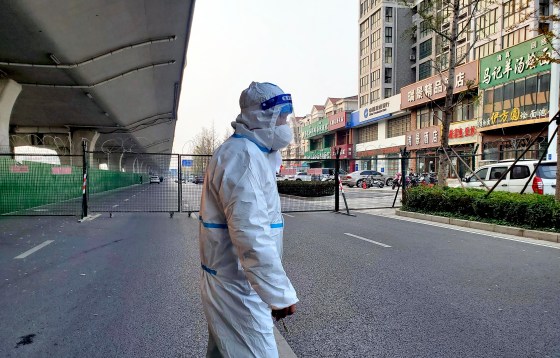
The Yomiuri Shimbun/APAn employee wearing protective gear stands in front of a closed iPhone factory in Zhengzhou City, China, on Nov. 8, 2022.

Last month, thousands of employees walked away from the factory operated by Taiwan’s Foxconn Technology Group after complaints that coworkers who fell ill received no treatment.

News reports say the ruling party has ordered “grassroots cadres” to take the place of missing workers and Foxconn is offering bonuses to others who stay. Foxconn has not responded to requests for confirmation or details.

The 4-month-old girl in Zhengzhou and her father were sent into quarantine Saturday, according to news reports and social media.

An account on social media that said it was written by the father, identified as Li Baoliang, said he started calling the emergency hotline at noon on Monday after she suffered vomiting and diarrhea. It said the hotline responded the girl wasn’t sick enough to need emergency care. The account said health workers at the quarantine site called an ambulance but the crew refused to deal with them because the father tested positive for the virus.

Read More: ‘My Daughter Was Alone in the Hospital for 5 Days.’ Chinese Parents Protest Child Separation for COVID-19

The girl finally arrived at a hospital at 11 p.m. but died despite efforts to revive her, the account said.

The account attributed to the father complained the emergency hotline acted improperly, nearby hospitals weren’t ready to help and the hospital where they ended up failed to provide “timely treatment” and gave him “seriously false” information.

“Epidemic prevention and control people, do you not have a heart?” said another posting on Sina Weibo.

The Zhengzhou city government said the incident was under investigation, according to news reports.

A report on the social media account of news outlet China News Weekly was reposted 11,000 times and received 45,000 “likes,” according to Sina Weibo.

In the capital, Beijing, access to elite Peking University was suspended Wednesday. People who visited a vegetable market in the city’s southeast where a case was found were ordered into quarantine in a hotel at their own expense. Some shopping malls and office buildings have been closed.

Categories
Audio Sources - Full Text Articles

Russia“s war on Ukraine latest news: Fighting rages in the east

2022-11-17T10:20:16Z

Russian drones hit Dnipro early on Wednesday (November 9), damaging a warehouse and wounding four workers, according to Ukraine officials.

Ukraine said it faced fierce attacks in the east from Russian forces reinforced with troops withdrawn from Kherson in the south, while NATO and Poland concluded a missile that crashed in Poland was probably a stray fired by Ukraine’s air defences.

* Villagers in Przewodow in southeastern Poland, where the missile killed two people, struggled with the realisation that the war on their doorstep could reach them at any time.

* NATO’s secretary-general said Tuesday’s blast in Poland was probably caused by a Ukrainian air defence missile but Russia was ultimately responsible because it started the war.

* Ukraine is likely to get access to the site in southeastern Poland where a missile killed two people, the Polish president’s top foreign policy advisor said. Ukrainian defence official Oleg Danilov said Ukraine had evidence of a “Russian trace” in the incident, without giving any details.

* Russia pounded gas production facilities and a major missile factory in new missile strikes on critical infrastructure in Ukraine, Ukrainian officials said.

* Ukrainian forces control around 1% of territory in the eastern region of Luhansk, the RIA Novosti news agency cited the Russian-installed head of the area as saying.

* Investigators in Ukraine’s recently liberated southern region of Kherson have uncovered 63 bodies with signs of torture after Russian forces left, Ukraine’s interior minister was quoted as saying.

* The top U.S. general said Ukraine’s chances of any near-term, outright military victory were not high, cautioning that Russia still had significant combat power inside Ukraine.

* A deal aimed at easing global food shortages by facilitating Ukraine’s agricultural exports from its southern Black Sea ports and due to expire on Nov. 19 was extended for 120 days. The agreement, initially reached in July, created a protected sea transit corridor and was designed to alleviate global food shortages by allowing exports to resume from three ports in Ukraine, a major producer of grains and oilseeds.

* A senior U.N. official involved in the Black Sea grain initiative negotiations welcomed an agreement to extend the deal, adding that work needed to continue on easing fertiliser exports.

* Ukrainian President Zelenskiy said he met U.S. Central Intelligence Agency Director Burns. Burns also met Russian President Putin’s spy chief in Turkey this week.

* French President Macron said G20 leaders agreed to push Russia towards defusing the conflict and expressed hope China could play a bigger mediation role in coming months.

* Russia hailed the G20 leaders’ declaration, which mentions the “immense human suffering” caused by the war, as a “balanced text” that Russian diplomats worked hard to influence.

Related Galleries:

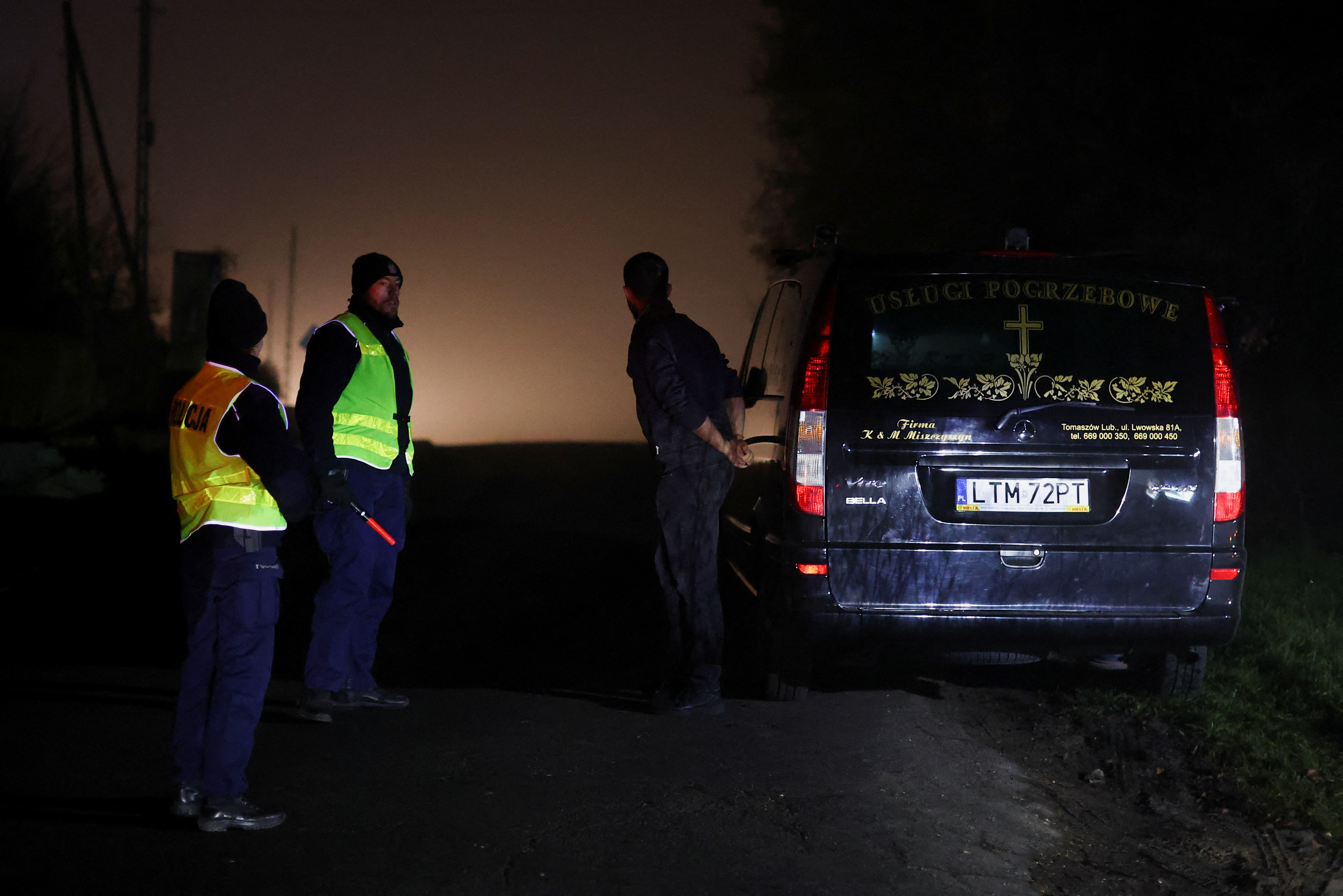
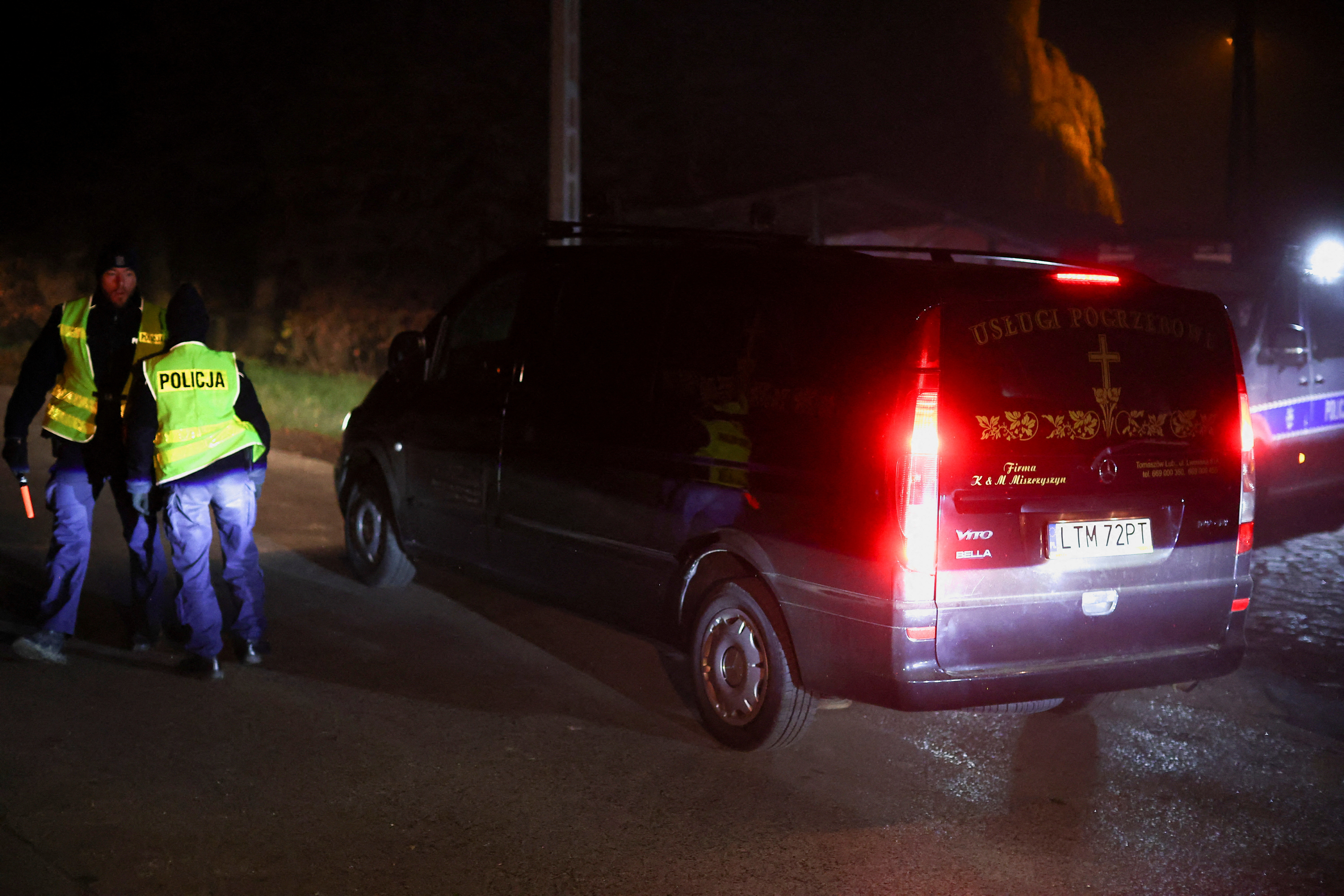
Police officers stand at a blockade after an explosion in Przewodow, a village in eastern Poland near the border with Ukraine, November 16, 2022. REUTERS/Kacper Pempel

A hearse drives past a police blockade after explosions in Przewodow, a village in eastern Poland near the border with Ukraine, November 16, 2022. REUTERS/Kacper Pempel

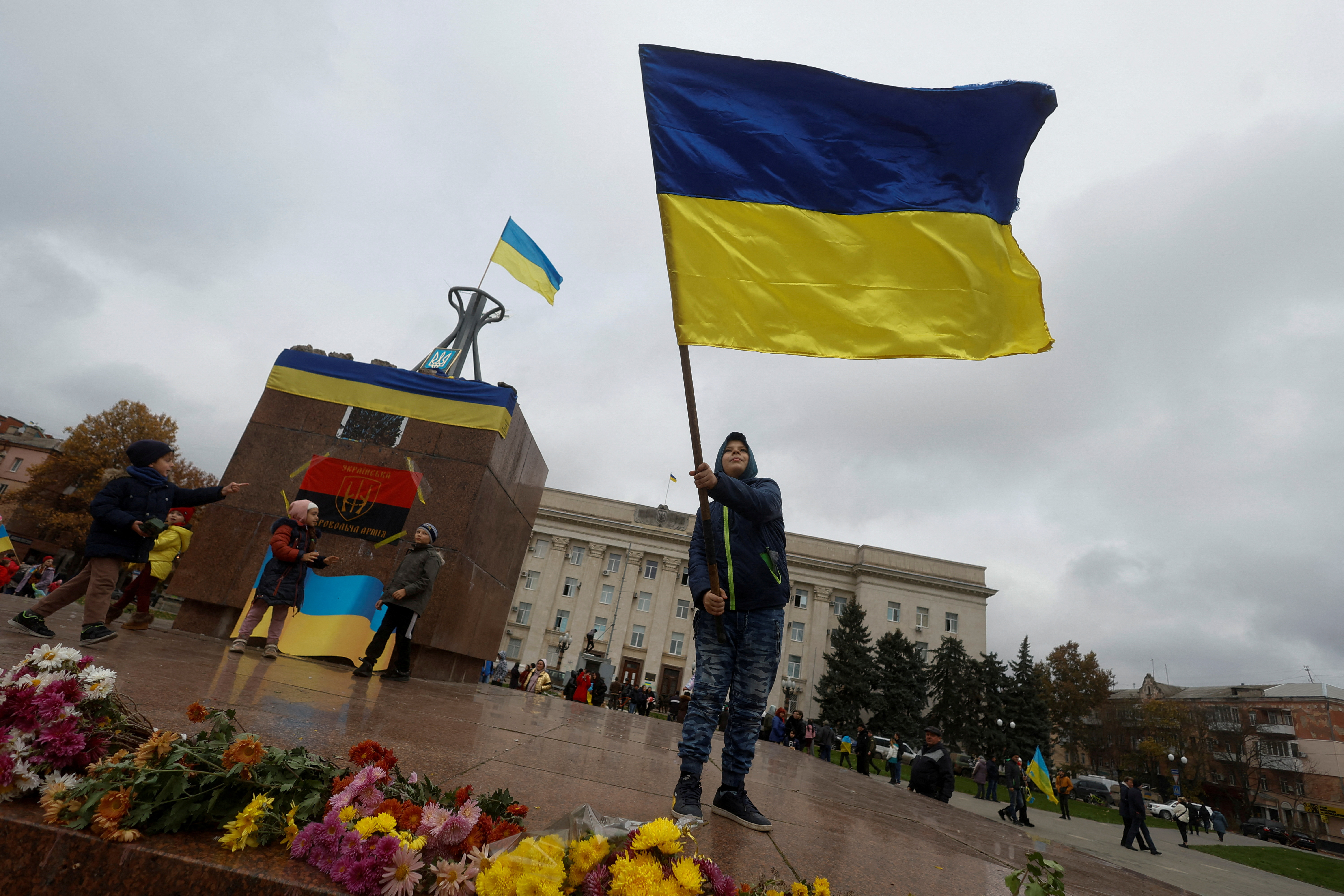
A boy waves a national flag as he celebrates after Russia’s retreat from Kherson, in central Kherson, Ukraine November 13, 2022. REUTERS/Valentyn Ogirenko

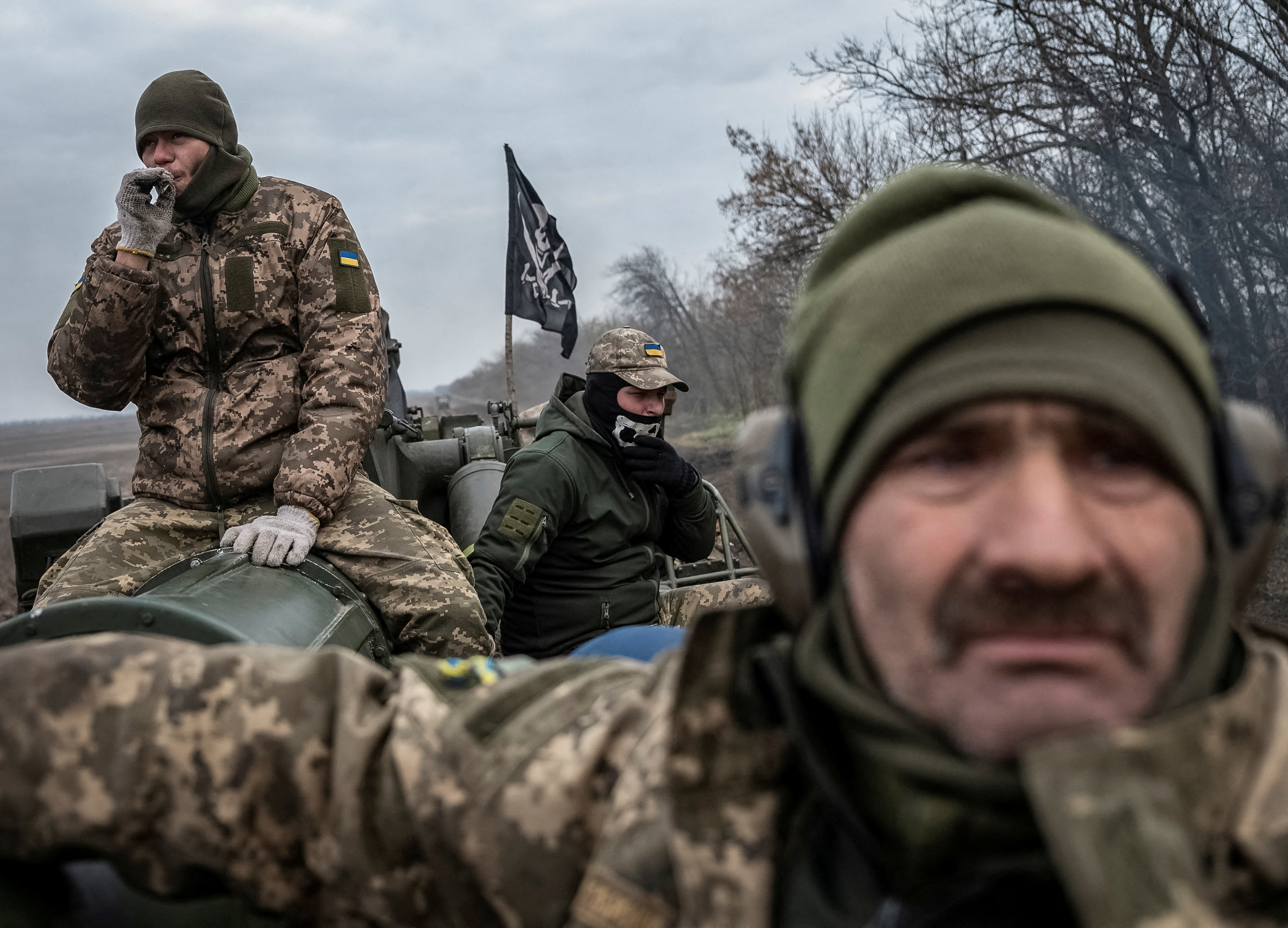
Ukrainian servicemen ride a 2S7 Pion self-propelled gun, as Russia’s attack on Ukraine continues, near a frontline in Kherson region, Ukraine November 9, 2022. REUTERS/Viacheslav Ratynskyi

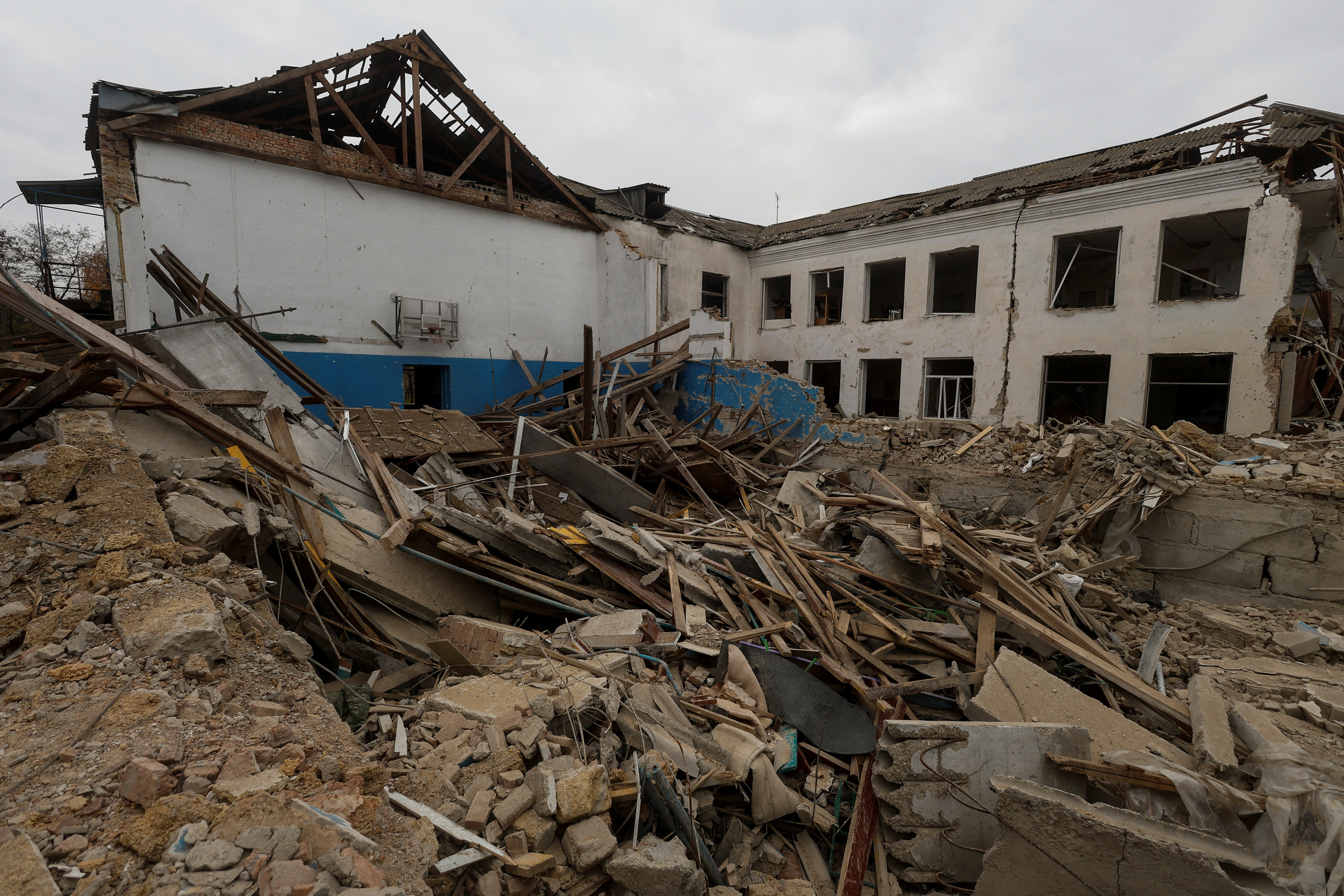
A view shows a building of a local school destroyed during a Russian missile attack in the village of Novooleksandrivka, in Kherson region, Ukraine November 9, 2022. REUTERS/Valentyn Ogirenko

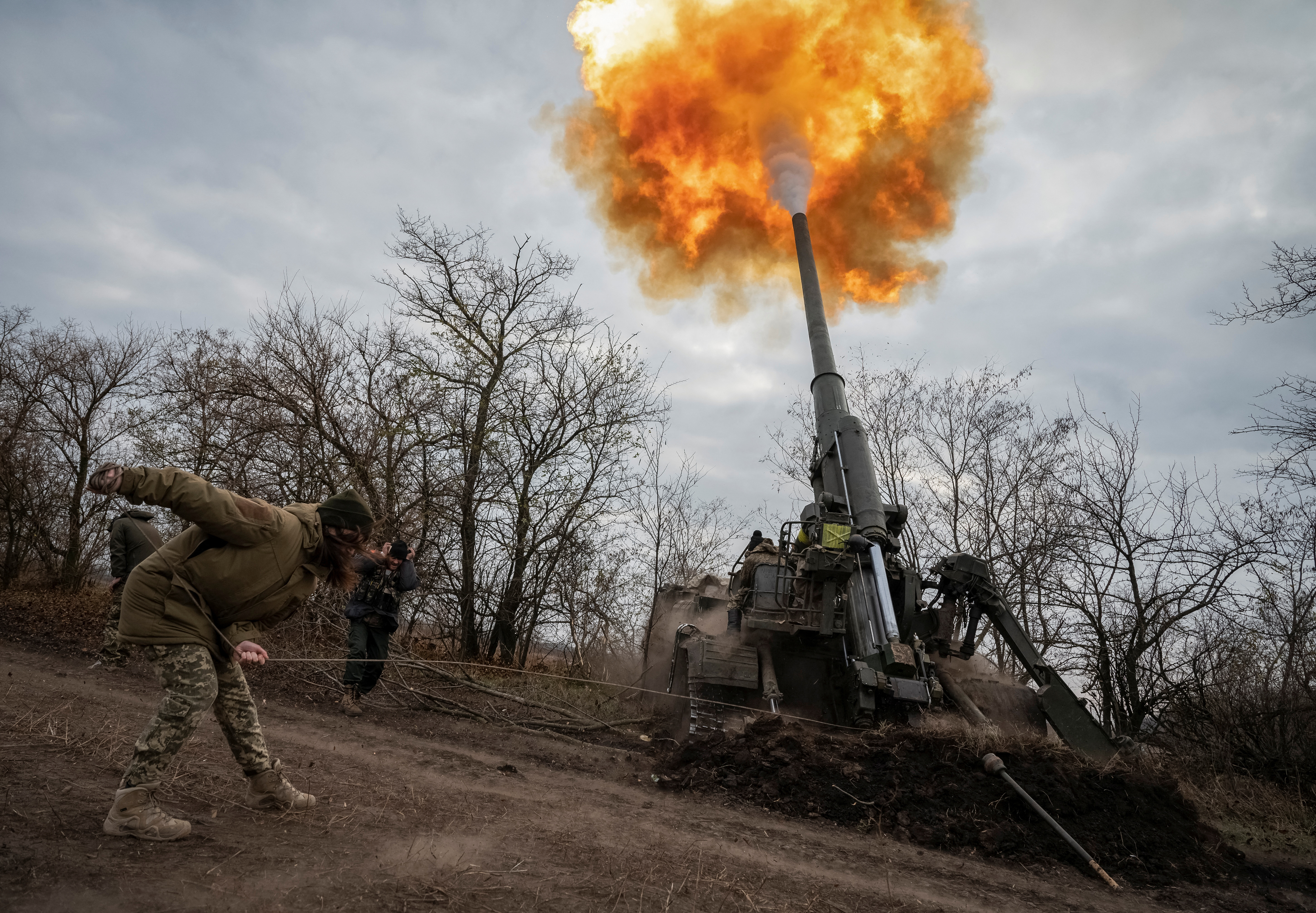
Ukrainian servicemen fire a 2S7 Pion self-propelled gun at a position, as Russia’s attack on Ukraine continues, on a frontline in Kherson region, Ukraine November 9, 2022. REUTERS/Viacheslav Ratynskyi

Ukraine’s President Volodymyr Zelenskiy speaks during a joint news conference with Czech Prime Minister Petr Fiala (not seen), as Russia’s attack on Ukraine continues, in Kyiv, Ukraine October 31, 2022. REUTERS/Viacheslav Ratynskyi

Combine harvesters load a truck with wheat in a field near the village of Tomylivka, as Russia’s attack on Ukraine continues, in Kyiv region, Ukraine August 1, 2022. REUTERS/Viacheslav Ratynskyi/File Photo
Categories
Audio Sources - Full Text Articles

Starbucks U.S. workers at 100 stores plan one-day walkout

2022-11-17T10:09:47Z

A Starbucks logo is pictured on the door of the Green Apron Delivery Service at the Empire State Building in the Manhattan borough of New York, U.S. June 1, 2016. REUTERS/Carlo Allegri/File Photo

Workers at more than 100 U.S. company-owned Starbucks locations plan to strike for one day on Thursday to protest what they say is illegal retaliation against their union organizing.

The walkout comes on the one day each year that Starbucks gives away reusable, red, holiday-themed cups to customers with coffee purchases. In the past, the promotion has driven up traffic, resulting in long lines and stores’ quickly running out of the cups.

The workers say they are underpaid and don’t have consistent schedules. They are also protesting firings, store closures and other actions that they say are illegal retaliation by Starbucks against them for unionizing.

“We’re organizing for a voice on the job and a true seat at the table,” said Michelle Eisen, an employee in Buffalo, New York.

Starbucks has nearly 9,000 corporate-owned U.S. locations.

Starbucks has said it respects employees’ right to organize, that store closings were due to safety concerns and that fired employees violated company policies. The company and union have accused each other of stalling bargaining.

The National Labor Relations Board in August ordered Starbucks to rehire some fired baristas who were union activists.

In just over the past year, about 260 U.S. locations have voted to join the union. Dozens of them began bargaining last month.

After they walk off the job on Thursday, the unionized employees plan to hand out their own version of the red cups – but with their Starbucks Workers United design.

100

Categories
Audio Sources - Full Text Articles

Futures slip as investors assess mixed economic data

2022-11-17T10:23:10Z

Traders work on the floor of the New York Stock Exchange (NYSE) in New York City, U.S., November 15, 2022. REUTERS/Brendan McDermid

U.S. stock index futures edged lower on Thursday following mixed economic data this week, while chip designer Nvidia rose after reporting better-than-expected quarterly revenue.

Wall Street closed the previous session lower as a grim outlook from Target Corp (TGT.N) sparked concerns about retailers heading into the crucial holiday season, while semiconductor shares (.SOX) slid 4.3% after Micron Technology Inc’s (MU.O) supply cut.

Shares of Nvidia Corp (NVDA.O) rose 2.2% in early premarket trading on Thursday after the company beat estimates for third-quarter revenue, helped by strong demand in its data center business.

Peers Advanced Micro Devices Inc (AMD.O) and Intel Corp (INTC.O) added 1.2% and 0.4%, respectively.

Stronger-than-expected retail sales numbers on Wednesday raised concerns that continued strength in spending will keep the U.S. Federal Reserve on track to tighten monetary policy further, even as subsiding inflation gives the central bank room to scale back the size of its interest rate hikes.

“Wall Street was rattled by a conflicting retail picture,” said Susannah Streeter, senior investment and markets analyst at Hargreaves Lansdown.

“Overall sales were stronger than expected showing consumer resilience had not been knocked by super-sized interest rate hikes aimed at pulling down the price spiral. This has added to expectations that higher rates will have to linger for a lot longer to make a difference.”

J.P.Morgan economists predict a “mild recession” in the back half of next year given expectations for the Fed to tighten monetary policy further in its battle against inflation.

At 04:39 a.m. ET, Dow e-minis were down 41 points, or 0.12%, S&P 500 e-minis were down 4.75 points, or 0.12%, and Nasdaq 100 e-minis were down 8.75 points, or 0.07%.

Megacap growth and tech companies such as Tesla Inc (TSLA.O) added 0.4%, while Amazon.com Inc (AMZN.O) was subdued in early trading before the bell.

U.S.-listed shares of NetEase Inc fell 4% after Blizzard Entertainment (ATVI.O) said it will no longer offer games such as “World of Warcraft” and “Hearthstone” in China from next year.

WP Radio
WP Radio
OFFLINE LIVE