Categories
Audio Sources - Full Text Articles

Dutch prosecutors won“t appeal in MH17 case, making verdicts final

2022-12-01T17:11:59Z

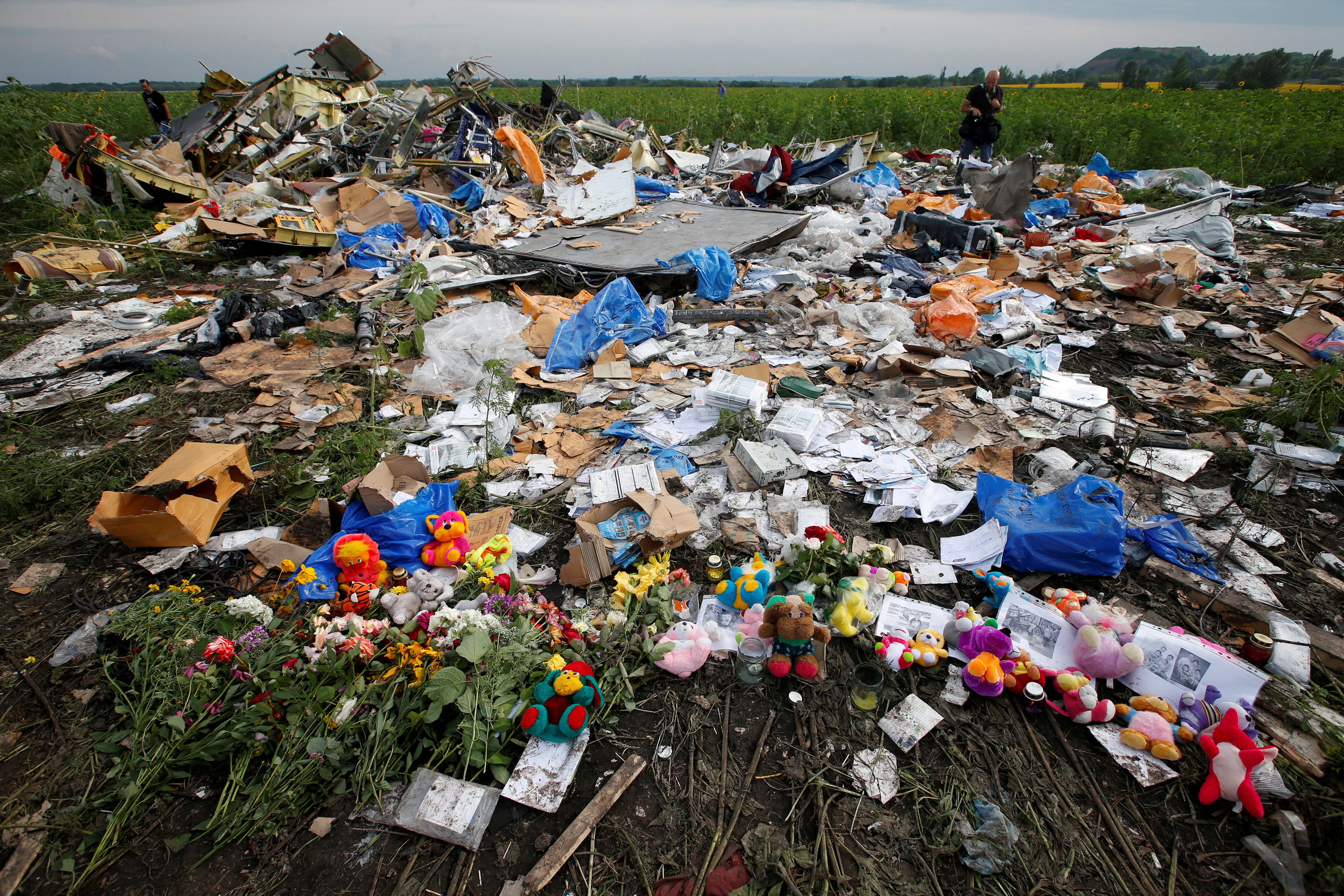
Flowers and mementos left by local residents at the crash site of Malaysia Airlines Flight MH17 are pictured near the settlement of Rozspyne in the Donetsk region July 19, 2014. REUTERS/Maxim Zmeyev/File Photo

Dutch prosecutors said on Thursday they would not file an appeal regarding the outcome in the trial over the 2014 downing of Flight MH17 in eastern Ukraine, making the verdicts final although the suspects remain at large.

A Dutch court last month convicted two former Russian intelligence agents and a Ukrainian separatist leader for shooting down the Malaysian airliner as it flew over eastern Ukraine. All 298 people aboard were killed.

Categories
Audio Sources - Full Text Articles

Morgan Stanley making “modest“ job cuts; CEO “wouldn“t bet against“ Musk

2022-12-01T17:14:22Z

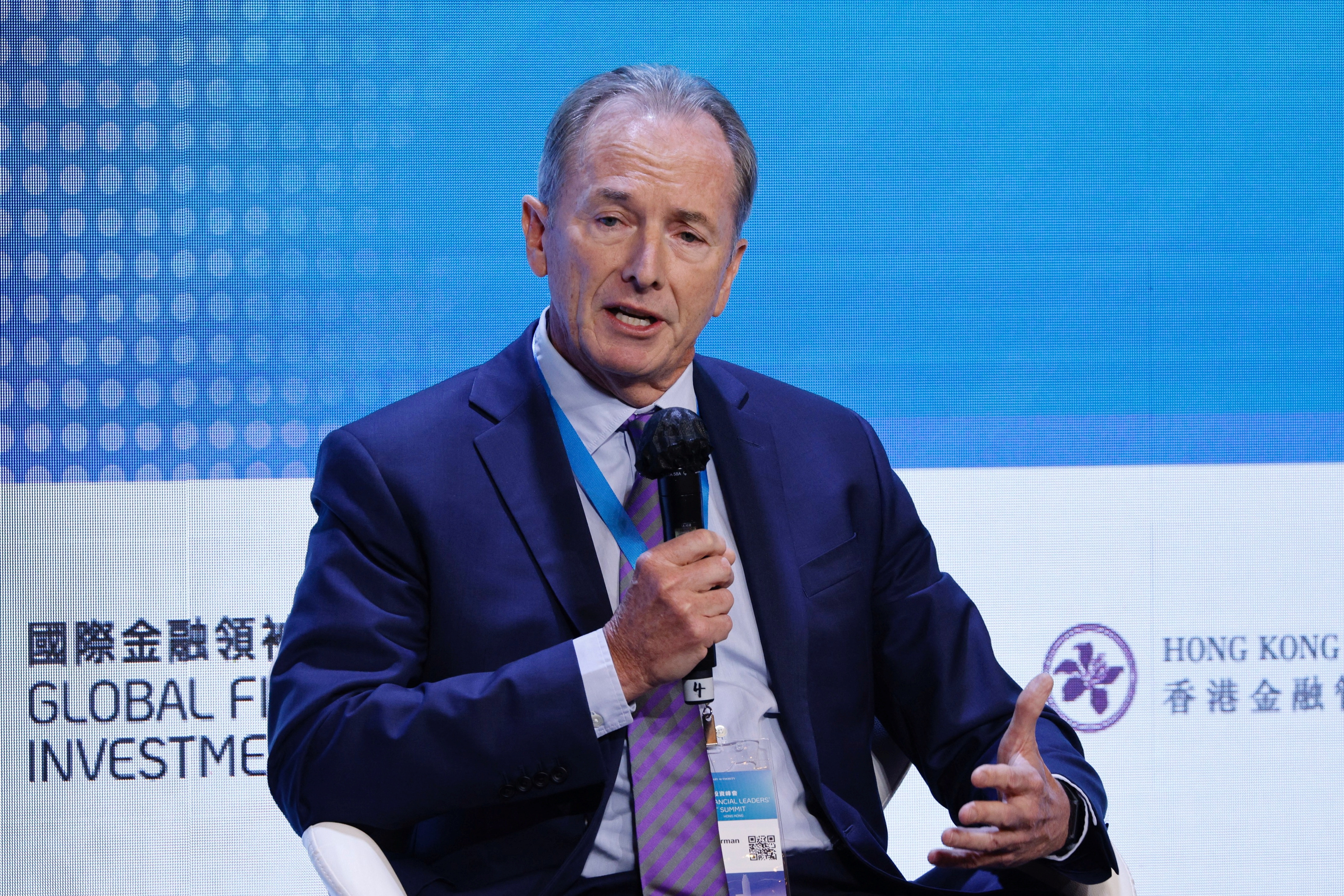
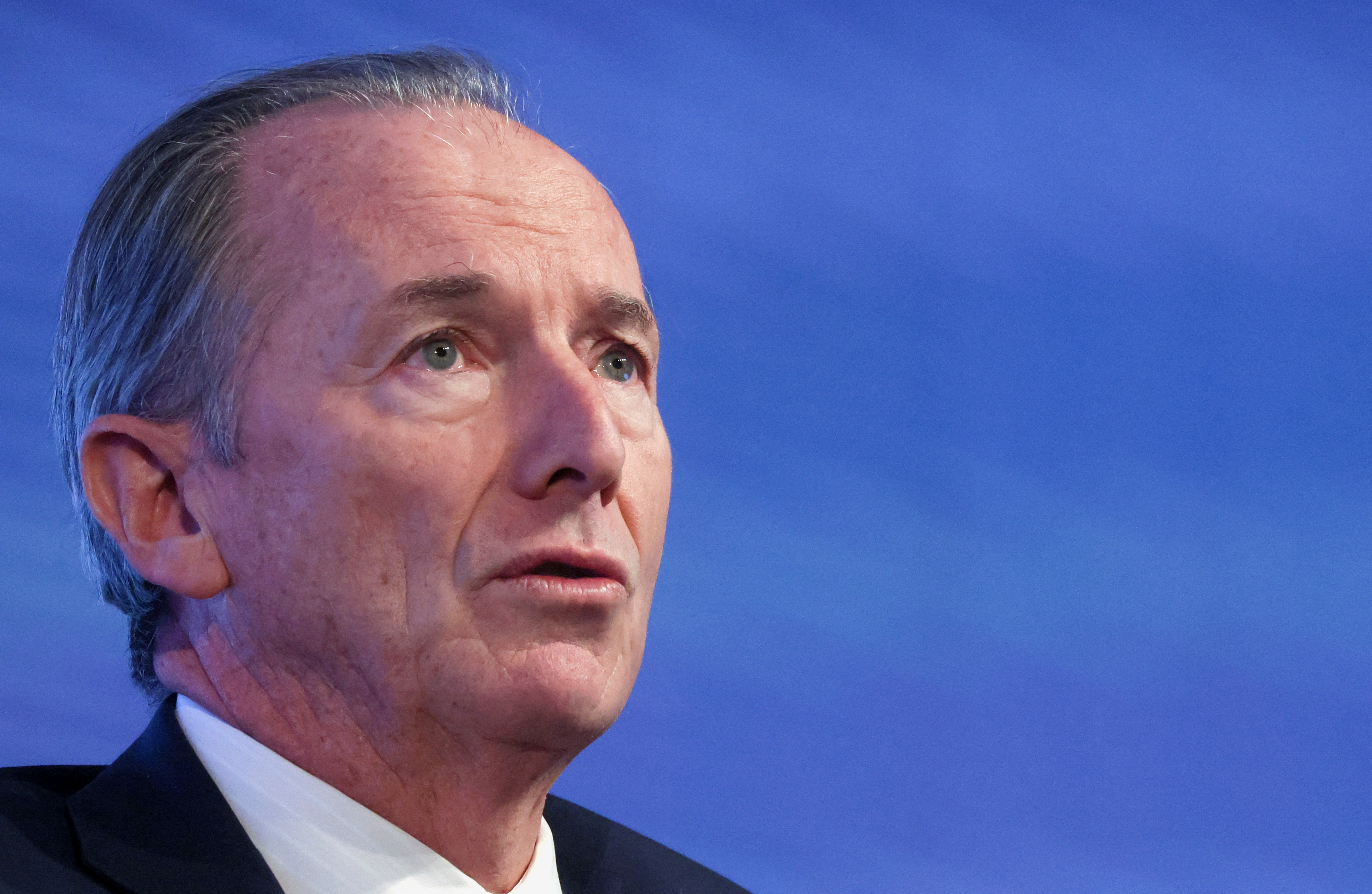
Morgan Stanley is making modest job cuts across the globe, Chief Executive Officer James Gorman said at the Reuters NEXT conference on Thursday (December 1), as Wall Street comes under pressure with dealmaking slowing down due to the central bank’s monetary tightening.

Morgan Stanley is making modest job cuts across the globe, Chief Executive Officer James Gorman said, as Wall Street comes under pressure with dealmaking slowing down.

“Some people are going to be let go,” Gorman said at the Reuters NEXT conference, without specifying numbers. “We’re making some modest cuts all over the globe. In most businesses, that’s what you do after many years of growth.”

Corporations have postponed dealmaking as red-hot U.S. inflation continues at levels way above the Federal Reserve’s 2% target. That has put pressure on investment banks which earned billions of dollars in advisory fees amid unfettered market optimism last year.

Speaking of Elon Musk, Gorman said he “wouldn’t bet against” the billionaire Tesla Inc (TSLA.O) chief.

“He’s probably, along with Steve Jobs and Bill Gates and one or two others, the most interesting entrepreneur of last 50 years. Who would not want to do business with a person who has that kind of capability,” Gorman added.

Morgan Stanley was among the banks providing $13 billion in financing for Musk’s $44-billion acquisition of Twitter Inc .

Reuters reported in October that banks abandoned plans to sell the debt to investors because of uncertainty around Twitter’s fortunes and losses, citing people familiar with the matter.

While Musk’s management style has raised concerns among advocates of content moderation on one of the biggest social media platforms globally, he has also found support among C-suite executives.

On Wednesday, Netflix (NFLX.O) co-founder Reed Hastings called Musk “the bravest, most creative person on the planet.”

Gorman said Morgan Stanley was targeting bringing in $1 trillion of new money every three years. He said the bank plans to boost client assets to $10 trillion, without specifying a timeframe for the target. Client assets, which include wealth and investment management businesses, were $5.4 trillion at the end of September.

After taking the helm at the Wall Street giant in 2010, Gorman has transformed Morgan Stanley into a more diversified firm less reliant on its traditional strengths – trading and investment banking.

He struck major deals including the acquisitions of money manager Eaton Vance, online broker E*Trade, stock-plan manager Solium Capital and Smith Barney, a brokerage and investment adviser that became a cornerstone of the bank’s wealth management arm.

Wealth management accounted for 47% of Morgan Stanley’s revenue in the third quarter, compared with 34% during his first quarter as chief executive.

To view the Reuters NEXT conference live on Nov. 30 and Dec. 1, please click [https://www.reuters.com/world/reuters-next/]

Related Galleries:

James Gorman, Chairman and Chief Executive of Morgan Stanley, speaks during the Global Financial Leaders Investment Summit in Hong Kong, China November 2, 2022. REUTERS/Tyrone Siu

Morgan Stanley CEO James Gorman attends the Reuters NEXT Newsmaker event in New York City, New York, U.S., December 1, 2022. REUTERS/Brendan McDermid
Categories
Audio Sources - Full Text Articles

UN Budget vs. Rhetoric: Touting “Agenda for Peace” But Investing in Counterterrorism Instead?

Guterres-MBS-UN-Saudi-Arabia-small.jpg

A new “Agenda for Peace” to be developed by U.N. Secretary-General António Guterres is the talk of the town at the United Nations. But one would be mistaken to think this is the only important game for those working on peace and security at the U.N. Hidden away in one of the many hundreds of pages of the institution’s annual budget request, which must be approved by all member States by the end of December 2022, is a proposal that could have significant implications for U.N. peace and security architecture. This proposal by the U.N. Secretary-General asks for a budget increase for the U.N. Office of Counter-Terrorism of 400 percent in 2023 and a total of 700 percent by 2024. The proposal is just the latest chronicle in the problematic rise of securitized counterterrorism in the U.N. system – and one that seems detached from other rhetoric coming from U.N. leadership on the body’s role in the world.

In September 2021, Guterres released his rhetorical plan for the future of the U.N. The “Common Agenda,” a report that looks ahead to the next 25 years, calls for an “inclusive, networked, and effective multilateralism to better respond to humanity’s most pressing challenges.” This is where the commitment emerged to produce a “New Agenda for Peace,” which will update the 30-year-old “An Agenda for Peace” written by the former Secretary-General Boutros Boutros-Ghali. This vision — to be completed in 2023 — would seek to identify major emerging challenges and re-imagine what role multilateral institutions can have in responding to such threats. Within the wider Common Agenda, counterterrorism was nowhere to be seen as a major U.N. priority. It was mentioned just once, in a longer list of potential actions to take in relation to reducing strategic risks in the New Agenda for Peace.

So why has a request for a huge increase in the U.N. Office of Counter-Terrorism’s budget taken place, when this does not appear to be a key part of the secretary-general’s vision? There are a few parts to this puzzle, involving a couple of U.N. budget requests, for the General Assembly Fifth Committee (responsible for administrative and budgetary matters) to consider.

Two UN Budget Requests

The Secretary-General has long called for a “quantum leap” in resources for the U.N.’s programs on Sustaining Peace. In April 2022, he followed this with a formal request for predictable support for the U.N. Peacebuilding Fund – which currently is entirely voluntary contributions. The proposal called for adding $100 million to the Fund annually from the U.N.’s regular budget (comprising assessed contributions from every state, based mainly on GDP) to support countries recovering from a conflict or experiencing the departure of a U.N. peace operation. The request received significant support from many countries most affected by conflict and insecurity, as well as from the Group of Friends of the Peacebuilding Fund (co-chaired by the U.K. and Sweden). Yet it did not receive consensus support — Brazil, China, and Japan, among others, were opposed — and therefore no resources were given to the Peacebuilding Fund to fill the clear gap identified by the Secretary-General. None of these objecting seemed to oppose the need to build peace, instead couching their opposition in technical concerns about procedures and mechanisms.

Compare this with the budget request in May 2022 for the 2023 operational budget, in which the secretary-general asked member states to increase their regular budget contributions for staffing in the Office of Counter-Terrorism (OCT) and to boost the office budget a whopping 700 percent over two years. The number of regular-budget staff positions would jump from 8 now to 33 in 2023, and 57 in 2024, giving this office twice as many staff on the regular budget as the U.N. Peacebuilding Support Office.

It is well-known that the Office of Counter-Terrorism is the fastest growing part of the U.N. system. But this did not occur through the negotiated central U.N. budget that requires all states in the General Assembly to agree. Rather, it occurred mostly via the deep pockets of Saudi Arabia and Qatar, which have provided huge resources that have allowed the office to have in excess of 150 staff total. This growth and wider U.N. counter-terrorism practices have been the subject of significant scrutiny from civil society, experts, and even some States. Despite all these resources, there is still very little evidence of U.N. OCT’s performance, oversight, or overall effectiveness.

There are rumors that Saudi Arabia and Qatar are wavering on renewing their substantial funding to U.N. OCT. This means the office could be about to run out of money. That would in some way explain the request to bring many staff members onto the regular budget. As some analysts have argued, this is the main precedent that could be cited for converting so many extra-budgetary positions in that office onto the regular budget. Others have speculated that funding pressure exists because these same donors are not in favor of allowing their resource contribution to be used to finance the office’s work on civil society engagement, gender issues, and human rights.

Yet importantly, none of this explains the potential disparity between the budget allocated to the U.N.’s main counterterrorism office and its main peacebuilding office – nor does it match the rhetoric of the secretary-general’s flagship proposal for his vision for the future.

What Comes Next?

While the next regular budget request for the Peacebuilding Fund will need to wait until 2023, the budget request for the Office of Counter-Terrorism is moving ahead. In the September 2022 assessment of the initial request for the OCT from the Advisory Committee on Administrative and Budgetary Questions (ACABQ) (a group of delegates from across the General Assembly membership), a few modifications were proposed. Instead of validating the full 33 positions requested, the ACABQ suggested 30 but noted that these should be “general temporary assistance positions” rather than established permanently on the regular budget, demonstrating a reluctance to unquestioningly rubber-stamp the formal growth of this office.

States now need to assess whether this really is a strategic investment of U.N. resources. On the one hand, the argument that the office should get an increase in predictable and sustained funding does make sense. The office is mandated to be a coordinating function for the U.N.’s work on counterterrorism, and some have argued that eight staff members do not allow for that coordination to happen in the way it should. But increasing this to 30 staff does not seem like normal growth trajectory.

In any case, some have argued that the unchecked growth of the OCT has gone well beyond the original mandate given to it in 2017, and that it should not fall to the regular budget to pick up the slack for ever-increasing staff levels. Moreover, there is still very little evidence of impact from OCT’s many programs. Providing significant resources before such evidence exists does not seem like a shrewd move for states wishing to see value for money in the U.N. system. And, as discussed above, it would seem that a precedent has been set by those states who opposed the Peacebuilding Fund on technical grounds that the work to improve internal systems must be done first, before a regular U.N. budget is granted.

Ironically, the Peacebuilding Fund, despite having its 2022 request for funding rejected, actually has a proven track record of success. It has significantly outperformed a system-wide target of funding gender empowerment efforts – 40 percent from the fund, compared with the 15 percent U.N. target. It is able to quickly allocate funding to places or situations in need of rapid peacebuilding and prevention efforts, and it has become a valuable partner for many civil society organizations. The proposal to bring some of the Peacebuilding Fund onto the regular budget was the right one, as the U.N. should have reliable resources to support countries experiencing transitions and stop them sliding back towards violent conflict.

Ultimately, for an outsider looking in, a U.N. budget that will make the Office of Counter-Terrorism twice as big as the Peacebuilding Support Office does raise eyebrows. It is important for member States to remember that rejecting the Secretary-General’s proposals for the Office of Counter-Terrorism does not equate to not supporting counterterrorism, as Eugene Chen has eloquently argued. In a world of financial constraint, it may instead mean that the proposal does not make strategic sense for other U.N. priorities, especially if the Office of Counter-Terrorism cannot show improvements in impact and accountability.

States should be clear in budget negotiations about standing up for values they claim the multilateral system represents. States that wish to see the U.N. strengthen its peacebuilding work and who see the Peacebuilding Fund as a key vehicle to do this should be alert to the risks of granting a huge regular-budget increase to simply provide more staff members in New York for the OCT. This is especially important as States that might not be supportive of human rights and the U.N.’s Sustaining Peace agenda are preventing investment in actual direct peacebuilding funds.

If member States approve the budget request for the Office of Counter-Terrorism, while at the same time stymying the Peacebuilding Fund’s support to communities recovering from conflict and fragility, that will be a sharp disconnect from the lofty rhetoric of the Common Agenda.

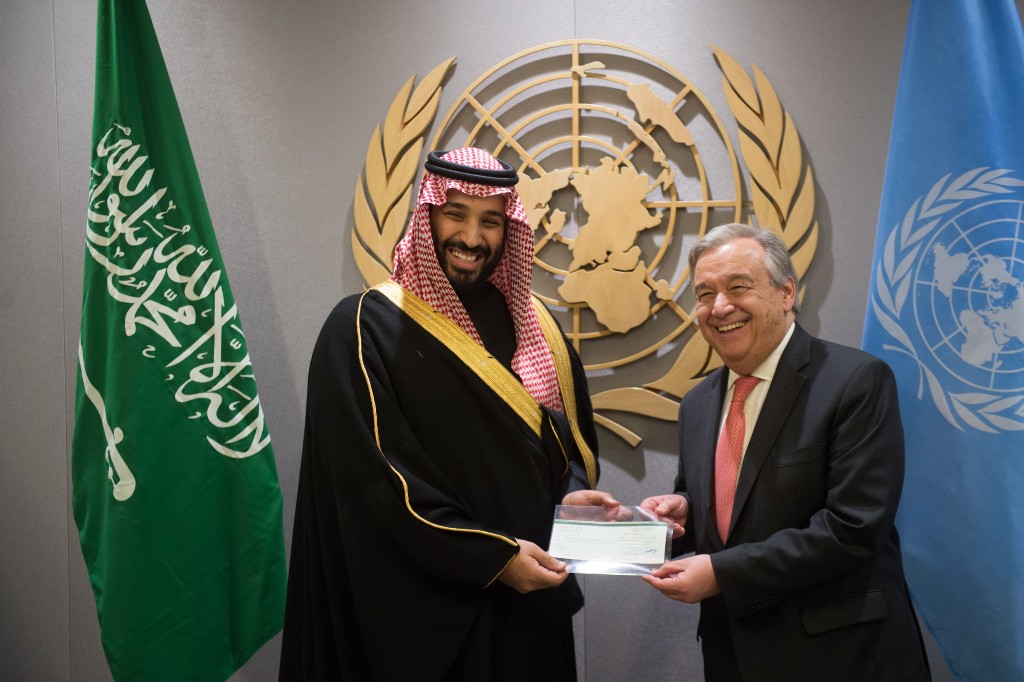
IMAGE: Prince Mohammed bin Salman Al Saud (L), Crown Prince, Kingdom of Saudi Arabia, presents a check for $930 billion to United Nations Secretary-General Antonio Guterres (R) following the signing of the Voluntary Financial Contribution Memorandum between the Kingdom of Saudi Arabia and the United Nations to the 2018 Yemen Humanitarian Response Plan at the United Nations on March 27, 2018 in New York.  (Photo by BRYAN R. SMITH/AFP via Getty Images)

The post UN Budget vs. Rhetoric: Touting “Agenda for Peace” But Investing in Counterterrorism Instead? appeared first on Just Security.

Categories
Audio Sources - Full Text Articles

A Pathetic Ron DeSantis Hit Piece

What happened?

The Atlantic published an article criticizing Ron DeSantis, the Florida governor who cruised to reelection by almost 20 percentage points and is widely expected to challenge former president Donald Trump for the Republican nomination in 2024.

What did it say?

The headline reads: “Just Wait Until You Get to Know Ron DeSantis.” Staff writer Mark Leibovich reports that “people who have met” the governor or “have watched him longer” than others are skeptical of his ability to succeed on a national stage.

Who are these people?

• A former two-term GOP congresswoman from the Washington, D.C., suburbs who said DeSantis was “standoffish in general.”

• Rick Wilson, the former Republican strategist and Lincoln Project co-founder who spends his days boasting about sleeping with other people’s wives on Twitter. He has a clear financial interest in helping Donald Trump win the GOP nomination. He is incorrectly identified as a “Republican media consultant.” That’s like describing Edward Snowden as an NSA employee.

• Mac Stipanovich, a “Tallahassee lobbyist who set sail from the GOP over his revulsion for Trump and his knockoffs.” He registered as a Democrat in 2019 and expressed support for Joe Biden and Michael Bloomberg in the presidential primary.

• Carlos Curbelo, a former two-term GOP congressman from Florida, who said DeSantis would face “some challenges” in the 2024 primary, such as finding a way to “humanize himself” in front of a national audience. “Everything else checks the box. He is smart and competent and committed to his ideology.”

That’s it?

That’s it.

Seriously?

Yes.

Rick Wilson? 

I know. He called it a “great piece.”

What’s the bottom line?

DeSantis may or may not have what it takes to defeat Donald Trump. To win on the national stage, he will need to overcome an army of antagonists who don’t even like Trump but are professionally and emotionally invested in Trump’s success. This includes every mainstream media outlet whose ratings and profits tanked after Joe Biden was sworn in as president, as well as every Democratic politician and consultant who wants to run against Trump in 2024. Grifters like Rick Wilson, too.

Trump is an existential threat to democracy, they argue, but he must prevail. DeSantis could stop that from happening, so he must be destroyed.

The post A Pathetic Ron DeSantis Hit Piece appeared first on Washington Free Beacon.

Categories
Audio Sources - Full Text Articles

U.S. Ambassador Under Fire for Wearing Hijab at Lebanon’s Request

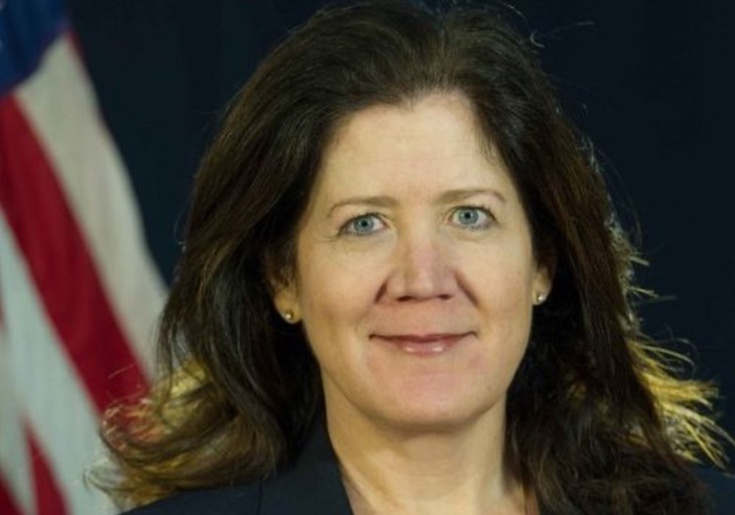
The U.S. ambassador to Lebanon is facing criticism within the State Department for wearing a hijab earlier this month during meetings with pro-Hezbollah officials at a time when Iranian protesters are rallying against such draconian religious displays.

Dorothy Shea, who has served as the top U.S. diplomat in Lebanon since 2020, was recently pictured in regional media outlets meeting with Lebanon’s Higher Shiite Islamic Council, a religious body that experts view as allied with Hezbollah, the Iranian-backed terror group that wages outsized political influence in Lebanon. One senior diplomatic source told the Washington Free Beacon the gesture undermines U.S. efforts to support Iranian protesters who are rallying in the streets against such draconian religious displays.

The images upset some officials in the State Department’s diplomatic corps who view Shea’s decision to wear a head covering as tone-deaf and offensive at a time when Iranians are protesting against a theocratic regime that recently murdered a 22-year-old woman for not properly wearing her hijab. Iranian-American groups and outside experts also expressed shock over the images of Shea in a headscarf.

“This has raised some eyebrows here and is just a bad look all around,” one senior State Department official, who spoke on background discussing internal matters, told the Free Beacon. “There are literally thousands of brave women in Iran risking their lives in protest of the hijab and all it represents. What message does this send to them in this unspoken, yet highly symbolic act of submission by a U.S. ambassador who takes on the very appearance of the oppressors?”

“I understand that as diplomats we are supposed to be sensitive to the culture in which we work,” the source added, “but sometimes, events take priority.”

While the State Department has been clear in its support for the Iranian protesters, it has come under fire for not taking concrete action to aid their efforts. Lawmakers and outside groups are pushing for U.S.-Iran envoy Robert Malley to be fired, given his role as the administration’s public face of diplomacy with Iran’s hardline regime. Malley and other State Department officials also have stopped short of saying that the protesters want regime change, with spokesman Ned Price telling reporters late last month that “it’s not for us to interpret what the people of Iran are asking for.” This statement came as protesters chanted, “Death to the dictator.”

A State Department spokesman declined to comment on the images or provide the Free Beacon with information about Shea’s meetings. One senior Republican congressional source who works with State Department officials said this hesitance to address the issue indicates administration officials are embarrassed by Shea’s display.

“This was so incredibly dumb and tone deaf that not even the usual suspects in the State Department wanted anything to do with it, let alone defend her,” said the source, who was not authorized to speak on record.

The U.S. ambassador to Lebanon is also facing criticism for meeting in person with a religious body that is seen as loyal to Iran’s Hezbollah forces. Tony Badran, a veteran Lebanon expert at the Foundation for Defense of Democracies think tank, told the Free Beacon that Shea’s behavior undermines the State Department’s stance on the protests in Iran and efforts to isolate the hardline regime.

“Dorothy Shea is so committed to boosting Iranian equities that she didn’t stop for a second to consider the visual of donning the hijab at a meeting with a pro-Iran Shiite cleric while the clerical regime in Tehran is murdering protesters in the streets,” Badran said. “She did this while the State Department had been forced at least to pay lip service to supporting the protesters.”

Iranian-American groups working to support the protest movement also expressed outrage over the images of Shea in a hijab, with one group telling the Free Beacon that her actions indicate the State Department is in disarray.

Secretary of State Antony Blinken’s “State Department is the most tone-deaf administration in our nation’s history—one failure after another,” said Bryan Leib, executive director of the Iranian-Americans for Liberty, an advocacy group that supports democracy in the country. “From Price and Malley’s recent comments regarding the revolution to now this act by Shea. The United States of America should take a strong stand against Sharia Law. Shame on Shea for wearing a headscarf at Lebanon’s request—who we all know take their orders from Tehran as Iranian women are being killed for their courageous actions of saying no to mandatory hijab.”

The post U.S. Ambassador Under Fire for Wearing Hijab at Lebanon’s Request appeared first on Washington Free Beacon.

Categories
Audio Sources - Full Text Articles

Russian shelling cuts off power again in liberated Kherson

KHERSON, Ukraine (AP) — Russian shelling cut off power in the recently liberated Ukrainian city of Kherson on Thursday, just days after it was restored amid Moscow’s ongoing drive to destroy key civilian infrastructure as freezing weather sets in.

In Kyiv, Mayor Vitali Klitschko warned the capital’s millions of residents that they should stock up on water and preserved food to see them through a winter that could prove miserable if more energy infrastructure is damaged.

He also urged people to consider leaving the city to stay with friends or family elsewhere, if possible.

“Trying months lie ahead. The enemy still possesses substantial resources,” Ukrainian Defense Minister Oleksiy Reznikov said. He added, however, that “signs are accumulating that (Russia) needs a pause at all costs.”

Ukraine has faced a blistering onslaught of Russian artillery fire and drone attacks since early October. The shelling has been especially intense in Kherson since Russian forces withdrew and Ukraine’s army reclaimed the southern city almost three weeks ago.

Ukraine’s presidential office said Thursday that at least two civilians were killed and six others wounded nationwide by the latest Russian shelling. In Kherson, a 70-year-old woman was killed in her apartment and a 64-year-old man was wounded on the street. A 15-year-old boy died when a hospital in the northeastern Sumy region town of Bilopillia was hit, the presidential office said.

In the eastern Dnipropetrovsk region, Russian forces fired “from evening till morning” at Ukrainian-held towns facing the Russian occupied Zaporizhzhia Nuclear Power Plant across the Dnieper River, the regional governor said Thursday.

“Eight shelling attacks per night. The Russians from evening till morning struck the Nikopol area with (multiple rocket launchers) and heavy artillery. Two districts — Marhanets and Chervonohryhorivka — came under enemy fire,” governor Valentyn Reznichenko wrote on Telegram.

Elsewhere in eastern Ukraine, Russian forces continued their attempts to encircle the Donetsk region city of Bakhmut, focusing on several villages around it and trying to cut a key highway.

Andriy Yermak, the head of Ukraine’s presidential office, said Russia released 50 Ukrainian prisoners of war and Ukraine turned over the same number Thursday as the fighting continued.

In Berlin, NATO Secretary-General Jens Stoltenberg praised the “heroic resistance of the Ukrainian people” against Russia’s attacks, saying that with the help of allies “Ukraine has made significant gains” on the battlefield.

“But we should not underestimate Russia,” Stoltenberg warned in a speech at the Berlin Security Conference. “Russian missiles and drones continue to rain down on Ukrainian cities, civilians and critical infrastructure, causing enormous human suffering as winter sets in.”

The NATO chief said Russian President Vladimir Putin had made “two big strategic mistakes” when he invaded Ukraine in February: underestimating Ukraine and underestimating the support NATO and its allies were willing to provide so the country could defense itself.

In a related development, Kremlin spokesman Dmitry Peskov on Thursday strongly condemned a European Union proposal, issued the previous day, to set up a U.N.-backed court to investigate possible Russian war crimes in Ukraine.

“As for attempts to establish some kind of tribunals, they will not have any legitimacy and will not be accepted by us. They will be condemned by us,” Peskov said during a media briefing.

European Commission President Ursula von der Leyen said in a video message Wednesday that the EU would work with international partners to get “the broadest international support possible” for the proposed war crimes court while continuing to support the International Criminal Court.

Neither Russia nor Ukraine are among the ICC’s 123 member states.

—-=

Jamey Keaten in Kyiv, Yuras Karmanau in Tallinn, Estonia, and Joanna Kozlowska in London contributed reporting.

___

Follow AP’s coverage of the war in Ukraine: https://apnews.com/hub/russia-ukraine

Categories
Audio Sources - Full Text Articles

One more move on the chess board

19121c5c768fb6ee35d5576afe2d9a7f?s=100&d

Keep Palmer Report going! Our articles are all 100% free to read, with no forced subscriptions and nothing hidden behind paywalls. If you value our content, you’re welcome to pay for it:

Pay $5 to Palmer Report:

Pay $25 to Palmer Report:

Pay $75 to Palmer Report:


Keep Palmer Report going! Our articles are all 100% free to read, with no forced subscriptions and nothing hidden behind paywalls. If you value our content, you’re welcome to pay for it:

Pay $5 to Palmer Report:

Pay $25 to Palmer Report:

Pay $75 to Palmer Report:

Sign up for the Palmer Report Mailing List.


The best revolutions are the ones that know what they’re fighting for and do it as a team. And that is precisely what we — you and I and many others — are doing in our quest to put Trumpism behind us.

I was going to start this article with a report on Herschel Walker’s latest snafu – and there are many. But I am tired of speaking of him. I’d rather talk about our quiet yet mighty revolution and how we MUST work together to get Senator Warnock over the finish line.

Warnock, in his short time in office, has already shown us he is the gold standard in how to conduct oneself as a Senator. I am banking on Georgians to recognize that fact. And we must bank on each other. Because, make no mistake — what we have built — together — is a revolution.

Time and time again, we have defied the odds. You’d think they’d give us credit, right? One would think our accomplishments would be all over emblazoned in gold. But that’s not how any of this works. The truth is we are fighting not just Republicans but many in the media who gleefully point to junk polls and their ongoing mantra of “Democrats in disarray.”

The best revolutions know not just what they’re fighting against but who they’re fighting for. We fight for justice. We fight for all states to have a voice. And we fight for Senator Warnock.


So in these last few days, let’s donate and phone bank and door knock and tweet and WORK OUR MAGIC once again. It is going to require concentration and teamwork, but we can do it. We are not extremists or filled with hate like Maga is. All we desire is change — good change — revolutionary change.


And with 51 Senate seats — we can feel safe and reassured that we have the best of the best. So lets all pitch in for Senator Warnock. Frankly, I can think of few things better in politics right now than another term for one of our best Senators.

Keep Palmer Report going! Our articles are all 100% free to read, with no forced subscriptions and nothing hidden behind paywalls. If you value our content, you’re welcome to pay for it:

Pay $5 to Palmer Report:

Pay $25 to Palmer Report:

Pay $75 to Palmer Report:

Write for the Palmer Report Community Section.


Keep Palmer Report going! Our articles are all 100% free to read, with no forced subscriptions and nothing hidden behind paywalls. If you value our content, you’re welcome to pay for it:

Pay $5 to Palmer Report:

Pay $25 to Palmer Report:

Pay $75 to Palmer Report:

The post One more move on the chess board appeared first on Palmer Report.

Categories
Audio Sources - Full Text Articles

Live: Biden, Macron discuss U.S.-French relationship

WASHINGTON (AP) — Presidents Joe Biden and Emmanuel Macron are celebrating the longstanding U.S.-French relationship — but these are friends with differences. The French president is using his visit to Washington to sharply criticize aspects of the U.S. president’s signature climate law as a bad deal for Europe.

Biden is set to honor Macron with the first state dinner of his presidency on Thursday evening. First, the two leaders will sit down in the Oval Office for morning talks that officials from both sides said were expected to largely center on the leaders’ efforts to stay united in their response to Russia’s war in Ukraine and to coordinate their approach to an increasingly assertive China.

But ahead of Thursday’s meeting, Macron made clear that he and other European leaders remain deeply concerned about the incentives in a sweeping new climate-related law that favor American-made climate technology, including electric vehicles.

Macron on Wednesday criticized the legislation, known as the Inflation Reduction Act, during a luncheon with U.S. lawmakers and again during a speech at the French embassy. The French president said that while the Biden administration’s efforts to curb climate change should be applauded, the subsidies would be an enormous setback for European companies.

“The choices that have been made … are choices that will fragment the West,” Macron said at the French embassy. He added that the legislation “creates such differences between the United States of America and Europe that all those who work in many companies (in the U.S.), they will just think, ‘We don’t make investments any more on the other side of the Atlantic.’”

Separately, at the luncheon with members of Congress from both parties, along with business leaders and diplomats, Macron said that major industrial nations need to do more to address climate change and promote biodiversity.

He criticized a deal reached at a recent climate summit in Egypt in which the United States and other wealthy nations agreed to help pay for the damage that an overheating world is inflicting on poor countries. The deal includes few details on how it will be paid for, and Macron said a more comprehensive approach is needed — “not just a new fund we decided which will not be funded and even if it is funded, it will not be rightly allocated.″

Speaking after his prepared remarks and without cameras present, Macron took aim at the Inflation Reduction Act, calling the subsidies harmful to French companies and others in Europe, according to a person in the closed-door meeting. The person requested anonymity to discuss the private comments from Macron.

The European Union has expressed concern that tax credits in the climate law, including those aimed at encouraging Americans to buy electric vehicles, would discriminate against European producers and break World Trade Organization rules.

Germany’s Economy Minister Robert Habeck reiterated Wednesday that he believes parts of the law aren’t compatible with the WTO.

“I believe that this view is largely shared by those countries that are committed to a multilateral trading order,” he told reporters in Berlin. “The Americans know that we see it that way and the European Commission will have told them this too.”

Macron had planned to make his case to U.S. officials against the subsidies, underscoring that it’s crucial for “Europe, like the U.S., to come out stronger … not weaker” as the world emerges from the tumult of the pandemic and Russia’s invasion of Ukraine, according to a senior French government official who briefed reporters on the condition of anonymity to preview the private talks.

Biden administration officials have countered that the legislation goes a long way in helping the U.S. to meet global goals to curb climate change. White House press secretary Karine Jean-Pierre on Wednesday made the case that the legislation will also provide new opportunities for French companies and others in Europe.

“There’s a number of provisions that will contribute to the growth of clean energy sector globally,” Jean-Pierre told reporters. “It presents significant opportunities for European firms, as well as benefits to EU energy security. And this is not a zero-sum game for us.”

Macron’s latest blunt comments come after he raised eyebrows earlier this month in a speech at a summit in Bangkok. He referred to the U.S. and China as “two big elephants” that are the cusp of creating “a big problem for the rest of jungle.” His visit also comes as both Washington and Paris are keeping an eye on China after protests broke out last weekend in several mainland cities and Hong Kong over Beijing’s “zero COVID” strategy.

“The issue of China will be very high on the agenda for the next couple of days,” White House National Security Council spokesman John Kirby told reporters on Wednesday.

Macron on Wednesday met with Vice President Kamala Harris at NASA headquarters in Washington as both sides looked to highlight U.S.-French cooperation on space. In June, France signed the Artemis Accords, a NASA-led set of principles used to govern international civil use of space. The same month, the U.S. made good on a promise to join the France-led Space for Climate Observatory, which is meant to model and track climate change.

Macron also made a stop at Arlington Cemetery. He and his wife, Brigitte, later had a private dinner with Biden and first lady Jill Biden at a restaurant in Washington’s Georgetown neighborhood.

In addition to his Oval Office talk with Biden on Thursday, Macron will be hosted by Harris for a lunch at the State Department before the evening state dinner for some 350 guests, a glitzy gala to take place in an enormous tented pavilion constructed on the White House South Lawn.

Grammy winner Jon Batiste is scheduled to provide the evening’s entertainment.

Categories
Audio Sources - Full Text Articles

Hawaii volcano’s lava oozes toward key Big Island highway

KAILUA-KONA, Hawaii (AP) — Rivers of glowing lava oozing from the world’s largest volcano could swallow the main highway linking the east and west coasts of Hawaii’s Big Island as early as this weekend, and there’s nothing humans can do to stop it, experts said.

Mauna Loa awoke from its 38-year slumber Sunday, spewing volcanic ash and debris into the sky. The molten rock is drawing thousands of awestruck viewers to Route 200 as it passes near Volcanoes National Park, and they endure a thick smell of volcanic gases and sulfur to watch the wide stream of lava creep closer.

“It’s a thrill,” said Kathryn Tarananda, 66, of Waimea. She set two alarms to make sure she didn’t miss her chance to see the sun rise against the backdrop of the eruptions. “We’re out in the middle of raw nature. It’s awe inspiring that we live in this place. … I feel really, really fortunate to be an islander.”

The lava tumbling slowly down the slope has drawn within several miles of the highway, which runs through old lava flows. Known as Saddle Road, it bisects the island, connecting the cities of Hilo and Kailua-Kona. If it becomes impassable, the alternative is a longer coastal road, adding several hours of driving time.

Ken Hon, scientist in charge at the Hawaiian Volcano Observatory, said Wednesday that at the current flow rate, the lava could reach the road in as little as two days, though it will likely take longer. “As the lava flow spreads out, it will probably interfere with its own progress,” Hon said.

Lava crossed the Mauna Loa Observatory access road Monday night and cut off its power, Hon said. It’s the world’s premier station that measures heat-trapping carbon dioxide in the atmosphere. The federal government is looking for a temporary alternate site on the Hawaiian island and is contemplating flying a generator to the observatory to get its power back so it can take measurements again.

Meanwhile, scientists are trying to measure the gas emitted from the eruption.

Anne Andersen left her overnight shift as a nurse to see the spectacle Wednesday, afraid the road would soon be closed.

“It’s Mother Nature showing us her face,” she said, as the volcano belched gas on the horizon. “It’s pretty exciting.”

Gordon Brown, visiting from Loomis, California, could see the bright orange lava from the bedroom of his rental house, so he and his wife went out for a closer view. “It is so bright, it just blows my mind,” Brown said.

Mauna Loa last erupted in 1984. The current eruption is its 34th since written record keeping began in 1843. Its smaller neighbor, Kilauea, has been erupting since September 2021, so visitors to the national park were treated to the rare sight of two simultaneous eruptive events: the glow from Kilauea’s lava lake and lava from a Mauna Loa fissure.

Officials were initially concerned that lava flowing down Mauna Loa would head toward the community of South Kona, but scientists later assured the public the eruption had migrated to a rift zone on the volcano’s northeast flank and wasn’t threatening communities.

Gov. David Ige has issued an emergency proclamation to allow responders to arrive quickly or limit access as needed. He’s dealt with multiple volcanic eruptions during his eight years as governor, and said it’s impossible to redirect the glowing rock.

“There is no physical way or technological way to change the course of where the lava flows,” Ige told a news conference, recalling how many wished it was possible in 2018, when Kilauea sent lava pouring across homes, farms and roads.

“The power of Mother Nature and Madam Pele overwhelms anything that we can do,” Ige said, referring to the Hawaiian deity of volcanoes and fire.

If lava does cross the highway, the Hawaii National Guard can help plan for alternatives and try to set up bypass routes, the governor said.

___

Kelleher reported from Honolulu. Selsky reported from Salem, Oregon. Contributing to this report were Associated Press journalists Audrey McAvoy in Honolulu and Greg Bull and Haven Daley in Hilo.

Categories
Audio Sources - Full Text Articles

House panel says lax screening helped facilitate PPP fraud

WASHINGTON (AP) — Financial technology firms abdicated their responsibility to screen out fraud in applications for a federal program designed to help small businesses stay open and keep workers employed during the pandemic, a report by a House investigations panel said Thursday.

The House Select Subcommittee on the Coronavirus Crisis launched its investigation of the firms in May 2021 after public reports that the firms were linked to disproportionate numbers of fraudulent loans issued under the Paycheck Protection Program.

Former President Donald Trump rolled out the Paycheck Protection Program to help small businesses stay open and keep their workers employed. President Joe Biden maintained the program and directed money to more low-income and minority-owned companies. All told, $800 billion was spent on the program.

The financial technology firms reviewed PPP applications for lenders, which would ultimately distribute PPP money to businesses.

The report said two start-ups, Blueacorn PPP and Womply Inc. — which reviewed one in every three funded PPP loans in 2021 — were connected to significant percentages of PPP loan applications with indicators of fraud.

It said the firms used questionable screening procedures and business practices in reviewing the loans, leading to “the needless loss of taxpayer dollars,” the report said. The firms “took billions in fees from taxpayers while becoming easy targets for those who sought to defraud the PPP.”

Neither firm responded immediately to a request for comment.

The report said Womply’s fraud prevention practices were so lax that lenders describe its systems as “put together with duct tape and gum.” It said Womply’s software became a preferred product for criminal enterprises seeking to defraud the government of PPP loans. The firm also received over $5 million in PPP loans for itself, which the Small Business Administration later determined it was ineligible to receive.

Womply said in a statement sent to the committee in January that the firm’s role in the screening process was limited. “Womply did not approve PPP loan applications, issue PPP loans, or otherwise serve as a lender in the PPP. Womply helped connect borrowers with PPP lenders, which were responsible for reviewing, approving, submitting, funding, and servicing the PPP applications and loans,” the company’s lawyers wrote.

Womply referred 128,813 PPP applicants to lenders in 2020, and 2,584,420 applicants to lenders in 2021.

“We must learn from this inexcusable misconduct to erect guardrails that will help ensure that federal programs — including emergency assistance programs in future crises — are administered more effectively, efficiently, and equitably while keeping waste, fraud, and abuse to an absolute minimum,” said Rep. Jim Clyburn, D-S.C., who chairs the coronavirus crisis subcommittee.

Clyburn said the committee’s findings were sent to the Justice Department and the Small Business Administration.

In March, the Government Accountability Office reported that while agencies were able to distribute COVID-19 relief funds quickly, “the tradeoff was that they did not have systems in place to prevent and identify payment errors and fraud” due in part to “financial management weaknesses.”

Billions have been fraudulently claimed through various pandemic relief programs — including Paycheck Protection Program loans, unemployment insurance and others that were rolled out in the midst of the worldwide pandemic that shut down global economies for months.

The U.S. Secret Service in August said it has recovered $286 million in fraudulently obtained pandemic loans and returned the money to the Small Business Administration.

WP Radio
WP Radio
OFFLINE LIVE