Categories
Audio Sources - Full Text Articles

Half-empty Idaho campus full of fear and grief after murders

BOISE, Idaho (AP) — In a normal year, University of Idaho students would be bustling between classes and the library, readying for the pre-finals cramming period known as “dead week.”

On Wednesday, however, a little under half the students appeared to be gone, choosing to stay home and take classes online rather than return to the town where the murders of four classmates remains unsolved, said Blaine Eckles, the university’s dean of students. Some students who were in attendance were relying on university-hired security staffers to drive them to class because they didn’t want to walk across campus alone.

The Moscow Police Department has yet to name a person of interest in the stabbing deaths of Madison Mogen, 21, of Coeur d’Alene, Idaho; Xana Kernodle, 20, of Post Falls, Idaho; Kaylee Goncalves, 21, of Rathdrum, Idaho; and Kernodle’s boyfriend, Ethan Chapin, 20, of Mount Vernon, Washington. The three women lived together in a rental home across the street from campus, and Chapin was there staying that night.

A county coroner said they were likely asleep when they were attacked. Two weeks later investigators have yet to find a murder weapon — believed to be a military-style knife — or elaborate on why they think the killings were “targeted.”

The murders have left the university and the small farming community that contains it shell-shocked.

“When we lose any students, especially under these circumstances, my heart is absolutely broken,” Eckles said. “It shakes you to your core a little bit, knowing that in this community, which is incredibly safe in general, can have something this horrific happen.”

Now, as students and faculty members try to navigate a quagmire of grief and fear, government agencies and community members are searching for answers and trying to help lessen the damage.

Gov. Brad Little announced last week that he was directing up to $1 million in state emergency funds for the investigation. The FBI has assigned 44 people to the case — half of them stationed in Moscow — and the Idaho State Police has 15 troopers helping with community patrols and another 20 investigators working the case.

Some community members started online fundraising campaigns to support family members and friends of the slain students. A university alum began raising money to equip women on campus with handheld personal safety alarms. By last week, Kerry Uhlorn had brought in more than $18,000, ordered more than 700 of the alarms and had plans to buy 900 more, Boise television station KTVB reported.

Thousands of people were expected to join the university community in mourning Wednesday evening, with several simultaneous candlelight vigils scheduled across the state. The school districts in Boise and Meridian announced plans to light up their athletic fields at the same time in solidarity.

Still, the question for faculty members and students remains: How do they focus on learning with four friends gone and a killer on the loose? Staffers are talking directly to students about how to handle the challenge, Eckles said.

“It’s the elephant in the room, right? It’s hard to do that,” Eckles said. “Our faculty are also really understanding that it’s going to be a hard time for students to kind of focus and concentrate at this time. So they’re being very patient and leading with a lot of grace. And quite frankly, I think our students are doing that with our employees as well.”

Local law enforcement agencies have seen an uptick in calls reporting suspicious behavior.

“We understand there is a sense of fear in our community,” the Moscow Police Department wrote on Nov. 27. Since the murders, the number of people requesting welfare checks, in which an officer is sent to check on a person’s wellbeing, has doubled.

The university has also seen an increase in people calling its “Vandal Care” phone line to report that they were struggling or worried someone else was struggling with an issue, Eckles said.

“While I personally am very confident that the police will resolve (the murders), until that happens, no one is resting easy,” he said. “There’s someone out there that took the lives of four of our Vandals, and we don’t know who they are. We don’t know where they are.”

Eckes added he hopes the vigils will offer some temporary comfort, but the community will not “ultimately be able to heal until someone is brought to justice for this crime.”

Some of the victims’ family members were expected to attend the vigils.

Categories
Audio Sources - Full Text Articles

WATCH: Quitting Time, a Short Documentary About Work and Play

As the world has slowly returned to work following the peak of the COVID-19 pandemic shutdown, we have spent much of the year talking about the future of work and subjects like hybrid workplaces and “quiet quitting,” an idea that swept across social media and advocated for doing the bare minimum at work.

At the heart of it all is often the question about what a good work-life balance looks and feels like.

In this short film, which is part of an ongoing series called Quitting Time, filmmakers Laura Coxson and Cameron Yates feature the story of Luis Jimenez, a New York City bus driver with an unexpected hobby.

[time-brightcove not-tgx=”true”]

TIME spoke to the filmmakers and the star of the documentary about the importance of finding your passion.

TIME: Why did you choose to focus on this subject, and how did you come up with the title, Quitting Time?

Cameron Yates: I’ve always been intrigued by how people in various professions move between work and home and what they do to release after quitting time. How do introverts in extroverted positions—where they have to interact with customers all day—recharge before another shift? Although Luis is definitely not an introvert.

TIME: Why do you think there has been so much chatter about things like quiet quitting and burnout around work lately?

Laura Coxson: I haven’t heard much specifically but definitely feel post-COVID, people want to manage their time and work ethic in a way that works best for them. After working with so many older people I can see how having a passion for what you do energizes every aspect of your life.

Yates: Most of the subjects with whom we filmed, and especially Luis, couldn’t quit quietly, because the bus wouldn’t show up at the bus stop, construction workers wouldn’t be able to build safely, and restaurant trash cans would be overflowing. I think some folks might be contemplating it, because through remote work they’ve lost a physical connection to their office and their colleagues.

TIME: What does Quitting Time mean in this context—and what are you trying to say with this film?

Coxson: I spent a lot of time thinking about bus drivers in NYC, and how many of their colleagues died during COVID, but still would go to work. I thought it was a hard job before COVID! I think seeing how close Luis’ family is and how much they support him in work and play (his daughter pushed him to try out for the team) and knowing after you sit in a bus all day you need to move… his release was just a perfect example of what we’re trying to showcase in our series.

TIME: Luis, how is your quitting-time hobby part of your work success?

Luis Jimenez: They’re intertwined together! My duty is sitting down for a certain amount of the day, driving that bus, and the hope is this: when we get together before we even start going over a routine, we warm up. Remember we’re all over 45 years old. We are from the 40s to 80s in the group [The Timeless Torches, a dance squad with the WNBA]. So when I get on the bus, even though I’m sitting down, I’m constantly stretching and doing actual moves. Sometimes, at a red light, I work out some of the moves that we do when we are performing. Sometimes with my arms, I’m doing certain moves, and people see me and they be like, ‘what are you doing?’ But they don’t know that I am doing a certain movement—to the left and the right— that we actually go ahead and do when we’re performing.

We do it so many times, over and over and over, that it’s like…all you have to do is put [on] that song that we did for the film, and right away, the movement comes up.

It’s the dancing that is helping me to go ahead and to be able to drive that bus.

TIME: Luis, can you tell us why you agreed to be the subject of this film? What do you hope people will get out of it?

Jimenez: I agreed to it because of the [subject] matter, the reason why it was being made, the whole showing of that time that we went through, a worldwide situation that even today we are dealing with.…still, it’s going to take a whole lot of time before we can actually say, “Wow, we survived this.” Wherever you might be in life, you need support. That someone you go to and lean on and to help you go ahead—and at times forget all the ugliness that you might be going through. That you need that freedom to be able to dance.

TIME: In the film we meet the Timeless Torches, a group of men and women who are cheerleaders for The New York Liberty WNBA team. Luis, is that group part of your support system?

Jimenez: It was awesome to have them. We would check on each other. “How you doing? How you doing?”

But as you already know, I was actually still on the frontline. I was still there working those twelve-hour shifts. And actually making sure that at least somewhat, we kept New York moving.

TIME: Luis, how did COVID change the way you feel about your work?

Jimenez: Was I scared of being sick? I was. I’m human. Of course. It took a lot for me to go ahead and get up and get out there and do it. But because of my faith and because of family, I was able to get up and go ahead and go on that journey. And help those that needed the help.

TIME: Are there any professional skills and talents that cut across your job and your hobby?

Jimenez: I am going to give you an example—when you come up into an avenue, you cannot just focus on one certain area. You have to open up your wide lenses to look from one sidewalk to the other sidewalk. In seconds. You’re moving a 40-foot-long bus down the avenue at 5 to 15 mph, and now you gotta add the regular vehicles that are next to you, and what are they gonna do? Then you add the bicycles, now you add the scooters, and plus you gotta add the walkers that are trying to squeeze between cars to cross the street. Anybody will come on the bus and will say “just drive the bus, bus driver.” But do you know how much it takes for me to drive this bus safely through that avenue?

When I’m dancing with the group I have to know what each and every one of them is doing at the same time as me, not forgetting what I’m doing, so we can look in sequence, so we can go ahead and know what the next step will be. Remembering what the next steps will be. We gotta go left, now we gotta lift up, we gotta kick high, we gotta kick low, we gotta kick to the left, we gotta kick to the right…these are things that help me when I’m going ahead and driving that also is helping me like “hey, this cab driver is getting ready to cut me off, this one is trying to cut me off, this one is going by me.”

TIME: Laura and Cameron, what did you learn following Luis around?

Coxson: Luis is happy! Our first time meeting, Luis had a watermelon in the windshield of the bus, and it was during that summer torrential rain (where all the subways flooded), and we got off the bus with him and took the subway and just glowed in the warmth of his oversized personality. It helped that he was holding this huge watermelon, and he has such an infectious laugh. Also learned that he is a fruit-pusher, always giving away bananas, and his wife makes the best smoothies. I was also surprised how many regulars he knew on his bus route.

Yates: As Laura says, I couldn’t believe how many people Luis knew on his bus route and on his commute home from the depot. It was incredible to see how much joy he has walking home every day, listening to music and rehearsing along the way, while greeting neighbors and colleagues on the street, grabbing an ice cream. He radiates good vibes and people around him can’t help but smile.

Categories
Audio Sources - Full Text Articles

China’s Zero-COVID Trap

Protesters in China have demanded an end to the country’s draconian zero-COVID policy—a pandemic prevention strategy that President Xi Jinping claims has kept his people safer than less stringent measures taken by other nations—as the suffering it’s wrought is becoming increasingly unbearable.

Experts have said it’s unlikely the government will outright end zero-COVID anytime soon, though it may continue to tweak the policy. But even if Xi wanted to ditch the strategy altogether, as some localities are reportedly starting to do, that could bring about even more misery.

[time-brightcove not-tgx=”true”]

Zero-COVID—defined by city-wide lockdowns, mass testing, and enforced quarantines—was once a paragon of the containment approach toward the coronavirus pandemic. To this day, Johns Hopkins University data shows China to have the lowest COVID-19-related deaths per capita worldwide. The country’s death toll, according to the World Health Organization, is only at 30,205, compared to the more than a million deaths in the United States—though questions have been raised about the accuracy of China’s official data reports.

Over nearly three years, however, the same measures meant to protect China and its people have also exacted a devastating toll. Residents in some areas have found themselves scrambling for food and other resources, and others have blamed zero-COVID for deadly delays in emergency responses. Mental health in the country has plummeted, while the economic fallout, domestically and globally, continues to grow.

Read More: The Rising Costs of China’s Zero-COVID Policy

It’s no wonder some Chinese people have expressed frustrations with zero-COVID. But experts suggest that ending the strategy now would invite a public health crisis. Focusing on containment for so long distracted the country from increasing vaccination rates—especially among its vulnerable elderly—and from investing in necessary healthcare infrastructure. Prolonged isolation has also stunted the population’s herd immunity.

And even if zero-COVID ended all of a sudden, analysts say the economy wouldn’t rebound right away, possibly taking months if not years to recover amid the turbulence of an expected surge in infections.

Donald Low, a public policy professor at the Hong Kong University of Science and Technology, describes this to TIME as one of the “great tragedies” of zero-COVID: “It led to a severe misallocation of resources and preparation of the things that they needed to do when they finally decided to transition out.”

Maintaining zero-COVID, however, not only threatens further damage to the lives and livelihoods of China’s 1.4 billion people, but it also risks undermining Xi’s legacy as public discontent festers. Observers believe any choice Beijing makes on handling COVID-19 moving forward may be headed for disaster. Says Low: “They created this trap for themselves.”

How China is ill-prepared for a reopening

Should zero-COVID be lifted, rather than live with the virus, millions could die from it. That’s because, although some 90% of the country have gotten vaccinated, China has relied on vaccines with lower efficacy at preventing critical illness, and it lacks adequate health care infrastructure to deal with an onslaught of hospitalizations.

Most residents in China are vaccinated with one of two homegrown COVID-19 vaccines using an inactivated form of the virus—one developed by Chinese biopharmaceutical company Sinovac Biotech and the other by state-owned Sinopharm.

But these traditional-type vaccines were found to provide less protection against infection compared to the mRNA-based vaccines from foreign firms. A 2021 peer-reviewed study in Brazil of those aged 70 and above found that the vaccine from Sinovac was only 55% effective at preventing hospitalization, and 61% effective at preventing death from COVID-19. By comparison, the Pfizer-BioNTech and Moderna vaccines offer more than 90% protection against hospitalization for older adults. The U.S. Centers for Disease Control and Prevention also found that getting at least two doses of mRNA vaccines is linked to a 90% reduction in risk of COVID-19-related death.

Read More: mRNA Technology Gave Us the First COVID-19 Vaccines. It Could Also Upend the Drug Industry

China, however, has refused to import foreign-made vaccines, as local firms pushed to develop their own mRNA-based COVID-19 jab. Walvax Biotechnology’s vaccine, which was approved for large-scale clinical trials in 2021, became the first Chinese mRNA vaccine to be approved for emergency use in Indonesia last September. Earlier this month, state media reported the Walvax jab is ready for public use, but China has yet to approve it.

According to the Financial Times, Chinese hospitals, which are cash-strapped and understaffed, could be overwhelmed by an influx of insufficiently vaccinated patients if the country were to experience an “exit wave”—the inevitable surge of infections after zero-COVID restrictions are eased.

A 2020 study found that China had just 3.6 ICU beds per 100,000 people (compared to, for example, Singapore’s 11.4 per 100,000), and improvements in the healthcare industry since then have lagged. Reuters reported in July that dozens of private hospitals have filed for bankruptcy in the past two years. Meanwhile, public hospitals, which account for 85% of the country’s patient demand, have seen significant numbers of medical personnel leave their jobs because of low earnings since the pandemic began.

Why China can’t hide from the virus forever

What happened in Hong Kong earlier this year may provide a chilling preview of what could happen in the mainland if the virus overtakes China’s COVID-19 controls. Hong Kong kept the virus largely at bay with social distancing measures, border controls, and mass testing for most of the pandemic. But overreliance on such measures led to complacency. In January, only about 25% of Hong Kong residents aged 80 and older had been vaccinated.

In early 2022, more contagious variants broke down the city’s defenses. For much of February to April, Hong Kong turned from pandemic success story to the place with the highest COVID-19 death rate in the world. Out of a population of 7.5 million, some 9,000 lives were lost in a 10-week period as Hong Kong appeared to be taken off guard, despite widely available vaccines and two years to prepare for the eventuality of a mass outbreak.

Read More: How Hong Kong Became China’s Biggest COVID-19 Problem

Chinese authorities say they’ve learned from Hong Kong’s mistakes. “The epidemic in Hong Kong has taught us a particularly profound lesson, as well as an example—that severe cases and deaths will be high if vaccination rates are low,” Wang Hesheng, vice-minister of the National Health Commission, told reporters in Beijing in March, according to the South China Morning Post.

But just over 65% of people aged 80 and above have been fully vaccinated and only 40% have received a booster shot, according to state-run media. Although authorities on Tuesday announced a campaign to increase vaccination rates among seniors, especially octogenarians, it may be too late. Even with zero-COVID still in place, on Wednesday, some places, like the capital Beijing, reported record case numbers as the country experiences a wave of infections.

The path forward from zero-COVID

Under Xi, China’s ruling party never communicated an end-game for zero-COVID. The country’s leader repeatedly declared a “war” on the virus without intimating any possibility of ever coexisting with it.

“Once zero-COVID was ideologized, there was no way any local governments could depart from that,” Low says, adding that this created a false sense of complacency among the Chinese public that the virus would eventually go away.

But while zero-COVID kept infections low for a long time, the strict measures also made people more susceptible to the virus, especially as new variants emerge, due to lower levels of natural immunity, says Catherine Bennett, an epidemiologist at Deakin University in Australia.

The dilemma Xi faces now is whether to double down on lockdowns—which are proving ineffective at preventing the current rise in cases and fomenting unrest—or to lift restrictive measures to appease protesters, and possibly welcome an even bigger surge of cases by doing so.

Either way, as infections continue to rise, Bennett tells TIME, the focus of the government needs to shift toward protection; in other words getting the vaccination rates up among vulnerable populations—and with effective vaccines.

That would require Xi admitting that the virus can’t simply be contained, which he may be reluctant to do as he staked his credibility to zero-COVID. However, such an admission, Bennett suggests, can actually bolster the government’s influence. The recent protests signal abidance by the pandemic rules is waning already, but if Xi links vaccination with opening up, she says, “people who’ve been relying on the government to keep them safe might now be more likely to go and have their vaccination updated or become vaccinated.”

Categories
Audio Sources - Full Text Articles

How to Spend Your FSA and HSA Accounts—and What to Do Before the End of 2022

Financial planning probably isn’t the most fun you’ll have over the holidays. But because some accounts and insurance plans expire at the end of the year, ‘tis the season to make sure you don’t leave any money on the table.

Two common sources of financial confusion are Flexible Spending Accounts (FSAs) and Health Savings Accounts (HSAs). These accounts can save you money on many health-related expenses incurred over the calendar year. However, to get the most out of these plans, it’s important to understand how they work—especially since many FSAs are about to expire.

[time-brightcove not-tgx=”true”]

Here’s what you need to know about FSAs and HSAs.

What is the difference between FSAs and HSAs?

FSAs and HSAs are savings accounts that let people set aside pre-tax funds for health-related expenses. To spend these accounts, you’ll typically receive a debit card to pay for expenses directly; otherwise, you must keep your receipts and submit them later for reimbursement. The IRS also requires that you keep records of what you buy, so hold onto your receipts.

However, there are several important distinctions between these two accounts.

For one, while an FSA is independent of your insurance plan, HSAs are only open to people with high-deductible health plans—which, in 2023, will mean a deductible of at least $1,500 for individual coverage and $3,000 for a family, says Susannah Snider, a certified financial planner and managing editor for financial education at SmartAsset, a company that provides personal finance tools.

Another big difference is that FSAs have deadlines, by which point people need to spend all the money in the account. HSAs, meanwhile, accrue over time, don’t expire, and you can opt to invest them. If you change jobs, you can take these funds with you (although you can’t continue to make contributions in the same account).

“You can continue to grow those HSAs for years, so long as you don’t need the funds,” says Silvia Tergas, a financial planner at Prudential’s Mid-Atlantic Financial Group. “Think about having that be the pool of funds where you draw from in retirement for medical expenses, for example.”

When does FSA money expire?

FSA deadlines are at the end of the calendar year, or another predetermined benefit period. Check with your employer to find out your account’s terms.

What is the “use it or lose it” rule?

All of the money in FSAs must be used before the end of the year. However, some employers offer “grace periods,” or extensions during which employees can spend the rest of the funds. These grace periods typically last 2.5 months. Some employers permit a small portion of the funds to roll over, says Tergas.

Tergas recommends staying on top of your balance throughout the year. “I see people leaving money on the table, and maybe not even utilizing those dollars and not really realizing that they’re just going away.”

Meanwhile, this rule doesn’t apply to HSAs. “HSAs are not ‘use it or lose it’ accounts like Flexible Spending Accounts. If you do not spend all the money you’ve contributed into a HSA, it will ‘roll over’ or stay in the account from year to year,” says Sofia Figueroa, certified financial planner at Ellevest.

What purchases can you make with FSAs and HSAs?

Lots of products are eligible for purchase under FSAs and HSAs, including some that may surprise you. Sunscreen, tampons, baby bottles, contact solution, hearing aids (including newly available over-the-counter devices), and glasses all qualify. Some websites have created pages for FSA and HSA-eligible products, including Amazon and Walmart; there’s even an outlet that specializes in these accounts, known as the HSA Store.

The accounts can also cover health care bills, including from doctor’s offices and hospitals. However, some health care expenses don’t apply, such as certain cosmetic procedures, and the accounts can’t cover bills from before the account was established, says Snider.

What should you do if you forgot to spend down your FSA over the year?

There’s still time to review your medical bills and submit them for reimbursement, or to schedule a doctor’s appointment for December that you may have been putting off, says Snider. As long as these expenses were incurred in 2022 and qualify, your FSA should cover them.

Many products you probably use all the time are also available through FSA. However, be careful not to buy too many of the same products, as the IRS doesn’t allow FSAs to be used for stockpiling. (The IRS doesn’t define how many products would qualify as stockpiling, although it does say that the accounts are meant for medical care used in the current year—not a future year.) So “stocking four years’ worth of Tylenol might get your claim denied,” Snider says.

What’s the smartest way to spend HSA accounts?

One option is to hold onto the funds in your HSA and invest some portion. Since HSAs can continue growing, can be invested, and don’t expire, they can become a valuable asset, says Tergas. These funds have a “triple tax advantage,” she says: “pre-tax contributions, tax-free growth, and tax-free withdrawals, so long as those withdrawals go towards paying for health care expenses.”

However, Figueroa emphasizes that HSAs may not be the best options for some individuals, especially because they accompany high-deductible health plans, which can lead to costly deductibles. “If you or your family generally incur substantial medical costs annually, you may be better off choosing a different health plan and maximizing your savings through other vehicles like 401(k)s, IRAs, and brokerage accounts,” she says.

Categories
Audio Sources - Full Text Articles

TikTok videos which ‘glorify’ Russian mercenary violence in Ukraine ‘viewed a billion times’, reports says | Science & Tech News

TikTok movies that “glorify” the violence of Russian mercenaries in Ukraine have been viewed extra than a billion moments on the social media application, misinformation displays have stated.

Just one of the clips appears to clearly show the Oct execution of Yevgeny Nuzhin, a previous Russian mercenary with the Wagner Group who had switched sides.

Wagner is a personal military organization with suspected backlinks to the Kremlin and is recognized to be preventing together with Russian troops in Ukraine.

NewsGuard analysts say they identified 160 videos on TikTok that “allude to, show, or glorify functions of violence carried out by the Wagner Team, like 14 that look to demonstrate the execution of Nuzhin, the previous Russian mercenary”.

They mentioned content material marketing the Wagner Group on TikTok has been considered much more than a billion occasions.

Russia’s approach ‘failing’ in Bakhmut – stick to Ukraine war live updates

TikTok is owned and operated by ByteDance, a Chinese world wide web conglomerate partially owned by the Chinese govt.

NewsGuard also discovered a lot more than 500 audio films that, when not depicting violent functions, advocate violence in opposition to Ukrainians, together with phone calls to get rid of Ukrainians mainly because they are “Nazis”.

And they say the clips – which serve as propaganda and recruitment resources for the Wagner Team – appear to violate TikTok’s guidelines, which ban articles that “praises, promotes, glorifies, or supports violent acts,” as nicely as movies that “incite violence versus, or if not dehumanize an specific or a team”.

About a month into Russia’s invasion of Ukraine, the Ministry of Defence claimed Russia was envisioned to deploy additional than a thousand mercenaries, which include senior leaders of Wagner to undertake combat functions.

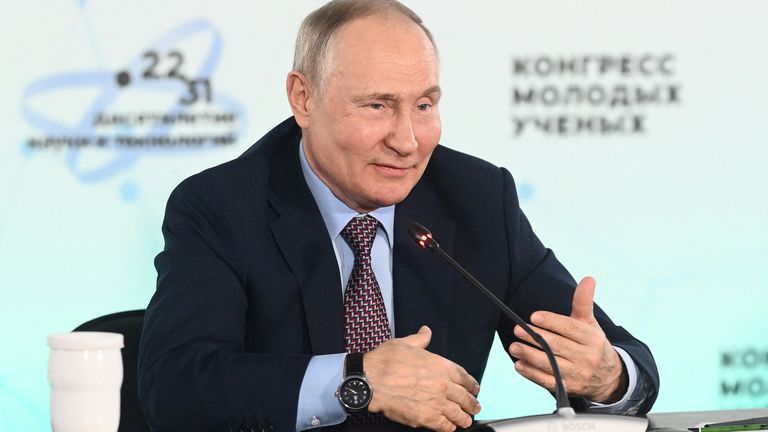
Vladimir Putin attends the Young Scientists Congress in Sochi

Impression:

Wagner is considered to have back links to the Kremlin and President Vladimir Putin

Sir Jeremy Fleming, the head of GCHQ, reported they were possible to be utilised as “cannon fodder” to check out to limit Russian army losses.

In August, British army intelligence said Wagner performed a part in the capture of Ukraine’s 2nd-greatest ability plant in the jap location of Donetsk.

Explainer: What is the Wagner Group of ‘secret’ Russian mercenaries?

The group is thought to be funded by Yevgeny Prigozhin, a businessman with shut one-way links to Vladimir Putin who is also alleged to run Russia’s “troll farm”, the Internet Investigate Agency.

Hitler’s favorite composer

Mr Prigozhin was a single of the lots of oligarchs sanctioned by the West in reaction to Russia’s invasion of Ukraine, though he has generally denied any connection with Wagner.

The European Union claims Wagner was started by Dmitry Utkin – a former Russian soldier reportedly adorned with Nazi tattoos – and is mentioned to have been named soon after Richard Wagner, Hitler’s favorite composer.

NewsGuard said when it asked TiKTok for remark about the material, it “did not problem NewsGuard’s findings”.

A TikTok spokesperson claimed: “There is no put for hateful or violent written content on our platform.

“Our Neighborhood Suggestions plainly define that we do not let persons to use our platform to threaten or incite violence, or share attacks or slurs dependent on people’s nationality or other shielded qualities.

“We will take motion on material found to violate these procedures.”

Sky Information earlier spoke to a team of youthful Russian gentlemen who claimed they ended up recruited by Wagner and flown on Russian military services planes to aid troops loyal to Bashar al Assad in Syria.

Supply website link

The post TikTok videos which ‘glorify’ Russian mercenary violence in Ukraine ‘viewed a billion times’, reports says | Science & Tech News appeared first on Ukraine Intelligence.

Categories
Audio Sources - Full Text Articles

4 lion cubs that were orphaned during war in Ukraine arrive at Minnesota animal sanctuary

Four lion cubs that had been orphaned during the war in Ukraine have arrived safely at a Minnesota animal sanctuary that has pledged to give them a long-lasting residence.

A male cub named Taras and 3 females named Stefania, Lesya and Prada, who are all amongst four and 5 months previous, put in the previous 3 months at the Poznan Zoo in Poland. Their arrival Tuesday marked the closing phase in an arduous journey right after they lived through sporadic bombings and drone assaults in Ukraine, according to the Worldwide Fund for Animal Welfare, a person of several groups operating to rescue animals from the war.

“These cubs have endured far more in their limited lives than any animal must,” Meredith Whitney, wildlife rescue program supervisor at the fund, said in a statement. “They were being born at breeding amenities in Ukraine for the duration of the war and then orphaned at a couple months previous.”

ZOO RESPONDS Right after VIRAL Online video Reveals LION Bit MAN’S FINGER: ‘SHOULD By no means HAVE HAPPENED’

Their new residence is The Wildcat Sanctuary in Sandstone, about 90 miles north of Minneapolis. They were being set on a plane that was returning to the U.S. from Poland. It landed Tuesday in Minneapolis, from the place sanctuary staffers introduced them to the facility wherever they were being assessed by a veterinarian and offered a heat spot to relaxation. The flight was funded in component by the New York-based mostly Andrew Sabin Household Foundation.

Lion cubs that were rescued from the war in Ukraine by the International Fund for Animal Welfare adjust to their new home at The Wildcat Sanctuary, on Nov. 30, 2022, in Sandstone, Minnesota. The cubs were born in Ukraine at breeding facilities.

Lion cubs that ended up rescued from the war in Ukraine by the Worldwide Fund for Animal Welfare adjust to their new dwelling at The Wildcat Sanctuary, on Nov. 30, 2022, in Sandstone, Minnesota. The cubs ended up born in Ukraine at breeding facilities.

(Anthony Souffle/Star Tribune via AP)

LION WITH ‘MULLET’ AT CHINA ZOO Draws JOE Unique COMPARISONS: ‘CHANNELING FELINE ENTHUSIAST’

Dr. Andrew Kushnir, an American veterinarian with the fund who accompanied the cubs on their flight, cared for the cubs in Ukraine and Poland. Inspite of drone attacks and airstrikes, he well prepared their specialized components each individual three hours, the fund stated. On nights when the energy went out, he made use of his arms and legs to heat their milk bottles.

The cubs came from two litters, Whitney claimed. A few ended up rescued from Odesa, she said, while Prada, the oldest, was born at a breeder in Kyiv. The rescuers do not know what turned of the moms, she extra.

Simply click In this article TO GET THE FOX Information Application

The nonprofit Wildcat Sanctuary shelters virtually 130 lions, tigers, cheetahs, leopards and other wildcats, several of which ended up rescued from the trade in unique pets, which include the four cubs. To guarantee peace and tranquility for the cats, it does not place them on general public show, but lets them roam fenced enclosures amid the woods of Minnesota. The sanctuary does offer virtual excursions via its web site and Facebook site.

Supply hyperlink

The post 4 lion cubs that were orphaned during war in Ukraine arrive at Minnesota animal sanctuary appeared first on Ukraine Intelligence.

Categories
Audio Sources - Full Text Articles

Explainer: The Phala Phala farmgate scandal hanging over South Africa“s Ramaphosa

2022-12-01T16:53:08Z

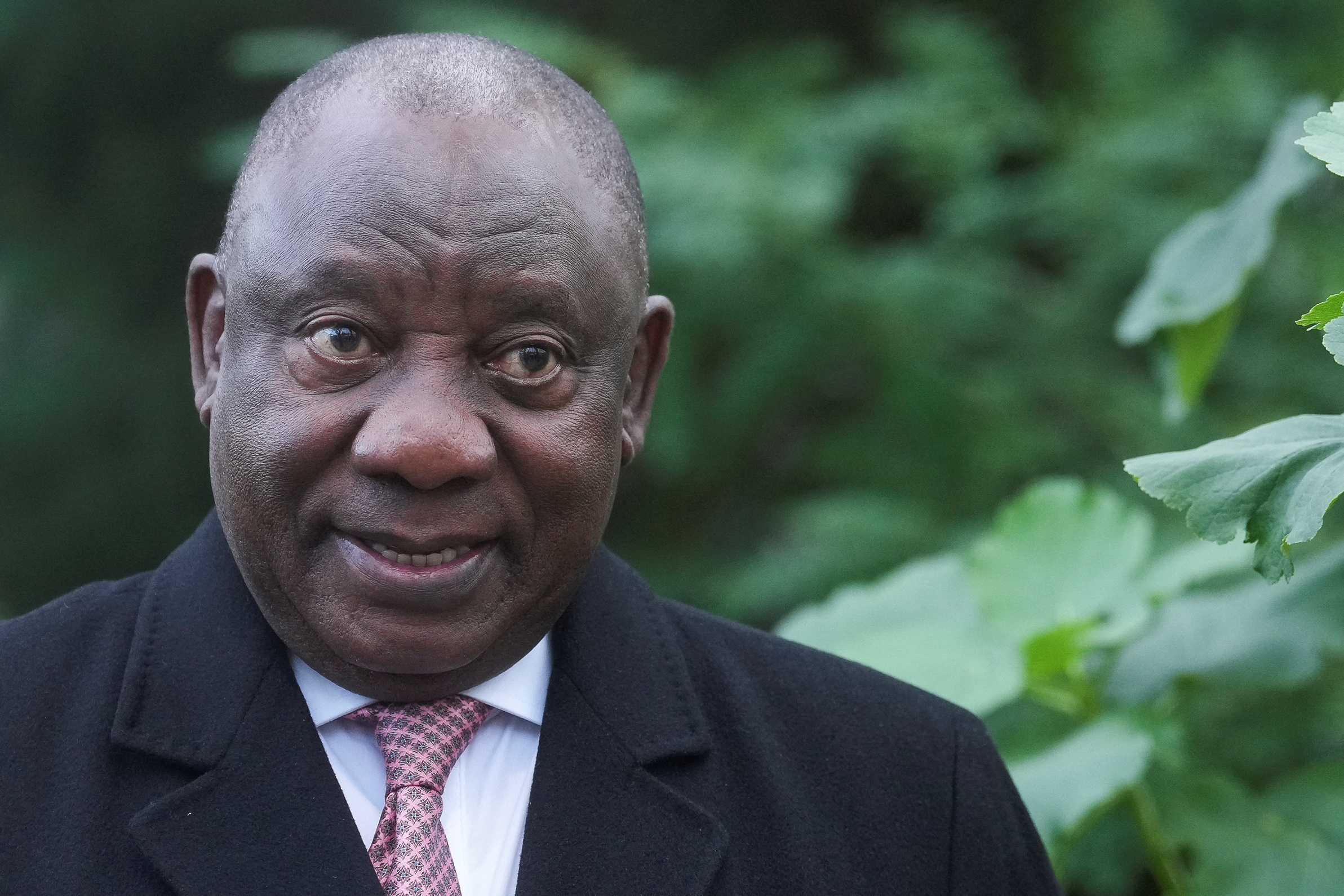
South African President Cyril Ramaphosa looks on as he walks through the Royal Botanic Gardens during a state visit in London, Britain, November 23, 2022. REUTERS/Maja Smiejkowska

South African President Cyril Ramaphosa has been under mounting pressure since an inquiry found evidence he may have committed serious misconduct in relation to a large amount of cash stolen from his game farm.

Ramaphosa has denied any wrongdoing. But the inquiry’s findings, and questions over how the cash got there, could not have come at a worse time for the president, who ousted his predecessor Jacob Zuma on a promise to clean up corruption.

Before the findings came out on Wednesday, he was the clear favourite to lead the African National Congress (ANC) into elections in 2024 and secure a second full presidential term.

But with less than a month to go before the party chooses its next candidate, he is battling for political survival.

Everything changed for Ramaphosa when South Africa’s former spy chief, Arthur Fraser, walked into a police station in June and accused him of money laundering, corruption and covering up a large theft of cash.

In a sworn statement, Fraser said thieves had raided Ramaphosa’s Phala Phala game farm in February 2020, found at least $4 million in foreign cash hidden in furniture, and made off with the money.

Police opened a criminal investigation into the case after Fraser’s statement, which raised questions about how Ramaphosa had acquired so much cash and whether he declared it. The media dubbed it the “farmgate” scandal.

Ramaphosa said there had been a break-in and that a much smaller amount of cash – proceeds from the sale of game – had gone. He denied covering up the crime, saying he was away when it happened and that he reported it when he got the details.

Fraser’s sworn statement, which included security video footage and photos, said the gang got in via a perimeter fence, ransacked then house and spent some of their haul on new vehicles.

The affair has been a huge embarrassment for Ramaphosa who has repeatedly spoken about taking a tough line on graft.

He faced down a rival faction from his own party in July who were trying to scrap a rule that anyone charged with corruption or other crimes must step down while they are being investigated.

He also promised in October to tackle graft with tougher procurement rules and better oversight of state-owned firms, after an inquiry highlighted high-level graft under Zuma.

On the back of Fraser’s affidavit, a small parliamentary opposition party, the African Transformation Movement (ATM), lodged a motion in parliament asking to institute a so-called Section 89 inquiry into Ramaphosa’s fitness to stand office.

Used for the first time since being adopted by parliament in 2018, the Section 89 inquiry sets out a process to impeach a sitting president of South Africa, if evidence emerges of wrongdoing.

The panel’s recommendations, which are not binding on lawmakers, are the first step in a lengthy process that could eventually lead to Ramaphosa’s impeachment.


Categories
Audio Sources - Full Text Articles

Mayor tells Kyiv residents to stock up on water, food in case of major blackout

2022-12-01T16:49:23Z

Kyiv’s mayor told residents on Thursday to stock up on water, food and warm clothes in case of a total blackout caused by Russian air strikes, and said residents should consider staying with friends in the outskirts of the capital if they could.

Mayor Vitaliy Klitschko warned that the temperature in homes could drop rapidly in the event of “a blackout and the destruction of infrastructure and a total absence of electricity, water supply, drainage and heat supply”.

“The temperature in the apartments may not differ much from the outside temperature,” the former boxing champion told a security forum in Kyiv, where temperatures are around -4 degrees Celsius (25 degrees Fahrenheit).

“I appeal to the people…to have a supply of technical water, drinking water, durable food products, warm clothing.”

Power units at several power stations across Ukraine had to conduct emergency shutdowns this week after a spate of Russian missile strikes.

Klitschko said people should consider temporarily moving to stay with friends or relatives who own houses on the outskirts of Kyiv.

On Tuesday, Prime Minister Denys Shmyhal said Ukraine still had a 30% deficit of electricity, six days after the last big wave of Russian missile strikes on its power grid.

To remedy the lack of heating and electricity, Kyiv authorities set up 430 heating points where people can warm up and recharge their phones, but Klitschko said that the number was insufficient for a city of 3.5 million people.

“Not even 500 would help, even 5,000 would be too little.”

Russia says its attacks on vital infrastructure are militarily legitimate, and that Kyiv can end the suffering of its people if it yields to Russian demands, which Moscow has not spelled out. Ukraine says attacks intended to cause civilian misery are a war crime.

Related Galleries:

A view shows the city without electricity after critical civil infrastructure was hit by Russian missile attacks, amid Russia’s invasion of Ukraine, in Kyiv, Ukraine November 23, 2022. REUTERS/Vladyslav Sodel/File Photo

A woman walks down a pitch-black street during a power outage as Russia’s attack on Ukraine continues in Kramatorsk, Ukraine, November 24, 2022. REUTERS/Leah Millis

Kyiv Mayor Vitali Klitschko inspects a neighbourhood where a shell hit a residential building, in Kyiv, Ukraine, March 18, 2022. REUTERS/Thomas Peter
Categories
Audio Sources - Full Text Articles

U.S. urges 15-year sentence for ex-Theranos president Balwani

2022-12-01T16:53:21Z

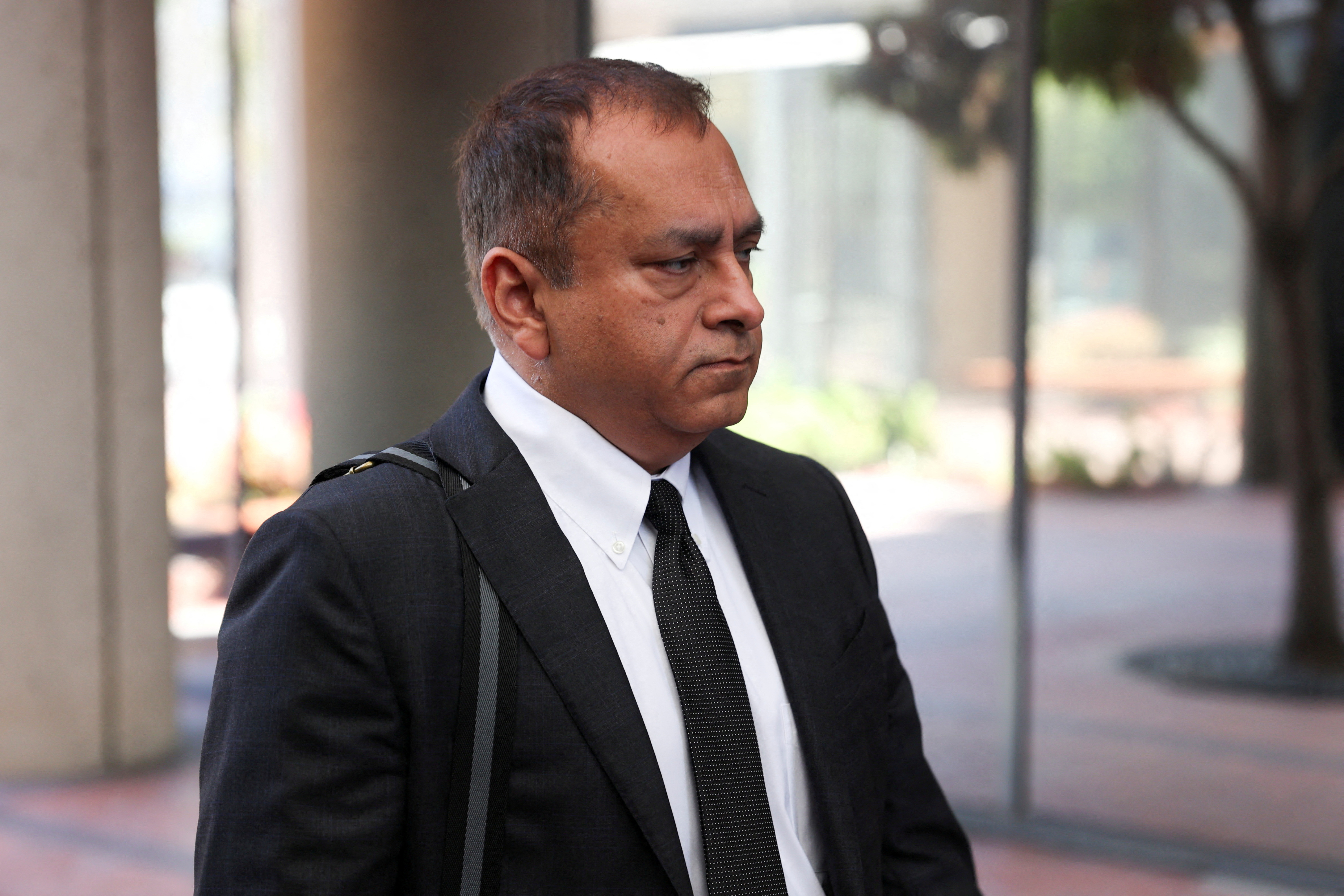
Ramesh “Sunny” Balwani, former president and chief operating officer (COO) of Theranos and ex-boyfriend of founder Elizabeth Holmes, arrives during jury deliberations at his federal trial for wire fraud and conspiracy to commit wire fraud in San Jose, California, U.S. June 28, 2022. REUTERS/Brittany Hosea-Small

U.S. prosecutors have asked a judge to sentence former Theranos Inc President Ramesh “Sunny” Balwani to 15 years in prison for defrauding investors and patients in the blood-testing startup once led by Elizabeth Holmes.

Balwani countered that probation, meaning no prison time, is sufficient, citing his own investment losses in a company once valued at $9 billion, and saying he never sought the “fame or media attention” that Holmes attracted as Theranos’ public face.

The recommendations were filed on Wednesday night in the federal court in San Jose, California, where Balwani will be sentenced on Dec. 7 by U.S. District Judge Edward Davila.

On Nov. 18, the judge sentenced Holmes to 11-1/4 years in prison, calling Theranos a once-exciting venture “dashed by untruths, misrepresentations, plain hubris and lies.”

She was convicted in January on four counts of fraud and conspiracy but acquitted of defrauding patients, while Balwani was convicted in January on all 12 fraud and conspiracy counts he faced.

Prosecutors also want a court order requiring Balwani to pay $803.8 million, which they acknowledge he does not have, to cover losses by investors including Walgreens, Safeway and the late U.S. Secretary of State George Shultz.

Holmes and Balwani were convicted of lying about Theranos’ technology, which once offered hope that an array of medical diagnostic tests could be performed with just a few drops of blood.

Prosecutors said Balwani deserved a longer sentence than Holmes because his offenses, particularly the conspiracy to defraud patients with inaccurate blood tests, showed a “conscious or reckless risk of death or serious bodily injury.”

Defense lawyers said there is no likelihood Balwani will commit another crime, and that he played a “demonstrably” lesser role than Holmes in the conduct underlying his conviction.

The case is U.S. v. Balwani, U.S. District Court, Northern District of California, No. 18-cr-00258.

Categories
Audio Sources - Full Text Articles

Japan will use G7, UN roles to pressure Russia on Ukraine – foreign minister

2022-12-01T16:43:31Z

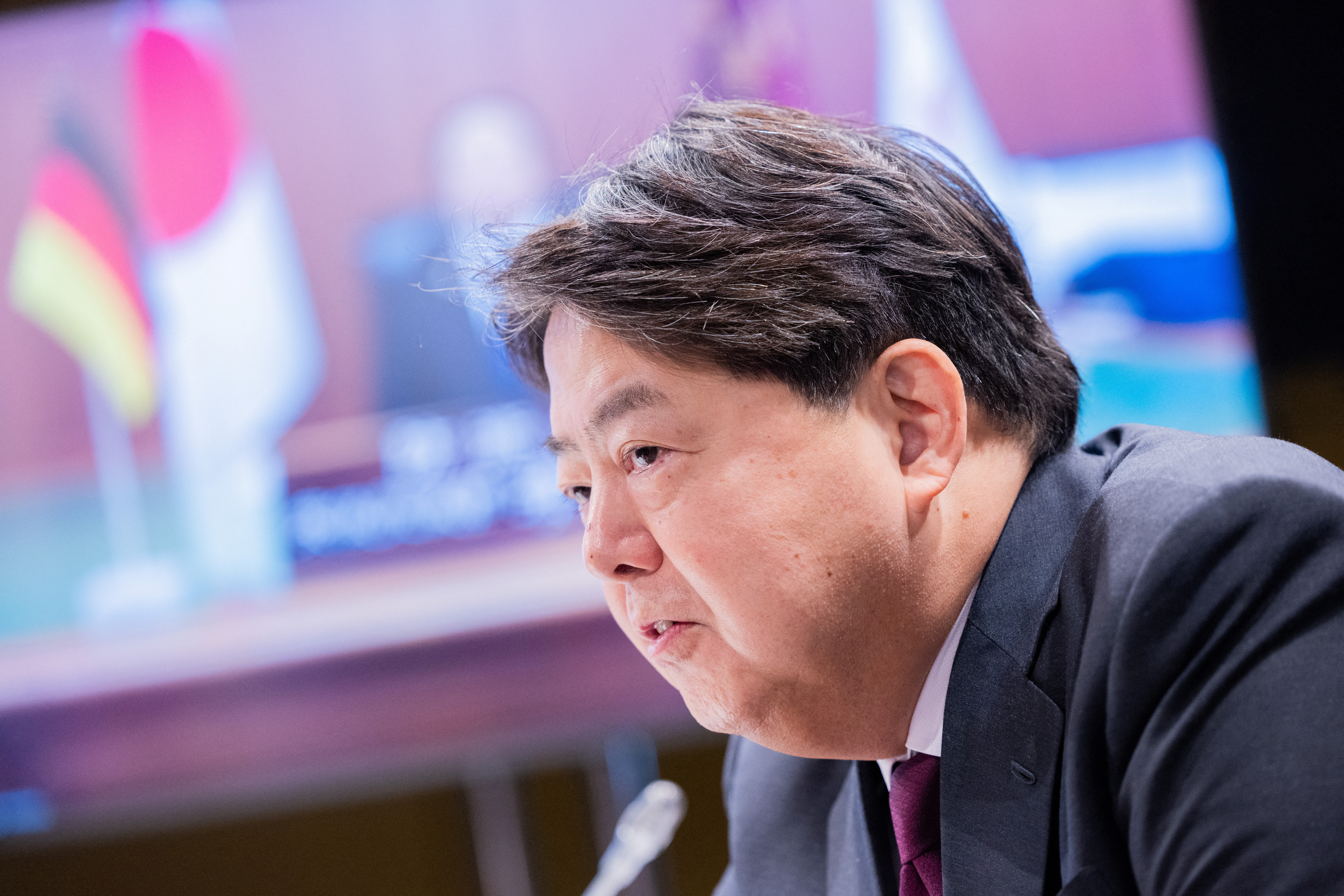
Japanese Foreign Minister Yoshimasa Hayashi meets with German Foreign Minister Annalena Baerbock (not pictured) ahead of a G-7 foreign ministers meeting, in Muenster, Germany, November 3, 2022. Rolf Vennenbernd/Pool via REUTERS

Japan will use its turn next year in leadership roles at the Group of Seven and the United Nations to pressure Russia to halt its war in Ukraine, Japanese Minister of Foreign Affairs Yoshimasa Hayashi said at the Reuters NEXT conference.

“Russia’s ongoing aggression against Ukraine is a clear violation of international law. It is an unacceptable and outrageous act threatening the very foundation of the international order,” Hayashi said.

Japanese leaders have said Russia’s attack on Ukraine poses a challenge to their own national security, and fear it may encourage North Korea to further threaten its neighbours and embolden China to use military force to push its territorial ambitions in the South China Sea and East Asia, including against nearby Taiwan.

Japan’s presidency of the G7 industrial democracies in 2023 and its return for a two-year stint as a non-permanent Security Council member will give it a more conspicuous international platform to voice its concerns.

In October, the G7 committed to providing financial, humanitarian, military, diplomatic and legal support to Ukraine for as long as necessary. Hayashi said Japan would work to keep the group united.

“No one nation can shrug Russia’s aggression off as someone else’s problem,” Hayashi said. Japan wants to coordinate with other “G7 nations and like-minded countries to keep on good teamwork vis-a-vis such issues as Russia’s aggression on Ukraine and other measures.”

In May of next year, Prime Minister Fumio Kishida will host G7 leaders in Hiroshima for a summit that is expected to focus on threats posed by nuclear weapons.

Hayashi also reiterated that Japan would make a fresh push for United Nations reforms next year to tackle a “dysfunctional” Security Council that has failed to address Russia’s aggression in Ukraine.

Japan, which is the third biggest contributor to the UN’s budget, and is still designated by the UN as an “enemy state” along with other nations defeated in World War Two, has long advocated for expansion of the 15-member council, including the first addition of permanent seats since its creation almost eight decades ago.

“We would like to further strengthen the movement for reform for the United Nations,” Hayashi told Reuters.

“Since the start of the United Nations, the membership has not changed. It should reflect the current status of the world, not in 1945,” he added.

Such reforms will prove a difficult challenge given Russia’s and China’s vetoes on decisions, a privilege they enjoy with the United States, Britain and France.

The effort could, however, add pressure on Moscow over its “special military operation” in Ukraine.

Frustration among the UN’s 193 members is growing, said Hayashi. After Russia invaded Ukraine, almost three-quarters of the General Assembly voted to reprimand it.

To view the Reuters NEXT conference live on Nov. 30 and Dec. 1, please click here.

WP Radio
WP Radio
OFFLINE LIVE