Categories
Audio Sources - Full Text Articles

A Positive HIV Test Shattered His Dreams of Serving in the U.S. Army. Now He’s Suing

One cold winter morning in 2008, 8-year-old Isaiah Wilkins decided to try on his mother’s National Guard uniform, something he always wanted to do. She was away at training in Texas, but she kept an extra uniform at home in Temple, Georgia.

Young Isaiah climbed up to the attic of his parents’ single-story house and spotted the blue 30-gallon bin where his mother stored her military clothes. He unclicked the clips on the sides, lifted the lid, and rummaged through the neatly organized items. After carefully shuffling through a few patches and her combat boots, he spotted her uniform.

[time-brightcove not-tgx=”true”]

He unfolded the garment and draped it against his own body to see if it fit. He turned it around and moved his fingers across the digital camouflage pattern, feeling the stitched texture of the American flag on the right sleeve. The boy was captivated. He quickly slipped it on. He was already almost as tall as his mom, 4’11”, so it fit perfectly.

Isaiah ran to the bedroom where his stepfather, Daren, was sleeping. He woke him up. He didn’t just want to show him the uniform, he wanted Daren to drive him to the nearby Waffle House, 10 minutes down the road. It was where all the local veterans gathered for coffee and breakfast in the early morning.

They sat down at the restaurant chain and Isaiah ordered two classic waffles with butter and maple syrup. While he waited for his breakfast, Isaiah walked from table to table, chatting with veterans. Most had fought in the Vietnam War. They smiled and chuckled at the uniformed 8-year-old. The fact that someone so young was taking an interest in them was both amusing and flattering. The child was spellbound by their stories of how they risked their lives for the freedom of Americans. He wanted to be just like them one day, telling his own stories about how he was a hero, fighting for his country.

The military was also in his blood. On his mother’s side, he had ancestors who fought in every American military campaign dating back to the Civil War. His mother, Stephanie Womacks, was in the Georgia National Guard. Before that, she was a communications specialist in the Army, and had been deployed to Saudi Arabia during the First Gulf War in 1991.

By the time he was a teenager, Isaiah knew he wanted to become a Blackhawk helicopter pilot in the Army. He dreamed of flying the aircraft that would land on a battlefield and help save another soldier’s life.

He also knew that he was gay and that Temple was no place for a gay man. He wanted more for himself. The military, he thought, would be his way out.


By age 17, Wilkins dropped out of high school, earned his GED, and enlisted in the Georgia Army National Guard. He enrolled in Georgia Military College (GMC) and took out a loan contingent upon him completing eight years of military service.

After two years, he performed so well at GMC that West Point took notice. The famed military academy accepted him into its prep school, a one-year program to sharpen his academics, before matriculating into the four-year academy as a freshman. As part of the agreement, he signed an additional one-year contract with the Army as a new enlistment. He was overjoyed. He had made it out of his small, rural Georgia town and was going to attend West Point and serve his country.
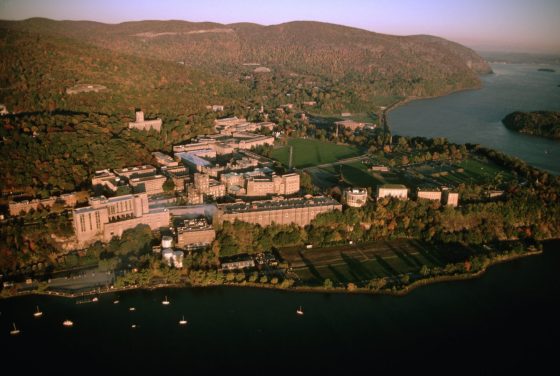
West Point Military Academy
Getty ImagesThe West Point Military Academy, in West Point, N.Y.

But his dreams were soon shattered. Shortly after he entered West Point Prep, he tested positive for HIV, was discharged, and was banned from re-enlisting. His paperwork reflected that he simply finished his one year contract with West Point, not that he was discharged for HIV.

Living with HIV automatically disqualifies a person from joining the armed forces. That means there’s no record of the number of people who have intent to enlist but don’t even try because they know there’s no point, due to Department of Defense (DOD) policies.

And those policies cost more to those rejected than a professional opportunity. At his exit screening from the Army, Wilkins was diagnosed with a combination of anxiety and depression, which he attributes to his discharge. Additionally, he is expected to pay back $16,427.42 to the government, because he only completed three of his eight years of his service commitment before being discharged.

Despite the ban, Wilkins has not given up on his dream. On Nov. 10, 2022, Lambda Legal, a legal organization focused on LGBTQ+ civil rights, filed a class-action lawsuit against DOD over its policy banning civilians living with HIV from joining the military. Wilkins is the named plaintiff.

This isn’t Lambda Legal’s first fight against the military’s HIV policy. In April, it won a class-action lawsuit against DOD forcing it to change part of its HIV policy. Previously, the roughly 2,000 service members living with HIV (SMLWH) were banned from deploying or commissioning as officers, effectively stunting their military careers. A federal judge found that this part of the policy was in violation of the Equal Protection Clause of the U.S. Constitution, forcing DOD to update its policy in June 2022. Current military personnel with an undetectable viral load can no longer be denied the opportunity to deploy or to commission based on HIV status.

However, civilians with an undetectable viral load are still not allowed to enlist. Lambda and Wilkins are now suing to repeal this last piece.

In the meanwhile, the DOD’s rollout of its policy change has not been smooth. Sergeant Nick Harrison, the plaintiff in that landmark victory served in the military for 22 years, including two combat tours of duty: one in Afghanistan in 2006 and another in Kuwait in 2011. In 2013, he was offered his dream job in the National Guard: the JAG position (a military lawyer). But, in order to take it, he needed to be commissioned as an officer—a commission he was denied because of his HIV status.

After his court victory, the military was mandated to re-evaluate Harrison’s original application from 2013. But his National Guard recruiter informed him that he would need to reapply with a new application. Harrison didn’t know why, and DOD has not facilitated a set of formal next steps. “No one has shown up to help me. There is no process for how this should be resolved,” Harrison says. Indeed, a spokesperson for DOD, Charlie Dietz, says, “The DOD is not providing guidance to the services on this at this time.”

The policy that impeded the careers of men like Harrison and Wilkins has also caused the military to lose talented personnel. According to a 2015 study by the Armed Forces Medical Surveillance Monthly Report, the military’s own peer-reviewed journal, at least 25% of SMLWH leave the service within the first 16 months of diagnosis.

Read more: For HIV/AIDS Survivors, COVID-19 Reawakened Old Trauma—And Renewed Calls for Change

Wilkins can’t forget the day he received his HIV diagnosis. He was one month into his time at West Point Prep standing in front of an obstacle course on a rainy August day. It was part of a grueling physical fitness test he had to complete with his team of other plebes: jumping hurdles and crawling through mud; pushing a Humvee up a hill; and then running a mile—all in the rain.

He was mentally preparing, breathing in the smell of wet grass, when he got a tap on his shoulder. “Come with me, cadet. You have a doctor’s appointment,” the sergeant said. Wilkins was reluctant to leave his team and go to the clinic. They were relying on him. He asked the sergeant if it was urgent. “Now,” the sergeant replied. Wilkins was confused. What could this doctor’s appointment be about and why was it so time-sensitive? He had just taken his entrance physical exam, and he felt strong and healthy.

He followed the sergeant for a few minutes before he realized that they were not going to the clinic. They passed the break room just outside of the commandant’s office. It was usually buzzing with chatter, but it was uncomfortably silent now. Four officers stood inside watching him in silence.

Inside the office, the commanding officer of the school hospital and a public nurse were waiting for him. There was an exact model of the helicopter he dreamed of flying, a UH60 Black Hawk, on the desk. The office also had a big window overlooking the track that was part of the obstacle course. He yearned to be with his teammates. The officer introduced herself. “On the first day you were here, you had some blood drawn,” she began. “We test for a variety of things.” She was trying her best to make him comfortable, but he was feeling knots in his stomach. “We got the results of your blood test back. You tested positive for HIV,” she said.

“Can I have a moment?” Wilkins asked. It wasn’t so much a question. He stood up and stepped out of the office and into the hallway. He lifted up his hands to cup his face and began sobbing. He didn’t know much about HIV. All he knew was that it was the one thing as a gay man he never wanted. His only understanding of it was that people with HIV die painfully and alone. He composed himself and returned to the office. “Will I be kicked out for this?” he asked. “We will address everything one thing at a time,” said the nurse.

The nurse told him that people living with HIV, who are treated, live long and healthy lives—and then made him list every sexual partner he ever had, providing names and phone numbers. He felt humiliated. The nurse then instructed him not to tell anyone on campus about the meeting or about his HIV status so as to avoid inciting fear within the unit. As he listed the names of his former sexual partners, he stared at the Black Hawk model on the commandant’s desk.

Later that day, Wilkins met with the battalion tactical officer at the prep-school. “Well son, unfortunately you won’t be able to stay here,” he recalls the officer saying “You’ll be discharged. We want to get you home to get the medical help you need.”


Home was the last place Wilkins wanted to be. Temple, Ga. was the kind of place where gay men grew up to marry women and have children. It was also a place where gossip spread quickly.

So Wilkins vowed to stay and fight back. He knew that in some cases, the military granted waivers, and thought he might be a strong candidate for one. He learned that while on treatment, his HIV would not progress and wouldn’t be transmittable to anyone else either. He had also proudly served his country for two years already in the National Guard, and was on track to attend West Point. Surely, the chain of command would see the value in letting him stay. He spent the rest of that academic year living at West Point but separated from the other students, and trying to win a waiver to return to class.

He tried his best to get in touch with an army lawyer to help him understand his next steps, but she didn’t respond to his emails. Major Jeremiah Ellis, deputy commandant of West Point Prep, became Wilkins’ strongest advocate. Ellis had survived a combat injury to his spine in 2009 when a rocket exploded behind his seat in Afghanistan; he joined West Point Prep in June 2018, and was passionate about training the next generation of soldiers. He met Wilkins because, as part of his job, he was assigned to oversee the plebe’s administrative discharge. But as he began getting to know Wilkins and his story, he was inspired by him and saw great potential. Ellis began pushing for Wilkins to receive a waiver but ran into resistance from his colleagues.

“My fear was that it was discrimination,” says Ellis. “I’m not sure he would have been treated the same way if it was cancer. People’s perception of him was that, because he was gay, HIV was a product of his choices.”

But Ellis only had so much power and ultimately, Wilkins was discharged. “To lose him as a future leader for the Army was a shame,” says Ellis. “He was absolutely the kid that I could see leading our soldiers one day.” Heartbroken, Wilkins tried to move on. He transferred to Wesleyan University in Connecticut the next year with a full tuition scholarship from the Posse Foundation, a nonprofit that looks for leaders from diverse backgrounds and communities. But the costs of housing and books were still too high for him. He was forced to drop out after just one semester.

Read more: How Vanessa Guillen’s Tragic Death Is Helping Transform Sexual Assault Reporting in the U.S. Military

To avoid going home, he moved in with a close friend, Dominique Schwartz, who lived two hours east of Temple. Wilkins desperately needed a job to pay his portion of the rent, so he became a correctional facilities officer in Milledgeville, Georgia. The $13 an hour he earned was not enough to cover his expenses so to make ends meet, Wilkins started delivering food for Uber Eats when he wasn’t working at the county jail.

Depression crept in. “There were days where it was so difficult to get out of bed, to even open up the curtains,” he says.

Schwartz noticed, too. She knew Wilkins as vibrant and charismatic. Before leaving for West Point, they would spend all their weekends together. “We’d be at the pool all day, laughing and eating pizza,” says Schwartz. She also admired his caring nature. “He was the first person I told when I was pregnant. We processed it together.” She was worried about how much the discharge had derailed his life. “It ruined everything. It took away his financial security, his purpose, and his self-worth. He had always wanted this,” says Schwartz.

U.S. Troops In Poland Bolster NATO Eastern Flank As Ukraine War Rages
Sean Gallup—Getty ImagesFrom an early age, Wilkins dreamed of flying a UH-60 Black Hawk, like this one shown on March 1, 2022 in Zamosc, Poland, not far from Poland’s border to Ukraine, where it was deployed as a response to Russia’s invasion of Ukraine.

Depression is not uncommon. A 2012 study published by the Armed Forces Medical Surveillance Monthly Report found that almost 57% of SMLWH received a diagnosis of a mental health disorder six months after their HIV diagnosis.

Licensed clinical psychologist Tiffany Lange, who worked at the U.S. Department of Veterans Affairs for seven years as a psychologist, specializing in LGBTQ+ veterans, has seen similar responses in many of her patients. “Coming into contact with a loss of career as a result of discrimination can certainly lead to a diagnosable disorder like depression, anxiety, or PTSD, and in some cases, suicide,” she says.

Lange is encouraged by the change in policy allowing current HIV+ personnel to deploy and commission, but says education will be critical to a successful rollout. “If service members don’t understand that U=U, there will still be fear that active duty SMLWH are a danger on and off the battlefield,” she says. U=U stands for undetectable=untransmittable, and is a term used by the National Institute of Allergy and Disease Control to indicate that a person with an undetectable viral load of HIV cannot transmit HIV.

Read more: HIV Used to Be a Death Sentence. Here’s What’s Changed in 35 Years

Undetectability is achieved and maintained by taking a daily pill of HIV antiretroviral therapy. This means that when a service member is diagnosed and treated, there is effectively no risk of transmitting HIV to anyone else; it was the basis of Lambda Legal’s successful argument in Harrison’s case. In Wilkins’ case, they argue that a civilian with an undetectable viral load would similarly pose no threat of transmitting HIV to others, were they admitted into the armed services.

DOD’s lack of central direction on HIV policy has resulted in a disjointed approach to U=U education across the branches. Some, like the Army’s Medical Department (MEDCOM) have articles on U=U, whereas others, like the Navy Marine Corps Public Health Center website and the Air Force Medical Service website have no mention of it at all. DOD’s own Defense Health Agency website has no mention of U=U as of publication either.

When asked why SMLWH could serve without restrictions but civilians couldn’t enlist, Dietz, the DOD spokesperson, said that there is a working group “looking into this and may release updated guidance upon conclusion of their investigation.” DOD has not disclosed who is in the working group, and what their medical and military credentials are.

Ray Mabus, Secretary of the Navy from 2009-2017, wrote a 2019 op-ed for the Washington Post advocating for SMLWH to serve without restrictions. Mabus was pleased with DOD’s policy update but feels differently about enlistment, citing cost. “Once you sign up, the military is saying they will take care of your medical bills for the rest of your life,” says Mabus.

Scott Schoettes, one of the attorneys on Wilkins’ case who helped win Harrison’s case earlier this year, says that’s a weak argument. ”Cost is a drop in the bucket for them. And the federal government already pays for a lot of HIV-related care for people who are not serving in the military.” Indeed, according to the Department of Health and Human Services, the federal government provides free HIV care and treatment to approximately 50% of all people diagnosed with the condition in the U.S.

Other advocates argue that the military’s resistance is connected to a history of unfairness against LGBTQ+ people. “Much of the resistance is because of the stigma and shame of being LGBTQ+,” says Jennifer Dane, executive director of Modern Military Association of America, the country’s largest LGBTQ+ military advocacy organization. The White House estimates there have been over 100,000 U.S. military discharges because of sexual orientation or gender identity.

But many LGBTQ+ service members are proud of the progress the military has made. Jaime Elizabeth Hash, a trans woman and a technical sergeant in the Air Force, was recently appointed to the Air Force’s working group that analyzes barriers faced by LGBTQ+ service members. “The military has always been at the forefront of social change,” Hash says. “I am proud to be part of an organization that values everyone’s service and dedication, but we still have work to do with supporting those living with HIV.”


Schoettes believes that if they win the case, it will have major effects on the country. “If the military is welcoming to people living with HIV, workplaces everywhere will see people living with HIV as less of a danger,” he says. “For many Americans, this will reduce the shame of disclosing their status and even getting tested all together.”

As for Wilkins, his HIV is undetectable, and he has largely overcome his depression and anxiety after several years in therapy, since his discharge. He’s also enrolled in a two-year program to train as a commercial pilot. But he still wants to live his dream. He hopes that the military will change its policy.

“I don’t want to give up until I’ve tried everything I can possibly try, ” Wilkins says. “It’s still my dream to serve my country.“


Categories
Audio Sources - Full Text Articles

Why a Blank Sheet of Paper Became a Protest Symbol in China

As protests against Xi Jinping’s Zero-COVID policy spread across China’s diverse cities and regions over the last week, one symbol remained constant: a blank sheet of paper.

On a bridge in Beijing, dozens of protesters held sheets of blank paper aloft, as gridlocked cars below contributed toward a cacophony of horns—described in captions on social media, where several videos of the event went viral, as expressions of support.

And on a road in Shanghai that has become a symbolic center of the protest movement, police attempted to disperse hundreds of protesters on Sunday—some of whom were holding blank sheets of paper, Reuters reported.

[time-brightcove not-tgx=”true”]

China’s first major protests in years began last week as an expression of dissent against China’s strict zero-COVID policy, which has left the country oscillating through cycles of lockdowns even as much of the rest of the world returns to a semblance of normality. The spark appeared to be a fire in a tower block in the city of Urumqi, in the northwest Xinjiang region, which killed 10 people. The victims are rumored to have been unable to escape due to a strict COVID lockdown in which people were locked into their apartments, although the Chinese government denies this.

The protests are the most sustained since the student protest movement of 1989 that was brutally suppressed when security forces massacred students at Tiananmen Square in Beijing, leaving hundreds or even thousands dead. Under President Xi, protests have become increasingly rare in China. His rule has been marked by an uptick in forms of social control like AI-enhanced surveillance and heavy police crackdowns on dissent.

But already, the protests that began as dissent against Xi’s zero-COVID policy appear to be morphing, at least for some, into a wider protest against authoritarianism. In Shanghai, a man holding a flower at a gathering of protesters was arrested by police after he questioned other arrests and referred to the fire in Urumqi. “We must be brave,” the man could be heard telling the crowd in videos shared on social media, before being bundled into a vehicle.

The blank sheet of paper has become so pervasive that, online, people have begun referring to the protests in China as the “A4 revolution”—a reference to the standard paper size used in printers—or “white paper revolution.” Many observers have described the paper as a representation of everything protesters wish they could say but cannot. It presents authorities with a difficult conundrum: arrest people for saying literally nothing at all or allow a simple act of resistance to proliferate unchallenged. In the social media age, the blank sheet has the added benefit of being difficult for online censors to quickly block at scale without accidentally censoring many other innocuous images or videos.

Read More: Zero-COVID Protests in China Have Rattled Global Markets

A global symbol against censorship

The A4 sheet of paper has a longer history as a symbol of protest globally. Protesters in Hong Kong held up blank sheets of paper in 2020 in protest against the restrictive National Security Law that increased Beijing’s power over the semi-autonomous enclave. In Russia earlier this year, protesters opposing the Kremlin’s invasion of Ukraine were arrested for holding up blank sheets of paper amid a government crackdown on dissent. Those arrests only sparked further outrage online. The tactic was echoed by protesters in the U.K. demonstrating against a new draft law partially restricting the right to protest, drawing comparisons between the U.K. and more authoritarian states like Russia.

The blank sheet of paper also confounds online censors in places like China and Russia, where online discussion is restricted. In China, where online censorship is especially sophisticated, social media platforms like WeChat, Weibo, and Douyin use a combination of human reviewers and AI to remove videos of protests. Access to the global internet beyond China’s “great firewall,” where information about the protests is spreading more freely, is blocked. But by adopting previously benign items as their symbols, protesters reduce the applicability of AI systems, which can take engineers long amounts of time to adjust to reliably detect new symbols. Human censors must work overtime to fill the gap by removing photos and videos—meaning there’s a greater chance of some content slipping through and inspiring others.

But like any potent form of political symbolism, the A4 sheet of paper might obscure as much as it reveals. “The demonstrators have broad slogans,” tweeted Nathan Law, an activist who played a leading role in the 2019-2020 protest movement in Hong Kong, who is now living in self-imposed exile in London. Political opinion in China is varied, with many protesters clearly upset at zero-COVID policies but not necessarily the government as a whole. “A blank sheet of paper with various expressions is unavoidable in this movement,” Law wrote in a follow-up tweet. “Because the conditions for broad mass consensus … do not exist.”

— With additional reporting by Man Sum Lai.

Categories
Audio Sources - Full Text Articles

Reznikov, Robles discuss Spain’s further military aid package for Ukraine

Ukrainian Defence Minister Oleksii Reznikov and Spanish Defence Minister Margarita Robles have reviewed the facts of Spain’s further armed service support bundle for Ukraine.

The relevant statement was made by Ukrainian Defence Minister Oleksii Reznikov and Spanish Defence Minister Margarita Robles for the duration of a joint briefing at Media Heart Ukraine-Odesa, an Ukrinform correspondent reports.

“Resilience and united endeavours are the critical factors that will make certain our victory in excess of invaders,” Reznikov mentioned.

In accordance to Robles, Spain will make everything to assistance Ukraine in its struggle towards invaders. 

mk

Source link

The post Reznikov, Robles discuss Spain’s further military aid package for Ukraine appeared first on Ukraine Intelligence.

Categories
Audio Sources - Full Text Articles

As U.S. diversifies, Democrats to push Iowa from top president-picking spot

2022-12-01T17:31:37Z

U.S. President Joe Biden may be a man of tradition, but the Democratic Party he leads is poised to get rid of one of its oldest political rituals.

A closed group of Democrats will meet Friday to reshape the party’s presidential nomination process. They plan to bump Iowa as the state where White House runs kick off every four years, hoping to usher in a more diverse, early nominating calendar, according eight senior Democratic officials.

Which state takes Iowa’s place and which come next in line in the primaries remain unclear, amid a hard-fought battle among Democratic officials who each want their home state to move up the calendar.

Biden has not weighed in on the matter, sources say, and many members of the party’s rules committee await word from the White House.

“The one thing I know for certain is Iowa won’t be leading the nominating contest. Everything else is up in the air and will certainly be fiercely debated,” said a senior official with the National Democratic Committee.

The committee is expected to decide at a meeting on Friday and Saturday in a Washington hotel. The DNC and the White House did not respond to requests for comment.

Because it comes first in the process, Iowa, the country’s 31st largest state by both population and gross domestic product, has for nearly 50 years had an outsized role for both parties in identifying viable candidates to become president.

Presidential hopefuls blanket Iowa’s airwaves with ads and hopscotch the state to talk to voters at state fairs, town halls and school gymnasiums. They take crash courses in agricultural issues that dominate Iowa’s economy.

Months of activity culminate in a series of caucuses where locals gather to make the case for their favored candidate to other Iowa voters, often wooing their support through multiple rounds of voting until a winner is declared.

After Iowa, both Democrats and Republicans hold state primaries that narrow down presidential candidates even further. Republicans have not announced plans to strip Iowa of its first-in-the-nation status.

The U.S. voting population has morphed from about 85% white in 1996 to 69% in 2020, Pew Research shows, with the newest generation able to vote, ‘Gen Z’ just 55% white. Iowa, with an approximately 90% white population, is no longer an accurate predictor of which candidate will do well on the national stage, Democrats say.

Their push to change the primary calendar picked up momentum after 2020 when the Democrats’ Iowa caucuses were plagued by technical and communication issues that delayed the announcement of a winner.

The rules governing the party primaries could be particularly important in 2024. Some White House officials think Biden could face a primary challenge within his own party, and new rules could subtly shift the odds.

Biden has no love lost for Iowa after disappointing results there in 2008 and 2020. His 2020 campaign was only secure after the fourth nominating contest that year, in South Carolina, where a heavily Black electorate helped lift him to victory.

Twenty states and territories applied for a 2024 early primary spot and 17 were invited make their pitch to DNC officials over the summer, including the four early states of Iowa, New Hampshire, Nevada and South Carolina.

Officials in Michigan and Minnesota are fighting hard to take Iowa’s place. Democrats in both states took control of the governors’ mansions and the state legislatures during the midterm elections, giving them the power to shift the schedule if needed.

Democratic Gov. Tim Walz told the DNC in November that Minnesota is ready to pass legislation necessary to move up the primary calendar.

“Minnesota offers a reflective snapshot of America and serves as the most suitable landscape for presidential candidates to compete,” he said.

Some Democrats believe Michigan is too big to be an early state, because it will cost candidates dearly to campaign there and also allow some to bypass earlier, smaller states and only concentrate on Michigan. But supporters say a key swing state that offers candidates a true test of viability.

The committee may also consider adding another state to the early nominating calendar, such as Washington or Maryland, source say.

One of the biggest questions heading into the meeting is what to do about New Hampshire. The state has traditionally held the first primary, right after Iowa’s caucuses, but some Democrats would like more-diverse Nevada to get that spot.

But New Hampshire state law requires its secretary of state to set the primary date seven days before any other, providing state officials a firewall against any efforts to boot them as the first primary state.

Related Galleries:

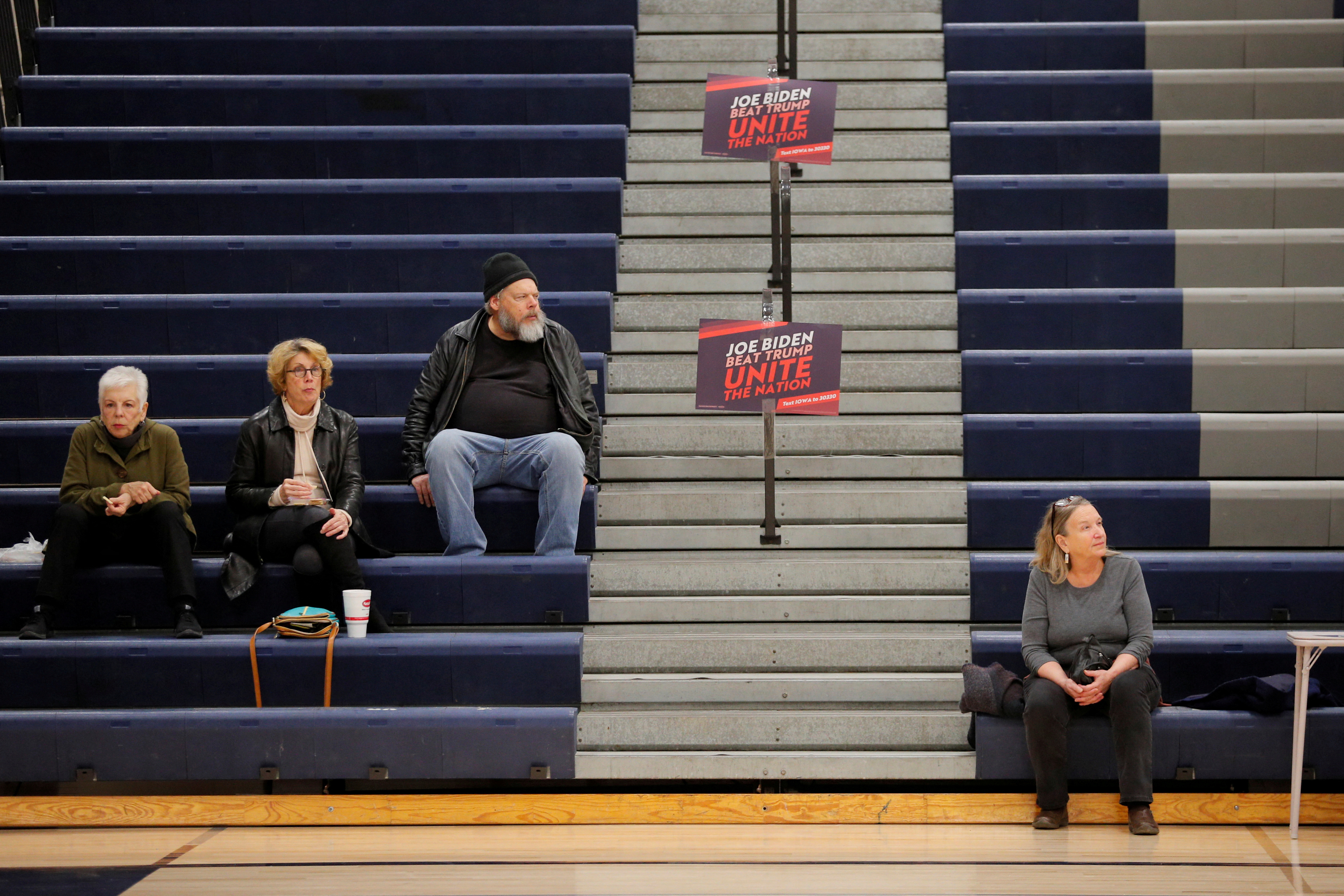
Caucus goers wait in the corner for Democratic 2020 U.S. presidential candidate and former U.S. Vice President Joe Biden at their caucus site in Des Moines, Iowa, U.S., February 3, 2020. Picture taken February 3, 2020. REUTERS/Brian Snyder

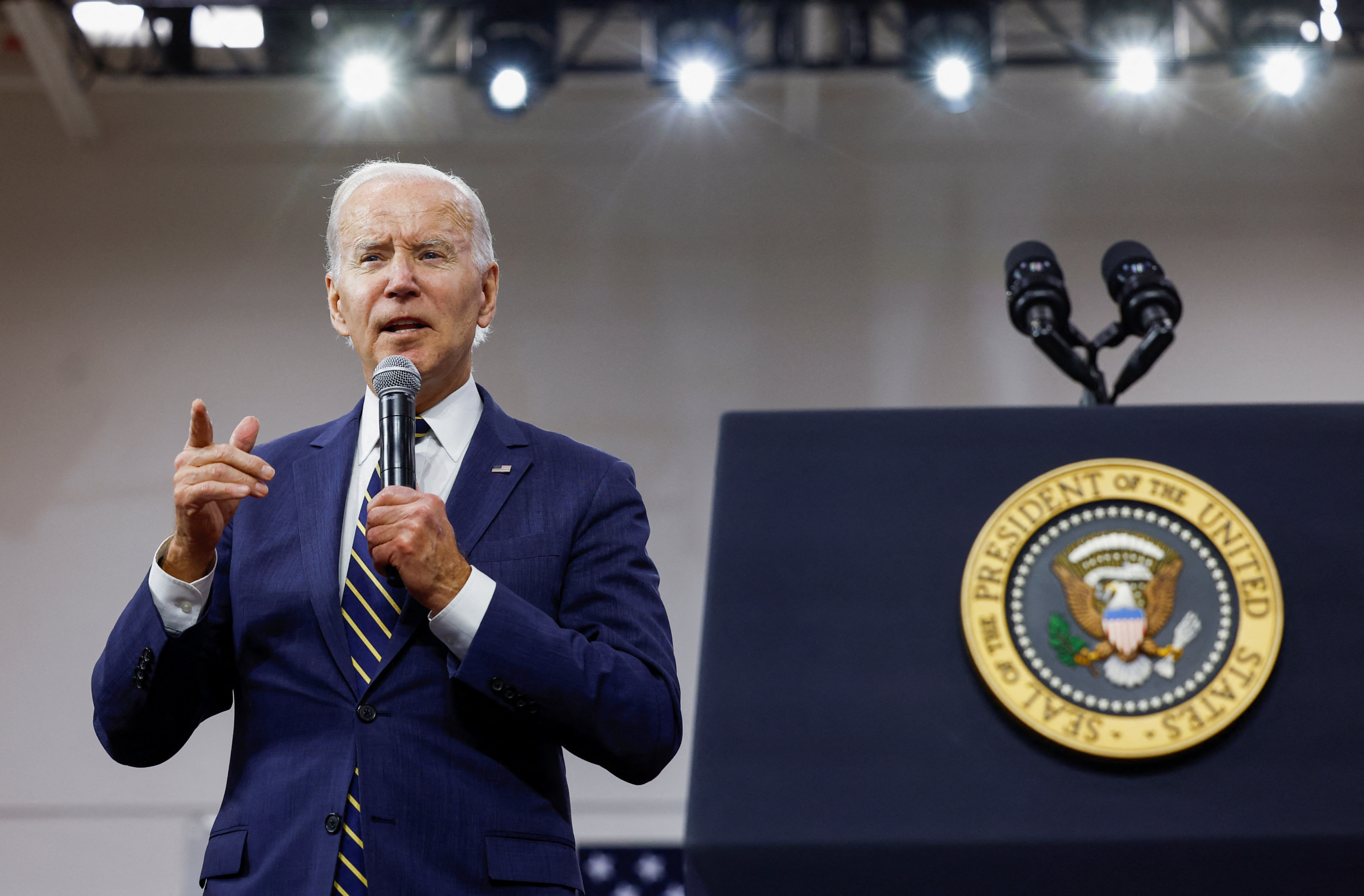
U.S. President Joe Biden speaks as he visits the SK Siltron CSS facility in Bay City, Michigan, U.S., November 29, 2022. REUTERS/Evelyn Hockstein
Categories
Audio Sources - Full Text Articles

Israel“s Netanyahu reaches coalition deal with far-right Religious Zionism party

2022-12-01T17:30:44Z

Likud party leader Benjamin Netanyahu waves as he addresses his supporters at his party headquarters during Israel’s general election in Jerusalem, November 2, 2022. REUTERS/Ammar Awad

Israeli Prime Minister-designate Benjamin Netanyahu reached a coalition deal with the far-right Religious Zionism party, bringing him closer to securing a new government after an election last month, Netanyahu’s Likud party said on Thursday.

Religious Zionism will be given, among other portfolios, control of the Finance Ministry as part of a rotation, Likud said, though it did not provide details on how the rotation would work.

Israeli Army Radio reported that Bezalel Smotrich, who heads Religious Zionism, would serve as finance minister at the outset and will then be replaced.

His party, which opposes Palestinian statehood and supports Israeli settlements, will also be given authority over Jewish settlement activity in the occupied West Bank, though it will be in coordination with Netanyahu, the Likud statement said.

Categories
Audio Sources - Full Text Articles

Wall St falls after bleak manufacturing data, Salesforce tumbles

2022-12-01T17:44:07Z

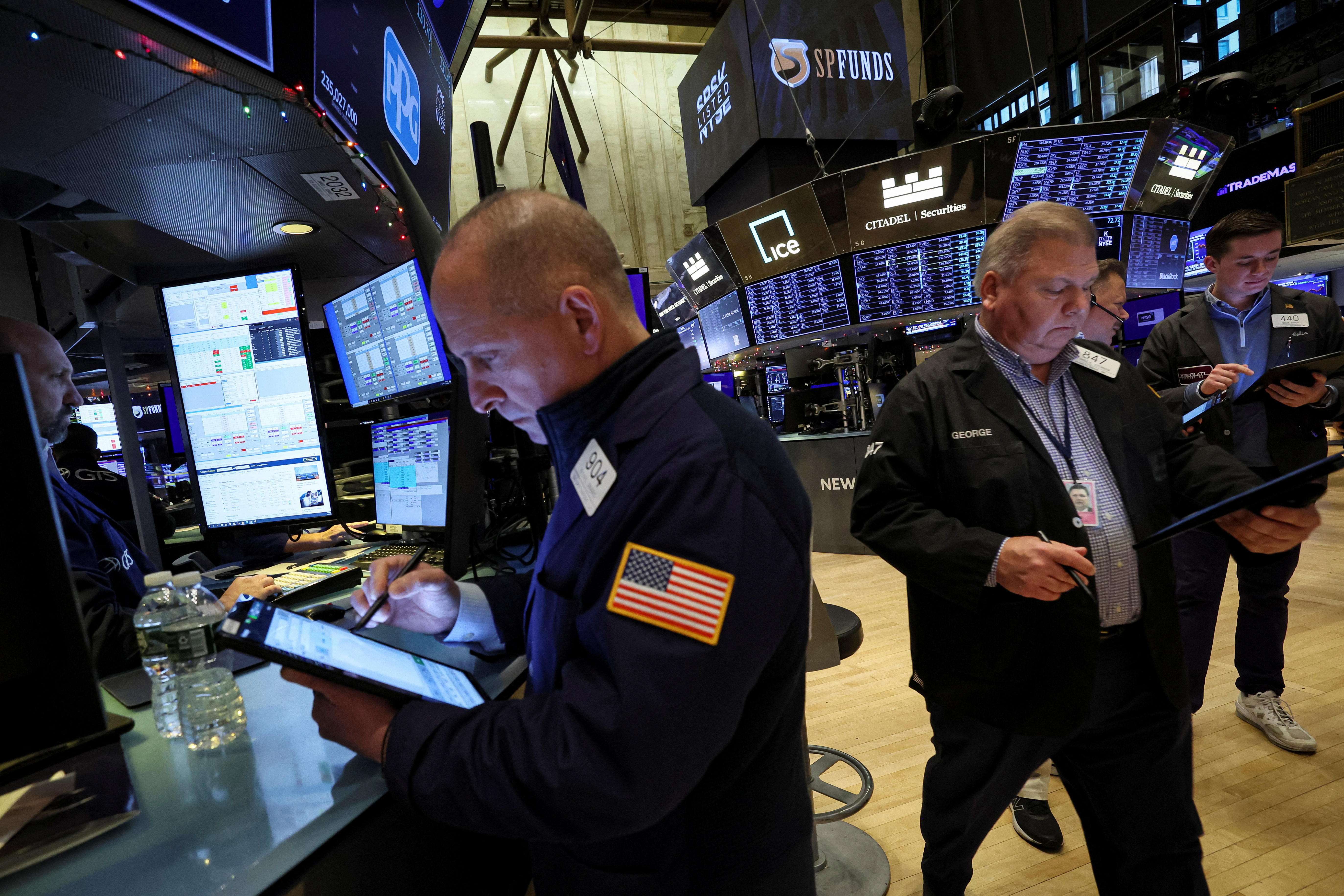
Traders work on the floor of the New York Stock Exchange (NYSE) in New York City, U.S., November 29, 2022. REUTERS/Brendan McDermid

Wall Street slipped on Thursday as a contraction in manufacturing activity last month clouded data showing a mild easing in inflation and solid consumer spending, while a fall in Salesforce shares dragged the Dow lower.

U.S. manufacturing activity shrank for the first time in 2-1/2 years in November as higher borrowing costs weighed on demand for goods, and proved to be a trigger for investors to book profits following a rally in the previous session.

“Yesterday’s move was so crazy large, this is probably just some natural profit taking,” Rusty Vanneman, chief investment strategist at Orion Advisor Solutions, said.

Federal Reserve Chair Jerome Powell said on Wednesday it was time to slow down coming interest rate hikes, while also signaling a protracted economic adjustment amid high borrowing costs, pushing the S&P 500 index (.SPX) above its 200-day moving average for the first time since April.

Markets were boosted earlier on Thursday following a reading from the Commerce Department, which showed consumer spending, that accounts for more than two-thirds of U.S. economic activity, rose 0.8% after an unrevised 0.6% increase in September.

The core personal consumption expenditure (PCE) index, excluding volatile items, eased to 0.2%, against expectations of 0.3%.

“Obviously the (manufacturing) sector is in recession and this basically upholds the fact that we’re headed for a recession,” said Peter Cardillo, chief market economist at Spartan Capital Securities.

Traders still see a 91% chance that the Fed will increase its key benchmark rate by 50 basis points in December, with the terminal rate expected to be under 5% in May 2023. FEDWATCH

Weighing the most on the Dow Jones Industrial Average (.DJI) was Salesforce Inc (CRM.N), which tumbled 9.9% after the software maker said Bret Taylor would step down as co-chief executive officer in January.

Dollar General Corp (DG.N) fell 8.7% after the discount retailer cut its annual profit forecast, while Costco Wholesale Corp (COST.O) shed 6.6% after the membership-only retail chain reported slower sales growth in November.

Investors now await nonfarm payrolls data on Friday, with the ADP report on Wednesday suggesting cooling demand for labor.

Separately, a report from the Labor Department on Thursday showed initial claims for state unemployment benefits dropped 16,000 to a seasonally adjusted 225,000 for the week ended Nov. 26.

At 12:16 p.m. ET, the Dow Jones Industrial Average (.DJI) was down 330.81 points, or 0.96%, at 34,258.96, the S&P 500 (.SPX) was down 17.02 points, or 0.42%, at 4,063.09, and the Nasdaq Composite (.IXIC) was down 35.31 points, or 0.31%, at 11,432.69.

Most megacap growth stocks such as Alphabet Inc (GOOGL.O), Apple Inc (AAPL.O), Microsoft Corp (MSFT.O), Meta Platforms Inc (META.O) and Tesla Inc (TSLA.O) were mixed, while 3% gains in Netflix Inc (NFLX.O) limited falls on the Nasdaq.

Advancing issues outnumbered decliners for a 1.29-to-1 ratio on the NYSE and a 1.02-to-1 ratio on the Nasdaq.

The S&P index recorded 29 new 52-week highs and no new low, while the Nasdaq recorded 83 new highs and 49 new lows.

Categories
Audio Sources - Full Text Articles

U.S. consumer spending powers ahead in October; inflation cooling

2022-12-01T17:54:17Z

A woman shops in a supermarket as rising inflation affects consumer prices in Los Angeles, California, U.S., June 13, 2022. REUTERS/Lucy Nicholson

U.S. consumer spending increased solidly in October, while inflation moderated, giving the economy a powerful boost at the start of the fourth quarter as it faces rising headwinds from the Federal Reserve’s aggressive monetary policy tightening.

The labor market, the economy’s other pillar of support, continues to show resilience. The number of Americans filing new claims for unemployment benefits declined last week, almost unwinding the prior week’s jump, which had lifted claims to a three-month high, other data showed on Thursday.

The outlook was, however, darkened by news that manufacturing activity contracted in November for the first time in 2-1/2 years, with factories reporting weakening demand. Still, economists remain cautiously optimistic that an anticipated recession next year would be short and mild.

“The consumer is alive and well,” said Christopher Rupkey, chief economist at FWDBONDS in New York. “Right now, even if consumers do not buy anything more in November and December, real consumer spending is running well above normal and in no way, shape or form looks like a recession.”

Consumer spending, which accounts for more than two-thirds of U.S. economic activity, jumped 0.8% after an unrevised 0.6% increase in September, the Commerce Department said. October’s gain was in line with economists’ expectations.

Inflation adjusted consumer spending rose 0.5%, the most since January. Economic growth estimates for the fourth quarter are as high as a 2.8% annualized rate. The economy grew at a 2.9% pace in the third quarter.

Spending on goods increased 1.4%, driven by purchases of motor vehicles, furniture and recreational goods. Outlays on services gained 0.5%, lifted by spending at restaurants and bars as well as on housing and utilities.

Strong wage gains, one-time tax refunds in California, which saw some households receiving as much as $1,050 in stimulus checks, and cost of living adjustments for food stamp recipients fueled spending. Personal income rose 0.7%, the most in a year.

Income at the disposal of households after accounting for inflation increased 0.4%. But consumers also tapped into their savings to fund their purchases. The saving rate dropped to 2.3%, the lowest since July 2005, from 2.4% in September.

Dwindling savings raise doubts on the sustainability of the current pace of spending.

“Each month that consumers forfeit saving for the future in order to sustain a rate of spending that exceeds their income, the more it dents their ability to weather the coming storm,” said Tim Quinlan, a senior economist at Wells Fargo Securities in Charlotte, North Carolina.

Other economists, however, argued that the saving rate was merely normalizing.

“Only a portion of the excess saving accumulated in the first year of the pandemic has been spent,” said Scott Hoyt, a senior economist at Moodys’ Analytics in West Chester, Pennsylvania. “Credit is also available for many despite becoming more expensive.”

Fed Chair Jerome Powell said on Wednesday the U.S. central bank could scale back the pace of its interest rate hikes “as soon as December.” The Fed is in the midst of the fastest rate-hiking cycle since the 1980s.

The personal consumption expenditures (PCE) price index rose 0.3% after advancing by the same margin in September. In the 12 months through October, the PCE price index increased 6.0%. That was the smallest year-on-year gain since December 2021.

Excluding the volatile food and energy components, the PCE price index rose 0.2% after gaining 0.5% in September. The so-called core PCE price index climbed 5.0% on a year-on-year basis in October after increasing 5.2% in September.

The Fed tracks the PCE price indexes for its 2% inflation target. Other inflation measures have shown signs of slowing. The annual consumer price index increased less than 8% in October for the first time in eight months.

The Fed has raised its policy rate by 375 basis points this year from near zero to a 3.75%-4.00% range.

Stocks on Wall Street surrendered early gains after the Institute for Supply Management reported that its manufacturing PMI fell to 49.0 last month. That was the first contraction and also the weakest reading since May 2020, when the economy was reeling from the initial wave of COVID-19, and followed 50.2 in October.

A reading below 50 indicates contraction in manufacturing, which accounts for 11.3% of the U.S. economy. According to the ISM, the index would need to fall below 48.7 to signal a recession in the broader economy. Softening demand was the dominant theme among manufacturers, with most blaming “uncertain economic conditions” that lie ahead.

Despite the uncertainty, the labor market remains tight. A third report from the Labor Department showed initial claims for state unemployment benefits dropped 16,000 to a seasonally adjusted 225,000 for the week ended Nov. 26.

Claims had jumped to 241,000 in the prior week. While some of the rise likely reflected a surge in layoffs in the tech sector, claims also tend to be volatile at the start of the holiday season as companies temporarily close or slow hiring.

The Fed’s Beige Book on Wednesday reported “scattered”

layoffs in November in the technology, finance, and real estate sectors, but noted that “some contacts expressed a reluctance to shed workers in light of hiring difficulties, even though their labor needs were diminishing.”

Technology layoffs helped to boost job cuts announced by U.S-based companies in November, a report from global outplacement firm Challenger, Gray & Christmas showed on Thursday. Planned job cuts surged 127% to 76,835 last month.

“The jobless claims data provide no evidence of a weakening in the labor market through late November,” said Conrad DeQuadros, senior economic advisor at Brean Capital in New York.

Categories
Audio Sources - Full Text Articles

Martino out as Mexico coach after World Cup elimination

AL KHOR, Qatar (AP) — After the debacle of missing the round of 16 at the World Cup for the first time in 44 years, Mexico said Thursday that Argentine coach Gerardo “Tata” Martino will not return for the next tournament.

Martino was hired in January 2019 and finished his contract after the 2-1 win over Saudi Arabia on Wednesday. He said after the match that he was aware a contract extension with the Mexican soccer federation was unlikely.

“With a failure like this it is impossible for him to continue,” said Jaime Ordiales, Mexico’s director of national teams. “I know he is a hard worker, I´ve seen him every day, but we work for the national team and the best thing to do right now is to look elsewhere.”

Ordiales said the federation will speak to Martino and analyze the situation in the team before making any decisions on a new coach.

Uruguayan coach Guillermo Almada, who just won the Mexican title with Pachuca, is a candidate for the position. Miguel “Piojo” Herrera, who led Mexico at the 2014 World Cup in Brazil, is also in the mix.

Mexico usually signs their coaches through the last game of the World Cup. For years ago, after falling to beat Brazil in the round of 16, they offered an extension to Colombian coach Juan Carlos Osorio, who declined the offer.

“We recognize ‘Tata’ as a great manager, with a lot of capacity and a hard worker, but when you don’t achieve good results, it is impossible (to keep him),” Ordiales said.

Mexico arrived in the Middle East boasting a streak of seven consecutive World Cups advancing to the round of 16. It was hoped that Martino’s experience with the national teams of Argentina and Paraguay, as well as with Barcelona, could take them to the quarterfinals.

Instead, Mexico finished third in Group C behind Argentina and Poland and was eliminated in the first round of a World Cup for the first time since the 1978 tournament in Argentina.

___

AP World Cup coverage: https://apnews.com/hub/world-cup and https://twitter.com/AP_Sports

Categories
Audio Sources - Full Text Articles

U.S. banks profits rise in 3rd quarter, despite warning signs -FDIC

2022-12-01T17:02:37Z

U.S. banks reported a 3.2% rise in third-quarter net income from a year earlier, but an uptick in early delinquency and higher unrealized losses with securities may reduce future profits, the Federal Deposit Insurance Corporation (FDIC) said on Thursday.

Jointly, banks posted $71.7 billion in profit in the third quarter. The FDIC compiles data from 4,746 commercial banks and savings institutions it insures.

FDIC acting Chairman Martin Gruenberg said at a news conference that higher inflation and interest rates, as well as geopolitical uncertainty may reduce bank profits.

Despite the lofty profits reported by banks, the FIDC quarterly banking profile showed that banks set aside $14.6 billion for bad loans in the quarter, up 31.5% from the previous quarter. It was mainly boosted by financial institutions with over $10 billion in assets.

Third-quarter results also showed early loan delinquency went up 3 basis point from the previous quarter, to 0.51%, driven by credit cards, commercial and industrial loans and auto loans.

“These early delinquencies could be an indicator of future asset quality problems,” Gruenberg said.

Higher interest rates also drove banks’ unrealized losses on securities up 46.9%, to $689.9 billion, the FDIC said.

“The combination of a high level of longer term asset maturities and a moderate decline in deposits underscores the risk that these unrealized losses could become actual losses should banks need to sell investments to meet liquidity needs,” Gruenberg told journalists, adding that losses could be “significant.”

Banks’ deposits declined 1.1% from the second quarter.

Asked whether the debacle of crypto exchange FTX could spill over banks, Gruenberg said the FDIC is still learning more about the company and its potential connections.

“We’re not aware of them (connections) now. But there’s a careful review ongoing so we’ll see what it might reveal” he added.

Related Galleries:

United States one dollar bills are curled and inspected during production at the Bureau of Engraving and Printing in Washington November 14, 2014. REUTERS/Gary Cameron

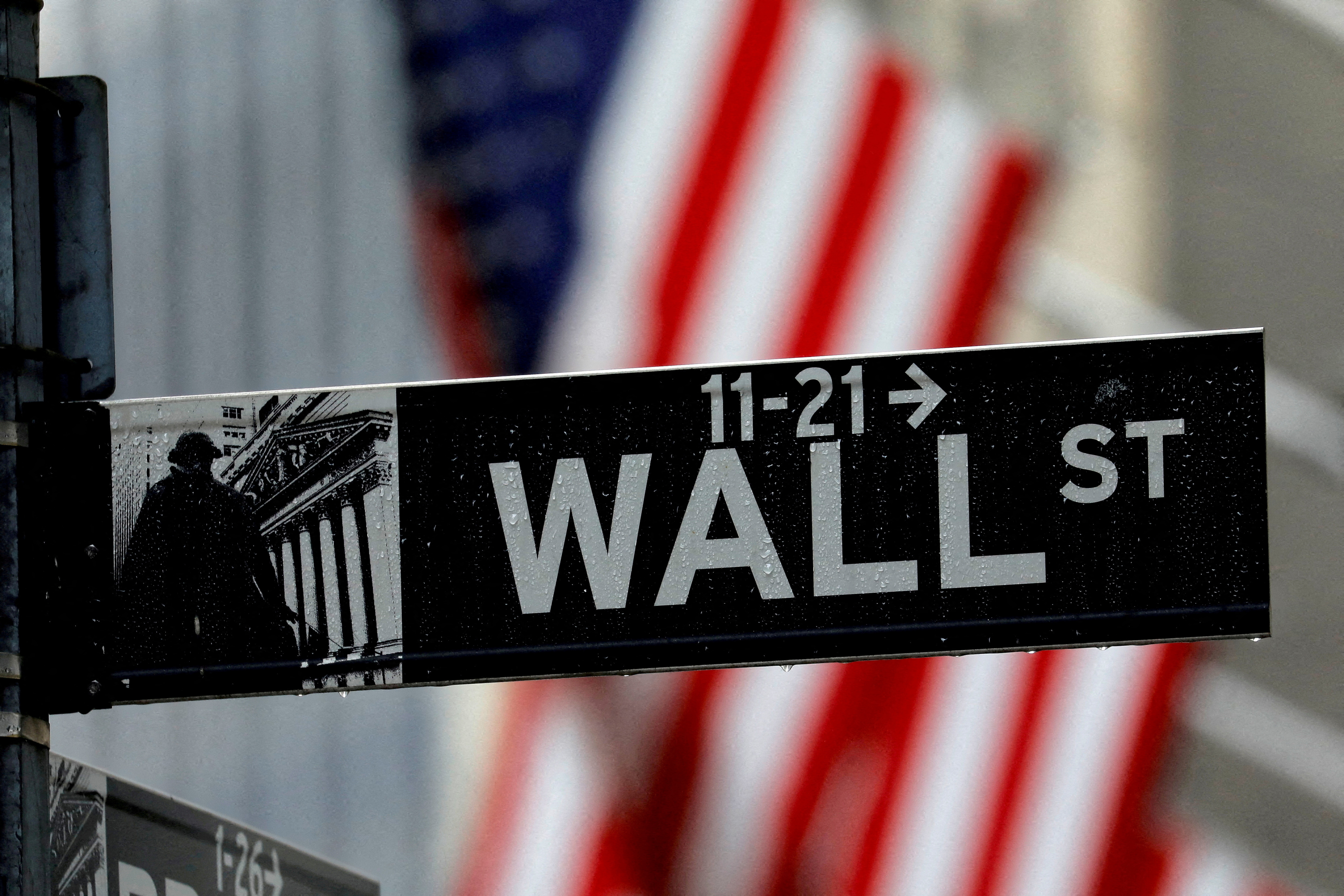
Raindrops hang on a sign for Wall Street outside the New York Stock Exchange in Manhattan in New York City, New York, U.S., October 26, 2020. REUTERS/Mike Segar/File Photo
Categories
Audio Sources - Full Text Articles

Israel“s Netanyahu reaches coalition deal with far-right Religious Zionism

2022-12-01T17:09:49Z

Likud party leader Benjamin Netanyahu waves as he addresses his supporters at his party headquarters during Israel’s general election in Jerusalem, November 2, 2022. REUTERS/Ammar Awad

Israeli Prime Minister-designate Benjamin Netanyahu has reached a coalition dealt with the far-right Religious Zionism party, bringing him closer to securing a new government after an election last month, Netanyahu’s Likud party said on Thursday.

The Religious Zionism party will be given, among other portfolios, control of the Finance Ministry as part of a rotation, Likud said, though it did not provide details on how the rotation would work.

WP Radio
WP Radio
OFFLINE LIVE