Categories
Audio Sources - Full Text Articles

FTX founder Bankman-Fried“s Bahamas case to resume as extradition looms

2022-12-21T11:09:23Z

Proceedings are set to resume on Wednesday in Sam Bankman-Fried’s Bahamas court case, after the founder of the FTX cryptocurrency exchange signed papers paving the way for his extradition to the United States, where he faces fraud charges.

Federal prosecutors in Manhattan last week charged the 30-year-old cryptocurrency mogul with stealing billions of dollars in FTX customer assets to plug losses at his hedge fund, Alameda Research, in what U.S. Attorney Damian Williams called “one of the biggest financial frauds in American history.”

Bankman-Fried was arrested on a U.S. extradition request last week in The Bahamas, where he lives and where FTX is based. He initially said he would contest extradition, but Reuters and other outlets reported over the weekend that he would reverse that decision.

It was not immediately clear what would take place at Wednesday’s hearing at Magistrate Court in Bahamas capital Nassau, or when Bankman-Fried would depart the Caribbean nation for New York.

Bankman-Fried’s U.S.-based defense lawyer, Mark Cohen, did not respond to a request for comment. Bankman-Fried has acknowledged risk-management failures at FTX, but has said he does not believe he has criminal liability.

A spokesman for the U.S. Attorney’s office in Manhattan declined to comment.

Wednesday’s hearing will follow a confusing sequence of events this week that left the status of Bankman-Fried’s expected extradition unclear.

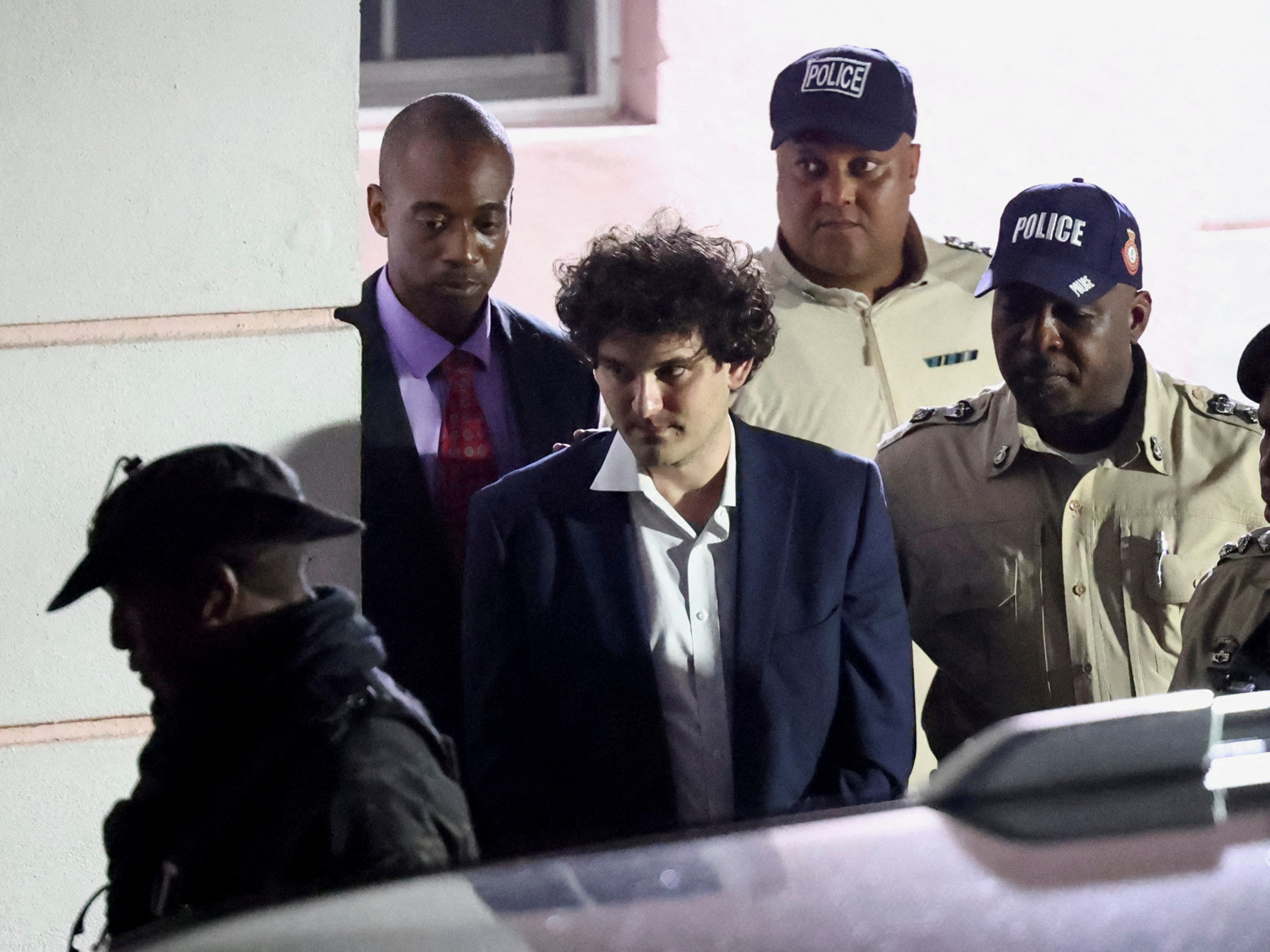
On Monday morning, following the news reports he had agreed to be extradited, Bankman-Fried arrived at the courthouse in a black van marked “Corrections” wearing a blue suit jacket and white shirt – a contrast to the casual attire he was known for while running FTX.

At the hearing, his local defense lawyer Jerone Roberts said he was not informed of the purpose of the proceeding. After a brief recess, Roberts said his client had seen an affidavit outlining the charges against him, but wanted access to the full U.S. indictment against him before consenting to extradition.

The proceedings were then adjourned. They had been expected to resume on Tuesday morning, but Bankman-Fried’s legal papers were not ready in time, according to Doan Cleare, The Bahamas’ acting commissioner of Corrections. Cleare told Reuters Bankman-Fried signed those papers around noon on Tuesday.

Bankman-Fried rode a crypto boom to become a billionaire several times over and an influential U.S. political donor, before FTX’s crash wiped out his wealth and tarnished his reputation. The collapse was driven by a wave of customer withdrawals amid concerns over commingling of funds with Alameda.

The $32 billion exchange declared bankruptcy on Nov. 11, and Bankman-Fried stepped down as CEO the same day.

He has since been detained at The Bahamas Department of Corrections in Nassau, known as Fox Hill prison. The U.S. State Department in a 2021 report described conditions at the facility as “harsh,” citing overcrowding, rodent infestation and prisoners relying on buckets as toilets.

Local authorities say conditions have since improved.

Related Galleries:

Sam Bankman-Fried, who founded and led FTX until a liquidity crunch forced the cryptocurrency exchange to declare bankruptcy, is escorted out of the Magistrate Court building after his arrest, in Nassau, Bahamas December 13, 2022. REUTERS/Dante Carrer/File Photo

The Founder and former CEO of crypto currency exchange FTX Sam Bankman-Fried leaves the Magistrate Court building in Nassau, Bahamas December 19, 2022. REUTERS/Marco Bello
Categories
Audio Sources - Full Text Articles

Hybrid wheat hitting U.S. fields as war, climate threaten global food supplies

2022-12-21T11:13:16Z

Global seed maker Syngenta will release a new type of wheat developed with complex cross-breeding techniques in the United States next year, beating out rival companies that are also trying to develop higher yielding wheat at a time of diminishing global grain supplies.

The hybrid wheat, which combines positive traits from two parent plants, arrives after severe weather slashed grain harvests and the Ukraine war disrupted shipments to hungry importers, sending prices to record highs this spring.

Syngenta, which began working on hybrid wheat in 2010, told Reuters enough seeds will be on the market next year for U.S. farmers to plant about 5,000 to 7,000 acres.

Though a tiny fraction of the nation’s plantings, the previously unreported total represents the company’s biggest ever release of hybrid wheat. It could open the door for larger seedings in 2024 and beyond, as war and climate change make the world’s food supplies increasingly vulnerable.

Growers of corn and other crops like barley have long benefited from hybrid seeds boosting yields. The road to market has been extra slow for wheat because the development process is more costly and difficult, and companies saw lower potential for returns, researchers said.

Benefits of the new crop are still not certain. Three independent seed companies that produced hybrid wheat this year under agreements with Syngenta told Reuters they were unsure the crop will deliver game-changing results for growers. They added that it will take longer to determine how to cost effectively produce the best seeds.

Syngenta’s French unit told Reuters the company postponed the launch of a similar type of wheat tested in France following disappointing results. The U.S. and French hybrids were tailored for local growing conditions, which can include threats from plant diseases and the need to meet quality standards for milling and baking, the company said.

Chinese-owned Syngenta said its U.S. wheat, to be sold under the AgriPro brand, could increase yields by as much as 12% to 15% and make crops more stable, adding that it is attracting strong interest from farmers.

Wheat “is the only major food crop that has not yet benefited from significant technification. Hybrids will change this,” said Jon Rich, Syngenta Seeds’ head of North America cereals operations.

Farmers have used hybrid seeds since the 1930s to grow corn, followed by other crops ranging from peanuts to tomatoes. Hybrid corn helped U.S. yields climb from 20 bushels per acre in 1930 to 140 bushels by the mid-1990s. By 1960, 95% of U.S. corn acres were planted with hybrid seed.

“Corn is really easy to do,” said Charlie Vogel, chief executive officer of the Minnesota Association of Wheat Growers. “It’s really hard with wheat so you need ideal conditions for the seeding.”

Other major global seed companies including Bayer AG (BAYGn.DE) and BASF SE (BASFn.DE) are developing hybrid wheat but are several years behind Syngenta. Unlike genetic modification, crop hybridization has not caused controversy among consumers. While widely used in soy and corn crops fed to livestock, changing plant genes has long been taboo for wheat that is made into bread and pasta.

Even so, Argentine startup Bioceres (BIOX.O) has gained varying levels of approvals for drought-resistant genetically modified wheat in Brazil, Nigeria, Australia and New Zealand, betting on rising consumer acceptance as the world struggles to feed a growing population faced with increasingly severe weather.

Producing hybrid wheat seeds is still more complicated and expensive than conventional wheat. That means farmers who plant the crop must see significantly improved harvests to justify higher seed prices, seed producers said.

Harvests must also improve enough to convince farmers to buy new hybrid seeds each year, instead of saving wheat from previous harvests as many do with conventional seeds, researchers said.

In Park River, North Dakota, Hankey Seed Company grew Syngenta’s hybrid wheat seeds on 30 acres and also produced the crop for grain on 80 acres as a test for future customers, owner Dave Hankey said. He planted the wheat grown for grain on his best soil and said it produced his best yield.

“It will be considerably more expensive and I probably don’t have real good data to show that it will be worth the extra expense,” Hankey said.

Hybrid wheat can produce more uniform results across fields than conventional wheat, and may deliver better yields on poor soil, Hankey said. He declined to talk specifics due to a nondisclosure agreement with Syngenta.

To produce hybrid seeds, Hankey said he planted a mixture of male and female plants in his fields and then surrounded them with a border of male plants to ensure their pollen was the only pollen available to the females.

Hankey even hired a crop duster to fly over half of his 30 acres to test whether the plane would move more pollen around in the air and improve fertilization. He said he did not notice a difference.

“You just plain need the right, light wind – not too much, not too little – for that pollen to waft across right at the time when the female plant is opened up ready to receive it,” said Kevin Capistran, co-owner of Capistran Seed Company in Minnesota who also produced Syngenta’s hybrid wheat seeds.

Another company, Noeske Seed Farm in Valley City, North Dakota, said it grew 80 acres of Syngenta’s hybrid wheat for grain. Yields were unremarkable, though the crop was planted late due to excessive rains, a representative said.

The U.S. farmers who grow hybrid wheat next year will connect directly with Syngenta Seeds to provide crop data the company will use to improve subsequent hybrids, ahead of a full commercial launch in 2024, Syngenta said. Farmers will receive a discount on seeds to encourage feedback, the company said.

“We understand the uncertainty that some farmers may have, especially when the industry has attempted to make hybrid wheat viable in decades past,” Syngenta’s Rich said.

Syngenta projected in 2015 that its annual sales of hybrid wheat seeds could potentially reach $3 billion by 2032. It declined to provide an updated forecast.

Syngenta’s French unit said it hopes to market a variety of hybrid wheat in France in 2025, after its first hybrids there failed to reach yield targets in trials during a hot, dry year. The company said that while the first hybrids “matched the best results on the market, we need to go beyond that.”

The world’s wheat stockpile is projected to shrink to a mere 98-day inventory by the end of the 2022/2023 marketing year, the lowest in eight years, according to U.S. government data.

Germany’s BASF plans to launch hybrid wheat seeds, known as Ideltis, in Europe, the United States and Canada in the second half of the decade, said Peter Eckes, president of research and development for BASF Agricultural Solutions.

Bayer, meanwhile, said its hybrid wheat will also be released “by the later part of this decade,” and that it has seen yield increases of about 15% or more in trials. The company ramped up development work over the last three years and the Ukraine crisis has amplified supply concerns, said Frank Terhorst, Bayer Crop Science’s head of strategy and sustainability.

“Hybrid wheat has been a dream of seed developers since the 1950s,” said Claude Tabel, former president of French seed makers association UFS. “Everyone is working on it.”

Related Galleries:

Wheat crops grow at a demonstration farm of Syngenta Group China’s Modern Agriculture Platform (MAP) service, during a media tour in Wei county of Handan, Hebei province, China June 11, 2021. Picture taken June 11, 2021. REUTERS/Tingshu Wang

An old barn is surrounded by hybrid wheat test plots outside the bio-technology company Syngenta’s research farm near Junction City, Kansas, U.S. May 4, 2017. REUTERS/Dave Kaup

Wheat grain is seen on the MV Brave Commander vessel from Yuzhny Port in Ukraine to the drought-stricken Horn of Africa as it docks at port of Djibouti in Djibouti August 30, 2022. Hugh Rutherford/World Food Programme/Handout via REUTERS

Five by 15 foot test plots of different hybrid wheat strains are grown at the research farm for the bio-technology company Syngenta near Junction City, Kansas, U.S. May 4, 2017. REUTERS/Dave Kaup


Categories
Audio Sources - Full Text Articles

A year in reverse

2022-12-21T11:13:24Z

A look at the day ahead in U.S. and global markets from Mike Dolan.

Amid all the macro policy excitement this month, the relentless slide of electric auto giant Tesla’s (TSLA.O) stock has been withering – with its boss Elon Musk’s controversial parallel stewardship of new toy Twitter the latest big concern.

Billionaire Musk said on Tuesday he will step down as chief executive of Twitter once he finds a replacement – but will still run some key divisions of the social media platform.

That may offer some crumb of comfort for long-suffering Tesla investors. The EV firm’s ailing stock popped up about 2% from two-year lows in pre-market trading on the news.

Musk’s $44 billion takeover of Twitter in October has been marked by chaos and controversy, with many investors questioning whether he is too distracted to also properly run Tesla – in which he is personally involved in production and engineering.

But it may take more than love and attention from Musk to revive Tesla – with rivals’ catchup, China production problems and looming recession more generally all big weights on what many assumed to be an overvalued pandemic boom.

Its 60% stock slide this year – almost twice the year’s losses in the ailing Nasdaq tech index and three times that of the S&P500 – tells its own story.

Although it’s still a whopping five times pre-pandemic levels, Tesla stock has reversed 40% over two years and hit its lowest levels since November 2020 on Tuesday after a swingeing 8% one-day drop and as at least three brokerages cut price targets.

Broader world markets headed into the holiday-strewn year-end in only a slightly less gloomy mood on Wednesday.

Asian stocks were in the red once again amid a mix of China’s worrying new COVID surges and reverberations from the Bank of Japan’s shock decision on Tuesday to raise its cap on government bond yields.

European bourses and U.S. stock futures were higher however.

FedEx (FDX.N) shares rose 3.7% post-bell on Tuesday after Memphis-based global delivery company reported a bigger fiscal second-quarter profit than Wall Street expected – a rare positive pulse from a firm sometimes seen as a bellwether of world trade.

Those soundings partly offset what has been a relentless week of dour U.S. economic news. The latest was U.S. single-family homebuilding tumbling to a 2-1/2 year low in November and permits for future construction plunging as higher mortgage rates continued to depress the housing market.

U.S. Treasury yields slipped back from Japan-inspired three-week highs as a result, although recession warnings contained in the 2-to-10 year yield curve inversion did ease to their least negative in more than a month.

With one eye on weekend budget wrangling in Washington, December consumer sentiment readings will be in focus on Wednesday along with a 20-year bond auction.

The dollar was more mixed generally – higher against the European currencies but showing little sign of a bounce against the yen after the Japanese currency soared more than 4% on Tuesday’s Bank of Japan surprise.

Key developments that may provide direction to U.S. markets later on Wednesday:

* U.S. Dec consumer confidence, Nov existing home sales, Q3 current account

* Canada Nov consumer price inflation

* U.S. Treasury auctions 20-year bonds

* U.S. corporate earnings: Micron Technology, Carnival, Cintas

Related Galleries:

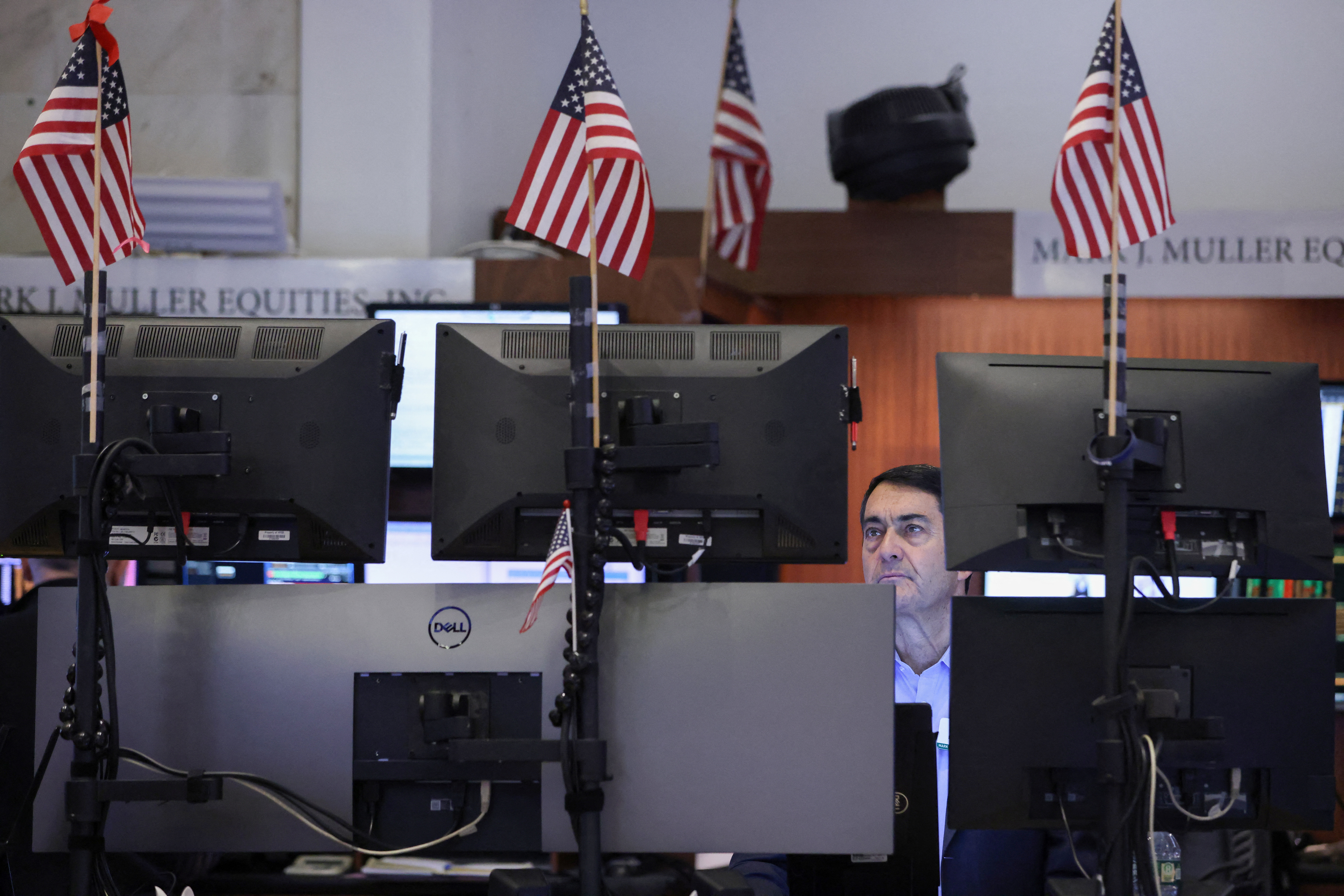
Traders work on the trading floor at the New York Stock Exchange (NYSE) in New York City, U.S., December 14, 2022. REUTERS/Andrew Kelly

A trader works on the trading floor at the New York Stock Exchange (NYSE) in New York City, U.S., December 14, 2022. REUTERS/Andrew Kelly
Categories
Audio Sources - Full Text Articles

U.S. Capitol riot probe to release final report on assault by Trump backers

2022-12-21T11:06:32Z

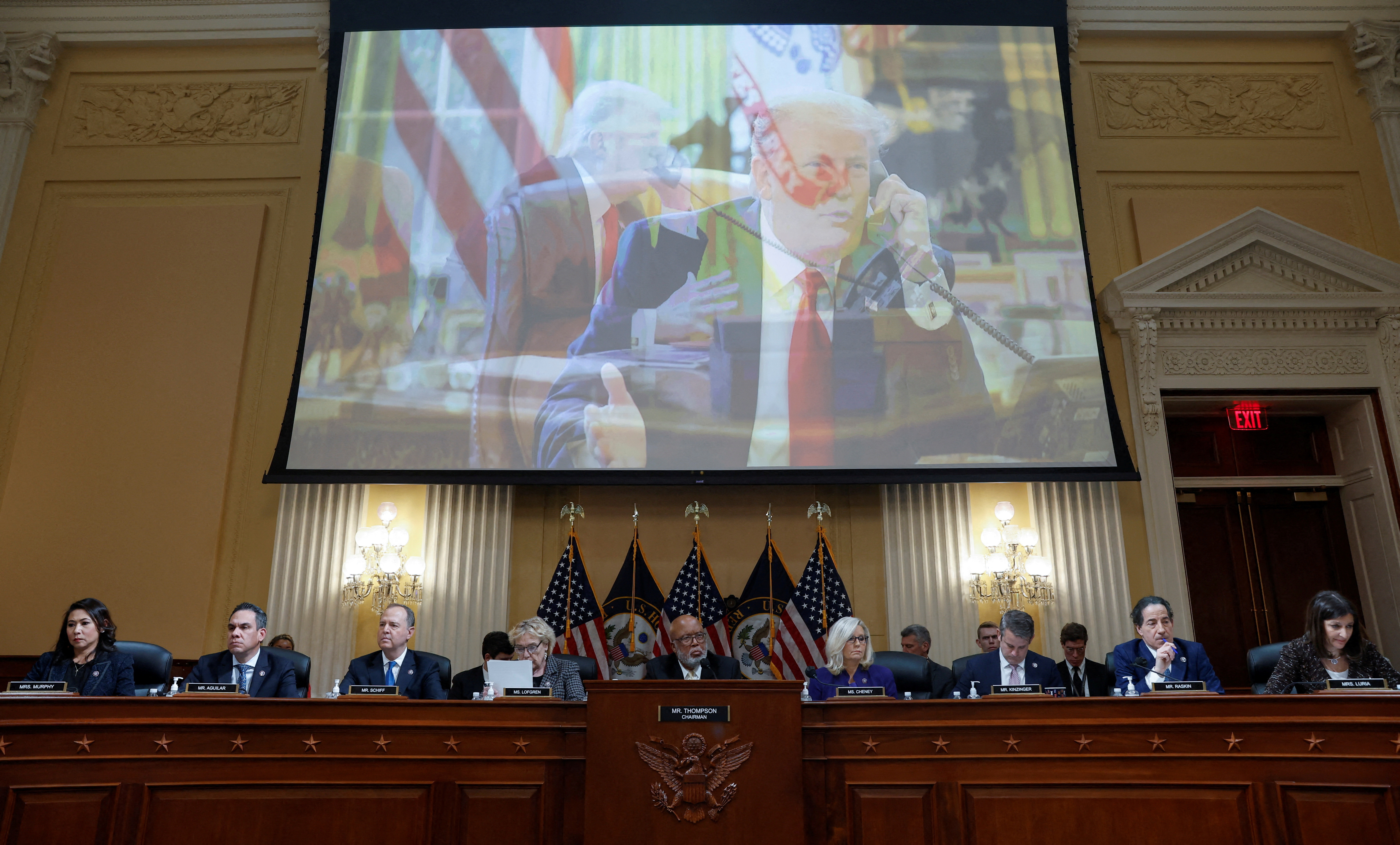
The members of the U.S. House Select Committee investigating the January 6 Attack on the U.S. Capitol sit beneath two overlapping images in a video showing former President Donald Trump speaking on the telephone in the Oval Office as they hold their final public meeting to release their report on Capitol Hill in Washington, U.S., December 19, 2022. REUTERS/Jonathan Ernst TPX IMAGES OF THE DAY

The U.S. congressional panel probing the Jan. 6, 2021, attack on the Capitol wraps up its work on Wednesday with a final report outlining its case that former President Donald Trump should face criminal charges of inciting the deadly riot.

The report, to be issued online, is expected to be more than 1,000 pages long, based on nearly 1,200 interviews over 18 months and hundreds of thousands of documents, as well as the rulings of more than 60 federal and state courts.

The report lists 17 specific findings, discusses the legal implications of actions by Trump and some of his associates and includes criminal referrals to the Justice Department of Trump and other individuals. It also identifies legislative recommendations to help avert another such attack.

The report’s release comes two days after the committee asked federal prosecutors to charge the former Republican president with four crimes, including obstruction and insurrection, for efforts to overturn results of the November 2020 election and sparking the attack on the seat of government.

“Rather than honor his constitutional obligation to ‘take care that the laws be faithfully executed,’ President Trump instead plotted to overturn the election outcome,” the Democratic-led House of Representatives select committee said in a 160-page summary of the report released on Monday.

Trump gave a fiery speech to his supporters near the White House the morning of Jan. 6, and publicly chastised his vice president, Mike Pence, for not going along with his scheme to reject ballots cast in favor of Democrat Joe Biden. Trump then waited hours to make a public statement as thousands of his supporters raged through the Capitol, assaulting police and threatening to hang Pence.

With Trump’s fellow Republicans taking control of the House on Jan. 3, the Democratic-led select committee must wrap up its work, and it ended with a bang. Monday marked the first time in U.S. history that a congressional committee referred a former president for criminal charges.

“This committee is nearing the end of its work. But as a country we remain in strange and uncharted waters. We’ve never had a president of the United States stir up a violent attempt to block the transfer of power,” Democratic Representative Bennie Thompson, who chairs the Jan. 6 committee, said on Monday.

The committee’s request that Trump be charged does not compel federal prosecutors to act, but comes as a special counsel is overseeing two other federal probes of Trump related to his attempt to overturn his 2020 election defeat by Biden and the removal of classified files from the White House.

Categories
Audio Sources - Full Text Articles

Don’t Wait To Embrace CISA’s Vulnerability Management Rules

Three-women-and-two-men-in-a-business-me

Vulnerability management is the time-consuming process of finding and patching a seemingly unlimited number of potential risks. The National Institute of Standards and Technology (NIST) reports more than 23,000 new vulnerabilities for 2022, where more than 17,000 are classified as critical. For many organizations, simply prioritizing vulnerabilities becomes a monumental task on its own. The resulting backlog makes an attractive target for threat actors who strike before fixes roll out.

A recent study revealed more than half of the organizations surveyed reported having more than 100,000 vulnerabilities sitting in backlogs. These organizations reported over a whopping 1.1 million backlogged vulnerabilities overall. Prioritization, effective tools and lack of detailed information about risks contributed to the massive backlogs accumulated.

How can organizations stay ahead of this tidal wave of backlogged vulnerabilities? A new Cybersecurity and Infrastructure Security Agency (CISA) initiative may hold some of the answers.

CISA Proposes a New Approach

NIST recently released its National Vulnerability Database statistics for 2022. Interestingly, the distribution of severe vulnerabilities over time dropped in 2022 compared to 2021, but this doesn’t mean vulnerabilities are any less of a threat. New risks will continue to spring up for as long as hardware and software run important systems. Balancing time between addressing severe and lesser vulnerabilities will always be a challenge. 

This November, CISA announced a new initiative to transform vulnerability management. The agency is introducing a standardized approach to help shorten the time required for vendors to find and address vulnerabilities:

  • CISA will release machine-readable advisories to simplify the identification and patching process, focusing on automating vulnerability patching.
  • Each advisory will clearly communicate the risks associated with each vulnerability and detail which are exploitable. The standardized format will minimize the time required to sift through data to act.
  • CISA strongly encourages using a vulnerability management framework and has released the Stakeholder-Specific Vulnerability Categorization (SSVC) framework. The document is used to determine vulnerability priority and exploitation status, which will allow organizations to better target remediation efforts.

Why is it so Important to Prioritize Vulnerabilities?

Many widespread vulnerabilities remain unpatched. Up to 40% of Log4j downloads are still vulnerable to Log4Shell. Threat actors don’t strike during typical business hours or cease attacks once a vulnerability becomes public knowledge. They rely on an organization’s slow response. State-sponsored Iranian attackers are actively exploiting Log4Shell vulnerabilities and most recently targeted an unpatched VMWare server at a federal civilian agency. 

Long-term vulnerabilities don’t simply disappear from view because of their age. The 2020 IBM X-Force Threat Intelligence Index reported recurrent attacks through known vulnerabilities many years after they were first discovered. The vulnerabilities highlighted in the report illustrate how threat actors leverage well-documented but unpatched vulnerabilities long after discovery. In fact, many remained targets for longer than two years.

Microsoft recently discovered more than one million unsupported web servers still in service after an outdated server was used in a cyberattack against Indian electrical grids. The Boa web server was discontinued in 2005. Attackers leveraged vulnerabilities present in the web server architecture, which was bundled with software development kits (SDKs) for Internet of Things devices. These vulnerabilities affect a wide range of cameras, routers, access points and more.

The outdated and unsupported web server, which was bundled in multiple SDKs, illustrates the importance of examining hardware along with hardware vulnerabilities within your organization. 

Address High-Priority Vulnerabilities Before CISA Rules are in Place

Unaddressed vulnerabilities are a risk to your organization. However, addressing vulnerabilities based on the threat they pose to your specific environment can be a time-consuming process. You may find your team is spending a lot of time going through vendor vulnerability disclosures, MITRE’s annual CWE Top 25 Most Dangerous Software Weaknesses and the OWASP Top 10 Web Application Security Risks. Suddenly, your list of potential vulnerabilities to address has grown exponentially with no signs of slowing.

The good news is that narrowing the list of vulnerabilities to the highest priority for your organization is possible with a few guidelines. 

Be Industry-Specific: What are the Most Common Attack Types in Your Industry?

Vulnerability assessment begins by examining the most common attack types for your industry. Attacks in the healthcare sector, for example, may not mirror cyberattacks on small businesses. Focusing on attacks common to your industry can help you set parameters for addressing the most relevant vulnerabilities. 

Consider Your Hardware and Software: Which Vulnerabilities are the Most Widespread?

Uncovering the most widespread vulnerabilities across your hardware and software systems is an important step in determining what to address first. A widespread vulnerability is an attractive target since it can affect a large number of systems, giving attackers plenty of opportunities for exploitation. CISA publishes a list of Top Routinely Exploited Vulnerabilities which includes several vulnerabilities from popular office and collaboration software common across multiple sectors. 

Think About Access and Function: Which Vulnerabilities Affect High-Impact Accounts and Devices With High-Level Access and Permissions?

Criminal attackers seek the highest level of permissions on the most important systems within an organization. Addressing vulnerabilities within these areas is critical to preventing access that might not otherwise be achieved on patched systems. Consider the risks to assets with high-level permissions. Determine how high-level access and functionality must be protected. Will unpatched vulnerabilities in the systems you use allow attackers to bypass security controls or other failsafe features to gain access to mission-critical data or systems? How might a system be impacted by a compromised high-level user account versus lower-level accounts? 

Don’t Wait to Address Vulnerabilities

CISA’s focus on providing machine-readable data to help speed the vulnerability patching process will help guide vulnerability prioritization. However, waiting for the program to mature before addressing outstanding vulnerabilities within your organization can have lasting negative effects. 

The IBM X-ForceThreat Intelligence Index 2022 observed phishing and vulnerability exploitation as the top infection vectors last year. Threat actors continue exploiting known vulnerabilities long after they fall out of the news cycle and will also go after highly publicized weak points. Prioritizing and addressing vulnerabilities within your environment now is important for minimizing risk and loss from cyberattacks most common to your industry. 

The post Don’t Wait To Embrace CISA’s Vulnerability Management Rules appeared first on Security Intelligence.

Categories
Audio Sources - Full Text Articles

The Hunted: These are the Ukrainians Russia wanted to find

KYIV, Ukraine (AP) — One was asked to be an informant for Russia. Another’s 16-year-old son was abducted as leverage. A third is still in Russian custody. Here are just a few portraits of prominent Ukrainian politicians, journalists, pastors and more who ended up on Russian lists for abduction, in an effort to strip Ukraine of its leaders.

___

VIKTOR MARUNIAK

Two carloads of Russians came for Viktor Maruniak on his 60th birthday.

It was March 21. Maruniak, the head of Stara Zburivka village, in Ukraine’s southern Kherson region, said he and three other local men were taken to a nearby hotel, blindfolded, handcuffed, beaten, strangled and forced to strip naked in below zero weather.

“They’d point a gun toward our heads or toward the head of someone else, saying if you don’t say something, we will kill them,” Maruniak said. “Something was turned off in my head. It helped me survive. I was out of my body.”

After several days, he said, he was taken to a second detention center and tortured with electric shocks. They asked where weapons were stored. He said his captors’ vehicles and uniforms, along with documents he spotted and conversations he overheard, indicated that he had been taken by a special paramilitary police force under Russia’s National Guard.

To his surprise, he was released three weeks later, on the condition that he return to his village as an informant.

Instead, he fled to Latvia. He said he had nine broken ribs. Photographs taken after his ordeal show him thin and withered, with injuries to his hands, back, buttocks and leg. He looks with a level gaze at the camera, a man beyond shock or sorrow, as if nothing human beings might do to each other would surprise him anymore.

“They kept kidnapping people in my village,” he said. “Nobody knows where they are kept and why they are kidnapped.”

___

IHOR KURAIAN

When Russia invaded Ukraine, Ihor Kuraian buried his wedding rings for safekeeping and signed up with a volunteer military group in Kherson. Kuraian and his friends planned to storm a detention center where pro-Ukrainian activists were being held – an idea they later abandoned.

They had gathered 300 Molotov cocktails, 14 guns and a bag of grenades. When Russians found the weapons cache in his car, they tied him up and dragged him to a basement.

They interrogated him, twisted his fingers with pliers and beat him with a wooden club, he said. One man was beaten so badly his sternum fractured, and he died slowly, Kuraian recounted.

Under torture, Kuraian named another person involved in the plan to storm the detention center. When Russians forced him to call the man, he slipped false information into their conversation as a warning. The friend fled. Russians also took over his social media accounts to pump out propaganda.

“They wanted me to cooperate,” he said. “They even offered to make me mayor of Kherson. I refused.”

Kuraian was detained in Crimea and featured in a propaganda spot about prison conditions on Russian television. His family saw the video and lobbied for him to be released in an April 28 prisoner exchange.

“We were exchanged as you see in the movies,” he said. “Walk on the highway towards each other.”

___

VLAD BURYAK

Before the war, Vlad Buryak had the plump, carefree face of a well-loved child. Family photos show his father, Oleg Buryak, gazing at him with a happy smile in front of a Christmas tree.

All that changed at 11:22 a.m. on April 8th at the Vasylivka checkpoint between Melitopol and Zaporizhzhia, where Russians seized Vlad, then 16 years old, according to evidence gathered by his father, the head of the Zaporizhzhia district administration. As a guard looked on, Vlad called his father from a detention center and said he had not been beaten.

Buryak struggled to find words to help his son. “Do not get into conflicts, do not get nervous, do not get pissed off,” he advised.

Vlad had two questions for his father: “Why am I here?” and “When am I going to get out?”

As Buryak scrambled to negotiate his child’s release, the answer to the first question became clear: He was the reason Vlad had been taken. The Russians wanted local leaders like him to stand in front of a Russian flag and welcome them.

Three hard months passed before Vlad could tell the world all the things he hadn’t said on those calls with his dad — about the torture he’d witnessed, the blood he’d mopped up, the man who broke down and tried to kill himself.

Finally, on July 7, Vlad was released. Buryak held his son in his arms.

“We are going home,” Buryak said. “Thank God.”

___

YEVHENIIA VIRLYCH

Yevheniia Virlych, editor of the local news website Kavun City, and her husband, Vladyslav Hladkyi, have spent years writing about Russian efforts to infiltrate Kherson and cultivate collaborators there.

When Kherson fell, they went into hiding and pretended on social media that they were in Poland. In fact, they were barricaded in a friend’s apartment with their cat.

They never went outside. They set up a code so they would know whether to open the front door. Three rings at the doorbell meant one friend; two rings and a knock meant another.

“I was afraid 24 hours a day, seven days a week,” Hladkyi said. “I had headaches. I’ve got a tic with my left eye.”

One July afternoon, Virlych was near the open kitchen window when she overheard two Russian soldiers asking around for her by name. She and her husband created fake Telegram accounts to book tickets on the next bus they could find.

Forty Russian checkpoints later, they were in Zaporizhzhia looking at a Ukrainian flag, wondering whether it was a Russian fake.

It wasn’t a fake. “It was real freedom,” Hladkyi said.

“I wanted to cry,” Virlych said.

___

ILYA YENIN

On a warm June night, a dozen armed men in balaclavas scaled the fence of Ilya Yenin’s house in Russian-occupied Melitopol. Yenin’s partner, Olga, went to the front door and was greeted by the glare of a flashlight. The Russians knew who they were looking for.

They hit Ilya a couple of times and asked where his brother Daniil was.

Both brothers were civilian activists, and Ilya helped found a group to deliver food and medicine to civilians. Daniil has been working with a different charitable fund that helps civilians and supports the Ukrainian military. He left Melitopol in early April, but his brother stayed behind to care for their grandmother.

Daniil waited for a call demanding ransom for his brother’s release, but none came. He began to wonder if Ilya had been taken just to scare — or punish — the people of Melitopol.

After three weeks in a detention center in Melitopol, Ilya was released. He has not dared to try to pass Russian checkpoints to leave occupied territory.

Daniil advises families of the disappeared to talk as much and as loudly as possible about it.

“If no one is looking for you, it means they can do whatever they want with you,” he said.

___

PASTOR DMITRY BODYU

Pastor Dmitry Bodyu was having coffee the morning of March 19 when his wife saw a group of Russian soldiers jumping over their fence.

A U.S. citizen, Bodyu founded the Word of Life church in Melitopol, an occupied city in southern Ukraine. The chilling thing was that the Russians seemed to know his secrets — not only who he was, where he lived and what he did, but also obscure details about his finances.

“Someone was talking about me. When they arrested me, they knew a lot of information about me,” Bodyu said.

In detention, his daily interrogations were a battery of accusations, all of which he said were false: You are helping the Ukrainian military. You are organizing protests. You are a spy for the United States. He thought his captors — some of whom he said wore uniforms with markings of Russia’s Federal Security Service, or FSB — wanted him to spy for Moscow.

“I said, what kind of information do you want to know about the U.S.? Where the McDonald’s is?” he said. “You are talking to the wrong man.”

The Russians insisted they’d come to help Ukraine and wanted Bodyu to spread their message of liberation. He said he was not beaten but could hear others held in the basement cells crying and screaming in pain.

After eight days, Bodyu was released, but Russians kept him under surveillance. In April, he fled with his family to Poland through Russia. He said Russians seized his church and set up a base there, driving parishioners underground.

“It’s not safe,” he said. “But people still meet together and even make plans to celebrate Christmas!”

___

SERHII TSYHIPA

Serhii Tsyhipa, a blogger, activist and military veteran in Nova Kakhovka, in Ukraine’s southern Kherson region, knew the Russians were looking for him.

He went into hiding but kept posting updates about Russian forces and a barrage of anti-Russian messages, including a fantastical satire about a pigeon sent to assassinate Russian President Vladimir Putin. On March 12, he went out with his dog and never came back.

Around six weeks later, a thin, hollow-eyed Tsyhipa surfaced in a video on pro-Russian media. He trembled and he held his arm funny. He regurgitated Russian propaganda. The video has gotten nearly 200,000 views on one YouTube channel alone.

His stepdaughter Anastasiia watched with horror: What had they done to him? “It’s not normal, the way he’s talking,” she told AP.

Voice analysis experts with the Ukrainian police concluded that Tsyhipa had made the video under duress, according to a copy of their analysis obtained by AP.

In July, his wife, Olena, got a Telegram message from a man who claimed to be a Russian agent. He told her to bring Tsyhipa’s clothes and passport to a checkpoint in Russian-held territory, where her husband would be returned to her. Olena thought something was amiss: If she or a friend went for the handover, would they be taken too?

Tsyhipa’s family has reached out to lawyers, NGOs, international organizations, journalists and every Ukrainian authority they can think of, and European officials have publicly lobbied for Tsyhipa’s release. But nothing has worked.

“I asked them to put pressure on Russia to release political prisoners,” Olena said. “I think there are many people like my husband.”

___

Follow AP’s coverage of the war in Ukraine: https://apnews.com/hub/russia-ukraine

Categories
Audio Sources - Full Text Articles

Arizona judge to consider Kari Lake’s stolen election claims

PHOENIX (AP) — Kari Lake has claimed for weeks that her loss in the race for Arizona governor was illegitimate.

The former television anchor gets her long-sought opportunity to make her case to a judge this week during a two-day trial scheduled to begin on Wednesday. She’ll have a chance to inspect ballots, call witnesses and introduce evidence in a bid to prove she was the rightful winner of the race, which Democrat Katie Hobbs won by just over 17,000 votes.

She faces extremely long odds. Maricopa County Superior Court Judge Peter Thompson said she must prove not only that misconduct occurred, but also that it was intended to deny her victory and did in fact result in the wrong woman being declared the winner.

“We have a chance to show the world that our elections are truly corrupt and we won’t take it anymore,” Lake said Tuesday at an event for Turning Point USA, a conservative youth group.

There is no jury. Thompson will make a ruling on the evidence presented, which the losing side is likely to appeal to the Arizona Supreme Court. Lake is asking the judge to either declare her the winner or order a revote in Maricopa County. The new governor takes office Jan. 2.

Lawyers for Hobbs say the trial will be a spectacle and an opportunity for Lake to spread outlandish theories about election misconduct.

“The court should not indulge this kind of a show that plaintiffs want to put on,” Hobbs attorney Abha Khanna told the judge Monday, urging him to dismiss the case in its entirety before the trial. “The court is not a theater.”

Thompson on Monday dismissed eight of the 10 claims Lake raised in her lawsuit, including Lake’s allegation that Hobbs, in her capacity as secretary of state, and Maricopa County Recorder Stephen Richer engaged in censorship by flagging social media posts with election misinformation for possible removal by Twitter. He also dismissed her claims of discrimination against Republicans and that mail-in voting procedures are illegal.

Thompson took no position on the merits of Lake’s two surviving claims, but he wrote that the law allows her to make her case.

Lake was among the most vocal 2022 Republicans promoting former President Donald Trump’s election lies, which she made the centerpiece of her campaign. While most of the other election deniers around the country conceded after losing their races, Lake has not.

She has zeroed in on problems with ballot printers at some polling places in Maricopa County, home to more than 60% of voters. The defective printers produced ballots that were too light to be read by the on-site tabulators at polling places. Lines backed up in some areas amid the confusion.

Affected ballots were taken to the more sophisticated counters at the elections department headquarters in downtown Phoenix. County officials say everyone had a chance to vote and all ballots were counted. Officials have said they’re investigating why some of the Oki brand printers failed when used with the same settings as prior elections, but it appears to have been an issue with the fuser, which heats the toner to imprint it on the paper.

Lake’s second claim is that the chain of custody for ballots was broken at an off-site facility, where a contractor scans mail ballots to prepare them for processing. She claims that workers at the facility put their own mail ballots into the pile, rather than returning them through normal channels, and also that paperwork documenting the transfer of ballots is missing.

The county disputes the claim.

For both the printer and chain of custody claims, Lake will have to prove that people intentionally interfered to steal the election from her and succeeded. The Arizona Supreme Court ruled nearly a century ago that mistakes by election officials, even big ones, are not sufficient on their own to overturn an election; the losing candidate must show the mistakes affected the result.

Meanwhile, a judge in conservative Mohave County ruled Tuesday that Republican Abraham Hamadeh can proceed with his lawsuit challenging the results of the election for attorney general, which he lost to Democrat Kris Mayes by 511 votes. Hamadeh’s lawsuit raises the same printer issues from Lake’s suit and also alleges his race was affected by improper handling of ballots that were duplicated or adjudicated by humans because they could not be read by tabulators.

Judge Lee Jantzen said Hamadeh can inspect ballots in Maricopa, Pima and Navajo counties before a trial scheduled for Friday. The results of an automatic recount of the race were scheduled to be released on Thursday but will now be delayed until Hamadeh’s lawsuit is resolved.

Categories
Audio Sources - Full Text Articles

Warren Buffett’s dream business is a little chocolate maker that’s generated a 8,000% return for him. Here are 5 reasons why he loves See’s Candies.

Warren Buffett makes Sees CandiesWarren Buffett and a See’s Candies employee.

Facebook/See’s Candies

  • Warren Buffett owns big stakes in Apple and Coca-Cola, but his “dream business” is See’s Candies.
  • The legendary investor bought the California seller of boxed chocolates in 1972.
  • Buffett has praised See’s profits, modest capital needs, economic moat, personnel, and products.
  •  

Warren Buffett has built billion-dollar stakes in Apple, Coca-Cola, Kraft Heinz, and other household names. Yet See’s Candies, a California seller of boxed chocolates, is the investment guru’s “dream business.”

Buffett has frequently applauded See’s since buying it in 1972. He and his investment partner Charlie Munger have “earned exceptional returns and had a good time,” he wrote in his 1991 letter to shareholders. “We would love to increase our economic interest in See’s, but we haven’t found a way to add to a 100% holding,” he wrote in his 1994 letter.

The so-called Sage of Omaha’s has praised See’s outsized financial returns, modest capital needs, economic moat, quality personnel, and the chocolates themselves. We look at each aspect of the company below.

A return of 8,000%See's Candies box

Facebook/See’s Candies

Probably the biggest reason for Buffett’s love affair with See’s Candies is the enormous return he’s made on his investment: north of 8,000% since 1972.

“We put $25 million into it and it’s given us over $2 billion of pretax income, well over $2 billion,” Buffett said at Berkshire’s annual shareholder meeting in 2019.

See’s has grown from earning $30 million in annual revenue and less than $5 million in pretax income when Buffett bought it, to more than $380 million in sales and $80 million in profits, according to the latest figures available.

Buffett may be especially grateful for his billions from See’s, given he nearly backed out of buying the business over a paltry $5 million.

“I almost blew the See’s purchase,” he wrote in his 2007 letter. “The seller was asking $30 million, and I was adamant about not going above $25 million. Fortunately, he caved. Otherwise I would have balked, and that $2 billion would have gone to somebody else.”

A chocolate cash cowWarren Buffett makes Sees Candies

Facebook/See’s Candies

Buffett has frequently praised See’s for its modest capital needs.

Selling chocolates for cash means the business takes in revenue immediately, and a short production and distribution cycle minimizes the volume of funds tied up in inventory, he wrote in his 2007 letter.

See’s has only required $40 million in investment from Berkshire Hathaway to generate upwards of $2 billion in profits for the conglomerate. It’s become a cash cow that provides funding for Buffett’s other ventures.

“Just as Adam and Eve kickstarted an activity that led to six billion humans, See’s has given birth to multiple new streams of cash for us. (The biblical command to “be fruitful and multiply” is one we take seriously at Berkshire.),” he wrote in 2007.

“See’s has thus been able to distribute huge sums that have helped Berkshire buy other businesses that, in turn, have themselves produced large distributable profits. (Envision rabbits breeding.),” he wrote in 2014.

A brand-loyalty moatWarren Buffett and Elon MuskWarren Buffett (left) and Elon Musk (right)

Alex Wong/Getty, REUTERS/Rebecca Cook

Two of the key competitive advantages of See’s are its famous brand and loyal customer base, which make it easy to charge more and tough for rivals to steal business.

“Every person in California has something in mind about See’s Candies and overwhelmingly it was favorable,” Buffett told a group of business-school students at the University of Florida in 1998.

“They had taken a box on Valentine’s Day to some girl and she had kissed him … See’s Candies means getting kissed,” he added. “If we can get that in the minds of people, we can raise prices.”

See’s also enjoyed a “pervasive favorable reputation with consumers based upon countless pleasant experiences they have had with both product and personnel,” Buffett wrote in his 1983 letter.

The attractive brand image allows the company to base its selling prices on the value of the product to the customer, not the cost of producing it, he added. Unsurprisingly, See’s has raised its prices from less than $2 a pound in 1972 to more than $20.

When Tesla CEO Elon Musk criticized economic moats like brand loyalty as “lame” on an earnings call in 2018, Buffett fired back.

“Elon may turn things upside down in some areas,” he said at the next annual shareholder meeting, according to Fortune. “I don’t think he’d want to take us on in candy.”

Quality peopleSee's Candies Toffee-ettes

Facebook/See’s Candies

Buffett has frequently praised See’s management and store employees.

“Charlie and I put Chuck Huggins in charge of See’s about five minutes after we bought the company,” he wrote in his 1988 letter. “Upon reviewing his record, you may wonder what took us so long.”

Huggins, whose “love for the customer and the brand permeated the organization,” oversaw a tenfold increase in profits during his 34 years at the company, Buffett wrote in 2005.

“Candy stores are fun to visit, but most have not been fun for their owners,” he told investors in 1987. “From what we can learn, practically no one besides See’s has made significant profits in recent years from the operation of candy shops. Clearly, Chuck’s record at See’s is not due to a rising industry tide. Rather, it is a one-of-a-kind performance.”

While Huggins was evidently instrumental to See’s success, his retirement in 2006 didn’t tank the company. His successor, Brad Kinstler, was “taking the company to new heights,” Buffett wrote in 2011.

Buffett has also cheered See’s customer service. 

“Cheerful, helpful personnel are as much a trademark of See’s as is the logo on the box,” he wrote in his 1983 letter.

The chocolatesBerkshire Hathaway See's Candies box

Facebook/See’s Candies

Buffett’s appetite for See’s chocolates may also be a factor in his fondness for the company. See’s products have been sold at Berkshire Hathaway’s annual meeting for years. In fact, attendees consumed more than 13,400 pounds of its products in 2013.

“Charlie and I will each consume enough Coke, See’s fudge and See’s peanut brittle to satisfy the weekly caloric needs of an NFL lineman,” Buffett pledged in his 2015 letter, referring to the upcoming annual meeting.

“Long ago we discovered a fundamental truth: There’s nothing like eating carrots and broccoli when you’re really hungry — and want to stay that way.”


Read the original article on Business Insider
Categories
Audio Sources - Full Text Articles

Investors won’t see big returns on stocks 2023 if a Santa rally doesn’t happen before the new year.

Hi friends. I’m senior reporter Phil Rosen, writing to you from Los Angeles.

If you didn’t see, Elon Musk last night said he would step down as CEO of Twitter once he finds someone “foolish” enough to take the job. 

So… any takers? 

Anyway — Christmas is four days away but Santa’s nowhere in sight. The S&P 500 is down about 19% on the year, and those losses could spill over into the new year if stocks don’t see the usual holiday rally.

This means that any equity returns next year will be dependent on what the Fed does next.


If this was forwarded to you, sign up here. Download Insider’s app here.


Traders NYSE

(Photo by Scott Heins/Getty Images)

1. The window for a Santa Claus rally on Wall Street doesn’t open until the final five trading days of the year, which begins this Friday. 

But if the S&P 500 misses that final rally, that bodes poorly for rebound odds in 2023. 

“When the index is down in the double digits as it is today, the odds of it being positive next year is essentially a coin flip and the returns aren’t nearly as promising as they would be if the S&P ended down less than 10%,” DataTrek co-founder Jessica Rabe wrote in a Tuesday note. 

She pointed out that if the major index sheds more than 10% for a year, the average return in the following 12 months falls from 17.5% to 6.4%. 

The lack of a holiday rally so far suggests that more rocky markets await when the calendars change. 

Investors already have plenty of reason to fear what could come next. Concerns about an imminent recession, declining corporate earnings, and more Fed rate hikes are mounting — add in a downbeat stock outlook and the holiday cheer gets even more muted.

The Fed’s aggressive monetary policy has driven this year’s equity sell-off, but Rabe said any returns in 2023 will come down to the central bank.  

“As for what turns US equities around after a hard year, the essential ingredients are: help from the Federal Reserve in the form of lower interest rates or Federal government spending,” Rabe said, pointing to the 2008 financial crisis as an example.

Fiscal and monetary policy stimulus could lift stocks after a forgettable year, she added. Recall that while the S&P 500 tumbled 37% in 2008, it rebounded 26% in 2009. 

“That’s why US equities are so volatile now,” Rabe said. “As no one knows when the Fed will pivot to being more accommodative.”

What’s your stock market outlook for 2023? Tweet me (@philrosenn) or email me (prosen@insider.com) to let me know.


In other news:

lumber storeA man loads pieces of two-by-four wood onto his cart in the lumber section at a home improvement store on August 16, 2022 in Alhambra, California.

FREDERIC J. BROWN/AFP via Getty Images

2. US stock futures are rising early Wednesday, setting the S&P 500 up for a second day of gains as those traders still on duty adjust to the BoJ’s shock move. Here are the latest market moves.

3. Earnings on deck: Micron Technology, Herman Miller, and more, all reporting.

4. This hedge fund manager is up over 39% this year. He shared six undervalued stocks that he’s bullish on ahead of the new year — see the names here. 

5. Russian oil exports have cratered by 54% in the first full week of the EU embargo. At the same time, there’s been a shortage of tankers willing to carry those supplies, and energy giants like Exxon Mobil and Shell are avoiding hiring tankers that previously carried Russian oil.

6. The chief US economist of Pantheon said homebuilding still has room to fall and odds for recovery are “next to nil” until demand returns. The housing market is far from a recovery, Kieran Clancy added. The latest data showed single-family home starts declined 4.1% last month.

7. FTX is trying to recover voluntary payments made to third parties. And those include political contributions and charitable donations. Disgraced founder Sam Bankman-Fried made tens of millions of dollars in political contributions before his exchange filed for bankruptcy.

8. Bank of America recommended a batch of stocks that have been oversold this year and have suffered steep losses. Strategists selected top-rated names to watch in an uncertain market. Here are the 21 stock picks poised for outsized moves in 2023.

9. Even with inflation, certain market moves can still deliver profits over the next year, according to Morningstar. The firm shared two trades that can bring 7% returns — and why the 60/40 portfolio strategy is starting to look attractive again.

Cathie Wood's ARK Invest

Markets Insider

10. ARK Invest’s flagship fund has plunged to new five-year lows. Tesla stock’s historic decline has dragged the ETF more than 80% from its February 2021 high. That represents a loss of roughly $20 billion in assets under management.


Curated by Phil Rosen in Los Angeles. Feedback or tips? Tweet @philrosenn or email prosen@insider.com

Edited by Max Adams (@maxradams) in New York and Hallam Bullock (@hallam_bullock) in London.

Read the original article on Business Insider
Categories
Audio Sources - Full Text Articles

Ukraine’s Ministry of Defense reassures kids that Santa and his reindeer won’t be shot down by Russian missiles

A man in Saint Nicholas costume with a woman and a small child in Kherson, Ukraine, December 18 2022.A man dressed in the costume of St Nicholas with a woman and a small child in Kherson, Ukraine, December 18, 2022.

Artur Widak/Anadolu Agency via Getty Image

  • Ukrainian defenses will keep Santa safe from Russian missiles, Ukraine’s MOD tweeted. 
  • President Zelenskyy said Ukrainian children are requesting air defenses from Saint Nicholas.
  • He may be listening: the US is set to transfer its Patriot missile defense system to Ukraine.

Ukraine’s Ministry of Defense tweeted an endearing reassurance to the country’s children on Tuesday, saying that its air defenses would keep Santa safe from Russian missiles.

“Our children are worried about Russian missiles shooting down Santa, who will fly over Ukraine,” the message said. “But [Ukraine’s] air defense guarantees a safe flight for him and his reindeer over our land.”

—Defense of Ukraine (@DefenceU) December 20, 2022

Ukraine’s traditional Christmas begins on January 6, but Western-style Christmas, with festivities starting on December 24, is increasingly popular.

However, the Christmas period this year comes amid continued fighting in Ukraine.

On Monday, Ukraine celebrated Saint Nicholas day, when a Santa-like figure brings gifts overnight. President Volodymyr Zelenskyy told leaders of the Joint Expeditionary Force group of nations on Monday that children in Ukraine have been asking the saint for air defenses to bring the country victory, CNN reported. 

“Ukrainian children in their letters to St. Nicholas are asking for air defense, for weapons, for victory – a victory for them, a victory for all Ukrainians. They understand everything, our children. Let us act!” Zelenskyy said, per the network.

Air defense remains one of Ukraine’s gravest concerns as Russia’s invasion continues with no end in sight.

According to a report by British think tank RUSI, Russia’s fighting aircraft remain more advanced than those Ukraine is able to field.

Ukraine has relied heavily on relatively low-tech anti-aircraft artillery to counter the onslaught of drones, missiles and jets, with notable success.

Meanwhile, the Biden administration is set to send Ukraine the Patriot missile system, its most advanced air defense system, a senior administration official told The Washington Post on Tuesday. 

This comes as part of a $2 billion package of renewed aid, to be unveiled during Zelenskyy’s visit to the US Capitol on Wednesday, the Post reported.

Read the original article on Business Insider
WP Radio
WP Radio
OFFLINE LIVE