Attacks on the US power substations – Google Search google.com/search?q=Attac…
 The Brooklyn Times - bklyntimes.com
DOHA, Qatar (AP) — Japan reached the round of 16 for the fourth time at a World Cup. It got knocked out in the round of 16 for the fourth time in a 3-1 loss to Croatia on penalty kicks after a 1-1 draw in regulation and extra time.
EXPECTATION VS. PERFORMANCE
Coach Hajime Moriyasu said for months that the Japan team’s goal was to reach the quarterfinals for the first time. So by that standard, Japan under-performed.
However, 2-1 victories over former World Cup champions Spain and Germany in the group stage showed Japan has improved enough to compete with top soccer nations.
“Even though we could not break the wall of the round of 16 again, players demonstrated a new era of our soccer,” Moriyasu said.
Moriyasu talked of still needing to improve, but the coach said his players “can look eye-to-eye with anyone now.”
WHO’S OUT?
Fullback Yuto Nagatomo, 36, and goalkeeper Eiji Kawashima, 39, have each been on four World Cup squads and certainly will not return. Nagatomo played in all four games, but Kawashima never left the bench. Instead he served as a veteran mentor to the young team.
Captain and defender Maya Yoshida was in his third World Cup and, at 34, most likely his last.
“I’m having trouble finding words to describe how I feel,” Nagatomo said after the loss to Croatia. “We did everything we could until the very end. I trust that younger players, driven by this sense of regret, will make a better future for Japanese soccer.”
WHO’S NEXT?
Three names come immediately to mind.
Midfielder Ritsu Doan, who plays at German club SC Freiburg, scored two goals and will certainly be a backbone of future teams. Another is midfielder Kaoru Mitoma, who is having at stellar season at Brighton & Hove Albion in England’s Premier League.
Mitoma was one of three Japanese players who missed their penalty kick in the shootout loss to Croatia.
The third is another midfielder, Takefusa Kubo, a 21-year-old at Spanish club Real Sociedad.
WHAT’S NEXT?
Japan has qualified for the Asian Cup, a tournament it has won four times. The event, scheduled for January 2024, was moved to Qatar after China withdrew, citing COVID-19.
___
AP World Cup coverage: https://apnews.com/hub/world-cup and https://twitter.com/AP_Sports

Al Jazeera on Tuesday said it has filed a lawsuit at the International Criminal Court against Israeli forces over the killing of Palestinian-American journalist Shireen Abu Akleh, who was shot during an Israeli raid in the West Bank in May.
The lawsuit following an investigation by the television news network’s legal team, Al Jazeera said on Twitter.
The ICC must identify the individuals who were directly involved Abu Akleh’s killing, Al Jazeera lawyer Rodney Dixon KC told a news conference in The Hague on Tuesday.
“The rulings of the International Criminal Court stipulate that those responsible be investigated and held accountable. Otherwise, they bear the same responsibility as if they were the ones who opened fire,” Dixon said.
The circumstances of Abu Akleh’s killing are disputed.
Israeli Prime Minister Yair Lapid said on Tuesday that no one would question Israeli soldiers.
“No one will interrogate IDF soldiers and no one will preach to us about morals of combat, certainly not the Al Jazeera network,” Lapid said.
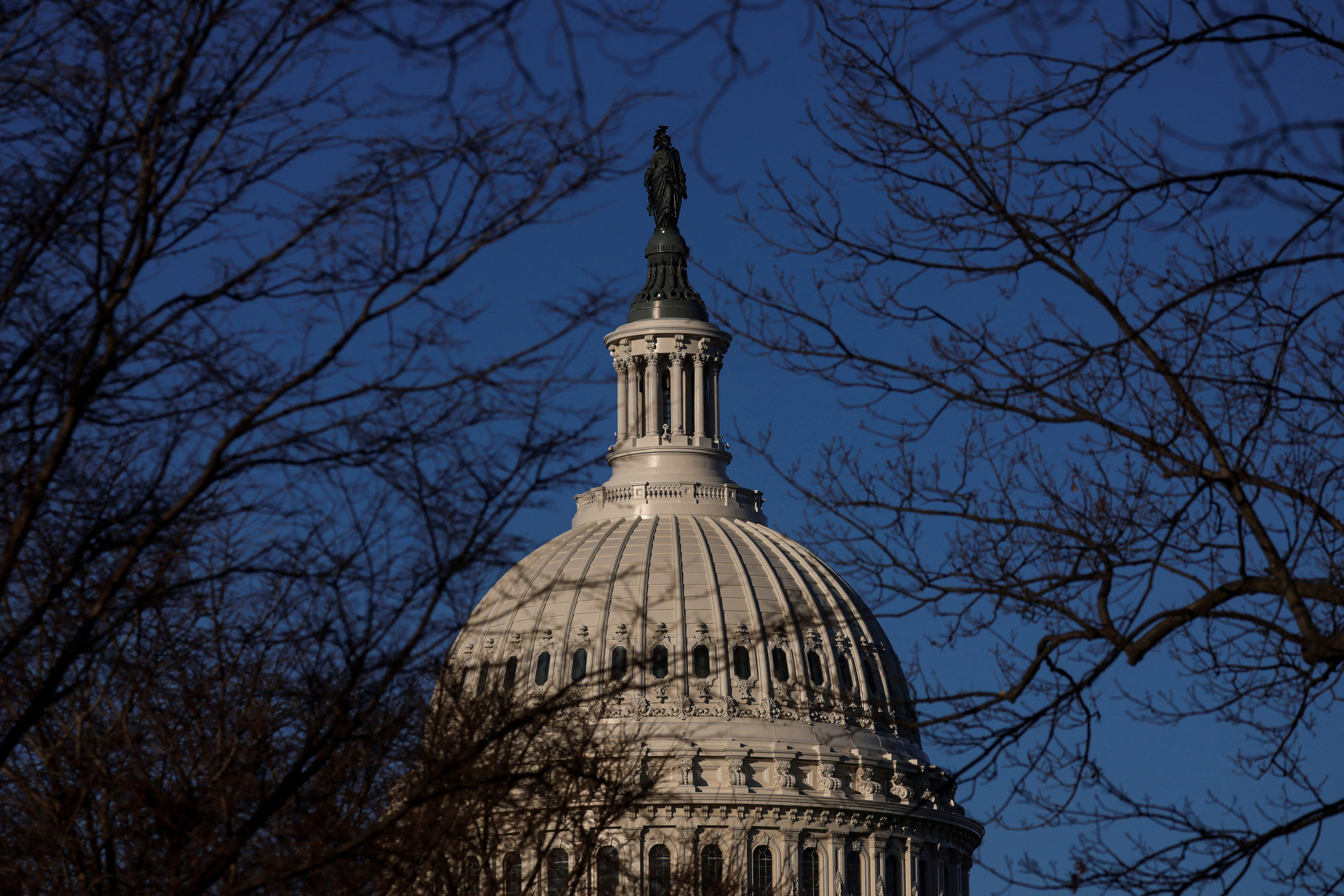
A bill protecting federal recognition of same-sex marriages that has the support of both LGBT advocates and religious groups is expected to pass the U.S. House of Representatives on Tuesday with bipartisan support, a sign of a significant cultural shift in a divided nation.
The Respect for Marriage Act, which passed the U.S. Senate last week, was designed as a backstop to the 2015 Supreme Court ruling that legalized same-sex marriage nationwide, known as Obergefell v. Hodges.
The legislation would allow the federal government to continue recognizing same-sex and interracial marriages in states where they were legally performed, should the court strike down Obergefell, a concern raised after the court ended the nationwide right to abortion in June.
A bipartisan amendment added in November affirmed that the bill would not subvert existing religious freedoms, helping quell initial opposition by conservatives. The bill, which was spearheaded by a group of Democratic and Republican senators, gained the backing of several national religious groups.
Paul Brandeis Raushenbush, an American Baptist reverend and president of Interfaith Alliance, said the support for the bill from religious groups showed that many had undergone a “remarkable transformation” in the way they perceive same-sex marriage.
He attributed the shift partly to the fact that such marriages had ceased to be unusual in the United States since the Supreme Court legalized them.
“The sky didn’t fall because same-sex marriage began happening,” said Raushenbush, who is in a same-sex marriage himself. “The specter of same-sex couples getting married no longer feels scary because it’s quite commonplace.”
The amendment’s support from various religious groups that are theologically opposed to same-sex marriage reflects the fact that attitudes have changed, said Tim Schultz, the president of the 1st Amendment Partnership, which advocates for religious liberty.
“Fighting a permanent culture war over gay rights is not in their interest as religious organizations,” he said. “They believe that seeking common ground is in the interest of religious freedom, the common good and how they portray their faith to the world.”
Other religious groups, such as the Southern Baptist Convention, strongly opposed the legislation even after the religious freedom protections were added.
“The ability of (Baptist) organizations to follow their consciences as they carry out their work has already been a source of conflict,” Brent Leatherwood, president of the convention’s Ethics and Religious Liberty Commission, said. “Those waters will only be further muddied by [the law].”
Several conservative senators pushed back against this characterization of the bill, which ultimately received support from a dozen Republicans.
The legislation “offers far more in the way of religious liberty protections than currently under Obergefell, which leaves all such decisions up to the courts,” Republican Senator Todd Young wrote in a newspaper opinion piece declaring his support for the bill last week.
The vote comes the day after the Supreme Court appeared ready to rule that a Christian Web designer has the right to refuse to provide services for same-sex marriages, in arguments challenging a Colorado law banning discrimination.
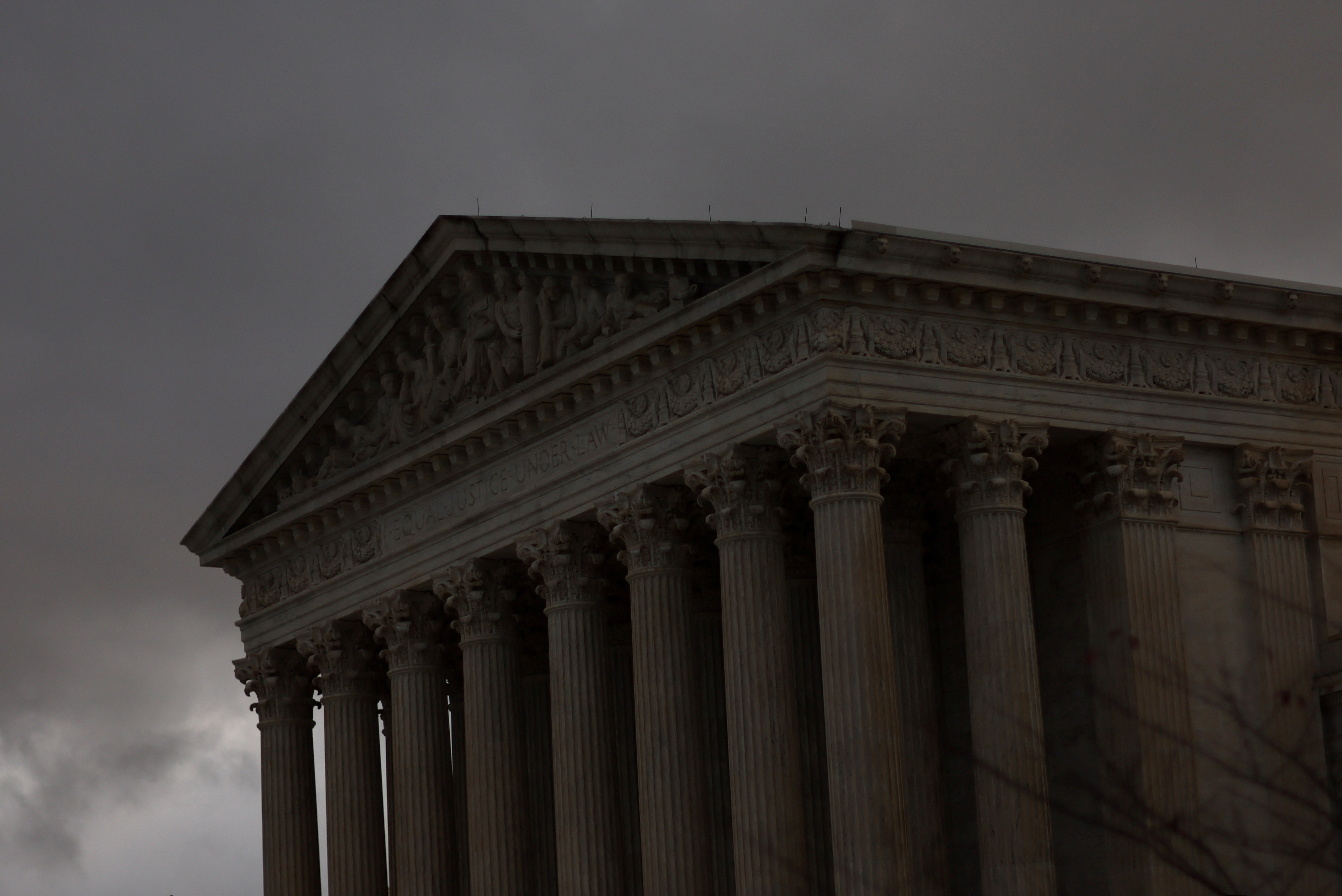
Just eight days before the 2020 presidential election, conservative U.S. Supreme Court Justice Brett Kavanaugh wrote in an opinion involving a Wisconsin voting dispute that “state courts do not have a blank check to rewrite state election laws for federal elections.”
Kavanaugh’s words, along with those of some of his fellow conservative justices criticizing state courts in other election-related disputes, foreshadowed a major case set to be argued on Wednesday that could hand politicians more power over the conduct of elections and limit the ability of state courts to scrutinize these actions.
The Supreme Court, which has a 6-3 conservative majority, is due to hear an appeal of a February decision by North Carolina’s top court to throw out a map delineating the state’s 14 U.S. House of Representatives districts – approved by the Republican-controlled state legislature – as biased against Democratic voters.
The Republican North Carolina lawmakers making the appeal are asking the Supreme Court to embrace a legal theory – once marginal but now gaining traction in conservative legal circles – called the “independent state legislature” doctrine, or ISL. Under this doctrine, they contend that the U.S. Constitution gives state legislatures, and not other entities such as state courts, power over election rules and electoral district maps.
North Carolina’s Department of Justice and several voting rights groups that sued to block the Republican-drawn map are now defending the actions of the state’s high court. They are backed by Democratic President Joe Biden’s administration.
Critics have said any Supreme Court endorsement of the doctrine could upend American democratic norms by restricting a crucial check on partisan political power and breed voter confusion with rules that vary between state and federal contests.
“The current version of ‘ISL’ was dreamed up by conservative ideologues who don’t want voters to have more rights and therefore have been eroding voting rights across the board,” said Marc Elias, a prominent election lawyer who has represented the Democratic Party in numerous court cases.
“It’s a mission by conservative academics and others to undermine the ability to protect regular citizens’ rights to vote,” Elias added.
The doctrine is based in part on language in the Constitution that the “times, places and manner” of federal elections “shall be prescribed in each state by the legislature thereof.”
The Republican lawmakers have argued that the state court unconstitutionally usurped the North Carolina General Assembly’s authority to regulate federal elections. Conservative voter advocacy groups backing them have said state legislatures must defend against what they see as increasingly brazen attempts to rewrite election laws through the courts.
The case has come to the Supreme Court at a time of heightened concern over U.S. election integrity in light of new voting restrictions pursued by Republican state legislatures in the aftermath of Republican former President Donald Trump’s false claims that the 2020 election was stolen from him through widespread voting fraud. Republicans have said their aim is to prevent voting fraud.
The doctrine could endanger hundreds, even thousands, of election-related provisions in state constitutions, rules adopted by state elections officials and reforms adopted through voter referendums, according to New York University School of Law’s Brennan Center for Justice.
Some legal experts have said the doctrine could make it easier for a state legislature’s majority party to draw the boundaries of U.S. congressional districts to entrench its own power, a practice called gerrymandering. It could stymie challenges on issues as varied as voter-identification requirements, mail-in ballots and drop boxes, which Republicans have sought to restrict in some states and could factor into lawsuits that arise in the heat of an election, they added.
John Eastman, a conservative lawyer who advised Trump in his bid to overturn the 2020 election results, wrote a brief telling the Supreme Court that the doctrine also gives legislatures “plenary” power to choose presidential electors in the state-by-state Electoral College system that determines the winner of U.S. presidential races.
Veteran Republican election lawyer Benjamin Ginsberg said in a brief to the Supreme Court that the doctrine could “increase the odds that state legislatures replace the popular vote with their own political preferences.” Ginsberg is among some conservatives who have decried the doctrine.
Jason Snead, a conservative elections expert who embraces the doctrine, said the North Carolina case gives the Supreme Court an opportunity to “shut down a lot of the confusion and chaos” occurring around elections.
“Courts have inserted themselves into the process of crafting election law, and doing so by pulling vague provisions from state constitutions,” said Snead, who heads the Honest Elections Project, a group that sometimes opposes bids for more expansive voting rules favored by liberal organizations and Democrats.
Snead, conservative scholars and others reject the view that the doctrine would give politicians unbridled power or cause chaos because the actions of legislatures remain constrained by provisions of the U.S. Constitution and federal law.
The doctrine appears to have receptive audience in some of the Supreme Court’s conservative justices.
When the court in March declined to block lower court rulings adopting an electoral map replacing the Republican-drafted one in North Carolina, Justice Samuel Alito dissented alongside Justices Clarence Thomas and Neil Gorsuch. Alito emphasized that the Constitution specifies that election rules are to be prescribed by legislatures, adding “we must take that language seriously.”
Electoral maps are redrawn to reflect population changes measured in a national census every decade. North Carolina’s legislature adopted its House districts in November 2021.
Two groups of plaintiffs, including Democratic voters and an environmental group, sued claiming the map violated state constitutional provisions concerning free elections and freedom of assembly, among others.
The North Carolina Supreme Court struck down the map on Feb. 4, finding the districts were crafted to dilute the “fundamental right to equal voting power” of Democrats. A lower state court then rejected a redrawn map by Republican lawmakers and adopted one devised by a bipartisan group of experts.
The Supreme Court’s ruling is due by the end of June.
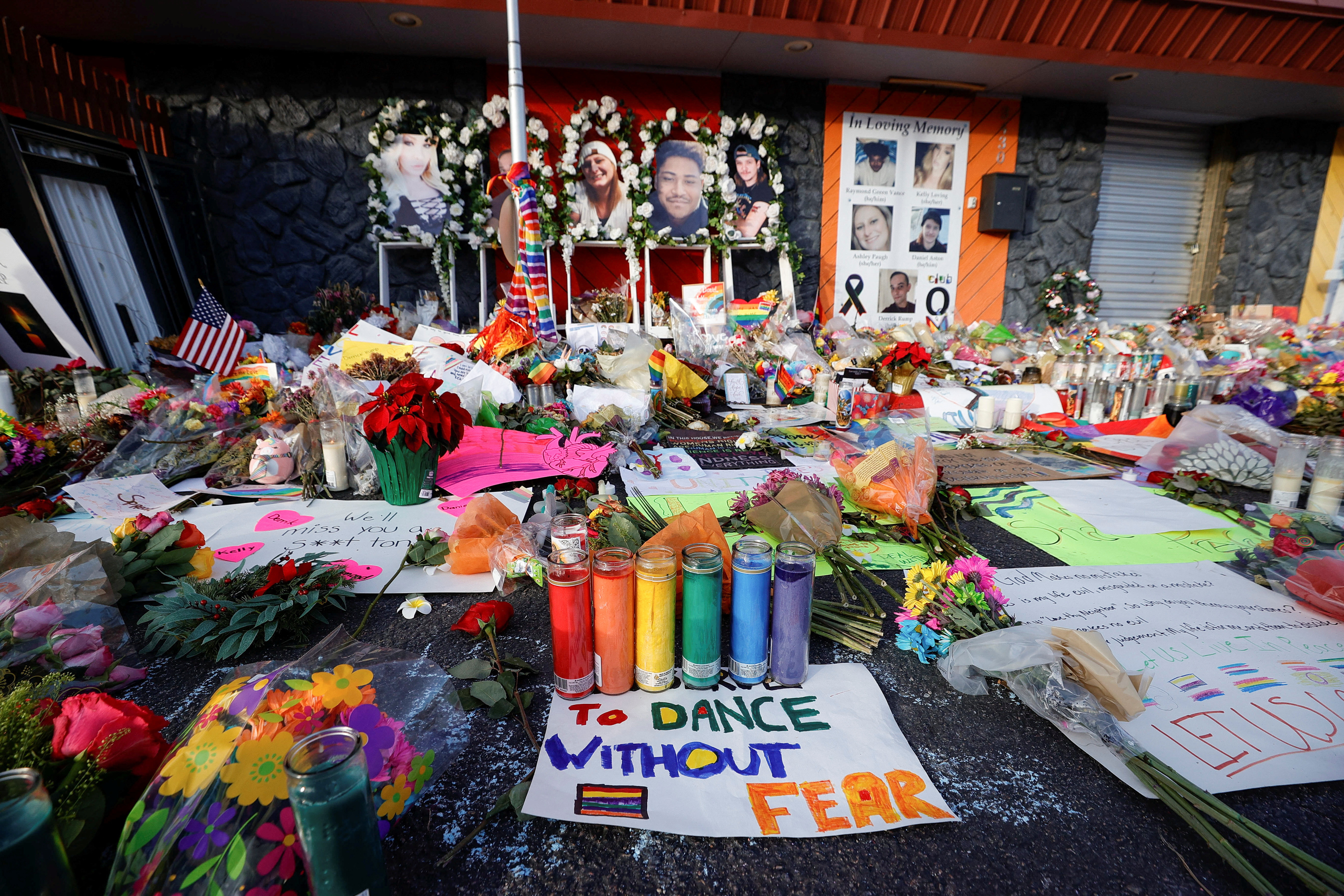
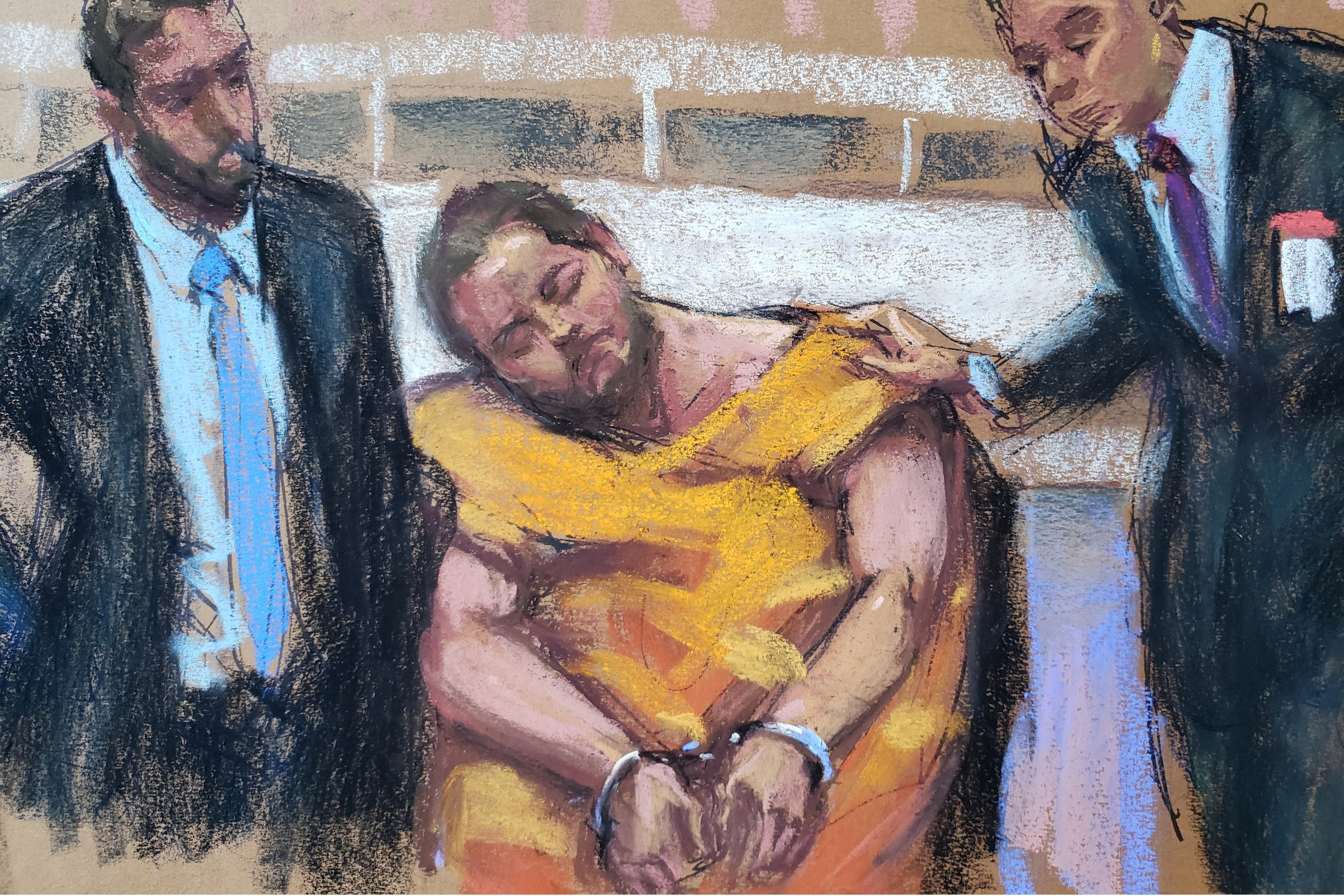
The suspect in the fatal shooting of five people in a Colorado LGBTQ nightclub last month is set to be formally charged on Tuesday, potentially facing dozens of counts including murder, attempted murder, assault and hate crimes.
Anderson Lee Aldrich, 22, has been held without bond at the El Paso County jail stemming from the Nov. 19 rampage at Club Q in Colorado Springs. Twenty-two people were wounded with gunshots or injured in other ways.
The defendant was initially booked on suspicion of various offenses including first-degree murder, bias-motivated crimes and ethnic intimidation, according to jail records.
Police and witnesses said Aldrich, who was clad in body armor, stormed the club armed with a rifle and handgun and opened fire indiscriminately.
Those killed were identified as Kelly Loving, 40, Daniel Aston, 28, Derrick Rump, 38, Ashley Paugh, 34, and Raymond Green Vance, 22.
Two men with military backgrounds subdued Aldrich until police arrived. A former U.S. Army major and decorated Iraq and Afghanistan war veteran, Richard Fierro, told reporters that he disarmed Aldrich and pistol-whipped him into submission.
“I wish I could have saved everybody in there,” Fierro said. “I wish I could have done more.”
In the suspect’s booking photo, Aldrich appeared battered with face and neck bruises apparently sustained when beaten by the bar’s patrons.
The other man credited with subduing Aldrich, U.S. Navy Petty Officer 2nd Class Thomas James, said in a written statement that he just wanted “to save the family I found.”
“My thoughts are with those we lost … and those who are still recovering from their injuries,” said James, who was hospitalized with unspecified injuries and has since been released.
Although authorities have not publicly identified a motive, the Colorado shooting was reminiscent of the 2016 Pulse nightclub massacre in Orlando, Florid, where a gunman killed 49 people before police shot him dead.
If convicted of first-degree murder, Aldrich faces a mandatory life sentence without the possibility of parole.
Colorado no longer has a death-penalty statute but Aldrich could face a death sentence in federal court if prosecutors there decide to charge him with crimes under the federal code that still has capital punishment on its books for certain crimes.
Lawyers assigned to represent Aldrich from the Colorado public defender’s office have said in court filings that their client identifies his gender as non-binary and prefers “they” and “them” pronouns.
District Attorney Michael Allen said after Aldrich’s initial court appearance on Nov. 23 that the suspect’s gender identity would have no bearing on how the case would be prosecuted.
Aldrich was previously arrested in June 2021 in Colorado Springs after his mother reported he threatened to detonate a bomb and harm her with multiple weapons, according to a news release from the El Paso County Sheriff’s Office.
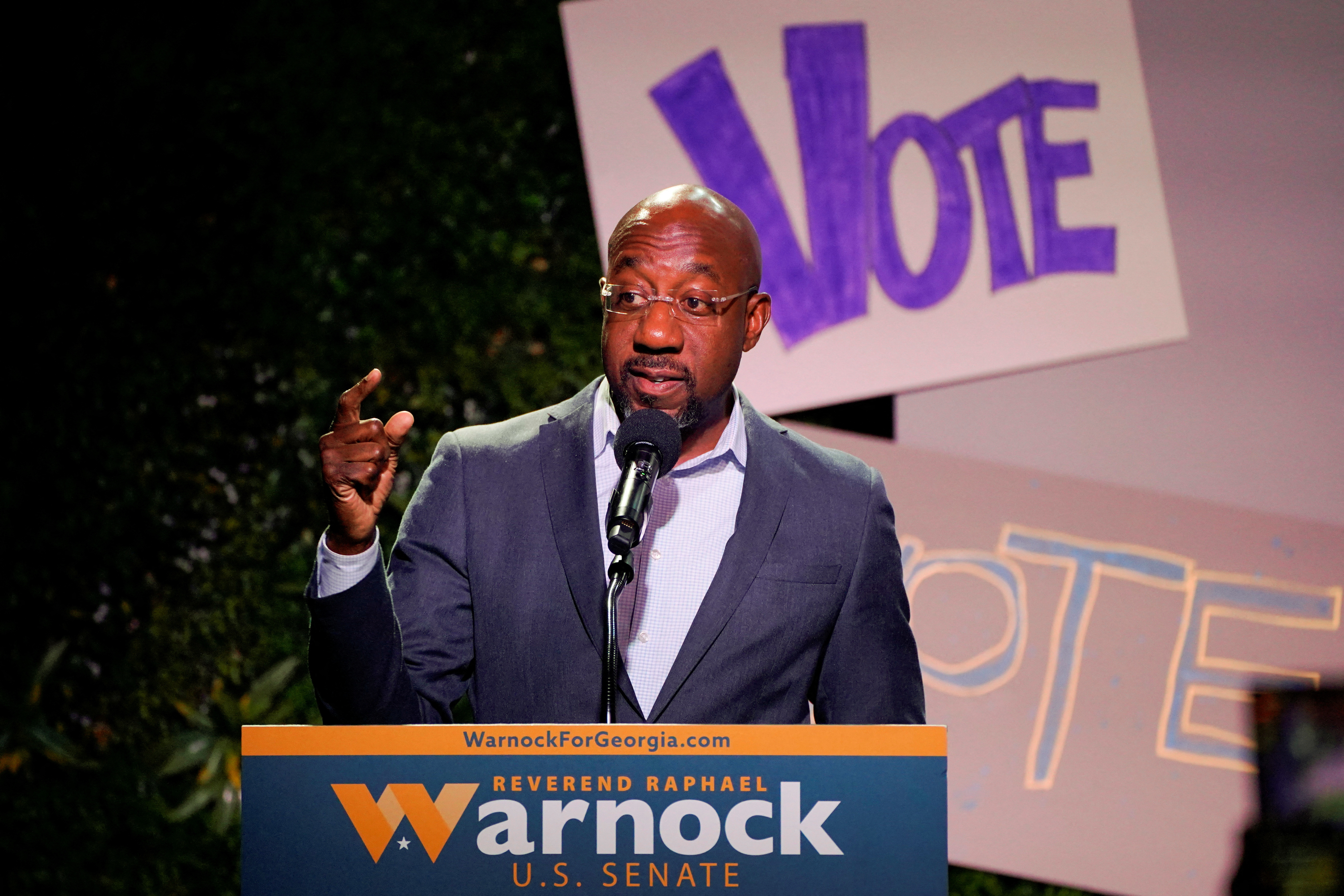
A Tuesday runoff election in Georgia between Democratic U.S. Senator Raphael Warnock and Republican former football star Herschel Walker will determine whether President Joe Biden’s party can expand its razor-thin majority in the Senate.
The race will also serve as a final test of Donald Trump’s clout with midterm election voters as he seeks the Republican nomination to challenge Biden in 2024. The former president had a mixed record in his most competitive endorsements for Congress, including Walker.
Walker’s campaign has been plagued by a variety of allegations, including claims he has called untrue by former girlfriends who said he encouraged them to get abortions, although he has campaigned for the procedure to be outlawed.
The race, which went to a runoff after neither candidate secured 50% of the vote in the Nov. 8 first round, has become the most expensive of the 2022 U.S. midterm election season, with more than $400 million spent so far. Campaign finance records show Warnock with a clear advantage in fundraising.
A victory by Warnock would give Democrats a 51-seat majority in the 100-seat Senate, which would make it slightly easier to advance Biden’s nominees for judicial and administrative posts. Most legislation would still require Republican support.
Polls close at 7 p.m. Eastern time (0000 Wednesday GMT), and at least 1.87 million people cast their votes before Election Day, equal to 47% of the Nov. 8 turnout.
Analysts say those votes likely tilted Democratic, which will require strong Election Day turnout by Walker’s Republican supporters. Opinion polls have shown a narrow lead for Warnock.
“We need you to show up. If you haven’t already voted you need to vote on Election Day,” Warnock said at a Monday rally at the Georgia Institute of Technology.
Warnock is the pastor of the historic Atlanta church where slain U.S. civil rights icon Reverend Martin Luther King Jr. once preached. Both Warnock and Walker are Black.
Walker has accused Warnock of backing policies that fuel inflation and has campaigned against transgender women competing in women’s sports.
Walker on Monday spent his time in conservative areas of northern Georgia.
“I feel pretty good. We can win this thing,” Walker said as he greeted well-wishers at a store in Calhoun. He did not take substantive questions from the press.
Gary Wilson, 69, who owns a heating and air business, said he believed Walker was a decent person in addition to a sporting great.
“Through the years everybody has looked up to Herschel for what he had done with the football team. But he’s a good person,” he said.
Along with the abortion claims, former girlfriends have also accused Walker of domestic abuse. He has also faced allegations that he maintains his primary residence in Texas, not Georgia.
Walker has denied the charges, but they may have discouraged some Republican voters. Warnock edged him 49.44% to 48.49% in November, even as Republican Governor Brian Kemp and other statewide Republican candidates easily won re-election.
Republicans won a narrow majority in the U.S. House of Representatives in the Nov. 8 election, but fell short of the “red wave” that some had forecast. The party also failed to capture a Senate majority.
This is the third Senate runoff in two years in the closely divided state – and the second for Warnock, who first won the seat in a runoff in January 2021.
Kemp has been campaigning for Walker and Trump held a tele-rally for Walker on Monday night, but did not campaign for him in person.
Warnock, meanwhile, drew former President Barack Obama to a rally last week but Biden has not been to Georgia to campaign for Warnock.
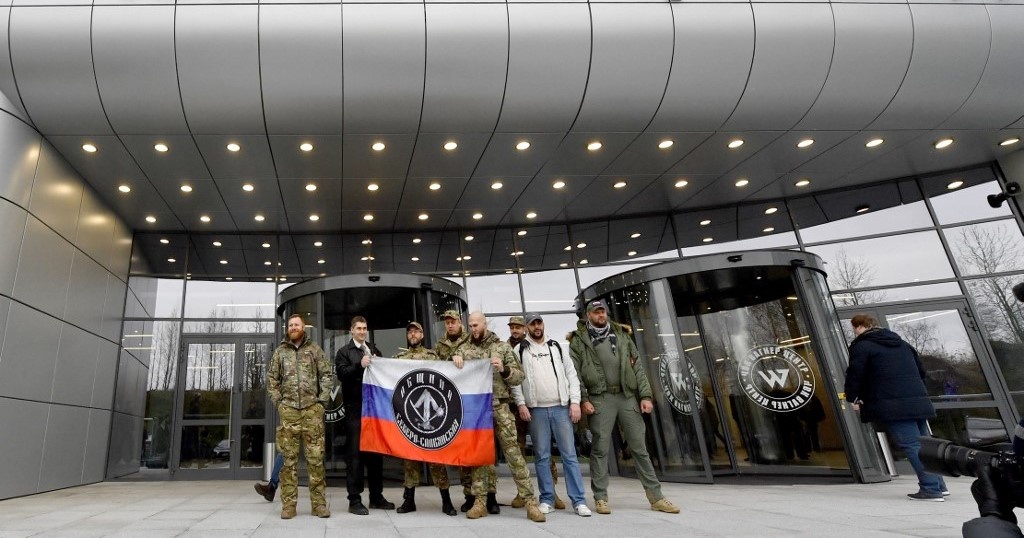
Saying that it “will not stand by” amid an assault on religious freedoms, the U.S. has officially added Russian mercenaries the Wagner Group to a blacklist, paving the way for potential sanctions.
“Around the world, governments and non-state actors harass, threaten, jail, and even kill individuals on account of their beliefs,” Secretary of State Antony Blinken said in a statement on Dec. 2, adding that “the United States will not stand by in the face of these abuses.”
Blinken said that the Wagner Group was an “entity of particular concern” for its alleged crimes in the Central African Republic, and confirmed that they had been added to the list that also includes groups such as the Taliban and Boko Haram.
Consisting mainly of veterans of the Russian armed forces, PMC Wagner Group has fought in numerous wars, including conflicts in Syria and Libya, where it has been accused of committing various acts of brutality and human rights violations.
Due to its mainly operating in support of Russian interests or foreign policy objectives, the private military company is widely considered an unofficial unit of either Russia’s Ministry of Defense or its military intelligence agency, the GRU.
Since its first appearance, Russian oligarch Yevgeniy Prigozhin – a close friend of Russian President Vladimir Putin – persistently denied having any connection with the Wagner Group, and has even sued journalists for reporting the claim.
However, on social media platform VKontakte on Sept. 28, Prigozhin released a statement via his company Concord Catering, saying that the 2014 Russian-backed separatist movements in the Donbas region had spawned the controversial group, and admitted he had helped found it.
In the statement, Prigozhin claimed that he personally “cleaned the old weapons, sorted out the bulletproof vests myself and found specialists who could help me with this. From that moment, from May 1, 2014, a group of patriots was born, which later came to be called the Wagner Battalion.”
The statement came in response to a request for comment from a Russian news site as to why he had stopped denying his links to Wagner, with Prigozhin adding: “I am proud that I was able to defend their right to protect the interests of their country.”
However, U.S. intelligence officials had attributed the brutal group’s founding to Prigozhin long before his admission.
In a statement on Dec. 15, 2021, the U.S. Department of State said: “We are alarmed by a potential deployment of Russia-backed Wagner Group forces in Mali. We understand that the reported deal — costing $10 million per month — diverts money that could be used to support the Malian Armed Forces and public services to pay for the deployment of Yevgeniy Prigozhin’s Wagner Group forces to Mali. Wagner forces — which are known for their destabilizing activities and human rights abuses — will not bring peace to Mali, but rather will destabilize the country further.”
Prigozhin is already sanctioned by the U.S., the U.S., and the European Union – but continues to openly voice his support for his group’s ongoing barbarity.
On Nov. 12, the Wagner Group once again drew international condemnation after a horrific video widely circulated on social media showed Wagner members executing a Russian prisoner of war with a sledgehammer.
In the footage, convicted murderer Yevgeny Nuzhin, who had been recruited by Wagner as part of their drive to have prisoners from Russian penal colonies fight on the front lines in Ukraine in exchange for pardons, was seen with his head clingfilmed to a large brick.
Seconds before he is killed, Nuzhin gives a seemingly scripted confession: “I am Yevgeny Anatolievich Nuzhin, born in 1967, who went to the front to go to the side of Ukraine to fight against the Russians.”
“On the fourth of September, I carried out my plan to go over to the side of Ukraine. On the eleventh of November, I was on the streets of Kyiv, where I received a blow to the head, as a result of which I lost consciousness.”
“I woke up in this basement, where I was told that I was going to be put on trial.”
A member of the Wagner Group then raises a huge sledgehammer and strikes Nuzhin’s neck. Falling backwards, he is then struck one final time on the head.
Sharing the video on his Telegram channel, Prigozhin wrote: “It seems to me that this film should be called: ‘A dog dies a dog’s death.’ It was an excellent directional piece of work, watched in one breath. I hope no animals were harmed during filming.”
Whilst the Wagner Group has now been added to a blacklist for religious persecutions, the U.S. is yet to pass legislation in response to Wagner’s other human rights abuses.
On Dec. 1, U.S. Senators Roger Wicker and Ben Cardin introduced the ‘Holding Accountable Russian Mercanaries (HARM) Act, urging the Senate to officially recognize the Wagner Group as a terrorist organization.
The new legislation will require approval from the Secretary of State to designate the group as a foreign terrorist organization (FTO) within 90 days of enactment.
“Vladimir Putin and his cronies will stop at nothing to accomplish their objectives, including employing mercenaries like the Wagner Group to commit atrocities on their behalf,” Senator Wicker said in a statement on Dec. 1.
“The U.S. should call this shadow army what it is: a foreign terrorist group,” he added. “We must hold them accountable along with any who support them.”
The post U.S. Adds Russian Wagner Group to Blacklist for Religious Persecution appeared first on Kyiv Post.
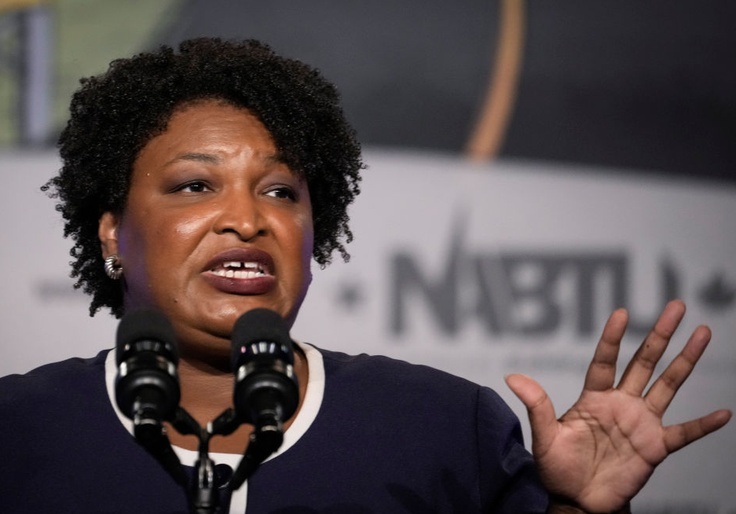
Stacey Abrams’s New Georgia Project is collecting donations without a license in at least nine states, opening itself up to fines and criminal inquiries, a Washington Free Beacon investigation found.
State laws across the country prohibit charities that have not filed required financial disclosures with the IRS from soliciting donations. But the New Georgia Project, which missed the Nov. 15 deadline to file its Form 990, is still raising money through a nationwide campaign hosted by the online fundraising platform ActBlue. Representatives at the relevant agencies in Tennessee, Mississippi, and North Carolina, where the New Georgia Project’s charity license has expired, told the Free Beacon that the group could face fines ranging from $25 dollars to $25,000 for violating their state’s charity laws. Some of those fines could be issued for each donation the group accepts.
According to Paul Kamenar, an attorney with the National Legal and Policy Center, the group could soon face more trouble.
“It’s clear that the New Georgia Project is in gross violation of many state laws by soliciting contributions from the public while their registration as a charity has lapsed,” Kamenar told the Free Beacon, noting that his group “plans to file formal complaints with appropriate state enforcement agencies demanding an investigation and imposition of penalties.”
Touted as the “poster child” of Abrams’s efforts to boost Democrats in the state, the New Georgia Project raised $25 million in 2020 and ended the year with $18.5 million in assets, according to the last available public records. Less than two years later, in October 2022, the charity once helmed by Sen. Raphael Warnock (D., Ga.) dismissed half its leadership team, citing a lack of funds. The group’s implosion comes just as Democrats have begun making inroads in Georgia, a feat often attributed to Abrams’s efforts.
Contribution receipts reviewed by the Free Beacon show the New Georgia Project accepts donations from residents of some states where the group lacks an active charity solicitation license, including Colorado and Washington. The New Georgia Project’s charity status has been labeled “EXPIRED-MAY NOT SOLICIT” on Colorado’s online charity navigator since Nov. 15.
Unlicensed charitable solicitation in Colorado is considered charity fraud, according to state law cited by Annie Orloff, a spokeswoman for Colorado’s secretary of state. Any person who commits charity fraud in Colorado could face criminal penalties, that law states. Orloff said her agency has reached out to the New Georgia Project about its charity status.
In North Dakota, New Georgia Project’s charity renewal filing was due on Dec. 1, but the group maintains an active status in the state as of Monday. When reached for comment, North Dakota Secretary of State Al Jaeger told the Free Beacon he had referred the matter to the Consumer Protection Division of the state’s Office of the Attorney General.
A spokeswoman for the Maine Department of Professional and Financial Regulation said the state could open an investigation if a complaint is filed against the group. New Georgia Project’s charity license expired in Maine on Nov. 30, the same day it expired in Washington State. Washington’s secretary of state did not respond to a request for comment.
In some states, such as Oklahoma and Maryland, the penalties the New Georgia Project faces for having an expired charity license are unclear. Oklahoma’s secretary of state confirmed that New Georgia Project’s registration in the state expired on Nov. 9, but would not elaborate on what action could be taken against the group.
New Georgia Project’s registration in California expired on May 15, but the group’s status with the state is still “current.” California’s Office of the Attorney General said New Georgia Project may still legally solicit donations in California because it is “within the IRS extension period,” despite that extension period ending on Nov. 15.
The New Georgia Project still hasn’t filed its 2021 Form 990, which was due to the IRS on Nov. 15. The group missed the deadline after the June firing of its top financial officer, who said he couldn’t do his job without violating the law. The Form 990 disclosure would shed light on the group’s finances, including how much it paid to top officials and contractors.
The New Georgia Project did not respond to a request for comment.
The post Stacey Abrams’s Georgia Nonprofit Could Face Criminal Investigations for Unlicensed Fundraising appeared first on Washington Free Beacon.
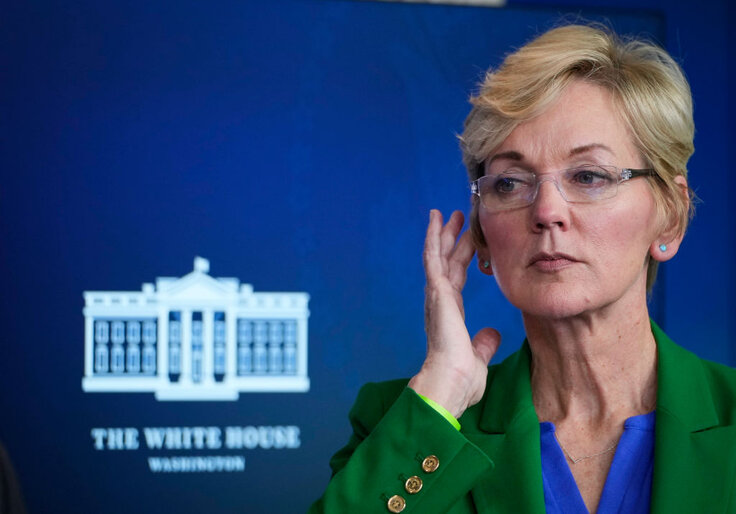
President Joe Biden’s Department of Energy is touting a grant to a lithium battery company as a move that would help herald the shift to green energy and ensure the United States is cultivating domestic sources of energy. It did not say, however, that the Texas company receiving the grant operates primarily from China and is under scrutiny from American financial regulators.
The DOE announced in October that it would give the $200 million award to Microvast Holdings to build a battery separator facility in Tennessee, using funding from the Bipartisan Infrastructure Law. At the time, Energy Secretary Jennifer Granholm said the grant would “supercharge the private sector to ensure our clean energy future is American-made.”
While the DOE described Microvast as a “majority U.S.-owned company, traded on NASDAQ” and “headquartered in Stafford, Texas,” financial records show the company operates primarily out of China. Microvast itself says the Chinese government “exerts substantial influence over the manner in which we must conduct our business activities and may intervene, at any time and with no notice.” The company was also recently added to a Securities and Exchange Commission watchlist of Chinese companies that are on track to be delisted from NASDAQ for failing to comply with U.S. auditing requirements.
The DOE award demonstrates the challenges posed by the green energy transition sought by Democrats and the Biden administration and raises questions about the vaunted $1.2 billion Bipartisan Infrastructure Law funding. That bill was meant to boost U.S. battery companies and strengthen the domestic clean energy supply chain, which has been highly dependent on China. The grant is also drawing calls for additional oversight from Congress. The infrastructure law, as written by lawmakers, states that the DOE should avoid funding projects that “use battery material supplied by or originating from a foreign entity of concern,” which includes companies “subject to the jurisdiction or direction” of China.
Sen. Marco Rubio (R., Fla.) told the Washington Free Beacon that the Biden administration “has a lot of explaining to do.”
“Giving hundreds of millions of taxpayer dollars to a company whose operations are based in China that refuses to comply with American securities rules is crazy,” said Rubio. “What’s more, any new technology developed in this partnership is almost certainly going to benefit China given Microvast’s operations there. It is just another example of the Biden administration not understanding the threat posed by the Chinese Communist Party.”
Former DOE officials said the funding was highly concerning and is likely to set off alarms with legislators.
“The Biden appointees knew from the outset that because of China’s aggressiveness in infiltrating U.S. energy and high-tech companies they were going to need to be extra vigilant about where these [infrastructure] funds went,” one former DOE official told the Free Beacon. “A simple Google search shows enough of a relationship between China and the shell company they’re using to access U.S. taxpayer funds to raise questions.”
“Now Congress, [the Government Accountability Office], or someone needs to be asking what information did the applicant provide about their relationship with China, how far up does that relationship go,” the official said.
The DOE did not respond to a request for comment.
In its 2021 annual SEC report, Microvast describes itself as a “holding company” that conducts its business “principally through our subsidiary in China.”
“A substantial portion of our operations and manufacturing and most of our current customers are in the [People’s Republic of China],” said Microvast, adding that it has received subsidies from the Chinese government and that most of its customers are associated with “state-owned companies in the PRC.”
In May, the SEC added Microvast to a list of Chinese companies that aren’t in compliance with U.S. auditing requirements under the Holding Foreign Companies Accountable Act. The law, which went into effect last spring, is designed to prevent Chinese companies listed on the U.S. stock exchanges from using non-approved China-based auditors to obscure their finances.
Companies that remain on the list for three consecutive years will be delisted from NASDAQ. They are also required to disclose whether they have any directors who are members of the Chinese Communist Party, or CCP ownership.
Microvast CEO Yang Wu is a U.S. citizen, according to Microvast spokeswoman Sarah Alexander. Another Microvast director, Arthur Wong, a Hong Kong citizen based in Beijing, is the chairman of the audit committee at Daqo New Energy Corporation, whose subsidiary was sanctioned by the Biden administration last year for its connections to slave labor in Xinjiang.
Alexander said none of Microvast’s directors, including Wu, are members of the CCP. She said the business primarily operates out of Huzhou, China, but has been expanding its manufacturing and research facilities to Germany and the United States.
Alexander said the company’s inclusion on SEC’s non-compliance list could also change due to “recent developments on the [Holding Foreign Companies Accountable Act], including an agreement between the U.S. and Chinese governments to allow for” full inspections. SEC officials have reportedly been trying to negotiate an agreement with Beijing as of September.
The post DOE Touts $200M Grant to Lithium Battery Company as Boon to American-Made Clean Energy. The Company Operates Primarily From China. appeared first on Washington Free Beacon.
Advertisements – Advertising at The News And Times – advertising-newsandtimes.com | WE CONNECT!
Audio | Video | Top News | On Twitter | Security | FBI | Capitol Riot | JOSSICA | Trump | Russia | Putin | Russia – Ukraine War | Covid-19 | Brooklyn NY | Puerto Rico | World
September 3, 2026 5:18 pm
The News And Times | Featured Posts | All Articles | Current News | Selected Articles | Shared Links | Opinions | In My Opinion | Sites | Blogs | Links | Twitter | Facebook

Contact Form | Blogs | Sites | News Reviews | Links | Advertising
All The News That’s Fit To Web
