Categories
Audio Sources - Full Text Articles

Bipartisan duo drafts last-minute plan for immigration deal

WASHINGTON (NewsNation) — A bipartisan Senate duo is working to revive negotiations for a potential last-minute push to enact immigration reform before the end of the year.

The deal’s details were first reported by The Washington Post opinion columnist Greg Sargent, who wrote that Sens. Thom Tillis (R-N.C.) and Kyrsten Sinema (D-Ariz.) reached an agreement to grant a path to citizenship to about 2 million Dreamers, while speeding up elements of the asylum process and spending more money on border security.

It comes as Title 42 immigration restrictions are set to end on Dec. 21.

With it being a compromise plan, some criticism of it has come from both immigration supporters who believe it doesn’t provide enough relief and from those who worry about providing amnesty to more undocumented immigrants.

Immigration advocates have been hankering for news of any sort of deal to protect Dreamers — undocumented immigrants who arrived in the country as minors — since the 5th Circuit Court of Appeals ruled the Deferred Action for Childhood Arrivals (DACA) program unlawful in October.

But the supposed Tillis-Sinema deal, like all immigration deals, could face multiple snags.

While it should be relatively painless politically for a Republican like Tillis to move a deal favoring a sympathetic group like Dreamers, news of the possible deal brought mixed reactions.

The Federal for American Immigration Reform (FAIR) believes in strong borders and quickly attacked Tillis, tweeting: “What on Earth is @SenThomTillis doing? Instead of trying to reverse a historic crisis and restore law and order to our immigration system, he’s working with Democrats to amnesty millions of illegal aliens and process as many migrants as possible!”

Meanwhile, FWD.us., which pushes for immigration reform, called the possible deal encouraging.

“The consequences for DACA ending without legislation are devastating. This lame duck is the chance. We are encouraged by the reported bipartisan progress between Senators Sinema and Tillis around a compromise for Dreamer legislation,” tweeted Todd Schulte, president of FWD.us.

While most polls show a majority of GOP voters take a much softer line on groups like Dreamers, the party’s base will likely expect hard concessions in return.

As reported, the deal’s expansions of the asylum process include speeding up the removals of migrants who don’t qualify for the asylum program.

If that expansion translates to mass deportations from the interior, the deal risks losing Democratic support, particularly as other groups of immigrants, like Temporary Protected Status (TPS) holders, are not covered.

Sinema and Tillis will need at least 60 votes in the Senate to avoid a filibuster that would stop the legislation. 

The Hill contributed to this report.
Categories
Audio Sources - Full Text Articles

Early Edition: December 6, 2022

GettyImages-73086221-1-e1512768873185.jp

Signup to receive the Early Edition in your inbox here.

A curated weekday guide to major national security news and developments over the past 24 hours. Here’s today’s news.

RUSSIA, UKRAINE – FIGHTING

An oil tanker close to an airfield in Russia’s Kursk oblast caught fire following a drone strike, Governor Roman Starovoit said on Telegram. The strike comes a day after explosions at two other military bases deep inside Russia. Russia’s Defense Ministry blamed Ukraine for the attacks and said it had intercepted low-flying drones in the area. Ukraine’s role in the strikes has been confirmed by a senior Ukrainian official, speaking on the condition of anonymity. Mike Ives and Ivan Nechepurenko report for the New York Times

Russia launched a fresh barrage of missiles toward Ukraine yesterday, as it accused Kyiv of conducting strikes in Russian territory. The Russian strikes cut off water and electricity supplies in some areas, killing at least one person in the Ukrainian city of Kryvyi Rih, and at least two people in Zaporizhzhia, according to local authorities. Olga Voitovych, Tim Lister, Sana Noor Haq, Tara John and Sebastian Shukla report for CNN

The U.S. secretly modified the advanced HIMARS rocket launchers it sent to Ukraine so that they can’t be used to fire long-range missiles into Russia. This is according to U.S. officials, who said the precaution was taken to reduce the risk of a wider war with Moscow. Michael R. Gordon and Gordon Lubold report for the Wall Street Journal

Russia appears to be capable of producing guided missiles despite Western sanctions, according to a report by U.K.-based Conflict Armament Research. Experts from the group examined two cruise missiles that struck Kyiv last month, concluding that they were both produced in recent months, even after export controls prohibited vital components from reaching Russia. This indicates that Russia has either been able to subvert these sanctions, or had significant stockpiles of the components before the war began. John Ismay report for the New York Times

RUSSIA, UKRAINE – OTHER DEVELOPMENTS

The U.N. nuclear watchdog has come under pressure from Ukraine to reveal what it knows about alleged abuses by Russian soldiers at the occupied Zaporizhzhia nuclear-power plant. In a Nov. 28 letter sent to the secretariat of the International Atomic Energy Agency, Ukraine’s government requested an update on allegations that Russia had detained hundreds of plant workers, and tortured, beat, shot, and electrocuted local staff. Drew Hinshaw and Joe Parkinson report for the Wall Street Journal. 

U.S. Secretary of State Antony Blinken warned yesterday that Russia may be looking for a way to step back from Ukraine without negotiating a lasting peace agreement. “One of the things that you can imagine is the Russians trying to find an off-ramp” in order to rest, refit, regroup and re-attack, he said. William Mauldin reports for the Wall Street Journal

Russian President Vladimir Putin signed a new law yesterday banning expressions of LGBTQ identity in Russia. The new law makes it illegal to spread “propaganda” about “non-traditional sexual relations” in the media, advertising, or on social media. It had passed the Duma, Russia’s Parliament, by a vote of 397 to 0 on Nov. 24. Emma Bubola reports for the New York Times. 

U.S. RELATIONS 

Chinese President Xi Jinping is set to arrive in Saudi Arabia on Thursday for a two-day state visit, according to sources with knowledge of the trip. The visit to Riyadh, which comes amid high tensions between the U.S. and the two countries, will include a China-Arab summit and a China-GCC conference. At least 14 Arab heads of state are expected to attend the China-Arab summit, according to an Arab diplomatic source who described the trip as a “milestone” for Arab-Chinese relations. Nadeen Ebrahim, Tamara Qiblawi and Carolina Faraj report for CNN

Chinese government-linked hackers have stolen at least $20 million in U.S. government coronavirus relief funds, a U.S. Secret Service spokesperson said. It is unclear if the hackers conducted the theft for personal gain or if they were operating on behalf of Beijing. The accusation is the first time the agency has connected COVID-19 fraud to hackers affiliated with a foreign government. Sean Lyngaas reports for CNN

OTHER GLOBAL DEVELOPMENTS 

Iranian officials have said they are finalizing plans to overhaul the enforcement of laws around women’s dress. Yesterday a spokesperson for the country’s morality police said its mission to enforce laws mandating the hijab “has now ended.” “New methods, more up-to-date and more precise” were under consideration,” he added. This statement comes as hundreds of businesses across Iran began a three-day strike in support of anti-government protestors. David S. Cloud reports for the Wall Street Journal

Media outlet Al Jazeera has filed a lawsuit at the International Criminal Court against Israeli forces over the killing of Palestinian-American journalist Shireen Abu Akleh. Abu Akleh was shot during an Israeli raid in the West Bank in May. Israeli Prime Minister responded to the news, saying that no one would question Israeli soldiers. Reuters reports. 

South Africa’s ruling African National Congress (A.N.C) party has said it will block attempts to impeach the country’s president, Cyril Ramaphosa, at a vote in parliament today. A report handed over last week by an independent panel appointed by parliament accused Ramaphosa of serious misconduct in relation to a theft from his private game ranch. Ramaphosa has launched legal action against the report and given the A.N.C.’s dominance in parliament, it seems unlikely there will be enough votes for impeachment to go ahead. Jason Burke reports for the Guardian

Nearly 300 people were killed when rebels attacked villagers in the Democratic Republic of Congo last week, officials said yesterday. This raises the death toll from an earlier estimate of 50. The government blamed the intensified fighting in the country’s east on the M23 rebel group, which denied responsibility for the attacks. Erin Cunningham reports for the Washington Post

The trial against 10 men accused of involvement in the March 2016 terrorist attacks in Brussels began yesterday. The judge identified all of the participants, including the nearly 1,000 victims, witnesses and experts registered as civil parties. The hearings will resume today, starting with the reading of the indictment, which is more than 400 pages long. Monika Pronczuk reports for the New York Times

DOMESTIC DEVELOPMENTS

Former president Trump’s political action committee is paying the legal fees for some of the key witnesses involved in the Justice Department’s investigation into the mishandling of classified documents seized from Mar-a-Lago. According to people familiar with the matter, the witnesses include Kash Patel, who is key to Trump’s defense, and Walt Nauta, a potentially critical prosecution witness. Both Patel and Nauta are represented by Brand Woodward Law, which according to public records has been paid more than $120,000 by Trump’s Save America PAC. Devlin Barrett, Josh Dawsey, and Isaac Stanley-Becker report for the Washington Post.  

Meta, Facebook’s parent company, has threatened to remove news content from Facebook in the U.S.. This is in response to a new law that would give news organizations greater power to negotiate fees for content shared on Facebook. Meta claims that their platform, in fact, provides increased traffic to struggling news outlets and that publishers put their content on Facebook because “it benefits their bottom line.” The legislation, known as the Journalism Competition and Preservation Act (JCPA) was introduced in Congress by Minnesota Senator Amy Klobuchar and has bipartisan support. Ben Derico and James Clayton report for BBC News

COVID-19

COVID-19 has infected over 98.972 million people and has now killed over 1.08 million people in the United States, according to data compiled by Johns Hopkins University. Globally, there have been over 645.367 million confirmed coronavirus cases and over 6.64 million deaths. Sergio Hernandez, Sean O’Key, Amanda Watts, Byron Manley and Henrik Pettersson report for CNN.

A map and analysis of all confirmed cases of the virus in the U.S. is available at the New York Times.

U.S. and worldwide maps tracking the spread of the pandemic are available at the Washington Post

The post Early Edition: December 6, 2022 appeared first on Just Security.

Categories
Audio Sources - Full Text Articles

Biden to visit Arizona computer chip site, highlight jobs

President Joe Biden on Tuesday plans to visit the building site for a new computer chip plant in Arizona, using it as a chance to emphasize how his policies are fostering job growth in what could be a challenge to the incoming Republican House majority.

Biden has staked his legacy in large part on major investments in technology and infrastructure that were approved by Congress along bipartisan lines. The Democratic president maintains that the factory jobs fostered by $52 billion in semiconductor investments and another $200 billion for scientific research will help to revive the U.S. middle class.

“This is actually about building an economic strategy that goes beyond semiconductors,” said Brian Deese, director of the White House National Economic Council. “This is a marked departure from the economic philosophy that has governed for much of the last 40 years in this country, which was a sort of trickle-down economic strategy.”

But there are signs that past moments of bipartisanship on economic matters may be harder to replicate after November’s midterm elections, in which Republicans won a House majority. Biden still pitches the investments as a sign of what happens when lawmakers partner with each other, but Republican House Leader Kevin McCarthy, who could be the next speaker, attacked the government investments as a “blank check” and “corporate welfare.”

Biden is visiting a plant under construction by the Taiwan Semiconductor Manufacturing Co. that was announced in 2020 during Donald Trump’s presidency. TSMC will also announce a second plant in Arizona on Tuesday. Biden administration officials said the two TSMC plants as well as new factories by Intel, Micron, Wolfspeed and others could give a decisive edge to the American military and economy at time when competition with China is heating up.

The White House has simultaneously launched a video campaign to highlight the array of non-tech jobs associated with the semiconductor industry. Biden has visited four other computer chip sites since September, with the highly paid factory jobs promising spillover hiring for construction, janitorial services and other businesses.

Featured in the video campaign is Paul Sarzoza, president and CEO of Verde Clean. Sarzoza founded the company in 2019. It won a contract to clean TSMC’s construction site, accounting for a third of its 150 jobs. Sarzoza’s company will clean the semiconductor plant, with workers wearing what’s known as a “bunny suit” to prevent any contamination from hair and skin.

The government’s investment was key for his company’s growth, and he expects to add 150 to 200 more employees next year.

“It’s one step at a time,” Sarzoza said. “But it’s a tremendous opportunity for us.”

Computer chip company Intel has also invested in Arizona, which has become a microcosm of the nation’s broader political divides. The state on Monday certified the results of this year’s elections, a process drawn out by many GOP officials who falsely claim the 2020 election, in which Biden beat Trump, was rigged.

Republican Arizona Gov. Doug Ducey will attend the event, as will his newly elected Democratic successor, Katie Hobbs, Arizona’s current secretary of state.

Biden uses his visits to chip plants to talk about the jobs he expects will come to those regions, a process that could take a decade or longer to come to full fruition. Companies could face a challenge in finding educated workers for jobs with incomes averaging over $100,000 a year, according to Labor Department figures.

Ronnie Chatterji, White House coordinator for the chip investments, said these investments will shape entire regions of the country in ways that are overlooked now.

“Ten years from now we’ll be talking about all the jobs in Arizona,” Chatterji said in an interview. “You won’t be able to talk about that part of Arizona without thinking about the impact of those companies.”

But Biden might need to thread a needle and preserve a sense of bipartisanship for the long-term investments to succeed, said Keith Krach, a business executive who as an under secretary of state in the Trump administration helped bring TSMC to Arizona.

He said the investments will rival NASA’s Apollo Program, which didn’t just land men on the moon but also made the U.S. a leader in micro electronics, software, computers and aerospace.

Krach said that preserving political unity is key and the way to do that is for political leaders to stress how the chip plants can keep the U.S. ahead of China.

“It’s unifying,” Krach said, because Chinese President Xi Jinping “is terrified of the United States having a Sputnik moment, which I think this really represents, and declaring a moonshot.”

Categories
Audio Sources - Full Text Articles

Eye of the storm: Taiwan at the centre of Sino-U.S. tensions

2022-12-06T12:14:08Z

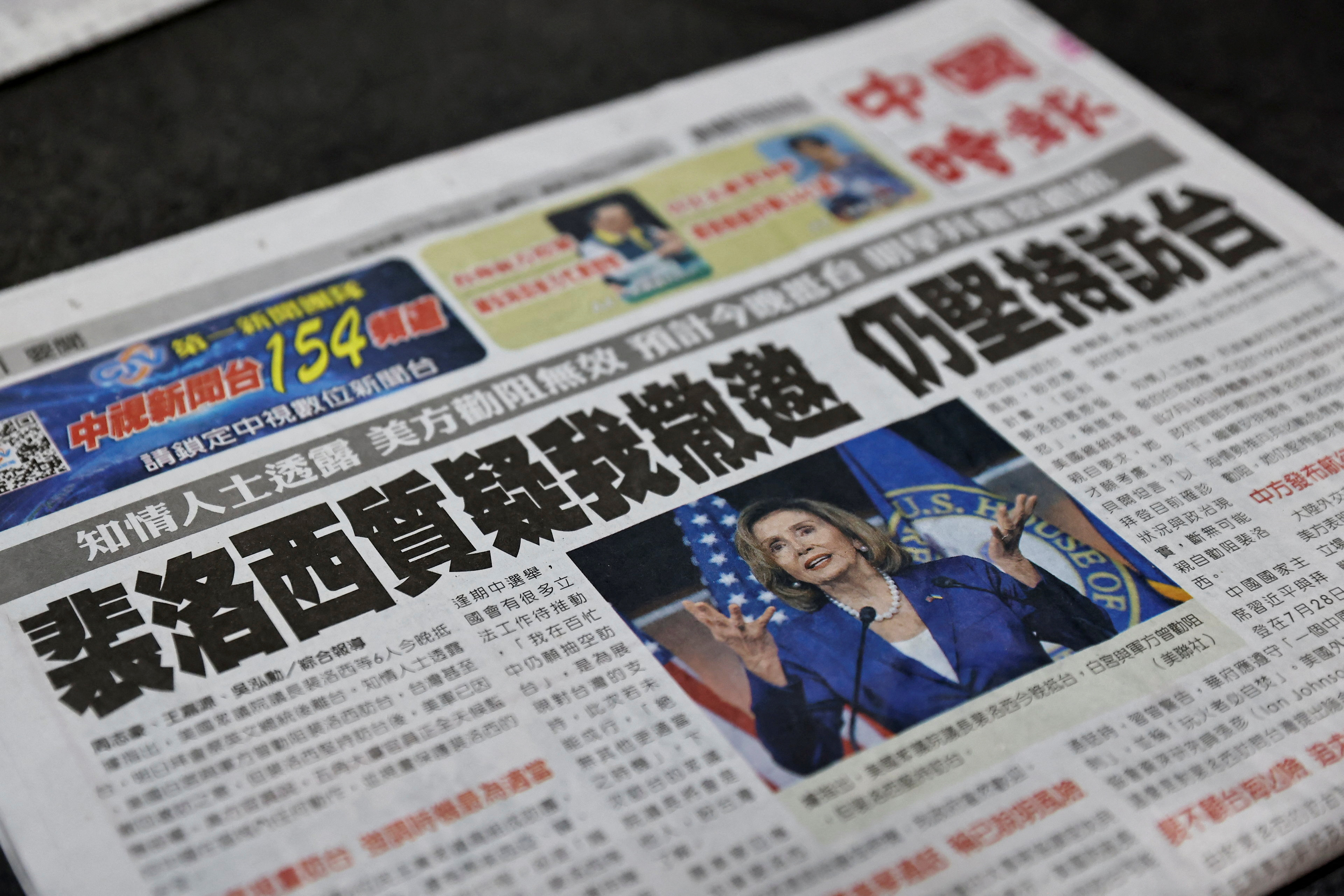
A newspaper front page reporting about U.S. House of Representatives Speaker Nancy Pelosi is pictured in Taipei, Taiwan, August 2, 2022. REUTERS/Ann Wang

U.S. House Speaker Nancy Pelosi visited Taiwan and met Taiwanese President Tsai Ing-wen in August in defiance of Chinese warnings for the trip not to take place.

Angered at what it perceived as U.S. support for Taiwan’s de facto independence – a red line for Beijing – China launched war games near the island it claims as its “sacred” territory shortly after Pelosi left.

China’s military for the first time fired missiles over Taipei, flew waves of drones over some of Taiwan’s offshore islands near the Chinese coast, sailed warships across the median line of the Taiwan Strait and surrounded the island in what Taiwan’s military said amounted to a practice “blockade.”

Military tensions had not been so high between Taiwan and China since Beijing fired missiles into waters off Taiwan’s coast ahead of the 1996 Taiwanese presidential election, as the Chinese government tried to dissuade people from voting for Lee Teng-hui who it viewed as a separatist.

That backfired and Lee handily won the election.

China likewise views Tsai as a separatist for refusing to accept Beijing’s long-standing position that China and Taiwan both belong to “one China”.

The government of Taiwan – formally the Republic of China – maintains that as the island has never been ruled by the People’s Republic of China its claims of sovereignty are void.

Tsai says only the island’s 23 million people can decide their future through democracy, and that while she wants dialogue and peace with China and will not provoke, Taiwan will defend itself if attacked.

Since Pelosi’s visit, China has continued with its military activities near Taiwan, though on a reduced scale. Taiwan meanwhile continues to bolster its defences.

Any war over Taiwan, a major producer of semiconductors, has the potential to crash the global economy. It could draw the United States and its allies into direct confrontation with China’s People’s Liberation Army, the world’s largest military, which is increasingly well-equipped.

China has long said Taiwan is the most important and sensitive issue in its relations with the United States, a message Chinese President Xi Jinping reiterated to U.S. President Joe Biden when they met in Bali last month.

The United States, like most countries, has no formal diplomatic ties with Taiwan, but is bound by law to provide the island with the means to defend itself.

The United States has long stuck to a policy of “strategic ambiguity” and not making clear whether it would respond militarily to an attack on Taiwan. However, Biden said in September U.S forces would defend Taiwan in the event of a Chinese invasion, his most explicit statement on the issue.

China has never renounced the use of force to bring Taiwan under its control, which Xi reiterated at the 20th congress of the ruling Communist Party in October.

Anti-China sentiment continues to build in the United States, and in its newly Republican-controlled House, along with support for Taiwan.

If the probable new U.S. House Speaker Kevin McCarthy follows in Pelosi’s footsteps and visits Taiwan that would trigger yet more fireworks across the Taiwan Strait and between Washington and Beijing.

Next year, both Taiwan’s main political parties will also be gearing up for presidential and parliamentary elections in early 2024.

The main opposition party the Kuomintang, or KMT, which traditionally favours close ties with China but vehemently denies being pro-Beijing, hopes it can get back into office after two terms in opposition following a strong showing at local elections in November.

Explore the Reuters round-up of news stories that dominated the year, and the outlook for 2023.

Categories
Audio Sources - Full Text Articles

Russia, mired in war, faces economic pain and attempts to isolate it

2022-12-06T12:07:03Z

Russian conscripts called up for military service look out of a train window before their departure for garrisons at a railway station in Omsk, Russia November 27, 2022. REUTERS/Alexey Malgavko

Russia’s invasion of Ukraine plunged Europe into its biggest land war since World War Two, igniting a conflict that has killed thousands, displaced millions, pulverised Ukrainian cities and damaged the global economy.

Despite warnings from U.S. intelligence in the run-up to Feb. 24, many European and Ukrainian officials did not believe it would happen. It was far too much for the Russian army to bite off, went the thinking.

Putin, who turned 70 in October, was, however, incensed by what he saw as Ukraine’s treacherous Westwards pivot, and ordered an invasion – which he called “a special military operation” – nonetheless.

His goal was to root out what he saw as excessive and potentially dangerous Western influence in an area where Moscow once held sway and to speed up what he saw as an inevitable historical shift to a multi-polar world.

When in September he announced the annexation of four Ukrainian regions his troops partially controlled, a move the West declared illegal, his desire to enlarge Russia, already the world’s biggest country by territory, became explicit.

The war has so far not gone well for Putin. His forces were beaten back from the Ukrainian capital and then from the north-eastern Kharkiv region. In November, they were forced to quit the southern city of Kherson and the River Dnipro’s west bank.

As winter sets in, his army, which still controls a large chunk of Ukraine, has had more success at destroying Ukrainian infrastructure, inflicting prolonged power and water outages, something Moscow says has a military purpose. Ukraine has accused Russia of terrorism.

After overseeing the Kherson withdrawal, the commander of Russia’s forces is under pressure to deliver on the battlefield.

On the home front, where space for dissent has shrunk to nearly zero and hundreds of thousands of young men are missing from the workforce after fleeing abroad to avoid being called up, people are trying to get on with their lives.

But they cannot escape reminders of the war.

State TV schedules are dominated by rolling talk shows whose guests explain why the war is necessary and funerals for the war dead, whose number is a secret in Russia but estimated in the tens of thousands by the West, have become regular occurrences.

Despite military setbacks and political infighting, eight sources told Reuters in October that Putin’s grip on power remained firm and unofficial polls give him a 70-80% approval rating. Some said that could change fast if defeat beckoned.

Russia’s invasion up-ended geopolitics.

NATO, an alliance that French President Emmanuel Macron said in 2019 was in the grips of “brain death”, is poised to add Finland and Sweden even though its further expansion was the very thing Putin opposed.

The United States, which the Democrats fretted had become too isolationist under former president Donald Trump, has provided Ukraine with the lion’s share of the financial and military aid required to keep it in the fight.

Ukraine, which before Feb. 24, had sometimes struggled to get the West interested in a slow-burning war against Russian proxies in its east, has received aid and Western support that once seemed unimaginable.

And Russia, one of the world’s biggest energy and commodity producers, has been hit with the harshest Western sanctions in its modern history.

That and its own retaliatory measures have shrunk its role as one of Europe’s biggest oil and gas suppliers, disrupted global grain and fertiliser markets, fuelled global inflation and increased nuclear tensions to their highest level since the Cuban Missile crisis.

With Ukraine adamant that Russia withdraw from its territory before any peace talks happen, including from annexed Crimea, even a temporary ceasefire looks hard to achieve.

For Russia, 2023 is likely to be a year when it tries to stave off more Western attempts to isolate it.

Political leaders in Iran, North Korea and Belarus remain staunch supporters. China and India have stepped in to buy heavily discounted Russian oil, though Beijing has not been as full-throated in its public support of Moscow as expected.

Cracks have meanwhile begun to open up in the former Soviet Union, where Moscow’s influence is under pressure as some countries try to change the status quo while Russia is busy in Ukraine.

At least two Central Asian countries have voiced public disagreement with Moscow, and Russia’s role as a mediator in a conflict between Azerbaijan and Armenia is being squeezed by the EU and Washington.

Moscow will have to manage its sanctions-hit economy too, a task made harder after the exodus of young men. Economic stability is linked to political stability, which the authorities have tried to ensure by intensifying a crackdown on anyone perceived a threat.

Reuters reported in November that Russia plans to spend nearly a third of its 2023 budget on defence and domestic security while slashing funding for schools, hospitals and roads.

As Putin pays up to keep the war in Ukraine grinding on, managing its fallout at home and abroad is likely to get harder.

Explore the Reuters round-up of news stories that dominated the year, and the outlook for 2023.

Categories
Audio Sources - Full Text Articles

The year in review: What happened — and what did not

2022-12-06T12:05:23Z

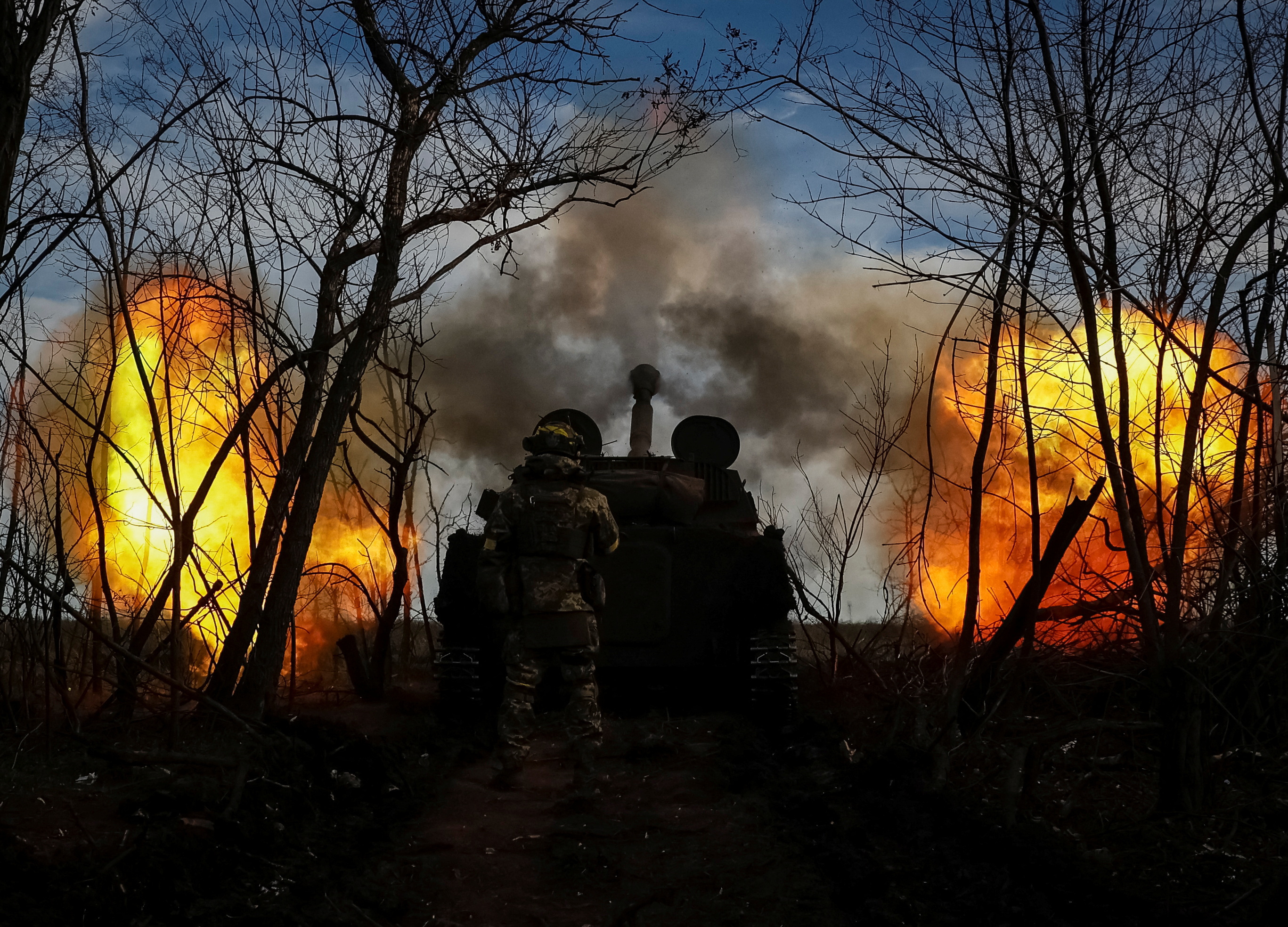
Ukrainian servicemen fire a self-propelled howitzer toward Russian positions, amid Russia’s attack on Ukraine, on a frontline in Donetsk region, Ukraine November 30, 2022. Radio Free Europe/Radio Liberty/Serhii Nuzhnenko via REUTERS

Sometimes, it’s what doesn’t happen that matters most.

By the evening of Feb. 25 this year, a day after Russian tanks had crossed into Ukraine in the largest military attack in Europe since World War Two, Moscow’s troops had reached the outskirts of Kyiv.

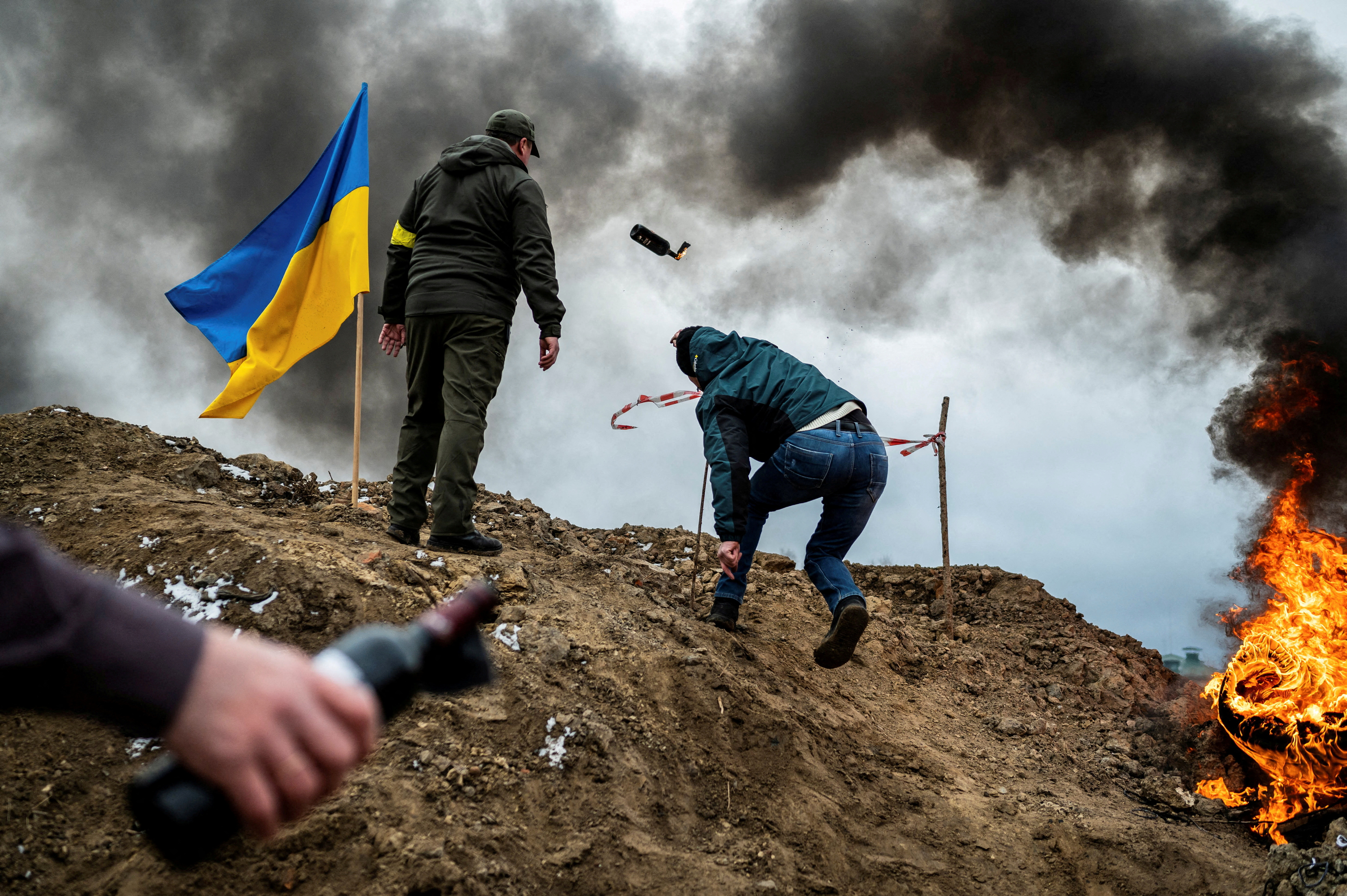
With distant artillery fire booming across the capital, Ukraine’s defence ministry urged residents to build petrol bombs to repel the invaders. President Volodymyr Zelenskiy filmed himself with aides on the streets of the city, vowing to defend his country’s independence.

“Tonight, they will launch an assault,” Zelenskiy said. “All of us must understand what awaits us. We must withstand this night.”

The assault never came – and 10 months on, Moscow’s “special military operation” is bogged down. In some places, it’s in retreat. Many in Moscow had expected Russia’s military to sweep to victory, oust Zelenskiy’s government and install a Russia-friendly regime.

To be sure, Russian forces remain in control of vast swathes of Ukraine’s east and south, and at least 40,000 civilians have been killed and 14 million displaced in the grinding conflict. But Ukrainian forces, reinforced by billions of dollars of Western weaponry, have regularly proven themselves savvier and more effective than the morale-sapped Russians.

It was a similar story in the United States, where Republicans and some pundits had predicted a red wave in midterm elections. The Republican Party won control of the House of Representatives, but victory there was slim with a majority of fewer than 10 seats. The party not only failed to take back the Senate, but lost several gubernatorial races. Democrats triumphed in all three secretary of state contests in presidential battleground states where their Republican rivals had denied the legitimacy of the 2020 elections.

Midterms usually deliver a loud rebuke to the party of the sitting president. This time around it was a soft tsk.

In economics, most of the world’s big central banks waited until March to begin ratcheting up interest rates. The European Central Bank did not move until July. Monetary hawks complained that the delay allowed inflation to surge. Will that prove costly in the long term? Can the Fed keep the U.S. economy from recession?

The answers will become clearer in 2023. There are early signs that inflation may have peaked in some economies, but growth is also softening. In a few countries – looking at you, Britain – the outlook remains grim.

At United Nations climate talks in Egypt, countries agreed to create a fund to help poor nations threatened by climate disasters, but failed to agree plans to cut emissions faster. Meantime, record heatwaves in China, floods in Pakistan and Europe, and glacier collapses in India, Italy and Chile were reminders of how fast our planet’s climate is shifting.

This was also the year that protests exploded in Iran after the death of 22-year-old Mahsa Amini, who was arrested for wearing an “improper” head covering. Eyewitnesses said she was beaten, though Iranian authorities deny that. The protests, led mostly by women, spread through the country and across social classes. The longer they continue, the more of a threat they will pose to the 43-year-old Islamic revolution.

What else happened in 2022? The U.S. dollar soared, crypto imploded, and Elon Musk bought Twitter (which he preceded to shake up so much it has threatened to fall apart). It was the year Latin America lurched to the left, a ceasefire finally came in Ethiopia’s civil war, and North Korea fired off missile after missile. And it was the year Britain lost a queen, gained a king and saw three Prime Ministers in Downing Street.

Finally, much of the world emerged from COVID, at least socially if not in epidemiological terms. The big exception was China, whose zero-COVID policy has sparked protests and unrest in the past few weeks. In October, the country’s twice-a-decade Communist Party congress had seen President Xi Jinping tighten his grip on power and win a third term, a break with recent party tradition which had seen presidents serve just two terms. Could Zero-COVID rock the status quo?

We’ll be there if it does. In 2022, Reuters delivered all of these vital stories and tens of thousands more. Over the coming few weeks we’ll recap the biggest, dig into why they mattered, and ask where they may be headed. And in 2023, we’ll continue to deliver the world to you, wherever you are.

Explore the Reuters round-up of news stories that dominated the year, and the outlook for 2023.

Categories
Audio Sources - Full Text Articles

Ukraine shocked the world in 2022. Will it win the war in 2023?

2022-12-06T12:22:52Z

When Russia invaded Ukraine, Vadym Khlupianets, a 26-year-old ballet dancer at Kyiv’s National Operetta Theatre, joined the army. Nine months later, he was killed by a sniper on the eastern front.

At his funeral, the theatre’s creative director Bohdan Strutnyskii said the young ballet dancer deserved a very different honour: “Applause at the end of a performance, with people asking for an encore.”

Olga Kucher, director of the Zaporizhzhia Regional Children’s Shelter, also found herself in an unexpected role. In March she led 215 orphaned children in woolly hats and puffer coats on a 24-hour train ride, fleeing for their lives.

“My heart is being torn apart,” she said. “And I feel so sorry for these children. They’re so young.”

Ukrainians astonished the world – and themselves – in 2022, withstanding an all-out military assault by a superpower meant to crush them within days.

Millions fled to safety. Millions endured bombardment in basements and bomb shelters. Tens of thousands perished in cities laid to waste by the invaders.

And millions rallied to the cause of a nation, taking up arms, volunteering in ambulances, ferrying food to villages at the front, caring for one another’s children.

Russia says it launched its “special military operation” to protect its security from Western encroachment. Ukrainians, who heard President Vladimir Putin proclaim their national identity a fraud and their land as wrongly stripped from Russia, view the war as an existential struggle – both national and personal.

On the battlefield, David dealt blow after blow to Goliath. In the war’s first hours, Ukrainian defenders obliterated Russia’s elite paratroopers attempting to seize an airfield on Kyiv’s outskirts.

In April, they sank Russia’s flagship cruiser. Last month, they were mobbed by joyous residents as they rode into Kherson, a city Putin had proclaimed Russia’s forever.

Now, with the war’s first winter setting in, it is Russia that is on the defensive, drafting in hundreds of thousands of reservists to protect remaining occupied territory – about a fifth of Ukraine.

Military experts who once debated whether Kyiv could stand for more than a few days, are discussing whether it can win the war outright. Kyiv says it will not stop until it drives all Russian forces out, including from lands occupied since 2014.

Both sides face new challenges. Russia’s retreats, including beyond the wide Dnipro River, have left the front line far shorter and better fortified, making it harder for Ukraine to find new weak spots to repeat the breakthroughs that shifted the war’s momentum in the autumn.

But the brutal winter also brings advantages to Ukrainians defending their own country against conscripted reservists that Russia must feed and supply thousands of kilometres from home.

Ukraine “has been masterful thus far in attacking and defeating Russian forces,” tweeted Mark Hertling, a former commander of U.S. ground forces in Europe. But its next objectives – to breach fortified Russian defences in the east and cross the Dnipro River in the south – are among the toughest any military could face, he said. “They’ll succeed, but not fast.”

Meanwhile, there are no talks to end – or even pause – the war. Kyiv says even a temporary truce would give Russia a chance to regroup and solidify its grip on occupied land.

As 2022 winds down, Russia has been hurling missiles at Ukraine’s energy infrastructure, plunging millions of Ukrainians into darkness and cold. Moscow claims a military justification; Ukraine says this serves no purpose but to harm civilians.

“Cold, hunger, darkness and thirst aren’t as scary and deadly for us as your ‘friendship and brotherhood’,” Zelenskiy said, addressing Russians in a speech in September.

“Without gas or without you? Without you. Without light or without you? Without you. Without water or without you? Without you. Without food or without you? Without you.”

Explore the Reuters round-up of news stories that dominated the year, and the outlook for 2023.

Related Galleries:

A civilian trains to throw Molotov cocktails to defend the city, as Russia’s invasion of Ukraine continues, in Zhytomyr, Ukraine, March 1, 2022. REUTERS/Viacheslav Ratynskyi/File Photo

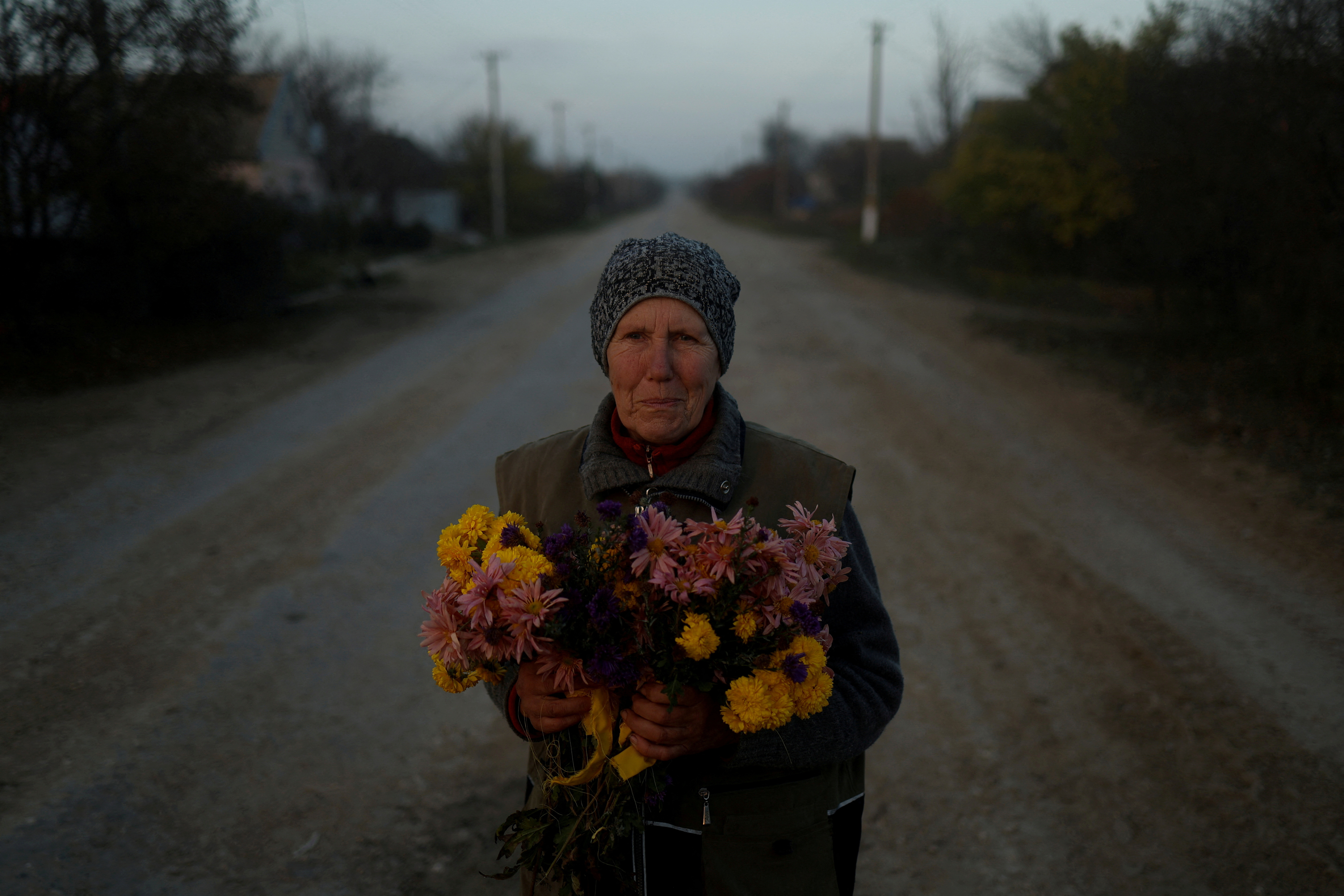
Local resident Nataliia Porkhun holds flowers to present them to Ukrainian service members in the recently retaken village of Kyselivka, outside of Kherson, Ukraine, November 12, 2022. REUTERS/Valentyn Ogirenko/File Photo

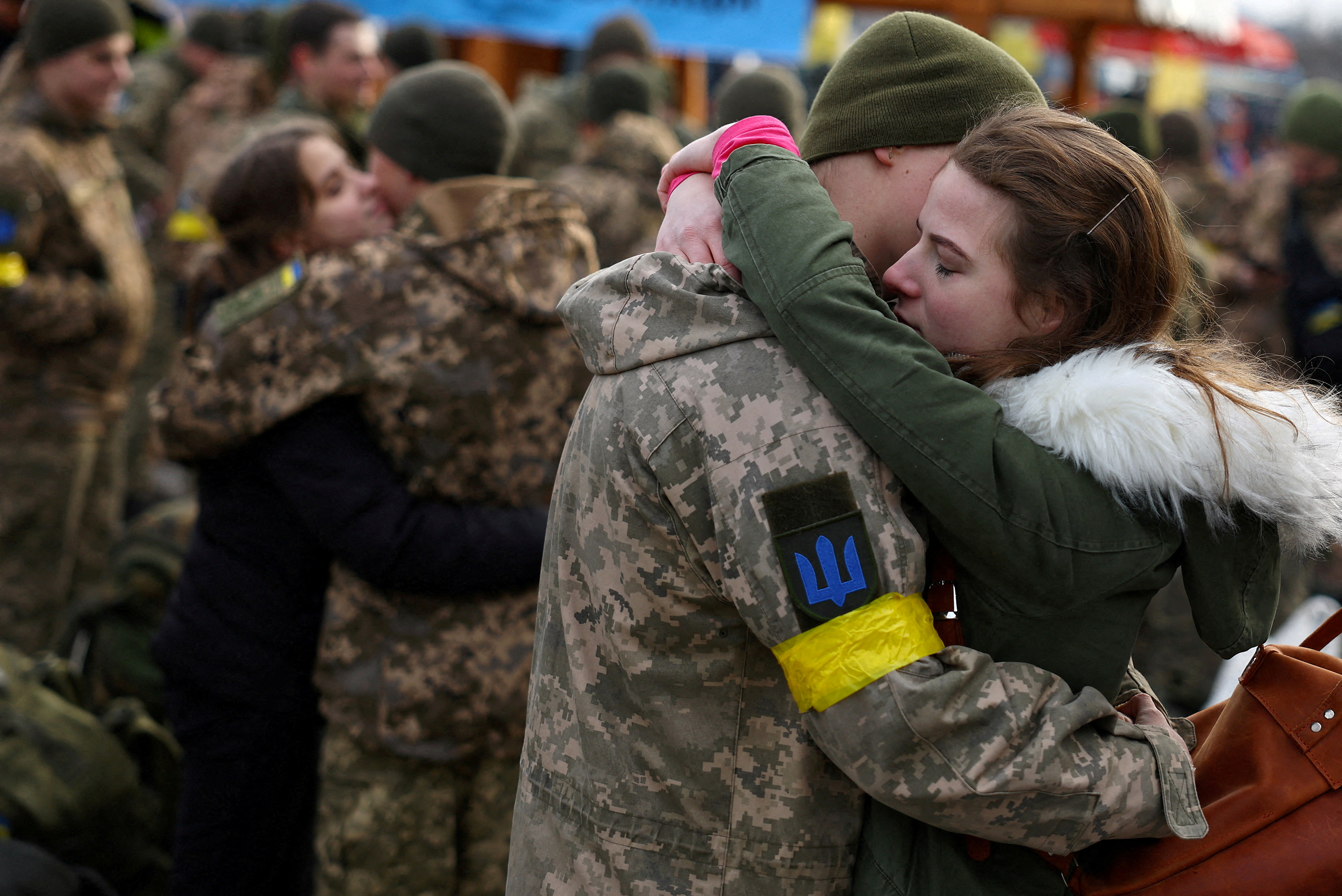
Olga hugs her boyfriend Vlodomyr as they say goodbye prior to Vlodomyr’s deployment closer to the front line, amid Russia’s invasion of Ukraine, at the train station in Lviv, Ukraine, March 9, 2022. REUTERS/Kai Pfaffenbach/File Photo

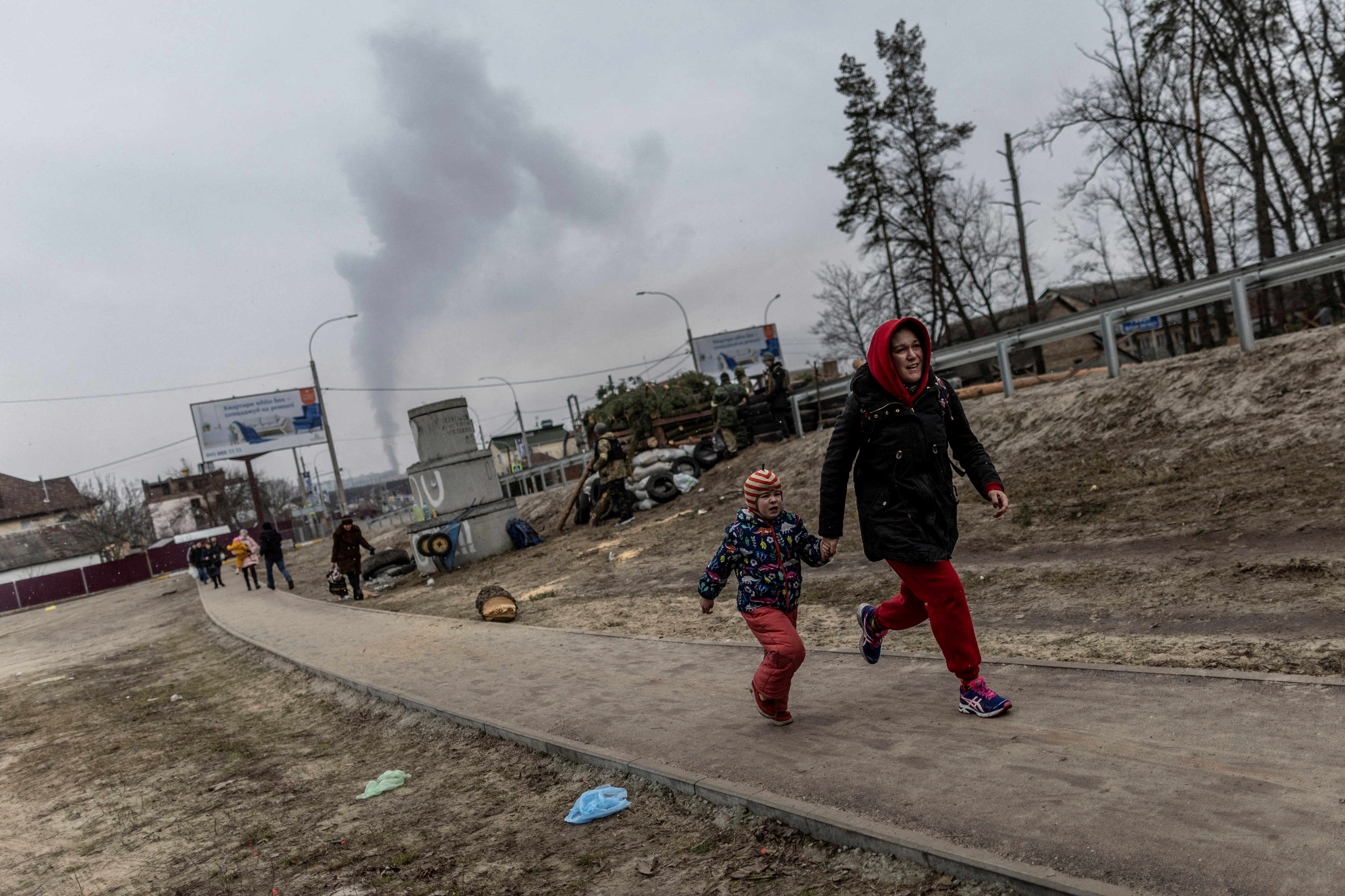
Local residents run for cover as they escape from the town of Irpin, after heavy shelling on the only escape route used by locals, while Russian troops advance towards the capital of Kyiv, in Irpin, near Kyiv, Ukraine, March 6, 2022. REUTERS/Carlos Barria/File Photo

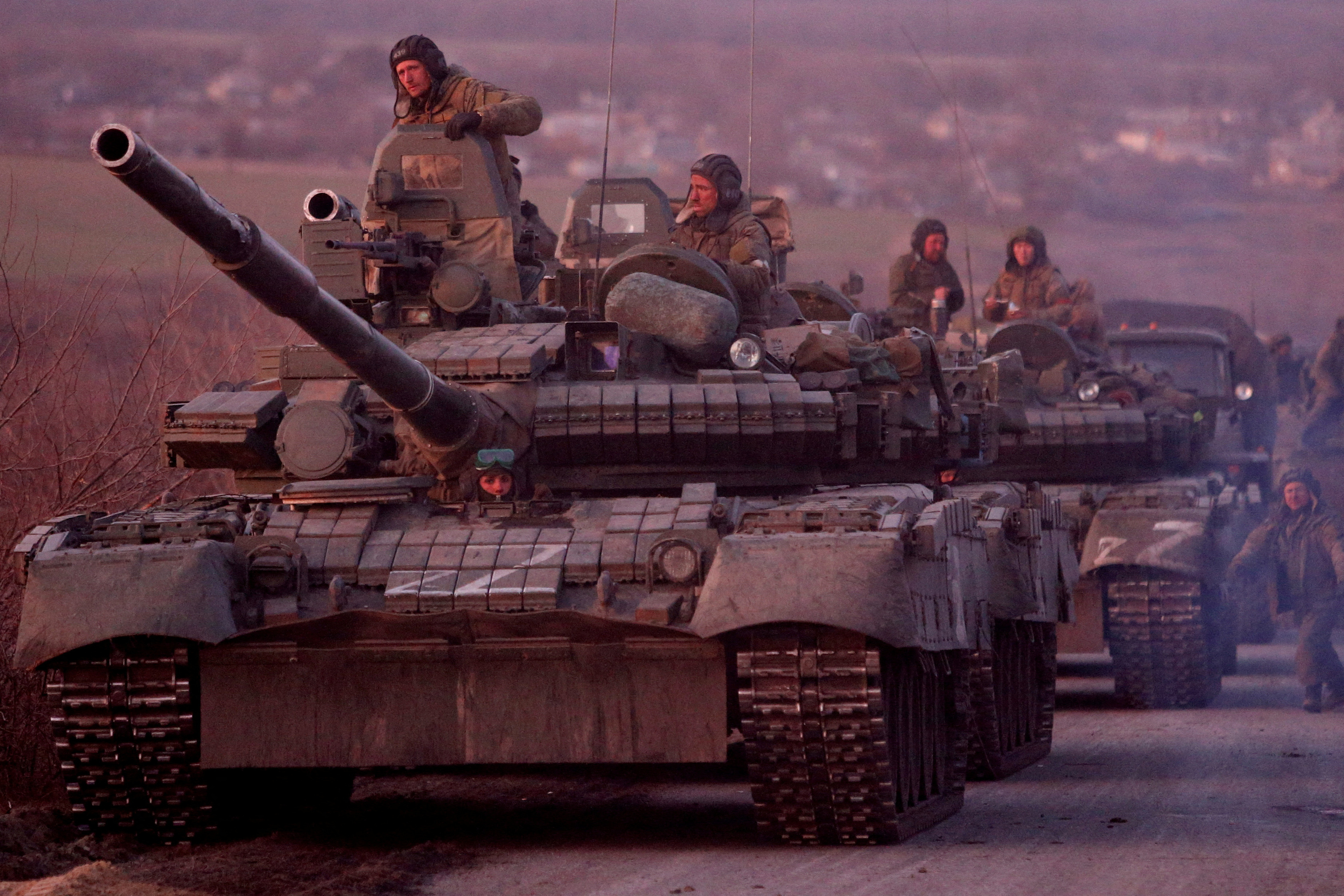
A view shows an armoured convoy of pro-Russian troops on a road leading to the besieged southern port city of Mariupol, as Russia’s invasion of Ukraine continues, Mariupol, Ukraine, March 28, 2022. REUTERS/Alexander Ermochenko/File Photo

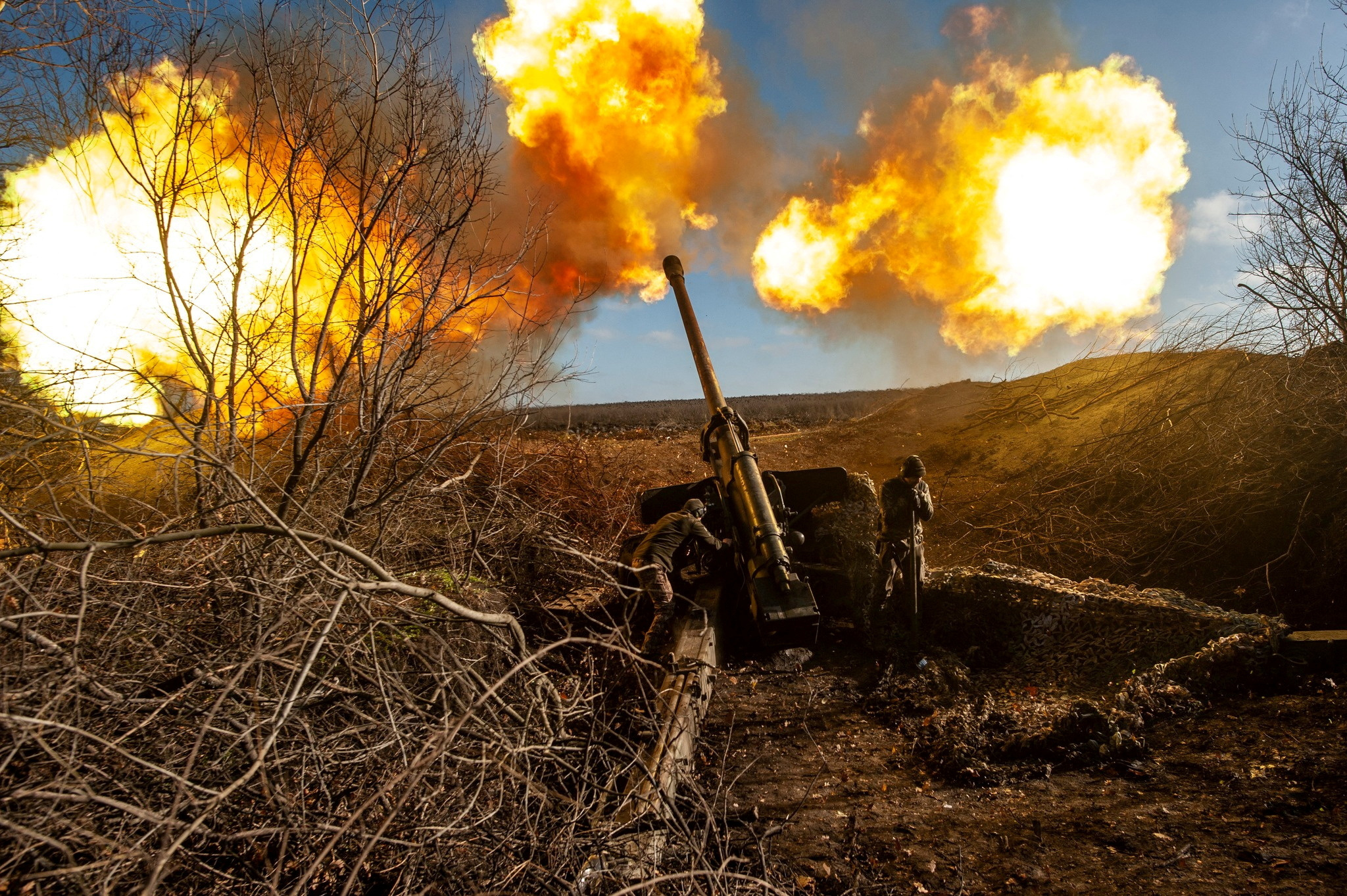
Ukrainian servicemen fire a 130 mm towed field gun M-46 on a front line, as Russia’s attack on Ukraine continues, near Soledar, Donetsk region, Ukraine, in this handout image released November 10, 2022. Iryna Rybakova/Press Service of the 93rd Independent Kholodnyi Yar Mechanized Brigade of the Ukrainian Armed Forces/Handout via REUTERS
Categories
Audio Sources - Full Text Articles

Colorado gay club shooting suspect set to return to court

DENVER (AP) — The suspect accused of entering a Colorado gay nightclub clad in body armor and opening fire with an AR-15-style rifle, killing five people and wounding 17 others, is set to appear in court again Tuesday to learn what charges prosecutors will pursue in the attack, including possible hate crime counts.

Investigators say Anderson Lee Aldrich entered Club Q, a sanctuary for the LGBTQ community in the mostly conservative city of Colorado Springs, just before midnight on Nov. 19 and began shooting during a drag queen’s birthday celebration. The killing stopped after patrons wrestled the suspect to the ground, beating Aldrich into submission, they said.

Aldrich, who is nonbinary and uses they/them pronouns according to defense court filings, was arrested at the club by police and held on suspicion of murder and hate crimes while District Attorney Michael Allen determined what charges to pursue against them. Allen has noted that murder charges would carry the harshest penalty — likely life in prison — and charging Aldrich with bias-motivated crimes would not lead to a harsher punishment.

But at a Nov. 21 news conference, Allen did say that, if there was evidence to support bias motivated crimes, it was still important to pursue them to send the message “that we support communities that have been maligned, harassed, intimidated and abused.”

According to witnesses, Aldrich fired first at people gathered at the club’s bar before spraying bullets across the dance floor during the attack, which came on the eve of an annual day of remembrance for transgender people lost to violence.

More than a year before the shooting, Aldrich was arrested on allegations of making a bomb threat that led to the evacuation of about 10 homes. Aldrich threatened to harm their own family with a homemade bomb, ammunition and multiple weapons, authorities said at the time. Aldrich was booked into jail on suspicion of felony menacing and kidnapping, but the case was apparently later sealed and it’s unclear what became of the charges. There are no public indications that the case led to a conviction.

Ring doorbell video obtained by the AP shows Aldrich arriving at their mother’s front door with a big black bag, telling her the police were nearby and adding, “This is where I stand. Today I die.”

Categories
Audio Sources - Full Text Articles

Futures subdued after sharp Wall St selloff on Fed worries

2022-12-06T11:31:10Z

The Wall Street entrance to the New York Stock Exchange (NYSE) is seen in New York City, U.S., November 15, 2022. REUTERS/Brendan McDermid/File Photo

U.S. stock index futures were subdued on Tuesday following a selloff on Wall Street on fears of protracted Federal Reserve action to combat inflation, while focus shifted to Georgia runoff election, which might decide the fate of the U.S. Senate.

All three major indexes closed at their lowest levels in nearly a week on Monday after upbeat services sector data offered more evidence of strength in the U.S. economy despite a series of big interest rate hikes.

Money market bets are pointing to a 91% chance that the U.S. central bank might raise rates by 50 basis points at its Dec. 13-14 policy meeting, with rates expected to peak at 5% in May 2023, up from 4.92% in the previous session.

“We are very much in looking glass territory again, with investors desperate for the Fed to ease up on rate hikes and therefore taking any bit of good news about the economy as bad news because it will delay the longed-for pivot,” AJ Bell investment director Russ Mould wrote in a note.

Concerns about steeper increase in borrowing costs have boosted dollar, while weighing on equities and bond markets this year, with the S&P 500 down 16.1% and the widely followed part of the Treasury yield curve deeply inverted – a harbinger of recession.

As of Dec. 2, analysts expect S&P 500 companies to report a drop of 0.6% in fourth-quarter earnings after posting a 4.4% rise in the third quarter, according to Refinitiv IBES data.

At 5:39 a.m. ET, Dow e-minis were down 37 points, or 0.11%, S&P 500 e-minis were down 3.5 points, or 0.09%, and Nasdaq 100 e-minis were down 2.25 points, or 0.02%.

Meanwhile, a U.S. Senate race in Georgia will go to a runoff between incumbent Democrat Raphael Warnock and his Donald Trump-backed Republican challenger Herschel Walker.

A Warnock victory would give his party an outright majority of 51 seats in the upper chamber and a measure of sway over committees and judicial appointments. A Walker win would boost Republicans’ chances of blocking President Joe Biden’s agenda.

A split government, with a Democrat in the White House, has historically been favorable for stock markets as it paves the way for partisan standoffs on contentious policy changes such as the federal debt limit.

Among individual stocks, General Electric (GE.N) rose 1.5% in premarket trading after Oppenheimer upgraded the industrial conglomerate’s stock to “outperform”.

Categories
Audio Sources - Full Text Articles

North Korea fires more artillery shells into sea in response to South Korea drills

2022-12-06T11:47:04Z

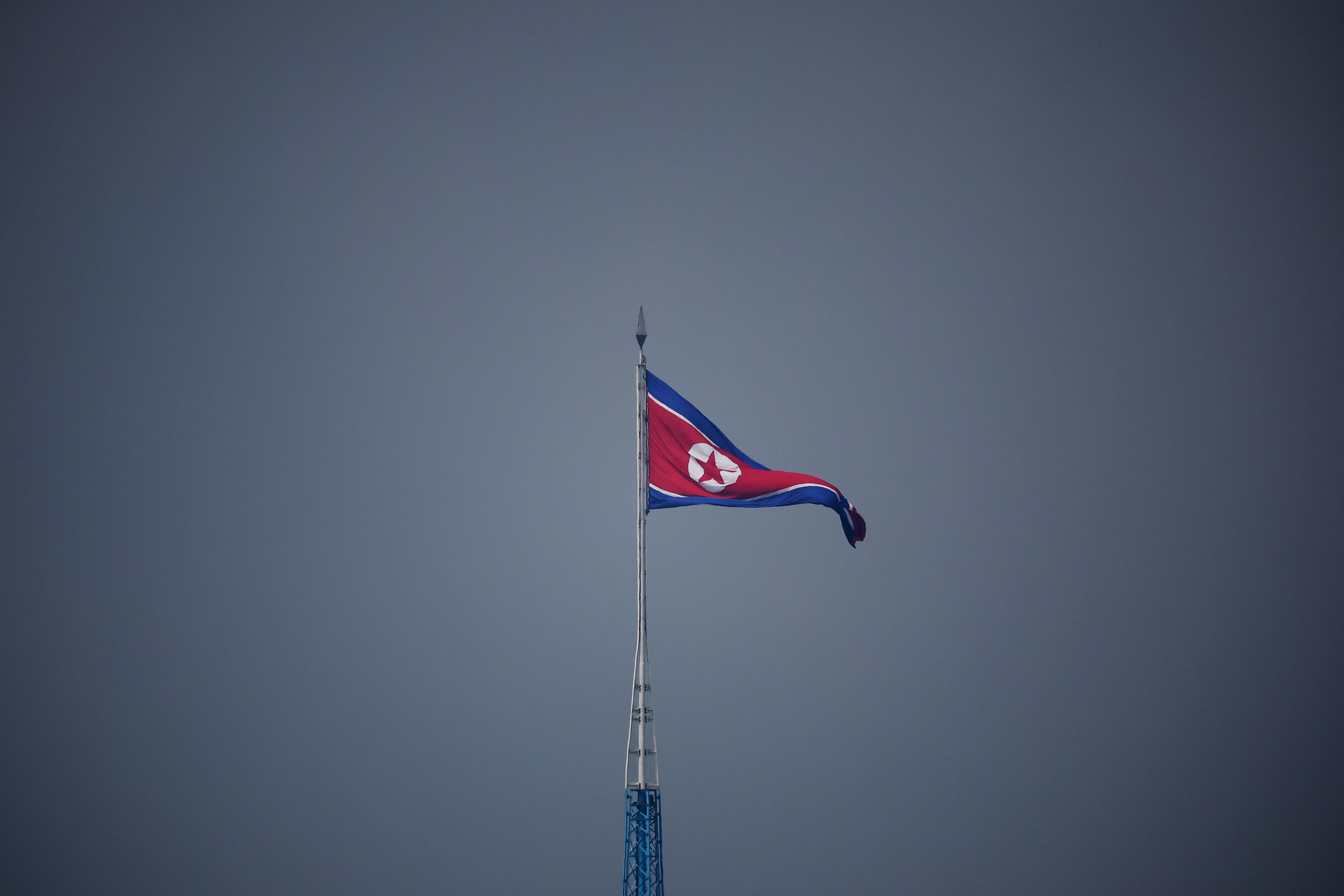
A North Korean flag flutters at the propaganda village of Gijungdong in North Korea, in this picture taken near the truce village of Panmunjom inside the demilitarized zone (DMZ) separating the two Koreas, South Korea, July 19, 2022. REUTERS/Kim Hong-Ji/Pool/Files

North Korea said on Tuesday it had ordered military units to fire more artillery shells into the sea, the North’s official KCNA news agency reported, in response to South Korea’s ongoing drills across the border.

North Korea fired 82 artillery shells over eight-and-a-half hours on Tuesday as a response and warning to “insidious provocation by the enemy”, KCNA said, citing the country’s military spokesperson.

The South Korean military said North Korea had fired about 100 artillery shells.

On Monday, North Korea said it had fired more than 130 shells into the sea off its east and west coasts, some of which landed in a buffer zone near the sea border between the two Koreas. Seoul called that a violation of a 2018 inter-Korean agreement to reduce tensions.

South Korean and U.S. troops have been conducting live-fire drills near the border since Monday. The allies say the drills are necessary to deter nuclear-armed North Korea, which tested a record number of missiles this year and has made preparations to resume nuclear testing for the first time since 2017.

Pyongyang has sharply criticised the joint exercises as proof of hostile policies by Seoul and Washington.

“The enemy must immediately cease provocative military actions in the zone near the front lines,” KCNA quoted the spokesperson for the North Korean army as saying.

In addition to the artillery fire, the North Korean army issued a combat emergency alert to units at all levels and troops were ordered to step up surveillance, the spokesperson said.

South Korea’s Defence Ministry rejected Pyongyang’s comments.

“It is never acceptable for the North to unfairly criticise normal training between South Korea and the United States,” it said in a statement on Tuesday.

“It (North Korea) is fully responsible for the consequences of its unilateral and continuous violation” of the 2018 agreement, the statement said.


WP Radio
WP Radio
OFFLINE LIVE