Categories
Audio Sources - Full Text Articles

U.S. Republican hardliner Biggs to challenge McCarthy for House speaker

2022-12-06T19:39:22Z

A hardline Republican U.S. lawmaker on Tuesday announced he will challenge House of Representatives party chief Kevin McCarthy for the House speakership, a prospect that could lead to party turmoil when the Republican-led chamber convenes in January.

Representative Andy Biggs, 64, of Arizona, seems unlikely to win the speakership. But both his allies and those of McCarthy, 57, of California, have pledged to hold multiple votes until a new speaker is chosen. That could leave the new Republican-led House adrift at its outset.

Biggs, who mounted a failed bid for the House Republican speaker nomination last month, said he had decided to oppose McCarthy to “break the establishment.”

Biggs and other conservatives from the House Freedom Caucus have criticized McCarthy for not taking a harder line against Democrats on priorities including government funding, defense and border security.

“We cannot let this all too rare opportunity to effectuate structural change pass us by because it is uncomfortable to challenge the Republican candidate who is a creature of the establishment status quo,” Biggs wrote in an opinion piece for the Daily Caller, a right-leaning news and opinion website.

There was no immediate comment from McCarthy, who was nominated for the speakership over Biggs last month by 188 of his fellow Republicans. At the time, Republicans said Biggs received 31 votes.

Republicans won a single-digit House majority in this year’s midterm elections, a slim margin that would allow just a handful of Republican opponents to block McCarthy from becoming speaker.

House speakers are elected on the floor by the full 435-seat chamber, including Republicans and Democrats, with 218 votes needed for success. The vote is scheduled for Jan. 3 when Republicans are due to take control with a 221-seat majority.

Congressional aides have said a narrow margin would make it difficult for McCarthy to maintain control of the Republican conference, even if he succeeds to the speakership.

Related Galleries:

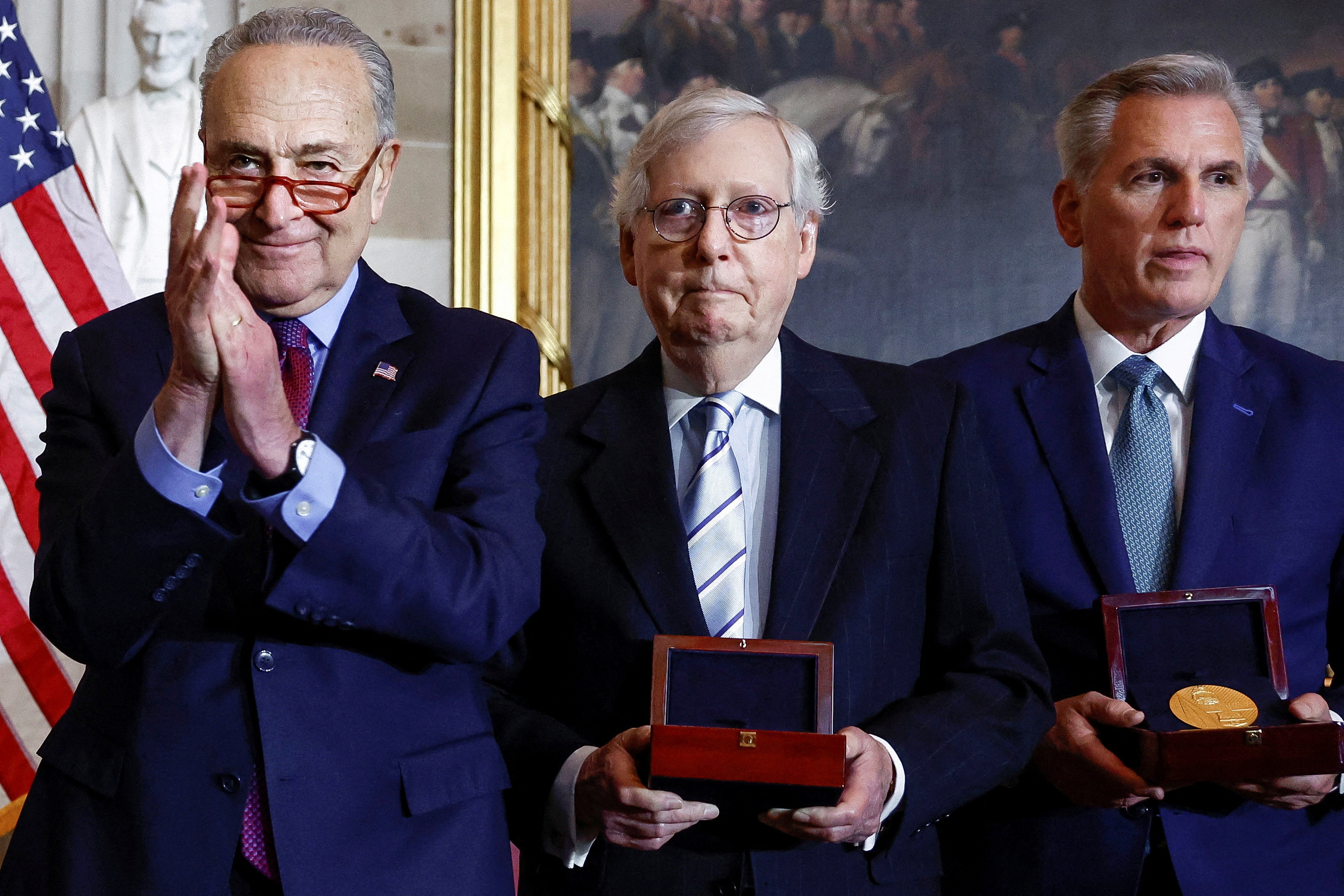
U.S. Senate Majority Leader Chuck Schumer (D-NY) applauds as Senate Minority Leader Mitch McConnell (R-KY) and House Minority Leader Kevin McCarthy (R-CA) hold medals during a Congressional Gold Medal Ceremony “honoring the U.S. Capitol Police, the Washington Metropolitan Police, and those who protected the U.S. Capitol on January 6, 2021,” in the U.S. Capitol Rotunda in Washington, U.S., December 6, 2022. REUTERS/Evelyn Hockstein

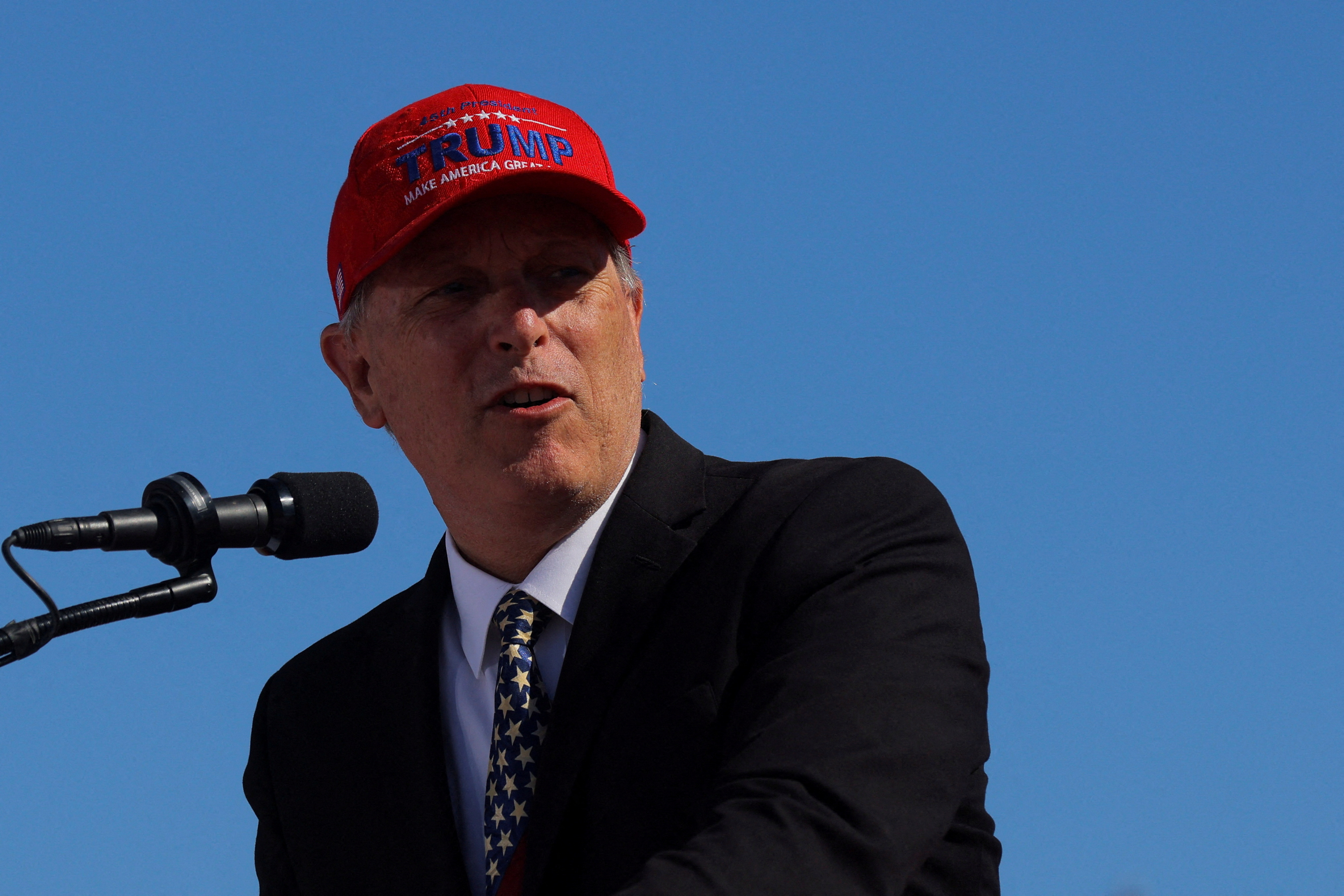
U.S. Rep. Andy Biggs (R-AZ), endorsed by former U.S. President Donald Trump, speaks on stage before a rally ahead of the midterm elections in Mesa, Arizona, U.S., October 9, 2022. REUTERS/Brian Snyder/File Photo
Categories
Audio Sources - Full Text Articles

Wall Street dragged by recession fears, S&P on track for 4th decline

2022-12-06T19:47:17Z

Wall Street benchmarks tumbled again on Tuesday, with the S&P 500 on course for a fourth straight decline, as uncertainty around the direction of Federal Reserve rate hikes and further talk of a looming recession weighed on skittish investors.

Among the biggest drags on the S&P was Meta Platforms Inc (META.O), which slid 6.6% following reports that European Union regulators have ruled the company should not require users to agree to personalized ads based on their digital activity.

However, all of the 11 major S&P sectors were lower in early afternoon trading, with energy and communications services (.SPLRCL) joining the technology sector (.SPLRCT) as leading laggards. Defensive sectors such as utilities (.SPLRCU), often preferred during times of economic uncertainty, fared better.

Future economic growth prospects were in focus on Tuesday following comments from financial titans pointing toward uncertain times ahead.

Bank of America Corp’s chief executive predicted three quarters of mild negative growth next year, while JPMorgan Chase and Co’s (JPM.N) CEO Jamie Dimon said inflation will erode consumer spending power and that a mild to more pronounced recession was likely ahead.

Their comments came on the heels of recent views from BlackRock and others that believe the U.S. Federal Reserve’s aggressive monetary tightening to combat stubbornly high price rises could induce an economic downturn in 2023.

“There’s a general expectation of a contraction in the economy in the first couple of quarters and it’s going to have an impact on earnings, which is what investors are focused on,” said Hugh Johnson, chief economist of Hugh Johnson Economics in Albany, New York.

Banks are among the most sensitive stocks to an economic downturn, as they potentially face negative effects from bad loans or slowing loan growth. The S&P banks index (.SPXBK) was down 2.6%, with Bank of America leading declines with a 5.6% drop.

Fears about economic growth come amid a re-evaluation by traders of what path future interest rate hikes will take, following strong data on jobs and the services sector in recent days.

Money market bets are pointing to a 91% chance that the U.S. central bank might raise rates by 50 basis points at its Dec. 13-14 policy meeting, with rates expected to peak at 4.98% in May 2023, up from 4.92% estimated on Monday before service-sector data was released.

The S&P 500 rallied 13.8% in October and November on hopes of smaller rate hikes and better-than-expected earnings, although the expectation for slower rate hikes could be undermined by further data releases, including producer prices due out on Friday.

“If economic growth continues to be better than what people are expecting, there are chances that the Fed would have to continue to be hawkish,” said Rusty Vanneman, chief investment strategist at Orion Advisor Solutions.

By 2:21 p.m. ET (1921 GMT), the Dow Jones Industrial Average (.DJI) fell 472.5 points, or 1.39%, to 33,474.6, the S&P 500 (.SPX) lost 71.19 points, or 1.78%, to 3,927.65 and the Nasdaq Composite (.IXIC) dropped 249.91 points, or 2.22%, to 10,990.03.

Jitters on the direction of global growth have also weighed on oil prices, with U.S. crude slipping to levels last seen in January, before Russia’s invasion of Ukraine disrupted supply markets. The energy sector (.SPNY) fell 2.6% on Tuesday.

Elsewhere, Mirati Therapeutics Inc (MRTX.O) slumped 21.1% – on course for its largest daily drop since March 2020 – after the company reported disappointing early trial data on its experimental cancer drug adagrasib.

Textron Inc (TXT.N) climbed 4.9% after the U.S. Army awarded the contract for its next-generation helicopter to the company’s Bell unit.

Related Galleries:

The Wall Street entrance to the New York Stock Exchange (NYSE) is seen in New York City, U.S., November 15, 2022. REUTERS/Brendan McDermid/File Photo

A trader works on the floor of the New York Stock Exchange (NYSE) in New York City, U.S., December 5, 2022. REUTERS/Brendan McDermid
Categories
Audio Sources - Full Text Articles

McConnell says short-term U.S. government funding measure likely

2022-12-06T19:22:30Z

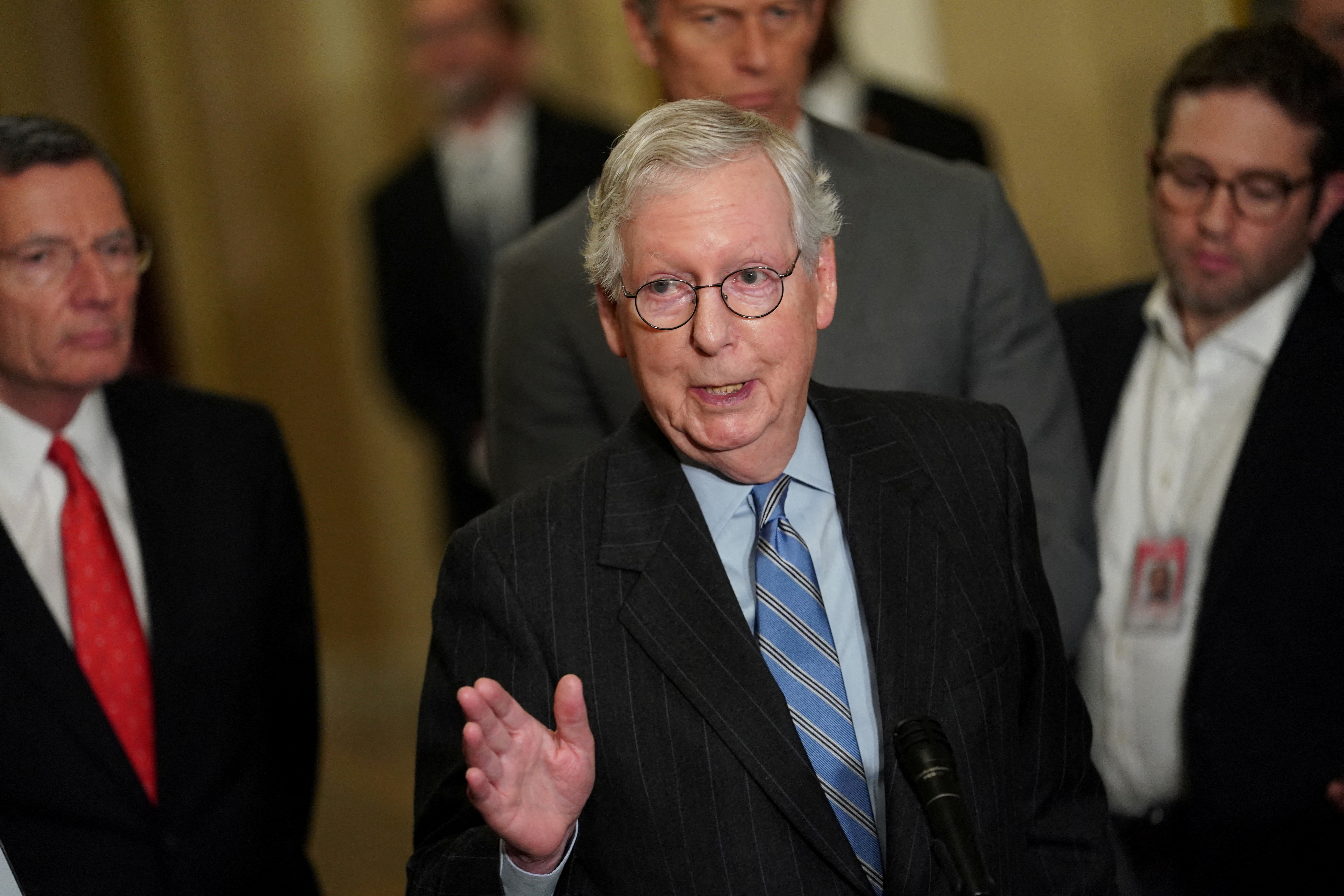
U.S. Senate Minority Leader Mitch McConnell (R-KY) speaks during a news conference following the weekly Republican caucus luncheon at the U.S. Capitol in Washington, D.C., U.S., November 29, 2022. REUTERS/Sarah Silbiger/File Photo

U.S. Senate Republican leader Mitch McConnell said on Tuesday it is increasingly likely that Congress will need to pass a short-term continuing resolution to fund the government into early next year.

“We’re running out of time, and that may end up being the only option left that we could agree to pursue,” McConnell told reporters.

Categories
Audio Sources - Full Text Articles

Why Putin Fears My Father Alexei Navalny

Over the past couple of years, the name Alexei Navalny has become known outside of Russia. You’ve read about him founding the Anti-Corruption Foundation to investigate the illicit wealth of Russian elites, getting detained numerous times over the years for attending protests against Putin’s regime, running for president in 2018, being poisoned in 2020, miraculously recovering and going back to fight for the better future of his country.

For you, these are just headlines around the world. For me, it’s the reality.

My name is Dasha Navalnaya. I’m a 21-year-old studying at Stanford University. My father—Alexei Navalny, became Vladimir Putin’s number one enemy by fighting the Kremlin’s corrupt and bloodthirsty regime.

[time-brightcove not-tgx=”true”]

Since 2011 the Anti-Corruption Foundation has been exposing the corruption of high-ranking government officials in Russia, one of the most famous investigations being Putin’s Palace. In August 2020, my father survived a chemical weapon poisoning with Novichok performed by FSB officers and, several months after recovering, successfully investigated his own assassination attempt.

Despite the dangers he faced, in January 2021, Alexei Navalny went back to Russia and was unlawfully arrested at the airport. He has since been serving his time in prison eye-to-eye with Putin’s jailers. Shortly after his arrest, the Anti-Corruption Foundation was recognized as an extremist organization in Russia. Its team members were prosecuted and forced into exile.

We all know that prison isn’t a place where you want to end up anywhere in the world, but, the conditions of the Russian prison system are far worse than those in the U.S. or Europe. There is nothing like a Russian prison to cripple even those in perfect health. My father survived a chemical weapons poisoning, which took a toll; he spent more than two weeks in a coma and over a month in intensive care. The rehabilitation took months. Shortly after the imprisonment, he started experiencing back pains and a gradual loss of control in his legs. He had to endure a 24-day hunger strike just to get access to medical help.

Barely surviving the hunger strike did not break his spirit—nothing ever will. But the solitary confinement conditions he is now subject to are clearly aimed at mentally breaking and physically killing him. My dad’s “residence” for over two months now – a 7 by 8 feet punishment cell, which is more of a concrete cage for someone of 6 ‘3 height. He spends days sitting on a low-iron stool (which exacerbates his back pain), with a mug being the only thing he’s allowed to keep. Even his bed is fastened to the wall from 6 AM to 10 PM.

Read More: The Man Putin Fears

On Thursday, November 17th, my dad was moved to the strict regime in a solitary housing unit. The rest of the prisoners live in barracks, which they can freely exit, but he will be permanently locked in the solitary cell. He wrote: “It is a regular cramped cell, like the punishment cell, except that you can have not one, but two books with you and use the prison kiosk, albeit with a very limited budget.” These new conditions will also prevent him from receiving any family visits—they are all completely banned. Being able to have a second book is definitely a bonus for an extremely fast reader like my dad.

I am proud to be my father’s daughter and walk tall knowing that despite the inhuman conditions, he has been standing up against Putin’s war in Ukraine and calling on the Russian people to do everything in their power to fight it.

Supporters Of Alexei Navalny Gather In Berlin, Demand His Release From Russian Prison
Omer Messinger-Getty ImagesProtesters hold a banner reading “FREE NAVALNY” as some 2,500 supporters of Russian opposition politician Alexei Navalny march in protest to demand his release from prison in Moscow on January 23, 2021 in Berlin, Germany.

“Everything has a price, and now, in the spring of 2022, we must pay this price. There’s no one to do it for us. Let’s not ‘be against the war.’ Let’s fight against the war,”—he stated during the trial in March. It is now December, and since August my father has spent 78 days in the punishment cell, serving eight solitary confinement terms back-to-back.

Why was he sent to the solitary confinement punishment cell and now to a long term solitary confinement cell, you ask? Among the violations from the colony administration, my father has been sent to the punishment cell because: unbuttoning jumpsuit” (it is physically impossible to button as the jumpsuit is a few sizes smaller than his), refusing to mop the fence,” and “sweeping the exercise yard poorly and insulting the Сriminal Investigator Lieutenant by addressing him by title and surname instead of his first name and patronymic.” The most recent is simply being an “egregious offender” worthy of the “cell-type” room.

The real reason behind the constant punishments is and always has been, of course, Navalny’s condemnation of the Ukraine war and his opposition to the Putin regime. My father uses every appeal hearing as an opportunity to make an anti-war statement. During his recent hearing, he said: “Your Honor, I declare that I am an innocent person. And I believe that I and others like me did everything possible to prevent what is happening now. And we will continue to do so. And I call on all citizens of Russia to fight this regime, this war, and mobilization.”

“I will spend as much time in a punishment cell as will be necessary to defend my right to speak out against a historic crime Putin is committing” —is a sadly self-fulfilling prophecy in his case. The prison administration made it clear there’s no such thing as a glimpse of the rule of law when it comes to Navalny.

The latter is also attested by the fact that my father’s attorney-client confidentiality privilege no longer exists. The penal colony administration had simply decided to waive it. In recent months, all communication he has had with his lawyers goes through the prison administration. The window in the visiting room has been covered with an opaque film, so lawyers can only hear a voice and see their client’s silhouette as they discuss the defense in the new criminal cases against him (he currently is facing up to 30 years behind bars). My dad’s lawyers no longer have a visual understanding of his health and physical conditions. This is unique even by the low standards of the Russian judicial system.

To me, Alexei Navalny is not only a determined, hard-working, and charismatic leader but also a funny, caring, and incredible father. He taught me how to ride a bike; he helped with math equations and grammar questions when I simply could not wrap my elementary school brain around the concept of semicolons. In middle school, when I made my first attempt to cook porridge, when it turned out to be way too salty, my dad smiled, didn’t discourage me, and ate the whole thing. For hours he helped me learn the poem “The Prophet” by Alexander Pushkin so well it is still engraved in my mind. Every September, he walked my younger brother and me to school on the first day of class. My dad was there for our competitions, concerts, and graduations. And has always written me or anyone he holds close a loving and hilarious letter on our birthday if he was arrested and couldn’t be with us in person.

Now he can’t even do that.

Our family has always taken pride in its optimism: we prefer jokes over complaining when the worse comes. We’ve seen a lot over the years and made sure not to take it too close to heart. My father was detained at least once almost every year between 2011 and 2021, with time spent in prison longer and longer. My mother was detained and tried; my uncle served 3.5 years in prison for the simple crime of having the same last name. Our whole family, including my grandparents and great-grandparents, has been harassed and unlawfully prosecuted many times. Not to mention the “good old times” when the FSB poisoners were close to killing my mother and almost killed my father

It is impossible to get used to the idea that your loved ones can be imprisoned or killed at any time for a made-up reason, but over time it became part of our family routine. “So, I assume you won’t be coming to dinner tonight?” I’d ask my dad whenever he was getting ready to go to a protest. He would respond with a snicker.

The Russian regime has always been based on corruption and it is now based on war – for Putin, these are the two prerequisites for staying in power. That is why he is ready to destroy anyone who dares to expose them. And he treats my father with a personal hatred—as his most implacable opponent for many years.

As you read these lines, Navalny is in mortal danger, but he continues to stand by what he believes in. He has proven willing to sacrifice his freedom, health, and even his life to see Russia become a democratic, prosperous country. And right now, even from prison, he is fighting to make it peaceful. By his example, he supports and inspires millions of Russians who, like him, are unwilling to tolerate war and injustice.

Putin must be defeated. He is a threat not only to Russia and Ukraine but to the world. The very essence of authoritarian power involves a constant increase in bets, an increase in aggression, and the search for new enemies. In order not to lose in this struggle, we must unite.

My father is one of the leaders of this struggle, and he must be out there. He challenges Putin every day, but together we can ensure that his efforts are not in vain and that his words are heard around the world. I now turn to world leaders and ask them to support my call to the Russian government to release my father.

Let’s all strive for a better, more prosperous global future where we can choose our own leaders. Free Alexei Navalny!

Categories
Audio Sources - Full Text Articles

Ukraine is the victim. Negotiations should be Kyiv’s decision.

By Steven Pifer

Writing in The Washington Post on December 2, Robert Wright called on the Biden administration to press Ukraine to negotiate a settlement to the war Russia unleashed on it. That adds to a spate of articles in recent weeks urging Washington to prod Kyiv toward the negotiating table or to set a diplomatic process for settling the conflict.

Negotiations could well become necessary at some point. However, the questions of if — and when — to engage should rest with the Ukrainian government.

In February, Russian President Vladimir Putin ordered a multi-pronged invasion of Ukraine. It has run into difficult straits. The Russians retreated from Kyiv in March. More recently, Ukrainian counteroffensives drove the Russians out of Kharkiv oblast (region) and liberated Kherson city, pushing the Russians back to the east side of the Dnipro River.

As Kyiv’s military successes grew, commentators began calling for Washington to “bring Russia and Ukraine” to the negotiating table, to “lay the groundwork” for talks, and to “begin discussions” on eventual negotiations. The authors offer various reasons for doing so: that Russia might escalate; that the costs of supporting Kyiv are too high; that Ukrainian victories might make negotiations more difficult; that the Russian military might recover its footing and win; that the war could settle into a drawn-out stalemate; and that, absent a firm settlement, Ukraine would face the threat of reinvasion.

The West cannot casually dismiss the possibility of Putin escalating to use a nuclear weapon, but he has real reasons not to. Doing so would alienate the Global South and China as well as open a Pandora’s box with potentially nasty consequences for Russia. The Kremlin appears to understand that and has de-escalated the nuclear rhetoric.

Russian escalation at the conventional level to strike, for example, the routes in Poland that flow Western arms into Ukraine hardly seems plausible. The Russian General Staff has its hands full with the Ukrainian army; it does not want a fight now with NATO.

The United States and the West are spending significant sums to support Ukraine’s defense. But they are not too high given the size of Western economies and defense budgets and, in particular, in view of what the West has at stake. A Russia that wins in Ukraine could be emboldened to use force elsewhere.

The concern that Ukraine’s liberation of its territory could complicate negotiations is misplaced. That more likely would engender greater realism in the Kremlin and make serious talks more possible. As for the opposite concern, the Russian military has given no basis to believe it can regain the military initiative sufficiently to win the war.

True, the conflict could settle into a stalemate. However, that scenario does not by itself make a strong case for pushing Ukraine into an early negotiation, especially with an adversary who offers no hint of readiness to seek a middle ground in negotiations.

As for the threat of a Russian reinvasion, Ukraine would face that regardless of how the war ends — at least, as long as Putin remains in power. That threat is by no means theoretical. In 2014, the Russian military seized Crimea, and Russian and Russian proxy forces occupied part of Donbas, but the Kremlin was not content just with that.

None of the authors offer reasons to believe Moscow would negotiate in a serious manner. The Kremlin’s demands in February included demilitarization and neutrality for Ukraine plus Kyiv’s recognition of Crimea as Russian. At the end of September, despite a month of losing on the battlefield, Moscow claimed to annex four Ukrainian oblasts. After Ukrainian forces liberated Kherson, the capital of one of these regions, Putin’s spokesperson quixotically called the city “the territory of Russia.” How should Kyiv regard such a prospective bargaining partner?

Some authors, including Wright, urge talks without addressing what outcome they hope or expect to see. Others suggest a “territorial settlement” or Ukrainian “flexibility” and sound all too ready to concede Ukrainian land to Russia. That would entail consigning Ukrainians to Russian authority as well. The atrocities and war crimes committed by Russian forces in BuchaIrpinIzyumMariupol, and many other cities and towns have shown Ukrainians exactly what that would mean. Moreover, prodding the Ukrainians into negotiations in which they would accept either explicitly or de facto Russian seizure of their territory has implications well beyond Ukraine. That would legitimize Moscow’s tactics of using force, and one must wonder whether Putin’s ambitions end just with Ukraine.

The West thus should hope for Ukrainian victory and liberation of all occupied lands. However, that might not prove possible, and instead a prospect of a serious negotiation could at some point develop, offering a hope of a settlement to end the war. Even then, the Ukrainians would have to exercise caution. They would not want to allow the Russians the possibility of “negotiating” simply to buy time to reconstitute their military forces for a new offensive.

If a serious negotiation were to emerge, it would almost certainly require that Ukrainian President Volodymyr Zelensky and his government compromise on some of their conditions for peace, which include the return of all occupied territories, full reparations for the immense damage, and punishment of those responsible for war crimes. Zelensky undoubtedly shares Wright’s desire to avoid further loss of Ukrainian lives, but deciding which issues on which to give in during a negotiation would raise delicate questions. Among other things, he must take account of the attitude of Ukrainians. A late October poll showed that 86% supported continuing the fight and opposed negotiations.

Washington cannot decide these kinds of issues. The Ukrainians — the victims in this war — first have to see that they have a serious Russian bargaining partner. They themselves must conclude that the time has come to make tough decisions on compromises to end the conflict. The questions of if and when to negotiate properly should remain Kyiv’s to decide.

2022-12-06T150353Z_1250418396_RC290Y9PLK
fblike20.png pinterest20.png twitter20.png email20.png rss20.png  
Categories
Audio Sources - Full Text Articles

Enemy attempting to advance in three directions – Ukraine’s General Staff

630_360_1670346364-350.jpg

The enemy is concentrating its efforts on conducting an offensive in the Lyman, Bakhmut and Avdiivka instructions, even though attempting to keep the quickly captured territories in other directions.

In accordance to Ukrinform, the General Team of the Armed Forces of Ukraine reported this in its most recent report posted on Facebook.

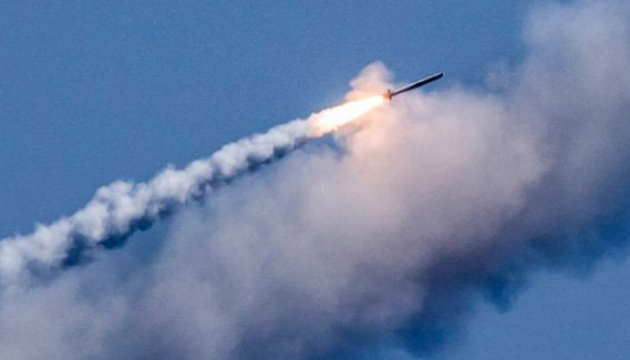
The invaders keep on to shell the settlements and positions of the Ukrainian Defense Forces together the call line. On December 6, the Russians introduced four missile strikes and about 10 attacks applying several launch rocket devices.

According to the report, the enemy carries on to hit vital infrastructure and civilian households, violating the norms of international humanitarian Regulation, the guidelines and customs of warfare.

Russian missile strikes today ruined civilian infrastructure in the settlement of Stepne, Zaporizhzhia region.

The threat stays of the enemy launching missile strikes on Ukraine’s strength procedure and essential infrastructure.

According to the Basic Personnel, the enemy carries on to experience losses. On December 4, Ukrainian defenders destroyed up to 20 parts of Russian military machines and wounded about 70 invaders in the Zaporizhzhia region.

On November 30, in the Verkhniotoretske district of the Donetsk region, 21 Russian troopers deserted battle positions. 13 of them ended up recruited from prisons. The command of the Russian troops requested that the violators be detained and killed. It was set up that as of December 5, all deserters had been removed.

“Throughout the working day, the aviation of the Protection Forces of Ukraine carried out 14 strikes on places of focus of staff, weapons and navy tools, as very well as two strikes on the positions of the enemy’s anti-aircraft missile techniques,” the Normal Team explained.

Ukrainian rocket and artillery forces on December 6 hit the enemy’s command centre, two armed service personnel concentration spots and ammunition depot.

Photograph: Common Team of the Armed Forces of Ukraine

Source link

The post Enemy attempting to advance in three directions – Ukraine’s General Staff appeared first on Ukraine Intelligence.

Categories
Audio Sources - Full Text Articles

Invaders launch missile attack on Kryvyi Rih

630_360_1670345482-218.jpg

Russian troops this night released a missile attack on Kryvyi Rih, Dnipropetrovsk area.

Oleksandr Vilkul, the head of the Kryvyi Rih navy administration, reported this in a write-up on the Telegram messaging application, Ukrinform studies.

“Kryvyi Rih. A missile assault on an industrial infrastructure facility,” he wrote.

Previously, social media stories reported that locals read the seem of an explosion, but there was no air raid notify.

In the early hrs of December 5, enemy missiles hit the territory of the ArcelorMittal Kryvyi Rih steel mill.

Source link

The post Invaders launch missile attack on Kryvyi Rih appeared first on Ukraine Intelligence.

Categories
Audio Sources - Full Text Articles

Argentina VP Cristina Kirchner faces corruption trial verdict

2022-12-06T18:57:34Z

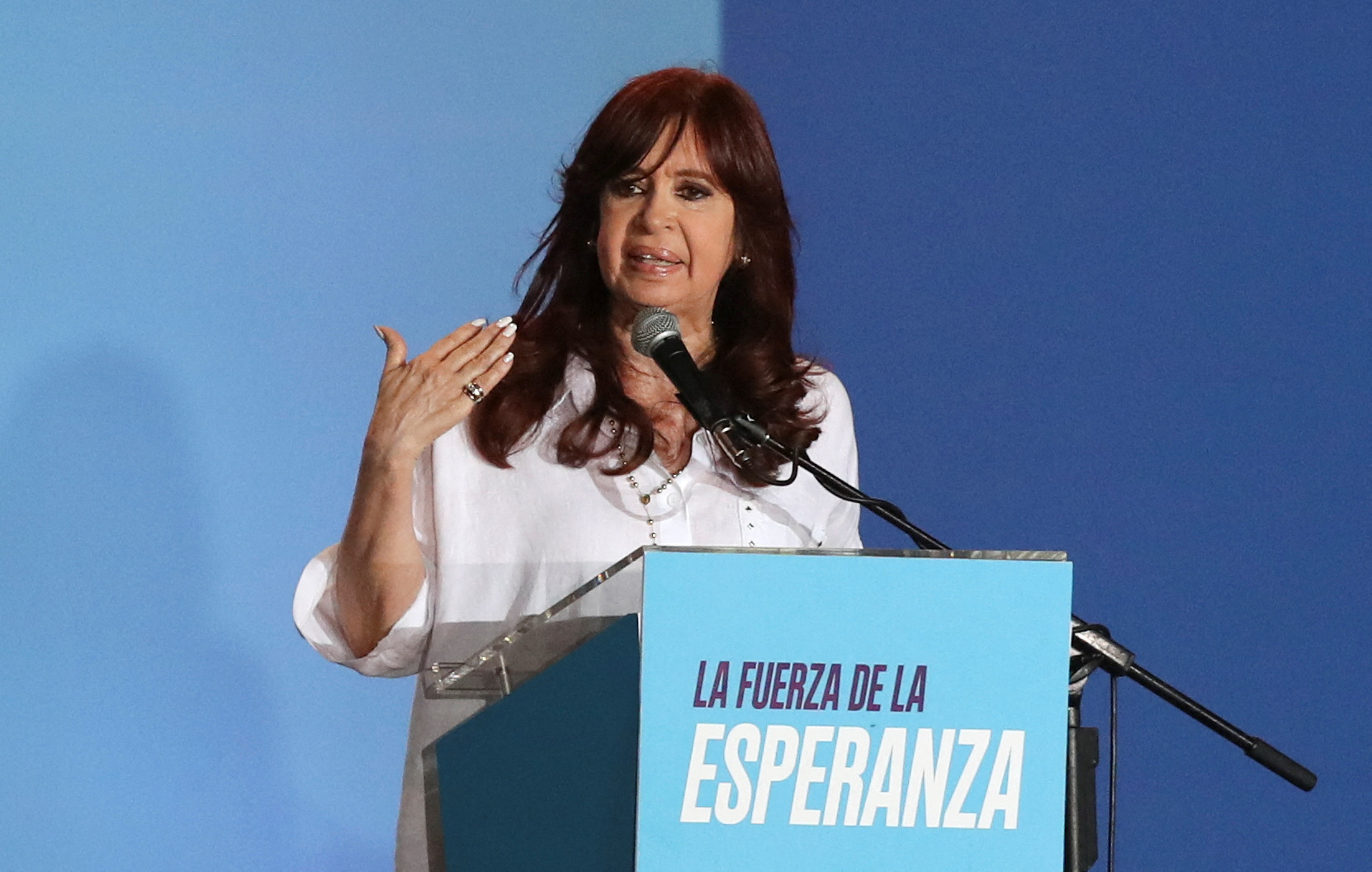
Argentina’s Vice President Cristina Fernandez de Kirchner speaks onstage during a party rally inside the Diego Maradona stadium, in La Plata, on the outskirts of Buenos Aires, Argentina November 17, 2022. REUTERS/Agustin Marcarian

Cristina Fernandez de Kirchner, Argentina’s powerful but divisive vice president, could be handed a 12-year jail sentence and be disqualified from holding public office, with judges expected to rule on Tuesday in a high-profile corruption case.

The vice president is likely to appeal any sentence with the case spending years winding through higher courts.

Fernandez de Kirchner, president for two terms between 2007 and 2015 and who commands rock-star crowds of supporters, is facing charges by prosecutors of alleged corruption in the awarding of public works. She has denied the allegations and called the court a “firing squad.”

“It is evident that there is going to be a conviction,” Fernandez de Kirchner said in an interview with Brazilian newspaper Folha de Sao Paulo published on Monday. She alleged constitutional guarantees were violated during the process.

Lawyers said, however, that Fernandez de Kirchner would not go to jail any time soon as she had immunity while serving as vice president. She would need to be removed from office in a political trial before she could be sent to prison.

“She currently has privileges as vice president, which means she is one of the officials whose removal requires a political trial,” said lawyer Alejandro Carrio, adding that higher courts could spend years going over appeals up to the Supreme Court.

“I do not see the process with a case of this magnitude taking less than three years.”

A guilty sentence could nonetheless trigger angry reactions from supporters of Fernandez de Kirchner, who gathered in the streets after she survived an assassination attempt earlier this year. The country is on edge after a long economic crisis and inflation heading toward 100%.

It could also cast a shadow over the ruling Peronist government of President Alberto Fernandez, which is facing a tough battle to fend off a challenge from the conservative opposition in general elections set for next year.

Prosecutors allege public works contracts were handed to a businessman ally of Fernandez de Kirchner, who then channeled money back to her and late husband Nestor Kirchner, also a former president.

Defenders of the vice president say she is a victim of judicial persecution.

If Fernandez de Kirchner were disqualified from public office, that could have a significant impact, said Julio Burdman, director of the Electoral Observatory consultancy.

“The relationship between the ruling coalition and opposition would be greatly strained and the ruling party as a whole would react strongly and denounce it as persecution,” he said.

Categories
Audio Sources - Full Text Articles

U.S. power use to hit record in 2022 on economic growth, hotter weather -EIA

2022-12-06T18:55:44Z

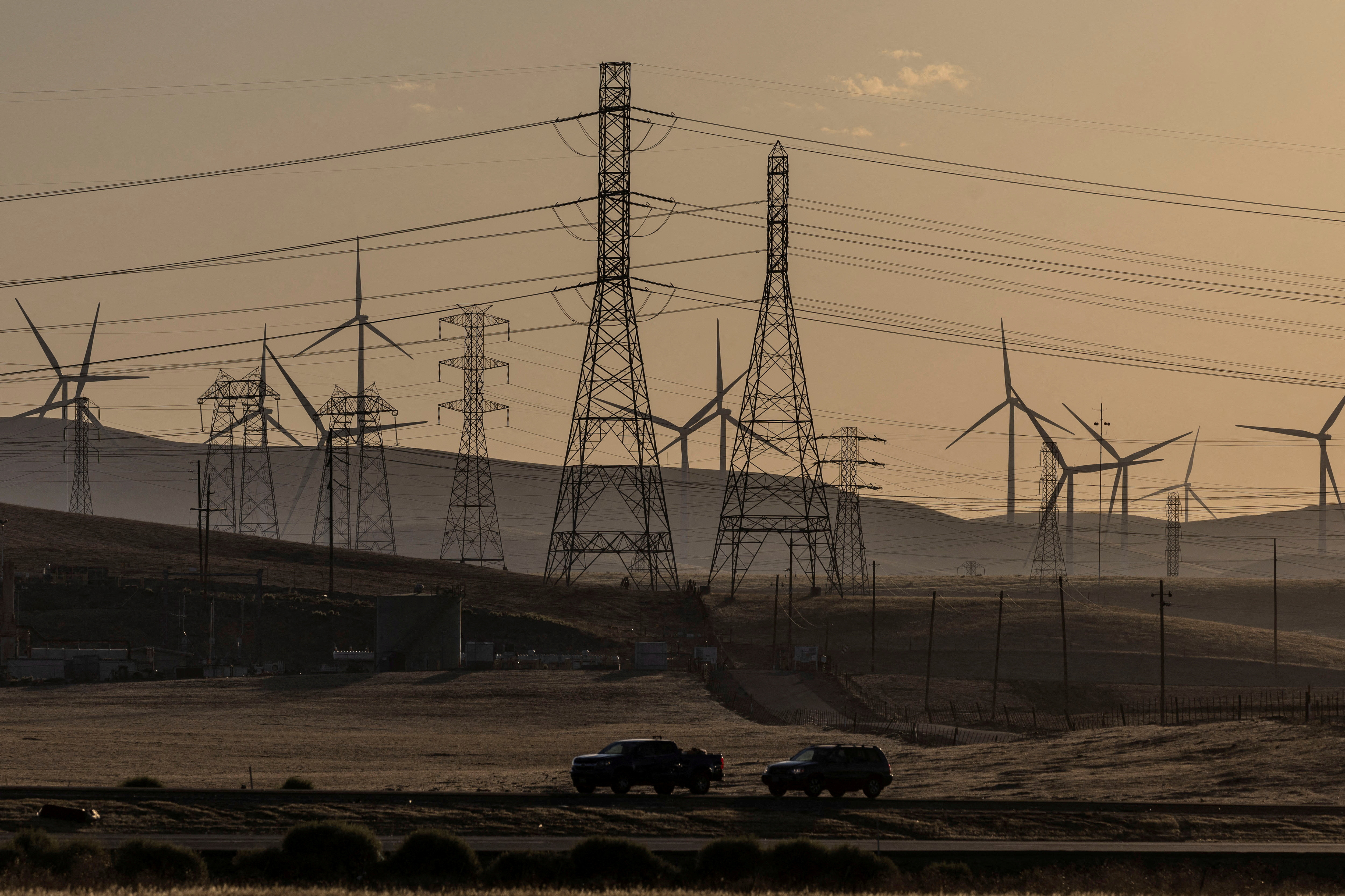
A view of windmills and power lines, as California’s grid operator urged the state’s 40 million people to ratchet down the use of electricity in homes and businesses as a wave of extreme heat settled over much of the state, near Tracy, California, U.S., August 17, 2022. REUTERS/Carlos Barria/File Photo

U.S. power consumption will rise to a record high in 2022 because of increasing economic activity and hotter summer weather, the U.S. Energy Information Administration (EIA) said in its Short-Term Energy Outlook (STEO) on Tuesday.

EIA projected power demand will climb to 4,044 billion kilowatt-hours (kWh) in 2022, from 3,941 billion kWh in 2021, before sliding to 4,004 billion kWh in 2023 as temperatures moderate.

That compares with an eight-year low of 3,856 billion kWh in 2020, when the coronavirus pandemic depressed demand, and an all-time high of 4,003 billion kWh in 2018.

EIA projected 2022 power sales would rise to 1,514 billion kWh for residential consumers, 1,376 billion kWh for commercial customers as more people return to work in offices and 1,011 billion kWh for the industrial sector.

That compares with all-time highs of 1,470 billion kWh in 2021 for residential consumers, 1,382 billion kWh in 2018 for commercial customers and 1,064 billion kWh in 2000 for industrial customers.

EIA said natural gas’ share of power generation would rise from 37% in 2021 to 39% in 2022 before sliding back to 37% in 2023. Coal’s share will drop from 23% in 2021 to 20% in 2022 and 19% in 2023 as renewable output rises.

The percentage of renewable generation will rise from 20% in 2021 to 22% in 2022 and 24% in 2023. Nuclear power’s share will slide to 19% in 2022, from 20% in 2021, before rising back to 20% in 2023.

EIA projected 2022 gas sales would rise to 13.60 billion cubic feet per day (bcfd) for residential consumers, 9.67 bcfd for commercial customers, 23.42 bcfd for industrial customers and 32.89 bcfd for power generation.

That compares with all-time highs of 14.32 bcfd in 1996 for residential consumers, 9.63 bcfd in 2019 for commercial customers, 23.80 bcfd in 1973 for industrial customers and 31.78 bcfd in 2020 for power generation.

Categories
Audio Sources - Full Text Articles

FTX“s Bankman-Fried hires white collar defense attorney Mark Cohen

2022-12-06T19:14:45Z

FTX founder and former chief executive Sam Bankman-Fried has hired former prosecutor Mark S. Cohen to represent him, as U.S. authorities probe the crypto exchange’s collapse, a spokesperson for Bankman-Fried said on Tuesday.

Regulators around the globe, including in the Bahamas where FTX is based and in the United States, are investigating the role of FTX’s top executives including Bankman-Fried in the firm’s stunning collapse, Reuters has previously reported. The crypto exchange filed for bankruptcy last month after a liquidity crisis that saw at least $1 billion of customer funds vanish.

Bankman-Fried has retained Cohen, of Cohen & Gresser, Bankman-Fried’s spokesperson Mark Botnick said in an emailed statement. Cohen could not be reached for comment.

Prosecutors and regulators have not charged Bankman-Fried with wrongdoing. He is facing civil lawsuits from investors and FTX customers.

David Mills, a professor at Stanford Law School, is consulting on the matter, Botnick said. Mills did not respond to requests for comment. Semafor previously reported Mills’ advisory work for Bankman-Fried.

Cohen, a former assistant United States attorney for the Eastern District of New York, recently defended Ghislaine Maxwell in her sex trafficking trial.

Bankman-Fried had previously hired Martin Flumenbaum of law firm Paul, Weiss, Rifkind, Wharton & Garrison, but the law firm said last month it was no longer representing him due to conflicts.

In recent weeks, U.S. authorities have sought information from investors and potential investors in FTX, according to two sources with knowledge of the requests. Federal prosecutors in New York are asking for details on any communications such firms have had with the crypto firm and its executives, including Bankman-Fried, the sources said. Bloomberg previously reported the information requests.

The Securities and Exchange Commission has been asking for similar information from investors as well, one of the sources said.

Those sources and attorneys, speaking on condition of anonymity, have said that U.S. authorities are likely looking for any evidence of material misrepresentations of information to investors.

Spokespeople for the Manhattan U.S. attorney’s office and the SEC declined to comment on the information request.

FTX secretly transferred customer funds to its affiliate Alameda Research to fill a shortfall at the crypto trading firm, Reuters has previously reported.

Speaking via video link at the New York Times’ Dealbook Summit with Andrew Ross Sorkin on Wednesday, Bankman-Fried said he did not knowingly commingle customer funds on FTX with funds at his proprietary trading firm, Alameda Research.

“I didn’t ever try to commit fraud,” Bankman-Fried said, adding that he doesn’t personally think he has any criminal liability.

Related Galleries:

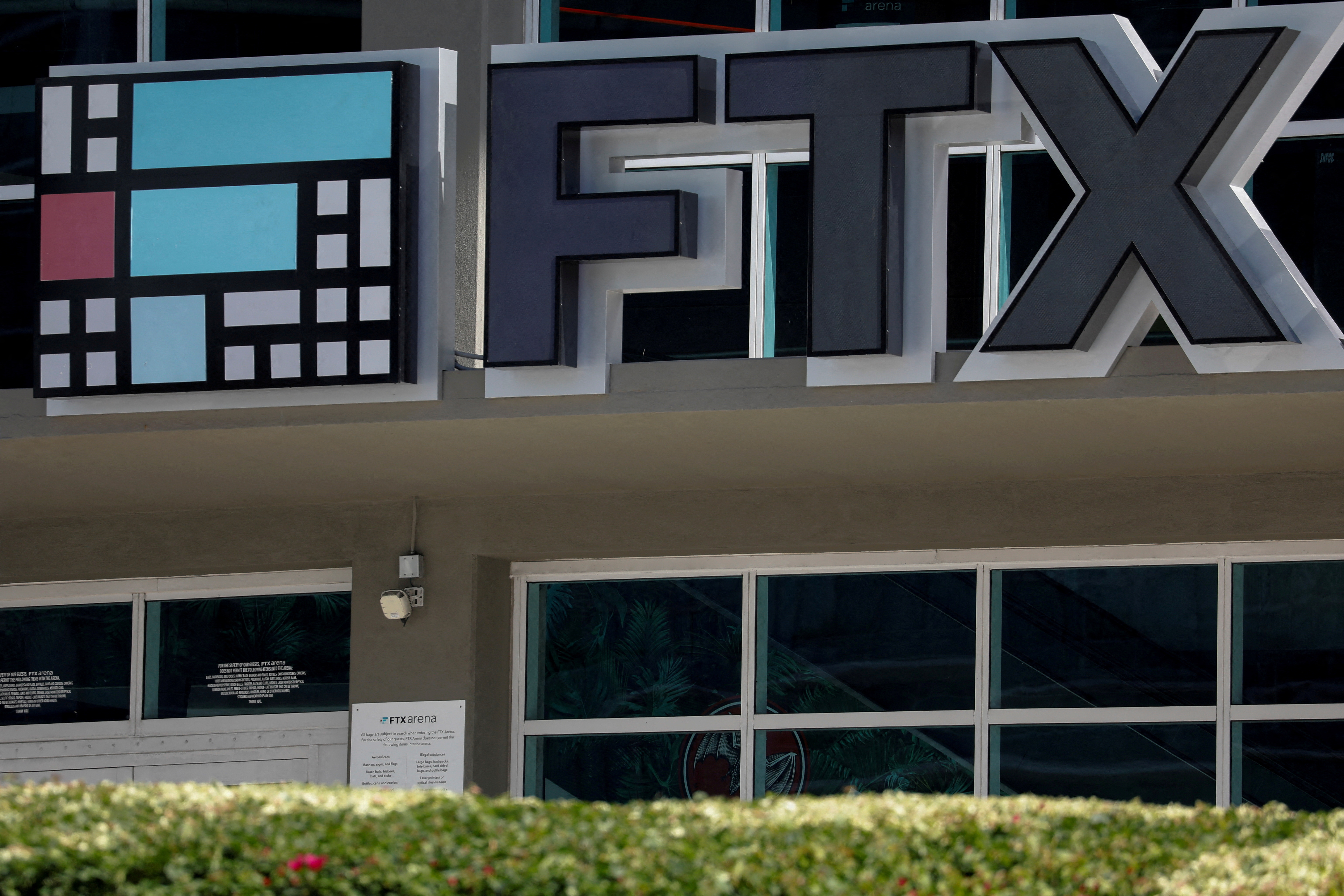
The logo of FTX is seen at the entrance of the FTX Arena in Miami, Florida, U.S., November 12, 2022. REUTERS/Marco Bello/File Photo

FTX founder Sam Bankman-Fried poses for a picture, in an unspecified location, in this undated handout picture, obtained by Reuters on July 5, 2022. FTX/Handout via REUTERS//File Photo
WP Radio
WP Radio
OFFLINE LIVE