Categories
Audio Sources - Full Text Articles

North Carolina county in dark for third day after attack on power substations

2022-12-06T19:57:02Z

Tens of thousands of households and businesses in North Carolina remained without power for a third day on Tuesday as authorities investigate what they describe as an orchestrated gunfire attack that disabled two substations.

North Carolina Governor Roy Cooper on Tuesday said “a serious national conversation” about protecting critical infrastructure is needed after the attack.

Duke Energy Corp (DUK.N), which provides power to the area, said more than 35,000 customers were without power on Tuesday morning in Moore County, where the FBI and the U.S. Department of Energy along with local and state law enforcement agencies were investigating Saturday’s shootings at the substations.

Investigators were “leaving no stone unturned,” Cooper told CNN. “This was a malicious criminal attack on the entire community that plunged tens of thousands of people into darkness.”

“This is unacceptable to have this many people without power for this long,” Cooper said. “It was clear that they knew how to cause significant damage and that they could do it at this substation, so we have to reassess the situation.”

Schools across the county of 100,000 people canceled classes for a second day on Tuesday while a curfew was in place overnight amid freezing nighttime temperatures.

Federal law enforcement is assisting in an investigation into the situation, which is being monitored by the White House, the Biden administration said on Tuesday.

“We condemn this apparent attack on critical infrastructure,” White House Press Secretary Karine Jean-Pierre told reporters on Air Force One. “The Department of Energy is working with utilities in the region to ensure they have everything they need to restore power as quickly and safely as possible.”

On Saturday night, utility workers investigating reports of widespread outages found gates broken and evidence of gunfire damage to equipment at two substations in the county. The area is popular with tourists and known for golf resorts including Pinehurst, which has hosted the U.S. Open and Ryder Cup tournaments.

Authorities are disclosing few details of the investigation, saying only that the damage was done by firearms. Sheriff Ronnie Fields on Monday indicated that whoever orchestrated the attacks knew how to take out the substations.

Duke Energy said on Monday afternoon that it had restored electricity to about 7,000 customers, from a total of 45,000 who had lost power after the shootings. That represented nearly all customers served by the company in Moore County, spokesperson Jeff Brooks said on Monday.

For most customers, power would likely be out through Wednesday or Thursday because the damage to the substations was extensive and requires complicated parts and repairs, Brooks said.

Related Galleries:

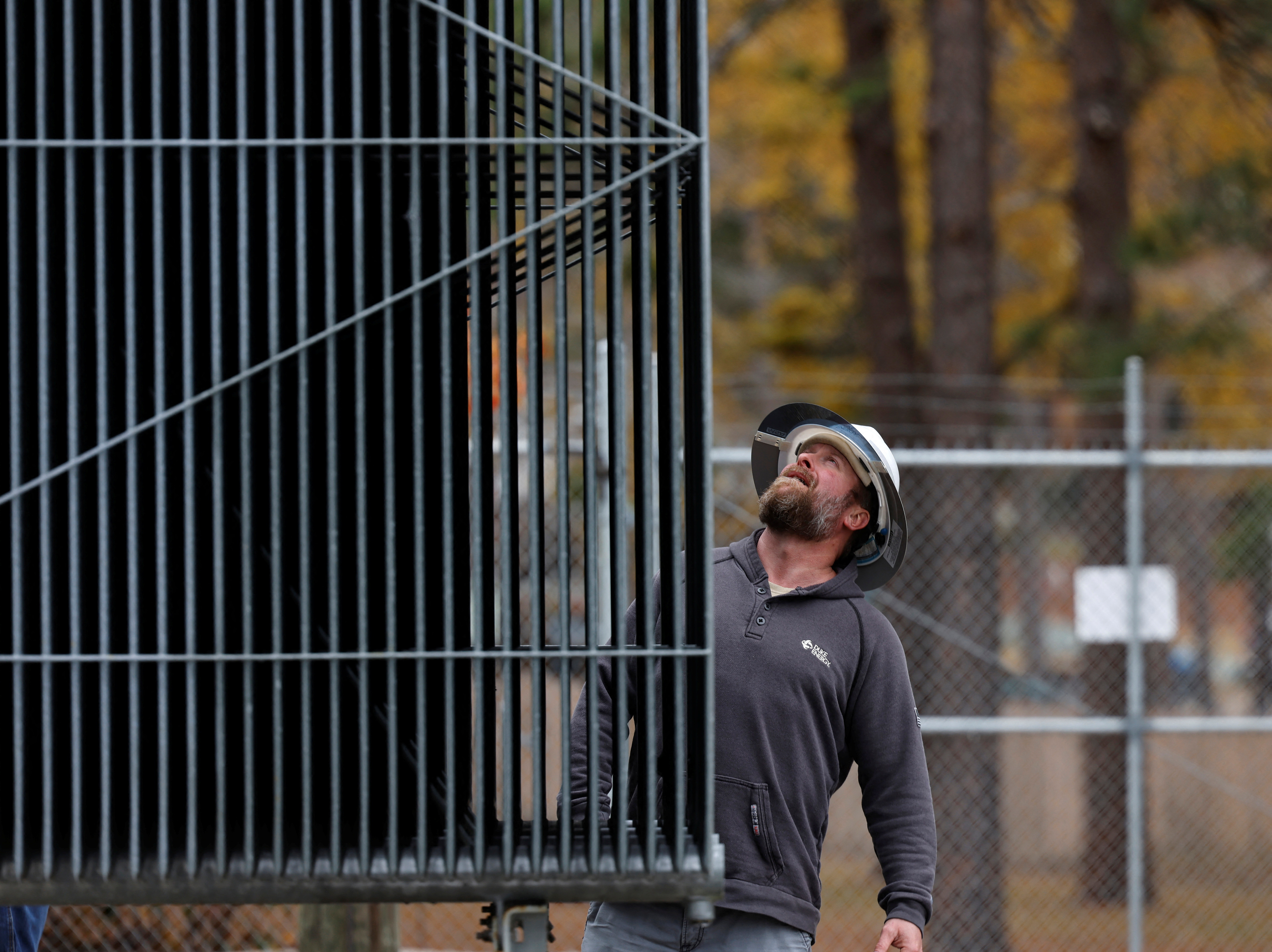
A Duke Energy worker inspects a transformer radiator that he said was damaged by gunfire that crippled an electrical substation after the Moore County Sheriff said that vandalism caused a mass power outage, in Carthage, North Carolina, U.S. December 4, 2022. REUTERS/Jonathan Drake

A local man sits in his truck using his laptop and the wifi of one of the only open stores as residents faced a second night of freezing weather without power after vandals opened fire on two electric substations in what authorities called a “targeted attack,” in Aberdeen, North Carolina, U.S. December 4, 2022. REUTERS/Jonathan Drake


Categories
Audio Sources - Full Text Articles

Down to the wire…

shirley-kennedy-100x100.jpg

Save Palmer Report! Our articles are all 100% free to read, with no forced subscriptions and nothing hidden behind paywalls. If you value our content, you’re welcome to pay for it:

Pay $5 to Palmer Report:

Pay $25 to Palmer Report:

Pay $75 to Palmer Report:


Sign up for the Palmer Report mailing list

Save Palmer Report! Our articles are all 100% free to read, with no forced subscriptions and nothing hidden behind paywalls. If you value our content, you’re welcome to pay for it:

Pay $5 to Palmer Report:

Pay $25 to Palmer Report:

Pay $75 to Palmer Report:

Sign up for the Palmer Report Mailing List.


The Senate Runoff in Georgia is mere hours away, and two things seem very important: Black voter turnout and fading Republican hope for their joke of a candidate, Herschel Walker. As CNN reported, Senator Warnock, civil rights icon Andrew Young (who is now 90 years old), and Martin Luther King III participated in a “Souls to the Polls” function over the weekend. Young felt this was a function he shouldn’t miss involving – as CNN calls it – a “historic matchup between two Black men.” Both have dark skin, but that’s about where the “Black” ends. Herschel Walker has spent very little time among his people and trying to claim his Blackness to win a seat for which he is not qualified is disingenuous. Walker garners 3% of Black voters. He cares absolutely nothing about the Black community, and he obviously cares nothing about Georgia based on his homestead exemption, which confirms his residence as Texas.


CNN’s poll shows Warnock with a “slight” lead, but that lead seems to be worrying Republicans, no matter how slight. CNN also reported that Republican hopes have “turned grim” about Walker. Why they ever thought that man had a chance is a mystery, and what they hope to gain from having an imbecile is Congress is an even greater one. Of course, they believe they will be able to manipulate him to go along with whatever the rest want, which is a very likely scenario. Walker has shown that he knows nothing about anything, let alone about governing. There won’t be any vampires and werewolves for him to decide on in Congress, nor will he find a mist that cures Covid. He’s a woman abusing, absent father who will contribute absolutely nothing.

You can look around Facebook to see who supports Walker-a bunch of rednecks who are merely voting for the “lesser of two evil” Blacks. They certainly would never vote for a Black man any other time. This time around, however, they have no choice, and they believe Walker is the ticket. Again, how anyone can think an idiot like Walker can represent this state is crazy. Besides that, you have people like former Cobb County GOP chair Jason Shepherd, who is hoping for a “Christmas miracle” that will propel Walker to the senate. How ridiculous is this? Of the two, Warnock is showing that he is in it for the long haul and that he wants and deserves the job, attending six events in multiple cities this past Saturday and Sunday. Warnock has done some great things for Georgia, the most significant of which is helping to bring a Hyundai electric vehicle plant to Savannah, which will employ up to 8,100 and another 1,000 in suppliers. At the groundbreaking, they gave Warnock a shovel but would not allow him to speak. Republicans can try to downplay Warnock’s accomplishments all they like, but they won’t change our minds that Warnock is a better representative rather than an old, rundown former football player who can’t string together a coherent sentence.

Save Palmer Report! Our articles are all 100% free to read, with no forced subscriptions and nothing hidden behind paywalls. If you value our content, you’re welcome to pay for it:

Pay $5 to Palmer Report:

Pay $25 to Palmer Report:

Pay $75 to Palmer Report:

Write for the Palmer Report Community Section.

Save Palmer Report! Our articles are all 100% free to read, with no forced subscriptions and nothing hidden behind paywalls. If you value our content, you’re welcome to pay for it:

Pay $5 to Palmer Report:

Pay $25 to Palmer Report:

Pay $75 to Palmer Report:

The post Down to the wire… appeared first on Palmer Report.

Categories
Audio Sources - Full Text Articles

Tidbits: Slivovitz deemed a cultural treasure; Haredi men have better heart health 

Various_Bottles_of_Slivovitz.jpg

צו הערן די טשיקאַוועסן אויף אוידיאָ, גיט אַ קוועטש דאָ:

https://forward.com/wp-content/uploads/2022/12/tshikavesn-1.m4a

פֿלוימענשנאַפּס, אָדער שליוואָוויץ — אַ באַקאַנטע משקה בײַם קידוש אין אַ סך שילן — איז די פֿאַרגאַנגענע וואָך צוגעגעבן געוואָרן צו דער יו־ען־רשימה פֿון זאַכן וואָס האָבן אַ באַטײַטיקן קולטורעלן ווערט.

דעם באַשלוס האָט מען געמאַכט אויף דער קאָנפֿערענץ פֿון „יונעסקאָ“ אין מאַראָקאָ. מע האָט אויך צוגעגעבן צו דער רשימה דעם באַגעט (דעם לאַנגן לאַבן פֿראַנציישן ברויט).

שליוואָוויץ איז געוואָרן אַ פּאָפּולער געטראַנק בײַ די פּוילישע ייִדן אינעם 19טן יאָרהונדערט, ווען אַ סך ייִדן האָבן זיך פֿאַרנומען מיטן פּראָדוצירן אַלקאָהאָל און האָבן פֿאַרמאָגט אַכסניות. שליוואָוויץ האָט געהאַט אַ גרויסע מעלה וואָס שייך כּשרות. אין פֿאַרגלײַך מיט ווײַן, וואָס איז געמאַכט פֿון טרויבן און דערפֿאַר זענען דאָ שטרענגע הלכות וועגן דעם, זענען נישטאָ קיין דינים וועגן שליוואָוויץ. אין פֿאַרגלײַך מיט ביר און בראָנפֿן וואָס זענען געמאַכט פֿון תּבֿואה און זענען דערפֿאַר פֿאַרווערט פּסח, קען אַן אָפּגעהיטער ייִד טרינקען שליוואָוויץ אַ גאַנץ יאָר.

ווען די מאַסן פּוילישע ייִדן האָבן אימיגרירט קיין אַמעריקע האָבן זיי מיטגעבראַכט די טראַדיציע פֿון טרינקען שליוואָוויץ. הײַנט באַטרעפֿן די ייִדן אַ גרויסן טייל פֿונעם שליוואָוויץ־מאַרק, בפֿרט פּסח־צײַט.

צו לייענען די נײַעס אויף ענגליש, גיט אַ קוועטש דאָ.

לויט אַ נײַער שטודיע איז אפֿשר דאָ אַן אופֿן ווי איר קענט פֿאַרקלענערן די מעגלעכקייט פֿון שטאַרבן פֿון אַ האַרצקראַנקייט: הייבט אָן דאַווענען.

אין דער שטודיע האָבן די פֿאָרשער אַנאַליזירט די שטאַרביקייט פֿון כּמעט 12,000 ישׂראלדיקע ייִדישע מאַנסבילן, סײַ פֿרומע, סײַ פֿרײַע, צווישן 40 און 65 יאָר אַלט.

כאָטש די דיעטע בײַ חרדים איז געוויינטלעך נישט אַזוי געזונט ווי בײַ אַנדערע גרופּעס — זיי עסן אָפֿט מאכלים מיט אָנגעזעטיקטער פֿעטס און טרינקען סאָדעס וואָס האָבן אַ הויכן פּראָצענט צוקער — זענען דאָ אַנדערע סיבות פֿאַר וואָס זיי לײַדן ווייניקער פֿון האַרצפֿעלערן: שבת רייכערן זיי נישט און זיי זענען געוויינטלעך נאָענט פֿאַרבונדן מיט דער משפּחה און דער קהילה.

פֿריִערדיקע שטודיעס האָבן שוין אָנגעוויזן אַז דאָס פֿירן אַ רעליגיעז לעבן פֿאַרקלענערט דעם עמאָציאָנעלן דרוק בײַ מענטשן; און דאָס קען זײַן נאָך מער חל אויף חרדים אין ישׂראל וואָס דינען געוויינטלעך נישט אין מיליטער ווײַל אין מיליטער איז דער דרוק במילא העכער ווי אין דער ציווילער געזעלשאַפֿט.

אַגבֿ, לויט אַ שטודיע אין 2018 איז דאָס לייגן תּפֿילין אויך גוט צום געזונט: ווען מע וויקלט די לעדערנע רימענס ענג אַרום דעם אָרעם, האָט עס אַ פּאָזיטיוון עפֿעקט אויפֿן בלוטשטראָם.

צו לייענען די נײַעס אויף ענגליש, גיט אַ קוועטש דאָ.


The post Tidbits: Slivovitz deemed a cultural treasure; Haredi men have better heart health  appeared first on The Forward.

Categories
Audio Sources - Full Text Articles

Hallmark’s latest Hanukkah movie is weirdly good

Like any truly great art movement, Hallmark’s foray into Hanukkah holiday movies has proceeded by fits and starts. 

When the Christmas content giant released its first Jewish movie in 2019, they couldn’t even squeeze the word “Hanukkah” into the title. Double Holiday and Holiday Date, both about interfaith holiday romances, featured beleaguered Jewish protagonists begging their studly Christian lovers to do a single Hanukkah activity while receiving a crash course on Christmas, a holiday they seemed to know nothing about despite its iron grip on American society. 

Love, Lights, Hanukkah, which arrived a year later, was a tad bit more Jewish insofar as it involved guilt-trips and a weird obsession with DNA tests. But packed with tutorials on Hanukkah basics like lighting the menorah, it seemed geared towards non-Jewish watchers more than the people actually celebrating the holiday. 

However, just as Picasso emerged from his Blue Period to invent Cubism, Hallmark has produced Hanukkah on Rye, set to premiere Dec. 18 on the Hallmark Channel. A tale of two warring delis and the star-crossed lovers who unite them, this movie kind of has everything: egg creams, meddling grandmothers who call at inconvenient times, terrible attempts at Hanukkah songs and Lower East Side lore. We are forced to admit that Hallmark has listened to the consistent griping of the Forward culture desk and and given us a Hanukkah movie we can’t criticize — at least, not on grounds of being insufficiently Jewish. 

Sparring over bagels and accidentally touching hands — because on the Hallmark Channel, that’s all you can do before getting engaged. Courtesy of Hallmark

Written by Julie Sherman Wolfe, Hanukkah on Rye is the lovely story of Molly (Yael Grobglas) and Jacob (Jeremy Jordan), two blandly beautiful 20-something scions of legacy Jewish delis in New York and Los Angeles, respectively. Having embraced modernity by serving fajitas and decorating with light-up menorahs, Jacob’s deli, Zimmer’s, is doing great, and his parents send him to scout out New York locations for a new franchise. As soon as he arrives on the Lower East Side, Jacob realizes that the building he’s eyeing is just down the street from Gilbert’s, a struggling and staunchly traditional deli that Molly hopes to take over from her parents — if it doesn’t go out of business first. 

Meanwhile, Molly and Jacob’s grandmothers have signed them up for an elite Jewish matchmaker whose foolproof process involves forcing singletons to write longhand letters to an anonymous bashert. As Molly and Jacob spar IRL, they’re also (you know it!) falling in love via snail mail. But can their love overcome their families’ business interests? You literally already know the answer to this, but I will leave you to find out the specifics yourself.

Having screened years of laughably off-base Hallmark movies, I had low expectations for Hanukkah on Rye. But while absolutely, consummately schlocky — scene transitions involve montages of deli fare that will make you want to ditch the movie and go out for a Reuben — it’s an indisputable improvement on previous entries in the genre. 

Instead of voyeuristic glimpses of stilted Hanukkah traditions, Hanukkah on Rye features jokes that, however corny, feel like they were written by and for Jews. Grandmothers kiss mezuzahs casually and kvetch about the Christmas trees that dominate New York’s hotel lobbies, while “courtesy menorahs” are relegated to dusty corridors. Molly and Jacob bond over the paucity of un-embarrassing Hanukkah songs. While their recitations of Jewish history are a little pious — “They knew one day they’d make their American Dream come true,” Molly sighs of her tenement-dwelling ancestors — the movie’s climax hinges on an immigration story that feels, if not exactly plausible, like exactly the kind of fable in which American Jews love to indulge. 

Of course, there’s a latke competition. Courtesy of Hallmark

Hanukkah on Rye does have one fatal flaw, and you may have already guessed it: It’s basically a ripoff of Nora Ephron’s You’ve Got Mail. Chains squashing a small business? Check. Falling in love by anonymous letter? Check. A man courting a woman while simultaneously threatening her livelihood? It’s all there, with little more than their penchant for latkes and difficulty landing their jokes distinguishing Molly and Jacob from Ephron’s protagonists. 

If you’re a rom-com fan and always wondered why Ephron couldn’t squeeze more latkes into her characters’ lives, clear some space in your holiday calendar for Hanukkah on Rye. But Ephron had better stick to When Harry Met Sally for deli-adjacent romance.

The post Hallmark’s latest Hanukkah movie is weirdly good appeared first on The Forward.

Categories
Audio Sources - Full Text Articles

Biden’s record-setting judicial confirmation efforts face three challenges in 2023-2024

By Russell Wheeler

Hallmarks of first-year Biden judicial appointees were their diversity but also their sheer number— more first year appellate and district court appointments than any president since JFK. Biden’s end-of-two-year numbers will outpace most of his recent predecessors.

To reach record confirmations for Biden’s four-years, Senate Democrats—some facing tough 2024 races—will need to maintain party unity and avoid temporary or permanent reductions in their 50 or 51 vote majority from illness or worse. And opposition senators have ways of slowing and sometimes scuttling nominations and confirmations.

However those factors play out, three additional factors will challenge Biden’s ability to top Donald Trump’s four-year record of 231 appointments—54 court of appeals (circuit) judges and 177 district judges. Those factors will also make it almost impossible for Biden to reverse the shift Trump accomplished in the courts of appeals’ party-of-appointing-president composition. The factors are the paucity of projected vacancies, who’s likely to create the vacancies, and the administration’s disinclination so far to fill district vacancies in red and purple states.

Recent Presidents’ Third- and Fourth-Year Confirmations

Tables A and B compare the six most recent presidents’ first-and-second, and third-and-fourth, year confirmations. Reagan, for example, appointed 10% fewer judges in 1983 and 1984 than he did in 1981 and 1982. The Senate confirmed 98% of his nominees in his first stint and 83% in his second. Biden’s two-year confirmations—87 as of December 5—will change through the month with lame-duck confirmations.

TABLE A—District and Circuit Judge Confirmations in First and Second Two-year Stints

Four-year Total Years 1-2 Years 3-4 % change
Reagan 165 87 78 -10%
Bush 191 70* 121* 70%
Clinton 201 126 75* -43%
Bush 204 100* 104 4%
Obama 171 60 111 85%
Trump 231 83 148 78%
Biden (12/05) N/A 87 N/A N/A

* indicates divided government.

TABLE B—Comparative Confirmation Rates

Four Year Total Years 1-2 Years 3-4
Reagan 165 87 (98%) 78 (83%)
Bush 191 70* (93%) 121* (69%)
Clinton 201 126 (90%) 75* (77%)
Bush 204 100* (77%) 104 (82%)
Obama 171 60 (58%) 111 (73%)
Trump 231 83 (54%) 148 (85%)
Biden (12/05) N/A 87 (62%–in flux) N/A

* indicates divided government.

Four of the six presidents had more confirmations in their second than in their first stints, and the most recent three had higher confirmation rates as well. The first Bush’s greater third-fourth year confirmations but lower confirmation rate reflect his limited success in filling an influx of vacancies that Congress created at the outset of his third year. Clinton benefitted from leftover vacancies, but his numbers and rate dropped after Democrats lost the Senate in 1995. George W. Bush, Obama, and Trump outperformed in their second stints partly because the Senate confirmed judges through December of the fourth year, rather than October.

Biden’s Four-Year Confirmations

In 2023-24 Biden can probably top the confirmation rates of his first two years. But the number of confirmations depends partly on available vacancies. Changing the party-of-appointing-president balance on the courts depends partly on who creates the vacancies. Party-of-appointing-president is a modest (but about the best readily available) aggregate predictor of judicial voting in ideologically charged cases.

Courts of Appeals

While Biden’s total first- and second-year circuit appointees will top all predecessors (except perhaps Trump’s 30), Biden’s impact on the court of appeals ideological make-up has been modest and will stay modest.

Table C shows how Trump changed the composition of the 179-judgeship courts of appeals over four years, the changes Biden has effected to date, and one possible four-year outcome.

TABLE C—Courts of Appeals Changes

As of: Rep. Appointees Dem. Appointees Vacancies
Jan. 2017 71 (40%) 91 (51%) 17 (10%)
Jan. 2021 96 (54%) 80 (45%) 3 (2%)
Nov. 2022 91 (51%) 79 (44%) 9 (5%)
Dec. 2024 (projected 91 (51%) 88 (49%) 0

Row percentages may not total 100 due to rounding.

Since Biden took office, Republican-appointed judges in active status have dropped from 96 to 91 (from 54% to 51% of statutory judgeships), but the number of Democratic appointees has also dropped, and the number of vacancies has increased.

Biden has replaced only four Republican appointees (including one Democrat appointed in a deal). By contrast, in Trump’s first two years, 11 of his 30 circuit appointees replaced Democratic appointees; over four years, 19 of his 54 appointees did so. (Trump benefitted from the near-total shutdown of confirmations in Obama’s final two years in office. Nine of the 17 vacancies Trump inherited were over a year old. Had Obama been able to fill them, Trump likely would have appointed only 21 circuit judges in his first two years, replacing six rather than 11 Democratic appointees.)

Not surprisingly, other-party appointees have resisted retirement under Biden. Since his election, 25 Democratic appointees have retired or resigned, versus five Republican appointees. In the comparable period after Trump’s election, eight Democratic appointees have done so, versus 17 Republican appointees.

Table D—one simplified scenario of Biden’s full-term court of appeals appointments—shows how Biden might appoint as many circuit judges as did Trump but won’t replace as many other-party appointees.

TABLE D—One Scenario of Biden Four-Year Circuit Appointments

Appointees Running Total Replaced Rep. Appointees
Confirmations as of 12/5 26 26 4
(1) Confirm all pending nominees (during lame duck session and upon resubmission in 2023) 11 37 1
(2) Submit nominees/get confirmations for current and announced vacancies without nominees 4 41 2
(3) Fourteen judges leave active status in time for Biden and the Senate to replace them 14 55 ?

(1) Confirming the pending nominees would increase Biden’s total from 26 to 37 and replace a fifth Republican appointee. Of the 11, three are to states with two Republican senators and two are to split-delegation states. Home-state senators can no longer shut down the confirmation of circuit nominees to whom they object—Senate Democrats have continued Republicans’ practice of depriving home-state senators of that prerogative.

But the confirmations in 2022 to Tennessee and Pennsylvania vacancies—to which home-state senators objected (here and here)—took measurably longer than the other 24. For the 24, the median days from nomination to confirmation was 119, although often contentious. For the Tennessee and Pennsylvania confirmations, median days were 295 and 253 respectively, highest and second highest among the 26.

Home-state Republican senators apparently support at least three of the five pending red or purple state nominees. But where there is opposition, based at least on experience to date, confirmations may be drawn out and consume time that otherwise could be spent on additional confirmations.

(2) Filling the four current or future vacancies without nominees—one each in Texas and Indiana—would bring the number of Republican appointees Biden has replaced from four to seven.

(3) Additional vacancies will occur as circuit judges leave full-time service (“active status”) and thus create vacancies. Most circuit and district judges wait to leave active status at least until they satisfy “the rule of 80”, a statutory formula combining age and years of service. They become semi-retired “senior judges” (or former judges if they leave the bench).

When the Senate convenes on January 3, 2023, 16 active-status Democratic-appointed circuit judges will meet rule-of-80 criteria, as will 24 Republican appointees. (One more Democratic appointee, and three Republican appointees become eligible by September 1, 2024.)

Table D shows that if 14 judges leave active status in time for Biden to appoint their successors, he could top Trump’s 54 confirmations. But, of the 16 Democratic appointees, three have been rule-of-80 eligible for 10 years, and seven have been eligible for five years. One can only speculate what might incentivize any 14 of the 16 (or, less likely, one or more eligible Republican appointees) to leave active status so Biden could try to appoint successors. Of course, others might leave active status—rule-of-80 eligible or not (eight rule-of-80 eligible active status judges are 80 years or over).

But, unless Biden can replace additional Republican appointees beyond the four so far and three more in process, Republican appointees would still be in the majority at the end of the 118th Congress, as shown in Table C.

District Courts

Two factors distinguish district from circuit judge nominations under Biden. First, probably to avoid hardline bargaining with home-state Republican senators, Biden has eschewed nominations to vacancies in red and purple states. (Home-state senators still have near-veto authority over district nominations.) Of 104 district nominations, only 11 were to red and purple state vacancies—mostly Ohio and Pennsylvania—versus eight of 37 circuit nominations. The median days from district vacancy to nomination for vacancies in Republican-senator states was almost 400—as opposed to 253 for blue states and even less for courts with no senators.

Second, Democratic appointees were already a slim majority of district judges when Biden assumed office. They now constitute 53% of active-status district judges—320 of 599—and that proportion will increase. How much is hard to say, based on the contingencies in Table E.

TABLE E—One Scenario of Biden Four-Year District Court Appointments

Appointees Running Total Replaced Rep. Appointees
Confirmations as of 12/5 61 61 31
(1) Confirm all pending nominees (during lame duck session and upon resubmission in 2023) 42 103 22
(2) Submit nominees/get confirmations for current and announced vacancies without nominees 61 164 35
(3) Fourteen judges leave active status in time for Biden and the Senate to replace them 14 178 ?

(1) and (2) may vary slightly from other accounts because of a withdrawn home-state senator support and a withdrawn intention to leave active status.

(1) Only two of the 42 pending nominations are to what will be red or purple states in 2023 and, one presumes, have been approved by home-state senators, who still have near veto power over district nominees. (Because the incoming Ohio Republican senator might impose a veto, the lame-duck Senate appears likely to confirm the nominee.) To be sure, home-state opposition is not the only source of contention; a New York and a California nominee who have stirred Republican opposition have been waiting for over 425 days since nomination. The median wait for other pending nominees is 140.

(2) Getting nominees in place for the 61 current or formally announced future vacancies may be complicated. Thirty-nine of the 61 are in states with a Republican senator—the kind of vacancies that Biden has largely avoided. But nominating mainly to blue state vacancies obviously reduces the number of appointments (and reduces the number of appointees who replace Republican appointees: of the 21 blue state (or no senator) vacancies, only eight were created by Republican appointees).

(3) By my count, 35 additional active-status Democrat-appointed district judges are or will be rule-of-80 eligible by January 3, 2023, but only 14 of the 35 have two Democratic (or no) senators, and there’s no certainty that all 14 will leave active status in time for Biden to replace them (six of the 14 have been rule-of-80 eligible for over ten years). However, 16 more Democratic appointees become rule-of-80 eligible by January 2024, and another 19 by September of that year—and the latter two tranches are more heavily dominated by Democrat-or no-senator states. But how many leave active status and how many the administration and Senate can replace are open questions.

Fifty-four active status Republican appointees also are or will be rule-of-80 eligible by January 3, 2023. Republican-appointed district judges have been more likely than their circuit counterparts to leave active status with Biden in the White House.)

In short, to top Trump’s record of 177 district appointees, the administration will need some combination of more nominees for vacancies in red and purple states, as well as more vacancies created by active status appointees in time for the administration and Senate to fill them.

To sum up

The scenarios sketched here are oversimplified. They do not account for vacancies created outside of rule-of-80 retirements, and they assume high confirmation rates and a significant uptick in circuit judge retirements. But they provide a starting look at how 2023-24 may play out.


2022-12-02T155757Z_1120481024_RC2QXX9BBX
fblike20.png pinterest20.png twitter20.png email20.png rss20.png  
Categories
Audio Sources - Full Text Articles

Equity in mixed-delivery prekindergarten systems requires new investments and new thinking

By Christina Weiland, Meghan McCormick, Allison Friedman-Krauss

Almost every state with a public pre-K program uses a mixed-delivery approach, with some classrooms in public schools and others in community-based organizations (CBOs). It is easy to see why this approach is popular. Parents get more choices, localities can serve more children by partnering with existing pre-K providers, and public funding helps to stabilize much more expensive, harder-to-find infant and toddler childcare offered by CBOs.

Despite this seeming win-win, experts have long raised concerns about how structural differences between these settings may disadvantage CBOs relative to public school programs. For example, administrators and teachers in many CBO settings receive substantially lower compensation—fueling turnover and undermining quality improvement efforts—and are less likely to be unionized than their public school-based counterparts. The limited research we have suggests children in CBOs in some of these systems are more likely to be from marginalized groups and make fewer gains in pre-K than their public school peers.

As the country emerges from the pandemic, states and localities are making critical decisions about how to spend their remaining federal COVID-19 relief funds, and policymakers are determining the best bets for strengthening early care and education systems. Learning from pre-pandemic inequities within pre-K systems can help guide these decisions and build stronger and more equitable mixed-delivery pre-K programs.

In a new working paper, we use data from five large-scale, mixed-delivery pre-K systems that have taken explicit steps to improve equity across public school and CBO settings (Boston, New York City, Seattle, New Jersey, and West Virginia). New Jersey and West Virginia are some of the longest-running state-funded pre-K programs in the country, at 24 and 29 years in operation, respectively. Boston’s program began in 2005, while NYC and Seattle are among the newer crop of city-funded programs established within the last eight years. All five of these localities implemented largely the same program standards in both public school and CBO programs. For example, all required lead teachers in both settings to have at least a BA, and New Jersey, Seattle, and Boston paid teachers the same in both CBOs and public schools (and New York City did so in the years after data in our study were collected).

Our total study sample included nearly 4,000 children and 255 pre-K programs. About 60% of these children and programs were in public schools, while the others were in CBOs. Within each system we examined how child and teacher demographic characteristics, classroom learning experiences, and gains in children’s academic skills differed by setting. Consistent with longstanding concerns, where we found differences, they tended to favor public schools.

Comparing pre-K programs in public schools and CBOs

Some of the key differences we found across the five localities concerned who was where. Children in CBOs were taught by less educated teachers in all localities but NJ. For example, teachers with master’s degrees were more likely to work in public school than CBO settings in four of the five localities with the size of the difference ranging from eight (WV) to 51 (Seattle) percentage points. We also observed some notable differences in program delivery across settings. Despite similar class size and teacher-student ratios across settings, we found a pattern in which public school classrooms were rated as having higher-quality teacher practices and classroom interactions on most comparisons. To be clear, the evidence on the importance of these factors in predicting child outcomes is mixed, but they contribute to a fairly consistent picture of inequities between CBOs and public schools.

Children from marginalized backgrounds—including Black children, Latino children, and children from families with low incomes—were more likely to attend CBOs than public schools. Although, on average, these children all showed learning gains across the pre-K year, children in CBOs gained less overall than their peers in public schools. This is a surprising finding because children with more room to grow typically show larger learning gains than their peers. But in our study, children in CBOs started behind their public school peers on average (Figure 1) and gained less than children in public school on most comparisons (Figure 2). The largest differences represented nearly three months of learning.

To be sure, more research on this topic is needed, including studies on additional localities and with stronger designs. For example, studies that randomly assign children to CBO and public school-based programs are needed to identify the causal effects of setting. Although our study is descriptive, our findings do shine new light on a persistent problem. Even within systems that should be commended for taking explicit steps to improve equity—systems that in many ways have been leaders nationally in expanding access and improving quality—important differences in quality and children’s learning have persisted across settings.

Where to go from here

Solutions to these longstanding inequities aren’t easy, especially given the disproportionately devastating effects of the pandemic on CBO programs. So, what can localities do? At a minimum, our findings illustrate how and why localities should monitor equity by setting in their mixed-delivery systems. To our knowledge, this isn’t a common lens used by localities, but it should be. Currently, only about 60% of state-funded pre-K programs report enrollment by race/ethnicity and family income. The first step towards addressing these inequities is measuring them—a step that will require investments to build stronger early learning data systems.

Second, we did find some suggestive evidence that holding CBOs and public-school programs to the same standards might help. Specifically, the two localities in our study with smaller differences in teacher education, quality, and child gains by setting (Seattle and New Jersey) also had the fewest CBO-public school policy differences. But policies like pay and working conditions parity require resources that are scarce in many localities.

Federal COVID-19 relief funds can and should be used to implement more equitable policies in mixed-delivery systems. These are time limited, however, and the likelihood for new federal resources has been murky since the push for building a comprehensive 0-5 system stalled out last year. The looming funding cliff for ECE programs once COVID-19 relief funds expire could spur renewed momentum. If so, pre-pandemic data like our findings highlighting setting inequities—and complementary experimental work finding particularly large impacts of evidence-based investments in CBOs—demonstrate the importance of considering program setting when determining where resources should go.

It’s also important to highlight what could be counterproductive as a solution as well—concentrating programs in public schools instead or attempting to change who goes where. Without a significant increase in 0-5 early care and education funding at the federal level, a mixed-delivery approach is needed to stabilize 0-3 care and to give parents more choices. Further, we need data on how and why families make decisions within mixed-delivery systems. Many families may be picking CBOs because they offer hours that better match work schedules, to match their own linguistic and racial/ethnic background, or because a younger sibling can be served at the same location. We don’t know. We do know that some families do not apply to public pre-K at all when it is available, particularly families from historically marginalized groups. Any changes affecting where programs are located and who goes where require new data on family needs and voices. Otherwise, we risk reducing access and increasing inequities, particularly for children who stand to benefit the most.

The bottom line is that no locality has yet completely cracked this difficult nut—before the pandemic or since. Policymakers, advocates, and researchers should be asking hard questions about these longstanding issues, continuously assessing how program delivery is going across settings, and working toward new solutions to ensure access to high quality pre-K for all families.

2012-03-14T120000Z_355627811_GM1E83F0CRF
fblike20.png pinterest20.png twitter20.png email20.png rss20.png  
Categories
Audio Sources - Full Text Articles

France forward Giroud expects Mbappé to beat scoring records

DOHA, Qatar (AP) — Two days after Olivier Giroud broke the France national team’s goal-scoring record, he’s already looking behind his back at Kylian Mbappé.

That’s fine with the 36-year-old veteran, who said Tuesday he is having fun with the man he described as the best striker he has ever played with.

“I think we still have not seen the best of Kylian,” Giroud said of the 23-year-old Mbappé, who has scored a tournament-leading five World Cup goals in Qatar.

Mbappé scored four goals to help France win the 2018 title. His career tally of nine is moving quickly toward Germany striker Miroslav Klose’s record of 16.

“I hope (his best) is going to come soon and he will beat all the records,” Giroud said. “He is amazing and he is still young, which is scary because he still can improve his game.”

Giroud has scored three goals at this year’s World Cup, including the opening strike in the 3-1 win over Poland in the round of 16 on Sunday. That was his 52nd for France, lifting him out of a tie with Thierry Henry for the national team’s scoring record.

That record is only 19 goals ahead of Mbappé.

“So, I know that, you know (that), also,” Giroud said at the France training camp before turning his attention to Saturday’s quarterfinal match against England.

“It will be a nice game to watch, I think. They have so many great players, the young generation, like us,” the former Arsenal and Chelsea forward said. “I think they have quality but quantity also in the squad, so they have different options.”

The match has a strong flavor of the Premier League, with Tottenham goalkeeper Hugo Lloris set to make a record 143rd appearance for France.

“We were talking with Hugo and each other, regarding this game and we said, ‘Yeah, we do not want to lose against England,’” said Giroud, who now plays for Italian champion AC Milan. “That is a special game for us.”

___

AP World Cup coverage: https://apnews.com/hub/world-cup and https://twitter.com/AP_Sports

Categories
Audio Sources - Full Text Articles

Federal judge OKs Oregon’s new high-capacity magazine ban

PORTLAND, Ore. (AP) — A federal judge in Portland, Oregon, ruled Tuesday that a new voter-passed ban on high-capacity gun magazines can go into effect Thursday, but placed a 30-day hold on a permit-to-purchase requirement after local and state law enforcement agencies said they could not have a permitting system ready in time.

U.S. District Judge Karin Immergut, however, did not prevent the permit-to-purchase mandate from taking effect once the permitting system was worked out, according to the ruling. Oregon Attorney General Ellen Rosenblum had filed papers with the court late Friday seeking a delay in the implementation of the permitting mandate after law enforcement agencies submitted sworn statements saying they could not be ready in time.

“In light of the difficulty the State has conceded in terms of implementation of the permitting provisions at this stage, implementation of those permitting provisions is stayed for thirty days,” Immergut wrote.

Measure 114, which narrowly passed in the midterms, requires a permit, criminal background check, fingerprinting and hands-on training course for new firearms buyers and bans high-capacity gun magazines. Multiple gun rights groups, local sheriffs and gun store owners have sued, saying it violates Americans’ constitutional right to bear arms.

The law’s fate is being carefully watched by both gun rights advocates and those who want stricter limits on gun ownership because it is one of the first to take effect after a U.S. Supreme Court ruling in June that struck down a New York law that placed limits on carrying guns outside the home.

The June ruling signaled a shift in the way the nation’s high court will evaluate Second Amendment infringement claims, with the Supreme Court’s conservative majority finding judges should no longer consider whether the law serves public interests like enhancing public safety.

Categories
Audio Sources - Full Text Articles

Russians strike Sumy region with Grad MLRS, man injured

630_360_1670350378-444.jpg

Russian troops have struck the Sumy region’s Esman group with the Grad multiple start rocket units (MLRS).

The suitable statement was manufactured by Sumy Regional Armed forces Administration Head Dmytro Zhyvytskyi on Telegram, an Ukrinform correspondent stories.

A 69-12 months-aged gentleman was hurt on the street. He was presented with required healthcare support.

In accordance to Zhyvytskyi, Russians fired 20 Grad MLRS rockets at the Esman local community. 3 detached houses were being critically weakened. One house caught hearth.

mk

Source link

The post Russians strike Sumy region with Grad MLRS, man injured appeared first on Ukraine Intelligence.

Categories
Audio Sources - Full Text Articles

Warnock-Walker runoff in Georgia key to Democrats in U.S. Senate, 2024

2022-12-06T19:42:01Z

Democratic Senator Raphael Warnock and Republican football legend Herschel Walker faced off on Tuesday in a final election that will determine whether Democrats can expand their razor-thin majority in the U.S. Senate and solidify Georgia as a battleground state in the next presidential election.

The race will also be a last test of Donald Trump’s clout with voters as he seeks the Republican nomination to challenge President Joe Biden in 2024. The former president had a mixed record in his most competitive endorsements for Congress in the November midterm elections, including Walker.

Walker’s campaign has been plagued by repeated policy gaffes and a variety of allegations, including claims by former girlfriends that he encouraged them to get abortions, although he has campaigned for the procedure to be outlawed. He has denied the accusations.

Retired firefighter Keith Fields, 58, showed up at the polls at 6 a.m. – an hour before they opened – to cast his ballot for Walker in Smyrna. He said he backed Walker because of his stance on immigration, taxes and abortion without exceptions.

“It’s not so much Herschel as the man, but I do like the man, but I’m also voting for the policies that he is going to vote for,” Fields said.

The runoff set early voting records in Georgia in a race that has become the most expensive of the 2022 U.S. midterm election season, with more than $400 million spent so far. The contest went to a runoff after neither candidate secured 50% of the vote in the Nov. 8 first round.

A victory by Warnock would give Democrats a 51-seat majority in the 100-seat Senate, which would make it slightly easier to advance Biden’s nominees for judicial and administrative posts.

While most legislation would still require Republican support, Biden’s Democratic Party will be able to more easily pass bills that are high priorities.

The individual power of Democratic senators Joe Manchin and Kyrsten Sinema to block Democratic-led legislation, as they have done in the past, would be diluted if Warnock voted with the rest of his caucus. If Manchin and Sinema, who don’t always agree on policy, vote together they could still stall Democratic initiatives.

A Walker win would mean that the Senate is back to the 50-50 split of the past two years.

On a wider scale, a Warnock victory could solidify Georgia as more of a battleground for Democrats in presidential elections. It also would be another midterm defeat at the polls for a loyal protege of Trump, who spurred Walker to run.

The U.S Justice Department said it was sending monitors to polling places to ensure the state complies with federal voting rights laws. The department has expressed concerns about possible violations of federal voting rights in Georgia.

Polls close at 7 p.m. Eastern time (0000 Wednesday GMT). At least 1.87 million people cast their votes before Election Day, equal to 47% of the Nov. 8 turnout.

Turnout was steady, with wait times averaging one minute across the state, said Gabe Sterling, a state election official. “We will exceed 1 million today on top of the 1.9 million already cast,” he said on Twitter.

Analysts say the early votes likely tilted Democratic, which will only a strong Election Day turnout by Walker’s Republican supporters would offset.

“We should not rest on our laurels. The job is not done. The truth is my opponent could still win this election,” Warnock told a crowd in Norcross, Georgia, on Tuesday.

Warnock is the pastor of the historic Atlanta church where slain U.S. civil rights leader Reverend Martin Luther King Jr. once preached. Both Warnock and Walker are Black.

Along with the abortion claims, former girlfriends have also accused Walker of domestic abuse. He has also faced accusations that he maintains his primary residence in Texas, not Georgia.

Walker has denied the charges, but they may have discouraged some Republican voters. Warnock edged him 49.44% to 48.49% in November, even as Republican Governor Brian Kemp and other statewide Republican candidates easily won re-election.

Guri Ben-Hashal, 60, who works in real estate, said his vote for Warnock was actually a vote against Walker.

“I feel that Herschel Walker is unsuitable for the job, to say the least,” Ben-Hashal said in Cobb County.

Meeting supporters at a diner in Marietta on Tuesday, Walker deflected questions about his character, which Warnock has made a centerpiece of his campaign.

“Right now I put my character up against Raphael Warnock any day,” Walker said.

Georgians deserve a senator “who will listen to women,” Warnock told supporters as he spoke about abortion rights.

Republicans won a narrow majority in the U.S. House of Representatives in the Nov. 8 election, but fell short of the “red wave” that some in the party had forecast.

This is the third Senate runoff in two years in the divided state – and the second for Warnock, who first won the seat in a runoff in January 2021.

Related Galleries:

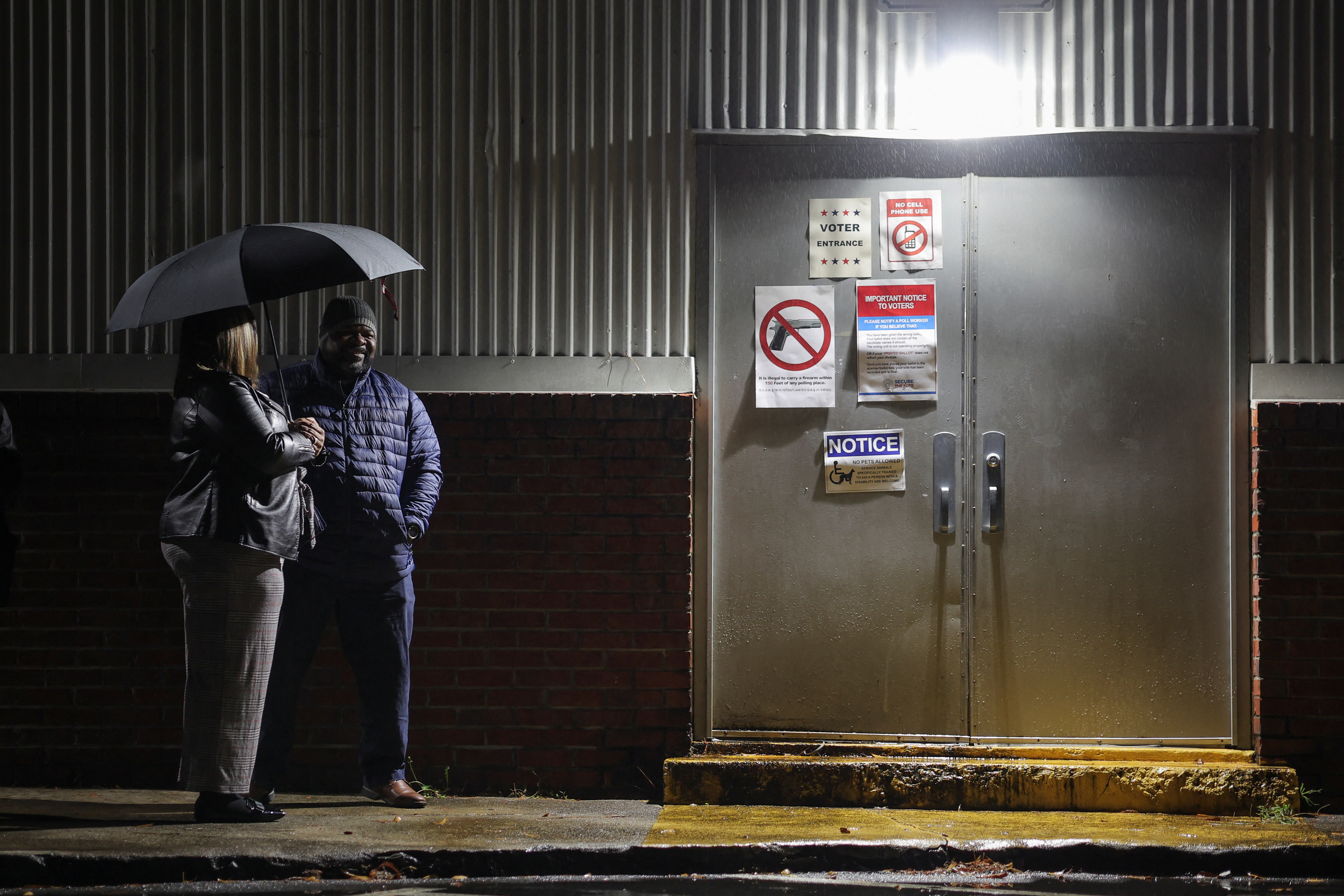
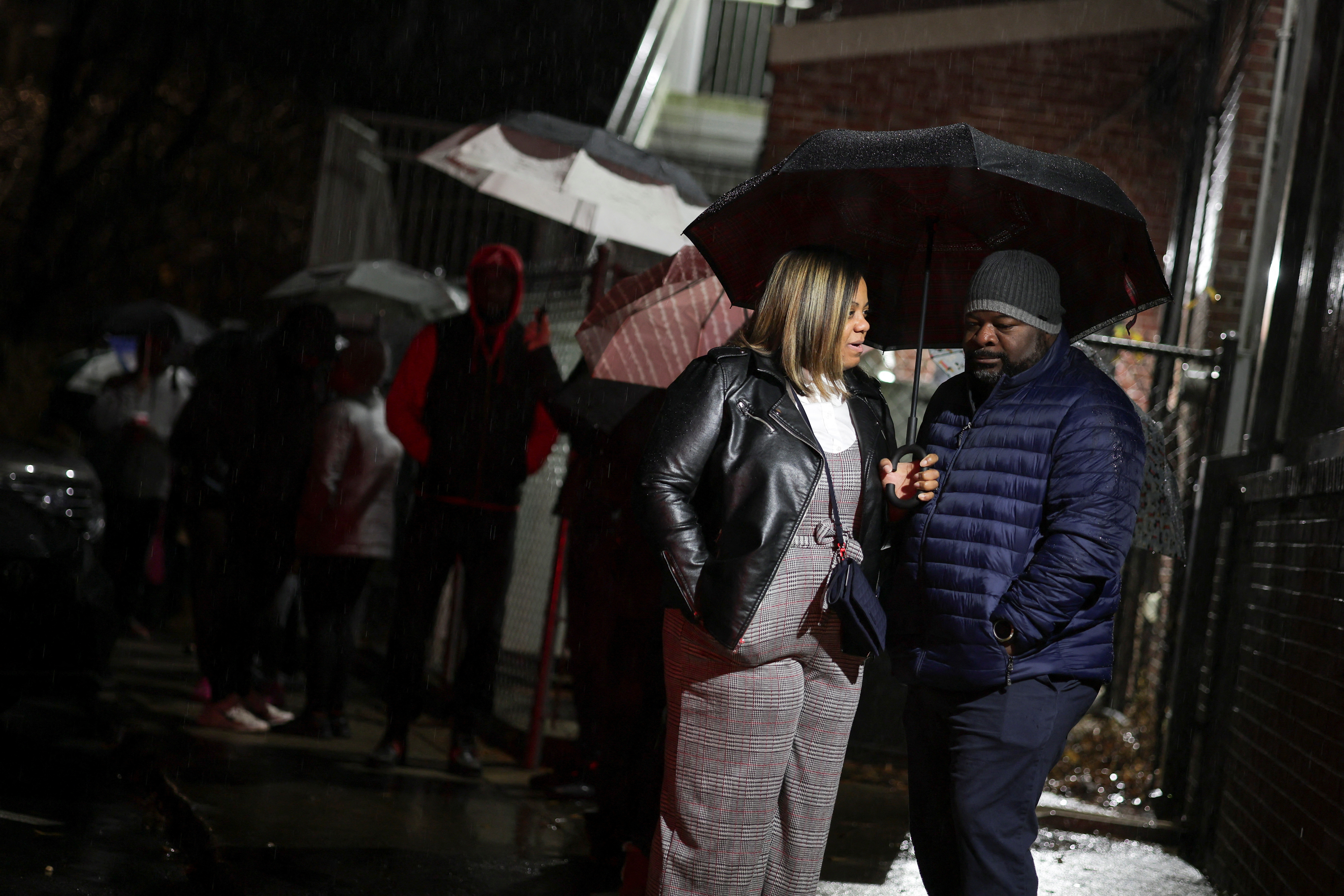
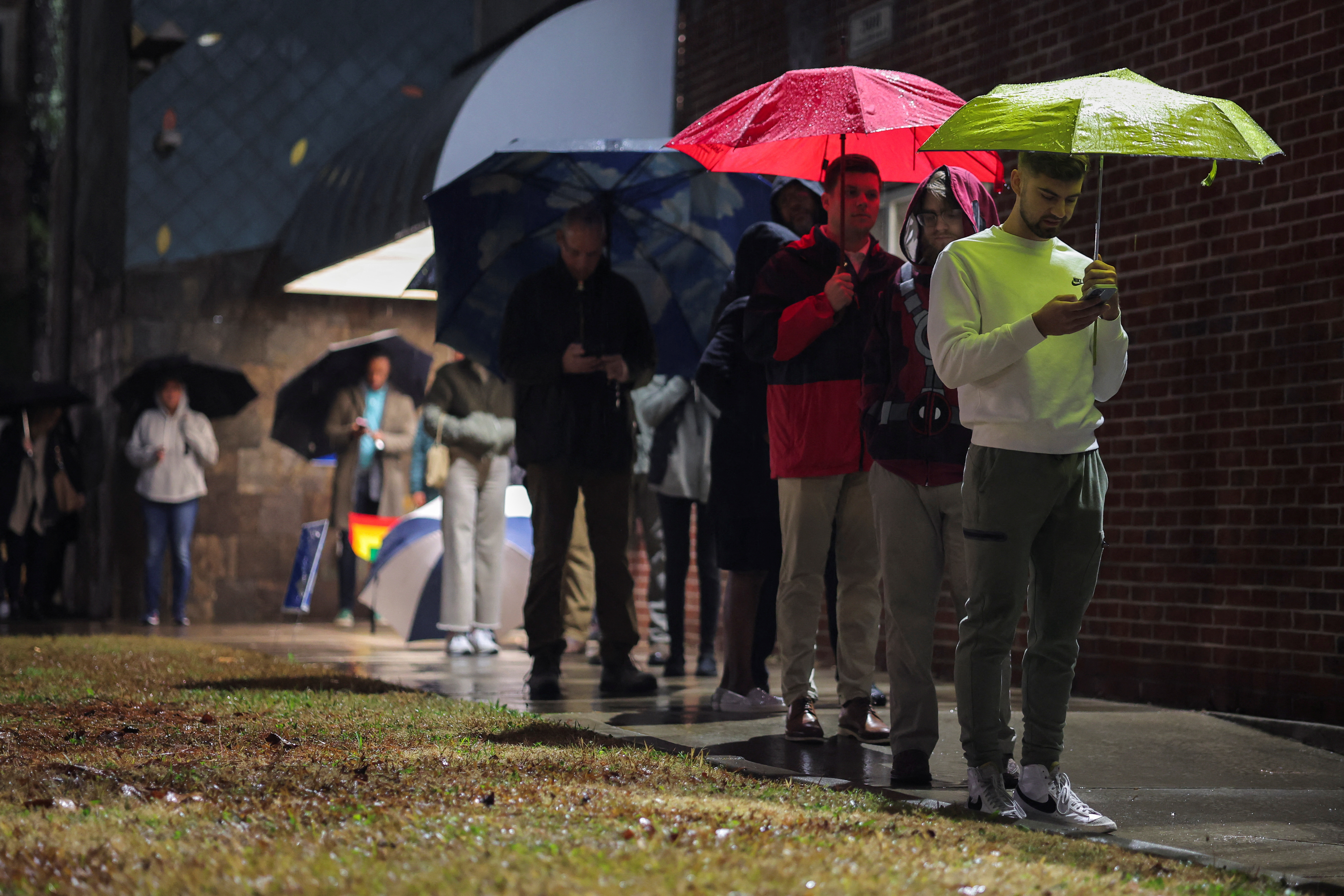
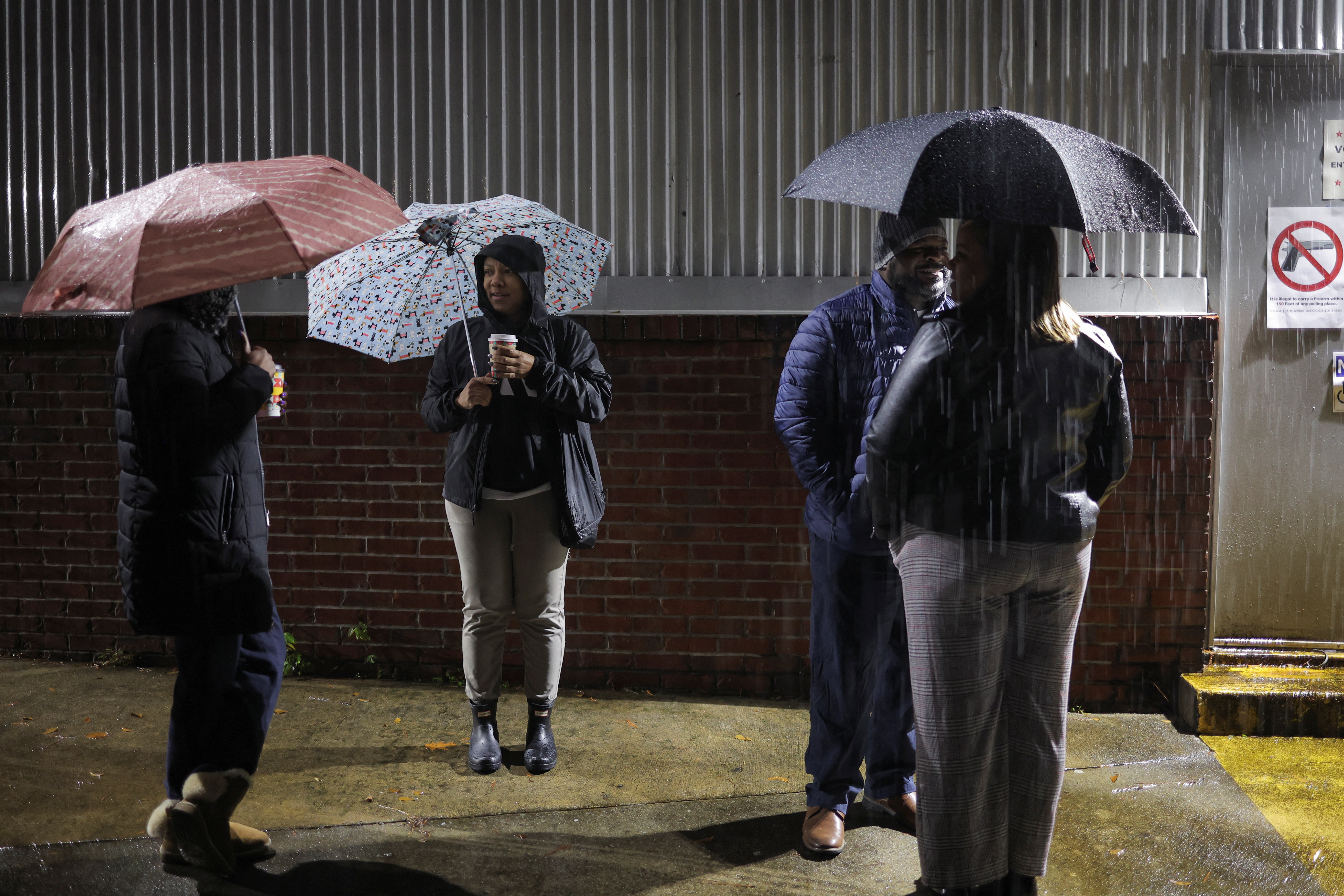
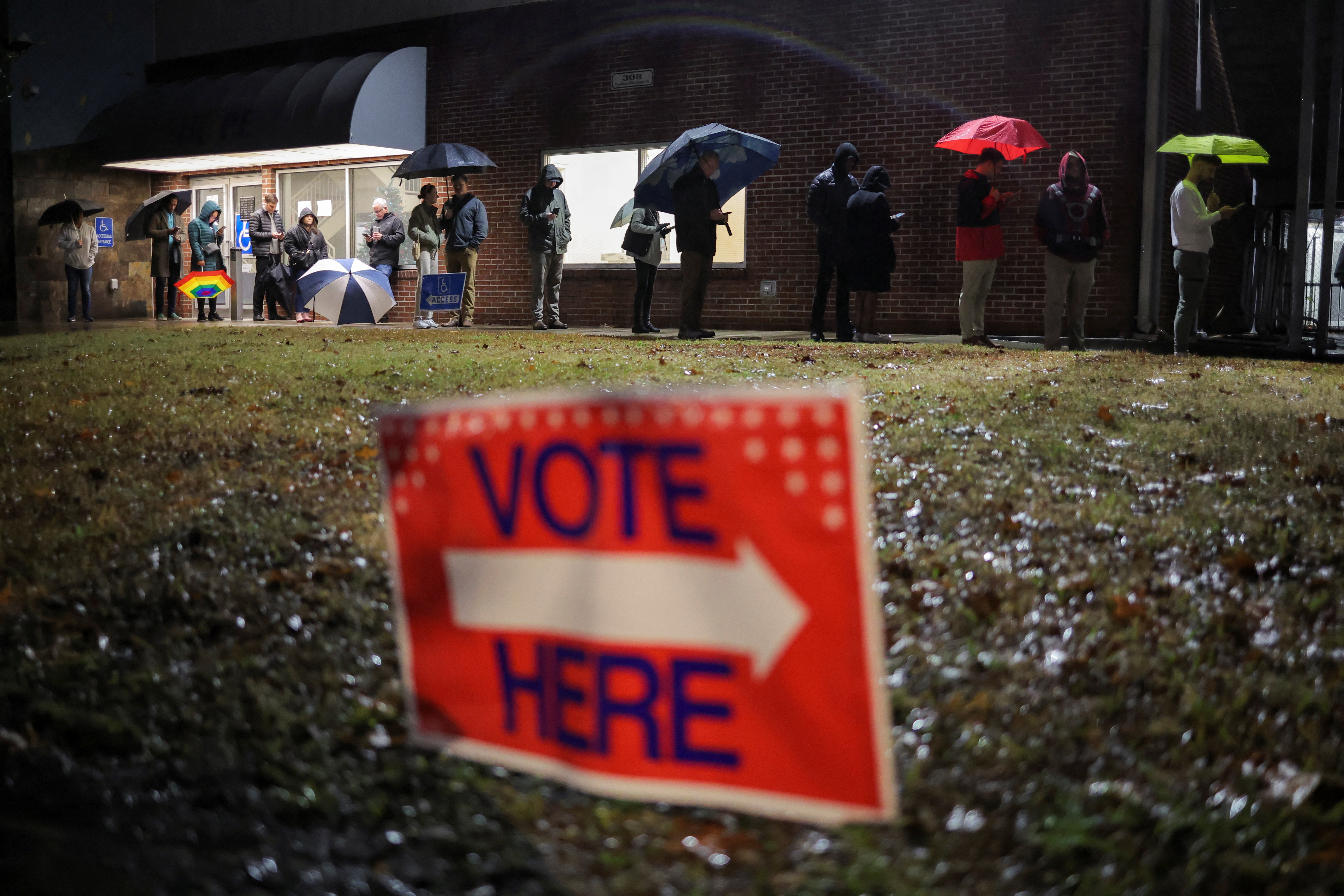
Local residents wait in line to cast their ballot during the runoff U.S. Senate election between Democratic Senator Raphael Warnock and his Republican challenger Herschel Walker in Atlanta, Georgia, U.S., December 6, 2022. REUTERS/Carlos Barria

Local residents wait in line to cast their ballot during the runoff U.S. Senate election between Democratic Senator Raphael Warnock and his Republican challenger Herschel Walker in Atlanta, Georgia, U.S., December 6, 2022. REUTERS/Carlos Barria

Local residents wait in line to cast their ballot during the runoff U.S. Senate election between Democratic Senator Raphael Warnock and his Republican challenger Herschel Walker in Atlanta, Georgia, U.S., December 6, 2022. REUTERS/Carlos Barria

Local residents wait in line to cast their ballot during the runoff U.S. Senate election between Democratic Senator Raphael Warnock and his Republican challenger Herschel Walker in Atlanta, Georgia, U.S., December 6, 2022. REUTERS/Carlos Barria

Local residents wait in line to cast their ballot during the runoff U.S. Senate election between Democratic Senator Raphael Warnock and his Republican challenger Herschel Walker in Atlanta, Georgia, U.S., December 6, 2022. REUTERS/Carlos Barria

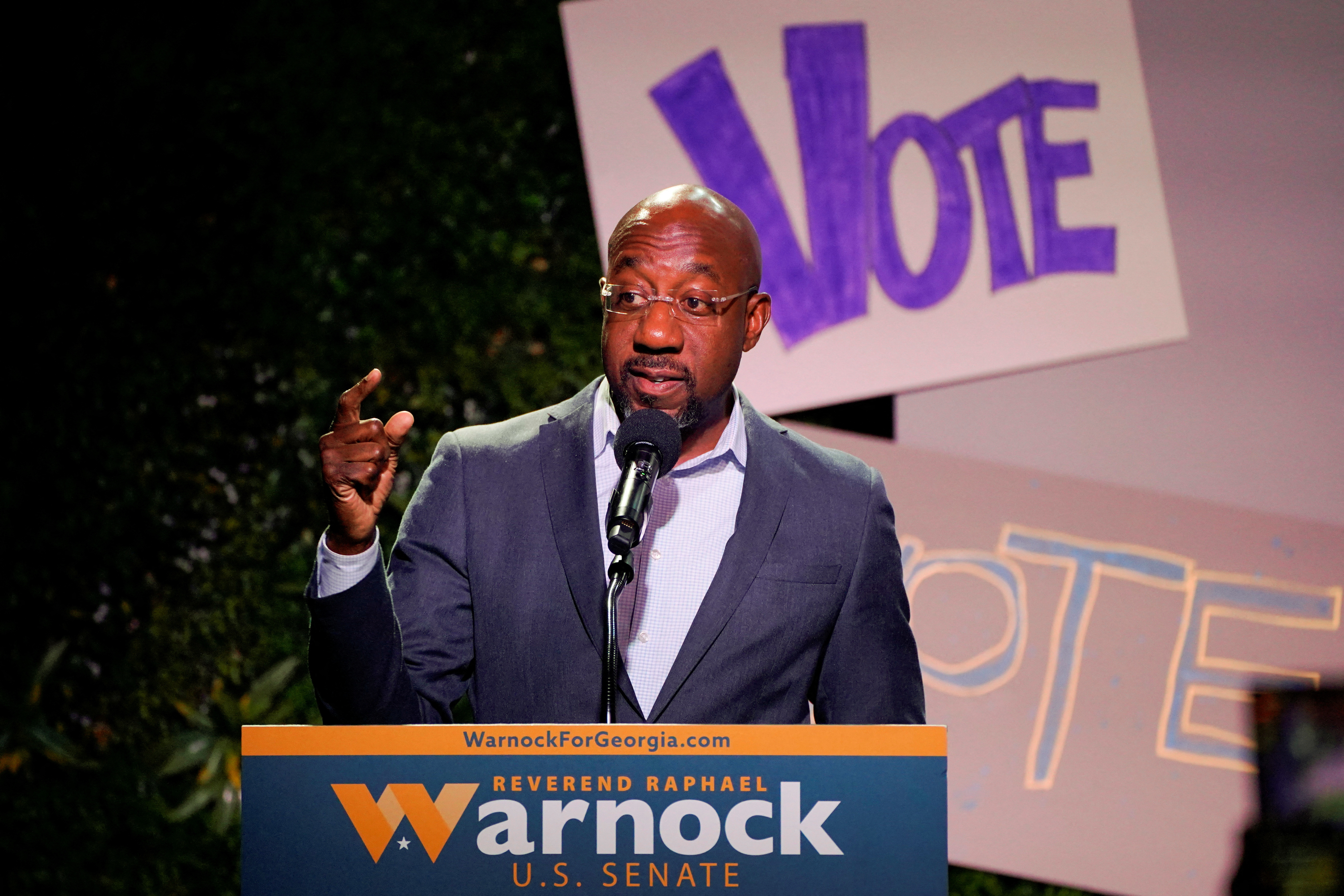
Reverend Raphael Warnock, Democratic Senator for Georgia, speaks during his final midterm runoff election campaign rally in Atlanta, Georgia, U.S., December 5, 2022. REUTERS/Cheney Orr
WP Radio
WP Radio
OFFLINE LIVE