Categories
Audio Sources - Full Text Articles

U.S. judge dismisses indictment against Huawei CFO that strained U.S.-China relations

2022-12-02T21:24:24Z

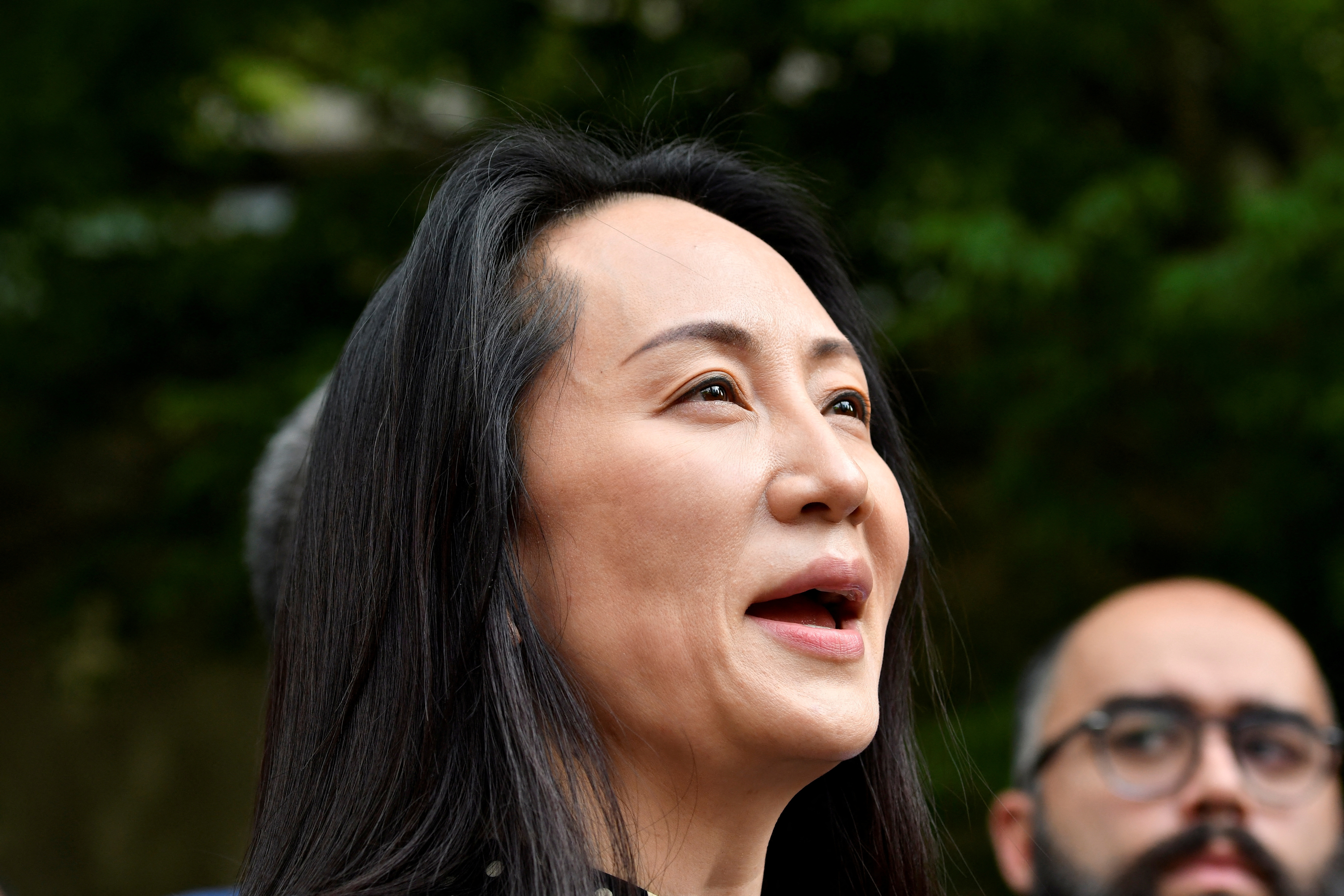
Huawei Technologies Chief Financial Officer Meng Wanzhou leaves court and the conclusion of a hearing in Vancouver, British Columbia, Canada September 24, 2021. REUTERS/Jennifer Gauthier

A U.S. judge on Friday dismissed an indictment against Meng Wanzhou, the chief financial officer of Huawei Technologies Co [RIC:RIC:HWT.UL], formally ending a criminal sanctions case that strained U.S.-China relations.

Meng, whose father Ren Zhengfei founded Huawei and is the telecommunications company’s chief executive, entered an agreement with U.S. prosecutors last year for the case to be dismissed four years after her December 2018 arrest.

Prosecutors accused Meng of bank fraud and other crimes for misleading HSBC Holdings Plc (HSBA.L) and other banks about Huawei’s relationship with a company that operated in Iran.

They said Meng’s actions put banks at risk of penalties for processing transactions that violated U.S. sanctions.

Huawei has pleaded not guilty to related U.S. criminal charges.

U.S. District Judge Ann Donnelly in Brooklyn dismissed Meng’s indictment with prejudice, meaning it cannot be brought again.

A lawyer for Meng and a spokeswoman for Huawei did not immediately respond to requests for comment.

Meng spent nearly three years under house arrest in Canada following her arrest at a Vancouver airport.

She entered a deferred prosecution agreement with U.S. prosecutors in Sept. 2021 in which she acknowledged having made false statements about Huawei’s Iran business.

On the day Donnelly approved that agreement, Meng flew home to Shenzhen.

Shortly afterward, China released two Canadians it had been holding, and two American siblings who had been prevented from leaving the country were allowed to fly home.

Meng, 50, now serves as Huawei’s rotating chairwoman and deputy chairwoman, as well as CFO.

The United States still views Huawei as a national security threat.

On Nov. 25, the Biden administration banned approvals of new telecommunications equipment from Huawei and China’s ZTE Corp (000063.SZ) because they posed an “unacceptable risk” to national security.

Categories
Audio Sources - Full Text Articles

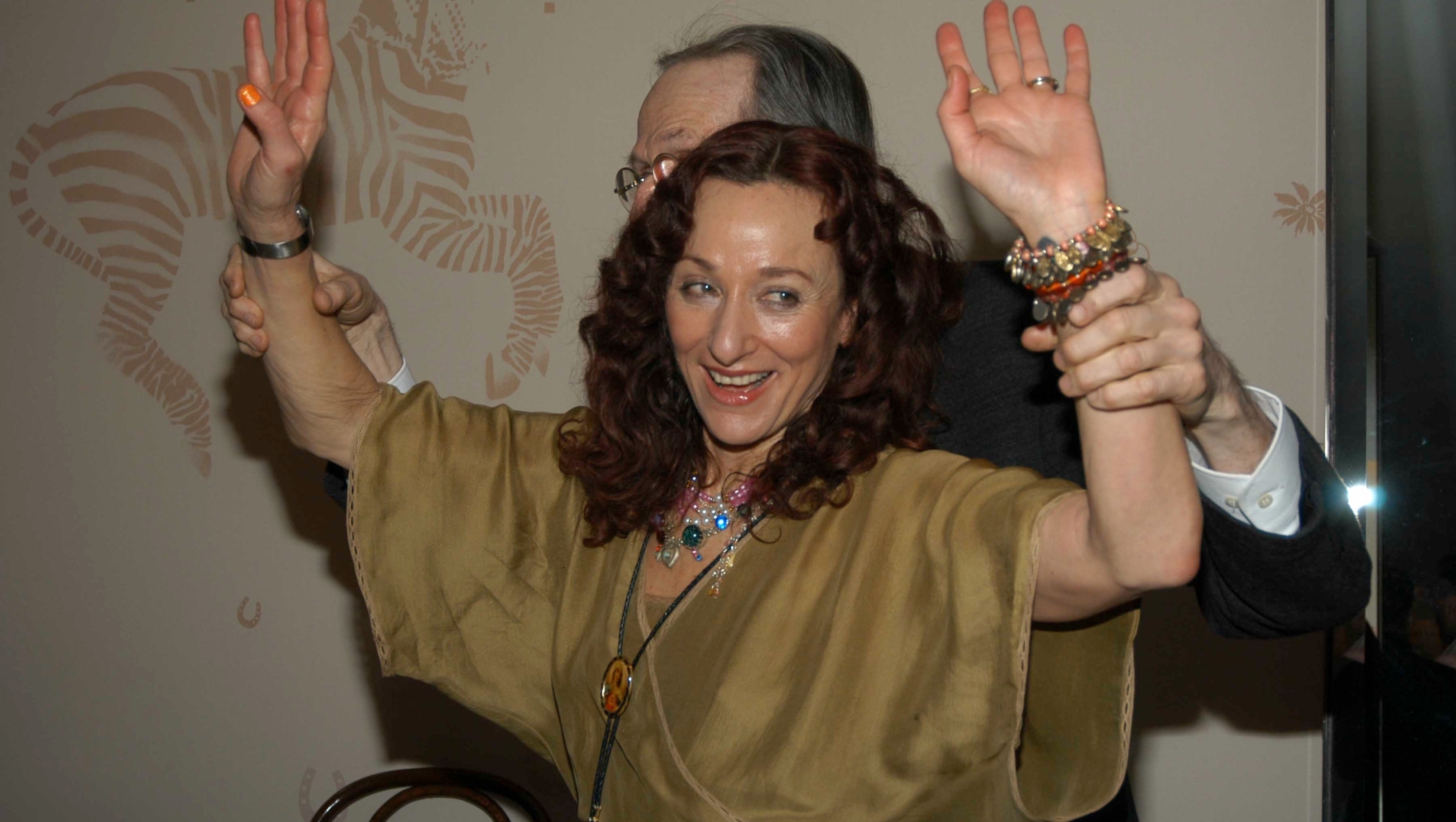
Aline Kominsky-Crumb, who transformed comics first as a muse and then as a feminist artist, dies at 74

12-01-2022-Aline-Kominsky-Crumb.jpg

(JTA) — Robert Crumb put the “x” in comix by setting to paper his basest sexual longings, including strong-legged Jewish women who were cowgirls and who went by the name Honeybunch Kaminski.

So when an actual strong-legged Jewish cowgirl named Aline Kominsky walked into his life, it was love at first sight, and never wavered.

Aline Kominsky-Crumb, who died Wednesday at 74 in France of pancreatic cancer, was late to the revolution her husband launched in comics a few years before they met, with his Zap Comix. The “x” was a signifier of what was then known as “underground” comics and referred to the unfiltered treatment of humanity that censorious publishers, politicians and public figures had all but washed out of the art.

She soon fully embraced the art form and then helped transform it.

Working with her husband and then on her own, Kominsky-Crumb brought to comics raw self-lacerating accountability and subverted crude stereotypes about Jewish women — including those peddled by her husband — by taking possession of them.

She started out as a self-acknowledged sex object reviled by second-wave feminists and became a hero of younger feminists for modeling unfettered sexual expression. She was the brassy Jewish stereotype who became the muse who guided her husband to a deeper consideration of Judaism.

Kominsky-Crumb, born Aline Ricky Goldsmith in 1948 in the Five Towns, a Jewish enclave on Long Island, had a Jewish upbringing that was in many ways conventional, horrifying and both at the same time. She wrote about the warmth of her grandparents’ home and how she sought in it succor and about the pressures her materialistic parents placed on her. She said she was named for a Five Towns clothing store, Aline Ricky, that sold French fashion knockoffs. She resisted her mother’s pressure to get a nose job.

In one autobiographical comic, she recalls seeing one Jewish girl after another coming into school after plastic surgery. “Me ‘n’ my friends developed a ‘big nose pride,’” she writes, and one of the characters says, “I could not stand to look like a carbon copy!”

She told fellow Jewish cartoonist Sarah Lightman about the ordeal. “Like, I kept my nose, but it was really a close call, because my mother had me in Doctor Diamond’s office and he measured my nose. I remember that. They took an instrument and measured your nose. And then he took a piece of paper and he said,’ look, we can make it look like this.’ And I said, ‘Oh my God.’ My mother said, ‘Oh, it’s gorgeous, gorgeous.’”

In her teens, Kominsky-Crumb fled the suburbs for Manhattan. She studied at Cooper Union, an art school, and lived on the Lower East Side, earning plaudits from her instructors for her painting, but getting bored. She had a baby and gave it up for adoption to a Jewish agency, an experience that scarred her, and later led her to become outspoken in advocating for abortion rights.

After she married Carl Kominsky, they moved to Tucson, Arizona, which she called “hippie heaven.” There, she left her husband for a cowboy who lived with two brothers and his father in what she said was “the middle of nowhere” where she helped out on horseback, albeit under the influence of hallucinogens. (She said her beau was killed in a shootout with a romantic rival after she left.)

In Tucson, she met two pioneers of underground comics, Kim Deitch and Spain Rodriguez. They encouraged her to move to San Francisco, which was the scene of the burgeoning movement.

She did and met Crumb at a party in 1971, within three years of his having created “Honeybunch Kaminski, the drug-crazed runaway” (1968) and “Dale Steinberger, the Jewish Cowgirl.” Kominsky-Crumb, who had kept her first husband’s last name because it sounded more “ethnic” than Goldsmith, was so taken with the her husband’s lustful Jewish imaginings, and how closely she physically resembled them, that when she started creating her own, she named her avatar “Bunch,” a shortened version of the character whose name most closely matched her own.

It was kismet, except it wasn’t at first. Crumb and Kominsky-Crumb got together, but maintained open relationships. Crumb endured Kominsky-Crumb’s dalliances with other men for decades, but Kominsky-Crumb was not as able (or willing) to reciprocate. When one of Crumb’s exes arrived at their commune in Mendocino, she told The Comics Journal in 1990, she was furious. “I had a total s— fit,” she said, “I was wearing these giant platform shoes. I ran out the door and I fell and broke my foot in six places.”

Crumb sent the ex on her way and entertained the recovering Kominsky with a pastime he and his brother worked out as children: They would co-create a comic.

That process drew the couple closer, and also became a decades-long unflinching chronicle of a relationship. A culmination, “Drawn Together,” was critically acclaimed when it came out in 2012.

In one passage in the 2012 book, she gently chides her husband for resorting to antisemitic tropes — although it was tropes about loud, slightly unhinged, sexually voracious Jewish women that drew them together.

One page depicts the couple in bed. Crumb is stung by an accusation of antisemitism from Art Spiegelman. (Spiegelman joined with Crumb to launch the underground comics scene in the 1960s, but they grew apart as Spiegelman, who would author the Holocaust chronicle “Maus,” sought to attach an overarching philosophy to the genre, while Crumb continued to crave crude authenticity.)

Crumb says that Spiegelman “seems to be taking my ruminations about the Jews as antisemitism … I certainly didn’t mean it as such.” Kominsky-Crumb draws herself into the panel, listening to her husband, as a little girl wearing tefillin, a T-shirt with “kosher” in Hebrew and a Star of David pendant. In the next panel, once again appearing as a grown woman in a negligee, she makes clear to Crumb why she feels vulnerable as a Jew in the marriage.

“Dahling, you do call the Jewish religion ‘Brand X’,” she says.. “Now I might even think that’s true in some ways … and I’m one o’ them … I’m allowed to say that!”

Crumb draws himself as wounded but also awakened. “Oh, I see … ulp.” Crumb dedicated his masterwork, “The Book of Genesis,” a searing illustrated narrative of the Bible’s first book, to Aline.

The Crumbs’ collaborative work was celebrated among aficionados, but it wasn’t until 1994’s “Crumb,” a documentary directed by Crumb’s close Jewish friend, Terry Zwigoff, that she emerged into the broader culture. A vibrant, peripatetic Kominsky-Crumb cares for their daughter, Sophie, and revels in their life in a small French village, where they had moved a few years earlier, while Crumb continues to hold back, playing the wounded, misunderstood artist.

It was an arrival of sorts for Kominsky-Crumb. She had for a time been marginalized even on the underground scene, her deceptively simple art derided as sloppy. She helped found the Wimmen’s Comix collective in 1972, and wrote about her Jewish upbringing in the first issue, a piece entitled “Goldie: A Neurotic Woman.” But she was soon frozen out because some of her colleagues thought her musings about longing to be dominated (and her tendency to dress that way to please Crumb) were denigrating to women. “The Yoko Ono of Comics,” is how the New York Times described her early years.

She left the collective and joined another Jewish woman artist, Diane Noomin, in launching “Twisted Sisters” in 1976. Its cover depicts hers seated on a toilet wondering “How many calories in a cheese enchilada.” The message to her erstwhile colleagues, who depicted women heroically, was clear: Kominsky-Crumb would indulge her full unvarnished self.

It would take decades, but a later generation of feminists would come to understand her autobiographical “Bunch” not as a self-loathing caricature but as a means of understanding ones whole self. In 2020, Lightman launched an interview with Kominsky-Crumb by reviewing a 1975 cartoon, “Bunch plays with herself” that shocked even the underground scene at the time with its graphic depictions of a woman exploring every corner of her body.

“I didn’t do it to be disgusting but it’s, like, about every horrible and fun thing you can do with your body,” Kominsky-Crumb told Lightman. “I think it’s an amazing piece of feminist art,” Lightman said in the interview, “because women are drawn to be gazed at, and [here we see] their bodily juices, and everything. … The last panel is the best. ‘My body is an endless source of entertainment’.”

In 2007, she and Crumb created a cover for the Jewish counterculture magazine Heeb, where she is cradling him in her arms. “”I feel so safe in the arms of this powerful Jewish woman!” Crumb says.

By 2018, she was scrolling through her phone to show a New York Times reporter pictures of Crumb cavorting with the grandkids. (Daughter Sophie in adulthood also is a comics artist.) The photos then transition to photos of women’s behinds, taken in Miami.

“I’m enabling his big butt fixation,” she said. “Well I don’t have a big butt anymore so I have to offer him something.”

“It was her energy that transformed the American Crumb family into a Southern French one, with her daughter Sophie living, marrying and having three French children there,” the official Crumb website said in announcing her death. “She will be dearly missed within that family, by the international cartooning community, but especially by Robert, who shared the last 50 years of his life with her.”

This article originally appeared on JTA.org.

The post Aline Kominsky-Crumb, who transformed comics first as a muse and then as a feminist artist, dies at 74 appeared first on The Forward.

Categories
Audio Sources - Full Text Articles

Lithuania proposes setting aside nearly $40M for Holocaust survivors and their heirs

GettyImages-629488024-scaled-e1669989570

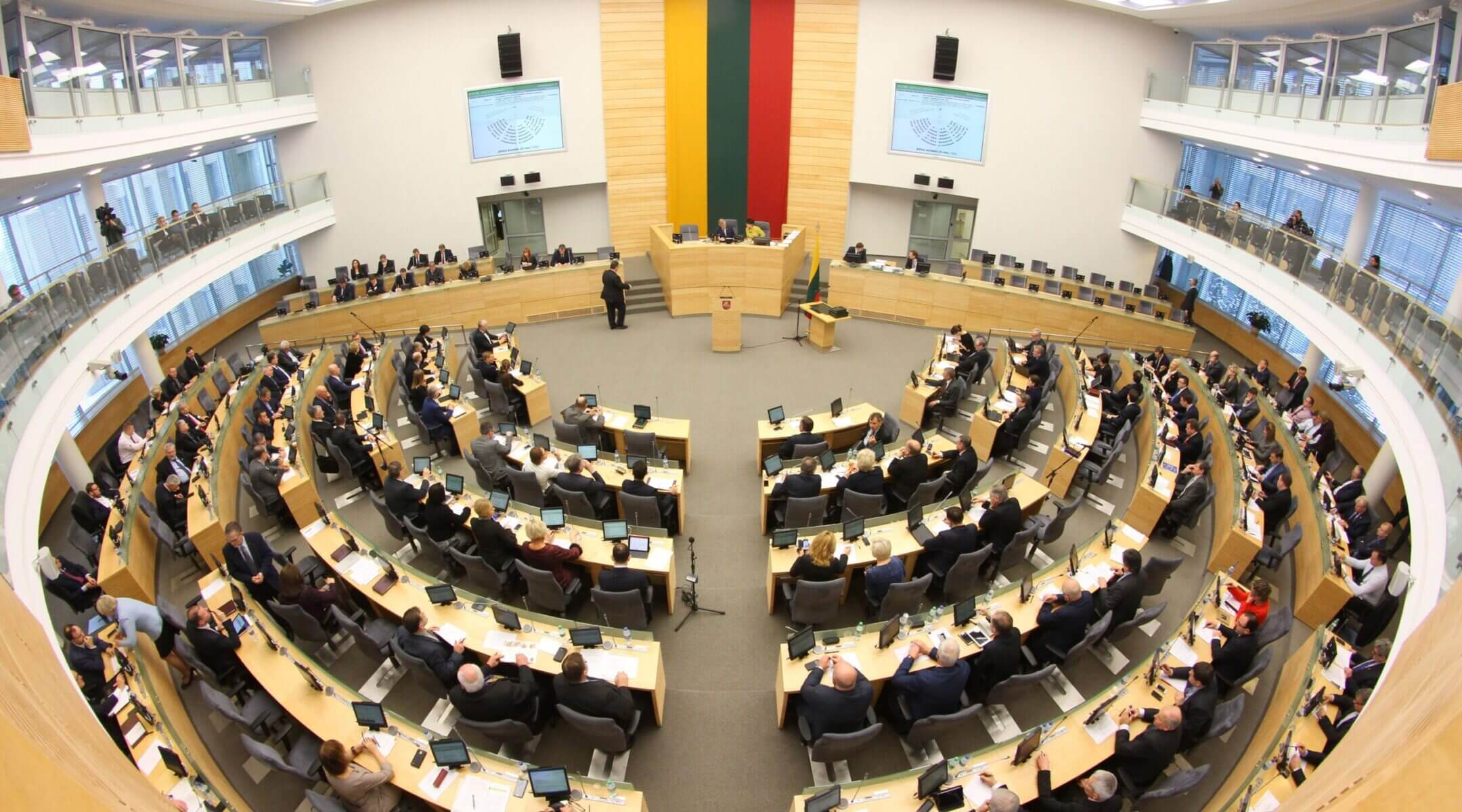
(JTA) — Lithuania’s prime minister made what one Jewish organization called an ”important step” by introducing legislation to allocate more than $38 million as restitution for Holocaust survivors and their heirs. 

Ingrida Šimonytė introduced the bill in the Seimas, Lithuania’s legislature, earlier this month. If passed it would nearly double the money the government had already set aside for restitution claims in a country where 90% of Jews were killed in the Holocaust. Today only 5,000 Jews remain in the country. 

“Prime Minister Ingrida Šimonytė’s proposal is an important step to providing a measure of justice to Lithuanian Holocaust survivors and their families for the horrors they suffered during World War II and its aftermath,” the World Jewish Restitution Organization said in a statement. “We look forward to the opportunity to review this new legislation that would continue the process of property restitution and support Jewish life in Lithuania.”

Lithuania has a checkered history when it comes to reckoning with its Holocaust history. The Nazis’ Lithuanian collaborators were involved in many atrocities, including the massacres at Paneriai, a present-day suburb of the capital of Vilnius, where 70,000 Jews were killed between 1941 and 1944. Lithuanian battalions also performed guard duty and organized deportations at the Majdanek death camp in Poland and the Warsaw ghetto.

Jewish leaders objected when, in 2020, Lithuanian lawmakers considered a law that would have declared that neither Lithuania nor its leaders could be blamed for participating in the Holocaust because the country was occupied. And amid the rise in nationalism across Eastern Europe, streets, schools and monuments have been named for Lithuanian collaborators.

The Lithuanian government has previously acted before to compensate Holocaust victims. Over a decade ago, the parliament passed legislation to allocate 36 million Euros, then worth about $72 million, for a Good Will Foundation that funds projects to benefit the country’s Jewish population. The money was considered restitution for communal property seized from Lithuania’s Jewish community under the Nazi occupation.

”This payment represented only partial value of the properties,” the WJRO explained. However, “it provided much needed funds to support Jewish communal life in Lithuania, restored several Jewish heritage sites, and offered modest payments to needy survivors.” The new bill would allow survivors and their heirs to apply for restitution for personal property as well, according to an AFP Report, and also continue to fund the Good Will Foundation.

This article originally appeared on JTA.org.

The post Lithuania proposes setting aside nearly $40M for Holocaust survivors and their heirs appeared first on The Forward.

Categories
Audio Sources - Full Text Articles

Abe Foxman: If Smotrich and Ben-Gvir get their way, Israel will lose me and American Jews

9-15-20-abefoxman.jpg

(JTA) — Abe Foxman, the past Anti-Defamation League leader who long has said that nothing could separate him from support for Israel, now says the leaders of an extreme party could do the trick if they get their way in coalition talks with incoming Prime Minister Benjamin Netanyahu.

“I never thought that I would reach that point where I would say that my support of Israel is conditional,” Foxman said in an interview published Friday by The Jerusalem Post. “I’ve always said that [my support of Israel] is unconditional, but it’s conditional. I don’t think that it’s a horrific condition to say: ‘I love Israel and I want to love Israel as a Jewish and democratic state that respects pluralism.’”

“If Israel ceases to be an open democracy, I won’t be able to support it,” he said.

Foxman said his outlook reflected that of the larger Jewish community — but added that he was optimistic Netanyahu would not let the leaders of Otzma Yehudit, the extremist party assuming a role in the incoming government, make drastic changes.

“I think he’s sensitive and smart enough to listen, to see the very serious concerns that [American Jews] have,” said Foxman, who retired from the ADL in 2015, 50 years after first joining the organization.

He pointed to an interview Netanyahu had recently with Bari Weiss, the opinion journalist, in which the incoming prime minister said he would not allow the excesses counseled by extremist party leaders including Bezalel Smotrich, Itamar Ben-Gvir and Avi Maoz.

But Netanyahu has struck a deal with Ben-Gvir to give him authority over the country’s police and has made Maoz, the leader of the homophobic party Noam, a new role overseeing “National-Jewish identity,” while he is reportedly nearing an agreement to make Smotrich finance minister. The men have said they want to expel disloyal Arabs from Israel, ban LGBTQ pride parades and roll back rights for non-Orthodox Jews.

Already, Netanyahu has reportedly agreed to back legislation that would stop recognizing non-Orthodox conversions. The men also agree on a vision to limit the power of Israel’s judiciary.

Netanyahu told Weiss that people alarmed but such demands should not be so worried.

“This Israel is not going to be governed by Talmudic law,” Netanyahu said. “We’re not going to ban LGBT forums. As you know, my view on that is sharply different, to put it mildly. We’re going to remain a country of laws.”

Foxman’s concerns, he told the Jewish Telegraphic Agency in a separate interview, are with proposals by the extremists to politicize the judiciary, to loosen open-fire regulations, to end recognition of non-Orthodox conversions to Judaism and to ban open LGBTQ events.

“It’s not one thing. It’s a whole package of things, which is bringing us back to the Middle Ages,” Foxman told JTA. “So it’s undermining democracy in terms of the legal system. It’s cutting back on on human or equal rights for all whether it’s LGBT or whether it’s a it’s the Conservative movement, or the Reform movement that have strides in Israel.

Foxman, 82, is still called on to pronounce on Jewish matters. A Holocaust survivor, he is on the board of the U.S. Holocaust Memorial Museum. His remarks are notable in part because he was of a generation, together with Malcolm Hoenlein, the executive vice president of the Conference of Presidents of Major American Jewish Organizations, and David Harris, who just retired as American JUewish Committee CEO, who said their top priority was keeping private differences between Israel and the U.S. Jewish community, and between Israel and the United States. Open criticism was the taboo.

That won’t hold if Netanyahu gives in to the demands of Otzma Yehudit, Foxman told the Jerusalem Post.

“If Bibi changes the nature of democracy in Israel, he will change the nature of Israel’s support in the U.S., certainly the American Jewish community, probably the general community and the U.S. government if it continues to be center-left,” he said.

This article originally appeared on JTA.org.

The post Abe Foxman: If Smotrich and Ben-Gvir get their way, Israel will lose me and American Jews appeared first on The Forward.

Categories
Audio Sources - Full Text Articles

Biden Weighs Return of Trump-Era Immigration Restrictions as Admin Struggles With Border Crisis

By Ted Hesson

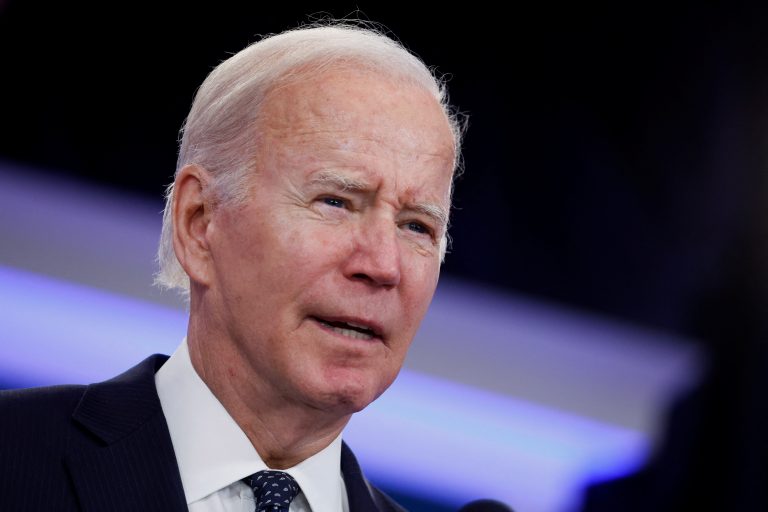
WASHINGTON (Reuters)—U.S. President Joe Biden’s administration would make it harder to seek asylum at the U.S.-Mexico border under several plans being considered that bear similarities to policies pushed by former president Donald Trump.

Two Department of Homeland Security officials and a person familiar with the matter said the administration is discussing a fast-track regulation to deny asylum to single adult migrants if they do not first seek protection in other countries.

The sources said they had not seen a copy of the proposed regulation so could not provide further details.

Since Biden took office in January 2021, his administration has struggled both operationally and politically with record numbers of migrants crossing the U.S.-Mexico border illegally.

U.S. border authorities made 2.2 million migrant arrests at the border in the fiscal year 2022 ending on Sept. 30, although many of those included repeat crossers.

Another U.S. official said the Biden administration has discussed other Trump-era deterrents that include accelerated asylum screenings for migrants in Border Patrol custody.

Another possibility under consideration was to increase a practice known as “metering,” which limits the number of migrants who can approach a port of entry to seek asylum, this official said.

A DHS spokesperson said on Friday no decisions had been made to make changes in policy. A Mexican official said the country had not been briefed on any U.S. plans aimed at curbing border flows by resurrecting measures from the Trump administration.

Biden, a Democrat, defeated Trump, a Republican, in a 2020 presidential election promising to undo his predecessor’s hardline immigration policies and “reassert America’s commitment to asylum-seekers and refugees.”

The policies under consideration, if adopted, would sharply backtrack on those pledges and have already drawn concern from immigration advocates. Similar Trump policies were challenged in court and overturned.

To be granted U.S. asylum, migrants who enter the country must show they seek protection from persecution elsewhere based on their race, religion, nationality, political opinions, or membership in a particular social group.

Axios first reported the discussions around a new asylum ban earlier this week. The other measures under consideration have not been previously reported.

After the Axios story, a Biden official said in a statement the United States would seek to accelerate asylum processing times, break up smuggling networks preying on migrants and work with others in the region to manage the flow of migrants.

Republicans, who take control of the U.S. House of Representatives in January, have assailed Biden’s handling of the border and threatened to impeach his top border official, Homeland Security Secretary Alejandro Mayorkas.

Last month a U.S. federal judge invalidated a COVID-19-era border order known as Title 42. Implemented in March 2020 under Trump, it allowed authorities to rapidly expel migrants caught crossing the border without giving them a chance to seek asylum.

The judge delayed the effective date of the ruling until Dec. 21 to give border authorities time to prepare. A week later, a coalition of states with Republican attorneys general launched a legal challenge seeking to reverse the decision.

The administration is preparing for the possibility of 9,000-14,000 migrants per day trying to cross the border if Title 42 is lifted, one of the DHS officials told Reuters, about double the recent daily rate.

(Reporting by Ted Hesson in Washington; Additional reporting by Andrea Shalal in Washington and Dave Graham in Mexico City; Editing by Mica Rosenberg, Howard Goller and Daniel Wallis)

The post Biden Weighs Return of Trump-Era Immigration Restrictions as Admin Struggles With Border Crisis appeared first on Washington Free Beacon.

Categories
Audio Sources - Full Text Articles

FLASHBACK: Media Trumpet Biden-Backed ‘Pro-Union’ Agreement Opposed By Rail Unions

Before the midterm elections, President Joe Biden touted his tentative deal to avert a nationwide rail strike as a “big win” for the country. At the time, members of the media were happy to parrot the line.

“This deal came together thanks to the direct involvement of Joe Biden, who ran for president the way he’s always run for senator—as pro-labor and pro-union,” said MSNBC anchor Joy Reid.

Railway unions, however, ultimately rejected the White House-backed deal—prompting Biden to override their objections and enforce the agreement through Congress. Now, labor groups are souring on the “most pro-union president” in history.

“Joe Biden blew it,” Railroad Workers United treasurer Hugh Sawyer said Tuesday.

READ MORE: Unions Turn on POTUS After He Moves To Avert Railroad Strike

The post FLASHBACK: Media Trumpet Biden-Backed ‘Pro-Union’ Agreement Opposed By Rail Unions appeared first on Washington Free Beacon.

Categories
Audio Sources - Full Text Articles

ANC likely to lose power in South Africa following possible Ramaphosa’s impeachment

In the ANC – a party so long in power now feel more like open-warfare – the campaigning and jockeying are in full swing. The party is due to select a leader later this month – with Mr Ramaphosa an easy favourite to win. But those calculations are now changing fast.

It’s been widely reported that Mr Ramaphosa has already decided to quit, but is being persuaded by allies to think again, or at least to buy time in order to ensure a smooth transition to someone credible.

South Africa’s main opposition party, the Democratic Alliance, is certainly hoping to capitalise on the current crisis, calling for early elections. So, the ANC’s decline could be both inevitable scenario and good for the country’s young democracy.

The ANC has dominated South Africa’s politics since democracy in 1994, has been sliding steadily in the last two decades. The ANC built its 2019 election campaign around Ramaphosa, after polls showed that he was the only leader who continued to enjoy substantial credibility among voters.

Some analysts claimed that Mr. Ramaphosa’s resignation – if it happens, would be exemplary for Africa – here’s a leader who voluntarily resigned.

A potential impeachment of President Cyril Ramaphosa is a “historic moment” for the country. Ramaphosa was not opposed to resigning from office before a meeting by the African National Congress’s (ANC) National Executive Committee determines his fate.

This comes after a three-person panel found that the president might have breached the constitution and engaged in corrupt activities. 
The panel, led by Justice Sandile Ngcobo, found the president has a case to answer in the cover up of a robbery at his private farm, Phala Phala, in February 2020. It is alleged that a $600,000 robbery was covered up at his Phala Phala Farm in February 2020. The money was allegedly hidden in a sofa and not declared to the South African Reserve Bank. The parliamentary panel raised questions about the source of the money and why it wasn’t disclosed to financial authorities, and cited a potential conflict between the president’s business and official interests.

Mapisa-Nqakula appointed the panel in September after a motion by a small opposition party, the African Transformation Movement, called for Ramaphosa’s removal on the grounds of “a serious violation of the Constitution or the law and serious misconduct”.

The Phala Phala scandal has  tarnished Ramaphosa’s reputation as an anti-corruption champion and derailed his chances of winning a second term as president of the ANC at its national conference in December. The robbery was first brought to light in June by Arthur Fraser, the country’s former head of the State Security Agency and a close ally of South Africa’s disgraced former President Jacob Zuma.

 According to ANC rules, anyone charged with corruption or other crimes must step down while criminal investigations take place.

However, there is no enough information to force Ramaphosa to resign. If he does not get charged and it is simply just this impeachment process, he will try to shore up his base and ride it out.

President Cyril Ramaphosa’s fate is now in the hands of a faction of the ANC that spent the past five years trying to get rid of him.

Leading the charge has been Nkosazana Dlamini-Zuma, who insists that her presidential campaign is still on track despite failing to reach the threshold required for this. The ANC was expected to hold an urgent National Executive Committee (NEC) meeting on Thursday following the release of the report of the panel chaired by retired Chief Justice Sandile Ngcobo on the Phala Phala matter.

Ramaphosa’s enemies — including NEC members Tony Yengeni and Lindiwe Sisulu — are expected to turn the heat on him to step down or be forced to resign.

They are also pushing for the meeting to be held in person and not virtually.

The calls for Ramaphosa to resign were triggered by the report, which found that the president may have violated the law.

Since losing control of the ANC in the 2017 elective conference at Nasrec, the faction led by former president Jacob Zuma has been plotting to topple Ramaphosa at every turn.

Thus, there’s no doubt that the case against Mr Ramaphosa was – at least to begin with – politically motivated.

It seems unlikely – but still possible – that Mr Zuma’s faction within the ANC will be able to capitalise on the chaos, return to power, and derail the entire anti-corruption drive. That would be a recipe for political oblivion at the next elections.

However, even a moderately competent replacement for Mr Ramaphosa is likely to shake the markets and drive away the few foreign investors still willing to give South Africa a chance, at a time when the economy – grappling with almost daily power cuts – is struggling to recover from the pandemic, and from the years of state corruption during Mr Zuma’s era.

More than half the members of the current NEC have been thought to be implicated in various allegations of misconduct, including fraud and corruption.

Many have called for the shelving of the entire Zondo Commission report, while Ramaphosa has made it the cornerstone of his rule.

The prosecution of senior ANC members in the coming months may flow from this report.

Ramaphosa’s business interests are threatening to jeopardise his presidency, with dire consequences for the country given the important economic and political reforms he is pursuing. The Phala Phala scandal is not just a threat for Ramaphosa, but could seriously hurt his party’s prospects as it faces gruelling national and provincial elections in 2024.

But his image as anti-corruption champion – and vote winner – is now in doubt because of the Phala Phala scandal.

It would be the first time a president’s fitness for office was assessed since parliament adopted the rules for impeachment in 2018, following a Constitutional Court judgment. The impeachment process, depending on the way the panel applies the law, will set an important precedent.

Categories
Audio Sources - Full Text Articles

Election denying Republicans take another embarrassing fall

Keep Palmer Report going! Our articles are all 100% free to read, with no forced subscriptions and nothing hidden behind paywalls. If you value our content, you’re welcome to pay for it:

Pay $5 to Palmer Report:

Pay $25 to Palmer Report:

Pay $75 to Palmer Report:


Keep Palmer Report going! Our articles are all 100% free to read, with no forced subscriptions and nothing hidden behind paywalls. If you value our content, you’re welcome to pay for it:

Pay $5 to Palmer Report:

Pay $25 to Palmer Report:

Pay $75 to Palmer Report:

Sign up for the Palmer Report Mailing List.


Despite bold prognostications by the media of a gushing red wave, the Republicans wound up being the big losers of the midterms. Although the GOP managed to take the House, as was widely expected, it was only by a seven-seat margin. Thanks to two Arizona Republicans’ apparent desire to want to cut off their party’s nose to spite its face, as the saying goes, that slim majority remained at risk of shrinking.

The Board of Supervisors for Cochise County, Arizona, deliberately ignored its November 28 deadline to certify votes. Two of the three supervisors, Tom Crosby and Peggy Judd, are Republicans who have crafted a resume filled with election denialism, as The Arizona Republic details, and voted against certification. Their actions led the third supervisor, Board Chair Ann English, who is a Democrat, to ask rhetorically, “How many times do you have to willfully not follow the law?”

In an interview with the New York Times, Judd “acknowledged” that the failure to certify “was mostly a pretext” for protesting Maricopa County’s certification following debunked claims of voting issues there. In the meantime, these Republican supervisors’ actions in Cochise County only served to threaten a GOP seat in the U.S. House of Representatives.

If Cochise County’s certification were not to have happened by December 8, its approximately 47,000 votes wouldn’t be included in the state totals. That omission would mean Arizona’s 6th Congressional District, where Republican Juan Ciscomani unofficially won by 5,232 votes, would go to the Democrat, Kirsten Engel. Cochise County’s defiance would also flip the state Superintendent of Public Instruction from Republican to Democrat, according to analysis by Bloomberg.


Given this situation, the Arizona Secretary of State sued to compel Cochise County to certify its votes. That person is, of course, none other than Katie Hobbs, the Democrat who was just elected governor after having run against election denier Kari Lake, who still refuses to concede. On Thursday, in response to Hobbs, a state judge ordered the Board of Supervisors to certify the county’s votes, which they did, 2-0 (with Judd reluctantly joining English while Crosby skipped the meeting).

“Today’s court decision was a win for Arizona’s democracy and ensures that all Arizonans will have their votes counted,” Hobbs tweeted. Hobbs pursued this course of action because she believes in democracy and it’s her job—regardless of whether a particular action benefits her party. Republicans can learn a lesson here.

Keep Palmer Report going! Our articles are all 100% free to read, with no forced subscriptions and nothing hidden behind paywalls. If you value our content, you’re welcome to pay for it:

Pay $5 to Palmer Report:

Pay $25 to Palmer Report:

Pay $75 to Palmer Report:

Write for the Palmer Report Community Section.


Keep Palmer Report going! Our articles are all 100% free to read, with no forced subscriptions and nothing hidden behind paywalls. If you value our content, you’re welcome to pay for it:

Pay $5 to Palmer Report:

Pay $25 to Palmer Report:

Pay $75 to Palmer Report:

The post Election denying Republicans take another embarrassing fall appeared first on Palmer Report.

Categories
Audio Sources - Full Text Articles

Brazil fans at World Cup game remember soccer great Pelé

LUSAIL, Qatar (AP) — Brazilian fans showed their support for soccer great Pelé ahead of the national team’s match against Cameroon at the World Cup on Friday.

The 82-year-old Pelé, who had a colon tumor removed last year, was hospitalized Tuesday in Sao Paulo to regulate his medication.

“It’s sad to hear this news about Pelé on the day of a Brazil match at the World Cup,” said 41-year-old Brazil fan Rafael Bistelli, who traveled from Sao Paulo to watch the national team in Qatar. “We are trying to send him our positive energy from here.”

Fans displayed a banner with the image of Pelé holding a soccer ball behind one of the goals at Lusail Stadium. A large image of the Brazil great could be seen on a building near the venue, along with the messages “get well soon” and “we love Pelé.”

“Friends, I am at the hospital making my monthly visit,” Pelé wrote on Instagram on Thursday. “It’s always nice to receive positive messages like this. Thanks to Qatar for this tribute, and to everyone who sends me good vibes!”

Brazilian fans who gathered before the match against Cameroon also had Pelé in mind, singing songs about him and sending him well-wishes.

In the pre-match news conference on Thursday, Brazil coach Tite said the entire team wanted “to wish good health to Pelé” from Qatar.

On Wednesday, doctors said Pelé was in stable condition after arriving “for a reevaluation of the chemotherapeutic treatment of the tumor.” They said Pelé was not in intensive care.

Brazil faced Cameroon in its last group game. The team has already qualified for the round of 16 after wins against Serbia and Switzerland.

___

AP World Cup coverage: https://apnews.com/hub/world-cup and https://twitter.com/AP_Sports

Categories
Audio Sources - Full Text Articles

Man arrested in fatal shooting of Migos rapper Takeoff

Police have arrested a 33-year-old man in the fatal shooting of rapper Takeoff, who was killed last month outside a bowling alley in Houston.

Houston police announced Friday that Patrick Xavier Clark has been charged with murder in connection with Takeoff’s death.

Born Kirsnick Khari Ball, Takeoff was the youngest member of Migos, the Grammy-nominated rap trio from suburban Atlanta that also featured his uncle Quavo and cousin Offset.

The 28-year-old musician was one of three people police said were shot outside the downtown bowling alley around 2:30 a.m. on Nov. 1, when a dispute erupted as about 40 people were leaving a private party at the alley. Police have said another man and a woman suffered non-life-threatening gunshot injuries during the shooting, in which at least two people opened fired.

Houston Police Chief Troy Finner said the day after the shooting that Takeoff was “well respected,” and there was “no reason to believe he was involved in anything criminal at the time.”

Migos’ record label, Quality Control, mourned Takeoff’s death in a statement posted on Instagram that attributed it to “senseless violence.”

Fans and other performers, including Drake and Justin Bieber, celebrated Takeoff’s musical legacy in a memorial service last month in Atlanta.

Migos first broke through with the massive hit “Versace” in 2013. They had four Top 10 hits on the Billboard Hot 100, though Takeoff was not on their multi-week No. 1 hit “Bad and Boujee,” featuring Lil Uzi Vert. They put out a trilogy of albums called “Culture,” “Culture II” and “Culture III,” with the first two hitting No. 1 on the Billboard 200 album chart.

Takeoff and Quavo released a joint album “Only Built for Infinity Links” just weeks before his death.

__

Bleiberg reported from Dallas.

WP Radio
WP Radio
OFFLINE LIVE