|
|||||||||||||||||||||||||||||||||||||||||||||||||||||||||||||||||||||||||||||||||||||||||||||||||||||||||||||||||||||||||||||||||||||||||||||||||||||||||||||||||||||||||||||||||||||||||||||||||||||||||||||||||||||||||||||||||||||||||||||||||||||||||||||||||||||||||||||||||||||||||||||||||||||||||||||||||||||||||||||||||||||||||||||||||||||||||||||||||||||||||||||||||||||||||||||||||||||||||||||||||||||||||||||||||||||||||||||||||||||||||||||||||||||||||||||||||||||||||||||||||||||||||||||||||||||||||||||||||||||||||||||||||||||||||||||||||||||||||||||||||||||||||||||||||||||||||||||||||||||||||||||||||||||||||||||||||||||||||||||||||||||||||||||||||||||||||||||||||||||||||||||||||||||||||||||||||||||||||||||||||||||||||||||||||||||||||||||||||||||||||||||||||||||||||||||||||||||||||||||||||||||

 а>
а>  а>
а>  а>
а>  а>
а>  а>
а>  а>
а>  а>
а>  а>
а>  а>
а>  а>
а>  а>
а>  а>
а>  а>
а>  а>
а>  а>
а>  а>
а>  а>
а>  а>
а> 

The News And Times Information Network – Blogs By Michael Novakhov – thenewsandtimes.blogspot.com
 The Brooklyn Times - bklyntimes.com
|
|||||||||||||||||||||||||||||||||||||||||||||||||||||||||||||||||||||||||||||||||||||||||||||||||||||||||||||||||||||||||||||||||||||||||||||||||||||||||||||||||||||||||||||||||||||||||||||||||||||||||||||||||||||||||||||||||||||||||||||||||||||||||||||||||||||||||||||||||||||||||||||||||||||||||||||||||||||||||||||||||||||||||||||||||||||||||||||||||||||||||||||||||||||||||||||||||||||||||||||||||||||||||||||||||||||||||||||||||||||||||||||||||||||||||||||||||||||||||||||||||||||||||||||||||||||||||||||||||||||||||||||||||||||||||||||||||||||||||||||||||||||||||||||||||||||||||||||||||||||||||||||||||||||||||||||||||||||||||||||||||||||||||||||||||||||||||||||||||||||||||||||||||||||||||||||||||||||||||||||||||||||||||||||||||||||||||||||||||||||||||||||||||||||||||||||||||||||||||||||||||||||
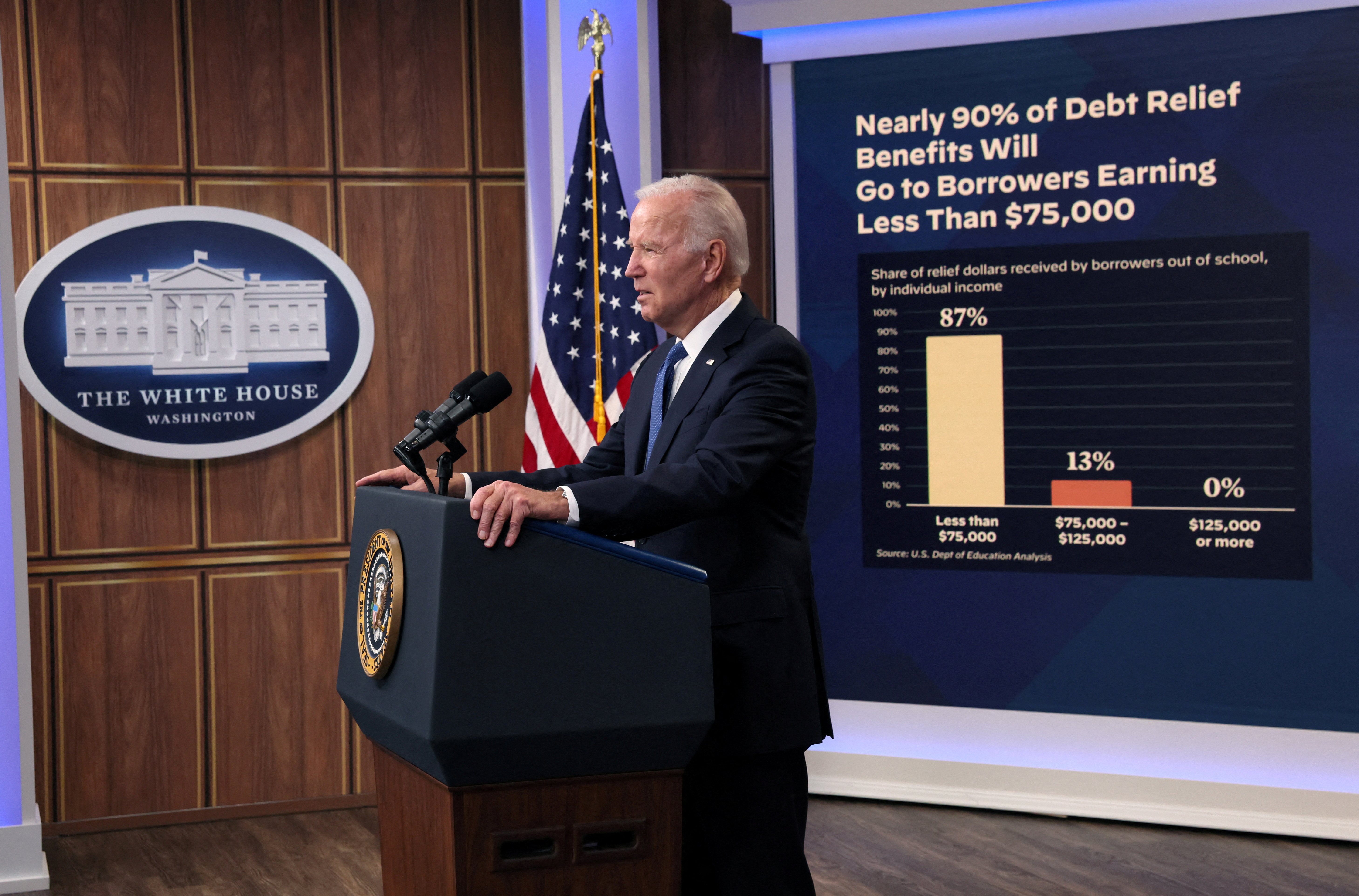
A day after the U.S. Supreme Court agreed to hear arguments over the legality of President Joe Biden plan to cancel billions of dollars in student debt, his administration on Friday asked the justices to put on hold a judge’s ruling in a separate case that found the program unlawful.
Rulings by lower courts in two challenges filed against the debt relief program have put Biden’s policy on ice.
The administration on Friday asked the Supreme Court to pause Texas-based U.S. District Judge Mark Pittman’s decision in a challenge backed by a conservative advocacy group or to hear arguments on the merits of the case at the same time that it tackles a challenge pursued by six mostly Republican-led states.
Pittman issued his ruling on Nov. 10. The St. Louis-based 8th U.S. Circuit Court of Appeals issued its injunction on Nov. 14 in a lawsuit in which Arkansas, Iowa, Kansas, Missouri, Nebraska and South Carolina have argued that the administration overstepped its authority.
The justices on Thursday did not act on Biden’s request to immediately lift the 8th Circuit’s injunction but fast-tracked the case for oral arguments in late February or early March.
Biden announced in August that the U.S. government would forgive up to $10,000 in student loan debt for borrowers making less than $125,000 a year, or $250,000 for married couples. Students who received Pell Grants to benefit lower-income college students will have up to $20,000 of their debt canceled.
During the 2020 presidential campaign, Biden promised to help debt-saddled former college students but the program has drawn opposition from Republicans and conservative groups who say it is unfair to those who paid back their loans or never went to college and could exacerbate inflation.
The Congressional Budget Office in September calculated that the debt forgiveness program would cost taxpayers about $400 billion.
The Texas lawsuit was filed by two borrowers who were partially or fully ineligible for the loan forgiveness, backed by the Job Creators Network Foundation, a conservative advocacy group founded by Bernie Marcus, a co-founder of Home Depot Inc.
Pittman, appointed as a judge by Republican former President Donald Trump, ruled that the administration overstepped its authority to order debt cancellation under a 2003 law called the Higher Education Relief Opportunities for Students Act, which can “waive or modify” student financial assistance during war or national emergency.
The judge said it was irrelevant if Biden’s plan was good public policy because the program was “one of the largest exercises of legislative power without congressional authority in the history of the United States.”
Biden’s administration justified its plan based on the economic harms inflicted by the COVID-19 pandemic and concerns about rising debt delinquency and lower earnings, particularly among lower-income Americans. Biden and his predecessor Trump had invoked the law to pause student loan repayments.
Biden on Nov. 22 extended the repayment pause to no later than next June 30 to give the Supreme Court time to decide the case.
The administration has said that more than 26 million borrowers have applied for loan relief and 16 million applications have been approved for discharge if allowed by the courts. It has said more than 40 million Americans are eligible for relief.
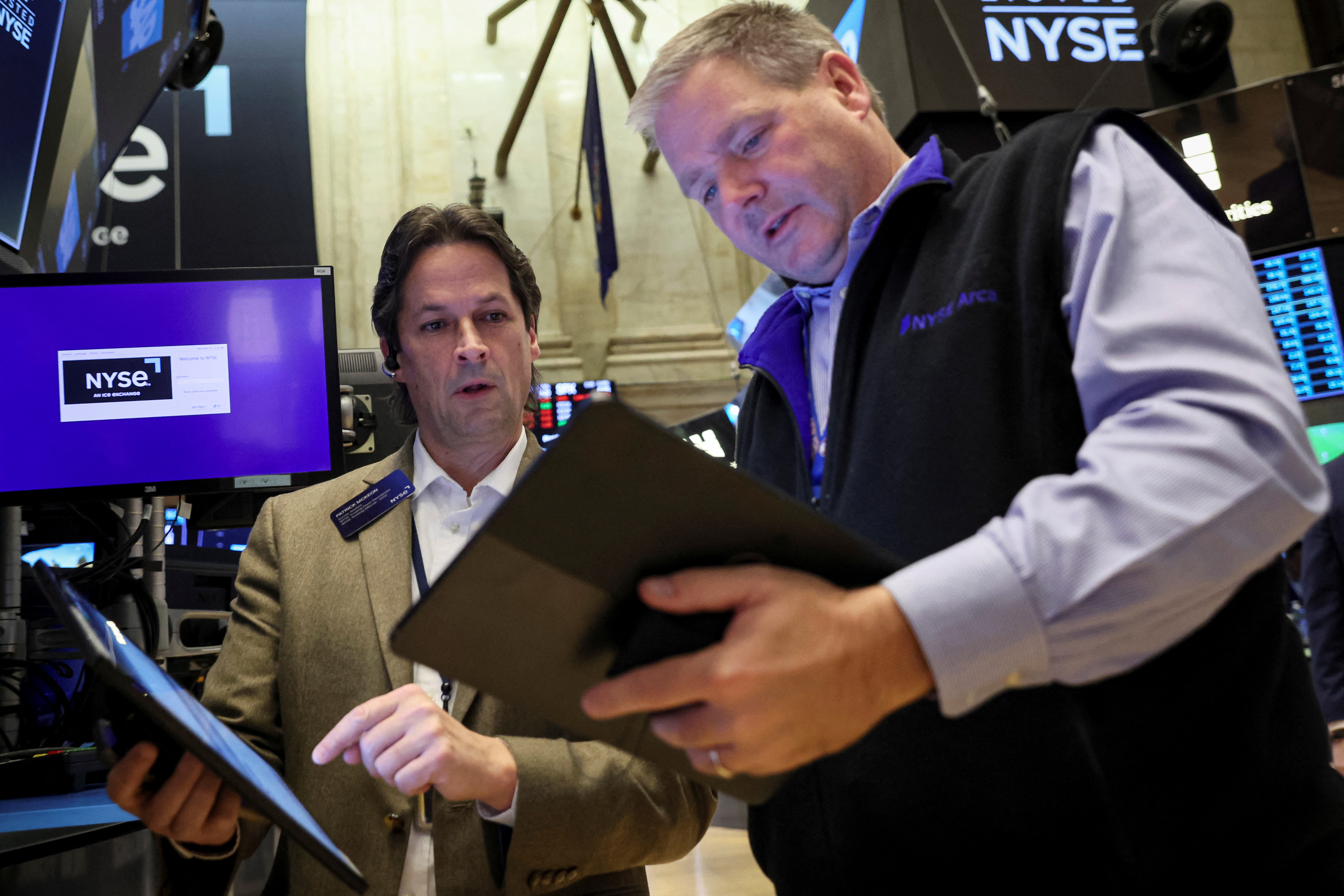
The S&P 500 closed slightly lower on Friday, although major indexes rallied off their worst levels of the day, as the November payrolls report fueled expectations the Federal Reserve would maintain its path of interest rate hikes to combat inflation.
The Labor Department’s jobs report showed nonfarm payrolls rose by 263,000, above expectations of 200,000 and wage growth accelerated even as recession concerns increase.
The U.S. unemployment rate remained unchanged, as expected, at 3.7%.
“Wage growth has been in an uptrend since August,” said Brian Jacobsen, senior investment strategist at Allspring Global Investment in Menomonee Falls, Wisconsin.
“We will have to see that trend reverse for the Fed to be comfortable with a pause. Until then, they’ll continue to taper towards a pause.”
Investors have been looking for signs of weakness in the labor market, especially wages, as a precursor to faster cooling of inflation that will enable the Fed to slow and eventually stop its current rate hike cycle.
Stocks had rallied earlier in the week after Fed Chair Jerome Powell’s comments on scaling back interest rates hikes as early as December.
The Dow Jones Industrial Average (.DJI) rose 34.87 points, or 0.1%, to 34,429.88, the S&P 500 (.SPX) lost 4.87 points, or 0.12%, to 4,071.7 and the Nasdaq Composite (.IXIC) dropped 20.95 points, or 0.18%, to 11,461.50.
Still, equities ended the session off their lowest levels of the day that saw each of the major indexes tumble at least 1%, with the Dow managing a slight gain.
“If anything, I am actually encouraged by how the market is clawing its way back from the level we were at today. It is another indication the market is looking for at least a seasonal December rally,” said Sam Stovall, chief investment strategist at CFRA in New York.
“The market is beginning to look across the valley and say, ‘OK, a year from now the Fed will likely be on hold and considering cutting rates.'”
The rate-setting Federal Open Market Committee meets on Dec. 13-14, the final meeting in a volatile year that saw the central bank attempt to stifle the fastest rate of inflation since the 1980s with record interest rates increases.
The major averages notched a second straight week of gains, with the S&P 500 climbing 1.13%, the Dow gaining 0.24% and the Nasdaq rising 2.1%.
Growth and technology companies such as Apple Inc (AAPL.O), down 0.34%, and Amazon (AMZN.O), off 1.43%, were pressured by concerns over rising rates but pared declines as U.S. Treasury yields eased throughout the day off earlier highs. The S&P 500 growth index (.IGX) declined 0.29% while technology shares (.SPLRCT) were among the worst performing among the 11 major S&P 500 sectors with a fall of 0.55%.
Ford Motor Co (F.N) declined 1.56% on lower vehicle sales in November, while DoorDash Inc (DASH.N) 3.38% shed after RBC downgraded the food delivery firm’s stock.
Advancing issues outnumbered declining ones on the NYSE by a 1.15-to-1 ratio; on Nasdaq, a 1.35-to-1 ratio favored advancers.
The S&P 500 posted 20 new 52-week highs and no new lows; the Nasdaq Composite recorded 86 new highs and 92 new lows.
This article is part of The D.C. Brief, TIME’s politics newsletter. Sign up here to get stories like this sent to your inbox.
Want to know how worried Washington was about a rail strike? Typically reliable union champions Joe Biden and Nancy Pelosi successfully rallied rank-and-file Democrats to side with railroad execs over their workers.
You read that correctly: Biden decided the broader economy was a bigger priority than 100,000 freight rail workers having any paid sick leave in their next contract. After campaigning as the most pro-union presidential candidate in history, Biden signed into law a measure that makes a rail strike illegal.
[time-brightcove not-tgx=”true”]
Like the auto and Wall Street bailouts, the rail-worker order is likely to be an unpopular move—but ultimately one that defines a Biden legacy as much as his green-energy agenda, his infrastructure investments, and his reboot of U.S. foreign policy in the post-Trump era. It was a tough call for the White House and for Biden personally, but one that ultimately is the kind that only gets to a President’s desk when everything else fails. It may deflate part of his political base—Biden carried union households over Trump by 14 points in 2020, and Democrats carried them by 15 points last month—but it may also sustain his governing power.
The House on Wednesday passed a bill that would force management and labor to accept a White House-negotiated deal that eight of the 12 unions at the table had already agreed to. (The remaining four, however, represent more than half of the nation’s unionized freight rail workers.) On Thursday, under pressure from the White House and Wall Street alike, the Senate followed. And by Friday afternoon, Biden was in the Roosevelt Room of the White House to sign a deal that leveraged the government’s power to keep workers on the job if they are linked to interstate commerce.
“I know this was a tough vote for members of both parties,” Biden said on Friday. “It was tough for me.”
For sure there were sacrifices. A companion proposal that would have introduced sick leave for workers was cleaved from the package and died in the Senate, another blow to union members.
“We’re going to avoid the rail strike, keep the rails running, keep things moving, and I’m going to go back and we’re going to get paid leave, not just for rail workers, but for all workers,” Biden said at a news conference on Thursday.
With Republicans set to take control of the House come January and Washington’s urgent must-do list finding fewer and fewer hours ahead of the holiday recess, it’s not entirely clear how Biden might get any federal guarantee of paid time off through Congress.
The White House-brokered deal still has plenty for workers to embrace, including a roughly 24% pay increase by 2024 and a ratification bonus of $11,000. Still, the contract guarantees just one paid personal day off and no dedicated sick days, although there is some flexibility to step out for doctor appointments.
The quick fall of dominos stands as a reminder that, when it has to, Washington can set aside pettiness and summon unity and might to avoid a crisis. The rail workers had eyed Dec. 9 as a potential start to a strike, a protest that could have sent the whole economy into a crippling recession and cost as many as 750,000 jobs, according to one estimate. Another scary figure: a rail strike could cost the broader economy $2 billion per day.
Biden, who calls himself “Union Joe” in front of friendly union crowds, had the option of standing in solidarity with the freight workers—and, symbolically, all members of the labor movement—or steering the locomotive onto safer tracks. The choice was hardly an appealing one, but this is why voters opted for Biden in 2020—the promise of steadier leadership. Biden’s calculation was that his longtime pals will understand the terrible choice he faced and accept why he did what he did.
Make sense of what matters in Washington. Sign up for the D.C. Brief newsletter.
In recent days, some top Republicans have called Rep. Hakeem Jeffries an “election denier,” starting a line of attack against the New York Democrat after he was chosen to lead his party as House Minority Leader next year.
“The newly elected incoming leader of House Democrats is a past election denier who basically said the 2016 election was quote ‘illegitimate,’” Senate Republican leader Mitch McConnell said on the Senate floor on Thursday, “and suggested that we had a quote ‘fake president.’”
The Republican National Committee’s (RNC) Twitter account also posted a tweet on Wednesday referring to Jeffries as an “election denier.”
[time-brightcove not-tgx=”true”]
BREAKING: Election Denier Hakeem Jeffries was just elected as the new leader of the House Democrats. pic.twitter.com/skZqcnXiG7
— RNC Research (@RNCResearch) November 30, 2022
McConnell and the RNC are referring to comments Jeffries made in the wake of the 2016 election of President Donald Trump. In tweets, news interviews, and House hearings, Jeffries called to question the legitimacy of Trump’s election because of Russia’s attempts to interfere in the 2016 race, and accused Trump of colluding with Russia to win the election. (A special counsel investigation that concluded in 2019 did not find sufficient evidence that Trump or his campaign conspired with Russia.)
The term “election denier” has taken on a particular meaning, however, after Trump’s failed re-election campaign. The phrase has come to be associated with Republicans who claim the 2020 election was stolen from Trump, assert without evidence there was fraud in 2020 voting, and cast doubt on secure voting systems—claims that lead to the deadly January 6, 2021 riot at the U.S. Capitol.
Calling Jeffries an “election denier’ is misleading and conflates different issues. “Casting unfounded doubt on the outcome of an election is irresponsible when either party does it,” says Rachel Orey, associate director of the Elections Project at the Bipartisan Policy Center, a nonpartisan Washington think tank. “But I think it’s important to remember that the culture around elections was quite different before 2020.”
Prior to the 2020 election, many Democrats pointed to evidence of Russian interference in the 2016 election, the fact that Trump won the Electoral College but did not win the popular vote, and used talking points calling Trump “not my President.” But the actions taken by Trump and his supporters leading up to 2020 election and after were unprecedented. Trump stoked false conspiracies of voter fraud, filed more than 60 election-related lawsuits, and pressured officials to interfere with election results. Since then, recent polls have shown that more than half of Republicans believe the 2020 election was stolen.
On Twitter, the RNC has called Jeffries an “election denier” and shared threads, screenshots, and video clips of Jeffries calling the 2016 election of Trump “illegitimate.” Its website also contains a blog post called “13 times Hakeem Jeffries denied election results.” Jeffries’ claims mostly centered around the evidence of Russian interference in the 2016 election and Robert Mueller’s special counsel investigation into whether Trump or his campaign colluded with Russia.
Prior to Trump’s January 2017 inauguration, Jeffries told MSNBC that there was a “cloud of illegitimacy” around the election, and said Russians, the FBI, and the “fake news industry” interfered with the 2016 election. “[Trump] didn’t win the popular vote. He lost the popular vote. The majority of the Americans didn’t vote for him, they voted against him,” Jeffries added. “The notion that a foreign power could have interfered with American democracy in a way that could have altered the results is a unique threat to the Republic and that’s a serious thing for each member to have to consider and to weigh.”
“The more we learn about 2016 election the more ILLEGITIMATE it becomes,” Jeffries tweeted in February 2018. “America deserves to know whether we have a FAKE President in the Oval Office #RussianInterference.”
Jeffries has so far not publicly commented on Republicans resurfacing his past comments.
“In this day and age, it’s incredibly easy for public servants to post something online, and a couple years down the road have it come come back up in public discourse,” Orey says. “But I think that as the nature of threats to democracy shift, we all need to be vigilant and make sure that we are placing democracy first and politics second.”
NASA’s Space Launch System (SLS) moon rocket officially became the most powerful rocket ever flown when it lifted off in the early morning hours of Nov. 16, putting out a prodigious 4 million kg (8.8 million lbs) of thrust. That comfortably beat the old record holder—the Apollo era’s Saturn 5, with its 3.4 million kg (7.5 million lbs) of thrust.
But the SLS won’t hold that title for long. As Space.com reports, earlier this week, SpaceX successfully test-fired 11 of the 33 engines on its Brobdingnagian Super Heavy rocket, a beast of a machine that, when all of its engines are lit, will produce more than 7.25 million kg (16 million lbs) of thrust, nearly double that of the SLS. The Super Heavy stands 69 m (230 ft.) tall, and serves as the first stage carrying the 50 m (164 ft) Starship spacecraft. The entire stack, also known as Starship, stands nearly 40 stories tall—again easily beating out the SLS’s 32 stories.
Unlike the SLS, of course, Starship hasn’t yet flown, but the engine test is preparatory to a first uncrewed launch of the rocket that could happen later this month—though it is likelier to occur in the first quarter of 2023. Whenever the ship launches, it can’t come too soon. NASA has selected the crewed upper portion of the Starship stack as the landing craft for the Artemis 3 mission, which aims to have American astronauts back on the lunar surface as early as 2026.
Meanwhile, NASA’s Artemis 1 uncrewed mission around the moon—which got its boost thanks to the SLS—has been going precisely according to plan. As the space agency announced, the latest step in that plan took place yesterday at 4:53 p.m. ET, when the spacecraft, currently in lunar orbit, fired its engine for one minute and 45 seconds, putting it on a path for a final close lunar flyby before heading home for a planned Dec. 11 splashdown.
DOHA, Qatar (AP) — Christian Pulisic became an American star with the winning goal — and the injury he got while scoring it — that lifted the United States into the round of 16 at the World Cup.
He injured his pelvic bone, Pulisic insisted, when he collided with Iran’s goalkeeper on the goal that sent him to the hospital as the United States won 1-0 and advanced in soccer’s biggest tournament.
Pulisic was cleared to play Saturday, when the Americans face the Netherlands in the knockout round.
Everybody expected him to be on the field even before doctors gave him the medical go-ahead on Friday.
“I will do everything in my power to work with this medical team and make sure that I can play,” Pulisic said of his intention to be on the field.
The United States is trying to get to the quarterfinals for the first time since 2002 and continue to delight the American audience, which has tuned into the first three matches in record numbers.
A win against the Netherlands might be enough to convince fans back at home that the United States can, indeed, compete on the biggest stage in soccer.
“The support from the U.S. has been a bit surreal,” captain Tyler Adams said. “My dad’s a teacher at school, and they were all watching during their classes, the game and supporting me. And I was getting videos from the family, all the watch parties in my town and whatnot.
“It’s really, really cool to see how much just a tournament can change that perspective on people supporting soccer.”
The United States is winless in its last 11 World Cup games against European teams, a streak that includes five losses and six draws. On Saturday, the Americans face a Dutch squad that, like several other World Cup teams at this tournament, is battling the flu. The bug ran through the U.S. squad last week.
Netherlands coach Louis van Gaal gave his team the day off on Thursday instead of running a typical 11-on-11 match.
“I gave them a day of rest,” Van Gaal said Friday. “With this group, they communicate that to me. I listen to my players.”
He declined to elaborate on how many players are affected, but by abandoning the typical training schedule Van Gaal created speculation that at least six players are ill.
“We are not going to elaborate on that,” he said. “But if it goes around in the group, it is worrying.”
Frenkie de Jong has said a scratchy throat disrupted his ability to communicate during a victory over Qatar, and Marten de Roon told reporters he had a cold earlier this week.
Netherlands midfielder Cody Gapko is trying to become the first player from his country to score in four straight World Cup matches, and the Dutch team is on an 18-game winning streak that the United States is determined to snap.
“We felt a responsibility to use this World Cup to create momentum in the United States for soccer,” U.S. coach Gregg Berhalter said. “And that’s why we want to keep going and we want to keep doing well and make the country proud.”
AUSTRALIA-ARGENTINA
Lionel Messi goes into yet another match that could be his last on the World Cup stage.
“No one expects us to win,” Australia forward Mathew Leckie said. “So let’s shock the world.”
Argentina was shocked by Saudi Arabia in its opening match and had to beat Poland earlier this week to ensure that Messi could continue in his fifth World Cup. One of the greatest players of all-time has never won this tournament, and this one in Qatar is expected to be his last.
Argentina turned a corner with wins over Mexico and Poland and emerged as the winner of Group C to face Australia, ranked 38th in the world. Australia is in the knockout round for only the second time, its previous trip a 1-0 loss to Italy in 2006.
Argentina won’t take Australia for granted, even though it has five wins, one draw and one loss in eight meetings dating to 1988. This is the first match between the two teams since 2007.
“We know, at the moment, everything is very difficult,” Messi said. “All the opponents are complicated. We know it as well as anyone.”
___
AP World Cup coverage: https://apnews.com/hub/world-cup and https://twitter.com/AP_Sports
Original post at https://cybernews.com/security/drones-hack-airborne-cybersecurity-nightmare/
Once a niche technology, drones are about to explode in terms of market growth and enterprise adoption. Naturally, threat actors follow the trend and exploit the technology for surveillance, payload delivery, kinetic operations, and even diversion.
There exists a class of tiny and highly maneuverable devices that introduce a variety of cybersecurity risks you probably haven’t considered before.
Drones currently occupy a unique legal position as they are classified as both aircraft and networked computing devices. From a malicious drone operator perspective, this inherently grants a high level of advantageous legal ambiguity and protection to criminals operating drones as counter-attacking efforts taken by victims may violate protective regulations or laws applicable to aircraft, but also anti-hacking laws meant to provide protections to personal computers, their data, and networks.
This article is going to explore cybersecurity considerations surrounding drone platforms through an initial review of drone market trends, popular drone hacking tools, and general drone hacking techniques that may be used to compromise enterprise drone platforms, including how drone platforms themselves may be used as malicious hacking platforms.
A secondary outcome of this article is to help spur awareness around a once niche space of technology that is about to explode in terms of market growth and enterprise adoption.
According to research firm Statista, the global retail drone market is expected to reach $90 billion by 2030, with Defense, Enterprise, and Logistics being the primary industries driving growth. Within the United States alone, nearly 300,000 commercial pilot licenses have been issued as of 2022, compared to nearly 1 million individual drones that have been registered with the Federal Aviation Authority(FAA) per weight and commercial compliance rules2.
This number does not account for drone platforms operated by amateur pilots or hobbyists that do not require professional licensure or those that operate under weight limitation thresholds (typically <250 grams = no licensing/registration requirement.) that require registration with local or federal authorities.
In China, the retail drone market reached $15 billion in 2021, with projections to exceed $22 billion by 2024. Drone pilot licenses issued throughout China exceed the United States, with over 780,000 registered pilots and close to 850,000 registered drones.
These numbers inform of the possibility that a once uncluttered skyline may soon be teeming with millions of drone aircraft, and questions begin to arise regarding the sanctity of enterprise security, privacy, and potential cybersecurity threats sourcing from the sky.
Departing from the general market statistics concerning drones, it is prudent to better understand how a flying laptop poses a threat to enterprise operations. From a cybercriminal perspective, drones are an ideal tool to carry out malicious attacks because they generally provide a greater layer of separation between the bad actor, the aircraft itself, and the actions executed by the physical drone platform.
Laptops or workstations primarily operate in 2D space physically and are more easily associated to an end user whereas a flying, computerized aircraft with a range of 10km can be harder to trace to a specific individual or geographical area. Drones also offer cybercriminals a great degree of flexibility in their usage because they are affordable, highly modifiable, they can operate across a greater range of weather conditions, flight distances, and altitudes versus semi-stationary workstations hackers traditionally operate from.
Let’s dive into some examples of how enterprises must account for external drones entering their airspace and cyber threats to drones operated by the enterprise.
An external drone not owned or operated by the enterprise can achieve many objectives useful to cyber criminals wishing to attack an organization. These objectives include but are not limited to site surveillance, photographic reconnaissance, physical or electronic payload delivery, kinetic operations (flying a drone into something for a specific purpose), and as a diversionary tactic.
A prime example is using a drone to fly over a potential target to visually map out physical security barriers prior to a robbery, identifying security guard patrol locations and schedules, or determining if anyone even responds to the aircraft while it is present. Drone platforms are also commonly used globally to smuggle contraband such as drugs, cellphones, or weapons into prisons with an alarming success rate.
Enterprises with sound counter drone programs in place may still be limited in how they respond to external drone threats as it is commonly unlawful to simply shoot them down or capture them. Within the United States for example, operating a drone within Class G, uncontrolled airspace over another entity’s property without advanced notice is legally allowed. Some state and local laws allow property owners and businesses to file trespass claims against operators but the difficulty is often associating the drone platform to its operator and serving them written notice.
Similar laws allowing some degree of aerial trespass exist throughout other international jurisdictions including Australia, Singapore and the United Kingdom with certain limitations. Enterprises are at a further disadvantage as malicious drone platforms cost anywhere from a few hundred to a thousand dollars while Counter Unmanned Aircraft Systems (CUAS) can cost well into the millions of dollars per annum simply just for the software subscription, not the personnel to operate it.
From a risk management perspective, drone mitigation using detective controls such as CUAS are simply non-sustainable for many enterprises as the costs will typically far exceed the inherent risks.

Cyberattacks against drones that an enterprise owns and operates is an entirely different animal. Further considerations must be taken to secure onboard storage of the drone, ensure routes drones travel are relatively safe (i.e., free from obstacles, sparsely populated, etc.) and that Wi-Fi or Radio Frequency (RF) signals used by drone platforms are properly encrypted against eavesdropping or manipulation.
Most drone platforms provide an onboard mini or micro storage disk port for local storage. Common attacks against enterprise drones include platform takeover, where an attacker uses RF, Wi-Fi or a subscription service like Aerial Armor to detect flight paths of a drone in a geographical area, perform de-authentication attacks, take over control of the drone and land the stolen drone in a location of its choosing.
From here, the attacker can physically remove onboard storage and pilfer the contents, depending on the storage configuration or potentially introduce malware via the SD card port, then leave the drone for the owner to find. Cybercriminals may also attempt to poison the geolocation instructions or Return To Home (RTH) coordinates of the drone to intentionally damage the aircraft or use it for other nefarious purposes causing the enterprise monetary damages in lost drone equipment, legal trouble, and reputational harm.
Let’s overview common tools or platforms built specifically to hack drones and see how some of these may assist cybersecurity applications in real world scenarios.

The first tool previewed in this article is Dronesploit, a Command Line Interface (CLI) solution which directly resembles and is similarly structured to the Metasploit Framework. Dronesploit seeks to combine various tools useful for penetration testing specific to drone platforms.
Dronesploit is dependent on Aircrack-ng being installed and fully functional in addition to having an appropriate wireless network adapter capable of sniffing wireless networks and performing packet injection. The first step before launching Dronesploit is to put an available wireless network interface into monitor mode using the “Airmon-ng start wlan0” command. Monitor mode status can be verified before proceeding by issuing the “iwconfig” command.
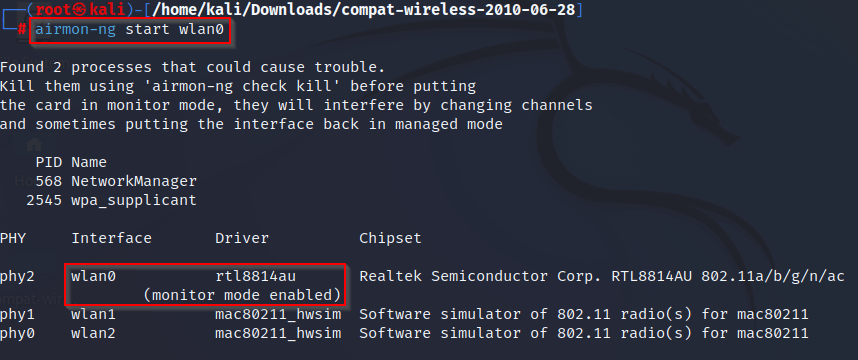
Once the wireless network interface is placed into Monitor mode, Dronesploit should be launched from a secondary command window while allowing the monitored interface to remain active. Dronesploit is ready to use once all warning messages stop prompting the user to take specific action (such as starting an interface in ‘Monitor’ mode).
Dronesploit is ideal for assessing Wi-fi based drones like DJI Tello or Hobbico drone platforms but has some general-purpose auxiliary modules that are effective across many drone models.

Some of the broadly useful commands reside in Dronesploit’ auxiliary family of modules. Metasploit users will be happy to see that Dronesploit leverages familiar command-lets to select modules, set various options and execute drone attacks.
Below is an example of the “wifi/find_ssids” command, outlining the monitored interface being used, and time out values. Dronesploit can also directly call various elements of aircrack-ng to capture and attempt to crack WPA2 wireless handshakes making it a highly versatile tool.

The next tool the article will preview is the Danger Drone platform, as developed and discussed by penetration testing provider Bishop Fox. Dangerdrone is an affordable, mobile drone platform, leveraging a 3D printed airframe, with a Raspberry Pi small single-board computer.
It is optimized to carry a Wi-Fi pineapple for wireless network auditing and several other USB peripherals like Alfa wireless network interfaces to support aerial penetration testing efforts from a flying drone. Imagine a drone flying onto private property unnoticed, landing on the roof of a building, and performing wireless network attacks against the computers underneath or around it. Scary stuff…
The article will conclude with some more pointed drone pentesting examples using Aircrack-ng itself. Using the monitored interface from the Dronesploit example, aspects of Aircrack-ng can be used to perform several useful drone security tests, including identification of wireless drone networks, de-authentication of connected devices like a drone controller, or cracking of the WEP/WPA keys.
The below example shows how the “Airodump-ng wlan0” command is useful for identifying nearby drone wi-fi signals, including the MAC address of the broadcasting device, the network encryption scheme, and the wireless authentication standard used by the drone. In the example below, a hobbyist-level drone from Sanrock using Open Wi-Fi and a DJI drone with enhanced Wi-Fi security protections are identified.

Drones will establish a private Wi-Fi network to allow user interaction between the controller and mobile application for drone operations. The Sanrock drone has an open Wi-fi network standard that doesn’t require authentication, such as use of a Pre-shared key, to connect to it. A quick way to find the IP address of the drone Wi-Fi network in question is to try connecting to the broadcasting SSID from either Kali Linux or another system, like a mobile phone and once connected, running “ipconfig /all” to compare the IP address information to the connection properties of the drone network. Vulnerability scans and various other tools can be directed at this address to uncover other targets and start assessing them for points of entry.

Switching back to Aircrack-ng, a de-authentication attack can be accomplished using airodump-ng in conjunction with aireplay-ng. These attacks are useful for either drone takeover or obtaining the wireless network key for offline cracking. Attackers can successfully sabotage Return to Home (RTH) instructions using geolocation poisoning, where the communications between pilots and the drone platform are interrupted, initiating internal drone safety routines that automatically instruct the drone to navigate to and land in a pre-configured location, allowing physical theft of the platform.
The below command highlights how Airodump-ng is used to first discover a connected station (or client like a mobile device), and send de-authentication frames that disconnect the client. In this case, the Sanrock drone has no Wi-fi authentication mechanism like a WPA pre-shared key to capture, but tests did result in mobile application disconnection and drone takeover.

The second command “airodump-ng -c 1 –bssid 98:C9:7C: -w capture19 wlan0” is used to start a live capture file which is used primarily to capture WEP/WPA pre-shared keys and other useful details. The capture file can be sent to aircrack-ng later to attempt brute force cracking of the pre-shared key but is outside the scope of this article. With the capture running, the “aireplay-ng -0 100 -a 98:C9:7C13:8B:34 -c 3C:2E:FF:BE:9F:03 wlan0” command can be issued which results in de-authentication of the connected client. Notice a high degree of lost ethernet frames, indicating an interrupted connection. Assessments could continue using tools like Nmap and its scripting engine to locate open ports or OpenVAS to perform vulnerability scanning. With this in mind, a common trend begins to emerge showing how similar drone platforms are to mobile computing devices like laptops, and enterprises should consider assessing drone risk in a similar context.

This article doesn’t encourage unauthorized assessment of drone platforms not owned by the reader, nor does it educate the reader on in-depth hacking techniques against such platforms. The article simply demonstrates very basic approaches that may be used to assess enterprise drone security and assist enterprises in formulating defensive strategies based on their risk profile.
The article briefly showcased short-term drone market projections, which reflect the likelihood of drone presence globally. The article covered common malicious use cases enacted by bad actors, such as reconnaissance, some of the tools and platforms available to cybercriminals, and live examples of how these tools may be used maliciously.
Enterprises are accustomed to contending with cyber threats, which operate on the same ground-based playing field as they do. Now, they must be more vigilant than ever, as they must account for cyberattacks sourcing from the sky. It is vital that enterprises understand their position on drone-based risks and ensure appropriate policies, procedures, and that personnel are positioned to respond to these threats accordingly.
About the author: Adam Kohnke, contributor at CyberNews
Original post at https://cybernews.com/security/drones-hack-airborne-cybersecurity-nightmare/
Follow me on Twitter: @securityaffairs and Facebook and Mastodon
|
|
(SecurityAffairs – hacking, drones)
The post <strong>Attack of drones: airborne cybersecurity nightmare</strong> appeared first on Security Affairs.
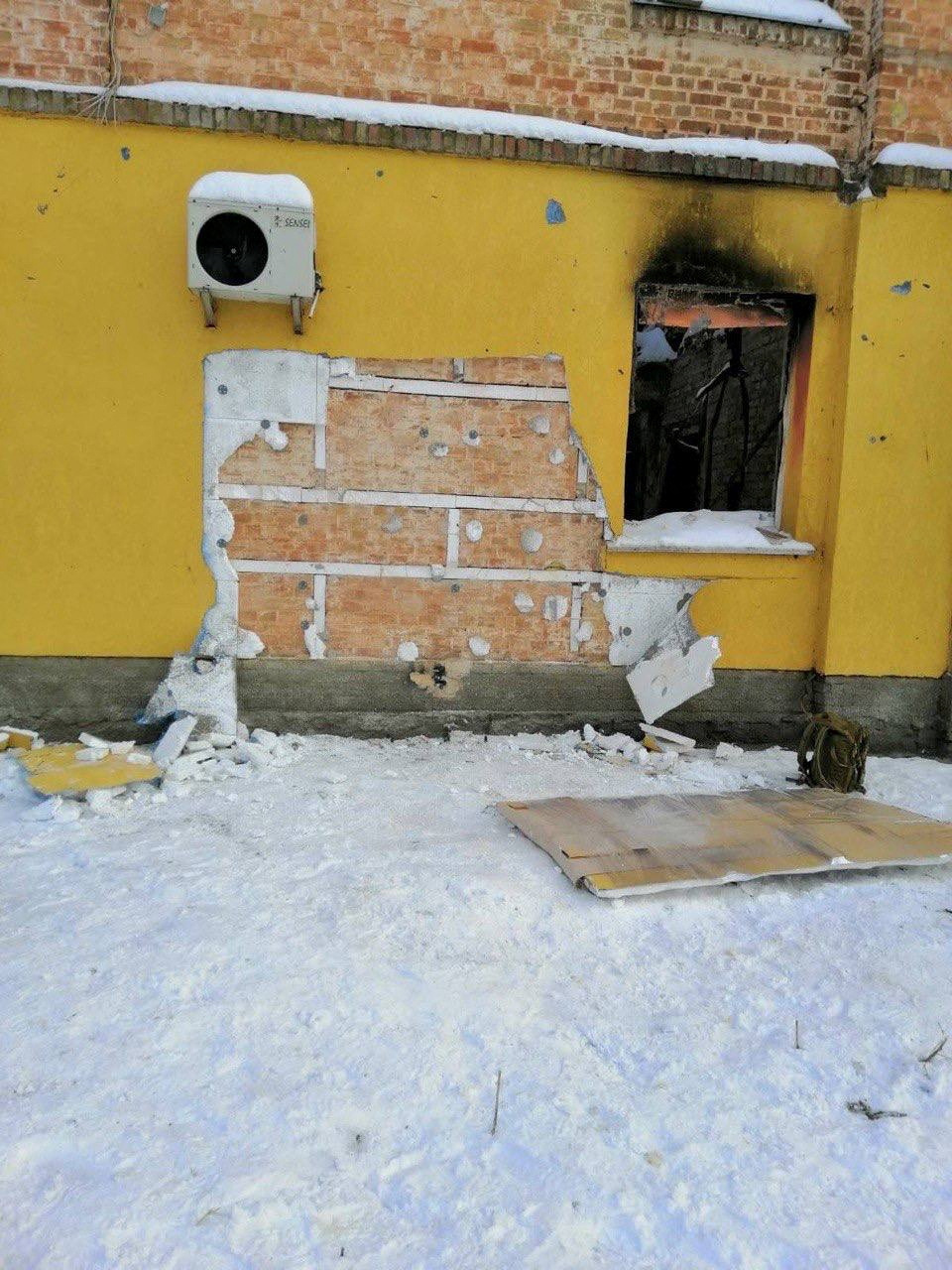
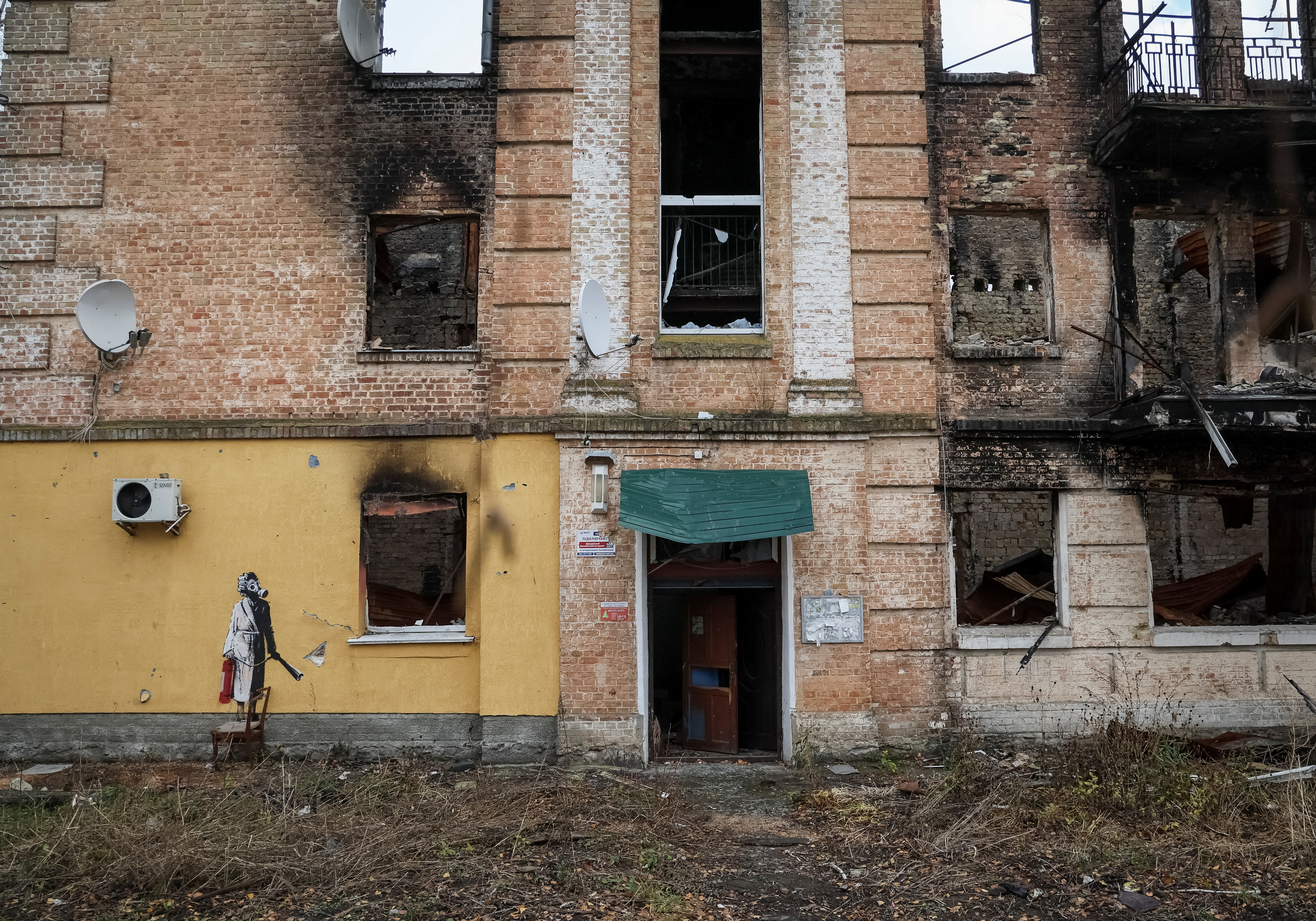
A group of people tried to take a mural by graffiti artist Banksy in Ukraine on Friday by cutting it off a battle-scarred wall where it was painted, the governor of Kyiv region said.
The group managed to slice off a section of board and plaster bearing the image of a woman in a gas mask and dressing gown holding a fire extinguisher on the side of a scorched building.
But they were spotted at the scene in the city of Hostomel near Kyiv and the mural was retrieved, Oleksiy Kuleba said in a statement.
The image was still intact and police were protecting it, he added.
“These images are, after all, symbols of our struggle against the enemy … We’ll do everything to preserve these works of street art as a symbol of our victory,” he said.
Banksy, whose work can sell for millions of dollars on the art market, confirmed he had painted the mural and six others last month in places that were badly affected by heavy fighting after Russia invaded Ukraine in late February.
One of the other murals shows a girl gymnast performing a handstand on a small pile of concrete rubble. Another shows an old man having a bath.
Police published images of the yellow wall in Hostomel, with a large patch cut all the way back to the brickwork. A number of people were arrested at the scene, they said.
Russia’s war in Ukraine is now in its tenth month. Moscow’s forces were pushed back from around Kyiv in the first phase of the war, but fighting rages on in the east and south.
The S&P 500 closed slightly lower on Friday, although major indexes rallied off their worst levels of the day, as the November payrolls report fueled expectations the Federal Reserve would maintain its path of interest rate hikes to combat inflation.
The Labor Department’s jobs report showed nonfarm payrolls rose by 263,000, above expectations of 200,000 and wage growth accelerated even as recession concerns increase.
The U.S. unemployment rate remained unchanged, as expected, at 3.7%.
“Wage growth has been in an uptrend since August,” said Brian Jacobsen, senior investment strategist at Allspring Global Investment in Menomonee Falls, Wisconsin.
“We will have to see that trend reverse for the Fed to be comfortable with a pause. Until then, they’ll continue to taper towards a pause.”
Investors have been looking for signs of weakness in the labor market, especially wages, as a precursor to faster cooling of inflation that will enable the Fed to slow and eventually stop its current rate hike cycle.
Stocks had rallied earlier in the week after Fed Chair Jerome Powell’s comments on scaling back interest rates hikes as early as December.
According to preliminary data, the S&P 500 (.SPX) lost 5.17 points, or 0.13%, to end at 4,071.40 points, while the Nasdaq Composite (.IXIC) lost 20.76 points, or 0.18%, to 11,461.69. The Dow Jones Industrial Average (.DJI) rose 26.73 points, or 0.08%, to 34,421.74.
Still, equities ended the session off their lowest levels of the day that saw each of the major indexes tumble at least 1%.
“If anything, I am actually encouraged by how the market is clawing its way back from the level we were at today. It is another indication the market is looking for at least a seasonal December rally,” said Sam Stovall, chief investment strategist at CFRA in New York.
“The market is beginning to look across the valley and say, ‘OK, a year from now the Fed will likely be on hold and considering cutting rates.'”
The rate-setting Federal Open Market Committee meets on Dec. 13-14, the final meeting in a volatile year that saw the central bank attempt to stifle the fastest rate of inflation since the 1980s with record interest rates increases.
Even with Friday’s weakness, the major averages notched a second straight week of gains.
Growth and technology companies such as Apple Inc (AAPL.O), down and Amazon (AMZN.O) were pressured by concerns over rising rates. The S&P 500 growth index (.IGX) declined while technology shares (.SPLRCT) were the worst performing among the 11 major S&P 500 sectors.
Ford Motor Co (F.N) declined on lower vehicle sales in November, while DoorDash Inc (DASH.N) was lower after RBC downgraded the food delivery firm’s stock.
Advertisements – Advertising at The News And Times – advertising-newsandtimes.com | WE CONNECT!
Audio | Video | Top News | On Twitter | Security | FBI | Capitol Riot | JOSSICA | Trump | Russia | Putin | Russia – Ukraine War | Covid-19 | Brooklyn NY | Puerto Rico | World
September 23, 2026 5:33 am
The News And Times | Featured Posts | All Articles | Current News | Selected Articles | Shared Links | Opinions | In My Opinion | Sites | Blogs | Links | Twitter | Facebook

Contact Form | Blogs | Sites | News Reviews | Links | Advertising
All The News That’s Fit To Web