
Categories
Audio Sources - Full Text Articles

Negotiations begin for a global treaty on plastic pollution

On Friday afternoon more than 2,000 experts will wrap up a week of negotiations on plastic pollution at one of the largest global gatherings ever to address what even industry leaders in plastics say is a crisis.

It was the first meeting of a United Nations committee set up to draft what is intended to be a landmark treaty to bring an end to plastic pollution globally.

“If we look 30 years from now, we’re set to have four times more plastic. We’re in an extremely unfortunate situation. So you must have a global approach to this,” said Björn Beeler, who was at the meeting as the international coordinator for the International Pollutants Elimination Network, or IPEN.

Entire beaches on what used to be pristine islands are now mounded with trash. Examination of a random handful of sand in many places reveals pieces of plastic.

The United Nations Environment Programme held the meeting of the Intergovernmental Negotiating Committee in a city known for its beaches, Punta del Este, Uruguay, from Monday through Friday.

Delegates from more than 160 countries, plastic industry representatives, environmentalists, scientists, waste pickers, tribal leaders and others affected by the pollution attended in person or virtually. Waste pickers are seeking recognition of their work and a just transition to fairly-remunerated, healthy and sustainable jobs.

Even in this first meeting of five planned over the next two years, factions came into focus. Some countries pressed for top-down global mandates, some for national solutions and others for both. If an agreement is eventually adopted, it would be the first legally-binding global treaty to combat plastic pollution.

Leading the industry point of view was the American Chemistry Council, a trade association for chemical companies. Joshua Baca, vice president of the plastics division, said companies want to work with governments on the issue because they also are frustrated by the problem. But he said they won’t support production restrictions, as some countries want.

“The challenge is very simple. It is working to ensure that used plastics never enter the environment,” Baca said. “A top-down approach that puts a cap or a ban on production does nothing to address the challenges that we face from a waste management perspective.”

The United States, a top plastic-producing country, wants national action plans to end plastic pollution so that governments can prioritize the most important sources and types of plastic pollution.

Most plastic is made from fossil fuels. Other plastic-producing and oil and gas countries also called for putting the responsibility on individual nations. China’s delegate said it would be hard to effectively control global plastic pollution with one or even several universal approaches.

Saudi Arabia’s delegate also said each country should determine its own action plan, with no standardization or harmonization among them. Plastic plays a vital role in sustainable development, the delegate said, so the treaty should recognize the importance of continuing plastic production while tackling the root cause of the pollution, which he identified as poor waste management.

Some referred to these countries as the “low ambition” group. Andrés Del Castillo, senior attorney at the Center for International Environmental Law, said that while national plans are important, they should not be the treaty’s backbone because that’s the system — or lack of one — that the world already has.

“We don’t see a point of meeting five times with experts all around the world to discuss voluntary actions, when there are specific control measures that are needed that can aim to reduce, then eliminate plastic pollution in the world,” he said after participating in the discussions Thursday. “It’s a transboundary problem.”

The self-named “high ambition coalition” of countries want an end to plastic pollution by 2040, using an ambitious, effective international legally-binding instrument. They’re led by Norway and Rwanda.

Norway’s delegate to the meeting said plastic production and use must be curbed, and the first priority should be to identify which plastic products, polymers and chemical additives would bring the fastest benefit if phased out.

African nations, Switzerland, Costa Rica, Ecuador, Peru and others called for a global approach too, arguing that voluntary and fragmented national approaches won’t address the magnitude of plastic pollution. Small island countries that rely on the ocean for food and livelihoods spoke of being overwhelmed by plastic waste washing up on their shores. Developing countries said they need financial support to combat plastic pollution.

Australia, the United Kingdom and Brazil said international obligations should complement national action.

Tadesse Amera, an environmental scientist, said the treaty should address not only waste but the environmental health issues posed by chemicals in plastics as the products are used, recycled, discarded or burned as waste. Amera is the director of Pesticide Action Nexus Association Ethiopia and IPEN co-chair.

“It’s not a waste management issue,” he said. “It’s a chemical issue and a health issue, human health and also biodiversity.”

People from communities impacted by the industry went to the meeting to ensure their voices are considered throughout the treaty talks. That group included Frankie Orona, executive director of the Society of Native Nations in Texas.

“There’s a lack of inclusion from those that are directly negatively impacted by this industry. And they need to be at the table,” he said. “A lot of times they have solutions.”

Orona said the talks seem focused, so far, on reducing plastic, when governments should aim higher.

“We need to completely break free from plastics,” he said.

The next meeting is planned for the spring.

__

Associated Press climate and environmental coverage receives support from several private foundations. See more about AP’s climate initiative here. The AP is solely responsible for all content.

Categories
Audio Sources - Full Text Articles

Seventy-six Russian projectiles fired at Sumy region over past day

630_360_1670013826-996.jpg

On December 2, 2022, Russian invaders fired 76 mortar bombs and shells at the Sumy region’s border spots.

The related assertion was manufactured by Sumy Regional Navy Administration Head Dmytro Zhyvytskyi on Telegram, an Ukrinform correspondent studies.

The adhering to communities came below enemy hearth: Seredyna-Buda, Znob-Novhorodske, Krasnopillia and Bilopillia.

In unique, the enemy released 1 mortar strike and 22 self-propelled artillery strikes on the Seredyna-Buda group. No destructions were documented.

In 1 of border settlements in the Krasnopillia community, the Russian military dropped an explosive gadget, employing a quadcopter. No casualties or destructions had been claimed.

Also, Russians fired twenty-one particular 120-mm mortar shells at the Znob-Novhorodske group, possessing induced harm to area warehouse facilities in 1 of villages. Just after 07:00 p.m., the enemy opened hearth with many start rocket methods (MLRS) (6 explosions) and self-propelled artillery (4 explosions) on that very village. No casualties had been documented.

Russian troops also fired 21 projectiles with cannon artillery at the Bilopillia neighborhood. No casualties amid civilians ended up described.

mk

Source link

The post Seventy-six Russian projectiles fired at Sumy region over past day appeared first on Ukraine Intelligence.

Categories
Audio Sources - Full Text Articles

Georgia Senate runoff: Final campaign push in the home stretch

(NewsNation) — It’s the home stretch in Georgia, and both Herschel Walker and Senator Raphael Warnock are making their final push to lock up the last Senate seat up for grabs.

After bringing in former President Barack Obama last night, Warnock spent the day stumping in Savannah.

Walker was also out on the campaign trail, telling supporters it is time for a change. He was flanked by Republicans from across the country last night, including South Carolina Senator Lindsey Graham.

“They’re taking you down that elevator telling you this is the new normal. This is not the normal. We can do better. We can do better,” Walker said. “Gotta vote. Gotta vote. Gotta vote.”

The latest poll from The Hill and Emerson College has Senator Warnock leading by just two percentage points. Turnout has been high — with well over a million votes already cast and several single-day turnout records shattered.

Gabriel Sterling, the secretary of state’s chief operating officer, said a high turnout at the polls was expected.

“We expected to see a pretty high turnout,” Sterling said. “We’re the only bill of the ball. Every political dollar in a America is being spent in Georgia.”

Sterling said the election so far has been running smoothly.

In regards to money, big bucks are pouring into the Peach State to the tune of $80 million, according to numbers from the firm AdImpact analyzed by NPR.

But Georgia has been in the crosshairs of election deniers. Two years ago, President Joe Biden pulled off an upset win in the state — causing some to share unproven claims the election was stolen and others to threaten violence.

Sterling said this two years ago this month: “A 20-something tech in Gwinnett County today has death threats and a noise put outside saying he should be hung for treason because he was transferring a report on batches from an emu to a county computer so he can read it. It has to stop.”

Today, he says most of that has settled down.

“It’s not nearly the level we saw two years,” Sterling said. “Right wrong or indifferent there were people who didn’t believe in the election system in Georgia how do you get those people back to believing in the election system in the state.”

According to Sterling, it’s a question of time and effort.

“Frankly there’s three things in an election people judge them by,” he said. “Are they fast, are they air, and did my guy win. So we can do the fast and fair part but the did my guy win is kinda out of my hands and the voters hands.”

Categories
Audio Sources - Full Text Articles

Flu season worsens as 44 states report high activity

NEW YORK (AP) — The U.S. flu season keeps getting worse.

Health officials said Friday that 7.5% of outpatient medical visits last week were due to flu-like illnesses. That’s as high as the peak of the 2017-18 flu season and higher than any season since.

The annual winter flu season usually doesn’t get going until December or January, but this one began early and has been complicated by the simultaneous spread of other viruses.

The measure of traffic in doctor’s offices is based on reports of symptoms like coughs and sore throats, not on lab-confirmed diagnoses. So it may include other respiratory illnesses.

That makes it hard to compare to flu seasons from before the COVID-19 pandemic. Other years also didn’t have this year’s unusually strong wave of RSV, or respiratory syncytial virus, a common cause of cold-like symptoms that can be serious for infants and the elderly.

Meanwhile, 44 states reported high or very high flu activity last week, the Centers for Disease Control and Prevention said Friday.

That may not bode well for the near future. It’s likely there was more spread of respiratory viruses during Thanksgiving gatherings and at crowded airports, experts say.

The dominant flu strain so far is the kind typically associated with higher rates of hospitalizations and deaths, particularly in people 65 and older.

The CDC estimates there have been at least 78,000 hospitalizations and 4,500 deaths from flu so far this season. The deaths include at least 14 children.

Flu shots are recommended for nearly all Americans who are at least 6 months old or older.

___

The Associated Press Health and Science Department receives support from the Howard Hughes Medical Institute’s Science and Educational Media Group. The AP is solely responsible for all content.

Categories
Audio Sources - Full Text Articles

Uruguay beats Ghana 2-0 at World Cup but both teams out

AL WAKRAH, Qatar (AP) — Uruguay and Luis Suarez were eliminated from the World Cup despite a 2-0 win over Ghana on Friday.

The result also put Ghana out of the competition.

Suarez played a key role in both first-half goals for Uruguay scored by Giorgian De Arrascaeta.

Uruguay was in a position to go through until South Korea’s late goal gave it a 2-1 win over Portugal in the other Group H game. That meant Uruguay needed to score one more goal in the dying minutes of its game to qualify.

It didn’t and Suarez was distraught on the sidelines and covered his face with his shirt having been substituted in what was likely his last World Cup appearance.

___

AP World Cup coverage: https://apnews.com/hub/world-cup and https://twitter.com/AP_Sports

Categories
Audio Sources - Full Text Articles

Julia Reichert, Oscar-winning documentarian, dies at 76

Julia Reichert, the Oscar-winning documentary filmmaker behind “American Factory” whose films explored themes of race, class and gender, often in the Midwest, has died. She was 76.

She died Thursday night in Ohio from cancer, her family said Friday through a representative. She was diagnosed with stage four urothelial cancer in April 2018.

Often called the “godmother of American independent documentaries,” Reichart told the stories of ordinary Americans, from autoworkers dealing with both plant closures (2009′s “The Last Truck: Closing of a GM Plant”) and foreign investors (2019′s “American Factory”), to members of the American Communist Party (1983′s “Seeing Red”) to female labor activists in the 1930s (1976′s “Union Maids”).

In her 50 years of filmmaking, Reichert won two Primetime Emmy Awards and was nominated for four Oscars, winning one with her partner Steven Bognar for “American Factory” in 2020. She quoted “The Communist Manifesto” in her speech, saying “things will get better when workers of the world unite.”

She was also nominated for two Peabody Awards.

Veteran film producer Ira Deutchman wrote on Twitter that she was one of “the kindest, most generous people I’ve ever had the pleasure to work with.”

“Her spirit was so indominable that somehow I thought she would eventually triumph over her illness,” he added. “I will miss her so much.”

“RBG” director Julie Cohen tweeted that she was “reflecting on the life of a woman who made an enormous contribution to the world of documentary. And the world generally.”

Born in 1946 in Princeton, New Jersey, and raised in Bordentown and Long Beach Island with her three brothers, Reichert started finding her voice as a filmmaker at Antioch College in Yellow Springs, Ohio, beginning her long residency in the state.

Her first film, “Growing Up Female” was a 49-minute student film made for $2,000 with then-partner Jim Klein that looked at the lives of six women, ages 4 through 35, and their socialization.

When they couldn’t find distribution, they founded their own company, New Day Films, which is still active to this day. In 2011, “Growing Up Female” was added to the Library of Congress’s National Film Registry and is considered the first feature documentary of the modern women’s liberation movement.

“I came of age in the ’60s. Millions of us saw racism, saw U.S. domination around the world. Imperialism. Saw huge inequalities class wise. We said the system’s not working and we became, in some broad sense, revolutionaries,” Reichert told the radio station WYSO last year. “Not that we wanted to attack the White House but we really wanted to change society.”

She and Bognar worked for eight years to make the 225-minute-long, Primetime Emmy Award-winning “A Lion in the House,” which looked at five families dealing with childhood cancer in Ohio.

“American Factory” put Reichert and Bognar in a different kind of spotlight when Barack and Michelle Obama took interest in their film about an Ohio auto glass factory that had been purchased by a Chinese investor. It became the first project the Obamas backed with their production company Higher Ground.

“One of the many things I love about this film … is that you let people tell their own story,” the former first lady said in 2019. ”‘American Factory’ doesn’t come in with a perspective. It’s not an editorial. I mean, you truly let people speak for themselves, and that is a powerful thing that you don’t always see happen.”

More recently Reichert and Bognar directed “9to5: The Story of a Movement,” about an organization that is trying to improve working conditions and maintain rights for women and families, and “Dave Chappelle: Live in Real Life,” following the comedian’s Yellow Springs shows in 2020 during the pandemic.

Throughout her career, Reichert made sure to pass on her wisdom to others, teaching film at Wright State University from 1985 through 2016 and writing a book about self-distribution called “Doing It Yourself.”

Reichert had been diagnosed with stage 4 non-Hodgkin lymphoma in January 2006, while preparing to go to Sundance with “A Lion in the House,” but went into remission later that year.

The urothelial cancer, she knew, was incurable. In 2020, she told NPR’s Terry Gross that now that she was coming to the end of her life, she was focusing on things she hadn’t been able to do enough while making films, like spending time with her daughter and grandchildren.

Reichert is survived by Bognar, her daughter Lela Klein Holt and two grandchildren.

Categories
Audio Sources - Full Text Articles

Trump“s company benefited from tax fraud, prosecutor says at end of trial

2022-12-02T17:45:54Z

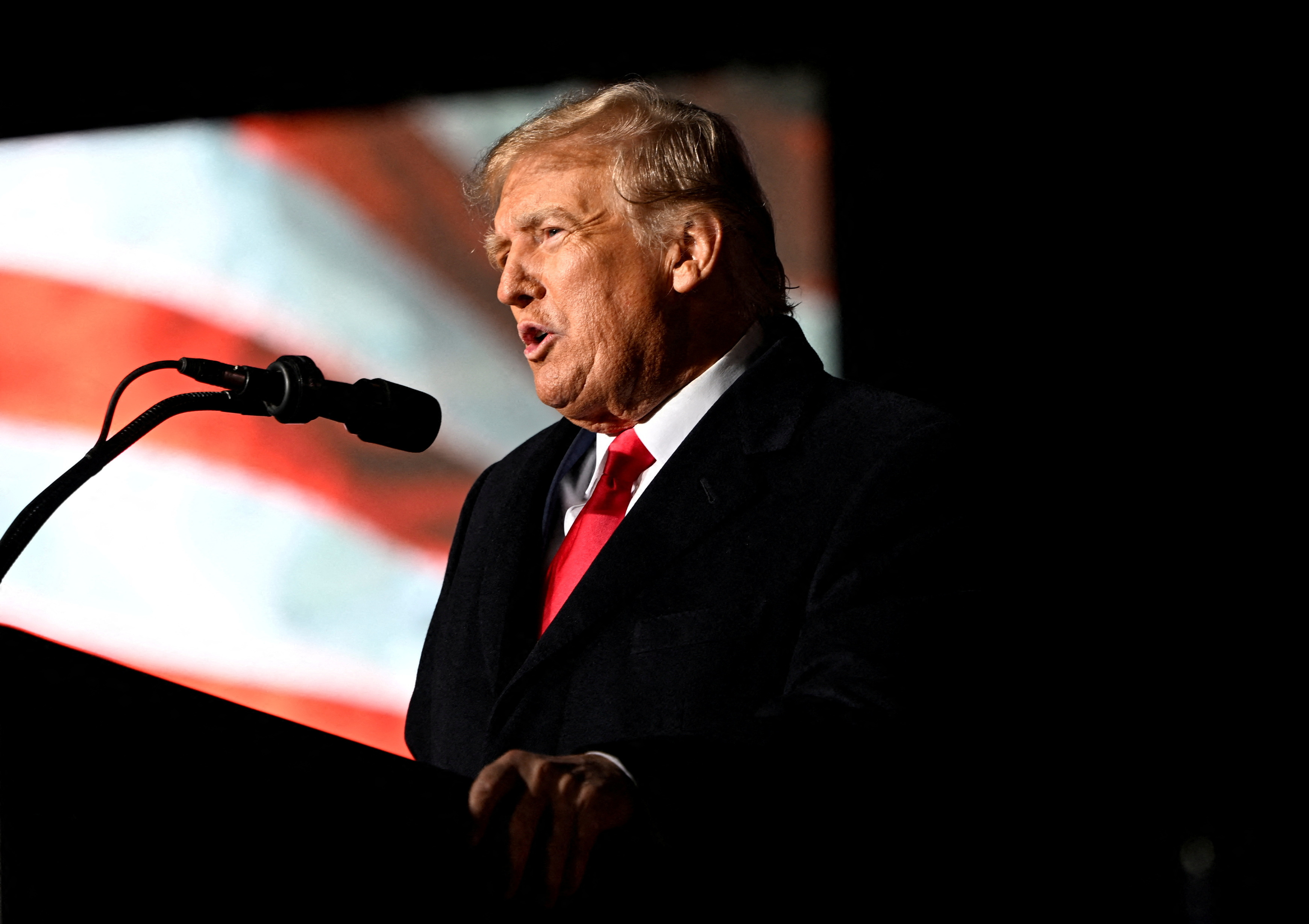
Former U.S. President Donald Trump speaks at a rally to support Republican candidates ahead of midterm elections, in Dayton, Ohio, U.S. November 7, 2022. REUTERS/Gaelen Morse/

The Trump Organization reaped substantial benefits from a 15-year tax fraud scheme, a prosecutor said near the end of the trial of former U.S. President Donald Trump’s real estate company, countering defense claims that a rogue executive acted for himself.

Joshua Steinglass, from the Manhattan district attorney’s office, told jurors in his closing argument that the scheme helped Trump’s company keep salaries down, shift tax deductions to Trump entities such as his Mar-a-Lago club, reduce payroll taxes, and keep executives happy and loyal.

“The entire defense strategy here is to promote the notion that Weisselberg did it for Weisselberg,” Steinglass told the jury in a New York state court in Manhattan. “Has a nice ring to it, but it’s just not grounded in reality,” he said, referring to Allen Weisselberg, the company’s longtime chief financial officer, who pleaded guilty and testified for the prosecution.

The Trump Organization has pleaded not guilty to paying personal expenses for some executives without reporting the income, and compensating them as if they were independent contractors. Trump was not personally charged.

Steinglass told jurors that Trump executives other than Weisselberg were involved, saying the company’s chief operating officer and a former general counsel received Christmas bonuses as if they were independent contractors.

If convicted on all nine counts it faces, Trump’s company faces up to $1.6 million in fines.

Steinglass is expected to finish his closing argument on Friday, with the jury beginning deliberations on Monday.

Defense lawyers had told jurors on Thursday that Weisselberg’s intent was to benefit himself and not the company.

Susan Necheles, one of the lawyers, cited Weisselberg’s testimony that he acted out of greed and was embarrassed about betraying the trust of the Trump family, for whom it had worked for nearly five decades.

But Steinglass highlighted Weisselberg’s testimony that Trump’s company saved hundreds of thousands of dollars by covering his $7,000 monthly rent on a luxury Manhattan apartment and other expenses, instead of giving him a raise.

He also said the scheme helped executives slash their personal tax bills.

“The smorgasbord of benefits is designed to keep its top executives happy and loyal,” Steinglass said.

Weisselberg, 75, also testified that the company paid for a car lease for his wife, prepared a bogus wage statement so she could claim social security benefits, and paid for his son’s apartment.

“The corporations are now paying him less out of pocket, and as he told you explicitly, that was a benefit to them,” Steinglass said.

Weisselberg is expected to serve five months in jail after pleading guilty to tax fraud and other charges. He is on paid leave and hopes to get another $500,000 bonus in January.

Trump, a Republican, has called the charges politically motivated. Manhattan District Attorney Alvin Bragg is a Democrat, as is his predecessor Cyrus Vance, who brought the charges last year.

The case is separate from New York Attorney General Letitia James’s $250 million civil lawsuit accusing Trump, three of his adult children and his company of overstating asset values and Trump’s net worth to get favorable bank loans and insurance coverage.

Trump also faces federal investigations into his removal of government documents from the White House after leaving office and efforts to overturn his 2020 election loss, and a Georgia state probe over attempts to undo his election defeat there.

Categories
Audio Sources - Full Text Articles

In Israel, a scandal over Netflix’s choice to stream a film depicting the 1948 murder of a Palestinian family

Farha-hero.jpg

Farha, the debut feature film of Jordanian filmmaker Darin J. Sallam, made headlines even before it began streaming on Netflix Dec. 1.

The film depicts the story of a young Palestinian girl who witnesses Israeli soldiers murder a family during the 1948 Arab-Israeli War that resulted in the creation of the state of Israel and which Arabs refer to as the Nakba (catastrophe). It is a work of historical fiction and has been marketed as “inspired by real events,” aiming to present the dominant Palestinian view of the war. But Israeli politicians are irate at the film, and that the Al Saraya Theater in Jaffa, Tel Aviv — a cultural venue that receives state subsidies — screened it. 

“It’s crazy that Netflix decided to stream a movie whose sole purpose is to create a false pretense and to incite against Israeli soldiers,” said outgoing finance minister Avigdor Lieberman.

The film shows “lies and libels,” outgoing culture minister Hili Tropper told The Times of Israel, calling Al Saraya’s plan to screen it on Nov. 30 “a disgrace.” Nataly Dadon, a model and Instagram influencer, joined a campaign to cancel Netflix subscriptions, saying: “The Jewish people” never “carried out purges, murdered innocent people for no reason and out of sheer cruelty!”

The outcry is not surprising. The Israeli-Palestinian conflict is largely a war over narrative, land and history. Jewish Israeli society is largely intolerant of the Palestinian perspective on the war, and teaching about the Nakba is criminalized by a 2011 “Nakba Law” that bans any entity that receives state funding from supporting activities that mark Israeli Independence Day as a day of mourning.

While the exact events in the film may not have happened, it is not a lie, nor libelous, to say that Palestinian civilians, including women and children, were killed during the creation of the state. Efforts by Jewish Israelis to suppress this narrative only further entrench existing hostility and calcify any efforts toward coexistence.

“No reasonable person still believes there were no acts of expulsion and massacre by the Jewish side in the 1948 war,” Israeli historian Benny Morris has written of his country’s earlier attempts to hide this history.

Farha is told from the perspective of the 14-year-old titular character, a young girl living in Palestine in 1948. The first third of the film feels like it belongs in a wholly different movie both in tone and content: It deals solely with her resistance to getting married, and her desire to go to school in an unnamed city with her friend Fareeda.

The first 20 minutes show a largely idyllic village life picking figs, celebrating an engagement, and learning Quran. The peace is broken by British soldiers driving in a convoy past her village, and her father has hushed meetings over tea with Palestinian fighters, yet the emotional stakes are conveyed in wooden dialogue about resisting tradition and dreams of education.

The war comes suddenly to Farha’s unnamed village. We see and hear bullets flying, people flee screaming and Farha’s father attempts to have her flee with Fareeda by car. When Farha resists, he takes her home and locks her in their pantry, promising that he will return. The majority of the film is a claustrophobic thriller: Farha, trapped inside a small space and surviving on olives, pickle brine and rainwater, can only wonder at the terror happening outside.

From the outcry on social media, though, I had expected a film rife with antisemitic tropes and accusations of blood libel. However, Israelis are not directly mentioned, nor seen, until nearly 50 minutes into the 91-minute film.

We only hear Farha’s father, Abu Farha, the mukhtar (mayor) of the village, make veiled references to the war: “It’s a volatile time.” “They have surrounded the village.” Farha does not shy away from embellishing the violence of the Nakba, but the substantive actions of the Jewish soldiers it portrays are accurate, according to mainstream views among both Israeli and Palestinian historians.

Certain details in the most discussed scene in Farha, where Israeli soldiers murder a Palestinian family, seem designed to exploit the viewer’s emotions — and advance negative tropes about Jews. It feels deliberate that the only Israeli soldier in the group who is wearing a kippah is the one who is ordered to murder a newborn baby (he doesn’t). 

While there are a few documented cases of Israeli soldiers killing Palestinians by firing squad during the 1948 war, I felt nauseous watching a female soldier pull off the Palestinian mother’s earrings before lining her up to be shot along with her family. The scene is extremely difficult to watch, and certainly intentional: We watch in horror as Farha, played by Karam Taher, catches only glimpses of the murder through a crack in her pantry door.

Farha makes no effort to humanize the soldiers, and these characters’ cruelty made me uncomfortable. The 15 minutes devoted to this scene suggests the director was purposefully trying to depict the soldiers who helped create the Jewish state as violent brutes. 

Still, the painful reality is that some Israeli soldiers did kill men, women and children on the path to creating a Jewish state. 

The closing title card of the film states that “Farha (whose name is Radiyyeh in the original events) made it to Syria, where she shared her story to keep it alive for generations to come.” The writer and director, Sallam, has said Radiyyeh was a friend of her mother’s, and that the film is a creative depiction of a true story that has haunted her since childhood.

Farha is Jordan’s 2022 Oscar submission for best foreign film, a choice I suspect was made largely due to politics rather than the quality of the film itself. The acting, particularly in the pinnacle scene with the Israeli soldiers, is poor.

Too few Palestinian stories make it to Netflix (though the Palestinian American comedy Mo is excellent), and Farha is the first major narrative film to depict the 1948 war from a Palestinian point of view. 

Despite the clunky filmmaking and problematic portrayal of Israelis, I still believe that stories about the Palestinian perspective of Israeli statehood deserve to be made. Hopefully subsequent filmmakers will be more skillful and less propangandistic than Sallam. 

In a statement defending the decision to screen the film, the manager of the Al Saraya theater in Jaffa, Mahmoud Abo Arisheh, said: “We are committed to defending our right to exist and to express ourselves … we are committed to the freedom of art, all art.”

A true democracy, a state that is actually living its Jewish values, would know that truth is not in black and white, but gray. Looking at the past through the eyes — and art — of their neighbors will only deepen their understanding of the other, something both Israelis and Palestinians desperately need.

I do not believe the state of Israel to be so fragile that a film will destroy it. In a conflict with two wildly divergent narratives of Israel’s origins, attempts to censor one point of view over the other only causes Israeli humanity to atrophy.

The post In Israel, a scandal over Netflix’s choice to stream a film depicting the 1948 murder of a Palestinian family appeared first on The Forward.

Categories
Audio Sources - Full Text Articles

AP PHOTOS: World Cup highlights from Day 13

Categories
Audio Sources - Full Text Articles

New York Film Critics Circle names ‘Tár’ best picture

The New York Film Critics Circle has named “ Tár ” as its best picture of the year, with Todd Field’s contemporary drama about a renowned conductor and composer also nabbing best actress for Cate Blanchett’s leading performance.

The group met Friday in New York to vote on and announce its selections for the year.

Best director went to S. S. Rajamouli for the Telugu-language action film “ RRR.” Laura Poitras’ Nan Goldin documentary “ All the Beauty and the Bloodshed ” was named best nonfiction film and “EO,” a Polish drama about a donkey, won best foreign language film.

Colin Farrell won best actor for two of his performances this year, in Kogonada’s future-set sci-fi drama “ After Yang,” in which he plays a father trying to repair his young daughter’s android, and in Martin McDonagh’s “ The Banshees of Inisherin,” where he is suddenly defriended by his longtime pal (Brendan Gleeson).

McDonagh also won best screenplay for the film about the ripple effects the friendship breakup has on the inhabitants of a small island off the west coast of Ireland in 1923.

Farrell, Blanchett, McDonagh and Poitras all also won awards at the Venice Film Festival in September.

Ke Huy Quan was named best supporting actor for his turn in “Everything Everywhere All At Once,” close on the heels of his Gotham Award, while Keke Palmer got best supporting actress for Jordan Peele’s thriller “Nope.”

“Today’s NYFCC winners reflect the broad range of our tastes, as well as what’s exciting audiences at cinemas today,” NYFCC Chair Jordan Hoffman said in a statement.

The group is known for spreading awards across a wide swath of the year’s films: Even “Top Gun: Maverick” picked up an award, for Claudio Miranda’s cinematography.

Other winners included Charlotte Wells’ “ Aftersun,” selected as best first film, and Dean Fleischer-Camp’s “ Marcel the Shell with Shoes On ” for best animated film.

The jailed Iranian filmmaker Jafar Panahi was also singled out for a special award “for his dogged bravery as an artist, and for the humanity and beauty of a body of work created under the most oppressive circumstances.”

The New York Film Critics Circle, founded in 1935, is the oldest critics group in the country, with members from newspapers, magazines and online publications. The group will hand out its awards at a dinner in early January.

Last year, the group chose Ryusuke Hamaguchi’s “Drive My Car” as its best picture and Kelly Reichardt’s “First Cow” the year before that.

WP Radio
WP Radio
OFFLINE LIVE