Categories
Audio Sources - Full Text Articles

G7 coalition agrees $60 per barrel price cap for Russian oil

2022-12-02T23:48:51Z

The Group of Seven (G7) nations and Australia on Friday said they had agreed a $60 per barrel price cap on Russian seaborne crude oil after European Union members overcame resistance from Poland and hammered out a political agreement earlier in the day.

The EU agreed the price after holdout Poland gave its support, paving the way for formal approval over the weekend.

The G7 and Australia said in a statement the price cap would take effect on Dec. 5 or very soon thereafter.

The nations said they anticipated that any revision of the price would include a form of grandfathering to allow compliant transactions concluded before the change.

“The Price Cap Coalition may also consider further action to ensure the effectiveness of the price cap,” the statement read. No details were immediately available on what further actions could be taken.

The price cap, a G7 idea, aims to reduce Russia’s income from selling oil, while preventing a spike in global oil prices after an EU embargo on Russian crude takes effect on Dec. 5.

Warsaw had resisted the proposed level as it examined an adjustment mechanism to keep the cap below the market price. It had pushed in EU negotiations for the cap to be as low as possible to squeeze revenues to Russia and limit Moscow’s ability to finance its war in Ukraine.

Polish Ambassador to the EU Andrzej Sados on Friday told reporters Poland had backed the EU deal, which included a mechanism to keep the oil price cap at least 5% below the market rate. U.S. officials said the deal was unprecedented and demonstrated the resolve of the coalition opposing Russia’s war.

A spokesperson for the Czech Republic, which holds the rotating EU presidency and oversees EU countries’ negotiations, said it had launched the written procedure for all 27 EU countries to formally greenlight the deal, following Poland’s approval.

Details of the deal are due to be published in the EU legal journal on Sunday.

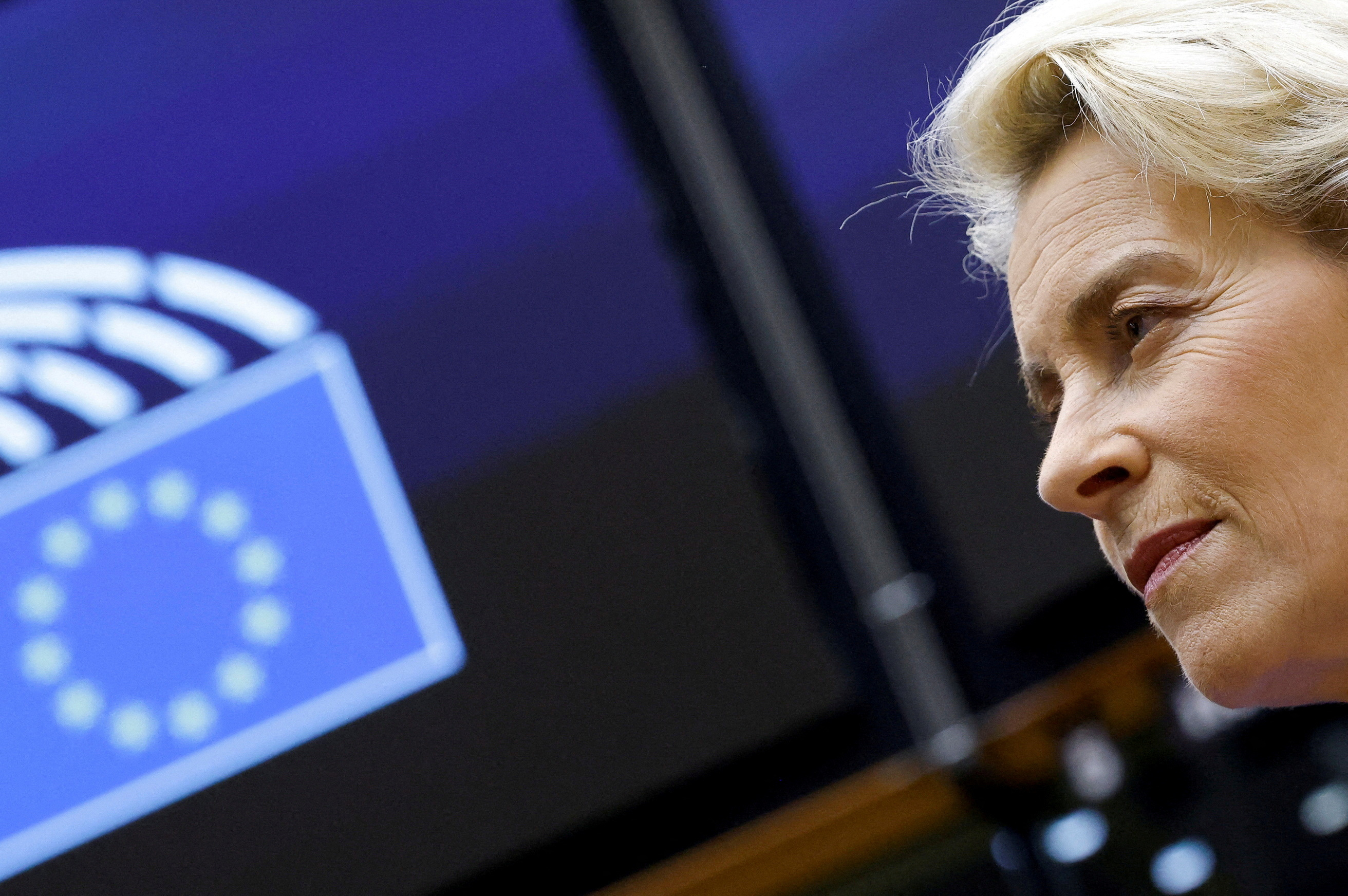
European Commission President Ursula von der Leyen said the price cap would significantly reduce Russia’s revenues.

“It will help us stabilise global energy prices, benefiting emerging economies around the world,” von der Leyen said on Twitter, adding that the cap would be “adjustable over time” to react to market developments.

The G7 price cap will allow non-EU countries to continue importing seaborne Russian crude oil, but it will prohibit shipping, insurance and re-insurance companies from handling cargoes of Russian crude around the globe, unless it is sold for less than the price cap.

Because the most important shipping and insurance firms are based in G7 countries, the price cap would make it very difficult for Moscow to sell its oil for a higher price.

U.S. Treasury Secretary Janet Yellen said the cap will particularly benefit low- and medium-income countries that have borne the brunt of high energy and food prices.

“With Russia’s economy already contracting and its budget increasingly stretched thin, the price cap will immediately cut into Putin’s most important source of revenue,” Yellen said in a statement.

A senior U.S. Treasury Department official told reporters on Friday that the $60 per barrel price cap on Russian seaborne crude oil will keep global markets well supplied while “institutionalizing” discounts created by the threat of such a limit.

The chair of the Russian lower house’s foreign affairs committee told Tass news agency on Friday the European Union was jeopardising its own energy security.

The initial G7 proposal last week was for a price cap of $65-$70 per barrel with no adjustment mechanism. Since Russian Urals crude already traded lower, Poland, Lithuania and Estonia pushed for a lower price.

Russian Urals crude traded at around $67 a barrel on Friday.

EU countries have wrangled for days over the details, with those countries adding conditions to the deal – including that the price cap will be reviewed in mid-January and every two months after that, according to diplomats and an EU document seen by Reuters on Thursday.

The document also said a 45-day transitional period would apply to vessels carrying Russian crude that was loaded before Dec. 5 and unloaded at its final destination by Jan. 19, 2023.

Related Galleries:

An aerial view shows the Vladimir Arsenyev tanker at the crude oil terminal Kozmino on the shore of Nakhodka Bay near the port city of Nakhodka, Russia August 12, 2022. REUTERS/Tatiana Meel/File Photo

Ukraine’s President Volodymyr Zelenskiy and European Commission President Ursula von der Leyen shake hands before meeting, as Russia’s invasion of Ukraine continues, in Kyiv, Ukraine September 15, 2022. REUTERS/Valentyn Ogirenko/File Photo

European Commission President Ursula von der Leyen attends the European Parliament plenary session in Brussels, Belgium November 9, 2022. REUTERS/Yves Herman//File Photo
Categories
Audio Sources - Full Text Articles

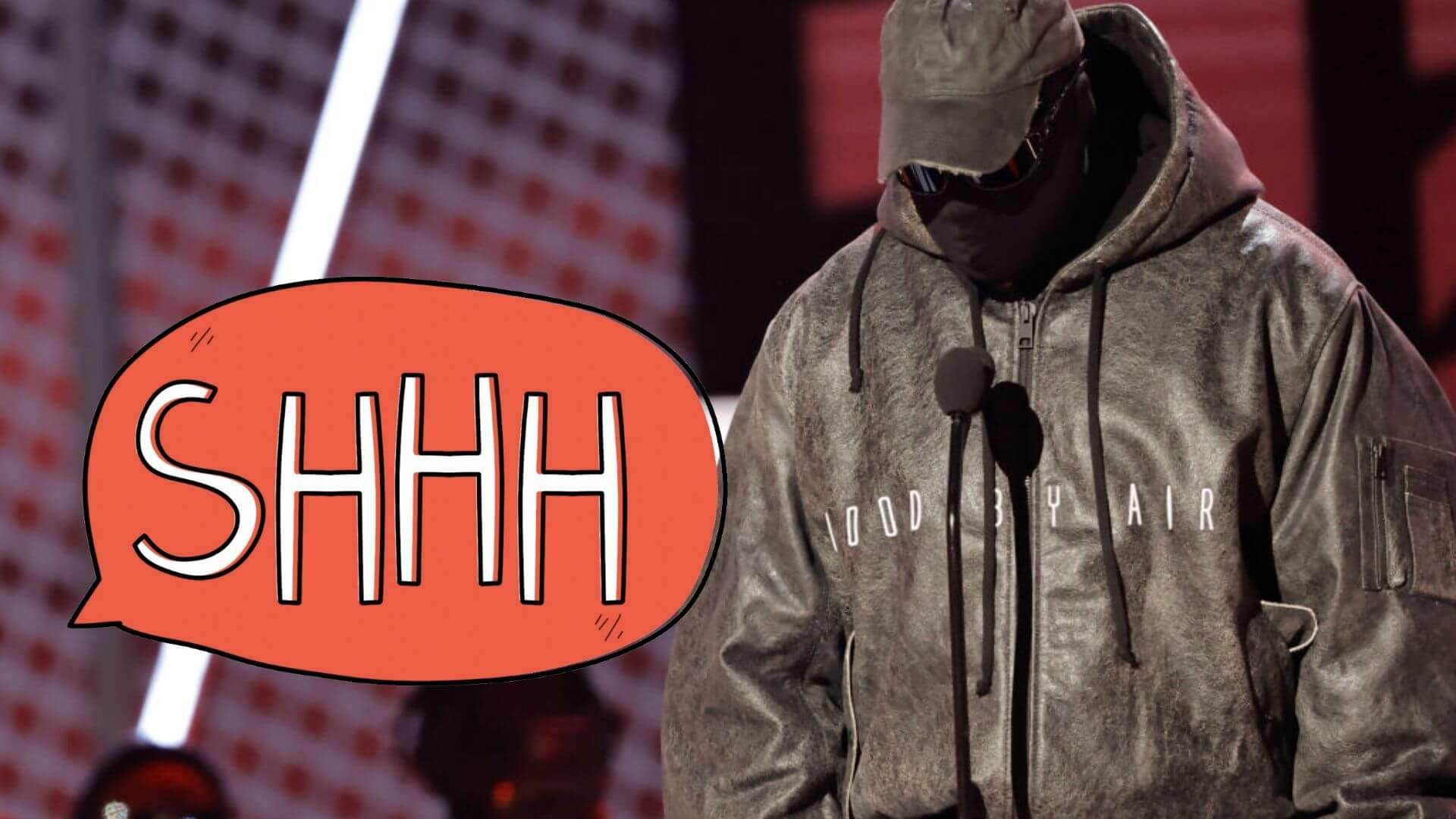
Can we all please shut up about Kanye West now?

Untitled-design-29.jpg

If you had asked me, on Oct. 8, the day Kanye West tweeted that he wanted to go “death con 3” on Jews, how long I’d be writing about the rapper’s antisemitism, I would’ve said maybe a week. I figured that, like most public figures who have made public antisemitic statements, there would be enormous backlash — which there was — and West would feel pressured to give a halfhearted apology and shut up, and we’d all move on.

Nearly two months later, West, who legally changed his name to Ye — a seven-word phrase I’ve written more than seven times — is still making headlines every few days with increasingly bald antisemitism.

It’s exhausting to continue to watch him praise Hitler and invoke age-old antisemitic conspiracies, all while framing himself as a maverick and a truth-teller. Everyone I know is tired of hearing about West; it’s not like anything he says is surprising at this point. But it’s my duty, as a journalist, to continue to cover the rapper — right?

Maybe not. West has been repeatedly pushed off of mainstream platforms in an attempt to quell his tweets and Instagram posts about Jewish power or manipulation. But even as his deplatforming has forced him to more and more fringe platforms, none of that has shut him up, or reduced the spread of his message — because we, the media, keep covering him.

Covering extremism and conspiracy theories requires a delicate balancing act. When celebrities and public figures expose their antisemitic beliefs, it’s certainly newsworthy, and it’s important to track, call out and condemn growing extremism in an attempt to prevent mainstreaming. But any coverage of a conspiracy theory also serves to repeat it and thus, in a way, to elevate it, and spread it to a new audience.

So can we all finally shut up about Kanye West?

Is West’s antisemitism newsworthy?

West is an enormously influential figure, a titan in the music industry and — at least until companies such as Adidas and Balenciaga broke their deals with him — a wealthy business and fashion magnate. So when someone like him, with legions of fans and admirers and a massive platform, begins to spout virulent, blatant antisemitism, it’s dangerous, and definitely newsworthy.

But at this point, West has made it clear that he holds numerous antisemitic beliefs, and that he has no intention of changing his mind or educating himself on the history of the Holocaust or the dangers of conspiracy theories. We’re not learning anything new with each article about his claims. We get it.

There are plenty of people who say antisemitic things all the time. Tucker Carlson promotes the “great replacement theory” conspiracy regularly, and he has an audience of millions. Yet we don’t write an article every time, because it’s a given at this point.

“He’s been saying these things for quite some time,” said Michael Broschowitz, a visiting fellow researching antisemitism at Middlebury College’s Center on Terrorism, Extremism and Counterterrorism. “It’s like getting up in arms because David Duke said something racist. You can’t keep reporting on it.”

West is exposing more and more antisemitic views each time he speaks in public — it wasn’t until he went on Infowars that he so publicly admitted his fondness for Hitler. But it’s still not really news; we’ve known how he feels about Jews since his first tweet about that.

Still, West draws clicks. People email us and comment on our social media posts asking why we keep covering him; my friends and colleagues say they’re tired of the story. But we all keep reading — and in the attention economy that drives digital news, this makes West and his antisemitism hard to stop covering.

Repeating the conspiracy

Still, not everyone has heard the antisemitic ideas that West is sharing. And news articles that detail his tirades run the risk of exposing new audiences to dangerous ideas.

“It can expose them to something that can confirm a bias or get them looking into it,” said Broschowitz.

Broschowitz worried that many news articles didn’t fully contextualize West’s statements. “To the extent that they do, it’s ‘we need to learn about the Holocaust.’ And I’m not sure that’s a great method for teaching the particularities of antisemitism,” he said. “The problem with just talking about the Holocaust is that it doesn’t really explain what the beliefs are, where they came from, why they are politically useful.”

But even articles that do seek to provide context for conspiracy theories such as those promoted by West risk spreading them.

“A lot of the time, debunking information repeats the false information itself,” Alice Marwick, professor of media and technology at the University of North Carolina at Chapel Hill, told me last year when I spoke to her about online extremism.

Deplatforming

In the early days of Donald Trump’s first campaign, very few people took him seriously. Nevertheless, the media covered him, and all of his sexist comments and unhinged tweets. And he got elected.

During the 2020 election, social media platforms attempted to moderate users as they spread disinformation about COVID-19 and voter fraud. But none of them censored Trump when he spread disinformation, echoed white supremacist rhetoric and rallied his supporters to take back the government.

Facebook allows politicians to lie; Twitter allowed politicians to break its content restrictions even before Elon Musk took over and got rid of most content moderation. Anything they say is considered newsworthy, and social media companies hold that there is “significant public interest” in knowing and discussing whatever they say, however horrible — a loophole in most social media moderation policies.

It was only after a mob literally stormed the Capitol that Twitter and Facebook suspended the former president’s accounts. But it worked — once Trump left the White House, without Twitter or Facebook at his fingertips, he struggled to continue to connect with his movement.

There’s no longer a flurry of articles every time he tweets — because he couldn’t. While devout supporters continued to follow him, Trump’s attempt to start his own social media platform, Truth Social, has largely flopped, and he has ceased dominating the discourse.

Deplatforming works. White supremacist Richard Spencer, one of the featured speakers at the Charlottesville Unite the Right rally, claimed he couldn’t afford a lawyer for his trial due to his deplatforming.

Even figures such as Alex Jones or Nick Fuentes, who have founded their own sites after the mainstream internet banned them for hate speech or inciting violence, have had their reach enormously curtailed. People can still seek them out, but they’re much harder to find — most people aren’t familiar with noted white supremacist hangouts.

West has been deplatformed — Elon Musk suspended his Twitter account again on Thursday. The rapper’s major partnerships have dropped him. His agent dropped him. His lawyers dropped him.

Infowars is not a mainstream outlet. West’s followers might have largely missed his statements praising Nazism and Hitler, or his conspiracies about Jewish power on various podcasts and internet talk shows, if not for the numerous news outlets that covered them — and if West fell out of headlines, his influence might begin to ebb.

What’s the point of covering him?

West’s antisemitic tirades have emboldened antisemites to speak freely. Across the country, at baseball games and highway overpasses, antisemitic groups have held signs saying “Kanye is right.”

West’s statements have shaped the conversation around antisemitism in the past two months. Educating people who might otherwise believe what West has said about Jewish power and control is essential to the journalistic mission.

But that doesn’t mean reporting every single tirade West goes on. It means writing in-depth explainers of the history of antisemitism, connecting conspiracies about Jewish power to Nazi propaganda to demonstrate why they’re harmful.

That would mean fewer articles, but better ones. It would also mean that maybe the end is in sight — maybe, soon, I’ll be able to stop writing about Kanye.

The post Can we all please shut up about Kanye West now? appeared first on The Forward.

Categories
Audio Sources - Full Text Articles

Hwang gets the message, South Korea advances at World Cup

DOHA, Qatar (AP) — The sign said it all. Hwang Hee-chan got the message.

A young South Korea fan held up a sign that read “One More Goal” during halftime of the team’s match against Portugal on Friday at the World Cup. The teams were even at 1-1 at the time, but the South Koreans needed another goal to earn a spot in the round of 16.

Hwang delivered the dramatic goal in stoppage time, lifting South Korea to a 2-1 victory and its third trip to the knockout stage of the World Cup.

“I’m glad I was able to give this present to the fans,” said Hwang, who pulled off his jersey and struck a classic muscle-man pose after scoring as thousands of South Korean fans burst into a screaming, cheering frenzy at the north end of Education City Stadium.

It’s South Korea third trip past the group stage at the World Cup. The team reached the semifinals as co-host in 2002 and then made it to the round of 16 in 2010.

Hwang missed the first two group games in Qatar with a hamstring injury, and entered as a substitute in the second half against Portugal.

“In the first match it was impossible for me to play and the pain got worse,” he said. “I did a little running, but I thought I could play the second match, but they held me out.”

He finally made an appearance on Friday. And it turned out to be a match-winning, World Cup-advancing appearance, too.

“It was a little bit of a risk,” Hwang said. “But I didn’t care what happened to me personally. I just wanted to contribute.”

South Korea was heading out of the tournament in the final minutes when a Portugal corner got cleared and Son Heung-min raced down the right side of the field. He slipped a pass through an opponent’s legs and into the path of Hwang, who converted with a low finish.

“When Son got the ball, I was convinced he would pass me the ball,” said Hwang, who said his coaches and teammates gave him confidence as he was about to enter the game.

“They told me I was going to create something,” he said. “A lot of teammates told me they trusted me.”

Cho Gue-sung, who scored two goals in South Korea’s 3-2 loss to Ghana in an earlier group game, summed up what thousands of fans in the stands — and millions at home — were thinking.

“It really feels like a miracle,” Cho said. “Our players really gave their best. Our coaching staff did a great job preparing us and everything came together. Our dreams came true.”

___

AP World Cup coverage: https://apnews.com/hub/world-cup and https://twitter.com/AP_Sports

Categories
Audio Sources - Full Text Articles

Rail strike to be averted: Biden to sign bill

President Joe Biden is signing a bill Friday to avert a freight rail strike that he said could have plunged the U.S. into recession.

The White House said that Biden would sign a measure passed Thursday by the Senate and Wednesday by the House that binds rail companies and workers to a proposed settlement that was reached between the rail companies and union leaders in September.

Members in four of the 12 unions involved rejected the proposed contract, creating the risk of a strike beginning Dec. 9 that the government has likely staved off with the bill signing. A freight rail strike also would have a big potential impact on passenger rail, with Amtrak and many commuter railroads relying on tracks owned by the freight railroads.

The president has said that a strike would have sunk the U.S. economy, causing roughly 750,000 job losses as the work stoppage ruptured supply chains for basic goods, food and the chemicals needed to ensure clean drinking water.

Rising prices already have many Americans afraid of a coming downturn, but the U.S. job market has been steady. The government reported Friday that employers added 263,000 jobs in November as the unemployment rate held at 3.7%.

Though Biden is a staunch union ally, he said the rail order was necessary to prevent a strike.

The Biden administration helped broker deals between the railroads and union leaders in September, but four of the unions rejected the deals. Eight others approved five-year deals and all 12 are getting back pay for their workers for the 24% raises that are retroactive to 2020.

But the absence of a meaningful increase in paid sick leave and other quality-of-life issues was a key concern for many union members whose votes were required for the settlement. The railroads say the unions have agreed in negotiations over the decades to forgo paid sick time in favor of higher wages and strong short-term disability benefits. Union members say railroads could afford the paid leave given their profit margins.

House Democrats narrowly adopted a measure to add seven days of paid sick leave to the tentative agreement, but that change fell eight votes shy of the 60-vote threshold needed for Senate passage.

Categories
Audio Sources - Full Text Articles

EXPLAINER: What do we know about the Colorado bomb threat?

DENVER (AP) — More than a year before police say Anderson Lee Aldrich killed five people and wounded 17 others at a gay night club in Colorado Springs, Aldrich was arrested on allegations of making a bomb threat that led to the evacuation of about 10 homes.

Aldrich, who uses the pronoun they and is nonbinary according to their attorneys, threatened to harm their own family with a homemade bomb, ammunition and multiple weapons, authorities said at the time. They were booked into jail on suspicion of felony menacing and kidnapping, but the case was later sealed and it’s unclear what became of the charges. There are no public indications that the case led to a conviction.

Officials refuse to speak about what happened, citing the sealing law, which was passed three years ago to help prevent people from having their lives ruined if cases are dismissed and never prosecuted. It was passed as part of a nationwide movement aimed at addressing the “collateral consequences” from people’s run-ins with law enforcement that often make it difficult for them to get jobs or housing.

Amid a flurry of questions about the incident after Aldrich was identified as the suspect in the Nov. 19 shooting at Club Q, District Attorney Michael Allen said during a Nov. 21 news conference that he “hoped at some point in the near future” to share more about the incident, raising expectations that he wanted the information to be made public.

But 11 days later, Allen still hasn’t shed light on the incident and the documents remain sealed despite a petition to make them public submitted by a coalition of media organizations including The Associated Press.

Here is a closer look at what is known about the incident, the records and what is being done to make them public as a grieving community clamors for more information.

___

WHY ARE THE CASE DOCUMENTS SEALED?

There had been ways to seal criminal records in Colorado for decades, but in 2019, state lawmakers changed the law to allow records to be automatically sealed when a case is dropped and defendants aren’t prosecuted. Before that law was passed, anyone seeking to seal their records would’ve had to petition the court in what was an opaque process that was difficult for many to navigate, said one of the sponsors, Democratic state Rep. Mike Weissman.

Weissman said he thinks Colorado’s law strikes the right balance with a mechanism to ask for documents to be unsealed, but that speeding up the process for unsealing cases that draw intense public interest could be a possible improvement.

Law enforcement agencies are still able to access sealed records, though they are limited in what they can share publicly. The law prevents authorities from even acknowledging the existence of such sealed cases when someone from the public asks about them. Allen has cited the 2019 law in his refusal to discuss what happened.

___

CAN SEALED RECORDS BE MADE PUBLIC?

Yes, but it isn’t easy. Colorado law allows anyone to ask a court to unseal a record if they believe the benefit outweighs the defendant’s right to privacy. But that can only be done if someone has reason to believe a record may exist, since court officials can’t disclose such information to the public.

The process happens behind closed doors with no docket to follow. It isn’t even known which judge is considering the request. All of that makes it impossible to know when a decision could come.

David Loy, legal director at the First Amendment Coalition, said it seems troubling that the public is unable to follow the petition request to unseal the documents.

“It’s sort of a black box as to who the judge is, we don’t normally have secret judges, we don’t normally have secret courts, for very important reasons,” he said.

Getting access to records is important for learning the details of cases and whether the justice system worked as it should have, including whether a red flag order should have been pursued to remove any firearms, said Jeff Roberts, who heads the Colorado Freedom of Information Coalition,

“You don’t truly know the circumstances until you can see what law enforcement authorities wrote about what happened,” he said.

___

WHAT DO WE KNOW ABOUT THE BOMB THREAT INCIDENT?

Most of what is known about the June 18, 2021, incident in Colorado Springs comes from a news release put out that night by the El Paso County Sheriff’s Office.

In it, the office said that a woman calling from the street where Aldrich’s grandparents lived reported that “her son” was threatening to harm her with a homemade bomb, multiple weapons and ammunition. Aldrich was later found at house about a mile (1.6 kilometers) away, on the block where his mother lived. The release noted that no explosives were found, but it didn’t mention if any other weapons were found.

Ring doorbell video obtained by the AP shows Aldrich arriving at their mother’s front door with a big black bag, telling her the police were nearby and adding, “This is where I stand. Today I die.”

Two squad cars and what appears to be a bomb squad vehicle later pull up to the house, and a barefooted Aldrich emerges with hands up.

___

WHAT HAPPENED AFTER ALDRICH’S 2021 ARREST?

It’s not clear, because case records are sealed. What is known is that in August, Aldrich told a reporter for The Gazette in Colorado Springs that they had spent two months in jail after the 2021 arrest, though it is unknown if that is true. The reporter called Aldrich in response to a voicemail Aldrich had left with the newspaper asking that its previous story about the bomb threat be removed or updated, asserting that the case had been dropped.

___

SHOULD COLORADO’S RED FLAG LAW BEEN USED?

That is difficult to say, largely because of the lack of public details about what happened after Aldrich’s arrest and what other evidence authorities might have gathered. And it isn’t clear when Aldrich acquired the semi-automatic rifle and handgun investigators recovered at the scene of last month’s shooting.

The law allows a law enforcement agency or household member ask a court to order someone to surrender their firearms if they pose a significant risk to themselves or others.

Had a red flag order been issued against Aldrich, any firearms they had at the time would have been taken away and they would have been prevented from buying additional weapons from a gun dealer required to perform a background check.

___

Associated Press writer Jesse Bedayn contributed to this report. Bedayn is a corps member for the Associated Press/Report for America Statehouse News Initiative. Report for America is a nonprofit national service program that places journalists in local newsrooms to report on undercovered issues.

Categories
Audio Sources - Full Text Articles

Rapper Ye is no longer buying right-wing social app Parler

The rapper Ye is no longer buying right-leaning social media site Parler, the company said Thursday.

Ye, formerly known as Kanye West, had offered to buy Parler in October. At the time, Ye and Parlement Technologies, which owns Parler, said the acquisition would be completed in the last three months of the year. The sale price and other details were not disclosed.

“This decision was made in the interest of both parties in mid-November,” Parlement Technologies said in a statement Thursday. “Parler will continue to pursue future opportunities for growth and the evolution of the platform for our vibrant community.”

Parler is a small platform in the emerging space of right-leaning, far-right and libertarian social apps that promise little to no content moderation to weed out hate speech, racism and misinformation, among other objectionable content. None of the sites have come close to reaching mainstream status.

Parler launched in August 2018 but didn’t start picking up steam until 2020. It was kicked offline in January 2021 over its ties to the deadly insurrection at the U.S. Capitol earlier that month. A month after the attack, Parler announced a relaunch but didn’t return to Google Play until September of this year.

Ye has made a series of antisemitic comments in recent weeks, including praising Hitler in an interview with conspiracy theorist Alex Jones on Thursday. Ye’s remarks led to his suspension from social media platforms, his talent agency dropping him and companies like Adidas cutting ties with him. The sportswear manufacturer has also launched an investigation into his conduct.

Categories
Audio Sources - Full Text Articles

Kevin McCarthy gets squeezed

19121c5c768fb6ee35d5576afe2d9a7f?s=100&d

Keep Palmer Report going! Our articles are all 100% free to read, with no forced subscriptions and nothing hidden behind paywalls. If you value our content, you’re welcome to pay for it:

Pay $5 to Palmer Report:

Pay $25 to Palmer Report:

Pay $75 to Palmer Report:


Sign up for the Palmer Report mailing list

Keep Palmer Report going! Our articles are all 100% free to read, with no forced subscriptions and nothing hidden behind paywalls. If you value our content, you’re welcome to pay for it:

Pay $5 to Palmer Report:

Pay $25 to Palmer Report:

Pay $75 to Palmer Report:

Sign up for the Palmer Report Mailing List.


The Democrats have picked their House leadership roles! They did it quickly, smoothly, and efficiently. That’s what a good, hardworking political party does. The Republicans, on the other hand, are in a state of chaos. And at the heart of it is the fly — Kevin McCarthy.

I call him a fly because of a poem. Some poems can be beautifully uplifting, and others can be eerie. One of my favorites from childhood is “The spider and the fly.” You have likely heard it. The first line goes: “Will you walk into my parlour?’ said the spider to the fly.”

And it never fails me make me think of Kevin McCarthy. Because, in a sense, he walked right into the spider’s web his party laid out for him. As of the time of this writing, Kevin still does not have the votes. Many reportedly don’t want him — and they’re serious.

Matt Gaetz said some in the House would “rather be waterboarded by Liz Cheney” than vote for Kevin McCarthy. Ah, Matt — he always did have a rather vulgar way with words. But the fact remains that Kevin is despised. And I want to point a few things out about this situation.

It shows the incompetence of the Republicans that they knew they might win the House and yet did not have an alternative candidate ready. Perhaps it’s mere incompetence. One would think they would have thought through the ramifications of such a decision. But this bunch does not appear to have done that.

Of course, Kevin may yet still win. There’s time. But several of Kevin’s critics, including Gaetz, appear serious. And it’s ripping the Republican spider’s web into pieces.

Conservative Host Mark Levin went crazy the other day and labeled Kevin’s critics “five boneheads.” Nice. Only there might well be more than five. I don’t know how many oppose McCarthy.


But one person who has been a bit quieter than usual is Donald Trump. Trump — Kevin’s hero. Kevin defended him on everything. And in the true spirit of non-friendship, Trump has been blissfully silent on Kevin’s nightmare struggle.

The silly little fly. Silly little Kevin. Believing that anyone gave a damn — believing he had it in the bag, that Trump would perhaps order the others to stand by him. Kevin McCarthy walked right into the web of the spider, and I must admit, it is fun watching him try to untangle himself.

Keep Palmer Report going! Our articles are all 100% free to read, with no forced subscriptions and nothing hidden behind paywalls. If you value our content, you’re welcome to pay for it:

Pay $5 to Palmer Report:

Pay $25 to Palmer Report:

Pay $75 to Palmer Report:

Write for the Palmer Report Community Section.


Keep Palmer Report going! Our articles are all 100% free to read, with no forced subscriptions and nothing hidden behind paywalls. If you value our content, you’re welcome to pay for it:

Pay $5 to Palmer Report:

Pay $25 to Palmer Report:

Pay $75 to Palmer Report:

The post Kevin McCarthy gets squeezed appeared first on Palmer Report.

Categories
Audio Sources - Full Text Articles

Los Angeles Poised To Reinstate Indoor Mask Mandate

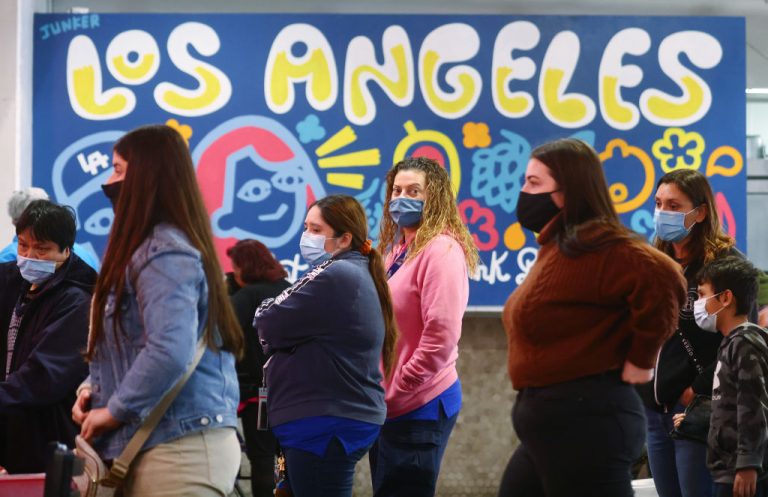
Los Angeles County is poised to reinstate indoor mask mandates if a recent surge in COVID-19 cases continues, county public health director Barbara Ferrer said Thursday.

The average of new cases for L.A., the most populous county in the United States, rose 180 percent since November 1, bringing it to about 2,700 cases per day. Hospitalizations rose to a 192 daily average for the county of more than nine million residents. These numbers move the county’s COVID-19 activity level to “medium,” as defined by the Centers for Disease Control and Prevention. Ferrer fears the city is on track to reach a “high” level by next week, which would trigger a mask mandate.

Wearing masks, particularly cloth masks, has little effect on the spread of COVID-19, studies show. Nearly half of parents, meanwhile, say forcing children to wear masks at school has hurt their educational, relational, and mental development, a poll found earlier this year.

Ferrer nevertheless said that masking, along with “being up to date on vaccines and boosters,” are “common-sense mitigation strategies.”

“There is this common line of thinking that the pandemic is over and COVID is no longer of concern, but these numbers clearly demonstrate that COVID is still with us,” Ferrer said.

No county in the United States mandates masking at this time.

The post Los Angeles Poised To Reinstate Indoor Mask Mandate appeared first on Washington Free Beacon.

Categories
Audio Sources - Full Text Articles

House Dem Praises ‘Candid’ Crypto Kingpin Ahead of Congressional Hearing

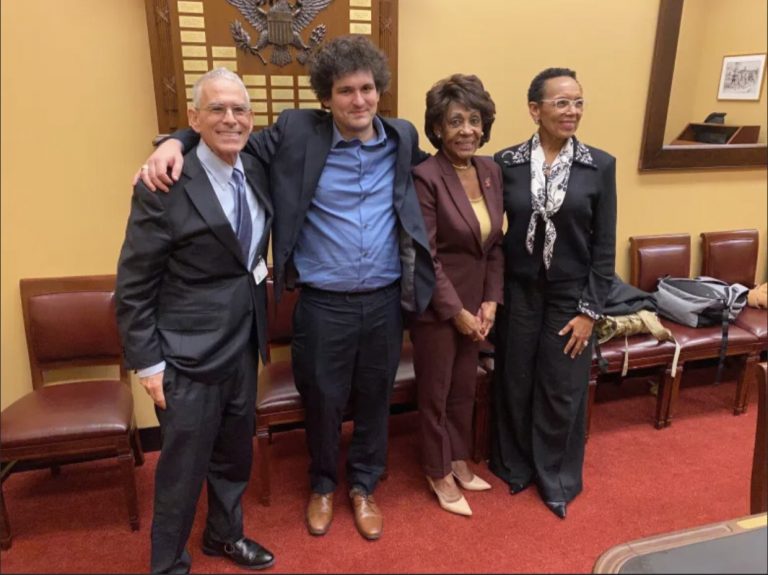
Rep. Maxine Waters (D., Calif.) heaped praise on Democratic megadonor Sam Bankman-Fried ahead of her committee’s hearing about the collapse of the crypto mogul’s firm.

Waters asserted Friday that Bankman-Fried has been “candid” about the demise of his company, FTX. Bankman-Fried has given a series of interviews this week as part of an apparent image rehabilitation tour after FTX declared bankruptcy, wiping out billions of dollars from customers’ portfolios. Bankman-Fried has said he mismanaged the company but has denied committing fraud. Waters invited the former billionaire to testify before the House Financial Services Committee on Dec. 13.

Waters’s remarks could raise concerns that lawmakers will give Bankman-Fried the kid-glove treatment as they investigate what went wrong at FTX. Bankman-Fried donated more than $40 million to Democratic groups and lawmakers during the 2022 election cycle, including $300,000 to nine members of the House Financial Services Committee, the Washington Free Beacon reported. He has also rubbed shoulders with Waters, appearing with her on a panel discussion on cryptocurrency at the Democratic Party’s retreat in Philadelphia earlier this year.

Bankman-Fried met privately with Waters prior to his testimony before the House Financial Services Committee last December. The disgraced entrepreneur praised Waters at the time, saying that her “open mind” on the issue of cryptocurrency was “heartening.”

Waters has dismissed concerns about Bankman-Fried’s extensive political donations and dodged questions last month about whether lawmakers should return his money.

Bankman-Fried’s massive political giving opened doors for him in Washington. Bankman-Fried, who contributed $5 million to a group supporting President Joe Biden in 2020, met three times with Biden advisers at the White House earlier this year. Bankman-Fried was accompanied in two of those meetings by lobbyists for FTX.

Bankman-Fried has ties to two other Democrats on the Financial Services panel. His brother, Gabriel, worked until last year as an aide to Rep. Sean Casten (D., Ill.), who serves on the committee’s Digital Assets Working Group. Bankman-Fried cohosted a fundraiser in June for Rep. Ritchie Torres (D., N.Y.), another committee member who is on the Digital Assets Working Group.

Waters’s office did not respond to a request for comment.

The post House Dem Praises ‘Candid’ Crypto Kingpin Ahead of Congressional Hearing appeared first on Washington Free Beacon.

Categories
Audio Sources - Full Text Articles

AP’s top 2022 photos capture a planet bursting at the seams

Taken together, they can convey the feeling of a world convulsing — 150 Associated Press images from across 2022, showing the fragments that make up our lives and freezing in time the moments that somehow, these days, seem to pass faster than ever.

Here: a man recovering items from a burning shop in Ukraine after a Russia attack. Here: people thronging the residence of the Sri Lankan president after protesters stormed it demanding his resignation. Here: medical workers trying to identify victims of a bridge collapse in India. And here: flames engulfing a chair inside a burning home as wildfires sweep across Mariposa County, Calif.

As history in 2022 unfolded and the world lurched forward — or, it seemed sometimes, in other directions — Associated Press photographers were there to bring back unforgettable images. Through their lenses, across the moments and months, the presence of chaos can seem more encircling than ever.

A year’s worth of news images can also be clarifying. To see these photographs is to channel — at least a bit — the jumbled nature of the events that come at us, whether we are participating in them or, more likely, observing them from afar. Thus do 150 individual front-row seats to history and life translate into a message: While the world may surge with disorder, the thrum of daily life in all its beauty continues to unfold in the planet’s every corner.

There is grief: Three heart-shaped balloons fly at a memorial site outside the elementary school in Uvalde, Texas, where 19 children and two teachers were killed by a gunman.

There is determination: Migrants in a wooden boat float across the Mediterranean sea south of an Italian island, trying to reach their destination.

There is fear: A man looks skyward over his shoulder, an expression of trepidation on his face, as he walks past homes damaged by a rocket attack in Ukraine.

There are glimpses into calamity: Villagers gather in northern Kenya, in an area stricken by climate-induced drought.

There is perseverance: A girl uses a kerosene oil lamp to attend online lessons during a power cut in the Sri Lankan capital.

Don’t be blinded by all of the violence and disarray, though, which can drown out other things but perhaps should not. Because here, too, are photos of joy and exuberance and, simply, daily human life.

A skier soaring through the air in Austria, conquering gravity for a fleeting moment. Chris Martin of the band Coldplay, singing toward the sky in Rio de Janeiro. A lone guard marching outside Buckingham Palace days after the death of Queen Elizabeth II. An 8-year-old Afghan girl, her eyes locked with the camera, posing for a photo in her classroom in Kabul, days after a bombing attack at her school. Women taking a selfie at a ski resort in Lesotho.

Finally, allow a moment to consider one of those pauses in humanity’s march: a boy drenching himself in a public fountain in a heat wave-stricken Vilnius, Lithuania, reveling in the water and the sun and the simple act of just being. Even in the middle of a year of chaos on an uneasy planet, moments of tranquility manage to peek through.

— By Ted Anthony, AP National Writer

WP Radio
WP Radio
OFFLINE LIVE