
Categories
Saved Web Pages

Preserving the Rule of Law: Successful law enforcement has a domino effect

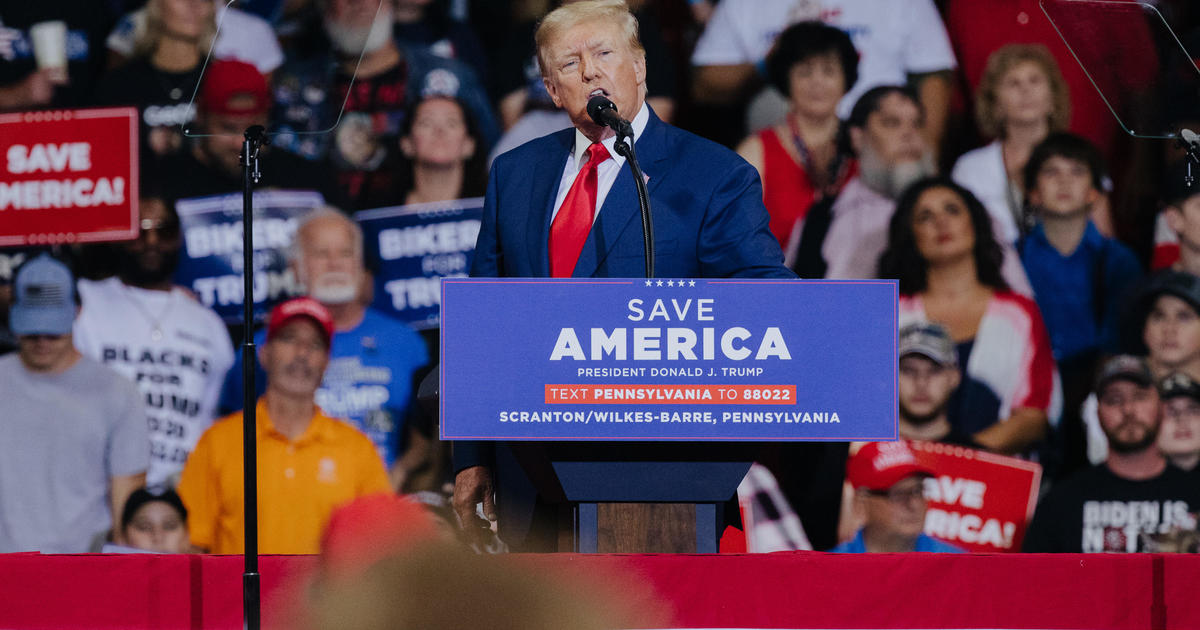
illustration_trumpdonald_082622mm-ap-jon

Need evidence that successful law enforcement actions in cases involving the rule of law can have a domino effect?

Exhibit A: On Sept. 3, we learned that former White House chief of staff Mark Meadows had recently coughed up texts and emails that he had previously failed to produce to the National Archives. “It could be a coincidence,” an unnamed source told CNN, “but within a week of the Aug. 8 search on Mar-a-Lago, much more started coming in.”

The court-approved search of former president Donald Trump’s Mar-a-Lago residence occurred after Trump had failed to comply voluntarily with multiple government requests to return all documents, including classified ones. The search warrant listed three criminal statutes that Trump may have violated. Anyone paying attention could see that Trump had put himself in danger of being prosecuted.

Meadows was apparently paying attention.

Exhibit B: No Jan. 6 participant whom the DOJ has charged has gone to trial since May 2. That’s likely the domino effect of a jury’s guilty verdict against Thomas Webster — a Marine Corps veteran and former NYC policeman — that day and two other similar verdicts in the weeks before.

The jury took less than four hours to convict Webster, as did the juries that rendered guilty verdicts against Gary Reffitt and Dustin Byron Thompson.

Since then, no one else involved in Jan. 6 has tested their luck with a jury. That doesn’t mean there won’t be future trials, but it suggests that swift justice in a courtroom has an impact on others. They learn the lesson: When the evidence is strong against you, juries don’t waste a lot of time convicting you. So you might as well get the benefit of a guilty plea.

Exhibit C: And if others had any doubt, Webster’s and Reffitt’s sentencings likely dispelled it. On Aug. 2, Reffitt was sentenced to more than seven years in prison. At the time, that was the longest term of imprisonment any judge had meted out for being part of the insurrection. Then, on Sept. 1, Webster received a 10-year sentence. (Thompson, the other insurrectionist who went to trial, remains to be sentenced.)

While every accused person has a right to a trial, our judicial system deploys carrots and sticks. It encourages those against whom the evidence of guilt is compelling to acknowledge their wrongdoing, and it penalizes those who don’t.

So do not expect to see many future trials of the Reffitt and Webster variety. Effective law enforcement by good investigators, prosecutors, judges and juries has a compounding effect.

Finally, here’s Exhibit D: Smart law enforcement actions can domino into unsmart defendant reactions.

After the FBI released the photo of top secret documents placed on Trump’s Mar-a-Lago office carpet, Trump posted a response on social media: “The FBI took them out of cartons and spread them around on the carpet, making it look like a big ‘find’ for them,” he asserted. “They dropped them, not me — Very deceiving.”

Trump was again playing his “aggrieved martyr” card to his base — but in the process, he added to prosecutors’ portfolio against him. His own words confirm that he held sensitive national security documents at Mar-a-Lago — in “cartons,” in his desk and elsewhere.

Take note: What a subject of investigation doesn’t say when he talks can be as important as what he does say. Prosecutors will note the absence of any assertion that the FBI “planted” the evidence, as Trump had previously suggested. So there goes that defense if Trump tries to make it at a future trial.

Feehery: Biden’s disgraceful speech is proof that only divided government can heal nation’s soul Liz Truss’s job won’t be easy — and the West needs her to succeed

Trump may not understand that when a Justice Department he doesn’t control is breathing down his neck, he’s in a different world from the one he’s known. It’s not smart to play the same old cards. The ones that worked on social media won’t have the same effect in a courtroom.

Political narratives are not what count with the FBI, with prosecutors and judges or with juries. What matters is how the facts fit into the criminal code. And what you say in public “can and will be used against you.”

Dennis Aftergut is a former federal prosecutor, currently of counsel to Lawyers Defending American Democracy.
Categories
Saved Web Pages

What Factors Determine How Child Pornography is Prosecuted?

What Factors Determine How Child Pornography is Prosecuted?

It is illegal to create, receive, distribute or possess child pornography. The penalties for breaking child pornography laws are severe. State laws set forth consequences for perpetrators, which include prison time and hefty fines. If the U.S. government also presses charges, the offender is also subject to prosecution under federal law. The following factors influence the way that child pornography is prosecuted.

Federal vs. State Prosecution of Child Pornography

In general, child pornography becomes a federal case when it involves interstate or international commerce. If the images crossed state lines or national borders, the U.S. government becomes involved.

This is obviously relevant if the USPS is involved in transporting material between states or countries. Federal prosecution is also applicable to situations that involve the internet. It’s fairly easy to track the dissemination of child pornography over the internet using IP addresses. Most internet content originates from servers that are in a different location than the viewers.

18 U.S. Code § 2252 provides details about child pornography laws. This section defines child pornography offenses and sets forth guidelines for prosecution.

Other federal codes set forth guidelines for prosecuting other types of crimes involving sexually explicit depictions of children. For example, statute 18 U.S.C. §2252A has to do with the sexual exploitation of minors. Statute 18 U.S.C. §1466A involves obscene representations of sexual abuse of minors.

Was It Done Knowingly?

Child pornography is a sex crime. To be charged with a child pornography offense, someone must knowingly watch, disseminate or own a visual representation of a minor participating in sexually related conduct. Most nudity qualifies as child pornography if it involves a minor. This is true even if the nudity is not inherently sexual.

The defendant must demonstrate that the crime was committed intentionally. In some cases, such as those in which a defendant downloads several incriminating videos or visits an illegal website more than once, intent is evident.

In other cases, however, it’s more difficult to prove whether the defendant knew about the images. For example, someone working on a shared computer that contains questionable files could claim that someone else downloaded the media. A shady link could redirect you to a child pornography site without your knowledge.

How Many Images Were Involved?

When fewer than three images are involved, the accused individual reports the issue to a law enforcement agency and takes reasonable action to destroy the visual materials and prevent others from seeing them, an affirmative defense may be available.

This is a legal exemption that applies only to federal law. State laws differ regarding the amount of child pornography involved. You should consult with a lawyer before attempting to contact a law enforcement agency about child porn.

The state will typically handle a child pornography prosecution if only a few images were involved. When a large amount of material is in question, the feds usually get involved. The goal is to thwart the creation and dissemination of child pornography. If a defendant can provide details that provoke an investigation of other offenders, they may be able to reduce the severity of their sentence.

Does the Defendant Have a Prior Record?

State sentencing guidelines for individuals with no prior record are not usually as serious as federal sentencing guidelines for the same offense.

Federal sentencing for a first conviction could include five to 20 years of prison time for each offense. Those guidelines shift to 15 to 40 years of prison time for someone with a prior record.

In state court, possession of child pornography could earn you several years in prison. However, for many first offenders with no aggravating factors are sentenced to probation.

In other words, you’re more likely to receive a serious penalty if the federal government is involved.

Disproving Child Pornography Accusations

An individual who commits a child porn crime can be prosecuted. Anyone who attempts or conspires to commit a child pornography offense is also subject to prosecution. But individuals may also be falsely accused.

Some defenses that can prevent prosecution include:
• Mistaken identity – Someone else downloaded, watched, received or distributed child porn on your computer or stole your IP address by changing the VPN.
• No criminal intent – The creator of the material stated that participants were 18 or older, and you had no reason to believe otherwise.

• No knowledge – You didn’t know that you possessed any child porn content.

However, committing child pornography crimes is serious. In many cases, declaring that you viewed questionable materials but weren’t aware of the age of the individuals involved is not a solid defense.

Child pornography is a serious offense. If the crime attracts federal attention, it could lead to decades of jail time, fines and a lifetime on the sex offender registry. If you have been accused of a crime that involves child pornography, contact a lawyer immediately. Authorities will use anything that you say against you. Protect yourself by working with an experienced attorney.

Categories
Saved Web Pages

Judge agrees to name “special master” to review items seized in Trump search

gettyimages-1242943945.jpg

By Melissa Quinn

September 5, 2022 / 12:29 PM / CBS News

Washington — A federal judge on Monday agreed to appoint a neutral third party known as a special master to review items seized by the FBI during its search at former President Donald Trump’s South Florida residence, and blocked the Justice Department from continuing to use the material in its probe while the review is ongoing.

U.S. District Judge Aileen Cannon said in a 24-page order that the special master would be tasked with reviewing the seized property for “potentially privileged material subject to claims of attorney-client and/or executive privilege.” In the meantime, the government must stop “reviewing and using the seized materials for investigative purposes pending completion of the special master’s review or further Court order.”

But Cannon allowed the government to continue reviewing and using the materials seized for “purposes of intelligence classification and national security assessments.”

Trump’s lawyers and Justice Department attorneys have until Sept. 9 to “meaningfully confer” and submit to the court a joint filing that includes a list of proposed candidates to serve as special master along with a proposed description of the mechanics of the review.

Trump’s request for a special master came two weeks after the FBI executed the search warrant at his Mar-a-Lago estate on Aug. 8, when agents took 33 items from a storage room on the property and the former president’s office. More than 100 documents with classification markings were found in 13 boxes or containers, while three documents with “confidential” and “secret” classification markings were taken from desks in Trump’s office at Mar-a-Lago, the Justice Department revealed in a filing last month.

The FBI also found 48 empty folders with “classified” banners alongside newspaper and magazine articles, books and pieces of clothing kept in boxes or containers retrieved from the storage room, according to a detailed list of property taken from Mar-a-Lago made public last week.

The former president argued an independent third party should be appointed in order to protect his constitutional rights and told the court last month that the FBI took “presumptively privileged” documents from his time in office. Trump has also criticized the Justice Department for what he said was an “unprecedented, unnecessary and legally unsupported” search of his property, and claimed the sensitive records he brought with him from the White House to Mar-a-Lago at the end of his presidency are “his own presidential records.”

But the Justice Department, which opposed the appointment of a special master, told the court the documents seized by the FBI were not Trump’s to keep, but rather belonged to the federal government and should have been returned to the National Archives and Records Administration at the end of the administration.

Federal prosecutors also argued a special master was unnecessary because a FBI filter team — used to sift through and separate documents that may be privileged — had already completed a review of the records that may be covered by attorney-client or executive privileges. 

Investigators are probing Trump’s handling of classified material, specifically records he brought from the White House to Mar-a-Lago when he left office in January 2021, as well as possible obstruction of the investigation.

The investigation stemmed from a referral made by the Archives in February, after it retrieved 15 boxes containing presidential records from Mar-a-Lago following efforts to retrieve the documents that spanned months. FBI agents conducted a preliminary review of the boxes in May and found 184 documents bearing classification markings, according to the Justice Department.

In an extraordinary 36-page court filing submitted Aug. 30, federal prosecutors said the government developed evidence that “government records were likely concealed and removed” from the storage room at Mar-a-Lago after the Justice Department obtained and served a grand jury subpoena for any documents in Trump’s possession bearing classification markings. They also alleged “efforts were likely taken to obstruct” the Justice Department’s investigation.

Cannon held a hearing on Trump’s request for a special master last week but declined to issue a decision from the bench. She did, however, order the release of the detailed list of property seized by the FBI during its search at Mar-a-Lago, which was made public Friday, along with the government’s description of the status of its reviews.

First published on September 5, 2022 / 12:29 PM

© 2022 CBS Interactive Inc. All Rights Reserved.

Categories
Saved Web Pages

Paedophile hunters responsible for more than half of grooming prosecutions

TELEMMGLPICT000036957129_trans_NvBQzQNjv

Police chiefs have accused vigilante paedophile hunters of exceeding the law, despite using their evidence to prosecute suspects in more than half of all cases.

Senior officers have criticised the online groups – who pose as youngsters in order to smoke out predatory paedophiles – claiming some are guilty of offences such as blackmail, extortion and violence.

But despite these reservations the most recent figures reveal the extent to which police forces rely on evidence gathered by such gangs to catch offenders.

According to data obtained by the BBC under the Freedom of Information Act, 403 people were prosecuted in 2018 for the offence of attempting to meet a child following sexual grooming.

More than 250 of those were charged following evidence gathered by paedophile hunting groups and in some force areas it accounted for 100 per cent of all cases.

An analysis of crime statistics shows how convictions for grooming offences have rocketed more than five fold since 2013, suggesting the emergence of paedophile hunter groups is helping to bring more dangerous predators to justice. 

In 2013 there were just 68 people convicted of grooming offences, but by 2018 that figure had risen to 359.

But despite this, Assistant Chief Constable Dan Vajzovic, the National Police Chiefs’ Council lead on online child abuse groups, expressed major concerns around the way the groups operated.

He suggested some were even committing offences themselves, including extortion, blackmail and violence against those they were targeting.

Mr Vajzovic also suggested some of the prosecutions were diverting police resources away from more serious offenders.

He said: “When these groups say they are acting in the interests of children, largely they are acting in their own interests, their self-aggrandisement and their desire to exercise force against so called perpetrators of child abuse.

“They don’t put measures to safeguard children they don’t put in measures to identify other offenders who may be connected to the people they are targeting. They are more interested in putting a video online of them carrying out a sting.”

Last year a judge criticised vigilante groups warning that they were becoming a “cottage industry” after it emerged that one suspect had been targeted by three separate groups at the same time.

A spokesman for the NSPCC also expressed concern that sometimes the groups were forcing suspects underground, rather than bringing them out into the open.

The spokesman said: “We have sympathy for those who worry about suspected abusers, want justice for children and feel frustrated that police can’t do everything.

“However, despite their best intentions, their actions might put more children at risk of harm by driving offenders underground, endangering ongoing police work and the legal process, or result in innocent people being targeted.”

Jim Gamble, who used to run the Child Exploitation and Online Protection Command (CEOP) recently warned that paedophile hunter groups tended to attract people who were trying to mask their own problems such as domestic violence records.

Mr Gamble has called for a law to ban people posing as a child online without a reasonable excuse or lawful authority and instead has called for a ‘citizens’ army’ of more than 1,000 volunteer special police constables, trained to catch paedophiles online.

Categories
Saved Web Pages

Judge Dismisses Suit Over Naked Baby Image on Nirvana Album Cover

25xp-nirvana4-facebookJumbo.jpg

Spencer Elden, who was pictured as a baby on the cover of “Nevermind,” argued in his lawsuit that the grunge rock group had engaged in “child pornography.”

  • Send any friend a story

    As a subscriber, you have 10 gift articles to give each month. Anyone can read what you share.

Spencer Elden says he has grown increasingly uncomfortable with how he came to be on the cover of “Nevermind.” This picture was taken at the same pool in 2016, when Mr. Elden and the record were both 25.

Spencer Elden says he has grown increasingly uncomfortable with how he came to be on the cover of “Nevermind.” This picture was taken at the same pool in 2016, when Mr. Elden and the record were both 25.Credit…John Chapple/SplashNews

A federal judge on Friday dismissed a lawsuit filed by a man who, as a baby, had graced the cover of Nirvana’s seminal album, “Nevermind,” and argued 30 years later that the iconic photo of him drifting naked in a pool had been a form of sexual exploitation.

The man, Spencer Elden, 31, accused Nirvana in his complaint of engaging in child pornography after it used a photo of him for the cover of “Nevermind,” the 1991 album that catapulted the Seattle grunge rock band to international fame.

The judge, Fernando M. Olguin, wrote in his eight-page ruling that because Mr. Elden had learned about the album cover more than 10 years ago, he had waited too long to file his lawsuit, making his claims untimely.

The lawsuit was filed in the U.S. District Court for the Central District of California against the estate of Kurt Cobain; the musician’s former bandmates, David Grohl and Krist Novoselic; and Mr. Cobain’s widow, Courtney Love, among other parties. Bert H. Deixler, a lawyer for the defendants, said in a statement that they were “pleased this meritless case has been brought to a swift conclusion.”

Robert Y. Lewis, one of Mr. Elden’s lawyers, did not respond to an email seeking comment on Sunday.

The dismissal came after Judge Olguin dismissed the case in January for another reason: Mr. Elden’s lawyers had missed a deadline to respond to a motion for dismissal by the lawyers for Nirvana.

Judge Olguin had allowed Mr. Elden’s lawyers to file a second amended complaint to address “the alleged defects” in the defendants’ motion to dismiss.

But the dismissal on Friday appeared to end the legal back-and-forth.

Mr. Elden, an artist living in Los Angeles County, has gone to therapy for years to work through how the album cover affected him, his lawyers have said, arguing that his privacy had been invaded, according to court records.

He had been seeking $150,000 from each of the 15 people and companies named in the complaint.

The photo of Mr. Elden, who was then four months old, was picked from among dozens of pictures of babies by the photographer Kirk Weddle. Mr. Cobain envisioned the album cover showing a baby underwater.

Mr. Weddle paid Mr. Elden’s parents $200 for the picture, which was later altered to show the baby chasing a dollar bill, dangling from a fishhook.

In the years that followed, Mr. Elden’s opinion about the photo changed. Initially, he appeared to celebrate his part in the classic cover, recreating the moment for the album’s 10th, 17th, 20th and 25th anniversaries, though not naked.

“It’s cool but weird to be part of something so important that I don’t even remember,” he said in 2016 in an interview with The New York Post, in which he posed holding the album cover at 25.

He also expressed anger at the people who still talked about it, telling GQ Australia that he was not comfortable with people seeing him naked. “I didn’t really have a choice,” he said.

In their motion to dismiss, lawyers for Nirvana said that in 2003, when Mr. Elden was 12 years old, he acknowledged in an interview that he would probably always be known as the baby on the album cover.

According to the lawyers, he said at the time, “I’m probably gonna get some money from it.”

Categories
Saved Web Pages

Child Pornography

doj-seal-fb.jpg

“Unfortunately, we´ve also seen a historic rise in the distribution of child pornography, in the number of images being shared online, and in the level of violence associated with child exploitation and sexual abuse crimes. Tragically, the only place we´ve seen a decrease is in the age of victims.

This is – quite simply – unacceptable.”

-Attorney General Eric Holder Jr. speaks at the National Strategy Conference on Combating Child Exploitation in San Jose, California, May 19, 2011.

Child Pornography

           Child pornography is a form of child sexual exploitation. Federal law defines child pornography as any visual depiction of sexually explicit conduct involving a minor (persons less than 18 years old).  Images of child pornography are also referred to as child sexual abuse images.

           Federal law prohibits the production, distribution, importation, reception, or possession of any image of child pornography.   A violation of federal child pornography laws is a serious crime, and convicted offenders face fines severe statutory penalties (For more information, see Citizen’s Guide to Federal Law on Child Pornography).

Child Pornography Today

          Because the term “child pornography” is used in federal statutes, it is also commonly used by lawmakers, prosecutors, investigators, and the public to describe this form of sexual exploitation of children.  However, this term fails to describe the true horror that is faced by countless children every year.  The production of child pornography creates a permanent record of a child’s sexual abuse.  When these images are placed on the Internet and disseminated online, the victimization of the children continues in perpetuity. Experts and victims agree that victims depicted in child pornography often suffer a lifetime of re-victimization by knowing the images of their sexual abuse are on the Internet forever.  The children exploited in these images must live with the permanency, longevity, and circulation of such a record of their sexual victimization.  This often creates lasting psychological damage to the child, including disruptions in sexual development, self-image, and developing trusting relationships with others in the future.

          The expansion of the Internet and advanced digital technology lies parallel to the explosion of the child pornography market. Child pornography images are readily available through virtually every Internet technology, including social networking websites, file-sharing sites, photo-sharing sites, gaming devices, and even mobile apps.  Child pornography offenders can also connect on Internet forums and networks to share their interests, desires, and experiences abusing children, in addition to selling, sharing, and trading images.

          These online communities have promoted communication and collaboration between child pornography offenders, thereby fostering a larger relationship premised on a shared sexual interest in children. This has the effect of eroding the shame that typically would accompany this behavior, as well as desensitizing those involved to the physical and psychological damage caused to the child victims. For this reason, online communities attract and encourage new individuals to join them in the sexual exploitation of children.

          The methods many offenders use to evade law enforcement detection have also become increasingly sophisticated. Purveyors of child pornography continue to use various encryption techniques and anonymous networks on “The Dark Internet”, attempting to hide their amassed collections of illicit child abuse images. Several sophisticated online criminal organizations have even written security manuals to ensure that their members follow preferred security protocols and encryption techniques in an attempt to evade law enforcement and facilitate the sexual abuse of children.

          Unfortunately, no area of the United States or country in the world is immune from individuals who seek to sexually exploit children through child pornography. The continuous production and distribution of child pornography increases the demand for new and more egregious images, perpetuating the continued molestation of child victims, as well as the abuse of new children.

Victims of Child Pornography

          It is important to distinguish child pornography from the more conventional understanding of the term pornography.  Child pornography is a form of child sexual exploitation, and each image graphically memorializes the sexual abuse of that child.  Each child involved in the production of an image is a victim of sexual abuse.
         While some child sexual abuse images depict children in great distress and the sexual abuse is self-evident, other images may depict children that appear complacent.  However, just because a child appears complacent does not mean that sexual abuse did not occur.  In most child pornography cases, the abuse is not a one-time event, but rather ongoing victimization that progresses over months or years.  It is common for producers of child pornography to groom victims, or cultivate a relationship with a child and gradually sexualize the contact over time.  The grooming process fosters a false sense of trust and authority over a child in order to desensitize or break down a child´s resistance to sexual abuse.  Therefore, even if a child appears complacent in a particular image, it is important to remember that the abuse may have started years before that image was created.  
          Furthermore, victims of child pornography suffer not just from the sexual abuse inflicted upon them to produce child pornography, but also from knowing that their images can be traded and viewed by others worldwide.  Once an image is on the Internet, it is irretrievable and can continue to circulate forever.  The permanent record of a child´s sexual abuse can alter his or her live forever.  Many victims of child pornography suffer from feelings of helplessness, fear, humiliation, and lack of control given that their images are available for others to view in perpetuity.

          Unfortunately, emerging trends reveal an increase in the number of images depicting sadistic and violent child sexual abuse, and an increase in the number of images depicting very young children, including toddlers and infants.

CEOS’s Role

          CEOS works to deter and eradicate the production, distribution and possession of child pornography.  CEOS attorneys work with the High Technology Investigative Unit (HTIU), the Federal Bureau of Investigation (FBI), United States Attorney´s Offices throughout the country, and the National Center for Missing & Exploited Children (NCMEC) to vigorously combat this growing problem by investigating and prosecuting violators of federal child pornography laws.  In addition, CEOS attorneys work with law enforcement personnel to identify and rescue victims of child pornography from continued abuse.
          The use of the Internet to commit child pornography offenses has blurred traditional notions of jurisdiction.  CEOS maintains a coordinated, national-level law enforcement focus to help coordinate nationwide and international investigations and initiatives.

          Furthermore, CEOS attorneys and HTIU computer forensic specialists travel all over the world to conduct and participate in trainings for investigators, law enforcement personnel, and others involved in efforts to investigate and prosecute child pornography offenders.  CEOS also designs, implements, and supports law enforcement strategies, legislative proposals, and policy initiatives relating to federal child pornography laws.

Categories
Saved Web Pages

Of course the FBI is subject to political influence

russian_hackers-fbi_24942413.jpg?w=1024&

Micky Dolenz is suing the FBI. And rightly so.

The bureau has a file on the Monkees, the 1960s teen idol TV pop band. A seven-page document from the file was declassified and released about ten years ago, but it is heavily redacted, giving only a few hints of why the FBI thought the band posed a threat to the national security of the United States. The bit of text that is not blacked out reveals that the Monkees were “connected with the film industry in the Hollywood area,” something about “additional activities denouncing the U.S. policy in the war in Vietnam,” and a notation that the “quite successful” TV series “features four young men who dress as ‘beatnik types.’”

Dolenz and his attorney filed a Freedom of Information Act request in June to see the unredacted, complete file and any files on the band’s individual members. The law requires the FBI to comply within 20 working days, but that didn’t happen. It will take a lawsuit and a court order to see the FBI file on the Monkees.

That should give you an idea of how FBI leadership gets away with outrageous conduct. They have something on everybody.

In addition to files on performers who criticized the Vietnam War while dressed as beatnik types, the FBI maintains a vast library of background-check files. There’s probably one on everybody who works in or around government, from elected officials to cabinet secretaries to judges to military contractors. Background checks collect a lot of information that is unverified, such as rumor or gossip from neighbors who answered an investigator’s questions ahead of a confirmation hearing or for a security clearance.

During the Clinton administration, there was a scandal over hundreds of FBI background investigation files finding their way to the White House. “We know the files were in the hands of political operatives, non-professionals, volunteers, teen-agers in proximity to a photocopier, and individuals without security clearances,” a congressional committee reported following an investigation. “We know there was virtually no supervision over this sensitive process.”

Perhaps that gave the Clintons something on everybody.

By closely cooperating with a press corps that will protect a confidential source until death, the FBI can change the course of history. When Washington Post reporters Bob Woodward and Carl Bernstein were writing their Watergate stories, the source they called “Deep Throat” was Mark Felt, the associate director of the FBI. Felt was passed up for the job of director when J. Edgar Hoover died in 1972, and after that, he secretly fed information to Woodward.

Now let’s talk about what the FBI did ahead of the 2020 election.

In mid-October 2020, the New York Post published a completely true report about emails found on a laptop computer that belonged to Hunter Biden. The emails contained details of alleged business deals between Hunter and various foreign companies, including one with ties to the Chinese Communist Party. Presidential candidate Joe Biden was potentially implicated in an influence-peddling scheme when one of Hunter’s business partners, Tony Bobulinski, stated that an email describing “10 held by H for the big guy” was a reference to a ten percent equity stake in the deal for Joe Biden.

Immediately, Twitter blocked the Post’s story from being shared and locked the newspaper out of its account. Facebook also took action to suppress the visibility of the story.

Now we’re learning that the FBI led an effort to ensure that the Post’s reporting about the Biden family was effectively censored and wrongfully discredited.

In an interview last week with podcast superstar Joe Rogan, Facebook CEO Mark Zuckerberg admitted that before the 2020 election, the FBI communicated with Facebook employees and told them to be on the lookout for “some kind of dump” of something similar to “Russian propaganda.”

Who ran this operation at the FBI? In July, Sen. Chuck Grassley sent a letter to FBI director Christopher Wray informing him of whistleblower reports that two bureau employees, assistant special agent in charge Timothy Thibault and intelligence analyst Brian Auten, allegedly schemed to “undermine derogatory information connected to Hunter Biden by falsely suggesting it was disinformation.”

Thibault had been on leave for a month following those allegations, and last week he resigned.

His resignation removes any possibility that the Justice Department’s inspector general can investigate him. An IG can only investigate current government employees, not former ones.

Separately, Sen. Ron Johnson said last week that his office has received whistleblower reports alleging that the FBI intentionally slow-walked an investigation into the contents of Hunter Biden’s laptop. Although the bureau had obtained the laptop in December 2019, the examination of its contents did not begin until after the 2020 presidential election.

Meanwhile at Mar-a-Lago, the FBI showed up on August 8 with a search warrant so broad that it allowed the agents to seize all records and papers from the Trump presidency. This would include the binder of Crossfire Hurricane documents that Trump declassified before leaving office. Crossfire Hurricane was the code name of the FBI’s years-long counterintelligence investigation into Trump-Russia collusion, allegations that special counsel John Durham has now exposed as a total fabrication cooked up by the Hillary Clinton campaign and fed to the FBI and the press by her lawyers.

In March, Donald Trump sued Hillary Clinton over those false allegations and the damage they caused. The FBI may have seized attorney-client communications related to that lawsuit. The former president is currently fighting in court to have all the seized documents reviewed by a special master in order to keep privileged confidential documents out of the hands of the FBI.

It’s a little late. By now, FBI leadership has probably seen everything related to the case, including the background investigation file on the judge.

Something on everybody. It’s quite the business model.

Write Susan: Susan@SusanShelley.com and follow her on Twitter @Susan_Shelley

Categories
Saved Web Pages

Mossad chief to discuss tightening security, intel cooperation on US trip — PM’s office

F220503OF101-1024x640.jpg

CRM

Coronavirus latest

Israel statistics:

  • 6,717,028 Vaccinated: 1st dose
  • 4,635,151 cases
  • 6,152,145 Vaccinated: 2nd dose
  • 10,239 Active cases
  • 4,509,240 Vaccinated: 3rd dose
  • 94 Serious cases
  • 843,414 Vaccinated: 4th dose
  • 11,620 deaths
Global statistics:

  • 610,113,437 cases
  • 6,503,291 deaths
  • 586,666,650 recovered

Scroll to view more

Categories
Saved Web Pages

Biden was right: MAGA ideology is fascism

MAGA_trump_donald_rally_supporters_11142

President Biden described Make America Great Again (MAGA) ideology as “semi-fascism.” Though leaders of the movement object to the comparison, the two worldviews are disturbingly similar. 

Fascism developed as a response to the perceived failings of 19th-century liberalism. It began in Italy but reached its fullest potential in Germany. Disillusioned veterans of the Great War swelled the ranks of authoritarian movements, and the Great Depression drove desperate people into the arms of dictators who promised them security, jobs and renewed prosperity. 

The MAGA movement consists of those who embrace former president Donald Trump’s vision of America. While not all who voted for him share his extreme beliefs, Trump has a strong grip on the Republican party. Members who disagree with him refuse to say so publicly for fear of his wrath. Trump’s most vocal party critic Liz Cheney (R-Wyo.) lost her bid for reelection.  

The cult of personality is the defining characteristic of fascism and the MAGA movement. Adolf Hitler posed, not as an elected leader, but as the embodiment of the collective will who knew best what his people needed. He scorned elections asserting his rise to power as de facto justification for the right to hold it indefinitely. “One people, one realm, one leader,” Hitler proclaimed. 

Donald Trump has the same faith in his destiny and supreme self-confidence in his unique ability to rule. “I am your voice,” he told the Republican convention in 2016. “I alone can fix it. I will restore law and order.”  

Fascism and MAGA ideology also share the same faith in big lies. Dictators and demagogues recognize no objectively verifiable facts. Truth is what they declare it to be. “If you tell a lie big enough and keep repeating it,” Nazi propaganda minister Josef Goebbels declared, “people will eventually come to believe it.” Hitler claimed that Germany did not lose the First World War but had been “stabbed in the back” by Jews, Marxists and corrupt politicians. Trump insists he did not lose the 2020 election. Approximately 70 percent of Republicans believe him. 

Both movements are racist and xenophobic. The Nazis envisioned a Volksgemeinschaftor “national community,” comprised of pure Aryan Germans. Everyone else was an alien unworthy of citizenship. Jews, Roma and others ethnic minorities had to be expelled or exterminated. The Nazis designated the disabled and mentally ill as “life unworthy of living” or “useless eaters” and systematically murdered them. They labeled gay people as degenerates and sent them to concentration camps. 

MAGA espouses a narrow definition of American identity. It insists the United States has always been and must remain a Christian nation. While some members of the movement openly embrace white supremacy, others use coded racism, railing against the unfair advantage affirmative action affords people of color.  

Trump has his own list of undesirables. He characterized migrants from Mexico as criminals, rapists and even “animals.” During his campaign for president, he called for a “complete shutdown of Muslims entering the United States,” claimed without evidence that Arab Americans in New Jersey cheered as the towers fell on 9/11, and supported surveillance of mosques. He signed an executive order banning travel from seven predominantly Muslim countries for 90 days and suspending resettlement of Syrian refugees. He opposed extending civil rights protection to LGBTQ+ people. 

When it comes to antisemitism, MAGA has taken a page directly from the Nazi playbook. In 2016, Trump tweeted an image of Hilary Clinton against a background of $100 bills with the phrase “most corrupt candidate ever” framed by a star of David. When white supremacists at the Unite the Right Rally chanting “Jews will not replace us” clashed with protestors, Trump said there were “very fine people on both sides.” 

Fascism and MAGA ideology oppose freedom of information and ideas. The Nazis banned a free press and burned books. They provided people with cheap radio sets dubbed the “Goebbels snout” so they could listen to government-controlled stations, which played music as well as propaganda, but banned jazz, which was deemed the product of a “degenerate” race. 

Trump repeatedly dismisses unfavorable coverage as “fake news” and has called the media the “true enemy of the people.” His followers seek to restrict school curriculumsSixteen states have laws prohibiting critical race theory. Local school boards have imposed similar bans. Other laws limit or prohibit sex education and discussion of gender identity and sexual orientation.  

An Indiana bill stipulates students “must receive instruction that socialism, Marxism, communism, totalitarianism, or similar political systems are incompatible with and in conflict with the principles of freedom upon which the United States was founded.” MAGA thought control extends to banning books with “objectionable” content from libraries

Violence was stock-in-trade for fascists. During his rise to power, Hitler relied on the Sturmabteilung [assault division]. Nicknamed “brownshirts” based on their distinctive uniforms, these thugs intimidated opponents. After he became chancellor, Hitler unleashed a reign of terror. On the Night of the Long Knives, Hitler eliminated his rivals, including Ernst Rohm, a founder of the Nazi party. Then there was Kristallnacht [night of the broken glass], the pogrom against German Jews that began the Holocaust. 

The MAGA movement is no stranger to violence. Extremist groups like the Oath Keepers, the Three Percenters and the Proud Boys have been among Trump’s staunchest supporters. Several group members have been indicted for their part in the Jan. 6 insurrection. Trump himself has been careful not to openly incite violence, but the Proud Boys took his admonition to “stand back and standby” as a call to arms. 

Does working still work? We need better unions

The Jan. 6 committee concluded that he instigated the insurrection. “There can be no doubt that he commanded a mob, a mob he knew was heavily armed, violent, and angry, to march on the Capitol,” committee Chair Bennie Thompson (D-Miss.) stated.  

Based on years of writing about extremism and teaching a course on “Germany under the Third Reich” I must agree with Biden’s comparison. Not all MAGA supporters are fascists, but the movement’s ideology certainly is. 

Tom Mockaitis is a professor of history at DePaul University and the author of “Violent Extremists: Understanding the Domestic and International Terrorist Threat.” 

Categories
Saved Web Pages

FBI Director Christopher Wray is guiding the agency the wrong way, fast

1412907603-e1659924136905.jpg?quality=75

Christopher Wray’s disingenuous testimony to the Senate Judiciary Committee Thursday, before he left early on the FBI’s private Gulfstream 550 jet, speaks volumes about the need to defund the FBI — or at least dump its unctuous director.

Iowa Sen. Chuck Grassley and his team of Republicans expected to have the chance to ask a second round of questions.

Grassley pleaded for just an extra 21 minutes.

But Wray took an early mark, dismissing the committee’s constitutional obligation to ensure he answers questions under oath to ensure the FBI complies with the law and is accountable to the American people.

What was so urgent that he had to leave after just three and a half hours?

Was he taking a long weekend in the Adirondacks where his family has a summer home?

It’s worth examining the exchange with Grassley in detail.

“We just heard a half hour ago about you having to leave at 1:30,” Grassley grizzled. “We were going to have seven minutes [each] for first round [questions and] three-minute second rounds. I’ve got seven people on my side of the aisle want their additional three minutes. Is there any reason we couldn’t accommodate them for 21 minutes?”

FBI Director Christopher Wray shakes hands with Senate Judiciary Committee ranking member Sen. Chuck GrassleySenate Judiciary Committee ranking member Sen. Chuck Grassley Grassley pointed out that Wray has a private jet and can leave any time.AP/Manuel Balce Ceneta

Wray replied smoothly: “Senator, I had a flight that I’m supposed to be high-tailing it to outta here, and I had understood that we were going to be done at 1:30, so that’s how we ended up where we are.”

Grassley pointed out that the FBI director has a private jet at his disposal and can leave any time he likes.

“If it’s your business trip you’ve got your own plane. Can’t it wait a while?” he asked
Wray replied, “To be honest, I tried to make my break as fast I could to get right back out here.”

Grassley, “You took more than five minutes.”

Wray laughed and the silence that followed only emphasized the disrespect to all senators, but especially to Grassley, the president pro tempore emeritus of the Senate.

Democratic chairman Dick Durbin came to Wray’s rescue, expressing his appreciation that it was Wray’s “third appearance in two years before this committee.”

And every appearance a waste of time, that simply showcased that Wray is a master of evasion. On some of the most serious questions of national security and the politicization of the FBI, Wray had nothing to say. Like Mister Magoo, he sees nothing.

No answers

Unlike most things on Capitol Hill these days, the politicization and repeated failures of the FBI are a bipartisan concern.

Director Christopher WrayWray refused to classify the flood of illegal migration at the southern border as a “national security threat.”Getty Images/Alex Wong

In the short time they had with Wray, senators from both sides had urgent questions. Democrat Senator Dianne Feinstein and Republicans Marsha Blackburn and Grassley were concerned about the FBI’s botching of the Larry Nassar case. Why, when Nassar was convicted in 2016 of sexually abusing US gymnasts, did Wray wait until 2021 to fire one of the agents involved in slow-walking the case?

Grassley complained about a lack of transparency over why the Department of Justice had decided a jury wouldn’t convict FBI agents for their handling of the investigation
Other Democrats were concerned about the FBI not investigating complaints about Justice Brett Kavanaugh during his Supreme Court confirmation hearing.

Wray had no answer, nor to questions about Afghan evacuees considered significant security threats after being brought to the US in last year’s bungled withdrawal from Kabul.
“I can’t sit here right now and tell you we know where all of them are located at any given time,” he said.

Wray refused to classify the flood of illegal migration at the southern border as a “national security threat.”

When asked what the FBI was doing to track down 56 suspected terrorists that have crossed the border this year he waffled about “sharing watchlist information” and “investigating any number of individuals.”

Hunter BidenWray also refused to agree with one senator’s assertion that Hunter Biden’s laptop was not “Russian disinformation.”The Washington Post via Getty Images

He refused to admit that the Russia collusion hoax — in which the FBI treated seriously palpably false allegations that then-candidate Donald Trump was a Russian agent — was in fact a “hoax”.

He refused to agree with Sen. Blackburn that Hunter Biden’s laptop was not “Russian disinformation,” and didn’t respond to whistleblower allegations of an FBI coverup of derogatory information related to the Bidens in October 2020.

He refused to explain to Sen. Ted Cruz why the FBI had blacklisted patriotic historical American symbols such as the Betsy Ross flag, the Gadsden Flag and the Gonzales battle flag as “militia violent extremism” in training documents.

When Sen. Josh Hawley asked why the FBI was “snooping around the concealed carry permit records” of Missourians, he had nothing.

When Sen. Tom Cotton asked why no FBI agent had thought to enforce the law broken by abortion activists parading outside the homes of Supreme Court justices, Wray was impatient: “Our agents are up to their necks enforcing all sorts of laws.”

Christopher WrayWray is required to reimburse the cost of a coach class airline fare for personal trips.Getty Images/Alex Wong

When the hearing ended at 1:30, Wray ambled over to Grassley to shake his hand. The microphones picked up some of the exchange.

Grassley, a courtly row-crop farmer from Butler County, Iowa, who has a shrewd Columbo-esque tendency to ask “just one more thing,” leaned forward: “I assume you’ve got other business.”

“Yeah,” said Wray.

And off he sauntered, minions in tow.

Grassley’s staff did not know where Wray was going after the hearing and FBI public affairs did not respond to an email Sunday by press time.

But the luxury FBI Gulfstream Wray uses was recorded on Flightradar24 making the one hour and 12 minute flight later that afternoon to bucolic Saranac Lake in the Adirondacks, which happens to be a favorite summer destination since his childhood, when he used to hike the High Peaks and fish for trout, according to the Adirondack Daily Enterprise.

Wray, 55, who attended the Buckley School on the Upper East Side and the private Phillips Academy in Andover, Mass., graduated from Yale University, the alma mater of his father, Cecil Wray, who was Adirondack Park Agency Commissioner for 14 years.

The FBI’s Gulfstream made another trip to Saranac Lake on Thursday, June 2, returning to Washington, DC on Sunday, June 5.

Turbulence

While there has been controversy over the FBI director commandeering a plane originally intended for counterterrorism use, Wray’s predecessor James Comey used it as his private conveyance as well.

The director is required to reimburse the cost of a coach class airline fare for personal trips, a significant discount on the several thousand dollars an hour it costs to operate the Gulfstream, which is considerably more convenient than Delta.

Wray ensured his testimony was useless, but if he did cut short his testimony to go on vacation at a time when his agency is under fire from all sides, then that is an act of disrespect and insubordination which requires a firm rebuke, or what is the point of Senate oversight?

WP Radio
WP Radio
OFFLINE LIVE