Categories
Saved Web Pages

Why we can expect more hacking of politicians’ phones

1236496747

Pegasus can infect a target’s device without the victim knowing and allow a government or organization to access personal data, including turning on cameras and microphones. Activists against surveillance have called on governments to ban or at least heavily regulate spyware companies. And the United Nations’ human rights office called on governments last year to regulate the sale and use of spyware technologies.

Yet there are still no international accords restricting spyware and even governments that ban Pegasus still face a whack-a-mole problem of other less visible and less regulated spyware companies popping up. As a result, officials are stuck employing low-tech solutions to protect themselves. Macron reportedly replaced his phone and changed his phone number last year after his number was found on a list of 50,000 allegedly targeted by NSO clients using Pegasus.

After researchers reported in April that Pegasus had infected the phones of dozens of Spanish officials including Catalan president Pere Aragonès, he started leaving his phone outside the room when he goes into important policy meetings and has sensitive conversations.

“When you are having to acknowledge or that someone is listening to you, you are very reluctant to talk privately with your partner or your relatives,” Aragonès said in an interview a few weeks after the hacks were discovered.

Citizen Lab, a research lab based at the University of Toronto, found “strong circumstantial evidence” tying the Spanish government to the hacks of Catalan officials (Catalonia has long fought for more autonomy) — a charge Spain has denied. It was two weeks later that Spain’s Prime Minister became a victim himself.

In the U.S. officials have confirmed that the FBI acquired Pegasus technology, though only for testing. And some lawmakers argue that privacy has to be balanced against the need to use all tools available to protect national security.

“It is a very tricky area, because we want to protect people’s privacy, but on the other hand, we want to be sure we have the tools to find terrorists and those kind of things,” Sen. Angus King (I-Maine), a member of the Senate Intelligence Committee, said in an interview.

Senate Intelligence Committee Vice Chair Marco Rubio (R-Fla.) argued that it isn’t a matter of whether governments should go after the groups, but whether they can. They “operate in the shadows,” largely outside of government control and without set addresses.

“It’s an enormous challenge, and there is no easy answer to it,” Rubio said.

Asked how he approaches the danger of his own phone getting hacked, Rubio said: “I tell everybody you should assume anything you do on a mobile device or that is connected to the internet is vulnerable. And no matter how many steps you take, these people, their full-time job is to figure out how to get into things they are not supposed to see.”

That is a big part of the conundrum: Even the most sophisticated governments have had trouble finding ways to defend themselves against these phone hacks. Pegasus works by exploiting undisclosed vulnerabilities in iOS and Android operating systems, and NSO has deployed massive resources into finding new vulnerabilities before software makers are aware of them. Pegasus is also virtually invisible: It can be installed with zero clicks, including through a text message just being sent to a user.

Pegasus has become the poster child for an industry that is among the most secretive in the world, but is increasingly widespread. Governments will rarely confirm using spyware against targets, but a spokesperson for NSO claimed to POLITICO this month that Pegasus had been key to a number of governments stopping “big terror attacks.”

Even so, governments are taking some steps to rein in the use of Pegasus. The Biden administration last year effectively blacklisted both NSO Group and Candiru, another Israeli spyware company, by adding them to the Commerce Department’s list of companies considered a threat to U.S. national security.

Sen. Ron Wyden (D-Ore.), a member of the Senate Intelligence Committee, joined more than a dozen other House and Senate Democrats in December in calling for State and Treasury to sanction NSO and three other spyware companies for alleged human rights offenses. The lawmakers argued in a letter that sanctioning NSO Group — along with other surveillance companies DarkMatter, Nexa Technologies, and Trovicor — would be a significant financial blow to the spyware industry through cutting off access to the U.S. stock market.

“The commercial surveillance industry is a threat to the national security of the United States and other democracies, because it basically makes it possible for a dictator that has a fat checkbook, they can acquire a whole bunch of sophisticated tools,” Wyden said in an interview.

On the other side of the Atlantic, Aragonès called for the EU to take steps to regulate the spyware industry, stressing that “we need public transparency or public supervision by the parliaments to the governments that are the owners of this software.”

“If the Spanish government could do this, any other government could also do this against its citizens,” Aragonès said.

Some governments are beginning to take some steps. The European Parliament in March approved the creation of a 38-member committee to investigate Pegasus and whether the use of the spyware had broken EU laws. France is investigating the impact of Pegasus on government officials following last year’s allegations that Macron’s phone was infected with Pegasus spyware. NSO Group denies that Macron was targeted by Pegasus.

“The security of the president’s means of communication is constantly monitored with the utmost care,” a spokesperson for the president said, adding that incoming ministers and their cabinets “would be made aware of this type of risk as soon as they take office.”

Still, many governments are moving slowly as they attempt to balance competing interests. A complete ban on spyware would complicate investigations and classified intelligence operations, and could lead to the growth of the surveillance black market. Banning NSO specifically could also complicate many countries’ relations with Israel, given its ties to the Israeli government. And without an international agreement to halt the use of spyware, governments may try to out-compete the other through using the technology.

As outcry has increased, NSO has been working to improve its image. The organization released a transparency report last year detailing how Pegasus is licensed, which underlined that Pegasus “is not a mass surveillance technology, and only collects data from the mobile devices of specific individuals, suspected to be involved in serious crime and terror.” The Israeli government regulates Pegasus, with an export license required before NSO can sell Pegasus to a new customer; the company claims to only license the software to governments after investigating their intentions.

“NSO continues to evolve as a company and improve its technological and contractual safeguards, customer vetting process and ability to investigate misuse,” Ariella ben Abraham, an NSO spokesperson, said during a sit down interview with POLITICO earlier this month. “We believe there is no other alternative to prevent terror and crime, and we continue to call for global regulation.”

NSO has also claimed that Pegasus cannot be used to target American phone numbers. This does not stop the targeting of Americans using foreign numbers.

As NSO fights back, government officials are not the only individuals in the crosshairs, and journalists, dissidents and their family members are among other targets of spyware. The Guardian and more than a dozen other media outlets reported last year that 50,000 phone numbers may have been targeted by governments using Pegasus since 2016, including a number of journalists and pro-democracy activists along with suspected criminals.

A consortium of 90 human rights groups, including Amnesty International and Human Rights Watch, urged top EU officials last year to sanction NSO Group due concerns over human rights abuses.

“Is there a global fairness that requires that every country in the world have the ability to hack the head of state of every country? That sounds to me like a terrifying outcome,” said John Scott-Railton, a senior researcher at Citizen Lab. “Seems like it will make us all less secure and less safe, but that’s exactly the road that NSO has set us on.”

Categories
Saved Web Pages

Russia desperately short of microchips to keep fighting in Ukraine

62271551-0-image-a-2_1662803521089.jpg

Published: 11:11 BST, 10 September 2022 | Updated: 11:22 BST, 10 September 2022

Vladimir Putin‘s disgraced invasion of Ukraine could hinge on Russia’s inability to gain access to high-tech electrical components due to the sanctions inflicted on them. 

Russian troops are now increasingly reliant on Soviet-era stocks of ammunition, having fired off more firepower than many could have anticipated – including themselves.

The fightback from Ukraine, which has seen them make significant advances in recent days, has further frustrated Russian troops who are losing control of areas they had previously occupied.

But Putin and his men could soon be running on empty. Fuelling the war any further might come down to whether or not Russia can regain access to high-tech chips.

Ukraine has issued international warnings that the Kremlin has a ‘shopping list’ of semiconductors, connectors, transformers, insulators and more – with most made by the US, Taiwan, the UK, Japan and Germany among others. 

Russia has been heavily reliant on these countries in previous years but with the sanctions in play, it should not be as easy for them to get hold of the critical technology.

It is believed desperate Russians are even resorting to taking chips out of household appliances including dishwashers and fridges, according to U.S Commerce Secretary Gina Raimondo.

Vladimir Putin’s (pictured) disgraced invasion of Ukraine could hinge on Russia’s inability to gain access to high-tech electrical components due to the sanctions inflicted on them

Russia’s invasion could be halted in the future by their inability to access microchips. Ukrainian forces are fighting back already and have made significant dents in Russian occupied territory. Pictured: Ukrainian soldiers claim Kupyansk has been liberated

The shopping list seen by Politico is split into three priority categories from most critical to least, and even includes the price Russia wants to pay.

Ukrainian Prime Minister Denys Shmyhal believes that the future of the war could be based off the nature of technology.

Putin announced an array of new hypersonic weapons in 2018 in one of his most bellicose speeches in years, saying they could hit almost any point in the world and evade a U.S.-built missile shield. 

But Mr Shymyhal told Politico that Russians have just ‘four dozen’ hypersonic missiles left and have already spent ‘almost’ half of their arsenal.

‘These are the ones that have precision and accuracy due to the microchips that they have,’ he said about the missiles.

‘But because of sanctions imposed on Russia, the deliveries of this high-tech microchip equipment … have stopped and they have no way of replenishing these stocks.’

Ukrainian Prime Minister Denys Shmyhal believes that due to sanctions, Russia are unable to replenish their accurate hypersonic missiles. Pictured: A Zircon hypersonic cruise missile

There is however concern that China could be a key player in bailing Russia out if they were to buy technologies and sell it on. 

While the EU, US and Japan hit Russia with sanctions, China have not – and Beijing have had previous of supplying drones and vehicles to the invaders.

While many items that Russia is after can be found online, others have been wiped out by the global microchip shortage.

The overwhelming demand for chips, teamed with the lack of supply has caused the shortage.

The pandemic played  a major role in the decline of semiconductors and chips as demand for work-from-home technology rose as well as car companies deciding to cancel orders.

Despite the shortage, Russia seeks more fuel for their war effort to continue. According to the list that was seen, their most critically important components are AirBorn connectors which are based in the US.

Microchips by a host of companies including Altera, intel, Broadcom, Holt and Cypress also make up a considerable proportion of the Kremlin shopping list.

Less critical components included capacitators, resistors and inductors from the US, Taiwan, parts of the EU and Japan.

Russia, like others, are facing the global shortage of electrical components. But on top of that, it has sanctions preventing it from buying chips that are available. Pictured: The most expensive item on Russia’s shopping list is a gate array which costs 66,815.77 rubles (£937) each. Before the global shortage, it would have been closer to the £18 mark.

The most expensive item on the list is an Intel gate array which costs 66,815.77 rubles (£937) each. Before the global shortage, it would have been closer to the £18 mark.

The cheapest is a Marvell ethernet transciever at a much lower 430.83 rubles (£6).

Researchers fear that supply of goods to Russian military are often unregulated which allows them to bypass the sanctions and EU regulations which are meant to strictly control chips sales.

If Russia can be stopped from gaining access to chips, it will heavily work in Ukraine’s favour – who are already on the counter-offensive.

But many fear that despite the Kremlin running low on ammunition, Western governments may not have the ability to prevent Russian ‘friends’ like China helping them out, and further fuelling the war. 

Categories
Saved Web Pages

Spanish PM Pedro Sánchez was hacked with Pegasus spyware

Pedro Sánchez, Spanish PM – official Facebook photo

Spanish PM Pedro Sánchez and Defense Minister Margarita Robles were targeted with Pegasus spyware that surveilled their mobile phones, the government said Monday.

Félix Bolaños, the minister for the presidency, said at a press conference that Sanchez’s phone was infected by Pegasus software twice, in May and June 2021. According to the Spanish government, data was extracted from both mobile phones, although the Spanish official did not disclose more information regarding the attack or who spied on the Prime Minister.

Bolaños described the targeting as “illicit” and “external” and said that the Audiencia Nacional, Spain’s highest criminal court, will investigate the malicious activities.

“When we say external intrusions, we mean that they are alien to state agencies and do not have judicial authorization from any official agency. That is why we classify them as illegal and external,” Bolaños said, and as he clarified the Spanish government is currently investigating whether other senior members were also hacked by Pegasus software. “I don’t think now is the time to engage in supposition or conjecture about what the motivation may have been,” he added.

Pegasus software was developed by NSO Group, an Israeli company, and it is accused of having been used by governments and others across the world to spy on politicians, journalists, activists, and public figures. A recent investigation has revealed the so-called “Pegasus scandal” causing a series of revelations about how many journalists, activists, and politicians have fallen victims to espionage. Back in November 2021, NSO Group was placed on a US blacklist by the Biden administration after it determined the Israeli spyware maker has acted “contrary to the foreign policy and national security interests of the US”.

“While we have not seen any information related to this alleged misuse and we are not familiar with the details of this specific case,” NSO Group said in a statement Monday. “NSO’s firm stance on these issues is that the use of cyber tools in order to monitor politicians, dissidents, activists, and journalists is a severe misuse of any technology and goes against the desired use of such critical tools.”

Spanish PM

Pegasus targets top Catalan politicians

Recently the Spanish government faced questions over how the Pegasus software was used to monitor more than 65 members of the Catalan independence movement. Citizen Lab cybersecurity experts revealed the alleged targeting and Pere Aragonès, the president of the north-eastern Spanish region, said that these spies constituted a violation of individual rights and are an attack on democracy.

“All political espionage is extremely serious,” Aragonès said in a statement on Twitter. “We have been denouncing it for days without obtaining explanations from the Spanish government. When mass espionage is against Catalan institutions and independence, silence, and excuses. Today, everything is in a hurry.”

“The Spanish government needs to come clean over whether or not it is a customer of NSO Group. It must also conduct a thorough, independent investigation into the use of Pegasus spyware against the Catalans identified in this investigation,” said Likhita Banerji of human rights NGO Amnesty International, which peer-reviewed Citizen Lab’s research.

George Mavridis

Categories
Saved Web Pages

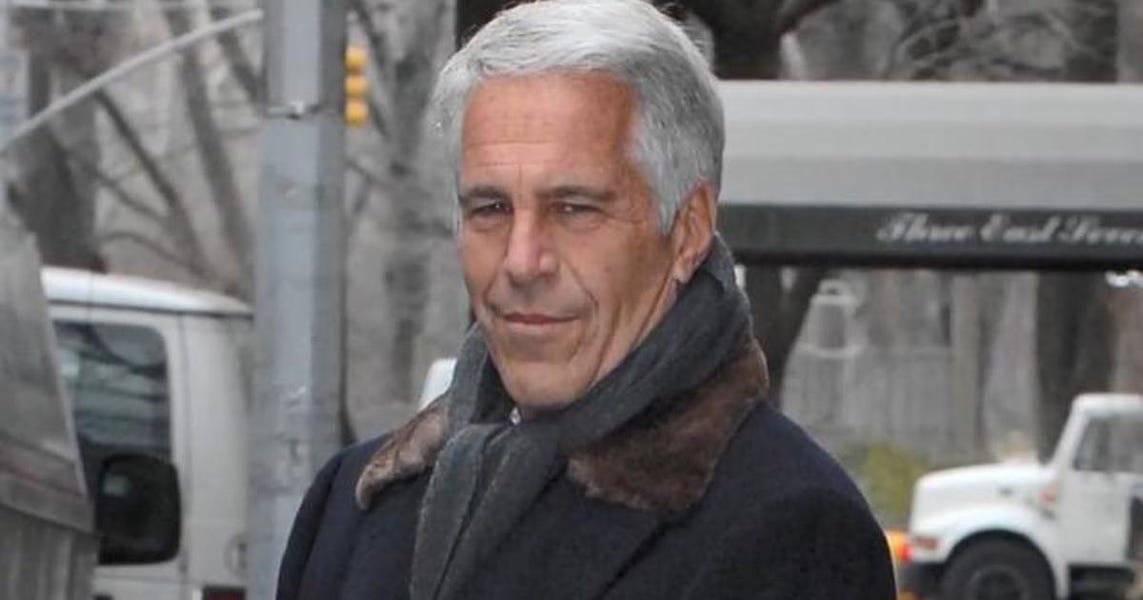
The FBI is hiding Epstein records

https%3A%2F%2Fbucketeer-e05bbc84-baa3-43

What we know about Jeffrey Epstein's will, and what happens next with his estate - CBS News

Your humble author, as promised, is involved in litigation to extract records from the federal government. It’s easy to talk about current events. The more difficult part is suing federal agencies for documentation of their wrongdoing.

This involves initiating FOIA requests, which are rarely answered quickly or completely. Out of our 75+ FOIA requests from this past year, only one was answered quickly and fully. A small miracle.

That was where we obtained CDC e-mails disclosing how they changed the definition of “vaccine” because of the efficacy problems with the Pfizer and Moderna mRNA vaccines. It’s a must-read if you haven’t seen it already (even if it got us wrongly flagged on the Carnegie Mellon University COVID-19 “misinformation” watchlist):

Then there are the records we must fight for.

One development we can divulge is our effort to obtain the FBI’s records on Jeffrey Epstein. We made a simple request: hand over all FBI interviews with Epstein. We know those records are out there, as we were the first to report that Epstein had been a source for the FBI. (It was later confirmed that Epstein cooperated on a Bear Stearns investigation.)

But we’re not convinced that was the only time Epstein spoke with the FBI. There were other hints and rumors that he worked with the US government to recover stolen funds. Thus the FOIA request.

How did the FBI respond? Not by denying the existence of any records.

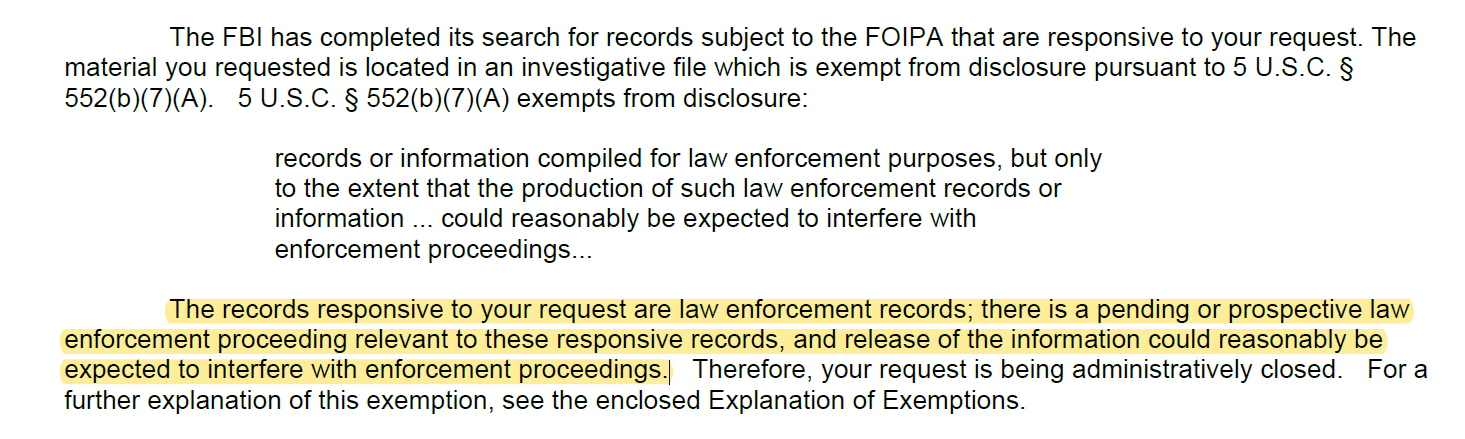
Instead, the FBI is hiding behind FOIA’s law enforcement exemption, stating that the production of the Epstein records would interfere with ongoing law enforcement investigations:

“The records responsive to your request are law enforcement records; there is a pending or prospective law enforcement proceeding relevant to these responsive records, and release of the information could reasonably be expected to interfere with enforcement proceedings.”

We’re exceedingly doubtful that the release of the Epstein records would “interfere with enforcement proceedings.” Ghislaine Maxwell has been convicted and Epstein is dead. The only potential tie might be from a grand jury investigation into “other possible co-conspirators of Jeffrey Epstein.” But that was from the summer of 2020 and we rightly assume no charges were brought against whoever was being investigated.

It’s more likely that the Epstein records might embarrass the FBI. The DOJ and FBI have been known to abuse the FOIA law enforcement exemption to hide investigative materials from public release. We’ve seen them do it. And they’re doing it again.

But here’s the good news: the FBI’s response is a tacit admission that these records exist. We’ll fight for them. And we’ll get them.

Stay tuned, and thanks for your support.

Techno

Categories
Saved Web Pages

Building Peace with Russia: Lessons from Gorbachev

20220901-hd-reagan-gorby-fitz-ac.jpg?ito

In 1985 the Soviet Union had been ruled for decades by aged or infirm men — Leonid Brezhnev, Yuriy Andropov and Konstantin Chernenko — steering its ponderous bureaucracies. “Increasingly, this generation of leaders saw that the USSR was falling behind the free world, economically and technologically,” said Don Jensen, a Russia scholar and former diplomat who directs USIP’s Russia-focused programs. They reached down a full generation into the party ranks to pluck Gorbachev, decades younger and publicly unknown, into the ruling circle. He became the Soviet Union’s eighth paramount leader at age 54, quickly attacking corruption. Gorbachev promoted glasnost, or openness to previously forbidden public discussion of the country’s ills, and he tried to restructure politics and the economy by relaxing elements of centralized control.

Gorbachev’s most historic change was to renounce the violent repression that had been the Soviet Union’s frequent response to any major resistance to its power. Most visibly, Nikita Khrushchev wielded Soviet troops to crush the 1956 anti-Soviet uprising in Hungary, as did Brezhnev against Czechoslovakia’s 1968 Prague Spring liberalization. Andropov helped run both repressions.

By contrast, as the Soviet bloc’s economic decline stirred increasingly open dissent through the 1980s, “Gorbachev’s inclination, with few exceptions, was against an authoritarian crackdown,” said Jensen. The defining moment came across Eastern Europe in 1989, when reformist movements — including East Germans’ forcing open of the Berlin Wall — undermined a half-dozen Soviet-allied communist regimes. Gorbachev determined that Moscow would not use its army, nor condone other bloodshed, to maintain its allies in power. The Norwegian Nobel Committee awarded Gorbachev the 1990 Nobel Peace Prize, giving him “the main credit” for ending “the Cold War between East and West.”

‘We Can Do Business’

At the same time, Gorbachev had built foundations of personal trust with his opponents across the Cold War divide. “I like Mr. Gorbachev,” British Prime Minister Margaret Thatcher declared after first meeting him. “We can do business together,” specifically “to see that war never starts again.”

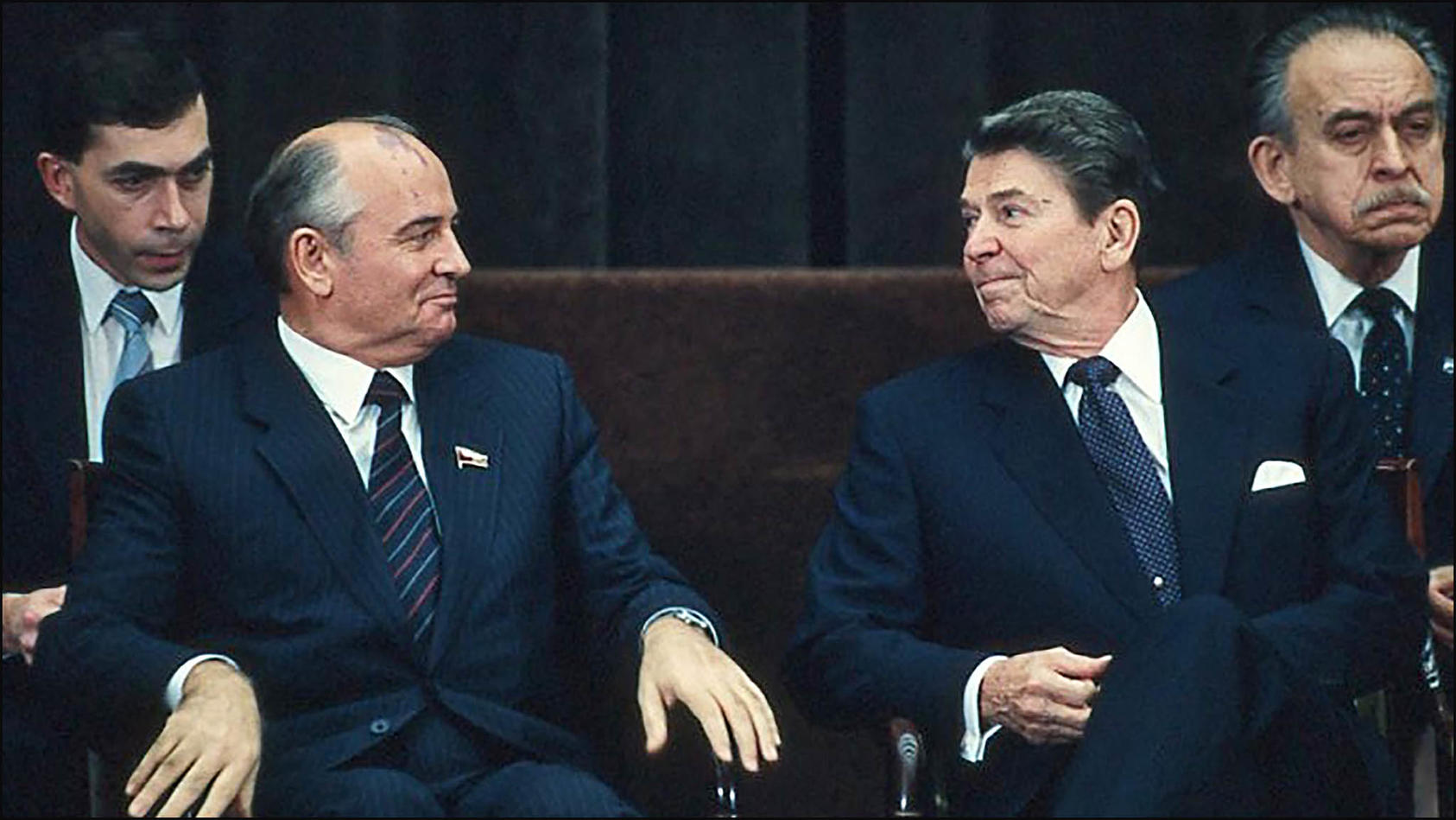
Gorbachev and President Ronald Reagan “realized the enormity of what was at stake,” said veteran USIP photographer Bill Fitz-Patrick, who watched the two leaders’ personal interchanges as a White House photographer. “Each realized the sincerity of the guy sitting across the negotiation table, and I think that’s what launched their friendship.” The men’s relationship would facilitate the 1987 agreement to eliminate an entire class of thousands of medium-range nuclear missiles. Gorbachev then advanced with Reagan, and signed with President George H.W. Bush, the 1991 START treaty to reduce strategic nuclear forces.

But at home, Gorbachev’s easing of repression was letting the Soviet state splinter faster than he could respond. From the Baltics to the Caspian Sea, non-Russian populations were demanding, and sometimes fighting for, more autonomy. In a few cases, Gorbachev veered back toward force, sending troops who opened fire on demonstrators — in Azerbaijan in 1990, and in the Baltics a year later. But the end of his reign was already near, for in August 1991, hardline officials, including the KGB chief, attempted a coup, arresting Gorbachev at a vacation home. He was rescued only when his rising rival, Russian republic President Boris Yeltsin, summoned mass protests that scuttled the coup. Within four months, Yeltsin and other leaders among the 15 Soviet republics agreed to dissolve the USSR, an event formalized by Gorbachev’s resignation.

How Gorbachev Begot Putin

“Gorbachev thought he could liberalize the USSR to sustain it,” Jensen said. “But loosening the repression unleashed nationalisms and extremisms within the late 20th century Russian empire that he could not control. The upheavals and decline that followed set the stage for the rise of Vladimir Putin, a former KGB officer who maintains power largely by amplifying Russians’ fears and humiliation” at their nation’s decline from global superpower status. Over 20 years, Putin has portrayed Gorbachev’s, and Yeltsin’s, liberalizing inclinations as weaknesses that the West exploited to inflict on Russians the Soviet Union’s collapse — in his telling, the “greatest geopolitical catastrophe” of the 20th century.”

Putin has portrayed Gorbachev as a patsy of the West who surrendered the Soviet superstate, leaving Russia vulnerable to a hostile NATO alliance that has since added 10 member states in Eastern Europe, including the three formerly Soviet Baltic republics. As NATO-Russia confrontation revived over the past 20 years, Putin has blamed NATO exclusively, accusing it of breaking promises not to expand eastward. He has helped marginalize Gorbachev’s more moderate view, which ascribed blame to NATO but also urged sustained diplomacy with the West as critical on security issues from nuclear arms to the COVID “pandemic and the climate problem.”

As a Russian strongman who relies on violence to maintain power, Putin is a throwback to the Soviet leaders whose authoritarianism Gorbachev rejected — and arguably his greatest vulnerability has been the democratizing example of Russia’s former subjects, the 44 million Ukrainians. As Putin attacked Ukraine’s democracy, Gorbachev vacillated. To TIME magazine in 2014, he cast Putin’s seizure of Crimea as acceptable and a reaction to the West trying to marginalize Russia as “some kind of backwater, a province.” But when Putin launched his wider war on Ukraine in February, the Gorbachev Foundation, which the last Soviet leader founded to pursue international dialogues on international peace and cooperation, urged “an early cessation of hostilities and immediate start of peace negotiations.”

Gorbachev’s death this week only illustrated his isolation in Russia and in the post-Cold War world he helped create. In a brief letter, Putin told Gorbachev’s family simply that his predecessor “exerted a tremendous influence on the course of world history,” governing “at a time of complicated and dramatic change” and suggesting “his own solutions to long-standing problems.” Gorbachev’s own foundation, whose visible activities dwindled in his last chapter of life, issued no statement on his death, posting only a somber memorial portrait of him.

Lessons from Gorbachev’s Era

As the war in Ukraine continues, and surely for years to come, Western peacebuilding will face both the challenge and the imperative to reconstruct a basis for negotiation of new frameworks for peace and stability in Europe and worldwide. The rise and fall of Mikhail Gorbachev as the West’s interlocutor on peace will offer lessons.

  1. Building trust with Russia’s leaders will be vital, and now will be harder. Western leaders’ accounts of their meetings with Russian and Soviet leaders, dating at least to President Harry Truman’s encounter with Josef Stalin, underscore that Gorbachev was atypical in his ability to build the personal relationships via which to negotiate a better state of peace. Putin once showed elements of that capacity, leading his first U.S. counterpart, President Bill Clinton, to call him a “straightforward” personality with whom America could “do business.” But he has burned international trust with successive wars of increasing scale — on Georgia in 2008 and Ukraine’s Crimea and Donbas regions in 2014, and now Europe’s most destructive war in decades.
  2. Any Russian leader that the West engages will be constrained by Russians’ fears and humiliations. Putin has amplified and manipulated Russians’ anger at seeing their country demoted from superpower to pariah state. But Russians’ sense of victimization is rooted far deeper than in Putin’s rhetoric — and will not die with him. Gorbachev and other Russians independent of Putin have for years voiced their genuine frustration with NATO’s successive expansions in Europe, a sentiment that eventual peacemaking with Russia will have to confront.
  3. Hopes for a Russian democracy were both seeded — and set back — by Gorbachev’s attempted liberalization. Thirty years after Gorbachev’s fall, Putin has reversed many of his reforms in a restoration of strongman rule. Still, as recently as eight months ago, Gorbachev was able to argue that the reversal is incomplete. “People really did acquire rights and freedoms that they still enjoy,” he told Interfax news agency. “Freedom of speech, assembly, press, an end to censorship, freedom of religion, the law on entering and leaving the country, freedom of entrepreneurship – could all of these be cancelled out?” Putin has since enforced further degrees of that cancellation, forcing independent media and dissent to flee underground or abroad, yet Gorbachev’s query stands.

Gorbachev’s essential revolution was a broad (if not quite complete) renunciation of violence as the necessary tool of Russian governance. It was defeated, in the end, by Russia’s deep unresolved conflicts, authoritarian impulses and popular resentments, both natural and amplified. Those who seek peace with that state in years to come will have to deal with the realities that ultimately defied Gorbachev’s attempts at change.

Categories
Saved Web Pages

Thirty Years Later: U.S. and Russia Relations, Reflections and Global Realities

Photo1.png

Thirty years ago, in August 1992, I was part of a 20 member oil and gas delegation on a visit to the Commonwealth of Independent States (C.I.S.), formerly the Soviet Union. The visit was under the auspices of People to People International and the Ministry of Petroleum for the Soviet Union. This study mission gave participants an opportunity to interact with professional peers and discuss the various aspects of negotiations, joint venture agreements and the utilization of standardized forms. Dramatic changes were occurring in the C.I.S. The introduction of a free market economy and the opening of the stock market in Moscow are just examples of the remarkable reforms the world had seen in those early months. This study mission gave participants the opportunity to discuss with Russian peers current issues facing the industry and how reforms were affecting Russian society.

I did not know what to expect during our delegation visit. I was hopeful that we would find ways to work together and to provide a pathway for a free market system. The study mission provided me with a unique opportunity to witness history, which included the anniversary of the coup; to establish valuable contacts and friendships through professional and personal exchanges with my colleagues and counterparts; to visualize the frontier of change that the Russian Federation was living through; to gain an insight as to the many business opportunities that existed; to experience the hospitality of the Russian people; and to be a member of the first American/Canadian delegation to visit the Makhachkala/Dagestan Region.

(Bottom left) Russia Energy Minister, Yuri Shafranik and (top right) Mark A. Stansberry.

Whereas previously the Petroleum Ministry called the shots on development, production and enhanced recovery projects to a large extent from Moscow, within the framework of the famous Five Year Plan, the production organizations in the field were themselves attempting joint ventures with foreign entities. These new arrangements were still subject to central controls in Moscow regarding finances and taxation.

As one delegate stated, “The Russian people were exhilarated by their new freedoms and afraid for their individual economic survival. Rampant inflation destroyed any sense of security… Any oil and gas company that undertook a project there in the near future would need to be prepared for gnawing uncertainties as to the legal framework and its enforcement, the country’s evolving economic policies, and the role of the military.”

(Bottom left) Russia Energy Minister, Yuri Shafranik and (bottom right) Mark A. Stansberry.

In 1992, most of the delegation was looking for new and brighter opportunities. Personally, I had begun my career in the oil and gas industry in 1977. Since that time, I had been a part of the oil and gas industry’s period of major exploration, followed by a major boom to bust period, and acquisition and merger transition.

A year later, following the 1992 trip to Russia, I was invited to participate in a meeting at the Russian Embassy with Yuri Shafranik, the Russia Minister of Energy, and three others from the Independent Petroleum Association of America. It was my second meeting with the high-ranking Russian energy official. The mission of the meeting was to modernize the oil fields of Russia, thus creating more opportunities for a domestic American oil and gas industry, which had been flat for the past 10 years. There were 30,000 to 35,000 idle wells in Russia. The challenge ahead for the petroleum industry was clear during a visit when the American delegation toured a southern field near the Caspian Sea. With the outdated technology used in Russia, the fields looked like photos I had seen of how we ran fields in the U.S. in the 1940s and 50s. Russians needed to learn more about environmental matters near wells.

As one colleague stated during the 1992 trip to Russia, “One can only hope that men and women of goodwill, learning and vision will guide Russia and its people through this painful and ominous transition period.”

(Middle left) Russia Energy Minister, Yuri Shafranik and (middle right) Mark A. Stansberry.

I continued to work on oil and gas opportunities in Russia until 1999. The reason we pulled out of Russia was that we felt communication was lacking, there were breakdowns in negotiations, and there were numerous delays in the execution of projects. Unfortunately, its leaders throughout the years went back to the old ways of doing business.

Over 20 years after the 1992 visit, I was invited to speak as a panelist at the Russian Embassy in Washington, D.C., on the subject of Russian-American Energy Resource Development. There were three panelists from the U.S. and three from Russia. Hopefully, someday, the U.S. and Russia will be able to return to discussions of providing a free market system for the Russian people.

The U.S. has the immediate challenge of striving for energy independence. It is extremely important that the U.S. be in a strong position of securing energy reserves within its own boundaries. Therefore, we need a plan. The U.S. needs energy security. America Needs America’s Energy.

Author’s Note

In 2012, the book I authored, America Needs America’s Energy, was released during the summer. During this decade of time, the advancement of energy, technology and innovation have come to the forefront. We, as a society, must come together to determine the future pathways for energy development.

In order to meet the challenges ahead, we need to be informed about natural resources and how they apply to our lives and to future generations. In this monograph, the natural resources addressed are crude oil, natural gas, solar, wind, biofuels, nuclear and hydrogen.

This monograph is a tool for conversation and constructive debate, in order to achieve the ultimate results for future generations. This writing is a continuation of the book, America Needs America’s Energy, with a special focus on comparing natural resources and how they supplement one another.

As stated in America Needs America’s Energy, “As the national debate over energy policy escalates, the tendency is to point fingers at companies in the energy business or a lack of will among elected officials to come to grips with the situation. It’s been them versus us, with “them” not always clearly defined. I contend, however, that for too long we have been wasting time blaming the energy industry or the government’s failure to adopt a national energy strategy when we, the people, should be responsible for creating the plan. As consumers of energy, we should drive the process, evaluating how we can best leverage our natural resources here at home to assure long-term energy independence and security.”

This monograph definitely can be used independently as a source. However, the monograph, along with the book, provides a better road map.

I welcome your input. Please note my email address: mark@thegtdgroup.com.

Mark A. Stansberry

www.markstansberry.com

Edmond, OK – June 1, 2022

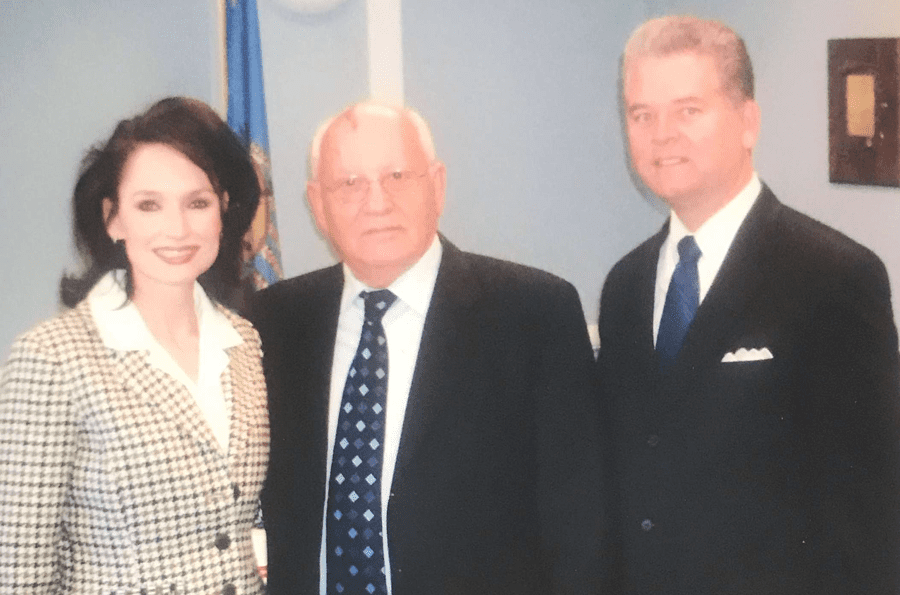
Headline photo: Nancy Stansberry, Former President of the Soviet Union, Mikhail Gorbachev, and Mark A. Stansberry.

Categories
Saved Web Pages

Подоляк прокомментировал вероятное взятие в плен “большой шишки” генерал-лейтенанта сычевого

2154058.jpg?v=1662709807000

Как отмечают в Генштабе ВСУ, за три дня нашим военным в Харьковской области удалось продвинуться почти на 50 километров. Но это еще не все достижения защитников Украины.

Читайте также Балаклея дома: в сети опубликовали еще одно трогательное видео из деоккупированного города

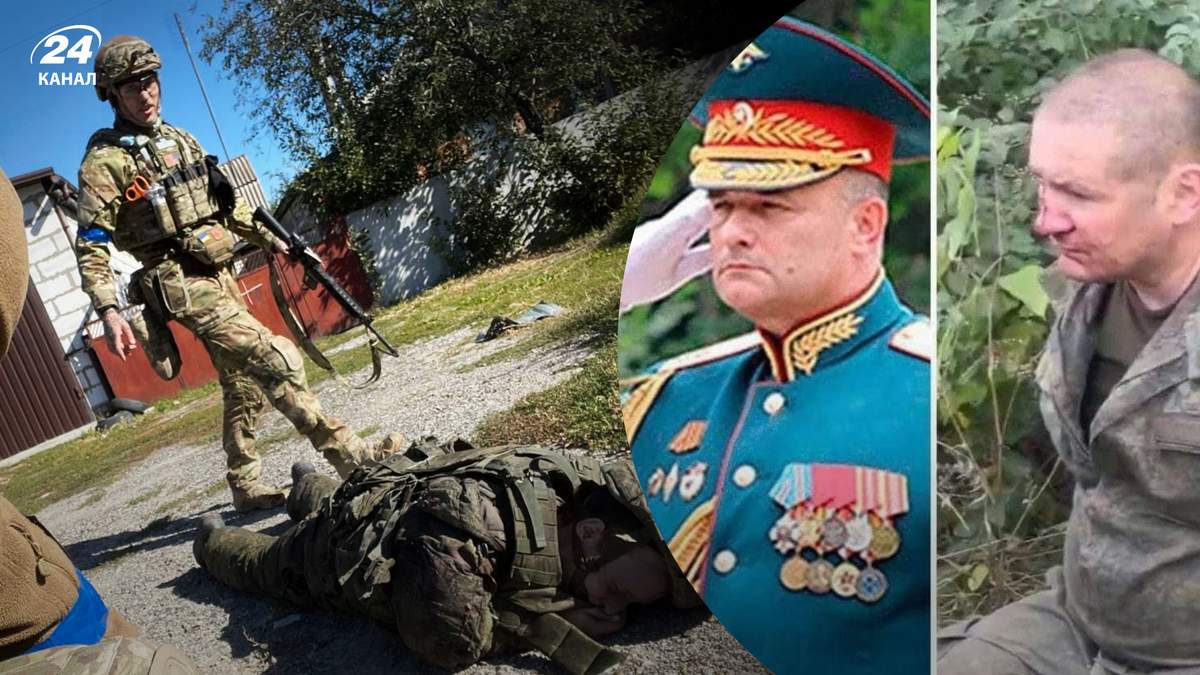
Информацию о задержании генерал-лейтенанта во время интервью 24 канала подтвердил советник главы Офиса Президента Михаил Подоляк. В то же время он отметил, что в момент попадания в плен оккупант был в статусе подполковника.

Но сейчас проверяется вся информация, потому что возможны разные варианты. Чтобы точно уже убедиться, что этот человек имеет отношение к командованию направлением “Восток”,
– подчеркнул Подоляк.

Сразу же оговоримся, что сведения должны проверить. Если действительно пленником стал андрей сычевой, то наши военные сорвали немалый куш на Харьковщине.

Обменный фонд может прилично обогатиться

Как отметил Алексей Гончаренко, на видео с пленными оккупантами можно увидеть не обычного подполковника. По его словам, в задержанном узнается генерал-лейтенант армии россии андрей сычевой. Последний, добавил народный депутат, руководит направлением “Запад”.

Это уже любопытно. За генерал-лейтенанта можно очень много важных наших ребят выменять. Очень много!
– подчеркнул Гончаренко.

Заметим, что сычевого взяли в плен несколько дней назад под Балаклеей. Сам город, напомним, ВСУ уже полностью освободили от российских захватчиков.

Аналитики прогнозируют новые успехи

Согласно составителям отчетов из Института по изучению войны, в течение 72 часов ВСУ смогут похвастаться очередными успехами. На этот раз говорится, что наши военные могут деоккупировать Купянск.

Советник главы Офиса Президента Михаил Подоляк отметил, что для оккупантов Купянск – стратегически важное место. Через этот город проходит харьковская группировка врага. Более того, к нему подвозят как боеприпасы, так и резервы оккупантов, чтобы подпитывать Изюмское направление.

Достойно внимания – Арестович рассказал, что ВСУ нашли слабое место россии: смотрите видео

Categories
Saved Web Pages

Ukraine captures Lieutenant General Andrei Sychevoi (Андрей Сычевой) commander of the “West” group

du100x100.gif

Categories
Saved Web Pages

FBI agents say Director Christopher Wray ‘has got to go,’ lost control of agency

christopher-wray-fbi-hunter-biden-comp.j

FBI Director Christopher Wray has lost the confidence of rank-and-file FBI agents after a senior bureau official left under a cloud of accusations that he shielded Hunter Biden’s laptop from a criminal probe — and some believe the top G-man should step down, a new report says.

“I’m hearing from [FBI personnel] that they feel like the director has lost control of the bureau,” Kurt Siuzdak, a lawyer representing FBI whistleblowers, told the Washington Times in a report published Tuesday. “They’re saying, ‘How does this guy survive? He’s leaving. He’s got to leave.’

“[The FBI agents] are telling me they have lost confidence in Wray. All Wray does is go in and say ‘We need more training and we’re doing stuff about it,’ or ‘We will not tolerate it,’” Siuzdak said.

His comments come in the wake of Timothy Thibault, the top agent in charge of the FBI field office in Washington, resigning amid claims he blocked investigations into the first son’s laptop. Thibault’s lawyer said his resignation was unrelated to these claims and that he did not seek to close the laptop investigation.

A photo of Hunter Biden.
A senior bureau official accused FBI Director Christopher Wray of shielding Hunter Biden’s laptop from a criminal probe.
Hunter Biden’s laptop

A photo of Hunter Biden in a bath tub.
An image of Hunter Biden from his laptop.
Hunter Biden’s laptop

A photo of Hunter Biden sleeping.
FBI Director Christopher Wray called allegations that Thibault blocked an investigation into Hunter Biden’s laptop “deeply disturbing.”
Hunter Biden’s laptop

Thibault was escorted out of the field office last Friday by “headquarters-looking types,” the Washington Times reported, while U.S. officials said this is common practice for anyone who retires.

Siuzdak told The Post that he left the bureau in March after a 25-year career, because management failed to hold bosses accountable, a problem that stems from politicization at the highest levels of the agency. 

He told the Times that the whistleblowers have alleged that Wray, who was appointed by President Donald Trump in 2017, did not take action when confronted with issues inside the bureau that ranged from agents being forced to sign false affidavits to sexual harassment claims. 

A photo of documents seized from an FBI search of former President Trump Florida estate.The FBI searched for and seized documents from former President Donald Trump’s Mar-a-Lago estate in Florida. AP

The FBI, which has been taking heat for the Aug. 8 raid on Trump’s Mar-a-Lago resort in search of classified documents, emphasized the integrity of its agents in a statement to the Times. 

“The men and women of the FBI work hard every day to protect the American people and uphold the Constitution. All employees are held to the highest standards of professional and ethical conduct, and we expect them to focus on process, rigor, and objectivity in performance of their duties,” the statement said.

“Allegations of misconduct are taken seriously and referred to the Inspection Division or appropriate investigative body,” it said.

Wray, at a Senate Judiciary Committee hearing earlier this month, called allegations that Thibault blocked an investigation into Hunter Biden’s laptop “deeply disturbing.”

A photo of FBI Director Christopher Wray.FBI Director Christopher Wray testified at a Senate Judiciary Committee hearing earlier this moth. AP

Sen. Chuck Grassley (R-Iowa), the ranking Republican on the panel, wrote to Wray and Attorney General Merrick Garland in July to raise accusations from whistleblowers that the agency is burying “verified and verifiable” information about President Biden’s son by incorrectly labeling it as “misinformation.”

The Iowa senator said in his missive that if the accusations are true, the FBI and the Justice Department are “institutionally corrupted to their very core.”

Categories
Saved Web Pages

Milley: Russian strategic objectives in Ukraine ‘have been defeated’

MilleyMark_072422ap.jpg?w=1280

Gen. Mark Milley, the chairman of the Joint Chiefs of Staff, on Thursday said Russia’s strategic objectives in its attack on Ukraine have “been defeated.” 

“The war is not over, but so far the Russian strategic objectives have been defeated,” Milley said at a news conference alongside Defense Secretary Lloyd Austin at Ramstein Air Base in Germany.  

“Despite being outgunned and outmanned, the Ukrainians have demonstrated superior tactical proficiency and they’ve demonstrated a superior will to fight, fight for their own country, fight for their freedom,” Milley added. 

Russia in April began an offensive in the eastern-most part of Ukraine known as the Donbas after failing to take the capital of Kyiv early in the invasion. 

Milley, who allowed that Moscow has achieved “minor tactical success in various parts of eastern Ukraine,” attributed the falters in the Kremlin’s offensive to unsuccessful operational objectives and “a very successful defense conducted by Ukraine.” 

“They have not achieved all of the Donbas, and they have only crossed the Dnipro River in the south in the vicinity of Kherson,” he said of Russian forces. 

The Ukrainian military, meanwhile, launched its own offensive to push back Kremlin troops around Sept. 1.

US recovers more than $30M in cryptocurrency from North Korean hackers On The Money — Inflation losing ground to other midterm issues

Milley said it’s too early to fully assess that offensive near Kherson, but he noted Ukraine “is effectively using their fires to shape the ground maneuver” and has had “steady” and “deliberate” progress in the fight. 

Secretary of State Antony Blinken, meanwhile, who was in Kyiv for an unannounced visit on Thursday, said as he departed the country that the Ukrainian counteroffensive was “proving effective.” 

“Again, it’s very early, but we’re seeing clear and real progress on the ground, particularly in the area around Kherson, but also some interesting developments in the Donbass, in the east, but again, early days,” he said, as reported by CNN. 

WP Radio
WP Radio
OFFLINE LIVE