Categories
Saved Web Pages

Analysis: A Cornered Putin Is More Dangerous Than Ever

00putin-speeches-topart-facebookJumbo.jp

  • Send any friend a story

    As a subscriber, you have 10 gift articles to give each month. Anyone can read what you share.

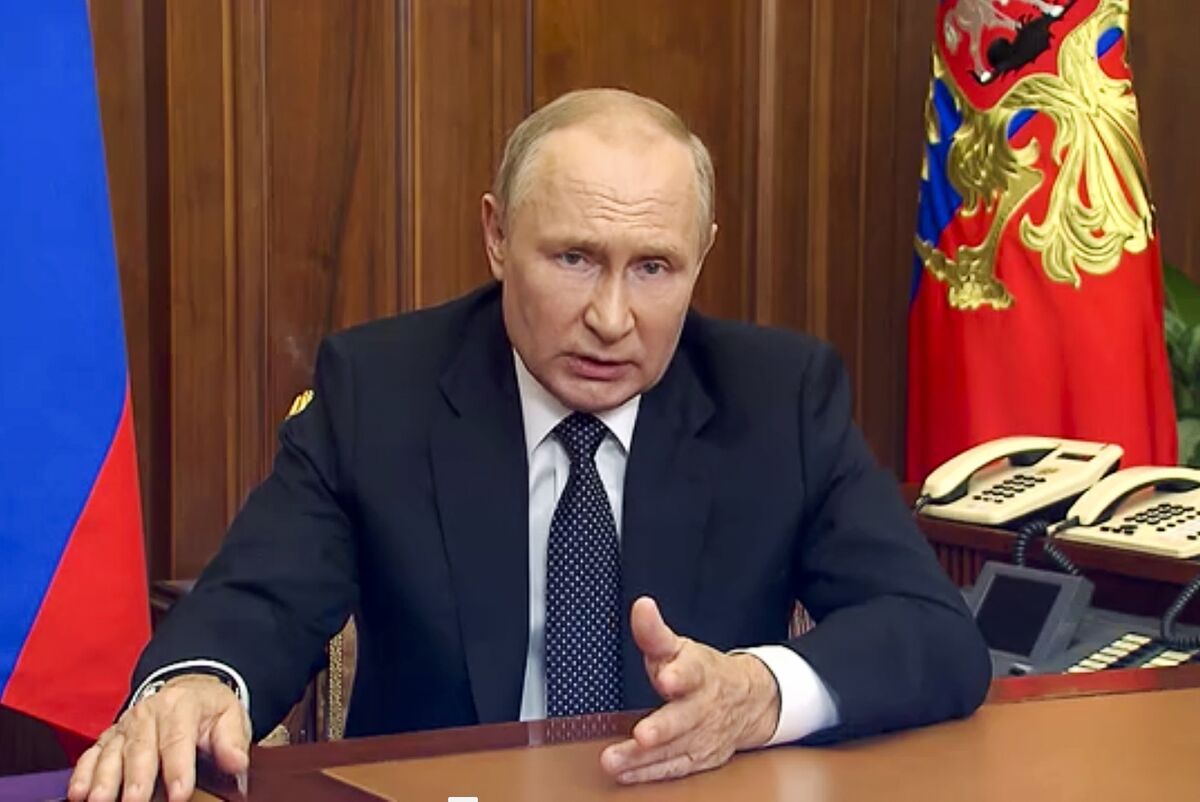
By calling up roughly 300,000 reservists to fight, and abandoning the objective of demilitarizing and “de-Nazifying” Ukraine, President Vladimir Putin of Russia acknowledged the reality and growing resistance of a unified Ukraine.

By calling up roughly 300,000 reservists to fight, and abandoning the objective of demilitarizing and “de-Nazifying” Ukraine, President Vladimir Putin of Russia acknowledged the reality and growing resistance of a unified Ukraine.Credit…Pool photo by Gavriil Grigorov

Roger Cohen
  • Sept. 21, 2022, 8:25 a.m. ET

PARIS — President Vladimir V. Putin of Russia, in a speech on Wednesday that was a reminder of how easily the war in Ukraine could spread, doubled down on his nuclear threat, accused the West of seeking to “destroy” his country, and suggested that Ukrainians are mere pawns of the “military machine of the collective West.”

In a videotaped address to the nation, he effectively conceded that the war he started on Feb. 24 has not gone as he wished. By calling up roughly 300,000 reservists to fight on what he called a 620-mile front, and abandoning the original objective of demilitarizing and “de-Nazifying” all of Ukraine, he acknowledged something he had consistently denied: the reality and growing resistance of a unified Ukrainian nation.

But Mr. Putin cornered is Mr. Putin at his most dangerous. That was one of the core lessons of his hardscrabble youth that he took from the furious reaction of a rat he cornered on a stairwell in what was then Leningrad.

His speech at once inverted a war of aggression against a neighbor into one of defense of the “motherland,” a theme that resonates with Russians, and warned the West in unmistakable terms — “this is not a bluff” — that the attempt to weaken or defeat Russia could provoke nuclear cataclysm.

“Russia won its defensive wars against Napoleon and Hitler, and the most important thing Putin did here from a psychological perspective was to claim this, too, is a defensive war,” said Michel Eltchaninoff, the French author of “Inside the Mind of Vladimir Putin.” “It was an aggressive war. Now it’s the defense of the Russian world against the Western attempt at dismemberment.”

A military recruitment billboard in St. Petersburg, Russia, on Tuesday.Credit…Olga Maltseva/Agence France-Presse — Getty Images

That “Russkiy Mir,” or imagined world imbued with some inalienable Russian essence, grew in size as Mr. Putin suggested in the speech that the country’s nuclear arsenal could be used to defend eastern and southern areas of Ukraine captured since the war began.

Mr. Putin said Russia would support imminent referendums on the future of four regions in Ukraine. This method, described this week by President Emmanuel Macron of France as “simulacra” of referendums, was used in Crimea in 2014 to justify Russian annexation.

It seems likely that the referendums in Donetsk and Luhansk in the east, and Kherson and Zaporizhzhia in the south — which the United States and Western allies have denounced as “sham” votes — would also lead to Russian annexation. At that point, a Ukrainian attack next month on the city of Kherson in the south, captured by Russia at the start of the war, could, in Russia’s view, be viewed as an attack on Russian soil, justifying a nuclear riposte.

A Ukrainian counteroffensive is now underway in the Kherson region, and senior Ukrainian officials have vowed to recapture the city.

“If the territorial integrity of our country is threatened, we will of course use all means at our disposal to defend Russia and our people,” Mr. Putin said.

His speech, which may of course be a bluff despite his denial, nevertheless placed before the West a dilemma that has been inherent in its policy from the start of the war: How far can intense military and logistical support of Ukraine — effectively everything short of NATO troops on the ground — go without setting off nuclear confrontation?

It was also an attempt to divide the West ahead of a winter that promises to be hard, with inflation and energy costs rising. While the Biden administration has little apparent interest in diplomacy at this stage, France, Germany and Italy still seek the “dialogue” with Russia that Mr. Macron mentioned in his speech on Tuesday to the United Nations, a dialogue judged necessary, he said, because “we seek peace.”

Categories
Saved Web Pages

Ukraine Latest: Putin’s Moves Are ‘Signs of Weakness,’ US Says

1200x802.jpg

Russian President Vladimir Putin called a “partial mobilization” and vowed to annex territories his forces are occupying. In a televised address, he described the moves as “urgent, necessary steps to defend the sovereignty, security and territorial integrity of Russia.”

Bridget Brink, the US ambassador to Ukraine, said in a tweet that “sham referenda and mobilization are signs of weakness, of Russian failure.” Treasuries, gold and the dollar led gains in haven assets after Putin rattled markets that were already bracing for a super-sized rate hike from the Federal Reserve. Russian stocks tumbled to their lowest since the country invaded.

Categories
Saved Web Pages

Rubio, Warner Release Senate Intelligence Committee Report Detailing Foreign Intelligence Threats

Overdue reforms are necessary to confront current foreign intelligence threats and protect national and economic security.
 

Senate Select Committee on Intelligence Vice Chairman Marco Rubio (R-FL) and Chairman Mark Warner (D-VA) released a redacted, bipartisan assessment of foreign intelligence threats facing our country. The redacted report, based upon two years of independent research conducted by non-partisan committee staff, identifies challenges facing the National Counterintelligence and Security Center (NCSC), and offers a range of solutions to ensure that the NCSC is positioned to respond to today’s foreign intelligence threats. The investigation assessed the mission, duties and authorities, resources, and structure of the NCSC.

  • “Foreign adversarial governments, including the People’s Republic of China, are now targeting all sectors of U.S. society. This Committee aims to ensure that the American public, industry, and academia are aware of this, and also to ensure that the Intelligence Community has the authorities and resources necessary to effectively confront these new counterintelligence threats.” — Vice Chairman Rubio

  • “The United States faces a dramatically different threat landscape today than it did just a couple of decades ago. New threats and new technology mean that we have to make substantial adjustments to our counterintelligence posture if we are going to protect our country’s national and economic security.” — Chairman Warner

Key findings from the report include: 


  • The United States faces threats from a wide variety of adversaries, including powerful state actors such as China and Russia, regional adversaries, minor states aligned with U.S. adversaries, ideologically motivated entities, and transnational criminal organizations;


  • Foreign intelligence entities are targeting the public and private sectors alike, including the financial sector, the U.S. industrial base, academic entities, U.S. government departments and agencies that are not part of the intelligence community, and national laboratories;


  • Today’s adversaries have access to a much wider variety of tools for stealing information, influencing U.S. officials or inflaming social and political tensions than in the past, including nontraditional human, cyber, advanced technical, and open source intelligence operations to collect against U.S. plans and policies, sensitive technology, personally identifiable information, and intellectual property, as well as to influence U.S. decision-making and public opinion;


  • The U.S. counterintelligence efforts are not postured to most effectively confront the whole-of-society threat landscape facing the country today, with the NCSC lacking a clear mission, sufficient and well-defined authorities, and adequate resources to do so;


  • The report recommends that Congress, in conjunction with the Executive Branch and the Office of the Director of National Intelligence, develop a consistent U.S. government-wide definition of counterintelligence that reflects today’s threat landscape, and enact reforms to clarify NCSC’s mission, structure and responsibilities and determine what role it should play in traditional, strategic, and offensive counterintelligence operations.


Click here to read the full report.

Categories
Saved Web Pages

Dirty Money, Mobsters, Schwarzenegger Appear in FBI Agent Trial Filing

Edgar-twitter-blur.png

As the trial for an FBI agent accused of selling out his country by funneling secrets to underworld figures is set to open this week in the U.S. District Court in Los Angeles, his attorney made startling allegations against the government’s star witness, a phony Beverly Hills lawyer and admitted mobster who he says stole a private jet from one of his clients, the reputed boss of the Armenian crime family, schmoozed with Arnold Schwarzenegger and donated to Gavin Newsom and Hillary Clinton’s campaigns. 

Babak Broumand, a 20-year FBI veteran who retired in 2018 shortly after fellow agents raided his business, home, and Lake Tahoe vacation house—which prosecutors say he bought with bribe money from the Armenians after it was laundered through his unlicensed lice removal companies called Love Bugs. Broumand is accused of “doing a little something on the side,” for the powerful Armenian mob since 2015, which is when he met the star witness in his trial, “lawyer” Edgar Sargsyan, at the Grand Havana Room, a members-only cigar lounge in Beverly Hills. 

Broumand, a supervisory agent for the San Francisco field office assigned to HUMINT, a squad that develops human sources to combat terrorism, ran checks on Sargsyan’s associates, offered up the location of secret boxes of cash the UN believes Muhomar Gaddafi squirreled out of his country before the Arab Spring reached Libya and offered to take Iranians off the no-fly list for a price.

In return, Sargsyan says he gave Broumand $10,000 in cash, took him on pricy Las Vegas “boys trips”— with “party buses filled with girls,” paid for boozy dinners, and took him on vacation on a private jet. To hide his side job, Broumand tried to register Sargsyan as a confidential informant for the FBI, prosecutors say.

Now, Sargsyan is cooperating with the government against his former friend and intelligence source. Sargsyan already helped federal prosecutors convict Homeland Security Investigations agent Felix Cisneros and a Glendale narcotics detective John Saro Balian on federal corruption charges with testimony that came before he recently confessed to his handlers that he paid his law partner, Henrik Mosei, $20,000 a month to study for the California Bar; when Mosei passed it in Sacramento using a fake ID and smeared fingerprints, his hard studying was rewarded with a Rolex. 

Mosei, who said he will plead the fifth if called in Broumand’s trial—told Steven Gruel, who is defending the former FBI agent, that Sargsyan also scammed millions in an elaborate fraud scheme where he was “busting out people’s credit cards.” The victims were “usually elderly, Armenian, or immigrants,” Gruel wrote in a court filing this week, quoting Sargsyan’s former colleague.

Some of the stolen cash made its way into campaign coffers, Gruel said, including $250,000 donated to Hillary Clinton’s campaign at a private fundraiser held in Beverly Hills. He also donated to Governor Gavin Newsom at another Beverly Hills event where President Barack Obama made an appearance, Gruel wrote.

Sargsyan spread his attention around to both the Democrat and Republican parties. A slew of celebrities maintain pricy humidors at the Grand Havana Room, including former Governor Arnold Schwarzenegger. In 2014, Gruel says in the court filing, Sargsyan sent the Terminator star a $1500 glass of Macallan 25. The former governor thanked him and “complimented his ring.” Sargsyan “took it off and gave it to him,” Gruel wrote in the filing. A friendship was born.

In return, Schwarzenegger gave Sargsyan a ring with the California seal and “a large metal watch made from the metal of a tank in Austria or Germany,” Gruel wrote in the filing.

Sargsyan’s mover-shaker days driving to his Rodeo Drive offices in his Rolls Royce Phantom ended when he agreed to cooperate with the government in the investigation of a sprawling $1 billion biofuel scam pulled off by members of the Kingston clan, a polygamist cult in Utah better known as The Order; not to mention the reputed Armenian Mafia boss he ripped off, Levon Termendzhyan, a Bel Air gas station tycoon now imprisoned in a Salt Lake City lockup. 

Sargsyan was an attorney for a company owned by Termendzhyan— who is better known in L.A. crime circles as The Lion—when he registered a private jet his boss purchased in his own name and even changed the tail number.

Sargsyan was with a woman Gruel called his mistress when he got a call that The Lion had discovered he had embezzled millions of dollars and stolen the jet. He panicked and called his office screeching, “I’m a dead man, my life is over.”  Then he “stopped coming to the office and hid in a hotel room,” Gruel wrote.

Which, Sargsyan’s colleagues told Gruel, was a smart move. At some point, The Lion “and his “goons” came to the office trying to find him, declaring “war,”’ Gruel wrote.

Today Sargsyan remains a free man. He is expected to take the stand in Broumand’s trial over the next fortnight. 

Stay on top of the latest in L.A. food and culture. Sign for our newsletters today

Categories
Saved Web Pages

US needs to reform efforts to stop enemy spies, report says

3000.jpeg

WASHINGTON (AP) — A new Senate study warns that U.S. spy agencies’ efforts to stop China and other adversaries from stealing secrets are hampered by miscommunication and a lack of money and staff at the office intended to coordinate those efforts.

The report comes amid warnings that Chinese and Russian attempts to obtain sensitive data and meddle in elections are on the rise.

The Senate Intelligence Committee report released Tuesday says the National Counterintelligence and Security Center, which is supposed to coordinate efforts by the U.S. government, doesn’t have a clear mission and is limited in its authority. NCSC cannot fund or mandate programs for many government agencies or private companies that hold secrets prized by foreign spy services.

There’s also disagreement among intelligence officials about who should lead responses to cyberattacks and campaigns trying to influence Americans — and whether those efforts should be categorized as counterintelligence, the report says.

Washington has long accused Beijing in particular of sanctioning wide-ranging campaigns to steal secrets through spying, cyberattacks, and corporate espionage, as well as spreading disinformation about the COVID-19 pandemic and considering efforts to influence American democracy. The FBI has said it opens a new counterintelligence investigation involving China every 10 hours on average.

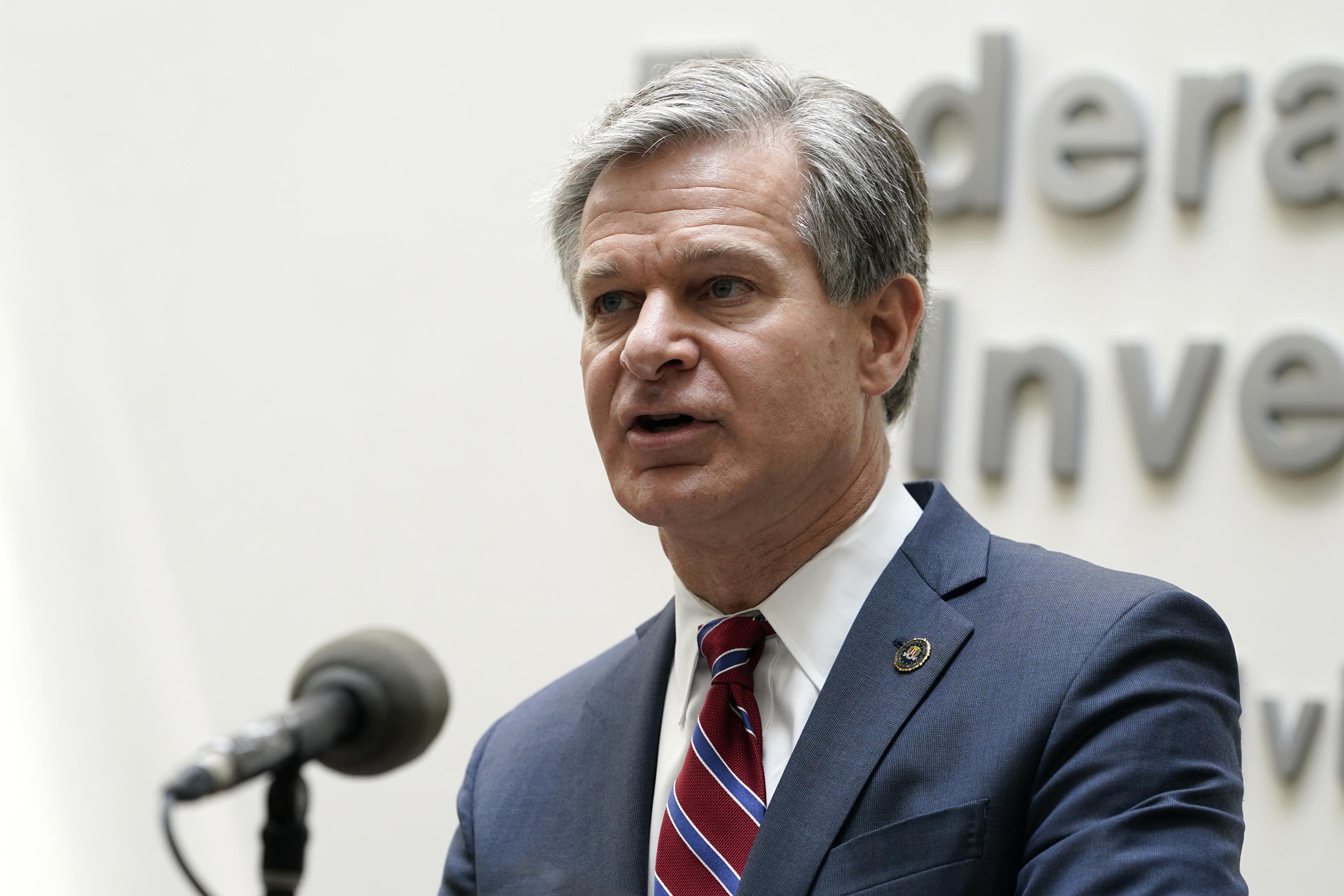
“The Chinese government is set on stealing your technology — whatever it is that makes your industry tick — and using it to undercut your business and dominate your market,” FBI Director Christopher Wray told business leaders in a recent speech in London. “And they’re set on using every tool at their disposal to do it.”

The Senate report primarily focuses on NCSC, an element of the Office of the Director of National Intelligence. ODNI was created in the 2004 reforms following the Sept. 11 attacks and revelations that agencies did not share information about some of the hijackers involved.

ODNI was intended to coordinate priorities across the rest of the 18-member U.S. intelligence community and ensure better information sharing through centers like NCSC, which would coordinate the counterintelligence work done by the FBI, CIA, and other spy agencies.

But the counterintelligence center is itself hamstrung by bureaucracy, the report argues. Among its hurdles is an inability to hire new employees quickly; not having the authority to implement national strategies; and not being able to fund counterintelligence programs outside of the spy agencies, either elsewhere in the U.S. government or in the private sector.

President Joe Biden also still hasn’t nominated a director for NCSC, which is currently led by acting director Michael Orlando. The White House did not respond to a request for comment on the lack of a nomination.

“The United States faces a dramatically different threat landscape today than it did just a couple of decades ago,” said Sen. Mark Warner, the Virginia Democrat who chairs the Senate Intelligence Committee, in a statement. “New threats and new technology mean that we have to make substantial adjustments to our counterintelligence posture if we are going to protect our country’s national and economic security.”

Sen. Marco Rubio, the Florida Republican who is the committee’s vice chairman, noted that China and other adversaries are “targeting all sectors of society.” The committee wants to make sure intelligence agencies have “the authorities and resources necessary to effectively confront these new counterintelligence threats,” he said.

A spokesperson for NCSC said the center appreciates the committee “identifying multiple recommendations to improve NCSC’s ability to lead the counterintelligence mission.”

The report notes experts don’t agree on a solution. Some want the U.S. to have its own counterintelligence agency that would take some of the responsibilities held by the FBI, CIA, and other spy agencies.

Others think a new agency would simply impose a new layer of bureaucracy and undermine the original goals of creating it. A new agency would also likely face opposition across the intelligence community and supporters of those agencies in Congress.

Frank Montoya, a retired former chief counterintelligence executive and FBI agent, said he was most successful through establishing personal relationships with other officials and persuading businesses to be proactive in their security programs. Creating new requirements would end up being counterproductive, he said, because “people will do everything they can to do the minimum required and not the maximum.”

“It’s the simple, on the ground reality that you can’t mandate everything,” he said. “And even if you did, people would find their way around it.”

Categories
Saved Web Pages

PM gives chief of staff Mark Fullbrook her ‘full support’ amid FBI probe

httpsimage.assets.pressassociation.iov2i

20 September 2022

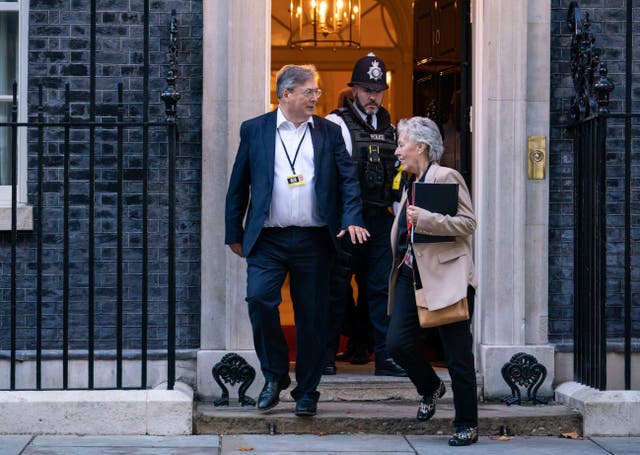
Liz Truss has given her “full support” to chief of staff Mark Fullbrook after it emerged he was questioned as a witness as part of a Federal Bureau of Investigation (FBI) inquiry into alleged bribery in Puerto Rico.

Mr Fullbrook has not travelled to the United Nations summit in New York with the Prime Minister, but No 10 insisted it is because he was working on government business, which this week includes announcements on help for businesses with their energy costs and a mini budget.

A Downing Street spokeswoman said the Prime Minister stands 100% behind Mr Fullbrook and “he has her full support”.

The FBI probe relates to allegations that financier and Tory donor Julio Herrera Velutini promised to help the former governor of Puerto Rico get re-elected if she dismissed an official investigating a bank he owned there.

He has denied the charges against him.

Liz Truss becomes PMDowning Street chief of staff Mark Fullbrook (PA)

Mr Velutini is alleged to have paid CT Group, a political consultancy firm in which Mr Fullbrook was a senior figure, 300,000 US dollars (almost £263,000) for work intended to help Wanda Vazquez Garced’s ultimately unsuccessful re-election campaign in 2020.

A spokesman for Mr Fullbrook said: “As has been made repeatedly clear, Mr Fullbrook is committed to and complies with all laws and regulations in any jurisdiction in which he works and is confident that he has done so in this matter.

“Indeed, Mark Fullbrook is a witness in this matter and has fully, completely and voluntarily engaged with the US authorities in this matter, as he would always do in any circumstance in which his assistance is sought by authorities.

“The work was engaged only by Mr Herrera and only to conduct opinion research for him and no one else.

“Mr Fullbrook never did any work for, nor presented any research findings to, the governor or her campaign. There has been no engagement since.

“Mr Fullbrook understands that there are active legal proceedings against other individuals and entities. It would therefore be inappropriate to comment further.”

Categories
Saved Web Pages

New Trump tome ‘The Divider’ offers most comprehensive chronicle of his term to date

?url=https%3A%2F%2Fmedia.npr.org%2Fasset

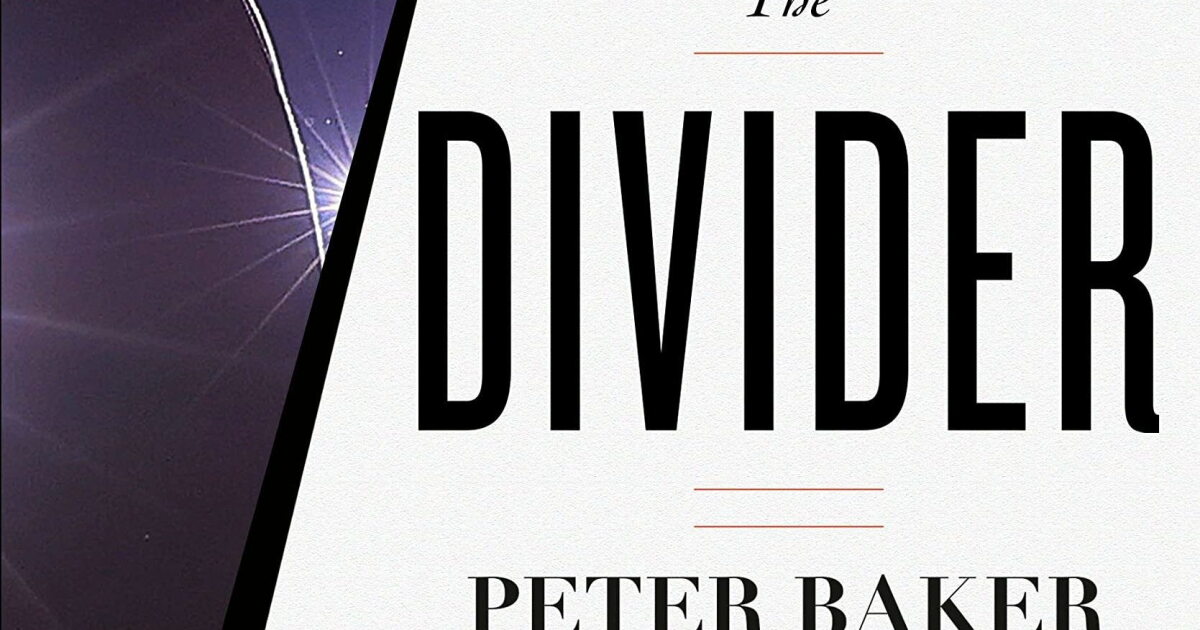
The Divider is the latest in what has become a procession of books about the Trump presidency, but there are reasons to think it arrives right on time.

Even after several Cabinet-level advisors, family members and former staff at various levels have unloaded their recollections, and after some of the biggest names in journalism have weighed in, the husband-and-wife team of Peter Baker and Susan Glasser still tell a story that insists on attention like a fresh wound.

Donald Trump may have lasted only four years in the White House but, unlike other one-term presidents, his era and aura seem unending. His grip on the Republican Party appear as viselike as ever, his insistence on his pre-eminence unabated. He cannot even acknowledge that he lost, and insists he has a right to act as if he hadn’t. And more than a third of the country professes to believe him.

The threat to democracy detailed in these pages did not begin with his efforts to overturn the 2020 election, nor did it end there. As the authors of The Divided themselves conclude in their Epilogue, Trump “emerged from a seven-million-vote defeat, two impeachments and the January 6 insurrection as the dominant force in the Republican Party.”

And, as they observe a few pages earlier: “With Donald Trump, it was never over.”

At this juncture, the only question about his running again in 2024 seems to be the date of his official announcement. That is ultimately why such a look back at his term seems as much a look forward to what may be in store.

Baker and Glasser were leading lights at the Washington Post before moving on to The New York Times and The New Yorker, respectively. They have written two previous well-received histories, on Russia’s Vladimir Putin (Kremlin Rising) and America’s James A. Baker III (The Man Who Ran Washington).

In taking on Trump, this team is less obsessed with nuggets of news or undisclosed revelations about Trump’s actions and words while in office. That lode has been mined and, well, in at least a dozen previous works including the hugely popular trilogies by revered reporter Bob Woodward and renowned magazine profiler Michael Wolff. Such salvos have been booming out from big-name authors since early 2018.

Baker and Glasser have a different aim here, and they have produced the first comprehensive look at the full four years as a one-volume history worthy of being called a chronicle. Weighing in at more than 650 pages, the text and notes are daunting to behold.

As a sumptuous feast of astonishing tales, it may hold wonderments indeed for those first contemplating the enormity of the Trump phenomenon. For them, this could be like a child’s first encounter with Harry Potter or an adolescent’s first taste of Tolkien.

But even a reader steeped in years of Trump coverage and well-versed in the precedent literature may be surprised at how compelling this narrative proves to be. The more one reads, the more one wishes to read.

Beginning with Day One

The authors begin with Trump’s first day in the Oval Office, Jan. 20, 2017, the day of the inaugural address that became known as the “American carnage” speech. Upon first entering the Oval, Trump is reported to have been pre-occupied with the quality of the light available for picture taking.

This leads to a discussion of Trump’s careerlong obsession with appearances in general and his own in particular, asking aides: “‘How’s the look.”

The new president, we are told, “wanted to project himself as the hero America had been waiting for, a strong man for troubled times… Were these merely the weird quirks of a vain septuagenarian? Or the menacing affectations of an aspiring dictator?”

Through this and 31 additional chapters, the authors leave little doubt as to their own conclusion. Their tour of the four years hits upon nearly every incident a reader is likely to recall of Trump’s term from the effort to bar arrivals in the U.S. from predominantly Muslim countries to the government shutdown for the sake of a border wall to Trump’s final refusal to attend the inauguration of his successor.

Each chapter has a title that may jog the memory, including Trump’s reference to the top Pentagon brass as “My Generals,” his boasting “I like conflict” and his mocking references to “Russia, Russia, Russia” — his derisive way of conjuring the “witch hunt” into Russian interference in the 2016 election campaign.

They then walk us through a recounting of Trump’s non-stop controversies and crises from the initial effort to ban entrants from predominantly Muslim countries in his first days in office to his final flailing efforts to somehow derail the process of his removal from office, including January 6 and the still-festering sore of his refusal to concede.

Along the way are many touchpoints that seem further back in time than they actually are. Was it just five years ago Trump was erecting legal walls against entrants from Muslim countries and trying to build a real one from the Pacific to the Gulf of Mexico? Or that he fired FBI Director James Comey, triggering the appointment of Special Counsel Robert Mueller, the rise of Attorney General Bill Barr and the neutering of Mueller’s report?

We return to all these moments through the eyes of those who participated, trying to restrain the president while carrying out his wishes — trying to meet his constant loyalty tests while honoring their larger commitments to the law, the Constitution and the country.

We learn that some of these officials were in nearly constant turmoil over their Trump-induced conflicts. Examples include Cabinet members Kirstjen Nielsen at Homeland Security and Alex Azar at Health and Human Services, who it is reported agreed to a “suicide pact” by which they would resign together if Trump reinstated the family separation policy instituted by his hardline immigration adviser Stephen Miller.

Nielsen said if she wrote a book about her time serving Trump she would call it Honey, Just Do It — the form his instructions to her often took.

Staying current

In an alert to issues that have remained salient since Trump left office, the authors devote multiple chapters to the immigration saga, including the elevation of Miller to a kind of ex officio status as the issue’s “czar” within the White House. Miller is quoted talking of his “coronation” and his eagerness to “go full Napoleon” on that front. We also see Trump’s demand for the wall lead to the shut down of much of the federal government for five weeks in early 2019.

Inevitably, several chapters are devoted to the Mueller probe and the frustration that grew from Attorney General Bill Barr’s efforts to interpret it and hide the unredacted original.

The chapters are grouped into sections that do not quite coincide with the four years of the term, in part because two of the five sections are devoted to the protracted struggles of 2020 — first with COVID and then with the results of the election. In both cases, Trump simply refused to accept the reality that confronted him — whether the lethality of the virus or the verdict of the voters.

Much of this is familiar from news accounts, although it is still arresting to see how many people were telling Trump his approach to the pandemic was not only wrong factually but politically wrong-headed. Not only did his informal confidant Chris Christie, the former governor of New Jersey, tell him so, First Lady Melania Trump did too.

“You’re blowing this,” they are reported to have said. But Trump remained unmoved. Whether dealing with the pandemic or the Electoral College, Trump simply insisted he knew better — better than the doctors, better than the election administrators in his own party.

It catches up to him in both instances. Not only does he contract COVID himself, he makes the election a kind of referendum on his handling of it. Not only does he refuse to concede his re-election loss, he risks the general confidence of the public in the democratic process. The nation’s losses due to COVID may have peaked, but the damage from the electoral denial may have only begun.

Heroes and villains

The Divider is a rushing torrent of anecdotes and recollections. A reader may plunge in at any point and pull up a pail of Trump at full tilt.

At the White House in those final weeks, the more realistic of Trump’s inner circle were doing what defeated presidential staffers have always done. They were heading out to find new jobs and make a new plan. In their wake arrived a band of reality spurning denialists who camped out in the Oval Office and persuaded Trump he could ignore the voters, the Electoral College and the peaceful transfer of power.

Baker and Glasser present a clear contrast between heroes and villains in Trump’s ambit, in those final days. Preeminent among the heroes is Mark Milley, chairman of the Joint Chiefs of Staff, who lends his full rank and prestige in blocking any use of the armed services to overturn the election and keep Trump in office. Milley will be familiar to readers of earlier Trump histories, as the general appears to have been a major source for several authors.

There are also salient figures among the post-election villains, such as former New York Mayor Rudy Giuliani and conspiracy-minded lawyer Sidney Powell. And then there is the former Army general Michael Flynn, convicted of lying to the FBI about his foreign contacts but pardoned by Trump. Flynn inserts himself in the White House late in 2020, arguing for imposition of martial law.

Mark Meadows, the last of Trump’s four chiefs of staff, comes off as a pleaser who told all sides what they wanted to hear — that the president was getting more realistic and ready to leave office, or on the contrary that he was ready to fight and keep fighting.

In every case we see individuals whose careers or professional standing had been made, renewed or greatly enhanced by their association with a president. And we see how each of them clung to that rocket even as it returned disastrously to earth.

Critique of method

Like other authors of Trump books, Baker and Glasser have faced criticism regarding anecdotes they might have withheld from publication in real time so as to enrich their book-length offerings (and themselves) in the longer run. That is one reason both authors have emphasized that The Divider is based entirely on the research they did after Trump left office, including nearly 300 interviews. Two of those interviews were with Trump himself, at Mar-a-Lago, and they are extensively reported here.

It has also been said that the focus in these Washington tomes is too much on power plays and power players, with scant attention to the actual policies pursued by the Trump administration or the impact they had on the government and the people. The authors have responded that there are other books devoted to the real-world ramifications of the Trump term, and there will doubtless be many more.

There also remains the question of media responsibility for the rise of Trump, whose fixation on media was surely reciprocated on virtually every platform — whether hostile or supportive. By making Trump the focal point of 2016, the media surely aided in his ascent. Some would prescribe a corrective moratorium on all future discussions of the man and his mania, which seems neither possible nor desirable.

Others maintain the media erred by not reporting on Trump enough, or with enough seriousness, in the earliest phases of his political ascendance. That particular indictment seems to have been answered many times over, even if after the fact. The Divider stands as the latest testament to that resolve.

Copyright 2022 NPR. To see more, visit https://www.npr.org.

Categories
Saved Web Pages

‘Whatever happened to Trump’s claim the FBI planted the documents?’: asks ex-Democratic senator

donald-trump.jpg?id=30004941&width=1200&

As Donald Trump heads to court to meet his requested special master on Tuesday, he was being asked for anything proving that he declassified any of the stolen government documents.

The court filings never allege that Trump declassified any of the documents, but it’s something that he’d been saying on his social media sites and in radio and television interviews. It had become such a part of the narrative, that Judge Aileen Cannon put the unsubstantiated information in her own ruling.

“The Court does not find it appropriate to accept the Government’s conclusions on these important and disputed issues without further review by a neutral third party in an expedited and orderly fashion,” Cannon wrote last week in her filing.

It’s setting Tuesday up for a doozy of a court battle, where Trump isn’t expected to appear.

Now that the scandal has reached the six-week mark, former Sen. Claire McCaskill (D-MO) is reminiscing about the early days of the social media rants, the rabid press releases and quick excuses from ill-informed Republican loyalists.

“Whatever happened to the defense the FBI came in and planted them?” McCaskill asked about the Trump excuses. The Fox networks spent almost a whole day suggesting the boxes could have been planted. Sen. Rand Paul (R-KY) said that no one is certain that the FBI wouldn’t “put things in the boxes to entrap him.”

“What the FBI is probably doing is planting evidence,” said Fox host Jesse Watters said in his Aug. 9 show. Two days later, Watters was saying, it wasn’t so much planting evidence as Trump wanted to take home some reminders of his time in the Oval Office like a paperweight from North Korea, or a little bobblehead of the MBS.

Trump claimed by that point, that he didn’t have any documents anymore. The National Archives asked for them back and he gave them back.

It was only one of the things that Trump said over the course of the week as he searched for something that would explain the reason he had classified documents from the government in his desk drawers and boxes in his closet.

The excuse then became “they’re just news clippings” that some papers may have gotten mixed in with.

In one statement, Trump claimed that people bring their work home all the time. Trump had lost his job by the time he was bringing those documents back to Florida. That same statement also claimed that he’d declassified the documents, which he’d previously said the FBI planted.

After that, they alleged that the FBI was “raiding” Mar-a-Lago because they were part of some wild operation targeting Trump. His MAGA supporters proclaimed: “If they can do this to a former president, imagine what they can do to you.”

Then the excuse became that it was President Baack Obama’s fault because he stole 33,000 government documents for his presidential library. The National Archives came out with a statement explaining that they actually run the Obama archives of documents, as they do with all presidential libraries. None of those documents are classified.

An aide then said that because Trump thought he’d won the presidency and that he’d be able to stay in office that he never really packed anything. So, he simply threw some things in boxes with 40 boxes of paperwork and file folders saying “CLASSIFIED” or “TOP SECRET” in big red letters. It’s hard to believe that Trump was in the White House residence bubble-wrapping things and shoving his clothes in a black trash bag.

The next excuse from Trump is that he’s entitled to the documents because they were his.

“They’re mine,” three of Trump’s advisers told the New York Times that he said repeatedly.

The next excuse became that he needed them to write his book. Trump has already self-published his book, which are pages of photos with post-it notes he has written on and about the photos. The National Archives also disputed this claim because presidents have access to the archives for up to 12 years and Trump could have used that access any time to work on his book. He just never turned over the documents to begin with so they could be cataloged.

At some point in the process there was a comment that he would have given the documents back if they’d just asked. It wasn’t long after Americans learned of the 18-month process that the Archives and the FBI went through trying to get them back by sending letters and talking to his aides. He was then subpoenaed, which went ignored and finally the search was executed.

See McCaskill’s video below:

what happened to the claim the FBI planted the documents? youtu.be

Categories
Saved Web Pages

A Trump advisor’s trial could shed light on ‘espionage lite’ and foreign influence around the former president

a-trump-advisors-trial-could-shed-light-

In the summer of 2016, Thomas Barrack stopped to appreciate his latest national television appearance as an informal advisor to the Trump campaign.

“I nailed it … for the home team,” Barrack wrote in a July 2016 text.

But in a court filing, federal prosecutors said Barrack was not referencing Trump’s campaign or the United States. The “home team” was instead the United Arab Emirates, prosecutors said, in an indictment charging Barrack — a wealthy businessman who served as chair of Trump’s presidential inaugural committee — with illegally acting as a foreign agent to push US officials on policies favoring the Gulf nation.

On Monday, jury selection began in Barrack’s trial, where he stands charged not only with acting as an unregistered foreign agent acting on orders of foreign rulers but also with obstructing justice and lying to the FBI. The trial is expected to last about a month and could shed additional light on how advisers in Trump’s orbit secretly lobbied his campaign and administration on behalf of foreign countries.

Indeed, Barrack is only the latest Trump ally to face charges in connection with an alleged foreign influence campaign. In October 2020, the prominent Republican fundraiser Elliot Broidy pleaded guilty to conspiring to influence the administration on behalf of Chinese and Malaysian interests. Trump’s onetime national security advisor Michael Flynn had previously admitted to making “material false statements and omissions” in foreign-agent filings related to his advocacy for Turkey. (Flynn was not charged in connection with Turkey but made the admission as he pleaded guilty to lying to the FBI about his communications with the Russian ambassador to the US before Trump’s inauguration.)

Broidy and Flynn both received pardons from Trump.

Barrack is standing trial alongside his former assistant, Matthew Grimes, who was charged only with participating in the lobbying scheme. An Emirati businessman, Rashid al-Malik, was also charged, but he left the United States just days after federal agents interviewed him. He remains at large.

In court papers, federal prosecutors alleged that Barrack agreed in the spring of 2016 to develop a backchannel between the Emiratis and Trump campaign. As part of the arrangement, Barrack also agreed to influence and obtain information about the campaign’s foreign policy positions, according to the indictment, which quotes extensively from text and email correspondence.

Before long, Barrack sent al-Malik a copy of a speech he’d drafted for Trump, in which he praised an Emirati ruler who was the crown prince of Abu Dhabi at the time.

“They loved it so much! This is great!” Al-Malik replied, according to the indictment.

As the draft went through edits, Barrack then worked with Trump campaign officials to ensure that the remarks included a positive reference to Persian Gulf allies. After Trump delivered the speech, an Emirati official emailed Barrack to congratulate him “on the great job today” and to say “everybody here are happy with the results.”

Barrack also praised the United Arab Emirates in television interviews, with al-Malik passing along talking points from Emirati officials, according to the indictment.

Following Trump’s election, Barrack communicated with senior Emirati officials about the transition and likely candidates for key posts. In December 2016, al-Malik drafted a “wish list” of US foreign policy positions that would benefit the United Arab Emirates. A month later, in January 2017, al-Malik urged Grimes to push the Trump administration to designate the Muslim Brotherhood as a terrorist organization — a longtime goal of the Emiratis.

“Yes. At your direction,” Grimes answered. Weeks later, Grimes followed up with a news article reporting that the US government was considering that move.

A Trump advisor's trial could shed light on 'espionage lite' and foreign influence around the former presidentThe prosecution of former Trump campaign manager Paul Manafort kicked off a new era of foreign influence enforcement.BRENDAN SMIALOWSKI/AFP via Getty Images

A new test

For the Justice Department, Barrack’s monthlong trial marks just the latest test of its recent crackdown on covert foreign influence.

After decades of light enforcement, the Justice Department in recent years has brought multiple prosecutions under the Foreign Agents Registration Act, or FARA, a law designed to shine a light on Nazi propaganda. The 1938 law requires lobbyists and other consultants to register with the Justice Department and disclose their political activities for foreign countries and other overseas powers.

In 2018, Paul Manafort, the former chairman of Trump’s 2016 campaign, pleaded guilty to FARA-related charges in connection with his past work for the Russia-backed government in Ukraine. The case went down as a high-profile opening salvo in the Justice Department’s renewed scrutiny of foreign influence, but Trump pardoned Manafort in the waning weeks of his presidency.

Barrack was not charged with violating FARA but rather a lesser-known statute used in cases involving evidence of someone acting at the direction of a foreign government official. The law, described as “espionage lite” within the Justice Department’s national security division, has a maximum sentence of 10 years — twice that of FARA.

Former prosecutors said a conviction in Barrack’s case could send a message and sharpen the lines between illegal influence peddling and the lawful use of Washington connections to represent the viewpoints of foreign governments.

Ahead of trial, lawyers for Barrack and Grimes have argued that the Justice Department has overstretched a statute usually reserved for spies and criminalized free speech. And they have disputed that Barrack and Grimes ever entered into an agreement with the United Arab Emirates.

“Mr. Barrack was never an agent of the UAE, nor did he commit obstruction or make any false statements. There is no basis whatsoever for the charges against Mr. Barrack,” his lawyers wrote in a court filing.

Through his lawyers, Barrack has also argued that his contacts with Emiratis were no secret to the Trump campaign and the former president’s administration. Barrack has also raised questions about prosecutors waiting two years — and until after Trump left office — to charge him, arguing “the government intentionally delayed bringing this case for political reasons or tactical advantage.”

Prosecutors are expected to highlight evidence that Barrack stood to profit from his advocacy. Between April 2016 and 2018, they said, he was seeking hundreds of millions of dollars in investments from Emirati sovereign wealth funds.

In 2017 and 2018, Barrack’s investment firm, Colony Capital Inc., raised about $374 million in capital commitments from the United Arab Emirates sovereign wealth funds — “in part as a result of the efforts” of Barrack, Grimes and al-Malik, prosecutors said.

“Of course, it’s not just Barrack who will be on trial. It’s the practices of the Trump years, Trump’s cronies trading on their proximity and access to the president and those around him,” said Norm Eisen, who served as counsel for House Democrats in Trump’s first impeachment, in an interview earlier this year.

“Barrack was just following the model of monetizing the presidency that Trump established.”

Categories
Saved Web Pages

Trump has argued he declassified Mar-a-Lago documents. For his legal defense, it might not matter

493310b9-c863-47e1-8587-85324795aabb-GTY

3ebbd0e2-f7f1-46ba-982d-8e9bac5a5cdd_pos

play
Biden reacts to Trump’s claim he declassified docs
President Joe Biden responds to Donald Trump’s taking of top secret documents to his Florida Mar-a-Lago estate and appears to mock the former president’s assertion that he declassified the documents seized by the FBI earlier this month. (Aug. 26)

After the Justice Department released a singularly rare photo showcasing folders labeled “top secret” and “secret” on the floor at Donald Trump’s Mar-a-Lago estate, the media and the public zoomed in on what it could all mean.

The former president has said he had a standing order to “automatically declassify” all documents he took home and made it core to his defense, accusing the government of overreach after the FBI searched his Florida home.  

But whether or not Trump’s claim is true – and whether or not the documents are classified or even declassified – for his legal defense right now, it may not matter, experts told USA TODAY.

That’s because the federal laws used to justify the Aug. 8 search do not require the documents to be classified for a crime to be committed. In fact, the provisions of federal law contained in the Espionage Act, obstruction, and the mishandling of government records and reports mentioned in the search affidavit don’t even include the words “classified” or “confidential.” The first two carry the heftiest penalties of fines and up to 10 and 20 years in prison, respectively.

In approving the search warrant, a federal magistrate agreed that there was probable cause FBI agents would uncover evidence that these three provisions of federal law were violated.

Trump’s legal team on Monday reiterated the broad argument that Trump had the power to declassify information in a filing opposing the Justice Department’s effort to keep documents labeled as “classified” from being handed over to a special master, or neutral third party, for review

“The president enjoys absolute authority under the executive order to declassify any information,” the filing states. And, it added, there’s no legitimate claim that it requires approval of “bureaucratic components of the executive branch.”

Experts say it’s not that simple.

‘Astounding’: Trump documents reveal casual disregard for long-standing security protocols

‘National defense materials’

Today’s modern classification system was created years after the 1917 Espionage Act, said Jim Trainor, a former FBI counterintelligence agent who served as assistant director for the cyber division.

That’s why the section cited by the DOJ refers to “national defense” materials, he added.

“The Espionage Act doesn’t define what national defense information is,” a recent Congressional Research Service report noted, adding that courts all the way up to the Supreme Court have laid out some general principles: that such information typically relates to the military and naval establishments and national preparedness; that the information must be closely held; and that disclosure must be potentially damaging to the nation.

“My sense is they (the DOJ) didn’t want to go down this rabbit hole as to whether the documents are classified or not,” Trainor said.

Still, that doesn’t mean the Justice Department can’t later decide to seek an indictment based on other statutes, Trainor said.

Trump’s own former Attorney General Bill Barr said that broadly proclaiming all documents removed to the White House residence declassified by default without telling anyone would be highly “reckless” given that American agents, their families and the nation’s hard-won foreign assets could be exposed.

‘Immediate and serious harms’

In a court filing last week, the DOJ noted that providing seized classified records to a special master could cause “the most immediate and serious harms to the government and the public.” The DOJ said it had identified “a discrete set of just over 100 documents,” or more than 700 pages, that it called classified records belonging to the government and part of an ongoing criminal investigation.

FBI agents also removed from Trump’s office and storage room more than 11,000 government documents and photos without any classification markings mixed in with some of the nation’s most highly-guarded secrets, according to court filings.

The Office of the Director of National Intelligence is conducting its own review of the national security risk of possible unauthorized disclosure of these classified records and any harm that may have occurred, according to DOJ court filings.

A grand jury subpoena on May 11 also laid groundwork for the Mar-a-Lago search in August. The subpoena, received by Trump attorney Evan Corcoran, essentially put Trump on notice that there was an official government request for national defense materials, said Jamil Jaffer, who worked at White House counsel’s office under President George W. Bush and helped send highly classified documents to the National Archives and Records Administration as part of the administration’s transition.

Because, the DOJ affidavit noted, the Espionage Act provision includes the “unauthorized possession” of information relating to the national defense that’s “willfully” kept from a U.S. government representative entitled to receive it, the Justice Department can now argue Trump indeed “willfully” kept those materials, especially after his attorney signed a sworn certification saying Trump had not retained materials the government requested, Jaffer said.

The DOJ Mar-a-Lago photo: What can we see in the rare photo? What does it mean?

‘Not with the Department of Justice’

Trump and his attorneys have argued that the seized materials are all governed by the Presidential Records Act, allowing the president discretion to categorize his records as presidential or personal – with limited judicial oversight on the issue.

“At best, the government might ultimately be able to establish certain Presidential records should be returned to NARA (the National Archives and Records Administration),” the Sept. 12 filing states. “What is clear regarding all of the seized materials is that they belong with either President Trump … or with NARA, but not with the Department of Justice.”

The second statute in the affidavit refers to trying to impact or obstruct government workings, including, in this case, the Archives, Jaffer added. 

Trump’s attorneys did not provide a comment.

But it remains unclear if the DOJ would prosecute Trump.

That’s because the DOJ might simply take the view that getting the documents secured is enough, said Jaffer, who also worked on these issues at the DOJ’s National Security Division.

National security experts say the DOJ is in a tough spot not only because of the political timing and optics, but also because such a move may send the wrong message to other intelligence workers – both those who understand they would face prosecution without hesitation in a similar circumstance, as well as future presidents and senior officials who may be emboldened to do as they want with state secrets.

Trump is also not any government employee, but a former commander-in-chief who had the power to issue executive orders and declassify materials. Jaffer noted that plenty of senior government officials, including the president himself, have made classified information public as an attempt to better inform the public about national security issues; they are not prosecuted, even when it is done in an informal manner.

And when Trump tweeted a sensitive picture of the aftermath of an accident at an Iranian space facility, he also wasn’t prosecuted, nor was there any public suggestion from the DOJ that he ought to be. 

The DOJ may decide that no further threat to national security is enough, taking a page from former special counsel Bob Mueller’s investigation into Russian election interference, Jaffer said. That would leave the information in the hands of the American people, again, to decide for themselves.

WP Radio
WP Radio
OFFLINE LIVE