Categories
Saved Web Pages

Putin’s Operational Pause Could Be a Bad Sign for the Russian Military

TOS-1-1024x576.jpg

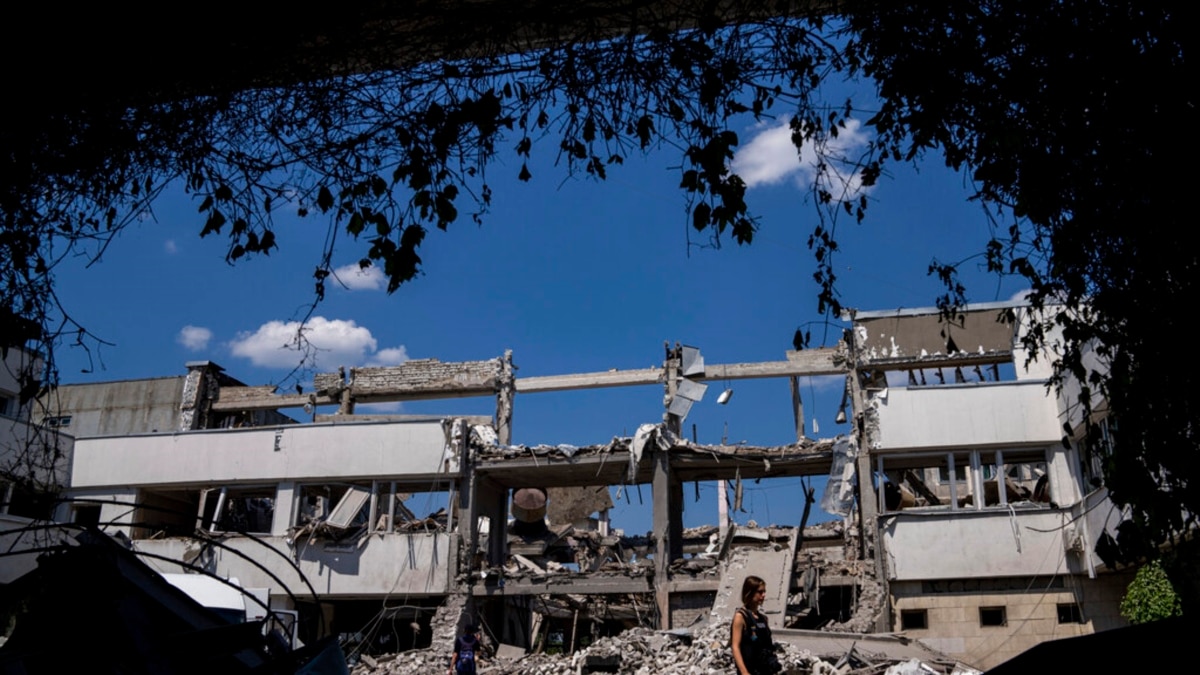
Why did Putin order an operational pause in Ukraine? On day 135 of the Russian invasion of Ukraine, the Russian military is conducting an operational pause in the Donbas after some recent successes.

Operational Pause and Ukrainian Counteroffensives 

On Thursday, Igor Konashenkov, the spokesperson of the Russian Defense Ministry, announced that the Russian military is pausing to rest and reorganize its combat capabilities in the Donbas.

The Russian defense official didn’t specify the duration of this operation pause. However, it should be highlighted that this operational pause concerns large-scale offensive operations and not all combat. Russian forces are still conducting limited, small-scale offensive operations in the Donbas.

Why the Operational Pause?

After capturing Severodonetsk and Lysychansk last week, the Russian military has paused its main offensive operations in order to regroup and replenish its forces. The Kremlin’s next target is the Donetsk province, which is located adjacent to the Luhansk province the Russian forces captured with Lysychansk.

In its daily estimate of the war, the British Ministry of Defense focused on the Russian operational pause and the Ukrainian counteroffensive toward Kherson.

“Russia is likely concentrating equipment on the front line in the direction of Siversk, approximately 8km west of the current Russian front line. Its forces are likely pausing to replenish before undertaking new offensive operations in Donetsk Oblast,” the British Military Intelligence assessed.

Operational Pause as a Bad Sign?

However, there is also one other explanation for the Russian operational pause. The Ukrainians have been using their newly acquired (nine so far) M142 High Mobility Artillery Rocket System (HIMARS) to target Russian ammunition depots far behind the frontlines. As a result, the Russian military is running out of ammo to support its offensive.

“There is a realistic possibility that Russia’s immediate tactical objective will be Siversk, as its forces attempt to advance towards its most likely operational goal of the Sloviansk-Kramatorsk urban area,” the British Ministry of Defense added.

At the same time that the Russian military was fighting street to street for Severodonetsk, the Ukrainian General Staff was launching a counteroffensive in southern Ukraine. Now, after weeks of slow but deliberate advance, the Ukrainian forces are reaching the outskirts of Kherson—the most important city that the Russians have managed to capture so far in the war.

“Ukrainian forces continue to make gradual advances in the south-western Kherson sector,” the British Military Intelligence assessed.

Russian Casualties: Another Reason for the Operational Pause? 

The Russian military continues to suffer heavy casualties in Ukraine.

Over the last 24 hours alone, the Ukrainian General Staff is claiming to have killed or wounded up to 750 Russian troops (Ukrainians are claiming 250 killed, and usually for every killed, there is between one to two wounded). In addition, the Ukrainians are claiming to have destroyed or captured 35 tanks, 20 vehicles and fuel tanks, 14 armored personnel carriers and infantry fighting vehicles, 13 artillery pieces, and 2 unmanned aerial systems.

Such high numbers of casualties are unsustainable in the long run. And right now, there seems to be no end in sight to the conflict to end. On Thursday, Ukrainian President Volodymyr Zelensky stated that his country wouldn’t stop fighting until every Russian soldier has been kicked out of Ukrainian soil. To achieve that, it would most likely take months of fighting. Similarly, Russian President Vladimir Putin has signaled that the war won’t stop until he has gained what he wants (or, more accurately, what he can get away with, which right now seems to be eastern and southern Ukraine, where most of the country’s industry and mineral wealth is located).

To be sure, the Ukrainian figures could be off, and Kyiv could be very well hyping the casualties its troops are inflicting on the Russians. But thus far, the Ukrainian claims have been independently verified to a large degree, both by Western intelligence services and private open-source investigators.

Overall, the Ukrainian Ministry of Defense claimed that as of Friday, Ukrainian forces have killed approximately 36,900 Russian troops (and wounded approximately thrice that number), destroyed 217 fighter, attack, and transport jets, 187 attack and transport helicopters, 1,637 tanks, 828 artillery pieces, 3,811 armored personnel carriers, 247 Multiple Launch Rocket Systems (MLRS), 15 boats and cutters, 2,685 vehicles and fuel tanks, 153 anti-aircraft batteries, 669 tactical unmanned aerial systems, 66 special equipment platforms, such as bridging vehicles, and four mobile Iskander ballistic missile systems, and 155 cruise missiles shot down by the Ukrainian air defenses.

1945’s New Defense and National Security Columnist, Stavros Atlamazoglou is a seasoned defense journalist specializing in special operations, a Hellenic Army veteran (national service with the 575th Marine Battalion and Army HQ), and a Johns Hopkins University graduate. His work has been featured in Business InsiderSandboxx, and SOFREP.

Categories
Saved Web Pages

Once a Crucial Refuge, ‘Gayborhoods’ Lose L.G.B.T.Q. Residents in Major Cities

00gay-neighborhoods01-facebookJumbo.jpg

Many are choosing to live elsewhere in search of cheaper housing and better amenities. They are finding growing acceptance in other communities after decades of political and social changes.

Credit…Ian C. Bates for The New York Times

Adam Nagourney
Published July 3, 2022Updated July 4, 2022

SAN FRANCISCO — Cleve Jones has lived in the Castro neighborhood for nearly 50 years, almost from the day he graduated from high school in Phoenix and hitchhiked to California.

He has been a political and cultural leader in San Francisco, organizing gay men and lesbians when the AIDS epidemic devastated these streets in the early 1980s. He created the nationally recognized AIDS Memorial Quilt from a storefront on Market Street. He was a face of the anger and sorrow that swept the Castro in 1978 after the assassination of Harvey Milk, the first openly gay man elected to the Board of Supervisors.

Mr. Jones has helped define the Castro, dancing at its gay bars seven nights a week when he was younger, gathering with friends for drinks and gossip as he grew older. To this day, he is recognized when he walks down its sidewalks. “Hi Cleve — I know who you are,” said Lt. Amy Hurwitz of the San Francisco Police Department, after Mr. Jones began to introduce himself.

But in May, Mr. Jones, 67, left for a small home with a garden and apple and peach trees 75 miles away in Sonoma County after the monthly cost of his one-bedroom apartment soared from $2,400 to $5,200.

The departure of Cleve Jones, a political and cultural leader who helped define the Castro, has sent tremors through L.G.B.T.Q. neighborhoods across the country.Credit…Ian C. Bates for The New York Times

His story is not just another tale of a longtime resident priced out of a gentrifying housing market. Across the country, L.G.B.T.Q. neighborhoods in big cities — New York, Houston, Los Angeles, San Francisco among them — are experiencing a confluence of social, cultural and economic factors, accelerated by the Covid-19 pandemic, that is diluting their influence and visibility. In a few cases, some L.G.B.T.Q. leaders say, the neighborhoods’ very existence is threatened.

“I walk around the neighborhood that encouraged me for so many decades, and I see the reminders of Harvey and the Rainbow Honor Walk, celebrating famous queer and trans people,” Mr. Jones said as he led a visitor on a tour of his old neighborhood, pointing out empty storefronts and sidewalks. “I just can’t help but think that soon there will be a time when people walking up and down the street will have no clue what this is all about.”

Housing costs are a big reason for that. But there are other factors as well.

L.G.B.T.Q. couples, particularly younger ones, are starting families and considering more traditional features — public schools, parks and larger homes — in deciding where they want to live. The draw of “gayborhoods” as a refuge for past generations looking to escape discrimination and harassment is less of an imperative today, reflecting the rising acceptance of gay and lesbian people. And dating apps have, for many, replaced the gay bar as a place that leads to a relationship or a sexual encounter.

Many gay and lesbian leaders said this might well be a long-lasting realignment, an unexpected product of the success of a gay rights movement, including the Supreme Court’s recognition of same-sex marriage in 2015, that has pushed for equal rights and integration into mainstream society.

There are few places where this transformation is more on display than in the Castro, long a barometer of the evolution of gay and lesbian life in America. It is a place where same-sex couples crammed the streets, sidewalks, bars and restaurants in defiance and celebration as L.G.B.T.Q. people in other cities lived cloistered lives.

The Castro houses the old campaign headquarters of Harvey Milk, an openly gay politician who was assassinated in 1978.Credit…Ian C. Bates for The New York Times

It was the stage for some of the first glimmers of the modern gay rights movement in the late 1960s; the rise to the political establishment with the election of openly gay officials like Mr. Milk; and the community’s powerful response to the AIDS epidemic in the 1980s.

“Gayborhoods are going away,” Mr. Jones said. “People need to pay attention to this. When people are dispersed, when they no longer live in geographic concentrations, when they no longer inhabit specific precincts, we lose a lot. We lose political power. We lose the ability to elect our own and defeat our enemies.”

Cynthia Laird, the news editor of The Bay Area Reporter, an L.G.B.T.Q. newspaper based in San Francisco, said she was reminded of this transformation every time she walked through the neighborhood.

“I wanted to get a picture of people walking in the rainbow crosswalk at the corner of Castro and 18th Street and there was nobody walking,” she said. “The Castro and San Francisco have changed a lot over the past 25 years. We have seen a lot of L.G.B.T.Q. people move from San Francisco to Oakland — which is where I live — and even further out in the East Bay.”

Mr. Jones’s departure has sent tremors through gay neighborhoods across the country, all the more so because it happened in the midst of annual pride celebrations marking the advances of the L.G.B.T.Q. movement since the New York City police raided the Stonewall Inn, a gay bar, in June 1969.

A visitor brought carnations to the AIDS Memorial Quilt in Golden Gate Park in San Francisco on June 11. The national effort began in the Castro neighborhood in the 1980s.Credit…Ian C. Bates for The New York Times

“What I see in Houston is we are losing our history,” said Tammi Wallace, the president of the Greater Houston L.G.B.T. Chamber of Commerce, who lives in Montrose, the city’s gay neighborhood. “A lot of individuals and couples are saying, ‘We can move to different parts of the city and know we are going to be accepted.’”

Daniel B. Hess, a professor of urban planning at the State University of New York at Buffalo, and the co-author of a book about the evolution of gay neighborhoods, said U.S. census data over the past three decades showed a decline in the density of same-sex couples in Chelsea and Greenwich Village in New York City, Dupont Circle in Washington, D.C., West Hollywood in Los Angeles County and the Castro, which he called “America’s premier gay neighborhood.”

“Gay men are moving out of gay neighborhoods,” he said. “They are settling in other urban neighborhoods and close-in suburbs. And non-L.G.B.T.Q. people are moving in and knocking down the concentration in gay neighborhoods.”

Dr. Hess said part of this was generational. The men and women who established these neighborhoods “wanted to segregate and be surrounded by gay people,” he said. “In contrast, when you ask young people today what they want, they would prefer an inclusive coffee shop. They don’t want anyone to feel unwelcome.”

Twin Peaks Bar in the Castro. Historically, gay men and women have moved into relatively downtrodden neighborhoods, like the Castro and Montrose in Houston, fixing them up.Credit…Ian C. Bates for The New York Times

Some gay leaders argued that the instinct to live in communities of like-minded people remained a powerful draw and that there would always be some version of a gayborhood, though perhaps not as concentrated and powerful.

“I say this as a gay man: It’s nice to live in a community where there are a lot of other queer people there, where I can go out and walk on the street to a gay bar,” said Scott Wiener, a California state senator who lives in the Castro. “Where I can walk two blocks to get an H.I.V. and S.T.D. test at a clinic that won’t judge me.”

“We have to be very intentional of protecting these neighborhoods — and keeping them queer,” he said. “With that said, I also believe that the Castro is very strong and has very deep L.G.B.T.Q. roots.”

These changes follow a comparable pattern in American history: Immigrants establish ethnic neighborhoods to escape discrimination and build community ties, but those enclaves lose their distinction and energy as subsequent generations move to suburbs that have become more welcoming

In this case, it is also a story of gentrification, economic cycles and social change. Gay men and women have moved into relatively downtrodden neighborhoods, like the Castro and Montrose, fixing them up. Once housing costs become too high, residents and younger generations have relocated to another downtrodden neighborhood.

Preparing to join the Capital Pride Parade in Washington. Across the country, L.G.B.T.Q. neighborhoods are struggling with a confluence of social, cultural and economic factors that threatens their very existence.Credit…Carolyn Kaster/Associated Press

In New York City, that has meant a shift from Greenwich Village to Chelsea to Hell’s Kitchen; in the Los Angeles area, a migration from West Hollywood to neighborhoods like Silver Lake. But the relocations this time have been more far-flung.

“I know a lot of new gay dads who are living in Fort Greene and Clinton Hill,” two neighborhoods in Brooklyn, said Corey Johnson, a former speaker of the New York City Council who is gay and lives in Greenwich Village. “They are not traditional gay neighborhoods. Schools are better. It’s more affordable. And you have more space.”

Mr. Johnson argued this had in fact resulted in an increase of openly gay and lesbian members of the City Council. But other L.G.B.T.Q. leaders said there was a real danger in this kind of diaspora.

“I think it’s important that we have spaces where we walk around, hold hands and maybe share a brief kiss and not be too worried,” said Tina Aguirre, the manager of the Castro L.G.B.T.Q. Cultural District. “We need to live in queer neighborhoods. It’s just not as pressing as it was in the ’80s and ’90s.”

Paying homage in 1996 on Castro Street, where Mr. Milk once owned a camera store.Credit…Jim Wilson/The New York Times

On a beautiful afternoon in June, gay rainbow flags were fluttering up and down Castro Street as Mr. Jones walked by reminders of an earlier era. The Castro Theater, a landmark backdrop for parades and protests over decades, is reopening after a long closure forced by Covid-19. Men, mostly, were drinking in bars, and some of the sex shops were open. At one point, a completely naked man walked nonchalantly past on the sidewalk.

“I guess he’s trying to keep the neighborhood gay, too,” Mr. Jones said.

Mr. Jones paused by the storefront where Mr. Milk had a camera shop. In 1979, Mr. Jones lived two houses away and watched from his apartment when the police moved in on protesters on Castro Street following the lenient verdicts handed down to Dan White, a former supervisor, for the assassinations of Mr. Milk and George Moscone, the San Francisco mayor. “The night of the White Night riots, when the police counterattacked, we were out on the fire escape up there just watching the chaos,” Mr. Jones said.

Mr. Milk, evicted from his Castro Street storefront, had later moved his camera shop over Market Street. That was the space Mr. Jones used for the AIDS quilt project. It is today a restaurant.

Mr. Jones is not happy about leaving this corner of San Francisco, but said he had little choice. He had lived in his Castro apartment for 11 years before his landlord asserted that he forfeited his rent control protections by living in Sonoma County, effectively forcing him out by more than doubling his rent. He said he liked having the getaway of his home in Guerneville, but had considered himself a city person from the day he arrived here as a teenager from Phoenix.

“Everything good in my life has come out of this neighborhood,” he said.

Credit…Ian C. Bates for The New York Times
Categories
Saved Web Pages

Opinion | In Russia, Gay People Are Routinely Targeted. That’s Why This Ukrainian Soldier Is Fighting.

07fp-ukrainian-solider-image-facebookJum

transcript

In Russia, Gay People Are Routinely Targeted. That’s Why This Ukrainian Soldier Is Fighting.

When Putin invaded, Oleksandr Zhuhan chose to defend a country that hasn’t always defended him.

Thursday, July 7th, 2022

lulu garcia-navarro

From The earliest days of the war in Ukraine, we’ve seen the images of everyday Ukrainians signing up to defend their country against the Russian invasion leaving behind the lives they’d been living just days before. Wars can be uniting in that way with citizens coming together against a shared enemy, putting their differences aside. Oleksandr Zhuhan, Sashko for short, was one of those who joined Ukraine’s volunteer forces. He’s gay, and for him, Putin’s Russia held particular terror. Gay people are routinely targeted their, arrested without cause, even tortured. And among the reasons Putin gave for invading Ukraine, he said the country had embraced values, quote, “contrary to human nature.”

But Sashko had also experienced homophobia within Ukraine in the years leading up to the war. So when he started talking to my colleague, Courtney Stein in the early days of the fighting, he was facing dual fears a future under Russia, but also how he might be treated by the soldiers he was serving alongside. From “New York Times Opinion,” this is “First Person.” I’m Lulu Garcia-Navarro. Today, Sashko and the fight for his future in Ukraine.

OLEKSANDR ZHUHAN Hi, Courtney. Today is calmer than it was yesterday, but still it’s not safe here. Anyway —

courtney stein

When we first started talking, Sashko was too busy to get on the phone.

OLEKSANDR ZHUHAN We hear bumping sounds like every 15 minutes or every half an hour.

He was just a couple of days into his enlistment, and these were the early days of the war when Russia was shelling Kyiv. His unit was stationed in what had been a mall there.

OLEKSANDR ZHUHAN And we are sleeping now next to the window shop. It looks somehow surrealistic because we see that beautiful clothes and we are wearing the same clothes that we came here in.

So I asked him to send me voice memos whenever he had a free minute. And what most came through was just how disorienting this all was for him.

oleksandr zhuhan

I haven’t — I hadn’t held a gun in my life until the 24th of February. I skipped all the lessons of —

courtney stein

In Ukraine, boys learn how to shoot guns in school. But Sashko never wanted any part of that sort of thing. He’d never imagined fighting in a war, even up to the moment he enlisted alongside the partner he calls his husband, though they can’t be legally married.

oleksandr zhuhan

We didn’t think that we would be given guns. We thought that we would do something like, I don’t know, cooking or cleaning or carrying heavy things, something like that. My husband is a director, and I am an actor and a director and a playwright. We are very stereotypically gay, if I can put it this way, like we are a gay couple who are vegans and we are very anti, I don’t know, war.

courtney stein

Or at least they had been, then Russia invaded. Sashko and Antonina spent the night of the invasion hiding in their bathroom, weighing whether to enlist.

oleksandr zhuhan

For both of us, it was a very difficult decision because we used to avoid places where there are lots of manly men, like stereotypically heterosexual men who want to fight. And we have met violence against gay people before and it was difficult.

courtney stein

But the day after Russia invaded when it became clear just how serious the situation was, both Sashko and Antonina signed up. They weren’t telling anyone they were together though.

oleksandr zhuhan

There was a situation when a man from our unit came up to us and asked, so are you brothers or friends? And since he only gave us like two options, I said friends very quickly. But then I was sorry and I kept thinking to myself, what would have happened if I had said we are husband and husband? What would have changed? I’m not sure.

courtney stein

In Ukraine, boys learned how to shoot guns in school. But Sashko never wanted any part of that sort of thing he’d never imagined fighting in a war, even up to the moment he enlisted alongside the partner he calls his husband, though they can’t be legally married.

oleksandr zhuhan

So I grew up in a small town in the Central Ukraine. When I was born, it was still the Soviet Union.

courtney stein

As a kid, Sashko spoke Russian in school. Then in 1991 when he was seven, Ukraine declared its independence. But it wasn’t a big patriotic moment in Sashko’s memory. What he remembers is the economic collapse that followed.

oleksandr zhuhan

People had to survive and they did different things, like some people stole, some people — I don’t the word for that. They did very bad things to survive and to get some food for their children.

courtney stein

Sashko and his parents lived in an apartment block with a shared courtyard.

oleksandr zhuhan

All the kids knew one another from the moment they were born. And I knew that there were some boys that my mom said, you mustn’t be friends with those boys because they smoke and their parents are not a very good family. Some of them smoked cigarettes beginning at the age of five I suppose.

courtney stein

What?

oleksandr zhuhan

Yeah. Yeah. That’s true.

courtney stein

Sashko wasn’t that kind of kid though. He was a rule follower.

oleksandr zhuhan

I was really very out of touch with the reality I think. I mean, I didn’t know much about sexuality, about homosexuality, or anything like this. I really like to draw, and I drew things like every day. I had albums. Do you do you say album or notebooks?

courtney stein

Notebooks.

oleksandr zhuhan

Filled with sketches. Yeah. And I had a secret notebook where I drew all like naked, people naked men. And I was about, I don’t know, 10 or 11 years old. And my mom found it and she said, oh my god, what was that? I was so ashamed. And she said that it was really a bad thing.

courtney stein

That was the message Sashko got from basically everyone growing up.

oleksandr zhuhan

Homosexuality was something that you should be ashamed of. And it was something that people in prison, you know, prisoners used to punish other prisoners. Does it make sense what I’m saying?

courtney stein

So it wasn’t like that people were actually gay. It was just a punishment.

oleksandr zhuhan

Yeah. Yeah. Or whenever you heard the word homosexuality, it was considered some of the world’s biggest threats, you know, like homosexuality atomic war.

courtney stein

And given that, when he left his hometown and went to Kyiv for college, he stayed in the closet. But in his second year, he fell in love with his roommate who was straight.

oleksandr zhuhan

One day I just decided that, oh my god, if he doesn’t love me then I have no more reason to live. I know now that it was very stupid, but I was 16. So I got all the drugs that I had, I mix them with alcohol and I drank them all. And at first, I fainted, but then my friends found me and they called the ambulance.

courtney stein

He ended up in the hospital. They called his mom to take him home.

oleksandr zhuhan

And of course, she started asking questions, and I had to tell her.

courtney stein

How did she respond?

oleksandr zhuhan

She said, it’s OK, I love you. Maybe one day you’ll meet a woman and you’ll have children and I’ll pray for you. Let’s pray together. And I said, oh my god, mom, don’t. Please, I — and that was like second coming out. I said, I don’t believe in God. I’m an atheist. Yeah. And then some years later, I’m a vegan. And you know, like it was a bingo, gay vegan atheist. No more hope for mom.

courtney stein

Which one was hardest for her, the atheist, the veganism, or the being gay?

oleksandr zhuhan

I don’t think that she accepted anything, any of these.

courtney stein

When he finished college, Sashko stayed in Kyiv. He met some other gay people, but he said it was still too early to call it a community. He started dating, but it didn’t always go well.

oleksandr zhuhan

One of them was a criminal, so that was that bad. Yeah. And so I embraced that some people find their partners in life and some people don’t. Some people die lonely. And it stopped scaring me because before that, I thought that it was one of my biggest priorities, you know, to find a partner, to make family, and so on.

courtney stein

Then in 2014, Sashko got a message on a dating site.

oleksandr zhuhan

And at that stage, I met Antonina. I looked through his profile and I found out that he was into theater and that he was a refugee from Crimea. And that looked interesting.

courtney stein

Antonina recently began identifying as non-binary and using she and her pronouns. But Sashko still goes back and forth.

oleksandr zhuhan

He or she, yeah, I’m still confusing these things. We arranged a meeting. It wasn’t a date. It was a meeting.

courtney stein

They connected at a big moment in Ukraine, the moment a lot of Ukrainians say was the actual beginning of this war. The Ukrainian president at the time, who Putin supported, had just fled to Russia after months of protests forced him from office. Within days, Russian troops moved in to occupy Crimea. And like a lot of L.G.B.T.Q. people there, Antonina fled and ended up in Kyiv.

oleksandr zhuhan

We met on the bridge which is non-existent now. And we spend the night like talking and drinking coffee, talking about children, about theater and all kinds of things. And it was like, I don’t know how many hours. And that’s how we met. I think that talking to him and spending evenings and nights talking about what’s right and what’s wrong made me the person I am today.

courtney stein

Not long after they met, Sashko says he and Antonina decided to stop speaking Russian. And they helped create a theater group that performed pieces calling out Russian aggression in Crimea and homophobia within Russian culture. Outside the theater, they were also calling on Ukraine to recognize L.G.B.T.Q. rights and taking part in some of the earliest Pride celebrations.

oleksandr zhuhan

I think it was 2015, the biggest slogan of this Pride was that we exist. And there were like less than 50 people and lots and lots and lots of the police.

courtney stein

Since then, Pride in Kyiv has grown. In recent years, the parade has attracted thousands of people, part of a broader liberalization, especially among young people in the cities. But with that liberalization, there’s also been a backlash. Sashko told me about a night last November when he and Antonina were approached by two men in the street.

oleksandr zhuhan

First they came up to us, and Antonina was wearing a tiny —

what’s this thing called that’s not a stripe but ribbon? Oh, I forgot the word.

courtney stein

Rainbow?

oleksandr zhuhan

Rainbow. Yes, rainbow ribbon. Thanks. And I felt this danger right away the way they looked at us. And they were like about 50 meters away, and the street was empty. And one of them started following us. And they started talking to us in a very rude manner like, hey, are you fags? What are you wearing? Do you believe in God? Are you patriots? And they started pushing us and so on. And that was the first time when all I am like anti-violent person. If there is a chance for the words to work it out, I usually use the words.

courtney stein

But then, one of the guys pushed Antonina to the ground.

oleksandr zhuhan

And I was like off. I went bananas. And I was so mad that I felt I could tear those men with my bare hands because I was like, I don’t know where I got the strength. But it was like the first, maybe the second time in my life when I got to hit a person right in the face. And I felt so, I don’t know, empowered. That was the word. Like I hit back, and they didn’t expect it. Like, they thought that they were like no attacking to fags who couldn’t hit back.

courtney stein

The attack was still fresh in Sashko’s mind when Russian forces invaded Ukraine just a few months later. It was all part of what was weighing on him and Antonina that night they spent huddled in their bathroom considering their options.

oleksandr zhuhan

I definitely had doubts like, I was not afraid to go and fight, but I was really — I felt a great anxiety if I would fit in. And being gay was part of things that gave me that anxiety. But on the second day when Russia went full scale and when we understood that it was not a joke, it’s going to be for a long time, we couldn’t make any other choice really. What mattered was to protect our country.

courtney stein

So that’s how Sashko and Antonina came to enlist in this war, fighting to protect a country that hadn’t always protected them alongside soldiers who in peacetime might have been their enemies.

oleksandr zhuhan

I’m not considering the option of losing my freedom, because for an L.G.B.T.Q. person to lose freedom, to get captured by the Russians is worse than death, so I’ll be fighting until I win or I die.

OLEKSANDR ZHUHAN Hi, Courtney. It’s the eighth of March, Tuesday. So I’m going to go on describing what life has become for me since the war started.

courtney stein

Not long after he enlisted, Sashko sent me this voice memo.

OLEKSANDR ZHUHAN It’s been 13 days since Russia attacked Ukraine for no reason. I’m sick now, and almost everyone in our unit is either sick or getting better.

And it’s because it’s always cold in here. We’re sleeping on the floor now in sleeping bags. But I’m not complaining, it’s just that you ask me to describe what it is like here. I go patrolling three times a day.

On these patrols, Sashko and Antonina were often together but still keeping their relationship a secret.

OLEKSANDR ZHUHAN The commander is very loyal. Well, he doesn’t know or he doesn’t want to know that we are a gay couple. We don’t touch or we don’t hold hands, we don’t hug each other. And the riskiest thing that my husband has done since the first day he kissed me on the forehead when I said that I probably had temperature. And he pressed his lips against my forehead like just to check if I had temperature. But it was a kiss, I knew it.

He’s the one person who can —

I don’t know, who can calm me down and ask if I’m OK.

Hello, Sashko? OLEKSANDR ZHUHAN Courtney, can you hear me now?

I can hear you. Can you hear me?

OLEKSANDR ZHUHAN Oh, that’s perfect. Yeah.

As winter turned into spring, Russia continued to focus a lot of its air power on Kyiv. At this point, the volunteer forces were largely playing a support role away from the fighting. So Sashko and Antonina weren’t seeing active combat, but the war was all around them.

How are you?

OLEKSANDR ZHUHAN Well, it’s been tough time. Tonight, there were like three regions where the bombs fell, and one of them was right next to us, next to our base. But it’s OK. We’re alive and more or less healthy. In 15 minutes, I’ll have to go to unpack the big cars with provisions and ammunition. So that’s our job. That’s the riskiest thing I’ve done so far. We’re just defending the base. And how are you feeling about that being your role right now?

OLEKSANDR ZHUHAN I’m OK. Well, on the first day when we came here, lots of guys, they were like, wow, I want to go and fight and so on. And I was like, I’m pretty much OK with the things as they are now. And the terrible thing is that we are getting used to this state of things. And I don’t want this to be my usual state.

The day before yesterday, we went to the place where we learn to shoot guns. We have Kalashnikovs, and I was thinking about my old sewing machine because I work in the theater so I can saw costumes for a theater place. And I was thinking about, well, I used to hate to oil my sewing machine, but I would love to do it now instead of oiling my gun. So it was like, you know, those flashbacks about what life used to be.

Hi, Courtney. It’s been a month and two days since the beginning of the war, and I have been thinking a lot about it one hell of a time, which happened not so often because we are either too busy or too exhausted to think.

There are things that depress me, but there are good things though.

For example, some people from our unit, they added us as friends on Facebook. And one of them came up to me the other day and he said, I read your post on Facebook. And he said, I didn’t put a like below this post, but I really want to say that I think it’s a great post and I liked it.

In the post, Sashko talked about the similarities between the fight for L.G.B.T.Q. rights and Ukrainian independence. He said that where Russia was driven by fear and hate, he hoped Ukraine would follow a different path after the war, a path of tolerance and acceptance.

OLEKSANDR ZHUHAN So it was a good thing, and that really made my day.

For the next few weeks, Sashko’s unit stayed in the same warehouse in Kyiv, protecting ammunition and resupplies for the regular army troops that were pushing the Russians back in other parts of the city. Then in April, Ukrainian forces retook the suburbs, places like Bucha, where hundreds of civilians were tortured and killed. Sashko messaged that he and Antonina had been moved and were now doing a different job but still mainly on guard duty. A few days later, we got on the phone.

OLEKSANDR ZHUHAN Hi, Courtney.

antonina ramanova

Hello, Courtney.

courtney stein

And I got to hear Antonina for the first time.

OLEKSANDR ZHUHAN Yeah, Courtney, the thing is, Antonina speaks very little English.

antonina ramanova

My English is not very good.

courtney stein

So Antonina just listened while Sashko and I talked. Sashko said that now he assumed people in their unit understood that he and Antonina were a couple, but they still weren’t publicly acknowledging their relationship.

OLEKSANDR ZHUHAN But sometimes we like, I don’t know, touch fingers or — well, that’s mostly it. We touch fingers. That’s it.

I saw on your Facebook pages that you have decorated your guns with stickers. OLEKSANDR ZHUHAN Yeah.

It feels like a small act of resistance.

OLEKSANDR ZHUHAN Yeah. And our guns really stand out from the other guns.

Can you describe them? OLEKSANDR ZHUHAN Yes. So like there’s a rainbow and a unicorn and a pineapple.

Do other people decorate their guns or is it just you guys?

OLEKSANDR ZHUHAN No, not really. We are the only ones with the stickers. Now, I saw one more person with a sticker, but it was like a sticker of a skull. And we have those optimistic, cute stickers.

And has your commander, anyone ever mentioned it like as a security concern or question you about it? OLEKSANDR ZHUHAN Yeah, yeah, yeah. One person came up to me like two days ago and said, that sticker has lots of white and it’s going to be a problem if we fight in the darkness like it could be seen from afar. And I said, OK, so when we fight in the darkness, I’ll take it off.

At the end of April, Putin declared victory in Mariupol, and Russian troops continued to push into Eastern and Southern Ukraine where hundreds of Ukrainian troops were dying every day. Sashko sent me a text message. Their unit had been given a choice, they could pack up and go volunteer in Kyiv as civilians or they could help bolster the military’s ranks and join another battalion and be sent to the front lines in the south.

This time, the decision wasn’t so clear. Sashko thought that he could be more useful as a volunteer. But for Antonina, returning to Kyiv was out of the question. Sashko wrote me that Antonina was intent on going with or without him. So he decided he was going too. But they weren’t sent right away.

OLEKSANDR ZHUHAN We’re waiting here for the transfer.

Weeks passed. Then at the end of May, Sashko got back in touch.

OLEKSANDR ZHUHAN Hi, Courtney. Sorry for not responding to you right away.

Things had been busy, he said.

OLEKSANDR ZHUHAN And on Wednesday, that’s tomorrow, we are going to Mykolaiv. Mykolaiv is a city in the south of Ukraine. It’s close to Odessa.

Mykolaiv, Sashko explained, was part of the New frontline in the war. Like in Mariupol to the east, the Russians had managed to cut off water to Mykolaiv, forcing many of the city’s half a million residents to flee.

Before leaving for the south, Sashko and Antonina were sent home to Kyiv for a few days. Their apartment hadn’t been damaged in the shelling. And for the first time in the three months since they signed up for the territorial defense, they were able to sleep in their own bed. And with the Russians no longer anywhere near the city, cafes and shops were open again.

OLEKSANDR ZHUHAN We were walking around the city, and I felt like I was walking next to a fish tank looking at people who are having their lattes. And the war seemed very real, but this life in Kyiv, the peaceful life seemed like something impossible. And I could physically feel it. I felt weak at my knees, and I had a strange feeling in my stomach and everything seemed so unstable.

And I just can’t pull myself together. Everything feels like a very bad, meaningless movie without the end. And the worst thing, the thing that I’m afraid most is that the war is going to be for like two, three, five, eight years more.

Sashko and Antonina met up with a friend from the theater world while in Kyiv. But Sashko could only think about war. He no longer related to his past life, and he was distracted by his upcoming deployment.

OLEKSANDR ZHUHAN And the thing that I’m worried about is that in the new battalion, maybe there will be like real army people with strong hierarchy. I have an idea that in Mykolaiv in that new battalion, I’m going to be more open about my sexuality. Like I’m not going to wait if anyone asks or I’m not going to let them be guessing.

A few days later, I heard from Sashko again. They had made it to Mykolaiv.

OLEKSANDR ZHUHAN Hey there, Courtney. Hope you’re hearing me OK.

They’d begun digging trenches in anticipation of a new Russian offensive.

OLEKSANDR ZHUHAN And today when we met our commander, and he was like getting acquainted, speaking to us, giving his speech, he said, I’ve had gay guys in my unit before and it was no problem with them. So if I see or hear any cases of homophobia, this unit is not a place for homophobia. Is that clear? And we are not going to talk about that again.

He said, I don’t care who you are or what you do until you break the rules. So if you’re a good fighter, then I’m OK with you.

Russian troops were sending a near-constant stream of bombs and missiles toward Mykolaiv. Huge swathes of the city had been burned to the ground or completely destroyed. But on one quiet evening, I was able to talk to Sashko by phone. And I asked him to tell me more about what happened with his commander.

OLEKSANDR ZHUHAN He said, I know that there are guys in our unit who are gay. Like, he just looked at me and I raised my hand like, here I am, hello.

He made the things clear, you see.

And how did the other people in the unit respond?

OLEKSANDR ZHUHAN They were like, OK. Yeah. They didn’t say much. I mean, the way they talk, they are not like some narrow-minded, homophobic savages. What I expected because I expected the worst. Army is still a world of manly men, but we are not — I mean, I don’t feel threatened physically and I feel much more confident now. I really feel like here I just have to be like a good soldier. And that’s like some guarantee that at least the commanders will protect me if anything happens. But I’m sure that nothing bad will happen.

A few weeks later, I got this message from Sashko. OLEKSANDR ZHUHAN Hey, Courtney. Sorry for taking so long to respond to your message. Here’s just another piece of information, which I think is important to see a bigger picture of what’s happening here in Ukraine. So yesterday I think, that was yesterday, L.G.B.T.Q. person was beaten.

And that happened when the guy was going to give an interview about his boyfriend who had died in this Russian-Ukrainian war. And at that time, a group of young men came up to him and they attacked him. And they started shouting homophobic things and they beat him.

I don’t know what to add.

Over many months of conversation, Sashko and I had talked a lot about his hopes for the future and for the future of Ukraine. So many of them revolved around his uncertainty of what version of the country would greet him and Antonina if and when the war finally ended. But one time, I’d gotten a different answer.

Do you think about the future?

OLEKSANDR ZHUHAN Yeah, I sometimes stop and think about the future. And I’m trying not to make some great plans like, oh, I’m going to write a play about this war or I’m going to, I don’t know, to write a song. Just very, very small things, down to earth things. Like my mom, she lives in the Central Ukraine.

And they bought a house in the village. And they went there yesterday for the first time. And she sent me a video and she said, we’re waiting for you and Antonina to come and live there and repair it because the house is very old. And there’s a garden with fruit trees. And I was, oh my God, yeah. I’d really love to do that, mom.

lulu garcia-navarro

“First Person” is a production of New York Times Opinion. We’ll be back next Thursday with a new episode. Today’s episode was produced by Courtney Stein. It was edited by Stephanie Joyce and Lisa Tobin with help from Kaari Pitkin. Engineering by Isaac Jones. Original music by Isaac Jones, Pat McCusker and Carole Sabouraud.

Fact-checking by Mary Marge Locker. The rest of the first person team includes Cristal Duhaime, Christina Djossa, Olivia Natt, Derek Arthur and Jason Pagano. Special thanks to Kristina Samulewski, Shannon Busta, Kate Sinclair, Jeffrey Miranda, Paula Szuchman, Irene Noguchi, Patrick Healy and Katie Kingsbury.

transcript

In Russia, Gay People Are Routinely Targeted. That’s Why This Ukrainian Soldier Is Fighting.

When Putin invaded, Oleksandr Zhuhan chose to defend a country that hasn’t always defended him.

Thursday, July 7th, 2022

lulu garcia-navarro

From The earliest days of the war in Ukraine, we’ve seen the images of everyday Ukrainians signing up to defend their country against the Russian invasion leaving behind the lives they’d been living just days before. Wars can be uniting in that way with citizens coming together against a shared enemy, putting their differences aside. Oleksandr Zhuhan, Sashko for short, was one of those who joined Ukraine’s volunteer forces. He’s gay, and for him, Putin’s Russia held particular terror. Gay people are routinely targeted their, arrested without cause, even tortured. And among the reasons Putin gave for invading Ukraine, he said the country had embraced values, quote, “contrary to human nature.”

But Sashko had also experienced homophobia within Ukraine in the years leading up to the war. So when he started talking to my colleague, Courtney Stein in the early days of the fighting, he was facing dual fears a future under Russia, but also how he might be treated by the soldiers he was serving alongside. From “New York Times Opinion,” this is “First Person.” I’m Lulu Garcia-Navarro. Today, Sashko and the fight for his future in Ukraine.

OLEKSANDR ZHUHAN Hi, Courtney. Today is calmer than it was yesterday, but still it’s not safe here. Anyway —

courtney stein

When we first started talking, Sashko was too busy to get on the phone.

OLEKSANDR ZHUHAN We hear bumping sounds like every 15 minutes or every half an hour.

He was just a couple of days into his enlistment, and these were the early days of the war when Russia was shelling Kyiv. His unit was stationed in what had been a mall there.

OLEKSANDR ZHUHAN And we are sleeping now next to the window shop. It looks somehow surrealistic because we see that beautiful clothes and we are wearing the same clothes that we came here in.

So I asked him to send me voice memos whenever he had a free minute. And what most came through was just how disorienting this all was for him.

oleksandr zhuhan

I haven’t — I hadn’t held a gun in my life until the 24th of February. I skipped all the lessons of —

courtney stein

In Ukraine, boys learn how to shoot guns in school. But Sashko never wanted any part of that sort of thing. He’d never imagined fighting in a war, even up to the moment he enlisted alongside the partner he calls his husband, though they can’t be legally married.

oleksandr zhuhan

We didn’t think that we would be given guns. We thought that we would do something like, I don’t know, cooking or cleaning or carrying heavy things, something like that. My husband is a director, and I am an actor and a director and a playwright. We are very stereotypically gay, if I can put it this way, like we are a gay couple who are vegans and we are very anti, I don’t know, war.

courtney stein

Or at least they had been, then Russia invaded. Sashko and Antonina spent the night of the invasion hiding in their bathroom, weighing whether to enlist.

oleksandr zhuhan

For both of us, it was a very difficult decision because we used to avoid places where there are lots of manly men, like stereotypically heterosexual men who want to fight. And we have met violence against gay people before and it was difficult.

courtney stein

But the day after Russia invaded when it became clear just how serious the situation was, both Sashko and Antonina signed up. They weren’t telling anyone they were together though.

oleksandr zhuhan

There was a situation when a man from our unit came up to us and asked, so are you brothers or friends? And since he only gave us like two options, I said friends very quickly. But then I was sorry and I kept thinking to myself, what would have happened if I had said we are husband and husband? What would have changed? I’m not sure.

courtney stein

In Ukraine, boys learned how to shoot guns in school. But Sashko never wanted any part of that sort of thing he’d never imagined fighting in a war, even up to the moment he enlisted alongside the partner he calls his husband, though they can’t be legally married.

oleksandr zhuhan

So I grew up in a small town in the Central Ukraine. When I was born, it was still the Soviet Union.

courtney stein

As a kid, Sashko spoke Russian in school. Then in 1991 when he was seven, Ukraine declared its independence. But it wasn’t a big patriotic moment in Sashko’s memory. What he remembers is the economic collapse that followed.

oleksandr zhuhan

People had to survive and they did different things, like some people stole, some people — I don’t the word for that. They did very bad things to survive and to get some food for their children.

courtney stein

Sashko and his parents lived in an apartment block with a shared courtyard.

oleksandr zhuhan

All the kids knew one another from the moment they were born. And I knew that there were some boys that my mom said, you mustn’t be friends with those boys because they smoke and their parents are not a very good family. Some of them smoked cigarettes beginning at the age of five I suppose.

courtney stein

What?

oleksandr zhuhan

Yeah. Yeah. That’s true.

courtney stein

Sashko wasn’t that kind of kid though. He was a rule follower.

oleksandr zhuhan

I was really very out of touch with the reality I think. I mean, I didn’t know much about sexuality, about homosexuality, or anything like this. I really like to draw, and I drew things like every day. I had albums. Do you do you say album or notebooks?

courtney stein

Notebooks.

oleksandr zhuhan

Filled with sketches. Yeah. And I had a secret notebook where I drew all like naked, people naked men. And I was about, I don’t know, 10 or 11 years old. And my mom found it and she said, oh my god, what was that? I was so ashamed. And she said that it was really a bad thing.

courtney stein

That was the message Sashko got from basically everyone growing up.

oleksandr zhuhan

Homosexuality was something that you should be ashamed of. And it was something that people in prison, you know, prisoners used to punish other prisoners. Does it make sense what I’m saying?

courtney stein

So it wasn’t like that people were actually gay. It was just a punishment.

oleksandr zhuhan

Yeah. Yeah. Or whenever you heard the word homosexuality, it was considered some of the world’s biggest threats, you know, like homosexuality atomic war.

courtney stein

And given that, when he left his hometown and went to Kyiv for college, he stayed in the closet. But in his second year, he fell in love with his roommate who was straight.

oleksandr zhuhan

One day I just decided that, oh my god, if he doesn’t love me then I have no more reason to live. I know now that it was very stupid, but I was 16. So I got all the drugs that I had, I mix them with alcohol and I drank them all. And at first, I fainted, but then my friends found me and they called the ambulance.

courtney stein

He ended up in the hospital. They called his mom to take him home.

oleksandr zhuhan

And of course, she started asking questions, and I had to tell her.

courtney stein

How did she respond?

oleksandr zhuhan

She said, it’s OK, I love you. Maybe one day you’ll meet a woman and you’ll have children and I’ll pray for you. Let’s pray together. And I said, oh my god, mom, don’t. Please, I — and that was like second coming out. I said, I don’t believe in God. I’m an atheist. Yeah. And then some years later, I’m a vegan. And you know, like it was a bingo, gay vegan atheist. No more hope for mom.

courtney stein

Which one was hardest for her, the atheist, the veganism, or the being gay?

oleksandr zhuhan

I don’t think that she accepted anything, any of these.

courtney stein

When he finished college, Sashko stayed in Kyiv. He met some other gay people, but he said it was still too early to call it a community. He started dating, but it didn’t always go well.

oleksandr zhuhan

One of them was a criminal, so that was that bad. Yeah. And so I embraced that some people find their partners in life and some people don’t. Some people die lonely. And it stopped scaring me because before that, I thought that it was one of my biggest priorities, you know, to find a partner, to make family, and so on.

courtney stein

Then in 2014, Sashko got a message on a dating site.

oleksandr zhuhan

And at that stage, I met Antonina. I looked through his profile and I found out that he was into theater and that he was a refugee from Crimea. And that looked interesting.

courtney stein

Antonina recently began identifying as non-binary and using she and her pronouns. But Sashko still goes back and forth.

oleksandr zhuhan

He or she, yeah, I’m still confusing these things. We arranged a meeting. It wasn’t a date. It was a meeting.

courtney stein

They connected at a big moment in Ukraine, the moment a lot of Ukrainians say was the actual beginning of this war. The Ukrainian president at the time, who Putin supported, had just fled to Russia after months of protests forced him from office. Within days, Russian troops moved in to occupy Crimea. And like a lot of L.G.B.T.Q. people there, Antonina fled and ended up in Kyiv.

oleksandr zhuhan

We met on the bridge which is non-existent now. And we spend the night like talking and drinking coffee, talking about children, about theater and all kinds of things. And it was like, I don’t know how many hours. And that’s how we met. I think that talking to him and spending evenings and nights talking about what’s right and what’s wrong made me the person I am today.

courtney stein

Not long after they met, Sashko says he and Antonina decided to stop speaking Russian. And they helped create a theater group that performed pieces calling out Russian aggression in Crimea and homophobia within Russian culture. Outside the theater, they were also calling on Ukraine to recognize L.G.B.T.Q. rights and taking part in some of the earliest Pride celebrations.

oleksandr zhuhan

I think it was 2015, the biggest slogan of this Pride was that we exist. And there were like less than 50 people and lots and lots and lots of the police.

courtney stein

Since then, Pride in Kyiv has grown. In recent years, the parade has attracted thousands of people, part of a broader liberalization, especially among young people in the cities. But with that liberalization, there’s also been a backlash. Sashko told me about a night last November when he and Antonina were approached by two men in the street.

oleksandr zhuhan

First they came up to us, and Antonina was wearing a tiny —

what’s this thing called that’s not a stripe but ribbon? Oh, I forgot the word.

courtney stein

Rainbow?

oleksandr zhuhan

Rainbow. Yes, rainbow ribbon. Thanks. And I felt this danger right away the way they looked at us. And they were like about 50 meters away, and the street was empty. And one of them started following us. And they started talking to us in a very rude manner like, hey, are you fags? What are you wearing? Do you believe in God? Are you patriots? And they started pushing us and so on. And that was the first time when all I am like anti-violent person. If there is a chance for the words to work it out, I usually use the words.

courtney stein

But then, one of the guys pushed Antonina to the ground.

oleksandr zhuhan

And I was like off. I went bananas. And I was so mad that I felt I could tear those men with my bare hands because I was like, I don’t know where I got the strength. But it was like the first, maybe the second time in my life when I got to hit a person right in the face. And I felt so, I don’t know, empowered. That was the word. Like I hit back, and they didn’t expect it. Like, they thought that they were like no attacking to fags who couldn’t hit back.

courtney stein

The attack was still fresh in Sashko’s mind when Russian forces invaded Ukraine just a few months later. It was all part of what was weighing on him and Antonina that night they spent huddled in their bathroom considering their options.

oleksandr zhuhan

I definitely had doubts like, I was not afraid to go and fight, but I was really — I felt a great anxiety if I would fit in. And being gay was part of things that gave me that anxiety. But on the second day when Russia went full scale and when we understood that it was not a joke, it’s going to be for a long time, we couldn’t make any other choice really. What mattered was to protect our country.

courtney stein

So that’s how Sashko and Antonina came to enlist in this war, fighting to protect a country that hadn’t always protected them alongside soldiers who in peacetime might have been their enemies.

oleksandr zhuhan

I’m not considering the option of losing my freedom, because for an L.G.B.T.Q. person to lose freedom, to get captured by the Russians is worse than death, so I’ll be fighting until I win or I die.

OLEKSANDR ZHUHAN Hi, Courtney. It’s the eighth of March, Tuesday. So I’m going to go on describing what life has become for me since the war started.

courtney stein

Not long after he enlisted, Sashko sent me this voice memo.

OLEKSANDR ZHUHAN It’s been 13 days since Russia attacked Ukraine for no reason. I’m sick now, and almost everyone in our unit is either sick or getting better.

And it’s because it’s always cold in here. We’re sleeping on the floor now in sleeping bags. But I’m not complaining, it’s just that you ask me to describe what it is like here. I go patrolling three times a day.

On these patrols, Sashko and Antonina were often together but still keeping their relationship a secret.

OLEKSANDR ZHUHAN The commander is very loyal. Well, he doesn’t know or he doesn’t want to know that we are a gay couple. We don’t touch or we don’t hold hands, we don’t hug each other. And the riskiest thing that my husband has done since the first day he kissed me on the forehead when I said that I probably had temperature. And he pressed his lips against my forehead like just to check if I had temperature. But it was a kiss, I knew it.

He’s the one person who can —

I don’t know, who can calm me down and ask if I’m OK.

Hello, Sashko? OLEKSANDR ZHUHAN Courtney, can you hear me now?

I can hear you. Can you hear me?

OLEKSANDR ZHUHAN Oh, that’s perfect. Yeah.

As winter turned into spring, Russia continued to focus a lot of its air power on Kyiv. At this point, the volunteer forces were largely playing a support role away from the fighting. So Sashko and Antonina weren’t seeing active combat, but the war was all around them.

How are you?

OLEKSANDR ZHUHAN Well, it’s been tough time. Tonight, there were like three regions where the bombs fell, and one of them was right next to us, next to our base. But it’s OK. We’re alive and more or less healthy. In 15 minutes, I’ll have to go to unpack the big cars with provisions and ammunition. So that’s our job. That’s the riskiest thing I’ve done so far. We’re just defending the base. And how are you feeling about that being your role right now?

OLEKSANDR ZHUHAN I’m OK. Well, on the first day when we came here, lots of guys, they were like, wow, I want to go and fight and so on. And I was like, I’m pretty much OK with the things as they are now. And the terrible thing is that we are getting used to this state of things. And I don’t want this to be my usual state.

The day before yesterday, we went to the place where we learn to shoot guns. We have Kalashnikovs, and I was thinking about my old sewing machine because I work in the theater so I can saw costumes for a theater place. And I was thinking about, well, I used to hate to oil my sewing machine, but I would love to do it now instead of oiling my gun. So it was like, you know, those flashbacks about what life used to be.

Hi, Courtney. It’s been a month and two days since the beginning of the war, and I have been thinking a lot about it one hell of a time, which happened not so often because we are either too busy or too exhausted to think.

There are things that depress me, but there are good things though.

For example, some people from our unit, they added us as friends on Facebook. And one of them came up to me the other day and he said, I read your post on Facebook. And he said, I didn’t put a like below this post, but I really want to say that I think it’s a great post and I liked it.

In the post, Sashko talked about the similarities between the fight for L.G.B.T.Q. rights and Ukrainian independence. He said that where Russia was driven by fear and hate, he hoped Ukraine would follow a different path after the war, a path of tolerance and acceptance.

OLEKSANDR ZHUHAN So it was a good thing, and that really made my day.

For the next few weeks, Sashko’s unit stayed in the same warehouse in Kyiv, protecting ammunition and resupplies for the regular army troops that were pushing the Russians back in other parts of the city. Then in April, Ukrainian forces retook the suburbs, places like Bucha, where hundreds of civilians were tortured and killed. Sashko messaged that he and Antonina had been moved and were now doing a different job but still mainly on guard duty. A few days later, we got on the phone.

OLEKSANDR ZHUHAN Hi, Courtney.

antonina ramanova

Hello, Courtney.

courtney stein

And I got to hear Antonina for the first time.

OLEKSANDR ZHUHAN Yeah, Courtney, the thing is, Antonina speaks very little English.

antonina ramanova

My English is not very good.

courtney stein

So Antonina just listened while Sashko and I talked. Sashko said that now he assumed people in their unit understood that he and Antonina were a couple, but they still weren’t publicly acknowledging their relationship.

OLEKSANDR ZHUHAN But sometimes we like, I don’t know, touch fingers or — well, that’s mostly it. We touch fingers. That’s it.

I saw on your Facebook pages that you have decorated your guns with stickers. OLEKSANDR ZHUHAN Yeah.

It feels like a small act of resistance.

OLEKSANDR ZHUHAN Yeah. And our guns really stand out from the other guns.

Can you describe them? OLEKSANDR ZHUHAN Yes. So like there’s a rainbow and a unicorn and a pineapple.

Do other people decorate their guns or is it just you guys?

OLEKSANDR ZHUHAN No, not really. We are the only ones with the stickers. Now, I saw one more person with a sticker, but it was like a sticker of a skull. And we have those optimistic, cute stickers.

And has your commander, anyone ever mentioned it like as a security concern or question you about it? OLEKSANDR ZHUHAN Yeah, yeah, yeah. One person came up to me like two days ago and said, that sticker has lots of white and it’s going to be a problem if we fight in the darkness like it could be seen from afar. And I said, OK, so when we fight in the darkness, I’ll take it off.

At the end of April, Putin declared victory in Mariupol, and Russian troops continued to push into Eastern and Southern Ukraine where hundreds of Ukrainian troops were dying every day. Sashko sent me a text message. Their unit had been given a choice, they could pack up and go volunteer in Kyiv as civilians or they could help bolster the military’s ranks and join another battalion and be sent to the front lines in the south.

This time, the decision wasn’t so clear. Sashko thought that he could be more useful as a volunteer. But for Antonina, returning to Kyiv was out of the question. Sashko wrote me that Antonina was intent on going with or without him. So he decided he was going too. But they weren’t sent right away.

OLEKSANDR ZHUHAN We’re waiting here for the transfer.

Weeks passed. Then at the end of May, Sashko got back in touch.

OLEKSANDR ZHUHAN Hi, Courtney. Sorry for not responding to you right away.

Things had been busy, he said.

OLEKSANDR ZHUHAN And on Wednesday, that’s tomorrow, we are going to Mykolaiv. Mykolaiv is a city in the south of Ukraine. It’s close to Odessa.

Mykolaiv, Sashko explained, was part of the New frontline in the war. Like in Mariupol to the east, the Russians had managed to cut off water to Mykolaiv, forcing many of the city’s half a million residents to flee.

Before leaving for the south, Sashko and Antonina were sent home to Kyiv for a few days. Their apartment hadn’t been damaged in the shelling. And for the first time in the three months since they signed up for the territorial defense, they were able to sleep in their own bed. And with the Russians no longer anywhere near the city, cafes and shops were open again.

OLEKSANDR ZHUHAN We were walking around the city, and I felt like I was walking next to a fish tank looking at people who are having their lattes. And the war seemed very real, but this life in Kyiv, the peaceful life seemed like something impossible. And I could physically feel it. I felt weak at my knees, and I had a strange feeling in my stomach and everything seemed so unstable.

And I just can’t pull myself together. Everything feels like a very bad, meaningless movie without the end. And the worst thing, the thing that I’m afraid most is that the war is going to be for like two, three, five, eight years more.

Sashko and Antonina met up with a friend from the theater world while in Kyiv. But Sashko could only think about war. He no longer related to his past life, and he was distracted by his upcoming deployment.

OLEKSANDR ZHUHAN And the thing that I’m worried about is that in the new battalion, maybe there will be like real army people with strong hierarchy. I have an idea that in Mykolaiv in that new battalion, I’m going to be more open about my sexuality. Like I’m not going to wait if anyone asks or I’m not going to let them be guessing.

A few days later, I heard from Sashko again. They had made it to Mykolaiv.

OLEKSANDR ZHUHAN Hey there, Courtney. Hope you’re hearing me OK.

They’d begun digging trenches in anticipation of a new Russian offensive.

OLEKSANDR ZHUHAN And today when we met our commander, and he was like getting acquainted, speaking to us, giving his speech, he said, I’ve had gay guys in my unit before and it was no problem with them. So if I see or hear any cases of homophobia, this unit is not a place for homophobia. Is that clear? And we are not going to talk about that again.

He said, I don’t care who you are or what you do until you break the rules. So if you’re a good fighter, then I’m OK with you.

Russian troops were sending a near-constant stream of bombs and missiles toward Mykolaiv. Huge swathes of the city had been burned to the ground or completely destroyed. But on one quiet evening, I was able to talk to Sashko by phone. And I asked him to tell me more about what happened with his commander.

OLEKSANDR ZHUHAN He said, I know that there are guys in our unit who are gay. Like, he just looked at me and I raised my hand like, here I am, hello.

He made the things clear, you see.

And how did the other people in the unit respond?

OLEKSANDR ZHUHAN They were like, OK. Yeah. They didn’t say much. I mean, the way they talk, they are not like some narrow-minded, homophobic savages. What I expected because I expected the worst. Army is still a world of manly men, but we are not — I mean, I don’t feel threatened physically and I feel much more confident now. I really feel like here I just have to be like a good soldier. And that’s like some guarantee that at least the commanders will protect me if anything happens. But I’m sure that nothing bad will happen.

A few weeks later, I got this message from Sashko. OLEKSANDR ZHUHAN Hey, Courtney. Sorry for taking so long to respond to your message. Here’s just another piece of information, which I think is important to see a bigger picture of what’s happening here in Ukraine. So yesterday I think, that was yesterday, L.G.B.T.Q. person was beaten.

And that happened when the guy was going to give an interview about his boyfriend who had died in this Russian-Ukrainian war. And at that time, a group of young men came up to him and they attacked him. And they started shouting homophobic things and they beat him.

I don’t know what to add.

Over many months of conversation, Sashko and I had talked a lot about his hopes for the future and for the future of Ukraine. So many of them revolved around his uncertainty of what version of the country would greet him and Antonina if and when the war finally ended. But one time, I’d gotten a different answer.

Do you think about the future?

OLEKSANDR ZHUHAN Yeah, I sometimes stop and think about the future. And I’m trying not to make some great plans like, oh, I’m going to write a play about this war or I’m going to, I don’t know, to write a song. Just very, very small things, down to earth things. Like my mom, she lives in the Central Ukraine.

And they bought a house in the village. And they went there yesterday for the first time. And she sent me a video and she said, we’re waiting for you and Antonina to come and live there and repair it because the house is very old. And there’s a garden with fruit trees. And I was, oh my God, yeah. I’d really love to do that, mom.

lulu garcia-navarro

“First Person” is a production of New York Times Opinion. We’ll be back next Thursday with a new episode. Today’s episode was produced by Courtney Stein. It was edited by Stephanie Joyce and Lisa Tobin with help from Kaari Pitkin. Engineering by Isaac Jones. Original music by Isaac Jones, Pat McCusker and Carole Sabouraud.

Fact-checking by Mary Marge Locker. The rest of the first person team includes Cristal Duhaime, Christina Djossa, Olivia Natt, Derek Arthur and Jason Pagano. Special thanks to Kristina Samulewski, Shannon Busta, Kate Sinclair, Jeffrey Miranda, Paula Szuchman, Irene Noguchi, Patrick Healy and Katie Kingsbury.

July 7, 2022

Produced by ‘First Person’

Since the beginning of the war, Ukrainians of all backgrounds have come together to fight their common enemy, Russia. But for some Ukrainians, that enemy holds particular terror. In Russia, gay people are routinely targeted for their identity — arrested without cause and even tortured. That’s what motivated Oleksandr Zhuhan to join the volunteer Territorial Defense Forces, despite experiencing homophobia in Ukraine.

[You can listen to this episode of “First Person” on Apple, Spotify or Google or wherever you get your podcasts.]

Before the war, Zhuhan said, he avoided places with “stereotypically heterosexual men.” So when he enlisted in February, he went back into the closet, telling his fellow soldiers that he and the partner he was serving alongside were “friends.” In the months since, Zhuhan has been fighting two battles: one for his country and one for his identity.

Warning: This episode contains explicit language.

(A full transcript of the episode will be available midday on the Times website.)

Image07fp-ukrainian-solider-image-articleLarg

Credit…Antonina Romanova

“First Person” is produced by Derek Arthur, Christina Djossa, Jason Pagano, Cristal Duhaime, Olivia Natt and Courtney Stein. The show is edited by Kaari Pitkin, Stephanie Joyce and Lisa Tobin. Scoring by Isaac Jones, Pat McCusker and Carole Sabouraud. Mixing by Isaac Jones. Fact-checking by Mary Marge Locker. Audience strategy by Shannon Busta, with editorial support from Kristina Samulewski. The executive producer of Opinion audio is Irene Noguchi, and the director of New York Times audio is Paula Szuchman. Special thanks to Jeffrey Miranda, Kate Sinclair, Patrick Healy and Katie Kingsbury.

Categories
Saved Web Pages

Federal agent charged in scheme to harass Chinese dissidents

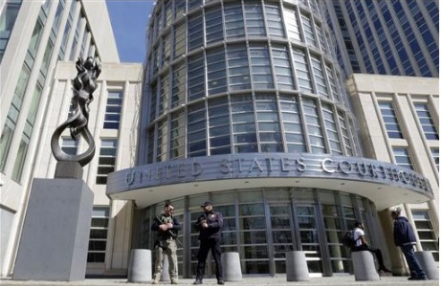
Brooklyn federal courthouse. AP Photo/Mary Altaffer

U.S. prosecutors announced charges on Thursday against a government agent and private investigator in a widening probe of an alleged scheme to stalk and harass Chinese dissidents in the United States.

Craig Miller, a 15-year employee of the Department of Homeland Security, and Derrick Taylor, a former DHS worker, were named in an indictment filed in federal court in Brooklyn. Prosecutors allege the pair obstructed justice by plotting to obtain information from a restricted federal law enforcement database.

Miller, 48, of Hastings, Minnesota, and Taylor, 60, of Irvine, California, are among the latest defendants indicted in a wide-ranging probe of what American officials describe as increasingly aggressive efforts by the Chinese government to seek out, silence and threaten pro-democracy activists abroad.

The defendants are to be arraigned at a later date. It was unclear if they had attorneys who could comment on the allegations.

U.S. Attorney Breon Peace said in a statement that his office “will always work closely with our law enforcement partners to root out corrupt officials in all levels of government and will prosecute those who act on behalf of a hostile foreign state to target the free speech of U.S. residents on American soil.”

Miller works as deportation officer at a DHS office in Minnesota. A message was left with the agency on Thursday seeking comment.

According to court papers, a Chinese operative hired Taylor to obtain confidential and sensitive personal information about several Chinese dissidents living in the United States. The information included passport photos, flight records and immigration records, the papers say.

Taylor allegedly recruited two DHS agents, including Miller, to provide him the records from the restricted database. When the FBI confronted the two over the breach, they lied to cover it up, court papers say.

Miller also deleted text messages between him and Taylor from his phone while being interviewed by the FBI, while Taylor instructed a co-conspirator to withhold evidence from the government, the papers add.


July 7, 2022Jul 7, 2022 | Clear, 77° F

Categories
Saved Web Pages

China: MI5 and FBI heads warn of ‘immense’ threat

“That’s where we stepped in,” said McCallum. He also said one engineering firm had been approached by a Chinese company which led to its technology being taken before the deal was then called off, forcing the company, Smith’s Harlow, to go into administration in 2020.

Categories
Saved Web Pages

Heads of MI5, FBI give joint warning of growing threat from China

JADP7UTFR5OIFPZ6SANSJTV7RY.jpg

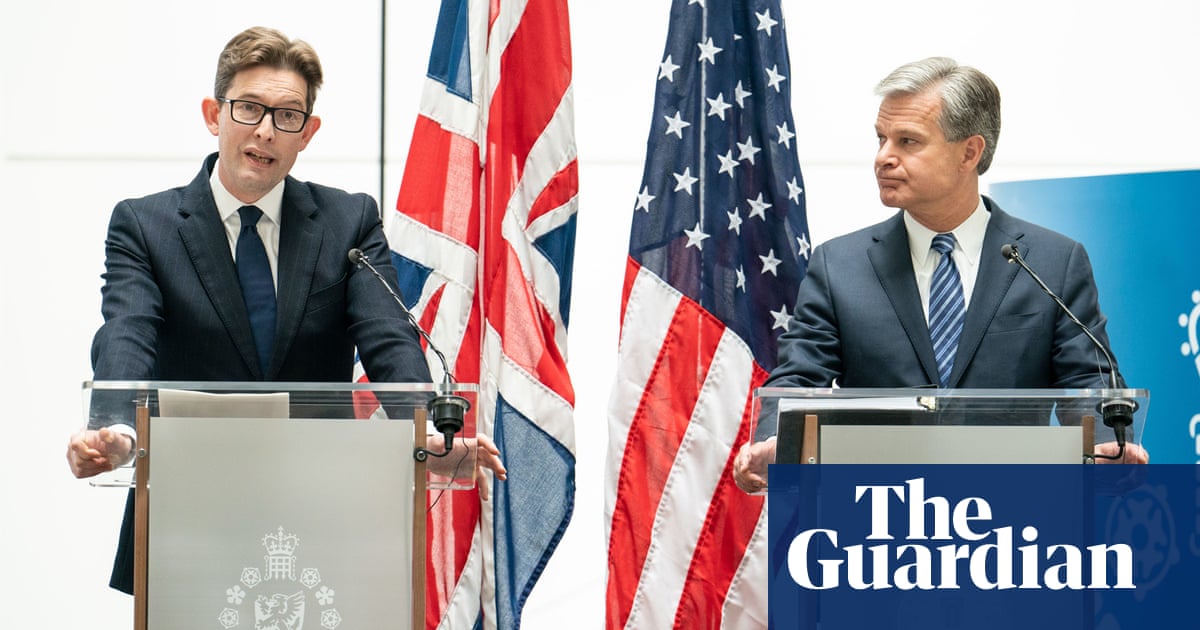
July 6 (Reuters) – The heads of MI5 and FBI warned of the growing long-term threat posed by China to UK and U.S. interests, in their first joint appearance on Wednesday.

MI5 Director General Ken McCallum said the service has already “more than doubled our previously-constrained effort against Chinese activity of concern,” adding it was running seven times as many investigations as in 2018.

FBI Director Christopher Wray said that the Chinese government “poses the biggest long-term threat” to economic and national security, for the UK, the U.S. and allies in Europe and elsewhere.

Register now for FREE unlimited access to Reuters.com

“The Chinese government is trying to shape the world by interfering in our politics (and those of our allies, I should add),” Wray said, saying Beijing had directly interfered in a Congressional election in New York this year, as it did not want a candidate who was a critic and former protester at Tiananmen Square to be elected.

Wray warned that the Chinese government “poses an even more serious threat to Western businesses than even many sophisticated businesspeople realize,” and is “set on stealing your technology.”

The Chinese governement’s hacking program is “bigger than that of every other major country combined,” according to Wray.

The Chinese national flag is seen in Beijing, China April 29, 2020. REUTERS/Thomas Peter/File Photo

Over the past year, the UK has shared intelligence with 37 countries to help them defend against cyber espionage, McCallum said, adding that in May they had disrupted a sophisticated threat targeting critical aerospace companies.

Speaking about Taiwan, which China regards as a province, Wray said that China may try to forcibly take it over and if that were to happen, “it would represent one of the most horrific business disruptions the world has ever seen.”

“The widespread Western assumption that growing prosperity within China and increasing connectivity with the West would automatically lead to greater political freedom has, I’m afraid, been shown to be plain wrong,” McCallum said.

“The allegations against China by U.S. and UK intelligence officials are completely groundless and the so-called cases they listed are pure shadow chasing,” a spokesperson for the Chinese embassy in the UK said, in response to a question about the comments made by McCallum and Wray.

The spokesperson said that China urged both the countries to “have a clear understanding of the trend of the time, abandon the Cold War mentality which has long gone out of date, stop spreading “China threat”, and stop creating confrontation and conflicts.”

Speaking at MI5 headquarters in Thames House, London, both the security services heads gave numerous examples of issues linked to China, asking an audience which included businessmen and academics to be cautious and encouraging them to partner with the FBI and MI5 so they can have the appropriate intelligence about this threat.

Register now for FREE unlimited access to Reuters.com

Reporting by Juby Babu in Bengaluru; Editing by Kim Coghill

Our Standards: The Thomson Reuters Trust Principles.

Categories
Saved Web Pages

FBI and MI5 leaders give unprecedented joint warning on Chinese spying

3500.jpg?width=1200&height=630&quality=8

The head of the FBI and the leader of Britain’s domestic intelligence agency have delivered an unprecedented joint address raising fresh alarm about the Chinese government, warning business leaders that Beijing is determined to steal their technology for competitive gain.

In a speech at MI5’s London headquarters intended as a show of western solidarity, Christopher Wray, the FBI director, stood alongside the MI5 director general, Ken McCallum. Wray reaffirmed longstanding concerns about economic espionage and hacking operations by China as well as the Chinese government’s efforts to stifle dissent abroad.

“We consistently see that it’s the Chinese government that poses the biggest long-term threat to our economic and national security, and by ‘our’, I mean both of our nations, along with our allies in Europe and elsewhere,” Wray said.

He told the audience the Chinese government was “set on stealing your technology, whatever it is that makes your industry tick, and using it to undercut your business and dominate your market”.

Ken McCallum said MI5 was running seven times as many investigations into China as it had been four years ago and planned to “grow as much again” to tackle the widespread attempts at inference which pervade “so many aspects of our national life”.

“Today is the first time the heads of the FBI and MI5 have shared a public platform,” McCallum said. “We’re doing so to send the clearest signal we can on a massive shared challenge: China.”

McCallum said the Chinese government and its “covert pressure across the globe” amounted to “the most game-changing challenge we face.

“This might feel abstract. But it’s real and it’s pressing,” he said. “We need to talk about it. We need to act.”

A spokesman for the Chinese embassy in Washington, Liu Pengyu, rejected the allegations from the western leaders, saying in an emailed statement to the Associated Press that China “firmly opposes and combats all forms of cyber-attacks” and calling the accusations groundless.

“We will never encourage, support or condone cyber-attacks,” the statement said.

In a nod to current tensions between China and Taiwan, Wray also said during his speech that any forcible takeover of Taipei by Beijing “would represent one of the most horrific business disruptions the world has ever seen”.

Last week, the US government’s director of national intelligence, Avril Haines, said at an event in Washington that there were no indications that Xi Jinping, the Chinese president, was poised to take Taiwan by military force. But she that did say Xi appeared to be “pursuing the potential” for such an action as part of a broader Chinese government goal of reunification with Taiwan.

After the appearance, Wray said he would leave to others the question of whether an invasion of Taiwan was more or less likely after Russia’s invasion of Ukraine. But, he said, “I don’t have any reason to think their interest in Taiwan has abated in any fashion” and added that he hoped China had learned what happens “when you overplay your hand”, as he said Russia had.

Joe Biden said in May that the US would respond militarily if China invaded Taiwan, offering one of the most forceful White House statements in support of Taiwan’s self-governing in decades. The White House later tried to soften the impact of the statement, saying Biden was not outlining a change in US policy toward Taiwan, a self-governing island that China views as a breakaway province that should be reunified with the mainland.

The embassy spokesman said the Taiwan issue was “purely China’s internal affair” and said when it came to questions of China’s territory and sovereignty, the country has “no room for compromise or concession.”

“We will strive for the prospect of peaceful reunification with utmost sincerity and efforts,” the statement said, though it noted that China would “reserve the option of taking all necessary measures in response to the interference of foreign forces”.

The Associated Press and Press Association contributed reporting

Categories
Saved Web Pages

Latest Developments in Ukraine: July 7

10070000-0aff-0242-467a-08da5fc13285_w12

For full coverage of the crisis in Ukraine, visit Flashpoint Ukraine.

The latest developments in the conflict between Russia and Ukraine. All times EDT:

4:17 a.m.: The daily intelligence update from the U.K. defense ministry said heavy shelling continued along the Donetsk front line but Russia made few advances.

The update also said Russia is working on economic measures to support its operations in Ukraine without a formal declaration of state mobilization.

3:12 a.m.: Al Jazeera reported that German Foreign Minister Annalena Baerbock said that in light of the war with Ukraine, Russia must not be allowed to use this week’s G-20 gathering as a platform.

Both she and U.S. Secretary of State Antony Blinken have said they will not meet with Russian Foreign Minister Sergey Lavrov, who will be attending the gathering, Al Jazeera reported.

Meanwhile, Australia’s foreign minister called the war in Ukraine “immoral.”

2:08 a.m.: Josep Borrell, the European Union high representative for foreign affairs and security policy, asked China to play a more constructive role in the Russia-Ukraine conflict.

1:11 a.m.: Russian-born Elena Rybakina said she wanted the war in Ukraine to end “as soon as possible” after reaching the Wimbledon semi-finals on Wednesday, Reuters reported.

Now representing Kazakhstan, and the first player from that country to reach the last four of a Grand Slam, Rybakina faces a semi-final with Romanian 2019 champion Simona Halep.

Rybakina, 23, who was born in Moscow and switched allegiance from Russia four years ago, was asked afterwards whether she felt Kazakh or Russian, a sensitive subject at a tournament that this year barred players from Russia and Belarus due to Moscow’s invasion of Ukraine.

“I was born in Russia but of course I am representing Kazakhstan. It’s already a long journey for me,” she said. “I was playing Olympics, Fed Cup before. I got so much help and support. “For me it’s tough question just to say exactly what I feel.”

Asked about the war in Ukraine, she added: “I just want the war to end as soon as possible. Peace, yeah.”

12:02 a.m. Ukraine is investigating more than 21,000 war crimes and crimes of aggression by Russian troops, the BBC reported.

Prosecutor General Iryna Venediktova said she was getting reports of 200-300 war crimes a day, the BBC said. She said that Russian soldiers who commit crimes “should understand that it’s only a question of time when they all will be in court.”

Russia has denied all allegations of war crimes.

Some information in this report came from Reuters.

Categories
Saved Web Pages

U.S. counterintelligence warns of China stepping up influence operations

OH7VNNSMUFIQXJ2HWVMN5U3GOI.jpg

WASHINGTON, July 6 (Reuters) – A U.S. counterintelligence agency on Wednesday warned state and local officials that China is intensifying influence operations aimed at manipulating them into pressing the federal government to pursue more Beijing-friendly policies.

China “understands that U.S. state and local leaders enjoy a degree of independence from Washington and may seek to use them as proxies to advocate for national U.S. policies Beijing desires,” the National Counterintelligence and Security Center said in a bulletin sent to state and local officials.

The warning comes amid sharp tensions between Washington and Beijing over a raft of issues. They span from U.S. arms sales to Taiwan and China’s human rights record to Beijing’s military activities in the South China Sea and alleged espionage operations against the United States.

Register now for FREE unlimited access to Reuters.com

The Chinese embassy did not respond immediately to a request for comment

U.S. President Joe Biden’s administration views China as a strategic competitor. But it says it is determined to avoid conflict and seeks Beijing’s adherence to international rules and institutions on peace and security.

The new counterintelligence bulletin said that Beijing is using a variety of means to manipulate state and local officials into pressing Washington for policies that are more friendly to China.

“PRC (Peoples Republic of China) influence operations can be deceptive and coercive, with seemingly benign business opportunities or people-to-people exchanges sometimes masking PRC political agendas,” it said.

China’s approaches include using front groups like the Chinese People’s Association for Friendship with Foreign Countries, which cultivates “sister” relationships between Beijing and U.S. localities, the bulletin said.

Another group, the National Association for China’s Peaceful Reunification, promotes Sino-U.S. friendship, but advocates Beijing’s views on Taiwan in letters to members of Congress and others, it continued.

The Chinese communist government says it seeks “peaceful reunification” with democratic Taiwan. But it reserves “other options” for the island that it regards as a Chinese province.

Register now for FREE unlimited access to Reuters.com

Reporting by Jonathan Landay
Editing by Marguerita Choy

Our Standards: The Thomson Reuters Trust Principles.

Categories
Saved Web Pages

Crimintern: How the Kremlin uses Russia’s criminal networks in Europe

social-card-864x486-c-center.png

  • Over the past 20 years, the role of Russian organised crime in Europe has shifted considerably. Today, Russian criminals operate less on the street and more in the shadows: as allies, facilitators and suppliers for local European gangs and continent-wide criminal networks.
  • The Russian state is highly criminalised, and the interpenetration of the criminal ‘underworld’ and the political ‘upperworld’ has led the regime to use criminals from time to time as instruments of its rule.
  • Russian-based organised crime groups in Europe have been used for a variety of purposes, including as sources of ‘black cash’, to launch cyber attacks, to wield political influence, to traffic people and goods, and even to carry out targeted assassinations on behalf of the Kremlin.
  • European states and institutions need to consider RBOC a security as much as a criminal problem, and adopt measures to combat it, including concentrating on targeting their assets, sharing information between security and law-enforcement agencies, and accepting the need to devote political and economic capital to the challenge.
  • Create a common European approach to combat money-laundering.
  • Build cooperative relationships between intelligence agencies and vulnerable local communities.
  • Foster increased exchange between national intelligence agencies and police forces.
  • Provide for better inclusion of the European Union Intelligence and Situation Centre in all activities.
  • Leverage diplomatic ties where possible.
  • Increase budgetary support.

“We have the best of both worlds: From Russia we have strength and safety, and in Europe we have wealth and comfort.”

Retired (he says) Russian criminal, 2016[1]

Today, Russian-based organised crime (RBOC) is responsible for around one-third of the heroin on Europe’s streets, a significant amount of non-European people trafficking, as well as most illegal weapons imports.[2] It is a powerful and pervasive force on the European continent. However, it takes different forms in different countries and largely works with – indeed, often behind – indigenous European gangs. European policing is behind the curve when it comes to fighting Russian-based organised crime, as its understanding of these gangs is outdated. Police are looking for the kinds of street-level ‘invader’ or ‘colonist’ gangs seen in the 1990s, rather than peering behind the curtain of indigenous organised crime groups to reveal their Russian connections.

What makes RBOC a particularly serious and timely challenge is the growing evidence of connections between such criminal networks and the Kremlin’s state security apparatus, notably the Foreign Intelligence Service (SVR), military intelligence (GRU), and the Federal Security Service (FSB).[3] Organised crime groups have already been used by the Kremlin as instruments of intelligence activity and political influence and are likely to become an even greater problem as Russian’s campaign to undermine Western unity and effectiveness continues. It is crucial that European countries and the European Union as a whole develop sharper and more effective responses to the threat.

‘Mafia superpower’ interrupted

In the 1990s, Boris Yeltsin expressed his concern – perhaps tinged with a perverse sense of pride – that Russia was becoming a “superpower of crime”.[4] Following the fall of the Soviet Union, the old-school tattooed mobsters of the so-called vorovskoi mir (“thieves’ world”) and their vor v zakone (‘thief in law”) leaders were succeeded by a new generation of avtoritety (“authorities”): hybrid gangster-businessmen who were able to enthusiastically take advantage of the crash privatisation, legal anomie, and state incapacity that characterised Yeltsin’s era. One former police officer, who had been a senior commander in Moscow at the time, stated that, “these were days when we knew the bandits had not just money and firepower on their side, but they had a better krysha (literally “roof”, referring to political protection in Russian slang) and we just had to accept that.”[5] Drive-by shootings and car bombings were almost routine and gangsters openly flaunted their wealth and impunity. There was a very real fear that the country could become, on the one hand, a failed state, and on the other, a very successful criminal enterprise.

However emaciated and abused the state seemed to have become during this period, its bones and sinews survived. The 1990s saw organised crime metastasise and evolve. By the end of the decade, a series of violent local, regional, and even national turf wars to establish territorial boundaries and hierarchies were coming to an end. The wealthiest avtoritety and their not-quite-so-criminal but much wealthier oligarch counterparts had used the ‘time of troubles’ to seize control of markets and assets, and were now looking for stability and security to exploit and enjoy these successes. Finally, some small groups within the military and security structures, motivated by both nationalist and their own personal and institutional interests, were agitating for a revival of Russian state power and an end to the disorder.

Vertical criminal integration

Even before Vladimir Putin was made acting president in 1999 and confirmed as Yeltsin’s successor in 2000, the gang wars were declining. Many criminals at the time feared that Putin was serious in his tough law-and-order rhetoric, but it soon became clear that he was simply offering (imposing) a new social contract with the underworld. Word went out that gangsters could continue to be gangsters without fearing the kind of systematic crack-down they had feared – but only so long as they understood that the state was the biggest gang in town and they did nothing to directly challenge it. The underworld complied. Indiscriminate street violence was replaced by targeted assassinations; tattoos were out, and Italian suits were in; the new generation gangster-businessmen had successfully domesticated the old-school criminals.

This was not just a process of setting new boundaries for the criminals; it also led to a restructuring of connections between the underworld and the ‘upperworld’, to the benefit of the latter. Connections between these groups and the state security apparatus grew, and the two became closer to each other. The result was not simply institutionalisation of corruption and further blurring of the boundaries between licit and illicit; but the emergence of a conditional understanding that Russia now had a ‘nationalised underworld’. In short, when the state wanted something from the criminals, they were expected to comply. During the Second Chechen War (1999-2009), for example, Moscow was able to persuade Chechen gangsters not to support their rebel compatriots on pain of retribution, and some years later during the 2011 State Duma elections there were clear indications that criminal gangs were being used to get out the vote and disrupt opposition campaigns.

During Putin’s most recent presidency, Russia has entered a new phase of national mobilisation. The Kremlin clearly considers itself threatened by − and in a kind of war with − the West. One of Russia’s tactics for waging this war is using organised crime as an instrument of statecraft abroad.

From conquistadors to merchant-adventurers

In the 1990s, RBOC groups came to Europe as would-be conquerors. For a time, it looked as if they were unstoppable. Prague became home to representatives of all the main RBOC networks, such as Solntsevo, Tambovskaya, and the Chechens, as well as mobster banker Semen Mogilevich. Russian and Chechen gangs fought each other for supremacy over the Baltic underworld. During the ‘bloody autumn’ of 1994, Estonia alone saw about 100 murders connected with the struggle for dominance. From the nightclubs of Budapest to the finance houses of London, apocryphal tales and official reports alike began to warn of a coming age of Russian gangster dominance. RBOC even emerged in France, Germany, and beyond. But it wasn’t to last. The explosion of apparent RBOC activity owed more to a combination of surprise, media hype, and desperation within RBOC groups to internationalise, than anything else. The process of expansion was ultimately unsustainable. Many groups were eliminated or forced back to Russia, Ukraine, and other eastern states by indigenous gangs and law-enforcement agencies who mobilised against the new threat, sometimes in cahoots with each other.

So when RBOC returned in the 2000s and 2010s it was largely in the shadows, as brokers and facilitators. Some, especially those of Georgian and North Caucasus origin, continue to operate at street level, such as the Moscow-connected Georgian Kutaisi ‘clan’, which was targeted in 2013 by coordinated arrests in Italy, the Czech Republic, France, Hungary, Lithuania, and Portugal. But such groups are a minority today. Most operate on a more strategic level, offering access to their resources and networks. These groups offer everything from Afghan heroin and Russian methamphetamines, to cybercriminal expertise, and investment of dirty money. The Russian gang that was broken in the Portuguese Operation Matrioskas, for example, invested dirty money into struggling European football clubs to launder proceeds from crimes at home and to run and rig illegal betting operations in Portugal, Austria, Estonia, Germany, Latvia, Moldova, and the United Kingdom. On this basis, RBOC groups have built a network of allies and contacts spanning Europe (and beyond). Not only do they exacerbate existing organised crime problems in European cities – as even quite low-level gangs now have access to high-order criminal capabilities – but they are also able to operate in areas where there are no or few Russians on the ground.

One of the challenges to understanding these groups, their activities outside Russia, and how Moscow employs them, is knowing what to call them. What makes this type of organised crime unique is how it is instrumentalised by the Russian security apparatus. As such, the novel concept of ‘Russian-based organised crime’ may be the most useful term for capturing the essence of this relationship between criminal groups and the state. This term is defined by the connection of criminals to Russia and its state apparatus above and beyond anything else. RBOC’s crucial feature is that its members, while operating abroad, have a strong stake in Russia, regardless of their official nationality, residence, or ethnicity. This means the Kremlin has leverage over them. As a Western counter-intelligence officer inelegantly but evocatively put it, “so long as his balls were in Moscow, the Russians could always squeeze.”[6]

Networks and outposts

Criminals from Russia and other Eurasian nations are active across Europe, as individuals, members of groups, and as part of multi-ethnic underworld enterprises. Modern organised crime, at least at its higher levels, is characterised not so much by clearly-defined groups with their own names,  strict hierarchies, and cultural identities – like the Sicilian Cosa Nostra – but by networks of criminal groups and individuals, connected, sometimes tenuously and temporarily, through mutual interests and shared underworld enterprises. Indeed, even the traditional Italian mafia organisations are increasingly diffuse, being reshaped by the realities, pressures and opportunities of the post-industrial world. If anything, RBOC groups were ahead of the curve, with major Russian-based combines outgrowing their early territorial and even ethnic roots as early as the 1990s.

RBOC groups mainly operate from behind or alongside the kind of street gangs that maintain specific territories and conduct the majority of smaller-scale crimes in European capitals. They are best understood as criminal service providers in continental and, indeed, global markets, and RBOC’s networks are often fluid, interpenetrating, and obscure. It is thus not possible to provide a meaningful summary of ‘key gangs’ and formal ‘turfs’, however satisfying the exercise may be. Instead, they are distributed across the continent according to where the money is. They broadly place themselves where there are similar ethnic communities, where the routes and supply chains of illicit goods and service are, or where they have strong business and political relationships or alliances.

Communities

The tendency of Russian organised crime to operate within the legal economy and indeed, behind legitimate facades, as well as the natural tendency of like to congregate with like (and hide within the crowd) has meant that places where Russian and other Eurasian communities cluster are prime locations for RBOC. From Spain’s Costa del Sol to Cyprus, or the Russophone population of Riga, a particular concentration of expatriate Russians, Georgians, or other such nationalities, necessarily creates an environment conducive to (their) criminal activities − just as is the case for mafiosi in New York’s Little Italy or triads in ‘Chinatowns’ around the world.

Among Cyprus’s 35,000-40,000 Russian-speaking population, for example, are a substantial number of Pontian Russians of Greek descent. Having grown up in the USSR and emigrated since its collapse, some are not only involved directly in RBOC but act as a bridge between RBOC groups and the Greek underworld. Indeed, because of this connection – and the perceived weakness of local law enforcement – RBOC has flourished there. In the late 2000s, for example, the two rival Moscow-based Georgian and Caucasus crime networks established their own presences there; Tariel ‘Taro’ Oniani in Athens, and Aslan ‘Ded Khasan’ in Thessaloniki. In December 2010, some 50-60 RBOC kingpins met in Greece, their largest gathering outside Russia for years, in an abortive effort to resolve this feud between the two groups.[7] Cyprus has become a particular hub for RBOC money-laundering operations because more than 25 percent of bank deposits and around 37 percent of foreign investments come from Russia. This has been facilitated by the close links between the island’s financial sector and that of the UK, its former administrator. Despite the fact that Cyprus’s 2013 financial bailout was jeopardised by the presence of dirty Russian money in its system, this connection continues.

Routes and supply chains

An RBOC presence is much more likely to form along the routes used for illicit commerce, especially at nodes where shipments have to be carried onwards, such as ports, or at final destinations, such as big cities, where wholesale consignments are broken down into smaller loads for re-sale. Indeed, RBOC has emerged as a key wholesale supplier of a variety of physical commodities for the street gangs of Europe. Around one-third of Afghan heroin now reaches the continent via the so-called ‘northern route’ that runs through Russia and there are flows of counterfeit goods, such as untaxed cigarettes, smuggled migrants and trafficked sex- and labour-slaves, from Russia and China into Europe. Further to this, there are reverse flows: money moved into Russia to launder it in a financial system not known for its probity, stolen goods, and even European foodstuffs and luxuries under sanction. These items are largely smuggled via Poland and Lithuania and then Belarus.[9] 

Along the border between Finland and Russia crime is highly organised. Russian companies control the lion’s share of heavy goods traffic, as well as forwarding and transhipment companies in Finland, especially in Helsinki, Kotka, and Hamina. These often simultaneously operate as front organisations for the smuggling of illegal goods, including drugs. However, Finland is not a target in itself so much as a gateway to the rest of Europe. The border is also used for smuggling illicit goods into Russia, either by land or through cargo shipping connections between St Petersburg and Nordic and Baltic posts – especially Stockholm and Riga.[10] Stockholm port is a notorious maritime smuggling link with St. Petersburg, and the city’s primary organised crime group  – Tambovskaya – has a long-standing presence there, and Berlin is a key hub for both drug and people smuggling. Such clustering or RBOC is most striking where there is also an expatriate community within which to operate.
Map of Russian-based organised crime (RBOC) and its routes into Europe

Alliances and relationships

Political affiliations and business ties – whether underworld or upperworld – can also facilitate the spread and entrenchment of RBOC. In Bulgaria, for example, the density of Russian business connections (it has been suggested that almost a quarter of the country’s GDP is directly or indirectly linked to Russia)[11] and the consequent heft of the Russian community in local politics, has also helped RBOC groups to penetrate the country.

In countries like Hungary, on the other hand, RBOC has receded. From the mid-2000s its presence began to diminish, not least following a series of high-profile arrests of its alleged local allies, such as László ‘Vizo’ Vizoviczki, who is now under house arrest after paying the highest bail in Hungarian history: 250 million HUF or €820,000. There is now growing concern among European intelligence circles, though, that just as the Orbán government is tipping towards Moscow, a new wave of legitimate investment in Hungary will be mirrored by renewed criminal ties and funds from RBOC.

The existence of alliances and relationships doesn’t always guarantee the effective penetration of RBOC. While RBOC groups have extensive commercial dealings with Italian organised crime groups, they have largely been unable to make serious inroads into the country. This is due to a combination of relatively powerful and deeply experienced police and security structures, along with existing gangs that are unwilling to surrender local markets. Furthermore, the Italians – like the Turkish heroin trafficking organisations with whom they also cooperate – are strong enough, and sufficiently disinclined to jeopardise their political cover, to engage in activities that would trespass into the security realm. As one Italian police officer put it, referring to the Calabrian ‘Ndràngheta, “they will deal with the Russians, but not do them any favours.”[12]

The gangster-spook nexus

It was perhaps inevitable that an especially strong connection between the security agencies and organised crime would arise in Russia. This is nothing new. For a start, from the tsarist Okhrana to the various Soviet agencies, the political police looked to the underworld for sources and recruits. The prevailing culture of Russian officialdom – in which political authority is there to be monetised – combined with the powers and impunity of the security apparatus, led to endemic corruption. On the whole, officers from the security and intelligence services did not join gangs or even necessarily form them, even though there were a few so-called ‘werewolves in epaulettes’. Rather, they usually conspired with organised crime networks or provided services for money − primarily protection or information.

However, Putin’s Russia is also very much an ‘adhocracy’. Institutions and formal positions, whether one is a civil servant or not, matter very little. What matters is how useful one is to the state. As a result, any individual or structure may be called-upon as and when the need arises. The blurring of social and functional boundaries in this way has also, inevitably, blurred the legal ones. Just as the Soviet state frequently used criminals and agents as instruments, whether controlling political prisoners in the Gulags or compromising foreigners, so Putin has continued the tradition and also put them to use. A quintessential example is Viktor Bout, a man whose career spanned the worlds of crime, business, and intelligence work − and often all three at the same time. An intelligence officer, probably from the GRU (military intelligence),[13] he set up an air freight business specialising in shipping to dangerous destinations. Alongside delivering aid, he was also implicated in sanctions busting and arms dealing, periodically as an apparent agent of the Russian state. It is unclear whether his offer to sell 700 Russian Igla surface-to-air missiles to Colombian FARC narco-rebels was on Moscow’s behalf (although the volume of the missiles he could acquire suggests so), but his example illustrates the smooth and often imperceptible transition between official and non-official roles.

Weaponising the underworld

With coy understatement, the Czech Security Information Service noted in its 2011 Annual Report, that “Contacts of officers of Russian intelligence services with persons whose past is associated with Russian-language organized criminal structures and their activities in the Czech Republic are somewhat disturbing.”[14] Given that modern Russia is a state in which every aspect of society is considered open to being co-opted by the regime, it was inevitable that this co-optation would also extend to the use of RBOC by the intelligence agencies. RBOC actors take on a variety of roles, all of which can be expanded on and developed with regrettable ease.

Cybercrime and cyber-espionage

Although there is evidence that Russian security agencies are increasingly developing their own in-house hacking capabilities, Moscow still depends, to a considerable extent, on recruiting cybercriminals, or simply calling on them from time to time, in return for their continued freedom. Setting aside the recent activities of the groups known as APT28 (also known as ‘Fancy Bear’, and associated with the GRU) and APT29 (‘Cosy Bear,’ believed to be part of the FSB), there have been several other recent attacks that look like the work of freelance cybercriminals tasked by Moscow, such as the 2010 hack of the NASDAQ’s central systems. These actors also provide ‘surge capacity’ for major operations such as the DDOS attacks on Estonia in 2007 and Georgia in 2008 – which overwhelmed and crashed destination websites and servers by flooding them with traffic − as well as  ongoing cyber disruption in Ukraine. The opportunities for using cyber attacks and espionage is growing at a rate faster than the intelligence services are developing capacity. This means that the scope for mercenary hacker operations could increase in the near future, as it is much easier for the intelligence services to ‘outsource’ these activities.

Black cash

In September 2014, Estonian Kapo (Security Police) officer Eston Kohver was about to meet an informant, when an FSB snatch squad crossed the border with Russia and forcibly abducted him. He was convicted on trumped-up espionage charges and subsequently traded for a Russian agent. The primary reason for the brazen raid appears not have been the exchange, nor even a chance to warn Estonia of Russia’s capacity and willingness to intrude, so much as to derail Kohver’s ongoing investigation into illegal cross-border cigarette trafficking. The evidence suggests that the FSB was facilitating the  smuggling activity through an RBOC group in return for a cut of the profits. This was not for the enrichment of the officers concerned, but to raise operational funds for active political measures in Europe that had no Russian ‘fingerprints’ on them. RBOC’s vulnerability to Moscow’s pressure, the advantages to be gained from cooperation, and the considerable assets the criminals hold, make them useful sources of chernaya kassa (‘black accountʼ funds), which can be used for mischief abroad more easily than directly moving funds out of Russia.

Agents of influence

The continued presence in Russia of powerful RBOC financier Semen Mogilevich – who was arrested in 2008 but controversially released the following year – not only illustrates organised crime’s capacity to generate and move money around for the purpose of attaining intelligence, it also suggests that it can provide agents of influence for Moscow. After all, senior RBOC figures are often far removed from street-level criminality and instead operate as investors and brokers within legitimate and illegitimate economies. Mogilevich, who was added to the FBI’s ‘Top Ten Most Wanted Fugitives’ list in 2009, was reported in 2014 to own 30 percent of Sweden’s Misen Energy AB through Nell Kingston Holdings, leading to the suspension of trading of the company’s shares, pending an investigation.[15] Often, such material interests go unnoticed, hidden as they are behind a complex web of front companies in jurisdictions around the world. Such investments provide structures within which to place agents under non-official cover (such as Evgeny Buryakov, the SVR officer arrested in New York in 2015, who notionally worked at Russia’s Vneshekonombank), but also provides political and financial influence.

Ghosting borders

Professionals adept at moving people and goods across borders are valuable to intelligence operations. In 2010, for example, the Russian agent known as Christopher Metsos, the most able of the deep-cover spies in the USA, was unmasked in the FBI-led Operation Ghost Stories, alongside nine other Russian agents. He was possibly the ring’s coordinator, and after being unmasked, fled to Cyprus. He was arrested but then released on bail, at which point he promptly disappeared despite US and other nations’ efforts to keep him under surveillance. Several US counter-intelligence officers expressed the opinion that RBOC people-traffickers deployed their knowledge and connections to covertly send Metsos back to Russia or into another jurisdiction where regular foreign intelligence officers could finalise his return. In light of the rise of Russian-linked paramilitary groups such as the Hungarian National Front, and the agitators that took part in the Moscow-backed attempted coup in Montenegro in 2016, the capacity of RBOC specifically to smuggle weapons and military equipment must be of particular use to the Kremlin.[16]

Assassination for hire

Russian state security agencies are occasionally empowered and expected to eliminate those considered threats to the homeland, whether defectors such as Alexander Litvinenko (murdered in London in 2006) or supporters of Chechen and other North Caucasus militants. Several of the latter have been assassinated in Istanbul and also Vienna.[17] While some of these murders appear to be the handiwork of government assassins, others seem to have been subcontracted to RBOC, especially groups from the North Caucasus themselves or with links to Chechnya. For example, Nadim Ayupov, one of the killers of three alleged Chechen terrorists in Istanbul, was a member of a Moscow-based organised crime group, which had, until then, specialised in car theft.[18] The Turkish authorities believe them to have been engaged by the FSB.[19]

The Lubyanka street irregulars

Even with its networks and generous budgets back up to Cold War levels, Russia’s intelligence agencies can always do with more helping hands. Behind every intelligence operation there is often a great deal of minor but useful leg-work, best conducted by people who won’t trigger the attention of local counter-intelligence agencies. This kind of unskilled support can and has been farmed out to RBOC actors who likely do not even know for whom they are working. In Germany, for example, it has been suggested that RBOC groups have conducted simple surveillance, and been used to deliver or collect materials or messages (such as by leaving markings on a particular post box or the like).[20] Likewise, some purchases of property close to Finnish military facilities by Russian nationals, highlighted by Supo (the Finnish Security Intelligence Service) as a potential security risk, appear to have been made by RBOC figures, potentially at Moscow’s behest. The scope for RBOC to represent an auxiliary wing of the Russian intelligence services, carrying out mundane legal (or legal-ish) activities in support of its operations, is arguably evident.

Recommendations

EU member states and the EU’s institutions all express and demonstrate an awareness of the need to address the challenge of organised and transnational crime, and documents such as the Council of Europe Action Plan on Combating Transnational Organised Crime (2016-2020), represent useful foundations for further action, as do the activities of agencies such as Europol and Eurojust.[21] In part, RBOC will best be fought – and the implementation of its security and covert actions mitigated – by simply strengthening the fight against organised and transnational crime in general. However, there are also specific and nuanced challenges posed by RBOC that deserve special attention.

Follow the money

Unless crime is paying, criminals aren’t playing. One of the ways in which RBOC can assist Russian active measures is by providing sources of ‘black cash’. As a result, it becomes doubly important to target the capacity of RBOC structures to launder, move, and cache their funds. This feeds into a wider concern about the continuing failure of Western countries to establish truly effective and cooperative institutions able to demonstrate the ultimate beneficiaries of corporate structures and to track money flows. This is exacerbated by a general shift towards ‘risk-based’ anti-money laundering regimes that put increased emphasis on the risk awareness and management expertise of those within reporting entities. In February 2017, the three European Supervisory Authorities – the European Banking Authority, the European Insurance and Occupational Pensions Authority, and the European Securities and Markets Authority − issued a joint Opinion to the European Commission warning that the EU’s defences against money-laundering by criminal and terrorist organisations were in danger of actually becoming less robust because of the lack of a common European approach and lacking awareness and skills (and sometimes, by implication, inclination) on the part of the financial sector to play its role.[22] Countries where money from Russia has a significant presence in their financial sectors need to address this all the more assiduously. This is especially the case for countries such as Latvia and Cyprus, which have already acquired a reputation for being the favoured money-laundering hubs for RBOC.

Doors and corners

Given the propensity for RBOC to establish itself at trafficking nodes and in expatriate communities, these locations need to be considered priority areas for security and law enforcement efforts. This does not mean demonising the expatriate communities themselves, quite the opposite; law enforcement should cultivate them more assiduously as allies and sources. In the main, RBOC is regarded by local communities neutrally at best, and slightly negatively at worst, especially for the stigma it brings to communities. Efforts to recruit officers, agents, and sources within these communities started in the ‘wild’ 1990s but have, to a large extent, been neglected ever since, especially after jihadist terrorism became the priority. The drive to build cooperative relationships between locals and intelligence officers in these communities needs to be reinvigorated. The experiences of countries such as Latvia and Estonia, which have had particular success in these endeavours, are worthy of study by others. There is, however, one other specific place in which involuntary communities have arisen that could give rise to the next generation of RBOC: Europe’s prisons. Holger Münch, the director of the Federal Criminal Police Office of Germany, has noted that up to 10 percent of inmates in German prisons are Russian speakers, and that the prison provides “great potential for recruitment”.[23] While most of these Russian speakers are convicted of minor offences, they may graduate to more serious organised crime upon release. Just as prison populations are being monitored for potential jihadist radicalisation, they should also be monitored to prevent recruitment into RBOC networks.

Cultivate communities

The corollary of the previous point is to develop close and productive relationships with legitimate expatriate communities (generally small-scale) in which RBOC operates. This is something that should be done both at the level of community policing and also through the recruitment of informants from local communities. Although many RBOC figures are willing to spend money and sometimes even political capital to present an image of themselves as patrons of their communities, in practice, they are often a political liability – landing law-abiding expatriates and migrants with the image of gangsters – or even outright predators. Every effort must be made to avoid driving the expatriate communities into RBOC’s arms by clumsy stereotyping and heavy-handed policing.

Make spooks talk to cops

There is already considerable expertise within the law-enforcement and intelligence communities on RBOC and Russian intelligence operations. There are also initiatives, from Europol-brokered workshops to bilateral intelligence-sharing relations, to allow ideas, experience, and tactical information to be shared. There is a weakness, though, in the transfer of information from the intelligence and security agencies, to the police. To an extent, this is inevitable, given the police’s need to maintain source protection and their differing priorities: law enforcement agencies essentially want to take criminals to trial, whereas intelligence services may be more interested in monitoring or using them. Nonetheless, given the evidence of growing connections between Russian intelligence agencies and criminals, a commensurate improvement in mutual collaboration between European intelligence and police is a must.

Look at the bigger picture

Police services are primarily tasked with keeping the streets safe. From their perspective, whether a gang is made up of Russians who have made the leap to becoming ‘locals’, RBOC, or native criminals, is less important than the immediate harm they do to society. Ironically, RBOC is rarely a high priority, given that such groups are less likely to be operating directly at street level. Rather, they are simply facilitating the gangs whose activities most directly impact society. The temptation is for over-worked and under-resourced police officers to leave them for another day. Furthermore, while some police agencies such as France’s Office central de lutte contre le crime organisé (OCLCO) have dedicated Russian/Eurasian crime units, others do not even maintain specific records of the levels of ethnic Russian crime, let alone RBOC operations, sometimes to avoid the appearance of profiling. This inevitably makes it harder to assess the threat. Successive annual reports from Poland’s Central Bureau of Investigation Police (CBSP) have shown that the number of Russian-speaking groups is falling steadily, for example, from seven in 2010, and six in 2013, to just two in 2015. On the other hand, conversations with Russian police suggest that they see a growing connection between ethnic Polish gangs and Russian and affiliated Belarusian suppliers. As such, the RBOC threat cannot just be measured by the physical presence of Russian gangs. It must fall on domestic security services to pay closer attention to the presence and nature of Russian connections, and argue the case for targeting RBOC more diligently.

Bring it to Brussels

The challenge presented by RBOC, while often manifesting itself at a local and national level, is also one that represents a systemic problem for Europe as a whole.

Europol and Eurojust can both play a valuable role in spreading best practices and supplementing Interpol as an intelligence brokerage, although more analytical resources will be needed for them to concentrate on this specific issue. The existing structure of Europol, which is focused on thematic issues, can coexist with a cross-departmental committee looking specifically at RBOC and drawing especially on the European Serious Organised Crime Centre and the Strategic and Financial Intelligence department of Horizontal Operational Services.

The interconnected threats of organised crime, subversion, and Russian intelligence operations also need to be taken more seriously within EU structures. While the European Union Intelligence and Situation Centre (INTCEN) − the European External Action Service’s intelligence analysis centre − is mandated to provide support on issues across the security spectrum, the very fact that it has not been granted access to Europol and similar databases from the very beginning, underscores the extent to which organised crime issues have not been considered a primary concern. This must change, given the potential for RBOC to be used by Moscow. INTCEN could represent a useful connector between Europe’s security and law-enforcement agencies.

Manage Moscow

Law enforcement cooperation has been an inevitable casualty of the worsening relationship between Russia and the West, and the potential for the use of RBOC as an intelligence tool makes such activity far more difficult. Nonetheless, there are those within the Russian police and judiciary who want to do their jobs, and there are also RBOC groups with limited political cover inside Russia. Efforts to maintain and expand cooperation with Russian counterparts must continue. While high-level diplomacy is unlikely to lead to anything more than empty declarations in the immediate future, every effort should be made to encourage renewed ‘cop-to-cop’ contact, especially at a local level. This may be more productive in areas where there is a common interest, such as along the Russian-Finnish border or around Kaliningrad. However uncomfortable, it will also require Western countries to be forward-leaning in their willingness to share information with Russian law enforcement, despite the very real risk of leakage because of corruption or links between criminals and Moscow.

Spend the money

None of this will be cheap. Specialised police intelligence units, proper visa screening, more financial intelligence analysis, tougher due diligence, and a less tolerant attitude towards shell companies, all have a direct cost on the public purse, or an indirect one through adding costs to companies or forcing them to turn away business. This is, however, part of the cost, not just of business, but of war – and Russia’s political campaign to divide and dismantle the EU and the European consensus does, in its own way, count as a different, non-kinetic, form of war. Successfully resisting it will demand strong willpower and resources.

A note on sources

By definition, this report addresses issues involving sensitive, covert, and often illegal matters. Therefore, over and above direct quotes that are footnoted, many of the assertions and examples used have been drawn partially or wholly from off-the-record conversations with officials, and in a few cases, with criminals from Europe and Russia. Of course, it is always hard to accept all such information at face value, but wherever possible it was also corroborated by other sources.

Mark Galeotti is a senior researcher at the Institute of International Relations Prague and coordinator of its Centre for European Security. A widely-published specialist on Russian security issues – from political-military affairs to the murkier understrata of crime and intelligence services – he has taught, researched, and written in his native United Kingdom, the United States, and Russia. Educated at Cambridge University and the London School of Economics, he has been head of the History Department at Keele University, professor of Global Affairs at New York University, a visiting faculty member at Rutgers-Newark, MGIMO (Russia), and at Charles University (Czech Republic). He now lives in Prague, where he is also director of the consultancy Mayak Intelligence.

Acknowledgements

The author would like to thank Gabriela Anderson, Bernát Jozsa, Peter Marzalik, and Henri Vanhanen for their assistance with this paper, as well as interlocutors in Russia and elsewhere who prefer not to be named.

[1]  Conversation with former Russian criminal, Moscow, 2016.

[2]  Heroin data from conversations with Europol analyst, January 2016; human trafficking from Eurostat and Interpol analyses. Both the human trafficking and firearms figures explicitly exclude trafficking within Europe, although some RBOC groups are also involved in these businesses.

[3]  For a detailed analysis of these agencies and their aims and activities, see Mark Galeotti, “Putin’s Hydra: Inside Russia’s intelligence services”, the European Council on Foreign Relations, 11 May 2016, available at https://ecfr.eu/page/-/ECFR_169_-_INSIDE_RUSSIAS_INTELLIGENCE_SERVICES_(WEB_AND_PRINT)_2.pdf.

[4]  ‘Yeltsin: Russia a “Superpower of Crime,”’ Associated Press, 7 June 1994.

[5]  Conversation with former Moscow police officer, Moscow, 2014.

[6]  Conversation with counter-intelligence officer, European location, 2016.

[7]  Воры в законе» вновь готовятся к битве (“Vory v zakone” vnovʼ gotovyatsya k bitveʼ), Rosbalt, 17 May 2011, available at http://www.rosbalt.ru/moscow/2011/05/17/849585.html.

[9]  Mark Galeotti, “Tough Times for Tough People: Crime and Russia’s Economic Crisisˮ, RFE/RL, June 2015, printed in English on the Henry Jackson Society website, available at http://henryjacksonsociety.org/wp-content/uploads/2015/06/Tough-Times-for-Tough-People.pdf.

[10]  “Afghan heroin into Europe and European methamphetamines into Russia”, Suomen Uutiset, 7 April 2015, available at https://www.suomenuutiset.fi/rajarikosten-maara-kasvussa/.

[11]  Heather Conley, James Mina, Ruslan Stefanov, and Martin Vladimirov, “The Kremlin Playbook: Understanding Russian Influence in Central and Eastern Europe”, CSIS, 2016, available at https://www.csis.org/analysis/kremlin-playbook.

[12]  Email communication with former Italian police officer, 2015.

[13]  There is a certain amount of debate as to which service he worked for, but it seems most likely that he came from the GRU because of his career trajectory, beginning with his graduation from the Soviet Military Institute of Foreign Languages (one of the main incubators of GRU recruits), through to his time in relatively ‘hot’ zones such as Angola and Afghanistan.

[14]  “Annual Report of the Security Information Service of the Czech Republic for 2011”, Intelligence Service of the Czech Republic, 2011, p. 10, available at https://www.bis.cz/vyrocni-zpravaENc2ed.html?ArticleID=26.

[15]  “Russian mafia behind the Swedish gas purchase”, Expressen, 26 June 2014, available at http://www.expressen.se/nyheter/expressen-avslojar/ryska-maffian-bakom-det-svenska-gaskopet/; and Graham Stack, “Sweden freezes shares of shadowy Ukrainian gas producer Misen Energy”, Business New Europe, 1 Julyt 2014, available at http://www.intellinews.com/sweden-freezes-shares-of-shadowy-ukraine-gas-producer-misen-energy-500411814/?archive=bne.

[16]  Andrew Higgins, “Intent on Unsettling E.U., Russia Taps Foot Soldiers From the Fringe,” the New York Times, 24 December 2016, available at https://www.nytimes.com/2016/12/24/world/europe/intent-on-unsettling-eu-russia-taps-foot-soldiers-from-the-fringe.html; Natalia Zaba and Dusica Tomovic, “Montenegro Coup Suspect ‘Was Russian Spy in Poland’”, Balkan Insight, 21 February 2017 available at http://www.balkaninsight.com/en/article/montenegro-coup-suspect-was-russian-spy-in-poland–02-21-2017.

[17]  “Have Russian hitmen been killing with impunity in Turkey?”, BBC, 13 December 2016, available at http://www.bbc.co.uk/news/magazine-38294204; and “Murder in Vienna Leads Investigators to Chechen President”, Der Spiegel, 23 June 2010, available at http://www.spiegel.de/international/world/risk-factor-murder-in-vienna-leads-investigators-to-chechen-president-a-702146.html.

[18]  “Have Russian hitmen been killing with impunity in Turkey?,” BBC, 13 December 2016, available at http://www.bbc.com/news/magazine-38294204.

[19]  Burcu Purtul Uçar, “Chechens killed in Istanbul in the name of Russian intel, prosecutor claims,” Hurriyet Daily News, 19 February 2014, available at http://www.hurriyetdailynews.com/chechens-killed-in-istanbul-in-the-name-of-russian-intel-prosecutor-claims.aspx?PageID=238&NID=62656&NewsCatID=341.

[20]  Interview with counter-intelligence officer, European location.

[21]  “Council of Europe Action Plan on Combating Transnational Organised Crime (2016-2020), Council of Europe, 2 March 2016, available at https://www.coe.int/t/DGHL/STANDARDSETTING/CDPC/CDPC%20documents/CDPC%20(2015)%2017%20Fin.pdf.

[22]  “Joint Opinion on the risks of money laundering and terrorist financing affecting the Union’s financial sector”, European Banking Authority, 20 February 2017, available at  https://www.eba.europa.eu/documents/10180/1759750/ESAS+Joint+Opinion+on+the+risks+of+money+laundering+and+terrorist+financing+affecting+the+Union%E2%80%99s+financial+sector+%28JC-2017-07%29.pdf.

[23]  “German Federal Police warn of Russian mafia spreading in Germany,” Deutsche Welle, 10 July 2016, available at http://www.dw.com/en/german-federal-police-warn-of-russian-mafia-spreading-in-germany/a-19391152.

The European Council on Foreign Relations does not take collective positions. ECFR publications only represent the views of their individual authors.

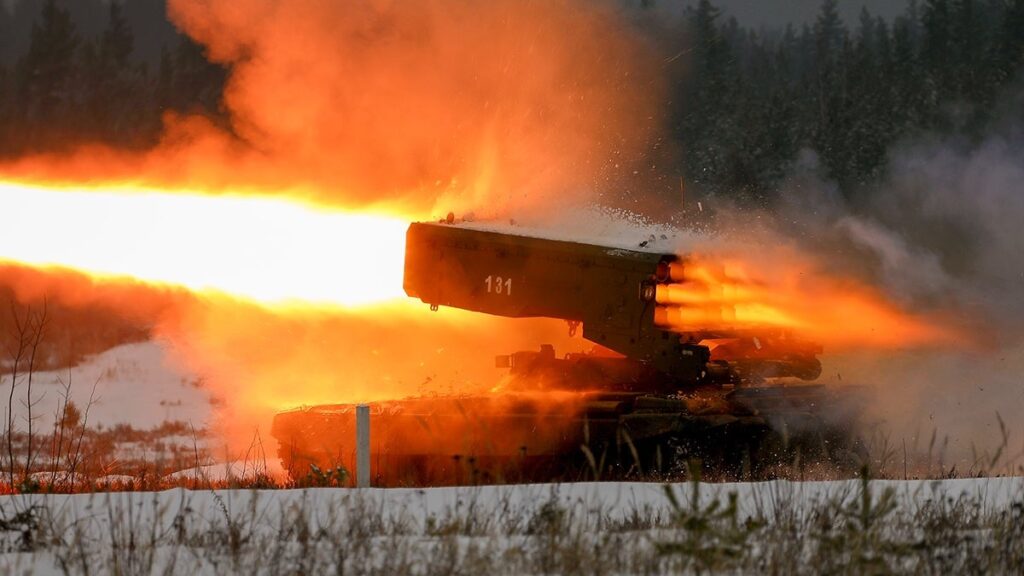
WP Radio
WP Radio
OFFLINE LIVE