Categories
Saved Web Pages

In an Era of Confrontation, Biden and Xi Seek to Set Terms

12us-china1-facebookJumbo.jpg

Their first in-person presidential meeting, coming after both warned of deepening military, economic and diplomatic rivalry, will show how they address a range of U.S.-China tensions.

  • Send any friend a story

    As a subscriber, you have 10 gift articles to give each month. Anyone can read what you share.

    Give this articleGive this articleGive this article
President Biden in Egypt on Friday.

President Biden in Egypt on Friday.Credit…Doug Mills/The New York Times

Nov. 12, 2022Updated 6:04 p.m. ET

Just weeks after President Biden and his Chinese counterpart, Xi Jinping, laid out competing visions of how the United States and China are vying for military, technological and political pre-eminence, their first face-to-face meeting as top leaders will test whether they can halt a downward spiral that has taken relations to the lowest level since President Nixon began the opening to Beijing half a century ago.

Their scheduled meeting Monday in Indonesia will take place months after China brandished its military potential to choke off Taiwan, and the United States imposed a series of export controls devised to hobble China’s ability to produce the most advanced computer chips — necessary for its newest military equipment and crucial to competing in sectors like artificial intelligence and quantum computing.

Compounding the tension is Beijing’s partnership with Moscow, which has remained steadfast even after Russia’s invasion of Ukraine. Yet that relationship, denounced by the Biden administration, is so opaque that U.S. officials disagree on its true nature.

Whether it’s a partnership of convenience or a robust alliance, Beijing and Moscow share a growing interest in frustrating the American agenda, many in Washington believe. In turn, many in China see the combination of the U.S. export controls and NATO support for Ukraine as a foreshadowing of how Washington could try to contain China, and stymie its claims to Taiwan, a self-ruled island.

Xi Jinping of China and Vladimir V. Putin of Russia at the Shanghai Cooperation Organization summit in Samarkand, Uzbekistan, in September.Credit…Sergei Bobylyov/Sputnik, via Agence France-Presse — Getty Images

“This is in a sense the first superpower summit of the Cold War Version 2.0,” said Evan S. Medeiros, a Georgetown University professor who was President Obama’s top adviser on Asia-Pacific affairs. “Will both leaders discuss, even implicitly, the terms of coexistence amid competition? Or, by default, will they let loose the dogs of unconstrained rivalry?”

Tamping down expectations about the summit with Mr. Xi, American officials recently told reporters that they expected no joint statement on points of agreement to emerge. Still, Washington will dissect what Mr. Xi says publicly and privately, especially about Russia, Ukraine and Taiwan.

This month, Mr. Xi told the visiting German chancellor, Olaf Scholz, that China opposes “the threat or use of nuclear weapons,” an oblique but unusually public reproach to the Russian president Vladimir V. Putin’s saber rattling with tactical nuclear weapons.

If Mr. Xi cannot say something similar with an American president next to him, one senior administration official noted, it will be telling. China sees Russia as a vital counterweight to Western power, and Mr. Xi may hesitate to criticize Mr. Putin in front of Mr. Biden.

“If Putin used nuclear weapons, he would become the public enemy of humankind, opposed by all countries, including China,” said Hu Wei, a foreign policy scholar in Shanghai. But, he added, “If Putin falls, the United States and the West will then focus on strategic containment of China.”

A Ukrainian soldier in a former Russian base in the Kherson region of Ukraine on Friday. China has declined to rebuke Russia for the invasion, but Mr. Xi has obliquely criticized Mr. Putin’s nuclear hints.Credit…Lynsey Addario for The New York Times

For American officials, the Xi-Putin relationship is a topic of internal debate. Colin Kahl, the No. 3 official in the Pentagon, told reporters Tuesday that Chinese leaders have “been much more willing to signal that this thing is edging toward an alliance as opposed to just a superficial partnership.” Mr. Biden seems doubtful. “I don’t think there’s a lot of respect that China has for Russia or for Putin,” he said the next day.

Mr. Xi and Mr. Biden have talked on the phone five times in the past 18 months. This will be different: For the first time since assuming the presidency, Mr. Biden will “sit in the same room with Xi Jinping, be direct and straightforward with him as he always is, and expect the same in return from Xi,” Jake Sullivan, the National Security Adviser, said at a White House briefing Thursday.

“There just is no substitute for this kind of leader-to-leader communication in navigating and managing such a consequential relationship,” Mr. Sullivan said.

During the past three decades, trips by American presidents to Beijing and Chinese presidents to Washington became relatively commonplace. Testy exchanges over disputes were often balanced by promises to cooperate on areas of mutual interest, whether climate change or containing North Korea’s nuclear program. For now, it is hard to imagine a meeting taking place in either capital, especially with China still under heavy Covid controls.

Summits on neutral ground, like this one in Bali ahead of the Group of 20 meeting of leaders, have an increasingly Cold War feel: more about managing potential conflict than finding common ground. The rancorous distrust means that even short-term stabilization and cooperation on shared challenges, like stopping pandemics, could be fragile.

A production line of circuit boards at a factory in Nantong, China, in September. New U.S. restrictions on selling semiconductor technology to China could slow its technological progress.Credit…Visual China Group, via Getty Images

Neither side calls it a Cold War, a term evoking a world divided between Western and Soviet camps bristling with nuclear arsenals. And the differences are real between that era and this one, with its vast trade flows and technological commerce between China and Western powers.

The Apple iPhone and many other staples of American life are assembled almost entirely in China. Instead of trying to build a formal bloc of allies as the Soviets did, Beijing has sought to influence nations through major projects that create dependency, including wiring them with Chinese-made communications networks.

Even so, the declarations surrounding Mr. Xi’s appointment to a third term and Mr. Biden’s new national security, defense and nuclear strategies have described an era of growing global uncertainty heightened by competition — economic, military, technological, political — between their countries.

The anxieties have been magnified by China’s plans to expand and modernize its still relatively limited nuclear arsenal to one that could reach at least 1,000 warheads by 2030, according to the Pentagon. China sees threats in American-led security initiatives, including proposals to help build nuclear-powered submarines for Australia.

“It may not be the Cold War, with a capital C and capital W, as in a replay of the U.S.-Soviet experience,” Professor Medeiros said. But, he added, “because of China’s substantial capabilities and its global reach, this cold war will be more challenging in many ways than the previous one.”

Chinese military helicopters off the shore of Fujian Province, just across the strait from Taiwan, during military drills in August.Credit…Hector Retamal/Agence France-Presse — Getty Images

The Biden administration last month issued extensive new restrictions on selling semiconductor technology to China, focusing on the multi-million dollar machines needed to make the chips with the smallest circuitry and the fastest speeds. It was a clear effort to slow China’s progress in one of the few technological areas where it is still playing catch up.

In a 48-page National Security Strategy document, Mr. Biden wrote that China “is the only country with both the intent to reshape the international order and, increasingly, the economic, diplomatic, military and technological power to advance that objective.” The U.S. National Defense Strategy paper, weeks later, declared that China “remains our most consequential strategic competitor for the coming decades.”

The stakes rose for the relationship after Mr. Xi, 69, secured a third five-year term as Communist Party leader in October, and set in place a resolutely loyal leadership lineup likely to keep him in power even longer than that. At the party congress that crowned Mr. Xi, he warned of an increasingly perilous world, where unnamed foes — implicitly, the United States and allies — were trying to “blackmail, contain, blockade, and exert maximum pressure on China.”

Since then, Mr. Xi and his officials have repeated similar warnings. Wearing camouflage to visit a People’s Liberation Army command center, Mr. Xi told China’s military to steel for the intensifying challenges. “Hostile forces” were bent on blocking China’s rise, Ding Xuexiang, a top aide to Mr. Xi, wrote in People’s Daily, the party’s main newspaper.

Mr. Xi, center, on a recent visit to a People’s Liberation Army command center, in a photo provided by Chinese state media.Credit…Li Gang/Xinhua, via Associated Press

“The United States regards our country as its main strategic rival and most severe long-term challenge, and is doing its utmost to contain us and beat us down,” said an article in Guangming Daily, another prominent party-run newspaper.

Mr. Xi’s speech to the congress last month suggested that his assessment of international trends has grown bleaker. That shift may reflect worries about the repercussions of the war in Ukraine, and vanished hopes that Mr. Biden would take a milder approach to China than the Trump administration did.

The Biden administration’s support for Taiwan has become a sore point.

In early August, China launched menacing military drills around Taiwan after House Speaker Nancy Pelosi visited the island as a show of support. Mr. Biden has suggested that the United States would support Taiwan militarily if China attempted to take it by force, firmer wording than Washington’s formal position. Each time he has talked about direct involvement in Taiwan’s defense, his aides have rushed to assure that policy has not changed, while not disputing Mr. Biden has made it less ambiguous.

“The difference between Biden and Trump is that Trump wanted to fight China single-handed,” said Mr. Hu, the foreign policy scholar. By contrast, he said, Mr. Biden “has attached particular importance to alliances in strategic competition with China.”

Mr. Sullivan, the national security adviser, indicated that the Biden administration would brief Taiwan on the results of the Xi meeting.

Celebrating Taiwan’s National Day at the home of the de facto Taiwanese ambassador in Washington last month.Credit…Valerie Plesch for The New York Times

Despite their differences, Mr. Biden and Mr. Xi want to avoid pent-up tensions exploding into a crisis that could wreak economic havoc.

“I’ve told him: I’m looking for competition, not — not conflict,” Mr. Biden told reporters at the White House on Wednesday about his relationship with Mr. Xi. Their ties go back more than a decade, to when both were vice presidents.

Mr. Biden said that he and Mr. Xi may discuss “what he believes to be in the critical national interests of China, what I know to be the critical interests of the United States, and to determine whether or not they conflict with one another. And if they do, how to resolve it and how to work it out.”

Ahead of the meeting, Mr. Xi has also put on a somewhat friendlier demeanor.

He told the National Committee on U.S.-China Relations that he wants to “find the right way to get along.” Zhao Lijian, a Chinese foreign ministry spokesman, repeated that point at a regular briefing on Friday, and said Beijing would defend its “sovereignty, security and development interests,” while adding that “the U.S. and China should move toward each other, managing and controlling disagreements in a proper way and promoting mutually beneficial cooperation.”

Mr. Xi wants to put China’s growth back on track after heavy blows from Covid restrictions and problems in the housing market. He also wants to prevent tighter rules on purchases of high-end technology, which could spook investors and slow his plans for upgrading the economy.

Mr. Xi is “preparing for a spectrum of tensions and conflict, but China is not going to fix all the vulnerabilities in its system — in the financial sector, exposure to the U.S. dollar system, exposure to tech dependencies — in just a few years,” said Andrew Small, author of “No Limits: The Inside Story of China’s War With the West.”

He added, “They want to prevent this from sliding too far and too fast, and this may be a moment to explore whether they can stabilize things.”

Claire Fu contributed reporting.
Categories
Saved Web Pages

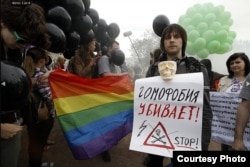
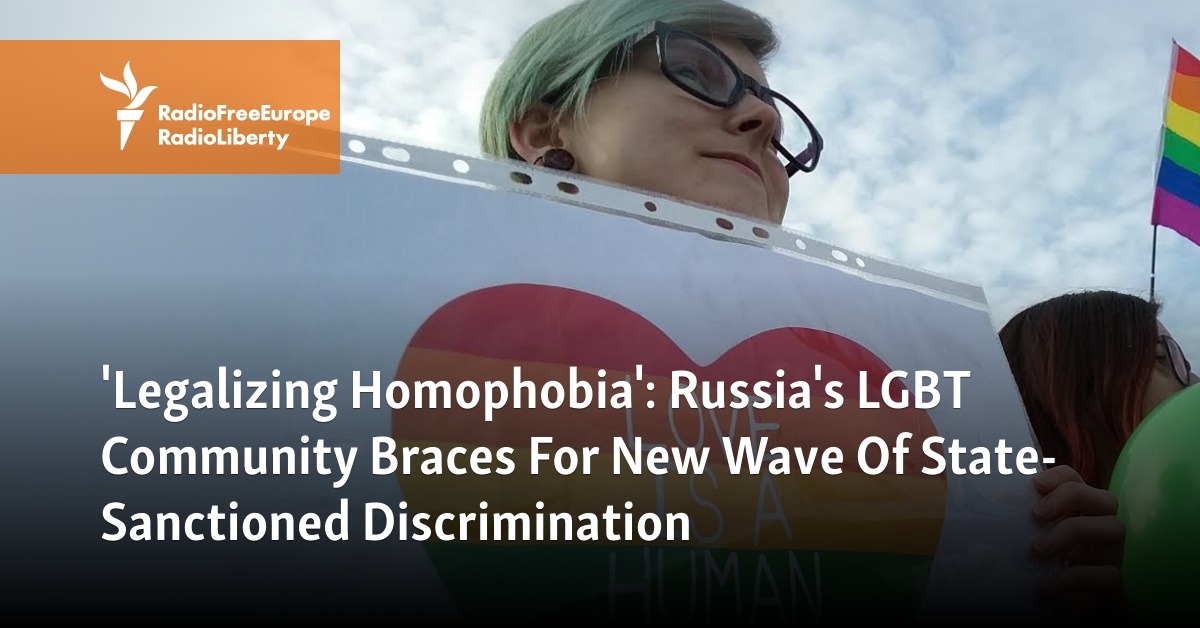
‘Legalizing Homophobia’: Russia’s LGBT Community Braces For New Wave Of State-Sanctioned Discrimination

52E5C8BB-13BE-410B-B556-75C9E540A6C2.jpg

“Our ability to simply go out onto the street will be threatened, as well as our safety,” said Anna Kosvintseva, a web designer in the southern Russian city of Astrakhan, when asked about legislation currently making its way through parliament that would virtually ban any mention of same-sex relationships or transgender issues. “After all, we can’t expect help from anywhere or anyone.”

Many activists and people in Russia’s LGBT community link the draconian legislation with the country’s grinding war of aggression against neighboring Ukraine and the government’s efforts to rally broad support by insisting the country’s “traditional values” are under assault by “Satanists” at home and abroad.

“The war is not going well,” said Vsevolod Galkin, a photographer and director who formerly worked for the LGBT magazine Kvir in Moscow. “So they are trying to turn the public discourse to some sort of scandal, some sort of divisions. This isn’t the first time this has happened. We see it every seven years or so.”

“The bill is complete nonsense that the government is throwing like a bone to conservative-minded citizens to distract them from military mobilization and economic problems,” said Dina Nurm, a feminist activist from Kazan, capital of the Tatarstan region. “It is a new tool for denunciations.”

‘The Morality Of A Country At War’

President Vladimir Putin signed a law banning the “propagandizing of nontraditional sexual relationships to minors” in 2013. In addition, many LGBT activists have been targeted in recent years under Russia’s so-called “foreign agent” laws. Since the 2013 law was adopted, Russia has seen a dramatic spike in homophobic vigilante violence.

The proposed new legislation, which was given preliminary approval on October 27 by the State Duma – the lower house of Russia’s legislature – is expected to pass through parliament by the end of this month. It would radically expand the ban on “propaganda” of homosexual and transgender relations to all audiences. It would ban spreading information “that might foster in minors the desire to change their gender.” It would ban advertisements, films, books, art, and other materials hat “propagandize nontraditional sexual relations or desires.” Fines for violations would be significantly increased up to 400,000 rubles ($6,700).

“We have traditions, conscience, and an understanding of how we must think about children, families, the country, and how to preserve what was handed down to us by our parents,” said Duma speaker Vyacheslav Volodin just before the initial vote on the new law. He added that even more restrictions might be introduced to the bill before its second reading.

Everything besides “normal life,” Volodin added, “is sin, sodomy, and darkness, and our country will fight against it.”

Everything besides “normal life is sin, sodomy, and darkness, and our country will fight against it.”

The representative of the Russian Orthodox Church at the session said: “The morality of a country at war is a matter of our future victory. We have our own path of development, and we don’t need Europe’s nontraditional relations.”

On November 9, Putin signed a document titled The Foundations Of State Policy To Preserve And Strengthen Russian Traditional Spiritual And Moral Values. The text says: “This is a strategic planning document in the sphere of the national security of the Russian Federation.

“The Russian Federation considers its traditional values to be the foundation of Russian society, enabling it to defend and strengthen Russia’s sovereignty,” it reads.

‘I Will Continue Speaking Out’

Yelena, 35, lives with her wife — they were married three years ago in Portugal — in the Siberian city of Novosibirsk and volunteers at an organization that provides assistance to LGBT people. Like many of the people interviewed for this article, she asked that her identity be concealed out of safety concerns. She says the government is intentionally fostering homophobia.

“Most Russians aren’t homophobes…but in recent years at the political level they have whipped up such a hysteria around ‘other’ people that it is really getting scary,” Yelena said. “At any moment, a witch hunt could begin, and no one is going to defend you. So people are already living as unnoticeably as possible.”

“The bill is...a new tool for denunciations,” says Dina Nurm, a feminist activist from Kazan, capital of the Tatarstan region.


“The bill is…a new tool for denunciations,” says Dina Nurm, a feminist activist from Kazan, capital of the Tatarstan region.

Mikhail is an activist in the Volga River city of Samara who volunteers at several civic organizations providing assistance to LGBT people. He agrees that even in rural areas, many Russians are tolerant of gays as neighbors and members of their community.

“But the new law is aimed at preventing gays and lesbians from living openly and showing that they don’t pose any danger,” Mikhail said. “As a result, heterosexuals will interact less with gays or won’t know about their orientation. Over time, even for those who might be open to being tolerant, the LGBT community will be transformed into an enemy.”

Alla Chikinda, an LGBT activist in the Urals region city of Yekaterinburg, offered a similar take.

“Those who have been living more or less openly will shut themselves off, and those who have not yet come out, won’t,” she said. “People who support the LGBT community and donate to organizations or participate in joint projects, or simply openly proclaim their support, will stop doing so. This is the main danger of the law.”

‘I Have No Idea How To Continue’

Yulia Alyoshina, a woman in Siberia’s Altai region who was Russia’s first openly transgender politician, was barred from the ballot in a 2021 city council election in the regional capital, Barnaul. The day after the Duma backed the new bill in the first of three required votes, she announced her withdrawal from politics.

“I have no idea how to continue conducting public political activities as an openly transgender woman,” she said, adding that the LGBT community could expect “even more serious hostility” if the “discriminatory” new law is adopted.

Activist Aleksei Sergeyev at a rally against homophobia in St. Petersburg: “There have been many television talk shows and films equating gays and pedophiles.”


Activist Aleksei Sergeyev at a rally against homophobia in St. Petersburg: “There have been many television talk shows and films equating gays and pedophiles.”

LGBT citizens say they already see increased hostility on the Internet and in real life. Aleksei Sergeyev, an LGBT activist in St. Petersburg, said that after one local LGBT organization was prevented from holding its meetings in a community center, it resorted to meeting in a public park.

Aleksandra of Krasnodar


Aleksandra of Krasnodar

“They were attacked by young nationalists and one of them got a head injury,” Sergeyev said. “There have been many television talk shows and films equating gays and pedophiles.”

Aleksandra, a 20-year-old lesbian in the southern city of Krasnodar, said the new law will “legalize homophobia.”

“Queer people have become enemies and criminals in their own country,” she said. “But I will continue speaking out against homophobia. and I won’t conceal my orientation. I am who I am.”

Based on reporting by RFE/RL’s Idel.Realities, Siberia.Realities, and North.Realities
Categories
Saved Web Pages

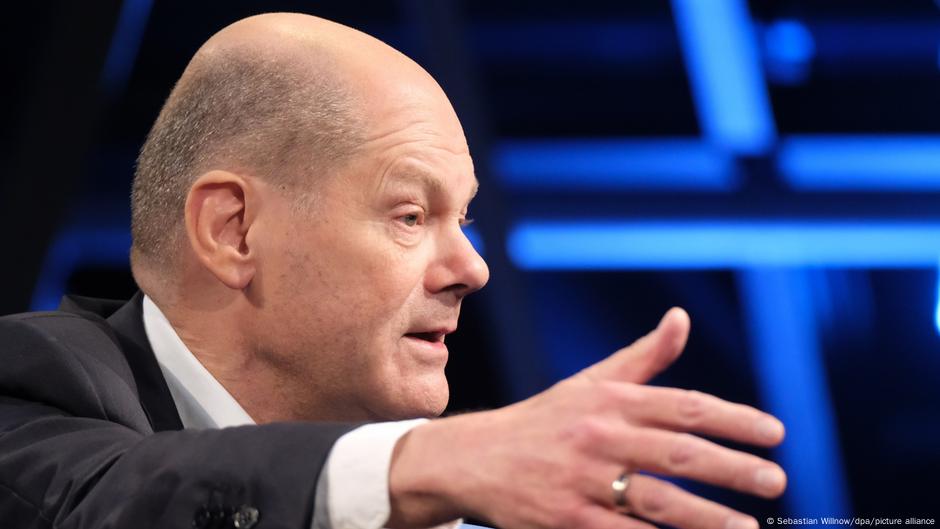
Шольц: Мира под диктовку Кремля не будет – DW – 12.11.2022

63733967_6.jpg

Канцлер Германии Олаф Шольц (Olaf Scholz) высказался против прекращения огня в Украине на условиях Кремля. Соответствующее заявление глава германского правительства сделал в пятницу, 11 ноября, в ходе подиумной дискуссии “RND vor Ort” в Лейпциге (федеральная земля Саксония), организованной медиагруппой RedaktionsNetzwerk Deutschland (RND).

“Россия прежде всего должна понять, что идея мира под диктовку ни к чему не приведет и что нельзя просто провести фломастером по карте и сказать: это – теперь мое, – подчеркнул канцлер. – Так что мира под диктовку не будет, должно быть другое понимание”. По словам Шольца, он “неустанно работает совместно со многими другими” сторонами над тем, чтобы Россия осознала это, потому что подобный подход – основа для успешных мирных переговоров.

Канцлер ФРГ также отметил, что военные действия президента РФ Владимира Путина препятствуют любому дипломатическому сближению. В условиях “этой смертоносной войны, которую мы сейчас переживаем”, Путин, в первую очередь, препятствовал всем тем процессам, направленным на диалог, которые ранее были в развитии, указал Шольц.

“Сидел за этим семиметровым столом и разговаривал с Путиным”

“Мы все хотим, чтобы эта война закончилась и чтобы мир стал возможным”, – констатировал канцлер. Он также напомнил, что не прерывал телефонных контактов с российским лидером. “Это (достижение мира. – Ред.) являлось темой всех переговоров, которые я вел с российским президентом до сих пор, и я не позволил никакой критике сделать так, чтобы я отказался от разговоров с российским президентом по телефону через определенные промежутки времени – зачастую от очень длительных разговоров”, – признался Шольц. Он добавил, что соответствующие консультации велись и с украинской стороной.

Олаф Шольц напомнил и о своем визите в Москву – незадолго до полномасштабного вторжения России в Украину. “Я также был в Москве незадолго до начала войны и сидел за этим семиметровым столом и разговаривал с ним (Путиным. – Ред.)”, – напомнил канцлер. По его словам, в ходе четырехчасовой беседы российский лидер требовал, чтобы в Украине “не было ракет, угрожающих Москве”, и чтобы Украина не вступала в НАТО. Шольц указал, что в свою очередь предлагал соглашения с Киевом о контроле над вооружениями, исключающие размещение ракет, и подчеркивал, что членство Украины в НАТО вообще не стоит на повестке дня “в ближайшие десять, 20, 30 лет”. К чему подобные требования, спрашивал он Путина.

Канцлер Германии добавил, что обсуждались некоторые предложения об автономном положении для ряда восточных областей Украины. “Я работаю каждый день, чтобы обеспечить прогресс в этих вопросах”, – констатировал он, указав, что “определенные подвижки” есть. При этом “ни одна из причин, сыгравших свою роль, не смогла бы оправдать эту войну, потому что ничего из заявленного просто не происходило”, добавил Олаф Шольц.

Шольц – о промежуточных выборах в Конгресс США

В ходе дискуссии глава германского кабмина также коснулся результатов промежуточных выборов в Конгресс США. “Считаю, что Джо Байден может записать на свой счет, что выборы, которые обычно заканчиваются не очень благоприятно для только что избранного президента, прошли для него гораздо лучше, чем прогнозировалось”, – констатировал Шольц.

По мнению канцлера Германии, – “очень удачно”, что Байден рассчитывает на тесное сотрудничество с Германией и Европой. “Считаю, что американский президент – это действительно очень умный политик с очень, очень большим опытом”, – добавил глава кабмина Германии. Он также подчеркнул, что Берлин готов к тесному сотрудничеству с США – независимо от результатов выборов.

Ранее, 5 ноября, Олаф Шольц (Olaf Scholz) потребовал от России исключить применение ядерного оружия в войне против Украины. “Непозволительно и недопустимо использовать в этом конфликте ядерное оружие”, – отметил Шольц на дискуссионном съезде Социал-демократической партии Германии (СДПГ) в Берлине. “Мы требуем от России, чтобы она четко заявила, что не будет этого делать. Это стало бы границей, которую нельзя переступать”, – добавил канцлер ФРГ.

Комментируя свой визит в КНР, Шольц заявил, что существенным успехом этой поездки была выработка общей с китайским руководством позиции по вопросу угроз России применить ядерное оружие в войне против Украины. “Только ради этого стоило совершить этот визит“, – резюмировал канцлер ФРГ.

Смотрите также:

Categories
Saved Web Pages

Trump-backed Vegas sheriff tops Democrat for Nevada governor

3000.jpeg

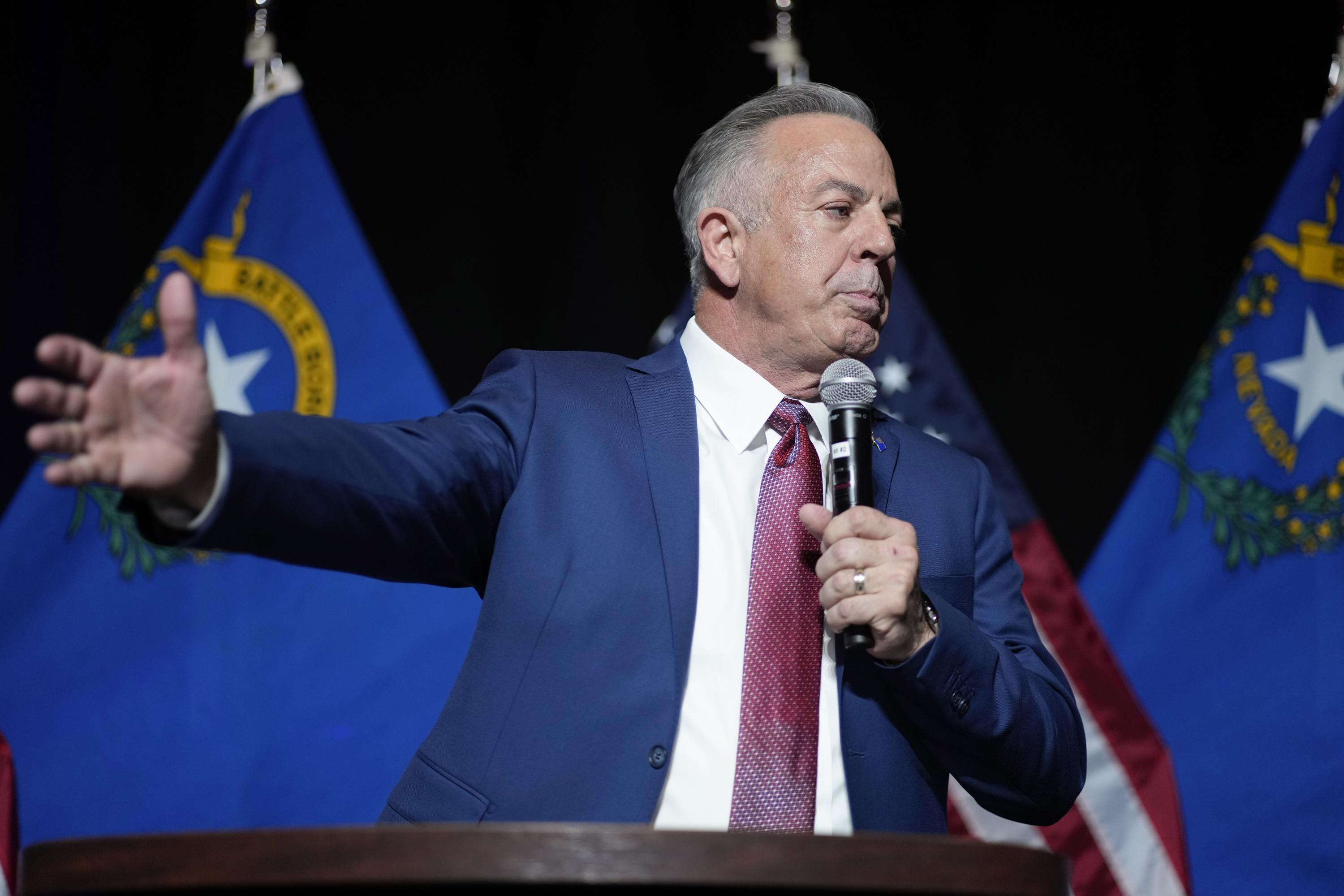
LAS VEGAS (AP) — Republican Joe Lombardo, a career police officer-turned-elected sheriff in Las Vegas who was endorsed by former President Donald Trump, has been elected governor in Nevada.

“I’ve dedicated my life to protecting and serving our community, and now, I’m honored to have the opportunity to protect and serve our entire state as your next governor,” Lombardo said in a statement issued shortly after Democratic incumbent Steve Sisolak conceded the race.

“It appears we will fall a percentage point or so short of winning,” Sisolak said in comments following a batch of vote results reported in Clark County. “That is why I reached out to the sheriff to wish him success.”

Both Sisolak and Lombardo faced the national spotlight five years ago, following the deadliest mass shooting in modern U.S. history. At least 58 people died and hundreds were injured by a gunman shooting assault-style rifles from windows of a high-rise hotel into an outdoor concert crowd in Las Vegas.

At the time, Sisolak was chairman of the powerful Clark County Commission, the elected body with jurisdiction over the Las Vegas Strip. Lombardo was the nonpartisan elected Clark County sheriff and head of the Las Vegas Metropolitan Police Department, the largest police agency in Nevada.

Sisolak went on to become Nevada’s 30th governor. Lombardo will be the 31st — making Sisolak a one-term Democrat amid two decades of Republicans. But Lombardo will contend with a Democratic-controlled state Legislature.

The governor’s race was close and ballot counting in Nevada stretched through several days partly because a broad mail voting law passed by the state Legislature in 2020 requires counties to accept ballots postmarked by Election Day if they arrive up to four days later.

Lombardo, 60, started as a police officer in Las Vegas in 1988 and served two terms as Clark County sheriff.

Trump’s endorsement helped him emerge from a crowded GOP field to win the June party primary. He weathered campaign attacks about his tenure as sheriff by acknowledging an increase in crime during the last two years but blaming funding limits and mandates from the Democratic-controlled Legislature.

“Our victory is a victory for all Nevadans who want our state to get back on track,” Lombardo said Friday, in echoes of campaign ads. He called his win a victory for small business owners, parents, students and law enforcers.

Sisolak acknowledged in his statement the criticism he received for closing businesses, schools and casinos in March 2020 during the early months of the COVID-19 pandemic, and also pointed to “the stresses and strains of global inflation.”

“We made the tough decisions during COVID that helped save an estimated 30,000 Nevada lives,” the statement said, “even if those decisions sometimes had tough political ramifications.”

Lombardo, whose campaign photos occasionally showed him in police uniform, distanced himself from Trump at times during the campaign. He never offered an endorsement of unfounded claims that the 2020 presidential election was marred by fraud.

Lombardo said during his only campaign debate with Sisolak that any voting irregularities two years ago were not enough to change the outcome of the election.

Lombardo’s campaign and political committees supporting him received millions of dollars in support from wealthy Las Vegas-based hotel magnate and Las Vegas-area aerospace company owner Robert Bigelow.

At a campaign forum, Lombardo derided a state public health insurance option that the Legislature passed and Sisolak signed.

Lombardo said he looks at abortion through a “pro-life lens.” But he also said he would fight against a national abortion ban if Congress passed one and acknowledged that state law approved by Nevada voters in 1990 allows abortions up to 24 weeks into pregnancy.

Lombardo on Friday promised a victory speech Monday at the Las Vegas high school he attended and said he and his wife, Donna, “can’t wait to get to work for our state in Carson City.”

___

Follow AP’s coverage of the elections at: https://apnews.com/hub/2022-midterm-elections

Categories
Saved Web Pages

When It Comes to Bearing Bad Tidings, Putin Is Nowhere to Be Found

10russia-optics-1-facebookJumbo.jpg

Big decisions about Ukraine are President Vladimir V. Putin’s to make, but the Kremlin and state media are distancing him from the setback in Kherson and downplaying its seriousness.

  • Send any friend a story

    As a subscriber, you have 10 gift articles to give each month. Anyone can read what you share.

    Give this articleGive this articleGive this article
A photo released by Russia’s Defense Ministry showing President Vladimir V. Putin, second right, Defense Minister Sergei Shoigu, left, and Anatoly Kontsevoy, deputy commander of the airborne troops, second left, at a military training center in the Ryazan region last month.

A photo released by Russia’s Defense Ministry showing President Vladimir V. Putin, second right, Defense Minister Sergei Shoigu, left, and Anatoly Kontsevoy, deputy commander of the airborne troops, second left, at a military training center in the Ryazan region last month.Credit…Russian Defense Ministry Press Service, via Associated Press

Neil MacFarquhar
Nov. 11, 2022Updated 7:03 a.m. ET

When Gen. Sergey Surovikin was appointed the overall commander of Russian forces in Ukraine a month ago, the Kremlin’s cheerleaders in the media lauded him as exactly the kind of severe warrior needed to bring order to the stumbling invasion. “General Armageddon,” some called him.

The general appeared on national television in a rather different role on Wednesday: He was the designated bearer of bad tidings, announcing that Russia should abandon the southern regional capital of Kherson in order to preserve the lives of its soldiers there.

President Vladimir V. Putin, who in a belligerent appearance in Moscow’s Red Square just weeks earlier had declared Kherson part of Russia for eternity, was somewhere else — celebrating the 75th anniversary of the federal Medical-Biological Agency.

The distance was deliberate. With each new pronounced setback in Ukraine, however, it is getting harder for Mr. Putin to separate himself from the whiff of failure, which is gradually eroding his image as a decisive, indomitable leader.

“This is a personal regime, and in general the public understands very well that it is Putin standing behind all the important decisions,” said Abbas Gallyamov, a former Putin speechwriter turned political consultant. “He is the central pillar in the construction of the system, and if he is shaking, the whole system is shaking.”

By the entrance to an abandoned Russian base in the village of Snihurivka, along the Kherson front, on Thursday. Kherson was the first major city in Ukraine that Russia seized.Credit…Lynsey Addario for The New York Times

To be sure, there is no immediate challenge to Mr. Putin’s considerable power, and the combination of a muscular propaganda machine and draconian laws to silence dissent ensure barely a ripple of public protest. Yet after presenting Kherson as a major prize seized early in the war, one that would provide a steppingstone to claiming the entire Black Sea coast, each new step backward raises questions about why Russians should trust the Kremlin.

“It will chip away at the narrative of Putin as the great leader,” said Cliff Kupchan, chairman of the Eurasia group, a political risk assessment firm in Washington. “It will be another problem for him as he tries to rally the Russian public behind his war effort. You don’t lose your biggest prize and not suffer at all for it.”

In order to end what has turned into a misbegotten war, Mr. Putin needs some manner of triumph, analysts said. To keep fighting risks further failures, but to call a halt with little to show for his invasion would undermine his main justification for his more than 20 years in command — rebuilding Russia as a great power.

Mr. Putin does not need a real victory, said Mr. Gallyamov, just something that he can sell as leaving Russia better off than it was before. “He cannot stop and he cannot continue,” he said, “so he is at an impasse.”

The Kremlin propaganda machine swung into action to try to blunt any criticism of the retreat from Russian-held territory west of the Dnipro River, including Kherson. On state television, Vladimir Solovyov, a prominent talk show host, called it a “difficult” decision and admonished, “Trust the generals.”

Mr. Putin has long relegated generals to the back seat, uneasy that any might steal his limelight. But General Surovikin has been given a high public profile, especially with the theatrical performance involved in recommending the withdrawal at a military briefing to the minister of defense, Sergei K. Shoigu, who then gave the order. The president would like someone else to be the face of defeat.

Sergei Surovikin in 2017.Credit…Pavel Golovkin/Associated Press

State media — and it is basically all state-run since the start of the war — rolled out its euphemism spinner and called the retreat the “Kherson maneuver” or a “regrouping,” insisting that it was merely a temporary setback.

The Kremlin also seemed to have moved beforehand to defuse any criticism from two of the harshest critics of the military’s performance: Ramzan Kadyrov, the pugnacious leader of the Republic of Chechnya, and Yevgeny Prigozhin, the founder of the Wagner military contractor company. Mr. Kadyrov said that General Surovikin was acting like a “true combat general,” while Mr. Prigozhin, an ally of the general from years working together snuffing out the opposition in Syria, praised the decision as well.

Russian pundits have said with each new defeat that the country is fighting the entire West, whose unified front will crack soon. This time, pro-Kremlin commentators also noted that for centuries Russian forces have emerged victorious from wars that initially seemed like disastrous defeats, including World War II.

But cracks appeared among right-wing supporters of the war, including military bloggers who described the pullback in catastrophic terms. Konstantin Malofeev, a tycoon with his own religious-oriented television network, said that Russia had become a nation of greedy commercial interests and that it needed to reawaken its fighting spirit. “We are warriors. We are the Empire,” he wrote on his Telegram channel.

Divisions among prominent pro-war voices could give Mr. Putin some breathing room, analysts said.

There were also mocking voices, even if most such criticism has been stamped out by the threat of heavy prison sentences. Where does Russia’s territory end, asked one man wryly on Twitter, using an expletive to write: “Where it hasn’t been beaten.”

From a military standpoint, the withdrawal actually made sense, analysts said, assuming that it did not turn into a feint. The estimated 15,000 to 20,000 Russian soldiers holding Kherson and its environs were some of the best, most experienced troops that Russia still has after losing so many such units in the fighting earlier in the year around Kyiv and Kharkiv, said Edward Arnold, a former British Army infantry officer and the European Security Research Fellow at Royal United Services Institute in London.

Conscripts in Sevastopol, in Russia-occupied Crimea, on Wednesday.Credit…Alexey Pavlishak/Reuters

Although withdrawing troops across the Dnipro is a risky operation under fire, he said, a successful pullback means that “they are able to preserve some of their combat power, which is really necessary.”

Russian troops are heavily dug in on the east bank of the river, and from there the front line stretches northeast for hundreds of miles. Behind that line lies the Donbas — the industrialized region of southeastern Ukraine that the two sides have fought over for eight years — plus the land bridge linking Russia to Crimea, as well as the canal that supplies water to the illegally annexed peninsula.

Preserving all that terrain is far more important to Mr. Putin and his war aims than the city of Kherson itself, analysts noted.

Some suggested that the move be taken at face value; that the eastern bank of the Dnipro River would be much easier to defend. If fighting becomes less intense over the winter, Russia could use the pause to consolidate its hold on that territory and to give new soldiers more training than the thousands of green draftees now being thrown onto the front lines to plug holes.

Moscow could even propose a cease-fire and negotiations, though President Volodymyr Zelensky of Ukraine has flatly rejected anything of the kind as long as Russia still holds vast stretches of Ukrainian territory. U.S. officials have reportedly tried to nudge Kyiv in that direction, while publicly denying it; Gen. Mark Milley, chairman of the Joint Chiefs of Staff, said on Thursday that a winter lull would be an opportunity for peace talks.

The problem now for Mr. Putin is that he sold Kherson as a major prize in the transition to Russian rule, suggesting that he was recreating Novorossiya, or New Russia, the lower half of Ukraine first taken by the Empress Catherine the Great.

“This was Putin’s jewel in the crown of the war so far,” said Mr. Kupchan. “I have to say that his crown is conspicuously short on jewels.”

Destroyed military vehicles at the entrance of the village of Snihurivka along the Kherson front on Thursday.Credit…Lynsey Addario for The New York Times

Ivan Nechepurenko and Oleg Matsnev contributed reporting.
Categories
Saved Web Pages

Examining the Regrettably Modern Marriage of Leo Tolstoy and Sophia Tolstaya

11wiseman-qa2-facebookJumbo.jpg

Frederick Wiseman set aside the documentaries he’s known for to work on “A Couple,” a solo drama putting Leo Tolstoy’s much-burdened wife at its center.

  • Send any friend a story

    As a subscriber, you have 10 gift articles to give each month. Anyone can read what you share.

    Give this articleGive this articleGive this article
In the film, Nathalie Boutefeu wears her hair in braids pinned atop her head with a mass of yellow flowers behind her.

Nathalie Boutefeu as Sophia Tolstaya in “A Couple.”Credit…Zipporah Films

Nov. 11, 2022, 11:00 a.m. ET

“I work without respite,” Sophia Tolstaya says in Frederick Wiseman’s “A Couple.” “I suffer from the impossibility of achieving what I want to do.”

Living with Leo Tolstoy — who wrote his greatest works, including “Anna Karenina” and “War and Peace,” during their 1862-1910 marriage — is no picnic, and Tolstaya’s reflections can sound very recognizable to a modern ear. She can’t get everything done, and feels constantly guilty about that, yet endures a husband who neither shares the family burdens fairly nor recognizes her full self. Married at 18, she helped run a 4,000-acre estate, raised and educated their children (eight of 13 survived to adulthood), and copied and revised hundreds of pages of Tolstoy’s manuscripts (as well as writing her own).

The contemporary resonance appealed to Wiseman, better known for his 43 nonfiction feature films chronicling communities and institutions of every stripe, including 1967’s “Titicut Follies” and, most recently, “City Hall,” in 2020. “A Couple” is a rare foray into fiction narrative for the filmmaker, though about 20 years ago, he directed Catherine Samie in “The Last Letter,” an adaptation of Vasily Grossman’s “Life and Fate.”

“A Couple,” which opens Friday at Film Forum, in New York, follows Tolstaya (played by the French actress Nathalie Boutefeu) as she ruminates on their marriage — as well as the depth of their love — during walks through the verdant country and seaside.

Wiseman and Boutefeu distilled Tolstaya’s diaries and Tolstoy’s writings into a screenplay, putting her experiences into a vivid present tense. Wiseman had previously directed Boutefeu in a Paris stage production of “The Belle of Amherst,” William Luce’s play about Emily Dickinson, which proved to be a good warm-up.

The film is Wiseman’s first production after the death of his own wife of 65 years, and the director, 92, sat for an interview in September at the Venice Film Festival, where “A Couple” premiered. He spoke about devoting oneself to art at the expense of family, creating worlds through monologues and directing as performance. These are edited excerpts from our conversation.

Frederick Wiseman at the Venice Film Festival. The documentarian rarely ventures into fiction.Credit…Guglielmo Mangiapane/Reuters

What led you to Sophia Tolstaya’s diaries?

Nathalie Boutefeu and I were both reading Tolstoy, and the idea came up. I had read Tolstoy before, but I didn’t know anything about his domestic life. Sophia has a couple of 800-page volumes of diaries, and she also wrote a couple of novels. And the point of the novels is the heroine’s wish for a normal relationship with a man where he talks to her, where they share responsibilities and the care of the children. She wants what I consider the normal participation of a husband, which, according to her, she never got.

Did you and Boutefeu have different perspectives on the material?

Well, we had no fights about it. We had lots of long conversations, and we each selected passages, then we would winnow it down. At one point, I thought maybe we should use the Tolstoy dialogue but make it a contemporary couple. And Nathalie, quite correctly, thought we should stay with the Tolstoys. It adds an interesting perspective on the issue of the artist in his personal life. Tolstoy had such a vast comprehension of human behavior. I don’t know if I, as a man, have the right to say it, but his understanding of women in everything he wrote is extraordinary. The 30 pages in “Anna Karenina” before she throws herself on the tracks — you really feel you’re inside her mind.

His inability to transfer that to his behavior is fascinating to me, because it’s not just Tolstoy, it’s all of us, in one way or another. Our behavior doesn’t always reflect our intellectual interests or so-called understanding. The discrepancy between the two is very marked in this case, because you have the record of what he understands in the characters he’s created, and you also have a written record, both from him and from Sophia, of their behavior.

From her account, it sounds like he was almost incapable of changing.

It’s complicated because saying “not able to do anything about it” may not be true. Maybe it’s not wanting to do anything about it, or feeling you can’t do anything about it. But it indirectly poses the whole issue of behavior change.

“A Couple” is based in part on the diaries of Sophia Tolstaya.Credit…Zipporah Films

Sophia Tolstaya quotes him saying he devotes all of himself to his writing, not to his family.

I think anybody who’s involved in the arts knows the temptation and sometimes the actuality of being totally immersed and ignoring everything else. Some people work out a more sensible balance than he did. In the beginning, they did have a very passionate relationship. But when they first got married, when they had a dinner party, he would also insist that they each read from their diaries. It sounds like public group therapy.

Both “A Couple” and your last fiction film, “The Last Letter” (2003), take the form of monologues. What brings you back to that form?

And the plays that I have directed, with the possible exception of [Samuel Beckett’s] “Happy Days,” are all monologues. So I seem to be attracted to monologues. The Emily Dickinson is a monologue, too. The reason I tell myself I’m attracted to monologues is that in documentaries, I try to create a world, and sometimes there are hundreds of people in it, like “In Jackson Heights,” “City Hall” or “National Gallery,” if you count the spectators coming in. In a monologue, I’m trying to create a world with one person. So in an abstract sense, they’re connected. At least in my mind.

How did it feel to be directing fiction as opposed to following and observing in the documentaries?

I liked it. If I didn’t like the way a scene was shot, or there was something in the performance that could be changed, we did it again. That’s normal for a fiction film, but it isn’t normal for the way I work. But when you’re directing an actor or actors, it’s also a performance by the director.

What does that performance consist of?

You have to always act as if you know what you’re doing, when perhaps you don’t.

Did any of your documentaries come to mind while making “A Couple”? Afterward, I thought of the raw case studies of couples in your “Domestic Violence” films, which observe painful relationships close-up in the context of court hearings and counseling at a shelter.

I don’t think I thought much about forging a connection between other films. But in the experience of making the “Domestic Violence” movies, I learned an enormous amount. How people are bound to each other in a destructive relationship. A lot of people are bound together in that way and there’s no physical violence, but one person needs to control the other. I have observed relationships that had nothing to do with the courts or social workers or shelters or anything like that. Perhaps they should.

Was any of “A Couple” resonant for you at all?

It’s not autobiographical, but I think a lot of the experiences in the film are similar to experiences people I know have had. A friend of mine saw it in Paris, and she said to me after the movie, “Today’s my wedding anniversary. How am I going to go home?”

Categories
Saved Web Pages

Kherson: As Russia retreats, Ukrainians still fear a trap

She could see Chechen fighters, loyal to Moscow, moving around the city, many wearing civilian clothes. Her concern, like so many of her fellow citizens, was that Russia’s announcement could be a trap – designed to draw Ukrainian troops into a killing ground.

Categories
Saved Web Pages

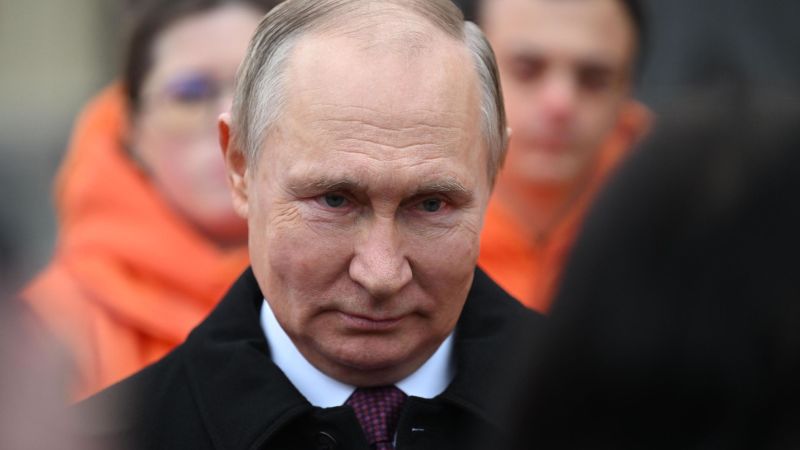
Opinion: Putin can cling on to power, but his legend is dead

221109091059-pm-digital-putin.jpg?c=16x9

Editor’s Note: Mark Galeotti is the executive director of the consultancy Mayak Intelligence and an honorary professor at University College London. He is the author of several books on Russian history, most recently “Putin’s Wars: from Chechnya to Ukraine.” The views expressed in this commentary are his own. View more opinion on CNN.

Despite some frenzied speculation around Russia’s apparent loss of the occupied Ukrainian region of Kherson this week, it is still too soon to predict when and how President Vladimir Putin will surrender power – whether it will be because he is ousted, retires or simply dies in office.

Mark Galeotti

However, what we can already see are some of the processes which may shape and prompt that departure. More to the point, even clinging on to power, Putin will never live up to the image he had created for himself.

Especially in the early months of the war, there was much excited speculation about his health, with claims that he had everything from blood cancer to Parkinson’s. Much of this has subsided, especially as the puffy aspect and odd twitches that were fastened upon as proof seem to have passed.

It was unsurprising that this would attract such interest, offering something of a deus ex machina for Western governments eager for a quick solution to the dilemmas of the conflict.

However, according to US intelligence officers who have studied the question, while Putin may well have recurring health issues – he has long been known to suffer from back problems and may even be suffering from a condition that has compromised his immune system, explaining the extreme measures taken to shield him from Covid-19 – there is no sign of anything likely to lead to his imminent death or incapacity.

Yet he is 70, and his health really has become an existential question for the system. After all, while the Russian constitution stipulates what happens if he dies in office – the prime minister steps in as interim president until early elections can be held – there is no provision in case he is incapacitated for any substantial length of time, nor is there a vice president able to stand in for him.

This is exactly the kind of political crisis which might generate an intra-elite struggle, which could bring down this regime.

After all, for now, the chances of a palace coup are scarcely greater than those of Putin being toppled by protests in the streets. Multiple security forces balance each other: in Moscow, for example, the military garrison, a special division of the National Guard and the Kremlin Regiment all report to different chains of command. The Federal Security Service watches all three – and the Federal Protection Service in turn watch them.

So long as Putin is able to control the heads of these so-called “power ministries” and they command the loyalties of their agencies, he seems hard to topple.

However, for all he looks firmly in control, what is happening is that his system is becoming increasingly brittle, losing the resources which in the past have provided the resilience to respond to unexpected challenges.

Obviously, this means financial resources. As sanctions bite and the costs of war escalate, money is getting tighter. Almost a third of the 2023 budget (more than 9 trillion out of a total 29 trillion rubles) will go towards defense and security. This leaves proportionately less to support regional budgets and keep struggling industries afloat.

However, it also means weakened legitimacy and the goodwill of the security services and local elites. Putin’s approval ratings have always been artificially high, given that there is no meaningful opposition for him to be measured against, but they are nonetheless falling.

Putin’s military machine is broken; his country’s economy so scarred that it will take years to recover; his reputation as a geopolitical mastermind in tatters.

Mark Galeotti

The National Guard, the key force charged with controlling protests in the streets, has been decimated fighting in Ukraine. Members of the National Guard are also angry that they were used as cannon fodder in a war for which glorified riot police were neither trained nor equipped.

Meanwhile, while the grumbling within the elite remains carefully muted, it is evident. Just as he did during Covid-19, Putin is dumping the hard and unpopular work of raising “volunteer battalions” and keeping the war economy running onto his regional mayors and governors. While some, like St. Petersburg Governor Alexander Beglov, have seized this as an opportunity to court Putin’s approval, many others are quietly appalled.

All this makes predicting the future of Putin and his regime even more difficult. Even brittle and stagnating regimes can hold on for a long time. Tsarist Russia was arguably brain-dead by 1911, when the brutally reformist Prime Minister Petr Stolypin was assassinated, but it still lasted through three years of catastrophe in the First World War before crumbling in 1917.

However, it does mean that Putin’s state is much less capable of dealing with the kind of unexpected crises that are at once hard to predict and yet ultimately inevitable. This could be anything from generalized rout in Ukraine to a cascading regional economic collapse at home, the security forces refusing to suppress protests on the streets or Putin falling seriously ill.

In these circumstances, as in March 1917 (February by the old Russian calendar), perhaps the commander-in-chief will be confronted by his senior generals and politicians and induced to step down for the good of the Motherland.

It seems hard at present to imagine such a scenario, but in the main the Russian elite, political and military alike, are not ‘Putinists’ but ruthless opportunists. They have supported Putin because it is in their interests; they continue to stay loyal because the risks in opposing him for now very much seem greater.

Sign up for CNN Opinion’s newsletter.Join us on Twitter and Facebook

However, if they start to believe that he is vulnerable, they will likely distance themselves from him at speed. No one wants to be the last loyalist of a doomed regime.

Whatever happens, though, Putin’s dreams of establishing Russia as a great power on the back of its military strength are over, and so too are his ambitions of securing a legacy as one of the nation’s great state-builders.

His military machine is broken; his country’s economy so scarred that it will take years to recover; his reputation as a geopolitical mastermind in tatters. Putin-the-man may still cling to power for years, but Putin-the-legend is dead.

Categories
Saved Web Pages

Ukraine claims big gains in south, but fears retreating Russians will turn Kherson into ‘city of death’

221110143359-kherson-ukraine-110922.jpg?

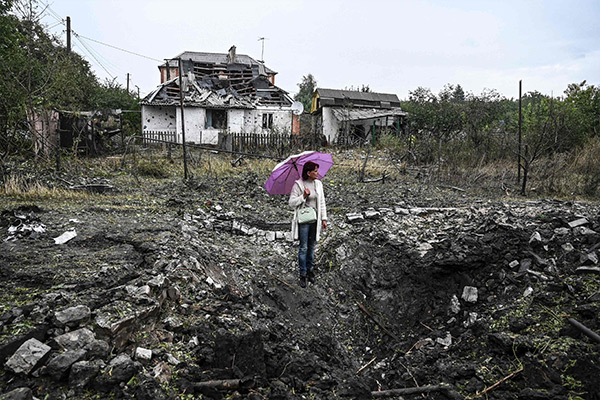
Ukraine’s military said it had retaken swathes of territory in Kherson on Thursday after Moscow ordered a partial withdrawal from the area, though officials in Kyiv warned that retreating Russian soldiers could turn the regional capital into a “city of death” on their way out.

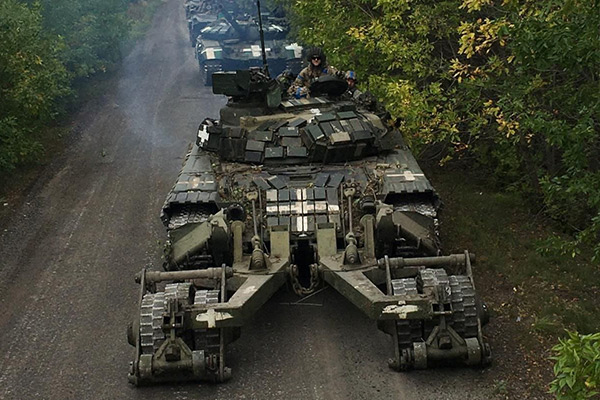
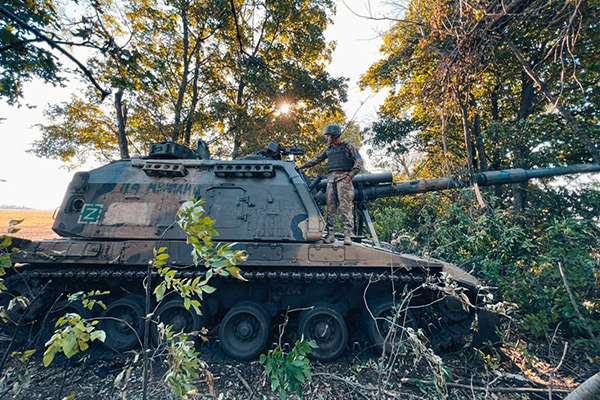
A military spokesman said that in just 24 hours, Ukrainian forces had pushed the front line in the key southern region of Kherson forward by 7 kilometers (4.3 miles) and taken control of more than 260 square kilometers of territory (100 square miles). Kyiv said it took control of the towns of Snihurivka and Kyselivka, both of which sit along key roads leading into Kherson city, the regional capital. Kyselivka is located about 15 kilometers (9 miles) away from Kherson city.

Moscow on Wednesday said its troops would withdraw from the west bank of the Dnipro River, an area that includes Kherson city, in one of the biggest military setbacks for Russia since its invasion began. A spokesman for the Russian Defense Ministry said that effort began the following day.

Officials in Kyiv, however, have treated the announcement with skepticism. Kherson is one of four Ukrainian regions that Russia attempted to annex in violation of international law, and some doubt that Moscow would give up fighting for a territory filled with people that Russian President Vladimir Putin vowed would be Russian citizens “forever.”

Ukrainian officials are also concerned that the Russian military will embrace scorched earth tactics and leave behind a trail of devastation in the wake of their withdrawal. Mykhailo Podolyak, an adviser to Ukrainian President Volodymyr Zelensky, alleged Thursday that Russia “wants to turn Kherson into a ‘city of death.’”

The Russian military “mines everything they can: apartments, sewers. Artillery on the left [eastern] bank plans to turn the city into ruins. This is what ‘Russian world’ looks like: came, robbed, celebrated, killed ‘witnesses,’ left ruins and left,” Podolyak tweeted.

Ukraine military spokesman Vladyslav Nazarov said Russian forces were continuing to shell areas recaptured by the Ukrainian military and attempted to strike humanitarian aid distribution points.

However, signs of the retreat have begun to emerge.

Gen. Mark Milley, the chairman of the US Joint Chiefs of Staff, said Washington had seen the “beginnings” of a Russian withdrawal in Kherson. Satellite imagery taken last week of Russian-occupied Crimea showed trenches being dug near the border with Kherson, a possible sign that Russian military leaders are nervous about the progress of Ukraine’s counteroffensive.

Ukraine’s President Volodymyr Zelensky said more than 41 settlements in southern Ukraine have been liberated following Russia’s decision to move to the eastern side of the Dnipro river.

He added that police units had moved into several settlements in Kherson to begin stabilization measures, but the liberation of Ukrainian territory was just the first step in a long process.

Ukraine’s commander-in-chief, Valerii Zaluzhnyi, said Kyiv’s military success in Kherson left Russia with “no other option but to resort to fleeing.” When asked if the withdrawal was actually taking place, Zaluzhnyi said Ukrainian authorities could neither confirm nor deny it. But defending occupied territory on the west bank of Kherson had become increasingly difficult for the Russians as Ukrainian forces disabled bridges across the Dnipro and attacked Russian supply lines.

While Russia’s top military leaders attempted to put the best possible face on the withdrawal, it is undoubtedly a major and humiliating setback for the Kremlin.

“I understand that this is a very difficult decision, but at the same time we will preserve the most important thing – the lives of our servicemen and the overall combat capability of the grouping of troops, which is futile to keep on the right (west) bank in a limited area,” said General Sergey Surovikin, the recently appointed commander of the war effort.

If and when Russian troops do withdraw to the east bank, their supply lines will become easier to manage and they will regain defense in depth. Any attempt by Ukrainian forces to cross the Dnipro could be costly to the point of prohibitive.

Russia would still retain control of 60% of the Kherson region, including the coastline along the Sea of Azov. So long as Moscow’s troops control and fortify the Dnipro’s east bank, Ukrainian forces will struggle to damage or disrupt the canal that carries fresh water to Crimea.

Ukraine's military pushes toward Kherson city in this photograph from Wednesday.

On Thursday night, several social media accounts in Kherson spoke of explosions along the river on Thursday night. Local groups reported on Telegram channels that two bridges near Kherson city had been shelled from the east bank, where the Russians have fortified positions.

CNN is unable to verify the reports and no geolocatable images have emerged.

Telegram channels also reported gunfire on the outskirts of the city, and upriver, local social media networks reported explosions in Kakhovka and the sound of motorboats crossing the river.

There were also reports — again unofficial — of explosions on or near bridges at Zahorianivka and Muzykivka and near the Kakhovka hydro-electric power plant, where there is a large dam.

Neither the Ukrainian government nor Russian appointees in Kherson have commented on the explosions.

As Russian forces pulled back in Kherson, Ukrainian authorities in neighboring Mykolaiv were hoping for some respite from the persistent missile attacks that have hit the city over the past few months.

Vitalii Kim, head of Mykolaiv regional administration, said on his Telegram channel: “Lots of good news for today. We are preparing to reconnect electricity, heat, humanitarian aid kits, medicines, etc.”

The last few settlements in the Mykolaiv region occupied by the Russians have now been liberated, but Kim said: “We continue to remain silent, because it is all the military’s business.”

CNN’s Joshua Berlinger, Julia Kesaieva and Gianluca Mezzofiore contributed to this report

Categories
Saved Web Pages

The Ukraine war in maps | Kherson retreat largest withdrawal of Russian troops since Kyiv

MMJKMMX3GRBRROPWYZ22PESNDM.JPG

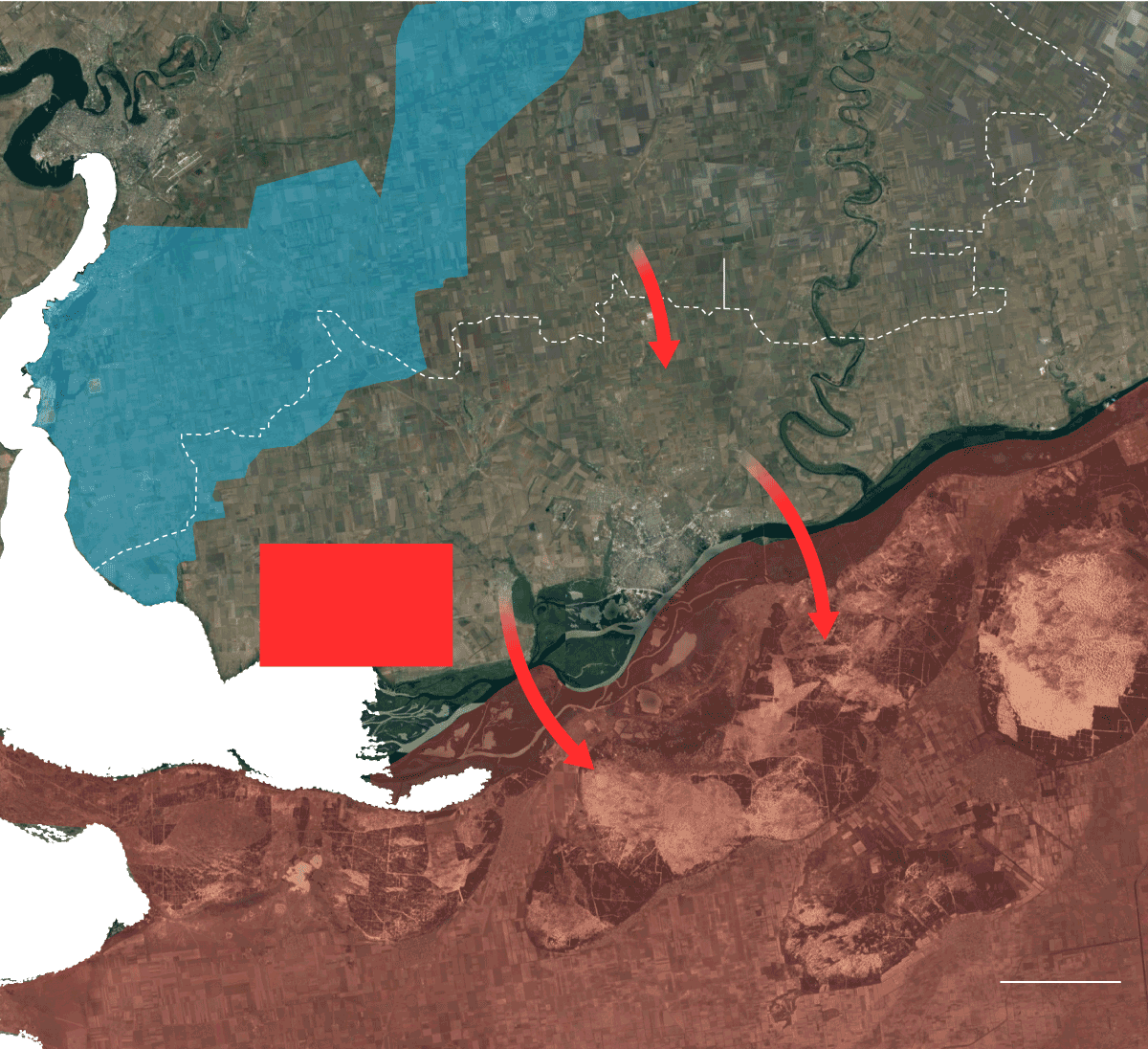
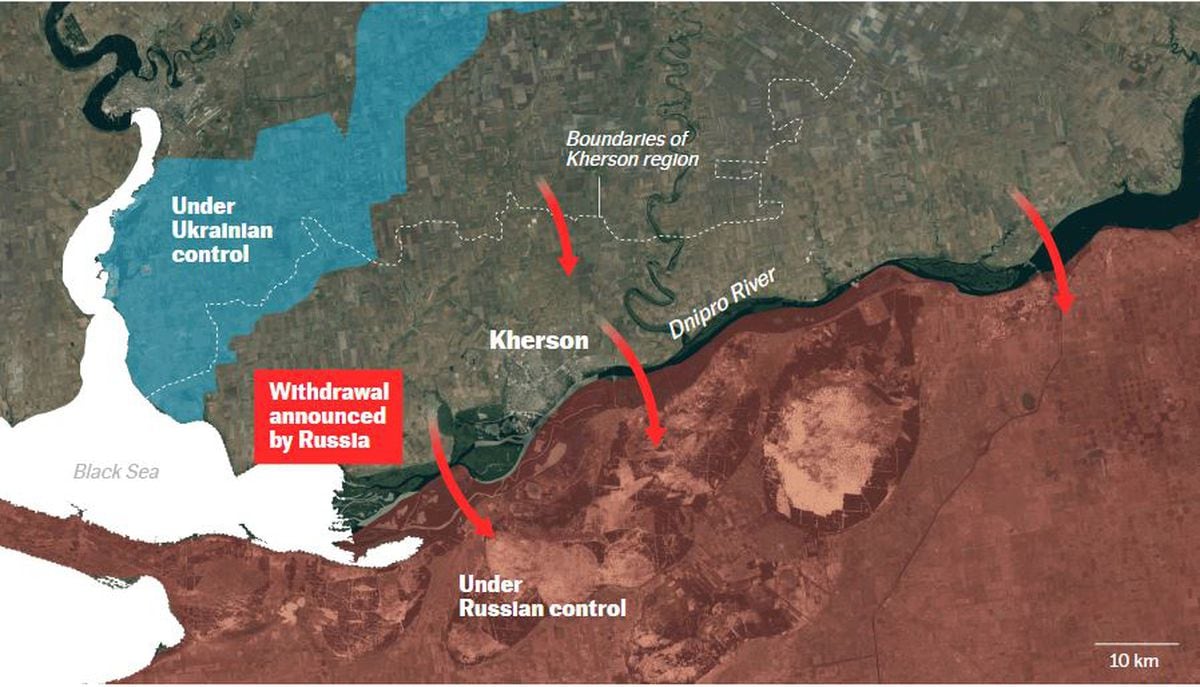
Boundaries of

Kherson region

Withdrawal

announced

by Russia

Boundaries of

Kherson region

Withdrawal

announced

by Russia

Boundaries of

Kherson region

Withdrawal

announced

by Russia

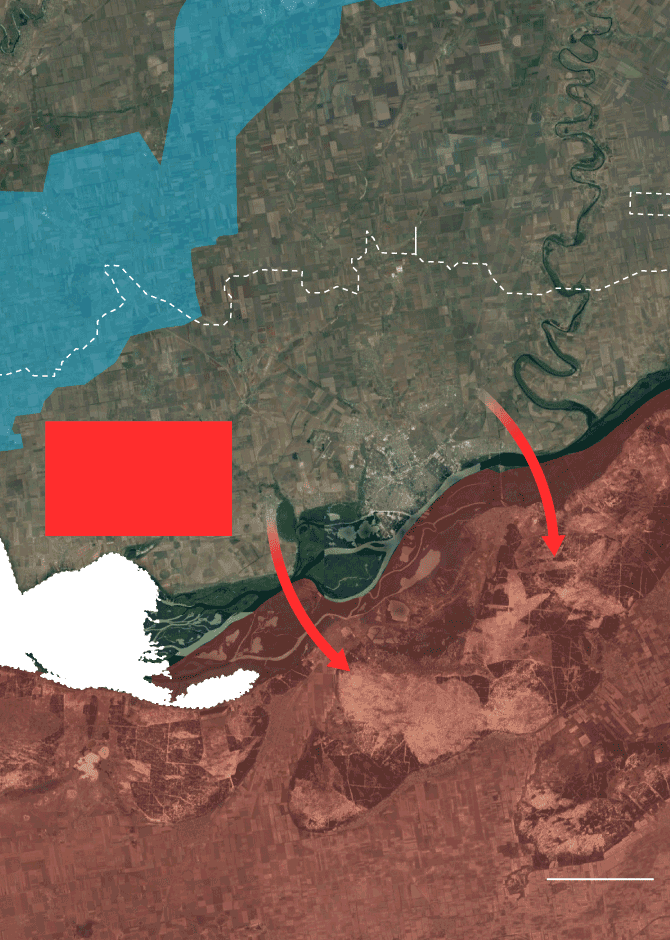
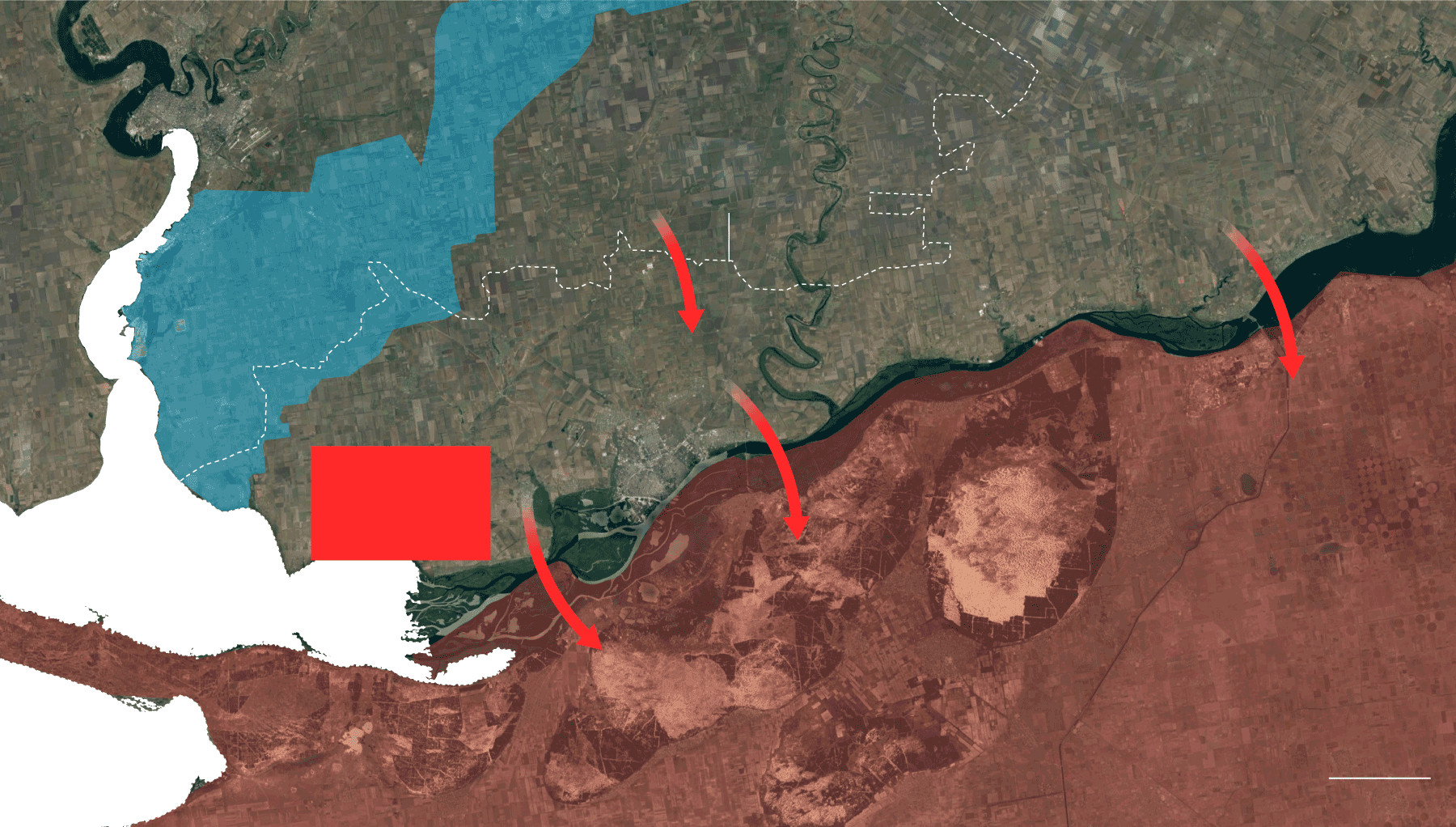
The Ukrainian counter-offensive in the Kherson region has achieved its objective: pushing Russian forces from the western bank of the Dnipro River. The Russian Defense Ministry’s announcement of a troop withdrawal from the city represents the biggest organized retreat of Kremlin military personnel since the successful defense of Kyiv in the early stages of the invasion. Ukrainian forces initiated an offensive campaign in August with the aim of expelling occupying troops from the Kherson area without the need for a direct, large-scale confrontation on the front lines. A strategy of attacks against supply depots, logistics centers and staging areas for Russian troops has made the situation untenable for the occupying forces, according to the Institute for the Study of War (ISW).

The US think tank views the Ukrainian offensive as being well-planned and executed, leaving Russian forces with few options other than staging massive ground attacks in response or retreating, which the current evidence appears to suggest is the case. An Armed Forces of Ukraine spokesman said on Thursday that Kyiv has not yet been able to confirm the Russian withdrawal from Kherson but added that Ukrainian troops had advanced more than four miles on the front over the past 24 hours, liberating 12 towns and villages.

Kherson is the only provincial capital captured by Russia since the Kremlin launched its invasion on February 24. The battle for control of the region, though, is far from being concluded. According to the ISW, the withdrawal from Kherson is an indicator that a new phase has begun, in which Moscow will concentrate on an organized and controlled retreat instead of attempting to stop the Ukrainian counter-offensive altogether.

Ukrainian forces have been targeting supply depots and ammunition dumps on the eastern bank of the Dnipro for several months, where Russian forces occupied strong defensive positions. The combination of these strikes, the ISW notes, with attacks directed against bridges that allowed the occupying forces to cross the Dnipro, has made the continued supply of food and weapons to the troops in Kherson unviable, leading to the Russian withdrawal from the western side of the river.

Kyiv has so far remained tight-lipped about the developing military situation and Ukrainian President Volodymyr Zelenskiy has urged caution and avoided triumphalism. Russian commanders will now attempt to slow the Ukrainian advance to carry out the troop withdrawal to a successful conclusion and the ISW has ruled out the possibility of a ruse on the part of Moscow designed to trap Kyiv’s forces in an ambush.

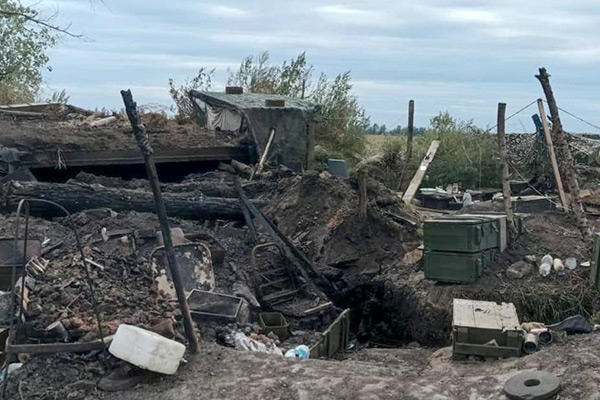
Images analyzed by the ISW show that retreating Russian troops have destroyed bridges around the city of Snihurivka, to the north of Kherson, which points to a controlled retreat as opposed to what occurred when Moscow’s forces were pushed out of Kharkiv in September, leaving behind vast stockpiles of weapons, equipment and ammunition.

Previous Days | October 18

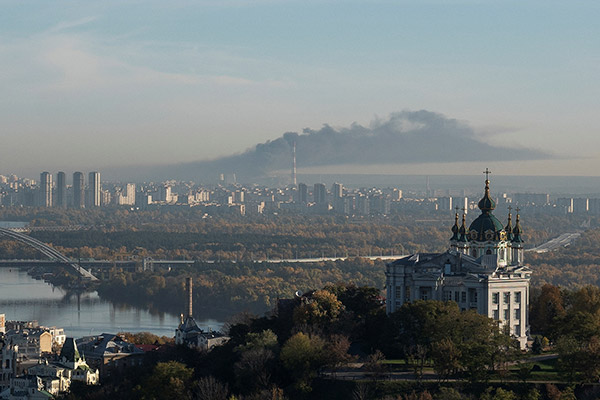
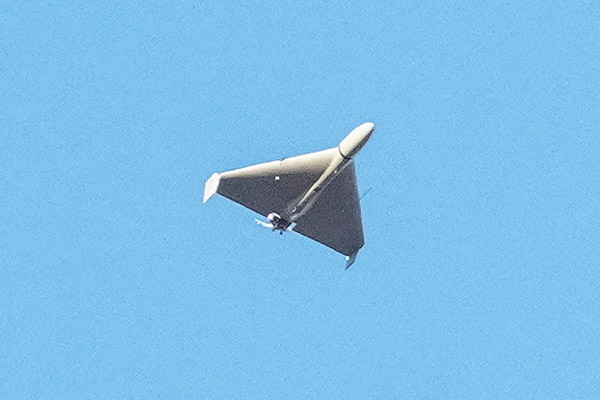
Russia is seeking to sow panic among the civilian population in Ukraine with attacks using drones. These Iranian-made devices, known as suicide or kamikaze drones due to their single-use deployment, have been used in attacks on Kyiv and Zaporizhzhia on Monday and Tuesday, and have also targeted other cities across Ukraine including Vinnytsia, Sumy, Dnipropetrovsk and Mykolaiv. Attacks on civilian targets and energy supply installations are in line with Moscow’s recent strategy of creating a state of psychological terror among Ukraine’s population with strikes that are of no military advantage, according to the Institute for the Study of War (ISW).

Since October 10, Russian air strikes have turned their attention away from the front lines and the Ukrainian counter-offensive to target civilian and infrastructure objectives with the aim of cutting off power as winter sets in. Russian President Vladimir Putin launched this latest offensive in retaliation for the partial destruction of the Kerch Bridge, the only land link between Russia and the illegally annexed Crimea region. Kyiv has described Moscow’s tactic as a war crime and has called on the international community to provide the Armed Forces of Ukraine with more air defense systems to counter Russian missiles and drones.

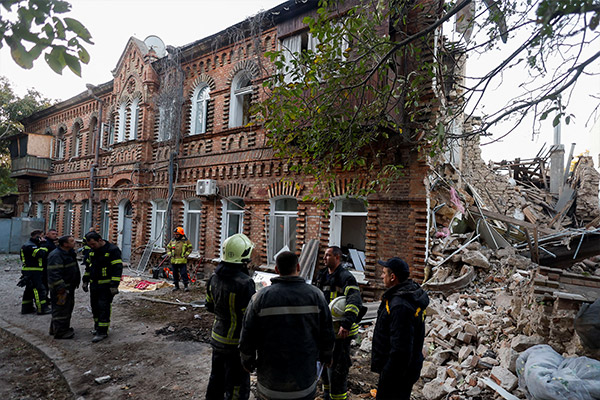
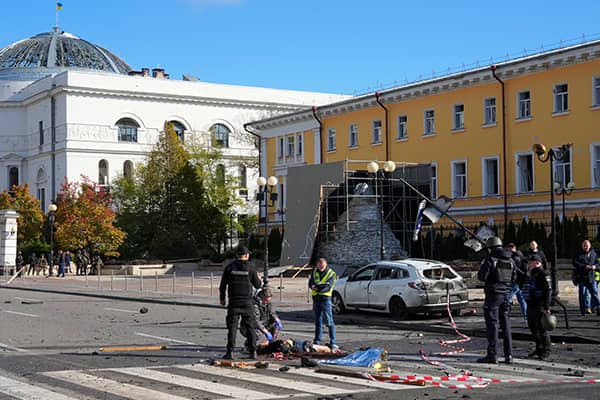
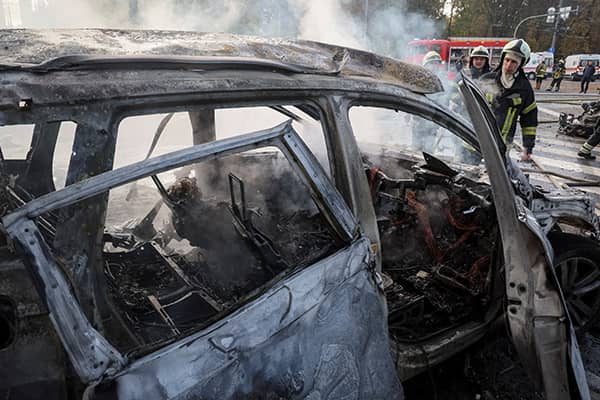
Yuriy Ignat, spokesman for Ukraine’s Air Forces, said on Monday that of 43 drones launched by Russian forces against targets in southern Ukraine, 37 had been shot down. However, five unmanned Shahed-136 drones hit Kyiv on Monday, killing at least three people and injuring 20 more in strikes on an office building and an apartment block.

18-10-22_grid-1.jpg

18-10-22_grid-2.jpg

18-10-22_grid-3.jpg

Russian strikes have targeted some 40% of Ukraine’s power grid and caused outages in major cities including Lviv. However, Ukrainian state energy company Ukrenergo has been working around the clock to patch up the damage and keep the electricity supply flowing. On Tuesday, Ukrainian President Volodymyr Zelenskiy said Russian attacks has caused “massive power cuts” and described the bombing campaign as “another type of terrorist attacks.” Power supply to thousands of residents in the northern city of Zhytomyr was cut off and further attacks targeted electrical facilities in Kyiv and an apartment block in Mykolaiv.

According to the ISW, Russian attacks against essential infrastructure are designed to cause damage and result in civilian deaths but carry no military value other than spreading panic and suffering among non-combatants. Moscow is now using this tactic and bombing non-military objectives in cities across the country at the same time as Ukrainian forces are making progress on the eastern and southern fronts.

“The enemy can attack our cities, but it won’t be able to break us,” Zelenskiy said Monday on social media.

October 10

The Russian army on Monday attacked the capital of Ukraine, Kyiv, where missiles have killed at least five people and wounded a dozen more, according to the police. The projectiles hit the city center and the headquarters of the Ministry of Education, among other targets. The attack on the Ukrainian capital, the first in the city since June, took place a day after Moscow accused Ukraine of causing the explosion on Saturday that partially destroyed the Kerch bridge, the only road link between Russia and the annexed peninsula of Crimea.

Ukrainian President Volodymir Zelenskiy on Monday accused Moscow of wishing to sow “chaos and panic” by targeting civilian facilities. On the messaging service Telegram, he said Russia “wants to erase Ukraine from the map.” Russian President Vladimir Putin responded during a meeting of the Kremlin’s security council that further attacks would be launched if any other infrastructure or installations on what Moscow considers Russian soil are targeted by Kiev.

Zelenskiy also announced that he had been in contact with German Chancellor Olaf Scholz and French President Emmanuel Macron in the aftermath of the attacks, with the three heads of state agreeing on the need to convene an emergency meeting of the G7, which is slated to take place as early as Tuesday. “I have agreed with Chancellor Scholz, who holds the presidency of the G7, on an urgent meeting of the group,” Zelenskiy wrote.

10-10-22_grid-1.jpg
10-10-22_grid-2.jpg

Meanwhile, Belarus President Alexander Lukashenko has accused Kyiv of preparing an “attack” against his country and announced the formation of a joint military group with Russia in response to an “escalation of tensions” on the borders with the West. Zelenskiy said on Telegram that 83 missiles also fell in 12 other regions, including Kharkiv, Lviv, Dnipro, Sumy and Zaporizhzhia. This latter city has been under constant attacks in recent weeks: at least 13 people died on Sunday in a bomb attack against a residential area, and 20 more the previous Thursday. In late September, 30 people died in an attack against a caravan of civilian evacuees in areas occupied by the Kremlin. By midday on Monday, when air raid sirens were still sounding over Kyiv, the death toll in the latest attacks on Ukrainian civilian targets had risen to 11, with 64 people wounded.

These attacks can be viewed as the Kremlin’s response to its most critical moment since it launched the military campaign last February. For the past month, Russian troops have been withdrawing on the southern and eastern fronts as Ukrainian forces push forward. Moscow has been forced in recent weeks to mobilize tens of thousands of reservists to stop the successful counter-offensive by Kiev. Over the past month, the Ukrainian army has regained control of large tracts of land in the eastern and southern parts of the country. In the east, Russian defensive lines occupying large parts of the Kharkiv region collapsed in September, leaving even Lyman, a railway junction essential to the occupation, in Ukrainian hands. The front line is now close to the administrative border of Luhansk, one of the two separatist regions that form the Donbas region.

Another region where Kremlin troops have suffered a setback at the hands of the defenders is Kherson, under Moscow’s control since the beginning of the invasion and one of the four regions illegally annexed by Putin recently. The Ukrainians managed to penetrate the Kremlin’s defense lines in the direction of the Dnipro River in early October, and forced the invading forces to retreat.

Previous days | October 3

In the past two days, the Ukrainian army regained control over large tracts of land in the east and south of the country. The advance of Kyiv’s troops was documented both around the eastern city of Lyman, a crucial railway junction for the Russian occupation, and in the southern region of Kherson.

In Lyman, Ukrainian forces continued to advance eastwards towards the border of Luhansk, one of the four provinces illegally annexed last week by Russia, according to the Institute for the Study of War (ISW). Russian troops withdrew from Lyman over the weekend after being encircled by Ukrainian forces. Based on geo-referenced images, it can be inferred that Ukrainian soldiers are heading towards the town of Kreminna.

According to the ISW, the Russian troops deployed in Lyman were largely made up of what were considered elite units of the Russian army prior to the start of the war. Their apparent inability to hold defensive lines in the face of Ukraine’s forces seems to indicate that even the best-trained units are suffering from war fatigue. Images collected by the ISW show Kyiv forces in at least six towns along the eastern front that were under Russian control.

The ISW believes elite Russian army units were also deployed in Kherson, another area where Ukrainian troops have made gains. The city has been under Moscow’s control since nearly the beginning of the invasion, and was also illegally annexed by Russia last Friday. The Russian Defense Ministry confirmed that Ukrainian forces had broken through the Kremlin’s defensive positions near Dudchany, a town on the Dnipro River, and pushed its troops back to a new line. According to the ISW, Ukrainian sources are keeping quiet about their operations in the area.

October 1

Ukraine recaptured the important hub town of Lyman on Saturday. The town, located about 108 miles (175 km) south of Kharkiv, had been the scene of intense fighting following Ukraine’s counter-offensive, which was launched at the beginning of September.

Losing control of this town is a major blow for Moscow, which on Friday illegally annexed four occupied Ukrainian provinces: Kherson, Donetsk, Luhansk and Zaporizhzhia. Kremlin spokesman Dmitry Peskov said the borders of the territories annexed by Russia had not yet been defined, stating just that the so-called people’s republics of Luhansk and Donetsk proclaimed independence in 2014. For Russia, Lyman’s role as a railway junction has been key in transporting supplies to troops deployed in eastern Ukraine.

By taking control of Lyman, Kyiv has regained an important communications hub, which it can use as a base to launch attacks on Russian-controlled towns in Luhansk.

In the south of the country, in the provinces of Kherson and Zaporizhzhia, the front line remained stable on Saturday, despite constant fighting. In Zaporizhzhia, at least 30 people were killed, and 88 others wounded in a missile attack on a civilian convoy. Kyiv blamed the attack on Moscow, which in turn said Ukraine was at fault. It is the largest single civilian fatality count of the war since the massacre at the Kramatorsk train station in Donetsk on April 8, which left more than 50 people dead.

September 21

Ukraine’s forces on Wednesday continued to attack towns controlled by Russia in eastern Ukraine. The two sides have been fighting for control of territories located on the borders of the eastern regions of Donetsk and Luhansk, where Moscow-backed, pro-Russian separatists declared two independent people’s republics in 2014.

Ukrainian troops have taken control of Bilohorivka, a small town in the Luhansk region, said the Institute for the Study of War (ISW). In response to Ukraine’s successful counteroffensive, which has liberated many cities, Russian President Vladimir Putin on Wednesday announced a partial military mobilization following recent setbacks in his war against Ukraine.

Russian troops on the Donbas front have been trying to secure defensive positions against the Ukrainian advance, and are also maintaining ground attacks, particularly in the cities of Donetsk and Bakhmut, in the Donetsk region.

Fighting has also been taking place is the Kherson region, in the south, which has been under Russian control since the first weeks of the offensive.

September 15

The Ukrainian army has been trying to extend the counteroffensive it launched over a week ago to towns in Donetsk and Luhansk, two regions in the eastern Donbas where pro-Russian separatists, with support from Moscow, proclaimed independent people’s republics in 2014. Oleksii Arestovych, one of President Volodymir Zelenskiy’s advisers, said in a video on Wednesday that Ukrainian troops were trying to retake the Donetsk town of Lyman, about 175 kilometers south of Kharkiv (which was recaptured 10 days ago).

“An assault on Lyman is going on right now,” Arestovych asserted, adding that troops were also trying to reclaim territory in the neighboring Luhansk, both under Russian control. Several military bloggers following the war reported that Russian forces were defending themselves against Ukrainian attacks in Lyman, according to the Institute for the Study of War (ISW).

The successful counteroffensive launched in the northeast of the country in the last week has allowed the Ukrainian army to recapture about 8,500 square kilometers since September 6, according to Kyiv. Troops are still working to consolidate their control over the areas recaptured in the last days in the northeastern province of Kharkiv, according to a UK intelligence report from Thursday.

The ISW considers that the recapture of Izyum, in the Kharkiv region, has dealt a severe blow to Russia’s ability to carry out artillery attacks in the area, as it was being used as a base to hold the line of defense on the Donbas border. This organization believes that Russian forces have been unable to erect a new line of defense from which to hold their positions in the area, and said the remaining units have retreated to other flanks.

The northwest, however, is not the only battle zone. In the southern Kherson region, under Russian control since the beginning of the conflict, fighting has also been raging in recent days. The sustained counteroffensive by Ukrainian forces in Kherson is damaging Russia’s combat capability in the area, the ISW says.

September 12 | Recapturing Kharkiv

The recent counteroffensive launched by Ukraine has forced Russian forces to abandon their positions in the eastern region of Kharkiv, which borders Russia and is the gateway to the coveted Russian-speaking Donbas region. The rapid counteroffensive has inflicted a “major operational defeat on Russia,” according to the Institute for the Study of War (ISW). In the face of the Ukrainian advance, Moscow has ordered its forces to withdraw from the entire Kharkiv region to the east of the Oskil River, according to British intelligence, meaning Russia’s troops have been pushed back to Donbas.

The withdrawal order on the eastern fringe – which represents the biggest withdrawal of Moscow’s troops since the army pulled back from the outskirts of Kyiv – is an unparalleled military success of the Ukrainian counteroffensive. By regaining of control of the key city of Izyum, Ukraine has dealt a severe blow to Moscow’s goal to control Donetsk, one of the two breakaway regions that make up the northern Donbas axis. Russia used Izyum as its westernmost post to launch attacks on Donetsk, according to the ISW. The report from ISW is supported by the latest update of the Russian Defense Ministry’s map of the conflict, which reflects the withdrawal of troops. When Kyiv announced that it was planning operations against Russian forces in Kherson, in the south of the country, Russia moved its troops away from the areas that were hit by the Ukrainian counteroffensive on the weekend.

g_1.jpg
g_2.jpg
g_3.jpg
g_4.jpg

According to the ISW, Russian forces are “not conducting a controlled withdrawal and are hurriedly fleeing southeastern Kharkiv Oblast.” The US organization reported that images shared on social media, showed abandoned tanks and military equipment near Izyum, indicating that the Kremlin’s forces were trying to escape the encirclement of the city.

According to the ISW, the success of Ukraine’s counteroffensive means that Ukraine can choose where the next battles will take place – unless Moscow finds a way to regain the upper hand. The counteroffensive, however, will not end the war, warns the organization, as Russia is likely to build a new defensive line. The ISW report indicates the war in Ukraine is set to last another year.

WP Radio
WP Radio
OFFLINE LIVE