Categories
Saved Web Pages

Biden promises competition with China, not conflict as first summit ends in Asia

AG56H4HMJJKP3HQUVNYBRV6LGA.jpg

PHNOM PENH, Nov 13 (Reuters) – U.S. President Joe Biden told Asian leaders on Sunday that U.S. communication lines with China would stay open to prevent conflict, as the first of three summits of world leaders this week ended, with tense talks almost certain in the days ahead.

Biden during an address to the East Asia Summit in Cambodia, said the United States would “compete vigorously” with Beijing while “ensuring competition does not veer into conflict”, stressing the importance of peace in the Taiwan Strait.

Biden also called on Myanmar’s military rulers to follow a peace plan they agreed to with the Association of Southeast Asian Nations (ASEAN), while condemning North Korea’s missile launches and Russia’s “brutal and unjust” invasion of Ukraine.

The Southeast Asia region is also hosting the Group of 20 (G20) Summit in Indonesia’s Bali this week, ahead of which Biden will meet Chinese counterpart Xi Jinping for the first time since taking office, with relations between the two superpowers at their worst in decades.

The war in Ukraine and its economic fallout is expected to dominate discussions in Bali and at the Asia-Pacific Economic Cooperation (APEC) forum in Bangkok at the end of the week, as alongside climate commitments, food insecurity and tensions over the Taiwan Strait, the South China Sea and North Korea.

Russian Foreign Minister Sergei Lavrov on the sidelines of the summit in Cambodia on Sunday accused the West of militarising Southeast Asia to contain Chinese and Russian interest in a key geostrategic battleground.

“The United States and its NATO allies are trying to master this space,” Lavrov told reporters.

He said Biden’s Indo-Pacific strategy, which the U.S. president was promoting heavily at the meeting, was an attempt to bypass “inclusive structures” for regional cooperation.

ABSENT PUTIN

Lavrov is representing President Vladimir Putin at the summits and is expected to hear stinging rebukes from within the G20 over the invasion of Ukraine, which Moscow calls a special military operation.

Though Ukraine is not a G20 member, its president, Volodymyr Zelenskiy, will address the meeting virtually.

Russia’s foreign ministry on Sunday said the G20 was not the forum to handle security issues and should instead focus on pressing global economic challenges. Lavrov arrived in Bali from Cambodia on Sunday evening.

“Expanding its agenda into areas of peace and security, which many countries are talking about, is not viable,” it said of the G20 forum.

Eighteen countries accounting for half the global economy attended Sunday’s East Asia Summit, which was held behind closed doors, attended by the ASEAN nations, Japan, South Korea, China, India, the United States, Russia, Australia and New Zealand.

The summit’s chair, Cambodian Prime Minister Hun Sen, said the plenary meeting handled some heated discussion, but the atmosphere was not tense.

“Leaders talked in mature way, no one left,” he told a news conference.

‘AGGRESSIVE’ PROVOCATIONS

Biden held a trilateral meeting with leaders of allies Japan and South Korea and said the three countries were “more aligned than ever” on North Korea.

South Korea President Yoon Suk-yeol said the North’s recent provocations showed its regime’s “nature against humanitarianism”, adding it had become more hostile and aggressive based on confidence in its nuclear and missile capabilities.

Japan counterpart Fumio Kishida said Pyongyang’s actions, which included a recent firing of a ballistic missile over Japan, were unprecedented.

“This trilateral summit is timely given we are expecting further provocation,” Kishida said.

Kishida also took a swipe at China for what he called violations of Japan’s sovereignty in the East China Sea and said Beijing was responsible also for heightening regional tension in the South China Sea, a conduit for at least $3 trillion in annual trade.

At a separate news conference, Australian Prime Minister Anthony Albanese said his brief discussions the previous day with Chinese Premier Li Keqiang were constructive and positive, amid anticipation of a formal summit with Xi.

Like ally the United States, Australia’s ties with China have also deteriorated in recent years.

“I have said repeatedly about the relationship with China that we should cooperate where we can,” Albanese said. “And that dialogue is always a good thing.”

Reporting by Prak Chan Thul, Jiraporn Kuhakan and Nandita Bose in Phnom Penh; Additional reporting by Ju-min Park, Sakura Murakami, Leika Kihara and Jake Cordell; Writing by Martin Petty; Editing by Raju Gopalakrishnan and Raissa Kasolowsky

Our Standards: The Thomson Reuters Trust Principles.

Categories
Saved Web Pages

Russian conscript beaten to death with a sledgehammer after joining Ukraine

jr-russian-conscript-killed-wagner-group

MEMBERS of Putin’s brutal private army are believed to have beaten a Russian conscript to death using a sledgehammer after he joined the Ukraine army.

Convicted murderer Yevgeny Nuzhin, 55, is seen being smashed in the face with a sledgehammer in a barbaric uncensored video in what is deemed an extrajudicial killing by the notorious Wagner group.

Russian conscript Yevgeny Nuzhin is thought to have been killed 'for treachery' having gone to fight for Ukraine

Russian conscript Yevgeny Nuzhin is thought to have been killed ‘for treachery’ having gone to fight for UkraineCredit: Twitter/@nexta_tv/

Yevgeny Prigozhin, right, is a close ally of Russia’s president Vladimir Putin and thought to head up the Wagner group

Yevgeny Prigozhin, right, is a close ally of Russia’s president Vladimir Putin and thought to head up the Wagner groupCredit: East2West

He is thought to have been killed “for treachery”.

In September there had been reports that the convicted killer had defected to Ukraine soon after arriving to fight for Vladimir Putin at the front.

He spoke on video at the time saying he had felt like “cannon fodder” in the Russian forces.

He told a Ukrainian journalist Yury Butusov that he had decided in advance to surrender to Ukraine, where some of his family live.

Putin faces 'strategic failure' & Russian army 'suffer huge loss of life'
Banksy unveils new street art on the side of bombed-out tower block in Ukraine

According to pro-Russia source Grey Zone, he was later kidnapped by pro-Moscow forces and made to answer by Wagner – which is headed by close Putin crony Yevgeny Prizohin – for his treachery.

The media outlet posted the graphic and grotesque video, calling it: “Hammer of Vengeance.”

Seconds before the evident fatal blow to his head, Nuzhin said: “I am Yevgeny Anatolievich Nuzhin, born in 1967, who went to the front to go to the side of Ukraine to fight against the Russians.

“On 4 September, I carried out my plan to go over to the side of Ukraine.

“On 11 November 2022, I was on the streets of Kyiv, where received a blow to the head, as a result of which I lost consciousness.

“I woke up in this basement, where I was told that I was going to be tried.”

He is then hit evidently by a long-handled mallet, and after falling backwards is struck again.

“Those who understand know that a sledgehammer and traitors have a close relationship,” said the pro-Wagner Grey Zone Telegram channel.

Founder of the military charity Dzyga’s Paw Dimko Zhluktenko, who claims to have known Nuzhin, wrote on Twitter: “That is why this morning is very tough for me mentally.

“Because of indefinite cruelty and violence is what Russia is all about.

“This man, Evgeny, was a Russian prisoner of war in Ukraine.

“These are last seconds of his life. I know him and talked to him.”

‘BEYOND VIOLENT’

In a later post he added: “PMC Wagner murdered him with gigantic sledgehammer hitting his head – because he became POW. That’s beyond violent.”

He continued: “PMC Wagner claimed full responsibility for this footage – it’s what they do to the exchanged prisoners.

“Pure, pure evil – is what Russia is, even for Russians.”

Wagner – and Progozhin – have threatened deserters and traitors with such summary executions, regardless that they are illegal under Russian law.

The group has recruited tens of thousands of jail inmates to fight for Russia in its illegal war with Ukraine, but those who refuse to fight have been warned of swift vengeance.

Some aspects of the story remain unclear, for example how Nuzhin supposedly returned to Russia.

The claim that he was kidnapped by Wagner agents in Ukrainian capital Kyiv appears implausible, but may have been scripted by Wagner to warn other fighters.

‘PRIMORDIAL WAGNERIAN PUNISHMENT’

“Suddenly disappearing from the investigation in Kyiv, the traitor received traditional primordial Wagnerian punishment,” stated Grey Zone.

Russian prisoner human rights group Gulagu.net – strongly anti-Putin – believes the shocking footage is genuine.

“Nuzhin was in a strict regime colony [in Russia and…] he was recruited by [Putin fixer and Wagner-founder] Yevgeny Prigozhin, and almost immediately was taken captive [by Ukraine],” said a post by the group.

“Some time later he did an interview – watched more than eight million times, and said he decided to fight for Ukraine.

“According to our sources, Nuzhin was either re-captured, or passed back to the Russian army, who passed him on to the so-called Wagner Security Service.”

The officers of this sinister private army security service “killed this man with a sledgehammer as a way of revenge for his critics of Putin, and for switching to the side of Ukraine.”

The footage “proves” that Russian special services and Wagner’s ‘security service’ carry extrajudicial executions, and kill prisoners who refuse to fight for Russia, but want to switch to Ukraine”.

It concluded: “Putin and Prigozhin are murderers. They must face justice.”

Former Putin speechwriter Abbas Galyamov said the footage would damage Prigozhin who is said to want to become Russia’s defence minister.

“People would not want to see a person, organising public medieval executions, in power,” he said..

“He also did a very bad service to the regime with that.”

Nuzhin was jailed for 24 years for a 1999 killing, and wounding a second victim.

He had been released after a visit by Putin’s henchman Prigozhin to his prison in Ryazan region.

He told the Ukrainian journalist: “We were in training for seven days, the 7th squad was an assault unit…

“I don’t even know how to explain the task of assault squads, I realised for myself – cannon fodder.

“You do something wrong – they zero out, it’s called a firing squad.”

He said he defected because he could not go to war against his relatives who live in Ukraine.

Nuzhin had married in jail to a woman named Olga, and they have two sons who have served in the Russian army.

The murderer had also served in the army as a young man.

Last month, a notorious Russian mobster who was freed from prison to fight in the Ukraine war was reportedly executed after trying to flee the frontline.

Zaur Aliyev, 47, released under a controversial scheme which saw him sign up for mad Vlad’s private army the Wagner Group, was executed after trying to desert in Ukraine.

The crime boss was serving an 18-year sentence at one of Russia’s infamous penal colonies when he was freed in September under the scheme.

Prigozhin, a close ally of the Russian president, announced the scheme in September, which offers murderers and other hardened criminals their freedom in return for six months of fighting on the frontline.

Before his savage death, Nuzhin is seen speaking to the camera

Before his savage death, Nuzhin is seen speaking to the cameraCredit: Twitter/@igorsushko

Prigozhin's scheme offers Russia's hardened criminals to fight on the frontline in exchange for having their criminal record wiped clean

Prigozhin’s scheme offers Russia’s hardened criminals to fight on the frontline in exchange for having their criminal record wiped cleanCredit: AP

Categories
Saved Web Pages

Netanyahu vows to be PM for ‘all of Israel’s citizens’; dismisses talk of Israel ‘entering a dark tunnel’

000_32NF2VU-1024x640.jpg

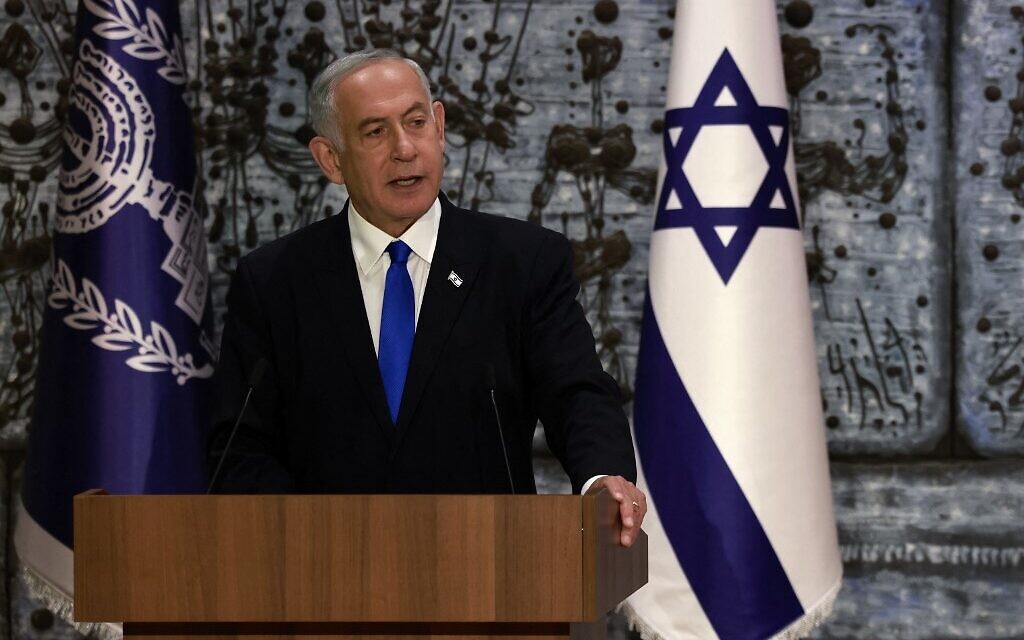
Upon receiving the mandate to form Israel’s 37th government — and the sixth under his leadership — Likud leader Benjamin Netanyahu says that he will be a prime minister for “all of Israel’s citizens, without exception.”

“The people decided clearly in favor of a government headed by me,” he begins, and “we’ll do everything to ensure a stable, successful government — a responsible government… that will act on behalf of all Israeli citizens, without exception.”

He says what is happening “reflects the democratic process that we are rightly proud of, [in] the sovereign, democratic State of Israel.”

Netanyahu adds: “Israel’s freedom and its achievements are not to be taken for granted. In the past decade, we turned Israel into a rising power among the nations… one of the world’s 10 leading nations, even though we are a thousandth of the world’s population.”

With his new coalition, “we’ll do everything to reach still greater heights.”

He says he is as emotional upon receiving the right to establish a government as he was “the first time, 26 years ago.”

Sounding conciliatory, he says: “Voters gave their clear support for me, my Likud movement, and to the partners who share our path. But I want to say: I intend to be the prime minister of everyone — those who voted for me and those who did not vote for me. That is my responsibility as the prime minister of Israel.”

“It reflects what I believe in and it is what guides my actions,” he adds.

“This is how I acted, together with my colleagues, to bring millions of vaccines for all Israeli citizens, to bring the best decade in Israeli history for security and the economy for all Israeli citizens, to bring four historic peace accords for all Israeli citizens — and for the benefit of all the peoples of the region, or at least all who seek peace, which is most of them.”

He says facing Israel’s challenges requires “internal unity” — and so he intends to work to “enlarge the spheres of agreement among us.”

While there are indeed differences, there are many areas on which most if not all Israelis can agree, he says.

“There is wide agreement that Israel is the nation-state of the Jewish people” but also on the imperative “to preserve the individual rights of every citizen.”

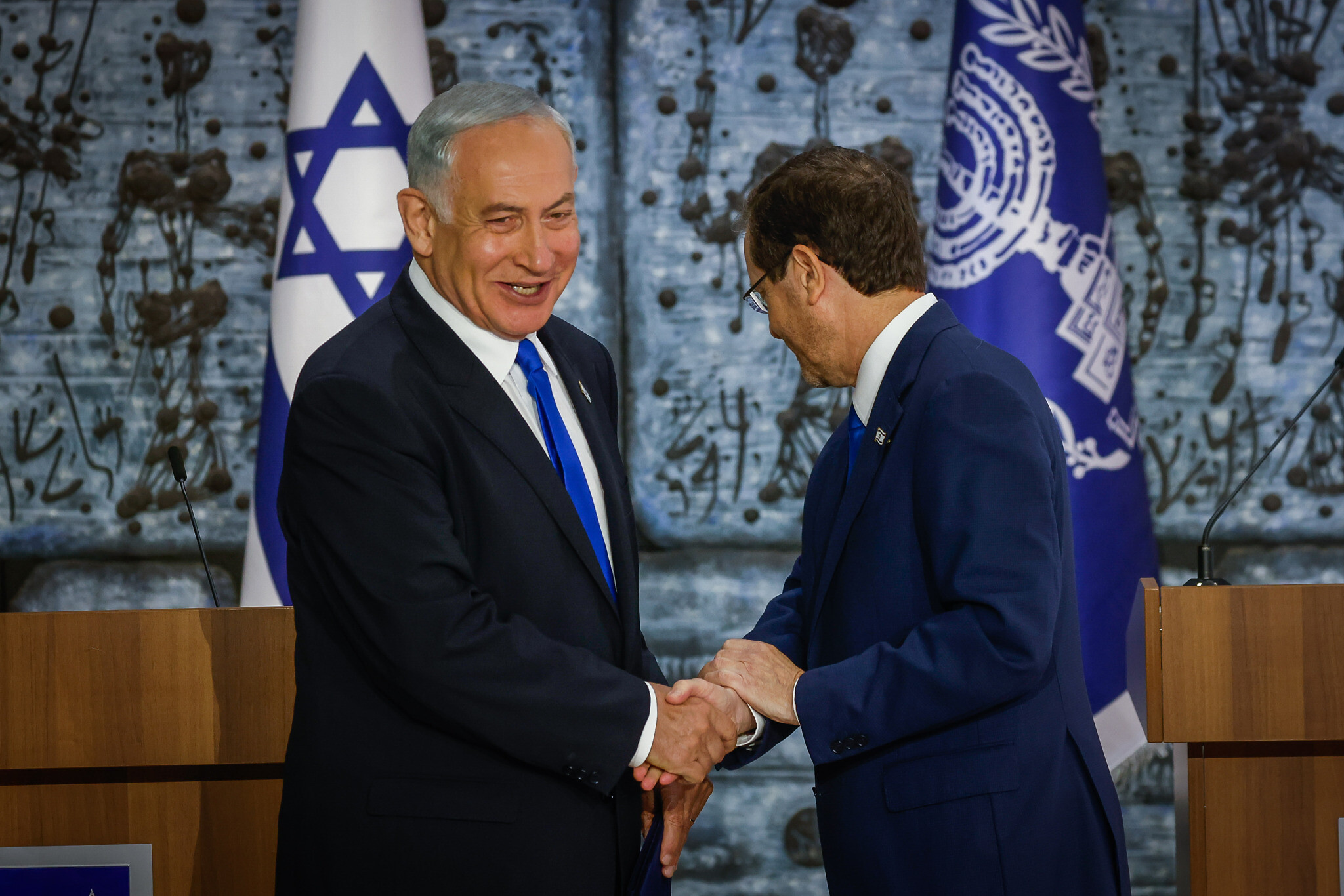
President Isaac Herzog (R) tasks Likud chief Benjamin Netanyahu with the mandate to form a new Israeli government, at the President’s Residence in Jerusalem on November 13, 2022 (Olivier Fitoussi/Flash90)

He says there is wide agreement, too, on the need to fight terror; to prevent Iran from attaining the nuclear weapons with which it intends to directly threaten Israel’s existence; to maintain the unity of Jerusalem, and to achieve more peace agreements — “peace out of strength, peace in return for peace, with additional Arab states, and thus largely to end the Israeli-Arab conflict. I didn’t say the Israeli-Palestinian conflict,” he notes, “but in my opinion this [flourishing of regional peace agreements] is the advance stage, that will bring about that result too.”

He also vows to advance the economy, reduce the cost of living, and keep extracting the gas from Israel’s offshore fields.

“There is widespread agreement, citizens of Israel, that we are brothers and we are destined to live next to each other, with all the differences and the contrasts,” he says.

While many are happy with the election results, others are issuing prophecies of doom, asserting that Israel is “entering a dark tunnel, that this is the end of the state, the end of democracy — scaring the public,” he says.

It’s not the first time these things have been said. “They said it about [former Likud prime minister Menachem] Begin and about me. It wasn’t accurate then and it’s not accurate today.”

Israeli politics told straight

I joined The Times of Israel after many years covering US and Israeli politics for Israeli news outlets.

I believe responsible coverage of Israeli politicians means presenting a 360 degree view of their words and deeds – not only conveying what occurs, but also what that means in the broader context of Israeli society and the region.

That’s hard to do because you can rarely take politicians at face value – you must go the extra mile to present full context and try to overcome your own biases.

I’m proud of our work that tells the story of Israeli politics straight and comprehensively. I believe Israel is stronger and more democratic when professional journalists do that tough job well.

Your support for our work by joining The Times of Israel Community helps ensure we can continue to do so.

Thank you,
Tal Schneider, Political Correspondent

Join Our Community Join Our Community Already a member? Sign in to stop seeing this

You’re a dedicated reader

We’re really pleased that you’ve read X Times of Israel articles in the past month.

That’s why we started the Times of Israel ten years ago – to provide discerning readers like you with must-read coverage of Israel and the Jewish world.

So now we have a request. Unlike other news outlets, we haven’t put up a paywall. But as the journalism we do is costly, we invite readers for whom The Times of Israel has become important to help support our work by joining The Times of Israel Community.

For as little as $6 a month you can help support our quality journalism while enjoying The Times of Israel AD-FREE, as well as accessing exclusive content available only to Times of Israel Community members.

Thank you,
David Horovitz, Founding Editor of The Times of Israel

Join Our Community Join Our Community Already a member? Sign in to stop seeing this

Categories
Saved Web Pages

Russia-Ukraine war: Kherson mayor warns of ‘critical’ water shortages after Russian forces destroyed key infrastructure – live

3500.jpg?width=1200&height=630&quality=8

Show key events only

Please turn on JavaScript to use this feature

Russian forces destroyed key infrastructure in Ukraine’s southern city of Kherson before retreating, President Volodymyr Zelenskiy has said.

Before fleeing from Kherson, the occupiers destroyed all the critical infrastructure: communications, water, heat, electricity.

Kherson’s mayor said the humanitarian situation was “severe” because of a lack of water, medicine and bread, as residents celebrated their liberation in what Zelenskiy called a “historic day”.

Reuters also reported that the mayor, Roman Holovnia, told television:

The city has a critical shortage, mainly of water. There is currently not enough medicine, not enough bread because it can’t be baked: there is no electricity.

Zelenskiy said authorities had, in their efforts to stabilise the region, dealt with nearly 2,000 mines, trip-wires and unexploded shells left by the departing Russians.

Ukrainian forces enter Kherson city on Saturday after the Russian retreat

Ukrainian forces enter Kherson city on Saturday after the Russian retreat. Photograph: Anadolu Agency/Getty Images

Show key events only

Please turn on JavaScript to use this feature

Ukraine’s central bank said on Sunday it was preparing the country’s banking system to work in emergency conditions in connection with possible blackouts.

Reuters quoted the bank as saying on the Telegram messaging app:

It is envisaged to ensure the viability of 14 systemically important banks of the country. If absolutely necessary, the National Bank will primarily ensure the vital activities of state-owned banks.

Russia has systematically attacked the Ukrainian energy sector, causing blackouts for significant parts of the country.

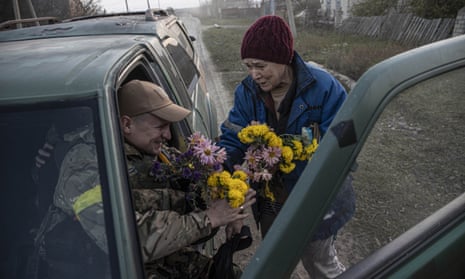
On the road to Kherson, villagers holding flowers waited to greet and kiss Ukrainian soldiers as they poured in to secure control of the right bank of the Dnipro River on Saturday after the Russian retreat.

“We’ve become 20 years younger in the last two days,” said Valentyna Buhailova, 61, just before a Ukrainian soldier jumped out of a small truck and hugged her and her companion Nataliya Porkhunuk, 66, in a hamlet near the centre of Kherson.

But Reuters also reported that volleys of artillery fire surrounded the international airport, and police said they were setting up checkpoints in and around the city and sweeping for mines left behind.

Ukrainians welcome Kyiv’s troops as its military enters Kherson

Ukrainians welcome Kyiv’s troops as its military enters Kherson. Photograph: Anadolu Agency/Getty Images

Russian forces destroyed key infrastructure in Ukraine’s southern city of Kherson before retreating, President Volodymyr Zelenskiy has said.

Before fleeing from Kherson, the occupiers destroyed all the critical infrastructure: communications, water, heat, electricity.

Kherson’s mayor said the humanitarian situation was “severe” because of a lack of water, medicine and bread, as residents celebrated their liberation in what Zelenskiy called a “historic day”.

Reuters also reported that the mayor, Roman Holovnia, told television:

The city has a critical shortage, mainly of water. There is currently not enough medicine, not enough bread because it can’t be baked: there is no electricity.

Zelenskiy said authorities had, in their efforts to stabilise the region, dealt with nearly 2,000 mines, trip-wires and unexploded shells left by the departing Russians.

Ukrainian forces enter Kherson city on Saturday after the Russian retreat

Ukrainian forces enter Kherson city on Saturday after the Russian retreat. Photograph: Anadolu Agency/Getty Images

Welcome back to the Guardian’s continuing live coverage of the war in Ukraine. I’m Adam Fulton and here’s a quick run through the latest developments as it approaches 9am in Kyiv.

  • Volodymyr Zelenskiy says Kyiv’s forces have established control in more than 60 settlements in the Kherson region and “stabilisation measures” are being carried out in Kherson city after it was retaken by Ukrainian forces. Ukraine’s president said Russian forces had destroyed all of Kherson’s critical infrastructure before they fled, including communications and water supplies along with heat and electricity supplies.

  • Ukrainians hailed Russia’s retreat from Kherson as Kyiv said it was working to de-mine the strategic southern city after the eight-month occupation and restore power across the region. In the formerly occupied village of Pravdyne, outside Kherson, returning locals embraced their neighbours, some unable to hold back tears, Agence France-Presse reported. “Victory, finally!” one said.

  • The head of Kherson’s regional state administration said everything was being done to “return normal life” to the area. Yaroslav Yanushevych said from Kherson city in a video posted to social media that while de-mining was carried out, a curfew had been put in place and movement in and out of the city had been limited.

  • Pro-Moscow forces are putting up a much stiffer fight elsewhere and the battles with Ukrainian forces in the eastern Donetsk region are hellish, Zelenskiy said. “There it is just hell – there are extremely fierce battles there every day. But our units are defending bravely – they are withstanding the terrible pressure of the invaders, preserving our defence lines,” he said.

  • Ukraine would decide on the timing and contents of any negotiation framework with Russia, according to a readout of a meeting between the US secretary of state, Antony Blinken, and the Ukrainian foreign minister, Dmytro Kuleba, at the Asean summit in Cambodia in Phnom Penh.

  • The Russian president, Vladimir Putin, has spoken to his Iranian counterpart, Ebrahim Raisi, by phone and both leaders placed emphasis on deepening political, trade and economic cooperation, the Kremlin said in a statement on Saturday. The discussion of “a number of topical issues on the bilateral agenda” also including the transport and logistics sector, the Kremlin said. It did not say when the phone call took place and made no mention of Iranian arms supplies to Moscow.

  • Significant new damage to the major Nova Kakhovka dam in southern Ukraine can be seen following Russia’s withdrawal from nearby Kherson, Reuters reported the US satellite imagery company Maxar as saying.

  • Russia said there was no agreement yet to extend a deal allowing Ukraine to export grain via the Black Sea, repeating its insistence on unhindered access to world markets for its own food and fertiliser exports, Reuters reported.

Categories
Saved Web Pages

Biden accepts resignation of top U.S. border official Magnus

HVYCP7CSOVPBJNISGBNM52MEFQ.jpg

Chris Magnus appears before a Senate Finance Committee hearing on his nomination to be the next U.S. Customs and Border Protection commissioner in the Dirksen Senate Office Building on Capitol Hill in Washington, DC, U.S., October 19, 2021. Rod Lamkey/Pool via REUTERS/File Photo

Nov 12 (Reuters) – President Joe Biden has accepted the resignation of U.S. Customs and Border Protection Commissioner Christopher Magnus, the White House said in a statement on Saturday.

The statement comes a day after U.S. media said Magnus had been asked to resign or was fired in a sign of tension within Biden’s administration over a record number of migrant crossings at the U.S.-Mexico border.

“I am submitting my resignation effective immediately, but wish you and your administration the very best,” Magnus said in a letter. “Thank you again for this tremendous opportunity.”

In a statement to Reuters, Magnus said, “this decision provides me with the best path for advancing my commitment to professional, innovative, and community-engaged policing.”

Deputy Commissioner Troy Miller will immediately take up the role of acting commissioner, Alejandro Mayorkas, homeland security secretary, who oversees the agency, said in a letter.

The number of migrants arrested at the U.S.-Mexico border has soared to record highs under Biden, a Democrat who took office in 2021, fueling attacks by Republicans who say his policies are too lenient.

Biden officials have said they aim to create a more orderly and humane immigration system, but have struggled to tackle the accompanying operational and political challenges.

A sharp rise in border arrivals of Cubans, Venezuelans and Nicaraguans has led to the record arrests of migrants driven, say experts, by problems such as poverty, violence and food insecurity to leave Guatemala, Honduras and El Salvador.

Magnus, 62, was confirmed in December as commissioner of the 60,000-strong agency that oversees border security, trade and travel.

He had worked for police departments in Michigan, North Dakota and California before becoming police chief in Tucson, Arizona, in 2016.

When Biden nominated Magnus for the commissioner’s role in 2021, the White House touted him as a reformer focused on establishing community trust in law enforcement and holding officers accountable.

Reporting by Ismail Shakil in Ottawa and Mike Stone in Washington; Editing by Sandra Maler and Clarence Fernandez

Our Standards: The Thomson Reuters Trust Principles.

Categories
Saved Web Pages

Russia Suffers ‘Catastrophic Strategic Disaster’ in Ukraine

220811-F-BW403-1276.JPG

Nov. 9, 2022 | By Jim Garamone , DOD News |

Russian President Vladimir Putin’s invasion of Ukraine has been “a catastrophic strategic disaster,” Colin H. Kahl, the undersecretary of defense for policy, told the Defense Writers’ Group yesterday.

Kahl briefed the group about the National Defense Strategy and said that the document lists China as the pacing threat for the United States, but that Russia poses an acute threat. “That term acute, was chosen very intentionally as signifying both immediate and sharp,” he said.  

China has the will and resources to challenge the United States and the rule-based international order that has kept the peace since the end of World War II. But Russia’s unprovoked invasion of Ukraine shows it is a dangerous and reckless state. 

Speaking on Election Day, Kahl was asked by reporters asked if U.S. support of Ukraine had bipartisan support. “I think there’s a widespread recognition that the stakes in Ukraine are just bigger than Ukraine,” he said.    

He said elected officials from both parties understand that Ukraine is not only fighting to defend its independence and democracy but is also for a principle. “We don’t want to live in a world where big countries believe that they can swallow up their smaller neighbors,” Kahl said. “That is a recipe for global disorder and large countries going on the march. We’ve lived in a world like that before: it was called the 1930s. And it ended in the most catastrophic global conflict in human history.”   

The rules-based order is in place to preclude this naked grab for resources and power. “We don’t want to live in a world where the rules of the international system are torn up, because the strong do what they will and the weak have to suffer what they must,” he said.   

Kahl charted the progress Ukraine has made. The Ukrainian military defeated Russia’s initial campaign to grab the capital of Kyiv and forced the Russians to retreat to the east.    

More recently, the Ukrainian military launched a counteroffensive against Russian troops in the northeastern part of the country outside Kharkiv. The Ukrainian military has also stabilized the lines in the Donbass and the army continues to make methodical progress around Kherson.  

“There’s some indications that the Russians intend to withdraw to the east bank of the Dnieper River,” he said. “They are repositioning their forces in in some ways that could be interpreted as providing cover for an orderly withdrawal so that they don’t have the kind of disorderly withdrawal they had up in Kharkiv.” 

Still he is cautious noting that there are still tens of thousands of Russian troops in Ukraine. “We’ll have to see how that plays out,” he said.   

Winter may or may not close down the fighting in the country. The “mud season” has already started in Ukraine, making operations more difficult.  

“But I can say one thing with confidence, which is, Russia has already suffered a massive strategic failure,” he said. “That’s not going to change.”  

Putin’s goal was to extinguish Ukraine as an independent, sovereign democratic country, the undersecretary said. “He’s failed, and that’s not going to change. A sovereign, independent, democratic Ukraine is going to endure,” he said.  

Putin wanted to prove that Russia was still a global power with an extraordinarily overwhelming military, Kahl said. Victory over Ukraine would allow Russia to coerce and intimidate its neighbors. “Putin has failed,” he said. “Russia will emerge from this war weaker than it went in.”  

The Russian military has lost tens of thousands to Ukrainian guns and bombs. “They’ve … probably lost half of their main battle tanks,” he said.   

And the Russians have expended the majority of their precision-guided munitions with no chance of replenishing stocks due to sanctions and export controls levied on the nation for the invasion. “They are not going to emerge from this war stronger; they are going to emerge from this war much weaker than they went in,” Kahl said.  

Putin also figured the war would divide the West. “It’s produced the exact opposite,” he said. “NATO is more united than ever. We’re on the precipice of Sweden and Finland, probably joining the alliance, which … make the alliance much stronger vis-a-vis Russia.”  

“I don’t know what winning looks like,” he continued. “But I do know that Russia will not have achieved the objectives that Vladimir Putin set out. And that’s pretty much a guarantee.” 

The United States and like-minded nations will continue to provide the appropriate level of assistance to Ukraine. The United States will also work with like-minded nations to counter and deter Russia.   

“Whatever that appropriate level of assistance is, we’re committed to making sure it continues, if for no other reason, than because … Vladimir Putin has a theory of victory here,” Kahl said. “And his theory of victory is that he’ll just wait us all out.”  

Putin believes the West will tire from the war, the inflation the war causes and the high energy prices. “I think it’s incumbent upon all of us to signal to him, it’s not going to work,” Kahl said.  

Choose which Defense.gov products you want delivered to your inbox.

Categories
Saved Web Pages

Генералы Путина больше ему не доверяют – Ходжес

1000_545_1659969387-9334.png?1

По его словам, проблемы российской армии настолько глубокие и системные, что их невозможно исправить даже за месяцы работы.

Путин потерял доверие своих генералов / скриншотПутин потерял доверие своих генералов / скриншот
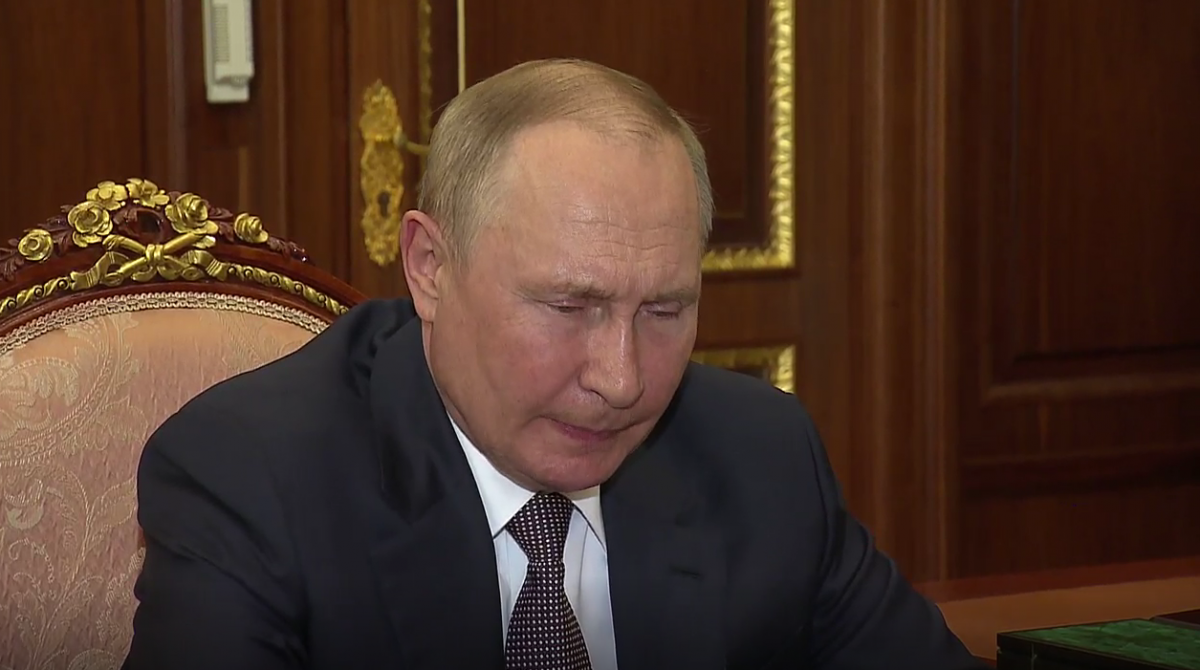
Утрата доверия между Генштабом РФ и президентом России Владимиром Путиным может вызвать взрыв.

Об этом в эфире телеканала “Эспрессо” сказал экс-командующий Сухопутных войск США на европейском континенте генерал-лейтенант Бен Ходжес.

По его словам, Путин назначил нового командующего, поскольку тот очень к нему лоялен.

“Суровикин – это новый командующий российских оккупационных войск и имеет репутацию брутального и коррумпированного. Или кто-то будет удивлен, что Кремль выберет коррумпированного преступника и убийцу на должность нового командующего? Это же было прогнозируемо. Тем более, что он еще и очень лоялен, а это сейчас является важнейшим качеством для назначения на должность, потому что Путин обеспокоен тем, что его генералы не поддерживают его так, как поддерживали раньше”, – пояснил Ходжес.

По словам эксперта, пока неважно кто станет в РФ новым командующим. Проблемы российской армии настолько глубокие и системные, что новый руководитель не сможет исправить это за несколько недель или месяцев.

“Коррупция, отсутствие координации между воздушными силами, сухопутными войсками и флотом, провалена логистическая система. Все это такой ужас, что неважно, кто бы ни стал командующим, он не сможет этого преодолеть. Какое отличие нового командующего? Думаю он продолжит тот или иной тип брутальной тактики и чем скорее они терпят поражение, тем лучше”, – подытожил Ходжес.

Война в Украине

Войска РФ рано утром 24 февраля вторглись в Украину без объявления войны. Там назвали полномасштабную агрессию “спецоперацией”, направленной, в частности, на “денацификацию”и “демилитаризацию” Украины.

21 сентября президент РФ Владимир Путин объявил о начале частичной мобилизации в стране. По словам российского руководства, привлекать к войне против Украины будут до 300 тысяч человек.

23-27 сентября российские оккупанты провели на захваченных частях четырех областей Украины псевдореферендумы. В Херсонской и Запорожской – о выходе из состава Украины и присоединение к России в Донецкой и Луганской – о присоединении к России. 30 сентября президент России Владимир Путин объявил об аннексии частей четырех областей Украины.

По состоянию на 16 октября общие потери живой силы России в Украине с начала полномасштабного вторжения достигли отметки в 65 тысяч человек.

Вас также могут заинтересовать новости:

Categories
Saved Web Pages

Между Путиным и российской армией углубляется раскол – эксперт

1000_545_1659969387-9334.png?1

Оппозиционер отметил, Путин заставил воевать Генштаб РФ и армию, а теперь пытается их сделать ответственными за поражения на фронте.

Генералы с самого начала были против войны Путина / скриншот видеоГенералы с самого начала были против войны Путина / скриншот видео
В войне России против Украины произошел слом, однако на падение фашистского режима в РФ освобождение Херсона не повлияет.

Российский оппозиционер и журналист Игорь Яковенко считает, что между путинским режимом и генералами углубляется трещина. В эфире “Эспрессо” он подчеркнул, что консолидация между ними временная.

“Достаточно большие ресурсы есть для выживания РФ. Мы не знаем, после какой очередной победы украинской армии российский режим начнет рушиться. Но трещины уже пошли, и это очевидно. Трещина между Путиным и российской армией углубляется. Это заметно, потому что генералы с самого начала были против этой войны”, – пояснил Яковенко.

Оппозиционер отметил, Путин заставил воевать Генштаб РФ и армию, а теперь пытается их сделать ответственными за поражения на фронте.

“Удар, который нанесли Пригожин и Кадыров, принеся голову генерала Лапина Путину на блюде, был направлен против начальника Генштаба Герасимова, который уже явно в немилости и станет, возможно, следующей жертвой. Генералы не имеют желания быть овцами на заклании. Они в определенный момент, когда уже наступит полное недовольство Путиным, скажут свое слово”, – подытожил Яковенко.

Российские генералы и война в Украине

Ранее разведка Британии сообщила о потерях среди российских генералов в Украине. Как минимум 10 генералов ликвидированы на войне и уже никогда не вернутся в строй. А шесть были отстранены от исполнения своих должностных обязанностей.

Экс-командующий Сухопутных войск США на Европейском континенте генерал-лейтенант Бен Ходжес считает, что генералы Путина больше ему не доверяют.

По мнению экспертов, Путин развернул кампанию, очерняющую генералов, поскольку именно их хочет сделать виновными в проигрыше в войне.

Вас также могут заинтересовать новости:

Categories
Saved Web Pages

Ukraine war live | World news


Page 2

Categories
Saved Web Pages

Zachary Quinto: ‘There’s a tremendous fear around openly gay men in our industry’

newFile-2.jpg?quality=75&width=1200&auto

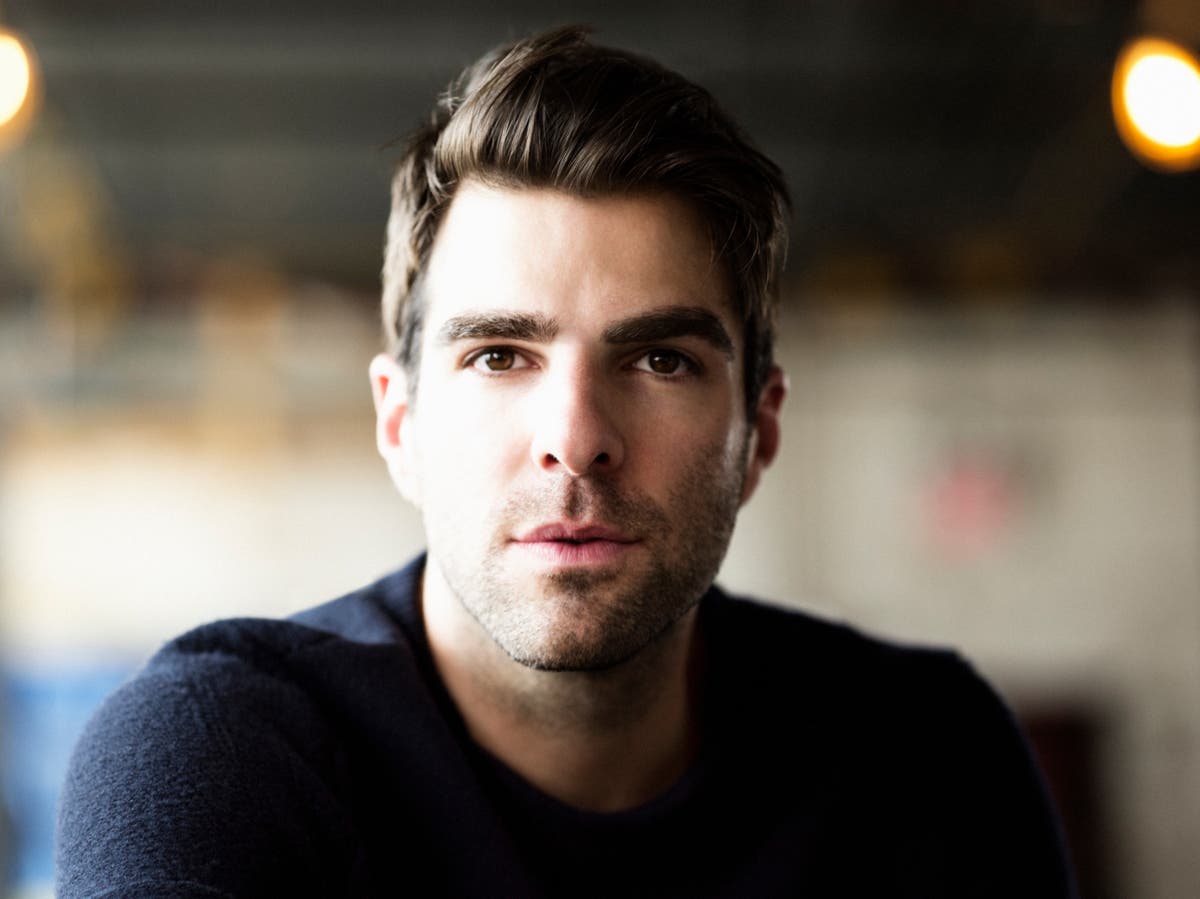
I hear Zachary Quinto before I see him. The voice of the actor who played Mr Spock in the rebooted Star Trek films comes thundering through the closed door of the central London rehearsal building – a repurposed church – as I sit outside waiting. He’s rehearsing the climactic scene from the play Best of Enemies, a restaging of the infamous Sixties TV confrontation between novelist and essayist Gore Vidal (Quinto) and right-wing TV host William F Buckley. “The play moves at a tremendous clip,” Quinto tells me shortly after. “It feels like you’re sitting on top of a locomotive, and you have no choice but to stay there.” Judging by the combustible force I overheard, it certainly sounds that way.

The rehearsal breaks for lunch, and I am allowed in; Quinto follows me up a steep flight of steps to a small platform at the top of the building. He may have sounded ready for the Noël Coward Theatre, but the vibe is still very much “come as you are”: a pair of overalls and a beanie hat. The 45-year-old Quinto joined the production after its Broadway run, replacing Charles Edwards. Buckley, meanwhile, is played as before by David Harewood, in an intriguing piece of race-blind casting. Speaking to The Independent last year, Harewood described Best of Enemies as “tough”, noting that it included “an enormous amount of lines”. It’s certainly chewy material, a change of step from the genre work for which Quinto is best known – Heroes; American Horror Story; the Star Trekreboot. Written by James Graham, the play fictionalises the real-life 1968 ATV debates between Vidal and Buckley – a vitriolic sparring session which culminated in Vidal calling his opponent a “crypto-Nazi”, and Buckley threatening violence and calling Vidal – who identified as bisexual – a “queer”.

The debate was, says Quinto, a portentous moment not just for the tenor of TV newscasting, but for the entire American political discourse.  “It was a revolutionary act in terms of the format of the news,” Quinto explains. “Consider what debate used to be, a generation or two ago: two people with different beliefs would have an opportunity to express their point of view in turn. Then look at where the last 55 years has taken us.”

He continues: “It’s just continued to deteriorate, to the point where now, debate has largely just become about people screaming at one another and saying, ‘I’m right; you’re wrong. Not only do I disagree with you, I hate you for your beliefs.’ I think television is the variable in that equation. It changed – and in many ways denigrated – the integrity of debate.”

We hear people clattering a few floors below us; Quinto scuttles his chair to the ledge and stares down at them. It falls quiet again; he scuttles back. “The liberal-conservative divide has completely taken over our political system in the United States, to a degree that I’m not sure we’ll ever be able to repair,” he says. “It’s the inciting of violence, the absolute intolerance for the other side’s position. And I think it will be the ultimate demise of our democratic system. Democracy was not created to survive this level of disrespect.”

Perhaps this kind of rumination is inevitable for a man descended from noteworthy Pennsylvania politicians. Quinto’s great-grandfather was union leader PJ McArdle, whose name would later adorn a prominent city roadway. His grandfather, Joseph A McArdle, once served as a congressman. But Quinto’s attitude to politics has curdled to disillusionment. “In recent years, I’ve become less inclined to get involved in politics because I do feel so discouraged by the landscape of it,” he says. “I’m not so interested in trying to change people whose minds are unchangeable.”

It’s no shock that as one of Hollywood’s most visible gay actors, Quinto identifies with Vidal’s liberal point of view – a radically progressive one back in 1968. Quinto describes the Myra Breckinridge author as a “hero” of his, explaining: “Gore wasn’t just an intellectual titan…  as a gay man, he was incredibly unapologetic about his point of view, and unafraid to unambiguously express those points of view at a time when they were absolutely radical.”

Debate class: David Harewood (left) and Quinto rehearse ‘Best of Enemies’

When Quinto came out back in 2011, following the suicide of gay teenager Jamey Rodemeyer, he framed the decision as a moral and political one, writing on his blog that “living a gay life without publicly acknowledging it” was “simply not enough to make any significant contribution to the immense work that lies ahead”. A little over a decade later, some things have changed, Quinto suggests; there has been an “incredible explosion of visibility” for LGBT+ representation in media, “particularly in the trans community”. But other things have not changed at all. “There’s still a tremendous amount of fear around particularly openly gay men in our industry,” he says. “There is this long-held and stubborn belief that to identify as an openly gay man on some level means you’re inherently less masculine, inherently less believable as a straight character. There are still actors who believe their careers are better served by not acknowledging their authentic selves. That’s their prerogative, but I think we’re part of a movement that is unstoppable.”

An assistant arrives, sandwich in hand. “What’s a… ‘ploughman’s’?” Quinto asks, with a faint sense of bemusement. Say what you will about British cuisine, but it could be worse: back on Heroes, the writers initially intended Quinto’s character – the superpowered serial killer Sylar – to eat his victims’ brains after bisecting their heads with a swipe of his finger. For the rest of our conversation, Quinto takes small, patient bites between each answer, pausing to methodically pick crumbs from his lap.

Heroes was Quinto’s mainstream breakthrough. While the series never really recovered from the turbulence of the 2007-2008 Writers Guild of America strike during its second season, it was, for a while, must-watch entertainment. It was also prescient: within a few years of its premiere, superhero fiction had metastasised into a full-blown global obsession. “Heroes was the last of a generation of huge American network shows that had an international impact,” Quinto muses. “Now we’re so used to streaming shows… I think Heroes was the last of its kind in some ways.”

Ali Larter (Nicky) and Quinto (Sylar) in ‘Heroes’

The immediate success of Heroes likely played a role in securing Quinto his first film role, taking over the mantle of Leonard Nimoy’s Spock in the 2009 Star Trek reboot. Between Spock and Sylar, Quinto has proved himself expert at inhabiting a certain type of man: intelligent, emotionally closed off, with a ruthless, robotic air. “There’s obviously something about me that lends itself to that kind of a role,” he says. “I think I have an ability sometimes to hold my experience in a way that’s internal. And I don’t necessarily always feel the need to give things away.”

I’ve learnt to only get excited about things I know are actually real. And there’s nothing about a fourth Star Trek movie that feels real right now

It’s clear from how he speaks about Vidal that Quinto does his homework when it comes to roles, but he’s no method actor. “I think method acting was born out of necessity, at a time when we were not as psychologically evolved as we are now,” he says. “That whole movement was necessary to evolve the craft, and it did wonders. But everybody has their own way of getting there. All that matters is that in the end there’s integrity in the work and it has the desired effect on an audience. I don’t think audiences are particularly interested in how actors arrive at a performance.”

Quinto reprised the role of Spock for two Trek sequels; reports of prospective fourth entries have circulated for years, including an R-rated pitch by Quentin Tarantino. “There were some whisperings that Quentin had an idea that he shared with [director JJ Abrams], but I don’t think it was ever really that tangible,” Quinto remarks. “At this point, I honestly have very little attachment to it. All of us would like to come back and make another movie, but I’ve learnt to only get excited about things I know are actually real. And there’s nothing about a fourth Star Trek movie that feels real right now.”

Nimoy no more: Quinto as Mr Spock in 2009’s ‘Star Trek’

In recent years, Quinto has increasingly shunned genre roles in favour of theatrical parts and indie projects like Steven Soderbergh’s High Flying Bird and Joe Mantello’s The Boys in the Band. Perhaps this is why his return to Ryan Murphy’s pulpy American Horror Story anthology felt like something of a surprise earlier this year, nearly a decade after his last appearance. (The fact it was filmed in New York City, where Quinto lives, was a compelling incentive.) Quinto previously won an Emmy playing the murderous Dr Thredsom in 2011’s Asylum series; in this year’s season, subtitled NYC, he played another sinister villain.

Murphy has meanwhile been embroiled in an ethics row over his latest series, Dahmer: Monster – The Jeffrey Dahmer Story, with the relatives of some of Dahmer’s victims condemning the series as “exploitative”. “I think Ryan is certainly a provocateur,” Quinto says. “It’s what makes him so successful. He’s unafraid to put things out into the world and when you do that as uncompromisingly as Ryan, you’re going to have different points of view and different reactions to things.”

Our time is more or less up; the ploughman’s sandwich is eaten. I ask how he’s been finding England. He’s been here less than two weeks, each day of which has seen headlines dominated by changing prime ministers and national upheaval.

“It doesn’t feel entirely unfamiliar for me to be in a place that’s experiencing political turmoil,” Quinto laughs. “But I still think you have the capacity to communicate political beliefs with a little bit more restraint and respect than we do across the pond.” You don’t need to see Best of Enemies to know this is faint praise indeed.

‘Best of Enemies’, previewing at the Noël Coward Theatre from Monday (14 November), will open on 28 November until 18 February 2023

WP Radio
WP Radio
OFFLINE LIVE