Categories
Saved Web Pages

Opinion | Why Trump Could Win Again

merlin_212531319_648c4daf-4c83-4ec9-8f7d

Nov. 15, 2022, 5:00 a.m. ET

Credit…Mark Peterson/Redux for The New York Times

  • Send any friend a story

    As a subscriber, you have 10 gift articles to give each month. Anyone can read what you share.

    Give this articleGive this articleGive this article

By Kevin D. Williamson

Mr. Williamson is the national correspondent for The Dispatch.

Because American politics has been so dominated by an entertainer, the most inevitable thing in the world is a sequel.

Donald Trump is expected to announce his inevitable 2024 presidential campaign on Tuesday in Florida. He is not as weak a candidate as many people might expect — or hope — him to be. I believe he is most likely to be the 2024 Republican nominee for president, and since we have only two major political parties, he could win in the general election — and that would be bad for the country.

Unless and until somebody else comes into the arena and proves otherwise, and despite disappointing Republican midterm election results that many people blamed Mr. Trump for, he remains the leader of the Republican Party. His style of personalized politics is incompatible with coalitional politics of any kind, and his agenda for personal rule in a second term is shaping up to be a nightmare.

He sets out in this pole position because the G.O.P. is a mess. What the midterms exposed again is that the party as it is currently configured doesn’t make any political sense and is a losing electoral proposition.

But that is not necessarily a problem for Mr. Trump. In fact, a Republican Party that is in disarray and divided by bitter recriminations and factional rivalries is the perfect environment for him. After all, bitterness and recriminations are his main instruments, and it is when Republicans are at their lowest political ebb — when they are feeling the most vulnerable, victimized and marginalized — that Mr. Trump is at his political best.

Many of the Reaganites, Republican Party bosses and conservative intellectuals who had dominated the G.O.P. believe that they need die-hard Trump supporters — that they cannot win elections without them. But Trumpism’s political record is not especially impressive.

Mr. Trump himself is one of only 10 presidents who sought a second term and failed to win it, joining the ranks of William Howard Taft, Martin Van Buren and George H.W. Bush. Mr. Trump’s descent was far worse than Taft’s in that he took his party down with him, losing the presidency, the House and the Senate all in a four-year period, a performance reminiscent of the Republicans’ wipeout under Herbert Hoover in the Great Depression.

In the midterms, the man considered Mr. Trump’s most formidable competition for the Republican 2024 nomination — Gov. Ron DeSantis of Florida — won a smashing victory, defeating his Democratic opponent by almost 20 points. So in normal times, a normal political party would walk sideways away from the losers and, looking ahead, get behind the big winner. But these are not normal times, and the Republicans are not a normal political party.

It will not be easy to dislodge Mr. Trump. His bond with his supporters is personal — it is based on the promise of humiliating the right’s cultural enemies, not on policy, and it is not limited by transitory events like a disappointing midterm showing.

In the Trump cult’s theology, Mr. Trump is a god with a dual nature: He is simultaneously the macho, swaggering hero and the eternal victim at the mercy of the same powerful forces — “elites” — that his followers believe themselves to be victimized by. Hence the insistent refrain: “When you say Trump is evil and foolish, you are saying that we who voted for him are evil and foolish.” That doesn’t follow logically, but this line of thinking is about divine transubstantiation, not politics. Mr. Trump’s proposition to his followers is straight from the Bible he has probably never read: “If the world hates you, keep in mind that it hated me first.”

That isn’t thinking for a political campaign — it is thinking for a personality cult. Yet the electoral fiascos of 2018, 2020 and 2022 raise the question of whether keeping the cult satisfied is worth it. A great deal of the psychological energy behind Stop the Steal is directed at changing the subject from the fact that the 2020 coalition was, after all, a losing partnership. It did not perform any better in 2022.

Still, if Mr. Trump jumps into the G.O.P. primary early, he must be considered the presumptive Republican front-runner. His competition may include Mr. DeSantis, who last week actually did win an election — in a blowout, no less — and is surely thinking about the best way to kneecap Mr. Trump. No doubt Mr. DeSantis is thinking about the 2016 example of his fellow Floridian Senator Marco Rubio, who went all in on a rhetorical assault on Mr. Trump in the Republican primary and succeeded only in sidelining himself, a classic case of trying to kill the king and failing.

If Mr. Trump’s politics are fundamentally personal, you can be sure his governing agenda for his second term would be, too. It was laziness and ignorance, not good advice, that kept him from doing as much damage as he might have during his presidency. But his lieutenants have learned from those chaotic years, and they have a plan for staffing not only his administration but also much of the federal civil service with political loyalists under Schedule F, a new federal employee classification Mr. Trump created in 2020 by means of an executive order, since rescinded by President Biden.

Schedule F essentially would have converted many thousands of civil service positions into political appointments, a project that Mr. Trump plans to renew, thereby “making every executive branch employee fireable by the president of the United States,” as Mr. Trump put it. This would be a modern spin on “personal rule” as practiced by absolute monarchs such as King Charles I — an ironic vision for a party that still calls itself Republican.

The G.O.P. was wrong to think that Mr. Trump would be useful as a cat’s paw in 2016, and his serial failures on both the policy and political fronts should have been enough to demonstrate as much. Republicans do not learn quickly or easily, but they do learn.

Republicans who still believe that Mr. Trump will be the instrument of their political salvation in 2024 — or who are cynically willing to go along for the same reason — are much more likely to find him the instrument of their political destruction. And perhaps it is time for these dinosaurs to meet their asteroid. The loss of the current Republican Party — deformed, depraved, backward and, in the end, fundamentally anti-American — would benefit the country.

Conservatives have always understood their attachment to the Republican Party to be a marriage of convenience — and now the most convenient thing for conservatives would be a divorce.

Kevin D. Williamson is the national correspondent for The Dispatch and a writer in residence at the Competitive Enterprise Institute.

Categories
Saved Web Pages

Iran and China Use Private Detectives to Spy on Dissidents in America

00private-investigators-facebookJumbo.jp

The U.S. investigators are hired under false pretenses by authoritarian governments to do their “dirty work,” the F.B.I. says.

  • Send any friend a story

    As a subscriber, you have 10 gift articles to give each month. Anyone can read what you share.

    Give this articleGive this articleGive this article
A man in a tweed driving cap sits behind a car steering wheel.

Michael McKeever, a private investigator, was unwittingly hired to watch an Iranian dissident. F.B.I. agents were watching, too.Credit…Todd Heisler/The New York Times

Published Nov. 13, 2022Updated Nov. 14, 2022

The job that came in through Michael McKeever’s website was unremarkable, the kind of request he often received in his decades working as a private investigator in New York.

An international client wanted his help tracking down a debtor who had fled from Dubai and was believed to be in Brooklyn. Mr. McKeever was to surveil a house and photograph the people coming and going. “Kindly be discreet as they are on the lookout,” he was told.

Mr. McKeever and an associate began taking turns conducting the surveillance, but they failed to notice another team watching the same address. They were F.B.I. agents, and one soon got in touch with a warning.

“Your client is not who you think they are,” the agent said, according to Mr. McKeever. “These are bad people, and they’re up to no good.”

Mr. McKeever, 71, would later learn that he had been used by Iranian intelligence agents in a suspected plot to kidnap Masih Alinejad, a prominent Iranian-American journalist who has been unsparing in her criticism of Iran’s human rights abuses, discrimination against women and imprisonment and torture of political opponents.

“We were afraid they were going to look to snatch and grab her, bring her home and probably kill her,” said James E. Dennehy, the former head of the F.B.I.’s counterintelligence and cyber division in New York, who now runs the bureau’s Newark office.

Across America, investigators are increasingly being hired by a new kind of client — authoritarian governments like Iran and China attempting to surveil, harass, threaten and even repatriate dissidents living lawfully in the United States, law enforcement officials said.

Federal indictments and complaints in the past two years detail cases in which private investigators were drawn into such schemes in New York, California and Indiana, and F.B.I. officials say they believe others have been as well. Most appear to have been used unwittingly, and later cooperated with the authorities; a few, however, were charged.

Bruce Hoffman, a terrorism scholar at the Council on Foreign Relations, said a government can hire an investigator in a routine transaction to learn detailed information about a person’s residence, cellphones, Social Security number, work address — and feed that knowledge to a state security apparatus.

“It strikes me as low-cost, low-risk state-sponsored terrorism in the 21st century,” Mr. Hoffman said.

The tactic comes amid a broad wave of repression, officials said, which has included the poisonings of opponents of President Vladimir V. Putin of Russia in Britain and elsewhere; Saudi Arabia’s involvement in luring Jamal Khashoggi, a prominent critic, to its Istanbul consulate where he was brutally killed and dismembered in 2018; and Turkey’s pursuit of perceived enemies in at least 31 countries, according to a 2021 report by Freedom House, which promotes democracy globally.

In the case involving Ms. Alinejad, Manhattan federal prosecutors filed kidnapping conspiracy charges in July 2021 against an Iranian intelligence official and three associates, all in Iran. None are likely to be apprehended if they remain there, but officials said the goal, beyond protecting potential victims, was to expose and deter plots devised at the highest levels of a foreign government.

For most private eyes, daily work is far from the glamorized depictions in film and literature, with jobs originating with law firms, insurance companies and aggrieved spouses. Today, many assignments come via the internet, with no face-to-face contact.

“If you’ve got somebody on the other side — an intelligence professional who can lie and create smoke and mirrors — sometimes it’s hard to vet those clients correctly,” said Wes Bearden, a Dallas-based private investigator and an officer of the World Association of Detectives, which has about 1,000 members.

Many private investigators, some with backgrounds in law enforcement, are decidedly old school. Mr. McKeever’s website bears the motto “Delivering the truth … with honesty and proof,” and lists offerings like employment background checks and “Infidelity & Matrimonial Investigation.”

That sort of street-level legwork can also provide the basis of an intelligence operation, one that foreign governments can conduct cheaply at a safe remove.

“That’s their proxy that they use here on the ground in a very natural way to do a lot of their dirty work,” the F.B.I.’s Mr. Dennehy said.

Masih Alinejad, as a journalist in Iran, had frequently exposed malfeasance and corruption, and was threatened with arrest or worse.Credit…Cole Wilson for The New York Times

In Ms. Alinejad’s case, he said, the Iranians wanted to know her emotions, her state of mind — even her body language. Was she frantically looking over her shoulder or did she seem carefree?

Mr. McKeever said that after being told of Iran’s role, he secretly cooperated with the bureau, providing access to his email account. F.B.I. officials confirmed his cooperation. Mr. McKeever has not been accused of any wrongdoing, and he continues to operate his firm.

As private investigators fall victim to the sorts of schemes they usually unearth, the F.B.I. says it has been contacting professional groups to warn them.

“The more we can draw attention to it, the more we hope private investigators and others will learn to spot these red flags,” said Roman Rozhavsky, an F.B.I. counterintelligence official in New York.

Not every private eye has avoided legal trouble. Michael McMahon, a 55-year-old retired New York Police Department sergeant who built a second career as a private investigator, was arrested in 2020. He faces charges of acting as an illegal agent for the Chinese government, stalking and two conspiracy counts. Prosecutors say he was part of an effort to coerce a Chinese citizen living in New Jersey, identified only as John Doe-1, to return to that country.

Mr. McMahon said that he was stunned and that he had no knowledge he was working for China.

“When I read the complaint against me,” he said in an email, “I became sick to my stomach. As my background shows, I committed my life to upholding the law and never have — and never would — commit a crime.”

Michael McMahon, a private investigator accused of working for China, said he would never commit a crime and had no idea his employer was a hostile foreign government.Credit…Todd Heisler/The New York Times

Mr. McMahon said in an interview that in 2016, he took a job from a woman who found him through his website. He said he was led to believe she was calling for a client from China who was seeking a person in New Jersey who had stolen money from a Chinese construction company.

“We need to locate that person — is that something you do?” he recalled her asking.

“‘I said, ‘Yeah, that’s what I do.’”

Mr. McMahon said the woman claimed to own a translation company and paid him with a check in the firm’s name. He said he conducted surveillance on five occasions in New Jersey in 2016 and 2017, each time notifying local police departments that he was parked outside a residence. That, Mr. McMahon said, was evidence that he had nothing to hide. He said he hired two other investigators, both retired New York police detectives, to help.

Mr. McMahon said he was awakened early one morning in October 2020 by his dog barking and someone banging on the door of his Bergen County, N.J., house. About a dozen F.B.I. agents and police officers had come to arrest him.

Justice Department officials said Mr. McMahon and a group of other defendants, some in China, were part of an aggressive Chinese government campaign called Operation Fox Hunt. Brooklyn federal prosecutors have said Mr. McMahon was integral to the scheme.

“After multiple months of investigative work by the defendant Michael McMahon,” the indictment says, “the co-conspirators planned a specific rendition operation to stalk and repatriate John Doe-1 through psychological coercion.”

Prosecutors have said Mr. McMahon knew John Doe-1 was being sought by the Chinese government: While conducting surveillance, he emailed himself a link to an English-language Chinese newspaper page listing the man among 100 fugitives wanted in an anti-graft campaign.

They have also said that Mr. McMahon, in a conversation with a co-defendant, a Chinese citizen who had lived in Queens, proposed they harass John Doe-1 by parking outside his house to “let him know we are there.”

Mr. McMahon’s lawyer, Lawrence S. Lustberg, said that investigators are often hired by private firms to locate people who are simultaneously sought by the authorities, and that his client’s harassment comment was just a suggestion that they engage in more overt surveillance — which he said never occurred.

“I have not seen one piece of evidence — not one — that Mike had any idea that he was in any way working for the Chinese government,” Mr. Lustberg said.

The U.S. attorney’s office in Brooklyn declined to comment.

Mr. Lustberg noted that his client also was not given an opportunity to cooperate with investigators.

“There never comes a time before his arrest,” Mr. Lustberg said, “where the federal government goes to him and says, ‘Hey, do you realize what’s going on here? You are being played by the Chinese government.’”

Iran, a theocracy facing a cresting wave of protest at home, has also been eyeing its critics abroad for years and has taken advantage of American detectives. In July 2020, Mr. McKeever received the email asking that he watch the Brooklyn home that turned out to be Ms. Alinejad’s residence.

“I am contacting you on behalf of a client looking [for] a missing person from Dubai, U.A.E., who has fled to avoid debt repayment,” wrote the sender, Kiya Sadeghi, according to the indictment.

Ms. Alinejad, as a journalist in Iran, had frequently exposed malfeasance and corruption, and was threatened with arrest or worse for writing articles critical of former President Mahmoud Ahmadinejad. Her press pass was revoked and she was forced to flee in 2009. From Brooklyn, she has remained a high-profile presence in the news media. In July, a man was arrested with a loaded AK-47-style assault rifle outside her home.

Mr. McKeever said he knew nothing about Ms. Alinejad. Mr. Sadeghi’s email said his services were needed for surveillance on a “potential address” for the missing person, according to the indictment.

“Will need high quality pictures/video of persons living in the address and cars they drive,” one email said. The client wanted “photos of faces and cars” and their license plate numbers and, “if possible picture of envelopes in mailbox,” Mr. Sadeghi wrote in another message.

To Mr. McKeever, the assignment seemed straightforward: “I thought it might be a one-day job.”

The indictment identifies Mr. Sadeghi as an Iranian intelligence agent who researched and hired investigators in the United States, Canada and Britain to procure surveillance services for Iranian intelligence.

On July 22, 2020, Mr. McKeever emailed Mr. Sadeghi to report that surveillance had begun, and attached a photograph of the home.

In August and September, he was asked for additional days of work, including pictures and video. The client also wanted “pictures of faces of everyone visiting the address, even if they are marketers and salespeople,” one email said.

“Pictures of everything and everyone,” Mr. Sadeghi wrote in another message. “Client wants lots of content even if you may think it is not of value.”

In October 2020, Mr. McKeever received the call from the F.B.I. He agreed to cooperate.

“I was like, hey, whatever you need, I’m good,” Mr. McKeever said.

Mr. McKeever said he continued to communicate with Mr. Sadeghi with full knowledge of the F.B.I., and conducted additional surveillance in early 2021. At one point, Mr. Sadeghi asked whether it was possible to park in front of the house in a car outfitted with a camera to provide a live video feed. In all, Mr. McKeever was paid just under $6,000 for his services, the indictment says.

Looking back, he does not believe he ignored obvious red flags in the repeated requests from Mr. Sadeghi. But he acknowledged that he missed clues that might have raised suspicions, like the questions he had posed to Mr. Sadeghi that never generated satisfactory answers.

For example, he said he asked for the name of the supposed debtor, so he could determine whether a person by that name lived at the Brooklyn address. He was never told. He now believes the Iranians were trying to thwart any checking he might have done on his own.

“One of the things I could have done is run a trace on that house and said, ‘Who lives here?’” Mr. McKeever recalled. “And I could have Googled that woman’s name.” If he had learned her name, he said, his reaction would have been, “‘Whoa, wait a second.’”

Ms. Alinejad, in an interview, said she was furious when she learned of the extent of the surveillance.

“Miles away from my homeland,” Ms. Alinejad said, “I’m being watched and monitored by someone who has been hired by the Iranian regime.”

According to the indictment, the plotters had researched routes from Ms. Alinejad’s home to the Brooklyn waterfront, and methods of taking her by boat to Venezuela and on to Iran.

“No question in my mind that they could have done it,” Mr. McKeever said, adding, “I’m glad that it didn’t work out.”

Over his many years as a private eye, Mr. McKeever said, he always tried to be vigilant in scrutinizing the jobs he took. He did not believe he was naïve, but he knew clients could lie. If there was a lesson for private investigators, he said, it was to be careful not to be used.

“I was used,” he said.

Categories
Saved Web Pages

For Western Weapons, the Ukraine War Is a Beta Test

00ukraine-testweapons-1-facebookJumbo.jp

Though the battle for Ukraine remains largely a grinding artillery war, new advances in technology and training there are being closely monitored for the ways they are starting to shape combat.

  • Send any friend a story

    As a subscriber, you have 10 gift articles to give each month. Anyone can read what you share.

    Give this articleGive this articleGive this article
Soldiers with Ukraine’s Carpathian Sich Battalion reviewing drone footage below the front line in May.

Soldiers with Ukraine’s Carpathian Sich Battalion reviewing drone footage below the front line in May.Credit…Lynsey Addario for The New York Times

Lara Jakes
Nov. 15, 2022Updated 6:10 a.m. ET

Three months ago, as Ukrainian troops were struggling to advance against Russian forces in the south, the military’s headquarters in Kyiv quietly deployed a valuable new weapon to the battlefield.

It was not a rocket launcher, cannon or another kind of heavy arms from Western allies. Instead, it was a real-time information system known as Delta — an online network that military troops, civilian officials and even vetted bystanders could use to track and share desperately needed details about Russian forces.

The software, developed in coordination with NATO, had barely been tested in battle.

But as they moved across the Kherson region in a major counteroffensive, Ukraine’s forces employed Delta, as well as powerful weaponry supplied by the West, to push the Russians out of towns and villages they had occupied for months.

The big payoff came on Friday with the retreat of Russian forces from Kherson City — a major prize in the nearly nine-month war.

Delta is one example of how Ukraine has become a testing ground for state-of-the-art weapons and information systems, and new ways to use them, that Western political officials and military commanders predict could shape warfare for generations to come.

The battle for Ukraine, to be sure, remains largely a grinding war of attrition, with relentless artillery attacks and other World War II-era tactics. Both sides primarily rely on Soviet-era weapons, and Ukraine has reported running low on ammunition for them.

But even as the traditional warfare is underway, new advances in technology and training in Ukraine are being closely monitored for the ways they are changing the face of the fight. Beyond Delta, they include remote-controlled boats, anti-drone weapons known as SkyWipers and an updated version of an air-defense system built in Germany that the German military itself has yet to use.

“Ukraine is the best test ground, as we have the opportunity to test all hypotheses in battle and introduce revolutionary change in military tech and modern warfare,” said Mykhailo Fedorov, Ukraine’s vice prime minister and minister of digital transformation.

He was speaking in October at a NATO conference in Norfolk, Va., where he publicly discussed Delta for the first time.

He also emphasized the growing reliance on the remote-controlled aircraft and boats that officials and military experts said have become weapons of choice like those in no previous war.

“In the last two weeks, we have been convinced once again the wars of the future will be about maximum drones and minimal humans,” Mr. Federov said.

A Ukrainian drone operator changing batteries while hunting for Russian positions to target with artillery during a battle on the frontline near the Russian-occupied city of Donetsk in October.Credit…Finbarr O’Reilly for The New York Times

Since last summer, Ukraine and its allies have been testing remote-controlled boats packed with explosives in the Black Sea, culminating in a bold attack in October against Russia’s fleet off the coast of Sevastopol.

Military officials largely have declined to discuss the attack or provide details about the boats, but both the United States and Germany have supplied Ukraine with similar ships this year. Shaurav Gairola, a naval weapons analyst for Janes, a defense intelligence firm, said the Black Sea strike showed a sophisticated level of planning, given the apparent success of the small and relatively inexpensive boats against Russia’s mightier war ships.

The attack “has pushed the conflict envelope,” Mr. Gairola said. He said it “imposes a paradigm shift in naval war doctrines and symbolizes an expression of futuristic warfare tactics.”

The use of remote-controlled boats could become particularly important, military experts said, showing how warfare at sea might play out as the United States and its allies brace for potential future naval aggressions by China in the East and South China Seas, and against Taiwan.

Inevitably, the Russians’ increased use of drones has spurred Ukraine’s allies to send new technology to stop them.

Late last year, Ukraine’s military began using the newly developed drone-jamming guns known as SkyWipers to thwart Russian separatists in the eastern Donbas region. The SkyWipers, which can divert or disrupt drones by blocking their communication signals, were developed in Lithuania and had been on the market for only two years before they were given to Ukraine through a NATO security assistance program.

Nearly nine months into the war, the SkyWipers are now only one kind of drone jammer being used in Ukraine. But they have been singled out as a highly coveted battlefield asset — both for Ukrainian troops and enemy forces that hope to capture them.

Ukrainian service members holding anti-drone guns during a training exercise in the Mykolaiv region in August.Credit…Anna Kudriavtseva/Reuters

It is not known how many SkyWipers have been sent to Ukraine, although Lithuania reportedly sent several dozen in October 2021. In a statement to The New York Times, Lithuania’s defense ministry said it sent 50 SkyWipers in August after Ukrainian officials called it “one of the top priorities.”

Dalia Grybauskaite, who was Lithuania’s president when the SkyWipers were being designed, said her country’s defense industry made a calculated turn toward producing high-tech equipment during her time in office, from 2009 to 2019, to update a stockpile of weapons that “were mainly Kalashnikovs” and other Soviet-era arms.

“We’re learning in Ukraine how to fight, and we’re learning how to use our NATO equipment,” Ms. Grybauskaite said in an interview last week. “And, yes, it is a teaching battleground.”

She paused, then added: “It is shameful for me because Ukrainians are paying with their lives for these exercises for us.”

The Western lethal aid that is being sent to Ukraine consists, for the most part, of recently updated versions of older weapons. That was the case with the German-made infrared, medium-range homing missiles and launchers known as IRIS-T, which protect against Russian rocket attacks.

They have a longer range than the previous generation of air-defense systems that debuted in 2015. Germany’s own military has not yet used the updated version of the systems, which were shipped to Ukraine last month. Additional missiles were delivered last week.

Rafael Loss, a weapons expert at the European Council on Foreign Relations, said that by themselves the upgraded air defenses do not “represent a game-changer.” But he said their use in Ukraine showed how the government in Kyiv had evolved beyond Soviet-era warfare and brought it more in line with NATO.

Senior NATO and Ukrainian officials said the Delta network was a prime example.

More than an early alert system, Delta combines real-time maps and pictures of enemy assets, down to how many soldiers are on the move and what kinds of weapons they are carrying, officials said.

That is combined with intelligence — including from surveillance satellites, drones and other government sources — to decide where and how Ukrainian troops should attack.

The IRIS-T air-defense system displayed at an exhibition in Berlin in June.Credit…Fabrizio Bensch/Reuters

Ukraine and Western powers determined they needed the system after Russia instigated a separatist-backed war in Ukraine’s east in 2014. It was developed by Ukraine’s Defense Ministry with NATO assistance and first tested in 2017, in part to wean troops off Russian standards of siloing information among ground units instead of sharing it.

It has been included in training exercises between Ukraine’s military and other NATO planners in the years since.

Information sharing has long been a staple for American and other NATO forces. What NATO officials said was surprising about the Delta system was that the network was so broadly accessible to troops that it helped them make battlefield decisions even faster than some more modern militaries. In Kherson, Delta helped Ukrainian troops quickly identify Russian supply lines to attack, Inna Honchar, commander of the nongovernment group Aerorozvidka, which develops drones and other technology for Ukraine’s military, said in a statement on Sunday.

“Bridges were certainly key points,” Ms. Honchar added. “Warehouses and control points were damaged, and the provision of troops became critical” as Russians became increasingly isolated, she said.

Delta’s first real test had come in the weeks immediately after the February invasion as a Russian convoy stretching 40 miles long headed toward Kyiv. Ukrainian drones overhead tracked its advance, and troops assessed the best places to intercept it. Residents texted up-to-the-minute reports to the government with details that could have been seen only up close.

All the information was collected, analyzed and disseminated through Delta to help Ukraine’s military force a Russian retreat, Ukrainian officials said.

“That was the very first moment when Delta capabilities were realized at max,” the Ukrainian Defense Ministry said in a statement. It said Delta had since helped identify 1,500 confirmed Russian targets across the country on any given day — with “hundreds of them being eliminated” within 48 hours.

Destroyed Russian tanks on a main road after battles near Brovary, north of Kyiv, in March.Credit…Felipe Dana/Associated Press

The test runs in Ukraine are helping senior officials and defense planners in the United States and its allies decide how to invest military spending over the next two decades.

Even routine missions in Ukraine — like how to get fuel to missile-toting vehicles on the edge of enemy territory — have set off discussions in American commands over how to design equipment that is not dependent on supply lines.

And longer-term strategy about how to coordinate and communicate among allied troops, which officials now say was a challenge during the wars in Iraq and Afghanistan, is being developed as the battle against Russia continues to unfold.

Such strategic military reforms were being discussed before Ukraine was invaded, said Gen. Philippe Lavigne of France, who leads NATO’s Allied Command Transformation, but “our early observations of this war is that those assumptions are still valid.”

He said Ukraine had shown how future warfare was likely to be fast-paced and highly contested not just on the ground or in the skies, but also, most important, in cyberspace.

“This is the future operating environment,” General Lavigne said.

Categories
Saved Web Pages

Ukraine war: US and Russian spy chiefs meet face-to-face in Turkey

3953452dd2c6c4d3dcb0765a4d1f3b84

William Burns meets his Russian counterpart in Turkey following continued nuclear threats from Moscow.

Categories
Saved Web Pages

Readout of President Joe Biden’s Meeting with President Xi Jinping of the People’s Republic of China

wh_social-share.png

President Joseph R. Biden, Jr. met on November 14 with President Xi Jinping of the People’s Republic of China (PRC), in Bali, Indonesia. The two leaders spoke candidly about their respective priorities and intentions across a range of issues. President Biden explained that the United States will continue to compete vigorously with the PRC, including by investing in sources of strength at home and aligning efforts with allies and partners around the world. He reiterated that this competition should not veer into conflict and underscored that the United States and China must manage the competition responsibly and maintain open lines of communication. The two leaders discussed the importance of developing principles that would advance these goals and tasked their teams to discuss them further. 

President Biden underscored that the United States and China must work together to address transnational challenges – such as climate change, global macroeconomic stability including debt relief, health security, and global food security – because that is what the international community expects. The two leaders agreed to empower key senior officials to maintain communication and deepen constructive efforts on these and other issues. They welcomed ongoing efforts to address specific issues in U.S.-China bilateral relations, and encouraged further progress in these existing mechanisms, including through joint working groups. They also noted the importance of ties between the people of the United States and the PRC.

President Biden raised concerns about PRC practices in Xinjiang, Tibet, and Hong Kong, and human rights more broadly. On Taiwan, he laid out in detail that our one China policy has not changed, the United States opposes any unilateral changes to the status quo by either side, and the world has an interest in the maintenance of peace and stability in the Taiwan Strait. He raised U.S. objections to the PRC’s coercive and increasingly aggressive actions toward Taiwan, which undermine peace and stability across the Taiwan Strait and in the broader region, and jeopardize global prosperity. President Biden also raised ongoing concerns about China’s non-market economic practices, which harm American workers and families, and workers and families around the world. He again underscored that it is a priority for us to resolve the cases of American citizens who are wrongfully detained or subject to exit bans in China

The two leaders exchanged views on key regional and global challenges. President Biden raised Russia’s brutal war against Ukraine and Russia’s irresponsible threats of nuclear use. President Biden and President Xi reiterated their agreement that a nuclear war should never be fought and can never be won and underscored their opposition to the use or threat of use of nuclear weapons in Ukraine. President Biden also raised concerns about the DPRK’s provocative behavior, noted all members of the international community have an interest in encouraging the DPRK to act responsibly, and underscored the United States’ ironclad commitment to defending our Indo-Pacific Allies.

The two leaders agreed that Secretary of State Blinken will visit China to follow up on their discussions.

###

Categories
Saved Web Pages

6:17 AM 11/14/2022 – U.S. intelligence report says key gulf ally meddled in American politics The United Arab Emirates steered U.S. foreign policy in its favor through a series of legal and illegal exploits, according to an unprecedented U.S. intelligence document

ANbyha1_tD9X-RluqHbmOr3sUQ-WZ7HKDInLJUEn

U.S. intelligence officials have compiled a classified report detailing extensive efforts to manipulate the American political system by the United Arab Emirates, an influential, oil-rich nation in the Persian Gulf long considered a close and trusted partner.

The activities covered in the report, described to The Washington Post by three people who have read it, include illegal and legal attempts to steer U.S. foreign policy in ways favorable to the Arab autocracy. It reveals the UAE’s bid, spanning multiple U.S. administrations, to exploit the vulnerabilities in American governance, including its reliance on campaign contributions, susceptibility to powerful lobbying firms and lax enforcement of disclosure laws intended to guard against interference by foreign governments, these people said. Each spoke on the condition of anonymity to discuss classified information.

The document was compiled by the National Intelligence Council and briefed to top U.S. policymakers in recent weeks to guide their decision-making related to the Middle East and the UAE, which enjoys outsize influence in Washington. The report is remarkable in that it focuses on the influence operations of a friendly nation rather than an adversarial power such as Russia, China or Iran. It is also uncommon for a U.S. intelligence product to closely examine interactions involving U.S. officials given its mandate to focus on foreign threats.

“The U.S. intelligence community generally stays clear of anything that could be interpreted as studying American domestic politics,” said Bruce Riedel, a senior fellow at the Brookings Institution who served on the National Intelligence Council in the 1990s.

“Doing something like this on a friendly power is also unique. It’s a sign that the U.S. intelligence community is willing to take on new challenges,” he said.

Lauren Frost, a spokeswoman at the Office of the Director of National Intelligence, declined to comment when asked about the report.

The UAE’s ambassador to Washington, Yousef Al Otaiba, said he is “proud of the UAE’s influence and good standing in the U.S.”

“It has been hard earned and well deserved. It is the product of decades of close UAE-US cooperation and effective diplomacy. It reflects common interests and shared values,” he said in a statement.

The relationship is unique. Over the years, the United States has agreed to sell the UAE some of its most sophisticated and lethal military equipment, including MQ-9 aerial drones and advanced F-35 fighter jets, a privilege not bestowed on any other Arab country over concern about diminishing Israel’s qualitative military edge.

Some of the influence operations described in the report are known to national security professionals, but such activities have flourished due to Washington’s unwillingness to reform foreign-influence laws or provide additional resources to the Department of Justice. Other activities more closely resemble espionage, people familiar with the report said.

The UAE has spent more than $154 million on lobbyists since 2016, according to Justice Department records. It has spent hundreds of millions of dollars more on donations to American universities and think tanks, many that produce policy papers with findings favorable to UAE interests.

There is no prohibition in the United States on lobbyists donating money to political campaigns. One U.S. lawmaker who read the intelligence report told The Post that it illustrates how American democracy is being distorted by foreign money, saying it should serve as a wake-up call.

“A very clear red line needs to be established against the UAE playing in American politics,” said the lawmaker. “I’m not convinced we’ve ever raised this with the Emiratis at a high level.”

Both the Office of the Director of National Intelligence and the State Department declined to comment on whether they have addressed the issue with senior UAE counterparts.

The U.S. government’s muted public response follows President Biden’s impassioned pitch to midterm elections voters last week that American democracy is under threat from powerful interests and needs concerted safeguarding. “With democracy on the ballot, we have to remember these first principles: Democracy means the rule of the people — not the rule of monarchs or the moneyed, but the rule of the people,” Biden said during a speech in Washington.

The National Intelligence Council, or NIC, is the intelligence community’s premier analytic hub. Its products draw on information from the nation’s 18 intelligence agencies to speak with one voice on pressing national security issues.

People who shared information about the report declined to provide a copy of it. They said the activities attributed to the UAE in the report go well beyond mere influence peddling.

One of the more brazen exploits involved the hiring of three former U.S. intelligence and military officials to help the UAE surveil dissidents, politicians, journalists and U.S. companies. In public legal filings, U.S. prosecutors said the men helped the UAE break into computers in the United States and other countries. Last year, all three admitted in court to providing sophisticated hacking technology to the UAE, agreeing to surrender their security clearances and pay about $1.7 million to resolve criminal charges. The Justice Department touted the settlement as a “first-of-its-kind resolution.”

It did not involve prison time, however, and critics viewed the financial penalty as paltry given the substantial payments received by the former U.S. officials for their work, raising concerns it did little to dissuade similar future behavior.

Those seeking reform also note the federal trial of Thomas Barrack, a longtime adviser to former president Donald Trump, who was acquitted this month of charges alleging he worked as an agent of the UAE and lied to federal investigators about it.

U.S. prosecutors accused Barrack of exploiting his access to Trump to benefit the UAE and working a secret back channel for communications that involved passing sensitive information to Emirati officials. The evidence introduced in court included thousands of messages, social media posts and flight records, as well as communications showing that Emirati officials provided him with talking points for media appearances in which he praised the UAE. After one such interview, Barrack emailed a contact saying, “I nailed it … for the home team,” referring to the UAE.

Barrack, who never registered with the U.S. government to lobby for the gulf state, vehemently denied the charges, and prosecutors failed to convince a jury that his influence-peddling gave rise to crimes. An assistant of his, Matthew Grimes, was also acquitted. Barrack, though a spokesman, declined to comment.

The UAE is far from alone in using aggressive tactics to try to bend the U.S. political system to its liking. Saudi Arabia, Qatar, Israel, Taiwan and scores of other governments run influence campaigns in the United States in an effort to impact U.S. policy.

But the intelligence community’s scrutiny of the UAE indicates a heightened level of concern and a dramatic departure from the laudatory way the country is discussed in public by U.S. secretaries of state and defense and presidents, who routinely emphasize the “importance of further deepening the U.S.-UAE strategic relationship.”

The UAE is a federation of sheikhdoms with more than 9 million people including the city-states of Abu Dhabi and Dubai.

Since 2012, it has been the third-biggest purchaser of U.S. weapons and built what many consider the most powerful military in the Arab world by cultivating close ties to the U.S. political, defense and military establishment.

The UAE’s armed forces have fought alongside U.S. troops in Afghanistan, Iraq and Syria. The country also hosts 5,000 U.S. military personnel at al-Dhafra Air Base and U.S. warships at the Jebel Ali deep-water port.

Boosters of the gulf state in U.S. think tanks and military circles often hail it as “Little Sparta” for its military prowess while sidestepping its human rights record and ironclad kinship with Saudi Arabia.

There are no elections or political parties in the UAE, and no independent judiciary. Criticism of the government is banned, and trade unions and homosexuality are outlawed. Freedom House ranks the gulf state among the least free countries in the world.

The stifling political environment stands in stark contrast to the country’s opulent cosmopolitan offerings, including the world’s tallest building, ski slopes inside a shopping mall and Ferrari World, a theme park inspired by the Italian sports car manufacturer. Its largest city, Dubai, is a tax-free business hub with glitzy five-star hotels, nightclubs and DJ concerts that feel incongruous to the nearby religious zeal of Saudi Arabia. In recent years, U.S. officials and independent watchdogs have warned that smuggling and money-laundering in the UAE have allowed criminals and militants to hide their wealth there.

Focus on the UAE’s role in Washington grew following the death of Washington Post columnist Jamal Khashoggi in Turkey. The CIA concluded his killing was done at the behest of Saudi Crown Prince Mohamed bin Salman, a revelation that caused Washington lobbying firms and think tanks to sever their financial ties to Riyadh. Though the UAE had no involvement, the crown prince’s status as a protege of Mohammed bin Zayed al-Nahyan, the ruler of the United Arab Emirates known as MBZ, invited greater scrutiny.

“MBZ was a big part of the crowd who said the Saudi crown prince would be a reformer, make Saudi Arabia a more normal country, give women the right to vote — all of which crashed when Khashoggi was killed,” Riedel said.

Concerns about the UAE among human rights groups grew with its military involvement in the brutal war in Yemen, from which it has since withdrawn. The gulf state also angered U.S. officials after the Defense Department’s watchdog said the UAE may have been financing the Wagner Group, a Russian mercenary army close to the Kremlin that has been accused of atrocities in Libya, Ukraine and Africa. The UAE denies the charge.

Though the UAE has maintained strong bipartisan support in the United States, it cultivated a particularly close connection to the Trump administration, which approved the $23 billion sale of F-35s, MQ-9s and other munitions to the gulf state. The transfer, which has faced resistance by congressional Democrats, has not moved forward yet but is supported by the Biden administration.

Last month, The Post revealed the UAE’s extensive courtship of retired high-ranking U.S. military personnel. The investigation showed that over the past seven years, 280 retired U.S. service members have worked as military contractors and consultants for the UAE, more than for any other country, and that the advisory jobs pay handsomely.

Instrumental to the UAE’s success in Washington has been Otaiba, an ambassador who has forged strong connections with powerful politicians and business leaders across the political spectrum.

The intelligence report is careful not to identify specific individuals, according to people who have read it, but it mentions several meetings and conversations involving U.S. and Emirati officials. One passage refers to a meeting of a senior U.S. and senior UAE official who commended each other for “single-handedly” salvaging the U.S.-UAE relationship. One person who read the report said it was an unmistakable reference to Otaiba.

When asked about the intelligence community’s findings, Otaiba said he has been “honored to be among a group of serious people with good intentions in both countries that have built a full and lasting partnership that has made the UAE, the U.S. and the region more secure, more prosperous, and more open-minded.”

Some U.S. lawmakers in both parties have proposed legislation to curb foreign influence in U.S. politics. A bill introduced last year by Rep. Katie Porter (D-Calif.) would prohibit political campaign committees from accepting money from lobbyists registered with a foreign country. Other reform proposals include increasing disclosure requirements, providing more resources to the Justice Department’s foreign influence unit and standardizing filing data, said Anna Massoglia, a foreign-influence expert at OpenSecrets, an organization that tracks political spending,

“While the U.S. does have some disclosure rules in place, there are still a number of loopholes that allow individuals to work on behalf of foreign interests in this country without disclosing their work,” Massoglia said.

Categories
Saved Web Pages

Между Путиным и российской армией углубляется раскол – эксперт

1000_545_1659969387-9334.png?1

Оппозиционер отметил, Путин заставил воевать Генштаб РФ и армию, а теперь пытается их сделать ответственными за поражения на фронте.

Генералы с самого начала были против войны Путина / скриншот видеоГенералы с самого начала были против войны Путина / скриншот видео

В войне России против Украины произошел слом, однако на падение фашистского режима в РФ освобождение Херсона не повлияет.

Российский оппозиционер и журналист Игорь Яковенко считает, что между путинским режимом и генералами углубляется трещина. В эфире “Эспрессо” он подчеркнул, что консолидация между ними временная.

“Достаточно большие ресурсы есть для выживания РФ. Мы не знаем, после какой очередной победы украинской армии российский режим начнет рушиться. Но трещины уже пошли, и это очевидно. Трещина между Путиным и российской армией углубляется. Это заметно, потому что генералы с самого начала были против этой войны”, – пояснил Яковенко.

Оппозиционер отметил, Путин заставил воевать Генштаб РФ и армию, а теперь пытается их сделать ответственными за поражения на фронте.

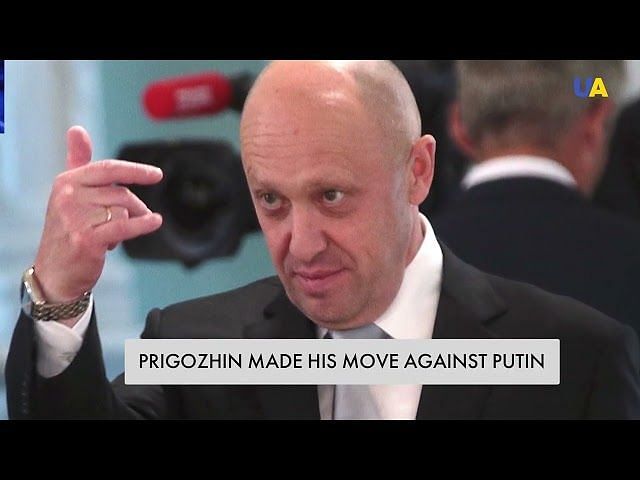
“Удар, который нанесли Пригожин и Кадыров, принеся голову генерала Лапина Путину на блюде, был направлен против начальника Генштаба Герасимова, который уже явно в немилости и станет, возможно, следующей жертвой. Генералы не имеют желания быть овцами на заклании. Они в определенный момент, когда уже наступит полное недовольство Путиным, скажут свое слово”, – подытожил Яковенко.

Российские генералы и война в Украине

Ранее разведка Британии сообщила о потерях среди российских генералов в Украине. Как минимум 10 генералов ликвидированы на войне и уже никогда не вернутся в строй. А шесть были отстранены от исполнения своих должностных обязанностей.

Экс-командующий Сухопутных войск США на Европейском континенте генерал-лейтенант Бен Ходжес считает, что генералы Путина больше ему не доверяют.

По мнению экспертов, Путин развернул кампанию, очерняющую генералов, поскольку именно их хочет сделать виновными в проигрыше в войне.

Вас также могут заинтересовать новости:

Categories
Saved Web Pages

“They are horrifically evil”: Yevgeny Nuzhin sledgehammer execution video leaves internet aghast

ec135-16684125673535-1920.jpg

Russian Telegram channels posted a video of the execution of Evgeniy Nuzhin that was done with a sledgehammer. The 55-year-old was a former prisoner of the Ryazan Penal Colony- 3 and was also a member of the Wagner Private Military Company. After switching sides to Ukraine to seek refuge, he was bludgeoned to death, leaving netizens astonished.

So Wagner kills one of their own guys with a sledgehammer now? They are horrifically evil.

So Wagner kills one of their own guys with a sledgehammer now? They are horrifically evil.

The Wagner group prominently employs veterans of Russia’s armed forces. They have fought in Syria, Mali, Libya, the Central African Republic and Ukraine amongst other countries.

In the video, which has now gone viral, Evgeniy Nuzhin can be seen held captive and watching an interview with a Ukrainian journalist where he reveals how Russia has recruited criminals in the war against Ukraine. He also shared that the convicts deliberately joined Wagner to be held captive by Ukraine and go on to fight Russia.

In another clip of the video, Nuzhin’s face is taped against what seems to be a brick wall. He can be heard sating that he was born in 1967 and on September 4, he planned to join the side of Ukraine. He also revealed that on November 11, he was allegedly hit in the head in Kyiv and ended up in a basement where he was told that he would be “judged.”

A man in a military uniform can then be seen hitting Evgeniy Nuzhin with a sledgehammer. He continued to hit in the face until the video ended.

Netizens left aghast by jarring video of Evgeniy Nuzhin being executed with a sledgehammer

Internet users were disturbed to see the former convict executed by the Wagner group. Many noted that this is not the first time the organization has taken such drastic actions. The organization has reportedly been using the sledgehammer for murders since the war in Syria.

The sledgehammer has been used in several of Wagner’s recruitment videos and has since become the unofficial symbol of the group. It is often used to punish and torture those who have gone against the Russian armed forces.

Many expressed disdain over the video and also dubbed the military company as a “terrorist organization.” A few tweets read:

Why the Wagner group, which has been operating for so many years in many countries, fighting, killing, interfering in the politics of other countries, bringing hunger, torture, suffering, is not recognized as a terrorist organization? Is there a legal explanation?

Why the Wagner group, which has been operating for so many years in many countries, fighting, killing, interfering in the politics of other countries, bringing hunger, torture, suffering, is not recognized as a terrorist organization? Is there a legal explanation?

That Wagner execution video? It’s not surprising at all (still shocking, though). Wagner mercenaries were known for hammering the rebels in Syria since they first arrived. This is their modus operandi. What else do you need to know about the country that celebrates this group?

That Wagner execution video? It’s not surprising at all (still shocking, though). Wagner mercenaries were known for hammering the rebels in Syria since they first arrived. This is their modus operandi. What else do you need to know about the country that celebrates this group?

So Wagner kills one of their own guys with a sledgehammer now? They are horrifically evil.

So Wagner kills one of their own guys with a sledgehammer now? They are horrifically evil.

@Gerashchenko_en Unbearable that this country still is member of the United Nation’s Security Council and has a veto right there.

@Gerashchenko_en Unbearable that this country still is member of the United Nation’s Security Council and has a veto right there.

“A dog receives a dog’s death”: Wagner group founder issues statement following the sledgehammer execution

Yevgeny Prigozhin, a Russian businessman who is the founder of Wagner and also a close ally of the Russian president, Vladmir Putin, said in a statement:

“It seems to me that this film should be called- ‘a dog dies a dog’s death.’”

He added:

“It was an excellent directional piece of work, watched in one breath. I hope no animals were harmed during filming.”

youtube-cover

In further remarks, Prigozhin warned others in the Russian society, who he dubbed as traitors. He also said:

“Some traitors are holed up in offices, not thinking about their own people. Some of them use their own business jets to fly to those countries that seem neutral to us so far. They fly away so as not to participate in today’s problems. They are traitors too.”

Prigozhin would often fly to Russian prison colonies and lecture convicts about defending their “Motherland.” Prior to the war in Ukraine, Russian officials promised convicts that they would pardon them for their crimes if they were to commit to the war against Ukraine.

Quick Links

article-scroll-left.svg

article-scroll-right.svg

Profile picture

Categories
Saved Web Pages

FBI Agents Who Shut Down Silk Road Are Tracing Crypto For The Feds And Have Contracts With ICE And The DOJ

0x0.jpg?format=jpg&width=1200

Chris Tarbell, a former FBI detective who helped shut down Silk Road and hacktivist group LulzSec, who is now a partner at contractor Naxo Labs.

Naxo Labs

Three of the men who took down the infamous dark web drug marketplace Silk Road have launched a company helping cops trace cryptocurrency and conduct complex dark web investigations.

Called Naxo Labs, it officially launches on Thursday and is helmed by former FBI agents Chris Tarbell and Tom Kiernan, alongside Matt Edman, an ex-FBI contractor. They all were instrumental in finding Ross Ulbricht, the Silk Road founder, closing the site and seizing its $1 billion in bitcoin. The fourth cofounder, David Franzel, is a cybercrime expert and longtime government contractor, with expertise in investigating crimes in the Middle East.

Despite only setting up earlier this year in Manhattan, the company has already penned an $8 million deal with Immigration Customs Enforcement (ICE), government contract records show. Naxo is providing software to the agency’s Cyber Crimes Center, though the company wouldn’t offer details on the work. (ICE hadn’t responded to a request for comment at the time of publication.) Tarbell said the company also has contracts with the Securities Exchange Commission and the Department of Justice, along with a number of government customers that the four cofounders previously worked with in their former roles at the New York consultancy Berkeley Research Group (BRG).

Naxo also has a business helping individuals recover cryptocurrency locked on hard drives. That’s to cater to those who have forgotten the password to their crypto wallets, such as German developer Stefan Thomas, who last year claimed to have $240 million in bitcoin on a hard drive that he couldn’t access. Thomas still cannot access the funds, but has been in touch with the Naxo team this month to discuss a potential hack into the wallet, Edman said. No deal has been signed, however, and Thomas hadn’t responded to a request for comment at the time of publication.

Wallet recovery is more of a side gig, said Edman. The main customer base will be federal law enforcement agencies who need deep technical expertise to dig into data on encrypted phones and laptops, carry out dark web investigations and trace crypto.

“We were doing the crypto stuff before there was Chainalysis,” said Tarbell, referencing the $8.6 billion cryptocurrency tracking firm that has numerous contracts with American law enforcement. He claimed that a long history in developing bespoke tools for government agencies was what set it apart from the competition.

It’ll also do private investigations for individuals and corporate entities, though each client will go through an ethics check to make sure the company isn’t profiting from illegally obtained cryptocurrency. “If a dark web drug lord comes over and says, ‘I’ve lost the password to my wallet,’ we probably don’t want that,” Edman said.

Tarbell, who also led investigations into hacktivist collective LulzSec in the 2010s, is also moving into podcasts. He’s cohosting a show with Hector Monsegur, a former member of LulzSec whom Tarbell turned into an informant on his fellow hackers.

Categories
Saved Web Pages

Opinion: Putin’s people and power

attachment.aspx

Jean Lewandowski lives in Nashua. “The…takeover of all levers of power meant the population had been alienated from the political process….they were content to let the [state] monopolize political and economic decision-making, as long as it didn’t…

WP Radio
WP Radio
OFFLINE LIVE