Categories
Selected Articles

October Surprise

The 2016 Election, which altered American political history, was not decided by the Russians or in Ukraine or by Steve Bannon. The event that broke Hillary’s blue wall in the Midwest and swung Florida and North Carolina was an October Surprise, and it was wholly a product of the leadership of the FBI. This is the inside story by the reporter closest to its center.

In September 2016, Hillary Clinton was the presumptive next president of the US. She had a blue wall of states leaning her way in the Midwest, and was ahead in North Carolina and Florida, with a better than even shot at taking normally Republican Arizona. The US was about to get its first woman president. Yet within two months everything was lost. An already tightening race saw one seismic correction: it came in October when the FBI launched an investigation into the Clinton staff’s use of a private server for their emails. Clinton fell 3-4 percent in the polls instantly, and her campaign never had time to rebut the investigation or rebuild her momentum so close to election day. The FBI cost her the race.

October Surprise

is a pulsating narrative of an agency seized with righteous certainty that waded into the most important political moment in the life of the nation, and has no idea how to back out with dignity. So it doggedly stands its ground, compounding its error. In a momentous display of self-preservation, James Comey, Andrew McCabe, and key Justice Department officials decide to protect their own reputations rather than save the democratic process. Once they make that determination, the race is lost for Clinton, who is helpless in front of their accusation even though she has not intended to commit, let alone actually committed, any crime.

A dark true-life thriller with historic consequences set at the most crucial moment in the electoral calendar,

October Surprise is a warning, a morality tale and a political and personal tragedy.

Categories
Audio Sources - Full Text Articles

In Tyre Nichols’ neighborhood, Black residents fear police

MEMPHIS (AP) — In a terrible way, the death of Tyre Nichols brings vindication to members of the Black community in Memphis who live in terror of police.

Often, before, people didn’t believe them when told how bad it is.

The fatal beating of Nichols, 29, by five police officers tells the story many residents know by heart: that any encounter, including traffic stops, can be deadly if you’re Black.

Examples abound of Black residents, primarily young men, targeted by police. Some are in official reports. Anyone you talk to has a story. Even casual discussions in a coffee shop net multiple examples.

A homeowner who called the police because a young man who had been shot was on his front porch. The responding officers ignored the gunshot victim and entered the caller’s home. The caller was slammed to the ground and a chemical agent used on him as he was subdued. The officers then lied about the circumstances, but there was video.

A woman who lives in a “safe” northeast Memphis neighborhood yet says her 18-year-old son was hogtied and pepper-sprayed by police several years ago –- while she was with him. He became agitated after police arrived on the scene while he picked up his child from a girlfriend, triggering a mental health crisis, she said.

In police sweeps, unmarked cars roll into neighborhoods and armed plainclothes officers jump out, rushing traffic violators and issuing commands. The result is a community in fear, where people text, call and use social media to caution each other to stay inside or avoid the area when police operations are underway.

“There’s one type of law enforcement that keeps people safe, and then there’s a type of law enforcement that keeps people in check,” said Joshua Adams, 29, who grew up in south Memphis’ Whitehaven, home to Elvis Presley’s Graceland Mansion, now a mostly Black neighborhood.

If you are in the wrong neighborhood “it really doesn’t matter whether you’re part of the violence or not,” said Adams. “I’m less likely to be shot in a gang conflict than I am to be shot by police.”

Chase Madkins was about a block from his mother’s Evergreen neighborhood home just east of downtown Memphis dropping off his 12-year-old nephew when the blue lights of an unmarked police car flashed behind him.

Within seconds the officer ordered him out of the car and told him he made an illegal turn, and his license plate was not properly displayed because it was bent at the corner.

Madkins said the officer, dressed in tactical gear with his face covered and no visible identification, refused to give his badge number, unless he consented to a weapon search of the car.

Madkins, 34, consented, but called an activist friend to get to the scene.

“I had to remind myself, `Chase, this is how people get murdered, in a traffic stop,’” he said. To this day he does not know who the officer was.

The random stops are meant to terrorize, said Hunter Demster, organizer for Decarcerate Memphis. He’s the one Madkins called when he was stopped in November.

“They go into these poor Black communities and they do mass pullover operations, terrifying everybody in that community,” Demster said. Some people might think the officers are looking for murderers or people accused of heinous crimes, or have stacks of warrants for violent criminals, he said, but “that is not the case.”

People want more police, Demster said, but “what they’re really trying to say is we want more detectives looking for violent criminals.”

Marcus Hopson, 54, a longtime resident and barber in the neighborhood, said the sweeps remind him of how in the early 1990s New York focused on nuisance crimes and zero tolerance and that morphed into stop-and-frisk.

“It didn’t work then. It’s not going to work now,” said Hopson, who now splits time with a home in Mississippi. “You are terrorizing the neighborhoods.”

Black residents make up about 63% of the city’s population of 628,000. In many ways it is two cities: One is Beale Street and blues, barbecue and Elvis. The other is a spiritual center because of what happened here decades ago. There’s the Mason Temple where Martin Luther King Jr. gave his famous and prophetic speech proclaiming that Black people would eventually reach a world of equality. And there is the balcony at the Lorraine Motel, less than 2 miles away, where an assassin’s bullet killed King the next day and changed the future of Black life.

What that left here is complicated, especially when it comes to policing and crime. In 2021, the year the SCORPION unit – a specialty squad that all five officers were part of — was set up, homicides hit a record, breaking one set in 2020, the previous year. Homicides dropped in 2022 but high-profile cases kept crime in the news. Most of the victims those years were young Black men. In the cases where arrests have been made, the suspects were overwhelmingly Black.

“There are more officers in Black communities here because unfortunately we’ve seen a spike in crime in our communities,” said Memphis NAACP President Van Turner.

But adding police without addressing the underlying issues, including poverty, won’t help, he said.

“You have not resolved the systemic issues which create the crime in the first place,” Turner said.

The data also shows a disparity between the city’s population and who police target with force: Black men and women accounted for anywhere from 79% of use of force situations to 88%. The data doesn’t show how many of those people were being sought on a warrant for violent crimes.

The Memphis police chief has called Nichols’ death “heinous, reckless and inhumane.” The five officers, all of whom were Black, accused of beating him were all charged with second-degree murder, and other officers and fire department employees on scene also have been fired or disciplined and could be charged. The SCORPION unit has been disbanded. The chief has ordered a review of all the special units.

Some people in the community are willing to give the police chief a chance to reform the department.

Marcus Taylor, 48, who owns a janitorial business and lives in south Memphis, urged officers in the precincts to come into their communities and network, “talk to store owners, go to barbershops, come to basketball games, and do it regularly. Get to know the people you are supposed to be protecting.”

“Come out without the lights flashing,” he said. “You’re out here to protect and serve, not beat up and whip. Everybody is not that hardened criminal.”

Madkins, who was among hundreds of people attending Nichols’ funeral on Wednesday, said he wants to be hopeful. He heard the words of the Rev. Al Sharpton, who delivered a eulogy: “I don’t know when. I don’t know how. But we won’t stop until we hold you accountable and change this system,” Sharpton said.

“I felt affirmed. I felt seen and heard in my own struggle,” Madkins said.

The vindication, if you can call it that, comes too late for Tyre Nichols.

At the place where he was fatally beaten grows an unofficial symbol of violence and tragedy –- a makeshift memorial with balloons and stuffed animals. It is around the corner from his mother’s home.

Nowhere seems safe for Black young men and boys.

When they start walking around the neighborhoods alone, or first start to drive, parents universally caution them on what to do when they encounter cops.

“This has to change,” said Erica Smith, 47, who described officers hogtying and pepper-spraying her son while she was with him. The memories of that day in 2014 kept her from watching all the video of Nichols being beaten. “Not just here in Memphis, but it needs to change nationwide.”

___

News researcher Rhonda Shafner contributed from New York. Also contributing were journalists Claudia Lauer from Philadelphia, and Adrian Sanz and Allen Breed from Memphis.

Categories
Audio Sources - Full Text Articles

U.S. Justice Dept. to review Memphis police after Tyre Nichols“ killing

2023-02-05T14:38:27Z

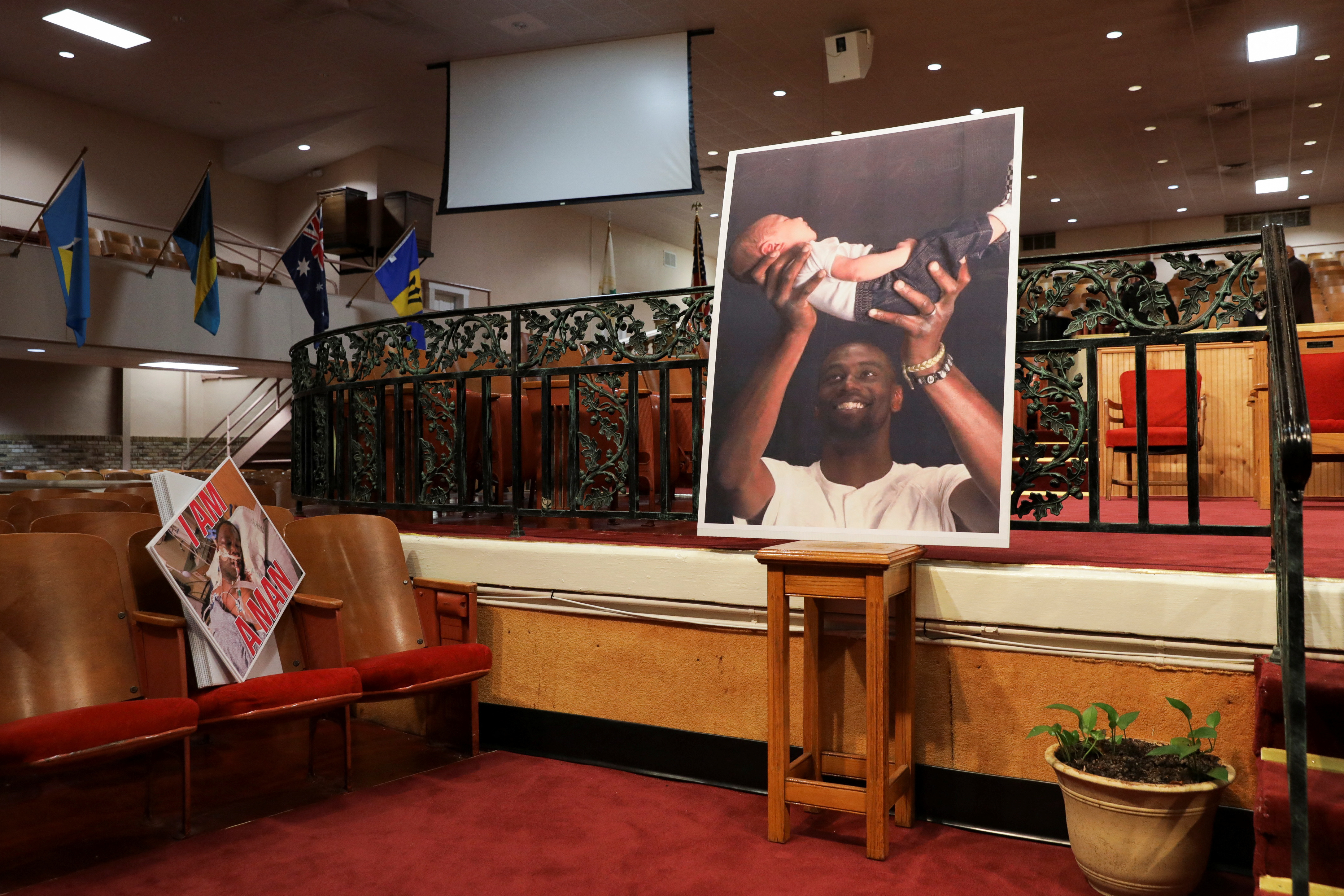
A view of a picture of Tyre Nichols during a news conference held by the family members of Nichols, the Black man who was beaten by Memphis police officers during a traffic stop and died three days later, at Mason Temple: Church of God in Christ World Headquarters, in Memphis, Tennessee, U.S., January 31, 2023. REUTERS/Alyssa Pointer

The U.S. Justice Department will participate in a review of the Memphis Police Department after the death of Tyre Nichols, a 29-year-old Black man fatally beaten by officers in the Tennessee city last month, according to city officials.

The review was disclosed in a bulletin by Memphis Mayor Jim Strickland. The bulletin said the Justice Department as well as the International Association of Chiefs of Police would take part in an “independent, external review” requested by the city to assess the Memphis Police Department’s special units and use-of-force policies.

The Justice Department did not immediately respond to a request for comment on Sunday.

Memphis police on Friday fired a sixth officer involved in the death of Nichols. Five other officers, all Black, were previously fired and charged with second-degree murder. The sixth officer to be fired is white.

Nichols repeatedly cried, “Mom! Mom!” as the five Memphis police officers charged with the Black motorist’s murder pummeled him with kicks, punches and baton blows after a Jan. 7 traffic stop, video released by the city showed.

He was hospitalized and died of his injuries three days after the confrontation in the city where he lived with his mother and stepfather and worked at FedEx.

His death has further fueled an ongoing national debate in the United States about race and police brutality.

The Justice Department’s Office of Community Oriented Policing Services will take part in the review, the city said.

The mother of Nichols, RowVaughn Wells, and his stepfather, Rodney Wells, are due to attend President Joe Biden’s State of the Union address on Tuesday in Washington.

Nichols’ funeral, held in a Memphis church on Wednesday, was attended by Vice President Kamala Harris and relatives of other Black people killed by police in U.S. cities.

Categories
Audio Sources - Full Text Articles

Factbox: Facts about Pakistan“s late former President Pervez Musharraf

2023-02-05T14:34:58Z

Pakistan’s General Pervez Musharraf salutes during the playing of Pakistan’s national anthem at the Joint Staff Headquarters in Rawalpindi November 27, 2007. REUTERS/Mian Khursheed

Here are some facts about the life and career of Pakistan’s former President Pervez Musharraf, who died on Sunday:

*Born in Delhi, India, on August 11, 1943, in his family’s ancestral home, Nehar Wali Haveli. His family migrated to Pakistan when it separated from India in 1947 and settled in Karachi.

*Musharraf joined Pakistan’s Military Academy in 1961. He was chosen by then Prime Minister Nawaz Sharif, the brother of Pakistan’s current prime minister, as the army chief in 1998. He seized power and toppled Sharif’s government a year later, citing the deteriorating political and economic conditions in Pakistan

*In 2001, he announced Pakistan’s support for the U.S.-led campaign on al Qaeda militants following the Sept. 11 attacks on U.S. targets. Washington’s so-called “war on terror” triggered the invasion of Afghanistan by international forces, who withdrew from the country in 2021.

*In 2002, Musharraf was appointed president, a title he held in addition to army chief, after winning more than 90% of the vote in a controversial national referendum. A year later, he survived a bomb attack by the Jaish-e-Muhammad group, the first of several assassination attempts by Islamist militants angered by his support for the U.S.-led war on al Qaeda.

*In 2007, Musharraf stepped down from his post as army chief, but said he would remain president for another five-year term. He imposed a state of emergency to quell growing dissent to his rule, which included media censorship and arrests of oppsition politicians.

*In February 2008, Musharraf’s ruling party lost general elections. A few months later, facing impeachment by lawmakers and the newly elected government, Musharraf announced he would resign as president and fled the country, living in London and Dubai. While in exile, he set up his own political party, and flew back Pakistan in 2013 to contest general elections but was disqualified immediately.

*Musharraf lived in Dubai from 2016. In 2019, a Pakistani court sentenced him to death and deemed him a ‘traitor’ for subverting the country’s constitution. The sentence was overturned in 2020.

*In 2022, Musharraf’s family said he had been hospitalised due to complications from a rare organ disease called amyloidosis. He died on Sunday at the Dubai hospital.


Categories
Audio Sources - Full Text Articles

Pakistan“s former President Musharraf, key U.S. ally against al Qaeda, is dead

2023-02-05T14:36:23Z

Pakistan’s former President Pervez Musharraf, a key U.S. ally in the campaign against al Qaeda following the militant group’s Sept. 11, 2001 attacks, died in Dubai on Sunday after a prolonged illness. He was 79.

Musharraf, a former four-star general who seized power after a 1999 military coup, died in hospital in Dubai, where he was living in self-imposed exile since 2016. His body will be flown to Pakistan for burial on Monday, Geo News reported.

“I offer my condolences to the family of General Pervez Musharraf,” tweeted Prime Minister Shehbaz Sharif. “May the departed soul rest in peace.”

Musharraf was suffering from a rare organ disease called amyloidosis, and was admitted to hospital last year after he became critically ill, his family said.

He was credited with attracting foreign investment to Pakistan, which saw the strongest economic growth in nearly 30 years during his rule, and he enjoyed the support of the military and Pakistanis who backed his crackdown against militant groups.

But his decade-long rule was also marred by a heavy-handed approach to dissent, which included arresting rivals such as current prime minister Sharif and the imposing of an almost six-week long state of emergency in which he suspended the constitution and censored the media.

“He failed to build on his early popularity to effect sustainable economic and political reforms and became a captive of military power and vested interests,” said Shuja Nawaz, author of several books on Pakistan’s military and a fellow at U.S. think-tank Atlantic Council.

A graduate from a Christian high school, Musharraf was keen for Pakistan to embrace liberal Islam, an approach that increased his appeal in the West following the 9/11 attacks on the United States.

Musharraf joined what Washington called its “war on terror”, giving U.S. forces ground and air access into landlocked Afghanistan to chase down al Qaeda militants.

This decision contradicted Pakistan’s long-standing support for the Taliban, which at that point controlled Afghanistan, and made Musharraf a target for domestic militant groups. He survived at least four assassination attempts.

The Tehreek-e-Taliban Pakistan, an umbrella group of Pakistani militant organisations formed after Musharraf’s crackdown on extremists, celebrated his death.

“This was the infamous army chief who sold off the country’s honour and respect,” it said a statement.

In a 2006 memoir, Musharraf said he “saved” Pakistan by joining the campaign against al Qaeda. He also successfully lobbied the administration of former U.S. President George W. Bush to pour money into the nuclear-armed nation’s military, which remains one of the most powerful in South Asia.

Domestically, Musharraf’s iron-fist rule created turmoil. The state of emergency in 2007 aimed to quell protests triggered by a clampdown on the judiciary and the media. That same year, his government was criticised for not providing enough security ahead of the assasination by the Pakistani Taliban of former Prime Minister Benazir Bhutto, a political rival killed while on campaign for national elections.

The Musharraf-backed party lost the vote, held months later in 2008. Facing impeachment by parliament, he resigned and fled to London.

Musharraf returned to Pakistan in 2013 to run for parliament but was immediately disqualified. He left for Dubai in 2016, and was sentenced to death in absentia three years later for the state of emergency. The verdict was later overturned.

One of Musharraf’s former political aides told Geo News that he would either be buried in Karachi, his family’s hometown, or Rawalpindi, home to the army’s headquarters.

Related Galleries:

Former Pakistani President Pervez Musharraf poses for a picture after an interview with Reuters in London January 16, 2011.

Pakistan’s General Pervez Musharraf salutes during the playing of Pakistan’s national anthem at the Joint Staff Headquarters in Rawalpindi November 27, 2007. REUTERS/Mian Khursheed

Former President of Pakistan Pervez Musharraf gestures during a news conference in Dubai, March 23, 2013. REUTERS/Mohammad Abu Omar

Pakistan’s former President and head of the All Pakistan Muslim League (APML) political party Pervez Musharraf speaks as he unveils his party manifesto for the forthcoming general election at his residence in Islamabad April 15, 2013. REUTERS/Mian Khursheed

Former Pakistani president Pervez Musharraf speaks during an interview with Reuters in Dubai January 8, 2012. REUTERS/Jumana El Heloueh

The former President of Pakistan, Pervez Musharraf, speaks at a news conference at a branch of his political party in east London January 19, 2012. REUTERS/Andrew Winning

Supporters of Pervez Musharraf carry national flags and signs, after a Pakistani court sentenced the former military ruler to death on charges of high treason and subverting the constitution, during a protest in Karachi, Pakistan, December 19, 2019. REUTERS/Akhtar Soomro


Categories
Audio Sources - Full Text Articles

Koch-backed group AFP ready to back new Republican candidate

2023-02-05T14:44:22Z

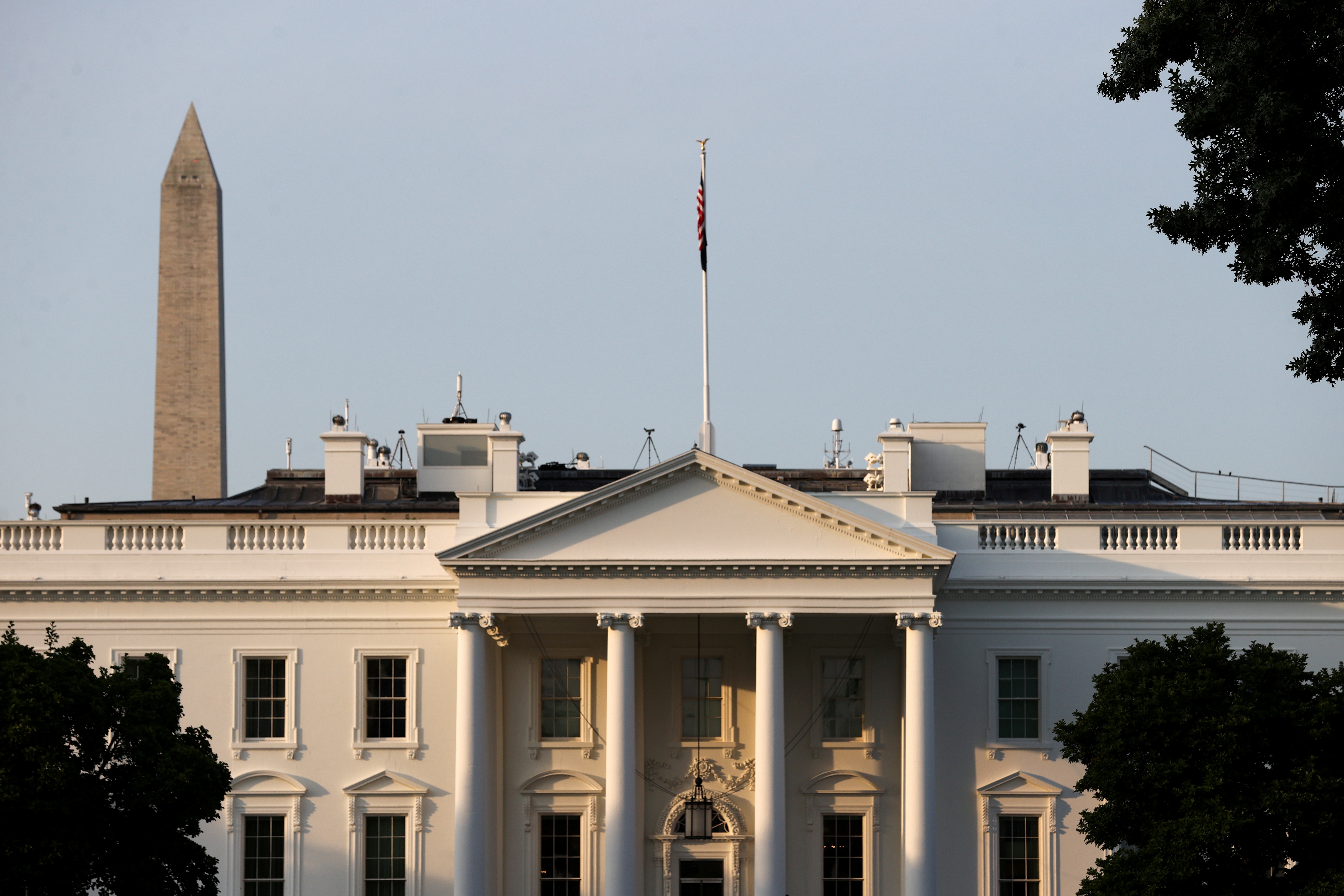
A general view of the White House in Washington, U.S. July 15, 2021. REUTERS/Jonathan Ernst

A political advocacy group backed by billionaire businessman Charles Koch is preparing to get involved in the primaries for the 2024 U.S. Presidential elections, saying it wanted to back a candidate who could “lead the country forward”, a memo released on Sunday said.

The group, Americans for Prosperity (AFP), has not previously supported candidates in presidential elections but said in the memo the best thing for the country would be to have a president in 2025 who “represents a new chapter.”

The memo, addressed to AFP staff and activists by AFP Chief Executive Emily Seidel, and published on the organization’s website, did not mention by name current U.S. President Joe Biden or his predecessor Donald Trump but said that to “write a new chapter … we turn the page on the past.”

“Here’s the hard truth as I see it,” the memo said. “The Republican Party is nominating bad candidates who are advocating for things that go against core American principles. And the American people are rejecting them.

“The Democratic Party increasingly sees this as a political opportunity. And they’re responding with more and more extreme policies … This means the country is in a downward spiral, with both parties reinforcing the bad behavior of the

other.”

The group, which has promoted lower taxes, less regulation and free trade, reiterated its presence in key states, saying that “no-one is better positioned to engage and mobilize people across those states.”

Former president Trump is so far the only announced Republican candidate, although former South Carolina Governor Nikki Haley is expected to kick off her campaign for the nomination this month.


Categories
Audio Sources - Full Text Articles

Prosecutors worried they’d have to prove Donald Trump was not ‘legally insane,’ lawyer’s memoir says

Donald Trump yelling

Joe Raedle/Getty Images

  • New York prosecutors investigating Trump feared they would have to prove that he was not “legally insane.”
  • The revelation is made in an upcoming book by Mark Pomerantz.
  • He said lawyers discussed whether Trump could tell the difference “between bullshit and reality.”

New York prosecutors feared they would have to prove that Donald Trump was not “legally insane” as they investigated his business practices, according to an upcoming memoir by a lead attorney on the team.

“To rebut the claim that Trump believed his own ‘hype,’ we would have to show, and stress, that Donald Trump was not legally insane,” lawyer Mark Pomerantz writes in the memoir, seen by The Daily Beast.

“Was Donald Trump suffering from some sort of mental condition that made it impossible for him to distinguish between fact and fiction?” he queries in the book.

Pomerantz said that lawyers advising the Manhattan District Attorney’s office “discussed whether Trump had been spewing bullshit for so many years about so many things that he could no longer process the difference between bullshit and reality.”

Pomerantz, a former special assistant district attorney, was recruited by then-Manhattan District Attorney Cy Vance Jr. to work on the criminal investigation into Trump and his family businesses. He joined the team in February 2021.

He and another lawyer Carey Dunne quit in protest a year later, with Pomerantz citing his frustration with Vance’s successor Alvin Bragg Jr. indicating he had doubts about plans to indict Trump.

Bragg has since ramped up the investigation into Trump’s businesses and has revived an investigation into hush money paid to porn star Stormy Daniels in 2016.

The Daily Beast received an advance copy of the book “People vs. Donald Trump: An Inside Account,” which is due to be released on Tuesday.

According to The Daily Beast, the book provides insight into how investigators put the case against Trump together and considered how to proceed with charging the former president.

In the book, Pomerantz says that he believes evidence proves Trump lied on financial documents and that he and Dunne believe this was the best way to prosecute Trump, according to The Daily Beast.

“The right way to proceed, we thought, was to bring felony charges based on the full panoply of false business records that Trump had helped to generate: the phony documents relating to the hush money payment and Michael Cohen’s reimbursement, the false financial statements, the false accounting spreadsheets that were created to support the financial statements, and so forth,” Pomerantz said.

In the book, Pomerantz also reportedly compares Trump to mob boss John Gotti, whose son Pomerantz once successfully prosecuted, according to The New York Times.

“He demanded absolute loyalty and would go after anyone who crossed him. He seemed always to stay one step ahead of the law,”  Pomerantz wrote of Trump.

“In my career as a lawyer, I had encountered only one other person who touched all of these bases: John Gotti, the head of the Gambino organized crime family.”

A lawyer for Trump recently sent Pomerantz a letter threatening legal action over the book, according to The New York Times.

“If you publish such a book and continue making defamatory statements against my clients, my office will aggressively pursue all legal remedies,” Trump lawyer Joe Tacopina said.

Read the original article on Business Insider
Categories
Audio Sources - Full Text Articles

A bull shark likely behind fatal attack of 16-year-old girl swimming in a river, say authorities

Bull sharkBull sharks often frequent river systems that brings them into contact with humans.

Alastair Pollock Photography/Getty

  • Authorities in Perth, Western Australia, believe that a bull shark is responsible for a fatal attack. 
  • 16-year-old Stella Berry was killed in the Swan River in Perth. 
  • Bull sharks, which can live in salt and fresh water, can be aggressive though fatal attacks are rare.

Authorities in Perth, Western Australia, believe that a bull shark could be responsible for the attack that killed a 16-year-old who went jetskiing with friends.

The Australian fisheries minister Don Punch said that it was too early to confirm the species of shark responsible for the fatal attack in the Swan River but told ABC News that he believes it may be a bull shark. 

“We do know that bull sharks, particularly, do enter estuaries and freshwater river systems, so it is likely that may be the case,” he said.

Bull sharks are the most dangerous sharks in the world, according to many experts, because they hunt along shorelines where people gather to swim. The species also inhabits freshwater rivers increasing the chance of encounters with humans. They have been known to travel up the Mississippi as far up as Illinois, for example, a distance of  700 miles.

One or more bull sharks may have been responsible for the famous 1916 Jersey Shore shark attacks that inspired Peter Benchley’s novel “Jaws.”

One of the biggest bull sharks recorded was 13 feet long and weighed 990 pounds.

“A beautiful daughter who was a vibrant and happy girl”

High School student Stella Berry died on February 4 while jet skiing with friends in the Swan River. 

Speaking at a press conference, Western Australia Police’s Inspector Paul Robinson said, “there was possibly a pod of dolphins seen nearby, and the young female jumped in the water to swim nearby the dolphins,” per The Sydney Morning Herald.

“It’s an extremely traumatic event for everyone involved and everyone who knew the young girl, so I won’t be going into the extent of the injuries,” he said.

A tribute from the Berry family shared with ABC News described the high school student as their “beautiful daughter who was a vibrant and happy girl with plans of living in Europe after school.”

They said, “She had an infectious laugh. Stella loved creating art and spending time with her friends, particularly at the river and beach.”

Fatal shark attacks are rare in Australia. Premier Mark McGowan of Western Australia said, “in terms of these events, they’re very rare events, but when they happen, it’s just awful,” per ABC News. 

The Swan River had not seen a fatal shark attack since January 1923, when a bull shark killed a 13-year-old boy.

Read the original article on Business Insider
Categories
Audio Sources - Full Text Articles

A Texas ‘Dreamer’ found out during an immigration meeting that his dad wasn’t his biological father. Now he could be trapped in Mexico for a decade.

illustration of a man behind the American flag

Arif Qazi/Insider;

  • A DACA recipient is stuck in Mexico after traveling to Juárez for an immigration interview in August.
  • Jaime Avalos is trying to get home to his wife and son but was barred from the US for 10 years.
  • Avalos and his wife spoke to Insider about their fight to reunite their family. 

Jaime Avalos had a bad feeling about his impending trip to Mexico. For weeks leading up to the immigration interview in Juárez, he was plagued with premonitions of irrevocable consequences. 

“It was really nerve-racking,” Avalos told Insider, describing the unshakable feeling in his gut. “I feel like if I go to this appointment, I’m not going to come back.” 

Nevertheless, Avalos, accompanied by his American wife, traveled to the US Consulate in Juárez, in August 2022, for the interview, a necessary step as he began the process of trying to secure US residency, and eventually, he hoped, citizenship.

Avalos, 28, was born in Mexico but spent nearly his entire life in Texas after his mother brought him to the United States when he was just a year old. The August interview marked the beginning of his effort to become a citizen of the only country he had ever called home, after a decade shielded by his Deferred Action for Childhood Arrival, often referred to as DACA, status, which prevented him from being deported despite being undocumented.

The meeting quickly deteriorated into a nightmare, though, when Avalos learned that his mother had briefly taken him back to Mexico when he was 7 years old — a trip he says he doesn’t remember — before he was able to establish permanent residency in the US. The revelation that he had illegally reentered the country not only dashed his immediate dreams of becoming a resident, but saddled him with a 10-year ban on returning to the US.

Now stranded in a foreign country far from his home, wife, child, and life, Avalos remains at the whims of an overwhelmed, oft-callous US immigration system as the months keep passing by. 

An uneasy pursuit of citizenship

Growing up in Houston as an undocumented immigrant, Avalos was constantly looking over his shoulder, he told Insider, always afraid he might be snatched up by US Immigration and Customs Enforcement.

That anxiety dissipated when he secured DACA status at the age of 18. The Obama-era policy grants certain undocumented immigrants who were brought into the country as children temporary reprieve from the threat of deportation as well as eligibility to work in the country. 

Avalos graduated high school. He got a job. Every two years he diligently renewed his DACA status ahead of the deadline, and in 2019 he married his adolescent sweetheart, Yarianna Martinez. The couple bought their first home that same year.

Avalos and Martinez said they started talking more seriously about seeking citizenship for Avalos as the political climate turned increasingly hostile toward immigrants.

Several Republican-led states this week asked a judge to end protections for DACA recipients, who are known as “Dreamers.” Former President Donald Trump repealed the program in 2017, before the Supreme Court blocked his decision three years later.

“DACA is never really protected,” Martinez, 22, told Insider. “It’s always being threatened to be revoked.”

The couple had big plans for their future and wanted to eradicate any risk to their dream life. Avalos applied for residency in March 2020, just days before the COVID-19 pandemic turned the world upside down. Amid a global outbreak and a mounting crisis at the border, the couple didn’t expect to hear about Avalos’ application anytime soon.

It took more than two years, but in the summer of 2022, Avalos finally received word that his preliminary immigration interview in Juárez was set for August.

By then, the stakes had heightened significantly. 

“We had just had a baby,” Martinez said. The couple’s child, Noah, was born in December 2021. “Our perspective had changed a lot. This is serious. It can either make us or break us,” she said.

Avalos was apprehensive. If, for any reason, he failed to secure a visa during the meeting, life as he knew it would be forever changed. But with assurances from his lawyers that his papers were in order, Avalos quieted the nagging voice in his head, and embarked on a cross-border journey fated to be a one-way trip. 

“He found out a lot of truths at that interview,” Martinez said. 

Jaime Avalos, Yarianna Martinez, and their son Noah pose for a photo.Jaime Avalos, Yarianna Martinez, and their son, Noah.

Courtesy of Yarianna Martinez

Disaster on the other side of the border

Before his August interview, Avalos said he was under the impression he never left the US after he and his mother arrived in the country in 1996. Halfway through the most important interview of his life, immigration officials in Juárez revealed otherwise. 

According to Martinez, who recounted the doomed meeting in an interview with Insider, immigration officers quickly zeroed in on Avalos’ Mexican birth certificate, which included an amendment from 2002 — six years after he and his mother first entered the US.

In Mexico, she said, a person has to be physically present to make changes to an official government document, such as a birth certificate. The registration date on Avalos’ birth certificate indicated that he and his mother had briefly returned to Mexico in 2002, meaning both mother and son would have then had to illegally reenter the US a second time — six years after their first unlawful crossing.

Left without answers to officers’ probing questions, Avalos called his mother mid-interview, hoping she might be able to explain the discrepancy. She dropped a heart-wrenching bombshell: Avalos’ mother told her son and the immigration officials that she brought her child back to Mexico when he was 7 years old so her husband — the man Avalos always believed to be his biological father — could legally adopt him.

“It affected me a lot,” Avalos said of the revelation about his parentage. “If I had known, I wouldn’t have come out to Juárez and done the interview.”

Left to process this new information about his father, Avalos was immediately hit with another devastating blow. He was not allowed to return to the US; he couldn’t go home.

Because he and his mother briefly left the US after illegally entering, thus unlawfully crossing the border not once, but twice, Avalos’ application for residency was immediately denied and he was issued a 10-year ban on reentering the US — his home country, where his wife and son remained. 

“My world was ending,” he said. “I should have trusted my gut and never left.” 

ICE declined to comment on Avalos’ specific case, but told Insider that DACA recipients who leave the US without first obtaining an advance parole document run a “significant risk” of being unable to reenter the US, given that their period of deferred action is halted once they leave the country. 

Martinez said she thought her husband was joking when he emerged from the interview dazed and in disbelief. Even as he explained what happened, Martinez said she struggled to comprehend the vast consequences of the meeting. 

It only became real as she boarded a plane back to Houston, alone. 

Yarianna Martinez, Jaime Avalos, and their son Noah pose for a photo.Martinez and Noah have been able to visit Avalos in Juarez a couple of times since August.

Courtesy of Yarianna Martinez.

The ongoing fight to bring Avalos home

Avalos and Martinez hoped their separation from one another would be brief. The reality has been beyond disheartening, they both said.

“The first month was horrible, really horrible,” Avalos said. “I was in my head. We have a house payment, a car payment, phone payments. I’m not going to see my kid or wife until next year.”

Martinez jumped into action, seeking solutions to bring her husband home even as she continued working part time as a medical assistant.

She shopped Avalos’ story around to several new immigration lawyers in the Houston area but said attorneys were hesitant to take the difficult case — until she met Naimeh Salem, who quickly went to work raising public awareness and outrage about Avalos’ exile.

Salem secured heavyweight support in the form of the couple’s congressman, Rep. Al Green of Texas, who introduced legislation to amend the Immigration and Nationality Act last year and filed a private bill requesting resident status for Avalos in November, framing the crusade as a “mission of mercy.”

“He is not being held by a hostile nation. We are the ones preventing him from returning,” Green said of Avalos in a statement to Insider.

The lawmaker said he has also sent letters to President Joe Biden and the Department of Homeland Security Secretary Alejandro Mayorkas about Avalos’ case.

The young family’s best chance at reunification is the pending humanitarian parole request Salem submitted on Avalos’ behalf three months ago, she said. The parole status allows an individual who is ineligible for entry into the US to be allowed in on humanitarian reasons. 

DACA recipients who leave the US without first obtaining advance parole, as Avalos did, but who are later paroled back into the country are eligible to resume their DACA status after their parole expires, according to ICE.

The government doesn’t consider Avalos’ request for humanitarian parole an urgent or emergency case, Salem said, so the couple could have to wait seven to 10 months before receiving a final decision on his application.

Those possible solutions have given the family a glimmer of hope amid the heartbreak, they said. But should Avalos’ parole application be denied or Green’s letters go unanswered, Avalos will be stranded indefinitely, Salem said. 

“These are his only options,” Martinez said. “After that, there are no options, no plan B.”

Yarianna Martinez, Jaime Avalos, and their son Noah pose for a birthday in a frame that says "Feliz Cumpleanos."Martinez traveled to Juarez in December 2022 to celebrate Noah’s first birthday with Avalos.

Courtesy of Yarianna Martinez.

A family torn apart

Both husband and wife try to remain positive, if only for each other and their son, they said.

“I went from being in a marriage where I woke up every day seeing my husband to feeling like I’m a single mom,” Martinez said. “If it wasn’t for Noah, I don’t think I’d be able to handle it.”

The couple video chats frequently and communicates through texts and phone calls, Martinez said. Avalos’ US phone number still works because Juárez is less than 10 miles from the US border, though nearly 800 miles from his family in Houston. 

“When this happened, Noah was only 8 months old. Now he’s 13 months,” Martinez said of her son. “He’s starting to realize, why am I seeing my dad on FaceTime when he was just in person playing with me?”

Avalos, meanwhile, is still trying to acclimate to life in a foreign country. He’s living with an uncle in Juárez, but he’s had difficulty mastering the Spanish slang spoken in the city and is still adjusting to driving in Mexico. He finally secured a job in the country last month, working at a computer-chip company after an extensive hiring process, he said.

He sometimes speaks with his mother on the phone, though not about the revelations he learned during his immigration interview.

“We haven’t touched that subject,” he told Insider. “When everything clears over, we’ll talk about it.”

Martinez and Noah have been able to visit Avalos in Juárez a few times over the past 4 ½ months, including once with Green, but the cost of flights and time off from work make frequent trips impossible. 

As life goes on around them, there is little left for the family to do now but wait.

“He’s trying to keep his head up really, really high,” Martinez said of her husband. “But it’s starting to weigh heavy.” 

Read the original article on Business Insider
Categories
Audio Sources - Full Text Articles

An ex-Romney presidential campaign strategist says Nikki Haley ’embodies the collapse’ of the Republican Party

Nikki HaleyFormer South Carolina Gov. Nikki Haley.

AP Photo/John Locher

  • Ex-Romney strategist Stuart Stevens on MSNBC blasted Nikki Haley for her expected White House bid.
  • “No one else really embodies sort of the collapse of the party as well as Nikki Haley,” he said.
  • Haley, a former South Carolina governor, served as the US Ambassador to the UN under Trump.

Mitt Romney’s former aide blasted Nikki Haley in a recent interview over the former South Carolina governor’s decision to enter the 2024 GOP presidential primary, saying she “doesn’t have anything else to do” and arguing that she is actually seeking a vice presidential slot.

Stuart Stevens — who was Romney’s chief strategist for his 2012 White House run and also a senior advisor for the anti-Trump group the Lincoln Project — questioned Haley’s motivation for running for the presidency during a February 2 interview on MSNBC. 

Haley has not yet formally announced her campaign but is reportedly set to do so on February 15 in Charleston, South Carolina.

“Why is Nikki Haley running? I don’t think she’s really running because she thinks she’s going to be president of the United States,” Stevens said. “First of all, she doesn’t have anything else to do. She’s raised some money here in her PAC and she’ll run. And I would say she’s running to be vice president. I don’t think she’s going to go out there and attack Donald Trump.”

He continued: “No one else really embodies sort of the collapse of the party as well as Nikki Haley. She was what the party was supposed to be. She went out and said that Donald Trump was everything that she taught her children not to be, and she went from that to saying that she wants to carry on the Trump legacy. It’s just so sad. She’s already broken before she gets in the race.”

Haley, a former state legislator, was elected governor of South Carolina in 2010 and reelected in 2014.

In February 2016, she endorsed Florida Sen. Marco Rubio’s presidential bid, slamming former President Donald Trump at a rally as “everything I taught my children not to do in Kindergarten.”

“I taught my two little ones — you don’t lie and make things up,” she said at the time. “I taught my two little ones that you don’t push people around and just tell them what you think should happen. And I told my two little ones to do exactly what Marco Rubio did in the last debate. When a bully hits you, you hit that bully right back.”

Shortly after Trump was elected that November, he nominated Haley to serve as his Ambassador to the United Nations, a position that she held from January 2017 until December 2018.

In April 2021, Haley said that she wouldn’t run for president in 2024 if Trump decided to launch a presidential campaign, just weeks after telling Politico that his conduct after his 2020 election loss would “be judged harshly by history.”

However, in October 2021, Haley told The Wall Street Journal that the Trump administration had left behind a “strong legacy.”

Read the original article on Business Insider
WP Radio
WP Radio
OFFLINE LIVE