Categories
Audio Sources - Full Text Articles

OpenAI makes a ChatGPT-like tool called Codex that can write software. Here’s why Codex won’t replace developers and will instead create more demand for their skills.

human hand and robot hand typing on keyboardRobot and human hands share a keyboard.

sompong_tom/Getty Images

  • OpenAI’s ChatGPT, which can answer questions with human-like responses, is exploding in popularity. 
  • The same company is also behind Codex, a tool that automates the writing of software code.
  • Experts say software development skills will still be necessary for the foreseeable future.

OpenAI is the talk of the town these days as the company’s intelligent chatbot ChatGPT has sparked imaginations and made people ask what role artificial intelligence will play going forward. The same company has also been developing a less-oft talked about service, Codex, which could completely change the way developers work. 

Using data it has collected from across the web, ChatGPT can answer just about any question thrown at it (although not always accurately) – and with a response that looks like it was written by a human. Codex is similar, except that instead of writing English sentences, it writes software code. Tell Codex what type of software problem you’re trying to solve, and Codex will suggest a solution with a string of code.

If an AI service can now write code for developers, it raises the question of how it will impact students studying computer science and if highly-paid software engineering jobs will vanish. Still, software engineering skills will continue to be in high demand, and AI services like Codex are just a natural step as programming becomes progressively easier over generations, according to academics and experts in computer science education.

Codex has been available to developers since 2021 in the form of GitHub Copilot. And OpenAI, which has raised more than $10 billion from Microsoft and others, has been investing more in Codex of late, hiring upwards of 1,000 contractors to write code and associated descriptions that will help Codex learn to become a better programmer, Semafor reported.

Codex and ChatGPT are a “huge productivity enhancer,” and many programmers are already using Codex in their day-to-day workflow, said Christopher Manning, a professor of computer science and linguistics at Stanford University. Still, just because Codex can write basic functions to make an engineer’s life simpler, it doesn’t mean it can suddenly write entire applications all on its own, he added.

Each generation makes programming easier

In thinking about Codex, one must understand that programming has been getting progressively easier with each generation, says Hadi Partovi, CEO and cofounder of the education non-profit Code.org, which creates curriculums for K-12 computer science classes.

“Programming started with punch cards,” Partovi said. “We don’t use punch cards anymore.” After that, programmers began typing with keyboards using a programming language called Assembly, a low-level language that communicates directly with a machine’s architecture.

Similarly, Codex further simplifies certain software engineering tasks. Programmers don’t have to spend as much time on rote work that others have done a million times over, but they’ll need to understand the code that a tool like Codex produces, Partovi said. Developers using Codex or a similar tool who can’t explain what their code is doing aren’t going to become productive engineers.

Codex can fill in lines of code, but developers still must fundamentally understand how to solve a technical problem in the first place. 

“I’m confident it’ll make engineering easier,” Partovi said. “Then we’ll have more engineers, and more software engineering. Demand for technology is only limited by the supply of engineers.” 

Creating the next big thing

For the next generation of programmers, a major concern is that students will use a program like Copilot to write some code for them, and then feel deflated by the idea that the program can do the work all on its own, said Cynthia Lee, a senior lecturer of computer science at Stanford University. She says she has already received assignments from students she’s certain were completed with Codex.

Lee worries that Codex may demotivate students who are struggling to figure out assignments. Tools like Copilot are “an exacerbation of a problem that we’ve always faced, which is how do you get people to do the tasks that they need to do to learn,” she said.

“It just requires having a lot of conversation with students about the real basics of, why are we here?” Lee said.

Codex is a force-multiplier that can speed up programming work, but it mostly spits out code that people have already written by gathering data from existing software packages. Still, Lee is optimistic about the technology overall, and she highlights how important it is for students to continue learning software development skills.

“There will always be a frontier of new creation,” Lee said.

Codex can speed up innovation

The benefit of tools like Codex is that they can replace the manual searching developers usually need to do on the Internet to figure out ways to debug their code and find software packages that support the code they’re writing, said Manning, the Stanford professor. 

For example, programmers may use the Python programming language to analyze text from a webpage. With Codex, they can just write a comment asking for a piece of code to complete that task, and the service will return it. 

“Even for people who are in the field, the speed at which these models have gotten better and the success they have is frankly surprising,” Manning said. “But these models absolutely aren’t perfect, and if you aren’t capable of noticing when something is wrong and it’s generating the wrong code, or there’s still a bug, then you’re not going to be a productive software engineer.”


Read the original article on Business Insider
Categories
Audio Sources - Full Text Articles

Giving Ukraine weapons is the only path to peace

img_none.jpg

British Foreign Secretary James Cleverly has stated that the swiftest and the only path to peace in Europe is to supply Ukraine with weapons it desires to defeat Russia.

He reported this in an report for the Occasions of Malta, Ukrinform reports.

“Like all authoritarian rulers, Putin responds only to power in his opponents. He turned down Volodymyr Zelensky’s 10-stage plan for peace very last December. That is why the Uk and Ukraine’s friends are accomplishing all they can to convey Ukraine achievements on the battlefield. And it is why I’m delighted that Germany and the US are signing up for the British isles in sending tanks to the Ukrainians. Giving the Ukrainians the equipment they want to finish the work is the swiftest – without a doubt the only – route to peace,” he wrote.

Examine also: Ukraine retains regulate of most logistics routes close to Bakhmut – Uk intelligence

He observed that Russia’s unprovoked and brutal invasion of Ukraine one particular calendar year ago is the greatest threat to Europe’s protection since 1945, stressing that Vladimir Putin’s ambitions do not conclusion with the conquest and annexation of Ukraine.

In accordance to Cleverly, Ukraine bears the brunt of Putin’s savagery, but the total environment is paying an exorbitant selling price for Putin’s war of choice

“A tsunami of hunger threatens the poorest nations in the entire world. Mounting strength rates will push thousands and thousands back again into poverty, all across the globe… He [Putin] would like to upend world politics and call time on the global order. And if he succeeds, he will drag us all again to an age of violence and conquest. But we are not able to and will not let Putin gain,” he wrote.

As reported by Ukrinform, Britain’s representative to the OSCE, Ian Stubbs, claimed that it is essential for Ukraine to get weapons from its partners not only to defend its territory, but also to force out Russian troops out, liberating all occupied areas.

iy

Source link

The post Giving Ukraine weapons is the only path to peace appeared first on Ukraine Intelligence.

Categories
Audio Sources - Full Text Articles

Analysis: China has reasons to keep cool after U.S. downs suspected spy balloon

2023-02-05T14:19:40Z

China may respond to the U.S. shooting down its suspected spy balloon after warning of “serious repercussions”, but analysts say any move will likely be finely calibrated to keep from worsening ties that both sides have been seeking to repair.

Regional analysts and diplomats are closely watching China’s response after a U.S. fighter jet shot down the balloon – which Beijing says was an errant weather-monitoring craft – in the Atlantic off South Carolina on Saturday.

China on Sunday condemned the attack as an “over-reaction”, saying it reserved the right to use the necessary means to deal with “similar situations”, without elaborating.

Some analysts said they will be scrutinising the seas and skies of East Asia for signs of tension, given growing deployments of ships and aircraft from China and from the United States and its allies.

But while bilateral tension has risen in the past few days over the balloon incident, Beijing and Washington have been seeking to improve ties.

The discovery of the balloon in the upper atmosphere above North America prompted the United States to postpone a visit to Beijing this week by Secretary of State Antony Blinken. That trip had resulted from a November summit between Presidents Joe Biden and Xi Jinping.

Both sides are widely seen as keen to stabilise relations after a turbulent few years, with the Biden administration leery of tensions descending into conflict and Xi eyeing a recovery for the world’s second-largest economy after a severe COVID-19 slump.

The path of rebuilding U.S.-China relations likely remains on track, said Zhao Tong, a senior fellow at the China office of the Carnegie Endowment for International Peace and a visiting researcher at Princeton University.

“The two sides still have a shared strong interest in stabilising and responsibly managing the bilateral relationship,” Zhao told Reuters.

Collin Koh, a security fellow at Singapore’s S. Rajaratnam School of International Studies, predicted China would continue to respond vigorously to U.S. military reconnaissance patrols but stop short of confrontation.

Even in calmer moments, Chinese forces actively shadow U.S. military patrols, particularly at sea, amid tensions over Taiwan and the disputed South China Sea, say regional military attaches.

“Against manned platforms we might expect China to exercise restraint, but against unmanned ones it becomes more uncertain – especially if Beijing believes that it’s possible to contain fallout since it involves no crew,” Koh said.

He noted China’s seizure of a U.S. underwater glider deployed by an oceanographic research ship off the Philippines in December 2016. The Chinese navy later returned it to a U.S. warship.

Christopher Twomey, a security scholar at the U.S. Naval Postgraduate School in California, said any Chinese response would be limited.

“I’d expect they’d protest moderately but hope to sweep this under the rug and reinstate progress on senior-level visits within months,” Twomey said, speaking in a private capacity.

Zhu Feng, executive dean of the School of International Studies at Nanjing University, said U.S. officials should stop “hyping” events to ensure a smooth return to the normalised communications they earlier requested from Beijing.

Zhu expressed hope “the two governments can turn the page as soon as possible so that Sino-U.S. relations can return to an institutionalised channel of communication and dialogue”.

Some analysts are watching Chinese state media and online activity for hints at any clamour for a tougher response, as China’s mainstream state media have stuck to reporting official statements.

On China’s heavily censored social media, there was little evidence that nationalistic anger was being stirred up over the incident, with many netizens asking what the fuss was over one balloon.

“Now, China can retire its satellites!,” one user joked.

Related Galleries:

Spectators watch after a suspected Chinese spy balloon was shot down off the coast in Holden Beach, North Carolina, U.S. February 4, 2023. REUTERS/Allison Joyce

A jet flies by a suspected Chinese spy balloon as it floats off the coast in Surfside Beach, South Carolina, U.S. February 4, 2023. REUTERS/Randall Hill

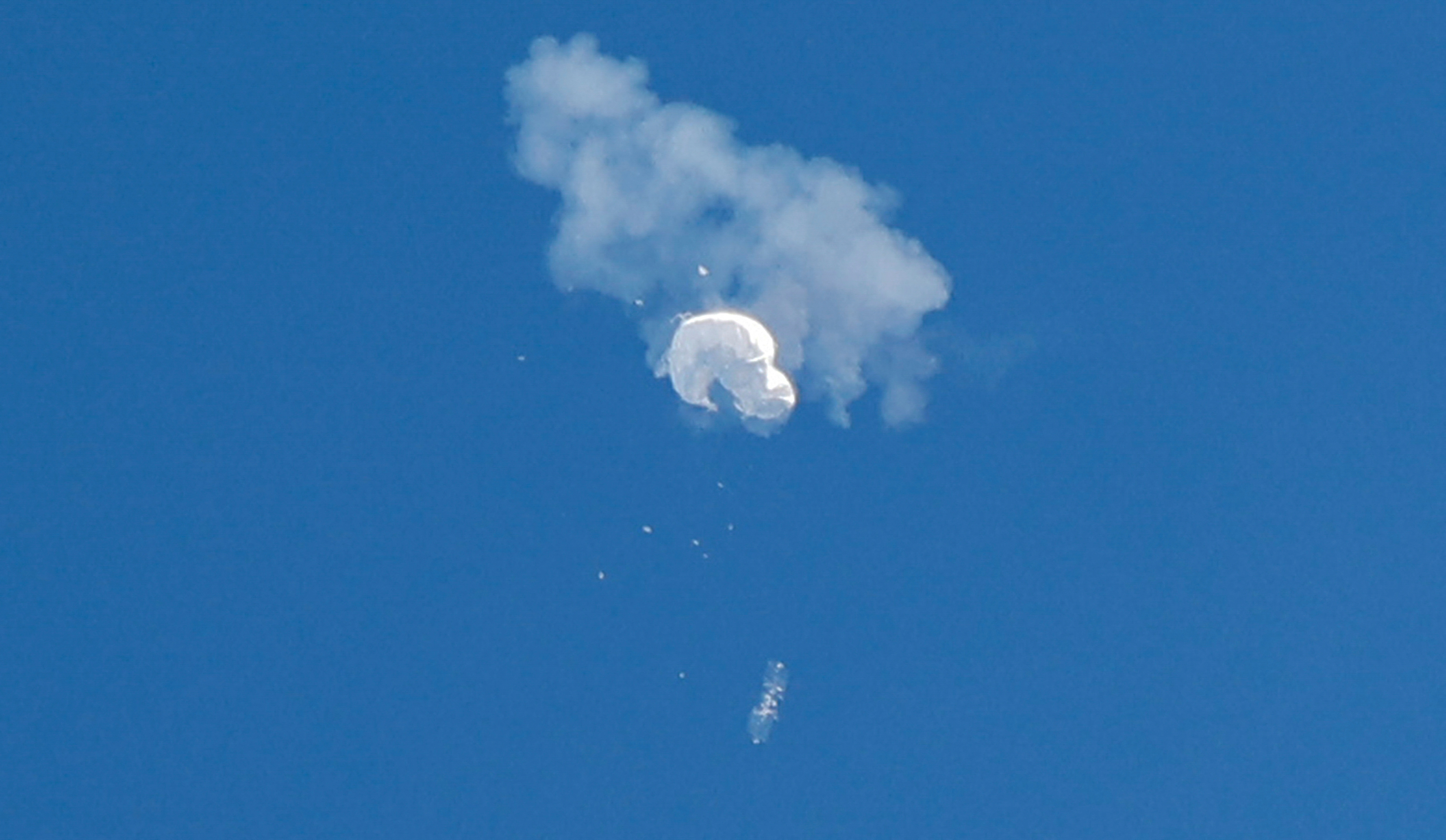
The suspected Chinese spy balloon drifts to the ocean after being shot down off the coast in Surfside Beach, South Carolina, U.S. February 4, 2023. REUTERS/Randall Hill

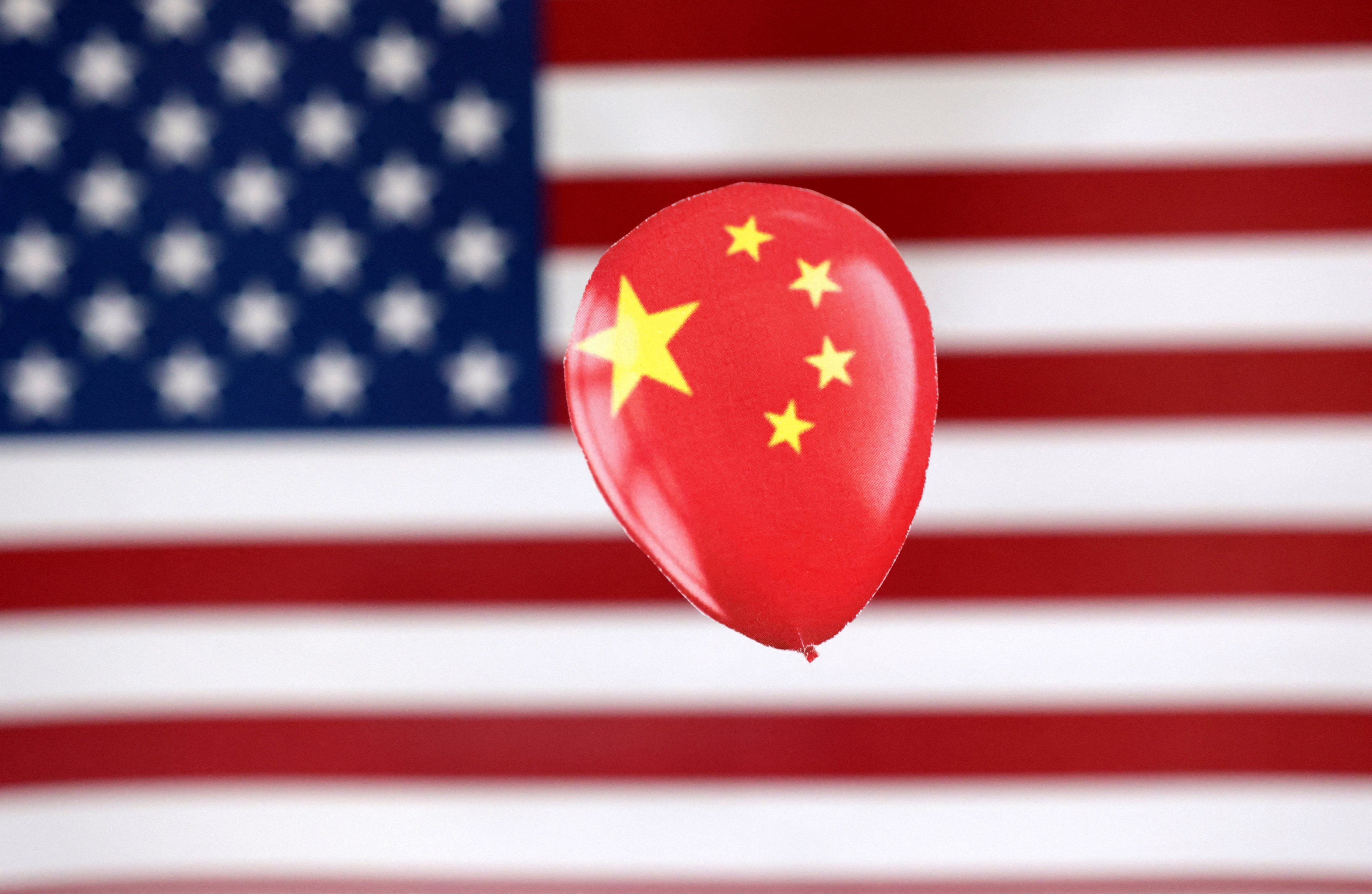
A printed balloon with Chinese flag is placed on a U.S. flag in this illustration taken February 5, 2023. REUTERS/Dado Ruvic/Illustration
Categories
Audio Sources - Full Text Articles

How to watch the Grammys live (including the red carpet)

LOS ANGELES (AP) — The Grammys have evolved from their humble beginnings into a daylong feast of music — and there’s many ways to watch the red carpet and show live.

Most of the awards are handed out before that during the Premiere Ceremony, which the Recording Academy will stream live Sunday beginning at 3:30 p.m. Eastern.

Here’s what you need to know about watching the 2023 Grammys, including how to stream and where you can see music’s biggest stars walking the red carpet.

HOW TO WATCH THE GRAMMYS RED CARPET LIVE

E! will host its “Live from the Grammys Carpet” show with its mix of fashion coverage and celebrity interviews, beginning at 3 p.m. Eastern.

The Associated Press will also stream a two-hour red carpet show with interviews and fashion footage. It will be streamed on YouTube, Twitter and APNews.com.

HOW TO STREAM THE GRAMMYS SHOW

This Sunday’s 65th edition could see Beyoncé become the most decorated artist in Grammys history and will feature musical performances from Bad Bunny, Mary J. Blige, Sam Smith, Lizzo as well tributes to the late musicians Takeoff, Loretta Lynn and Christine McVie.

They’ll appear on the main show airing on CBS and Paramount+ beginning at 8 p.m. Eastern.

___

For more coverage of this year’s Grammy Awards, visit: www.apnews.com/GrammyAwards

Categories
Selected Articles

About how Clinton’s emails got on Weiner’s laptop. Never mind: Opinion – NOLA.com

J6_coFbogxhRI9iM864NL_liGXvsQp2AupsKei7z

  NOLA.com

Categories
Audio Sources - Full Text Articles

In spite of all the doom and gloom, the 2024 Senate map actually looks pretty decent for the Democrats

Help support Palmer Report! Our articles are all 100% free to read, with no forced subscriptions and nothing hidden behind paywalls. If you value our content, you’re welcome to pay for it:

Pay $5 to Palmer Report:

Pay $25 to Palmer Report:

Pay $75 to Palmer Report:


Support Palmer Report clicking here

Pay $5 to Palmer Report:

Pay $25 to Palmer Report:

Pay $75 to Palmer Report:


Even as the Democrats were busy expanding their Senate majority to 51 seats in 2022, we kept hearing from the media and pundit class about how the 2024 Senate map looked disastrous for the Democrats. But here’s the thing. Now that nonpartisan experts have begun rating the 2024 races, the Democrats’ Senate prospects actually look pretty decent – and there’s a clear path for retaining 51 seats.

Let’s start, for instance, with Cook Political Report. It has no incumbent Republicans listed in the “Toss Up” and “Lean Republican” columns for 2024, which means there’s nothing for the Democrats to pick off. That means the Democrats have to keep all of their existing Senate seats in 2024 in order to remain at 51 seats. But if the Democrats win the incumbent races that are listed in the “Lean Democrat” column, they’ll simply have to win the three “Toss Up” races in order to remain at 51 seats. Democrats could even lose one “Toss Up” race in the Senate and retain a nominal majority with 50 seats, if they also win the White House in 2024, which would give them the tiebreaker.

So what are the three “Toss Up” races? Ohio, West Virginia, and Arizona. That may not sound like the most fertile ground for Democrats. But in Ohio, Democratic Senator Sherrod Brown has long been popular in the state. And while Democratic Senator Joe Manchin is disliked nationally, he’s actually quite popular in West Virginia. These two races will require a lot of work (yes we’re going to have to hold our noses and get Manchin reelected), but they’re both clearly winnable.

The third “Toss Up” race is in Arizona – which is shaping up to be one of the more unique Senate races in recent memory. Incumbent Senator Kyrsten Sinema is unpopular nationally and unpopular in Arizona. She recently quit the Democratic Party, but that doesn’t help her much, given that her approval numbers are just as bad with Independents and Republicans as they are with Democrats.


Popular House Democrat Ruben Gallego has entered the 2024 Senate race in Arizona as the presumptive Democratic Party nominee, in what will apparently end up being a three way general election consisting of Democrat Gallego, Independent Sinema, and the eventual Republican nominee. But early polling suggests that Gallego would slightly win such a contest over the Republican, with Sinema in a distant third place. So while this race will be wacky and unpredictable, it’s very clearly winnable for Gallego and the Democrats. The popular notion that Gallego and Sinema would split the Democratic vote, thus handing the victory to the Republican, just isn’t consistent with the polling that’s been released thus far.

So yeah, the Democrats have their work cut out for them when it comes to the 2024 Senate races. But unlike the doomsday narratives that the laziest of pundits have been hyping for retweets, the actual 2024 Senate map shows that the Democrats have a clear and realistic path to ending up with 50 or even 51 seats. Of course that’ll take significant work from all of us as activists. But we’re more than up for the challenge.

Support Palmer Report clicking here

Pay $5 to Palmer Report:

Pay $25 to Palmer Report:

Pay $75 to Palmer Report:

Support Palmer Report by clicking here

Pay $5 to Palmer Report:

Pay $25 to Palmer Report:

Pay $75 to Palmer Report:

The post In spite of all the doom and gloom, the 2024 Senate map actually looks pretty decent for the Democrats appeared first on Palmer Report.

Categories
Selected Articles

The NYT should tell readers whether it helped crooked FBI agents get Trump elected in 2016

5HRSDXXWXFKUSP3UR4G7YVNAAU.jpg

It was arguably the most consequential “October Surprise” in the history of American presidential elections. In the waning days of the 2016 race, with polls showing Hillary Clinton clinging to a lead over Donald Trump, two last-minute stories broke that rekindled on-the-fence voters’ ethical doubts about Democrat Clinton and quashed a budding scandal around her GOP rival.

Except the “October Surprise” was no surprise to one key player: Rudolph Giuliani, the ex-New York City mayor and Trump insider who later became the 45th president’s attorney. Late that month, Giuliani told Fox News that the trailing Republican nominee had “a surprise or two that you’re going to hear about in the next few days. I mean, I’m talking about some pretty big surprises.”

Just two days later, then-FBI director James Comey revealed the bureau had reopened its probe into Clinton’s emails, based on the possible discovery of new communications on a laptop belonging to disgraced New York politico Anthony Weiner. The news jolted the campaign with a particularly strong boost from the New York Times, which devoted two-thirds of its front page to the story — and the notion it was a major blow to Clinton’s prospects.

It was later reported that Comey was motivated to make the unusual announcement about the laptop because he feared leaks from the FBI’s New York field office, which, according to Reuters, had “a faction of investigators based in the office known to be hostile to Hillary Clinton.” Indeed, Giuliani bragged immediately after that he had sources in the FBI, including current agents.

The supposed bombshell — it turned out there was nothing incriminating or particularly new on the laptop — wasn’t the only FBI-related story that boosted Trump in the homestretch of the 2016 campaign. On Oct. 31, citing unnamed “intelligence sources,” the Times reported, “Investigating Donald Trump, F.B.I. Sees No Clear Link to Russia.” That article defused a budding scandal about the GOP White House hopeful — at least until after Trump’s shock election on Nov. 8, 2016. In the coming days and weeks, the basis of that Times article would melt, but by then the most unlikely POTUS in U.S. history was ensconced in the Oval Office.

There are many reasons for Trump’s victory, but experts have argued the FBI disclosures were decisive. In 2017, polling guru Nate Silver argued that the Comey probe disclosure cost Clinton as many as 3-4 percentage points and at least 1 percentage point, which would have flipped Pennsylvania, Michigan, and Wisconsin and handed her the Electoral College.

Clearly, the wrong investigation was reopened.

This week’s stunning corruption charges against a top FBI spymaster who assumed a key role in the bureau’s New York office just weeks before 2016′s “October surprise” — an agent who by 2018 was known to be working for a Vladimir Putin-tied Russian oligarch — should cause America to rethink everything we think we know about the Trump-Russia scandal and how it really happened that Trump won that election.

The government allegations against the former G-man Charles McGonigal (also accused of taking a large foreign payment while still on the FBI payroll) and the outsized American influence of the sanctioned-and-later-indicted Russian billionaire Oleg Deripaska — also tied to U.S. pols from Trump campaign manager Paul Manafort to Senate GOP leader Mitch McConnell — should make us also look again at what was really up with the FBI in 2016.

How coordinated was the effort in that New York field office to pump up the ultimate nothingburger about Clinton’s emails while pooh-poohing the very real evidence of Russian interference on Trump’s behalf, and who were the agents behind it? What was the role, if any, of McGonigal and his international web of intrigue? Was the now-tainted McGonigal a source who told the New York Times that fateful October that Russia was not trying to help Trump win the election — before the U.S. intelligence community determined the exact opposite? If not McGonigal, just who was intentionally misleading America’s most influential news org, and why?

As a veteran journalist, I find the Times’ role in this fiasco — although likely an unwitting one — deeply disturbing. To be sure, the 2016 FBI leaks weren’t the first time a major news organization has been burned by anonymous law enforcement sources, and regrettably, it probably won’t be the last. Media critics have been talking for years about the Times’ flawed coverage, and how its near certainty that Clinton would win and a desire to show its aggressiveness toward a future president seemed to have skewed its coverage.

It’s not only that America’s so-called paper of record has never apologized for its over-the-top coverage of the Clinton emails or the deeply flawed story about the FBI Trump-Russia probe. It’s that the Times has shown a stunning lack of curiosity about finding out what went wrong. In May 2017, or just seven months after Trump’s election, the paper ended the position of public editor, an independent journalist who was embedded in the newsroom to cover controversies exactly like these.

Publisher Arthur Sulzberger said the rise of social media meant the public could now raise such questions. OK, those questions are being raised. When can we expect answers? (I’ve sent a Twitter direct message to one of the coauthors of the 2016 FBI-Trump-Russia article, Eric Lichtblau, and attempted connecting with the other, Steven Lee Myers, and I’ll let you know if I hear back.)

Last week’s indictment of McGonigal is a classic case of raising more questions than were answered. The evidence presented by prosecutors suggests the FBI counterintelligence expert wasn’t introduced to Deripaska until his waning days with the bureau in 2018, aided by a pair of Russian diplomats. In 2019, after he’d retired, the indictment says McGonigal went to work for the oligarch to help him evade U.S. sanctions and to investigate a rival. But the Times also reported that U.S. counterintelligence — in which McGonigal had been a key player — had tried unsuccessfully to recruit Deripaska as an asset in the years around the 2016 election.

Like the Woody Allen character Zelig, Deripaska — a 55-year-old aluminum magnate who at one time was the richest man in Putin’s Russia — is turning up in the background everywhere in the ongoing corruption of American democracy. The oligarch’s history of multimillion-dollar business dealings with Paul Manafort — Trump’s campaign manager in the summer of 2016 — is central to the theory of Russian interference, after it was confirmed that Manafort shared key campaign data with a suspected Russian intelligence agent also connected to Deripaska.

In 2019, Deripaska did manage to get those U.S. sanctions lifted, in a controversial deal backed not only by Team Trump but critically by then-Senate Majority Leader Mitch McConnell. That same year, a Deripaska-linked aluminum company announced it would build a large plant in Kentucky, where McConnell was running for reelection. (It eventually wasn’t built.) This is the same McConnell who, during that critical fall period in 2016, refused to sign a bipartisan statement warning about Russian election interference.

Another coincidence in a scandal that is drowning in so-called coincidences.

It’s becoming clear that the tamping down of the most explosive parts of the Trump-Russia story is the greatest case of gaslighting since the George Cukor movie dropped in 1944. It’s not just the FBI leaks in New York. We also learned last week — yes, thanks to that same New York Times — about the extraordinary and ethically dubious lengths that Trump’s second attorney general, William Barr, and Barr’s handpicked special prosecutor, John Durham, went to to try to prove the FBI was out to sink Trump. That’s the exact opposite of what really happened. Indeed, the Times noted the only major criminality turned up in the Durham probe was a potentially explosive new charge of financial impropriety — by Donald Trump.

Seven years later, the lack of accountability and justice for the gaslighting of American democracy is appalling. Barr did a remarkable job in blunting the investigation by special counsel Robert Mueller, including squashing his findings about obstruction of justice by the Trump administration. A much-hyped probe by Justice Department inspector general Michael Horowitz into the FBI’s New York office took four long years and failed to find the leakers. And new revelations — including that tip about Trump financial crimes that Italian intelligence passed on to Barr and Durham — continue to surface.

» READ MORE: ‘Get the emails’: Revealed memos suggest Mueller probe failed America. Can Congress fix it? | Will Bunch

Why does it matter? Trump is no longer president, after all, and America has a lot of other problems, with police brutality and mass shootings currently on the front burner. Yet when it comes to this all-encompassing Trump-Russia scandal, the past isn’t even past. The seemingly untouchable 45th president was in New Hampshire and South Carolina this weekend, campaigning to become the 47th. The man that critics call “Moscow Mitch” McConnell could return as majority leader in that same election. And Putin’s obsession with Ukraine — always a focus of his U.S. interference and Trump dealings — has become a war with dire global implications.

More importantly, this never-ending scandal has demolished our trust in so many institutions — an FBI that seems to have corrupted an election, a Justice Department that covered up those deeds instead of exposing them, and, yes, a New York Times that enabled several lies instead of exposing them.

Congress and Merrick Garland’s Justice Department can shine a true light on this giant mess, but there’s a reason I’m picking on the New York Times today. It’s a massive temple of journalism that gives us both great work (like the Barr-Durham piece) and inexcusably bad work on a daily basis. The Times can finally apologize for the sins of 2016, expose exactly what went wrong, and then reveal the rest so this kind of disaster never happens again. It owes it to American democracy.

McGonigal, meanwhile, will get a chance to clear his name in court. His defense lawyer comes from the firm Bracewell LLC, the law firm that was previously known as Giuliani and Bracewell after its onetime name partner, the former New York City mayor. Just another coincidence, probably.

» READ MORE: SIGN UP: The Will Bunch Newsletter

Categories
Audio Sources - Full Text Articles

One person injured, six residential buildings damaged in Russian shelling of Chornobaivka

img_none.jpg

On Sunday early morning, Russian shelling ruined six residential properties and critical municipal networks in Chornobaivka, Kherson location.

The Kherson Regional Military services Administration documented this on Telegram, Ukrinform stories.

“At around 5 a.m., the enemy massively shelled Chornobaivka. Enemy shells destroyed 6 residential structures. Critical networks have been also wrecked – power lines, gasoline pipelines, and drinking water pipelines,” the report says.

It is observed that one particular individual was hurt as a result of the Russian shelling. The victim was hospitalized at a healthcare facility.

Go through also: Lyceum in Kherson catches fireplace thanks to Russian shelling

As documented by Ukrinform, on February 4, Russian troops shelled settlements in Kherson region 60 occasions, using artillery, MLRS, mortars, tanks, IFVs and anti-tank missile techniques. The town of Kherson was strike 6 situations. Enemy shells destroyed residential buildings.

iy

Source link

The post One person injured, six residential buildings damaged in Russian shelling of Chornobaivka appeared first on Ukraine Intelligence.

Categories
Selected Articles

James Comey’s Testimony on Huma Abedin Forwarding Emails Was Inaccurate

20170508-comey-testimony-1200x630.jpg?cr

Update, May 9, 2017: On Tuesday, the FBI sent a letter to Congress correcting inaccurate congressional testimony by Director James Comey, six days after he mischaracterized what the FBI discovered on Anthony Weiner’s laptop. The bureau addressed the matter in a two-page letter to the Senate Judiciary Committee from its congressional liaison, explaining that it was “intended to supplement” Comey’s testimony, by providing “the full context of what was reviewed and found on the laptop.”

In it, the FBI acknowledged that only a “small number” of more than 49,000 “potentially relevant” emails found on Weiner’s laptop had been forwarded from Clinton deputy Huma Abedin to Weiner, her husband, not hundreds or thousands as Comey had stated. The FBI said just two of those messages contained classified information.

The letter was issued shortly before Donald Trump issued his own letter firing Comey, accompanied by a Justice Department memo detailing the FBI director’s “serious mistakes” in handling the Clinton email investigation.

FBI director James Comey generated national headlines last week with his dramatic testimony to the Senate Judiciary Committee, explaining his “incredibly painful” decision to go public about the Hillary Clinton emails found on Anthony Weiner’s laptop.

Perhaps Comey’s most surprising revelation was that Huma Abedin — Weiner’s wife and a top Clinton deputy — had made “a regular practice” of forwarding “hundreds and thousands” of Clinton messages to her husband, “some of which contain classified information.” Comey testified that Abedin had done this so that the disgraced former congressman could print them out for her boss. (Weiner’s laptop was seized after he came under criminal investigation for sex crimes, following a media report about his online relationship with a teenager.)

Subscribe to the Big Story newsletter.

The New York Post plastered its story on the front page with a photo of an underwear-clad Weiner and the headline: “HARD COPY: Huma sent Weiner classified Hillary emails to print out.” The Daily News went with a similar front-page screamer: “HUMA ERROR: Sent classified emails to sext maniac Weiner.”

The problem: Much of what Comey said about this was inaccurate. Now the FBI is trying to figure out what to do about it.

FBI officials have privately acknowledged that Comey misstated what Abedin did and what the FBI investigators found. On Monday, the FBI was said to be preparing to correct the record by sending a letter to Congress later this week. But that plan now appears on hold, with the bureau undecided about what to do.

ProPublica is reporting a story on the FBI’s handling of the Clinton emails and raised questions with government officials last week about possible inaccuracies in Comey’s statements about Abedin.

It could not be learned how the mistake occurred. The FBI and Abedin declined ProPublica’s requests for comment on the director’s misstatements.

Here are four ideas we’ve used to guide our Trump administration coverage.

According to two sources familiar with the matter — including one in law enforcement — Abedin forwarded only a handful of Clinton emails to her husband for printing — not the “hundreds and thousands” cited by Comey. It does not appear Abedin made “a regular practice” of doing so. Other officials said it was likely that most of the emails got onto the computer as a result of backups of her BlackBerry.

It was not clear how many, if any, of the forwarded emails were among the 12 “classified” emails Comey said had been found on Weiner’s laptop. None of the messages carried classified markings at the time they were sent.

Comey’s Senate testimony about Abedin came as he offered his first public explanation for his decision to reveal the existence of the emails on Oct. 28, days ahead of the 2016 election and before FBI agents had examined them.

When agents obtained a search warrant that allowed them to read the messages, they turned out to be mostly duplicates of emails the bureau had obtained earlier in the investigation. Comey announced just before Election Day that nothing had changed in the Clinton case, which had been closed four months earlier without criminal charges.

During his testimony, Comey said that part of the reason for revealing the existence of the messages was that some appeared to fill an eight-week gap in records from early in Clinton’s tenure as Secretary of State. Comey said the FBI viewed them as “the golden missing emails that would change this case” because they might provide insights into Clinton’s intent when she set up her private server.

Comey testified that investigators searching Weiner’s laptop in the days before the election also found that “somehow, her emails are being forwarded to Anthony Weiner, including classified information, by [Clinton’s] assistant, Huma Abedin.” Abedin, he later testified, “appears to have had a regular practice of forwarding emails to him, for him I think to print out for her so she could then deliver them to the Secretary of State.”

After Comey painted this troubling picture, Republican Sen. Ted Cruz demanded to know why Abedin and Weiner hadn’t been charged with mishandling classified information, calling the failure to do so “puzzling.”

“You said Ms. Abedin forwarded hundreds or thousands of classified emails to her husband on a non-government, non-classified computer,” said Cruz. “How is — how does that conduct not directly violate the statute?”

Comey offered a partial clarification, telling the Texas senator: “…if I said that, I misspoke. She forwarded hundreds and thousands of emails, some of which contain classified information.” Comey agreed both Abedin and Weiner “potentially” might have committed a crime, but said the FBI found no basis for concluding either had acted with criminal intent. Comey said the FBI had been unable to discuss the matter with Weiner “because he has pending criminal problems of other sorts.”

Abedin’s lawyer issued a statement after Comey’s Oct. 28 letter, saying Abedin had no idea how her exchanges with Clinton got on Weiner’s laptop, and no idea that they were there.

Categories
Audio Sources - Full Text Articles

Ukraine says it will not strike Russian territory with new missiles

2023-02-05T13:39:17Z

Ukrainian Defence Minister Oleksii Reznikov attends a news conference during a contract signing event for a Ground Master 200 (GM200), a medium-range radar produced for air defence, as part of a visit at the Thales radar factory in Limours, France, February 1, 2023. REUTERS/Gonzalo Fuentes

Ukraine will not use longer-range weapons pledged by the United States to hit Russian territory and will only target Russian units in occupied Ukrainian territory, Defence Minister Oleksii Reznikov said on Sunday.

The United States confirmed on Friday that a new rocket that would double Ukraine’s strike range was included in a $2.175 billion U.S. military aid package to help Kyiv fight back Russian forces.

“We always tell our partners officially that we will not use weapons supplied by foreign partners to fire on Russian territory. We only fire on Russian units on temporarily occupied Ukrainian territory,” Reznikov told reporters at a news conference.


WP Radio
WP Radio
OFFLINE LIVE