Categories
Audio Sources - Full Text Articles

East African regional leaders demand ceasefire in eastern Congo

2023-02-04T17:59:59Z

BUJUMBURA (Reuters) -East African regional leaders on Saturday renewed their call for an immediate ceasefire by all sides in the conflict in eastern Democratic Republic of Congo that pits the country’s military against a rebel group it has accused Rwanda of supporting.

At a summit in Burundi’s capital Bujumbura, the leaders of the regional East African Community (EAC) bloc called for an “immediate ceasefire by all parties,” according to a communique issued at the end of the meeting.

The M23 rebel group has seized large areas of eastern Congo’s North Kivu province in a rapid onslaught since Oct. 20 that has threatened the provincial capital, Goma.

The conflict has inflamed regional tensions with Congo accusing neighbour Rwanda of backing and sponsoring the Tutsi-led rebellion. United Nations experts and Western powers have also accused Rwanda of backing the M23, although Rwanda has denied any involvement.

Saturday’s meeting was the latest diplomatic effort to try to end the insurgency, which has displaced at least 520,000 people since March 2022 in North Kivu, a territory long plagued by conflict.

Earlier this week, Pope Francis visited Congo and called for an end to violence.

Regional leaders had brokered an agreement in November under which the rebels were meant to cease fire and withdraw from recently seized positions by Jan. 15, but that did not happen.

A U.N. internal report said the rebels were flouting the ceasefire and withdrawal terms.

Saturday’s summit was attended by heads of state from Rwanda, Congo, Uganda, Kenya, Tanzania and Burundi and senior officials from the region.

They also demanded the withdrawal of all foreign and armed groups from Congo and asked regional military chiefs to meet within one week and set a timeframe for the withdrawal.

“The summit reiterated its call to all parties to de-escalate tensions,” the communique read.

At the summit Congo’s President Felix Tshisekedi warned the commander of an East African regional military force deployed in eastern Congo, Jeff Nyagah, a Kenyan, against showing bias toward the rebels.

“Do not favor the M23. It would be a shame for the population to turn on you,” Tshisekedi is seen telling Nyagah in a video tweeted by his spokeswoman, Tina Salama.

“You came to help us and not to have problems. Pay attention to that. Communicate with the population,” Tshisekedi said.

Kenyan President William Ruto was visible standing nearby as Tshisekedi warned the commander. The EAC agreed on a regional force in April last year to be deployed in eastern Congo to help end decades of bloodshed in the area.

On Jan. 27, M23 rebels took control of the town of Kitshanga in Masisi territory and control of a new road, further isolating the provincial capital Goma.

Categories
Audio Sources - Full Text Articles

The latest news on Russia“s war on Ukraine

2023-01-29T15:22:15Z

Ukraine’s military said its forces repelled an attack in the area of Blahodatne in the eastern part of the Donetsk region, while Russia’s Wagner private military group said it took control of the village.

* Russia accused the Ukrainian military of deliberately striking a hospital in a Russian-held area of eastern Ukraine on Saturday in what it said was a war crime that killed 14 people and wounded 24 patients and medical staff. There was no immediate response to the allegations from Ukraine. Reuters was not able to independently verify the report.

* Ukrainian President Volodymyr Zelenskiy described the situation at the front as “extremely acute“, especially in the eastern Donetsk region where Russia is stepping up an offensive.

* Tearful mourners in Kyiv commemorated a British volunteer aid worker, Andrew Bagshaw, killed while attempting a rescue mission from the eastern Ukrainian town of Soledar.

* Russian President Vladimir Putin is open to contacts with German Chancellor Olaf Scholz though has no phone call scheduled with him, a Kremlin spokesman said. Scholz, who last week approved providing Leopard 2 battle tanks to Ukrainian forces, was quoted in a published interview as saying he would speak to Putin again but the onus was on the Russian leader to withdraw troops from Ukraine “to end this horrendous, senseless war…”

* Russia’s deputy foreign minister Sergei Ryabkov will hold a meeting with Lynne Tracy, the new U.S. ambassador, early next week, RIA news agency reported.

* Zelenskiy condemned the idea of neutrality in sports at a time when his country’s athletes fight and die in war, while their Russian counterparts might be allowed to compete.

* Russia said it will not hold annual talks with Japan on renewing a pact that allows Japanese fishermen to operate near disputed islands, saying Japan had taken anti-Russian measures.

* Expedited talks are under way among Ukraine and its allies about its requests for long-range missiles that it says are needed to prevent Russia from destroying its cities, a top aide to President Zelenskiy said.

* German arms-maker Rheinmetall is ready to greatly boost output of tank and artillery munitions to satisfy strong demand in Ukraine and the West, and may start producing HIMARS multiple rocket launchers in Germany, CEO Armin Papperger told Reuters.

* Ukraine has been promised 321 heavy tanks by several countries, its ambassador to France said.

* Poland will send an additional 60 tanks to Ukraine on top of 14 German-made Leopard 2 tanks it has pledged, the Polish prime minister said in an interview with Canadian television.

* Ukraine imposed sanctions on 182 Russian and Belarusian companies, and three individuals, in the latest of a series of steps by Zelenskiy to block their links to his country.

* On a trip to Turkey and the Middle East this week, the U.S. Treasury Department’s top sanctions official will warn countries and businesses that they could lose U.S. market access if they do business with entities subject to U.S. curbs as Washington cracks down on Russian attempts to evade sanctions.

Related Galleries:
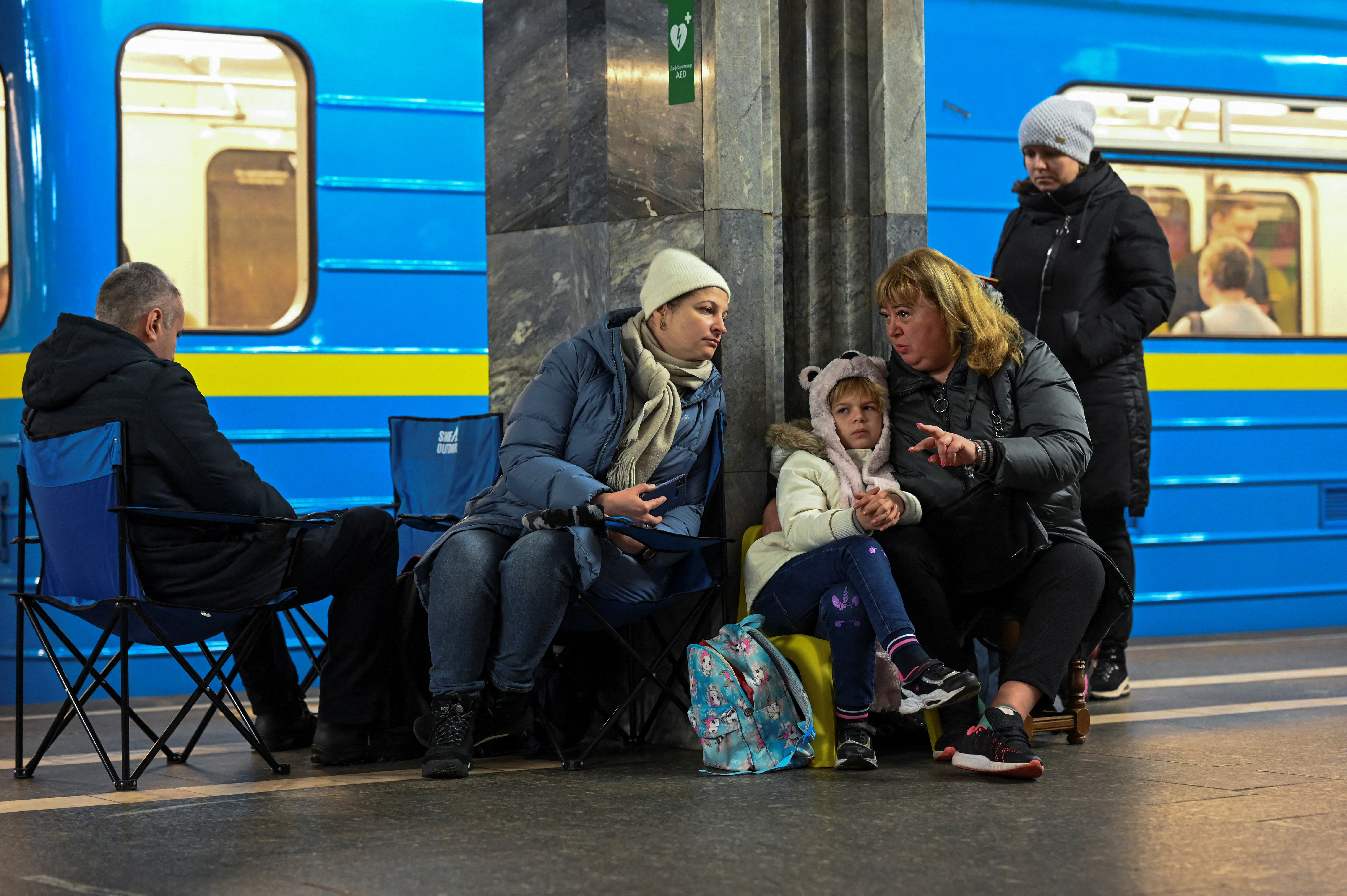
People take shelter inside a metro station during massive Russian missile attacks in Kyiv, Ukraine January 26, 2023. REUTERS/Viacheslav Ratynskyi
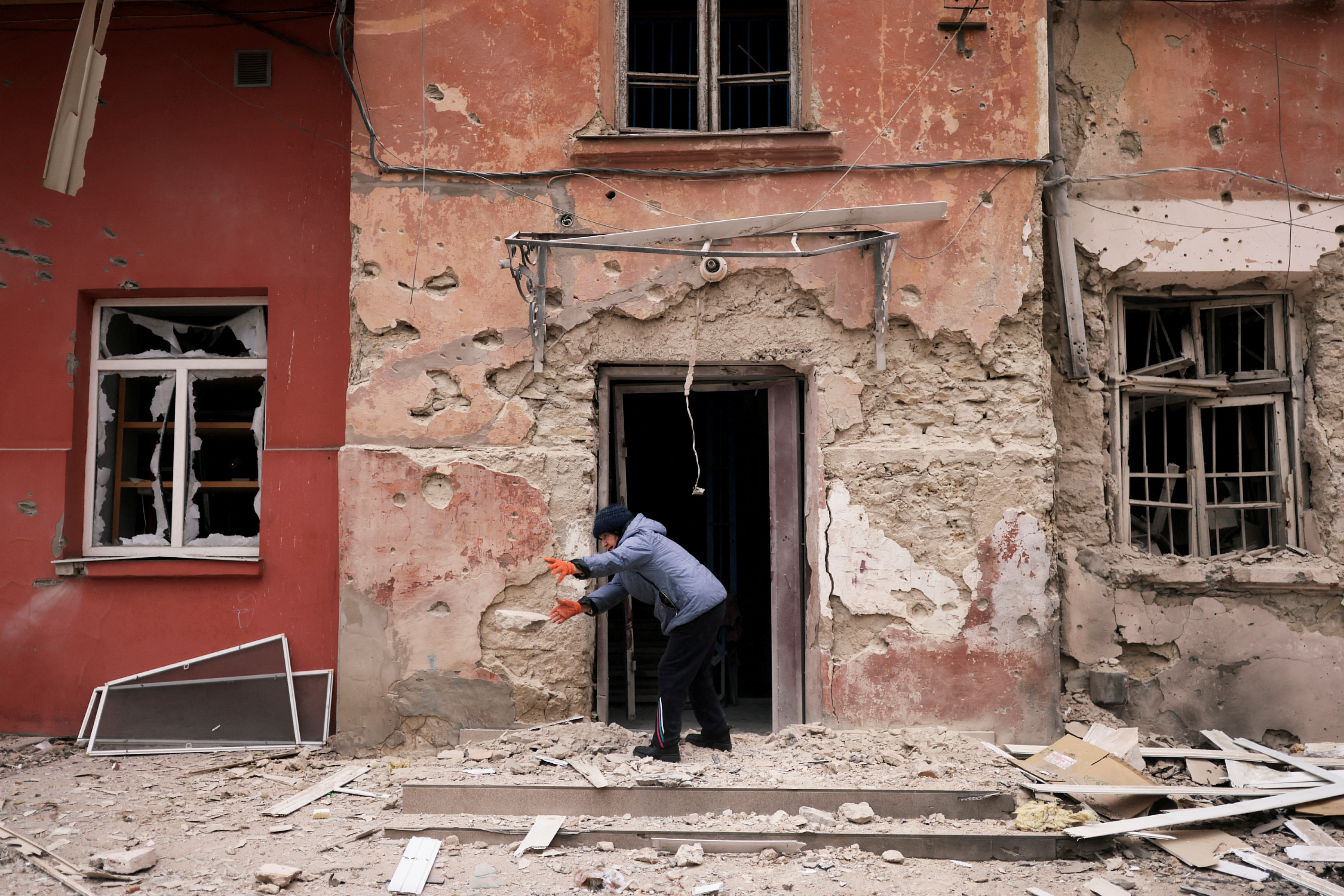
Zoya Mykolaivna, 84, removes debris in front of her apartment at a residential building damaged by a Russian military strike, amid Russia’s invasion of Ukraine, in Kherson, Ukraine January 25, 2023. REUTERS/Nacho Doce
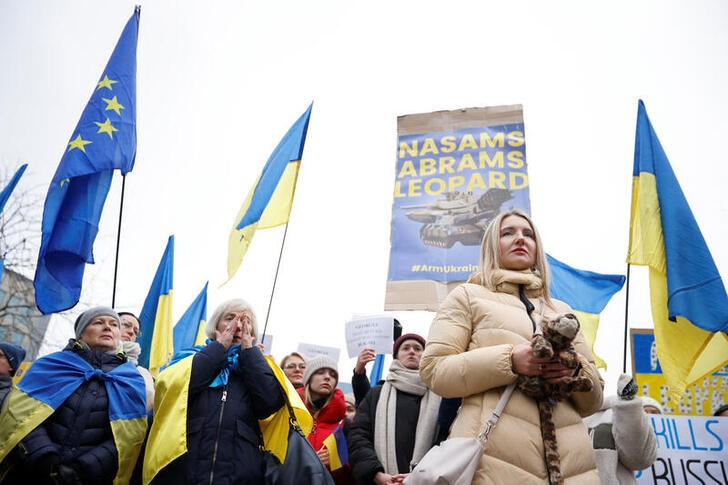
Protesters gather in support of Ukraine during a meeting of European Union (EU) Foreign Ministers in Brussels, Belgium January 23, 2023. REUTERS/Johanna Geron
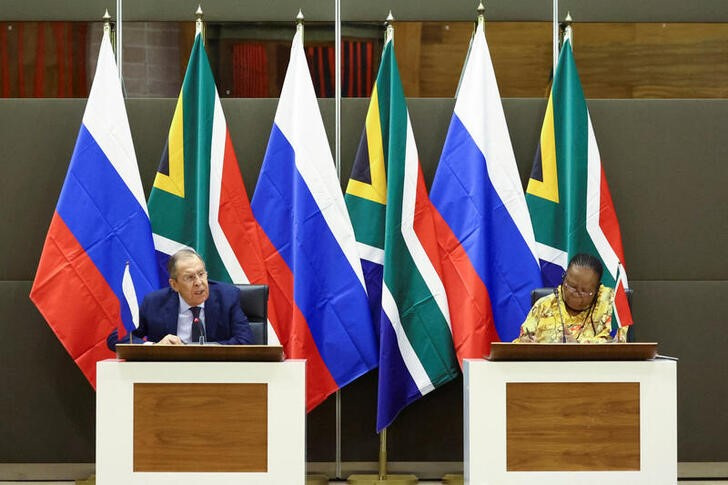
South Africa’s Foreign Minister Naledi Pandor and Russia’s Foreign Minister Sergei Lavrov attend a media briefing, in Pretoria, South Africa, January 23, 2023. REUTERS/Siphiwe Sibeko
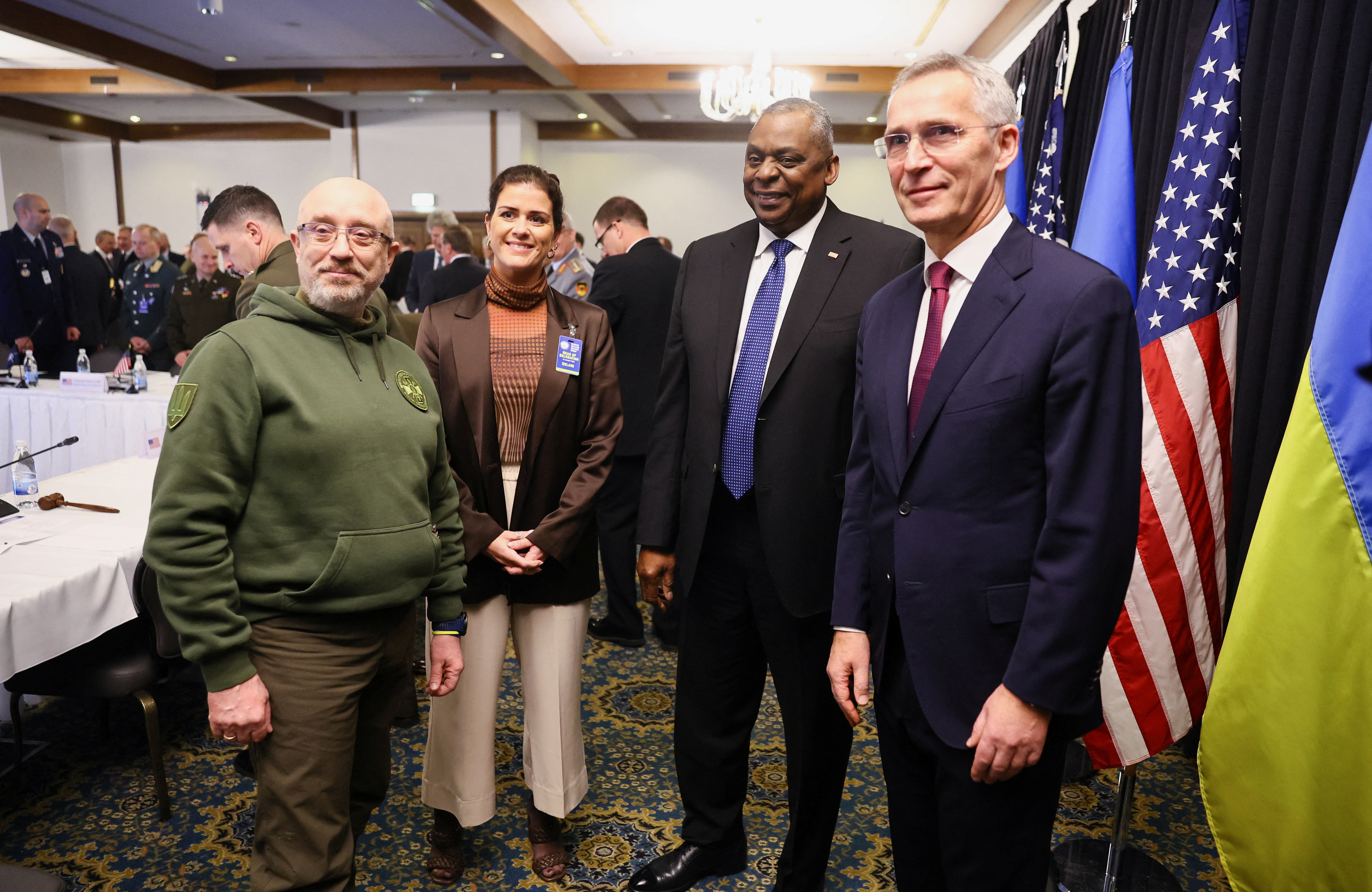
U.S. Secretary of Defense Lloyd Austin, Ukraine’s Defense Minister Oleksiy Reznikov, Iceland’s Minister of Foreign Affairs Thordis Kolbrun Reykfjord Gylfadottir and NATO Secretary General Jens Stoltenberg, meet to discuss how to help Ukraine defend itself, at Ramstein Air Base, Germany, January 20, 2023. REUTERS/Wolfgang Rattay
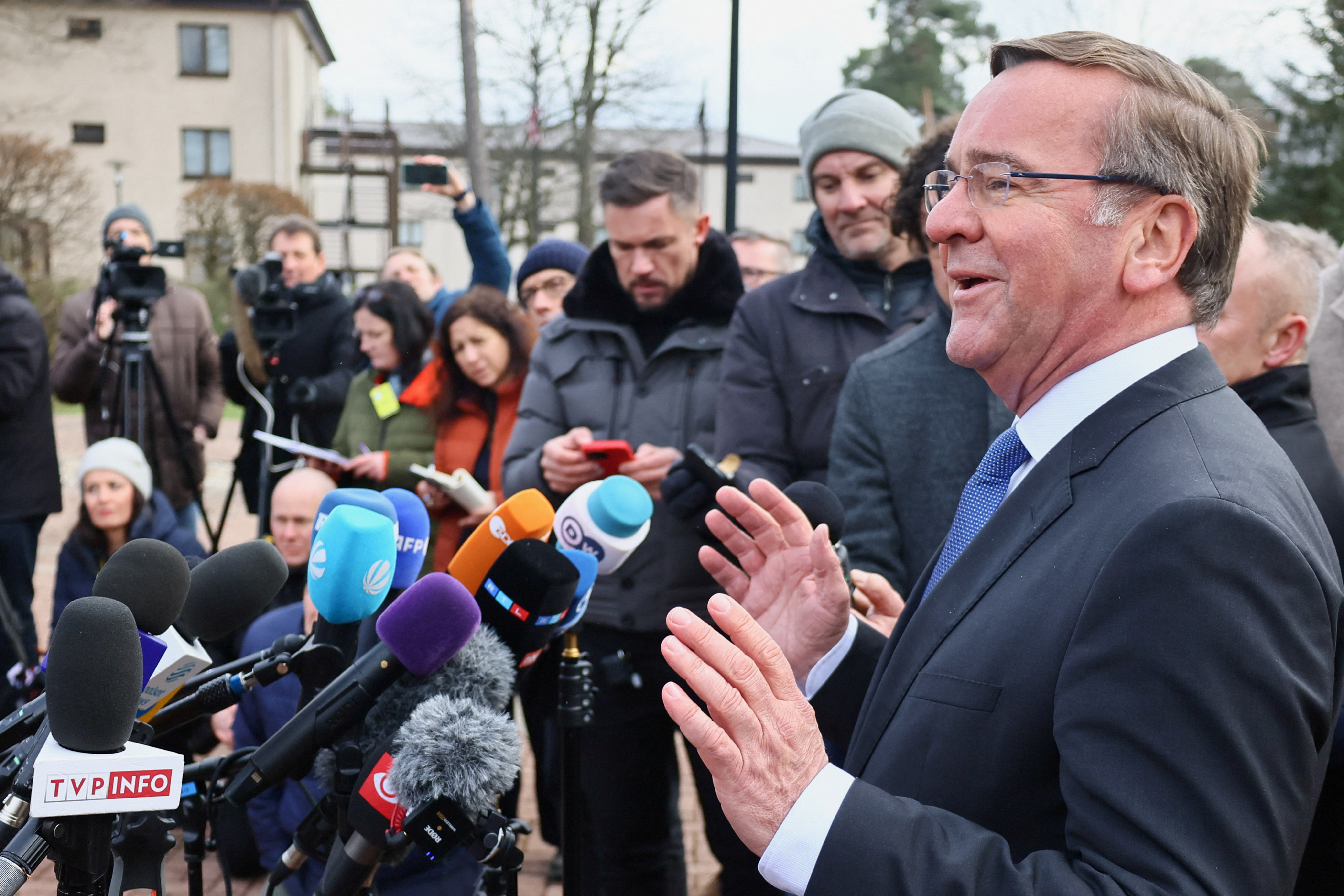
German Defence Minister Boris Pistorius speaks to the media at Ramstein Air Base, Germany, January 20, 2023. REUTERS/Wolfgang Rattay
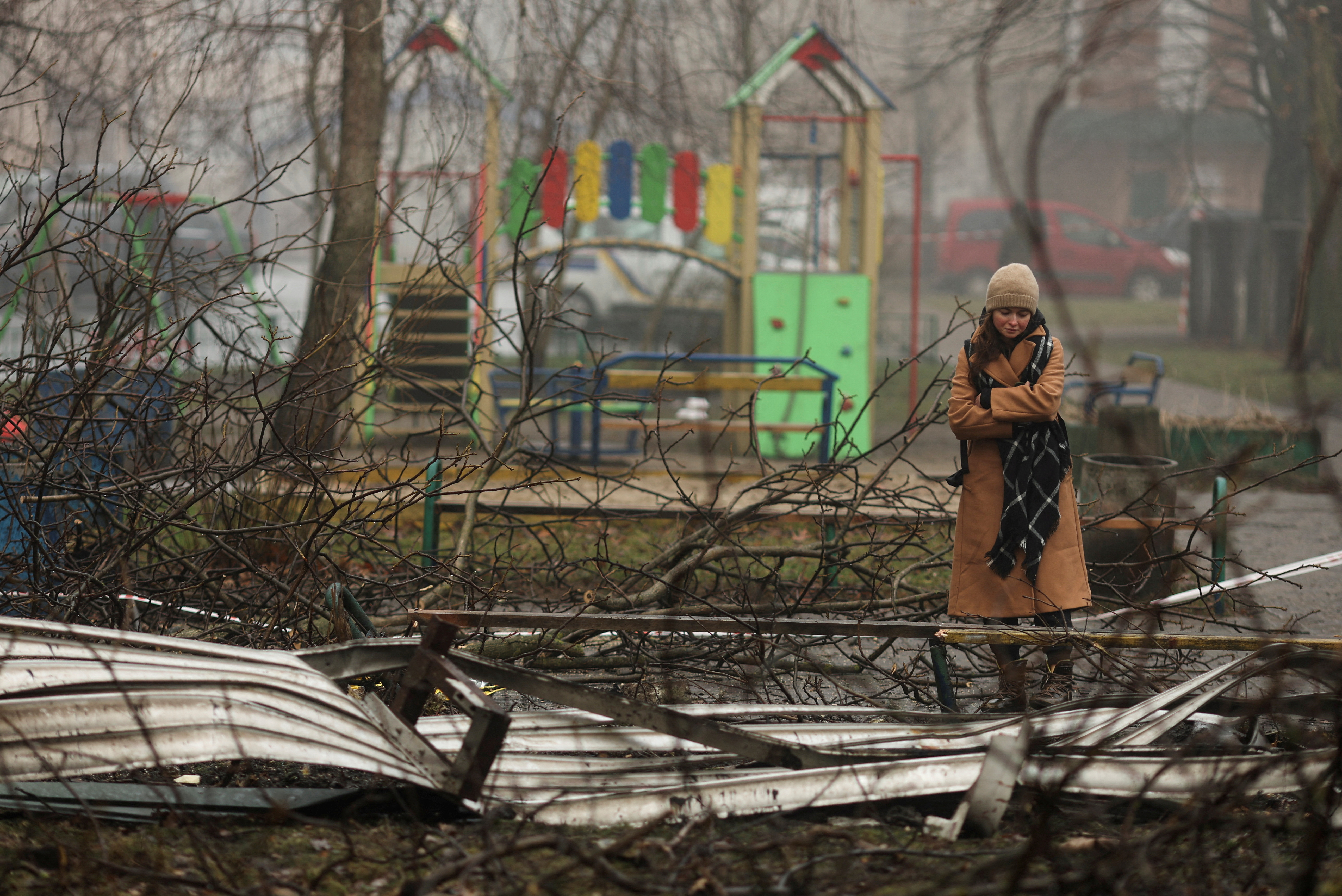
A relative looks at the site of a helicopter crash, amid Russia’s attack on Ukraine, in the town of Brovary, outside Kyiv, Ukraine, January 19, 2023. REUTERS/Nacho Doce

An employee works on the Senator APC at vehicle manufacturer Roshel after Canada’s defence minister announced the supply of 200 Senator armored personnel carriers to Ukraine, as part of a new package of military assistance, in Mississauga, Ontario, Canada January 19, 2023. REUTERS/Carlos Osorio
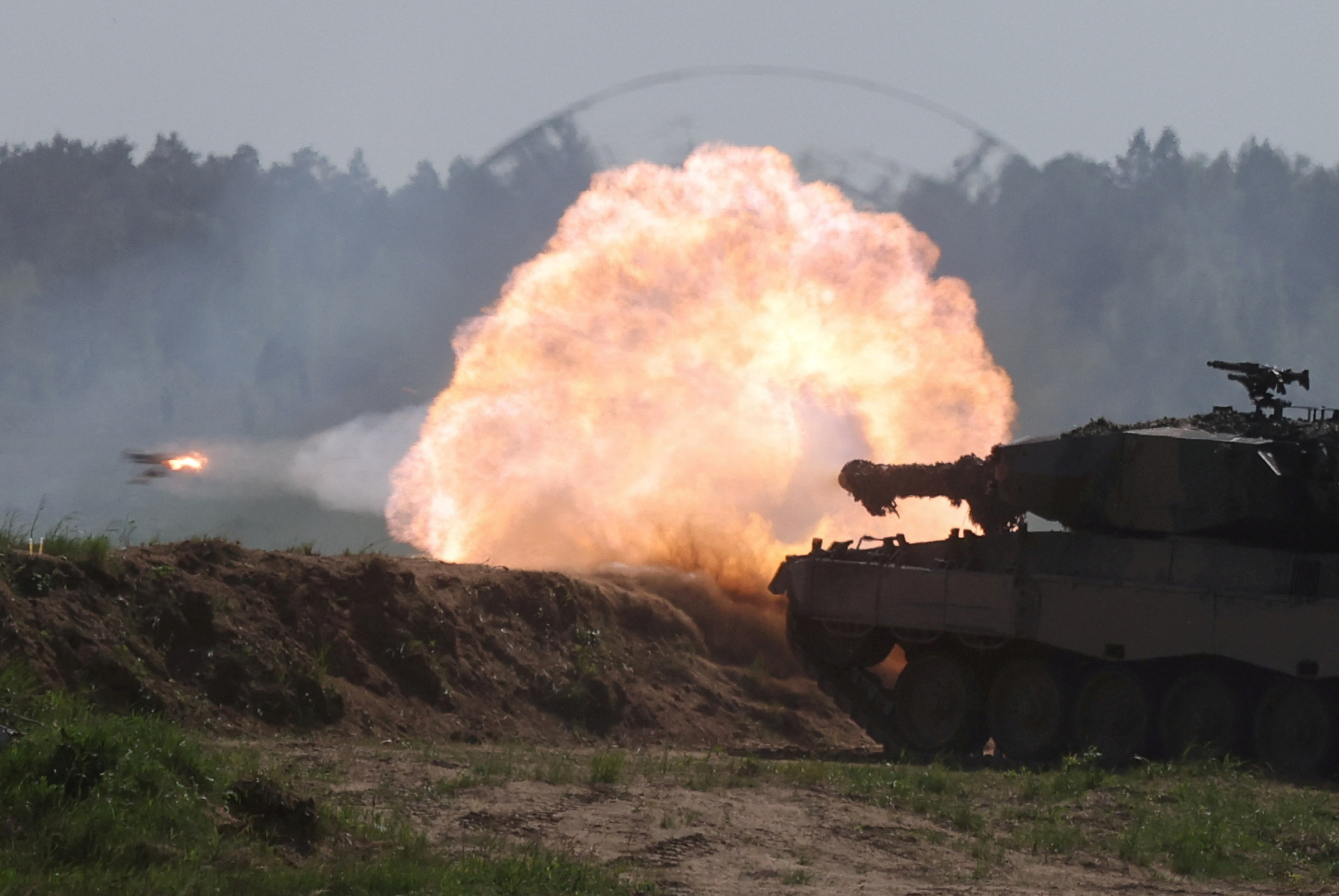
A Polish Leopard 2PL tank fires during Defender Europe 2022 military exercise of NATO troops including French, American, and Polish troops, amid the Russian invasion of Ukraine, at the military range in Bemowo Piskie, near Orzysz, Poland May 24, 2022. REUTERS/Kacper Pempel
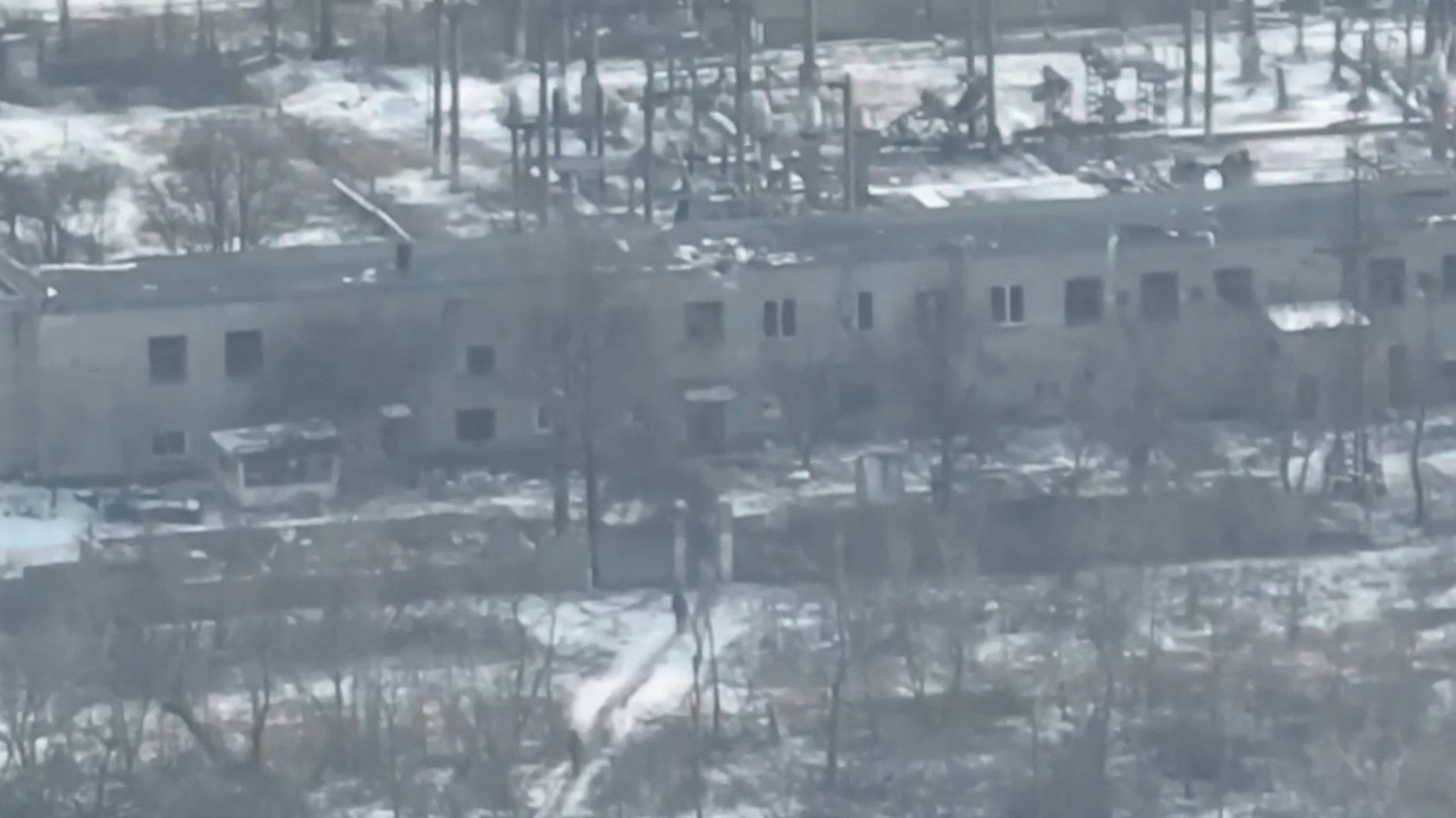
A general view of people said to be Russian soldiers seeking for shelter, in Kurdyumivka, amid Russia’s attack on Ukraine, in Donetsk region, Ukraine in this screengrab obtained from a handout drone footage on January 22, 2023. National Guard of Ukraine Press Service/Handout via REUTERS
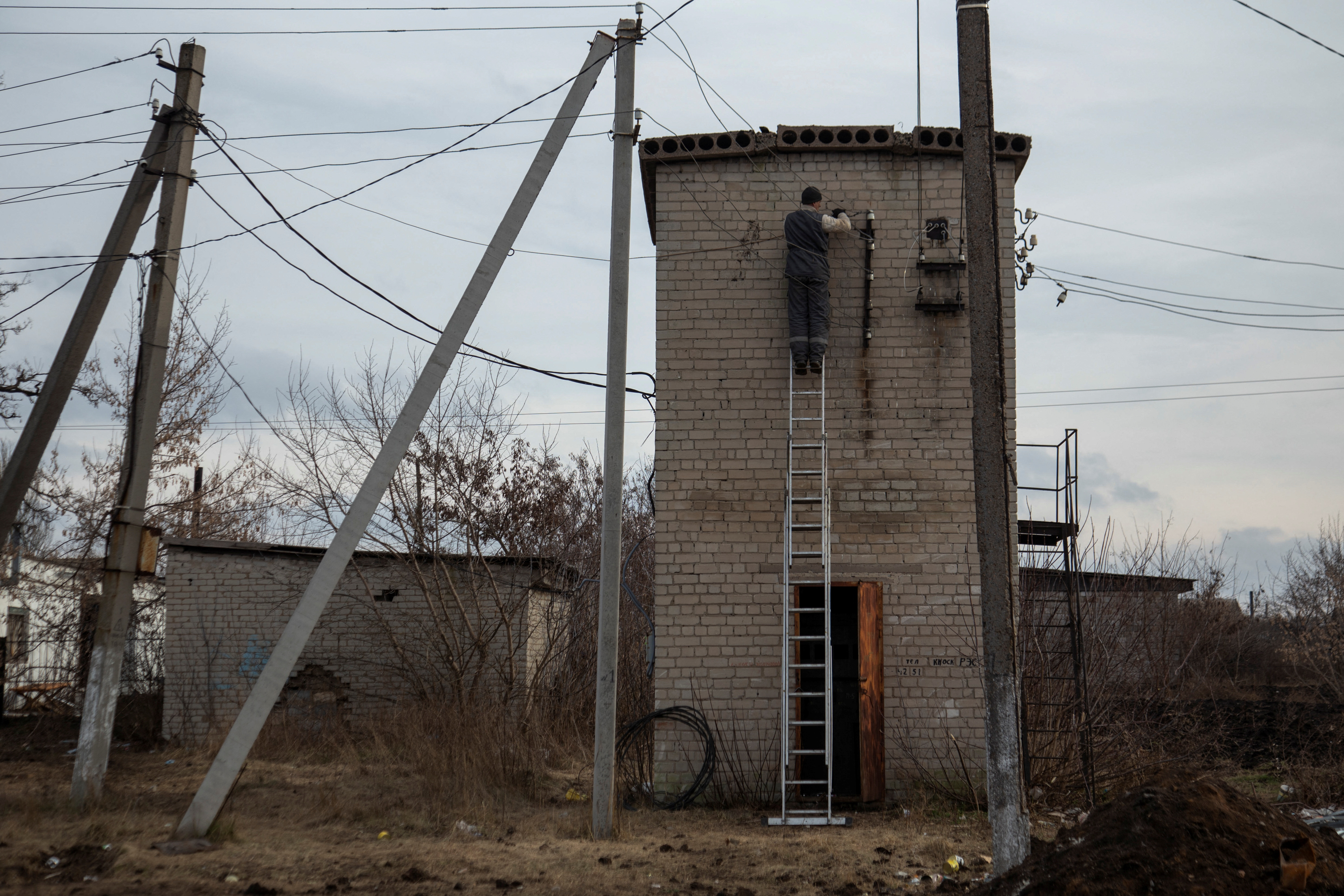
A man repairs power lines, amid Russia’s attack on Ukraine, in the village of Bilokuzmynivka, Donetsk region, Ukraine January 21, 2023. REUTERS/Oleksandr Ratushniak
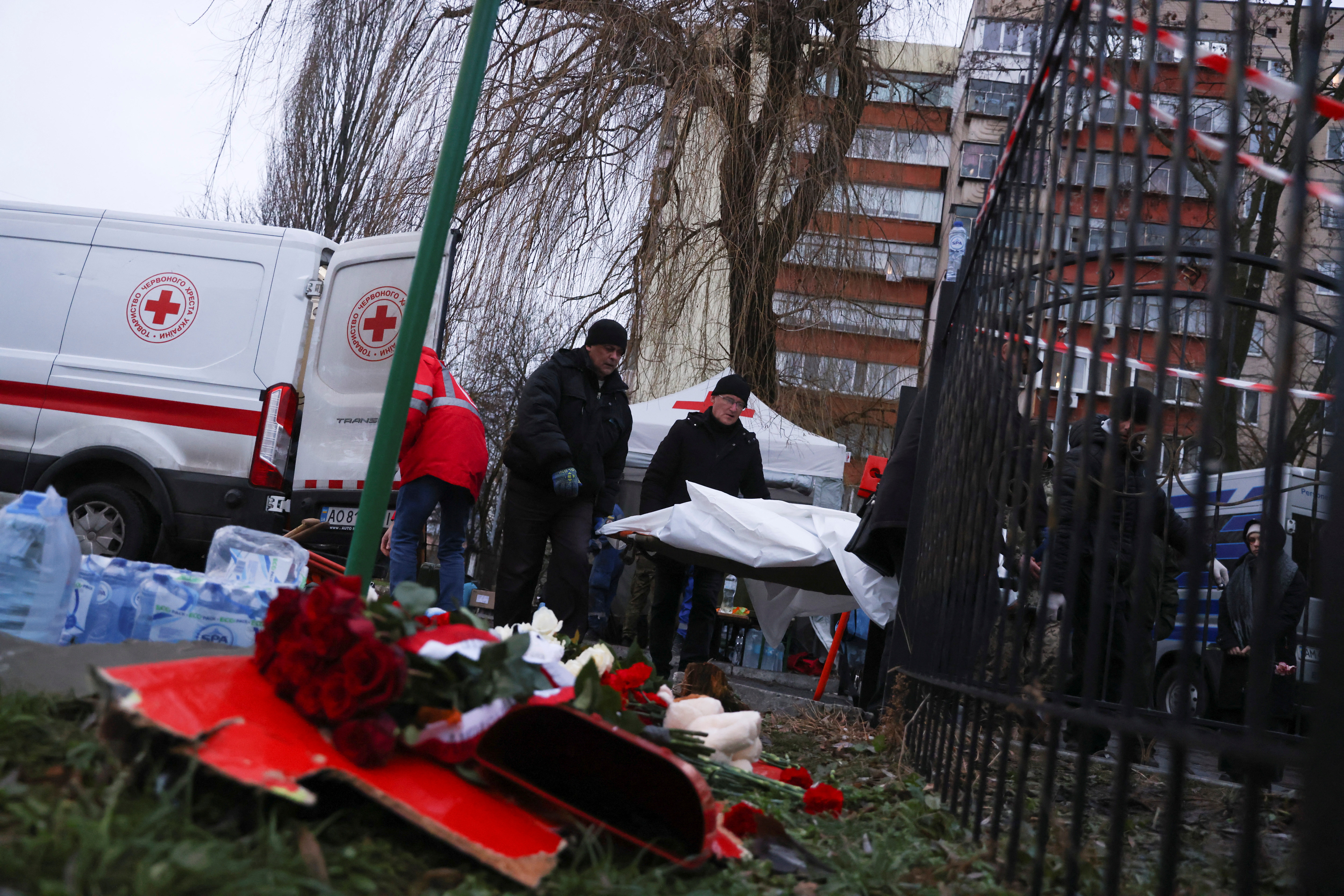
Ritual workers carry bodies of victims as they walk past tributes for victims, near the site of a helicopter crash, amid Russia’s attack on Ukraine, in the town of Brovary, outside Kyiv, Ukraine, January 18, 2023. REUTERS/Nacho Doce
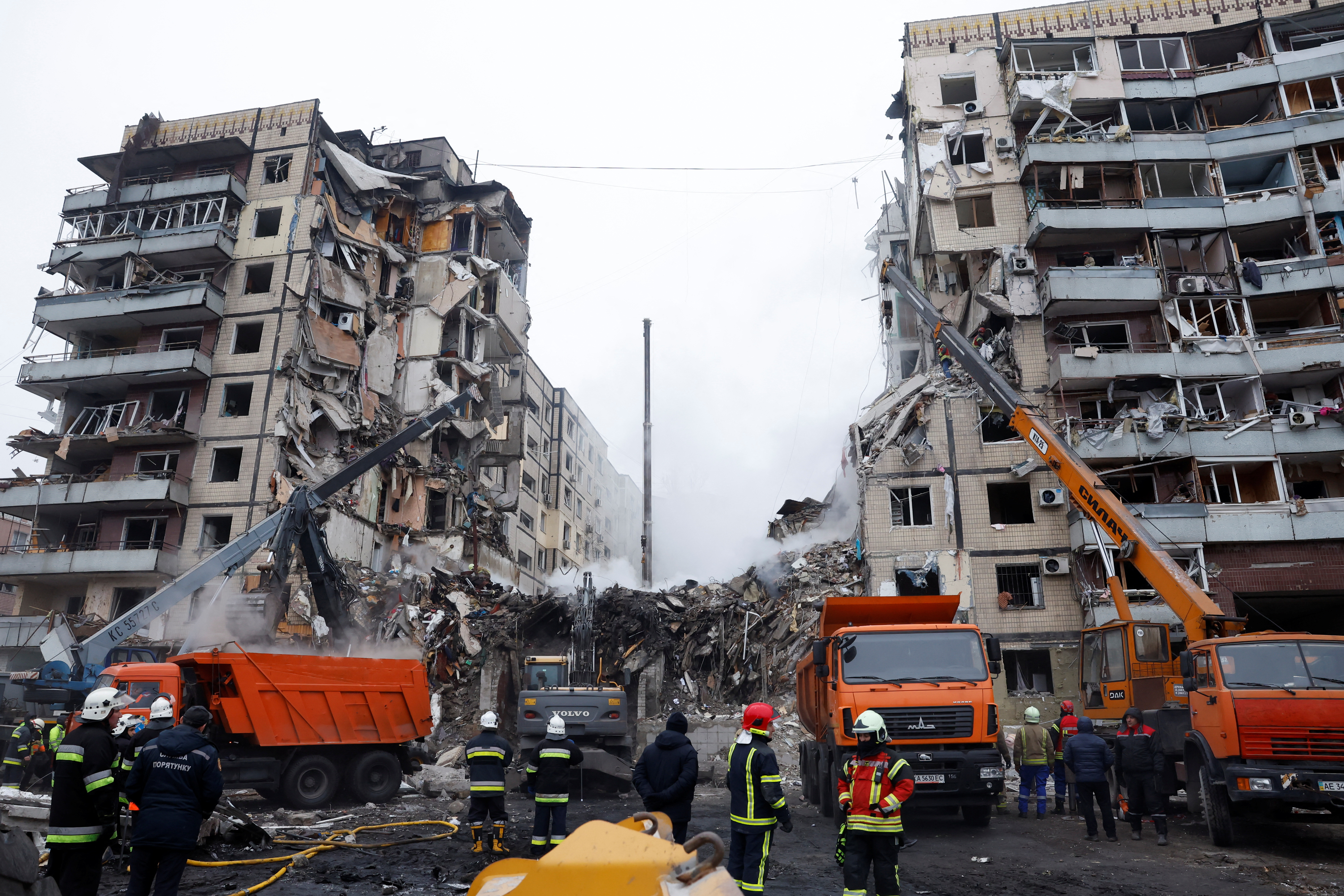
Emergency personnel work at the site where an apartment block was heavily damaged by a Russian missile strike, amid Russia’s attack on Ukraine, in Dnipro, Ukraine January 15, 2023. REUTERS/Clodagh Kilcoyne
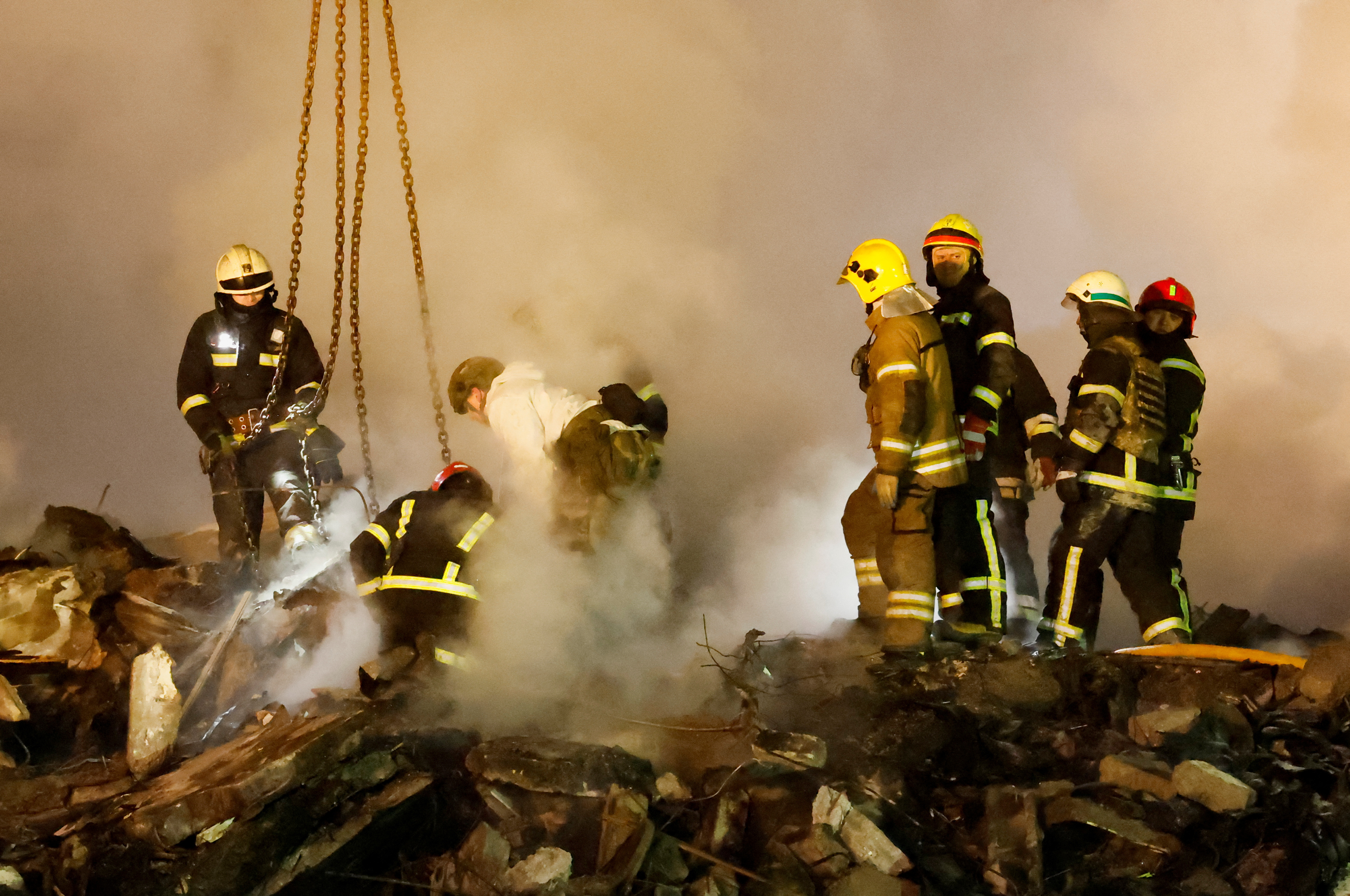
Emergency personnel work at the site where an apartment block was heavily damaged by a Russian missile strike, amid Russia’s attack on Ukraine, in Dnipro, Ukraine January 15, 2023. REUTERS/Clodagh Kilcoyne
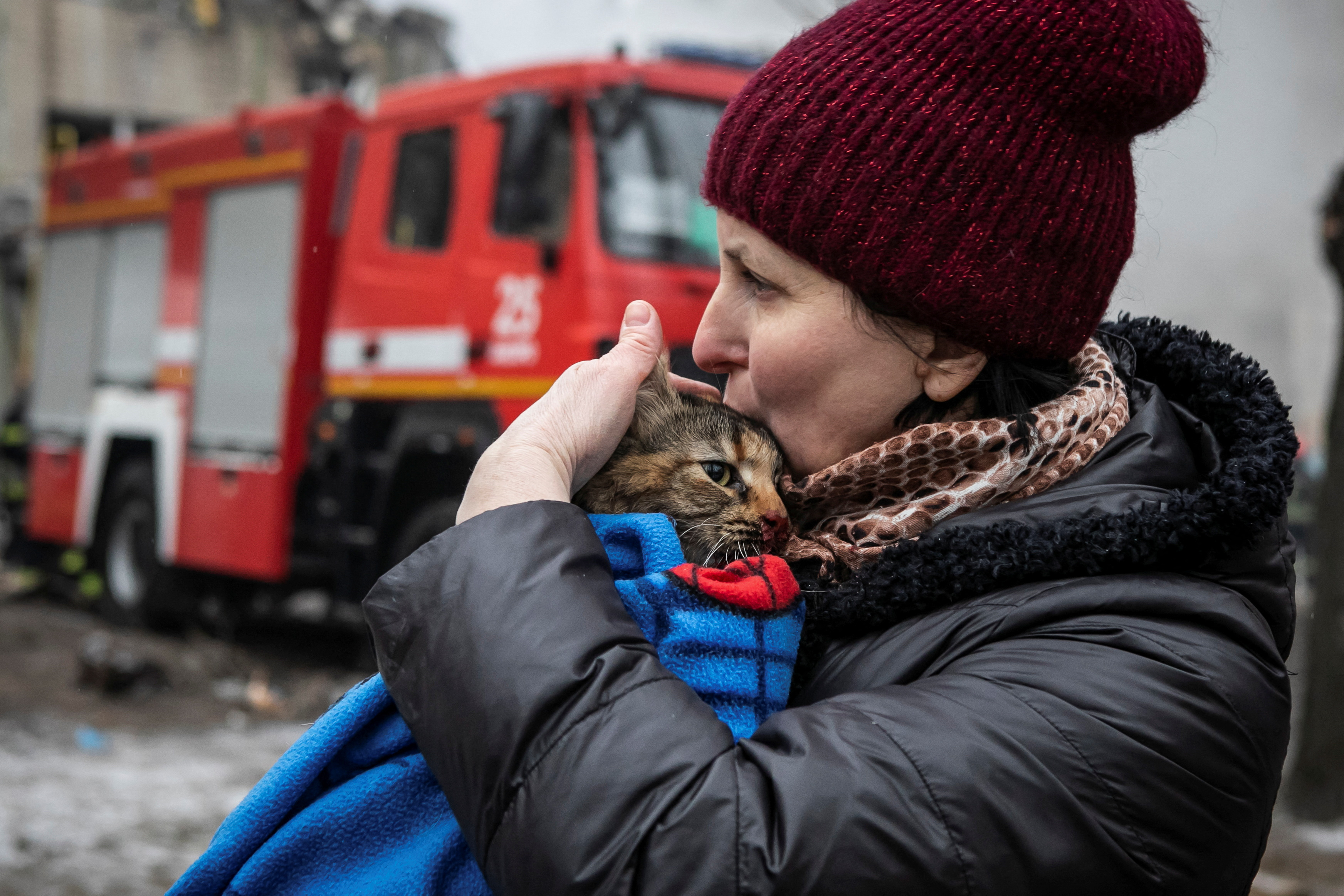
A local woman holds her cat rescued by emergency workers at the site where an apartment block was heavily damaged by a Russian missile strike, amid Russia’s attack on Ukraine, in Dnipro, Ukraine January 15, 2023. REUTERS/Yevhenii Zavhorodnii
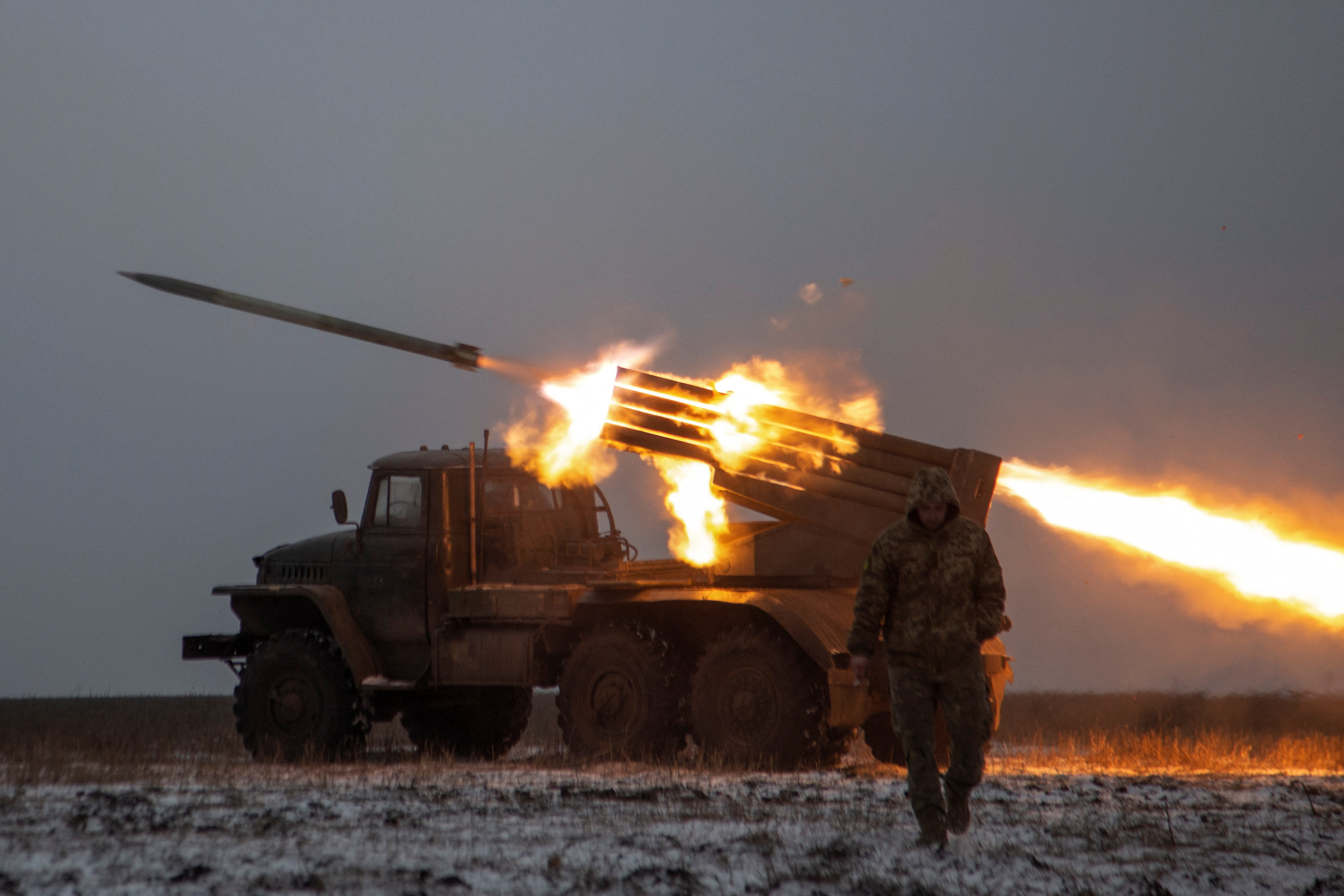
Ukrainian servicemen fire a BM-21 Grad multiple launch rocket system towards Russian positions on a frontline near the town of Bakhmut, amid Russia’s attack on Ukraine, in Donetsk region, Ukraine January 15, 2023. REUTERS/Oleksandr Ratushniak
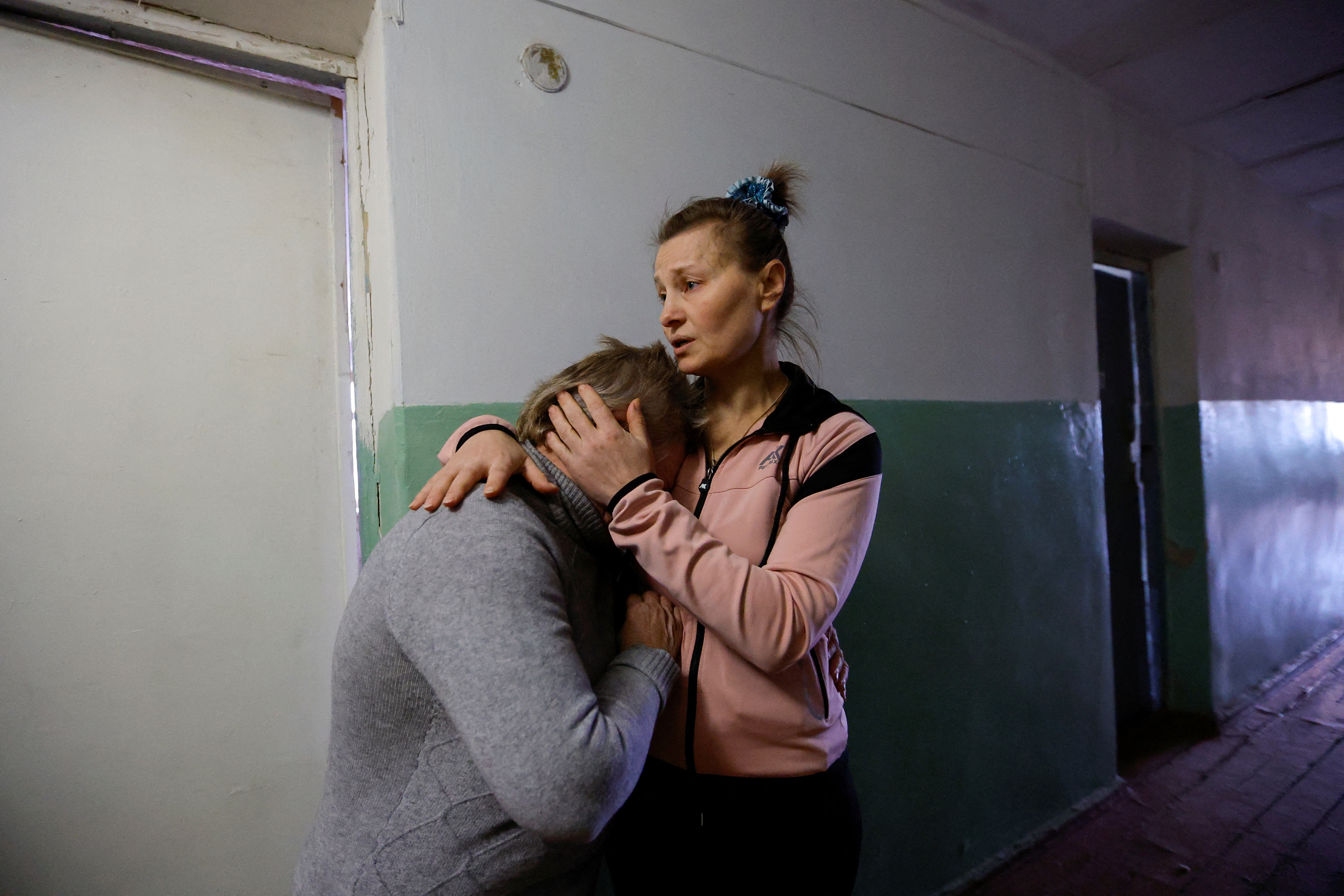
Natalya and Yelena, 65, who didn’t give their family names react while standing in a corridor of a temporary accommodation centre located in a local dormitory for civilians evacuated from the salt-mining town of Soledar in the course of Russia-Ukraine conflict, in Shakhtarsk (Shakhtyorsk) in the Donetsk Region, Russian-controlled Ukraine, January 14, 2023. REUTERS/Alexander Ermochenko
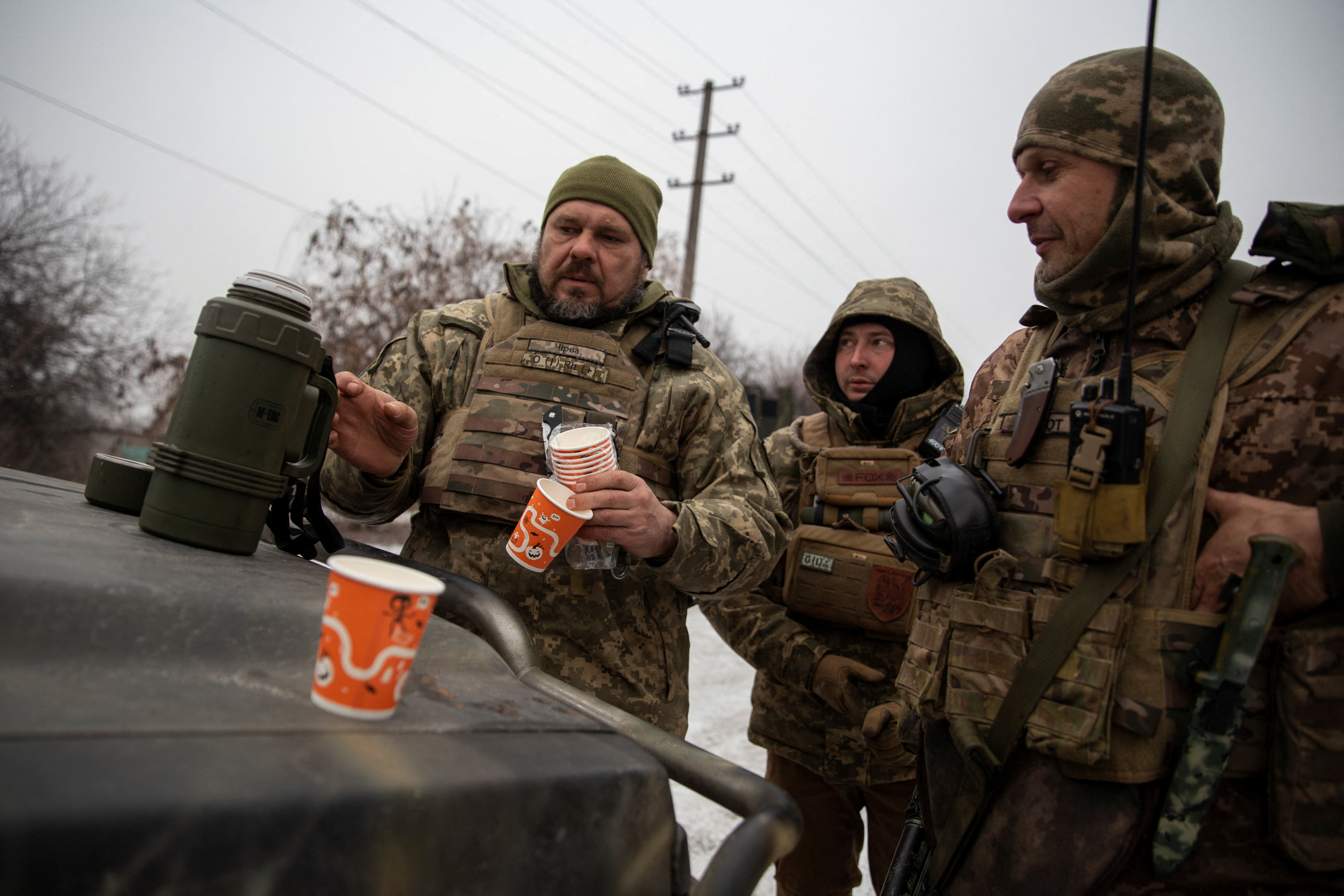
Ukrainian servicemen have coffee before moving to their position on a frontline near the town of Bakhmut, amid Russia’s attack on Ukraine, in Donetsk region, Ukraine January 15, 2023. REUTERS/Oleksandr Ratushniak
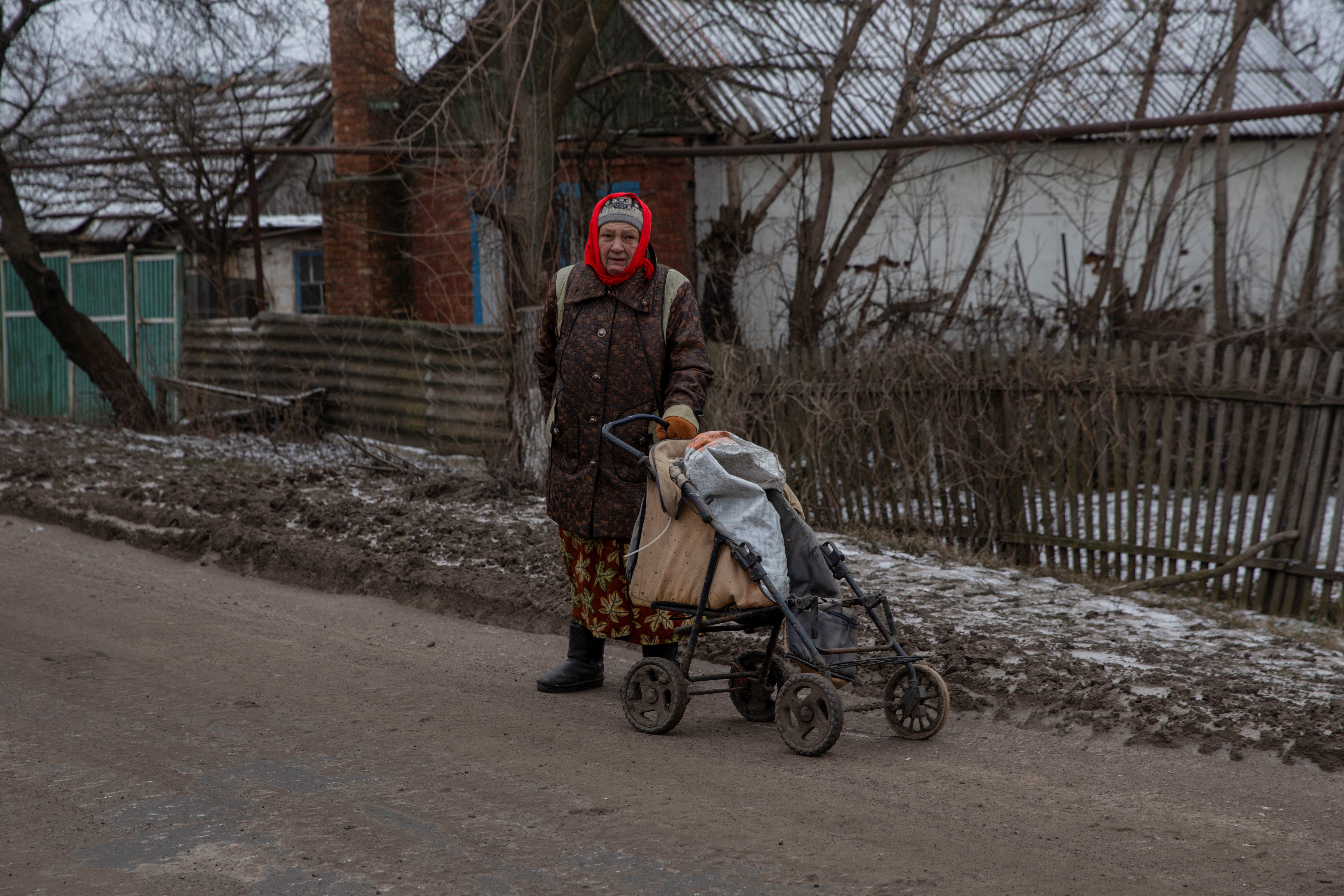
A woman pushes a stroller loaded with a sack of coal for heating her house, amid Russia’s attack on Ukraine, in the village of Nykyforivka, Donetsk region, Ukraine, January 15, 2023. REUTERS/Oleksandr Ratushniak
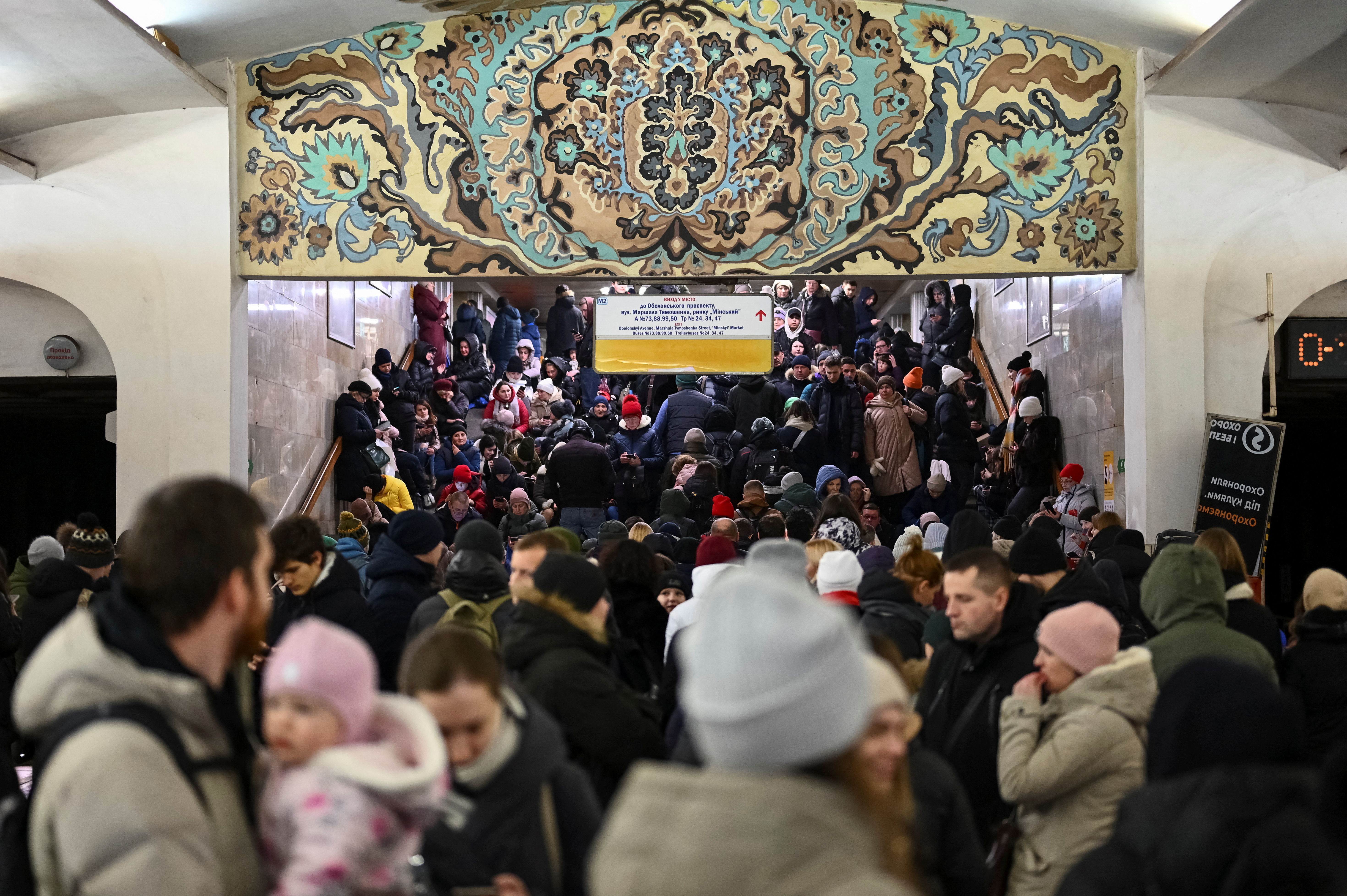
People take shelter inside a metro station during massive Russian missile attacks in Kyiv, Ukraine January 14, 2023. REUTERS/Viacheslav Ratynskyi
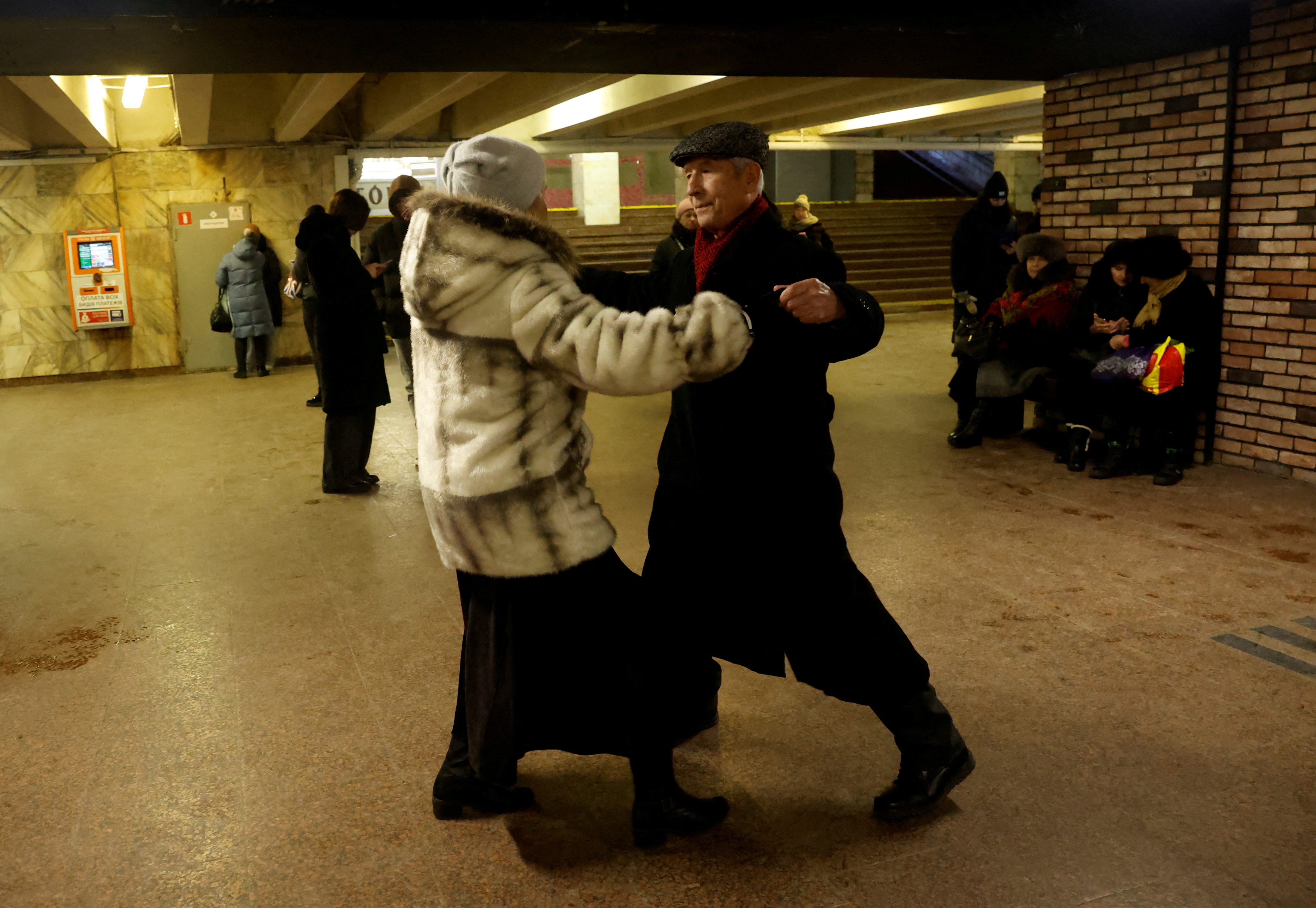
People dance to music as they take shelter inside a metro station during massive Russian missile attacks in Kyiv, Ukraine January 14, 2023. REUTERS/Clodagh Kilcoyne
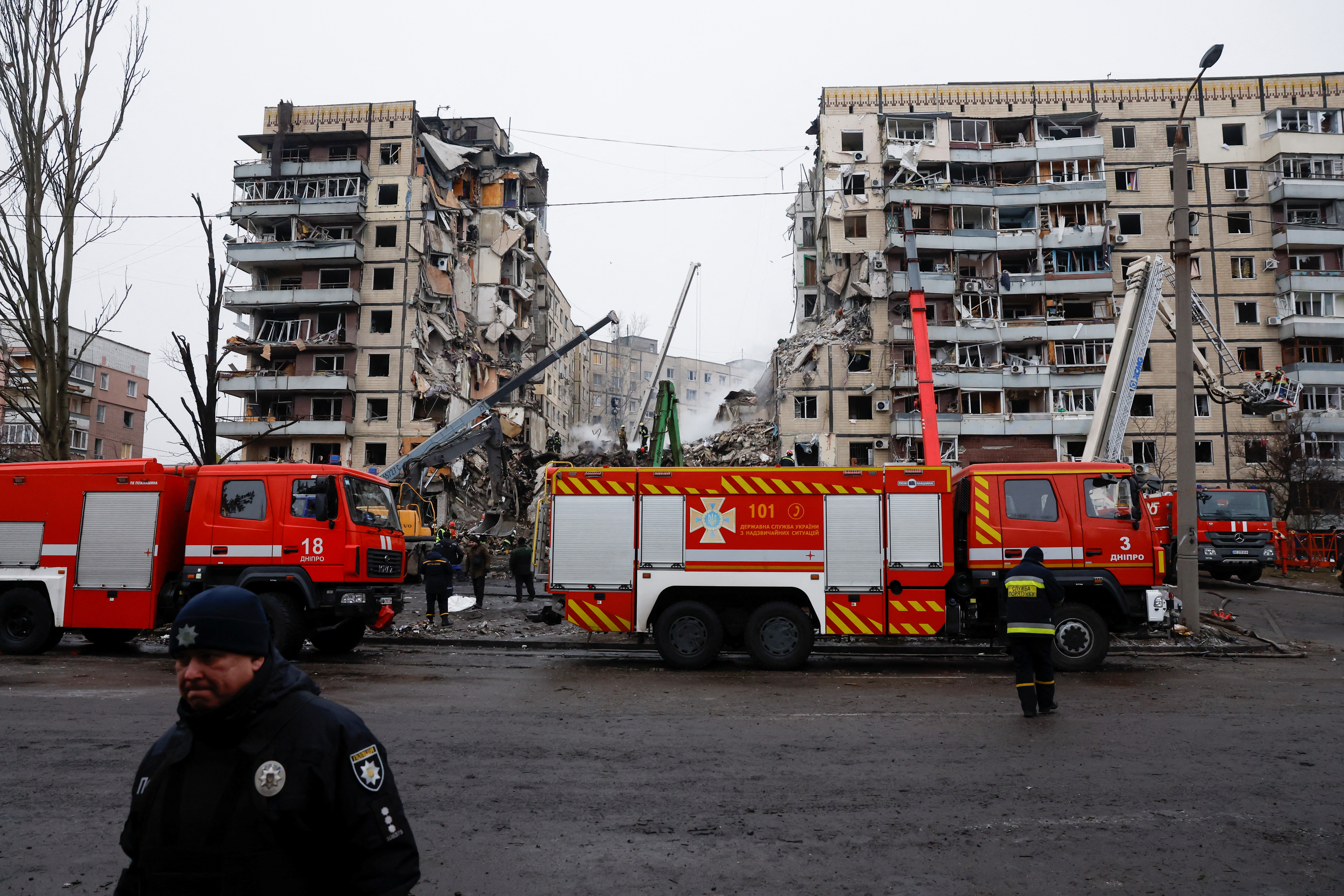
Emergency personnel work at the site where an apartment block was heavily damaged by a Russian missile strike, amid Russia’s attack on Ukraine, in Dnipro, Ukraine January 15, 2023. REUTERS/Clodagh Kilcoyne
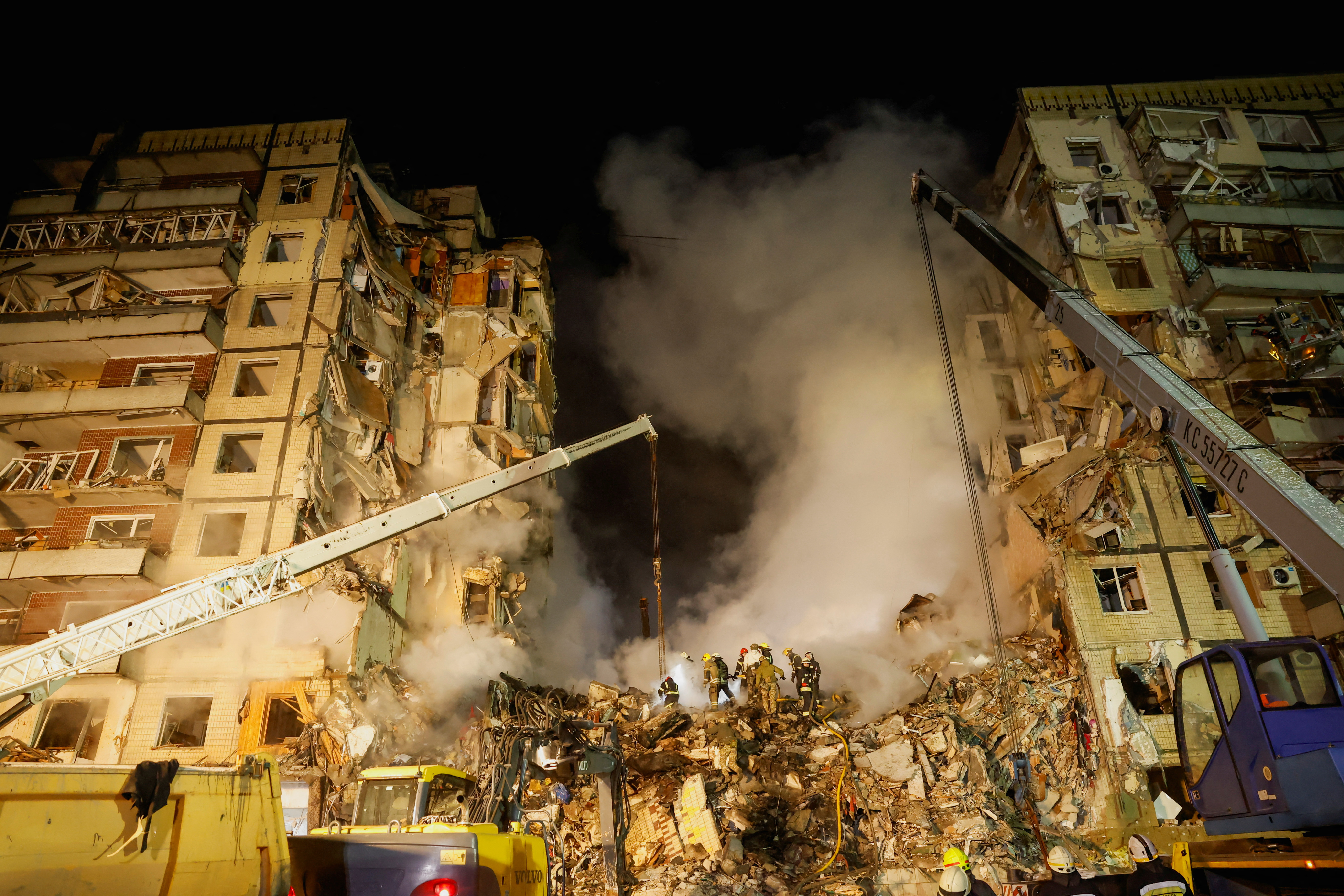
Emergency personnel work at the site where an apartment block was heavily damaged by a Russian missile strike, amid Russia’s attack on Ukraine, in Dnipro, Ukraine January 15, 2023. REUTERS/Clodagh Kilcoyne
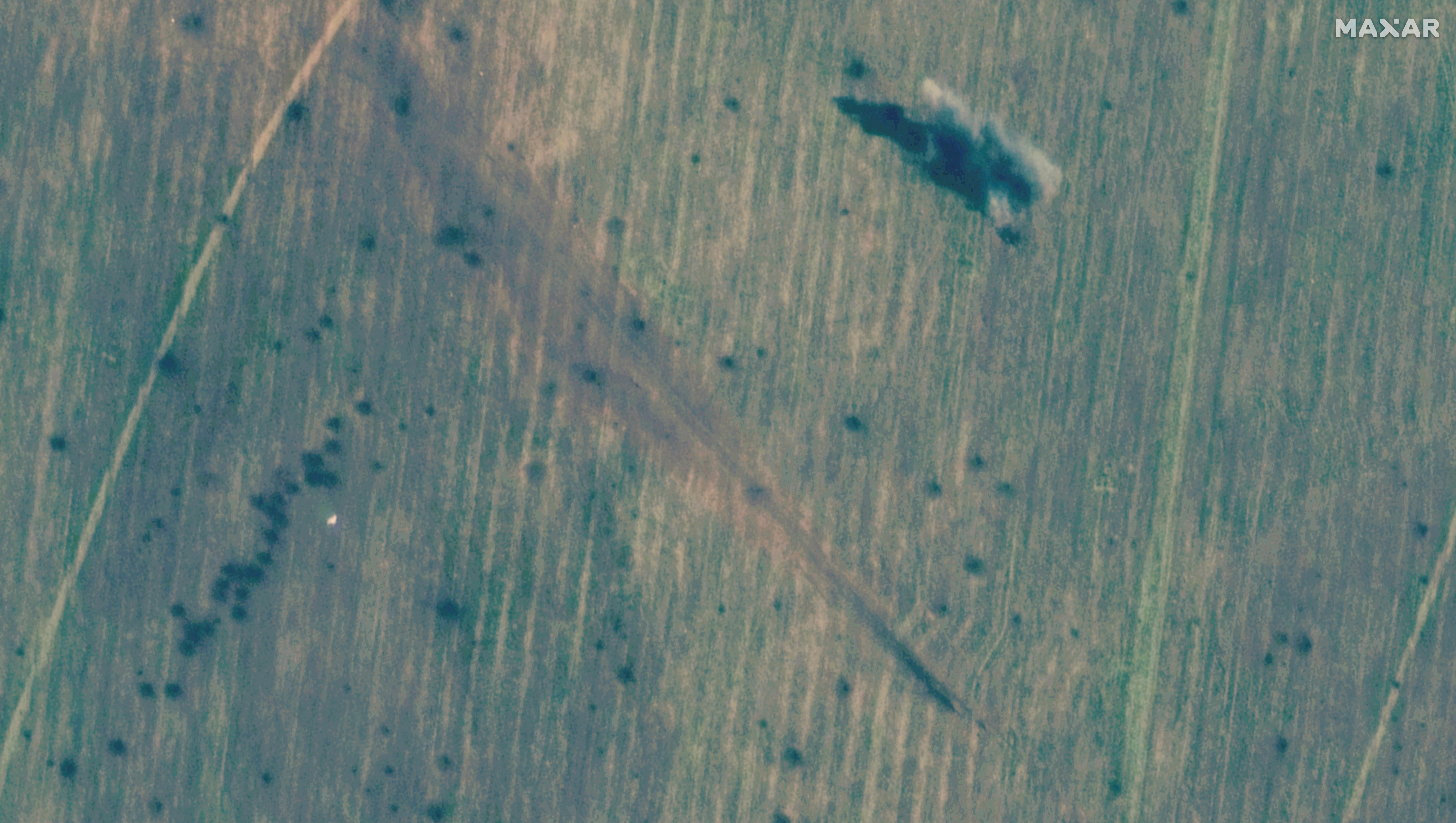
A satellite view shows a closer view of exploding munitions, in Bakhmut, Ukraine, January 3, 2023. Satellite image 2023 Maxar Technologies./Handout via REUTERS
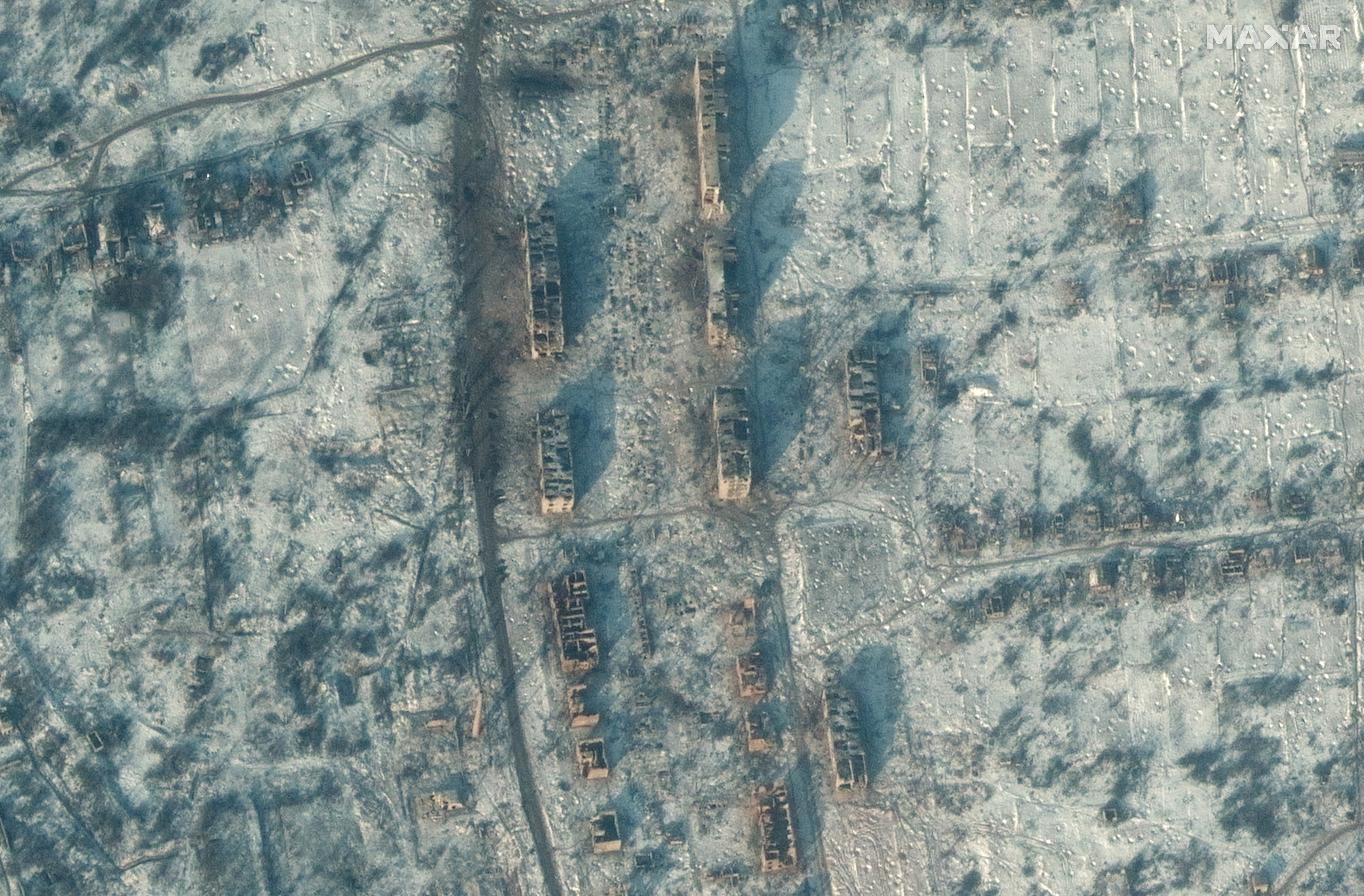
A satellite view shows destroyed apartment buildings and homes, in Soledar, Ukraine, January 10, 2023. Satellite image ?2023 Maxar Technologies./Handout via REUTERS

Categories
Audio Sources - Full Text Articles

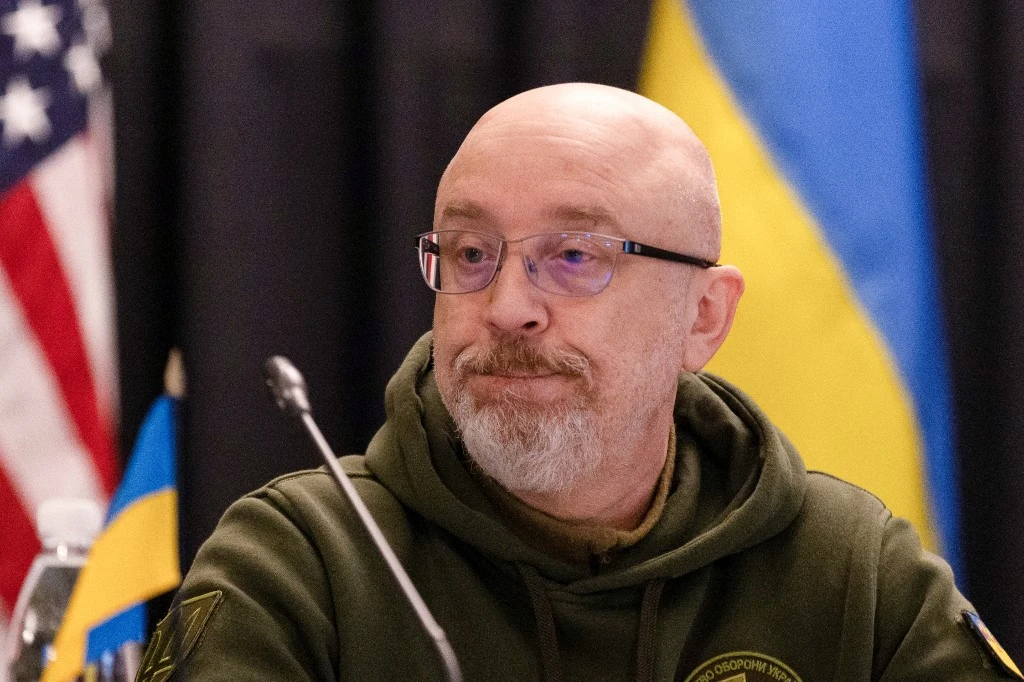
As Resignation Rumours Intensify, Defense Minister Pledges to Help Successor Achieve ‘Victory of Ukraine’

501c95b169c5f1eb8b3c21998994faf9.jpeg?w=

Rumours about Oleksiy Reznikov’s future have been circulating for days but he reiterated during a press conference today that the final decision lay with President Zelensky.

Categories
Audio Sources - Full Text Articles

Russia says Ukraine planning to blow up buildings in false flag operation

2023-02-05T15:21:50Z

Russia’s defence ministry accused Ukraine of preparing to blow up buildings in the eastern Ukrainian city of Kramatorsk and then accuse Moscow of carrying out war crimes and targeting civilians in a false flag operation.

The defence ministry provided no evidence for the claims, which it outlined in a post shared on social media on Sunday, saying that the alleged attacks would be used by Kyiv to push for Western governments to increase weapons supplies to the country.

Reuters was unable to immediately verify the battlefield claims of either side.

A Russian missile killed at least three when it struck a residential building in the city of Kramatorsk on Thursday, police in Ukraine said. Russia has not publicly commented on that strike.

Moscow has denied targeting civilians throughout what it calls a “special military operation” in Ukraine.

Kyiv and Western governments say hundreds of civilians have been killed in Russian missile strikes on residential sites across Ukraine since Moscow’s forces invaded last February.

On Sunday, Russia’s defence ministry said Kyiv planned to detonate three medical buildings – dispensaries and a hospital – and “accuse Russia of an allegedly ‘deliberate attack’ on civilian objects”.

“The bombing of the medical institutions will be presented as another ‘atrocity’ of Russian troops, requiring a response from the world community and accelerating the supply of long-range missiles to Kyiv (to be used) for strikes on Russian territory,” the defence ministry said.

There was no immediate response from Kyiv to the claims.


Categories
Audio Sources - Full Text Articles

Ukraine ready to repel possible Russian offensive this month, defence minister

2023-02-05T15:07:23Z

?m=02&d=20230205&t=2&i=1622546860&r=LYNX

A view shows a building of the National University of Urban Economy heavily damaged by a Russian missile strike, amid Russia’s attack on Ukraine, in central Kharkiv, Ukraine February 5, 2023. REUTERS/Vitalii Hnidyi

KYIV (Reuters) -Ukraine expects a possible major Russian offensive this month, but Kyiv has the reserves to hold back Moscow’s forces even though the latest Western military supplies will not all arrive in time, Ukraine’s defence minister said on Sunday.

Russia could launch the new attack for “symbolic” reasons around the first anniversary of its invasion, but its resources are not ready from a military point of view, the minister, Oleksii Reznikov, told a news conference.

“Despite everything, we expect a possible Russian offensive in February. This is only from the point of view of symbolism; it’s not logical from a military view. Because not all of their resources are ready. But they’re doing it anyway,” he said.

Russian forces have been making incremental advances in the east as Moscow tries to capture the embattled city of Bakhmut and revive its faltering invasion after a string of battlefield setbacks in the second half of last year.

Reznikov said the offensive would likely be launched in the east – where Russia is trying to capture all the heavily-industrialised Donbas region – or the south where it wants to widen its land corridor to the occupied peninsula of Crimea.

He estimated that Russia had 12,000 troops in Belarusian military bases, a number that would not be enough to launch a significant attack from Belarus into Ukraine’s north, reopening a new front.

The United States and other Western governments have pledged billions of dollars in new military assistance including tanks and infantry fighting vehicles to help Ukraine withstand a new attack as well as to help Kyiv launch a counteroffensive.

“Not all of the Western weaponry will arrive in time. But we are ready. We have created our resources and reserves, which we are able to deploy and with which we are able to hold back the attack,” Reznikov said.

Categories
Audio Sources - Full Text Articles

On His Last Day in South Sudan, Pope Francis Makes a Final Appeal for Peace

JUBA, South Sudan (AP) — Pope Francis made a final appeal for peace in South Sudan on Sunday as he celebrated Mass before tens of thousands of people to close out an unusual mission by Christian religious leaders to nudge forward the country’s recovery from civil war.

On the last day of his African pilgrimage, Francis begged South Sudanese people to lay down their weapons and forgive one another, presiding over Mass at the country’s monument to independence hero John Garang before an estimated 100,000 people, including the country’s political leadership.

“Even if our hearts bleed for the wrongs we have suffered, let us refuse, once and for all, to repay evil with evil,” Francis said. “Let us accept one another and love one another with sincerity and generosity, as God loves us.”

[time-brightcove not-tgx=”true”]

His message aimed to revive hopes in the world’s youngest country, which gained independence from the majority Muslim Sudan in 2011 but has been beset by civil war and conflict.

Read more: The World Has Forgotten About the Conflict in South Sudan. Enter Pope Francis

President Salva Kiir, his longtime rival Riek Machar and other opposition groups signed a peace agreement in 2018, but the deal’s provisions, including the formation of a national unified army, remain largely unimplemented and fighting has continued to flare.

“We have suffered a lot,” said Natalima Andrea, a 66-year-old mother of seven who wiped a tear from her eye as she waited for Francis’ Mass to begin. “We need a permanent peace now and I hope these prayers would yield to lasting peace.”

The Vatican said more than 100,000 people attended the service, filling the field of the Garang Mausoleum and surrounding roads.

In a bid to spur the process along, Francis was joined on the novel ecumenical peace mission by the Archbishop of Canterbury, Justin Welby, and the moderator of the Church of Scotland, the Rt. Rev. Iain Greenshields. The aim of the Catholic, Anglican and Presbyterian leaders was to push Kiir and Machar to recommit themselves to the 2018 deal.

Welby and Greenshields joined Francis on the altar at Mass on Sunday and were to accompany him on the flight back to Rome.

The three also aimed to put a global spotlight on the plight of the country, oil-rich and yet one of the world’s poorest, where humanitarian needs are soaring for the 2 million people who have been displaced by continued clashes and years of above-average flooding. Watchdogs’ allegations of corruption are also widespread; some South Sudanese upon the pope’s arrival noted that his modest vehicle was overshadowed by local officials’ luxury ones.

During the three-day visit, Francis, Welby and Greenshields sought to draw attention to the plight of South Sudan’s most vulnerable people, the women and children who have borne the brunt of displacement and make up the majority of people living in temporary camps.

They raised in particular the plight of women in a country where sexual violence is rampant, child brides are common and the maternal mortality rate is the highest in the world.

Read more: The Pope Francis Statement That Changed the Church on LGBT Issues

“If we look at South Sudan, I would just use one word: South Sudan is a patriarchal country,” said Elizabeth Nyibol Malou, a lecturer in economics at the Catholic University of South Sudan. Citing cultural norms in which wealth is passed down to male heirs and women are married young for dowries, she said it is a constant struggle to keep girls in school.

Women in South Sudan, she said, “are tired. They are struggling. They are frustrated, and they’re stuck.”

Edmund Yakani, executive director of the Community Empowerment for Progress Organization, said the visit of the three leaders was an important push to the peace process.

He called it a “critical exposure of our political leaders towards their personal responsibility for making peace and stability prevail in the country.”

___

Trisha Thomas contributed.

___

Associated Press religion coverage receives support through the AP’s collaboration with The Conversation US, with funding from Lilly Endowment Inc. The AP is solely responsible for this content.

Categories
Audio Sources - Full Text Articles

Wind Chill of -108°F Sets a Record in the Northeast Over the Weekend

The Arctic air that descended on the Northeast on Saturday brought dangerously cold sub-zero temperatures and wind chills to the region, including a record-setting wind chill of minus 108 degrees Fahrenheit (minus 78 C) on the summit of Mount Washington in New Hampshire.

Temperatures got so low that authorities in Massachusetts took the unusual step of keeping the South Station transit hub open overnight so homeless people had a safe place to sleep. Several cities in the Northeast set or tied record low temperatures for the date, while the high winds brought down a tree branch on a car in western Massachusetts killing an infant.

[time-brightcove not-tgx=”true”]

“I can’t remember it being this cold, not since 2015,” said Gin Koo, 36, wrapped up in three shirts and a down jacket, as well as a hat and a hood, as he walked his Boston terrier, Bee, in Boston on Saturday morning. Even Bee, wrapped in a doggie coat, shivered. “I wouldn’t go out if I didn’t have to.”

Paul Butler, 45, who has been homeless since he was evicted in December 2021, took shelter in South Station.

“This is the coldest I ever, ever remember, and I worked the door at a bunch of clubs for 15 years,” said the former Marine.

The Arctic air reached the region just as a rapid cyclogenesis developed over Labrador and Newfoundland, churning up powerful winds, meteorologist Donald Dumont at the National Weather Service in Gray, Maine, said Friday, explaining the temperature plunge.

A cyclogenesis refers to an intensification of a cyclone or low-pressure storm system.

Read more: ‘Bomb Cyclone’ and Other Weird Weather Words for Our Climate Change Era

The Mount Washington Observatory at the peak of the Northeast’s highest mountain, famous for its extreme weather conditions, also recorded an actual temperature of minus 47 (minus 44 C), tying an observatory record set in 1934 and a wind gust of 127 mph (204 kmh).

Across the rest of the region, wind chills — the combined effect of wind and cold air on exposed skin — dropped to as low as minus 45 to minus 50 degrees Fahrenheit (minus 43 to minus 45 C), the National Weather Service reported.

The current method to measure wind chill has been used since 2001.

In Southwick, Massachusetts on Friday the winds brought a tree branch down on a vehicle driven by a 23-year-old Winsted, Connecticut woman, according to the Hampden district attorney’s office. The driver was taken to the hospital with serious injuries, but the infant died, authorities said.

Boston’s Pine Street Inn, the largest provider of homeless services in New England, ramped up outreach to those on the streets, doubling the number of vehicles that could transport people to shelters and opening their lobby to provide extra space.

“On a night like last night, the biggest concern is the people who have compromised judgment,” President and CEO Lyndia Downie said Saturday of people who have substance use disorder or mental illness. “On these cold nights, they are not thinking at 100% of their capacity. Those are the people we are most worried about.”

Read more: Cold Weather Can Be Dangerous for the Human Body. This Winter Worries Experts

The emergency room at Massachusetts General Hospital treated several people for hypothermia overnight and a couple were admitted for frostbite.

“The reason that people unfortunately end up with severe frostbite in most cases is just because they don’t have anywhere warm and safe to go,” said Dr. Ali Raja, deputy chair of the emergency department.

Boston; Providence, Rhode Island; Hartford, Connecticut; Worcester, Massachusetts; Albany, New York; and Glens Falls, New York set or matched record low temperatures for Feb. 4, according to the National Weather Service.

The cold curtailed some traditional winter activities. Organizers of an annual ice castle attraction in North Woodstock, New Hampshire shortened the evening visitor schedule for Saturday night.

Erin Trotta of Massachusetts, who had already booked a visit still planned to go, but was taking extra steps to stay warm.

“We are prepared to take on the polar vortex ice castles. … Snow pants, thick winter coats, hand and foot warmers, face masks, the kind where only your eyes are exposed, and good gloves and winter boots. Plan to drink some hot cocoa to keep warm.”

In New York’s Adirondack Mountains, Old Forge recorded a temperature early Saturday of minus 36 degrees (minus 38 C) degrees. Temperatures plunged into the negative teens in dozens of other cities and towns.

Mackenzie Glasser, owner of Ozzie’s Coffee Bar in Old Forge, said frigid temperatures are just part of living in the Adirondacks.

“I even had customers for the first hour that I was open, and I wasn’t expecting that at 7 a.m. So I don’t think it’s keeping too many people away,” she said.

The good news is that the cold air is expected to move out of much of the region by Sunday, when temperatures could rise to the 40s.

___

Michael Hill in Albany, New York, Michael Casey in Boston, and Kathy McCormack in Concord, New Hampshire contributed to this story.

Categories
Audio Sources - Full Text Articles

The Creator of ChatGPT Thinks AI Should Be Regulated

In 2023, TIME will once again recognize 100 businesses making an extraordinary impact around the world. Applications for the TIME100 Most Influential Companies of 2023 are open, now through March 1, 2023. Apply here.

(To receive weekly emails of conversations with the world’s top CEOs and business decisionmakers, click here.)

Somehow, Mira Murati can forthrightly discuss the dangers of AI while making you feel like it’s all going to be OK.

Murati is chief technology officer at OpenAI, leading the teams behind DALL-E, which uses AI to create artwork based on prompts, and ChatGPT, the wildly popular AI chatbot that can answer complex questions with eerily humanlike skill.

[time-brightcove not-tgx=”true”]

ChatGPT captured the public imagination upon its release in late November. While some schools are banning it, Microsoft announced a $10 billion investment in the company and Google issued a “code red,” fretting that the technology could disrupt its search business. “As with other revolutions that we’ve gone through, there will be new jobs and some jobs will be lost…” Murati told Trevor Noah last fall of the impact of AI, “but I’m optimistic.”

For most of January, ChatGPT surpassed Bitcoin among popular search terms, according to Google Trends. All the attention has meant the privately held San Francisco–based startup—with 375 employees and little in the way of revenue—now has a valuation of roughly $30 billion. Murati spoke to TIME about ChatGPT’s biggest weakness, the software’s untapped potential, and why it’s time to move toward regulating AI.

First, I want to congratulate you and your team on the recent news that ChatGPT scored a passing grade on a U.S. medical-licensing exam, a Wharton Business School MBA exam, and four major university law-school exams. Does it feel like you have a brilliant child?

We weren’t anticipating this level of excitement from putting our child in the world. We, in fact, even had some trepidation about putting it out there. I’m curious to see the areas where it’ll start generating utility for people and not just novelty and pure curiosity.

I asked ChatGPT for a good question to ask you. Here’s what it said: “What are some of the limitations or challenges you have encountered while working with ChatGPT and how have you overcome them?”

That is a good question. ChatGPT is essentially a large conversational model—a big neural net that’s been trained to predict the next word—and the challenges with it are similar challenges we see with the base large language models: it may make up facts.

In a very confident way too!

Yes. This is actually a core challenge. We picked dialogue specifically because dialogue is a way to interact with a model and give it feedback. If we think that the answer of the model is incorrect, we can say, “Are you sure? I think actually…” And then the model has an opportunity to go back and forth with you, similar to how we would converse with another human.

(For coverage of the future of work, visit TIME.com/charter and sign up for the free Charter newsletter.)

Truly groundbreaking technologies solve a problem. What problem is ChatGPT solving?

Right now, it’s in the research review stage, so I don’t want to speak with high confidence on what problems it is solving. But I think that we can see that it has the potential to really revolutionize the way we learn. People are in classrooms of, say, 30 people. Everyone has different backgrounds, ways of learning, and everyone is getting basically the same curriculum. With tools like ChatGPT, you can endlessly converse with a model to understand a concept in a way that is catered to your level of understanding. It has immense potential to help us with personalized education.

But some schools are banning ChatGPT. Does this surprise you?

When we’re developing these technologies, we’re really pushing toward general intelligence, general capabilities with high reliability—and doing so safely. But when you open it up to as many people as possible with different backgrounds and domain expertise, you’ll definitely get surprised by the kinds of things that they do with the technology, both on the positive front and on the negative front.

A growing number of leaders in the field are warning of the dangers of AI. Do you have any misgivings about the technology?

This is a unique moment in time where we do have agency in how it shapes society. And it goes both ways: the technology shapes us and we shape it. There are a lot of hard problems to figure out. How do you get the model to do the thing that you want it to do, and how you make sure it’s aligned with human intention and ultimately in service of humanity? There are also a ton of questions around societal impact, and there are a lot of ethical and philosophical questions that we need to consider. And it’s important that we bring in different voices, like philosophers, social scientists, artists, and people from the humanities.

What’s the key ethical or philosophical question that we still need to figure out?

[AI] can be misused, or it can be used by bad actors. So, then there are questions about how you govern the use of this technology globally. How do you govern the use of AI in a way that’s aligned with human values?

Do you think these questions should be left to companies like yours, or should governments get involved in creating regulations?

It’s important for OpenAI and companies like ours to bring this into the public consciousness in a way that’s controlled and responsible. But we’re a small group of people and we need a ton more input in this system and a lot more input that goes beyond the technologies-—definitely regulators and governments and everyone else.

There’s always a fear that government involvement can slow innovation. You don’t think it’s too early for policymakers and regulators to get involved?

It’s not too early. It’s very important for everyone to start getting involved, given the impact these technologies are going to have.

Mira, can you give me one song or album, one book, and one movie that gives us some insight into who you are and what inspires you?

  • Song: Paranoid Android by Radiohead The song is layered and touches on themes related to society on technology. Not most uplifting but beautiful and thought provoking.
  • Book: Duino Elegies, a collection of poems by Rainer Maria Rilke. I recently received this as a gift and found the depth and beauty of the poems very inspiring.
  • Movie: 2001: A Space Odyssey continues to stir my imagination with its imagery and music, especially in the breathtaking sequence where the space shuttle docks accompanied by the waltz of Johann Strauss’s Blue Danube Waltz, inciting contemplation of the weightlessness of this event and the magnificence of the moment.

This economy—with its mass layoffs, rising prices and higher interest rates—is tough to navigate. TIME’s new advice column, Money Questions, is here to guide you, with expert-backed answers to your most urgent personal finance questions. What’s the best way to prepare for a recession? How will the new student loan plan affect your debt? Is it better to buy or rent a home right now? Our reporters consult with experts who can offer actionable guidance. Share your questions at moneyquestions@time.com.

Categories
Audio Sources - Full Text Articles

Will Europe’s ban on Russian diesel hike global fuel prices?

FRANKFURT, Germany (AP) — Europe is taking another big step toward cutting its energy ties with Russia, banning imports of diesel fuel and other products made from crude oil in Russian refineries.

The European Union ban takes effect Feb. 5 following its embargo on coal and most oil from Russia. The 27-nation bloc is trying to sever its last uses of Russian energy and stop feeding the Kremlin’s war chest as the anniversary of the invasion of Ukraine nears.

The newest ban has risks: Diesel prices have already jumped since the war started on Feb. 24, and they could rise again for the fuel that is key to the global economy.

“We’re leaving money in the road to provide our services,” said Hans-Dieter Sedelmeier of the family-run German bus and travel company Rast Reisen.

Most things people buy or eat are transported at some point by trucks, which mostly run on diesel. It also powers farm equipment, city buses and industrial equipment. The higher cost of diesel is built into the price of almost everything, helping push up inflation that has made life harder for people worldwide.

Here are key facts about the upcoming European embargo:

WILL THE EMBARGO PUSH UP DIESEL PRICES?

That depends. Diesel, like crude oil, is sold globally, and Europe could look for new sources, such as the U.S., India or countries in the Middle East. If that goes smoothly, the impact on prices might be temporary and modest.

Europe has already cut Russian diesel imports almost in half, from 50% of total imports before the war to 27%. U.S. suppliers have stepped up shipments to record levels, from 34,000 barrels a day at the start of 2022 to 237,000 barrels per day so far in January, according to S&P Global.

The EU’s top energy official, Kadri Simson, says markets have had time to adjust after the ban was announced in June. Europeans also appear to have stocked up on Russian diesel before the deadline, with imports rising last month.

There is a complicating factor: The Group of Seven major democracies are talking about imposing a price cap on Russian diesel heading to other countries, just as they did on Russian crude. As with oil, the idea is to keep Russian diesel flowing to world markets but reduce Moscow’s revenue.

If the cap works as advertised, global diesel flows should reshuffle, with Europe finding new suppliers and Russian diesel finding new customers, without a major loss of supply.

But it’s hard to say how the cap will work without knowing where the price will be set and whether Russia will retaliate by withholding shipments.

“When Russian exports are constrained, for whatever reason, that would of course cause some trouble in this whole reshuffle process,” said Hedi Grati, head of fuels and refining research for Europe at S&P Global Commodity Insights. “Europe would be competing with other big importers, and that would cause upward pressure on pricing.”

If the cap doesn’t block large amounts of Russian diesel, there might be “a short-lived price spike” as the market adjusts. For one, tankers would have a longer journey to Europe from the U.S., Middle East or India than from Russia’s Baltic Sea ports, stressing shipping capacity.

But massive new refining capacity is launching in Kuwait and Saudi Arabia later this year and in Oman in 2024. That “could further alleviate any pressure points from this divorce from Russia,” Grati said.

WHAT COULD A DIESEL PRICE CAP ACCOMPLISH?

The hope is to reproduce the effect of the oil price cap, which barred Western companies that largely control shipping services from handling Russian crude priced above $60 a barrel.

Russia says it won’t sell oil to countries observing the price ceiling, but the cap and falling demand from a slowing global economy has meant customers in China, India and elsewhere can buy Russian oil at steep discounts, cutting into the Kremlin’s revenue.

Boosted by more expensive crude, diesel prices rose to over $1,000 a ton last week from $800 a ton in early December. Diesel costs more than $40 per barrel above the crude used to make it.

One reason for the price hike was a late December storm in the U.S. that disrupted refineries, said Barbara Lambrecht, an analyst at Commerzbank.

WHAT HAPPENS IF DIESEL GETS MORE EXPENSIVE?

Fuel prices have been a major factor behind painful inflation in Europe that has robbed consumers of purchasing power and slowed the economy.

Diesel prices at the pump have swung from 1.66 euros per liter ($6.43 a gallon) to 2.14 euros per liter ($8.29 a gallon) in the course of a year.

“That is a gigantic increase,” said Christopher Schuldes, the third generation of his family to run German trucking company Schuldes Spedition.

The company has 27 diesel trucks and 50 employees in the small town of Alsbach-Haehnlein between Frankfurt and Heidelberg in southwest Germany. It already has cut fuel costs by equipping trucks with efficient engines, ensuring trucks leave fully loaded and training employees in fuel-efficient driving.

“We did all that a long time ago, long before Russia invaded Ukraine,” Schuldes said. “There’s no more room for optimization.”

To ease the extra diesel costs, the company tried negotiating higher prices with customers who have long-term contracts. Some agreed, some didn’t. Even if a contract allows prices to rise with diesel costs, there’s a two-month lag.

Regarding the embargo, “I am of two minds about it,” Schuldes said. “I have to see that the company is in good shape, and that our purchasing is as economical as possible. On the other hand — on the personal level — I say Russia must not be supported.”

Meanwhile, Rast Reisen, the bus and travel company near Freiburg im Breisgau in southwestern Germany, has seen diesel fuel rise from 12%-15% of costs to 20%-25%. Because 15 of its 25 buses are part of the regional public transport network, the company can’t automatically raise fares, and government increases so far are “a droplet on a hot stone,” said Sedelmeier, managing director for public transport.

Rast Reisen had to add a 10- to 15-euro ($11 to $16) diesel surcharge to trips to popular destinations like northern Germany’s island of Sylt or Croatia’s coast because prices spiked after catalogues were printed. Next year, prices for trips will simply be higher.

WHAT COULD GO WRONG?

Energy markets are looking to China and wondering when the world’s second-largest economy will recover after the end of drastic COVID-19 restrictions. With low demand for fuel at home, the Chinese government let refineries ramp up their exports.

But if travel picks up in China, that diesel may disappear from the world market, raising prices as competition for fuel increases.

Categories
Audio Sources - Full Text Articles

Europe bans Russian diesel, other oil products over Ukraine

FRANKFURT, Germany (AP) — Europe imposed a ban Sunday on Russian diesel fuel and other refined oil products, slashing energy dependency on Moscow and seeking to further crimp the Kremlin’s fossil fuel earnings as punishment for invading Ukraine.

The ban comes along with a price cap agreed by the Group of Seven allied democracies. The goal is allowing Russian diesel to keep flowing to countries like China and India and avoiding a sudden price rise that would hurt consumers worldwide, while reducing the profits funding Moscow’s budget and war.

Diesel is key for the economy because it is used to power cars, trucks carrying goods, farm equipment and factory machinery. Diesel prices have been elevated due to recovering demand after the COVID-19 pandemic and limits on refining capacity, contributing to inflation for other goods worldwide.

The new sanctions create uncertainty about prices as the 27-nation European Union finds new supplies of diesel from the U.S., Middle East and India to replace those from Russia, which at one point delivered 10% of Europe’s total diesel needs. Those are longer journeys than from Russia’s ports, stretching available tankers.

Prices also could be driven up by reviving demand from China as the economy rebounds after the end of draconian COVID-19 restrictions.

The price cap of $100 per barrel for diesel, jet fuel and gasoline is to be enforced by barring insurance and shipping services from handling diesel priced over the limit. Most of those companies are located in Western countries.

It follows a $60-per-barrel cap on Russian crude that took effect in December and is supposed to work the same way. Both the diesel and oil caps could be tightened later.

“Once we have these price caps set, we can squeeze the Russian price and deny them, deny (President Vladimir) Putin money for his war without a price spike that’s going to hurt Western economies and developing economies,” said Thomas O’Donnell, a global fellow with the Washington-based Wilson Center.

The diesel price cap will not bite immediately because it was set at about what Russian diesel trades for. Russia’s chief problem now will be finding new customers, not evading the price ceiling. However, the cap aims to prevent Russian gains from any sudden price spikes in refined oil products.

Analysts say there might be a price bump initially as markets sort out the changes. But they say the embargo should not cause a price spike if the cap works as intended and Russian diesel keeps flowing to other countries.

Diesel fuel at the pump has been flat since the start of December, costing 1.80 euros per liter ($7.37 per gallon) as of Jan. 30, according to the weekly oil market report issued by the European Union’s executive commission. Pump prices in Germany, the EU’s largest economy, fell 2.6 cents to 1.83 euros per liter ($7.48 per gallon) as of Jan. 31.

The ban provides for a 55-day grace period for diesel loaded on tankers before Sunday, a step aimed at avoiding ruffling markets. European Union officials say importers have had time to adjust since the ban was announced in June.

Russia earned more than $2 billion from diesel sales to Europe in December alone as importers appear to have stocked up with added purchases ahead of the ban.

Europe has already banned Russian coal and most crude oil, while Moscow has cut off most shipments of natural gas.

WP Radio
WP Radio
OFFLINE LIVE