Categories
Audio Sources - Full Text Articles

Fed delivers small rate hike, still anticipates “ongoing increases“

2023-02-01T20:32:49Z

The Federal Reserve raised its target interest rate by a quarter of a percentage point on Wednesday, yet continued to promise “ongoing increases” in borrowing costs as part of its still unresolved battle against inflation.

“Inflation has eased somewhat but remains elevated,” the U.S. central bank said in a statement that marked an explicit acknowledgement of the progress made in lowering the pace of price increases from the 40-year highs hit last year.

Russia’s war in Ukraine, for example, was still seen as adding to “elevated global uncertainty,” the Fed said. But policymakers dropped the language of earlier statements citing the war as well as the COVID-19 pandemic as direct contributors to rising prices and omitted mention of the global health crisis for the first time since March 2020.

Still, the Fed said the U.S. economy was enjoying “modest growth” and “robust” job gains, with policymakers still “highly attentive to inflation risks.”

“The (Federal Open Market) Committee anticipates that ongoing increases in the target range will be appropriate in order to attain a stance of monetary policy that is sufficiently restrictive to return inflation to 2% over time,” the Fed said.

Fed Chair Jerome Powell wasted little time emphasizing that recent progress on inflation – while “gratifying” – is still insufficient to signal an end to the rate hikes.

“We will need substantially more evidence” that inflation is ebbing to be confident that it’s moving back toward the target,” Powell said at a news conference following the end of the two-day policy meeting.

That said, Powell said he believes there is a path back to the Fed’s 2% inflation target without a significant economic downturn, and the central bank may be only “a couple of more rate hikes” from the level it deems is sufficiently restrictive to bring inflation down.

Stocks, modestly lower ahead of the Fed rate decision, turned sharply higher as Powell spoke, with the benchmark S&P 500 (.SPX) index climbing about 1% on the session.

At the same time, the yield on the 2-year Treasury note , the maturity most sensitive to Fed policy expectations, dropped abruptly to the day’s low, last trading down about 8 basis points at around 4.12%. The U.S. dollar slid against a basket of major trading partner currencies.

“If you were hoping for clear signs of an upcoming pause in interest rate hikes, you were left wanting. The Federal Reserve retained the phrase ‘ongoing increases’ in their statement, leaving their options open depending on what upcoming economic data says,” said Greg McBride, chief financial analyst at Bankrate.

The Fed’s policy decision lifted the benchmark overnight interest rate to a range between 4.50% and 4.75%, a move widely anticipated by investors and flagged by U.S. central bankers ahead of the meeting.

But in keeping the promise of more rate hikes to come, the Fed pushed back against investor expectations that it was ready to flag the end of the current tightening cycle as a nod to the fact that inflation has been steadily declining for six months.

The statement did indicate that any future rate increases would be in quarter-percentage-point increments, dropping a reference to the “pace” of future increases and instead referring to the “extent” of rate changes.

But those, it said, would take into account how the policy moves so far had impacted the economy, language that linked further rate increases to the evolution of upcoming economic data.

The Fed hopes it can continue nudging inflation lower to its 2% target without triggering a deep recession or causing a substantial rise in the unemployment rate from the current 3.5%, a level rarely seen in recent decades. Inflation, based on the Fed’s preferred measure, slowed to a 5% annual rate in December.

The U.S. central bank did not issue new economic projections from its policymakers on Wednesday but did reaffirm its commitment to its 2% average inflation target as part of its annual review of operating principles.

Related Galleries:

U.S. Federal Reserve Chair Jerome Powell addresses reporters after the Fed raised its target interest rate by a quarter of a percentage point, during a news conference at the Federal Reserve Building in Washington, U.S., February 1, 2023. REUTERS/Jonathan Ernst

A trader works on the floor of the New York Stock Exchange (NYSE) as a screen shows Federal Reserve Board Chairman Jerome Powell during a news conference following a Fed rate announcement, in New York City, U.S., February 1, 2023. REUTERS/Andrew Kelly

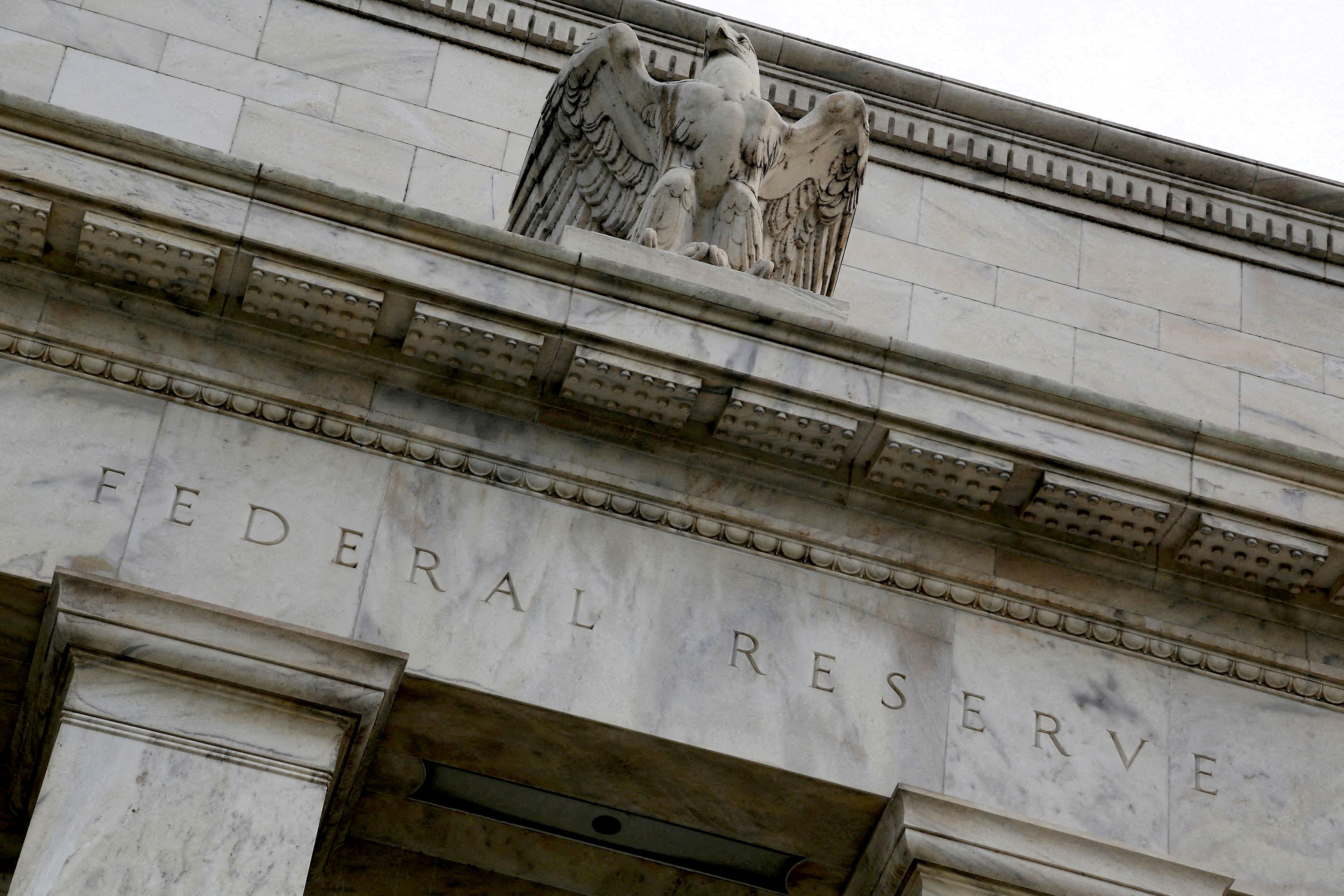
The Federal Reserve building is seen in Washington, U.S., January 26, 2022. REUTERS/Joshua Roberts

U.S. Federal Reserve Chair Jerome Powell addresses reporters after the Fed raised its target interest rate by a quarter of a percentage point, during a news conference at the Federal Reserve Building in Washington, U.S., February 1, 2023. REUTERS/Jonathan Ernst

An eagle tops the U.S. Federal Reserve building’s facade in Washington, July 31, 2013. REUTERS/Jonathan Ernst/File Photo
Categories
Audio Sources - Full Text Articles

Biden, McCarthy meet on debt ceiling in test of divided Washington rule

2023-02-01T20:49:03Z

President Joe Biden and Republican House Speaker Kevin McCarthy began talks on Wednesday on raising U.S. government borrowing limits, in a first test of how the two will work together and avoid a default that could shake the global economy.

The Democratic president and Republicans, who won control of the U.S. House of Representatives in November’s elections, are locked in a standoff over raising the federal government’s $31.4 trillion U.S. debt ceiling.

Biden’s public schedule allowed for nearly two hours of discussion.

Just before the meeting, White House press secretary Karine Jean-Pierre told reporters: “The president is looking forward to working closely and trying to figure out how we can deliver with Republicans who are willing to work in a good faith, bipartisan way.”

The Oval Office talks serve as the opening bell for months of back-and-forth maneuvering. Neither side expects a solution to emerge from a single meeting. Without action, the government could lose its ability to pay all its bills as early as June.

Biden will ask McCarthy for a specific budget plan and a commitment to supporting the nation’s debt obligations, the White House said, and he will discuss federal spending cuts with Republicans, but only after the debt ceiling is lifted.

House Republicans want to use the debt ceiling as leverage to exact cuts, though they have yet to unite around a specific plan. The increase covers the costs of spending programs and tax cuts previously approved by Congress, and is usually approved on a bipartisan basis.

On his way from the Capitol to the meeting, McCarthy told reporters he would ask Biden: “Does the president want to continue reckless spending or find a way that we can be responsible, sit down and find common ground where we put ourselves on a path to budget, make a balanced budget.”

The 80-year-old president, a longtime former senator who served as vice president during a similar 2011 showdown that led to a historic downgrade of the federal government’s credit rating, enters the talks with what some of his aides believe is a strong hand that includes a narrow Senate majority, a party that is unified on this issue and a strong message for voters.

Speaker for less than a month, McCarthy, 58, leads a fractious House Republican caucus with a narrow 222-212 majority that has given a small group of hardline conservatives outsized influence.

Despite years of mingling with other Washington lawmakers, Biden has little personal history with McCarthy, who joined the Republican leadership on Capitol Hill under former Speaker John Boehner after Biden had already left to become Barack Obama’s vice president.

Just one in four Republicans serving in the House today held their seats in 2011, and some may not be fully aware of the risks of courting default, or the difficulties of negotiating in a divided government.

Unlike most other developed countries, the United States puts a hard limit on how much it can borrow, and Congress must periodically raise that cap because the U.S. government spends more than it takes in.

Minutes before the White House meeting, Federal Reserve chair Jerome Powell told reporters: “There is only one way forward here and that’s for Congress to raise the debt ceiling.

“No one should assume that the Fed can protect the economy from the consequences of failing to act in a timely manner,” Powell said.

The 2011 crisis was resolved with a bipartisan deal that cut spending and raised the debt limit but left Obama administration officials smarting. Many felt they had given up too much and had still harmed the economy by letting talks persist.

McCarthy has less room to maneuver than his Republican counterpart in 2011 did.

To win the speaker’s gavel, he agreed to enable any single member to call for a vote to unseat him, which could lead to his ouster if he seeks to work with Democrats. He also placed three hardline conservatives on the Rules Committee, which would allow them to block any vote on a compromise.

Biden seemed to question McCarthy’s ability to keep Republicans in line at a fundraiser in New York on Tuesday, calling McCarthy “a decent man, I think,” but noting the concessions he made to become speaker.

McCarthy, for his part, said Biden needed to be willing to make concessions to get a debt-ceiling increase through Congress, saying it would be “irresponsible” not to negotiate.

Related Galleries:

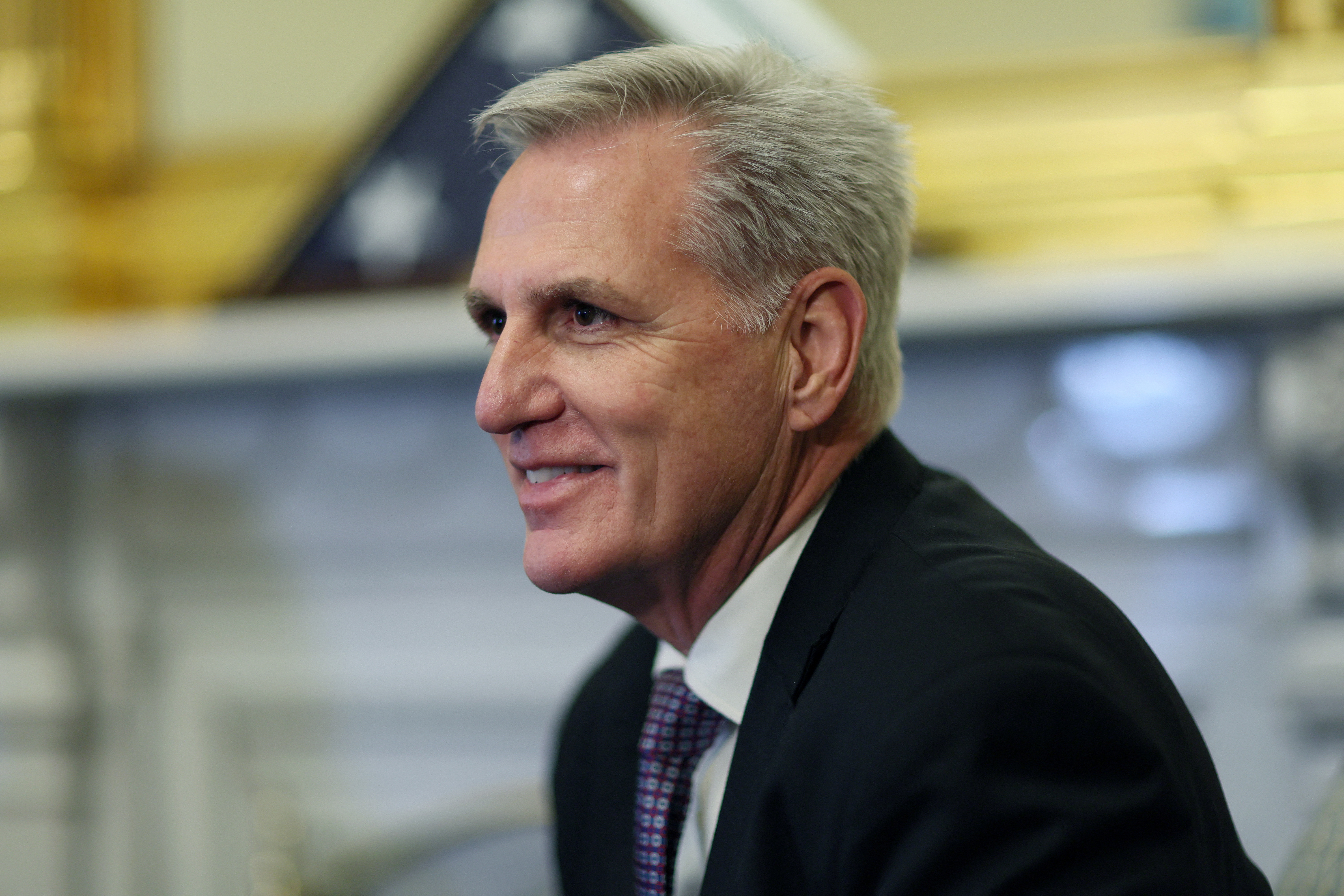
U.S. House Speaker Kevin McCarthy meets with Jordan’s King Abdullah II at the U.S. Capitol building in Washington, U.S., January 31, 2023. REUTERS/Leah Millis

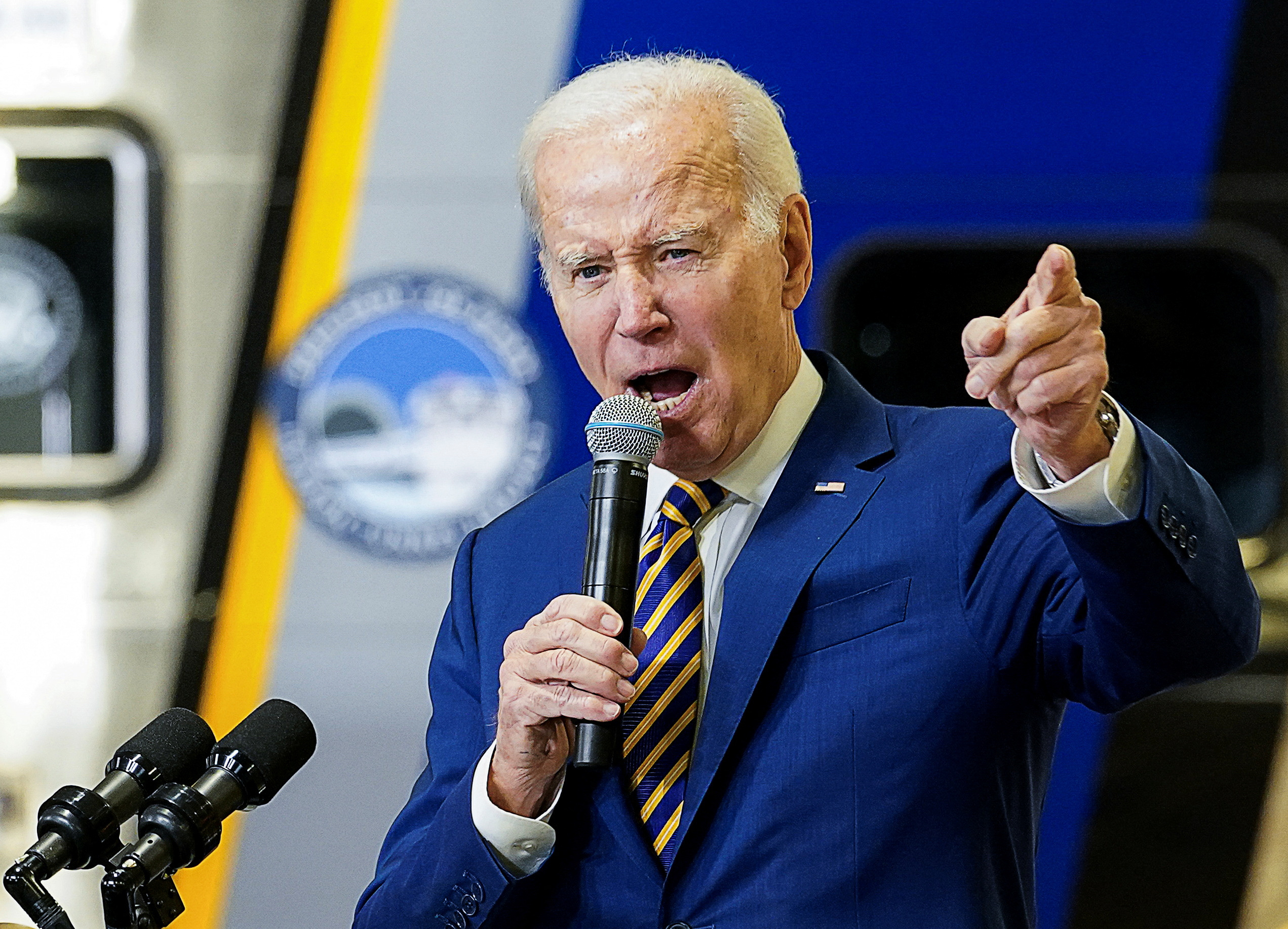
U.S. President Joe Biden delivers remarks touting how Infrastructure Law funding will be used for the Hudson River Tunnel project, during an event at the West Side Rail Yard in New York City, U.S., January 31, 2023. REUTERS/Kevin Lamarque

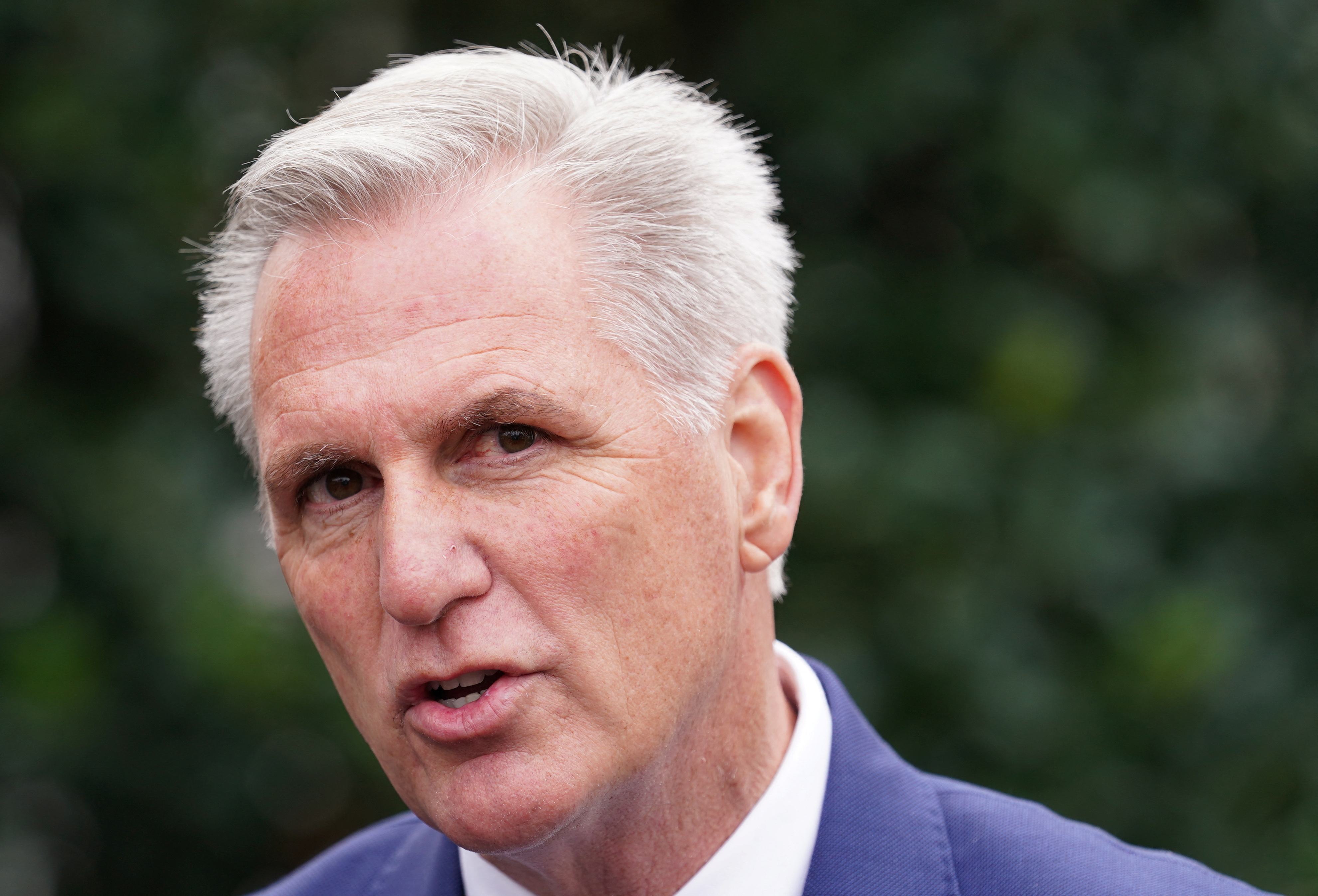
House Republican leader Kevin McCarthy speaks to reporters following a meeting with U.S. President Joe Biden and other congressional leaders at the White House in Washington, U.S., November 29, 2022. REUTERS/Kevin Lamarque
Categories
Audio Sources - Full Text Articles

‘Sushi Terrorism’ is the Viral Video Trend Spreading Food Safety Horror in Japan

In the latest edition of people throwing out their morals for five seconds of fame, a new trend in Japan has people committing acts of “sushi terrorism”—filming themselves violating food safety at sushi conveyor belt restaurants.

In one video that has gained over 22 million views, a man is seen licking a soy sauce bottle and cup and touching the sushi as it passes by on the conveyor belt at a Sushiro restaurant. In another viral incident at the chain Hamazushi, a customer dropped wasabi on another patron’s sushi as it passed by their table.

The videos have caused outrage across Japan, where sushi belts have been common since the late 1950s and prompted some sushi chains to take legal action against the “sushi terrorists.”

[time-brightcove not-tgx=”true”]

“Not even just rude but can also harm someone severely, people with allergies exist!!!!!!” wrote one Instagram commenter. “I sure hope that this restaurant takes legal action,” wrote another. Two of the viral videos appear to have been taken down.

Food & Life Companies Ltd., Sushiro’s parent company, told the Mainichi Shimbun that it would work with law enforcement to find the customers involved and take criminal and civil action.

In the meantime, companies are working to increase food safety measures to bring uneasy customers back to their restaurants. In a statement to TIME, Food & Life Companies Ltd. said “As a first-aid countermeasure, for all Sushiro stores in Japan, if a customer feels uneasy about the tableware and seasonings on the table, they can let us know and we will replace them with disinfected ones that are stored separately.”

The Kura Sushi chain says they plan to put specialized covers on all of their conveyor belt sushi dishes, while Hamazushi plans to move forward with removing their conveyor belts entirely, according to Unseen Japan.

Food & Life Companies Ltd. told TIME it is working on implementing a more permanent response to the issue, in case the trend outlives its social media lifespan. But companies will have to move fast to curb the problem while it’s still a trend. After all, the internet moves faster.

Categories
Audio Sources - Full Text Articles

Vessel strike blamed for humpback whale’s death in New York

LIDO BEACH, N.Y. (AP) — A humpback whale that washed ashore on a New York beach this week was likely killed by a vessel, federal authorities said Wednesday.

A necropsy will determine the exact cause of death for the whale, a male named Luna that was more than 40 years old and had been tracked by marine biologists for decades, said officials with the National Oceanic and Atmospheric Administration.

The whale was discovered Monday morning at Lido Beach West Town Park on Long Island and was hauled up to the beach with a crane.

A necropsy team including representatives from the Atlantic Marine Conservation Society, NOAA Fisheries, the New York State Department of Environmental Conservation, the Mystic Aquarium Animal Response Program and the Marine Mammal Stranding Center assembled Tuesday and cut through the blubber to collect samples of the whale’s internal organs, NOAA officials said in a statement.

The whale was likely killed by a vessel strike, the officials said, but more will be known once the results of the samples become available.

Officials said the whale’s level of decomposition indicated that it had died several days before washing ashore, contradicting early reports that the animal had beached itself while it was alive.

The whale was about 41 feet (12 meters) long and weighed 29,000 pounds (13,154 kilos), the officials said.

NOAA, which is responsible for the nation’s oceans and fisheries, says 19 humpback whales were stranded last year along the U.S. Atlantic coast. During the first month of this year, there have already been seven of the whales beached from Maine to Florida.

Categories
Audio Sources - Full Text Articles

Pumping Mississippi River water west: solution or pipedream?

CEDAR RAPIDS, Iowa (AP) — Waves of torrential rainfall drenched California into the new year. Snowpacks in the Sierra Nevada Mountains have swelled to more than 200 percent their normal size, and snowfall across the rest of the Colorado River Basin is trending above average, too.

While the much-needed water has improved conditions in the parched West, experts warn against claiming victory. About 60 percent of the region remains in some form of drought, continuing a decades-long spiral into water scarcity.

“The drought is so critical that this recent rainfall is a little like finding a $20 bill when you’ve lost your job and you’re being evicted from your house,” said Rhett Larson, an Arizona State University professor of water law.

Over the years, a proposed solution has come up again and again: large-scale river diversions, including pumping Mississippi River water to the parched west.

Just this past summer, the idea caused a firestorm of letters to the editor at a California newspaper. But interest spans deeper than that. Most recently, the Arizona state legislature passed a measure in 2021 urging Congress to investigate pumping flood water from the Mississippi River to the Colorado River to bolster its flow.

Studies and modern-day engineering have proven that such projects are possible but would require decades of construction and billions of dollars. Politics are an even bigger obstacle for making multi-state pipelines a reality. Yet their persistence in the public sphere illustrates the growing desperation of Western states to dig themselves out of droughts.

“We can move water, and we’ve proven our desire to do it. I think it would be foolhardy to dismiss it as not feasible,” said Richard Rood, professor of Climate and Space Sciences and Engineering at the University of Michigan. “But we need to know a lot more about it than we currently do.”

WHAT’S BEING PROPOSED, AND WHO IS PROPOSING IT?

Formal large-scale water importation proposals have existed in the United States since at least the 1960s, when an American company devised the North American Water and Power Alliance to redistribute Alaskan water across the continent using reservoirs and canals. Widespread interest in the plan eventually fizzled.

Stories of similar projects often share the same ending, from proposals in Iowa and Minnesota to those between Canada and the United States. Yet some smaller-scale projects have become reality.

A Kansas groundwater management agency, for instance, received a permit last year to truck 6,000 gallons of Missouri River water into Kansas and Colorado in hopes of recharging an aquifer. In northwestern Iowa, a river has repeatedly been pumped dry by a rural water utility that sells at least a quarter of the water outside the state. And there are several approved diversions that draw water from the Great Lakes.

On the heels of Arizona’s 2021 push for a pipeline feasibility study, former Arizona Gov. Doug Ducey signed legislation this past July that invested $1.2 billion to fund projects that conserve water and bring more into the state. Among its provisions, the law granted the state’s water infrastructure finance authority to “investigate the feasibility” of potential out-of-state water import agreements.

An in-depth feasibility study specifically on pumping Mississippi River water to the West hasn’t been conducted yet to Larson’s knowledge. He said he’s open to one — but doesn’t think it’s necessary.

“I think the feasibility study is likely to tell us what we already know,” he said, “which is that there are a lot less expensive, less complicated options that we can be investing in right now,” like reducing water use.

PHYSICALLY FEASIBLE—BUT POLITICALLY?

In 2012, the U.S. Department of the Interior’s Bureau of Reclamation completed “the most comprehensive analysis ever undertaken within the Colorado River Basin” at the time, which analyzed solutions to water supply issues — including importing water from the Missouri and Mississippi Rivers.

Under the analyzed scenario, water would be conveyed to Colorado’s Front Range and areas of New Mexico to help fulfill water needs. It would cost at least $1,700 per acre-feet of water, potentially yield 600,000 acre-feet of water per year by 2060 and take 30 years to construct.

An additional analysis emerged a decade later when Roger Viadero, an environmental scientist and engineer at Western Illinois University, and his graduate students assessed proposals suggested in last summer’s viral editorials.

In their technical report, which hasn’t been peer-reviewed, they calculated that a pipe for moving this scale of water would need to be 88 feet in diameter — around twice the length of a semi trailer — or a 100-foot-wide channel that’s 61 feet deep.

Experts we spoke with agreed the feat would be astronomical. Still, it’s physically possible.

“As an engineer, I can guarantee you that it is doable,” Viadero said. “But there are tons of things that can be done but aren’t ever done.”

Viadero’s team estimated that the sale of the water needed to fill the Colorado River’s Lake Powell and Lake Mead — the largest reservoirs in the country — would cost more than $134 billion at a penny a gallon. The price tag for construction would add to this hefty bill, along with the costs of powering the equipment needed to pump the water over the Western Continental Divide.

Buying land to secure water rights would cost a chunk of cash, too, which leads to an even larger obstacle for such proposals: the legal and political hoops.

Local hurdles include endangered species protections, wetlands protections, drinking water supply considerations and interstate shipping protections. Precedents set by other diversion attempts, like those that created the Great Lakes Compact, also cast doubt over the political viability of any large-scale Mississippi River diversion attempt, said Chloe Wardropper, a University of Illinois Urbana-Champaign professor researching environmental governance.

Trans-national pipelines would also impact ecological resources. Lower Mississippi River flow means less sediment carried down to Louisiana, where it’s used for coastal restoration. Diverting that water also means spreading problems, like pollutants, excessive nutrients and invasive species.

Most notably, the Mississippi River basin doesn’t always have enough water to spare. Drought conditions plagued the region throughout 2022, for instance, prompting concerns over river navigation.

“No one wants to leave the western states without water,” said Melissa Scanlan, a freshwater sciences professor at the University of Wisconsin-Milwaukee. “But moving water from one drought-impacted area to another is not a solution.”

A PERENNIAL IDEA

The idea of a pipeline transecting the continent is not a new idea. But, as water scarcity in the West gets more desperate, the hurdles could be overcome one day.

“It’s possible that the situation gets so dire that there is an amount of money out there that could overcome all of these obstacles,” Larson said. “It might be in the trillions, but it probably does exist.”

In the meantime, researchers encourage more feasible and sustainable options, including better water conservation, water recycling, and less agricultural reliance. Other forms of augmentation, like desalination, are also gaining popularity on the national scene as possible options.

Those will require sacrifices, no doubt — but not as many as building a giant pipeline would require, experts said.

“To be talking about pipe dreams, when that’s not even feasible for decades, if at all… It’s a disservice,” Scanlan said. “People need to focus on their realistic solutions.”

___

This story is a product of the Mississippi River Basin Ag & Water Desk, an editorially independent reporting network based at the University of Missouri School of Journalism in partnership with Report For America and the Society of Environmental Journalists, funded by the Walton Family Foundation. The Associated Press Climate team contributed images and page design.

___

The Associated Press receives support from the Walton Family Foundation for coverage of water and environmental policy. The AP is solely responsible for all content. For all of AP’s environmental coverage, visit https://apnews.com/hub/climate-and-environment

Categories
Audio Sources - Full Text Articles

Howie Carr: MassGOP moving on from political pyromania

Jim Lyons might have kept his job as chairman of the Massachusetts Republican Party, if only he could have done just one thing.

Win an election. Just one. Just once.

But putting that elusive first “W” up on the board was something Lyons could somehow never accomplish, not even a single time, during the four catastrophic years in which he has almost completely dismantled both the local GOP as well as Massachusetts as a two-party state.

Check out the photo of him from Tuesday night in Marlboro, during his ouster from the $98,000-a-year job that he desperately wanted to hang onto.

Lyons is 68 years old, but boy, doesn’t he look more like he’s, maybe, 108 years old?

Losing every day, in every way, 24/7, must really take it out of you.

Lyons’ last vote, by the way, came last week at the election for Republican National Committee chair. By proxy, he voted for Harmeet Dhillon.

She lost, of course. Once Lyons endorsed Harmeet, her defeat was pre-ordained. A Jim Lyons endorsement has been the political kiss of death ever since he first started running for office back in 1984.

He was a Democrat back then. That was the year Ronald Reagan carried 49 states. Jim always knew how to pick ‘em.

After being mugged by reality (and the voters) yet again Tuesday night, Lyons posted the following on Facebook:

“We have only just begun.”

Now that’s a scary thought, at least to the handful of elected Republicans left in state politics after Lyons’ four years of political pyromania against his own party.

The job of being a state party chairman is pretty simple. The committees exist as vessels, basically, to funnel support and, more importantly, money, to local political candidates.

As one state rep explained:

“A party chairman has two tasks – he has to be able to get along with people, and he has to be able to raise money.”

Jim Lyons could do neither. He had retired from the Legislature in 2018 due to ill health – the voters got sick of him. So he decided to run for party chairman – the job needed the man, and the man needed a job.

He railed against Gov. Charlie Baker, as well he should have. With COVID, endless scandals in state agencies and his insane green energy policies, Baker was, like Lyons, a total disaster.

But once Baker became a lame duck, it was time for Jim to pivot.  So he switched from attacking the most prominent Republican in the state to stalking lesser GOP figures, like everybody on the state committee who opposed him.

Lyons was soon too busy to worry about winning elections. He was instead consumed with suing other Republicans for… whatever. Forget planning campaigns – he wanted to attend the depositions. Send out some more subpoenas!

The donors vanished. So he used the party’s dwindling funds on private detectives. He had them trail one female member of the committee, she says, to Tennessee. He used his own company’s funds – fat with $48,000 in COVID welfare – to dig up decade-old divorce records on another member of the committee.

Like everybody else, I watched this disaster unfolding with increasing dismay. He tried to knock the only remotely serious GOP candidate for statewide office, Anthony Amore, off the ballot.

After failing to get four different referendum questions on the ballot, he tried again with drivers’ licenses for illegal immigrants. He set up a totally worthless website. I screamed at him. Finally, with a lot of help from all of us who weren’t suing each other, he got it on the ballot.

But then he couldn’t raise any money – this is a recurring theme, you may have noticed. And what little Lyons did raise, he spent some on the lawyer who was suing other Republicans for him, and on “consultants.” Oh yeah, he also did some campaign literature – without Amore’s name on it.

The Democrats, meanwhile, were fanning out to city and town halls, researching who was asking for mail-in ballots. They would then solicit their votes. Jim Lyons filed a desultory complaint against mail-in voting and then went back to plotting more lawsuits… against Republicans.

Meanwhile, his candidate for governor, Geoff “DoorDash” Diehl, ran like a scared rabbit from debates with his Republican opponent. Diehl refused my offer of a second debate.

Lyons and his Kool Aid Kult grew surly. They accused me of “selling out,” because the other candidate had bought ads on my radio show. Guess what – I sell ads to whoever wants to buy them, including the Mass GOP. So Lyons’ minions started making up fantastic lies about how much I’d gotten for radio spots.

I asked them to retract their falsehoods, but they refused. That left me no choice. As Harry Truman used to say, “If they’ll stop lying about me, I’ll stop telling the truth about them.”

So I started scouring their social media. This is how clueless the Lyons crew was – they never bothered to scrub their Facebook accounts, Twitter feeds, etc.

It was like shooting fish in a barrel. I’d tweet out a photo of some Lyons loser on the committee snuggling with some random guy, and then underneath I’d run the news story of the friend’s indictment on charges of forcible rape of a minor in Essex County.

Lyons claimed he was the biggest Trump guy in Massachusetts, a total lie. I ran photos of him with Ted Cruz in 2016, and his proud announcement that he was Ted Cruz’s state campaign chairman.

Al Davis used to say — Just win baby! Jim Lyons turned that around – Just lose baby!

Last week, Lyons didn’t even show up for the only debate of his campaign for re-election. Just like his boy, DoorDash Diehl, he went MIA because he couldn’t defend himself. What could he say?

Before the vote, he and Diehl went on a final tank-town tour, addressing what few true believers remained. He told the shut-ins about his big plans – not to win elections, but to file more and bigger lawsuits against Republicans.

He told his mouth-breathers that the big problem in state politics wasn’t Democrats, it was Republicans.

But he would sue them, the bastards, the RINO’s. At the start, Lyons promised he’d get his supporters $4 million. Then it was $5 million. In a final email last weekend, the number was up to “in excess of $5 million.”

And now Lyons is left, once again, with Dick Tuck’s lament:

“The voters have spoken, damn them.”

But Jim Lyons has only just begun. Forewarned is forearmed.

Categories
Audio Sources - Full Text Articles

Virginia’s big bet on tech talent is working. Other regions are watching closely and taking notes.

By Pam Harder, Greg Wright

There is ample evidence that talent considerations have come to dominate the selection criteria of companies when deciding where to place job-creating business investments. For instance, “availability of skilled labor” has climbed to first on the list of factors companies care about most when making their site-selection decisions. This growing emphasis on talent has led to a much-needed reconsideration of local economic development strategy, which has traditionally focused on the provision of tax incentive packages that largely benefit a small set of firms. Research has found that these narrow tax incentives are largely ineffective at spurring local employment growth in part because they do little to attract new firms to the area. This stands in stark contrast to incentives that are directed at local skill development, which have been found to lead to far higher returns for communities. The good news is that policymakers have taken notice of these facts, leading to a shift toward economic development strategies that focus on investments in talent.

Virginia is an example of a state that took a big bet on a talent-forward approach to economic development. In 2018, the state launched an unprecedented, state-wide $1.1 billion performance-based Tech Talent Investment Program, which ultimately became the centerpiece of Virginia’s successful Amazon HQ2 bid.

Quote from an Amazon leader:

“We were particularly impressed by the dedication to higher education and the K-12 talent pipeline (in Virginia). The investments the local community and the state are going to make are really going to augment the great talent pipeline, which is a primary reason why we chose the Commonwealth for this new headquarters.”

– Holly Sullivan, Head of Worldwide Economic Development, Amazon. Source: Virginia EDO

The CEO and President of Virginia’s EDO at the time, Stephen Moret, led the charge in a close partnership with the President of the State Council of Higher Education for Virginia, Peter Blake. At the time, Virginia was taking a big gamble by shifting so markedly from the norm in economic development strategy.

Through Virginia’s Tech Talent Investment Program, more than a dozen higher education institutions across Virginia will collectively produce 32,000 graduates in computer science and related fields, more than doubling the number of grads each year.

Figure 1. Overview of Tech Talent Investment Program

fig 2

Source: Virginia EDO

As a result, hundreds of tech employers across Virginia will benefit from a more-skilled labor force, including but not limited to Amazon. This stands in contrast to the narrow benefits produced by cash and tax incentives for individual firms.

Now, three years into the most historic state-level investment in tech talent, how is Virginia’s big bet paying off? The answer: surprisingly well.

Now, three years into the most historic state-level investment in tech talent, how is Virginia’s big bet paying off? The answer: surprisingly well. The Tech Talent Investment Program just finished its third year out of its 20-year lifespan, and already results are strong. Cumulatively, the 14 participating four-year public institutions in Virginia, plus two masters-level institutions, plus Virginia’s community college system have graduated over 7,400 eligible Tech Talent Investment Program grads in just the first three years. This is ahead of plan, despite COVID disruptions to higher education enrollment and retention. And in terms of net new degree production the state is at 148 percent of planned levels. These graduates are fueling a diverse and growing ecosystem of tech companies that are increasingly choosing Virginia as their home base. Boeing’s recent announcement to relocate its global HQ to Virginia is just the latest of many.

Figure 2. Illustrative examples of tech headquarters and centers in Virginia

fig 3

Source: Virginia EDO

Other states and regions are watching Virginia—and taking notes. With this in mind, the Workforce of the Future initiative at Brookings has developed a tool–the Smart Growth Strategies tool–that can help regional policymakers identify the investments in talent that are most likely to pay off for their region as a whole. The tool first guides policymakers toward industries that are locally underdeveloped but are highly complementary to existing local capabilities. Next, the tool characterizes those industries according to their potential for growing a skilled, well-paid workforce. Finally, the tool provides a detailed description of the additional talent that a local area would need to develop in order to attract, and scale up, those industries.

It’s time to promote regional economic development strategies that move away from zero-sum, incentive-based business attraction and, instead, foster innovative investments in people, in education and training systems, and in resources that will benefit the economy as a whole. Virginia’s Tech Talent Investment Program is hopefully just the first of many talent-forward investment strategies that we’ll see in the years to come.

The Brookings Institution is a nonprofit organization devoted to independent research and policy solutions. Its mission is to conduct high-quality, independent research and, based on that research, to provide innovative, practical recommendations for policymakers and the public. The conclusions and recommendations of any Brookings publication are solely those of its author(s), and do not reflect the views of the Institution, its management, or its other scholars.

Amazon is a donor to the Brookings Institution.

Brookings is committed to quality, independence, and impact in all of its work. Activities supported by its donors reflect this commitment.

fblike20.png pinterest20.png twitter20.png email20.png rss20.png  
Categories
Audio Sources - Full Text Articles

Activists use Tu B’shvat to raise money for protesters against Atlanta’s Cop City

Activists protesting what has become known as Atlanta’s “Cop City” are getting support via Tu B’shvat Seders and fundraisers across the United States.

The protests center around a planned $90 million training facility that would serve Atlanta’s police and fire departments, as well as other departments from around the country. Opponents have said the facility, which will include a mock village and firing range, will only help continue the trend of police militarization. They have also objected to the facility’s location, which will necessitate the destruction of a forested area. Some activists have camped out in the forest in an attempt to stop construction.

Protesters built a sukkah in the Georgia forest where protesters have gathered against the planned “Cop City.” Photo by Cindy Milstein

Cindy Milstein, a New York-based longtime anarchist and ecological activist, visited the site in October and said Jewish activists held Shabbat ceremonies and constructed a sukkah while she was there.

Now, Milstein is raising funds to help those who remain on the ground, calling on Jews and others to celebrate Tu B’shvat as a “ritual of resistance, honoring trees and those fighting to #StopCopCity.”

“(Since) there’s already been ritual of resistance and ritual of solidarity going on within this struggle in Atlanta, it makes sense to tie it to this holiday about trees,” she told the Forward.

Photo courtesy of Cindy Milstein Photo by Cindy Milstein

The protests have grown more tense as police action has escalated. On Jan. 18, a 26-year-old protester who called themselves Tortuguita was fatally shot by police. That same day, a police officer was hospitalized after being shot in the abdomen. More than a dozen people have been arrested and charged with domestic terrorism, which some legal experts have called politically motivated overreach. The funds raised by Milstein are primarily going to the Atlanta Solidarity Fund, which provides “support for people who are arrested at protests, or otherwise prosecuted for their movement involvement,” with some money also going to help Tortuguita’s family and pay for funeral costs. 

Milstein said she became aware of the conflict through other Jewish anarchists who have been involved in opposing the facility from the beginning. The city approved construction in 2021 despite widespread opposition during public hearings. 

Atlanta Mayor Andre Dickens has defended the site, saying that the facility will take up 85 acres while another 300 will be preserved for green space. He has also said the training facility is necessary for police readiness in a city where murders have risen for three consecutive years.

In other parts of the country, Jews are using the holiday as launching points for their own efforts to support their comrades in Georgia. In Worcester, Massachusetts, a Tu B’shvat seder is planned and a maker of herbal products is holding a raffle fundraiser. 

Sol Weiss, a visual artist and land-based educator in California’s Bay Area, is raffling off prints and posters to support the cause. So far, they’ve raised $1,700 for the Atlanta Solidarity Fund. Weiss said that although the protest against Cop City is not inherently Jewish, it has ties to many timeless Judaic themes.

The Tu B’shvat fundraisers are “an entry, it’s like a gateway for people who already possess these values that maybe are not as aware of different struggles going on in anti-police brutality, anti-forest clearing movements,” Weiss said. “It’s a space to make it relevant to a lot of people who might not otherwise be aware of it.”

“It really resonates with the themes of this particular holiday,” added Milstein, noting a “long, long history within Judaism” of “a spiritual connection and our understanding of the Earth, trying to do the least harm we can.”

The post Activists use Tu B’shvat to raise money for protesters against Atlanta’s Cop City appeared first on The Forward.

Categories
Audio Sources - Full Text Articles

The Nazi Collaborator Monuments Project Index

Index-page-header-border.png

This list is part of an ongoing investigative project the Forward first published in January 2021 documenting hundreds of monuments around the world to people involved in the Holocaust. We are continuing to update each country’s list; if you know of any not included here, or of statues that have been removed or streets renamed, please email editorial@forward.com, subject line: Nazi monument project.


Many Nazi collaborators in this project have monuments in multiple countries. Some have honors in neighboring nations that were once part of a single political entity. Others, especially Eastern European collaborators, have monuments in their native lands as well as in the West; the latter were typically built by elements within diaspora communities in the U.S. and elsewhere. 

The index lists which country/countries an individual, organization or military formation has honors in. Links to country pages are found below. 

Country page abbreviations and links:

Albania (Alb). Argentina (Arg). Armenia (Arm). Australia (Aus). Austria (Aust). Belgium (Bel). Bosnia and Herzegovina (Bos). Bulgaria (Bul). Canada (Can). Croatia (Cro). Czech Republic (Cze). Denmark (Den). Estonia (Est). Hungary (Hun). India (Ind). Italy (Ita). Kosovo (Kos). Latvia (Lat). Lithuania (Lit). Moldova (Mol). North Macedonia (N. Mac). Romania (Rom). Russia (Rus). Serbia (Ser). Slovakia (Slo). Spain (Spa). Ukraine (Ukr). United Kingdom (U.K.). United States (U.S.)

1st Ukrainian Regiment “Holodny Yar” – Ukr

2nd Lithuanian Auxiliary Police Battalion – Lit

2nd National Labor Security TDA Battalion – Lit

5.SS-Freiwilligen-Sturmbrigade Wallonien aka the Walloon Legion – Est

12th Lithuanian Auxiliary Police Battalion – Lit

13th Waffen Mountain Division of the SS “Handschar” (1st Croatian) – Bos

14th Waffen Grenadier Division of the SS (1st Galician) aka SS Galichina – Aus, Aust, Can, Ukr

15th Waffen Grenadier Division of the SS (1st Latvian) – Bel, Lat

19th Waffen Grenadier Division of the SS (2nd Latvian) – Bel, Lat

20th Waffen Grenadier Division of the SS (1st Estonian) – Est

21st Waffen Mountain Division of the SS “Skanderbeg” (1st Albanian) – Kos 

115th Schutzmannschaft Battalion – Ukr, U.S.

118th Schutzmannschaft Battalion – Ukr, U.S.

201st Schutzmannschaft Battalion – Can, Ukr, U.S.

Alexianu, Gheorghe – Rom

Almirante, Giorgio – Ita

Ambrazevičius Brazaitis, Juozas – Lit

Andrusyak, Vasyl – Ukr

Anti-Bolshevik Bloc of Nations (ABN) – U.K. 

Antonescu, Ion – Rom

Armenian Legion – Arm, Bul 

Arrow Cross Party – Hun, Rom

Arsenych, Mykola – Ukr

Azzariti, Gaetano – Ita

Babiy, Oleksa – Ukr

Bahlsen, Klaus – Ger

Balli Kombëtar – Alb, Kos, N. Mac

Baltūsis-Žvejas, Antanas – Lit

Bandera, Stepan – Arg, Ukr, U.S. 

Barabash, Teodor – Ukr

Beindorff, Fritz – Ger

Belarusian Central Council – U.S. 

Bergbauernhilfe aka the Ukrainian Military Units of Nationalists or the Sushko Legion – Ukr 

Berkenkruis (“birch-cross”) – Bel, Est, Spa

Black Legion – Bos

Blue Division – Spa

Boban, Rafael “Ranko” – Bos

Boccasile, Gino – Ita

Bode, August – Ger

Bogdan, Serhei – Ukr

Boris III, czar of Bulgaria – Bul, N. Mac

Bose, Subhas Chandra – Ind

Brose, Max – Ger

Budak, Mile – Bos, Cro

Bukovinsky Kuren – Ukr, U.S.

Bulba-Borovets, Taras – Ukr

Burdyn, Stepan – Ukr

Burko, Demid – Ukr

Busuladžić, Mustafa – Bos

Central National Committee (Chetnik advisory body) – Bos, Ser

Chav’yak, Volodymyr – Ukr

Chetniks – Aus, Bos, Can, Ser, U.S.

Crainic, Nichifor – Rom

Cristea, Miron – Rom, Ser

Debus, Kurt – U.S.

Demsky, Oleksiy – Ukr

Deputat, Volodymyr – Ukr

Deva, Xhafer – Kos 

Dodbiba, Sokrat – Alb 

Dolishnyak, Yuri – Ukr

Đozo, Husein – Bos 

Drenović, Uroš – Bos 

Ďurčanský, Ferdinand – Slo

Đurišić, Pavle – Bos, U.S.

Dutch SS volunteers, nurses and auxiliaries – Est

Dyachenko, Petro – Ukr

Dyakon, Yaroslav – Ukr

Emmanuel III, Victor – Ita

Flick, Friedrich – Ger

Francetić, Jure – Bos

Frashëri, Mehdi – Alb, Kos 

Frashëri, Mid’hat – Alb, Kos 

Free Corps Denmark (Freikorps Danmark) – Den

Free India Legion/Indian Volunteer Legion of the Waffen-SS aka the Indian Legion – Ind

Gakh, Dmytro – Ukr

Garasymiv, Yuri – Ukr

Gasyn, Oleksandr – Ukr

Goga, Octavian – Mol, Rom

Goncharenko, Averkiy – Ukr

Gorlis-Gorsky, Yuriy – Ukr

Graziani, Rodolfo – Ita

Gudzovatiy, Petro – Ukr

Gyr, Radu – Rom

Hadžiahmetović, Aćif aka Aćif Bljuta, Aćif-efendija – Ser

Harapi, Anton – Kos

Hasa, Xhem aka Xhem Gostivari – N. Mac

Häußler, Franz – Aust

Heraeus, Reinhard – Ger

Hilble, Friedrich – Ger

Himmel’raich, Kost – Ukr

Horia, Vintilă – Rom

Horthy, Miklós – Hun

Hrabets, Omelyan – Ukr

Hrynokh, Ivan – Ukr

Ignatavičius, Zenonas – Lit

III (Germanic) SS-Panzerkorps – Est

Ilgner, Max – Ger

Iosyp Pozychanyuk – Ukr

Iron Cross, memorial to – Cze

Iron Guard – Rom

Ivakhiv, Vasyl – Ukr

Jelić, Branimir – Cro

Jevđević, Dobroslav – Bos

June 23, 1941 (Lithuanian Activist Front uprising) – Lit

June 30, 1941 establishment of the self-proclaimed collaborationist government of the Bandera faction of the Organization of Ukrainian Nationalists (OUN-B) – Ukr, U.S.

Jung-Urania – Aust

Kachinskyi, Serhei – Ukr

Kedyulich, Ivan – Ukr

Khamchuk, Petro – Ukr

Khymynets, Oleksiy – Ukr

Klyachkivskiy, Dmytro aka Klym Savur – Ukr

Klymiv-Legenda, Ivan – Ukr

Kobilnyk, Volodymyr – Ukr

Körber, Kurt – Ger

Kosiuk, Vasyl – Ukr

Koval, Stepan – Ukr

Krasniqi, Rexhep – Kos

Krasnov, Pyotr – Rus

Krikštaponis, Juozas – Lit

Krosi, Aqif aka Aqif Recani – N. Mac

Krupp, Alfried – Ger

Kubiyovych, Volodymyr – Ukr

Kurmanovych, Viktor – Ukr

Latvian Legion – Bel, Lat

Laval, Pierre – U.S.

Lenkavskiy, Stepan – Ukr

Lithuanian Activist Front (LAF) – Lit, U.S.

Lithuanian Territorial Defense Front (LTDF) – Lit

Lorković, Mladen – Bos

Lukasevich, Mar’yan – Ukr

Lukša-Daumantas, Juozas – Lit

Lutsk Police Academy – Ukr

Lutskyi, Oleksandr – Ukr

Makanec, Julije – Cro

Makarushka, Lyubomir – Ukr

Malkosh, Volodymyr – Ukr

Melnyk, Andryi – Ukr

Melnyk, Petro – Ukr

Messer, Adolf – Ger

Messerschmitt, Willy – Ger

Mihailović, Dragoljub “Draža” – Aus, Bos, Can, Ser, U.S.

Mitrovica, Rexhep – Alb, Kos

Mizernyi, Martin – Ukr

Moljević, Stevan – Bos, Ser

Mulyk, Mykhailo – Ukr

Muñoz Grandes, Agustín – Spa

Mussolini, Benito – Ita

Myron, Dmytro aka Orlyk – Ukr

Nachtigall Battalion – Can, Ukr, U.S.

National Christian Party (Romania) – Mol, Rom

Noreika, Jonas aka General Storm – Lit

Nugiseks, Harald – Est

Nyírő, Jòzsef – Hun, Rom

Nykolyak, Vasyl – Ukr

Nzhdeh, Garegin – Arm, Bul

Olzhych, Oleg – Ukr, U.S.

Omelyanovych-Pavlenko, Mykhailo – Ukr

Orano, Paolo – Ita

Organization of Ukrainian Nationalists (OUN) – Can, Ger, Ukr, U.K., U.S.

Pačariz, Sulejman – Bos 

Paliiv, Dmytro – Ukr

Pandža, Muhamed – Bos 

Parhomovych, Leonid aka Leonid Poltava – Ukr

Pavelić, Ante – Aus

Pende, Nicola – Ita

Pétain, Philippe – Can, U.S.

Peter, Kostiantyn – Ukr

Pihotskiy, Terentiy – Ukr

Plechavičius, Povilas – Lit

Polovyi, Omelyan – Ukr

Polyanskiy, Yuri – Ukr

Porsche, Ferdinand – Aust, Cze, Ger, U.S.

Porsche, Ferdinand Anton Ernst aka Ferry Porsche – Aust, Ger, U.S.

Quandt, Herbert – Ger

Radić, Rade – Bos

Ramanauskas-Vanagas, Adolfas – Lit, U.S.

Rastoder, Osman – Bos 

Rebane, Alfons – Est

Reimann Jr., Albert – Ger

Rembolovich, Ivan – Ukr 

Riedel, Klaus – Ger

Röchling, Hermann – Ger

Rohach, Ivan – Ukr

Roland Battalion – Ukr

Romanian military forces under Ion Antonescu – Mol

Rosterg, August – Ger

Rudak, Danylo – Ukr

Rudiy, Roman – Ukr

Russian Liberation Army (ROA) – Cze, U.S.

Ryznyak, Roman – Ukr

Samchuk, Ulas – Ukr

Samutin, Petro – Ukr

Sandžak Muslim militia – Bos

Sauerbruch, Ferdinand – Ger 

Schygel’skiy, Volodymyr – Ukr

Shandruk, Pavlo – Ukr

Shukatka, Andriy – Ukr

Shukhevych, Roman – Arg, Can, Ukr, U.S.

Shum, Oleksa – Ukr

Škirpa, Kazys – Lit

Skrygunets, Vasyl – Ukr

Skrypnyk, Stepan aka Patriarch Mstyslav – U.S., Ukr

Slipyi, Iosif – Can, Ita, Ukr, U.S.

Sonderkommando 4a unit of Einsatzgruppe C – Ukr

Sredersas, Bronius “Bob” – Aus 

SS Polizei-Selbstschutz-Regiment Sandschak – Bos

SS Volunteer Legion Flanders aka the Flemish Legion – Bel, Est

SS-Panzergrenadier-Regiment 23 Norge aka Regiment “Norge” – Est

SS-Panzergrenadier-Regiment 24 Danmark aka Regiment “Danmark” – Est 

Starukh, Yaroslav-Mykhailo – Ukr

Stetsko, Yaroslav – Ger, Ukr, U.K.

Stupnytskiy, Leonid – Ukr

Sushko, Roman – Ukr

Sydor, Vasyl – Ukr

Tešanović, Lazar – Bos

Tiso, Jozef – Slo

Todić, Cvijentin – Bos

Tribunal of Race – Ita

Trokhymchuk, Stepan – Ukr

Tscheulin, Emil – Ger

Tverdohlib, Mykola – Ukr

Ugryn-Bezrishniy, Mykola – Ukr

Ukrainian Central Committee (L’viv) – Ukr

Ukrainian Insurgent Army (UPA) – Can, Ukr, U.S.

Ukrainian Liberation Army – Ukr

Ukrainian National Army – Ukr

Ukrainian Supreme Liberation Council – Ukr

Ukrayins’ka Natsional’na Rada – Ukr, U.S.

Ustasha – Aus, Bos, Cro

Ustasha Youth – Cro 

Vasić, Dragomir “Dragiša” – Bos, Ser

Vasylyashko, Vasyl – Ukr

Vatsyk, Pavlo – Ukr

Verschaeve, Cyriel – Bel 

Vlasov, Andrey – Cze, U.S.

Vojtaššák, Ján – Slo

Vokić, Ante – Bos

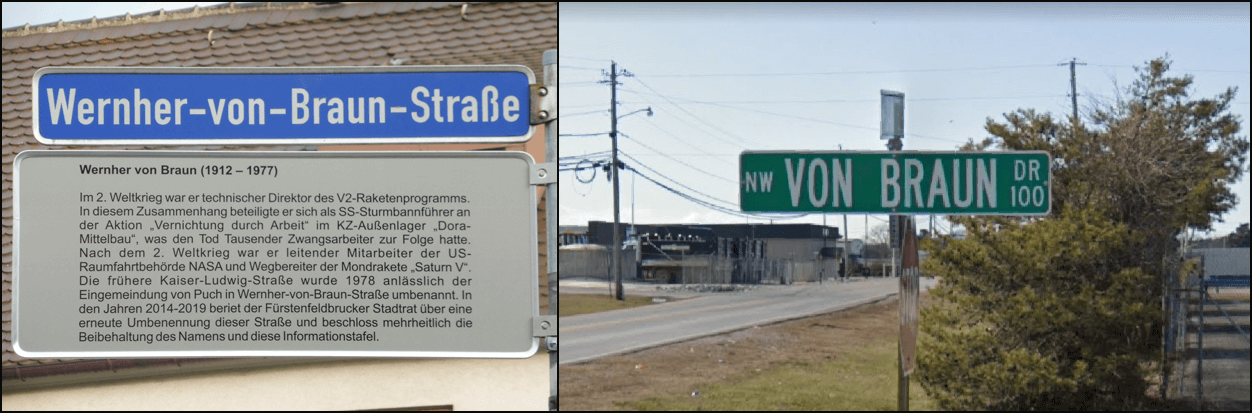
Von Braun, Wernher – Ger, U.S.

Vulcănescu, Mircea – Rom

Wass, Albert – Hun, Rom

Weiss, Bernhard – Ger

Yakymchuk, Mykola – Ukr

Žemaitis-Vytautas, Jonas – Lit


The post The Nazi Collaborator Monuments Project Index appeared first on The Forward.

Categories
Audio Sources - Full Text Articles

Stocks rise, dollar falls after Fed hikes as expected

2023-02-01T19:55:28Z

A gauge of global stocks rose and the U.S. dollar and Treasury yields were lower on Wednesday after the Federal Reserve raised its target interest rate by the expected 25 basis points but communicated more increases were on the horizon.

The Fed said the U.S. economy was enjoying “modest growth” and “robust” job gains, with policymakers still “highly attentive to inflation risks” as it seeks to tighten financial conditions and reign in high prices. Markets have been pricing in the possibility of a rate cut by the Fed in the back half of the year.

On Wall Street, U.S. stocks were choppy after the Fed announcement but rebounded to turn positive as Chair Jerome Powell began to speak.

“The key thing the Fed is focused on is wages and we are seeing wage inflation continue to ameliorate if you look at both average hourly earnings and the employment cost index which just came out, wages are beginning to soften, but they are not softening enough to get inflation down to that 2% target,” said Ellen Hazen, chief market strategist at F.L.Putnam Investment Management in Wellesley, Massachusetts.

“They had a very slightly dovish change in the language where they previously had talked about determining the pace of future increases and now they are talking about determining the extent of future increases.”

Investors will now closely eye comments from Fed Chair Powell for further signals on the path of the central bank’s policy.

The Dow Jones Industrial Average (.DJI) fell 5.45 points, or 0.02%, to 34,080.59, the S&P 500 (.SPX) gained 30.83 points, or 0.76%, to 4,107.43 and the Nasdaq Composite (.IXIC) added 173.22 points, or 1.5%, to 11,757.77.

Before the policy announcement, economic data painted a mixed picture, with a labor market that remains strong while manufacturing activity continues to weaken, showing contraction for a third straight month.

Investors have viewed a weaker labor market as a key component to bring down stubbornly high inflation.

Earnings season also continues to roll on, with Facebook owner Meta (META.O) reporting earnings after the closing bell on Wednesday. Later in the week will bring earnings from names such as Apple (AAPL.O) and Amazon (.AMZN.O).

Early gains for European shares faded to close virtually unchanged ahead of the Fed statement, although industrial stocks , up 0.85%, were a bright spot. On the heels of the Fed, the European Central Bank (ECB) and Bank of England will make their policy statements on Thursday, in which each is largely expected to hike by 50 basis points.

The pan-European STOXX 600 index (.STOXX) closed down 0.03% and MSCI’s gauge of stocks across the globe (.MIWD00000PUS) gained 0.81%.

Data on Wednesday showed headline inflation in the euro zone moderated to 8.5% in January, from 9% in December, while core prices picked up to 7% from 6.9%, likely keeping pressure on the ECB to raise interest rates aggressively.

The dollar started February on a lower note, continuing its weakening trajectory of the previous four months. The dollar index fell 0.823%, with the euro up 0.99% to $1.097.

The Japanese yen strengthened 0.94% versus the greenback at 128.89 per dollar, while Sterling was last trading at $1.2378, up 0.47% on the day.

U.S. Treasury yields moved up after the statement but were still lower on the day, as benchmark 10-year notes were down 11.6 basis points to 3.413%, from 3.529% late on Tuesday, although the two-year yield briefly turned higher after the most recent batch of economic data.

U.S. crude recently fell 2.93% to $76.56 per barrel and Brent was at $82.91, down 2.98% on the day.

Related Galleries:

A street sign for Wall Street is seen outside the New York Stock Exchange (NYSE) in New York City, New York, U.S., July 19, 2021. REUTERS/Andrew Kelly/File Photo

The Federal Reserve building is seen in Washington, U.S., January 26, 2022. REUTERS/Joshua Roberts

The Wall Street entrance to the New York Stock Exchange (NYSE) is seen in New York City, U.S., November 15, 2022. REUTERS/Brendan McDermid/File Photo

A trader works at the Frankfurt stock exchange, amid the coronavirus disease (COVID-19) outbreak, in Frankfurt, Germany, December 30, 2020. REUTERS/Ralph Orlowski

Passersby walk past an electric stock quotation board outside a brokerage in Tokyo, Japan, December 30, 2022. REUTERS/Issei Kato/Files
WP Radio
WP Radio
OFFLINE LIVE