|
|||||||||||||||||||||||||||||||||||||||||||||||||||||||||||||||||||||||||||||||||||||||||||||||||||||||||||||||||||||||||||||||||||||||||||||||||||||||||||||||||||||||||||||||||||||||||||||||||||||||||||||||||||||||||||||||||||||||||||||||||||||||||||||||||||||||||||||||||||||||||||||||||||

 а>
а>  а>
а>  а>
а>  а>
а>  а>
а>  а>
а> 

The News And Times Information Network – Blogs By Michael Novakhov – thenewsandtimes.blogspot.com
 The Brooklyn Times - bklyntimes.com
|
|||||||||||||||||||||||||||||||||||||||||||||||||||||||||||||||||||||||||||||||||||||||||||||||||||||||||||||||||||||||||||||||||||||||||||||||||||||||||||||||||||||||||||||||||||||||||||||||||||||||||||||||||||||||||||||||||||||||||||||||||||||||||||||||||||||||||||||||||||||||||||||||||||
LOS ANGELES (AP) — The Grammys will pay homage to lives of Loretta Lynn, Migos rapper Takeoff and Christine McVie with star-studded performances during Sunday’s ceremony.
The Recording Academy announced Wednesday that the ceremony will honor the three musicians who died last year with special performances during its in memoriam segment.
Kacey Musgraves will perform “Coal Miner’s Daughter” in tribute to Lynn. Quavo and the Maverick City Music will hit the stage to honor his nephew Takeoff with the song “Without You.” Sheryl Crow, Mick Fleetwood and Bonnie Raitt will collaborate to perform “Songbird” to remember McVie.
The academy also announced Wednesday that presenters will include first lady Jill Biden, Viola Davis, Dwayne “The Rock” Johnson, Billy Crystal, James Corden, Olivia Rodrigo and Cardi B.
Trevor Noah will return for a third time to host the ceremony, which will air live from Crypto.com Arena on Sunday on CBS and Paramount+ beginning at 8 p.m. Eastern.
The ceremony will include performances by Harry Styles, Bad Bunny, Mary J. Blige, Sam Smith, Lizzo, Brandi Carlile, Luke Combs and Steve Lacy.
Beyoncé heads into the awards with a leading nine nominations, including record and song of the year nods for her song “Break My Soul.” Kendrick Lamar has the second-most nominations with eight, while Adele and Carlile enter the show with seven nods.
Styles, Blige, Future, DJ Khaled, The-Dream and mastering engineer Randy Merrill each received six nominations.
___
AP Entertainment Writer Kristin M. Hall contributed to this report from Nashville, Tennessee.
___
For more on this year’s Grammy Awards, visit: www.apnews.com/GrammyAwards
JUNEAU, Alaska (AP) — The Biden administration issued a long-awaited study Wednesday that recommends allowing a major oil development on Alaska’s North Slope, and the move — while not final — drew immediate anger from environmentalists who saw it as a betrayal of the president’s pledges to reduce carbon emissions and promote clean energy sources.
ConocoPhillips Alaska had proposed five drilling sites, and the alternative proposed by the U.S. Bureau of Land Management calls for up to three drill sites initially. Even as the land agency released its report, the U.S. Interior Department said in its own press release that it has “substantial concerns” about the Willow project.
The Bureau of Land Management, which falls under Interior, in the report also said that identifying a preferred alternative “does not constitute a commitment or decision” and notes it could select a different alternative in the final decision.
Opponents have raised concerns about the impacts of development on wildlife, such as birds and caribou, and efforts to address climate change.
The Arctic Slope Regional Corporation, an Alaska Native corporation, and the Iñupiat Community of the Arctic Slope joined the North Slope Borough in praising the proposed alternative and calling on the administration to move ahead on the project. ConocoPhillips has estimated the project would create as many as 2,000 jobs during construction and 300 permanent jobs and generate between $8 billion and $17 billion in federal, state and local revenue in an area more than 600 miles (965 kilometers) from Anchorage.
The decision on the Willow project — which some environmentalists have dubbed a “carbon bomb” — is politically perilous for President Joe Biden, who campaigned on pledges to end new drilling on public lands.
The project is in the National Petroleum Reserve-Alaska, a vast region roughly the size of Indiana on Alaska’s resource-rich North Slope. ConocoPhillips Alaska says the project, at its peak, could produce an estimated 180,000 barrels of oil a day.
Erec Isaacson, the president of ConocoPhillips Alaska, said in a statement the company believes the project will “benefit local communities and enhance American energy security while producing oil in an environmentally and socially responsible manner.” He said the review process “should be concluded without delay.”
The Native Village of Nuiqsut and city of Nuiqsut have expressed concerns with the project and said they do not feel like the Bureau of Land Management is listening. The community is near the proposed development, which is in Alaska’s far north near the Beaufort Sea.
The project would bring miles of roads and hundreds of miles of pipeline to the area, disrupt animal migration patterns and erode habitat if it goes forward, said Earthjustice, an environmental group.
Jeremy Lieb, an attorney for the group, said Willow is currently the largest proposed oil project in the U.S. He said it is “drastically out of step with the Biden administration’s goals to slash climate pollution and transition to clean energy.”
The Interior Department will make a final decision on whether to allow development no sooner than early March.
___
AP writer Matthew Daly in Washington contributed to this report.

Russian troops have shelled Kramatorsk, Donetsk region, wounding civilians.
The Kramatorsk Metropolis Council explained this in a submit on Telegram, Ukrinform reports.
“Enemy shelling of Kramatorsk. There are wounded,” the put up claimed.
The metropolis council extra that all appropriate solutions are performing at the site.
These days the Russian military also shelled a cemetery in Kramatorsk.
The post Russian forces shell Kramatorsk, casualties reported appeared first on Ukraine Intelligence.
The Dutch National Cyber Security Centre (NCSC) reported that the websites of several hospital in the Netherlands and Europe were hit by DDoS attacks carried out by pro-Russia hacking group Killnet.
The group of hackers launched the offensive against the hospitals in the European countries due to their support for Ukraine.
“Hospitals in Europe, including in the Netherlands, have in all likelihood been targeted by the pro-Russian hacker group Killnet,” the NCSC said.
Early this week, experts from Z-CERT, the computer emergency response team for the Dutch healthcare sector blamed the Killnet group for the cyber attacks that hit the University Medical Center Groningen (UMCG) on Saturday.
“The UMCG is facing a DDoS attack, in which a system is flooded with a vast amount of visitors at the same time. The impact isn’t terrible at this stage, said the spokesperson. A spokeswoman for the UMCG also said that patient care could continue as usual.” reported the NLTimes. “Only the UMCG website is down. According to the hospital, the website with the medical records of UMCG patients has not been compromised. Patients can still view their medical history, operations, medicines, and appointments.”
The Pro-Russia group of hackers targeted 31 Dutch hospitals.
“Currently the DDoS attacks are successfully mitigated and the impact of the attacks is limited,” the NCSC added.
The hackers also targeted hospitals in the UK, Germany, Poland, Scandinavia and the United States. Last week, the group announced the attacks on its Telegram channel, calling for action against the US government healthcare.

Healthcare organizations are critical infrastructure and cyber attacks represent a serious threat to them. Even if DDoS attacks are considered low-level offensives, we cannot exclude that pro-Russia groups in the future could launch more sophisticated attacks that can cause serious damage.
Last week the pro-Russia group intensified its activity. The group launched a series of DDoS attacks against the websites of German airports, administration bodies, and banks. The attacks are the hacktivists’ response to the German government’s decision to send Leopard 2 tanks to Ukraine.
In November, Killnet claimed responsibility for the DDoS attack that today took down the website of the European Parliament website.
The attack was launched immediately after lawmakers approved a resolution calling Moscow a “state sponsor of terrorism“.
Follow me on Twitter: @securityaffairs and Facebook and Mastodon
(SecurityAffairs – hacking, DDoS)
The post Pro-Russia Killnet group hit Dutch and European hospitals appeared first on Security Affairs.
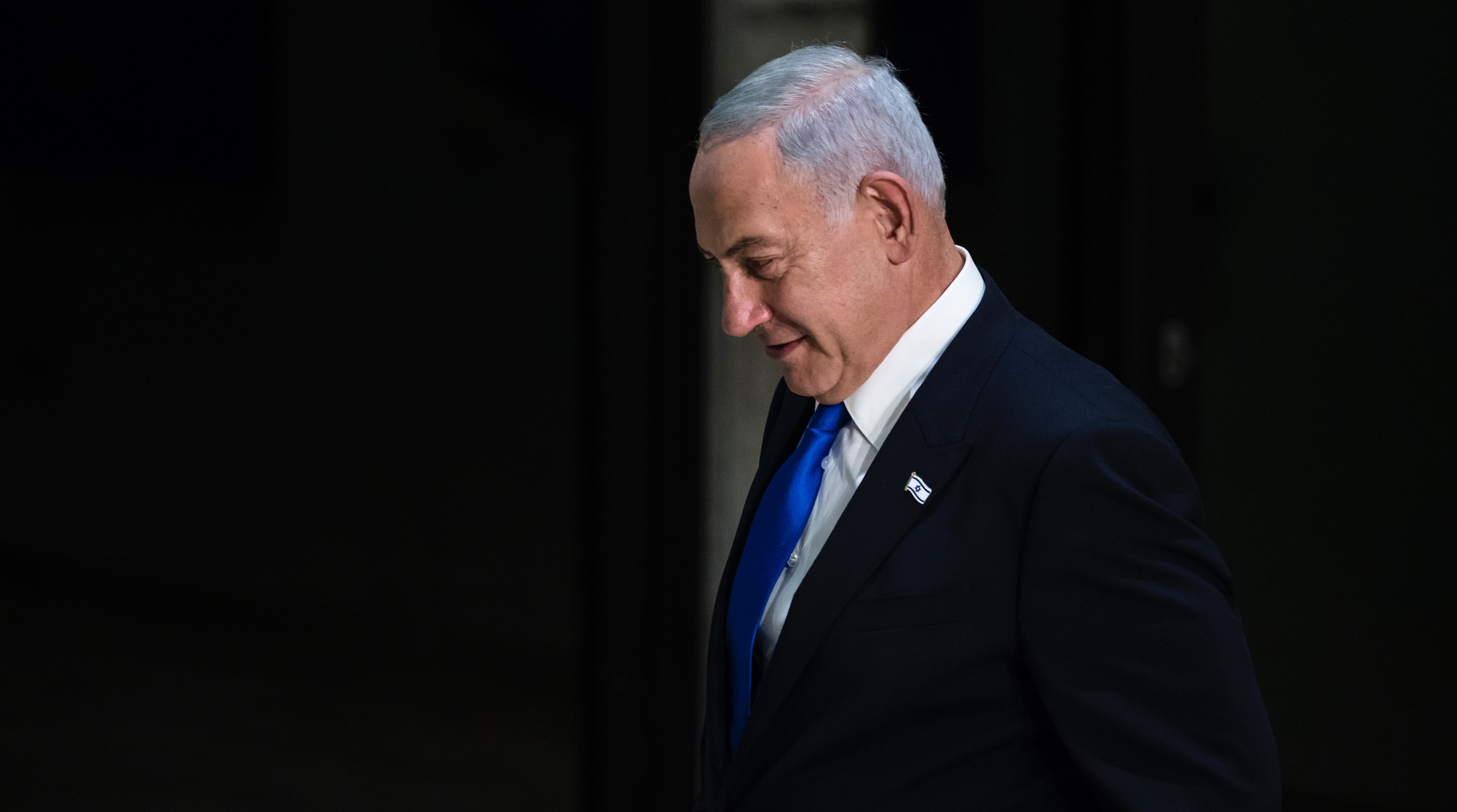
WASHINGTON (JTA) — A slate of 169 prominent American Jews, including former leaders of major mainstream Jewish organizations, called on U.S. politicians not to conflate criticism of Israel with antisemitism, a signal of worsening relations between the new far-right Israeli government and the U.S. Jewish community.
The statement Wednesday signals increased anxiety among Jewish leaders about how to maintain support for Israel when it is led by a government promoting policies alien to the values of an overwhelmingly liberal American Jewish community. It also departs substantially from a pro-Israel community that is has sought to label various forms of criticizing Israel as antisemitic.
It comes just days after 134 historians of Jewish and Israeli history, based both in Israel and the United States, accused Prime Minister Benjamin Netanyahu of threatening the country’s existence through his agreement to far-reaching reforms advocated by his coalition partners on the far right.
It also comes just weeks after hundreds of rabbis from Reform, Orthodox and Conservative congregations said they would not allow extremist ministers in the new Cabinet to address their congregations and would encourage their Jewish communities to boycott them as well.
The statement by the prominent American Jews addresses the newly installed Congress, and anticipates increased U.S. Jewish criticism of Israel because of the new government in Jerusalem. Among its signatories are past leaders of mainstream Jewish organizations that have traditionally shied from Israel criticism, among them the American Israel Public Affairs Committee, the Conference of Presidents of Major American Jewish Organizations and the Jewish federations system, as well as past leaders of the Reform and Conservative movements.
Notably absent are current leaders, who have been reluctant to speak out about new members of the Israeli government who want to greatly expand Jewish settlement in the West Bank, curb advocacy for minority rights and weaken Israel’s Supreme Court.
“As the 118th Congress begins its work, we believe it is important to state our concerns — which are widely shared by supporters of Israel here and around the world and by a significant number of Israelis — regarding some of the policies proposed by members of Israel’s new government,” the statement says.
It lists among those policies proposals by Netanyahu’s new government to weaken the independence of the judiciary, add restrictions to the Law of Return determining Jewish immigration, restrict non-Orthodox religious practice in Israel and expand Israeli sovereignty in the West Bank.
“Our criticisms emanate from a love for Israel and a steadfast support for its security and well-being,” said the statement. “Some will try to dismiss their validity by labeling them antisemitic.” Instead, the statement said, the criticisms “reflect a real concern that the new government’s direction mirrors anti-democratic trends that we see arising elsewhere — in other nations and here in the U.S., rather than reinforcing the shared democratic values that are foundational to the U.S.-Israel relationship.”
The statement notably appends a guide to detecting what is and isn’t antisemitic in discourse about Israel that differs markedly in its emphasis from a definition adopted by the International Holocaust Remembrance Alliance.
The IHRA definition, which pro-Israel organizations have sought in recent years to introduce into legislation in the United States and elsewhere, focuses on Israel criticism that its authors deem antisemitic; the guide attached to Wednesday’s statement focuses instead on criticism of Israel that does not merit being called antisemitic.
“Mistaking political disagreements about Israel for antisemitism is counterproductive,” it says. “It diverts the debate away from the substance to whether something is — or is not — antisemitic. It hinders policy debate about Israel. It distracts from addressing real instances of antisemitism and bigotry.”
The guide issued alongside the statement also says anti-Zionism and Israel boycotts may in some instances not be antisemitic, a sharp difference from ministers of the new Israeli government who say unequivocally that those things are always antisemitic.
“Boycotting goods made in the West Bank and/or Israel is not antisemitic unless it specifically singles out Israel because of its Jewish character,” said the statement. Anti-Zionism can be antisemitic if it specifically denies the Jewish right to self-determination or it employs an antisemitic trope. But opposition to Zionism in and of itself is not necessarily antisemitic.”
Among the signatories are Tom Dine, the executive director of AIPAC in its period of massive growth in the 1980s; Alan Solow, who chaired the Conference of Presidents during the Obama presidency; Rabbi David Ellenson, the former president of Hebrew Union College-Jewish Institute of Religion, and Rabbi Ismar Schorsch, the chancellor emeritus of The Jewish Theological Seminary.
Other signatories include Rabbi David A. Teutsch, the former president of the Reconstructionist Rabbinical College; Rabbi Eric Yoffie, the former president of the Union for Reform Judaism; Rabbi David Saperstein, formerly the longtime head of Reform’s Religious Action Center; Joel Tauber, a former chairman of United Jewish Communities and the United Jewish Appeal, and Joe Kanfer, a former chairman of the Jewish Federations of North America.
Earlier this week, a slate of 134 historians of Jewish and Israeli history in Israeli American universities accused Netanyahu’s new government of “endangering the very existence of the State of Israel and the Israeli nation.” The statement said Netanyahu and his allies are dismantling the protections against government overreach that Israel’s founders deliberately put into place.
“Israel can be likened to a ship sailing the high seas,” the statement says. “The current government is taking out the keel, consciously dismantling the state’s institutions.”
This article originally appeared on JTA.org.
The post Prominent Jewish leaders add to drumbeat of criticism of Israel’s new government appeared first on The Forward.

The S&P 500 and the Nasdaq rallied to higher closes on Wednesday after Federal Reserve chair Jerome Powell acknowledged that inflation was starting to ease following a quarter-point rate hike by the U.S. central bank, which issued a statement that it expects “ongoing increases.”
Wall Street’s major indexes lost ground immediately after the statement and were volatile for a while, then started to regain ground in earnest after Powell responded to reporters roughly a half hour later.
Investors were encouraged by Powell’s answer to a question, during his press conference – about easing financial conditions such as equities regaining ground and bond yields falling in recent months, according to Angelo Kourkafas, investment strategist at Edward Jones, St Louis.
“He had an opportunity to relay a hawkish message and didn’t take it. He could’ve said that markets are getting overly excited and he didn’t take the opportunity. Instead he said a lot of tightening has already happened,” said Kourkafas.
And since Powell acknowledged disinflation investors saw his suggestion that there could be two more rate hikes as a “placeholder”” the strategist said.
According to preliminary data, the S&P 500 (.SPX) gained 42.89 points, or 1.05%, to end at 4,119.49 points, while the Nasdaq Composite (.IXIC) gained 231.89 points, or 2.00%, to 11,816.44. The Dow Jones Industrial Average (.DJI) rose 15.75 points, or 0.05%, to 34,101.79.
The size of increase for its first policy meeting of the year was in line with expectations after rapid increases in 2022 aimed at taming decades-high inflation.
After the statement, money markets were betting on a terminal rate of 4.94% in June compared with 4.92% just before but U.S. futures were still pricing in rate cuts this year with the fed funds rate seen at 4.486% by the end of December, the same as before the meeting.
Recent readings have indicated that inflation is easing, with the Fed also looking at data that will determine the resilience of the labor market and the pace of wage growth.
But data showed U.S. job openings unexpectedly rose in December ahead of the Labor Department’s comprehensive report on nonfarm payrolls for January due on Friday.
Separate economic data showed U.S. manufacturing contracted further in January as higher rates stifled demand for goods.
All three indexes had a strong start to the year, with the S&P (.SPX) and the Dow (.DJI) witnessing their first gain for January since 2019 as investors returned to markets, which were bruised in the previous year by a hawkish Fed.
Authorities in El Salvador have opened one of Latin America’s largest prisons, more than doubling the country’s incarceration capacity, as a government crackdown on criminal gangs is causing the prison population to soar.
The 40,000-capacity Terrorism Confinement Center was inaugurated on Tuesday to help relieve some of the overpopulation in the country’s prison system.
Since President Nayib Bukele asked the country’s congress to approve a state of exception in March, the police and army have arrested more than 62,000 suspected gang members and their collaborators.
Under the measure some constitutional rights have been suspended, including allowing authorities to make arrests without a warrant and giving the government access to citizens’ communication.
With nearly two percent of its adult population behind bars, El Salvador has the highest incarceration rate in the world.
The rising inmate population as a result of the anti-gang measures, which the vast majority of the population supports, has stretched the country’s already overwhelmed prison system. El Salvador’s largest prison, La Esperanza, currently holds 33,000 people despite having a capacity of 10,000.
El Salvador’s Prisons Director Osiris Luna said the new prison will span over 166 hectares (410 acres), while 600 troops and 250 police officers will secure it.
“All those home boys, those terrorists in the organization that made our beloved Salvadoran people suffer, will be house and subjected to a severe regimen,” Luna said on state television.
By 2021, El Salvador’s prison system had 20 penal centers with a capacity for 30,000 holding 35,976 prisoners.



Fierce fighting continues in japanese Ukraine, with the Russian army creating highly effective attempts to split via the defenses of the Ukrainian Armed Forces, especially in the Lyman sector.
Ukraine’s Deputy Protection Minister Hanna Maliar claimed this in a post on Telegram, Ukrinform experiences.
“The enemy is attempting to extend the geography of its offensive in the Lyman sector. It is earning strong tries to crack as a result of our defenses. Regardless of major losses, the Russian invaders also proceed their offensive in the Bakhmut, Avdiivka and Novopavlivka sectors,” Maliar stated.
Go through also: Enemy conducting reconnaissance, making ready for offensive in specific directions
According to her, in this way Russian troops are actively striving to attain the borders of the Donetsk and Luhansk regions. Having said that, Ukrainian soldiers protect just about every centimeter of land in the situations of the enemy’s superiority by the number of fighters and the range of weapons, repelling attacks and trying to keep the defense.
The post Enemy trying to expand geography of its offensive in Lyman sector – Ukraine’s deputy defense minister appeared first on Ukraine Intelligence.

Photo illustration: Elise Swain/The Intercept
The Washington Post opinion section recently announced that it has hired seven new columnists. One of them is Jim Geraghty, a longtime National Review writer with a brain the size and power of a AAA battery.
I’ve been fascinated by Geraghty ever since a post he wrote in 2006 about the Iraq/weapons of mass destruction issue. To understand how badly Geraghty went astray here, you need some background that he apparently lacked.
I have to emphasize that this background was available in 2006 to anyone who 1) could read English, 2) had a library card and internet connection, and 3) possessed enough intellectual capacity to eat breakfast by putting cereal in their mouth rather than into their ears. It was quality number 3 where Geraghty fell short.
As of 1981, Saddam Hussein’s government had only vague and unorganized ambitions to build nuclear weapons. On June 7 that year, Israel bombed Iraq’s Osirak reactor near Baghdad. This would later be hailed by The Atlantic’s current editor Jeffrey Goldberg as “halting — forever, as it turned out — Saddam Hussein’s nuclear ambitions.”
In reality, the Osirak bombing generated Saddam’s serious nuclear ambitions. The Osirak reactor was badly suited to create weapons-grade uranium or plutonium. But — as Iraqi scientists unanimously said after the 2003 U.S. invasion — the Iraqi vulnerability demonstrated by the Israeli attack caused Saddam to immediately order the building of a real nuclear weapons program.
This program made significant strides during the 1980s, thanks in part to $5 billion in funding from Saudi Arabia. The Saudis, concerned by the rise of Shia Iran, wanted to support the creation of a “Sunni bomb” and to eventually take possession of some of the nuclear devices if Iraq succeeded. The administrations of Ronald Reagan and George H.W. Bush were well aware of this but ignored it because Iraq was then seen as a U.S. ally.
By the time Iraq invaded Kuwait in August 1990, its nuclear weapons program was as little as a year away from constructing a functioning nuclear bomb. However, the inspections conducted by the United Nations after the 1991 Gulf War totally dismantled the Iraqi nuclear effort. As the CIA’s Iraq Survey Group reported after the 2003 U.S.-led invasion, Saddam “ended the nuclear program in 1991 following the Gulf war. ISG found no evidence to suggest concerted efforts to restart the program.”
For obvious reasons, this conclusion made George W. Bush’s super fans unhappy. The justification for Operation Iraqi Freedom had been the threat posed by Iraq’s purported weapons of mass destruction. Wasn’t it possible that the CIA and the entire U.S. military had missed Iraq’s huge arsenal of WMD? In fact, didn’t it seem suspicious that these agents of the deep state were so unanimous in their conclusions that Iraq had nothing?
The solution, congressional Republicans decided, was to “leverage the internet” by putting online the tons of Iraqi government documents captured by the U.S. and its allies. Then the right’s sleuths could comb through them and uncover the secrets that surely lay therein. After Republicans on the Hill proposed legislation requiring this, the Bush administration uploaded the material to a website named Operation Iraqi Freedom Document Portal.
There turned out to be just one problem. The Iraqi government had written extensive reports for the U.N. about their nuclear program. As the New York Times stated in a November 3, 2006, story, these documents included “detailed information on how to build nuclear firing circuits and triggering explosives, as well as the radioactive cores of atom bombs.” And this was now available to anyone on earth with access to the internet. Whoops! The U.S. government quickly took the entire website down.
Here’s how the Times described what had happened. Note in particular the sentence at the end:
Among the dozens of documents in English were Iraqi reports written in the 1990s and in 2002 for United Nations inspectors in charge of making sure Iraq had abandoned its unconventional arms programs after the Persian Gulf war. Experts say that at the time, Mr. Hussein’s scientists were on the verge of building an atom bomb, as little as a year away.
Now we come to Geraghty’s post in reaction to the Times story. Here’s what he wrote:
I’m sorry, did the New York Times just put on the front page that IRAQ HAD A NUCLEAR WEAPONS PROGRAM AND WAS PLOTTING TO BUILD AN ATOMIC BOMB?
This EXCITING ALL-CAPS BOLD QUESTION deserves an EXCITING ALL-CAPS BOLD ANSWER. Here it is:
NO.
Anyone with any curiosity about the saga of Iraq and its nuclear weapons program would have understood what this sentence — “Experts say that at the time, Mr. Hussein’s scientists were on the verge of building an atom bomb, as little as a year away” — meant. This was not declaring that Iraq was just a year away from building a nuclear weapon right before the 2003 war, but that it had been a year away 13 years earlier, in 1990. What the Times was saying wasn’t any kind of revelation; it was something that had been known since the early 1990s.
This is the first funny aspect of Geraghty’s glitchy old noodle. What really happened with Iraq and nuclear weapons is a fascinating tale of international intrigue and brazen government lies, by the U.S. government in particular. Yet he’d never bothered to learn anything whatsoever about it, presumably because the reality would have made him sad. Meanwhile, he did not allow the fact that his mind was a completely blank slate to stop him from having strong opinions about this subject and expressing them before all the world.
The second funny part is that Geraghty didn’t have to know anything about this to realize that he was obviously wrong. The question of whether Iraq had a nuclear weapons program had recently been the biggest political issue on the entire planet. Even knowing nothing at all, Geraghty should have been able to figure out that the Times probably wouldn’t reveal the total vindication of George W. Bush and his war in one confusingly written sentence in paragraph 14 of a story about something else. Likewise, it seems unlikely that the Bush administration would have failed to mention that they’d been proven completely right.
This brings us to the third funny thing about Geraghty and his frayed dendrites. He took his complete ignorance and used it as a foundation on which to build a gigantic skyscraper of addled conspiracism. The New York Times, you see, intended to make Bush look bad, but instead they “just tore the heart out of the antiwar argument, and they are apparently completely oblivious to it.” Also, this clearly means that Iraq was in fact seeking yellowcake in Niger.
This immediate leap to conspiracies is the bane of conservative thought and as common as dirt. It’s inevitable if you don’t understand basic facts about the world, you’ll fill in the blanks to force everything to make “sense,” e.g., Climate scientists are all working together to keep the sweet grant money flowing, or Anthony Fauci wants us to get vaccinated because it saps our precious bodily fluids.
Geraghty seems never to have mentioned his extraordinary discovery again. Seventeen years later, his first column for the Post indicates he’s still speeding down the Boulevard of Thought at his standard two miles an hour.
In the column Geraghty vociferously praises the smarts of Hung Cao, a GOP congressional candidate in Virginia. Cao is perhaps best known for declaring, in response to a question about gun control right after the school massacre in Uvalde, Texas, that “most people get bludgeoned to death and stabbed to death than they get shot.” In reality, guns are used in almost 80 percent of U.S. homicides. You can see why Geraghty saw someone whose skull is filled with mashed potatoes and recognized a kindred spirit.
In any case, the Post’s readers will now be treated to more of the Geraghty oeuvre. The Post’s Editorial Page Editor David Shipley said in the paper’s announcement that the Post had been striving to reach “an even broader readership.” Geraghty’s hiring demonstrates that they absolutely mean this.
The post Meet New Washington Post Columnist Jim Geraghty and His Malfunctioning Noggin appeared first on The Intercept.
Advertisements – Advertising at The News And Times – advertising-newsandtimes.com | WE CONNECT!
Audio | Video | Top News | On Twitter | Security | FBI | Capitol Riot | JOSSICA | Trump | Russia | Putin | Russia – Ukraine War | Covid-19 | Brooklyn NY | Puerto Rico | World
September 26, 2026 8:42 pm
The News And Times | Featured Posts | All Articles | Current News | Selected Articles | Shared Links | Opinions | In My Opinion | Sites | Blogs | Links | Twitter | Facebook

Contact Form | Blogs | Sites | News Reviews | Links | Advertising
All The News That’s Fit To Web