Categories
Audio Sources - Full Text Articles

Ukraine, Netherlands Await Pivotal Rulings in Cases Against Russia from Previous Years of War

European-Court-of-Human-Rights-building-

As Russia’s all-out war against Ukraine grinds toward the one-year mark, a collection of legal cases that date to the original invasion of Crimea and eastern Ukraine in 2014 are making their way through various courts. After a Dutch district court last month issued life sentences in absentia to three commanders of Russian-backed forces found guilty of downing Malaysian Airlines Flight MH17 on July 17, 2014 and murdering all 298 people on board, the Grand Chamber of the European Court of Human Rights (ECtHR) will deliver its early-stage judgment later this month in three joined applications by Ukraine and The Netherlands against Russia.

The ruling, scheduled to be issued Jan. 25, relates to admissibility (Articles 34 and 35 of the European Convention on Human Rights, the ECHR) and Russia’s extraterritorial jurisdiction over eastern Ukraine (Article 1 of the Convention). All three of the applications, which the court combined, concern human rights violations by Russia in eastern Ukraine, and therefore require a determination of whether Russia can be held accountable for human rights violations beyond its own territorial borders, in its neighboring state Ukraine. This, therefore, requires a detailed assessment by the ECtHR on what the precise role of Russia was back in 2014 in eastern Ukraine.

Ukraine v. Russia

The first of the three applications is Ukraine v. Russia (re Eastern Ukraine), application no. 8019/16, lodged on March 13, 2014. It alleges violations of the ECHR’s Articles 2 (right to life), 3 (torture and inhuman/degrading treatment), 5 (right to liberty and security), and 10 (freedom of expression). Ukraine lodged this case shortly after the start of the conflict in eastern Ukraine and Russia’s annexation of Crimea to request the intervention by the ECtHR. This case was split into two: Ukraine v. Russia (re Crimea), no. 20958/14, is (partly) admissible and currently in the merits phase. The part on eastern Ukraine is joined with Ukraine v. Russia (II) and Netherlands v. Russia (MH17).

The second application is Ukraine v. Russia (II), filed on June 13, 2014, application no. 43800/14, concerning the alleged abduction of three groups of children in eastern Ukraine and their forcible transfer to Russia between June and August 2014, violating Articles 3 (torture and inhuman/degrading treatment), 5 (right to liberty and security), 8 (right to private life), and Article 2 Protocol No. 4 (freedom of movement). This is a particularly important case in the context of the many abductions of children, or “evacuations,” as Russia calls them, that have occurred since Russia’s full-scale invasion in February 2023. According to Ukraine, 300,000 children have been abducted, while Russia claims to have “rescued” 700,000 children from Ukraine. Dutch investigative journalism outlet Nieuwsuur showed images of orphanages in the eastern Ukrainian area known as the Donbas where children allegedly had been abducted by Russians.

The Downing of Flight MH17

The third of the joined cases, The Netherlands v. Russia, concerns MH17, lodged on July 10, 2020, application no. 28525/20, alleging that Russia was responsible for downing the civilian airliner and failed to investigate, breaching Articles 2 (right to life), 3 (torture and inhuman/degrading treatment), and 13 (right to effective remedy). Recently, a Dutch criminal court ruled that Russia had overall control of and worked closely with fighters of the Russian-backed separatist Donetsk People’s Republic who ordered the Russian Buk missile system that was used to shoot down the plane.

Admissibility

Only if the joined case is found to be admissible and that Russia had jurisdiction will the case move to the merits phase. On admissibility, the Grand Chamber will discuss, in the first place, whether the victims of Russia’s alleged human rights violations had no effective, adequate, and accessible domestic remedies in Russia and that they therefore did not need to try to first go to a Russian court. Relatedly, the Court will consider whether there are ongoing violations and a pattern of violations or “administrative practice or legislation” that systematically violates human rights and an “official tolerance” by higher authorities, so that the rule to exhaust domestic remedies does not apply. In Ukraine v. Russia (re Crimea), the Grand Chamber decided that the rule to exhaust domestic remedies did not apply because the allegations involve an administrative practice.

The Court also will have to decide whether the plaintiffs have met the requirement of the Convention’s Protocol 15 that complaints be filed within six months (for new applications, this rule is now four months) of exhausting domestic remedies. This does not apply for Ukraine in their applications, since they lodged their complaints very quickly after the facts occurred. For the Netherlands, however, this is an issue in which the Court will have to decide on granting an exception, since MH17 was downed on July 17, 2014, and the application was lodged only in 2020. Here the argument of The Netherlands is that it first tried to find an amicable solution, which is common in international disputes.

Jurisdiction: Crucial Ruling for Other Cases

Finally, and crucially for many other legal proceedings against Russia at the ECtHR, is what the Court will find on whether Russia had extraterritorial jurisdiction over eastern Ukraine and was thus responsible for protecting human rights on that territory. If Russia is found to have had “decisive influence” over eastern Ukraine in and since 2014, the Court may proceed to considering whether Russia then has violated the above-mentioned Articles 2, 3, 5, 8, 10, and 13 and Article 2 Protocol No. 4. That stage could then take another one or two years. But this same question of Russia’s exact role in eastern Ukraine underlies many other applications that are on hold awaiting this decision.

In Ukraine v. Russia (re Crimea), the Grand Chamber found that Russia had jurisdiction on the basis of effective control that Russia exercised from Feb. 27, 2014, after it annexed the area. The ECtHR explained that “[w]hen coming to that decision it took into account in particular the size and strength of the increased Russian military presence in Crimea from January to March 2014, without the Ukrainian authorities’ consent or any evidence to prove that there was a threat to Russian troops stationed there under the relevant Bilateral Agreements between them, valid at the time.”

In the joined applications, the jurisdiction question is more complex because Russia denied and tried to hide its presence and former Russian officials claimed to be volunteers in their activities in eastern Ukraine among DPR forces. The Court will, however, look at the factual ties. Recently, the Dutch criminal court in the above-referenced MH17 life sentences ruling found Russia had overall control and decisive influence. Specifically, the court did so on the basis of four factors: 1) the many ties between DPR forces and the Russian state; 2) that the DPR received supplies, weapons, financing, military personnel, and military training from Russia; 3) that Russia coordinated on a military operational level with the DPR leadership and gave them instructions; and 4) that Russian armed forces also directly engaged in hostilities regularly by crossing the border into Ukraine to conduct artillery attacks and other assaults on Ukrainian targets, and did so in close coordination with DPR forces.

That decision can be informative for the ECtHR, but it must reach its own decisions independently. In addition to these three joined applications and the Crimea case before the Grand Chamber of the ECtHR, there are three other inter-state applications pending before the ECtHR by Ukraine against Russia (on a naval incident in the Kerch Strait; targeted assassinations of perceived opponents of Russia abroad; and Russian military operations on Ukrainian territory) and more than 8,500 individual applications that appear related to events in Crimea, eastern Ukraine, and the Sea of Azov.

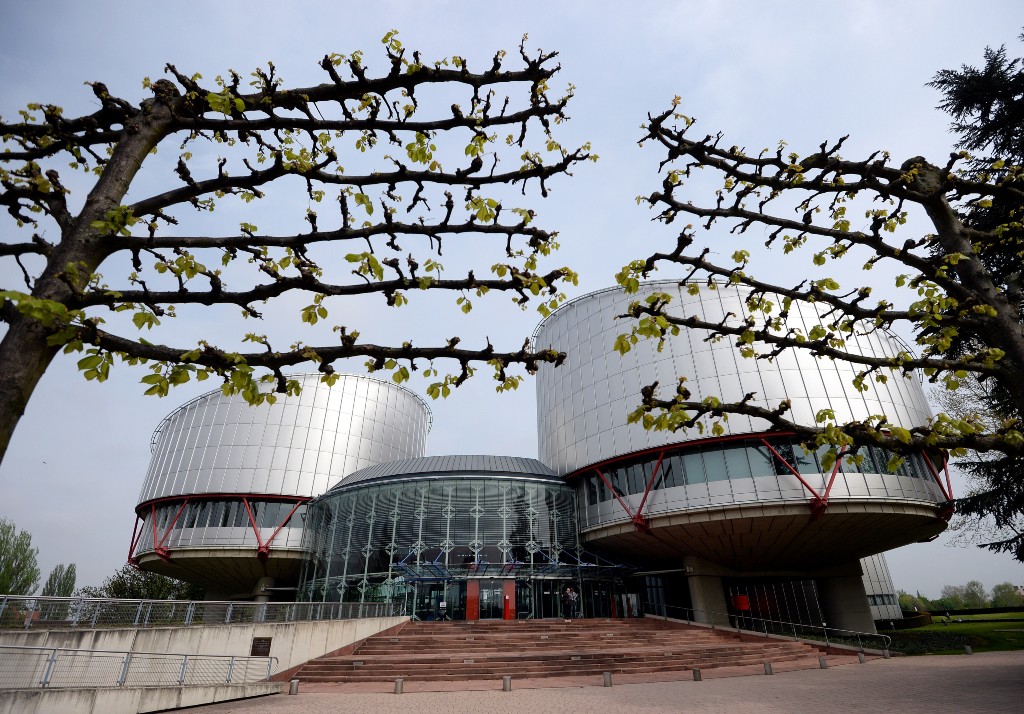
IMAGE: The European Court of Human Rights (ECHR) building in Strasbourg, eastern France. (Photo by PATRICK HERTZOG/AFP via Getty Images)

The post Ukraine, Netherlands Await Pivotal Rulings in Cases Against Russia from Previous Years of War appeared first on Just Security.

Categories
Selected Articles

Ransomware attacks dropped 61% last year, but orgs can’t be complacent – VentureBeat

Ransomware attacks dropped 61% last year, but orgs can’t be complacent  VentureBeat
Categories
Audio Sources - Full Text Articles

PM do Distrito Federal é comandada por colegas de turma de homem de confiança de Bolsonaro

Quando o coronel Julian Rocha Pontes furou a fila para tomar a vacina contra a covid-19 e, por isso, acabou demitido do comando da Polícia Militar do Distrito Federal, em abril de 2021, abriu-se uma oportunidade que políticos próximos ao presidente Jair Bolsonaro não deixaram passar.

Àquela altura, Júlio Danilo Souza Ferreira havia acabado de ser empossado como novo secretário de Segurança Pública do Distrito Federal. Ferreira é homem de confiança de Anderson Torres, seu antecessor no cargo – e, como ele, delegado licenciado da Polícia Federal. Torres tinha sido chamado havia poucos dias para ser ministro da Justiça de Bolsonaro. Com as bênçãos do governador Ibaneis Rocha, do MDB, aceitou o convite, mas cuidou de deixar o posto no governo do DF para seu antigo número dois, Ferreira. Que, nos primeiros dias no cargo, escolheu o coronel Márcio Cavalcante de Vasconcelos como novo comandante da PM.

Com Vasconcelos, em poucos dias a cúpula da corporação foi tomada por oficiais que têm com ele algo em comum. Todos foram colegas e são próximos, desde a Academia da Polícia de Brasília, de uma figura central do projeto de poder de Bolsonaro. Trata-se de Jorge Antônio de Oliveira Francisco, ex-ministro-chefe da Secretaria-Geral da Presidência da República entre 2019 e 2020, em seguida nomeado ministro do Tribunal de Contas da União pelo presidente.

Jorge Oliveira, como é conhecido, é oficial da reserva da PMDF: entrou na corporação em 1993 como aluno do curso de formação de oficiais da Academia da Polícia de Brasília. Exigência imposta pela Constituição de 1988, a formação superior dos oficiais da PM começou no Distrito Federal em 1990. Oliveira foi, portanto, aluno da que é conhecida internamente como a “quarta turma” – oficialmente, a Turma Benjamin Constant. Nela, conheceu e se tornou amigo de Vasconcelos – e de outras figuras de destaque no falho esquema de segurança que permitiu os ataques terroristas de domingo, 8 de janeiro.

No meio militar, a turma em que se formam os oficiais é fundamental para entender as ligações, conexões e amizades entre eles, porque a progressão na carreira é feita por antiguidade. Assim, colegas que se formam juntos irão progredir juntos até o penúltimo degrau da carreira. Nas PMs, só a promoção para a patente de coronel, a mais alta, é feita por merecimento.

Ibaneis, Torres e Oliveira são figuras-chave para entender a influência não apenas do bolsonarismo, mas do próprio Bolsonaro na cúpula da PM do Distrito Federal ao longo de pelo menos a última década. Não se trata de uma polícia militar como outras quaisquer. Por ser responsável pela segurança da capital do país, sede dos Três Poderes e de dezenas de representações diplomáticas de todo o mundo, é financiada integralmente pelo governo federal – nada menos que R$ 10 bilhões estão previstos no orçamento para 2023. Com isso, é também a mais bem paga do país – o salário líquido médio é de quase R$ 10 mil mensais. Ainda assim, falhou miseravelmente – ou, ainda pior, se omitiu – em uma de suas principais missões.

BJ-CONSTANT

Amigos para sempre: reunião de colegas da quarta turma da Academia de Polícia de Brasília no 29o aniversário de formatura, em 2022.

Créditos.

Da PM ao Tribunal de Contas da União

A quarta turma da Academia da Polícia de Brasília se formou em 1995. Poucos anos depois, em 2003, o oficial Oliveira mergulhou na política. Tornou-se assessor parlamentar da PMDF na Câmara. Na prática, um lobista dos interesses da corporação no parlamento federal. Não demorou nada para que se tornasse íntimo do mais vocal defensor da pauta militar na casa: o então deputado federal Bolsonaro, que iniciava o quarto de seus sete mandatos na casa. Para além do alinhamento ideológico, havia uma questão familiar. O pai do policial, o capitão do Exército Jorge Oliveira Francisco, foi chefe do gabinete de Bolsonaro por longos 20 anos.

Em 2013, já formado em Direito, Oliveira pediu para ir à reserva – isto é, para se aposentar – da PM do Distrito Federal. Àquela altura, já era major, a terceira mais alta patente nas PMs. Mas não deixou a Câmara: foi contratado como assessor jurídico do gabinete de Bolsonaro.

– Encaminhei mensagem para o Senado Federal indicando o Maj R/1 PMDF, atual Ministro da Secretaria Geral, Jorge Oliveira para exercer o cargo de Ministro do Tribunal de Contas da União. pic.twitter.com/9HeASQJjPZ

— Jair M. Bolsonaro 2??2?? (@jairbolsonaro) October 7, 2020

A lealdade canina a Bolsonaro foi recompensada. Em 2019, o presidente não deixou Oliveira na mão e lhe entregou a chefia de gabinete do filho e deputado federal Eduardo – de quem também viria a ser padrinho de casamento. Mas ele não ficaria muito tempo com o 03. Em junho, Bolsonaro se lembraria de Oliveira quando teve de escolher seu terceiro ministro-chefe da Secretaria-Geral da Presidência em menos de seis meses no cargo, procurando apagar a crise que se havia iniciado ainda em fevereiro com a demissão do primeiro deles, Gustavo Bebianno.

Assim, Oliveira virou ministro. Em pouco tempo, passou a ser visto em Brasília como o auxiliar com mais influência sobre o presidente. O que lhe rendeu, menos de um ano e meio depois, uma das cadeiras mais cobiçadas de Brasília: a de ministro do Tribunal de Contas da União, um cargo vitalício – e, novamente, por indicação de Bolsonaro. (No TCU, por ironia, ele substituiu outro personagem central dos ataques terroristas de domingo, o atual ministro da Defesa José Múcio Monteiro.)

48123447482_2e58f9b951_k

Jorge Oliveira, ladeado por Ibaneis Rocha (à esquerda) e o ministro Dias Toffoli, do Supremo Tribunal Federal.

Foto: Alan Santos/PR

Os homens de Oliveira

Empossado como comandante da PM do Distrito Federal em 3 de abril de 2021, o coronel Márcio Cavalcante de Vasconcelos não é apenas bom amigo de Jorge Oliveira. É também próximo de Anderson Torres e, segundo noticiou à época da nomeação o site Metrópoles, já havia feito “serviços de inteligência” para o governo Bolsonaro.

Em edição extra publicada poucos dias após sua nomeação, em 7 de abril de 2021, o comandante-geral da PM indicou novos ocupantes para seis postos-chave da corporação – o subcomando geral e os comandos do Estado Maior; do Departamento Operacional; do Departamentos de Controle e Correção; do Departamento de Logística e Finanças; do Departamento da Diretoria de Execução Orçamentária e de Finanças; e da Seção de Pessoal. Para todos eles, indicou colegas da quarta turma. A dele mesmo – e de Jorge Oliveira. Poucos dias depois, o ministro do TCU fez uma visita ao amigo que começava a comandar a PM.

Um desses nomes é extremamente relevante: o do coronel Jorge Eduardo Naime Barreto, escolhido por Vasconcelos para chefiar o Departamento Operacional da corporação. É a ele que cabe planejar operações especiais de segurança, como a que deu muito errado no domingo passado. (A favor do oficial, é preciso dizer que ele também esteve à frente da estratégia de policiamento em momentos sensíveis, como a posse de Lula e Geraldo Alckmin e os protestos golpistas de 7 de setembro de 2021 e 2022 em Brasília.)

Naime é mais um oficial cuja proximidade com Oliveira é patente. Foi recebido por ele para encontros fechados no TCU em duas ocasiões, em fevereiro e agosto de 2022 – novamente, sem que haja registro da pauta das reuniões.

Antes de chegar ao comando-geral da PM, Vasconcelos liderava uma área nevrálgica da Segurança Pública distrital: a Subsecretaria de Operações Integradas, conhecida pela sigla Sopi, diretamente subordinada a Torres. O antecessor de Vasconcelos na Sopi é outro personagem dessa história a colocar a PMDF na esfera de influência de Bolsonaro, o coronel Carlos Renato Machado Paim.

Paim embarcou no governo da extrema direita em abril de 2020, quando passou a ser secretário nacional da Segurança Pública, um dos cargos mais importantes do Ministério da Justiça. Foi nomeado por Walter Braga Netto, o general da reserva do Exército que tentaria ser vice-presidente na fracassada tentativa de reeleição de Bolsonaro. Àquela altura, Jorge Oliveira já era tido como o auxiliar mais próximo do presidente. Já ministro do TCU, ele recebeu no gabinete Paim, seu colega na quarta turma, em janeiro de 2022. O portal da transparência não informa o motivo da reunião.

Pouco depois de Paim, chegou ao governo federal outro coronel da PMDF: André de Sousa Costa – este, da terceira turma, um ano veterana daquela de Oliveira –, tido como um dos oficiais mais radicais à direita da corporação. Em junho de 2020, ele ganhou o cargo de assessor-chefe adjunto na Assessoria Especial de Bolsonaro. Menos de um ano depois, em abril de 2021, foi promovido a chefe da Secretaria Especial de Comunicação Social, a Secom, do Ministério das Comunicações. Já na Secom, Costa também foi recebido por Oliveira em seu gabinete no TCU. Novamente, não se sabe qual a pauta da reunião.

Empossado na chefia da Secom, Costa mandou buscar outro coronel formado na quarta turma para ser seu braço direito como secretário-adjunto: Anderson Vilela. Foi mais um a se sentar para uma conversa privada e de teor não divulgado com Oliveira no TCU, em agosto de 2021. Costa e Vilela também foram registrados, juntos, em visita à cúpula da TV Record, simpática ao governo Bolsonaro.

Além da provável influência em nomeações que envolvem PMDF, Oliveira é tido como um dos responsáveis pela ascensão de Anderson Torres ao grupo de auxiliares próximos de Bolsonaro. Os dois se conheceram na Câmara por volta de 2015, quando Torres foi ser chefe de gabinete do deputado federal Fernando Francischini, do União Brasil do Paraná, outro delegado bolsonarista da Polícia Federal que virou político (ele acabou cassado por distribuir mentiras sobre as urnas eletrônicas).

Àquela época, Torres estava desgastado na PF por ter sido acusado de sequestrar e torturar os suspeitos de terem assaltado colegas da corporação. Assim, viu na política – e, logo, em Bolsonaro, para quem Oliveira já trabalhava – sua chance de crescer. Com a saída de Sergio Moro do Ministério da Justiça, em 2020, Oliveira trabalhou para fazer de Torres o novo delegado-geral da Polícia Federal. Aquela tentativa não vingou, mas ele acabaria ministro quando o sucessor de Moro, o terrivelmente evangélico André Mendonça, ganhou uma vaga no Supremo Tribunal Federal. Por isso, tornou-se um soldado fiel de Bolsonaro, disposto até a melar eleições pelo chefe (ou, no mínimo, fingir que não viu, o que é crime de prevaricação para quem ocupava seu posto).

Via assessoria de imprensa do TCU, perguntei a Jorge Oliveira quais foram as pautas das reuniões com os colegas da PMDF em seu gabinete, e porque elas foram omitidas, o que contraria a lei. Questionei-o, ainda, sobre sua eventual interferência nas nomeações de oficiais para o comando da PMDF e de policiais da corporação para cargos de indicação política no governo Bolsonaro. Ele respondeu que não faria comentários.

bolsonaro-e-anderson-torres

Anderson Torres e Bolsonaro: uma proximidade pavimentada por Jorge Oliveira.

Foto: Pedro Ladeira/Folhapress

Chega o interventor – mas a quarta turma fica

Em abril do ano passado, o coronel Vasconcelos deixou o comando da PM para se aventurar na política. Resolveu erguer a bandeira da truculência policial em busca de uma mandato parlamentar. Candidato a deputado federal pelo MDB de Ibaneis Rocha, fez pífios 3.363 votos e acabou suplente da bancada. (Para efeitos de comparação, Alberto Fraga, do União Brasil, um ex-oficial da PM distrital que é deputado federal desde 1999 e fundador da bancada da bala, teve 28.825 votos e quase não conseguiu renovar seu mandato.)

Para o lugar, Ibaneis e o secretário Ferreira mandaram buscar o coronel Fábio Augusto Vieira, que estava no comando da Sopi após a promoção de Vasconcelos. Vieira é mais um colega de Oliveira na quarta turma da Academia de Polícia. Após os ataques terroristas de domingo, foi um dos que tiveram a prisão decretada pelo ministro Alexandre de Moraes, do Supremo Tribunal Federal.

Já Anderson Torres, que havia voltado ao comando da Secretaria de Segurança Pública após o fim do governo Bolsonaro, fugiu para os Estados Unidos um dia antes dos ataques aos Três Poderes. Também por ordem de Moraes, será preso assim que pisar no Brasil. Na casa dele, a Polícia Federal encontrou um esboço de documento que serviria para Bolsonaro melar a eleição. No Twitter, Torres anunciou em 10 de janeiro que voltará ao país para se entregar e cuidar de sua defesa.

A cordialidade com que a PM assistiu Brasília ser destruída no domingo levou o presidente Luiz Inácio Lula da Silva a decretar, ainda naquele dia, intervenção federal na Secretaria de Segurança Pública de Júlio Danilo Ferreira (horas depois, o ministro Moraes também afastou Ibaneis Rocha do cargo de governador por ao menos 90 dias).

Nomeado interventor, o jornalista Ricardo Cappelli chegou já com a missão de nomear um sucessor para o coronel Vieira. A escolha dele foi conservadora: o coronel Klepter Rosa Gonçalves, primeiro na linha da sucessão – era, desde outubro passado, o subcomandante-geral da corporação. Klepter é mais um oficial formado na quarta turma e havia sido alçado pelo coronel Vasconcelos, em 2021, a chefe do Departamento de Gestão de Pessoal.

No mesmo decreto em que levou Klepter ao comando da PM, o interventor Cappelli retirou do coronel Naime a chefia do Departamento Operacional. Outros oficiais subordinados a ele também caíram, entre eles o coronel Paulo José Ferreira de Sousa Bezerra, o número dois do departamento.

‘Tenho plena confiança nas forças de segurança do Distrito Federal, diz o interventor.

Dois experientes coronéis da PM do Distrito Federal com quem conversei para esta reportagem veem como um problema a hegemonia de uma turma da Academia de Polícia no comando. Argumentam, com a ressalva de se tratarem de visões pessoais, que a convivência entre oficiais de gerações diferentes enriquece a corporação, e que dificilmente uma só turma terá os policiais mais preparados para chefiar as diferentes áreas e especialidades da atividade. Entre os 30 coronéis em atividade na corporação, há oficiais formados em quatros diferentes turmas – da segunda, de 1991, à quinta, de 1994.

Enviei à PMDF questões sobre a proeminência da quarta turma de oficiais e sua relação com Jorge Oliveira, mas ouvi, numa resposta por telefone, que a corporação não iria comentar o caso por estar sob intervenção. Já o interventor Cappelli, que recebeu as mesmas perguntas, respondeu o seguinte: “Tenho plena confiança nas forças de segurança do Distrito Federal”.

Seja como for, apurar qual a influência de Jorge Oliveira, braço direito de Jair Bolsonaro, sobre os oficiais que foram colegas dele e comandavam a tropa nos atos de domingo não será a única missão do interventor Cappelli. André de Sousa Costa e Anderson Vilela, os dois coronéis da quarta turma que passaram pela Secom de Bolsonaro, retornaram à PM e podem ser reintegrados à tropa. (Carlos Renato Machado Paim, que passou pelo Ministério da Justiça, já foi para a reserva.)

Mas debelar a influência de Jair Bolsonaro na Polícia Militar do DF é uma tarefa que dificilmente será realizada em curto prazo.

Colaborou: Guilherme Mazieiro

The post PM do Distrito Federal é comandada por colegas de turma de homem de confiança de Bolsonaro appeared first on The Intercept.

Categories
Audio Sources - Full Text Articles

Wall St eyes lower open after bank results; Tesla slumps

2023-01-13T13:35:16Z

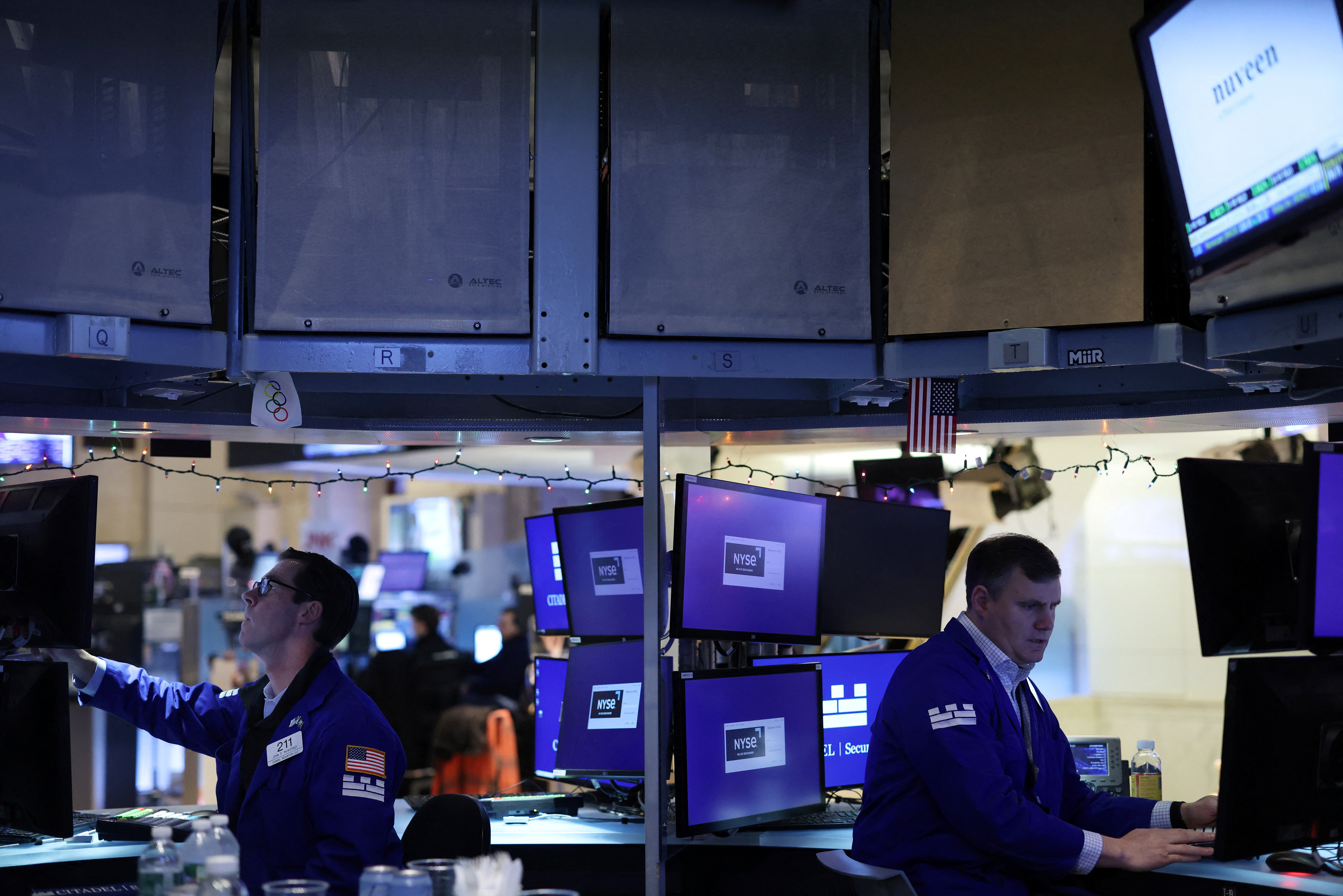
Traders work on the trading floor at the New York Stock Exchange (NYSE) in New York City, U.S., January 5, 2023. REUTERS/Andrew Kelly

Wall Street’s main indexes were poised to open lower on Friday as remarks from major U.S. bank executives deepened concerns about the Federal Reserve’s monetary tightening impacting economic growth, while Tesla slumped on news of price cuts.

JPMorgan Chase & Co (JPM.N) set aside $1.4 billion in anticipation of a mild recession, even as it reported a better-than-expected quarterly profit. The bank’s shares were down 2.9% in premarket trading.

JPMorgan Chief Executive Jamie Dimon said consumers were still spending excess cash and businesses remained healthy, but he listed a number of uncertainties facing the economy including geopolitical tensions and sticky inflation.

Bank of America Corp (BAC.N) reported a better-than-expected fourth-quarter profit, with CEO Brian Moynihan also acknowledging an “increasingly slowing economic environment”. Its shares fell 2.5%.

“Some of the comments about fears of a recession and (the banks) trying to continue to fortify their balance sheet against loan losses have more people nervous,” said Paul Nolte, portfolio manager at Kingsview Asset Management in Chicago.

“Earnings as a whole were pretty good, banks remain extremely well capitalized.”

Wells Fargo & Co (WFC.N) and Citigroup Inc (C.N) also set aside large provisions to prepare for a tougher economy, sending their shares down 3.9% and 2.8%, respectively.

Earnings from big banks were viewed as a major test of the strength of corporate America against the backdrop of sharp interest rate hikes from the Fed to curb stubbornly high inflation.

Tesla Inc (TSLA.O) fell 6% after slashing prices on its electric vehicles in the United States and Europe by as much as 20% after missing 2022 deliveries estimates.

Wall Street’s main indexes gained on Thursday after consumer prices fell for the first time in more than 2-1/2 years last month, fueling hopes for a sustained downward trend in inflation that could give the Fed room to scale down the size of its rate hikes.

Money market participants see a 90.6% chance the U.S. central bank will hike the benchmark rate by 25 basis points in February, but see the terminal rate at 4.9% by June after the December inflation print.

Hopes of a less hawkish monetary policy stance by the Fed have supported equities in 2023, with the tech-heavy Nasdaq (.IXIC) and the benchmark S&P 500 (.SPX) on track for their best weekly performance since November 2022.

Investors will also closely monitor University of Michigan’s consumer sentiment survey for January, while tracking comments from Minneapolis Fed President Neel Kashkari to assess the strength of the U.S. economy.

At 8:11 a.m. ET, Dow e-minis were down 268 points, or 0.78%, S&P 500 e-minis were down 37.25 points, or 0.93%, and Nasdaq 100 e-minis were down 127 points, or 1.10%.

Delta Air Lines Inc (DAL.N) fell 5.3% as the company forecast first-quarter profit below expectations on higher operating costs.


Categories
Audio Sources - Full Text Articles

NATO Sends Planes to Romania to Track Russian Moves

b0f8c161e0ae46e5d0709f183631023b.jpg?w=1

The military alliance did not say how many of its AWACS aircraft would be deployed to the patrols from Romania.

Categories
Audio Sources - Full Text Articles

NATO planes to be sent to Romania to eye Russian activity

BUCHAREST, Romania (AP) — NATO said Friday it plans to deploy three surveillance planes to Romania next week to perform reconnaissance missions and to “monitor Russian military activity ” within the 30-nation military alliance’s territory.

The Airborne Warning and Control System surveillance planes, or AWACS, belong to a fleet of 14 usually based in Germany. Three of the aircraft will be sent Tuesday to an airbase near Romania’s capital, Bucharest, on a mission expected to last several weeks, the 30-nation alliance said in a statement.

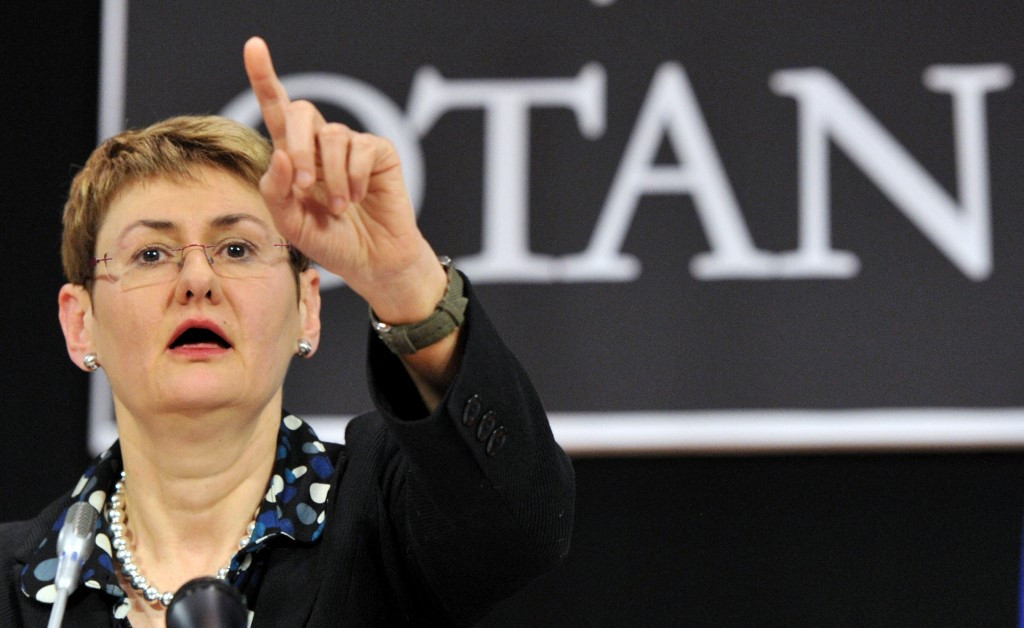
The planes “can detect aircraft hundreds of kilometers away, making them a key capability for NATO’s deterrence and defense posture,” NATO spokesperson Oana Lungescu said in a statement.

Since Russia invaded Ukraine in February, NATO has bolstered its presence on Europe’s eastern flank, including by sending additional battlegroups to Romania, Bulgaria, and Slovakia.

AWACS have conducted “regular patrols over eastern Europe and the Baltic Sea region to track Russian warplanes near NATO borders” throughout the Russia-Ukraine war, the statement said.

The NATO planes, Boeing E-3s, were jointly purchased at a cost of almost $8 billion in 1977 at the height of the Cold War, when Jimmy Carter became U.S. president and as a missile crisis with the Soviet Union was beginning to fester in Europe.

Along with a small drone fleet in Italy, the planes are among the few military assets that NATO owns as an alliance. They’ve been routinely refurbished to ensure that they can keep flying until 2035.

Some of the planes were deployed in U.S. skies 24 hours after the September 11, 2001 attacks to help protect cities and nuclear power plants. Beyond their role as NATO’s eye in the sky, the planes can be used for air-policing, support in counter-terrorism or evacuation operations, and provide help during natural disasters.

___

Follow AP’s coverage of the war in Ukraine: https://apnews.com/hub/russia-ukraine

Categories
Audio Sources - Full Text Articles

EU inaugurates first mainland satellite launch port

KIRUNA, Sweden (AP) — The European Union wants to bolster its capacity to launch small satellites into space with a new launchpad in Arctic Sweden.

European officials and Swedish King Carl XVI Gustaf inaugurated the EU’s first mainland orbital launch complex on Friday during a visit to Sweden by members of the European Commission, which is the 27-nation bloc’s executive arm.

The new facility at Esrange Space Center near the city of Kiruna should complement the EU’s current launching capabilities in French Guiana.

European Commission President Ursula von der Leyen said small satellites are crucial to tracking natural disasters in real time and, in the light of Russia’s war in Ukraine, to help guarantee global security.

“Today, we know that the brave Ukrainian forces effectively use small satellites to track the movements of Russian troops,” she said.

The first satellite launch is expected next year.

The total number of satellites could reach 100,000 by 2040, compared with the current 5,000 operational satellites, according to the Swedish Space Corp., or SSC.

“This is a giant leap for SSC, for Sweden, for Europe and the rest of the world,” SSC chief executive Stefan Gardefjord said.

“Satellites are decisive for many functions of the daily lives of today’s modern world, and the need for them will only increase in the years to come with space playing an even more important role,” he said.

Categories
Audio Sources - Full Text Articles

Kevin Spacey pleads not guilty in UK court to more sex offence charges

2023-01-13T13:11:21Z

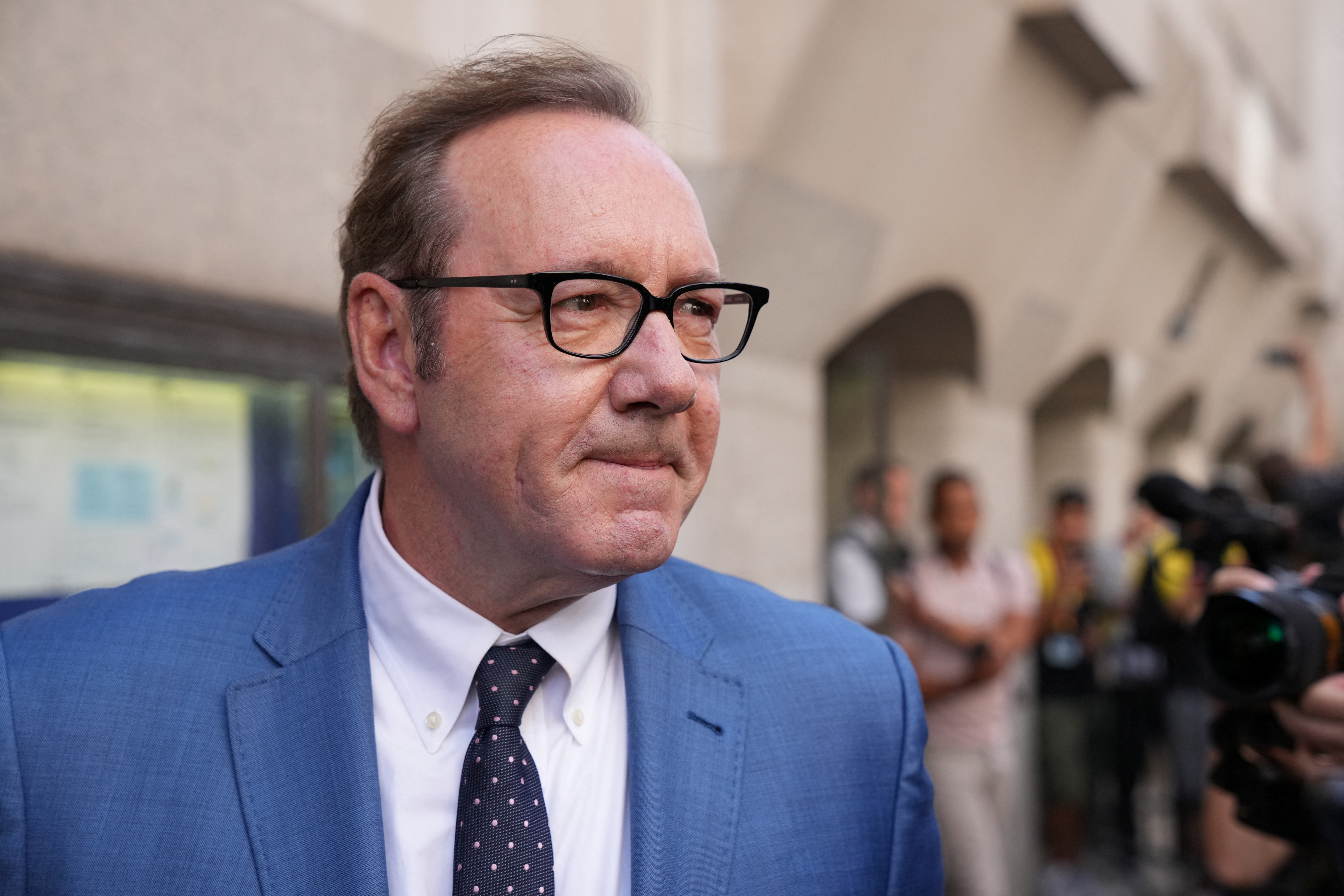
Actor Kevin Spacey leaves the Central Criminal Court after attending a hearing over charges related to allegations of sex offences, in London, Britain, July 14, 2022. REUTERS/Maja Smiejkowska/File Photo

Oscar-winning actor Kevin Spacey pleaded not guilty in a London court on Friday to seven more sex offence charges, denying a number of alleged sexual assaults against one man between 2001 and 2004.

Spacey, 63, appeared at Southwark Crown Court by videolink charged with one count of causing a person to engage in sexual activity without consent, three counts of indecent assault and three counts of sexual assault.

The actor – wearing a dark jacket, white shirt and pink tie – spoke only to confirm his name as Kevin Spacey Fowler and enter seven not guilty pleas during the brief hearing.

Judge Mark Wall agreed to join the seven-count indictment to an earlier five-count indictment, which features four counts of sexual assault and one of causing a person to engage in sexual activity without consent.

Spacey pleaded not guilty to those five charges last July.

Categories
Audio Sources - Full Text Articles

Toyota pushes zero-emission goals by converting old models

CHIBA, Japan (AP) — To accelerate the global move toward sustainable vehicles, Toyota is suggesting simply replacing the inner workings of vehicles already on the roads with cleaner technology like fuel cells and electric motors.

“I don’t want to leave any car lover behind,” Chief Executive Akio Toyoda said Friday, appearing on the stage at the Tokyo Auto Salon, an industry event similar to the world’s auto shows.

The message was clear: Toyota Motor Corp. wants the world to know it hasn’t fallen behind in electric vehicles, as some detractors have implied.

Japan’s top automaker, behind the Lexus luxury brands and the Prius hybrid, is highlighting its clout: It has all the technology, engineering, financial reserves and industry experience needed to remain a powerful competitor in green vehicles.

Toyoda told reporters it would take a long time for all the cars to become zero emission, as they only make up a fraction of the vehicles being sold. Changing old cars to go green, or “conversion,” was a better option, he said.

Toyoda, the grandson of the company founder and an avid racer himself, was also hoping to debunk the stereotype that clean cars aren’t as fun as regular cars.

At Toyota’s Gazoo Racing booth, the maker of the Lexus luxury models and Camry sedan showed video of its triumph at world rallies, as well as the battery-electric and hydrogen-powered versions of the Toyota AE86 series including the Toyota Corolla Levin, to underline what Toyoda called its “conversion” strategy.

The auto industry is undergoing a transformation because of growing concerns about climate change. Automakers are often blamed as the culprits.

Toyoda said ecological efforts in the auto industry were starting to be appreciated in many nations, but he felt less appreciated in Japan.

Toyota has dominated the industry with its hybrid technology, exemplified in the Prius, which has both an electric motor and gasoline engine, switching back and forth to deliver the most efficient ride. That has often been seen as reflecting its reluctance to go totally electric.

Battery electric vehicles make up about 20% of the auto market, despite the hullabaloo about relative newcomers like Tesla and even Dyson. Europe remains ahead of the U.S. and Japan in the move toward electric.

And so is it unfair to categorize the Japanese automakers as green laggards?

For one, the scarcity of certain components like lithium could drive up the prices of EVs, and consumers may stick with hybrids, says Matthias Schmidt, chief auto analyst at Schmidt Automotive Research.

“If this was 2025, and you asked that same question, I would say the Japanese OEMs have missed the boat. But seeing it’s 2023, and the likes of Toyota are beginning their BEV roll-out, their timing is likely bang on schedule,” he said.

___

Yuri Kageyama is on Twitter https://twitter.com/yurikageyama

Categories
Audio Sources - Full Text Articles

Stocks will suffer this year as a recession hits – but it could be time to load up on bonds, PIMCO says

stock market crashStocks are likely to struggle again in 2023 as a recession hits the US economy, PIMCO has warned.

Spencer Platt/Getty Images

  • Stocks are likely to struggle again in 2023, according to PIMCO.
  • “Equities have become less attractive amid higher interest rates and recession risk,” strategists at the firm said.
  • But the $1.7 trillion fixed-income giant is calling for investors to load up on bonds, which offer safer returns.

Stocks aren’t going to look like an attractive asset class anytime soon with a recession set to rattle the US economy in 2023, according to PIMCO.

The $1.7 trillion investment management firm said in a recent research note that it is bearish on equities but bullish on bonds – which could offer similar returns at a lower risk level.

Recessions weigh on stocks because they trigger a slowdown in consumer spending, reducing companies’ profit levels – but PIMCO believes that’s not yet reflected in the earnings per share guidance issued by companies on the benchmark S&P 500 index.

“Equities appear richly priced. Our models show a much lower recession probability is priced into the S&P 500 than macro indicators suggest, while earnings per share (EPS) estimates appear overly optimistic,” economist Tiffany Wilding and CIO for global fixed income Andrew Balls said.

Stocks were one of the best-performing asset classes of 2020 and 2021 but slumped last year, with the S&P 500 falling 19% and the Nasdaq Composite plummeting 33%.

The Federal Reserve ramped up its campaign to cool inflation by raising interest rates from near-zero to 4.5%, which weighed on equities by eating into the future cash flows that make up a part of their valuation.

Investors should now be prioritizing bonds and fixed-income funds over stocks in their portfolios, according to PIMCO.

“Equities have become less attractive amid higher interest rates and recession risk. Higher bond yields have precipitated a move from a ‘TINA’ market (where “there is no alternative” to equities) to one in which appealing alternatives exist,” Wilding and Balls said.

Unlike stocks, bonds offer investors a fixed rate of return – which can prove more attractive in times of economic uncertainty. Yields on 2-year and 10-year US Treasury notes currently trade at 4.14% and 3.46%.

“We continue to see a strong case for investing in bonds, after yields reset higher in 2022 and with an economic downturn looking likely in 2023,” PIMCO said. “Fixed income markets today can offer broad opportunities to build resilient portfolios with the potential for both attractive returns and mitigation against downside risks.”

Read more: Watch the bond market and not the Fed for a steer on interest rates, billionaire investor Jeff Gundlach says

Read the original article on Business Insider
WP Radio
WP Radio
OFFLINE LIVE