Categories
Audio Sources - Full Text Articles

Kroger raises sales forecast on inflation-resistant grocery demand

2022-12-01T16:03:15Z

A screen displays the company logo for Kroger Co on the floor of the New York Stock Exchange (NYSE) in New York City, U.S., October 14, 2022. REUTERS/Brendan McDermid

Kroger Co (KR.N) raised its annual same-store sales and profit forecasts on Thursday, boosted by steady demand for groceries and household essentials, and its strategy to keep product prices relatively lower than rivals.

Kroger, like Walmart Inc (WMT.N), has been successful in using its scale and large store network to negotiate lower prices with suppliers, helping it pull in more inflation-weary customers to its stores and take market share away from smaller independent and specialty grocers.

But when inflation in food prices eases, which Kroger Chief Executive Officer Rodney McMullen expects will happen next year, investors fear the company could lose its edge over rivals and that sales growth could stall.

“A lot of investors are realizing the best times are probably behind Kroger, and that next year will be much more challenging for the company to generate top line growth,” CFRA Research analyst Arun Sundaram said.

Kroger’s shares fell 1.2%, after initially rising as much as 4% in premarket trading.

The company forecast fiscal 2022 adjusted same-store sales growth of 5.1% to 5.3%, compared with a 4% to 4.5% rise previously. It lifted its annual earnings per share forecast to between $4.05 and $4.15 from $3.95 to $4.05.

Its same-store sales, excluding fuel, climbed 6.9% in the third quarter ended Nov. 5, beating estimates of 4.5%, according to Refinitiv IBES data.

Kroger’s blowout quarterly results and forecast are not expected to add to anti-competition concerns regulators have regarding the company’s planned $25 billion acquisition of smaller rival Albertsons Cos Inc (ACI.N), according to Sundaram.

“Politicians will use the quarterly results as more ammo to push back on the merger, but the topics the FTC (U.S. Federal Trade Commission) is looking at are more to do with grocery market share and store divestment, rather than Kroger’s top and bottom line this quarter.”


Categories
Audio Sources - Full Text Articles

Manufacturing Activity Contracts for First Time in Two Years

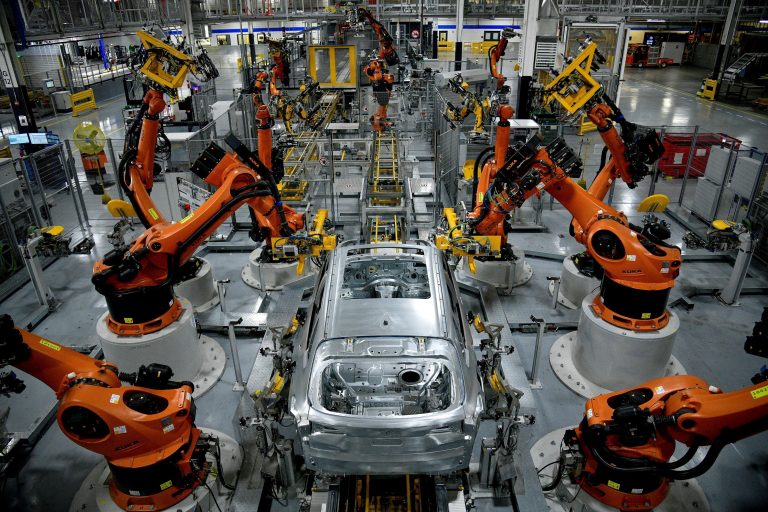
WASHINGTON (Reuters)—U.S. manufacturing activity contracted for the first time in 2-1/2 years in November as higher borrowing costs weighed on demand for goods, but a measure of prices paid by factories for inputs fell for a second straight month, supporting views that inflation could continue trending lower.

The Institute for Supply Management (ISM) said on Thursday that its manufacturing PMI fell to 49.0 last month. That was the first contraction and also the weakest reading since May 2020, when the economy was reeling from the initial wave of COVID-19 infections, and followed 50.2 in October.

A reading below 50 indicates contraction in manufacturing, which accounts for 11.3% of the U.S. economy. Still, the index remains above the level that is typically associated with a recession in the broader U.S. economy. Economists polled by Reuters had forecast the index sliding to 49.8.

The Federal Reserve is in the midst of what has become the fastest rate-hiking cycle since the 1980s, as it battles inflation, raising the risks of a recession next year.

Fed Chair Jerome Powell said on Wednesday the U.S. central bank could scale back the pace of its rate increases “as soon as December.” The Fed has raised its policy rate by 375 basis points this year from near zero to a 3.75%-4.00% range.

Manufacturing is also being pressured by the rotation of spending back to services from goods as the nation moves away from the pandemic.

The ISM survey’s forward-looking new orders sub-index dropped to 47.2, remaining in contraction territory for a third straight month. Order backlogs also dwindled further also a function of improving supply chains.

The survey’s measure of supplier deliveries rose to 47.2 from 46.8 in September, which was the first decline below the 50 threshold since February 2016. A reading below 50 indicates faster deliveries to factories.

With supply chain bottlenecks easing, the outlook for inflation is improving. A measure of prices paid by manufacturers fell to a 2-1/2 year low of 43.0 from 46.6 in October. The drop, which also reflected a moderation in commodity prices, offers hope that inflation has already peaked.

Annual consumer prices increased below 8% in October for the first time in eight months.

The ISM survey’s measure of factory employment decreased to 48.4 from 50.0 in October. The decline is likely because of slowing demand for labor as manufacturers brace for economic turbulence.

The government reported on Wednesday that nondurable manufacturing job openings decreased by 95,000 at the end of October, contributing to a drop in overall vacancies in the economy. Still job openings remain considerably high and there were 1.7 openings for every unemployed person in October.

(Reporting by Lucia Mutikani; Editing by Chizu Nomiyama)

The post Manufacturing Activity Contracts for First Time in Two Years appeared first on Washington Free Beacon.

Categories
Audio Sources - Full Text Articles

I’m a convert who used to love Hanukkah

iStock-626124052-scaled.jpg

I’m a convert, and I used to love Hanukkah.

In fact, it was love at first lighting. My then-boyfriend (now my husband) placed his menorah on a sheet of aluminum foil. He then wrote out the blessings’ transliteration for me and sang slowly so I could follow along.

A sense of calm came over both of us as we finished. The light from the candles flickered in the kitchen window’s reflection, in peaceful contrast to the traffic noise outside on the Upper West Side. The songs were beautiful, and I especially loved the last blessing, the Shehecheyanu — all the more special because we didn’t say it the following nights.

By the fifth night, I had memorized the words of the other blessings and knew to light the shamash first. By the eighth night, I felt a small miracle bloom within me. I felt American in a way I never had before. Finally, I was celebrating a winter holiday like everyone else!

Korean immigrant family

The irony of the situation didn’t immediately register, but I’d grown up craving holidays. My family immigrated to the U.S. from Korea in the early ’70s, and all I wanted was to be like everyone else in my small Southern hometown. I particularly coveted Christmas: All I wanted for Christmas was Christmas. A big tree sparkling with lights. Stockings stuffed with toys and candies. My atheist father finally acquiesced one year and brought home a disappointing fake tree that he assembled like a set of Lincoln logs. I decided that as soon as I was an adult, I would give myself Christmas.

During my medical internship in New York, I fulfilled my wish with my very own Christmas tree. Even buying the tree was a dream come true. Dragging the tree with my friend down the sidewalk felt like I was in a Lifetime holiday movie. I threw myself a solo tree-trimming party and festooned it with lights, tinsel and ornaments. The next evening, after a long day in the hospital, I turned the lights on and lay in bed admiring my little piece of Yuletide.

But the magic of Christmas dissipated as quickly as it appeared. Night after night, I stared at that tree, and the blinking lights seemed to tell me in code, “This is not Christmas. You can’t just buy Christmas.” As beautiful as that tree was, it didn’t mean anything to me. My version of Christmas was rooted in envy — not in faith, community or tradition. After that year, I never bought another Christmas tree.

Perfecting Hanukkah

Soon after, I met my Jewish husband and got a second chance at winter merriment. I was going to get it right this time, I told myself. Later, as a convert, I was determined to make Hanukkah as magical as what I’d imagined Christmas to be. I bought my children presents for each of the eight nights. I wrapped their gifts in thick, shiny blue-and-silver paper, and saved the biggest gifts for the last night. I learned how to make brisket, and I served latkes with applesauce and sour cream. By the time my children became b’nai mitzvah, I had perfected Hanukkah.

As the years passed, though, Hanukkah fatigue crept in. My children were teenagers; eight nights of gifts turned to seven, then five, then three at best. One year, I found myself rooting around the junk drawer in hopes of finding a gift – perhaps a new pencil or a lip balm that I could wrap in parchment paper. But why was it that no other Jewish holiday had suffered such negligence? Even during the COVID-19 lockdown, I still managed to put together a seder and draft a Zoom-friendly version of the Haggadah for my extended in-law family. I suspect it’s the same reason that the Christmas tree never brought me true joy. I’d tried hard to infuse magic into Hanukkah, but I’d never bothered to infuse meaning.

Hanukkah without meaning feels derivative — like that stuffed toy mimicking the Elf on the Shelf, but in rebbe form. And without meaning, the holiday can seem like an afterthought. Sometimes I feel that way when I see a plastic menorah in a building lobby on a side table, dwarfed by the main event, the Christmas tree. Is it there as a purposeful nod to Judaism or merely a concession? Sometimes I want to go over and give it a pep talk: “You’re awesome just the way you are!”

Longing for acceptance

But even if those menorahs are tokens, I’m thankful for them. I can even understand why someone might want the Mensch on a Bench or a Hanukkah bush. As commercial as they are, they’re rooted in our natural desire to be accepted and belong. I suspect that some Jews growing up in the U.S. had that same feeling of being the “other” that I felt growing up as a Korean immigrant. Not taking part in Christmas festivities can feel lonely. Celebrating another holiday altogether can feel like you’re walking in the opposite direction from everyone else — especially when that holiday seems overshadowed.

But Hanukkah should not be treated as a sideshow. Derived from the Hebrew word chanuk, meaning “to dedicate,” Hanukkah literally is defined as the rededication of the Temple. Just as the Maccabees reclaimed Jerusalem, the rest of us can reflect on how to reclaim what is central to our beliefs. We too can celebrate our successes in holding on to what is important and dear.

Rededicating the holiday

This year, I want to rededicate the meaning of Hanukkah to myself. Yes — all I want for Hanukkah is Hanukkah. I want a rededication to this holiday that celebrates Jewish resilience, particularly in a year when antisemitism is once again scratching barely healed scars for so many Jews.

I won’t have gifts for each night. I’m not even certain that I have any leftover blue-and-silver wrapping paper. But I will light the candles with my family, and just like my very first night of Hanukkah, I will particularly enjoy singing the Shehecheyanu — the blessing that celebrates firsts.

The post I’m a convert who used to love Hanukkah appeared first on The Forward.

Categories
Audio Sources - Full Text Articles

Transitioning to Quantum-Safe Encryption

quantum-computer.jpeg

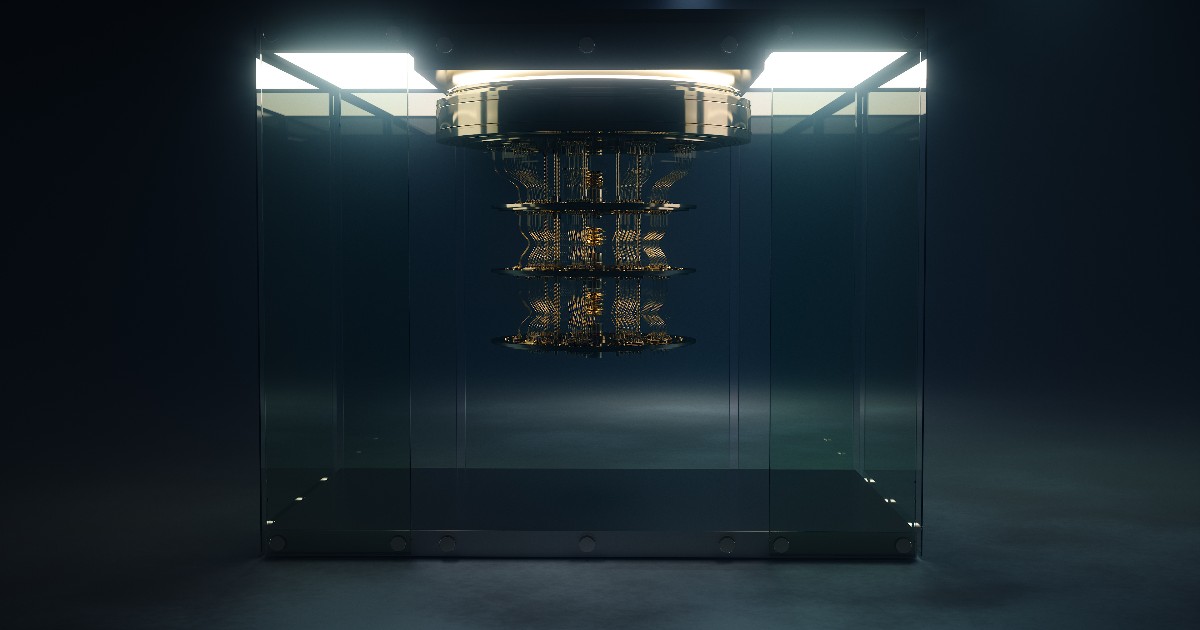
With their vast increase in computing power, quantum computers promise to revolutionize many fields. Artificial intelligence, medicine and space exploration all benefit from this technological leap — but that power is also a double-edged sword. The risk is that threat actors could abuse quantum computers to break the key cryptographic algorithms we depend upon for the safety of our digital world.

This poses a threat to a wide range of critical areas. Fortunately, alternate cryptographic algorithms that are safe against quantum and classical computer attacks already exist.

The National Institute of Standards and Technology (NIST) recently announced such alternatives following the completion of the third round of the post-quantum cryptography (PQC) standardization process. In total, four PQC algorithms have been selected by NIST, one for key establishment (CRYSTALS-KYBER) and three for digital signature (CRYSTALS-Dilithium, FALCON and SPHINCS).

While this is encouraging, the major challenge ahead is transitioning today’s encryption implementations to quantum-safe encryption (QSE). This article describes how quantum computers impact encryption and outlines an approach for guiding organizations to transition to QSE.

Impact on Asymmetric Encryption

Encryption algorithms typically protect sensitive data in storage, transit or use. For instance, processes such as securing data communications, signing financial transactions in blockchain and signing software for secure distribution all use asymmetric encryption. It’s now becoming clear that asymmetric encryption algorithms based on factoring large integers (e.g., RSA) and those based on discrete logarithms (e.g., Diffie-Hellman) will need to be replaced by quantum-safe alternatives such as CRYSTALS-KYBER and CRYSTALS-Dilithium.

Effective security strength (shown in Table 1 below) suggests that the strength of RSA and elliptic-curve cryptography (ECC) is weaker or comparable to advanced encryption standard (AES) on a classical computer, but is null on a quantum computer. This is because Shor’s algorithm can perform integer factorization in a polynomial time.

In other words, what requires millions of years with classical computers would only take minutes on a large-scale quantum computer.

Impact on Symmetric Encryption

Unlike asymmetric encryption algorithms, symmetric encryption algorithms do not face an existential threat. One still needs to perform a brute-force attack to break them. However, a large quantum computer running Grover’s algorithm could provide a quadratic improvement in brute-force attacks on symmetric encryption algorithms such as AES. This translates into a need to double the key size to support the same level of protection.

For AES specifically, this means using 256-bit keys to maintain today’s 128-bit security strength, as depicted in Table 1.

Table 1: The effective security strength of key encryption algorithms. 

Transitioning to QSE

Given the ubiquitous use of cryptography in our digital world, the transition to QSE will be a large endeavor for global organizations. While not an exhaustive list, Table 2 gives a good indication of the number and type of systems and applications that need to change across the four core cryptographic areas: key exchange, digital signature, authentication and data encryption.

Table 2: Example use cases that require a transition to QSE.

An Approach for Transitioning to QSE

As with any major endeavor in cybersecurity, the transition to QSE will involve people, processes and technology. Because the technology in this area is still emerging, our focus today is on the technology required for helping organizations transition to QSE. A solution in this space ought to cover four pillars: find, assess, prioritize and remediate.

Figure 1: The four pillars for transitioning to QSE.

Pillar 1: Find

The first objective is to collect the inventory of cryptographic assets used by the organization. This includes algorithms, keys, certificates, protocols and libraries. It typically consists of a scanner capable of scanning an application, a host or a network and an inventory of cryptographic assets.

To be effective, the scanner technology needs to meet two key criteria: breadth and automation. Breadth is to ensure that the scanner can support the various flavors of operating systems, networks, file systems and programming languages (for applications) that are in use in any organization today. A gap in the support here would mean a blind spot in the cryptographic inventory. Automation is to ensure that the scanners can easily be deployed within the organization. Integrations with tools such as Tanium typically address this concern. 

Pillar 2: Assess

The objective of this pillar is to look for vulnerabilities across the collected cryptographic inventory. We believe that the need to transition to QSE provides an excellent opportunity to modernize encryption implementation overall. Therefore, the vulnerabilities this pillar uncovers would not be limited to finding usages of algorithms that are not quantum-safe. They would include any cryptographic vulnerabilities.

This pillar discovers two main types of vulnerability. The first type represents vulnerabilities that do not require an application change to fix them. These include rotating expired encryption keys, renewing expired certificates, restricting a keystore’s file permission and others. The second category represents vulnerabilities that require an application change to fix them.

For example, an application that creates digital signatures using RSA must be changed to use a quantum-safe alternative such as CRYSTALS-Dilithium. Similarly, an application that establishes a key exchange protocol using Diffie-Hellman (DH) must be changed to use a quantum-safe alternative such as CRYSTALS-KYBER.

Pillar 3: Prioritize

This pillar aims to prioritize the vulnerabilities discovered based on risk so that the organization addresses the highest risks first. This risk-based prioritization requires enrichment data.

Consider the following example: the “assess” pillar discovers that two databases, A and B, are encrypted with two encryption keys, K1 and K2, which must be rotated. Additionally, suppose that K1 and K2 are each stored in a local keystore for which the file permissions must be restricted.

Which issue should the organization address first? It is hard to tell without enrichment data. Suppose that database A contains classified information, while database B contains public information. The data classification information is an example of enrichment data. The “prioritize” pillar uses this context to prioritize fixing the issue for database A, which poses a higher risk.

Pillar 4: Remediate

Lastly, the “remediate” pillar automates the remediation of those prioritized issues. The remediation procedure would be different depending on whether the issue requires an application change or not. For issues that do not require an application change, this pillar integrates with external systems to drive a resolution. For example, integration with a ticketing system such as ServiceNow would pass the issue on to the appropriate stakeholders for resolution. Similarly, an integration with a certificate management system would automate the renewal of an expired certificate.

For issues that require an application change, we propose moving away from the classical model where encryption is tightly coupled with the application to a new paradigm where encryption is consumed as a service. Under this new paradigm, the application would consume the cryptographic functions it needs from a cryptographic service provider through a set of application programming interfaces (APIs) that abstract away the encryption details from the application. Where a change is needed, only the cryptographic service provider must be updated. This saves time and resources for the organization as the application does not need to change. We refer to this concept as crypto
agility.

Deploying PQC Algorithms in Production Environments

While NIST has announced the PQC algorithms selected for standardization, the organization will not announce the actual PQC standard before 2024. Additionally, the selected algorithms will undergo significant updates before the standard is published. This begs the question: Should organizations go into production with the PQC algorithms now?

The guidance from NIST and the Cybersecurity and Infrastructure Security Agency (CISA) is that organizations should wait until the official release of the PQC standard to implement the PQC algorithms in a production environment. However, NIST and CISA also recommend that organizations start preparing for this transition now. We share this view and recommend that
organizations take the following steps:

  • Educate the organization’s workforce about the upcoming transition.
  • Implement the find, assess and prioritize pillars to build an inventory of cryptographic assets and prioritize vulnerabilities.
  • Remediate any issue that is not related to switching quantum-unsafe asymmetric algorithms with their quantum-safe alternatives. For example, it is fine to change any usage of AES 128 to AES 256. This is good practice irrespective of quantum computing.
  • Test the new PQC algorithms in a lab environment. However, wait until NIST publishes the PQC standard before deploying them in production environments.
  • Validate and test any products, systems or applications you acquire from a third-party vendor to ensure they incorporate the PQC standard when it is published.

The Future Requires Crypto Agility

Encryption is the bedrock of our digital world. While the transition to QSE will be a major endeavor for organizations across the globe, this is also an excellent opportunity to modernize and fix current encryption implementation. Crypto agility will enable organizations to react faster to cryptographic vulnerabilities and future changes to cryptographic standards.

The post Transitioning to Quantum-Safe Encryption appeared first on Security Intelligence.

Categories
Audio Sources - Full Text Articles

Brazil to decide on Neymar after Cameroon game at World Cup

DOHA, Qatar (AP) — Brazil will reevaluate Neymar’s condition and decide about his chances of playing again at this year’s World Cup after Friday’s game against Cameroon.

Neymar hurt his right ankle in the team’s opener against Serbia and was ruled out for the rest of group stage. Also not playing against Cameroon because of injury were right back Danilo and left back Alex Sandro.

“They are progressing,” Brazil assistant coach Cléber Xavier said Thursday. “We are focused on the game against Cameroon, and then we will start the decision-making process about these players. We already have a plan prepared for their return.”

Xavier did not elaborate on the plan. Brazil team doctors have not yet given a timetable on Neymar’s return, or said if he would be back at all.

Brazil reached the round of 16 after two matches and needs only a draw against Cameroon to secure first place in Group G.

Neymar injured his back in the quarterfinals against Colombia during the 2014 World Cup in Brazil and missed the rest of the tournament. He also missed the 2019 Copa América because of another right ankle injury.

___

AP World Cup coverage: https://apnews.com/hub/world-cup and https://twitter.com/AP_Sports

Categories
Audio Sources - Full Text Articles

Selected Articles Review at 11 a.m. [Inoreader digest]

1636973850.png

Selected Articles Review at 11 a.m.

created by Michael Novakhov  •  Dec 01 2022

Selected Articles Review at 11 a.m. Daily
From The News And Times – https://thenewsandtimes.blogspot.com/
Current Selected Articles: https://www.inoreader.com/stream/user/1006407045/tag/user-favorites/view/html
All Current Articles: https://www.inoreader.com/stream/user/1006407045/tag/all-articles/view/html

It could have been anyone, in any US college town, on any Saturday night. That’s how typical the murdered…
independent.co.uk 4h

Jump to contentSign up to our newslettersSubscribeNewsSportVoicesCultureLifestyleTravelPremiumNewsWorldAmericasUS…
independent.co.uk 6h

University of Idaho students Ethan Chapin, 20; Kaylee Goncalves, 21; Xana Kernodle, 20; and 21-year-old…
news.yahoo.com 7h

It was 2002, and Justin Rose was on a losing streak. The 20-year-old South Boston native had washed out…
Featured – Sticky Posts – The Brookyn Times 17h

Michael_Novakhov shared this story from The News And Times. 1:04 PM 2/15/2021   The New Abwehr Hypothesis…
Featured Posts | The Las Vegas Shooting of 2017 17h

MOSCOW, Idaho — The FBI has joined the investigation into the gruesome…
nypost.com 22h

It was 2002, and Justin Rose was on a losing streak. The 20-year-old South Boston native had washed out…
GayLand – gayland.org 22h

What we know in University of Idaho, Moscow killings | Idaho Statesman idahostatesman.com/news/local/cri……
GayLand – gayland.org 22h

2022-11-29T23:31:15Z WASHINGTON (Reuters) – The U.S. Senate passed a bill on Tuesday that would protect…
GayLand – gayland.org 22h

(WASHINGTON) — The Senate passed bipartisan legislation Tuesday to protect same-sex marriages, an extraordinary…
GayLand – gayland.org 22h

US Kills Ayman Al-Zawahiri in Drone Strike: What We Know About Mission to Take Out Al-Qaida Leader  Inside…
“Idaho murders weapon: knife equipped drone?” – Google News 23h

FBI Director Christopher Wray has lost the confidence of rank-and-file…
nypost.com 23h

You can unsubscribe from those emails at any time.

Inoreader. Take back control of your news feed. Follow us on Twitter and Facebook.
Innologica Ltd. 35 Akad. Boris Stefanov str., 1700 Sofia, Bulgaria

The News And Times Information Network – Blogs By Michael Novakhov – thenewsandtimes.blogspot.com
Categories
Audio Sources - Full Text Articles

Explainer: The Phala Phala farmgate scandal hanging over South Africa“s Ramaphosa

2022-12-01T15:45:35Z

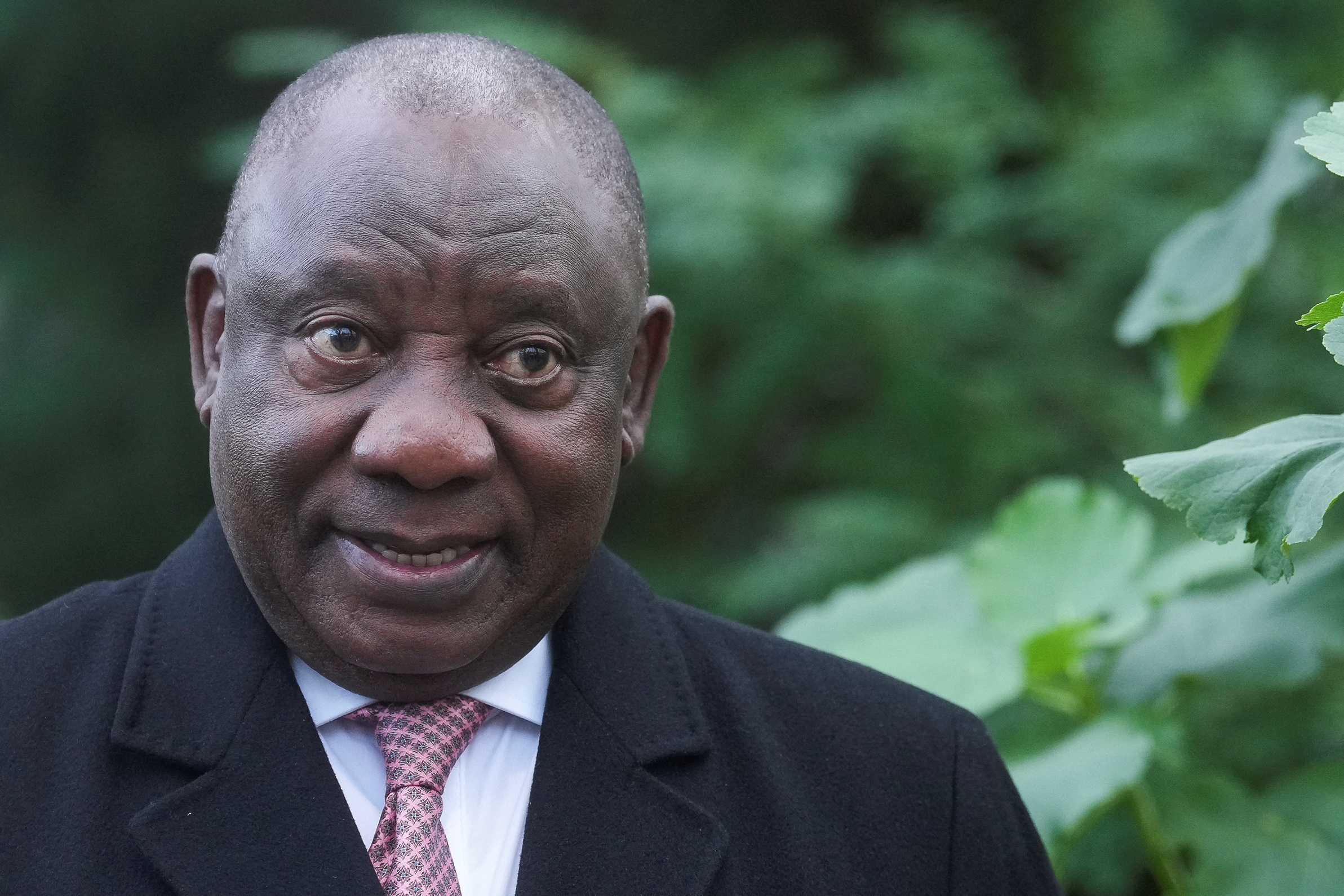
South African President Cyril Ramaphosa looks on as he walks through the Royal Botanic Gardens during a state visit in London, Britain, November 23, 2022. REUTERS/Maja Smiejkowska

South African President Cyril Ramaphosa has been under mounting pressure since an inquiry found evidence he may have committed serious misconduct in relation to a large amount of cash found at his game farm after a robbery.

Ramaphosa has denied any wrongdoing. But the inquiry’s findings could not have come at a worse time for the president, who ousted his predecessor Jacob Zuma on a promise to clean up worsening corruption.

Before the findings came out on Wednesday, he was the clear favourite to lead the African National Congress (ANC) into elections in 2024 and secure a second presidential term.

But with less than a month to go before the party chooses its next candidate, he is battling for political survival.

Everything changed for Ramaphosa when South Africa’s former spy chief, Arthur Fraser, walked into a police station in June and accused him of money laundering and covering up a large theft of cash.

In a sworn statement, Fraser said thieves had raided Ramaphosa’s Phala Phala game farm in February 2020, found at least $4 million in foreign cash hidden in furniture, and made off with the money.

Police opened a criminal investigation into the case after Fraser’s statement, which raised questions about how Ramaphosa had acquired so much cash and whether he declared it.

Ramaphosa, acknowledged there had been a break-in and said that cash proceeds from the sale of game had been stolen. He denied any wrongdoing and has not been charged with any criminal offence. He said the amount was much smaller than what had been alleged.

The affair has been a huge embarrassment for Ramaphosa who has repeatedly spoken about taking a tough line on graft.

He faced down a rival faction from his own party in July who were trying to scrap a rule that anyone charged with corruption or other crimes must step down while they are being investigated.

He also promised in October to tackle graft with tougher procurement rules and better oversight of state-owned firms, after an inquiry highlighted high-level graft under Zuma.

On the back of Fraser’s affidavit, a small parliamentary opposition party, the African Transformation Movement (ATM), lodged a motion in parliament asking to institute a so-called Section 89 inquiry into Ramaphosa’s fitness to stand office.

Used for the first time since being adopted by parliament in 2018, the Section 89 inquiry sets out a process to impeach a sitting president of South Africa, if evidence emerges of wrongdoing.

The panel’s recommendations, which are not binding on lawmakers, are the first step in a lengthy process that could eventually lead to Ramaphosa’s impeachment.

(This story has been refiled to add dropped date in paragraph 6)

Categories
Audio Sources - Full Text Articles

Schumer says U.S. Senate “cannot leave“ before completing rail bill

2022-12-01T15:34:26Z

Senate Majority Leader Chuck Schumer (D-NY) attends a press conference at the U.S. Capitol in Washington, U.S., September 28, 2022. REUTERS/Mary F. Calvert

U.S. Senate Majority Leader Chuck Schumer vowed on Thursday to complete work quickly on legislation to avoid a national rail strike and mandate paid sick leave for rail workers, a day after the measures passed the House of Representatives.

“Senators are working morning, noon and night to reach agreement for us to act on this measure A-S-A-P. The Senate cannot leave until we get the job done,” Schumer said in a floor speech.

Categories
Audio Sources - Full Text Articles

Trump lawyer pins blame on ex-CFO as criminal tax fraud trial nears end

2022-12-01T15:48:14Z

A defense lawyer on Thursday urged jurors in the criminal tax fraud trial of former President Donald Trump’s real estate company to blame a greedy former senior executive and not the Trump Organization itself for any wrongdoing.

Susan Necheles, representing one unit of the Trump Organization, pointed the finger at Allen Weisselberg, the company’s longtime chief financial officer, in her closing argument to the 12-member jury in a New York state court in Manhattan.

Other lawyers for the company will address jurors later, followed by prosecutors. Closing arguments are expected to end on Friday, with jury deliberations beginning on Monday.

Necheles said Weisselberg, the prosecution’s star witness, was looking out for himself by accepting off-the-books perks, and not trying to benefit his employer.

“We are here today because of one reason and one reason only – the greed of Allen Weisselberg,” Necheles told jurors. “The purpose of Mr. Weisselberg’s crimes was to benefit Mr. Weisselberg.”

Prosecutors have accused the Trump Organization of paying personal expenses for some executives without reporting the income, and compensating them as if they were independent contractors, in a 15-year scheme to cheat tax authorities.

The company faces up to $1.6 million in fines if convicted on all nine counts it faces. Trump, who is seeking the presidency in 2024, has not been charged.

Weisselberg pleaded guilty to tax fraud and other charges under an agreement with prosecutors, and is expected to serve five months in jail.

Defense lawyers also have sought to blame Donald Bender, an outside accountant who they assert should have blown the whistle on Weisselberg.

The trial began on Oct. 24 before Justice Juan Merchan.

To prove the Trump Organization guilty, prosecutors must show that Weisselberg and other executives acted as “high managerial agents” of the company when they carried out tax fraud, and that the company benefited in some way.

Weisselberg has worked for the Trump family for about five decades, and is now on paid leave.

He testified that he improperly received bonus payments as non-employee compensation and hid from tax authorities various payments from the company for his rent, car leases and other personal expenses.

Weisselberg’s testimony also may have helped the defense. He told jurors he was motivated to cheat on taxes by his own greed, and once choked up on the stand while describing how he felt embarrassed about having violated the Trump family’s trust.

Bender, who was granted immunity from prosecution, was the main defense witness. He testified that he trusted Weisselberg to give him accurate financial information for the company’s tax returns, and had no obligation to investigate further.

Trump, a Republican, has called the charges politically motivated. Manhattan District Attorney Alvin Bragg is a Democrat, as is his predecessor Cyrus Vance, who brought the charges last year.

The criminal case is separate from a $250 million civil lawsuit filed by New York’s attorney general against Trump, three of his adult children and his company in September, accusing them of overstating asset values and his net worth to get favorable bank loans and insurance coverage.

Trump also faces federal investigations into his removal of government documents from the White House after leaving office and efforts to overturn his 2020 election loss, and a Georgia state probe over attempts to undo his election defeat there.

Related Galleries:

Former U.S. President Donald Trump announces that he will once again run for U.S. president in the 2024 U.S. presidential election during an event at his Mar-a-Lago estate in Palm Beach, Florida, U.S. November 15, 2022. REUTERS/Jonathan Ernst/File Photo

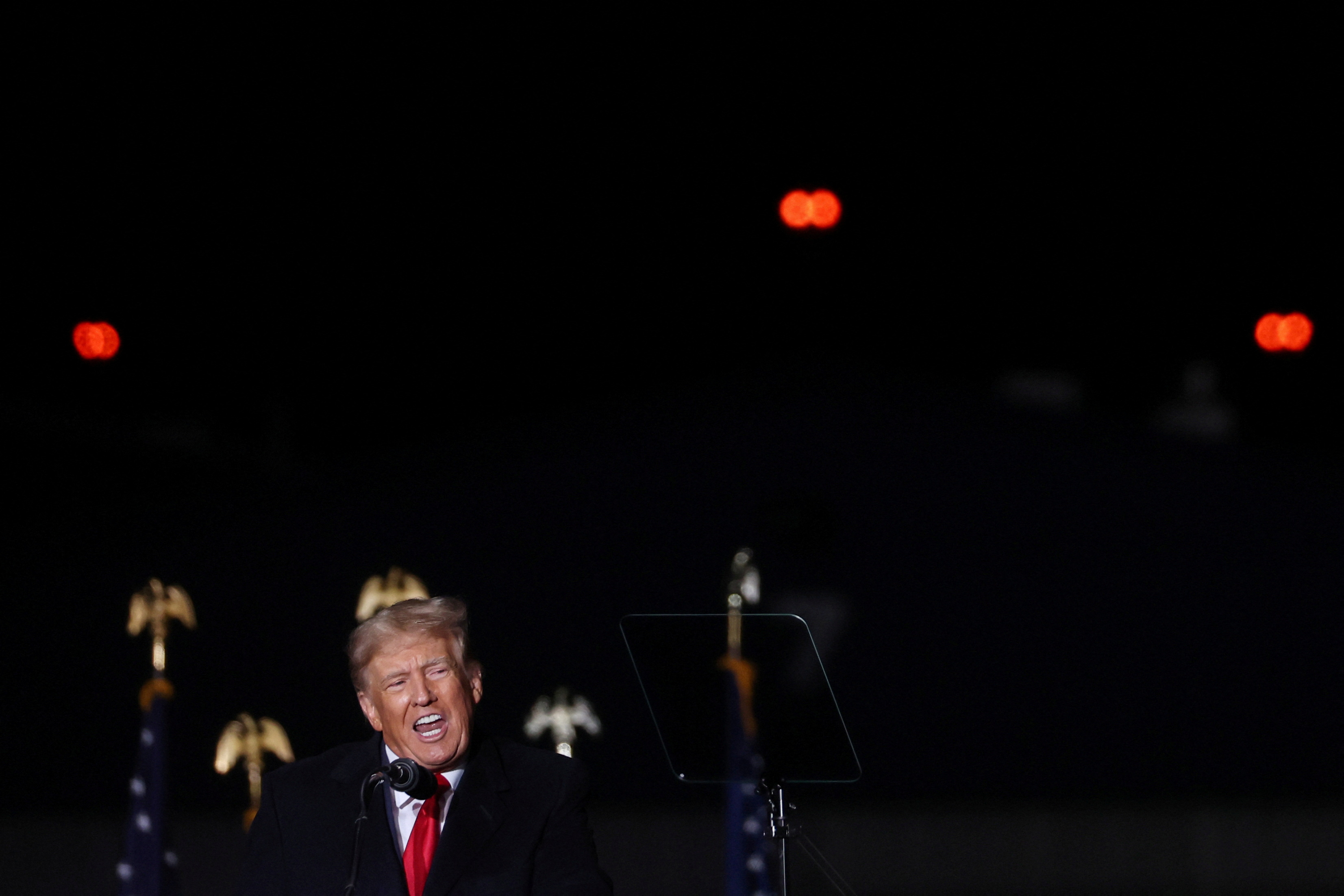
Former U.S. President Donald Trump speaks during a rally to support Republican candidates ahead of midterm elections, in Dayton, Ohio, U.S. November 7, 2022. REUTERS/Shannon Stapleton
Categories
Audio Sources - Full Text Articles

Profit in U.S. banks rise in Q3 despite challenging economic environment – FDIC

2022-12-01T15:40:29Z

U.S. banks reported a 3.2% rise in third-quarter net income from a year earlier, as loan delinquencies remained under control despite a challenging economic environment, the Federal Deposit Insurance Corporation (FDIC) said Thursday.

Jointly, banks posted $71.7 billion in profits. The FDIC compiles data from 4,746 commercial banks and savings institutions insured by it.

Martin J. Gruenberg, FDIC acting chairman, said in a statement that higher inflation and interest rates, as well as geopolitical uncertainty will continue to challenge banks.

Related Galleries:

United States one dollar bills are curled and inspected during production at the Bureau of Engraving and Printing in Washington November 14, 2014. REUTERS/Gary Cameron

Raindrops hang on a sign for Wall Street outside the New York Stock Exchange in Manhattan in New York City, New York, U.S., October 26, 2020. REUTERS/Mike Segar/File Photo


WP Radio
WP Radio
OFFLINE LIVE