Categories
Audio Sources - Full Text Articles

Global reactions to the death of former Pope Benedict

2022-12-31T11:20:02Z

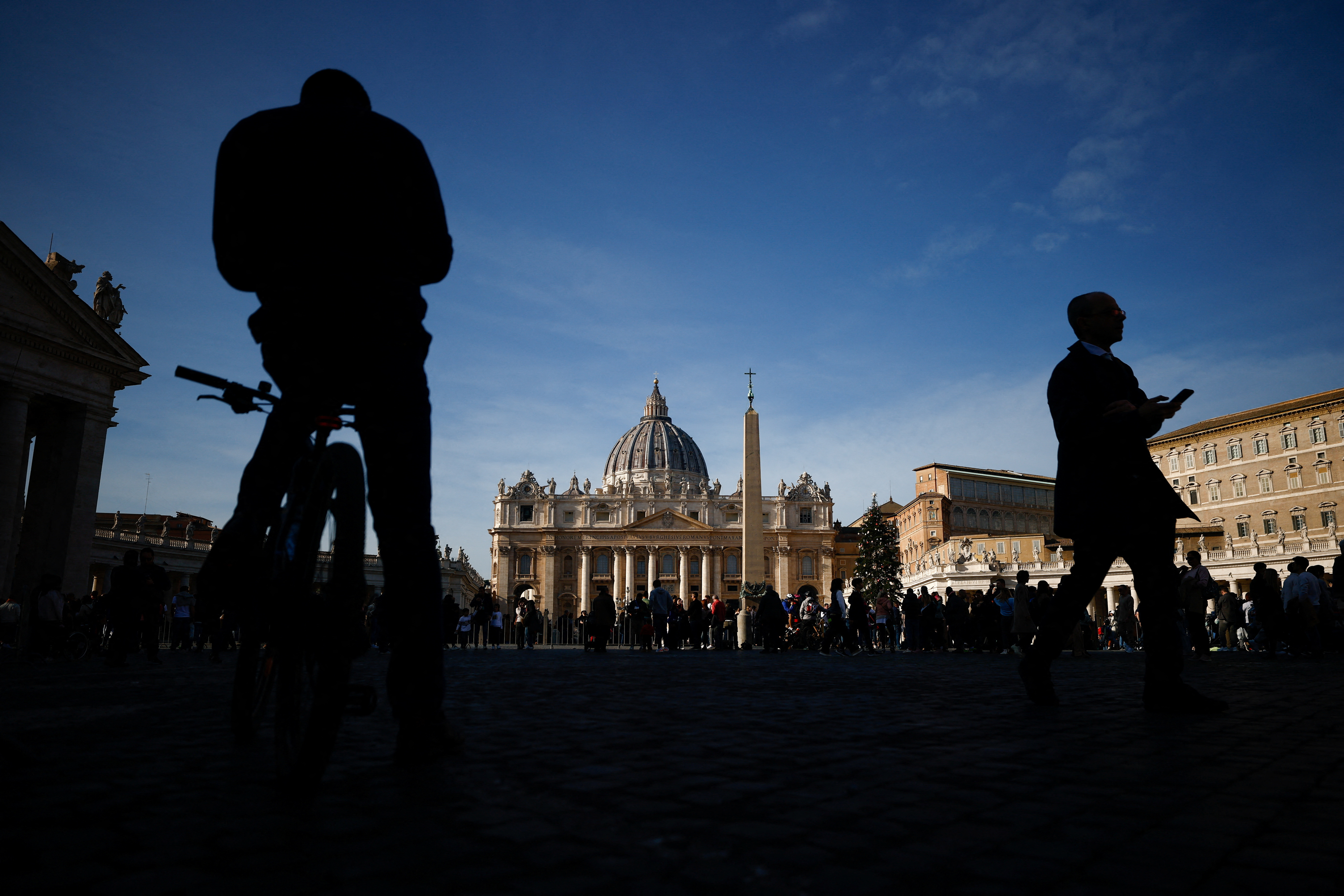
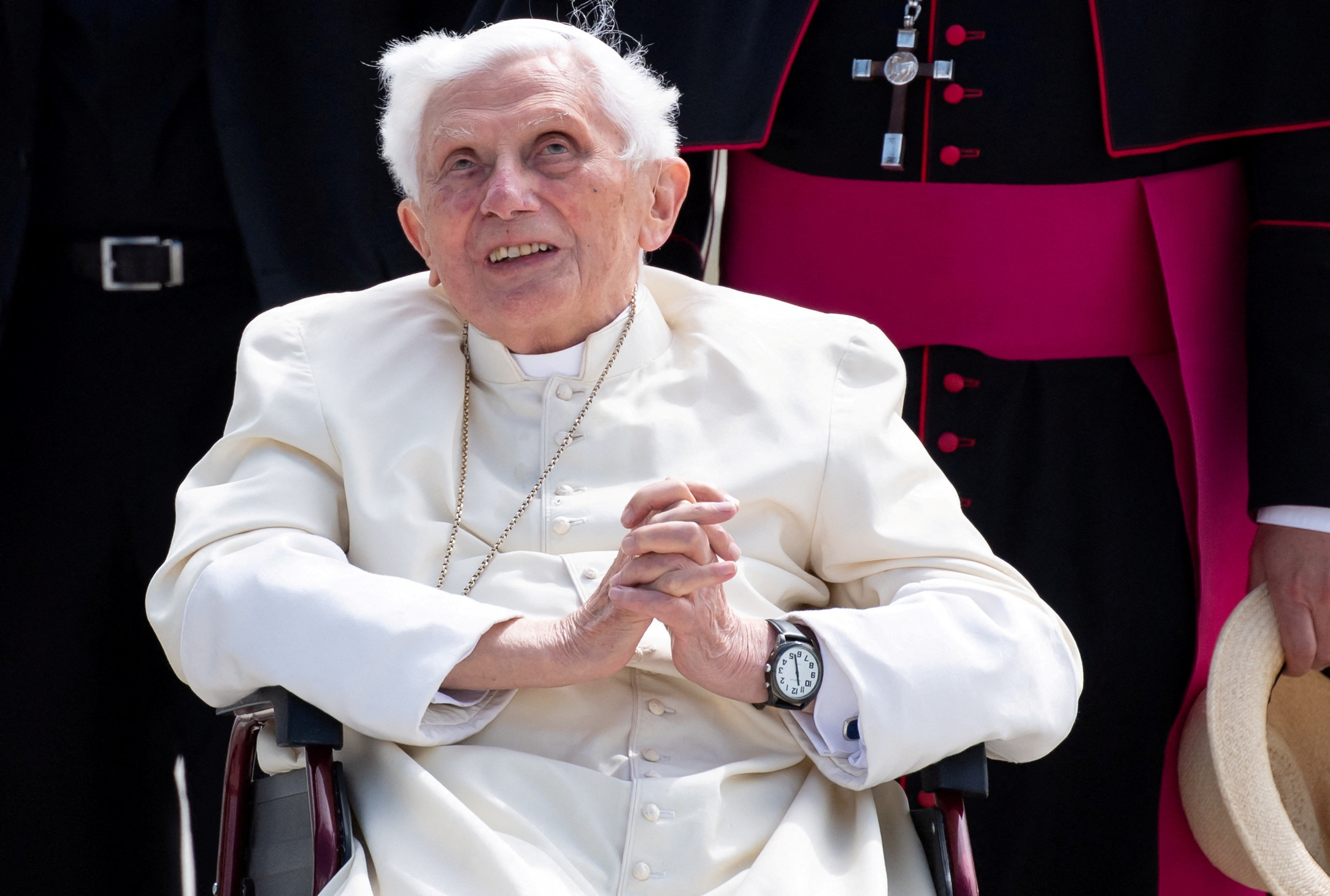
Bells rang out across the Vatican on Saturday (December 31), after the death of former Pope Benedict was announced by a spokesman for the Holy See.

Following are reactions to the death of former Pope Benedict, who was the first pontiff in 600 years to resign from the post rather than rule for life:

MARKUS SOEDER, STATE PREMIER OF THE GERMAN STATE OF BAVARIA:

“We mourn the death of our Bavarian Pope. The death of Benedict XVI touches me deeply, as it does many people in Bavaria and all over the world. With him, society loses a convincing representative of the Catholic Church as well as one of the most influential theologians of the 20th century. In turbulent and challenging times, he was the religious leader of the Catholic faithful. Many people in his homeland will remember him with gratitude not only as Pope Benedict XVI, but also as a humble pastor … His visit of several days to Bavaria as the new Pope, expressing his love for the country and its people, is unforgettable. He always carried his homeland in his heart.”

ITALIAN PRIME MINISTER GIORGIA MELONI:

“Benedict XVI was a giant of faith and reason. A man in love with the Lord who put his life at the service of the Universal Church and has spoken, and will continue to speak, to the hearts and minds of people with the spiritual, cultural and intellectual depth of his Magisterium. A Christian, a pastor, a theologian: a great man whom history will not forget.”

“My thoughts go out to Catholics in France and around the world, bereaved by the departure of His Holiness Benedict XVI, who worked with all his soul and intelligence for a more fraternal world.”

RISHI SUNAK, UK PRIME MINISTER:

“I am saddened to learn of the death of Pope Emeritus Benedict XVI. He was a great theologian whose UK visit in 2010 was an historic moment for both Catholics and non-Catholics throughout our country. My thoughts are with Catholic people in the UK and around the world today.”

CARDINAL VINCENT NICHOLS, ROMAN CATHOLIC ARCHBISHOP OF WESTMINSTER:

“I am deeply saddened to learn of the death of Pope Benedict. He will be remembered as one of the great theologians of the 20th century. I remember with particular affection the remarkable Papal Visit to these lands in 2010.”

THE CHURCH OF ENGLAND TWEETED A PRAYER:

“Now, Lord, you let your servant go in peace:

Your word has been fulfilled.

My own eyes have seen the salvation:

Which you have prepared in the sight of every people;

A light to reveal you to the nations:

And the glory of your people Israel.”

Related Galleries:

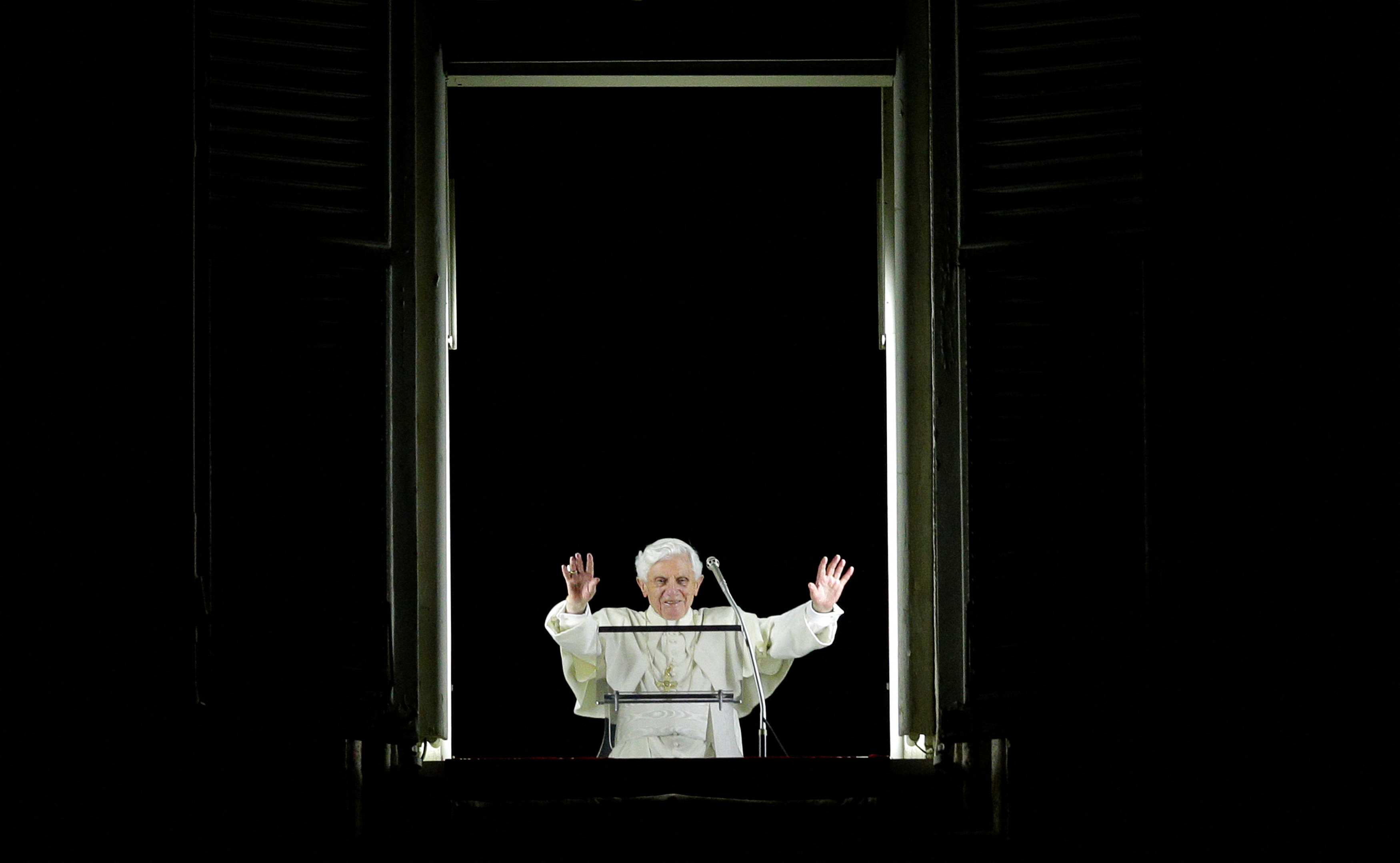
Pope Benedict XVI waves as he appears for the last time at the balcony of his summer residence in Castel Gandolfo, Italy, February 28, 2013. Osservatore Romano/Handout via REUTERS/File Photo

Faithful gather in St. Peter’s Square after former Pope Benedict died at the Vatican, December 31, 2022. REUTERS/Guglielmo Mangiapane
Categories
Audio Sources - Full Text Articles

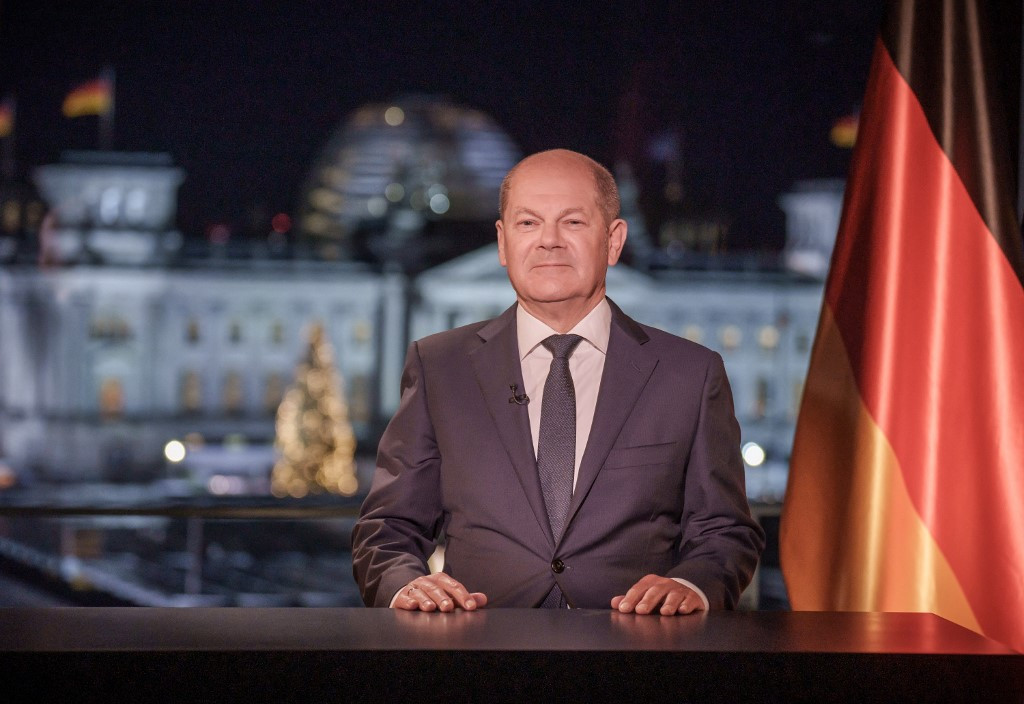
Scholz Assures Ukraine of Further Support in His New Year’s Message

f08e8955110293df1dfb2b44cdc641c7.jpeg?w=

The chancellor said that Putin is waging an “imperialist war of aggression in the middle of Europe.”

Categories
Audio Sources - Full Text Articles

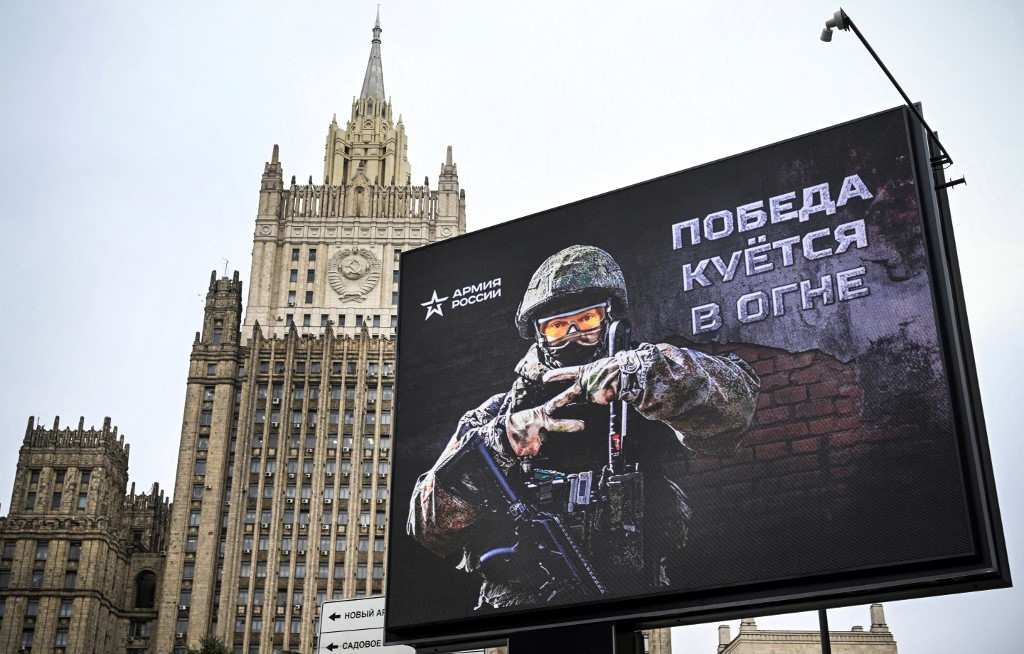
Russia Grants Tax Amnesty for Soldiers in Ukraine

c2c0e8dd264acd02c52cc60dfcbb1de6.jpeg?w=

The new measure concerns all those fighting in the four Ukrainian territories Russia has declared as its own.

Categories
Audio Sources - Full Text Articles

Former Pope Benedict XVI Dies at 95

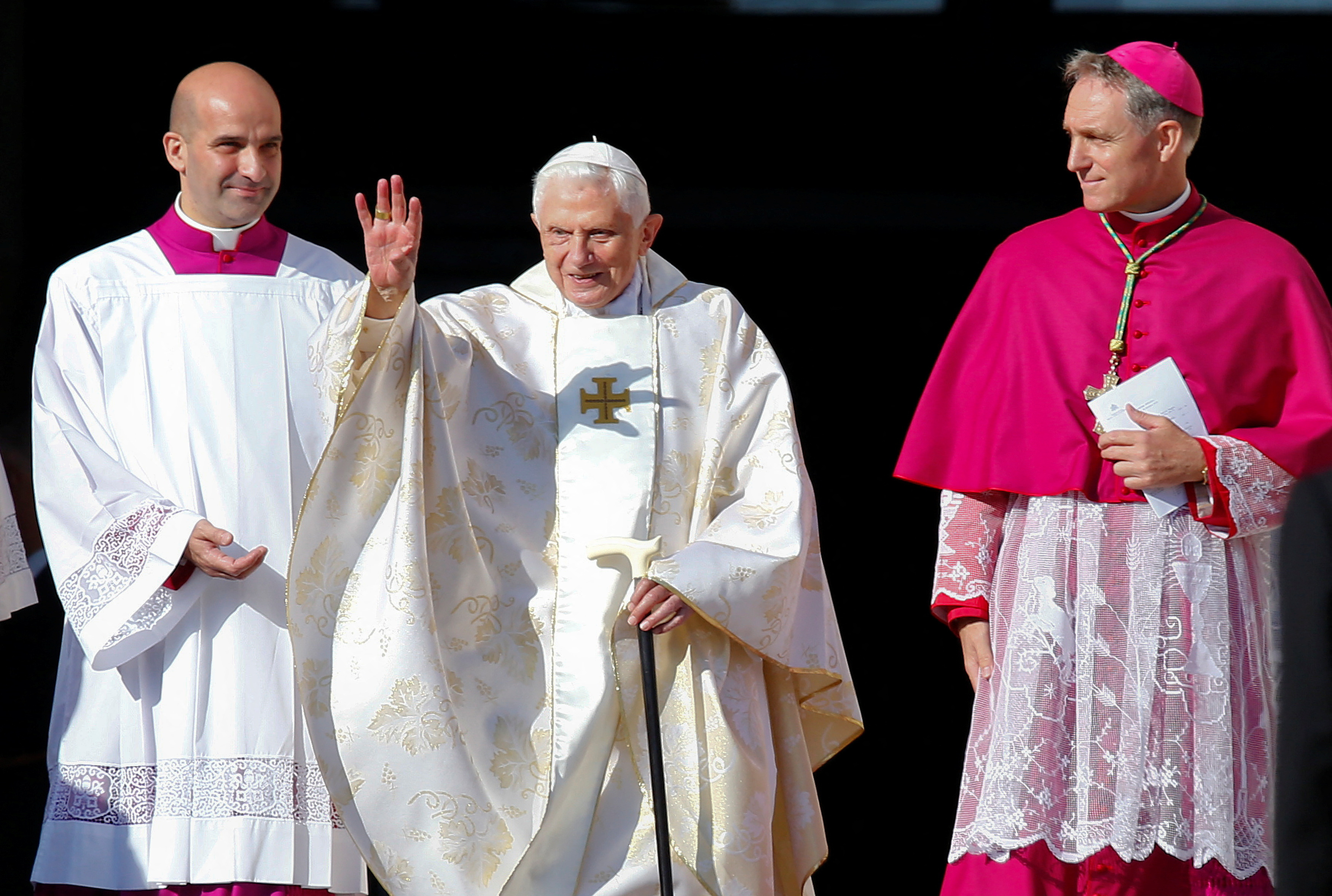
VATICAN CITY — Pope Emeritus Benedict XVI, the shy German theologian who tried to reawaken Christianity in a secularized Europe but will forever be remembered as the first pontiff in 600 years to resign from the job, died Saturday. He was 95.

Benedict stunned the world on Feb. 11, 2013, when he announced, in his typical, soft-spoken Latin, that he no longer had the strength to run the 1.2 billion-strong Catholic Church that he had steered for eight years through scandal and indifference.

His dramatic decision paved the way for the conclave that elected Pope Francis as his successor. The two popes then lived side-by-side in the Vatican gardens, an unprecedented arrangement that set the stage for future “popes emeritus” to do the same.

[time-brightcove not-tgx=”true”]

A statement from Vatican spokesman Matteo Bruni on Saturday morning said that: “With pain I inform that Pope Emeritus Benedict XVI died today at 9:34 in the Mater Ecclesia Monastery in the Vatican. Further information will be released as soon as possible.”

The former Cardinal Joseph Ratzinger had never wanted to be pope, planning at age 78 to spend his final years writing in the “peace and quiet” of his native Bavaria.

Instead, he was forced to follow the footsteps of the beloved St. John Paul II and run the church through the fallout of the clerical sex abuse scandal and then a second scandal that erupted when his own butler stole his personal papers and gave them to a journalist.

Being elected pope, he once said, felt like a “guillotine” had come down on him.

Nevertheless, he set about the job with a single-minded vision to rekindle the faith in a world that, he frequently lamented, seemed to think it could do without God.

“In vast areas of the world today, there is a strange forgetfulness of God,” he told 1 million young people gathered on a vast field for his first foreign trip as pope, to World Youth Day in Cologne, Germany, in 2005. “It seems as if everything would be just the same even without him.”

With some decisive, often controversial moves, he tried to remind Europe of its Christian heritage. And he set the Catholic Church on a conservative, tradition-minded path that often alienated progressives. He relaxed the restrictions on celebrating the old Latin Mass and launched a crackdown on American nuns, insisting that the church stay true to its doctrine and traditions in the face of a changing world. It was a path that in many ways was reversed by his successor, Francis, whose mercy-over-morals priorities alienated the traditionalists who had been so indulged by Benedict.

Benedict’s style couldn’t have been more different from that of John Paul or Francis. No globe-trotting media darling or populist, Benedict was a teacher, theologian and academic to the core: quiet and pensive with a fierce mind. He spoke in paragraphs, not soundbites. He had a weakness for orange Fanta as well as his beloved library; when he was elected pope, he had his entire study moved — as is — from his apartment just outside the Vatican walls into the Apostolic Palace. The books followed him to his retirement home.

“In them are all my advisers,” he said of his books in the 2010 book-length interview “Light of the World.” “I know every nook and cranny, and everything has its history.”

It was Benedict’s devotion to history and tradition that endeared him to members of the traditionalist wing of the Catholic Church. For them, Benedict remained even in retirement a beacon of nostalgia for the orthodoxy and Latin Mass of their youth — and the pope they much preferred over Francis.

In time, this group of arch-conservatives, whose complaints were amplified by sympathetic U.S.-based conservative Catholic media, would become a key source of opposition to Francis who responded to what he said were threats of division by reimposing the restrictions on the old Latin Mass that Benedict had loosened.

Like his predecessor John Paul, Benedict made reaching out to Jews a hallmark of his papacy. His first official act as pope was a letter to Rome’s Jewish community and he became the second pope in history, after John Paul, to enter a synagogue.

In his 2011 book, “Jesus of Nazareth,” Benedict made a sweeping exoneration of the Jewish people for the death of Christ, explaining biblically and theologically why there was no basis in Scripture for the argument that the Jewish people as a whole were responsible for Jesus’ death.

“It’s very clear Benedict is a true friend of the Jewish people,” said Rabbi David Rosen, who heads the interreligious relations office for the American Jewish Committee, at the time of Benedict’s retirement.

Yet Benedict also offended some Jews who were incensed at his constant defense of and promotion toward sainthood of Pope Pius XII, the World War II-era pope accused by some of having failed to sufficiently denounce the Holocaust. And they harshly criticized Benedict when he removed the excommunication of a traditionalist British bishop who had denied the Holocaust.

Benedict’s relations with the Muslim world were also a mixed bag. He riled Muslims with a speech in September 2006 — five years after the Sept. 11 attacks in the United States — in which he quoted a Byzantine emperor who characterized some of the teachings of the Prophet Muhammad as “evil and inhuman,” particularly his command to spread the faith “by the sword.”

A subsequent comment after the massacre of Christians in Egypt led the Al Azhar center in Cairo, the seat of Sunni Muslim learning, to suspend ties with the Vatican, which were only restored under Francis.

The Vatican under Benedict suffered notorious PR gaffes, and sometimes Benedict himself was to blame. He enraged the United Nations and several European governments in 2009 when, en route to Africa, he told reporters that the AIDS problem couldn’t be resolved by distributing condoms.

“On the contrary, it increases the problem,” Benedict said. A year later, he issued a revision saying that if a male prostitute were to use a condom to avoid passing HIV to his partner, he might be taking a first step toward a more responsible sexuality.

But Benedict’s legacy was irreversibly colored by the global eruption in 2010 of the sex abuse scandal, even though as a cardinal he was responsible for turning the Vatican around on the issue.

Documents revealed that the Vatican knew very well of the problem yet turned a blind eye for decades, at times rebuffing bishops who tried to do the right thing.

Benedict had firsthand knowledge of the scope of the problem, since his old office — the Congregation for the Doctrine of the Faith, which he had headed since 1982 — was responsible for dealing with abuse cases.

In fact, it was he who, before becoming pope, took the then-revolutionary decision in 2001 to assume responsibility for processing those cases after he realized bishops around the world weren’t punishing abusers but were just moving them from parish to parish where they could rape again.

And once he became pope, Benedict essentially reversed his beloved predecessor, John Paul, by taking action against the 20th century’s most notorious pedophile priest, the Rev. Marcial Maciel. Benedict took over Maciel’s Legionaries of Christ, a conservative religious order held up as a model of orthodoxy by John Paul, after it was revealed that Maciel sexually abused seminarians and fathered at least three children.

In retirement, Benedict was faulted by an independent report for his handling of four priests while he was bishop of Munich; he denied any personal wrongdoing but apologized for any “grievous faults.”

As soon as the abuse scandal calmed down for Benedict, another one erupted.

In October 2012, Benedict’s former butler, Paolo Gabriele, was convicted of aggravated theft after Vatican police found a huge stash of papal documents in his apartment. Gabriele told Vatican investigators he gave the documents to Italian journalist Gianluigi Nuzzi because he thought the pope wasn’t being informed of the “evil and corruption” in the Vatican and that exposing it publicly would put the church on the right track.

Once the “Vatileaks” scandal was resolved, including with a papal pardon of Gabriele, Benedict felt free to take the extraordinary decision that he had hinted at previously: He announced that he would resign rather than die in office as all his predecessors had done for almost six centuries.

“After having repeatedly examined my conscience before God, I have come to the certainty that my strengths due to an advanced age are no longer suited” to the demands of being the pope, he told cardinals.

He made his last public appearances in February 2013 and then boarded a helicopter to the papal summer retreat at Castel Gandolfo, to sit out the conclave in private. Benedict then largely kept to his word that he would live a life of prayer in retirement, emerging only occasionally from his converted monastery for special events and writing occasional book prefaces and messages.

Usually they were innocuous, but one 2020 book — in which Benedict defended the celibate priesthood at a time when Francis was considering an exception — sparked demands for future “popes emeritus” to keep quiet.

Despite his very different style and priorities, Francis frequently said that having Benedict in the Vatican was like having a “wise grandfather” living at home.

Benedict was often misunderstood: Nicknamed “God’s Rottweiler” by the unsympathetic media, he was actually a very sweet and fiercely smart academic who devoted his life to serving the church he loved.

“Thank you for having given us the luminous example of the simple and humble worker in the vineyard of the Lord,” Benedict’s longtime deputy, Cardinal Tarcisio Bertone, told him in one of his final public events as pope.

Benedict inherited the seemingly impossible task of following in the footsteps of John Paul when he was elected the 265th leader of the Church on April 19, 2005. He was the oldest pope elected in 275 years and the first German in nearly 1,000 years.

Born April 16, 1927, in Marktl Am Inn, in Bavaria, Benedict wrote in his memoirs of being enlisted in the Nazi youth movement against his will in 1941, when he was 14 and membership was compulsory. He deserted the German army in April 1945, the waning days of the war.

Benedict was ordained, along with his brother, Georg, in 1951. After spending several years teaching theology in Germany, he was appointed bishop of Munich in 1977 and elevated to cardinal three months later by Pope Paul VI.

His brother Georg was a frequent visitor to the papal summer residence at Castel Gandolfo until he died in 2020. His sister died years previously. His “papal family” consisted of Monsignor Georg Gaenswein, his longtime private secretary who was always by his side, another secretary and consecrated women who tended to the papal apartment.

Categories
Audio Sources - Full Text Articles

At top of opera, Yoncheva worries about classical music

NEW YORK (AP) — Sonya Yoncheva, a soprano at the top of her profession, worries about classical music.

“My son, if I ask him, he always says, ‘I want to be like Ronaldo.’ And later, if I ask my girl, she will say, ‘I want to be Lady Gaga and Beyoncé,’” the Bulgarian singer explained ahead of Saturday’s new production premiere of Giordano’s “Fedora” at the Metropolitan Opera. “They really don’t associate with the classical music artists. Times are changing.”

In a bid to shape projects and bolster opera’s audience, Yoncheva is launching her own record label.

A Sony Classical artist since 2013, Yoncheva is releasing “The Courtesan” on her own SY11 Productions label, recorded with conductor Marco Armiliato, tenor Charles Castronovo and Italy’s Orchestra dell’Opera Carlo Felice Genova. It will launch on Amazon on Feb. 9.

In a time of dwindling classical sales and releases, she was able to choose the selections and even the cover photo, matters subject to a collaboration on Sony recordings.

“I never really had the chance to guide my project from first step to the last step,” she said. “They were always a very good team with me, but I never felt free.”

In the first close-to-normal season since the pandemic’s onset, Yoncheva sings a revival of Bellini’s “Norma” at the Met starting Feb. 28, then has role debuts as Maddalena di Coigny in Giordano’s “Andrea Chénier” at Milan’s Teatro alla Scala on May 3 and Cio-Cio-San in Puccini’s “Madama Butterfly” at the Vienna State Opera on June 23.

“She is one of our most important artists,” Met general manager Peter Gelb said. “She’s a wonderful actress and a great singer. She is the kind of the artist that the Met needs more than ever these days as we try to make opera more appealing to a broader audience. It’s extremely challenging because the core opera audience is much smaller than it once was.”

Born in Plovdiv, Bulgaria, on Christmas Day 1981, Yoncheva attended William Christie’s “Jardin des Voix” in 2007 and moved to Switzerland to enroll at the Conservatoire de Musique de Genève.

“I wanted to come to the States, but I never managed to have a scholarship,” she said. “At the time, a salary of a normal Bulgarian person was $60 per month, so when you compare this to what has to be paid in a university in the States, it’s just insanely expensive, so for this reason I had to chose Europe. Someone gave me a little envelope with the name of the high school in Geneva, and this person told me ‘You should go there,’ and I said OK.”

In 2010, she became the first woman to win Plácido Domingo’s Operalia competition, and she went on to debuts at the Met and Royal Opera (2013), Vienna State Opera (2014), Milan’s Teatro alla Scala and Paris (2017).

Yoncheva starred in Claus Guth’s 2017 Paris production of Puccini’s “La Bohème,” infamously relocated to a space shuttle.

“This was such a nightmare,” she said, laughing, “but many people are still talking about it.”

She has become more discerning with directors.

“Maybe they will have a concept, OK, but I want them to believe in that and to be honest with it and to explain to me why,” she said. “I must believe in it, and sometimes what is happening is that themselves, they don’t believe it and then they do it to provoke.”

David McVicar is directing “Fedora” in his 13th Met production — a future staging of Ponchielli’s “La Gioconda” is planned — in a fairly traditional mounting. Yoncheva made her role debut at La Scala on Oct. 15 in a modern-dress production directed by Mario Martone, and she worried about being heard.

“The stage director decided to leave the whole stage empty. Me and Roberto Alagna, we were struggling the whole night to find the Punto Callas, Punto Caballé, Punto Tebaldi, Punto I don’t know whom,” Yoncheva said, referring to the so-called preferred stage spots of Maria Callas, Montserrat Caballé and Renata Tebaldi decades earlier.

“I finished the production and I said ‘Oh, my God! What am I going to do at the Met?’ because the Met is maybe three times bigger than La Scala,” Yoncheva said. “I immediately called David, I said, ‘Please tell me there are some walls.’ And he said yes. He showed me pictures, and I was reassured.”

Her male lead at the Met is tenor Piotr Beczala. They have worked together for a decade.

“Our voices our pretty similar,” Beczala said. “I am coming from the lyric corner and she’s coming from the lyric corner, arriving now for a little more spinto repertory.”

While the Met dropped plans to present Yoncheva in John Corigliano’s “The Ghosts of Versailles” and “Madama Butterfly,” she has committed to a new production of Verdi’s “Un Ballo in Maschera (A Masked Ball)” and revivals of Tchaikovsky’s “Pique Dame (The Queen of Spades)” and Cherubini’s “Medea” in Italian.

She lives outside Geneva with her husband, conductor Domingo Hindoyan, whom she met in school. They are kept busy by 8-year-old son Mateo and 3-year-old daughter Sofia, with the entire family traveling to New York for her extended stay.

Yoncheva’s daughter looks at her career somewhat differently than the opera audience.

“I ask her what daddy does and she starts to conduct,” Yoncheva said. “And then I ask her what mommy does, and she says, ‘Oh, mommy, she’s Elsa from ‘Frozen’’ — because I’m dressed like a princess and I sing.”

Categories
Audio Sources - Full Text Articles

Former Pope Benedict dies aged 95 in Vatican monastery

2022-12-31T10:32:20Z

Former Pope Benedict, who in 2013 became the first pontiff in 600 years to resign, died on Saturday aged 95 in a secluded monastery in the Vatican where he had lived since stepping down, a spokesman for the Holy See said.

The Vatican said his body would lie in state from Monday in St.Peter’s Basilica. The Vatican has painstakingly elaborate rituals for what happens after a reigning pope dies but no publicly known ones for a former pope.

“With sorrow I inform you that the Pope Emeritus, Benedict XVI, passed away today at 9:34 in the Mater Ecclesiae Monastery in the Vatican,” spokesman Matteo Bruni said in a statement.

Earlier this week, Pope Francis disclosed during his weekly general audience that his predecessor was “very sick”, and asked for people to pray for him.

For nearly 25 years, as Cardinal Joseph Ratzinger, Benedict was the powerful head of the Vatican’s doctrinal office, then known as the Congregation for the Doctrine of the Faith (CDF).

He was elected pope on April 19, 2005 to succeed the widely popular Pope John Paul II, who reigned for 27 years. Cardinals chose him from among their number seeking continuity and what one called “a safe pair of hands”.

The first German pope in 1,000 years, Benedict himself acknowledged that he was a weak administrator, saying he showed a “lack of resolve in governing and decision taking,” during his eight-year papacy which was marked by missteps and a leaks scandal.

Child abuse scandals hounded most of his papacy but he is credited with jump-starting the process to discipline or defrock predator priests after a more lax attitude under his predecessor.

After his resignation, conservatives in the Church looked to the former pope as their standard bearer and some ultra-traditionalists even refused to acknowledge Francis as a legitimate pontiff.

They have criticised Francis for his more welcoming approach to members of the LGBTQ+ community and to Catholics who divorced and remarried outside the Church, saying both were undermining traditional values.

Related Galleries:

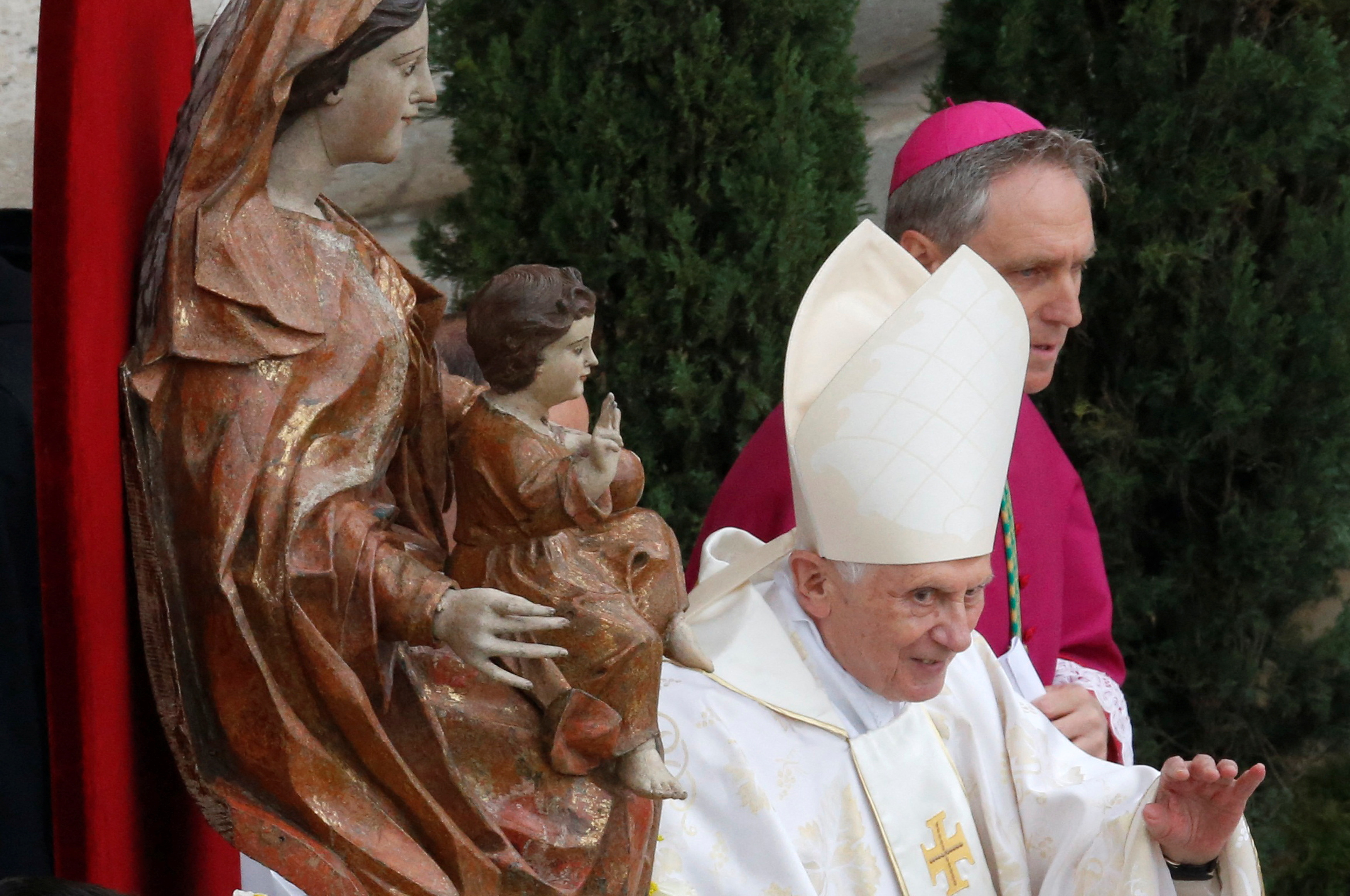
Emeritus Pope Benedict XVI waves as he arrives to attend a mass for the beatification of former pope Paul VI in St. Peter’s square at the Vatican October 19, 2014. REUTERS/Tony Gentile/File Photo

A view of St Peter’s Square after death of former Pope Benedict, at the Vatican, December 31, 2022. REUTERS/Guglielmo Mangiapane

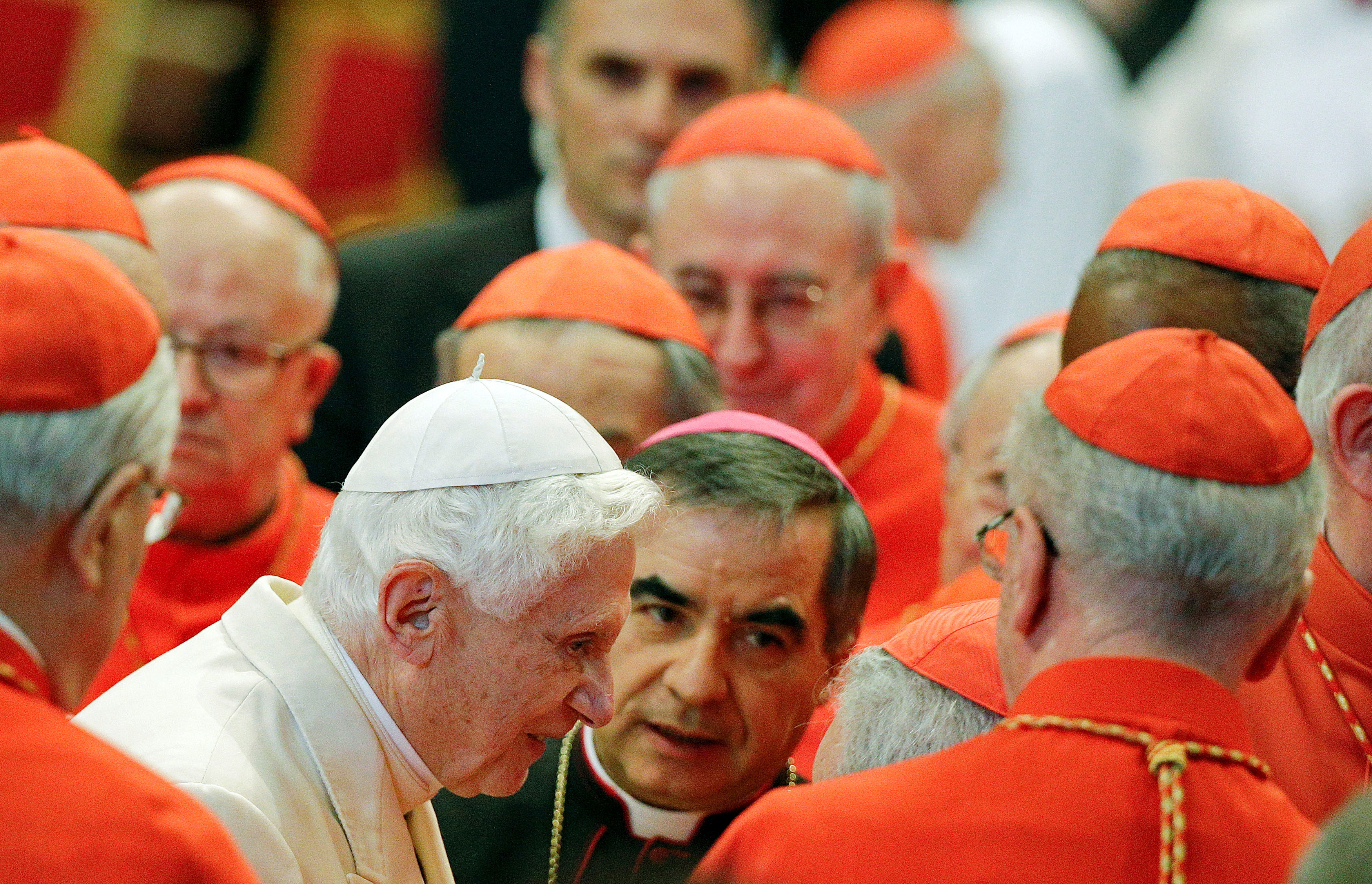
Pope Emeritus Benedict XVI is greeted by Cardinals as he arrives to attend a consistory ceremony in Saint Peter’s Basilica at the Vatican February 22, 2014. REUTERS/Max Rossi/File Photo

Former Pope Benedict XVI arrives to attend the canonisation ceremony of Popes John XXIII and John Paul II to start in St. Peter’s Square at the Vatican April 27, 2014. REUTERS/Stefano Rellandini/File Photo
Categories
Audio Sources - Full Text Articles

Former pope Benedict, his papacy and retirement

2022-12-31T10:40:30Z

Former pope Benedict, 95, who in 2013 became the first pontiff in 600 years to step down, is “very sick,” his successor Pope Francis said on Wednesday, asking the church to pray for him. Edward Baran reports.

Former pope Benedict, who died on Saturday, was the first pontiff in 600 years to resign from the post rather than rule for life.

Here are some of the major events of his papal ministry and retirement:

2005:

April 19 – German Cardinal Joseph Ratzinger, the head of the Vatican’s doctrinal office, is elected to succeed Pope John Paul II as the 265th leader of the Roman Catholic Church. He chooses the name Benedict XVI.

2006:

Sept. 9-14 – The pope visits his Bavarian homeland. He sparks protests from the Muslim world with a speech quoting a 14th century Byzantine emperor who said Islam had only brought evil to the world and was spread by the sword. Days later, Benedict says he was “deeply sorry” about Muslim reaction to his speech, which he says was misunderstood.

Nov. 28-Dec. 1 – Papal trip to Turkey is a fence-mending visit including prayers with Istanbul’s grand mufti facing Mecca at the city’s Blue Mosque.

2007:

July 7 – Pope issues a declaration allowing the old Latin Mass to be celebrated more widely, a demand of church traditionalists.

2008:

Feb. 5. – Pope changes a Latin prayer for Good Friday services by traditionalist Catholics, deleting a reference to Jews and their “blindness” but still calling for them to accept Jesus.

2009:

Jan. 24 – Pope causes uproar by lifting excommunications of four ultra-traditionalist bishops, including a Holocaust denier.

2010:

Nov. 6 – Benedict arrives in Spain for a two-day visit. He attacks abortion and same-sex marriage, recently legalised in Spain, in a Mass to consecrate Barcelona’s Sagrada Familia church in another pointed criticism of what he called Spain’s “aggressive secularism”.

2011:

July 25 – The Vatican recalls its ambassador to Ireland following an unprecedented rebuke of the Holy See by the Irish parliament in the wake of a report that accused church authorities of covering up sexual abuse.

2012:

Through the year, Benedict’s papacy is shaken by a scandal dubbed “Vatileaks” in which leaked documents show infighting among Benedict’s aides and general dysfunction at the heart of the Church’s central administration, known as the Curia. The scandal exposed financial corruption and allegations about the existence of a so-called “gay lobby” that used blackmail to protect its members.

Oct. 6 – A Vatican court finds Benedict’s former butler guilty of stealing sensitive documents and sentences him to a year and a half in prison. Paolo Gabriele said he had acted out of “visceral” love for the Roman Catholic Church and the pope. Benedict later pardoned Gabriele and the Vatican later found him a job in a hospital. Gabriele died in 2020.

Feb. 11 – Benedict announces his intention to resign, saying he no longer has the physical and mental strength to run the Church. The surprise announcement shocks a meeting of cardinals.

Feb. 28 – Benedict formally steps down, moving temporarily to the papal summer residence south of Rome, and later moving to a former convent inside the Vatican gardens, with his secretary, Archbishop Georg Ganswein, and other aides and medical staff.

Jan. 20 – An independent report in Germany alleges Benedict failed to act against four cases of sexual abuse in his archdiocese when he was Archbishop of Munich between 1977 and 1982. Benedict pope later acknowledges errors occurred and asks for forgiveness.

Dec. 31 – Benedict dies in the Mater Ecclesiae Monastery in the Vatican where he had lived since his resignation.

Related Galleries:

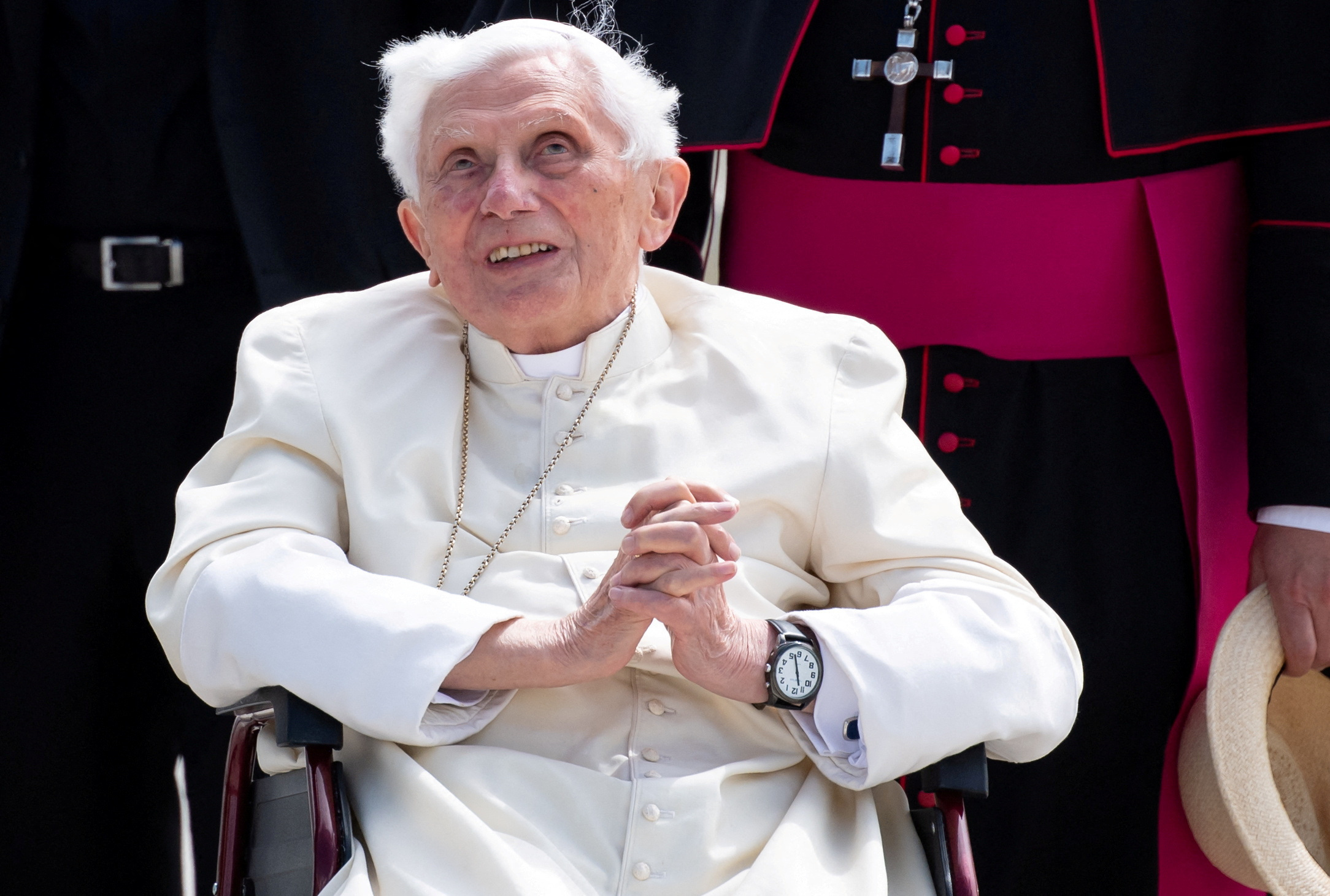
Pope Emeritus Benedict XVI gestures before his departure to Rome, at the Munich Airport, Germany, June 22, 2020. Sven Hoppe/Pool via REUTERS/File Photo

Pope Benedict XVI waves as he appears at the window of his private apartment to mark the 50th anniversary of the Second Vatican Council at the Vatican October 11, 2012. REUTERS/Max Rossi/File Photo

Pope Emeritus Benedict XVI gestures at the Munich Airport before his departure to Rome, June 22, 2020. Former Pope Benedict traveled to his native Germany last week to visit his ailing older brother. Sven Hoppe/Pool via REUTERS/File Photo
Categories
Audio Sources - Full Text Articles

Book Review: ‘Invasion: The Inside Story of Russia’s Bloody War and Ukraine’s Fight for Survival’ by Luke Harding

9acc4fe05d663262908ca2ba93044df3.jpg?w=1

Harding’s ninth book presents an eye-opening travelogue of the war using frank accounts of ordinary Ukrainians; and offers a reality check on foreign policy.

Categories
Audio Sources - Full Text Articles

Despite rhetoric, Greek-Turkish armed conflict seen remote

ATHENS, Greece (AP) — Even by the standards of Turkey’s and Greece’s frequently strained relations, it was a remarkable escalation. Speaking to youths in a Black Sea town, Turkey’s president directly threatened his country’s western neighbor: Unless the Greeks “stay calm,” he said, Turkey’s new ballistic missiles would hit their capital city.

Recep Tayyip Erdogan’s comment on an otherwise unremarkable December weekend followed repeated threats and warnings in recent months: Alleged violations of international treaties by Greece could throw the sovereignty of many inhabited Greek islands into doubt. Turkish troops, Erdogan warned on several occasions, could descend on Greece “suddenly one night.”

The striking rhetoric has led to questions about the reasons behind it, and whether it could be a prelude to more alarming developments, including potential armed conflict between Turkey and Greece, both NATO members.

Both countries face national elections in the first half of 2023, which is likely to ramp up the rhetoric still further, and Russia’s war in Ukraine has demonstrated that an invasion of a smaller European country by a larger neighboring power is no longer unthinkable.

But analysts on both sides of the Aegean Sea are cautious, noting an escalation in verbal barbs but still assessing a military conflict between neighbors Greece and Turkey as unlikely.

Traditional adversaries, the countries are no strangers to tension. Mock dogfights by fighter jets over the Aegean have taken place for decades as the two sides disagree on the limits of Greece’s national airspace.

They are at loggerheads over a broad variety of other issues, including the ethnically divided island of Cyprus, maritime boundaries in the Mediterranean Sea and territorial claims in the Aegean Sea, through which their joint border runs. In 2021, Turkish and Greek warships shadowed each other and briefly collided during a heated dispute over exploration rights to potential offshore energy reserves.

Greece and Turkey have come close to war three times in the past half-century. The most recent was in January 1996, when a last-minute U.S. intervention averted an armed conflict over an obscure pair of uninhabited islets named Imia in Greek and Kardak in Turkish.

Few people in either country had ever heard of them before. But the tensions led to a dramatic military buildup in the Aegean and a Greek navy helicopter crash that killed three officers.

Even in the run-up to that crisis, the rhetoric, particularly from Turkey, was not as bellicose as it is now.

“It is unprecedented. This hasn’t happened before,” said Constantinos Filis, an international relations professor who directs the Institute of Global Affairs at the American College of Greece. “We’re talking of nearly 2 1/2 months where we have nearly daily statements by Turkey against Greece. This hasn’t happened before in duration, and I certainly don’t remember there having been such direct threats.”

The factors fueling the escalation are complex. Along with the approach of elections, they include strains in Turkey’s relations with the United States and its exclusion from a fighter jet purchasing program among others, analysts say.

The U.S. removed Turkey from a program to produce F-35 fighter jets in 2019 after Ankara bought a Russian-made S-400 missile defense system, which Washington said was a threat to the stealth fighter jets. Ankara has since requested new F-16 jets and kits to modernize its existing fleet, but that purchase would require approval from the U.S. Congress.

Greece has lobbied Washington to block its larger, more powerful neighbor from purchasing F-16s while also pursuing its own military procurement and modernization program, which includes new fighter jets and new warships currently being built.

Speaking in the northern Turkish city of Samsun earlier this month, Erdogan said Turkey has begun making its own short-range ballistic missiles, which, he said, was “frightening the Greeks.”

”(The Greeks) say ‘it can hit Athens,’ said Erdogan. “Of course it will. If you don’t stay calm, if you try to buy things from the United States and other places (to arm) the islands, a country like Turkey … has to do something.”

“I think Erdogan’s (missile) statement is his way of telling Greece that actually there is no (military) balance, that Turkey is still superior and therefore Greece should act very cautiously,” Ozgur Unluhisarcikli, director of the German Marshall Fund’s Ankara office, said. “Nevertheless, if you take him at his word, it is a threat and should have no place in Turkish-Greek relations.”

Unluhisarcikli said that apart from reminding Greece of Turkey’s military capabilities, Erdogan also hopes his tough words will help him in the presidential and parliamentary elections currently scheduled for June.

In power since 2003, Erdogan is seeking a third term in office as president amid an economic crisis and skyrocketing inflation that has eaten away at earnings and put even basic necessities out of reach for many.

Unluhisarcikli thinks threatening Greece will not make much of a difference in the races. “Past elections and also the polls suggest that national rhetoric does help a little bit in the beginning, but the impact is short-lived,” he said. “Its impact is not even nearly comparable to the economic situation.”

Filis agreed the Turkish elections were among the reasons for Erdogan’s verbal escalation. But, he noted, it was the first time Greece appeared so prominently in public discourse in the lead-up to a national vote.

Ankara recently has focused on the militarization of the Greek islands in the eastern Aegean Sea, saying international treaties prohibit the presence of armed forces. Greece counters that it is adhering to the treaties and needs to defend the islands against a potential attack from Turkey, which maintains a sizable military force on its nearby coast.

Turkey “is building a story, a narrative, so it can (potentially) attribute its own aggressive act against Greece to legitimate self-defense,” Filis said, a tactic that “has many similarities with what Russia did and is doing in Ukraine.”

Still, chances of open conflict — or of an accident or military incident triggering an unplanned escalation — remain slim, both analysts agreed. An armed conflict is “still a very, very low probability,” Unluhisarcikli said, noting that past accidents, such as collisions between navy vessels or jet crashes during island patrols, had not led Turkey and Greece to war.

A military incident or conflict “is a scenario that doesn’t have much probability,” said Filis. “But the climate that the Turkish leadership is cultivating could make something like that easier.”

____

Fraser reported from Ankara, Turkey

Categories
Audio Sources - Full Text Articles

Former Pope Benedict was first pontiff to resign in 600 years

2022-12-31T10:12:52Z

Former Pope Benedict, who died on Saturday aged 95, was the first pontiff in 600 years to resign, leaving behind a Catholic Church battered by sexual abuse scandals, mired in mismanagement and polarised between conservatives and progressives.

Benedict, the first German pope in 1,000 years, had good relations with his successor, Pope Francis, but his continued presence inside the Vatican after he stepped down in 2013 further polarised the Church ideologically.

Conservatives alarmed by Francis’ progressive moves looked to Benedict as the guardian of tradition. Several times he had to tell nostalgic admirers via visitors: “There is one pope, and it is Francis.”

A piano-playing professor and formidable theologian, Benedict was by his own admission a weak leader who struggled to impose himself on the opaque Vatican bureaucracy and stumbled from crisis to crisis during his eight-year reign.

Benedict repeatedly apologised for the Church’s failure to root out sexual abuse of children by clergy, and although he was the first pope to take serious action against abuse, the efforts failed to halt a rapid decline in church attendance in the West, especially in Europe.

In 2022, an independent report in his native Germany alleged that Benedict had failed to take action in four abuse cases when he was Archbishop of Munich between 1977-1982.

Shaken by the report, he acknowledged in an emotional personal letter that errors had occurred and asked for forgiveness. His lawyers argued in a detailed rebuttal that he was not directly to blame.

Victims groups said the couched response squandered an opportunity from a scandal that rattled the Church worldwide.

Benedict will be best remembered for shocking the world on Feb. 11, 2013, when he announced in Latin that he was resigning, telling cardinals he was too old and frail to lead an institution with more than 1.3 billion members.

It was always going to be tough following his charismatic predecessor Pope John Paul II, who died in 2005, and Benedict admitted to difficulties in an emotional farewell.

“There were moments of joy and light, but also moments that were not easy … There were moments … when the seas were rough and the wind blew against us and it seemed that the Lord was sleeping,” Benedict told his last general audience, a gathering of more than 150,000 people.

The Seat of St Peter was declared vacant on Feb. 28, 2013, when Benedict took up residence at the papal summer retreat at Castelgandolfo, south of Rome, while cardinals from around the world gathered in the Vatican to choose his successor.

Before he formally stepped down, Benedict and his aides unilaterally chose the title “pope emeritus” and decided he would continue to wear a white cassock, albeit a slightly modified one.

Some in the Church balked, saying he left his successor’s hands tied. They said he should have returned to being a cardinal or a priest dressed in red or black.

After the election of Pope Francis on March 13, Benedict moved into a converted convent on the Vatican grounds to spend his final years in prayer, reading, playing the piano and receiving friends.

He appeared in public rarely, usually for major Church ceremonies, though he made an emotional visit in June 2020 to his ailing elder brother Georg, a priest, in Bavaria. Georg died shortly afterwards, aged 96.

Although he said he would remain “hidden from the world”, Benedict did not live up to that promise and in retirement sometimes caused controversy and confusion through his writings.

In an essay for a Church magazine in Germany in 2019, he blamed the crisis over the abuse of children by priests on the effect of the 1960s sexual revolution, what he called homosexual cliques in seminaries and a general collapse in morality.

Critics accused him of trying to shift the blame away from the hierarchy of the institutional Church. But it was music to the ears of conservatives, who rallied to his defence.

The confusion over Benedict’s role came to a head in January 2020 over the extent of his involvement in a book written by a conservative cardinal that some saw as an attempt to influence a document Pope Francis was preparing.

It led to Francis dismissing Archbishop Georg Ganswein, Benedict’s secretary, from a top Vatican job. Ganswein’s role as a middleman between Benedict and the cardinal was unclear, with many believing he had misled Benedict, the cardinal, or both.

The episode brought calls by some Vatican officials for clear rules about the status of any future pontiff who resigns.

Francis has said that he would prefer the title Emeritus Bishop of Rome, as suggested by some, if he one day resigned. He has also said he would not live in the Vatican but in a home for retired priests in Rome.

An uncompromising conservative on social and theological issues, Benedict quite literally cloaked himself in tradition during his papacy, often donning fur-trimmed capes and red shoes in his public appearances – a stark contrast to the more humble, down-to-earth style of his successor.

He antagonised Muslims by appearing to suggest that Islam was inherently violent and angered Jews by rehabilitating a Holocaust denier. The gaffes and missteps culminated in 2012, when leaked papers revealed corruption, intrigue and feuding within the Vatican.

The “Vatileaks” case resulted in the arrest of his butler, Paolo Gabriele, who was convicted of handing secret documents to a journalist. Benedict later pardoned him. Gabriele was given a job in a Vatican-owned hospital and died in 2020.

Media speculated that the saga, which laid bare allegations of a lobby of gay clergy operating against the pope, might have pressured him to resign. Benedict insisted he stood down because he could no longer bear the full weight of the papacy, including the tiring international journeys the job demanded.

In a book-long interview published in 2016, he acknowledged his shortcomings but did not regard his papacy as a failure.

“One of my weak points is perhaps a lack of resolve in governing and in decision-taking. In reality I am more of a professor, a person who reflects and meditates on spiritual questions,” Benedict said in the book, “Last Testament”, by German journalist Peter Seewald.

“Practical government is not my strong point and that is certainly a weakness. But I cannot see myself as a failure.”

He was born Joseph Aloisius Ratzinger on April 16, 1927, in the southern German village of Marktl, close to Austria.

As a teenager he was forcibly enrolled in the Hitler Youth during World War Two and was briefly held by the Allies as a prisoner of war, but he was never a member of the Nazi party.

“Neither Ratzinger nor any member of his family was a National Socialist,” John Allen, a leading expert on the Church, wrote in a biography of Benedict.

Ratzinger became a priest in 1951 and gained attention as a liberal theological adviser at the Second Vatican Council, which opened in 1962 and led to a profound reform of the Church.

However, the Marxism and atheism of the 1968 student protests across Europe prompted him to become more conservative to defend the faith against growing secularism.

After stints as a theology professor and then Archbishop of Munich, Ratzinger was appointed in 1981 to head the Congregation for the Doctrine of the Faith (CDF), the successor office to the Inquisition, where he earned the epithet “God’s Rottweiler”.

He and Pope John Paul agreed that traditional doctrine had to be restored in the Church after a period of experimentation.

Ratzinger first turned his attention to the “liberation theology” popular in Latin America, ordering the one-year silencing in 1985 of Brazilian friar Leonardo Boff, whose writings were attacked for using Marxist ideas.

In the 1990s, Ratzinger brought pressure against theologians, mostly in Asia, who saw non-Christian religions as part of God’s plan for humanity.

A 2004 document by Ratzinger’s office denounced “radical feminism” as an ideology that undermined the family and obscured the natural differences between men and women.

As pope from 2005, Benedict sought to show the world the gentler side of his nature, but he never achieved the “rock star” status of John Paul or appeared particularly comfortable in the job.

Child abuse scandals hounded most of his papacy. He ordered an official inquiry into abuse in Ireland, which led to the resignation of several bishops. But the Vatican’s relations with once devoutly Catholic Ireland plummeted during his papacy. Dublin shut its embassy to the Holy See in 2011.

Victims demanded he be investigated by the International Criminal Court. The Vatican said he could not be held responsible for the crimes of others and the court decided not to take up the case.

In September 2013, he denied that he had hushed up the scandals. “As far as you mentioning the moral abuse of minors by priests, I can only, as you know, acknowledge it with profound consternation. But I never tried to cover up these things,” he said in a letter to Italian author Piergiorgio Odifreddi.

Benedict visited his homeland three times as pope and confronted its dark past when he visited the Nazi death camp at Auschwitz in Poland. Calling himself “a son of Germany”, he prayed and asked why God was silent when 1.5 million victims, most of them Jews, died there during World War Two.

One trip to Germany also prompted the first major crisis of his pontificate. In a university lecture in 2006 he quoted a 14th century Byzantine emperor as saying Islam had only brought evil to the world and that it was spread by the sword.

After protests that included attacks on churches in the Middle East and the killing of a nun in Somalia, the pope said he regretted any misunderstanding the speech had caused.

In a move widely seen as conciliatory, he made a historic trip to predominantly Muslim Turkey later that year and prayed in Istanbul’s Blue Mosque with the city’s grand mufti.

The pope made a trip to the United States in 2008 where he apologised for the sexual abuse scandal, promised that paedophile priests would have to go and comforted abuse victims.

But in 2009 Benedict made one misstep after another.

The Jewish world, and many Catholics, were outraged after he lifted the excommunication of four traditionalist bishops, one of whom was a notorious Holocaust denier. Benedict later said the Vatican should have researched him better.

Jews were offended again in December 2009 when he restarted the process of putting his wartime predecessor Pius XII, accused by some Jews of turning a blind eye to the Holocaust, back on the road to sainthood after a two-year pause for reflection.

The pope prompted international dismay in March 2009, telling reporters on a plane taking him to Africa that the use of condoms in the fight against AIDS only worsened the problem.

At the Vatican, he preferred to appoint men he trusted and some of his early appointments were questioned.

He chose Cardinal Tarcisio Bertone, who had worked with him for years in the Vatican’s doctrinal office, to be secretary of state, even though Bertone had no diplomatic experience. Bertone was later caught up in a financial scandal over the refurbishing of his Vatican apartment.

Benedict supported Christian unity but other religions criticised him in 2007 when he approved a document that restated the Vatican position that non-Catholic Christian denominations were not full churches of Jesus Christ.

Critics saw his papacy as a concerted drive to turn back the clock on reforms of the 1962-1965 Second Vatican Council, which modernised the Church in sometimes turbulent ways.

Benedict recast some Council decisions to bring them more in line with traditional practices such as the Latin Mass and highly centralised Vatican rule.

One of the themes he often returned to was the threat of relativism, rejecting the concept that moral values were not absolute but relative to those holding them and the times they lived in.

Benedict wrote three encyclicals, the most important form of papal document, including the 2007 “Spe Salvi” (Saved by Hope), an attack on atheism. The 2009 “Caritas in Veritate” (Charity in Truth) called for a rethink of the way the world economy is run.

Despite the difficulties that emerged from having two men wearing white in the Vatican, Francis developed a warm relationship with the man who was once nicknamed “the Panzer Cardinal” and said it was like having a grandfather in the house.

“He speaks little … but with the same profundity as before,” Francis once said.

Related Galleries:
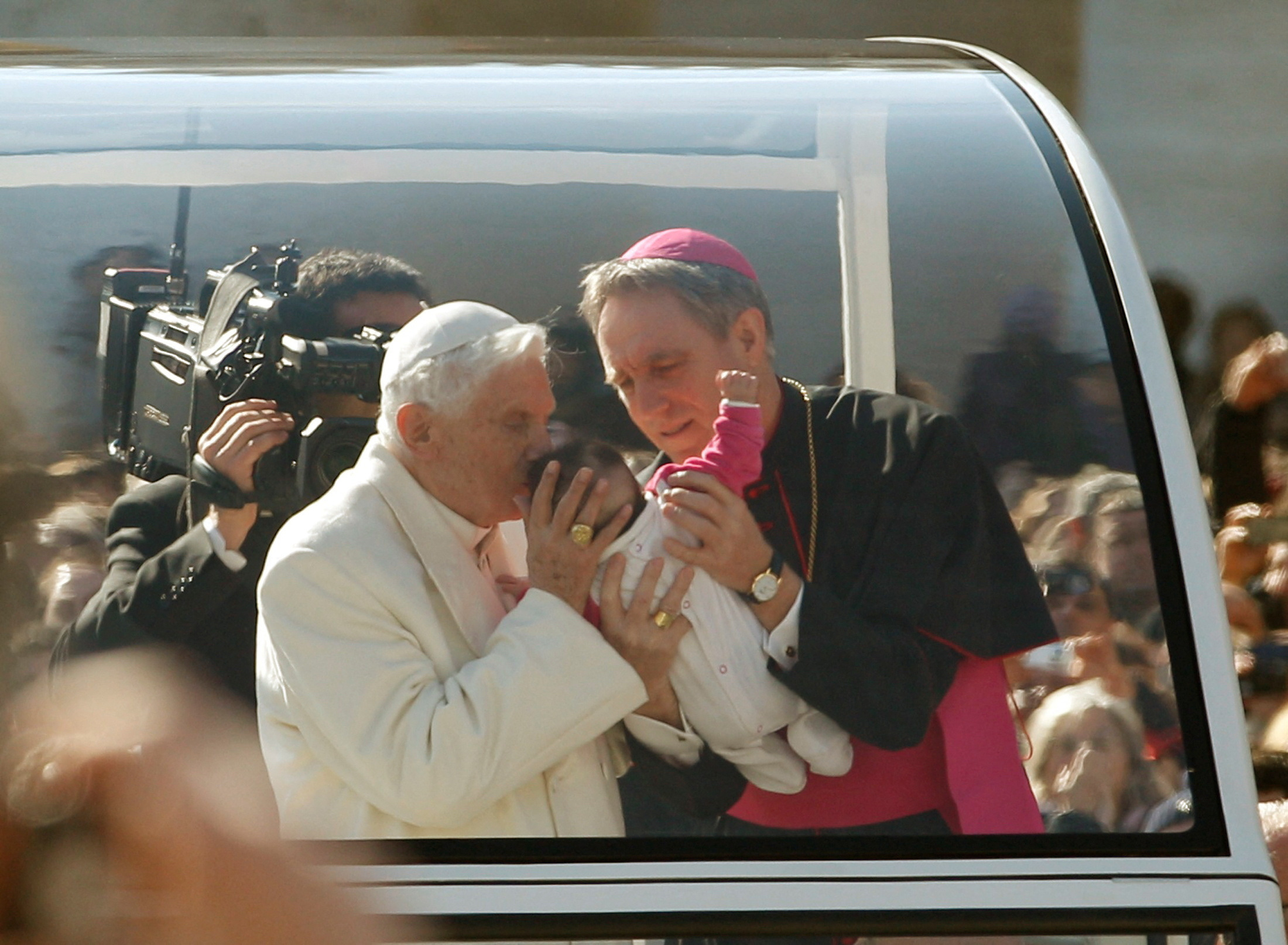
Pope Benedict XVI blesses a baby as he rides around St Peter’s Square to hold his last general audience at the Vatican February 27, 2013. REUTERS/Max Rossi/File Photo
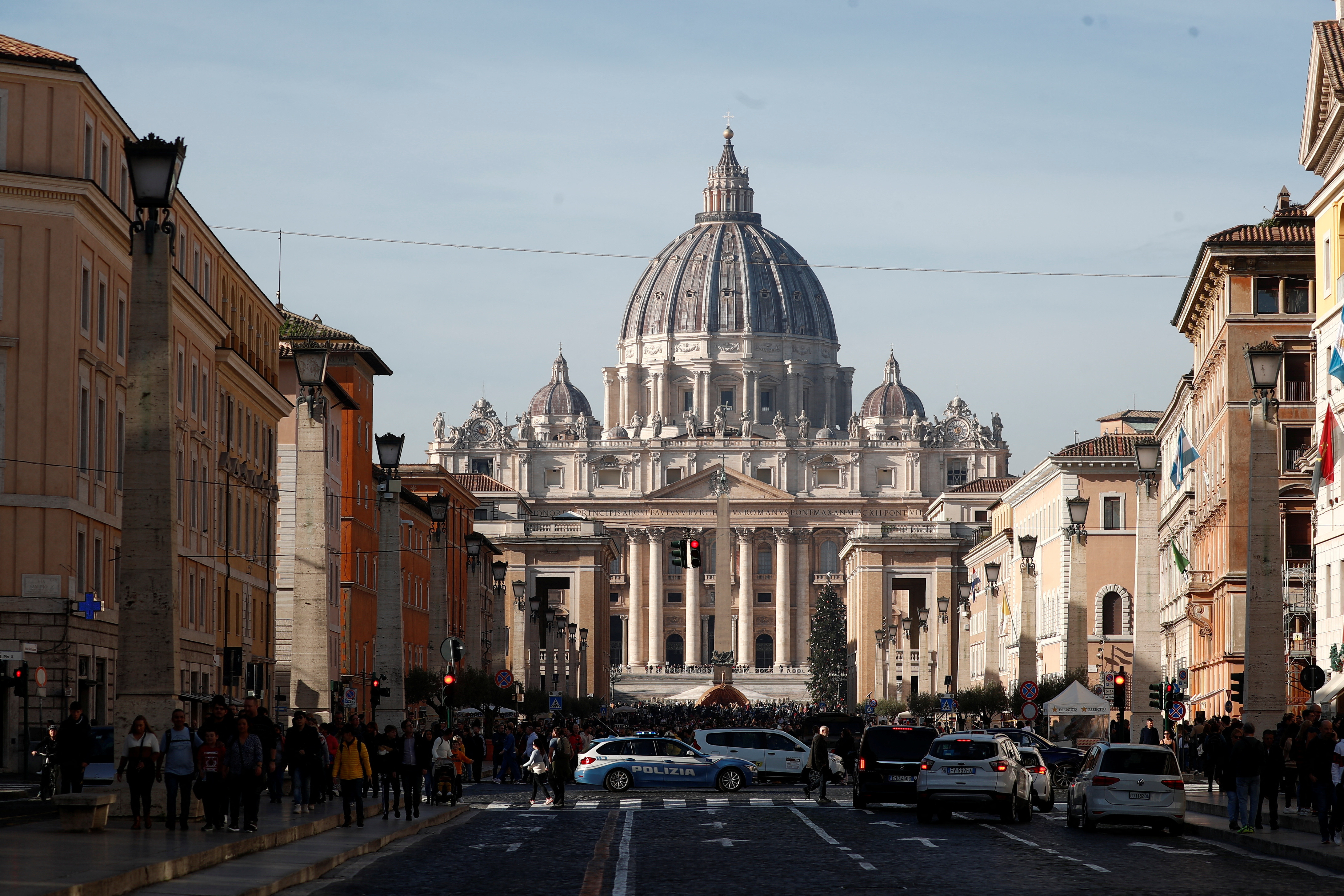
A view of St Peter’s Square after death of former Pope Benedict, at the Vatican, December 31, 2022. REUTERS/Guglielmo Mangiapane
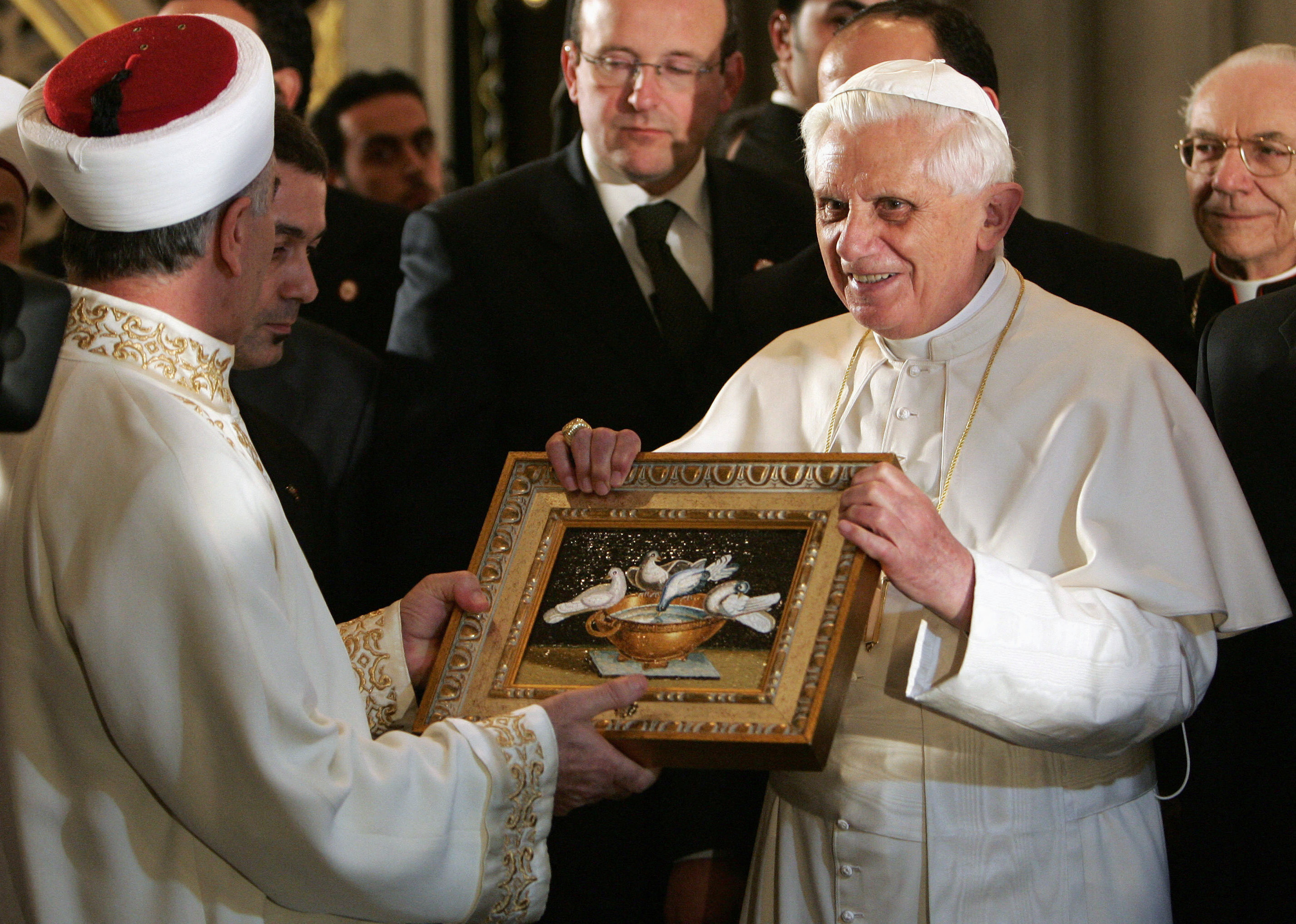
Pope Benedict XVI offers a gift to Istanbul’s Grand Mufti Mustafa Cagrici during his visit to the Blue Mosque in Istanbul, Turkey, November 30, 2006. Patrick Hertzog/Pool via REUTERS/File Photo
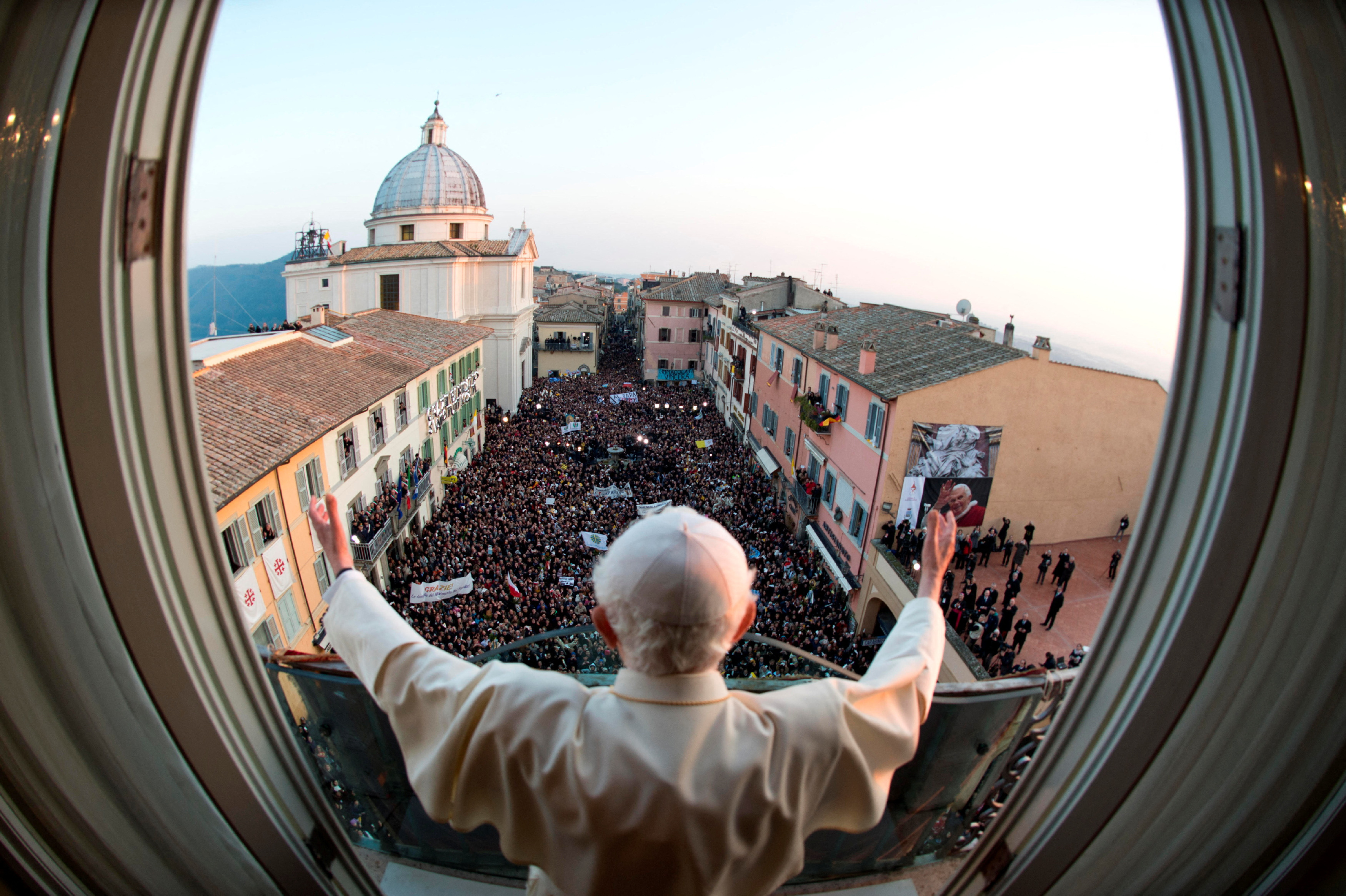
Pope Benedict XVI waves as he appears for the last time at the balcony of his summer residence in Castel Gandolfo, Italy, February 28, 2013. Osservatore Romano/Handout via REUTERS/File Photo
WP Radio
WP Radio
OFFLINE LIVE