Categories
Audio Sources - Full Text Articles

I’m a nurse tech and the ‘tripledemic’ is pushing me to the brink. We still don’t have enough beds because of the surge after holiday gatherings.

Hospital staff wheel a patient in a bed down a hospital corridor.One hospital worker (not pictured) said they’re overwhelmed from the results of viral outbreaks.

Reza Estakhrian/Getty Images

  • One hospital worker says the COVID-19, flu, and RSV outbreak reminded them of the early pandemic.
  • The worker says their hospital had to turn away ambulances and use the ER triage to hold patients.
  • Even though things are difficult, the worker says they have a strong team and love their job.

This as-told-to essay is based on a conversation with a 40-year-old patient-care technician in the Southeastern US. They’ve asked to remain anonymous for professional reasons, but Insider has verified their identity and employment with documentation. The following has been edited for length and clarity.

At the start of the pandemic, I was looking for a night job so I could stay home with my children during the day. One of my friends, who is a nurse, suggested I apply to be a patient-care technician (PCT), since there was a high demand for the position. I’ve been working as a PCT for more than two years now.

PCTs, also known as nurse techs, assist nurses with patient care. We do jobs like checking vitals and bathing patients. When I started in 2020 it was really hard on hospitals and hospital workers, but the recent COVID-19, flu, and RSV outbreak seems just as bad.  

The COVID-19, flu, and RSV outbreak has some of the same problems as the beginning of the pandemic 

Flu patients are increasing daily at a higher rate than last flu season and we don’t have room for them. At first, we were getting patients of all ages, but now we have a spike in elderly patients. 

During the beginning of the outbreak, we used the emergency-room triage area as a holding room for patients staying longer than 24 hours. The ER triage is usually where we hold patients to quickly assess if their need is life-threatening or if they can wait longer to be treated. We also refused ambulances and sent them to other hospitals because we had no more room for new patients. There has been another flu and RSV surge at my hospital, since people gathered during Christmas, and we still don’t have enough room.

Since my hospital is located in a low-income area, we tend to have more unhoused people come to stay long term during the winter. Many of these patients are elderly and have dementia or Alzheimer’s, so assisted-living facilities aren’t willing to take them in. They stay in our hospital for weeks and sometimes return because of the cold. Our hospital is trying to figure out how to deal with these types of patients, which is adding to our workload.

Unlike at the beginning of the pandemic, we’re accepting all types of patients. We no longer have a separate floor for COVID-19 patients because there aren’t any extra rooms available. The COVID-19, flu, and RSV patients are put on the same floor as the cancer, tuberculosis, and shingles patients. However, there’s a separation of staff and equipment.

A cancer patient and COVID-19 patient won’t get the same nurse, but PCTs like me work with all the patients. We have to take care of everyone because of the staff shortage.

How we treated COVID-19 patients before is how we’re treating flu and RSV patients now — with more precautions

We know how to handle COVID-19 patients better now so we aren’t as confused about the protocols with the new outbreak. People aren’t as concerned about COVID-19 — they’re more afraid of the flu and RSV.

Flu and RSV patients also share some of the same treatments and equipments as COVID-19 patients. They all often need ventilator and respiratory therapy in addition to vitral-monitering equipment. We don’t put immunocompromised patients next to flu or RSV patients, but we do put them next to the COVID-19 patients. Even the patients’ families are fine with this because most of the patients that come in are vaccinated or have already had COVID-19 at some point. Some even think they’re immune to it because they’re vaccinated.

Each illness has a different sanitizing regulation, so it’s becoming more difficult to know what the correct protocols are for sanitizing the rooms when the patient has a combination of multiple illnesses. The staff is confused about which protocols to follow and how to combine them. Also, the environmental-services (EVS) workers in charge of sanitizing the rooms keep quitting, so every week we have a new person who doesn’t know what they’re doing.  

The nurses I work with will see that I’m overwhelmed and ask me to take a break while they handle my workload

When COVID-19 hit, there was plenty of staff to handle the surge of patients, but a few months after, many hospital workers quit their jobs. At the beginning of the tripledemic, we were shortstaffed.

Before, my hospital had two PCTs, four nurses, and one charge nurse for 20 patients. Then we fell to one PCT, three nurses, and one charge nurse for 20 patients. It was overwhelming when three of us had to do a job that requires five or six PCTs.

It’s very hard on our bodies, and we kept telling management that the staff was struggling. Luckily, our staff is very supportive of each other and we help each other out. Also, the hospital has finally begun hiring more people, so it’s getting better. 

The hospital put the nurses that didn’t quit during the pandemic into management positions. These nurses are in charge of the new staff and are being asked how to improve things. Many things such as protocols, staffing shortages, PPE availability, and attitudes changed after the pandemic started, so it’s taking time for management to correct the whole system, but they’re getting there. 

When I leave work after my 12-hour shift, I sit in my car and feel my whole body hurting badly. This work is very hard on your body, but I continue to work two to three days a week.

Even though things are difficult right now, my favorite part of the job is when patients thank you and tell you that you did an awesome job. It’s nice to hear that. Also my hospital is building a new wing to increase the number of rooms available. I think this will make us more prepared for the next outbreak.

We have a good team. They’re really nice and look out for me when I’m overwhelmed. That’s the best part of the job. It makes me want to go to work.

Read the original article on Business Insider
Categories
Audio Sources - Full Text Articles

The pandemic didn’t kill stores but they’ll never be the same again

Woman carries armloads of shopping bags while walking through mall

Mark Makela/Getty Images

  • The pandemic’s effect on retail has lingered even though life has mostly returned to normal. 
  • Stores are becoming mini fulfillment centers and in-store shopping is now often touchless and cashier-less.
  • But one trend has been resurrected: Big-box retailers are expanding, even though experts predicted brick-and-mortar was dead.

Shopping looks a little different these days.

Brick-and-mortar stores are acting like mini fulfillment centers. Self-checkout is becoming more common. Cash is out and QR codes are in. 

These shifts, which began with the pandemic, have lingered even as life in the US has mostly returned to normal. They’ve created a brave new world of retail that looks different than even three years ago, and worlds away from the retail heyday prior to the 2008 Recession — except for one major retail trend that’s been resurrected in 2022.

Here’s what’s changed, and what’s come back from the dead. 

Stores have become a lot like fulfillment centers

Employee wearing mask hands box through car window at Best Buy curbside pickup

PATRICK T. FALLON/AFP via Getty Images

The pandemic didn’t kill brick-and-mortar retail, but it did change it. 

Retail locations still sell goods to in-person shoppers, sure, but they’ve also been drafted into the battle to keep up with e-commerce demand. Rather than rely solely on fulfillment centers to process and ship online orders, retailers like Ulta, Macy’s, Best Buy, Nordstrom, Walmart, and more have started tapping into the inventory held by stores, too. That allows them to ship more goods and avoid telling customers something’s out of stock, plus, items shipped from a store may arrive on the customer’s doorstep faster than if it came from a regional distribution center, according to The Wall Street Journal. 

What’s more, practices like curbside pickup and buy online, pick-up in store — known as BOPIS — aren’t going away. While those options were available for shoppers pre-pandemic, they gained steam once lockdowns kept everyone at home. Nearly three years later, consumers have come to rely on them: 33% of adults under 50 say they’re likely to keep using curbside pickup, according to a study from the AP-NORC Center for Public Affairs Research. 

Plus, stores are becoming hubs for online returns. Returns are increasing thanks to the online shopping boom, and it’s become an expensive headache for retailers, so much so that they’ve started charging shoppers to send back their unwanted goods — if they don’t want to pay, they can return the products to stores for free. 

Customer interaction isn’t the No. 1 priority anymore

Woman stands with service dog at Target self-checkout station

Kile Brewer for The Washington Post via Getty Images

Customer service has long been at the center of the retail and hospitality experience, going as far back as the first Ritz hotel in the 1800s and informing the rise of department stores at post-World War II shopping malls. 

But these days, customer service looks totally different. 

Now, it’s all about speed, convenience, and a touchless experience: many restaurant menus and retail signage still comes in the form of QR codes, both customers and retailers have largely abandoned cash, and self-checkout is gaining store space at big-box and apparel retailers like Kohl’s, H&M, Zara, Uniqlo, and Bed Bath & Beyond. 

Self-checkout is largely a hit with customers: 85% of shoppers perceive it as faster than waiting in line for a cashier and 60% say they prefer self-checkout over checking out with an associate, according to a 2021 survey conducted by retail technology firm Raydiant. 

But it’s also a cost-cutting move: self-checkout requires fewer in-store employees, and labor is one of the biggest expenses of brick-and-mortar retailing. Labor, or the lack thereof, was also a factor in stores like Walmart, 7-Eleven, and McDonald’s reducing their operating hours, effectively ending 24-hour shopping. Almost three years later, those long store hours haven’t really returned. 

Big-box retailers are opening stores again

marshalls

Jeffrey Greenberg/Universal Images Group via Getty Images

With all these changes, you’d think brick-and-mortar retail would be on its deathbed. But it’s actually quite the opposite. 

Though the retail apocalypse doomed plenty of retail locations before the pandemic, and a swath of stores shut down in 2020, the picture looks different in 2022 and heading into 2023. Big-box retailers are opening more stores than they’re closing for the first time in years, despite experts warning that brick-and-mortar would never recover from the pandemic.

Discount retailer Burlington has said it will open 87 net new stores this fiscal year, Ross Stores plans to add 92 net new locations this year, T.J. Maxx and Marshalls owner TJX has opened 104 stores this year, and Barnes & Noble is expanding by 30 new stores next year, The Wall Street Journal reported.

Though there are still some retailers whose store count may dwindle in 2023 — department stores chief among them — the openings are a sign of a surprisingly strong period in brick-and-mortar, one that hasn’t been seen in at least 15 years.

Read the original article on Business Insider
Categories
Audio Sources - Full Text Articles

It’s about to get even harder to find affordable childcare

childcare daycare pandemic face masksAffordable childcare could pump billions into the economy.

Halfpoint Images/Getty

  • US parents are already dealing with childcare shortages and steep prices.
  • The problem could get worse as federal funds dry up.
  • Childcare providers may be forced to raise prices even higher to stay afloat. 

Parents in the US are struggling to find childcare, and when they do, the price tends to be steep. With federal funds dwindling, the problem could get even worse.

That’s because much of the $24 billion in funds allocated to states through the American Rescue Plan’s childcare stabilization program has been used up. While states have until next September to distribute the funds, roughly 22% of childcare centers expect to stop receiving money in January, according to an October survey by the National Association for the Education of Young Children.

Much of the ARP funding has been used to boost wages to keep workers. But with money running out, many childcare providers may be left with two options: Cut back on wage increases and risk that their workers will leave, or raise prices to fund wage increases, and risk that parents will decide to pull their children out of childcare.   

“There’s still some funding that will carry over, which will continue to help the industry,” Cindy Lehnhoff, Director of the National Childcare Association, told Insider. “But when it runs out, we’re going to be right back where we were before.”

In 2018, the Center for American Progress found that over half of Americans lived in a childcare desert, where the number of children outnumber licensed care slots by at least three to one. The shortage has only grown worse during the pandemic as workers missed time due to illness, left for higher-paying jobs at companies in other industries, or were forced to stay home to care for their own children.

Today, employment in the childcare industry is still down 8% — or 80,000 workers — compared to pre-pandemic levels, and with federal funds drying up, returning to prior employment levels could become even more challenging. 

Childcare is going to “become even more unaffordable for the middle class families”

For parents who manage to find childcare, it’s likely to cost them heavily. National childcare costs average between $9,000 and $9,600 annually, per the advocacy organization Child Care Aware, a rate that’s unaffordable for nearly two-thirds of working parents in the US. Since 2000, the cost of childcare has risen 115%, well exceeding the 74% growth in overall inflation. 

Faced with the decision to cut wages or raise prices, Lehnhoff says most providers won’t have much of a choice due to the challenges many have had retaining workers.

“Now that childcare funds are going to start fading away, the cost of childcare is going to go up again and become even more unaffordable for the middle class families,” she said. 

Per the NAEYC survey, the end of the ARP funding will cause 43% of child care providers to raise prices. 

If inflation remains elevated and wage growth continues to trail behind it for most workers, more parents may decide the cost is too steep for their families. Declining enrollment numbers would then create yet another obstacle for childcare providers — thousands of which have already closed over the last few years.

And it’s not just childcare providers that would feel the pain. When parents have to drop out of the workforce to care for their children, it means less income for their families — and further exacerbates the labor shortage the US economy is experiencing. 

“We had a workforce shortage prior to the pandemic, and the pandemic just made the situation that was already desperate really critical,” Wanzi Muruvi, senior research and policy associate at the Center for the Study of Child Care Employment at the University of California at Berkeley, told Bloomberg. “With the drying up of these other funds, the question now is, how are we going to really recover?”

Moving forward, it’s uncertain whether the federal government will dedicate more funds to the childcare industry. Additional funding would have been provided through the Build Back Better legislation in 2021 but was ultimately cut from the final legislation — the Inflation Reduction Act — which directed spending to climate, health, energy, and tax initiatives. 

In the meantime, some US corporations have begun offering various childcare benefits to attract workers.

Read the original article on Business Insider
Categories
Audio Sources - Full Text Articles

Analysis: 2022 Economic Results for Ukraine, Prospects for 2023

8c9ce3756756386f7032923e7de5abe7.jpg?w=1

Economic losses due to the war have been staggering for 2022, but improvement is foreseen for 2023.

Categories
Audio Sources - Full Text Articles

“Smoke everywhere“: survivors of Cambodia casino blaze recount chaotic scenes

2022-12-30T09:59:33Z

When Nunthida Kongreung heard a huge fire had broken out at a Cambodian border town casino-hotel, she started calling her parents who were on vacation there, but nobody answered.

When finally someone called back, it was a rescue worker who had found their bodies, slumped against each other in their hotel room on the 17th floor, where they died from smoke inhalation.

Her parents were among at least 27 people who died in the blaze at Grand Diamond City Casino and Hotel, which also injured more than 100 people. At least 20 remain missing.

The cause of the fire, which broke out around midnight on Wednesday, is still unknown but officials suspect it may have been due to an electrical short circuit.

“The rescuers said my parents were not burned, but they choked from inhaling smoke. So, if help had come earlier they might have survived,” Nunthida, 36, said at a hospital on the Thai side of the border where many of the dead and injured were taken.

One survivor recounted seeing a light fixture throw off sparks that then caused flames to reach the ceiling, according to Thai broadcaster Channel 7.

“Then it started getting chaotic. After the fire hit the ceiling, I don’t think it was ok. It had gone on for half an hour and the fire trucks hadn’t arrived.

“Just after five minutes, there was smoke everywhere,” said Piyapol Sukkaew, a patron who was on the casino floor at the time.

Like most of the victims, Nunthida’s parents, Puttika and Udon, were Thai nationals. Both were retired and liked to travel to nearby places for vacations, she said.

Casinos in Poipet and other Cambodian towns are popular with short-term visitors from Asian countries that ban gambling, like Thailand.

Related Galleries:

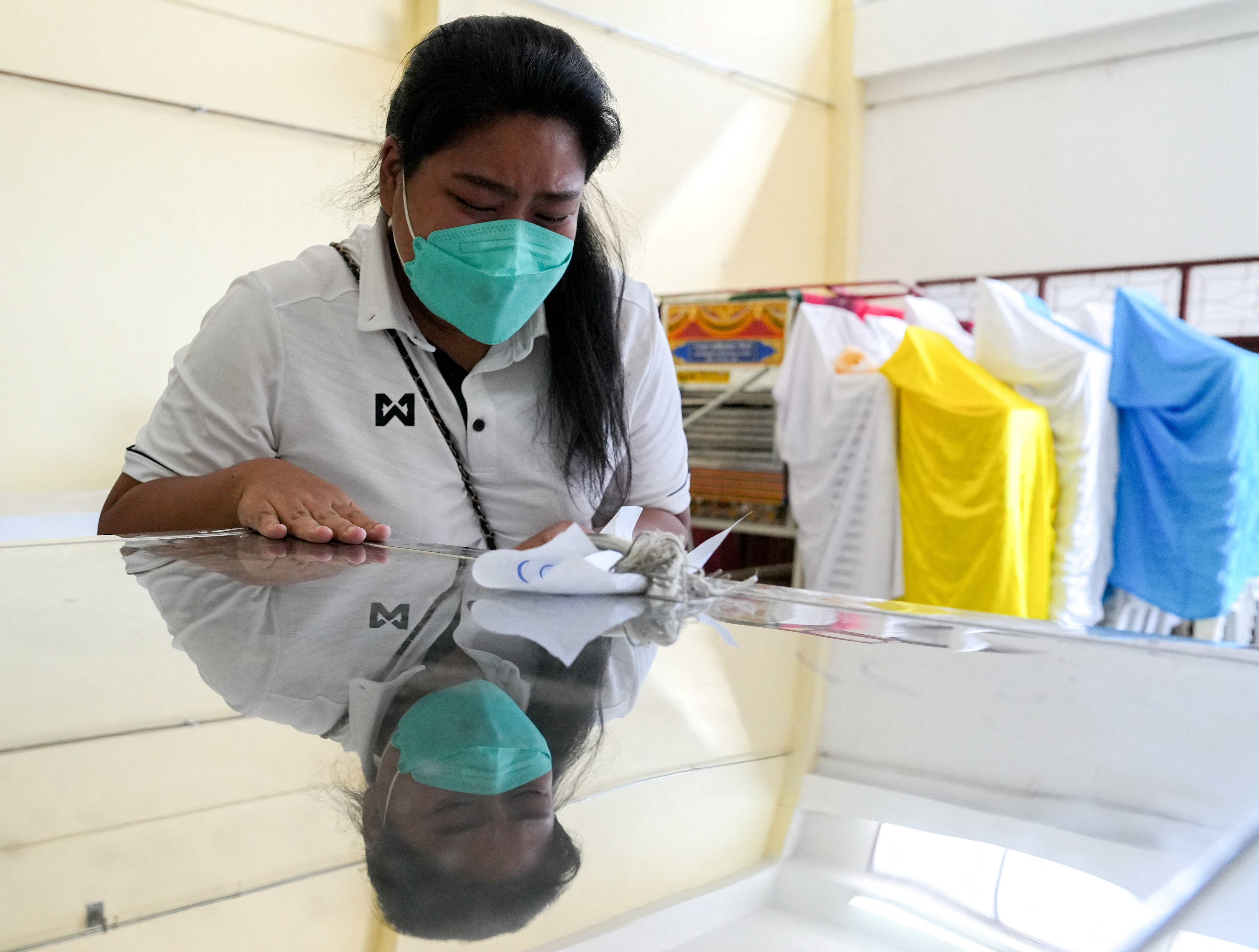
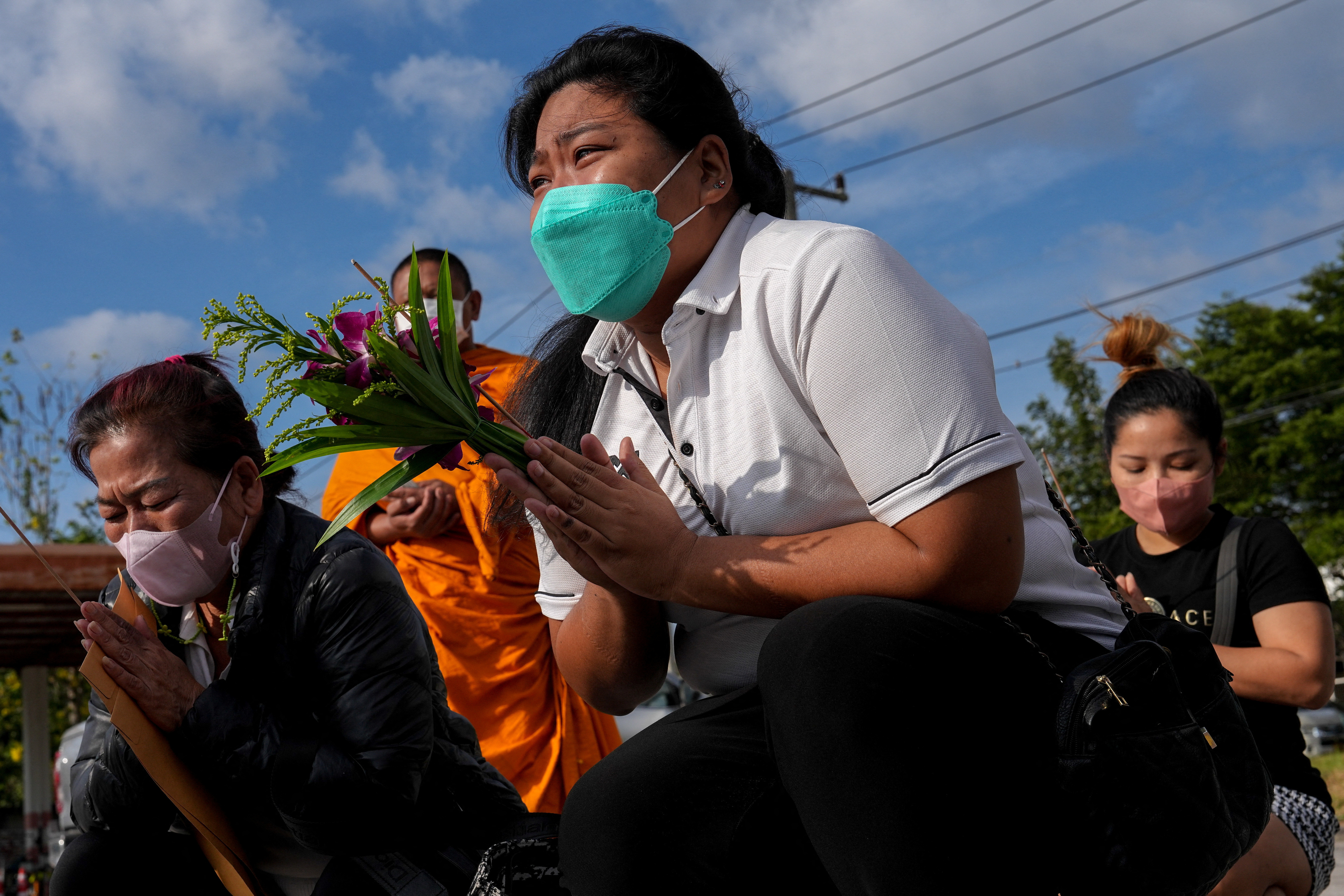
Nunthida Kongreung, daughter of victims of the Grand Diamond hotel-casino fire, prays with other family members, in Aranyaprathet district, Sa Kaeo province near Thailand-Cambodia border, December 30, 2022. REUTERS/Athit Perawongmetha

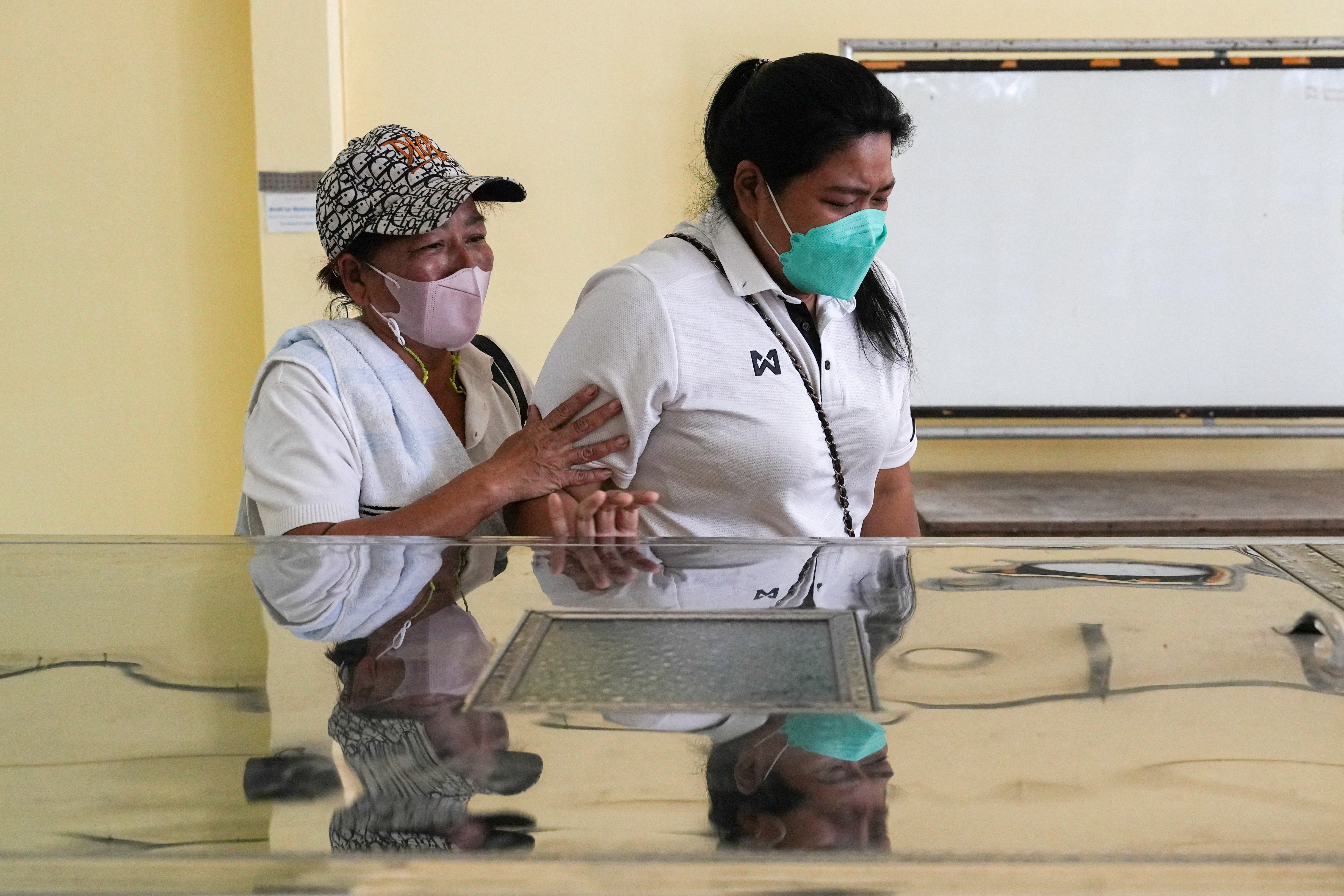
Nunthida Kongreung, daughter of victims of the Grand Diamond hotel-casino fire, mourns at a foundation after she receives the bodies of her parents in Aranyaprathet district, Sa Kaeo province near the Thailand-Cambodia border, December 30, 2022. REUTERS/Athit Perawongmetha

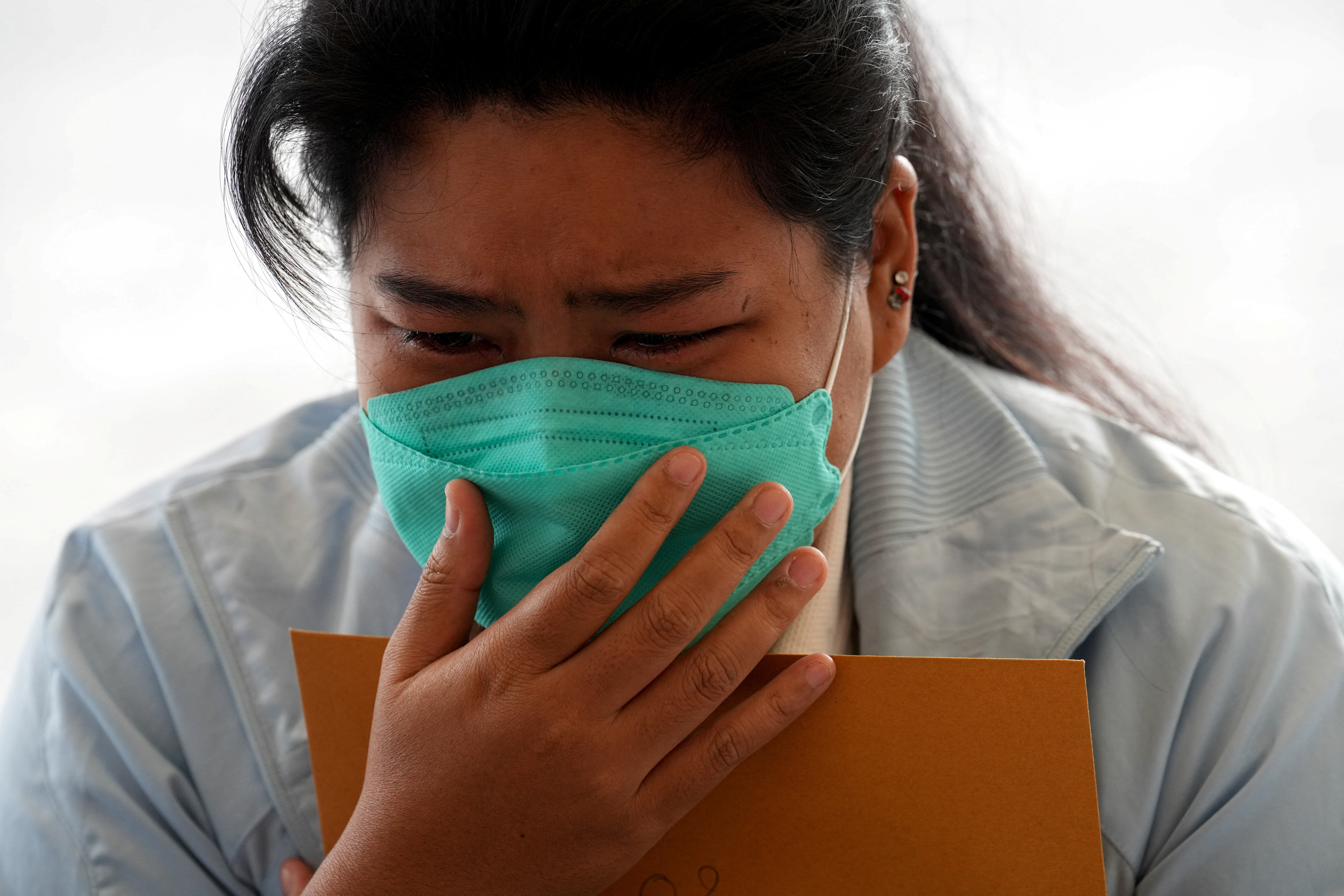
Nunthida Kongreung, daughter of victims of the Grand Diamond hotel-casino fire, reacts as she receives documents from officials, in Aranyaprathet district, Sa Kaeo province near Thailand-Cambodia border, December 30, 2022. REUTERS/Athit Perawongmetha

Nunthida Kongreung, daughter of victims of the Grand Diamond hotel-casino fire, mourns at a foundation after she receives the bodies of her parents in Aranyaprathet district, Sa Kaeo province near the Thailand-Cambodia border, December 30, 2022. REUTERS/Athit Perawongmetha
Categories
Audio Sources - Full Text Articles

South Korea“s test flight of solid-propellant space launch vehicle successful – ministry

2022-12-30T10:18:30Z

South Korea conducted a successful test flight of a solid-propellant space launch vehicle, the country’s defence ministry said on Friday.

Earlier on Friday, South Korean media reported multiple citings of an unidentified flying object over the country’s airspace.

In June, South Korea’s second test launch of its domestically produced, liquid-engine Nuri rocket successfully placed several satellites in orbit, taking a major step in progressing its space programme.

Categories
Audio Sources - Full Text Articles

Howie Carr: A liar goes to Washington? He’ll fit right in

For the coveted 2023 Profiles in Courage Award, I hereby nominate Congressman-elect George Santos, R-NY.

The wording for the prestigious honor should read something like this:

“Despite his GOP affiliation, Santos bravely reached across the aisle to embrace a proven Democrat campaign strategy – concocting a resume that was a total tissue of lies and fabrications, and then when he was busted, merely shrugging and thumbing his nose at all critics, pointing out that he asked for no special dispensation, only to be treated like all the (Democrat) statesmen who had gone before him, among others, Dementia Joe Biden, the fake Indian, Da Nang Dick Blumenthal….”

And so on, ad infinitum.

Hey, Santos just “self-identifies” as a Jew, as a property-owner, as a preppie, as a college graduate, as a millionaire businessman, as a former employee of Goldman Sachs and Citigroup, etc.

Since when is “self-identifying” as someone you weren’t born as a crime? I thought Democrats celebrated it. Just ask Sam Brinton or Rachel Levine.

Of course Santos is a sociopath, a sleazebag, a serial liar. But so what? I don’t care. For too long, we have had one set of ethical standards for Republicans, and a different set altogether – or more precisely, no standard whatsoever – for Democrats.

This is what happens when you have different sets of rules or laws for different classes. Invariably, those who belong to the caste being oppressed by the more onerous standards (in this case, Republicans), will eventually insist on the same rules as their betters – which is to say, no rules.

This is where we find ourselves, after a half-century or so of Kennedys, Clintons, Obamas, Bidens and a host of other duplicitous Democrats, perpetrating one scandal after another, all of which they blithely dismiss with the hypocritical excuse:

“Everybody does it.”

Well guess what? George Santos is now everybody.

At least Santos has admitted he’s a con artist. The only biographical detail that he’s still sticking to is that he’s gay, even though it turns out that he had a wife for years.

The lesson here is, a modern American politician can survive just about any scandal, except for being outed as… a straight white male. No one can admit to that unspeakable aberration and hope to survive in polite society.

Let’s compare a few of Santos’ whoppers to Biden’s. There isn’t room enough to list all of Brandon’s lies again, but remember, Santos is accused of making up his “Jew-ish” heritage.

Biden of course said he used to go to the synagogue after Mass – on Sundays. Just last week in fact he lied that he was part Italian, and that his wife’s father was named Domenic Giacoppo. (Fact check: his name was Donald Jacobs.)

Speaking of lies about Jewish background, consider Hillary Clinton. Yes, the same Hillary who came under enemy fire at Tusla and who tried to join the Marines back in the 1970’s – didn’t she also falsely assert that she had a Jewish grandparent?

In fact, I can remember during the 1992 campaign in Brooklyn when she claimed that she would honor her Jewish heritage by keeping a kosher kitchen in the White House, a lie that has probably been scrubbed from the Internet because… Democrats.

Hillary was also the first one to promote the “birther” story about Barack Obama, back in 2008. And the reason that story gained traction was that on the sell-sheet sent out to publishers when the former Barry Soetoro was peddling his first set of “memoirs” it was falsely claimed that he had in fact been born in Kenya.

But I digress. You see the problem here? When you start digging into lies by Democrats, you risk going down a rabbit hole. One Democrat lie leads to another to another.

Democrats all speak with forked tongues, as Sen. Warren’s ancestors might say. But now, when it comes to George Santos, I’m sure she’s on the warpath.

Even a few Republicans are railing against Santos. The Republican DA of Nassau County, in Santos’ district, thundered this week:

“No one is above the law.”

Really? Hunter Biden could not be reached for comment.

Then there’s state-run media. The New York Times is being criticized for not uncovering the holes in Santos’ resume before the election.

But seriously, who could the Times assign to report that anybody else was making stuff up –  certainly none of the “investigative” reporters who received the 2018 Pulitzer Prize for concocting the Russian collusion hoax out of whole cloth.

The Times still refuses to admit that its four years of Very Fake News about Donald Trump were no less phony than George Santos’ curriculum vitae.

How about the Boston Globe? They too are outraged by the sins of this Santos fellow. Imagine, the same failing newspaper that employed, among others, Mike Barnicle, Kevin Cullen, Patricia Smith and Jayson Blair (before he graduated to the Times) is now shocked, shocked at public figures making bleep up out of thin air.

Just to cite one example, how about the time the Globe ran a photo on its metro front that it claimed was a picture of a US soldier in front of a tank in Iraq raping a native woman. You could even see the private parts of the “soldier.”

Turned out it was a still shot from a porn movie, packaged by one of the Globe’s pet politicians, who would shortly thereafter be lugged and packed off to federal prison for accepting bribes.

But hey, the photo made George Bush look bad, so it worked, right? Just like running all those lies in 2012 about how Mitt Romney wasn’t paying any income taxes.

You know, some stories are just too good to check out, at least if they’re useful for sliming Republicans. When it comes to true scandals involving Democrats, you can just make up another lie and claim it’s all “Russian disinformation” and refuse to print anything.

This same double standard applies to just about everything in politics. Look at New York state’s disastrous response to the latest blizzard in Buffalo. If a Republican were governor, it would be a national scandal. But it’s a Democrat in Albany, so the snow was just an act of God.

Hang in there, George Santos. You can ride this one out. And if does get worse, you also have the ultimate hole card.

You can switch parties and become a Democrat. And then every phony-baloney Democrat who now demands your scalp (sorry, fake Indian) would immediately do not just a 180, but would loudly denounce anyone who questioned your credentials as a homophobe.

Being a Democrat means never having to say you’re sorry.

BOSTON, MA.- President Joe Biden makes a phone call to a Georgia voter during a visit to Dorchester's IBEW Local 103 phone bank on behalf of Georgia Democratic Senator Raphael Warnock on December 2, 2022 in Boston, MA. (Photo by Amanda Sabga/MediaNews Group/Boston Herald)President Biden has a loose grip on the truth. (Herald file photo)
BOSTON, MA.- Senator Elizabeth Warren speaks during a visit to Dorchester's IBEW Local 103 phone bank on behalf of Georgia Democratic Senator Raphael Warnock on December 2, 2022 in Boston, MA. (Photo by Amanda Sabga/MediaNews Group/Boston Herald)Sen. Elizabeth Warren isn’t actually the most truthful person when it comes to her resume. (Herald file photo)
 

Categories
Audio Sources - Full Text Articles

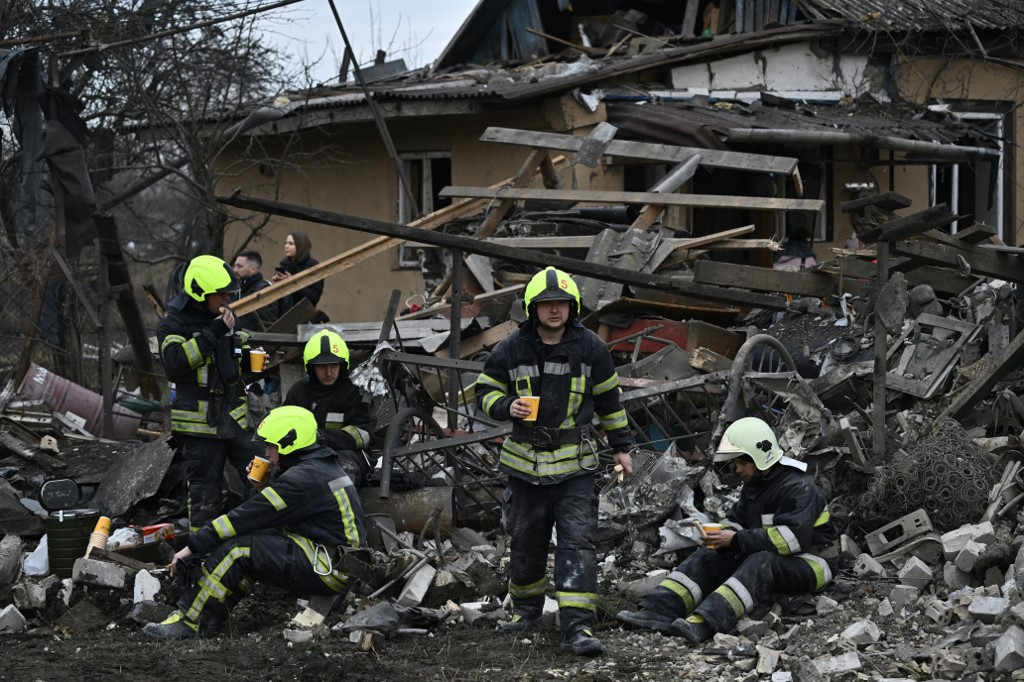
‘Grandma, We’ve Been Hit’: Russian Strikes Rock Kyiv

7065e854ce46030c7a59bcf6638bea48.jpg?w=1

Kyiv residents share their traumatic experience after the recent rocket attack on Thurday, Dec. 29.

Categories
Audio Sources - Full Text Articles

Rituals for Benedict“s passing could be template for future ex popes

2022-12-30T09:30:01Z

When Pope Gregory XII, the last pope to resign before Benedict, died in 1417, the world was not watching.

Gregory had stepped down two years earlier in 1415 and spent his remaining days in virtual obscurity hundreds of miles from Rome. He was quietly buried in Recanati, a town near the northern Adriatic coast.

It will be vastly different with the passing of ailing 95-year-old Benedict, who the Vatican has said is in a grave but stable condition after a sudden deterioration in his health over Christmas.

The Vatican has painstakingly elaborate rituals for what happens after a reigning pope dies but no publicly known ones for a former pope.

After Benedict dies, the Vatican will be at least partially scripting new protocols. They could be a template for other popes who choose to resign instead of ruling for life, including Pope Francis himself someday, Vatican sources say.

Those for a reigning pope include a 30-page constitution called “Universi Dominici Gregis,” Latin for “The Shepherd of the Lord’s Whole Flock,” and “Ordo Exsequiarum Romani Pontificis,” (Funeral Rites for a Roman Pontiff) a missal of more than 400 pages that includes liturgy, music, and prayers.

Those rules say a pope’s burial should take place between four and six days after his death as part of a nine-day period of mourning known as the Novendiale.

Vatican officials, who spoke on the condition of anonymity because they were not authorised to discuss such matters, said the script for Benedict’s passing would depend on two key elements: If Benedict himself left any instructions and decisions that will be taken by Pope Francis.

Francis has often praised his predecessor as a great pope who had the courage to resign, so he would probably like to give Benedict the most solemn ceremonial farewell as possible, perhaps even the whole works, one Vatican official said.

The last pope to die, John Paul II, was buried on April 8, 2005, six days after he died. His body first laid in state in the frescoed Clementine Hall for Vatican staff and then was moved to St. Peter’s Basilica for viewing by the public.

Millions of people queued up for hours to see him, in perhaps the biggest event in Vatican history, and monarchs and presidents attended his funeral.

He was first buried in crypts under St. Peter’s Basilica and moved in 2011 to a chapel on the main level of the largest church in Christendom.

Many people would want to pay their respects to Benedict, who succeeded John Paul in 2005 an resigned in 2013, so a period of lying in state would be likely, the sources said.

In 2020, Benedict’s authorised biographer, Peter Seewald, was quoted as telling Bavarian newspaper Passauer Neue Presse that the emeritus pope had prepared a spiritual testament stating that he wanted to be buried in the same crypt where John Paul II was originally laid to rest.

Benedict, as Cardinal Joseph Ratzinger, presided at John Paul’s funeral in 2005 in St. Peter’s Square and Francis is expected to preside at Benedict’s.

After the death of a reigning pope, the person in charge of ordinary affairs at the Vatican until the election of a new pope is the camerlengo, or chamberlain.

The position is currently held by Irish-American Cardinal Kevin Farrell but because the Church has a pope and there will be no conclave to elect another, Farrell would have no role.

Most of the work, including the scripting of an unprecedented event in Vatican history, will fall to Monsignor Diego Ravelli, the papal master of ceremonies.

Related Galleries:

Emeritus Pope Benedict XVI waves as he arrives to attend a mass for the beatification of former pope Paul VI in St. Peter’s square at the Vatican October 19, 2014. REUTERS/Tony Gentile/File Photo

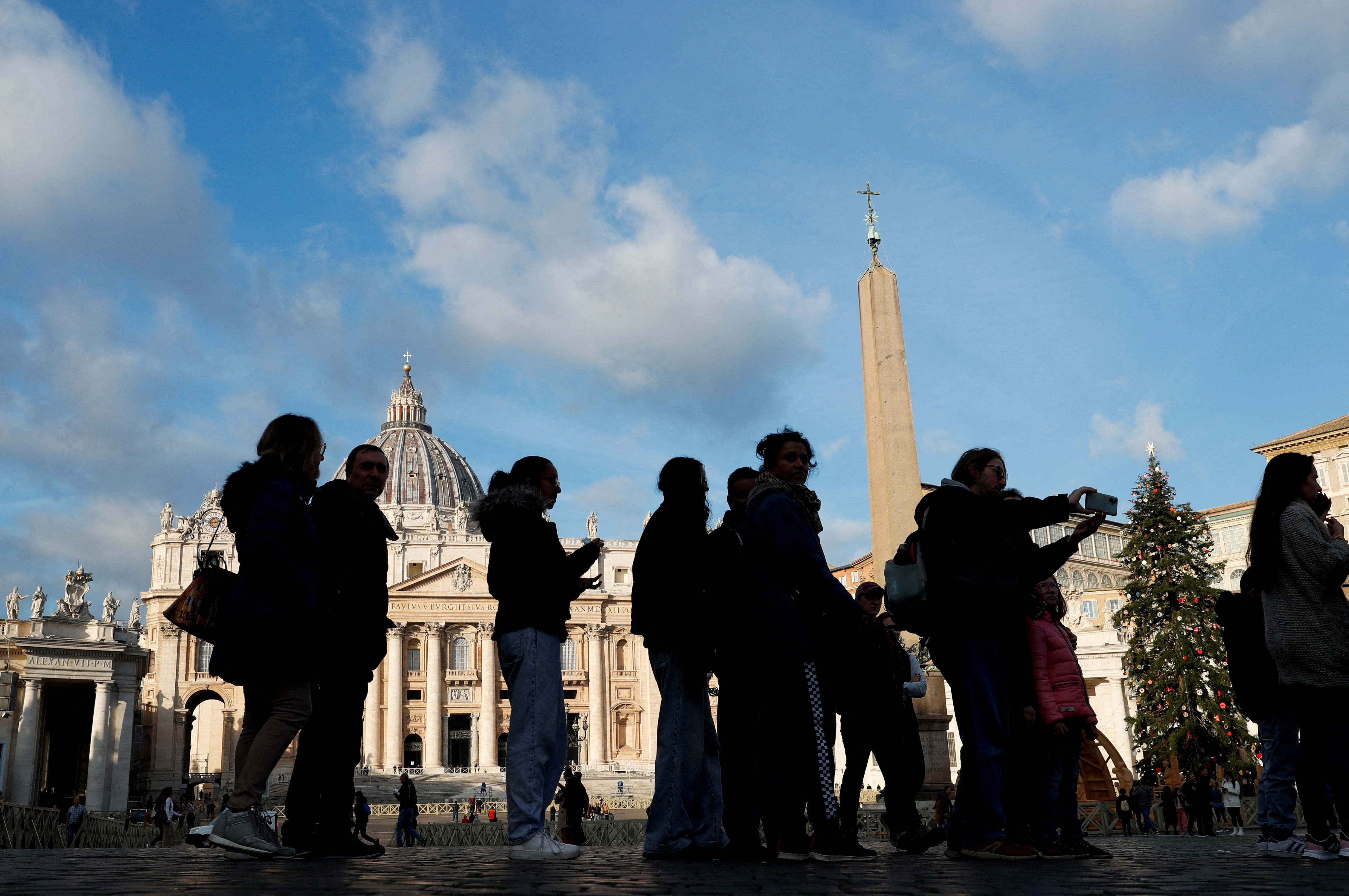
People queue to enter St. Peter’s Basilica, the day after the announcement of the worsening condition of former Pope Benedict’s health, at the Vatican, December 29, 2022. REUTERS/Remo Casilli/File Photo
Categories
Audio Sources - Full Text Articles

2022: A Year Some Ukraine ‘Experts’ Would Probably Like to Forget

2428d5469a905abd54f0d8fa0029dc6c.jpg?w=1

As the war enters 2023 with momentum on Kyiv’s side, a host of analysts predicting the demise of Ukraine’s army and calling for its surrender are now eating crow.

WP Radio
WP Radio
OFFLINE LIVE